It was pure serendipity. Finding out there would be an interview with Michael Ondaatje at the Banff Summer Arts Festival was a wonderful surprise. Hours later I was on my way to Banff National Park. The 90-minutes drive through the Rockies listening to the soundtrack of The English Patient was surreal. And the destination was just as picturesque and dreamlike:
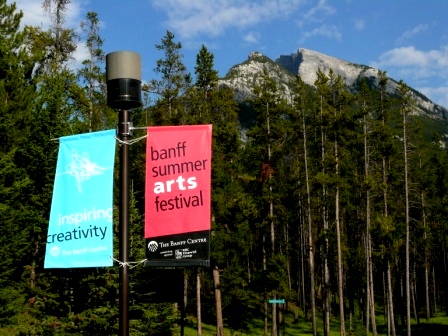

In the event entitled ‘Literary Primetime’, Michael Ondaatje, the Sri Lanka born Canadian poet, novelist, filmmaker, winner of the Booker Prize for The English Patient, was interviewed by Marni Jackson, the Chair of the Literary Journalism Program at The Banff Centre, an acclaimed writer in her own right.
Ondaatje’s impressive body of work includes novels, memoir and a dozen books of poetry, editorial work and documentary filmmaking. But perhaps the most famous is The English Patient, which was adapted into film by the late Anthony Minghella. The movie was awarded nine Academy Awards in 1996.
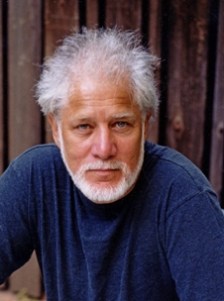 The literary event started off with Ondaatje reading several passages from Divisadero, a book that brought him the fifth Governor General Literary Award. I sat in the huge dining hall with an audience of a couple hundreds, entranced. From afar I held my gaze at the silver haired writer framed by the large picture windows, the evening sun seeping through majestic evergreens, and silence shrouded the place except for one man’s gentle voice. It was simply mesmerizing.
But it was the interview that made the dreamlike experience most rewarding. The conversation explored the creative mind behind the writing process. I jotted down some helpful tidbits:
Curiosity goes a long way. It sparks off the research process, generating and sustaining the creative energy for the work.
Listen to the rhythm of the sentences. “He would” or “he’d” could elicit very different effects. Sound advice from a poet.
I was excited to hear Ondaatje address questions stemming from his book The Conversations: Walter Murch and the Art of Editing Film, which coincidentally, I am currently reading. Murch was the film editor of The English Patient, one of my all time favorite movies. The serendipity is most gratifying. The art of film editing parallels that of writing… the essence is knowing what to cut, and when to move on.
While Minghella was writing the screenplay, Ondaatje was involved in the drafts. The story had to be taken apart and rewritten to be adapted into film. When you see your work being dismantled and reconstructed into another form, I imagine it takes courage, trust, and humility to accept that. Ondaatje appreciates the art form of film and respects others’ expertise, entrusting his work in their hands. This team effort, this alchemy of talents is most prominent in the making of the movie.
In the Interview, Ondaatje was asked about one excerpt from The Conversations. The writer and the film editor shares a common appreciation for the Chinese auteur Wong Kar Wai and his film In The Mood For Love. The layering of sounds suggests the multiplicity of going-ons, events happening off-screen. Such an effect can also be found in The English Patient. The thickness of the actual and imaginary scenes adds complexity and depth, weaving a much more interesting tapestry. Again, the parallel can be drawn with novel writing. It’s the multiple offerings and the possibilities of interpretations that make a piece of writing intriguing:
“We are not held hostage by just one certain story, or if we are, we know it is just one opinion: there are clear hints of other versions.” (The Conversations, p. 160)
There were a couple of ideas I was a bit surprised to find.
First there is the ubiquitous self-doubt throughout the writer’s creative process. Strange, and yet comforting, to find talented minds share this same psyche. It is a humble sign to admit self-doubt. The architect Frank Gehry and the late filmmaker Sydney Pollack came to mind.
“Her only virtue is self-doubt.” (Divisadero).
Second, and perhaps the most precious gem I collected from the event was reflected by Odaajte’s own words on the creation of a story: “I don’t know what would happen… I don’t want to know.” The excitement of writing is that the story reveals itself as if it has a life of its own. The writing process is an exploratory experience. How gratifying to know we don’t need to follow a predetermined structure to plug in the story elements. The creative mind is not bound by structure. Let the story lead, and, enjoy the ride.
At the end of the Interview, Ondaatje was asked about a skills and job match questionnaire he once did when he was a young man. The results showed that he could make one good customs officer. Aren’t we all glad he had chosen to march to a different drummer and diverged in his career plan.
***

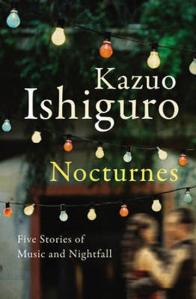 Nocturnes is a recently published short stories collection by
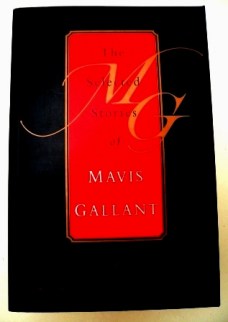 The Selected Stories of Mavis Gallant: 887 pages. Having seen the video of Mavis Gallant reading in a Paris book shop and her conversation with Jhumpa Lahiri, thanks to
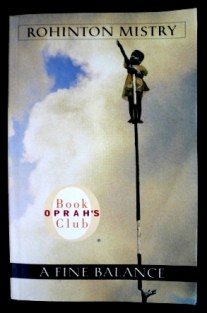 A lady held up a heavy box for me to take this one out underneath: A Fine Balance by Canadian writer Rohinton Mistry. “That’s a good pick,” she said.
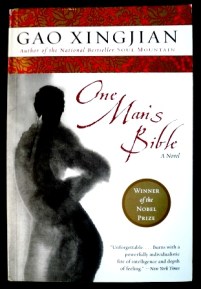 One Man’s Bible by Gao Xingjian, winner of the 2000 Nobel Prize for Literature, the first Chinese recipient of the Prize. Born in China, Gao has been living in France since 1987. The book is translated into English by Mabel Lee, associate professor of Chinese at the University of Sydney. Interesting… although this one I can read the original, the chance of me finding it in a farmers market here in Cowtown, Canada is not great. I’ll settle for the translation.
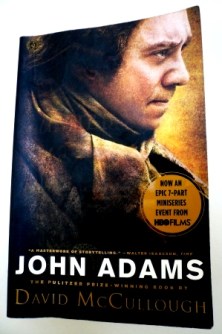 I missed the Golden Globe winning TV miniseries. So, grabbing the original material is just great. David McCullough’s 721 pages John Adams won the 2002 Pulitzer Prize for biography. This is a handsome movie-tie-in- cover edition with many color pictures. What a find!
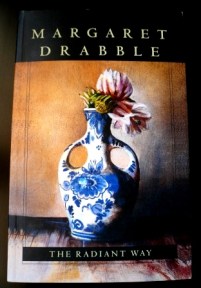 Talking about wonderful covers. How about this one: Margaret Drabble’s The Radiant Way. I’ve never seen this edition of Drabble’s book. A pleasure just to look at.
 And what’s summer reading without beach reads. Here’s my copy of The Devil Wears Prada by Lauren Weisberger. Again, seldom do I see a trade paperback of this title.
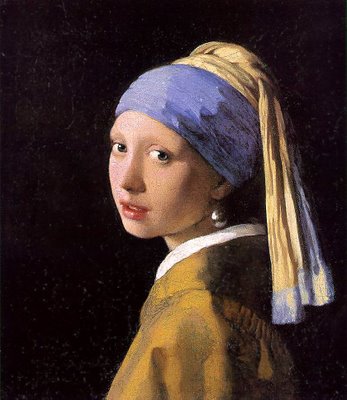
 It was this book that first sparked curiosity in me about Vermeer and his works. Tracy Chevalier has done a superb job in creating out of her imagination the story behind the girl with the pearl earring, within the realistic social and historical contexts. She has brought to the surface layers of possible subtexts hidden in this seemingly simple portrait.



 Ripple Effects