What was Jane Austen really like? Reading Cassandra & Jane

Reading Jill Pitkeathley’s biographical novel Cassandra & Jane has prompted me to find out what Jane Austen was really like.  The persona depicted in her book is so different from what I had conjured up while reading Austen’s six novels.  Upon finishing Pitkeathley’s fictional account, I could not wait but delve right into Claire Tomalin’s Jane Austen A Life, and Carol Shields’ Jane Austen.  So, kicking off my fall reading, I have devoured, back to back, three biographical works on a woman writer who is more popular today than she was in her time two hundred years ago.

Jill Pitkeathley’s Cassandra & Jane is a fictitious rendering of Jane Austen’s life. It is based on historical facts as recorded in biographies; in fact, it reads like a fictional illustration of Tomalin’s work.  As a novelist, Pitkeathley takes the liberty to fill in the gaps and offers imagined scenarios of events. That is the fun or ambiguity of reading a historical novel.  The intermingling of fact and fiction has spurred me on to explore what actually happened, above all, what kind of a character Jane herself truly was.

I was surprised to find that behind the romantic book cover shrouds a very sombre portrait of Jane Austen.  What is most intriguing is the revelation that, unlike the sanguine ending in Austen’s novels, the very author of these works had led a life filled with misfortunes and disappointments.  And unlike Austen’s heroines, females who could impact and influence those around them, Jane was often bound by powerlessness and subjugated to consequences of familial and social disparities.  For most part of her life until she received the meager profits from her books, she was solely dependent on her father and later her brothers financially that she could not make any travel plans or purchases on her own.

Written from the point of view of Cassandra, who was the sole person privy to the intimate and private side of a beloved sister, the novel depicts a discontented soul, at times critical, at times bitter, and poignantly resigned at the end. Unlike her own novels, which end on a high note with exhilarating conclusion, Jane Austen’s life was far from fulfilling for her in love, in health, and in career.  Within the confines of late 18th and early 19th century England, the lively and soaring spirit of Jane Austen was kept distressingly in check.  What Pitkeathley has chosen to present to us therefore is a multi-layered persona, deep and intriguing.

“Hers was such a complex nature that it was not possible to explain to those who did not love her that she could be cruel and kind, disparaging and compassionate, bitter and hopeful, almost in the same breath.”

Considering the complex character of her beloved sister, her sharp wit and critical eye, her cutting comments on the people and circumstances around her, Cassandra had a very legitimate reason to burn the intimate correspondences she had with Jane, knowing that Jane would easily be misunderstood and even judged by posterity if they were released to the public. Pitkeathley had taken full advantage of this void to fill in the gaps and offer her own renderings of the events and motives marked by silence, albeit based on historical evidences.

The account of the romantic episode with George Atkins is an example.  Regarding the Rev. Atkins, whom Jane met in Lyme, and who received a passing mention in her letters anonymously, Pitkeathley has painted a star-crossed love affair, adding colours to a life that is thought to be devoid of romance.

Considered by some who think her life as uneventful,  and indeed, she may not have travelled far from her home in her short 41 years of life, Jane had had her share of life experiences. First off, from infancy, she had the taste of banishment as all Austen newborns were sent off to be raised elsewhere from home, coming back only as they entered childhood.  Her childhood days with her siblings were probably the most joyous period of her life, growing up in a literary household, devouring books in her father’s library and participating in theatrical gigs her brothers organized. Her strain relationship with her mother however remained a dark spot most of her life.

Jane’s young adulthood saw disappointment of lost love and opportunities, or the lack thereof. Nevertheless, married life to her may not be that appealing, after witnessing two sister-in-laws die at giving birth to their eleventh child.  She had felt the grief of the death of Cassandra’s fiancé days before the wedding.  She was dislocated from home beyond her own choosing, moving to Bath and thus triggering a long period of depression.  She had led a life of poverty, suffered the loss of her dearly beloved father, endured familial and social disparities first as a female, then as an unmarried female, and later as an unmarried female writer.  She had seen her own works rejected, and later even with some of her novels published, had to remain anonymous to avoid social deprecation.  And finally, she saw the bankruptcy of her brothers, jeopardizing her mother’s, her sister’s and her own livelihood, and lastly, faced an untimely death at age 41 after a debilitating and painful illness.

What is left that makes life meaningful and fulfilling?  How can a spirit confined to so many limitations break through and soar?  Pitkeathley has painted a Jane who was resilient and determined.  Choosing a life of literary pursuit over a loveless marriage to Harris Bigg-Wither, Jane was ready to take on the social denigration of spinsterhood and the working woman.  From her writing, Jane had found release from her entrapment. She had created stories wherein heroines were passionate and free like Marianne Dashwood, intelligent and self-assured like Elizabeth Bennet, adventurous and imaginative like Catherine Morland, persistent and morally upright like Fanny Price, lively and mischievous like Emma Woodhouse, and patient and long-loving like Anne Elliot.  From her writing, Jane had opened a way for her own self expression, channelled her indignation of injustices, and found a platform to proclaim her ideals.

At the end, with Cassandra, we lament the short life of Jane Austen, but we cherish a literary talent whose resilience and ideals have inspired readers through the centuries.  Considering the numerous film adaptations today and the proliferation of fan fiction, Jane can finally impact and influence, an ideal she could only imagine in her novel writing.

You are invited to vote on the poll question:  Which Austen heroine do you think Jane was most like? Find the Poll on the top of the side bar. Just check your answer and click “Vote”.

*****

Cassandra & Jane by Jill Pitkeathley, first published 2004, reprinted 2008 by Harper Collins, N.Y.  270 pages.


Literacy and Longing in L.A. Book Review

“Outside of a dog,  a book is Man’s best friend.

And inside of a dog, it’s too dark to read.”

— Groucho Marx (1890-1977)

There’s got to be a name for this genre of work, modern novels written by women authors, savvy, hip, like scripts for romantic comedies, featuring self-deprecating heroines at the crossroads, but alas, with a large dose of literary or scholastic flare.  Simply “Chick Lit” won’t do,  they are not giddy enough; “Intellectual Chick Lit” may sound like an oxymoron.

Well this one is a wild ride, with literary figures and quotes streaming by your window.  Authors Jennifer Kaufman, a staff writer at L.A. Times and Karen Mack, a former attorney and a Golden Globe Award winning TV and Film producer, have performed cleverly the feat of embedding over 200 authors, artists, and works in their story, from Marcel Proust to Andy Warhol, Matthew Arnold to Kurt Vonnegut. To be helpful, a 9-page Book List is included at the back.

This is the story of a bibliomaniac who uses book binges to escape from her problems, and just a little too much wine to de-stress.  As Freud would have put it, it all started with our protagonist as a child.  The fateful incident when Dora (named after Eudora Welty) and her sister Virginia (who else…) were riding in the car with their alcoholic, and literary, mother behind the wheel.  They ended up in the river.  That’s the last straw for their dad, who deserted them a few weeks later.  Ever since that accident, Dora has been using binge reading to cope with life’s disappointments and ennui.  Now as an adult, she “collects new books the way [her] girlfriends buy designer handbags.”

While separated from her second husband, Dora, a former L. A. Times writer, meets Fred in an indie bookstore in L.A.  She is attracted to his intellectual side, and just knowing he’s writing a play is appeal enough for her to fall for him.  As she gets to know more about Fred and some of his family ties, Dora is swirled into problems that her safe, upper middle class life would never come into contact with.  Here the plot thickens.

I’m ambivalent about this one.  First of all, I don’t like the book cover.  The cover directly or subliminally leads to the impression that has given “Chick Lit” its bad rap.  I know, I shouldn’t judge a book by its cover.  I’m attracted by the title, however, and am glad I’ve explored further than the cover.

I often wonder how exactly do two authors write a book together.  Do they each write different chapters?  Well, here in LALILA, it certainly reads like it.  Just as you thought it’s all about a self-deprecating female trying to stay afloat, the story peels off a few layers and reveals the courage and heart underneath the surface.  In contrast to the lighter shade, the darker chapters depict a more complex and thinking individual who is not afraid to care and embrace the pathos in life.

What I enjoy most is the clever inclusion of literary quotes and figures in the story.  Each chapter starts with one that’s pertinent to the content.  Some are funny, some thought provoking, but all smart and relevant.  And for the Janeites among us, I’m afraid the authors have taken side with Mark Twain regarding Jane Austen.  Now those parts you might just want to skim over.

I can also see the debates the book and its many literary quotes could spark in a book discussion group.  LALILA makes one enjoyable title for those looking for light, fun, and contemporary women’s writing.  The ambiguous ending may also spur lively speculations.  And for the bibliomaniacs among us, whether you agree or not with the protagonist’s decisions in life or values in love, you’re bound to empathize with the notion of book binging.  It may not be the solution to life’s problems, but reading is definitely one appealing and enjoyable thing to do in our very stressful modern day living.

The book has a website which includes book discussion questions and a lit quiz, well worth exploring.  Just Click Here to go.

Literacy and Longing in L.A. is written by Jennifer Kaufman and Karen Mack, published by Delacorte Press, 2006, 325 pages.

*******

Then She Found Me: Book Review

This is one of those frequent examples where a film is so drastically different from the book that they are virtually two very separate entities. But what’s unusual is, I’ve enjoyed them both.

Then She Found Me, published in 1990, is written by award winning New England author Elinor Lipman. Helen Hunt, together with Alice Arlen and Victor Levin, wrote the screenplay and turned it into a movie. I can understand why those who have read the book first before seeing the movie are flabbergasted. The only commonality between the book and the film other than the title may just well be the two main characters, the quiet and rational high school Latin teacher April Epner and her birth mother Bernice Graverman, the ostentatious TV talk show host who wants to claim back the daughter she had given up for adoption more than 30 years ago. There are almost no traces of the original story in the movie.

The amusing character contrast in the book is a springboard for some creative channelling for Hunt and her screenwriter team, kudos to Lipman’s original conception of the story idea. Despite its digression from the book, the movie still works and entertains. What more, it has preserved the spirit of the book and has brought to the screen the basic issues the book touches on, the major one being the meaning of motherhood, and the inevitable debate over the value of the birth versus the adoptive mother. For my detailed review of the movie, click here.

The She Found Me is my introduction to Elinor Lipman, the acclaimed author of eight books of fiction and short stories. The book is almost script ready, for it is predominantly dialogues, witty, intelligent, and incisive dialogues. Lipman’s sensitivity and subtle humor effectively bring out the nuances of her characters and their relationships, at times sarcastic, at times genuine, at times poignant.

36 year-old April Epner is a high school Latin teacher, quiet, rational, academic, and single. Her long-sleeved cotton jersey and drop-waist Indian cotton jumper persona hides a kind and genuine soul. The only parents she has known all her life are her adoptive Jewish parents Trude and Julius Epner, Holocaust survivors, who have lovingly brought her up and given her a Radcliffe education. After they have passed away and as she stands in the crossroads of her life, the last thing April needs is to be found by a brassy and impulsive talk show host Bernice Graverman, who claims to be her birth mother. Conscientious April has to match wit with evasive Bernice, with the help of her school librarian Dwight, who happens to be much more than just a supplier of encyclopedic information. Without giving out spoilers, let me just say the story unfolds with sprightly twists and turns, effectively driven by Lipman’s first-rate, cutting and entertaining dialogues.

Those who have seen the movie but have not read the book should move right along to savor the source material. In here you’ll find the intended closure to the seemingly unsolvable conflict and ambivalence. I can see this as a good choice for book/movie discussion in reading groups and book clubs.

As I was reading, I thought I saw Jane Austen cameo. What Lipman has created here is something close to what Austen would have written today: a contemporary comedy of manners, a likable heroine reminiscence of Anne Elliot, an anti-Darcy male character, albeit with similar height and social ineptness, and through the characters and their situations, dares to explore some serious social issues that are masked by very funny, sharp and witty lines. The result is a tasty concoction of humor and heart.

And lo and behold, guess whose portrait I see when I open up Elinor Lipman’s website ?

Then She Found Me by Elinor Lipman is published by Washington Square Press, 1990, 307 pages.

~ ~ ~ Ripples

First Blogaversary and Summer Wrap-up

Last year on this day, August 29, 2007, I began my blogging journey on WordPress.  One year and 104 posts later, this sputtering engine is still chugging along.  I’d like to think of my blogging experience as a road trip.  The kind of vehicle I have in mind is the VW van in the movie Little Miss Sunshine.  Almost an obsolete wreck and yet still functioning, just needs a little running push.   

It has been an eventful summer for me.  Having had to move twice and living out of a suitcase, sustaining the horrors of home renos, tending illness in the family, and caring for two elderly parents have put my life on hold…or maybe this is life.  All this time, I didn’t have easy access to the internet, no TV, or other high tech luxuries.  While my posts have been more sparse than I’d like, blogging, even though infrequent, has at least kept some kind of normalcy for me during this unsettling and chaotic period.

While I’ve missed many important events during these two months, such as Hilary’s concession speech, and the Olympics… I’ve been able to catch some summer flicks and read a few books.  As I take stock of this summer’s entertainment consumption, I’m surprised to find that my list is long despite the interruptions:

The following are straight from memory, in no particular order:

Movies seen at theatres:

  • Mamma Mia! 
  • The Dark Knight
  • Swing Vote
  • Brideshead Revisited

Live Musical:

  • Spamalot

DVD’s watched or re-watched:

  • Persuasion (1996)
  • Persuasion (2008)
  • Sketches of Frank Gehry (2005)
  • Life As A House (2001)
  • Eternal Sunshine of the Spotless Mind (2004)
  • Vantage Point (2008)
  • The Bank Job (2008)
  • Miss Pettigrew Lives for a Day (2008)
  • Plus about 25 titles previewed for a Film Festival

Books read or re-read:

  • Persuasion by Jane Austen
  • Then She Found Me by Elinor Lipman
  • The Savior by Eugene Drucker
  • The Glass Castle by Jeannette Walls
  • Up Till Now by William Shatner
  • Lady Killer by Lisa Scottoline

So this is the summer of 2008.  Will be leaving for Ontario tomorrow to take our son back to university, Arti is wrapping up another summer, and the first year of blogging. 

What’s your blogging trip been like this summer?   And your list of books and entertainment?

                                                                           *****

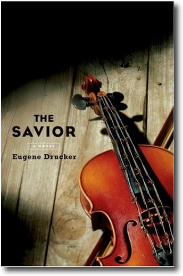
The Savior: Book Review

The Savior is the debut novel written by Eugene Drucker, the founding member of the renowned Emerson String Quartet.   It is a fictional Holocaust story, but what it depicts is not far-fetched.  Based on his father Ernst Drucker’s experience as a violinist in Germany during the 1930’s, and mingled with his own performing episodes in hospital wards and infirmaries, Drucker has created a riveting and believable narrative. Most importantly, he has packed into the short 204 pages some questions that humanity has long found impossible to solve, the problem of human depravity and personal redemption.

In the book, the protagonist Gottfried Keller is a young German violinist during WWII. Due to a weak heart, he cannot serve his country in the front line, but he is drafted into the Nazi war machine by the SS for an experiment in a Holocaust death camp. Under the cultured yet ruthless Kommandant, Keller is to play four solo violin concerts to selective Jewish prisoners. The expressed purpose is to test whether music has the power to revive languishing souls.

As I read the summary on the book cover, the image of the movie Shawshank Redemption (1994) came to mind. When the character Andy Dufresne (Tim Robbins) sneaks into the prison control room and broadcasts Mozart’s Sull Aria from The Marriage of Figaro over loud speakers out to the prison grounds, the inmates are instantly mesmerized by the beauty of the duet, the music transporting them from their confinement to lofty realms.

But what readers are confronted with here in The Savior is a drastic contrast. When Keller plays the Bach sonata in G minor for the inmates, he witnesses the horror of despair. The melodies act like whips on their flesh, cruel reminders of the hopelessness they are in. The intricacies of the fugue evoke searing pain rather than the expected comfort and relief, driving them to eerie moans and groans, exasperated in unrestrained sobs and anguish.

The irony is apparent. The redemptive power of music is but a myth. The violinist, acting as a life-giver or at least a boost to waning souls, is but a pawn in a game of cruelty. As the story unfolds, the violinist, the savior himself, finds desperate need for self redemption. Memories of his past, the choice of security over love, come back as torrents pounding on his conscience.

In the discussion of St. Matthew Passion with the young prison guard Rudi, Keller struck the chord of betrayal and remorse. As pathetic as attempting to pull one’s weight off the ground, both Keller and Rudi find It impossible to redeem themselves. The part a person plays in the overall scheme of atrocity needs to be dealt with. Being a pawn in the game does not excuse one from responsibility, even though the issue is a complex one.

As an expert in musicology and a professional musician, the author is able to effectively weave the music of Paganini, Ysaÿe, Hindemith, and Bach into literary form, an expertise only a violinist like himself can provide. The book excels in these detailed renderings of musical and literary tapestry.

However, the mere 204 pages of succinct narrative could be expanded to better handle the complexity of the issues and characterization the book is dealing with. The unfolding of Keller’s love affair with his Jewish girlfriend Marietta could be told in more details to allow the poignancy to linger.

Overall, a captivating story and a springboard to further pondering.

~ ~ ~ Ripples

The Savior by Eugene Drucker, Simon and Schuster, 2007, 204 Pages.

 CLICK HERE TO VIEW A VIDEO of Eugene Drucker playing Bach’s “Chacone” from Partita No. 2 and his explanation of its role in the book The Savior.


                                                            *****

The Glass Castle: Book Review

For my 100th post, I’d like to share an extraordinary personal narrative by writer Jeannette Walls.

The opening of the book grabbed me right away as I was browsing in a bookstore. The author, a successful journalist and writer, was in a taxi, all dressed up for an evening event in New York City. As she glanced out the window, she saw a homeless woman scavenging a garbage bin. A closer look made her realize that was her own mother.

That is one dramatic opening of a book. Knowing that it is the telling of a real-life story intrigued me all the more.

Since its publication in 2005, the award-winning childhood memoir of Jeannette Walls has garnered high acclaims and been on the New York Times Best-Seller List for 100 weeks.

Growing up nomadic is a succinct description of Walls’ childhood. At age four, she had already moved eleven times. Upon the direction of her eccentric father and idealistic mother, and often to escape debts or consequences of misdeeds, the four Walls children were herded across the United States from Arizona to California, across mining towns and even living out open in the Mojave Desert, moving on a whim and often given just minutes to pack up whatever meager possessions they had.

Afflicted with alcoholism, dad Rex had trouble holding down a job. But he was a man with a brilliant mind and a wealth of knowledge which he readily passed to his favorite daughter Jeannette. She learned from him science and engineering, mathematics and history. The glass castle is his promise to her, assuring her one day he would strike gold with the Prospector he had invented, and build the family a glass castle they could all live in. The glass castle remained a glimpse of hope, yet sadly proven to be one illusive dream.

Mom Rose Mary was an idealistic artist and writer. Besides teaching her children to appreciate nature, art and literature, she had taught them adaptability and instilled in them the spirit of resilience. Once driving through the Mojave Desert, they saw an ancient Joshua tree. Growing through the wind swept years, the tree was permanently bent and yet was still firmly rooted. Later, Walls found a sapling growing not far from the old tree and wanted to dig it up and replant it near their home:

I told Mom that I would protect it from the wind and water it every day so that it could grow nice and tall and straight.

Mom frowned at me. ‘You’d be destroying what makes it special,’ she said. “It’s the Joshua tree’s struggle that gives it its beauty.

This book could well be named The Joshua Tree.

Rex’s alcoholism left the family in dire poverty. In this candid and personal account, Walls remembers that often she had to go without food for days. While in school, she would scavenge garbage cans for leftovers after lunch. Often they would have no electricity in the makeshift shack they called home, and took a shower once a week.

Mom was plagued by depression and often lived in a world of her own ideals. Her laissez-faire style of child-rearing often left her kids to fend and provide for themselves. Even if she found a job as a school teacher, she would soon grow tired of it and wouldn’t get up in the morning. The kids would have to drag her up, usually in vain.

I’m surprised the term “Dysfunctional” never occurred in my mind as I read the book. The Walls children were tenacious, resourceful, bold and confident. They were avid readers and did well in school.  What more, they were devoted to each other and loyal to the family. From an early age, they had to learn to handle an alcoholic father, a moody and depressed mother, and mediate their occasional fights and conflicts. The kids had to parent their own misfit mother and father. The Walls might be financially crippled, they were able to maintain strong relationships and an exuberant zest for life.

Walls’ account is candid and personal, poignant with cutting humor. One time in winter, when icicles were formed in their kitchen ceiling because the roof was not insulated and there was no electricity in their home, Walls describes her mom’s response:

All seasons have something to offer,” she said. “Cold weather is good for you. It kills the germs.

How we view the Walls parents of course depends solely on how their daughter presents them in her memoir. And this is precisely my point. Jeannette Walls has painted a loving picture of her parents depsite their failings. She is sympathetic to their struggles with their own demons. Through out the book, I am touched by her capacity to forgive, to persevere, to hope, and to plan for a better future, not only for herself, but for all her siblings.

The last chapters of the book detail how the author and her siblings pursued a new beginning by establishing an independent life in New York City, while still as teenagers. The story of resilience moved on to another phase. Readers are gratified to see a rewarding end to Walls’ years of perseverance.

Film rights have been optioned for the book.  If it is ever turned into a movie, from a visual sense, it is easy to illustrate the hilarious and sensational parts. However, my sincere hope is that the film will keep the integrity and poignancy of the memoir. Often, it is not what has happened that is worth telling, but how the narrator sees what has happened that makes the storytelling moving and memorable. In this case, both the what and the how are extraordinary and uplifting.

The following is a video clip of Jeannette Walls and her mother talking about The Glass Castle.

~ ~ ~½ Ripples

The Glass Castle by Jeannette Walls, published by Scribner, NY. 2005. 288 pages.

NOTE: Here is the latest (April 23, 2012) regarding the film adaptation of the book. Lionsgate has bought the rights and Jennifer Lawrence is in talk for the lead. CLICK HERE to read more.

FOR A LIST OF UPCOMING BOOKS INTO FILMS, CLICK HERE.

***

Beach Reads and Summer Reading 2008

It’s that time of the year when you let it all hang loose and not care about whether what you’re reading is ‘literature’ or not. For some strange reasons, the hot summer months, the taking leave of work and school, the temporal evasion of chores and responsibilities seem to have emboldened us to new adventures, legitimizing ‘escape reading’. But my question is why only in the summer? Do seasons regulate our choices? Should ‘summer reading’ differ from that of the other 10 months in the year? Has the term “Beach Read” been coined merely to jack up book sales?

A look at some current writers’ “summer reading” casts even more doubts on arriving at a clear cut definition of “Beach Reads”. Dan Zak of Washington Post interviewed a sample of them and surveyed their summer reads. Here’s what he found:

  • Mary Higgins Clark: Gift from the Sea by Anne Morrow Lindbergh
  • Susan Choi: War and Peace by Leo Tolstoy
  • Janet Evanovich: The Great Gatsby by F. Scott Fitzgerald
  • Thomas Mallon: Nicholas Nickleby by Charles Dickens
  • Sue Monk Kidd: The Grimke Sisters From South Carolina: Pioneers for Women’s Rights and Abolition by Gerda Lerner.

… and so on and so forth. Click here to read more of Dan Zak’s article on summer reading.

And here’s Arti’s list. I’m currently reading Lisa Scottoline’s Lady Killer, which should satisfy a ‘traditional’ definition of a ‘beach read’. Other than that, I’m also re-reading Jane Austen’s Persuasion, and still plowing through two of Robert K. Johnston’s books, Reel Spirituality: Theology and Film In Dialogue and Reframing Theology and Film. If a ‘beach read’ is defined as a fast pace, plot-driven page-turner, these definitely don’t qualify.

I’ve just finished The Glass Castle by Jeannette Walls, which is one dynamite read, a wild ride any time of the year. It deserves a whole new post. But to categorize it as a ‘beach read’ would seem to have down-graded its quality and impact.

A few titles I plan on getting hold of this summer:

  • Then She Found Me by Elinor Lipman. After watching the film, I’m really interested to find out how a writer instills spirituality into the narrative of everyday living.
  •  Away by Amy Bloom. I’ve wanted to know more about her through her reading. So far I’ve only read one thing from her: Introduction to Jane Austen’s novel Persuasion.
  • The Savior by Eugene Drucker, founding member of the renowned Emerson String Quartet. In this debut novel, he dispels the myth of the saving power of music, using a Holocaust death camp as the backdrop. Should be one poignant read.

What’s your summer reading list like? Typical ‘beach read’ or evidence shattering its existence?

Summer Reading 2009 Click Here.

***

The Stone Angel (2007): Book Into Film

** The following review contains spoilers**

Since its publication in 1964, this is the first time The Stone Angel is adapted into a movie. As I mentioned in my review of the book last week, whoever that attempts to do this has a formidable task. This classic Canadian novel by Margaret Laurence is a depiction of memories encased in deep inner turmoil. The fleeting and random reminiscence of 90 year-old Hagar Shipley juxtaposing with the present would also prove challenging to bring on screen.

Director, screenwriter, and producer Kari Skogland has made a bold attempt at filling this tall order. Filming the movie in rural Manitoba, The Stone Angel delivers some nice shots of the prairie backdrop, even though Manawaka is a fictional town in the story. The sequences of flashbacks are aptly dealt with quite seamlessly.

The movie has its greatest asset in the cast, in particular Oscar winner Ellen Burstyn (Alice Doesn’t Live Here Anymore, 1974) as Hagar Shipley, and Christine Horne as her younger counterpart. Canada’s own Ellen Page also plays a minor role as Arlene, the girl Hagar’s son John (Kevin Zegers) wants to marry, and of course, against the wish of his mother. The two Ellen’s have some tense moments together. Page’s screen time may be too short though to gratify her fans.

Any fine actor, however, can only perform within the confines of the script. Here lies my major concern: the alteration of the crux of the story, maybe to appeal to a contemporary or a younger audience. The film is a much more mellow and sexed up version of the book. The fiery, ingrained pride of Hagar is much subdued. In fact, she has been changed to an even amiable character. Further, I feel the shifting of the time from the 60’s to modern day somehow trivializes the story. Who would have thought Marvin (Dylan Baker) would be talking on the cell phone and Hagar smoking marijuana…one item off her bucket list?

What author Margaret Laurence has depicted is not just any ordinary stubborn, grumpy old woman, but Hagar Shipley, the tragic heroine, however disdainful. She rages against the dying of the light and doesn’t go gentle with just about everyone because of her deep-seated hubris…even while facing death. The book’s final image of her wrestling the glass of water from the nurse, drinking it without help, wraps up the life of this fierce character. And it’s pathetic to see her pride leading her to make decisions and to act in ways that could well have caused the tragedies in her life.

The scene at the abandoned shed should have led to the poignant, climatic revelation. In the book, Hagar tries to run away from the fate of being confined to a nursing home. She spends a night in this derelict shack and encounters a stranger. During their conversation, she unknowingly verbalizes the pain and guilt she has been carrying all her life by talking about the tragic end of her beloved son John. The name of this newly formed confidant, Murray F. Lees, yes, Flees, points to her perpetual running away from constraints, or maybe even from herself.

But in the movie this stranger is Leo (Luke Kirby), who uses the shed to make out secretly with his girlfriend and then goes on to discuss forbidden sex and share a ‘joint moment’ with the 90 year-old woman.  In the theatre, I heard laughter.  The pathos that should have accompanied this pivotal scene either did not materialize or has been much lessened.

The portrayal of young Hagar played by Christine Horne, while proficient, may have also missed the gist of the story. We see a beautiful red-hair Hagar and a romanticised Bram (Cole Hauser) immersed in blissful courtship and marriage, at least in the first part of the movie. In the book Bram Shipley, a widower-farmer fourteen years her senior, is as rough and callous as Hagar is proud and obstinate.  Their marriage is rocky even from the start, reinforcing the notion that in defying her father, Hagar has made a decision that would later bring her great torments.

By depicting a softer Hagar, and toning down her abrasive pride, the film has diluted much of the poignancy and intensity of the conflicts. The strained relationship between Hagar and her favorite son John has not been sufficiently developed to elicit the emotional impact of the tragedy. Hagar has long placed her hope on John, whom she has esteemed to be worthy to wrestle with the angel, but he ends up breaking her heart. The swift dealing of the mother son relationship in the film fails to depict Hagar, like the stone angel, has been blind to her circumstances. Fortunately, the film has kept the authentic scene of Hagar reconciling with her elder son Marvin, who has taken care of her in her old days. It is Marvin who has wrestled with the angel and won.

The final scene with the Pastor Rev. Troy (Ted Atherton) singing the hymn, touching even the ‘holy terror’ in her death bed, draws the film to a poignant and peaceful close. The audience sees a yielding Hagar going gently into the good night. The voice over of Dylan Thomas’ quote seems inconsistent with what we see.  If Laurence could have her way, she likely would have concluded with the last image of the book where Hagar stubbornly tries to drink from the glass without the help of her nurse, defiant to the end.

I have a reader, a student apparently, once asked me whether he should skip a book he was studying in class and just use the movie version for his course work.  My advice is, watch the movie for entertainment, but read the book for your assignments… the two could be very different entities.

~ ~ ½ Ripples

Chesterton Quotes

I just couldn’t resist.  Even though I posted a link to GKC Quotes in my last entry, I’m compelled to share some here for all to savor.  As a writer who encompassed social commentary, political satire, literary criticism, philosophical ponderings, Christian apologetics, poetics and plain humor in his writing, G. K. Chesterton’s (1874-1936) wit and wisdom surpassed the social and political environment of his time:

                                                                      *****


“My country, right or wrong,” is a thing that no patriot would think of saying except in a desperate case.  It is like saying, “My mother, drunk or sober.”


“A good novel tells us the truth about its hero; but a bad novel tells us the truth about its author.


“By a curious confusion, many modern critics have passed from the proposition that a masterpiece may be unpopular to the other proposition that unless it is unpopular it cannot be a masterpiece.”


“Don’t ever take a fence down until you know the reason it was put up.”


“Fallacies do not cease to be fallacies because they become fashions.”


“Journalism largely consists of saying ‘Lord Jones is Dead’ to people who never knew that Lord Jones was alive.”


“Man seems to be capable of great virtues but not of small virtues; capable of defying his torturer but not of keeping his temper.”


“Music with dinner is an insult both to the cook and the violinist.”


“The most astonishing thing about miracles is that they happen.”


“To have a right to do a thing is not at all the same as to be right in doing it.”


“Art, like morality, consists of drawing the line somewhere.”


“If there were no God, there would be no Atheists.”


                                                                   *****

Links to more GKC quotes:

The American Chesterton Society Quotations Collection

The Quotations Page


To G. K. Chesterton: Happy 134th Birthday

Well, I miss it by a day, but I don’t think he’d mind. 

To celebrate the birthday of the gifted writer G. K. Chesterton (born May 29, 1874 – June 14, 1936), I’m posting here some thoughts I wrote down after I finished reading his book The Man Who Was Thursday earlier this year.


 ‘Well, I don’t understand anything…’  — Gabriel Syme

‘I understand nothing, but I am happy…’  — Dr. Bull

Just finished this book by G. K. Chesterton.  One word had been on my mind as I was reading it:  ingenious.  Of course, there were other words too, like baffling, profound, funny, even hilarious.  Published exactly 100 years ago in 1908, The Man Who Was Thursday: A Nightmare reads like an allegory, farce, fantasy, thriller, adventure, philosophical treatise, religious exposition, and a postmodern piece of literary anime, and yes, that’s 1908.

Having said all that, I must concede and humbly admit, upon finishing this first reading, I understand very little.  The twists and turns make one doubt what actually is real, or what is disguised as real, and where the line lies between good and evil, friend and foe, government and anarchists.  I’m baffled by the symbolism and eager to seek the appropriate interpretation. 

Who is Sunday?  Is he who I think he is?  The author in his own words in the addendum says, no, he’s not.  So, what am I to think? And, even if he is, how can I explain all the events that lead up to the ending?  And…what does the ending mean?

I welcome anyone who has read, studied, or taught the book to help me out with my bewilderment.  Of course, I could research on what scholastic publications have said, but, I’d just like to entertain some casual and random thoughts.

For those who wish to explore more, here are some Chesterton links:

The American Chesterton Society: Common Sense for the World’s Uncommon Nonsense  (Plainly tells you who you’re dealing with here)

G. K. Chesterton Quotations  (Just brilliant!)

Read Chesterton Online

The Man Who Was Thursday discussion on the blog “So Many Books”

The Stone Angel: Book Review

To read my review of the movie The Stone Angel (2007), Click Here.

I first read The Stone Angel years ago. In Canada, if you miss it in Grade 12, you’re bound to read it in your university literature class. Now that the movie adaptation has just been released, I dust off my old copy and re-read it, wondering how much of the book I actually could appreciate when I first read it as a teenager.

The epigraph containing Dylan Thomas’ famous lines sets the atmosphere of this classic Canadian novel by Margaret Laurence:

Do not go gentle into that good night.

Rage, rage against the dying of the light.

Readers soon find Hagar Shipley, the 90 year-old protagonist, doesn’t just rage against the dying of the light. Throughout her life, she has been raging against most anyone who wants to have a say in her life, first her father, then her husband, and ultimately, The Giver of that very Light.

Born the daughter of Jason Currie, a storeowner of Scottish descent and one of the founding fathers of Manawaka, Manitoba, Hagar takes after her father in her tenacity and brimming family pride. Fiercely independent, she has always sought her own way, and heeded only the bidding of her own will. So was it when she refused to comfort her dying brother Dan when she was a child, so was it when she despised her remaining brother Matthew’s meek acceptance of death when he too later died, so is it now as she rebels against her son Marvin’s decision to send her to a nursing home. Pride is her fuel, and she intends to use the very last drop to sustain her independence.

Telling her story in first person narrative, Hagar switches in time as her failing memory randomly darts back and forth. From these glimpses of her past, she frantically grasps whatever that can remind her of her own self: her childhood, marriage, motherhood, and now, her old age.

In her younger days, Hagar’s father had tried to stop her from marrying Bram Shipley, a widowed farmer fourteen years older than Hagar. “Common as dirt…lazy as a pet pig”, her father said of Bram. But she insisted her way:

There’s not a decent girl in this town would wed without her family’s consent” he said. “It’s not done.”

“It’ll be done by me,” I said, drunk with exhilaration at my daring.

As a result, she was disowned by her father, who upon his death, gave all his inheritance to the town instead of his only child left.

Was it love at first sight that Hagar decided to marry Bram Shipley after dancing with him in the townhall? Or was it her admiration for his raucous demeanor and rough independence, accountable to no one, to spite his class-conscious father? Regardless, by marrying Bram Shipley, she chose to live a life in poverty and crude existence. Yet this is the story of Hagar, like the Hagar in the Bible, an outcast from the house of Abraham, wandering in the wilderness, struggling for her own survival and striving for some sort of dignity.

Banished from the Curries, Hagar later in her marriage left Bram and took her younger son John to live on her own, working as a housekeeper, a self-imposed exile. And now in her old age, she flees to escape the plight of confinement in a nursing home. Hagar’s life is one of exiles and wanderings. John, her beloved son, was to her an anchor in her drifting existence.  Yet he only brought her heartbreaks and utter despair. His tragic end turned an already callous heart to stone-cold.

Hagar’s escape finally ends as she comes to terms with the tragedies that have riddled her life. During this last escapade, she takes shelter in a derelict shed. The inner turmoil and pains are verbalized as she unknowingly thinks out loud, sharing her past with a stranger there, someone by the name of Murray F. Lees. Yes…Flees.

Her son Marvin finds her the next day and she is hospitalized. By this time, her ailing body cannot sustain another flight. As Mr. Troy the pastor visits her, Hagar asks him to sing:

All people that on earth do dwell, sing to the Lord with joyful voice. Him serve with mirth, His praise forth tell; Come ye before Him and rejoice.

Upon hearing the words in the hymn, she asks herself:

I must always, always, have wanted that–simply to rejoice. How is it I never could?

Thus sends Hagar to an awakening, however fleeting:

Pride was my wilderness, and the demon that led me there was fear. I was alone, never anything else, and never free, for I carried my chains within me, and they spread out from me and shackled all I touched. Oh, my two, my dead. Dead by your own hands or by mine?

The stone angel, which stands hovering over the Currie-Shipley grave, has long been Hagar’s conception of the divine, cold, blind, and mute. But as she rages against fate, or God, she finally sees her own part in the tragedies of her life, a harsh reality she has long been escaping, too painful to face, until now.

Like the stone angel, she has also been blind to her own self and circumstances.  At her death bed, she finally sees Marvin as the true Jacob, gripping her tightly for her blessings.  The reconciliation is poignant but short-lived, for soon after she recoils into her own prideful cocoon.  Wrestling the glass from the nurse, she will not be helped.  Laurence finishes the story of Hagar Shipley with this final image:

I’ll drink from this glass, or spill it, just as I choose.  I’ll not countenance anyone else’s holding it for me….I hold it in my own hands.  There.  There.

And then–

Turning such a piece of literary work, so full of internal turmoil, symbolism and deep characterization into a movie? An arduous endeavor indeed. I look forward to the visual experience.

~ ~ ~ Ripples

Mansfield Park: Jane Austen the Contrarian

Mansfield Park is probably the most controversial and least favored of all six Austen novels. Drawing the issue of slavery into the limelight, post-colonialist critic Edward Said had certainly stirred up some ripples in alleging Austen’s acceptance of British imperialism with her mention of Sir Thomas Bertram’s Antigua plantation. [1]   Susan Fraiman has aptly presented her rebuttal to Said’s argument, noting in particular Austen’s brilliant irony and metaphor upon deeper reading. [2]   So here, I would just like to concentrate on Austen’s characterization, which I believe is more in line with her central purpose in Mansfield Park. That brings me to the other major controversy.

What makes a heroine?

Published after Pride and Prejudice, Mansfield Park presents a very different heroine from that of Austen’s previous success. Fanny Price is often measured against Elizabeth Bennet, consequently being looked upon as inferior. On the outset, Fanny is indeed everything Lizzy is not. First of all, she is physically fragile, easily succumbs to exhaustion and fainting spells, very unlike Lizzy who can take on extensive walks in the outdoors, happily treading through miles of muddy paths. No rosy cheeks from such exercise for Fanny. She may have grown into a fair lady at eighteen, but she does not have Lizzy’s athletic prowess, or her pair of fine eyes, the trademark of her exuberance.

Further, Fanny Price is painfully shy, an introvert. Readers may find her insipid, lacking glamour, but they may be more impatient with her passive, yielding personality. Why does Jane Austen present to us such a heroine, especially after the very lively and charismatic Lizzy Bennet? Well, I, for one, am glad to see Austen has demonstrated her wisdom by depicting an anti-stereotyped heroine. With Fanny Price, Austen has shattered the image of the typical heroine: a captivating beauty, quick witted and forthright, even audacious at times, endowed with energy and charisma. Why is reticence, or introvert nature being frowned upon? When did we start thinking of long-suffering and perseverance as negative traits? Why is humility not getting its rightful esteem? And, why are the quiet, observant and thinking female not as attractive as those who are more expressive, or who possess only outward beauty?

What Fanny lacks in physical vigor, she more than compensates with her inner strength. And it is in the nobility of character that Austen has chosen to depict her heroine. Underneath Fanny’s fragile appearance is a quiet and principled perseverance. Seeing the impropriety of staging a play which entails the remodelling of Sir Thomas’ very private library in his absence, Fanny stands firm in not participating, despite the pressures and insults from her older cousins, the persuasion from the Crawfords, the scornful criticisms from Mrs. Norris, and even the eventual yielding of Edmund himself.

In her ingenious manner with biting irony, Austen pits Fanny Price against her formidable foe, Mary Crawford. At first sight, “Mary Crawford was remarkably pretty.” Not long after that, Austen adds:

She had none of Fanny’s delicacy of taste, of mind, of feeling; she saw nature, inanimate nature, with little observation; her attention was all for men and women, her talents for the light and lively.

When it comes to moral uprightness, Mary Crawford is no match. Thanks to the way she defends her brother Henry who has snatched Maria away from her husband, even Edmund can now see clearly. Henry Crawford is a carnal schemer, and Mary Crawford is equally manipulative and egotistic. Unfortunately, it takes a scandal and trepidations for others to learn what Fanny has seen clearly from the very beginning.

In a way, Fanny Price is more lucid than Elizabeth Bennet in not succumbing to the lure of vanity with Henry Crawford’s superfluous praise and wooing. If only Elizabeth had conquered that soft spot regarding Wickham earlier on….but of course, there wouldn’t be any story then. And if it is admirably bold for Lizzy to resist Lady Catherine de Bourgh, someone who is of no relation to her, Fanny is all the more courageous in her refusing to marry Henry Crawford by standing up against the very guardian to whom she owes her upbringing and her present living, the patriarch Sir Thomas Bertram. It takes extraordinary fortitude to go against everyone in Mansfield Park, and follow her own heart, while the privilege to explain herself is infeasible.

Compared to other Austen heroines, Fanny Price is equally, if not more, worthy. Fanny has the passion of Marianne, while possessing the rationale of Elinor. That is why her secret love for Edmund can endure unfavorable conditions. Her lucid sense of judgement restrains her to reveal it to Edmund, who, with his emotional frailty, would be exasperated knowing his own beloved cousin is a rival rather than a friend of Mary Crawford. Her perseverance can easily match and surpass that of Anne Elliot. And, she may be uneducated and naive like Catherine Morland to start with, and is equally moldable and respectful when taught, she has way surpassed her mentor in insights and maturity as the story progresses.

By presenting a heroine who may not be a typical favorite, Austen seems to be writing contrary to conventional norms. (But is it just modern audience who have differed in their expectations, resulting in recent film adaptations altering the very spirit and essence of Austen’s characters to appeal to them?) Has Austen created a character so different from her other heroines? Comparing Mansfield Park with all her other novels, I do not feel she is particularly off her usual standpoint. As with her other heroines, Austen is more concerned with character, virtues, and morals, the inner qualities of the person rather than the outer appearance. Mansfield Park is the best manifestation of her stance. Ultimately, what shine through for our Austenian heroine are:

…the sweetness of her temper, the purity of her mind, and the excellence of her principles.

At the end, the steadfast and long-suffering Fanny Price triumphs. And for critics who assert that Austen had silently condoned slavery, the ending of Mansfield Park should silent them all, for it is the socially and economically disenfranchised and marginalized that is exalted and vindicated. In my view, Edmund does not deserve her. However, it is Fanny’s heart and long unrequited love that Austen attempts to satisfy. And I totally concur with that, for our heroine deserves it. And no, Fanny does not become mistress of Mansfield Park, which is also ideal: It is not affluence and materialism that win after all, but spiritual values and nobility of character that overcome, and they are their own rewards. The Parsonage is a most fitting place for both Edmund and Fanny to begin their life together.

Notes:

1. Said, Edward W. Culture and Imperialism. (Alfred A. Knopf, 1993). His chapter on Jane Austen’s Mansfield Park can be read in Dorothy Hale’s The Novel: An Anthology of Criticism and Theory 1900-2000. (Blackwell, 2005) pp. 691-715. You can read part of it online on Google Books by clicking here.

2. Fairman, Susan. Jane Austen and Edward Said: Gender, Culture, and Imperialism. Critical Inquiry, 21 (4), pp. 805-821.

To read my other JA posts, book reviews, movie and TV adaptations, and other related books, just click on ‘Jane Austen’ under categories on my sidebar.

Update:  You can read this article as well as other interesting and informative articles on Jane and the Regency Period in the Jane Austen Centre Online Magazine by clicking here.