‘The Only Girl in the Orchestra’ is a Passionate Production

This 34 minute documentary short is a tribute to Orin O’Brien, the first female musician hired full time by the New York Philharmonic in 1966 under the directorship of Leonard Bernstein. The trailblazing, unsung hero is spotlighted, albeit reluctantly, by her niece, filmmaker Molly O’Brien, who had looked up to her aunt as someone to emulate ever since she was a child. The 34 minute screen time, however, reveals a humble character who refuses to be called ‘an artist’, and looks at her achievements as ‘accidental,’ rather, seeing her life as one who has simply enjoyed the experience of playing her beloved double bass and making music together with other musicians.

I find what’s inspiring throughout the documentary is Orin’s humility. She could have boasted about many things, including her parental heritage of early Hollywood, the old-time movie stars George O’Brien (the classic Sunrise, 1927) and Marguerite Churchill, or her own self-propelled motivation to reach her musical goal. It was her deep desire to play in an orchestra that led her to learn the double bass in high school, read all she could get her hands on about the subject, later entering Juilliard and becoming not just a female trailblazer in a male dominated arena but further expanding her influence as an acclaimed teacher mentoring numerous young musicians. Yet she offers these words that impress me the most:

This is my theory of how to enjoy your life incredibly. You don’t mind playing second fiddle… I think it’s better to love something so much you do it for its own sake and also for the wonderful people that you’re playing with. You’re creating something together, which is better than something alone.

After 55 years in the New York Philharmonic, Orin retired at age 86 in 2021. She keeps on going with her passion in teaching and mentoring. The documentary follows her as she turns a new page in her life. Retirement doesn’t mean ending a musical career.

The other prominent character in this short feature is Orin’s instrument, the double base. Positioned at the back of the orchestra, often unnoticed, the double base plays a supporting role in the background, nonetheless is essential for producing the foundational rhythm and creating the deepest resonance in a piece of music. The score throughout the film is a case in point. Orin’s double basses are like pets to her. The ‘Orin’s Duke’ is a double bass made in the 1750’s, with a history of playing for George III.

A trailblazer that deserves more than 34 minutes of tribute to her life and career, this gem of a documentary could well reflect what Orin stands for, a pure joy, passionate in its production, unassuming but inspiring in essence.

The 95th Academy Awards nominations were announced a few days ago. The Only Girl in the Orchestra is given the nod deservedly as a nominee in the Best Documentary Short Film category. Before the March 2 awards show, don’t miss Orin’s documentary now streaming on Netflix.

~ ~ ~ ~ Ripples

***
Top Ripples 2024

A list of books and movies I’ve rated highly in 2024, not necessarily current year releases. Links are to my reviews. The last section lists several books that I bought which I must mention.

MOVIES

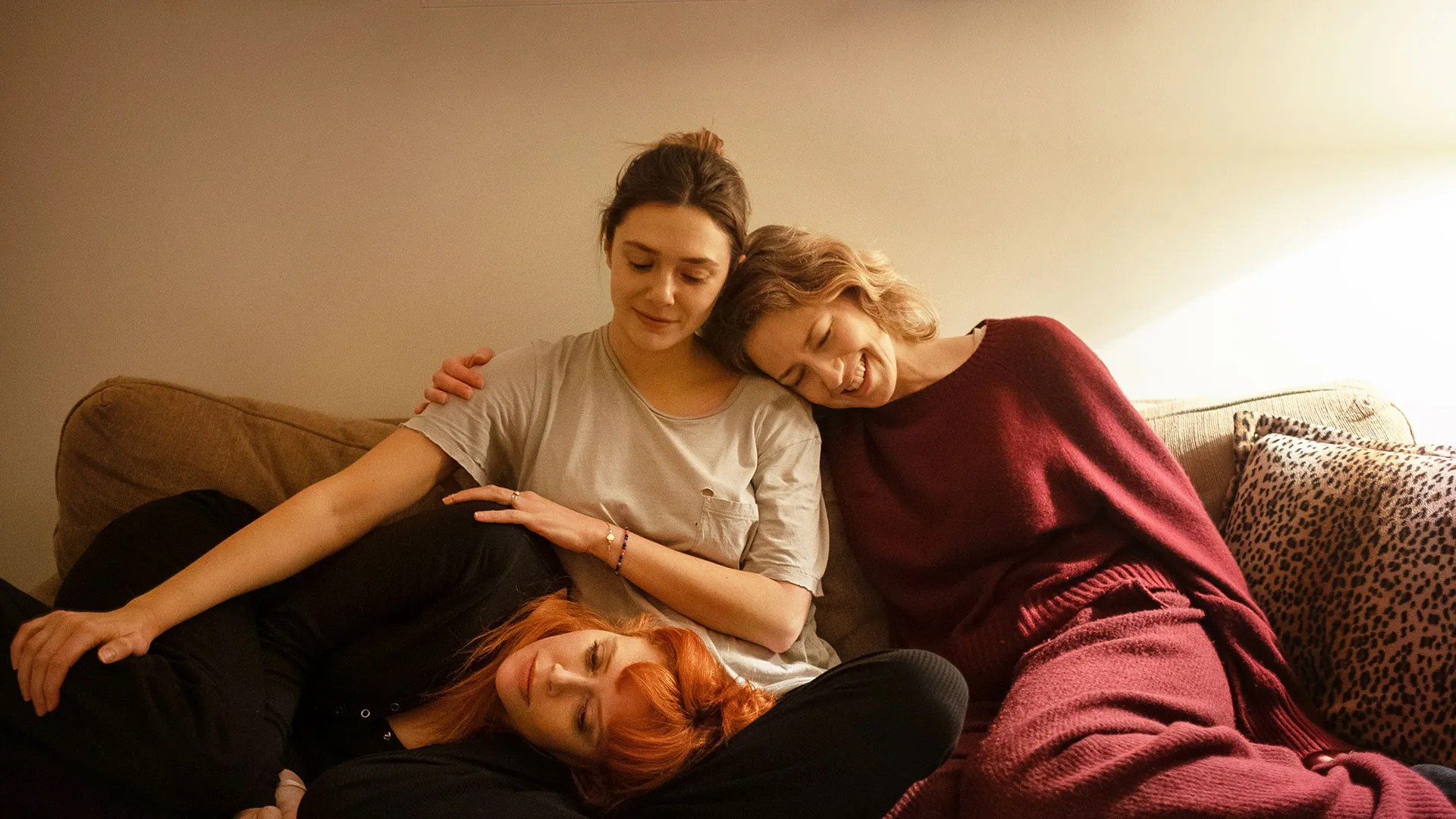
His Three Daughters
director Azazel Jacobs, starring Carrie Coon, Natasha Lyonne, Elizabeth Olsen

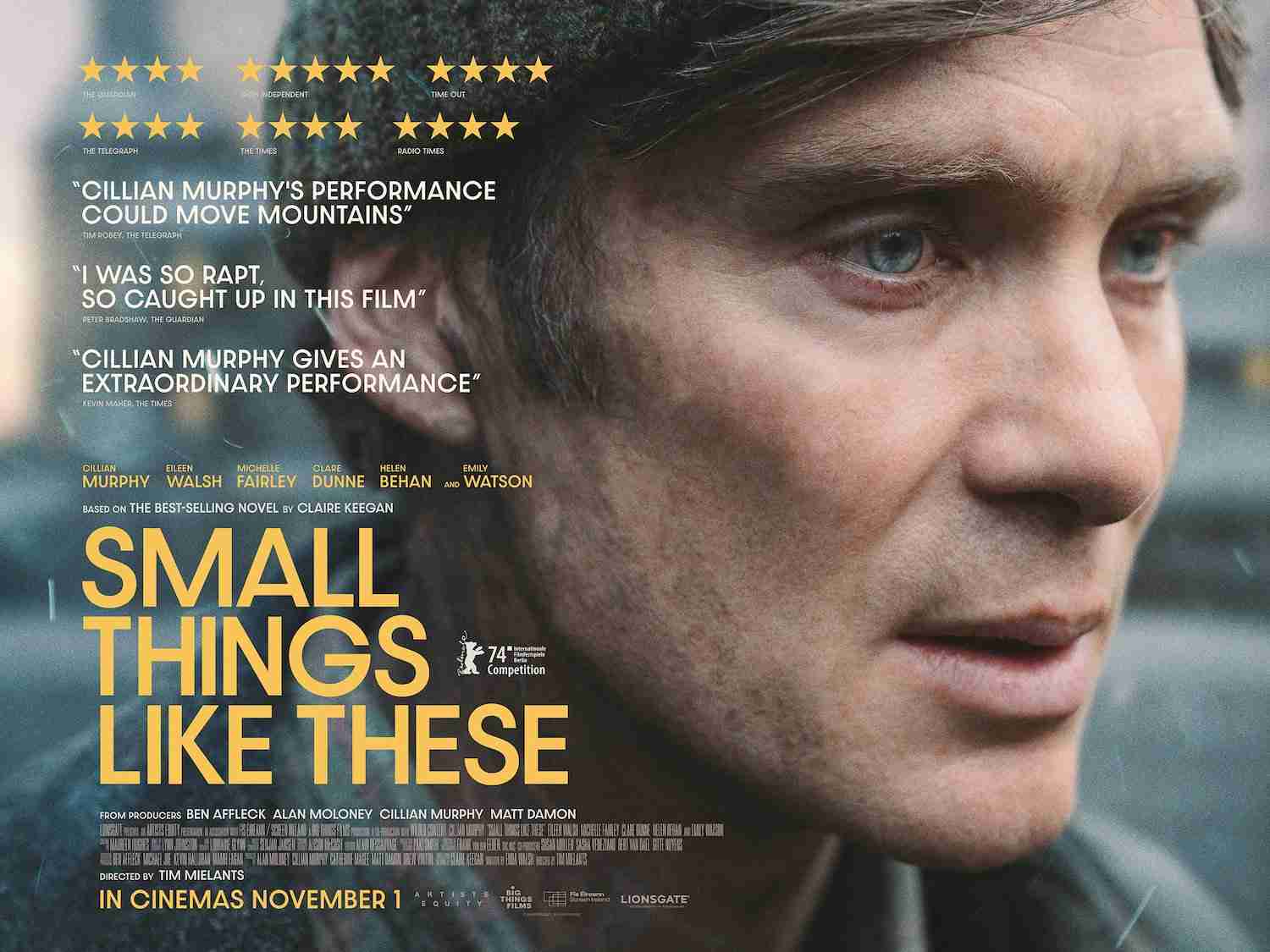
Small Things Like These
director Tim Mielants, starring Cillian Murphy, Eileen Walsh, Emily Watson

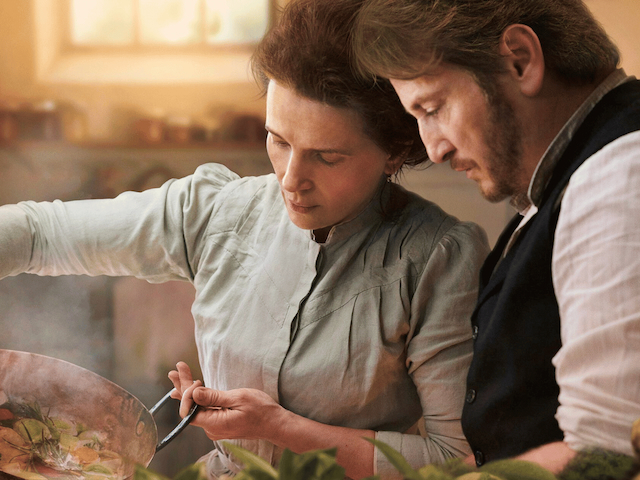
The Taste of Things
director Anh Hung Tran, starring Juliette Binoche, Benoit Magimel, Emmanuel Salinger

BOOKS

James by Percival Everett

This Strange Eventful History by Claire Messud

The Hunters: Two Novellas by Claire Messud

Table for Two by Amor Towles

The Lincoln Highway by Amor Towles

Knife: Meditations after an Attempted Murder by Salman Rushdie

Greek Lessons by Han Kang

The Final Curtain by Keigo Higashino

MY BEST BOOK BUYS
My favourite book purchases of the year, three at bargain prices, i.e. below $10. I was delighted to have found them, all brand new. What attracted me was first their appealing covers and one with marvellous colour art illustrations. These are examples and reasons why I’m not a Kindle user but still very much into tangible reading materials which I can hold in my hands, flip the pages, savour their content and visuals. I’ve started all of them, don’t intend to read like a page-turner, but for slow reading, or even just for looking up as reference with no pressure to read through from cover to cover. Additions to my long TBR list… come 2025.

A Writer’s Britain by Margaret Drabble, first attracted by the front photo, the feel of the special dust cover in my hands and yes, surprised to find there’s a bookmark ribbon that matched the greenery of the front design. British writers and poets and the landscape that inspired them.

The Autobiography of Alice B. Toklas by Gertrude Stein, illustrations by Maira Kalman, who contributed numerous full-page colour art illustrations that remind me of the scenes from the movie Midnight in Paris, especially the scenes inside Gertrude Stein’s home. I’ve a feeling that the set designer Hélène Dubreuil must have used this book in her research, for the movie had made these pictures come to life.

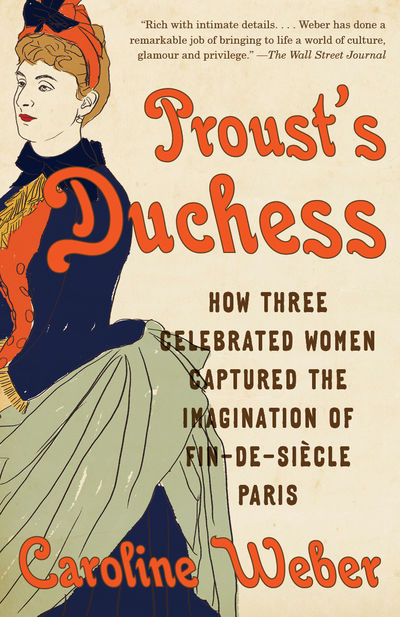
Proust’s Duchess by Caroline Weber, the times of Proust’s Paris, and the three women who inspired him to create the Duchesse de Guermantes from his In Search of Lost Time. Extensive research with numerous notes and references.

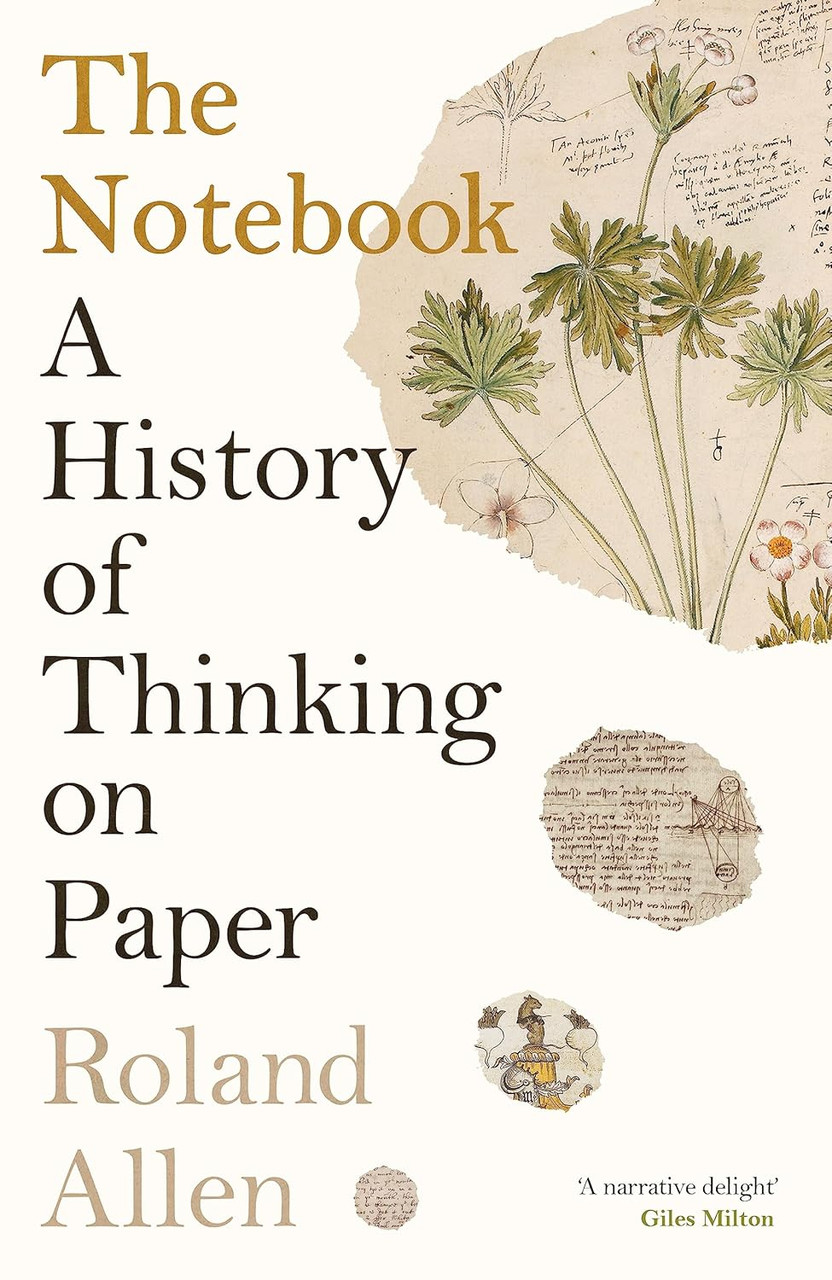
The Notebook: A History of Thinking on Paper by Roland Allen, a look into the history of the notebook, including journals, field notes, commonplace book… and exploration of those belonging to geniuses and the legendary throughout time. Extensive research by the author. What attracted me was the title. No, didn’t find this on the bargain table, as this is a current year publication, a notable best book of 2024 by The New Yorker and other acclaims.

***

A Happy 2025 to all!

Birding Highlights 2024

Time to take stock of memorable moments of the year. Here are some exciting bird sightings. I admit, nothing spectacular, but still memorable for me.

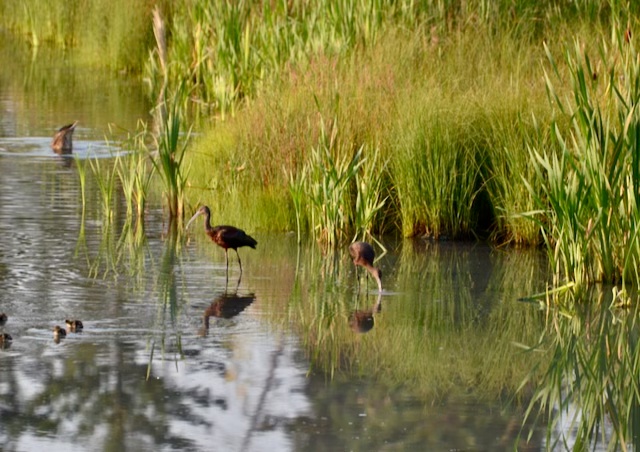
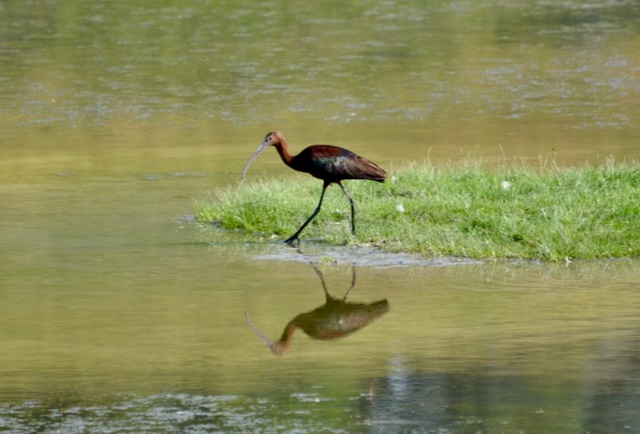
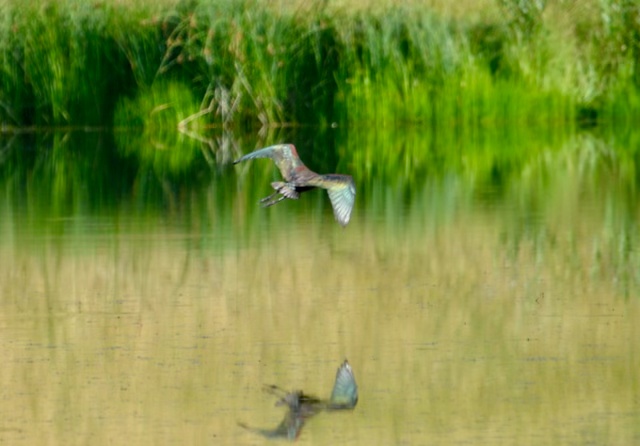
In August, 2022, I saw a Glossy Ibis in my neck of the woods. I had to go online to check it out as I’d never seen one before. I was elated to ID it. Here’s the post. What a rare find I thought, for they were mostly found in the Atlantic coasts to the east and the Gulf Coast of Texas to the south. Here in the Prairies? and at the foot of the Rocky Mountains in Western Canada? Must be a stray.

But two years later almost to the date, this August, I saw a Glossy Ibis again. This time, not just one but two, and even closer to my home. Here they are, pictures are blurry but the memory is clear. They were at a distance too far for my lens to capture in sharper focus. I like to imagine them as Impressionist paintings:

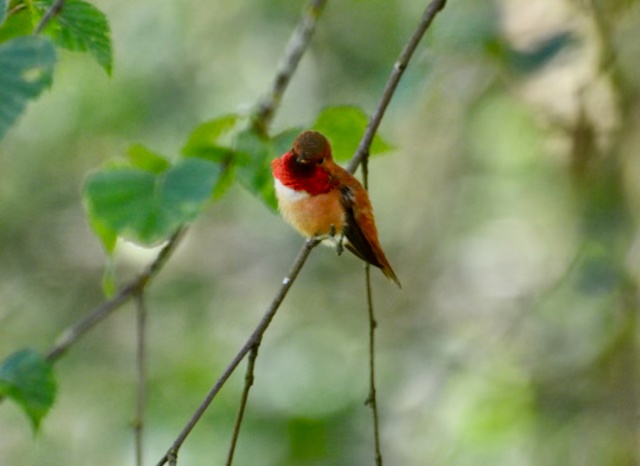
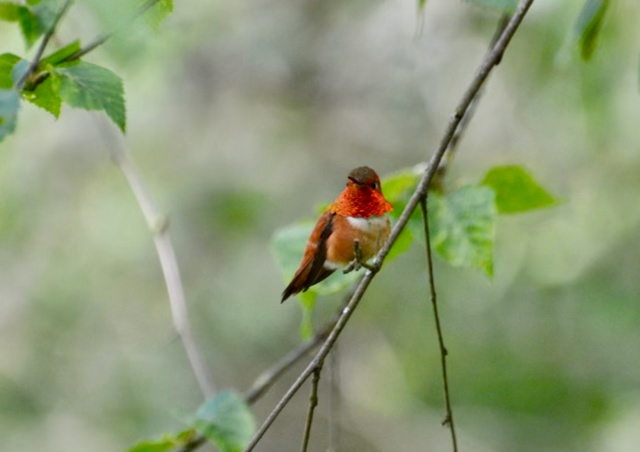
Another highlight of birding 2024 is seeing the Rufus Hummingbird for the first time in Richmond Nature Park in June this year. I’d seen Anna’s Hummingbird before but this time Rufus also. Here’s my post where more photos were posted and the origin of their names. Here’s Rufus, and look at the beautiful  iridescent necklace. It changed colour as I walked around it. I should have taken a video.

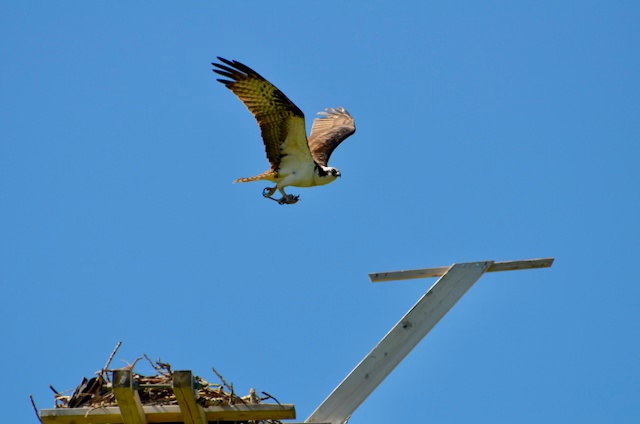
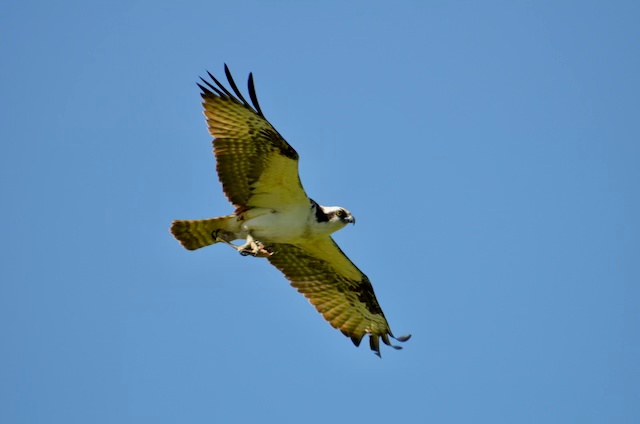
And the Osprey that got relocated due to road construction had found a new home (I like to think this one I saw was the one being forced out of its nest.) Looks like the benevolent construction crew had built a new structure for the Osprey to start a new home. Here it is tending its nest and I can’t see what exactly she’s carrying in her claws, looks like two babies, or some sort of fish meat:

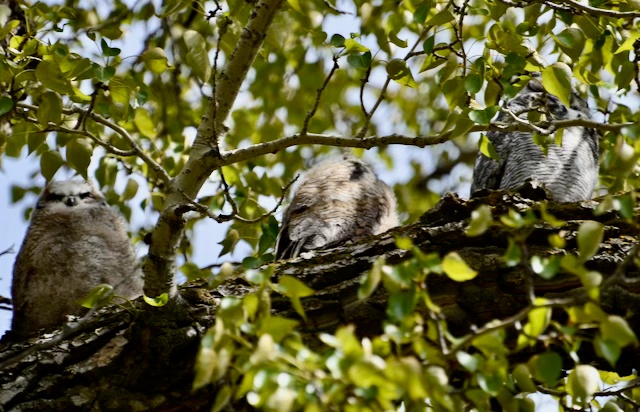
And of course, even though it’s a perennial event, welcoming new babies to the Owl Family is always a highlight and the start of the birding season every year. Here are a few pics of these cute little ones:

While I treasure memorable photos like these, I look forward to some novel birding experiences in 2025, and take some photos I’ve never done before.

***

Reading the Season: The Genesee Diary by Henri J. M. Nouwen

I started this annual post at Christmas time in 2008, calling it Reading the Season. As the song goes, this might be ‘the most wonderful time of the year’, but it could well be the most distressing to many. In the hustle and bustle of the Season on the heels of that perennial frenzy called ‘Black Friday’, I hope Ripple Effects can be a respite from the busyness by offering a reading suggestion that could bring some quietude and to slow down the running wheel, hopefully the heart rates as well.  

Henri Nouwen wore many hats, priest, speaker, writer, professor at Yale and Harvard Divinity Schools, and in the last ten years of his life from 1986-1996, quit his university teaching to live and serve as pastor among a community of intellectually disabled men and women, L’Arche–Daybreak in Ontario, Canada. 

Twelve years before he made that life-changing commitment to L’Arche, in 1974, Nouwen spent seven months in a Trappist Monastery, the Abbey of the Genesee, in Upstate, New York. He started a diary in June as he began this experience and ending with the last entry on Christmas Day. He was searching for peace and quietude and to practice the contemplative life away from his busy commitments. His entries show his utter honesty with himself and total humility with God, and was always open to love and appreciate those around him. The monastery wasn’t cocoon living, he was in touch with world events and could grasp firmly the role of history in the present, and the continuity of the past in one’s personal journey. I’m glad to find too that he’s an avid bird watcher, and from nature, he gleans deeper understanding of self and God.  

I’ve highlighted many passages, these are some of them. As a birder, I find this so intriguing. It may sound somber and serious, but I can also see the humour in it:

This morning Father John explained to me that the killdeer is a bird that fools you by simulating injury to pull your attention away from her eggs which she lays openly on a sandy place… I have asked pity for a very unreal problem in order to pull people’s attention away from what I didn’t want them to see.

Sometimes it seems that every bird has institutionalized one of my defence mechanisms. The cowbird lays her eggs in some other bird’s nest to let them do the brooding job; the Baltimore oriole imitates the sounds of more dangerous birds to keep the enemies away, and the red-wing blackbird keeps screaming so loudly overhead that you get tired of her noise and soon leave the area that she considers hers. It does not take long to realize that I do all of that and a lot more to protect myself or to get my own will done.

I wonder if I really have listened carefully enough to the God of history, the God of my history, and have recognized him when he called me by my name, broke the bread, or asked me to cast out my nets after a fruitless day? Maybe I have been living much too fast, too restlessly, too feverishly, forgetting to pay attention to what is happening here and now, right under my nose. Just as a whole world of beauty can be discovered in one flower, so the great grace of God can be tasted in one small moment. Just as no great travels are necessary to see the beauty of creation, so no great ecstasies are needed to discover the love of God. But you have to be still and wait so that you can realize that God is not in the earthquake, the storm, or the lightning, but in the gentle breeze with which he touches your back.

And a thought that for me brings a new perspective on Advent:

Advent does not lead to nervous tension stemming from expectation of something spectacular about to happen. On the contrary, it leads to a growing inner stillness and joy allowing me to realize that he for whom I am waiting has already arrived and speaks to me in the silence of my heart. Just as a mother feels the child grow in her and is not surprised on the day of the birth but joyfully receives the one she learned to know during her waiting, so Jesus can be born in my life slowly and steadily and be received as the one I learned to know while waiting.

***

Reading the Season in Previous Years:

2023: Reading the Season: Babe or Man, Man or King? A Poem by Luci Shaw

2022: Dietrich Bonhoeffer’s God is in the Manger

2021: Sabbath Poems by Wendell Berry

2020: Jack by Marilynne Robinson

2019: ‘A Hidden Life’ – A Film for the Season

2018: A Verse from Madeleine L’Engle’s The Irrational Season

2017: A Wrinkle in Time by Madeleine L’Engle

2016: Silence by Shusaku Endo

2015: The Book of Ruth

2014: Lila by Marilynne Robinson

2013: Poetry by Madeleine L’Engle

2012: Surprised by Joy by C. S. Lewis

2011: Walking on Water by Madeleine L’Engle 

2010: A Widening Light by Luci Shaw

2009: The Irrational Season by Madeleine L’Engle

2008: The Bible and the New York Times by Fleming Rutledge 

2008: A Grief Observed by C. S. Lewis

The Hunters: Two Novellas by Claire Messud

Always been fascinated by Claire Messud’s writing. Glad to discover a gem I’ve missed all these years, The Hunters, Two Novellas (first published 2001, this Norton edition, 2021) which I recently found in the basement of an indie bookstore, where used or overstocked books are stored.

The first novella is A Simple Tale. On the surface, it’s a Canadian immigrant story, how people came to Canada after the second World War to make a home for themselves and their future generation. But it speaks to deeper truths about belonging, hope, resilience, love and alas, family conflicts and disappointment. Immigrant or not, such are universal issues.

Maria Poniatowski was born in the Ukraine. WWII pushed her out of her village, stranded in Europe, and eventually arriving in Canada alone, having lost her family and close friends. She met Lev in the Displaced Persons camp, fell in love, married, and gave birth to baby Radek. Sounds common enough? But not in Messud’s interesting prose:

And finally there, in the Displaced Persons camp, Maria, an old maid of twenty… At long last. Dreamed, discarded, forgotten, it came to her on the sly, slowly at first, shy, and then in full torrent. That’s what the Displaced Persons camp would mean to her, in the ribbon of years: simply, love. (p. 26)

Settling in a new country doesn’t come naturally, especially when it’s totally foreign. Weeping and hardship may be for a short while, for joy soon comes. Maria receives a very Canadian welcoming at the Displaced Persons camp:

In the morning, that first September morning of 1946, there was the piercing early-autumn sunlight sifting through the pines, and the clean odor of the needles as they were trampled underfoot, and the soft damp mulch scent of the forest; and there were maples, in amongst the monstrous evergreens, turning, golden, vermilion, ochre in a riotous celebration of the Poniatowskis’ arrival. (p. 31)

Maria later found a housekeeping job with Mrs. Ellington, and became her life-long companion for decades. As little Radek grows up and Maria and Lev grow old, disappointments set in. The baby son she has raised all the years from the displacement camp to a house in Toronto is now a man with his own will but totally subdued by the girl he chooses to marry, an obvious unfit match, bringing his parents only disappointment and heartbreaks. Having endured and lived through the War and years of adjustments and finally calling a new country home, Maria, a widow now and alienated from her son and his family, watches Mrs. Ellington slip away. Alone again.

________

The second novella, The Hunters, can well be an exemplar for the now popular, contemporary genre of the psychological, suspense novels such as Before I Go to Sleep (J. S. Watson, 2011), Gone Girl (Gillian Flynn, 2012), The Girl on the Train (Paula Hawkins, 2015), The Woman in the Window (A. J. Finn, 2018)… just to name a few. An unreliable narrator, or a misleading perspective taking the story onto twists and turns until the frame of reference unraveled and truth spills out.

What Messud is doing in The Hunter, however, is a much deeper probe into the psyche of a person in solitude, blurring the imaginary with reality. How reliable is our judgement of character, or how accurate is our perception in deciphering facts from the inkling of our subjective mind? How reliable is our view on reality? Can we fully know someone?

An American academic spends a summer in London to do research on a book he or she is writing. Exactly, Messud does not specify the name or the gender of the narrator, this academic. I wonder what purpose would that serve, maybe universality. Nevertheless, Messud is an expert in psychoanalysis, and her prose, exquisite, as she describes the narrator’s state of mind and inner thoughts.

Choosing to stay in a neighbourhood away from the mainstream, academic centre of London, the narrator seeks solitude to nurse the ending of a love relation, as well, to seek refuge in the anonymity of a diverse neighbourhood where nobody knows her and no one the narrator wants to know.

Such a peaceful existence is interrupted one night by a downstairs neighbour Ridley Wandor, coming up to introduce herself and thus intrudes into the privacy and disrupt the solitude of our much annoyed narrator. Ridley Wandor would become the unwanted nemesis that summer, and months later, when a clearer view of facts is revealed, the cause of inescapable guilt.

The Hunters isn’t one of those page turners in which the plot pushes the reader to forge on, but an astute character study of both the hunter and the prey. In a deeper way, Messud challenges her narrator’s sense of reality, and just because of the lack of omniscience––our very limitation as human––shaking the narrator to the core as facts are revealed at the end. It’s hard to find an excerpt in the novella without dropping a hint as spoiler, but this famous line from Atticus Finch comes to me naturally:

You never really understand a person until you consider things from his point of view […] until you climb into his skin and walk around in it.”

For our narrator, this revelation comes a bit too late.

~ ~ ~ ~ Ripples

Novellas in November is co-hosted by 746 Books and Bookish Beck

Related posts on Ripple Effects:

Small Things Like These from novella to screen

The Quiet Girl Movie Review: From the Literary to the Visual

Passing by Nella Larsen: from Novella to Screen

The Gone Girl Phenom

Before I Go to Sleep: Movie or Book?

***

Small Things Like These: from Novella to Screen

Here’s an interesting fact. Claire Keegan’s books Foster (2010) and Small Things Like These (2020), both have 128 pages. While short as a standalone book, both novellas exemplify Keegan’s style of writing: sparse descriptions that carry powerful punches. I’m glad to note that their film adaptations are worthy productions akin to her style, quiet, nuanced, and poignant. Foster is made into the film The Quiet Girl in 2022. (My review here) Small Things Like These is newly released, directed by Tim Mielants and starring Cillian Murphy, following his Oscar role as Oppenheimer.

Bill Furlong (Cillian Murphy, Oppenheimer) is a coal merchant in an Irish town. It’s Christmas time, cold and snowy, after the dirty lifting of heavy bags of coal, the devoted husband and father comes back to a warm household, wife Eileen (Eileen Walsh) has supper ready and his five girls make up the chirpy harmony of home. The uneventful routine is disrupted one day when Bill makes his delivery to the local convent, witnessing a rough handling of a teenage girl being shoved into the entrance of the Catholic institution. Another time, when he stepped into the building to deliver his invoice, a girl scrubbing the floor comes up to him begging him to take her away. The next time he makes his delivery, he finds the girl locked inside the coal storage, dirty and shivering in cold.

The Magdalene Laundries are institutions operated by the Roman Catholic orders to house ‘fallen women’, asylums notorious for their abuse of the young women there, unpaid workhouses doing laundries for profit, unwed mothers having their babies forcibly taken away to be adopted. There have been features and TV series on this subject but the most exposure for viewers outside the UK is probably the movie Philomena (2013) starring Judi Dench and Steve Coogan. The note at the end of Small Things Like These explains the historic context, dedicating it to the more than 56,000 young women who were sent to the institutions between 1922 and 1998 for purpose of “penance and rehabilitation.”

Following his Best Actor Oscar win as physicist J. Robert Oppenheimer whose work, albeit not fully within his control, had affected the result of World War II, here in Small Things, Murphy is equally effective in his portrayal of a coal deliverer, fighting an internal war of conflict, a moral dilemma, to act upon his conscience thereby counteracting an institution that is all powerful in his town, or just to keep silent and do nothing to safeguard the wellbeing of his family. His wife says to him clearly like a warning, considering his soft heart: “If you want to get on in life, there are things you have to ignore.”

Bill’s past is interposed with his present throughout the film, for he was orphaned as a child but was raised by a loving woman. The compassionate upbringing he received could well had formed his sensitivity towards others’ suffering. Murphy’s performance of a troubling soul is heart wrenching, nuances captured aptly by closeups. Another frequent closeup shot is his handwashing after coming home from work, cleaning with soap and brushing out the black coal soots in his hands almost obsessively, a visual telling of his reluctance to join in the darkness of the world.

It’s small things like these, courageous acts by a common man despite social pressures and the negative consequences for his own family that make Bill a heroic figure. All five of his daughters need to get a good education in the Catholic-run system in town. To be at odds with Sister Mary (Emily Watson) is to have the door shut on his girls in terms of education and a good future. All these details are readily available as one reads Keegan’s book, but for those who have no contextual background before watching the film, such consequences of Bill’s moral dilemma may not be so easily grasped by the viewer. The film does drop hints in a few dialogues and subtly in certain scenes. For a 98-minute feature, more elaboration to denote these issues could be helpful in terms of the congruence of the storytelling and especially in magnifying the price Bill has to pay for his courageous act of compassion.

Overall, a worthy adaptation of Keegan’s novella. Come awards time later this year, I hope to see Murphy being acknowledged for his performance here. It’s small films like this that make cinema arts gratifying aesthetically and meaningful socially in our world that needs constant critique and reflection.

~ ~ ~ 1/2 Ripples

Related Posts on Ripple Effects:

The Quiet Girl Movie Review: From the Literary to the Visual

Passing by Nella Larsen: from Novella to Screen

Novellas to Screen

***

Novellas in November is hosted by 746 Books and Bookish Beck

Four hours of fantasy in the air

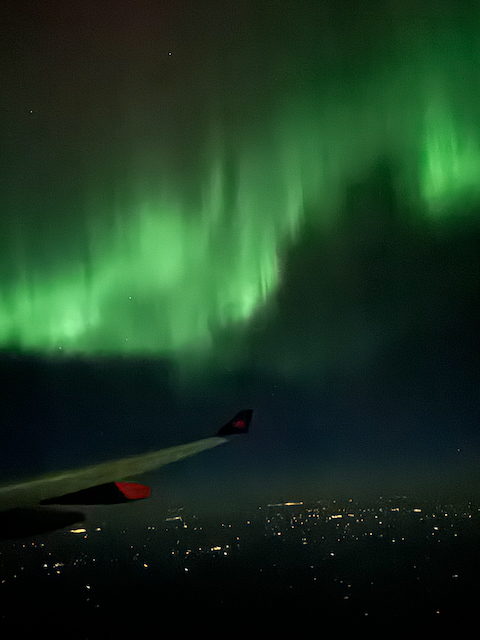
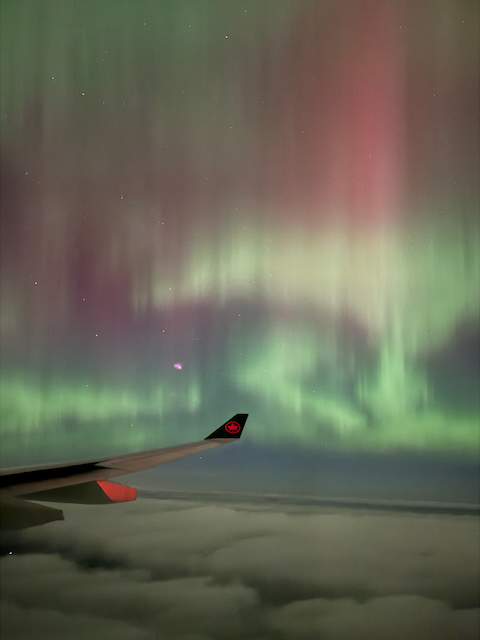
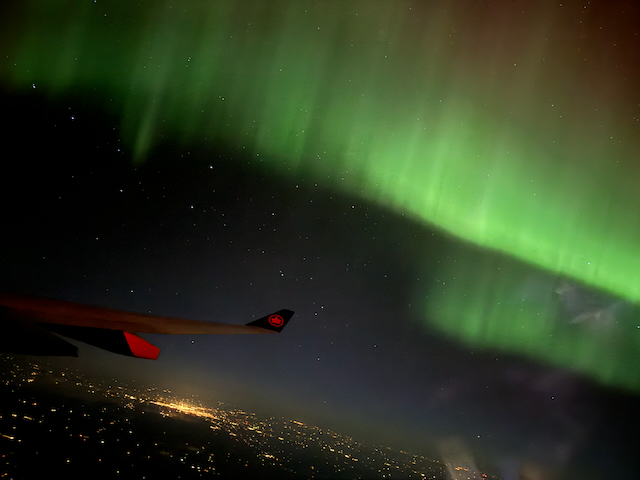
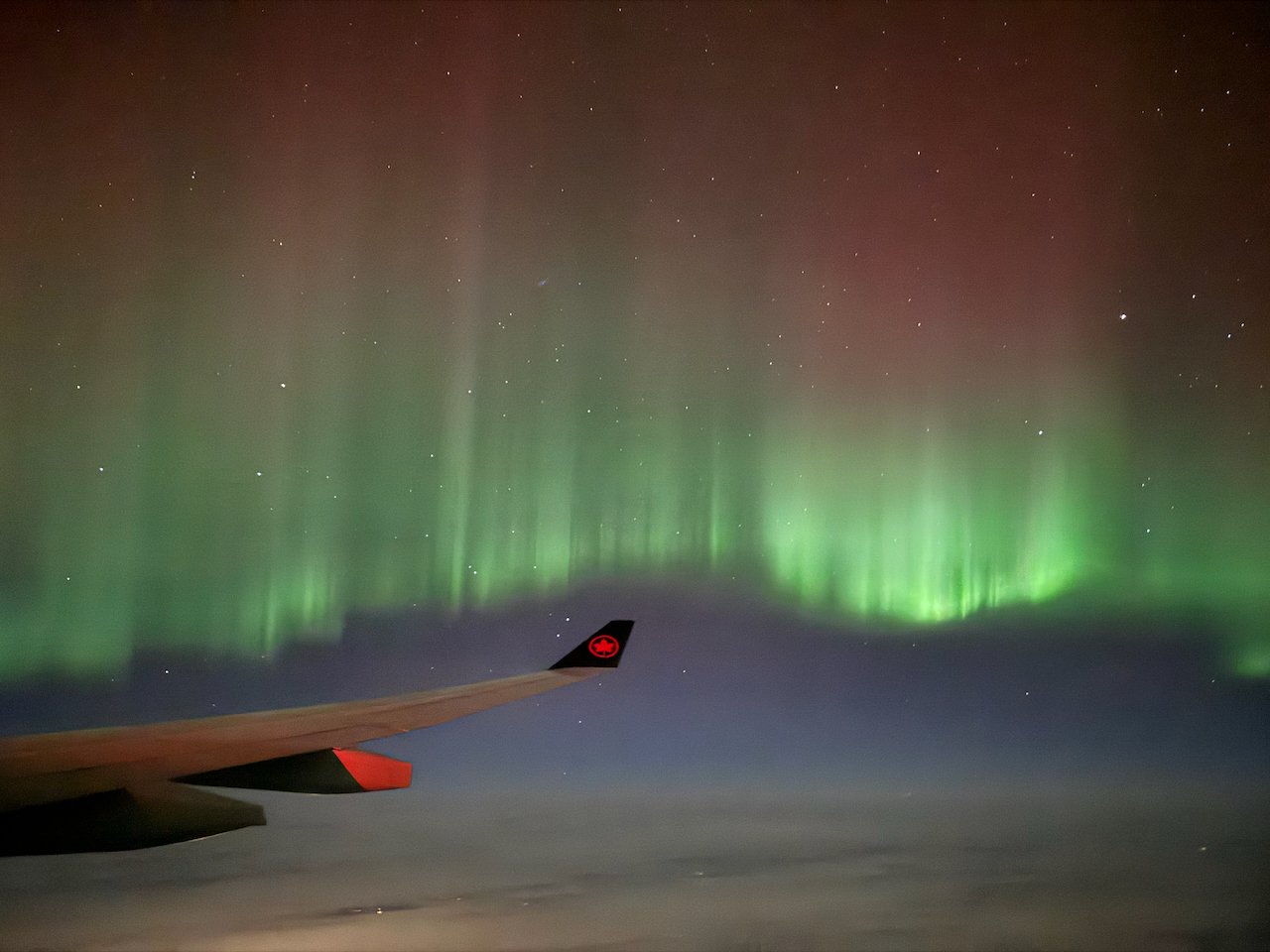
Thursday, October 10, I boarded the Air Canada flight at 9 pm EST from Toronto heading west to Calgary. I expected a Gravol-driven four hours of dozing before I landed. Who’d have known that those four hours would become the most extraordinary flight experience I’ve ever had.

First off, as we departed, I took this photo of the Toronto area. I thought to myself, hey, that was quite a nice pic. But not until I was up in the air the next hour did I realize there was something even more fantastic in store for me, manmade lightings compared to awesome cosmic wonders.

Our pilot had mentioned the possible appearance of the Aurora Borealis when we took off, but it didn’t occur to me to look out the window with much hope, because all I could see was the flashing red light from the right wing of the plane against the darkness. It’s only when the young man in front of me covering the head of his seat mate with his jacket as she did something by her window. I was wondering what they were doing when he showed me the photo they got on their phone of the Northern Lights.

For the next few hours I had taken over 100 photos on my iPhone. The amazing thing is, I could hardly see anything out the window with my naked eyes, but what’s caught by my camera lens was some fantastic sights. What I could see was only darkness, but what’s really happening was a cosmic show of spectacular wonders. And, I don’t mind the Air Canada logo on the wing in my pictures, just proved that I took these photos 30,000 feet up in the air.

Here are a few of them, no editing, no sharpening or colour changes, and of course, no AI generated effects.

Happy Thanksgiving!

***

‘His Three Daughters’ is a Rare Gem

In the midst of spectacles and action thrillers coming out nowadays, it’s refreshing to see a quiet gem has arrived on Netflix. His Three Daughters focuses on a topic common in real life and in movies, siblings coming back to their ailing parents’ home to prepare for their final parting. Maybe to offset such a heavy subject matter some of these movies are handled in a comedic or even farcical way, This is Where I Leave You (2014) and August: Osage County (2013) come to mind. In contrast, writer director Azazel Jacobs in His Three Daughters (2023) confronts the subject in a realistic and mindful way, eliciting from his three main actors honest and powerful performance. Jacobs is apt too in infusing witty dialogues and subtle humour. What a gratifying turn from his previous film French Exit (2020).

Under one roof in their father’s NYC apartment, three estranged sisters learn to live with each other once again. Carrie Coon (The Gilded Age) is the eldest daughter Katie, the take-charge type, from cooking, dealing with palliative nurses, getting a DNR (do-not-resuscitate) form signed by the father before he slips away, to writing his obituary while micro managing her teenage daughter at home in Brooklyn. Her intolerance of her stepsister Rachel (Natasha Lyonne, Orange is the New Black) who smokes weed and bets on sport games constitutes the main conflict in the sibling relationships. Trying to mediate between the two is Christina (Elizabeth Olsen, Sorry for your Loss) who is always reconciliatory. She’s preoccupied with her young daughter and husband at home far away across the country.

As for the father, he remains unseen behind closed or slightly opened door in his bedroom, his presence only denoted by the rhythmic beeping of the monitor to which he’s hooked up. Such concealing allows the viewers to focus on the trio, for what’s equally pressing is the rebuilding of sisterhood and the way to move forward after their father is gone. Dying relationships among the living are crying out to be heard and reconciled.

Rachel has been living in the apartment with their father all along, while the other two sisters just recently arrive to take care of things at this final stage of their father’s life. New house rules are set up. A pivotal scene comes when Rachel’s friend Benjy (Jovan Adepo) confronts the other two sisters as he points out the reality of their family dynamics. A new perspective begins to sink in as they come to realize their own shortfalls, a reality check that doesn’t go down easy for anyone.

In this chamber piece rich in dialogues, Coon, Lyonne, and Olsen are impeccable in displaying the raw and honest emotions of sibling love, hate, overt and hidden sentiments they hold against each other. But the overall mood is not all serious and somber. There’s underlying humour throughout, especially the opening scene, which reminds me of early Woody Allen works. Music is minimal to amplify the conversations, silence to enhance tension and ambivalence. Despite being shot inside an apartment with minimal exterior scenes, the camera is effective in conveying suspense, loss, and love.

As for the twist towards the end, it’s open to interpretations; however, it does seem incongruent with the earlier part. To avoid spoilers, I won’t be discussing it here. No matter, it’s the process reaching to the end that’s what the film so powerfully depicts. I hope to see more of this kind of cinematic gems to appear in theatres and on streaming platforms.

~ ~ ~ 1/2 Ripples

***
Related posts on Ripple Effects:

August: Osage County, Play and Movie Review

The Savages, with Philip Seymour Hoffman and Laura Linney

Book to Screen in Development 2024 and Beyond

Last post I listed some adaptations from books to the big and small screens coming out this fall in the festival circuit or via streaming platforms. Here are more titles currently in development or in production.

James (2024) by Percival Everett

Stephen Spielberg executive producer, in pre-production, to be directed by Taika Waititi (Jojo Rabbit, 2019) James is Percival Everett’s re-imagination of The Adventure of Huckleberry Finn from the perspective of escaped slave Jim. Currently, the highly acclaimed novel is long-listed for this year’s Booker Prize. Short list will come out Sept. 16 and James is expected to be on there. This is the second movie adaptation of Everett’s novels. After the success last year of his Erasure being turned into the Oscar winning American Fiction–for Best Adapted Screenplay–James is a highly anticipated encore. 

Hamnet (2020) by Maggie O’Farrell

Another one on Stephen Spielberg’s list as producer, now in production. The adaptation of O’Farrell’s novel is directed by Nomadland’s Oscar winning Chloé Zhao, with a talented British cast: Jessie Buckley, Emily Watson, Paul Mescal, and Joe Alwyn. The book is a fictional account of Shakespeare and his wife’s loving relationship with their son Hamnet and their coping with his tragic death at the age of eleven. Zhao’s previous films (before Marvel’s The Eternals) are nuanced and soulful cinematic works. I look forward to her helming this adaptation about love and grief.

Knife: Meditations after an Attempted Murder (2024) by Salman Rushdie

Rushdie’s personal account of the traumatic, life altering event of being stabbed multiple times while on stage in upstate New York, August 2022, and his slow and painful recuperation. Ironically, he was speaking on the topic of keeping writers safe. His memoir will be adapted to the screen by the Oscar winning documentarian Alex Gibney. I’ve given this book 4 stars on Goodreads, was totally riveted by Rushdie’s writing. Hope Gibney’s is an effective documentation and a cautionary testimonial to safeguard artists from harm.

The Chronicles of Narnia (1950’s) by C. S. Lewis

After crashing the glass ceiling, catapulting Barbie to a record $1.4 billion box office sale by a sole woman director, Greta Gerwig is tasked to write and helm at least two of C. S. Lewis’s beloved children series as Netflix films. In a BBC interview, Gerwig said: “I’m slightly in the place of terror because I really do have such reverence for Narnia… I’m intimidated by doing this. It’s something that feels like a worthy thing to be intimidated by.” Let’s hope her fear is a driving force to push her towards excellence in adapting this meaningful book series.

Crying in H Mart (2021) by Michelle Zauner

Poignant memoir of Zauner’s, singer songwriter of the band Japanese Breakfast, about her rediscovery of her Korean heritage and reestablishing a deeper mother-daughter relationship through food and cooking… alas, after her mother’s terminal cancer diagnosis. As an Asian American, her father is Caucasian of Jewish heritage, Zauner’s book is a new and significant voice. She is writing the script herself, Will Sharpe (The White Lotus) directing. Zauner will create the soundtrack with her group Japanese Breakfast. The memoir is an American Book Award winner (2022) and the 2021 Goodreads Choice Award for Memoir & Autobiography, 55 weeks in the NYT Bestseller list.

Tomorrow and Tomorrow and Tomorrow (2022) by Gabrielle Zevin

Here’s another contemporary, literary voice from a biracial American writer. Like H Mart author Zauner, Zevin’s father is of Jewish and mother Korean heritage. Its title alluding to Shakespeare’s Macbeth, Tomorrow and Tomorrow and Tomorrow is a unique and original story about self, love, and video games. Goodreads Choice Awards in Fiction (2022) and top book of the year on numerous lists, and one of my best reads last year. Excited to find out that Paramount Pictures had acquired the film rights even before the book was published, and recently learned that Siân Heder, the Oscar winning director of CODA (2021), has signed on to direct.

The Woman in Cabin 10 (2016) by Ruth Ware

Ruth Ware’s popular suspense thriller takes place on a cruise ship, with British star Keira Knightley on board as a journalist who is the only eyewitness to a murder. The Netflix movie will be directed by Simon Stone (The Dig, 2021). Other Ruth Ware books on the drawing board for adaptation are The Turn of the Key and The It Girl. No further info on these.

Run Rose Run (2022) by Dolly Parton and James Patterson

Dolly Parton and country music fans take note, the legendary singer’s dip into the literary ink pot with her first fiction, a thriller she co-wrote with James Patterson, is to be adapted onto screen. The NYT bestseller about a young singer songwriter on the rise and on the run will be produced by Reese Witherspoon.

***

Do you have any books you’d like to see adapted to a movie or TV series?

From Book to Screen 2024 Fall

Late August kicks off the annual film festival season, and come September, arrays of new offerings on streaming platforms. I haven’t done actual research, but just a feeling that nowadays, more and more movies are adapted from printed sources. The following is a list of upcoming books adapted to full features in theatres, or TV movies and series for streaming:

Conclave by Robert Harris (2016) 

International Premiere at TIFF in September, in theatres November. Directed by Edward Berger (2023 Oscar winner All Quiet on the Western Front) with a stellar cast led by Ralph Fiennes, Stanley Tucci, and John Lithgow. Peter Straughan (Tinker Tailor Soldier Spy, 2011) adapts from Harris’s novel revealing the dark secrets and intrigues in the intense proceedings in electing a new Pope.

The Critic or Curtain Call (2015) by Anthony Quinn

Had its world premiere at TIFF last year and slowly trickling to theatres this September. Directed by Anand Tucker (Girl with a Pearl Earring, 2003) with an exciting British cast with Ian McKellen as the eponymous, acerbic critic, his power and influence affecting many. Co-stars include Lesley Manville, Gemma Arterton, Mark Strong, Romola Gerai, Ben Barnes.

The Day of the Jackal by Frederick Forsyth (1971) 

10 episodes on Peacock, remake of the iconic 70’s movie. Political thriller recounting the plot to assassinate French President Charles de Gaulle after he signed the treaty leading to Algeria’s independence. In this new version, Eddie Redmayne is the assassin Jackal.


Disclaimer by Renée Knight (2015)

Oscar winning director Alfonso Cuarón (Roma, 2018) helms a stellar cast including Cate Blanchett, Lesley Manville, Kevin Kline, Sacha Baron Cohen, Kodi Smit-McPhee. A mini-series where Blanchett plays a TV documentary journalist who exposes dark secrets of others is threatened with the revealing of her own past. Canadian premiere at TIFF in September, mini series on Apple TV+

Here, graphic novel (2014) by on Richard McGuire

McGuire’s works are multi-faceted and highly acclaimed, as permanent collections at MoMA, The Morgan Library and others, print form in The New Yorker, The New York Times, Le Monde… Can a movie version do justice to this multi-talented artist? The team that made the eras-spanning Forrest Gump (1994), director Robert Zemeckis, screenwriter Eric Roth, star Tom Hanks and Robin Wright re-unite to bring us Here. Interesting addition to the cast that I look forward to is Michelle Dockery. In theatre come November.

Interior Chinatown by Charles Yu

The National Book Award winning novel of 2022, a genre defying writing that fuses a novel and a screenplay. The story of a young Chinese American actor struggling to escape stereotypical roles in Hollywood. Stand-up comedian and actor Jimmy O. Yang (Crazy Rich Asians, 2018) stars. 10 episodes on Hulu.

The Nickel Boys by Colson Whitehead (2019) 

New York Film Festival’s (Sept. 27 – Oct. 14) opening film. The winner of the 2020 Pulitzer Prize for Fiction is adapted into film with the title slightly changed to Nickel Boys. Friendship between two Black teenagers in the notorious reform institution, the Dozier School for Boys in Jim Crow-era Florida sustains the two of them during their harrowing residency. 

The Outrun by Amy Liptrot (2016)

Liptrot’s award winning memoir of her troubled past is adapted to the screen and directed by Nora Fingscheidt (The Unforgivable, 2021) starring Saoirse Ronan. From wild living and alcoholic ruin in London, Liptrot rehabilitates herself as she seeks the sanctuary of nature and her childhood home in Orkney off the northeastern coast of Scotland.

The Perfect Couple by Elin Hilderbrand (2018) 

A Nantucket-set wedding disrupted by a murder which makes everyone a suspect. Goodreads declares Hilderbrand “the queen of the summer beach read.” Nicole Kidman, Live Schreiber, Dakota Fanning anchor the Netflix mini-series coming out in September.  

The Return based on The Odyssey by Homer (ca. 8th – 7th C. BC)

World premiere at TIFF, in theatres December. Ralph Fiennes as Odysseus, returning home to Ithaca after the Trojan War and misadventures twenty years later to find his kingdom changed. Juliette Binoche is the patient wife Penelope, trying to buy time to wait for his return and at the same time warding off unruly suitors. Son Telemachus (Charlie Plummer) not so patient. 

Wicked by Gregory Maguire (1995)

Based on the musical, which in turn adapted from the book by L. Frank Baum’s The Wonderful Wizard of Oz (1900), this new rendition as a movie is directed by Jon M. Chu (In the Heights, 2021; Crazy Rich Asians, 2018) Cynthia Erivo (Harriet, 2019) and Jonathan Bailey (Bridgerton, 2020-2024) star.

***

More to come…

My TIFF 2024 Selections

Another year of not heading to TIFF (Sept. 5 – 15), but I still like to browse online their lineups and imagine myself being there. Fond memories gush out… immersing in the festivities in the pedestrian only King Street, traffic blocked off for the occasion; watching films at TIFF Lightbox and browsing the gift shop there; serendipitous sightings of admirable characters such as top critic Justin Chang; lining up to get Roger Ebert to sign a copy of his book Life Itself, and catching a glimpse of Jessica Chastain at the historic Elgin Theatre. I won’t forget the adrenalin-kicking rush back to the press room blocks away after watching a film to write down my impression before darting out for another screening.

For 2024, here’s my watch list if I were there. The title is linked to TIFF’s webpage on the film:

Daniela Forever World Premiere. A Spain and Belgium co-production directed by Nacho Vigalondo starring Henry Golding. Since his breakout role as Nick Young in Crazy Rich Asians (2018), Malaysian born Golding had shown his versatility in starkly different genres, from crime action comedy The Gentlemen (2019) to Jane Austen’s Persuasion (2022). The synopsis of Daniela Forever makes me think of Eternal Sunshine of the Spotless Mind (2004), where science and love intersect.

Oh Canada North American Premiere, starring Richard Gere re-teaming with his American Gigolo (1980) director Paul Schrader after 44 years. Schrader’s most well known work probably is his screenplay for Scorsese’s Taxi Driver, but his Transcendental Style in Film is one of the books I found most helpful for me in appreciating film art. Here Gere plays a Vietnam War draft dodger recounting his life decades later.

The Friend   International Premiere, directed by Scott McGehee and David Siegel (What Maisie Knew, 2012) dramedy for dog lovers, starring Bill Murray and Naomi Watts. Adaptation of the 2018 National Book Award winning novel by Sigrid Nunez.

The Room Next Door North American Premiere directed by acclaimed Spanish director Pedro Almodóvar, his first English-language feature with Julianne Moore and Tilda Swinton.

We Live in Time World Premiere directed by John Crowley (Brooklyn, 2015) with Oscar nominees Florence Pugh and Andrew Garfield in a romantic drama.

By the Stream North American Premiere, prolific South Korean director Hong Sangsoo’s newest with his muse Kim Minhee.

Measures for a Funeral World Premiere, Canadian director Sofia Bohdanowicz tells the story of a young academic researching the early 20th-century Canadian violinist Kathleen Parlow while escaping the grasp of a domineering musician mother. Reading the synopsis makes me think of Ingmar Bergman’s Autumn Sonata.

Daughter’s Daughter World Premiere, executive produced by international film legend Sylvia Chang and Taiwanese New Wave auteur Hou Hsiao-hsien. Chang stars in this moral tale with a very original story idea about a mother having had to make decision regarding her deceased daughter’s legacy.

In Conversation With… Cate Blanchett Special talks in these events take the star from their pedestal to a down-to-earth level, often letting them present themselves as artists and very human. In the past, I’d attended “In Conversation With Juliette Binoche,” still remembers how casually she dressed and personal she was.

___________

Prime Time where new TV series are introduced. Prominent film directors and actors have flocked to the small screens in recent years, levelling the playing field for film and TV, blurring the lines between the big screen and home entertainment. Here are some upcoming series for streaming. I’ll be interested to watch these:

Alfonso Cuarón’s Disclaimer –– Oscar winning director Cuarón (Roma, 2019) is producer with a cast including Cate Blanchett, Lesley Manville, Kevin Kline, Sacha Baron Cohen, Kodi Smit-McPhee. A mini-series where Blanchett plays a TV documentary journalist revealing the dark side of major institutions. 

Others series include Thomas Alfredson’s (Tinker Tailor Soldier Spy, 2011) Faithless, Thomas Vinterberg’s (Oscar nominee for Another Round, 2021) Families Like Ours, and Joe Wright’s (Darkest Hour, 2018; Atonement, 2008M. Son of the Century.

***

Into the Summer Woods

The horrific destruction of the town in Jasper National Park by wildfire yesterday makes me feel mournful not only for the human loss of homes and businesses––25,000 residents and visitors have evacuated, many with no homes to return to––but also for the majestic, natural beauty and the wildlife dwelling there. How do animals and even birds escape the engulfing fire, with flames reaching 100 metres high? The drive from Banff to Jasper is one of the most beautiful Parkways in Canada. As I write this, one third of the historic town of Jasper has been burned or damaged. The fire is still going, actually, hundreds of wild fires are still burning in Alberta and BC.

The posting of my birding experience on Ripple Effects seems to have taken a new purpose now:
to preserve memories, my very own encounter with Nature and the raw, authentic moments, for I know, these too are ephemeral.

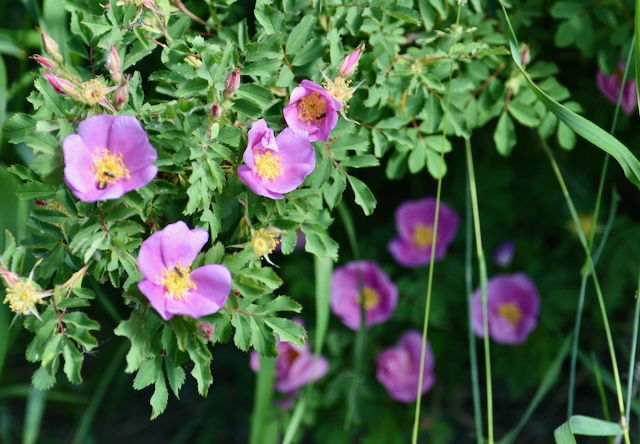
The following are some of the visual memories I’ve gathered in the past month near the Pond. First off, the summer wild flora, blooming bright and colourful are the Alberta provincial flower, the Wild Rose. If you can ID the other ones, do let me know:

Snow in July? Fortunately not. Thanks to poplar cotton, a monotonous stream now looks dramatic:

It’s always a pleasant surprise to see a deer suddenly appear nearby, and this is a handsome, young one:

A favourite sighting any time… the Belted Kingfisher, not easy to spot, but their distinct rattle calls give them away:

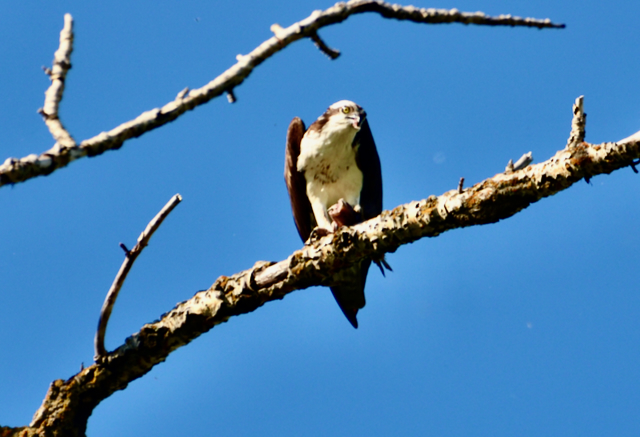
High up on a tree branch, the Osprey is chomping its prey. You can see half a fish under its claws:

For these two hungry baby European Starlings, it’s door dash delivery by Mama Starling, not fast enough as always:

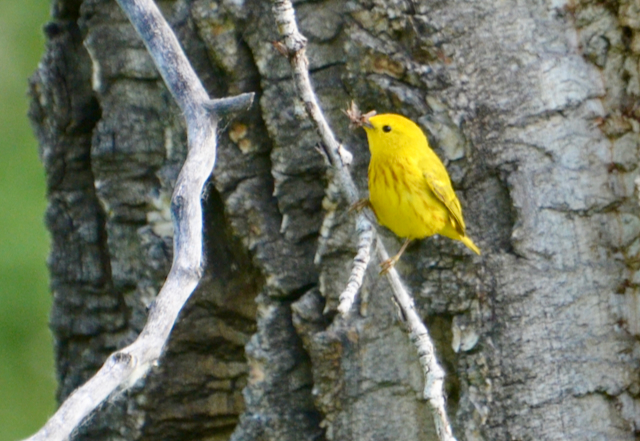
As for Mama, she just can’t wait to see babies grow up to search for their own food, just like these lovely Yellow Warblers:

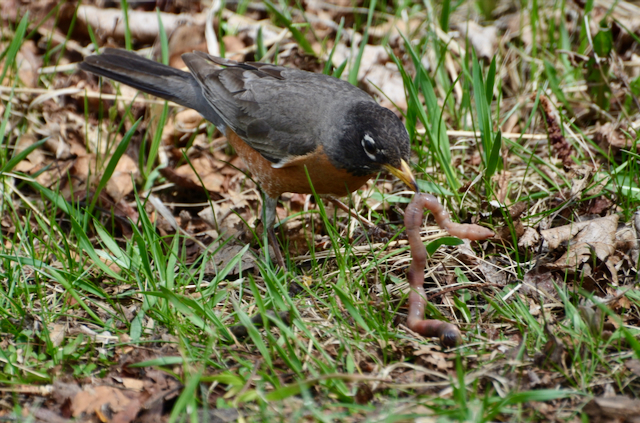
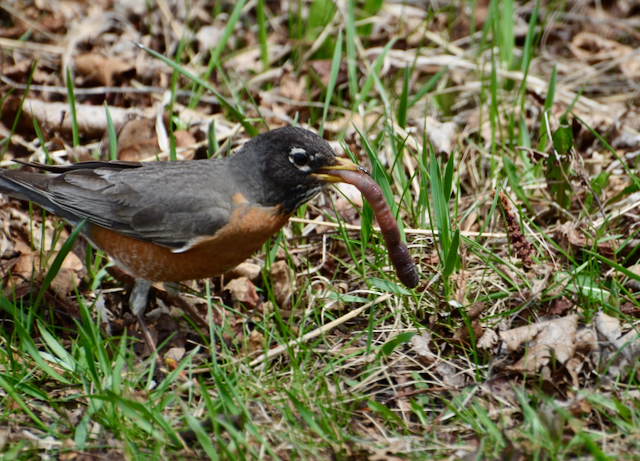
or this hungry Robin, swallowing whole a worm as long as its own body:

The ephemeral nature of life… the worm sure knows what that means.