Literary TIFF

The Toronto International Film Festival (Sept. 8 – 18) is just a week away. While many movie fans will be charging up their cell phones to catch some pics or selfies with the stars on the red carpet, Arti here at the Pond is interested in spotting the film adaptations of books, or those with literary interest.

This is a photo of the Toronto skyline from Lake Ontario on a hazy morning. Arti took the pic during TIFF14 two years ago. Yes, she’s heading there soon for TIFF16. So stay tuned for future posts.

Hazy Toronto Morning

Here’s a list of some literary titles at TIFF16:

A Quiet Passion 

Not based on a book but no short of literary interest. This is a cinematic biopic of the American poet Emily Dickinson. What’s more, it’s a new film written and directed by the venerable English auteur Terence Davis, who brought us such acclaimed works as Sunset Song (2015), The Deep Blue Sea (2011), and The House of Mirth (2000). Cynthia Nixon plays Emily Dickinson, with Jennifer Ehle as her sister Vinnie. Yes, that Jennifer Ehle. Love to see her in another period role but I know, hard to be rid of the Lizzy Bennet image.

American Pastoral 

Philip Roth actually has two movie adaptations of his books coming out this fall. One is Indignation (2008). The other is American Pastoral (1997), which won him a Pulitzer and was considered a seminal work in his oeuvre. Roth later won the Man Booker International Prize in 2011. The prolific author has long been regarded as the astute depicter of the 20th C. Northeastern Jewish-American psyche. Interesting fact of this adaptation is that it’s the directorial debut of Scottish actor Ewan McGregor, who will also take up the role of Roth’s famous character Seymour ‘Swede’ Levov. How well can he pull it off? Dakota Fanning and Jennifer Connelly co-star.

Julieta 

Based on three short stories by Alice Munro, Canada’s first Nobel Laureate in Literature (2013). Juliet is the protagonist of “Chance”, “Soon”, and “Silence”,  from Munro’s 2004 volume Runaway. So why the name Julieta? Well, these stories are being transported from a Canadian setting into Spain. The film is helmed by director Pedro Almodóvar, who is described as “the most internationally acclaimed Spanish filmmaker since Luis Buñuel” (IMDb). Almodóvar won an Oscar for his writing/original screenplay with “Talk To Her” (2002). Hopefully this adaptation is worthy of Munro’s source material. I’m curious to see how a totally Canadian story is transplanted into a Euro-Spanish milieu.


Certain Women

Another film adaptation based on short stories, this one by author Maile Meloy, from her book Both Ways is the Only Way I Want It (2009). The adaptation tells the story of three women and boasts a high calibre cast with Kristen Stewart, Michelle Williams, and Laura Dern. It is helmed by Kelly Reichardt who had directed Michelle Williams in Wendy and Lucy (2008) to critical acclaims. Last I read is that some elements of the stories had been altered to appeal to a contemporary audience.


Paterson

This 2016 Cannes Film Festival Palme d’Or nominee explores an interesting concept: A bus driver by day, a poet by night in Paterson, New Jersey. Can’t find a better named actor than Adam Driver to take up this unique dual occupational role. Writer/director Jim Jarmusch takes the helm. No stranger to Cannes, Jarmusch’s Broken Flowers (2005, remember Bill Murray?) won the Cannes Grand Prize of the Jury in 2005. The director’s versatility has brought us very different kinds of works throughout his career.


The Salesman

Since the 1990’s, several Iranian film directors have gained high praises internationally for their cinematic works. The recent death of Abbas Kiarostami is a loss on a grand scale for film art. Another distinctive figure is his younger friend and compatriot Asghar Farhadi, whose A Separation is the first Iranian film to win an Oscar (Best Foreign Language Film, 2012). After that Farhadi crafted another multiple-award-winner The Past (2013). This year he brings us The Salesman. The name is a big hint of its literary affiliation. The story is about the disintegration of a marriage as a couple perform Arthur Miller’s play Death of a Salesman as Willy and Linda Loman. Life imitates art, or vice versa? Farhadi is a master of probing conflicts in domestic relationships. At Cannes earlier this year, The Salesman won Farhadi the Best Screenplay and Shahab Hosseini the Best Actor award.

The Secret Scripture 

After a long wait, and a change in the cast, the film adaptation of Irish writer Sebastian Barry’s Booker shortlisted work is finally completed. In the book, the narrator is a 100 year-old mental hospital patient recalling her life. The old and her younger self are played by Vanessa Redgrave and Rooney Mara respectively. The director is Jim Sheridan, the six-times Oscar nominee who introduced us to Daniel Day-Lewis with the excellent productions of My Left Foot: The Story of Christy Brown (1989) and later In the Name of the Father (1993).


Unless

Born in Oak Park, Illinois in 1935 and after her marriage became a Canadian citizen in 1971, Carol Shields received honours from both countries and internationally as well. The Stone Diaries won the Pulitzer in 1993, among many other accolades, while Unless (2002) was shortlisted for the Booker Prize. Here’s the intriguing tale of Unless: a mother one day finds her runaway daughter living on the street and mute. Oscar nominated Catherine Keener plays the mother Reta Winter. Downton Abbey fans should note, Mr. Bates Brendan Coyle also stars.


***


Saturday Snapshot Aug. 27: Synchronized Swimming, Team Pelican

I don’t have to wait four years for another Olympics. A couple of days ago I caught sight of these Nature’s Athletes. From afar I could tell they were members of Team Pelican.

The Pelicans are a gregarious lot, their talents innate, every move graceful. They display their elegant team work in Nature’s open arena, effortless, in sync with each other. Here they are, full of bubbly camaraderie:

Comaraderie (2)

Remember a previous post where I saw them in the air, like squadrons of fighter jets; in the water, they form a tight-knit configuration as well. With that formation, they cooperate to surround fish in the water, scooping them into their pouches:

Inate talents (1)

What a beautiful idea: communal feeding. What you see here are snapshots. What I remember is a long video. I must have been there watching and snapping away for over a half hour:

Let's eat together (1)

Elegant synchronized swimmers in perfect harmony. Kudos to their Coach.

Synchronized Swimming (2)

Look at their sheer size in comparison to the gull behind them.

Sync Swim (1)

Sometimes you can get tangled up with minor mishaps. Wait up, guys, I’m a little stuck here:

Wait up 2

No worries. We’re Team Pelican. All for one and one for all; our bills as swords to pledge.

Bills as swords


***

Saturday Snapshot is hosted by West Metro Mommy Reads. CLICK HERE to see what others have posted.


100 Greatest Films of the 21st Century

The editors of BBC Culture had commissioned film critics all over the world to arrive at this list, polling “every continent except Antarctica.”  They received responses from 177 film critics. The list was published yesterday.

Sounds like a formidable task, albeit in actuality, the critics only had to look at 17 years of cinematic works (including the year 2000). Nevertheless, the titles are self evident of the positive effects of globalization, for the critics’ choices are markedly diverse.

You can check out the whole list here. I’ll just excerpt the top 50. Here, you can find directors from Africa, Asia, Australia, the Middle East, Europe, North America, South America. What a fantastic representation. I’ve no apology for using the #2 film image here instead of the top one; with Wong Kar-wai’s “In The Mood for Love”, I’m totally partial and very glad it reached this spot.

in-the-mood-for-love

No matter how you look at it, don’t get blown away by blockbuster mega productions. The independent cinema still remains the imaginary window to look into ourselves as well as out to the world, expanding our point of view with old tales to current issues.

50. The Assassin (Hou Hsiao-hsien, 2015)
49. Goodbye to Language (Jean-Luc Godard, 2014)
48. Brooklyn (John Crowley, 2015)
47. Leviathan (Andrey Zvyagintsev, 2014)
46. Certified Copy (Abbas Kiarostami, 2010)
45. Blue Is the Warmest Color (Abdellatif Kechiche, 2013)
44. 12 Years a Slave (Steve McQueen, 2013)
43. Melancholia (Lars von Trier, 2011)
42. Amour (Michael Haneke, 2012)
41. Inside Out (Pete Docter, 2015)
40. Brokeback Mountain (Ang Lee, 2005)
39. The New World (Terrence Malick, 2005)
38. City of God (Fernando Meirelles and Kátia Lund, 2002)
37. Uncle Boonmee Who Can Recall His Past Lives (Apichatpong Weerasethakul, 2010)
36. Timbuktu (Abderrahmane Sissako, 2014)
35. Crouching Tiger, Hidden Dragon (Ang Lee, 2000)
34. Son of Saul (László Nemes, 2015)
33. The Dark Knight (Christopher Nolan, 2008)
32. The Lives of Others (Florian Henckel von Donnersmarck, 2006)
31. Margaret (Kenneth Lonergan, 2011)
30. Oldboy (Park Chan-wook, 2003)
29. WALL-E (Andrew Stanton, 2008)
28. Talk to Her (Pedro Almodóvar, 2002)
27. The Social Network (David Fincher, 2010)
26. 25th Hour (Spike Lee, 2002)
25. Memento (Christopher Nolan, 2000)
24. The Master (Paul Thomas Anderson, 2012)
23. Caché (Michael Haneke, 2005)
22. Lost in Translation (Sofia Coppola, 2003)
21. The Grand Budapest Hotel (Wes Anderson, 2014)
20. Synecdoche, New York (Charlie Kaufman, 2008)
19. Mad Max: Fury Road (George Miller, 2015)
18. The White Ribbon (Michael Haneke, 2009)
17. Pan’s Labyrinth (Guillermo Del Toro, 2006)
16. Holy Motors (Leos Carax, 2012)
15. 4 Months, 3 Weeks and 2 Days (Cristian Mungiu, 2007)
14. The Act of Killing (Joshua Oppenheimer, 2012)
13. Children of Men (Alfonso Cuarón, 2006)
12. Zodiac (David Fincher, 2007)
11. Inside Llewyn Davis (Joel and Ethan Coen, 2013)
10. No Country for Old Men (Joel and Ethan Coen, 2007)
9. A Separation (Asghar Farhadi, 2011)
8. Yi Yi: A One and a Two (Edward Yang, 2000)
7. The Tree of Life (Terrence Malick, 2011)
6. Eternal Sunshine of the Spotless Mind (Michel Gondry, 2004)
5. Boyhood (Richard Linklater, 2014)
4. Spirited Away (Hayao Miyazaki, 2001)
3. There Will Be Blood (Paul Thomas Anderson, 2007)
2. In the Mood for Love (Wong Kar-wai, 2000)
1. Mulholland Drive (David Lynch, 2001)

Which ones have you seen? What do you think of the list? Mulholland Drive #1? You might ask.

***

Click on the link in the title to read Arti’s review.

Summer Reading

The remaining summer month isn’t going to be long enough for a slow reader like me to finish all the books I’ve started. There are 7 titles on Goodreads that I’m ‘currently reading’, one of them has been there since the Jurassic Period. Ok, maybe not that long, but I haven’t given up The Guermantes Way just yet, so I won’t delete it. I’m sure Proust understands, for there are more pressing matters.

First off, the horrific terror attack and mass murder in Nice sparked off an urge in me to, somehow, in whatever way, connect with France. It’s a bit late to participate in the blog event ‘Paris in July’. But since Nice, I’d started two France related books. And then there’s Germany, and now a priest inside a church while conducting mass…

Here are two titles I’m reading with European connection:

The Angel of the Left Bank: The Secrets of Delacroix’s Parisian Masterpiece by Jean-Paul Kauffmann

Angel of the Left BankThis enticingly thin paperback has been sitting on the shelf quietly for years. I’ve long wanted to read it although I’d no idea what it was about, one of the hand-me-downs from my son’s college reads. Now that I’ve started it, I know this one’s going to be a slow cook. Even though just 217 pages, I know I can’t rush it. Exactly as the title denotes, the book is about one painting, Eugène Delacroix’s (1798-1863) ‘Jacob Wrestling with the Angel’, a wall mural in the Chapel of the Holy Angels inside The Church of Saint Sulpice in Paris. Why did Kauffmann write about this particular painting? Why did Delacroix choose to paint this enigmatic episode of the Bible? Who is the ‘Angel’? I want to find out the hidden story behind the creation of this masterpiece. Apparently there are secrets to be told.  I’m most curious to see the epiphany that both the painter and the writer must have experienced relating to it. Simply put, for us who feel there are days wrestling means nothing close to a TV pseudo sports program, maybe this book could be an enlightenment.
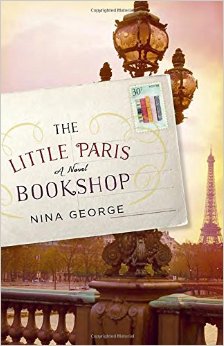
 

The Little Paris Bookshop by Nina George

Paris bookshopFirst published in Germany, now an international bestseller, The Little Paris Bookshop is a barge floating on the Seine River in Paris. Monsieur Perdu, the ‘Literary Apothecary’, is the owner. Now this is an interesting concept. M. Perdu prescribes books for any ailment his customers happen to be afflicted with. Bibliotherapy if you will. Not a bad idea. He has a book suggestion for everyone he encounters, so a clever way for German author Nina George to weave in her views on various literary works, her salutation to literature and reading. But of course, George isn’t just leading a book club discussion but telling a story. So she deftly brings us to learn more about M. Perdu’s past. While well-versed in bibliotherapy, M. Perdu has a wound that’s deep and sore, for he’s a victim of a lost love. Can the Apothecary heal himself? All signs point to a heartening, summer read.


Here’s one that I think I’ll finish first:

Words Without Music by Philip Glass

words-without-music-a-memoirThis one beats all my current reads in capturing my attention and interest. The contemporary composer Philip Glass (born 1937) is renowned as a ‘minimalist’ in his musical style, a label he frowns upon. Now about a quarter into Glass’s memoir, so mainly about his early life and the start of a career, I find what’s minimal is only the physical materials of life, the lack of money to pursue his dream. As for passion and talents, Glass is endowed with abundance, and the artistic milieu in which he immersed himself is astoundingly rich and fertile. Above all, the Bohemian living during his early days is idyllic. That’s why I’m mesmerized by his story, the pursuit of a dream driven by pure passion and inner drive.

Born in Baltimore to a middle-class, secular Jewish family, Glass left home at just 15 to enter the University of Chicago, majoring in philosophy and mathematics. After that, he knew he wanted a career, no, a life, in music, against the wishes of his mother and uncles, who ran a family building supplies business in his hometown and wanted him to take over some day. But Glass was determined to march to a different drummer. After Chicago, he went to NYC mainly to get into Juilliard, not knowing he wasn’t even qualified. So he started with an extension course to work his way in. Later as a full-fledged Juilliard student, he devoured every learning opportunity. He had earned his living doing all sorts of jobs, laborer, steel mill worker, taxi driver. Later to Paris, India, Glass shows us a life journey full of gratifying struggles and interesting encounters. What more, the memoir is a social history of the Beat Generation. Deeply immersed in the zeitgeist of the time, Glass’s personal connections with other musicians, artists, poets, writers, theatre actors and producers, and filmmakers make a fascinating insider’s story. His contact list a who’s who of the Beat Generation. Lots of ripples stirred up in me and definitely a future post coming.


This one patiently waits:

The Moviegoer by Walker Percy

The MoviegoerI had listened to the audio book a few years back, and wanted to reread it right away, but didn’t. After that, I forgot about it. By chance I saw it in the Bookstore at Regent College on UBC campus a couple months ago, I quickly took that single copy out from the shelf. There are few books I buy at regular price, this is one of them. I want to revisit it; with my own copy, I can write on the margin, and I know I will with this one. Despite the title, it has nothing to do with the glamour of Hollywood movies, or the pop entertainment culture of the day. Rather, this National Book Award winner (1961) is internal, reminiscent of European writers like Camus or today’s Tom McCarthy.
 

These two will take a while to get to:

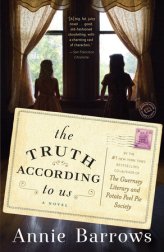
The Truth According to Us by Annie Barrows

The Truth According to UsBarrows’ previous book is the wildly popular The Guernsey Literary and Potato Peel Pie Society published eight years ago. I’d enjoyed the lively characters in Guernsey amidst the troublesome setting of WWII, with the island occupied by German soldiers. Just curious to read children’s author Barrows’ first solo publication for adults. The Truth brings Barrows back to the home state of her aunt and primary writer of Guernsey, Mary Ann Shaffer, who died before completing the book. Family saga in small town West Virginia in 1938. If you’ve read this one, how is it compared with Guernsey? Should I even start it?
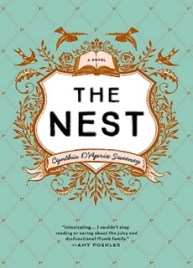


The Nest by Cynthia D’Aprix Sweeney

The+Nest+-+book+coverIf I want a breezy summer beach read, maybe I should start with this one. But this too can wait. I got it mainly because of the future film adaptation. Sweeney’s debut work reportedly fetched a 7-figure advance from Ecco; not surprisingly, film rights were snatched up soon after. What should be noted is: by whom? Well, as evidence of the booming book/movie enterprise, Amazon Film it is, and Jill Soloway (Transparent) will direct. Note also, just saying, here’s a book with Amy Poehler’s endorsement on the cover. Have you read it? Are you looking forward to its movie adaptation?


***

Related Review Posts on Ripple Effects:

Inside Llewyn Davis: A Serious Man in Greenwich Village

The Guernsey Literary and Potato Peel Pie Society

The Elegance of the Hedgehog

August: Osage County


Stillman’s Love & Friendship: More than Book Illustration

Back in 2007, the Welsh-born film director Peter Greenaway made the following stark comment:

“Cinema is predicated on the 19th-century novel. We’re still illustrating Jane Austen novels — there are 41 films of Jane Austen novels in the world — what a waste of time.”

I’m afraid since then, must be to Greenaway’s disdain, more Jane Austen movie adaptations had come out. As recent as early this year, Greenaway had reiterated his stance with an even starker comment: “all film writers should be shot.

Not that he’s anti-Austen, or holds a grudge against Tolkien or Rowling… I don’t think, but that he is pushing for a non-text-based, purely visual medium for movies.

Well, I’m glad his view remains just that, a personal opinion, and that writer/director Whit Stillman had not become a casualty of such an incendiary thought.

love-and-friendship-08.png

For thanks to Stillman, we have an intelligent, delightful and worthy adaptation of Jane Austen’s novella Lady Susan, a first for the author’s lesser known Juvenilia, apart from her famous six novels. The film is definitely not an illustrated book, but a worthy stand-alone cinematic production that Jane would approve.

As for dear Jane, I think she’d be pleased to know that her works are being cherished enough to be adapted into this modern invention called a movie two centuries later, and that in this post-modern era, we have a director by the name of Whit Stillman who’s enthused enough to turn her novella, written when she was still in her teenage years, into a movie production.

The epistolary novella “Lady Susan” was deemed unfinished and published posthumously. So this is a plus as Stillman could finished it for Jane, with an ending that’s aligned with the plot’s trajectory, and in a style that’s so well melded one would marvel at the perfect alchemy of Austenesque characters and language. Smartly borrowing the name of another of her novella “Love and Friendship”, Stillman toys with dear Jane’s uncontested approval.

While written in letters format, “Lady Susan” is highly entertaining. Austen’s talent is apparent on every page. How well she presents her characters merely through their written correspondences. Acerbic commentaries from an 18 year old? Hard to believe. But indeed, here are some lines describing Mr. Johnson (Stephen Fry), Lady Susan’s only friend Alicia’s (Chloë Sevigny) husband:

“My dear Alicia, of what a mistake were you guilty in marrying a man of his age! just old enough to be formal, ungovernable, and to have the gout; too old to be agreeable, too young to die.” (Letter 29, Lady Susan Vernon to Mrs. Johnson)

Interestingly, Stillman has toned down Lady Susan’s language and made her a more amicable heroine. The above lines were shortened and delivered by Kate Beckinsale in a casual manner. Yes, turning the letters into movie scenes are tricky, crafting mere letter writers into flesh and blood can be challenging, something I hope Greenaway can appreciate.

Stillman has taken Love & Friendship to 21st C. audience with fast paced, short scenes. The settings are elegant, the period costumes appealing, overall, a fine cinematic production. It is an apt visual presentation of Austen’s ingenuity. Writing “Lady Susan” while merely 18 or 19, she had seen through the marriage system of her country, understood human nature and foibles, depicting her characters and the main heroine, no, anti-heroine, with piercing sarcasm and generosity.

Having read the novella first could be an advantage as the viewer knows exactly who the characters are and the backstory as the film begins. With the literary source in mind, the viewer can also have a heightened appreciation of the cinematic rendering and alterations needed to make it work as a movie. The fusion of Austen / Stillman humour is most delightful, punctuated with some whimsical rendering on screen that I won’t mention here but leave for viewers to enjoy.

Kate Beckinsale portrays Lady Susan with deadpan astuteness. Deadpan or dead-on, no matter, for Beckinsale is a fine Lady Susan, newly widowed, not too young to be gullible and definitely not too old to flirt for her own gains. Don’t blame her, for she has a sixteen year-old daughter Frederica (Morfydd Clark) to mind, and so, two eligible candidates who need to wed.

If one were to find fault, blame it on the social system allowing the female population only one track to go for sustainability, i.e. to find a husband. The ultimate goal of the marriage contract is more for finance than romance. (Maybe that’s why we love Pride and Prejudice so much, for its triumph of true love.) Here in this story, it’s a social milieu where love is remote and friendship useful. Lady Susan Vernon ultimately finds her conquest, never one to boast, just a project accomplished, all bottom lines met.

Stillman has a wonderful cast to work with, and they look like they had a lot of fun making the film, the most lively being Sir James Martin (Tom Bennett). It must be a joy to be silly without restraint, yes, let it all out.

Alicia, Lady Susan’s only friend, is aptly played by Chloë Sevigny, who reunites with Kate Beckinsale from “The Last Days of Disco” (1998) where the two are the yuppie heroines under Stillman’s direction. Great to see the two friends in “Disco” have now emerged as allies yet again, this time in a comedy of manners with real Austen roots.

Stillman is a master of dialogues, and so’s Austen. In both the novella and the film, conversations make the characters. But mind you, Janeites know this, and it shows in Stillman’s film, Austen’s humour is not your roll on the floor laughing type of funny

rofl_1

but a clever kind of jokes that elicits a knowing chuckle or a smile, ones that exude insight into human nature, ones that you’d want to jot down:

images.jpg

And for those who have read the epistolary novella penned by a young female writer of the 18th century, one cannot help but marvel at her prodigious astuteness and now director Stillman’s revealing of her brilliant mind. A long time Austen ‘apologist’, Stillman’s previous work “Metropolitan” (1990) is unabashedly a “Mansfield Park” of the time. My favorite line in that movie is uttered by the Fanny Price parallel character Audrey Rouget (Carolyn Farina), when she is talking to Tom Townsend (Edward Clements) about one of her favorite Austen works, Mansfield Park. Tom has not read any Austen but feels qualified to criticize nonetheless:

Tom: But it’s a notoriously bad book. Even Lionel Trilling, one of her greatest admirer thought that.

Audrey: Well, if Lionel Trilling thought that, he’s an idiot.

(But of course, it was Tom who hasn’t read any Austen that has misread Trilling.)

That was Stillman’s debut film. Since “Metropolitan”, he had proven his mastery in the comedy of manners in our times… preppies, yuppies, and maybe someday I hope,  millennials. To say his oeuvre is a conglomeration of Woody Allen, Noah Baumbach, and Wes Anderson would be unfair, neglecting his own style of humour and social observations, although his works do leave traces of all the above.

When awards season comes, I anticipate the film to receive some nominations, specifically Adapted Screenplay, Set Design, Costumes and Hair, and perhaps directing.

Here’s my recommendation: read Jane’s novella Lady Susan first before watching the movie would probably reap the most enjoyment. Afterwards, there’s the bonus. Yes, Whit Stillman has wrapped it all up with the novel Love & Friendship: In Which Jane Austen’s Lady Susan Vernon Was Entirely Vindicated published by Little, Brown and Co. in May, 2016. Icing on the cake.

Jane Austen doesn’t need a defender, but I’m sure she wouldn’t mind getting acknowledgement for her lesser known Juvenilia, some works started when she was only twelve. “Love & Friendship” is a first attempt and a worthy homage to her ingenuity. I’m glad there are many prospects. Whit Stillman and Jane Austen make one fine match indeed.

~ ~ ~ 1/2 Ripples

***

Related posts on Ripple Effects:

Love & Friendship and Other Prospects

Too Much Jane?

Why We Read Jane Austen

Mansfield Park: Jane Austen the Contrarian


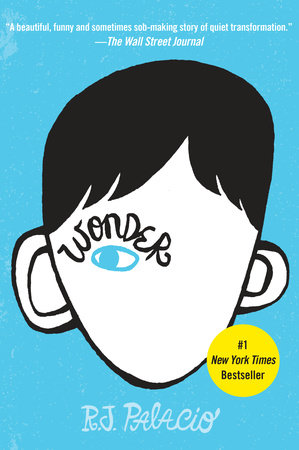
Wonder by R. J. Palacio: Required Reading for All

Wonder Book Cover

I woke up this morning thinking about Auggie. I missed him.

His extraordinary face with the unevenly positioned eyes, one half-shut all the time, the cleft lip and misshapen ears, abnormal features (I’ve learned not to use the word ‘deformed’ now) indelibly imprinted would elicit fear from those who see him the first time, especially unexpectedly. The shock may send out an uncontrolled gasp or even a scream. And if one is  maliciously driven, tiny-framed Auggie is a ready and easy target for bullying, especially in the setting he’s in now, middle school, the breeding ground for raw emotions and unchecked cruelty in both words and deeds. The ten year old has had twenty-seven surgeries big and small so far in his life. Homeschooled until now, Auggie is stepping out into 5th grade with unimaginable trepidation, mustering a courage no less than that required for all the surgeries he’d faced in his life.

Auggie, or, August Pullman, is a fictional character from R. J. Palacio’s book for 9-12 year olds, but he’s as real as my neighbor’s son, or even, my own. That’s the power of Palacio’s nuanced and realistic writing. This is a book for all ages, a required reading for every human being if I have my way, for Palacio has painted a perfect world.

In a perfect world, there are still babies born with facial abnormality. But that little life is still wrapped with warmth and cuddled with love and acceptance.

In a perfect world, that child will grow up not thinking himself ‘different’ or deficient, but as normal as any other kid his age. He can still enjoy reading his comics, be read to and tugged in at bedtime, master video games, watch Star War movies, play with his light saber, hug his doggie, and all those he loves: mom, dad and older sis. The child knows no deficiency.

In a perfect world, even after that child steps out of his well protected, comfort zone and ventures precariously into the reality of middle school, he can still find friends, however few at the beginning.

In a perfect world, there are still bullies and jerks. The child will still have to face incredulous challenges and learn to ignore horrible remarks more distorted than his facial features. In a perfect world, even in this seemingly cruel microcosm of the human society, this child can still find love, support, acceptance, and life-sustaining kindness.

In a perfect world, that child is considered a gift and a blessing, a challenge for us to be better human beings.

In a perfect world, good will overcome evil.

Seldom does a children’s book has such power over me. Actually, seldom do I read a children’s book, haven’t for a long, long while. But glad I’ve discovered Wonder. Auggie will live in my mind for a while even now that I’ve finished the book. I wish author R. J. Palacio’s Choose Kind anti-bullying movement will continue to flourish.

A book like this deserves a good movie adaptation. A recent announcement has given me hope that a worthy one might be on the drawing board. Well, just with the two being cast so far. Jacob Tremblay, the wonder boy who plays Jack in the acclaimed movie adaptation of Emma Donoghue’s Room is to play Auggie. His mom? Julia Roberts. As a mother of 10 and 8 year-olds, Roberts would have some insights to instill into her role.


***

Thoughts on Terrence Malick’s Knight of Cups

In the beginning was The Tree of Life.

That was the first work of divergence in the enigmatic director Terrence Malick’s body of work. His first four films spanned three decades–Badlands (1973), Days of Heaven (1978), The Thin Red Line (1998), The New World (2005)–productions that adhered to a relatively conventional storytelling approach, albeit still marching to the beat of his own drum. Then came six years of silence.

In 2011, we saw a new cinematic form come out. The Tree of Life emerged like a new life after a long metamorphosis. It was genre defying, with real and imaginary visuals replacing narrative plots, voiceover replacing dialogues. Dually cosmic and realistic, it boldly explored subjects that spanned eternity, from the Creation to the Afterlife. The story focused on a small Texan family during the 1950’s. The latent conflicts and tensions in the family’s relationships, father, mother, husband, wife, sons, brothers, brought forth a series of existential questions. Whispers of inner anguish, doubts, faith, and the search for redemption fill the movie theatre.

I was stunned by Malick’s audacity. This wouldn’t sit well with critics or viewers alike.

Apparently the thought of rejection didn’t bother the auteur, for the next year saw a repeat of the style. For those who thought The Tree of Life was only a one-time experiment were met with the confirmation that yes, this is Malick’s new cinematic style. To the Wonder is another film seemingly devoid of plot, a visual poetry of love, loss, and the human soul. We see again more voiceovers replacing dialogues, characters drifting through dreamscapes. The Tree of Life was only the beginning. Malick has created a new form of cinematic storytelling.

Then came Knight of Cups in 2015. The director that had taken thirty-two years to make his first four films gives us a trilogy of thought-provoking, genre-defying features in just four years. Knight of Cups is slowly trickling into limited screens this spring, but only an ephemeral appearance. In selective cities, it came quickly and was gone. The movie industry is big business, and box office sales is the bottom line, a fact that doesn’t seem to be a concern for Malick.

Knight of Cups.jpg

Knight of Cups starts off with a parable. A knight sent by his father, the King of the East, went into Egypt to find a pearl from the depths of the sea. But when the prince arrived the people poured him a cup that took away his memory. He soon forgets his identity and his mission to look for the pearl.

The allusion to Pilgrim’s Progress is also invoked. From that, we know the tale of one man’s escape from the City of Destruction and his quest to search for the Celestial City.

Visually on screen, an earthquake shakes up a sleeping man. We later learn that he is Rick (Christian Bale), a successful screenwriter in L.A., well networked with the rich and famous of Hollywood. Rick is roused up from the quake, tiptoes barefoot through shattered glass to get out into the street, an apt metaphor of his life, fragmented, broken like the debris on the ground.

Thus sets the stage as we follow Rick into the high life of Hollywood: parties, night clubs, Gatsby-esque wildness of L.A. and Las Vegas. The film cast interestingly is made up of well-known names from Hollywood (bravo at the parallel). Through all these, Rick appears aloof, a stranger in his own land.

Ummm, not unlike Camus’s outsider.

His agent tells him: “I want to make you rich. All you need to do is say yes. Who do you want to meet? I can arrange.”

Almost as close as another such luring promise… “all this I will give you, if you bow down and worship me.”

 But the outsider is a tormented soul desperately seeking meaning, not riches or fame. Ambivalent relationships with a skid row brother and a father (Brian Dennehy) who is in turmoil living through the suicide of another son are the slings and arrows hurled at Rick. “I died a different way, “ we hear him say.

Women? Six of them, at one time or another. Played by Cate Blanchett, Natalie Portman, Freda Pinto, Imogen Poots, Teresa Palmer, Isabel Lucas. They appear as vignettes, drifting in and out of his life; not all in waste, each has something to offer. One of them has uttered:

“We’re pilgrims on this earth. We’re not leading the life we’re meant for. We’re meant for something else.”

Or take his ex-wife Nancy (Cate Blanchett), a benevolent doctor who works with the poor. She could have been an inspiring figure, but they had to part. “I just want to be loved,” she says.

Of course, Rick can’t give what he doesn’t have. He too is searching for that powerful love that can complete him.

“Redeem my life… Justify me,” we hear Rick’s voiceover, a thirst which no human can quench.

He must rouse up from his sleep. Remember who you are and your mission. Remember the pearl? Go look for it. “How do I reach you? How do I find my way there?”

I’m glad from the fragments of internal dialogues, I can hear some positive words: “God shows His love through suffering… He leads you through. Regard them as gifts… more precious than happiness… Be thankful for suffering.”

Who would have thought? The reverse of common sense? But then again, how true. 

“You gave me peace, mercy, love, joy. You gave me what the world can’t give.”

Accompanying all these voiceovers is the captivating cinematography. It is interesting to see how three consecutive Oscar-winning cinematographer Emmanuel Lubezki (The Revenant 2015, Birdman 2014, Gravity 2013) converts soulful anguish onto the screen with lyrical, visual metaphors and well-paced changes of scenes. Faster paced for the ephemeral hedonism, slower for the meditative and transcendent.

The transporting effects are made complete by the musical score. Yes, that’s one of the main reasons I’m so mesmerized by Malick’s recent films. Knight of Cups has a long and expansive playlist with over 50 titles. Among them are these stirring pieces that capture my full attention, Wojciech Kilar ‘s “Exodus”, Arvo Pärt’s “Symphony No. 4 Los Angeles” and the film composer for Malick’s previous two works, the New Zealand born Hanan Townshend’s musical creations.

But one melody stands out and with the scenery on screen stirred me the deepest.

Now what’s the name of that piece? The music overwhelms me with a kind of existential longing, pathos, and deep resonance. 

Yes, got it. I later found out from the movie soundtrack, it was Solveig’s Song from Grieg’s “Peer Gynt”. I made a quick purchase and downloaded the tune and have been listening to it ever since. Like the effect of Smetana’s “The Moldau” in The Tree of Life, I know it will remain in my mind for some time to come.

That’s the reason I still go to the cinema. In that pitch-dark and relatively empty (what do you expect) theatre, I can sit quietly, watch, listen, and think.

~ ~ ~ 1/2 Ripples

***

Related Posts on Ripple Effects:

The Tree of Life Movie Review

Days of Heaven


Upcoming Books into Movies 2016 and Beyond

The following is a list of upcoming movies based on books. Their productions are at various stages of completion. Some are already screening at Film Festivals. I hope that they will be released to a larger audience.  Some titles have just been announced, or the director, screenwriter, and / or cast just been named. I’ve selected the ones I’m interested in and want to see.

A Wrinkle In Time by Madeleine L’Engle

The fantasy/science fiction classic by Madeleine L’Engle is not for children only. This 1963 Newbery Medal-winning YA fiction is a wonderful concoction of space adventure toying with interesting concepts such as “tesseract”, a fifth dimension traveling log mixed well with faith and love. And the movie adaptation? Disney’s got the rights for some time now. Latest news is Selma director Ava du Vernay will direct. The screenplay will be written by Oscar-winning Frozen writer and co-director Jennifer Lee.

The Glass Castle by Jeanette Walls

The 2005 memoir by Jeanette Walls, more than seven years on the NYT Bestsellers List (according to Barnes and Noble) has also been on the back (or front) of filmmakers’ mind, with Jennifer Lawrence linked to the possible production. But now, we have a fresher Oscar winner replacing J. Law to star in this extraordinary memoir: Brie Larson. The 2016 Oscar Best Actress of Room will do justice to J. Walls’ unique story of growing up a nomad in America. Larson will re-unite with her Short Term 12 director Destin Cretton. Woody Harrelson also stars, so he must be the dreamer Dad of Walls’. It has been a long decade since the book came out. Let’s hope this adaptation would become a reality.

Love and Friendship by Jane Austen

This is the first time Jane Austen’s epistolary novella Lady Susan is adapted to the big screen. Published posthumously, the work had long been thought as ‘unfinished’, maybe due to its hasty ending. Would that pose a challenge to director Whit Stillman? Apparently not. The film premiered at Sundance FF this January to high acclaims. Kate Beckinsale is young widow Lady Susan Vernon (later Martin). Austen’s Emma Woodhouse is nowhere near Lady Susan on the scale of being despicable, if you ask me. Her manipulation isn’t limited to others but for her own ends in securing a husband and one for her daughter, might as well. The film is described as ‘supremely elegant’ by Variety. Now that’s a definite appeal as we’re all suffering from Downton withdrawal.

Certain Women by Maile Meloy

Thanks to the film Certain Women, now I’m aware of the writer Maile Meloy. Ripples from a fine movie production often lead me to the source material. Based on the short stories of Meloy’s, the adaptation tells the story of three women and boasts a high calibre cast with Kristen Stewart, Michelle Williams, and Laura Dern. It is helmed by Kelly Reichardt who had directed Michelle Williams in Wendy and Lucy (2008) to critical acclaims. This leads me to a keen interest in exploring Meloy’s works, which had garnered multiple literary awards including the PEN/Malamud Award, the Rosenthal Foundation Award from the American Academy of Arts and Letters, shortlisted for the Orange Prize and included in the New York Times Notable Books. The film adaptation drew my attention in that it’s not based on one book but multiple short stories. It premiered at Sundance this January to critical acclaims.

The Dinner by Herman Koch

The book is Dutch writer Herman Koch’s sixth novel. It has sold over a million copies and translated into twenty-one languages.The setting takes place in an upscale restaurant with the story just over the course of a fancy dinner. But what is revealed by the conversations between two brothers and their wives could send chills down one’s spine and we soon find the background story and hidden thoughts unappetizing. The veneer of social grace can only last through the appetizer as we are led to the raw revealing by the main course and lashing out by dessert. Koch’s novel had been adapted into films in the past few years, first a Dutch and later an Italian production screened at TIFF.  I’m glad to see the cast for the English adaptation, recently announced, is quite an appetizing mix with Richard Gere, Rebecca Hall, Steve Coogan, and Laura Linney.

The Custom of the Country by Edith Wharton

Movie stars are crossing the once thought to be a great divide, from the big screen to TV. In recent years, the line has been porous. Many have moved into TV productions to even more success, Kevin Spacey, Robin Wright, Kate Winslet, James Spader, Matthew McConaughey, Kirsten Dunst; now Scarlett Johansson is diving in. Edith Wharton’s classic The Custom of the Country had inspire Julian Fellowes to write his successful screenplays. It has been announced that Wharton’s 1913 novel is to be turned into an 8-episode TV mini series, with Johansson in the staring role as the spoiled, flirting and ruthless Undine Spragg. Looks like it’s going to be one compatible match.


***

Related Posts on Ripple Effects

The Glass Castle Book Review

The Dinner by Herman Koch: A Timely Read for Lent?

A Visit to The Mount: Edith Wharton’s Summer Home

Downton Abbey Season 6 Finale: Goodbye to All That

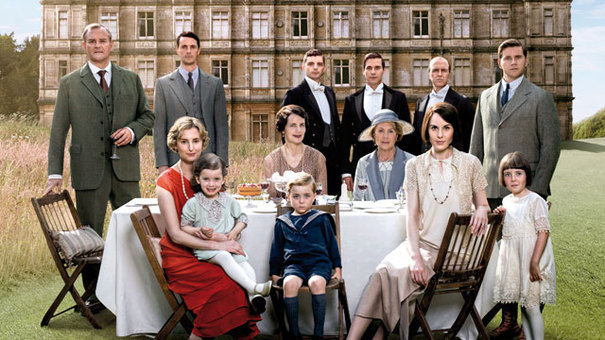
With the Finale of Downton’s last Season wrapping up the six-year serial, we’ve come to the end of an era. Ok, maybe not an era, but definitely the end of a saga. What exactly are we saying goodbye to? That’s a worthy subject to discuss.

The Finale on Sunday night (March 6, 2016: A date to remember) is the epitome of what Downton is all about.

Downton-Abbey-season-6


We’re saying goodbye to:

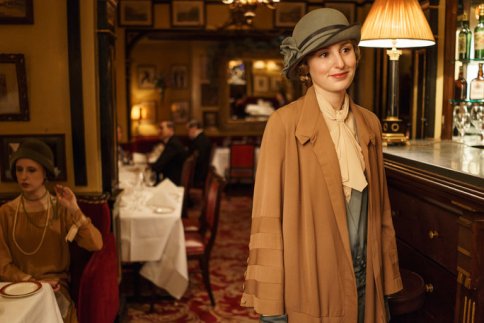
Multiple characters with multiple storylines told in equal appeal. Depending on your favourites, some of course are more appealing than others. Scribe Julian’s forte is in telling many tales at the same time. How did he do that? With the stopwatch on my iPhone, I notice that many of these fast-paced scenes are no more than one minute in length. More important scenes run longer. Take e.g. the one with Bertie and Edith at the Ritz’s surprised dinner, secretly arranged by a repentant Mary, lasted three minutes. Yes, only three minutes.

The old-fashioned goodness, kindness, honesty, courage, and even altruistic chivalry, are presented in a favourable light and not as acerbic laughing stock or shrouded with sarcasm. The value of overcoming evil with good is the prevalent virtue throughout. Why, even the once in-house villain, Thomas Barrow, can be turned around by the kindness of everyone; not only that, he can even replace Mr. Carson as the butler of Downton.

The retirement of Carson means we’re saying goodbye to an era of unquestionable loyalty. Think of the butler Mr. Stevens (Anthony Hopkins) in the film adaptation of Ishiguro’s The Remains of the Day (1993), where nothing interrupts his sacred duties as a butler, not even his own father’s death, needless to say, unrequited love from Miss Kenton (Emma Thompson). While scribe Julian captures the hearts of viewers by gratifying us with the union of Mr. Carson and Mrs. Hughes, the surprised retirement of Mr. Carson in the last episode in a way is an end of that total devotion of a servant to his master. I’m sure Barrow won’t be as die-hard a Crawley loyalist as Carson is.

Even trite dialogues, when delivered by an expert actor, can be effective and even inspiring. Why, something like: “Make peace with your sister, then make peace with yourself” doesn’t sound like a contrived word of wisdom from a Kung Fu Master to Grasshopper, but from Maggie Smith’s mouth, becomes a genuine, heartfelt advice from a loving grandmother to a wayward granddaughter. That line is from the second last episode, setting the stage for Edith’s reconciliation with Bertie in the Finale. And the world is made peaceful as a result, with the rival sisters at peace with each other.

Grand mansions and castles as the setting for a TV series. I’m not saying there won’t be any more Highclere’s out there waiting to be used as filming location, but such an opportunity of using a classy, old mansion in situ sure doesn’t come by often. The Grand Finale shows us even that there are grander estates than Highclere. In a reversal of fortune, Edith gets to live in an even more magnificent property than Mary. Yes, Edith sure has found her Mr. Darcy and Pemberley. And I’m happy for her.

Old status quo being taken for granted. Downton is not about the maintenance of aristocracy, but the torrential changes that bombard traditions and social structure. The very first episode of Season 1 is a significant symbol. The thought-to-be unsinkable Titanic came to a tragic end; later, with WWI comes the break down of social status and yes, even the aristocrats suffered casualties. All men are equal in the face of death and destruction. In real life, that Highclere Castle was used as a convalescent home was an exemplar of how the war had brought about changes.

Are we also saying goodbye’s to traditional TV productions,  or the conventional platforms of broadcasting? The blurring of the line between movies and TV productions could mean  new kind of shows in the future. While the methods may be different, let’s hope the quality and values can be maintained no matter what change may come.

What’s your take on the last Season Finale of Downton Abbey?

***

Previously on Downton Abbey Season 6:

Episode 1

Episode 2

Episode 3

Episode 4

Episode 5


Downton Abbey S6 Episode 6

An episode of romantic linking and midlife career changes. First the pairing of some main characters: Mary and Henry Talbot, Edith and Bertie Pelham, Isobel and Lord Merton, (again), Mrs. Patmore and Mr. Mason (now, what’s with Daisy spoiling the fun?) And Baxter and Coyle? Not a reunion I hope.

Midlife career changes are thrusted upon other characters. The most important one is Cora, a job that she has never dreamed of, or dared to think about. Crossing Violet? Definitely not her own choosing. On second thought, after a career of bringing up three daughters, now she’s ready for another challenge. Being the President of the merger of the village hospital with York’s, she’s ushered into a brave new world. Now, that sounds like a much easier task than her previous job.

As for Molesley, his midlife career change is something he hasn’t dared to entertain before, beyond his wildest dream. Need to pass an exam first, but still very exciting. It’s interesting to see that his open tuition to help Daisy is so well received and respected by everyone, while Barrow’s secret tutorial offered to Andy is met with suspicion. But kudos to him for keeping Andy’s problem confidential. O Mr. Barrow, can you ever redeem yourself?

So Barrow is now the in-house piggy backer. The position of under butler is soon to be obsolete. Looks like Mr. Carson has a clearer view of occupational trends than Barrow: “In twenty years time I doubt there’s one footman working at Downton.” Or a lady’s maid, for that matter. Nothing personal, just the end of the aristocratic era. So when Season 6 ends, we’re saying goodbye to all that.

Mr. Carson, you won’t be long either, I’m afraid. The butler too will soon become “a post that is fragrant with memories of a lost world…” Eloquent with words strung up like that can sure open doors for you if it’s your time to leave. Prepare for the day when you’ll have no one to polish your cutlery or fold that bedsheet into sharp corners. Poor Mrs. Hughes, I knew her decision to have the wedding reception at the local school would be her last autonomous say. Would the real Mrs. Hughes please stand up? I sure miss you.

Downton Open House

The main attraction of the episode is the Downton Open House for the local hospital, a charity event. Wait a minute, charging people to come look at your living quarters? Who would want to pay? Yes, as Isobel Crawley says, “even Elizabeth Bennet wanted to see what Pemberley was like inside.” But that’s different though. For one thing, she didn’t have to pay; further, she got a bonus seeing Darcy in a wet shirt. Now, Barrow, since you’ve already warmed up with odd jobs like offering piggyback rides to the kids, get ready to jump into the pond.

No worries, people line up to pay to get in. Good idea! Tom’s business mind quickly turns and comes out with a wonderful idea. Wouldn’t that be a fine source of revenue to help maintain the huge mansion? Sounds like a version of reality. Isn’t Scribe Julian describing Highclere Castle where Downton is filmed?

But still, the question remains in some of their visitors’ mind I’m sure. Why, the pint-size philosopher who pops into Lord Grantham’s bedroom has posed a legit question: why not buy somewhere comfy instead of living in such a big house? Well son, it’s a long story. Never mind that. But one thing we can agree upon, it’s our mothers. They get terribly wrought up about things.

In this episode, we get to see another side of Lord Grantham. He looks like a totally bored little boy trying to entertain himself with all sorts of funnies while sick in bed. Mary in the bath? O my, wait till Mommy hears that.

To London again, Mary brings Anna to see Dr. Ryder, and thank God it’s just normal pregnancy discomfort. But what a great opportunity to do some side shows like… surprise! Henry Talbot must feel like he’s lured by a racing trophy. What a catch, Mary Crawley. Here’s the funny thing, looks like Mary is encouraging Henry Talbot, but when he does get close, she rejects him somehow.

Certainly, she has her bad memory. Matthew died in a car crash. But is that all that’s holding her back with Henry Talbot? Or is it the idea of marrying down? Or too fast too soon? Don’t forget, Mary, Henry’s a race car driver. Time is of the essence. Speed is the thrill. Occupational hazards, no, skill sets.

And romantic characters have the rain to thank, for usually what happens when sudden rain befalls, somehow that would lead to a private escape resulting in the first kiss. It happens in Woody Allen movies and it can happen right here in Downton Abbey.

In contrast, Edith and Bertie are enjoying some smooth sailing, despite Mary’s skepticism. Mary, you need to know, any man willing to take Edith plus a child must be genuinely in love with her. So, Marigold could well be the tester of true intention.

Your take on this episode?

***

With this recap, Arti is taking a hiatus from the pond. There are 600+ posts on Ripple, you’re welcome to spend your time lingering still and throw in your two pebbles. Hope they can hold your interest until Arti’s return.

***

Previously on Downton Abbey Season 6:

Episode 1

Episode 2

Episode 3

Episode 4

Episode 5

Downton Abbey S6 Episode 4

Downton S6 E4.jpg

Scribe Julian sure knows viewers’ heart. In the farewell Season, what better way to end than throwing in some pleasant surprises of reunion. Last week we had Tom and Sybbie back for good. This week, albeit just for a visit, a long forgotten figure, former housemaid Gwen is reintroduced. Nobody recognizes her except her former roommate Anna, and of course, Mr. Barrow, green with jealousy. Indeed, Gwen has reinvented herself. Now Mrs. John Harding and an advocate for women’s education. Isobel Crawley has aptly put it, “a 20th Century story.”

Gwen is an important symbol whose path Daisy would love to follow, leaving service to pursue other opportunities. It all started with Lady Sybil of course, as she’d taken the initiative to open doors for her housemaid. The grateful beneficiary’s dining table reminiscence of Lady Sybil is very moving, a tribute so powerful that even Mary feels ‘chastened’.

Just as Mary allows herself to some much needed self-reflection, she gets a chance to redeem herself right away. As I said in previous recaps, this is a Season of instant conflict resolutions. So to London she brings Anna for Dr. Ryder to hopefully stop another miscarriage. Tom the family driver is always there to help, before as it is now. What would we do if you’d stayed in Boston, Tom? While in London, scribe Julian delivers another quick fix. Now we can all be cautiously optimistic about Anna’s pregnancy.

Gwen’s reappearance not only brings existential reflection to Mary but to our in-house villain Thomas. Now he is mulling over his own raison d’être. This ego trip of being the butler of Downton while Mr. Carson is on honeymoon doesn’t pan out to be much fun after all. What’s the reason for living if you’re constantly in a bowl of cherry pits? But of course, it’s all a way of looking. Robert’s advice to Barrow is: Be kind. You just might see things differently. Now, find another employment.

Miss Baxter has to face some internal conflicts too as she prepares to deal with the devil of her past, not metaphorically, but actually going to trial as a witness for the prosecution regarding Peter Coyle, the man who’d brought numerous young women to their ruins. Now I can see it’s going to be a tortuous ordeal. But with Mr. Molesley’s support, I’m sure she can handle it.

And honesty, going back to the source of all these reflective mulling: Gwen Harding (née: Dawson); can Daisy ever tread her path? Seems like Daisy needs to take an anger management course alongside her academic upgrading. Pounding her potatoes into pulp may be a good way to transfer her anger which originates from her own misconception that Cora promising Yew Tree Farm to her father-in-law Mr. Mason. So now we do see Mr. Mason can actually lease the place, finding a resting ground looking ahead, and Daisy’s dedication to him ever strengthening, the Yew Tree Farm may just be a natural next step for her if she ever decides to let the potatoes go.

So the Dowager Countess Violet has recruited an ally in her friend Lady Shackleton to help her fight to keep control of the village hospital. At the dinner table discussing the issue, we see how each deal with the task at hand:

Lady Shackleton: How can I present myself as an expert when I don’t know the facts?

Violet: It’s never stopped me!

But that’s only the side show. The main attraction is this mystery nephew Lady Shackleton brings along. And I thought it was Ernest, who maybe had just come in from the cold of Antartica. But no, it’s Henry Talbot, the aloof but alluring race car enthusiast, a Goode choice to cast. He’d stopped by Downton once at the end of Season 5 with his fine motor. Mary brightens up and exclaims “Golly!” One word says it all.

Mary, O you’re such a country girl. Allow Henry to take you out on the town. Don’t worry about your shabby attire. Aunt Rosamund’s dress will do. For once, don’t act as the centre of attraction but just lose yourself in this mesmerizing surrounding, The Royal Automobile Club. Yes, there are many places you’ve never been before.

And the happy newlyweds are to be called Mr. Carson and Mrs. Hughes, saving the day for many. Really? Is it so hard to change the name calling her Mrs. Carson? Anyway, what’s in a name. After all, whatever name she takes up now is immaterial. I’m afraid she’s not going to be that Mrs. Hughes again as she herself had predicted when she was planning for her wedding reception.

So the welcome back party for the newlyweds is going to be held in the kitchen. People, just kindly make your way downstairs to join in the celebration.

One small step for one woman, one giant leap for the times. As we hear this my favourite quip of the night:

Violet: I haven’t been into the kitchens for, O, at least twenty years.

Isobel: Have you got your passport?

Keep your passport with you at all times, Violet. This is the 20th Century.

***

Previously on Downton Abbey:

Season 6 Episode 3 

Season 6 Episode 2

Season 6 Episode 1

***

Downton Abbey S6 Episode 3

The language of leave-taking is always gentle, pleasant, accommodating. Looks like this whole season is an extended farewell. While it is what we all want to see, characters we’ve befriended over five years are now coming together for one last time to happy resolutions, it is also sad to see this is their last efforts to entertain us.

And entertained we are, however placidly here in S6 E3. A long awaited middle-aged wedding finally takes place and I’m glad the reception is held in a school house as the bride desires and not in the grandeur of the great hall at Downton. No, I don’t think Cora is being a snob. Mary is unreasonable to accuse her mother as such only to further her own plan to have Mr. Carson and Mrs. Hughes hold their reception right there in the grand mansion. If Cora is being snobbish, then Mary is downright patronizing.

What’s the greatest farewell gift for us all? Here’s the foreshadowing: “Last night I dreamt I went to Downton again…” Julian Fellowes’s version of Rebecca, equally moving in Tom Branson’s letter.

A pleasant surprise indeed. Tom realizes where home really is, even though he has to go all the way to Boston to find out. The best scenario is always to have someone leave for a short while so that he can come back for good willingly. What more can a viewer ask? Sadly, even the great scribe Julian can’t bring back Sybil and Matthew; he can at least do us this favour with Tom and little Sybbie. Look at how George welcomes his little cousin back, embracing her and softly uttering this endearing word, “Sybbie.” Awww… Even Marigold gives a rare, spontaneous smile.

Next, Rose? I doubt it, since she’s almost everywhere lately, busy living her multiple personas as Cinderella, Natasha in War and Peace, and soon Elizabeth Bennet confronting zombies.

Another gratifying storyline is Edith’s. She’s the Anna upstairs. Something good is finally coming her way that warrants our congrats: Living on her own in London when she’s in town, firing the obnoxious editor Skinner, taking his place and beating the deadline to get a new issue out with some incredible teamwork from Bertie Pelham. Of course, Mary can smell that team miles away, but so what. Edith, go for it, both magazine and team, and the new you.

Edith in S6.jpg

In the slightly darker side, Miss Denker has a major role to play as the necessary nuisance to stir up some ripples in the calm waters of Downton’s final Season. Denke is a more animated stand-in for Mrs. O’Brien, still remember her? But she’s not the leave-in-the middle-of-the-night kind; looks like she’s going to hang on as long as Violet wants her. Violet seems to be fine with her own in-house Punch and Judy sideshow with Spratt and Denker.

After all, Violet Crawley is just too preoccupied with her own Punch and Judy show with Isobel. Now the line-ups are Isobel, Cora, Lord Merton, with Dr. Clarkson shifting ground. How can Violet step down gracefully without losing face, I wonder. Hope this is not as violent a show as Punch and Judy.

And Cora, never thought she can be so angry, scolding a bride on the night before her wedding? Definitely out of character. But the resolution is quick, again, now that’s more like Cora; since we don’t have much time left, so… apology accepted. Mrs. Hughes deserves not just a fancy piece of clothing but her total respect.

Finally, Anna has some good news. But hush, we won’t say more. Having been dealt bad cards all her married life, can this be a real, winning hand? It’s the farewell Season. I trust the handling will continue to be gentle and pleasant.

***

Previously on Downton Abbey Season 6:

Episode 1

Episode 2