‘Gemma Bovery’ to cool your summer day

This film by the French director Anne Fontaine could offer you a couple hours of  cool entertainment in a lazy, hazy summer afternoon.

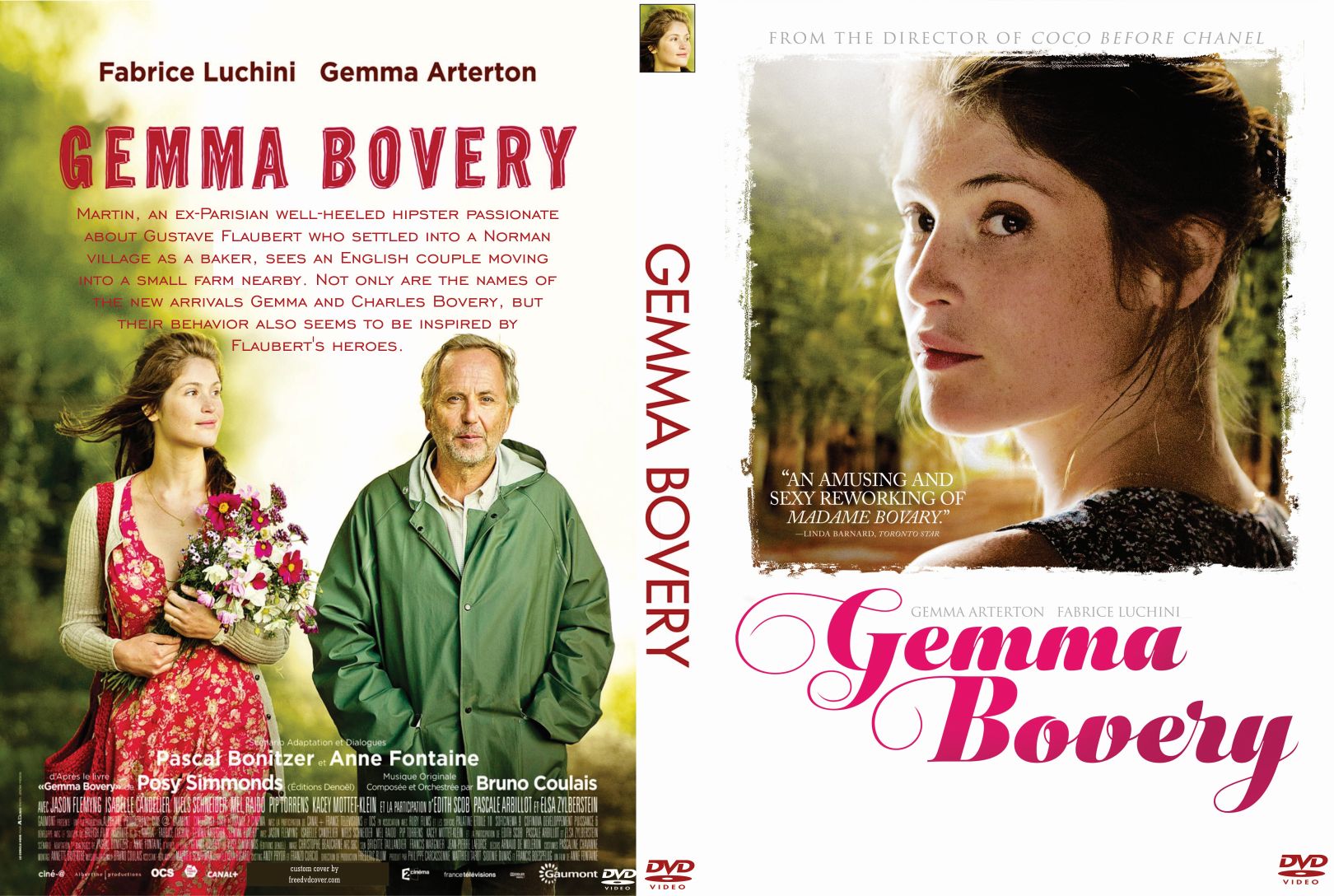
Gemma Bovery (2014)

Related image

Madame Bovary by Gustave Flaubert was published in 1856. There have been no less than half a dozen movie adaptations of this famous piece of literature, dating back as early as 1934 (dir. Jean Renoir). Only in 2014 did a female rendition emerge with Sophie Barthes in the helm and featured Mia Wasikowska as Emma Bovary. It’s a relatively conventional take on Flaubert’s literary classic.

Interestingly, in that same year, another movie version of Madame Bovary also came out. This one is by French director Anne Fontaine (born 1959). Under the helm of the versatile Fontaine, and in the spirit of Emma Bovary, this one looks like it’s a vignette from a parallel universe, defying traditional norms, laced with a deadpan, comical streak, and transported to modern day France.

Martin Joubert (Fabrice Luchini), a long-time academic publisher in Paris, moves back to Normandy to take over his father’s bakery, seeking for a peaceful and balanced life in the quiet region. A literature enthusiast, Martin’s antenna for the literary is sharp and sensitive. When a couple with the names of Charles and Gemma Bovery move into his adjacent house in the country, he quickly stands guard on the affairs of the young woman, as he knows the ending of the novel Madame Bovary by Flaubert. He uses all his male sense and sensibility to avoid a tragedy that could befall his new neighbours.

Director Fontaine’s title gives it away as a parody not to be taken too seriously. Gemma Arterton is a good choice as she appears to be a more convincing Gemma Bovery than Mia Wasikowska’s Emma Bovary. For those watchful for literary adaptations, Arterton was Tess of the D’Urbervilles (2008, TV miniseries) playing alongside Eddie Redmayne as Angel Claire. In a more recent year, Their Finest (2016) also saw her mastering her role poignantly.

Gemma is an interior decorator and Charles a furniture refurbisher. Parallel characters as in Flaubert’s novel appear in Gemma’s life after she moves into the Norman countryside, tempting her to fall into a similar track as Madame B.  Except, we don’t see her buying luxurious goods and remodelling her humble abode. Fontaine is bold to let her viewers see what Flaubert was describing with his words, albeit these scenes are short.

So, is Martin successful in avoiding a tragic end to his imagined literary heroine? No spoilers here. In a lazy, hazy summer afternoon, an ending short of crazy would not be worthwhile for a parody.


~ ~ 1/2 Ripples

**

Do you have a favourite French literature to movie adaptation?


Thanks to Tamara for hosting a 6th annual Paris in July event at Thyme for Tea.

PIJ2019 Tamara

The asset of ‘Yesterday’ is recalling Beatles memory

Ah… Summertime, and the viewing is breezy.

Even if you didn’t know the composer is George Gershwin, or Ella Fitzgerald’s voice doesn’t come to mind, you’d probably know I got the line from something bigger than it is, as the original song lyrics had made its way into our communal usage through the years… “Summertime, and the livin’ is easy.”

Here lies the very original story idea of the movie Yesterday: what if there’s no collective memory of The Beatles, except one person. And it happens that this guy is a struggling, busker kind of a singer songwriter on the brink of giving up his music and submitting to a career as a warehouse grocery stocker. Imagine, what would he do now?

Yesterday.jpg

Richard Curtis, whose expertise is writing rom coms, best known for Notting Hill, Love Actually, Bridget Jones and not the least, Mr. Bean, seems to have gone on a breezy trip imagining his newest work. Director Danny Boyle as well, reprises his rags-to-riches gist as in Slumdog Millionaire to create another fantasy. Yesterday looks to have the privilege of a dynamic duo of movie magic, and it seems they’d planned it as a summer joy ride.

To enjoy a fantasy, viewers have to drop their guards and suspend rationale. Stop trying to reason how a 12 seconds global blackout could wipe out the collective memory of The Beatles, both human and online memory that is, while one man, Jack Malik (Himesh Patel), being hit by a bus right at that moment, wakes up to find he has lost only his two front teeth but his memory is fully intact.

In his hospital bed, Jack says to his manager Ellie (the ubiquitous Lily James), who has had an unrequited crush on him since their junior high days, “will you still need me, will you still feed me when I’m 64?” Sure, but why 64? She asks. There’s the first clue.

Later when he gets out of the hospital, his close friends gift him a new guitar to replace the one that’s crushed by the bus. Keep on writing songs, they encourage him. So he sings his newest for them, it’s called “Yesterday”, and they’re almost moved to tears. Here’s the beginning of a world-wide sensation, Jack Malik, the one man show, creator of fresh, hit songs, and the rest is (new) history.

Now consider another premise, or maybe a philosophical construct: if a lesser known gallery painting is taken out of its frame and thrown on the sidewalk, will people have recognized it as a work of art? In parallel, if the collective memory of The Beatles had been wiped out and a Beatles song is sung by Jack Malik, a dowdy guy who doesn’t have the slightest sense of charisma, will it be a hit? Will it ever be turned into a classic? Well, too much thinking here. This is a rom com after all.

Curtis wants to humour us with quick, spontaneous laughs, and he delivers. Like showing us the Google search results for The Beatles when all such memory is lost, or when the less than attentive parents of Jack’s mistakenly remember the title of his new song as “Leave it be”. Or when Ed Sheeran, yes, the real Ed Sheeran, advises Jack on how to create a better song title, “Hey Jude” is a bit old-fashioned he tells him. “Hey Dude” sounds just right.

Kudos to the filmmakers, Jack’s Indian descent isn’t mentioned; he’s just another dude. It’s a kaleidoscope of humanity on our streets, no need to explain. As for the plagiarism issue, no worries, Boyle and Curtis deal with that at the end. So you can leave the theatre at peace with your conscience if you happen to really like the movie.

Jack’s friend and sidekick Rocky (Joel Fry) reminds us of Spike (Rhys Ifans) in Notting Hill, adding both sparks and silliness, especially in the weak, second part of the movie where it feels gas might have run out. As for Jack meeting a guru type of a guy called John in the last act feels an unnecessary add-on. Now Curtis really had run out of ideas.

On another note, I can’t seem to find much chemistry between James and Patel for them to a strike up an intimate relationship. Maybe they’re following to the dot the exact storyline, quiet, unrequited lover meets oblivious subject. Albeit I do see a chance there which unfortunately the director and writer had not pursued further.

The movie can be enriched if James is given more opportunity to perform. In Mamma Mia! Here We Go Again, as young Donna, James has shown herself to be a natural singer and dancer. There’s just one scene in Yesterday, maybe for a minute or less, where we see her character Ellie singing along with Jack in the recording studio. The story could be richer in content and more entertaining if James is given a chance to shine by accompanying Patel in some of his songs. After all, there were four harmonized voices that made up the Fab Four. Further, James’ participation in the music-making could beef up the story and open wider the road to romance as well.

Yesterday has an ingenious idea for a fantasy, Sheeran’s appearance as himself is marvellous. While the storyline turns weak and hard to sustain in the middle of the movie, the 15 Lennon-McCartney compositions save the production. Augmenting Patel’s singing with James’ collaboration would enhance the story and be more entertaining.

So for the overall production, I’ll give 2.5 Ripples, but I’ll still post this as a ‘Fresh’ on Rotten Tomatoes, for the originality of the concept as well as the memory of the Beatles numbers, especially for certain demographics among us.

~ ~ 1/2 Ripples

***

Related Ripple Review:

Nowhere Boy


‘Late Night’ Shines with Duo Emma Thompson and Mindy Kaling

“I have spread my dreams under your feet;
Tread softly because you tread on my dreams.”

                                                                                              – W. B. Yeats*

These two lines from Yeats’s poem appear at the beginning of the movie, but with hilarious effect. Director Nisha Ganatra and screenwriter actor Mindy Kaling do not waste time in setting the mood and pace of what is to come. Molly Patel (Kaling), a woman of Indian descent walking briskly on the streets of NYC meets her destiny as a full bag of garbage is thrown at her face while she recites these poetic lines to herself, mustering up courage and confidence as she heads to the interview for her dream job.

late-night-poster (1).jpg


She’s hired, but not based on her merits. Molly is now a writer for the TV talk show host, the iconic Katherine Newbury, whose late night show has been around for nearly three decades. The reason that Molly gets it? ‘Diversity hire’, for Molly has no background in writing comedy except cracking jokes over the PA in the chemical plant where she works as a quality control personnel. One writer in the team groans, “I wish I was a woman of colour so I could get any job I want with no qualifications.” With that line, we know that both Ganatra and Kaling, two ‘women of colour’, are poised to deal with a relevant workplace issue head-on.

Molly’s new work environment might just be as toxic as the chemicals in her previous employment because now she has to prove herself fit for the job, to her colleagues and her boss. The seven others in the writing team are all white male, while two other who used to be there have just been fired by Katherine, one for asking for a raise and the other talking on the phone with his girlfriend. The remaining seven know how to keep their job: colour within the lines and tread as carefully as possible so not to step on their boss’s ego.

Katherine Newbury is masterfully played by Emma Thompson. She is spot-on in portraying the sharp-tongued, hard-nosed TV anchor who is too blinded by her own light to realize her star rating has been falling like a meteoroid, and that a younger, cocky Daniel Tennant (Ike Barinholtz) is too eager to take over. The studio decision to terminate her show comes as a devastating blow to Katherine.

Scrambling to rescue her place, Katherine Newbury meets her writers for the first time. And in that writing room, the two women, Katherine the star TV anchor clashes with the novice, ex-chemical plant quality controller Molly, who points out––with good intention––Katherine’s lack of relevance in contemporary social media-driven society. Interestingly, as the two women from totally different demographic backgrounds come to interact with each other, the older one begins to feel like she’s looking at her former, younger self. And with that, Kaling brings in yet another critical societal issue: remaining relevant in the battle against ageism.

Thompson is brilliant in delivering depth and not merely a two-dimensional, Cruella type caricature of a boss as in The Devil Wears Prada, although she has plenty of opportunities to do just that. Thanks to Kaling’s subplot bringing in John Lithgow as Katherine’s Parkinson’s afflicted husband Walter, we get to know some of Katherine’s backstory. Although his character isn’t fully developed, Lithgow’s sporadic appearances act as a conduit through which we get to see a hidden facet inside the seemingly tough outer shell of Katherine’s. Kudos to Kaling in not focusing on her own story in the movie but letting Thompson shine in the limelight, and the veteran actor delivers with versatility and energy, probably rescuing  some overtly melodramatic sequences.

Who better to write the script than Mindy Kaling herself. The movie is like a biopic of her own TV career, well, not exactly in the details but definitely the trajectory. Before this her first full feature screenplay, Kaling, the daughter of immigrant parents from India, was first hired as a writer for the pilot of a new TV series called The Office (2005-2013). Exactly, that award winning series which later lasted for nine seasons. Kaling also appeared as the character Kelly Kapoor and became producer as well. After The Office, she went on to create her own series The Mindy Project with six seasons. She is Dr. Mindy Lahiri, the character inspired by Kaling’s mother who was an obstetrician/gynecologist, and the namesake, the author Jhumpa Lahiri. In the meantime, Kaling authored two books, collections of essays sharing candidly her private self and growing-up a child of immigrant parents. Kaling is an iconoclast in her own right.

Vancouver born director Nisha Ganatra is also of Indian descent. I applaud both women’s excellent efforts in bringing this Sundance (2019) acclaimed feature into mainstream entertainment via Amazon Studio with a reportedly $13 million price tag. Late Night is more glam, clever, and lively than Amazon’s The Big Sick two years back at $12 million. It’s my hope that one day, the word ‘diversity’ will not be necessary to describe contributions from ‘minorities’ or ‘non-whites’ as we all belong to the mainstream.


~ ~ ~ Ripples


*From the poem ‘He Wishes for the Cloths of Heaven’


***


Related Review:

‘The Big Sick’: A Real Life Romantic Comedy


Binge-Watching on the Small Screen

If you’ve not ventured out to the Cineplex lately for larger than life spectacles, you’re not alone. And that’s what Steven Spielberg is worried about. The small screen is taking over: streaming services such as Netflix, Amazon, Hulu, Crave… are keeping movie goers at home. What more, these services are making their own productions; memory of last year’s Netflix original movie, multiple Oscar winner Roma may still be fresh.

If binge-watching is the new urban phenom, then binge-racing has to be the newest spectator sport on the couch. Binge-racing, a term not in the OED yet, just means watching a whole Season of episodes all within the first 24 hrs. of their release. That could amount to 12 hrs. of binge-viewing.

In recent months I too have discovered the joy of small-screen bingeing. I declare though, I’m not a racer; as the title of this blog implies, I’m a ripple rider when it comes to small screen viewing. So for a while I’ve been catching up with some interesting titles and I must admit, I’ve thoroughly enjoyed the activity.

No, this is not a debate about which is better, watching big Hollywood productions in the theatre vs. streaming on your TV screen or just on your 6″ handheld device; it’s about accessing interesting human stories to watch in a continuous and user friendly mode, as you can pause to take care of more urgent needs that may arise, like heading to the snack counter, without missing a beat or having to wait for the next commercial break.

The following are some titles I’ve binge-watched in the past year or so. By ‘binge’ I just mean watching all the episodes in a Season in one sitting, or two. Some are mini-series, so it’s just like watching a slightly longer movie than you would in a theatre.

**

The Marvelous Mrs. Maisel (Amazon Prime Video)

The-Marvellous-Mrs-Maisel

This is probably the best period series I’ve watched in recent years. 1950’s NYC, Midge Maisel (Rachel Brosnahan), wife, mother of two young children, devoted daughter of a Jewish family living in the Upper West Side, decides to choose a different path.

Inciting incident is when her husband Joel (Michal Zegen) one day packs up and leaves. Happy families can be turned into unhappy in the blink of an eye, for various reasons. One time at the Gaslight Café in Greenwich Village, Midge rants about her domestic blues during open mike and is discovered, or rather, she hears her true calling, and that’s being a stand-up comedienne.

This must be kept a secret from her Columbia U. professor father Abe Weissman (Tony Shalhoub) and her mother Rose (Marin Hinkle), a deep-rooted figure in the community. Midge hides her double life successfully at first, and her resolve to strike out on her own is strong. First she finds a day job at B. Altman Department Store, unheard of in her social circle, and at night does stand-up gigs as a comedienne, even more far-fetched. She lies low with her new persona, why, her newly acquired language is too foul for her family and friends, but foul is fair for Mrs. Maisel’s career. 

Period events and personalities add to the authentic build up of the story: Lenny Bruce is Mrs. Maisel’s supporter, Jane Jacob hangs around the Village, emergent artists perform at the Gaslight Café, albeit some are the deadpan material of the comedy. For the larger picture, the Cold War, secrets and spies, the Kennedys form the backdrop.

Very well written comedy, beautiful set design and period costumes, superbly performed by the wonderful cast. Rachel Brosnahan won the Golden Globe for Best Actress in a TV series, Musical or Comedy (2019); the show won a GG for Best TV series, Musical or Comedy in 2018, and for 2019, it has snatched SAG Awards, Prime Time Emmy, AFI Award for TV Program of the Year. Enough said.

Mozart in the Jungle (Amazon Prime Video)

Mozart in the Jungle.jpg

No matter which classy name you put in, Bach, Beethoven, Schubert… it’s still a jungle. The series doesn’t just showcase the music of the fictional New York Symphony but probe their private, and not so private, life as well. In the jungle, you’d expect that’s where the wild things are. Their softball team is aptly named Wolf Gang (no doubt a playful pun on Mozart’s name). The Golden Globe and Emmy Award winner for Best TV series, Musical or Comedy, does have some inspiring musical scores and thoughtful lines.

To add some real-life flare, classical music figures Lang Lang, Emanuel Ax and Joshua Bell had made personal appearances. What more, while the regular cast members had to fake their instrument-playing, Dermot Mulroney (My Best Friend’s Wedding, 1997) didn’t need to. In one episode as a guest star, he’d shown himself to be an impressive cello virtuoso.

Coincidentally, I’ve recently finished Jamie Bernstein’s memoir Famous Father Girl: A Memoir of Growing up Bernstein. With her book, she had successfully destroyed the image of my American idol during my youthful days, Leonard Bernstein. Fact is stranger, or wilder, than fiction indeed. The classical music realm isn’t a ‘holier than thou’ kind of high-brow milieu. It’s occupied by humans after all.


Killing Eve (Crave)

Killing Eve

I don’t have Crave (HBO), so this one I watched on DVD, after a long wait for holds at the public library. Sandra Oh won a Best Actress Golden Globe for a TV series with her portrayal of MI5 agent Eve Polastri, obsessed with tracking down the psychotic killer Villanelle (Jodie Comer). Comer is good too, like a female version of Hannibal Lecter. Only difference is, she’s more humane than Lecter in that she’d rather put a fast bullet in her victim’s head than slowly eat the grey matter inside. Exactly, this is not for everyone, but for the thrill seekers and Oh fans. Slick and fast-paced, engaging performance and suspenseful storylines sprinkled with humor every now and then.

Collateral (Netflix)

Carey Mulligan in Collateral

I’ll watch anything that stars Carey Mulligan. The David Hare written, 4-Episode TV mini-series stands out, for it features a 7-month pregnant Mulligan as a London detective solving a street shooting. Exactly, why can’t a woman with a baby bump be a detective and fight crime, and along the way, exposes issues within the government about immigration policies and some dark secrets? Kudos to BBC, director S. J. Clarkson, and Carey Mulligan for taking on the challenge.

The Crown (Netflix)

The Crown.jpg

The series deserves all the accolades it has garnered. Claire Foy is superb as a younger Queen Elizabeth and the whole cast is notable. I’m eagerly waiting for the new Season with Olivia Colman as the Queen, continuing with the relay. QE is the longest reigning monarch in England’s history, so we’ll have many more Seasons to come(?) Helena Bonham Carter as Princess Margaret would make one lively addition in the upcoming Season.

The Kominsky Method (Netflix)

A dynamic acting duo, Michael Douglas and Alan Arkin exude good chemistry. Douglas is Sandy Kominsky, an acting coach transforming young actors with his own Kominsky Method. Arkin plays his long-time friend and agent Norman who recently lost his wife to cancer. Confusion and insecurities abound in this stage of their life. What better companion they have than each other to ride into the sunset. The well-written script and nuanced performance from both make this series an enjoyable and inspiring character study.

Z: The Beginning of Everything (Amazon Prime Video)

Based on the book Z: A Novel of Zelda Fitzgerald by Therese Anne Fowler, who produced  the TV series and wrote the screenplays of several episodes. Beautiful set design, costume and makeup. Fowler’s book and the adaptation is framed from Zelda’s point-of-view, a writer in her own right and a tragic heroine when it comes to her marriage. Zelda (Christina Ricci) is an unhappy wife overshadowed by an alcoholic, egoistic writer. Only one Season so far has been produced and the biopic stops in midlife. I hope the production will eventually pick up to the end. It’s an image-questioning look at F. Scott Fitzgerald who’d given us some of America’s best loved novels.

The Highwaymen (Netflix)

A Bonnie and Clyde remake but this time from the the point-of-view of two Texas Rangers who come out of retirement to take down the notorious outlaw couple. No, it’s not a comedy but yes, lightweight. Warren Beatty and Faye Dunaway are replaced by Kevin Costner and Woody Harrelson, who join hands to offer a non-glamorous take on the capture. Directed by John Lee Hancock (The Blind Side, 2009). A Netflix original movie.

**

What are you binge-watching these days?

‘Working Woman’ is yet another voice of the #MeToo Movement

Israeli director Michal Aviad’s “Working Woman” is a good reminder that even though the momentum of the #MeToo Movement might seem to have quieted down, there are still voices that need to be heard. Screened at international film festivals since last fall, the feature is now being released in selective theatres.

At the start of the movie, the roving camera follows Orna (Liron Ben-Shlush) as she walks briskly to a car her husband is waiting in. She has just come out of a job interview, exciting to be offered an opportunity to assist a real estate developer, Benny (Menashe Noy). There will be attractive financial rewards and career opportunities ahead.

As the husband parks the car on the road and we get to see the couple in their apartment in the next scene, a stationary camera captures all that is important, an establishing shot if you will. In one frame, we see the husband cooking, Orna clearing the table beside him, and not too far away but still within the frame, their children playing at a computer. We soon learn that the computer isn’t working properly, the kids want a new one, and Orna telling them not until the fridge has been paid off. Husband and wife then go on to talk about this new job she really wants to take, he not too sure about the irregular working hours.

In less than five minutes from the opening, we see Orna’s situation. A mother with young children to care for, a husband who is starting a new restaurant and a household that is cash-scrapped. Aviad’s camera work and succinct dialogues prime us with expectations.

Orna starts working as a personal assistant to real estate developer Benny on his flagship project, a skyscraper apartment by the seaside. He needs someone to organize his meetings, see the project through to completion and sell the luxury units. Being Benny’s protégé includes following him around, even waiting while he has a haircut. Orna has no experience in real estate but is a quick study; she has a knack for gaining trust from potential customers and the instinct for a fresh approach to getting things done.

A scene from WORKING WOMAN. A film by Michal Aviad. A Zeigeist Films release in association with Kino Lorber. Photo courtesy Zeigeist Films. 

Benny finds the ideal assistant in Orna. He soon promotes her to sales manager, noting her resourcefulness and creative thinking. His project by the seaside is now in good hands. But reaching that position and gaining her boss’s trust isn’t as smooth as Orna had first thought; it is becoming obvious that Benny appreciates not just her work skills but eyes her as a woman.

It first starts with commenting about her hair and telling her what to wear, then a kiss, for which he apologies. Other kinds of harassment follow, much like juvenile pranks. But a trip to Paris escalates his advances into a sexual assault. Orna’s pushback and outright ‘no’ means nothing to Benny. Aviad’s camera captures the scene matter-of-factly. The realism is disturbing to watch, not that Benny is violent but that it is obvious that the act is not consensual, his brute force the only means to subdue her in gratifying himself.

After coming back home from Paris, Orna is a different person. She is traumatized naturally, but when her suspecting mother asks what happened in Paris, she replies, “I made a mistake.”

That is a crucial statement. Such a mentality could well explain why she isn’t forthright with her husband, fearing his speculation on her part in the event, or maybe fearing his avenging Benny, making the matter worse. But we as viewers are witnesses to the scene. The ‘mistake’ definitely is not hers to shoulder.

Aviad’s storytelling is realistic and engrossing. Her handheld camera follows Orna like a shadow, the slightly roving movement accentuating the tension. Ben-Shlush’s acting is sensitive and nuanced. The screenplay spare and succinct. The 93-minute narrative feature is an effective and clear voice in stating a case of sexual harassment in the workplace, a powerful boss getting his way and taking advantage of a subordinate who needs her job for financial reason.

Fortunately, Aviad leads us towards a positive ending. We get to see Orna rise up from her challenging situation as she gains new strength to open for herself a way out.

Exclusive engagement of “Working Woman” will be screened at Landmark Lagoon Theatre in Minneapolis St. Paul beginning Friday, May 10th, 2019. Hebrew with English subtitles, 93 mins.

~ ~ ~ Ripples

***

‘The Aftermath’ has all the right ingredients except…

From the beginning, all the ingredients seem to be in place for a satisfying period movie. Sumptuous set design, beautiful costume and makeup, even the rubbles and chaos are realistic. What more, three seasoned, popular actors under a helmer who had proven he could do war movies with his Testament of Youth (2014).

Director James Kent is all set to pull us into great expectations from the start. British military wife Rachel Morgan (Keira Knightley) arrives by train in Hamburg, Germany,  in the year 1946.  She is greeted warmly by her husband Lewis (Jason Clarke), a British Colonel stationed there to enforce order in the aftermath of the War.

The Morgans are staying in a mansion requisitioned from the Nazi’s. But due to Lewis’s benevolence, the former owner, handsome German widower Stephen Lubert (Alexander Skarsgård) and his troubled teenaged daughter Freda (Flora Thiemann) are allowed to stay until they are sent to the camp. Why the delay is not explained, an arrangement definitely isn’t going to be too comfortable. Just look here, Rachel, who has lost her young son in the war, refuses to even shake hands with the enemy, now cohabitant of the mansion.

The Aftermath movie still
Alexander Skarsgård, Jason Clarke and Keira Knightley in an early scene of ‘The Aftermath’. Photo: Fox Searchlight.

No sooner had they settled than Lewis needed to go away on military duties, leaving his wife behind. What ensues is predictable, but unfathomable: How a woman who still mourns her lost young son and holds animosity against the enemy, and a German widower who’d lost his wife during the war and with her memory still vivid in the house, can come together so quickly just days of living under the same roof. From refusing to shake hands to sleeping with the enemy in just a few scene changes, the unconvincing storyline abruptly stops any appreciation I’ve had of other cinematic elements up to that point. 

Adapted from the novel by Rhidian Brook, the screenwriters, Joe Shrapnel and Anna Waterhouse, must have thought celebrity actors have the power and charisma to jazz up a weak script. Fact is, even talented actors are bound by the writing, or, hampered by it. Just look at some other works by Knightley, for example, Atonement (2007) or her latest Colette (2018), comparing her performance in those films with her role here in The Aftermath seems like we’re watching the living in contrast to a pedestal decorative that can tear up on demand.

Alexander Skarsgård can release much intensity if the script allows, case in point is his role in Big Little Lies (2017), for which he won a Best Supporting Actor Golden Globe. Instead, his character as Stephen in The Aftermath is bland, driven by inexplicable motive, except maybe an act of violation to avenge. But no, he and Rachel, who are practically strangers, seriously mean love here. Whatever happened to his late wife’s memory at the piano? With Rachel playing her music still placed on the Steinway, even Debussy’s Clair de Lune can’t shine a light on the blurry motive.

Jason Clarke is repeating his demeanour as in Mudbound (2017), a husband oblivious of what’s going on with the affair of his wife. Here in The Aftermath, the underlying motivations of each character and backstory is just slightly touched on without much elaboration. Are the visuals in bed more important than the rational for modern viewers? I sure hope not.

Movies set during the World Wars work only if there are more to mull on rather than just the actions and the aesthetics. Complexity of characters and conflicts are what pull viewers in, eliciting empathy. Some thought-provoking or a bit challenging ideas and dialogues could help too. Several recent examples are Their Finest (2016) and Darkest Hour (2017), or director Kent’s own Testament of Youth (2014); the other end would be the emotionless The Monuments Men (2014).

I can’t help but think of a WWII classic. Why Casablanca (1942) works, among many factors, are the intelligent dialogues and a surprise ending, surprising to the character involved, but gratifying for the viewers, leaving them with much to mull on, values, priorities, and a lingering feeling for two star-crossed lovers. Unfortunately, that kind of  emotions, thoughts and admiration for the characters were not the aftermath as I left the theatre.

~ ~ 1/2 Ripples

***

‘Ramen Shop’ is a delicious tale of reconciliation

This is not your ordinary foodie flick, for it touches on a subject that is not likely to be found in a culinary film: WWII memory lodged in the mind of those who had lived through Japanese occupation, a generation of victims and witnesses of a horrific chapter in Asian history. That is the backstory. Acclaimed Singaporean director Eric Khoo offers us a slow cooked, savoury broth, using ingredients that are comforting and heartwarming to present a scenario of reconciliation.

Ramen-Shop-Still 1
A scene from Eric Khoo’s “Ramen Shop”, screened at SFFILM earlier this month, now in selective theatres. Courtesy of SFFILM.

Screened at the San Francisco International Film Festival earlier this month, Ramen Shop is now released in selective theatres. Unlike the ramen western Tampopo (1985), Khoo’s concoction is of a gentler nature, melodramatic moments that are quiet and tasteful, including a moving denouement. Ramen Shop also shows how ordinary folks live and cook, much less spectacular than what we have seen in Crazy Rich Asians (2018), but delicious in a down-to-earth way.

Young ramen chef Masato (Takumi Saitô) from Takasaki, Japan, goes on a root-searching quest to Singapore where his late mother Mei Lian (Jeanette Aw) came from. She died when Masato was still a child; the boy grew up missing his mother sorely, especially her Bak Kut Teh, Signapore’s signature Pork Bone Soup.

Masato’s father Kazuo (Tsuyoshi Ihara) is a notable chef and owner of a ramen shop. To those not familiar, this is a good alternative if you’re reluctant to befriend raw fish (sushi and sashimi). Ramen are thin noodles in a long-cooked broth, usually goes with slices of braised pork, half a soft-boiled soya egg, scallions, sea weeds and other veggies. A trendy eat nowadays so the movie is timely.

Since his wife’s death, Kazuo has been too grief-stricken to notice Masato shares the pain no less; instead, Kazuo practically ignores his son.

“Sometimes I wish I were a bowl of ramen. At least that way, he’d show more interest in me,” Masato laments.

After Kazuo’s sudden death, Masato decides to go on a personal quest to search for his mother’s Singaporean roots, to find his long-lost Uncle and through him, his Grandmother who had estranged him since his birth. Taking with him faded childhood photographs, his mother’s journal written in Chinese and sweet memories of his mother’s comforting Bak Kut Teh, Masato heads to Singapore. On screen, the childhood scenes are presented with a washed-out colour, blending into the present effectively as we follow Masato walk down memory lane to re-live his early experience with his parents.

Food blogger Miki (Seiko Matsuda) whom Masato has been following online now acts as his personal guide while in Singapore. A chance encounter leads him to reconnect with his uncle, his mother’s younger brother. Played by Mark Lee, Uncle Wee is an animated and humorous character. He welcomes Masato into his home where he lives with his wife and two daughters, Masato’s new-found cousins.

More importantly, Uncle teaches Masato how to make Bak Kut Teh, literally meaning Pork Bone Tea. It’s called ‘tea’ because after finishing the ingredient-rich and savoury noodle soup, people usually drink tea as a wrap to the satisfying meal.

Upon Masato’s urging, Uncle brings him to meet Grandmother (Beatrice Chien). Realizing Masato is her late daughter’s son, Grandma rejects him outright; acknowledging a half-Japanese grandson would be too painful for her as her husband died in Japanese hands during the war.

The animosity his Grandmother holds against him shatters Masato but does not deter him. In a museum visit, he learns about Singapore’s wartime history. Eventually, he figures out a way to show his sincerity: what better way to reach out to Grandma than a delicious bowl of Japanese and Singaporean fusion, thus creating ‘Ramen Teh’ to bring to Grandma. Blending the favourites of both countries of his parental heritage, ‘Ramen Teh’ becomes the broth of reconciliation and the name of his new ramen shop when Masato returns home to Japan.

If a bowl of fusion noodle soup can melt away bitterness and long-held grievances among peoples, the world would be a better place. We have Khoo’s imaginary tale to thank if we move even one step closer to that ideal.

~ ~ ~ Ripples


***


38th Minneapolis St. Paul International Film Festival (MSPIFF)

The Film Society of Minneapolis St. Paul will be presenting the 38th annual MSPIFF April 4 – 20. Every year, MSPIFF showcases more than 250 film works of various forms coming from as many as 70 countries.

On their ‘About’ page, the MSP Society states:

“We promote the art of film as a medium that fosters cross-cultural understanding, education, entertainment, and exploration.”

The more I watch films from international film festivals, the more I appreciate this  statement. It’s unfortunate that nowadays the term ‘foreign’ carries an unfavorable stigma. This I’ve found from watching foreign films: listening to languages I don’t know means I need to adapt to reading subtitles, which in itself is a conscious act of trying to understand. Just that simple act of attempting to listen is of value. Of course, many works are from English-speaking countries, so it’s not all strenuous workout all the time. I can’t think of a better way to be transported to another place and time by a story, as my empathy is honed (subliminally) while I sit back and munch on popcorn.

Back to MSPIFF. Here are a few selections from the various programs with my succinct, capsule review:

The Accountant of Auschwitz by Matthew Shoychet (World Cinema Program)

mspiff38-accountant-of-auschwitz-still-1_thumb
‘The Accountant of Auschwitz’ Photo courtesy of MSPIFF

Canadian director Shoychet sets up an informative background leading to the trial and sentencing of German SS Officer Oskar Gröning, the man who tallied all the properties confiscated from the prisoners as they entered the Auschwitz death camp. Holocaust survivors recall their experiences, seeking justice and closure. However, bringing those responsible to account for the atrocity remains an elusive task. Only 49 Third Reich officials out of 6,500 had been brought to trial. Many got away with just 3 years in prison during the post-war period. Currently, time is running out for the victims. Major obstacles for the prosecution: the old age of those accused, continued evasion, and proof of complicity. Shoychet’s documentary is a poignant reminder that a tragic chapter in human history still remains unresolved.


An Elephant Sitting Still by Hu Bo (Asian Frontiers Program)

ElephantSittingStill
‘An Elephant Sitting Still’ Cast. Photo courtesy of MSPIFF

The 230-minute feature is an incisive depiction of the human desolation in an unnamed, northern Chinese city. Director Hu Bo’s cinematic capture of the inner void of his characters is intense and nuanced. Eliot’s “The Waste Land” is alluded to, that piece of cracked soil deep in the human soul. Hu’s tracking shots place viewers in the midst of relational conflicts, from bored high school students to aimless adults to the despondent elderly. Random strangers somehow connected casually in Hu’s astute screenplay. And the elephant among their midst remains invisible, sitting as a metaphor for the resignation of life as well as a fantasy of hope. This debut feature sadly speaks as a last testament of a lost talent: Hu took his own life during post-production of the film. He was 29.

The Third Wife by Ash Mayfair (Women & Film Program)

the-third-wife_gallery-2 (2)
‘The Third Wife’ Photo courtesy of MSPIFF

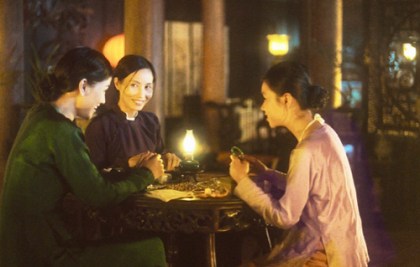
Inspired by true events in 19th century Vietnam, 14 year-old May is married into a rich landowner family. She is the third wife of the patriarch’s son. Her sole purpose is to produce a male descendent for him, as the first two wives have only daughters. A film with minimal dialogues, The Third Wife is a visual story. Its aesthetics and sensual, dream-like sequences wrap a harsh reality: the plight of women in a patriarchal society. Mayfair was born and raised in Vietnam, an Oxford and NYU Tisch School of the Arts graduate. This her debut feature is a quiet and potent voice in the #MeToo awakening.

***

For the full program of the 38th MSPIFF, CLICK HERE to their website.


What ‘Greta’ could have been

Greta Poster

Greta has all the ingredients to be a much more elevated film. The stalker and prey duo played by veteran French actress Isabelle Huppert and the popular young star Chloë Grace Moretz make a perfect match, director Neil Jordan has top talents in his helm.

At first, looking at the cast and the director’s filmography, I was expecting a psychological thriller. Jordan had won an Oscar for writing the original screenplay of The Crying Game (1992) which he also directed. Later he brought us The End of the Affair (1999), a memorable adaptation of Graham Greene’s novel, again as writer/director. Greta is the Irish director’s most recent feature.

With the older woman stalking a young, innocent prey storyline, Greta could have developed into a deeper, character-focused movie, with more backstory, maybe even a poignant depiction of loss, loneliness, and obsession. Actually it would have been Huppert’s forte to do just that. As Greta Hideg, a widow living by herself in NYC with only her piano music as companion, the role sheds a little reminiscence of Huppert’s Cannes winning character in The Piano Teacher (2001) directed by Michael Haneke. But here she is simply a violent psychopath.

A young, new transplant to NYC, Frances (Moretz) finds the handbag that Greta has left in the subway train. With good intention and much naiveté, she locates Greta’s address and brings it all the way to her home. The rest of the story unfolds with expected development but unexpected, sudden loud sounds aim to scare and shock. Thanks to the ‘chemistry’ between the two stars and their engaging performance, the movie holds up for the first hour. A third character, the free-wheeling roommate Erica (Maika Monroe) is a balm to a distressed Frances, and I admit, to us viewers as well.

The first 60 minutes of the movie was well grounded for some deeper development of story and characterization. However, writer/director Jordan chose the path of the horror genre and its wares, lapsing the second part into unconvincing maneuvers. Huppert as a revenger in Elle is psychologically thrilling; Huppert as a psychopath goes bonkers in Greta is ludicrous. When you hear laughter in the dark theatre during a horror movie, you can almost gauge the effectiveness of the intention.

As for the prominent leitmotif, Franz Liszt’s Liebestraum (Love Dream), it just serves to stir up yearnings for something deeper and artistically satisfying, instead of, alas, leaving us with an illusive dream.

~ ~ Ripples

**


Other Isabelle Huppert’s films reviewed on Ripple Effects:

Things to Come

Claire’s Camera


***


Books into Movies: 2019 and Beyond

Feeling the post-Oscar blues? How about turning to books, before they in turn are morphed into a movie? The following are some upcoming books being adapted into movies in various stages of development. Some are coming out soon, some just announced.

The Aftermath by Rhidian Brook

The movie adaptation starring Keira Knightley, Alexander Skarsgärd and Jason Clarke is coming out March 19, directed by Testament of Youth (2014) helmer James Kent. In recent years, WWII historical fiction has enjoyed a sensational growth in popularity, The Aftermath is another one of this highly sought after genre. The transfer to movies, while not always as effective, lacks no enthused followers. The Aftermath is set in 1946 Hamburg, a British family and a German widower and his daughter had to live under the same roof during a de-Nazification operation.

Cats: The Musical 

Based on T. S. Eliot’s collection of poems Old Possum’s Book of Practical Cats, Andrew Lloyd Webber’s musical Cats is hailed as one of the biggest hits in theatrical history on their website. Director Tom Hooper has another musical-turned-movie under his belt: Les Misérables (2012) which won 3 Oscars. Attractive cast in Cats the movie: Rebel Wilson, Idris Elba, Jennifer Hudson, Judi Dench, Ian McKellen, James Corden, Taylor Swift.

Death on the Nile & Witness for the Prosecution by Agatha Christie

Kenneth Branagh will direct Wonder Woman Gal Gadot and Armie Hammer in Death on the Nile. Branagh will reprise his role of Hercule Poirot, after starring in and directing Murder on the Orient Express in 2017. Now over forty years after her death, Christie’s influence has not waned. A movie adaptation of Witness for the Prosecution has also been announced with Ben Affleck directing.

The Goldfinch by Donna Tartt

John Crowley is no stranger to literary adaptations; his previous feature, Colm Tóibín’s Brooklyn, was nominated for 3 Oscars. This time, Donna Tartt’s Pulitzer Prize winning The Goldfinch reads like it’s written readily for the camera, considering the eclectic characters and the explosive storylines. Sarah Paulson and Nicole Kidman star. Screenplay adapted by Peter Straughan, who was nominated for a Best Adapted Screenplay Oscar for co-writing the 2012 script for John Le Carré’s Tinker Tailor Soldier Spy (2012).

In the Garden of Beasts by Erik Larson

Larson’s 2011 non-fiction is a captivating look into the power and social structure of Berlin during the emergent years of Hitler’s rule. Focus is on the the true story of William Dodd, a mild-mannered Chicago professor who becomes America’s first ambassador to Hitler’s Germany. And this is relatively hot-off-the-press: English film director Joe Wright will helm the production (See also the last entry of this post). Tom Hanks was originally linked with the role of Dodd (and a good choice I think); whether he will carry it through or just remain as producer is to be seen. This is one movie I’ll definitely watch out for. Before then, the book is a great read to prep for it.

Little Women by Louisa May Alcott

Geared for a Christmas release, this new version of Alcott’s classic is written and directed by Greta Gerwig. Gerwig is acclaimed for her take on the contemporary young woman, her psyche and struggles in films like Frances Ha (2012) and Lady Bird (2017). How will she approach Alcott’s novel of a bygone era? And if you still have Susan Sarandon, Winona Ryder, Kursten Dunst and Christian Bale from the 1994 cast stamped in your mind, now try to imagine Florence Pugh, Saoirse Ronan, Timothée Chalamet, Emma Watson, Meryl Streep and Laura Dern taking their places. Actually, not a bad replacement.

The Personal History of David Copperfield by Charles Dickens

First off, I must say this is one of my all time favourite novels, but I’m no purist. While I welcome new representations and interpretation, I still hope the upcoming movie will be Dickens-approved. A most interesting (postmodern) cast: we have Dev Patel as Davie, Tilda Swinton as Betsey Trotwood, Hugh Laurie as Mr. Dick, Ben Whishaw as the ultimate villain Uriah Heep, Benedict Wong as Mr. Wickfield. Directed by Armando Iannucci (The Death of Stalin, 2017).

Rebecca by Daphne Du Maurier 

In this remake of Rebecca, Armie Hammer will play Maxim de Winter. And who will be Mrs.? None other than Lily James, ubiquitous after Downton Abbey (Lady Rose). Do you think she will make one successful Mrs. de Winter? What I’m most interested in, however, is the production design, headed by 6-time Oscar nominee Sarah Greenwood, whose filmography includes Darkest Hour (2017), Anna Karenina (2012), and Atonement (2007) among many other titles. I think Manderley is in good hands. But will the whole production beat the classic Alfred Hitchcock noir with Laurence Olivier and Joan Fontaine? And who can be more chilling than Judith Anderson as Mrs. Danvers?

The Woman in the Window by A. J. Finn

Another wildly popular genre in recent years along the line of Gone Girl and Woman on the Train etc. is the modern day thriller-cum-unreliable-narrator (and alas, they’re mostly women!) mystery novels. Finn’s (Now what’s with the writer whose real name is Daniel Mallory using a pseudonym close to Flynn, the Gone Girl author?) NYT bestseller is turned into a movie with a top-notch cast. (Aside: do writers nowadays write in preparation for a movie?) Directed by the much sought-after Joe Wright, who’d helmed Darkest Hour (2017), Anna Karenina (2012), Atonement (2007), and Pride and Prejudice (2005). Wright has a dream cast in his hands: Amy Adams, Gary Oldman, Juliane Moore. The movie adaptation is written by Pulitzer winner, playwright/screenwriter Tracy Letts, who gave us August: Osage County.

________________

Which one(s) of the above do you anticipate most? Others not on this list?


***

The Favourite: How important is Historical Accuracy in a Period Movie?

Yorgos Lanthimos’ The Favourite is on my Top Ripples 2018 list. I added it in after I’d already posted my annual wrap. I judged it mainly on the basis of its aesthetics, film as an art form, the acting, cinematography, and overall styling.

I went into the theatre with no prior knowledge of the historical details. So, with no a priori burden as a fact-checker, I just let my curiosity lead me, and soon I was transported to a very different world in a very different time. The Favourite shows us Queen Anne’s court in early 18th C. England, where the Whigs fight against the Tories, where men wear wigs and stay indoor cheering on ducks racing or hurling fruits at a naked, good-humoured and heavy-set man (easy target) who finally slips on the fruity and juicy floor, while women play with guns and shoot pigeons outdoor, and pretty good aims they are too, both with the pigeons and in narrowly missing the human target, just as a warning.

the favourite

The film is all about the relational triangle between three women. The trio of actors are undoubtedly the distinguished assets of the production: Olivia Colman as Queen Anne, Rachel Weisz her intimate confidante Lady Sarah Churchill, and Emma Stone as Abigail, Sarah’s cousin and novice chambermaid, soon the new favourite of the Queen’s. Abigail is a quick study; in no time they are all drawn into a three-way tug-of-war. Although initially coerced by the leader of the Tories, Robert Harley (A wigged and made up Nicholas Hoult, long way from About A Boy, 2002), to spy on Anne and Sarah, who sides with the Whigs, Abigail later learns to use Harley’s influence as leverage to her advantage.

Against the historic backdrop of the war with France, the film is an intriguing look into a royal court and partisan politics, but the most meaty story is the power struggles among the three women, and how conflicting dynamics, sexual politics, emotional manipulation, jealousy, and treachery will ultimately consume all. If you’re on an existential quest for meaning, look elsewhere. This film is pure entertainment, irreverent, surreal, sumptuous in set design, costumes, make-up, and spot-on in editing and acting; but it’s not for the serious meaning seeker.

The Cinematography effectively augments the overall aesthetics. Director of photography (DP) Robbie Ryan used a fisheye lens and a roving camera to sweep wide-angled shots, giving us a lively, larger but distorted view, like looking into a fishbowl, which is totally compatible with the genre, for to say The Favourite is a comedy is an understatement. The film is more a farce, and at times outrageous to the point of gratuitous sensationalism. The effect is acerbic sarcasm.

But there are plenty pleasing things to look at as the camera captures the sumptuous set design. The fluid, almost 360º camerawork pans like an all knowing eye. That in itself is ironic, for hidden agendas are ubiquitous among the characters. Shot in 35 mm film, Ryan utilizes natural lighting, and in the dark, a single candle light, all work to serve up a classy, Rembrandt-like impression.

The music too, plays a prominent role in establishing the overall classical tone, Vivaldi, Bach, Handel… yet with a splash of contemporary touch as well, like, Elton John’s “Skyline Pigeon” on harpsichord, and piano. Incidentally, in a few scenes, a long-lasting single note or two – which I’m sure even Philip Glass would find too minimal – will repeat and repeat to pull the string of tension, keeping viewers edgy and uncomfortable. Considering Lanthimos’ previous Cannes winning films The Killing of a Sacred Deer (2017) and The Lobster (2013), The Favourite is relatively conventional in style as a period movie.

I have no favourite among the trio, all three deliver spot-on performance, lively in restraints or outbursts. Colman’s gout-stricken Queen Anne is ludicrous and simple minded, but only in appearance. In a candid moment in front of Abigail, she pours out her inner hurts, so much tragedy in her life: 17 pregnancies, none survived. The 17 rabbits she keeps in her bedchamber are symbols representing each one of her loss, twelve miscarriages and stillborn, five dead children. Doting on them is Anne’s way of dealing with her loss.

And kudos to Abigail who at one point has indeed shown genuine sympathy for the Queen’s plight. Anne is perceptive of this too, a point well earned in Abigail’s favour. Stone is well cast in her role, her initial naiveté shines through. She soon learns that is her best weaponry, and uses it well as she turns into a master of manipulation behind the youthful and innocent mask.

Weisz’s Sarah is cool, scheming, head-strong and controlling. She is the voice and brain of Queen Anne, and yet we can see too that there is a strain of care underlying the strong front. Love speaks the truth, she tells Anne at one point, and the Queen seems to accept Sarah’s opinion with docility – including comment such as “you look like a badger”, citing the smeared eyeshadow on her face – that is, until Abigail shows up.

A palace is a decadent place where power reigns supreme for whoever that happens to grab it for the moment. A mud bath for two could easily shift the dynamics of power balance. It’s intriguing and hard to discern if Anne’s fondness of lesbian pleasures is not so much a result of her innate senses but an intentional bait to control. Ultimately all three fall prey to uncensured misery. The closing shot shows there’s no winner, only the mashed up image of the two remaining in the Queen’s chamber, blurring and overlapping with the propagation of rabbits. And what are they, these rabbits, but symbols of death and remembrance of loss? Surely not a comedic ending.


~ ~ ~ Ripples

________________


After watching the film I went online to learn more about Queen Anne and the historic background of the movie. Here are some of my findings (Warning: Spoilers):

There were no rabbits – They are but director Lanthimos’ own creation. But does it matter that the real-life Queen Anne didn’t have a soft spot for bunnies? I feel they are quite effective here in the film, contrasting Anne’s soft heart and Abigail’s callous, sadistic dealing with those around her, notable is the scene where she steps on one almost crushing the poor creature flat on the floor. Quite like a movie adaptation of a book, a film is a totally different entity and art form for expression.

Abigail did not poison Sarah Churchill – I can understand, to advance the plot and consistent with Abigail’s callous scheming to get rid of obstacles in her way. However, maybe a slight apology to the real Abigail Hill in history for portraying her like a Lady Macbeth?

Queen Anne had a husband – Queen Anne married Prince George of Denmark in 1683.  She had been married for 19 years before she came to the throne and reigned for 12 years, 1702–1714. Prince George died six years into her reign in 1708. According to some historic records, their marriage was strong and she was devastated by his demise. Abigail arrived in Anne’s palace in 1704, married Samuel Masham in 1707, Sarah stripped from her royal position in 1711. There’s an overlap of several years with Anne’s husband still alive when Abigail came into Anne’s court.

There is no mention at all in the film about Anne’s husband Prince George. Anne was portrayed as a single woman with a lesbian lover, Sarah Churchill, then later shifted her favourite to Abigail. The main thrust of the film is built on a lesbian love triangle. Is that also within the creative license held by the filmmaker?

Sarah and Anne’s real relationship remains unclear – Historic records show Anne and Sarah were inseparable since childhood, thus fostering a long-time mutual devotion to each other. The two had exchanged letters with passionate descriptions. As for the new favourite, Abigail, there was rumour that a song was circulated by the Whigs suggested that Anne committed “dark deeds at night” with a “dirty chambermaid.”

Letters from Anne to Sarah still exist and it’s clear there was a deep love between them – until Anne shifted to a new favourite, and in the movie, all due to Abigail’s scheming.

In a BBC News article, Queen Anne biographer Anne Somerset and playwright Helen Edmundson, who wrote the 2015 play on the relationship between Anne and Sarah performed by the Royal Shakespeare Company, both agreed that “no one can now be entirely sure of the nature of the relationship between Anne and Sarah.” Further, “we should be wary of assuming that attitudes to sex, friendship and romance were the same as they are today.”

Such an ambiguity may just be too enticing a bait to pass by for a film director to tailor it for today’s audience. Does a period movie based on history need to be ‘faithful’ to it, or, the artist holds the creative license to imagine and create. Many period films do have discrepancies with historic facts. Perhaps, like adaptations from books, filmmakers can be revisionists as well?

***

Some links to historical background:

The woman behind Queen Anne’s reign, BBC News

Anne (1665 – 1714), BBC History

The True Story Behind The Favourite, TIME

Was Queen Anne Really Caught in a Lesbian Love Triangle? Fact Checking The Favourite, People

***

Related Post:

The King’s Speech: Fact and Fiction
‘Claire’s Camera’ is a Whimsical Look at Communication

A Korean director shooting a film while attending the Cannes Film Festival, with two prominent Korean and French actors in his cast, taking just days in shooting to make what seems like a spontaneous gig had resulted in this whimsical 69-minute dramedy. Looks like something only the prolific, Cannes-honored director Hong Sangsoo can pull off. The versatile Isabelle Huppert (Things to Come, Elle) in one of her interviews said it took her only five days to do Claire’s Camera with Hong, with no script, except a daily run-through of the day’s story and lines.

3
Kim Minhee and Isabelle Huppert in Hong Sangsoo’s Claire’s Camera. Photo courtesy of Cinema Guild.

This is Huppert’s second time collaborating with Hong. The parallels in Claire’s Camera with real life are the very elements that lends to the film’s subtle humour. Claire (Huppert) is a school teacher from Paris visiting Cannes for the first time, accompanying a friend to the Film Festival. While wandering alone in this seaside resort taking pictures with her camera, Claire bumps into a triangle entanglement: a Korean director So (Jung Jinyoung), his film’s sales rep Yanghye (Chang Mihee) who has more than just a business relationship with So, and separately, her sales assistant Manhee (played by Hong’s muse Kim Minhee, On the Beach at Night Alone), whom she fires as she finds out Manhee’s one-night stand with the director.

Claire makes fast friends with Manhee after they meet on the beach. Here we see two actors from different countries using English to communicate, a language that’s not their own mother tongue. The verbal limitations may be a bother for some watching the film, but apparently not a hindrance for the two of them striking up an instant, equal friendship. They seem to know what the other is trying to say, and they care to ask each other questions, some quite personal, in order to know the other more.

Contrast that to a conversation where Manhee has with her boss Yanghye over coffee when she gets the message that she’s fired. They share the same Korean language, yet their interlocution is marked by unspoken sentiments and the boss’s minimal attempt to make it a two-way flow. Here’s a realistic depiction of a lopsided communication, one that’s not exclusive to the Korean culture. Those in authority hold the key to conversations.

In another scene, the lack of communication is what makes the naturalistic, deadpan humor work. When Claire first meets director So, the two are sitting at adjacent tables outside a café. As conversation begins, So asks Claire if he can sit with her at her table. She agrees and he stands up and moves to sit by her. But then the two have nothing more to say to each other, maybe due to language limitations. Claire then goes on to Google him on her phone to find out more about this director who’s sitting beside her. One has to take this as a comedic scene to appreciate the irony.

1
Jung Jinyoung and Isabelle Huppert in Claire’s Camera. Photo courtesy of Cinema Guild. 

The film is breezy and leisurely as the Cannes seaside, refreshing as the yellow jacket Claire is wearing; incidentally, her ‘costume’ is the actual wardrobe Huppert had brought when she was attending Cannes at that time. The setting is scenic and pleasant, whether it’s the pounding waves or the small lanes winding along cafes. No, we don’t get to see the red carpet or any of the glamour of the Cannes Film Festival, but we’re led into the side streets of storytelling.

The pitfall for those not familiar with Hong’s eccentric style could be the naturalistic, seemingly unscripted demeanours of his actors and their haphazard dialogues, and in this case especially sound laboured when characters try to interact with each other in a foreign language. And speaking of communication, the usual hard-drinking of his characters—director So here—could well be a language of expression in itself.

As for the camera Claire is always carrying, one would wish Hong could have used that a bit more, cinematically and imbued with deeper meaning. Hers is a Polaroid, so the image appears slowly on a hard copy. But we don’t get to see this effect or be led to any deeper relevance. However, in one notable dialogue towards the end when Manhee finally asks Claire a question that must have been on her mind all along, we finally hear something revealing:

Manhee: Why do you take pictures?

Claire: Because the only way to change things is to look at everything again very slowly.

Manhee: That sounds very nice.

The unfinished part seems to be, “but do we do it?”

Considering Hong Sangsoo’s signature style of repeating his film sequences in a movie like we’re watching it all over again but towards different results, Claire’s words could be more layered than they appear, and the slow appearing of an image on the Polaroid print could well be a mirroring for reflection.

Premiered at the Cannes Film Festival in May, 2017, Claire’s Camera has since been playing in film festivals all over the world. Cinema Guild will be releasing the film on Blu-Ray and DVD beginning Nov. 6, 2018. For more details click here: http://www.cinemaguild.com/theatrical/clairescamera.html

~ ~ ~ Ripples 

 ***

Related Reviews:

Let Things to Come be a Cooling Respite 

Art Imitates Life in Hong Sang-soo’s ‘On the Beach at Night Alone’

‘The Day After’ is a re-enactment Hong Sang-soo Style