Diversity Wins at TIFF 2018

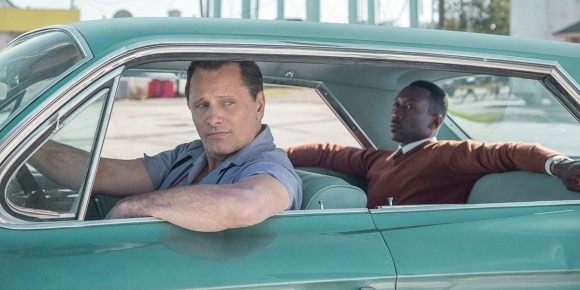
It’s a wrap for the 43rd Toronto International Film Festival as the awards were handed out on Sunday, September 16, 2018, at the TIFF Bell Lightbox Theatre 1. The top prize, the Grolsch People’s Choice Award went to Green Book, a world premiere at TIFF18. Directed by Peter Farrelly, the comedy-drama stars Mahershala Ali as classical pianist Don Shirley and Viggo Mortensen as a working-class Italian-American bouncer getting the job to drive Ali on the road in the American South during the 1960’s. Ali won an Oscar for his role in Moonlight (2016), Mortensen is a two-time Oscar nominee. Looks like the film has just got a huge boost with this win and will travel far in the upcoming Awards Season.

greenbook
Viggo Mortsensen driving Mahershala Ali in “Green Book”. Photo courtesy of TIFF.

If Beale Street Could Talk, a world premiere at TIFF18 and director Barry Jenkins’ follow-up to Moonlight (2016) was the People’s Choice Award First Runner-Up. Based on the novel by James Baldwin, the film tells the love story of a young African American woman trying to prove her imprisoned lover’s innocence. In the TIFF webpage, the film is described as a ‘gorgeous tone poem on love and justice.’

ifbealestreetcouldtalk_01
KiKi Layne and Stephan James in “If Beale Street Could Talk”. Photo courtesy of TIFF.

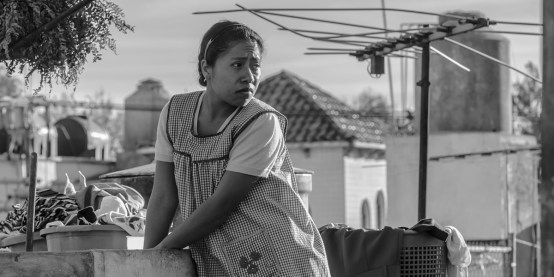
Alfonso Cuarón’s Roma (my review) came third in the People’s Choice Award. A Canadian Premiere at TIFF18, it is an artistic rendering of a young maid’s experience in a middle-class home in Mexico City during the 1970’s. Of note is the black-and-white film is regarded as a semi-autobiographical account of Mexican director Cuarón, the first Hispanic and Mexican to win the Academy Awards for Best Director with his sci-fi work Gravity (2013).

ROMA.jpg
Yalitza Aparicio as Cleo in Alfonso Cuarón’s “Roma”. Photo courtesy of TIFF.

The high-profile contenders First Man directed by Damien Chazelle with Ryan Gosling as astronaut Neil Armstrong, and Bradley Cooper and Lady Gaga’s A Star is Born did not place.

TIFF’s People’s Choice Award winner is often regarded as a predictor of the next Oscar Best Picture. Past winners that went on to capture the Oscar include Slumdog Millionaire, The King’s Speech, and 12 Years A Slave.

Capturing the People’s Choice Documentary Award is Free Solo, International premiere at TIFF18, directed by E. Chai Vasarhelyi and Chinese-American mountaineer/photographer Jimmy Chin. The duo chronicled the renowned rock climber Alex Honnold’s scaling free solo — without safety ropes — up the 3,000-foot cliff of El Capitan in California’s Yosemite National Park.

People’s Choice Award from the Midnight Madness program went to the The Man Who Feels No Pain, World Premiere at TIFF18, directed by Vasan Bala, one of the young, new wave filmmakers in India. This is a cinematic fusion throwing in Hong Kong martial arts comedy Stephen Chow styling, the agility of Jacky Chan, the Bollywood sensation, the American Superhero momentum, and the inspiration of Buster Keaton. Fits right in the Midnight Madness program of introducing new works by a new generation of filmmakers.

Platform Prize went to Cities of Last Things, directed by Ho Wi Ding. This world premiere at TIFF18 is a collaboration of filmmakers from Taiwan, China, USA, and France. From TIFF’s webpage, “a seamless blending of genres, from sci-fi to noir to romance, the Malaysian-born Ho commandingly employs cinematic language as a tool to discuss the root of our collective sadness, which is perhaps the very thing that makes us human.”

NETPAC Award for the world premiere of international and Asian film went to The Third Wife from female writer-director Ash Mayfair of Vietnam. A film about a 14-year-old girl’s struggles after she becomes the third wife of a wealthy landowner, set in 19th century rural Vietnam.


***


Seattle International Film Festival 2017

The Seattle International Film Festival (SIFF) is the largest film festival in the United States, with an annual average attendance of 155,000. The 43rd SIFF kicks off tomorrow, May 18. For 25 days until June 11, film lovers in the Seattle area will be treated to a smorgasbord of films to whet their appetite: features, documentaries, shorts, premieres, competitions, from archival to avant-garde, and any genres to match their mood. SIFF 2017 offers close to 400 titles coming from over 70 countries.

What’s the difference between watching films in a Film Festival (FF) and watching movies in a theatre? You might ask. First off, in a FF, the international aspect is emphasized. True, you’ll have to read subtitles for those not in English, but watching foreign language films is one of the easiest ways to appreciate another culture and expand empathy. You’ll likely find there are more things in common than differences among us all.

Another special feature about FF is that many of the productions are from independent filmmakers. Hollywood and blockbuster movies are the mainstay in our Cineplexes, but in FF’s, we can savor the creative fruits from individual artists. Every year, SIFF receives over 4000 independent film submissions. It is therefore an honor for a film to be an ‘official selection’ at a major FF.

Some of them have come to compete, in other words, you will see quality productions. The SIFF website notes that more than 70% of the films screened at the Festival will not return to theaters. Many of these are works of film arts that are not distributed in commercial theaters. Of course we wish them all the best, especially quality ones and competition winners, as film industry buyers and distributors will be eyeing for good films at FF’s, ready to distribute them for the largest exposure possible later in theatrical releases.

**

In the Seattle area this weekend? Love French films? I’ve a recommendation for you. Here’s my capsule review.

The Midwife

Midwife_KeyArt

Two venerable French actresses in one comedy drama is a major attraction from the director of Séraphine, Martin Provost. Claire (Catherine Frot) is an expert midwife, the encourager of new births. Her personal life though isn’t as up-lifting. One day her deceased father’s former mistress reappeared in her life, hurtful memories re-emerge. She is Béatrice, played by the legendary Catherine Deneuve. Their reunion sparks off comic and dramatic clashes. Béatrice is everything Claire avoids: booze, cigarettes, red meats, frivolity. Yet reconciliation is the only way to deal with their lot in life.

**

The Midwife will screen in Seattle this Friday and Saturday May 19, 20, and Tuesday, May 30. CLICK HERE to SIFF’s webpage for more info, trailer and tickets.

**

Related Post:

Séraphine and the Wrought-iron Chair

Paterson: Of Pug and Poetry

Some movies are like the roaring ocean, waves mounting upon waves rousing up excitement, eliciting continuous, sensational reactions. Some are like a bubbling brook, smaller but still boisterous, teeming with life and sounds. The film Paterson is a quiet stream, water gently flows along, seemingly uneventful, and yet, you can sit there by its side and just watch its quiet swirling.

Paterson has been screened at many film festivals this year. I missed it at TIFF, glad I could catch it when I came home to CIFF. For a film about poetry and a loving couple (not dysfunctional, for a change) with a British bulldog named Marvin, a character in his own right, and helmed by a Palm d’Or winning director, it’s got to be a unique experience.

Director Jim Jarmusch has been garnering accolades at the Cannes Film Festival since 1984, with his early feature Stranger Than Paradise. His most commercially known work probably is Broken Flowers (Cannes Grand Prize of the Jury, 2005) with Bill Murray and Julie Delpy. This year, Paterson has once again brought the director to Cannes as a nominee for the prestigious Palme d’Or. 

Jarmusch ought to be applauded for making a film on poetry, for who in this day of mega explosive, blockbuster productions would think of turning Williams Carlos Williams’ poetic notion into a movie. Yes, WCW himself was a resident of Paterson, New Jersey, and his 5-volume epic poem Paterson must have been the source inspiration for Jarmusch.

paterson

The movie Paterson is about an admirer of WCW and an aspiring poet whose occupation may be furthest from the creative process. But that’s exactly the point. Where do we get inspirations and ideas? What kickstarts our creative process? Do we need to climb to the top of the mountain, soak up a magnificent sunrise to unleash our creativity? Apparently not.

We see in the film that the most mundane of everyday objects, like, a box of matches, can spark off a new poem. Jarmusch has his own style of cinematic poetry making: the deadpan, casual expressions of his main character, thus, embedding humour in the serious. Adam Driver (While We Were Young, 2014) is probably the best person to star in this film, not only in name, but in his demeanour. He is Paterson, a bus driver with a daily route of driving bus route no.23 around the small town of Paterson, New Jersey.

We follow Paterson for a week. He gets up at the same time, around 6:20 am, plus or minus 5 minutes, eats his breakfast cereal, carries his lunch box and goes to work. He drives his no. 23 route around town, overhearing passengers’ small talks, brewing in his mind thoughts and ideas, writing down lines in a note book when he has a chance, has his lunch sitting on a bench overlooking the Great Falls of the Passaic River, then back to work. After work he goes home, has dinner with his loving wife Laura (Golshifteh Farahani), walks the pug Marvin, ties him outside the bar, goes in and have his beer, chats with bartender Doc (Barry Shabaka Henley), meets the regulars Everett (William Jackson Harper) and Marie (Chasten Harmon) and listens to their stories, then walks Marvin back home and sleep.

As viewers we see this seven times over. Reminds me of Groundhog Day (1993). But Jarmusch is clever in sprinkling subtle humour and surprises, quite like life. Paterson is a contented soul, driving a bus may be as fulfilling as writing poetry. Wife Laura is more experimental, and takes charge of her creative expressions more explicitly, like learning the guitar to reach her dream of being a country singer, like interior decorating her home according to her obsession with black and white, or baking cupcakes in her own signature style as a step to opening her own cupcake store. Whatever, the two are a loving, contented couple. Creativity manifests in various ways.

Marvin.jpg

And then there’s Marvin, who may be the best pug in pictures. He has a role to play too in this mundane plot. His story line is, again, life as well.

That’s about all I’ll reveal about the movie without giving out the spoiler, yes, even for this seemingly uneventful film. But as I write, I’m thinking of another matter. This film is probably screened only at very limited cities, at arthouse, independent cinemas. So, why am I writing about a film that not many of you will actually be able to see? What exactly is the relevance of writing something that few may relate to? Or… is the review a piece of writing that readers can respond to despite not experiencing the film itself?

If you have some thoughts on this, I’d appreciate your input. Throw your two pebbles into the Pond and create some ripples so I’d have an idea.

Having poured out this puzzling thought that has been troubling me for some time, I’m reminded of Paterson’s poetry writing in the basement of his home, his notebook filled with his private thoughts and lines, which nobody has ever or will ever read. What’s his purpose then?

~ ~ ~ 1/2 Ripples

***

Other Related Reviews on Ripple Effects:

Silence the Movie Arrives in the Most Unwelcome Time

While We Were Young: Wearing the Hat of Authenticity 

A Quiet Passion (2016) at TIFF16

TIFF16 Review: After The Storm

“After the Storm” was screened at TIFF in September. Next week, it will be at BFI London FF and after that, the Chicago IFF. My review was first published on Asian American Press. I thank the editor for allowing me to post my review here on Ripple Effects.

***

Japanese auteur Koreeda Hirokazu graced the Toronto International Film Festival once again this year with his new feature, “After the Storm”. Since 1995, with his multiple award-winning feature “Maborosi”, Koreeda has been a staple at TIFF, which has screened every one of his feature films. His recent works are still fresh in many viewers’ minds, “Still Walking” (2008), “Like Father, Like Son” (2013), and “Our Little Sister” (2015).

With all the avant garde and experimental, new waves of filmmaking bursting out at film festivals every year, Koreeda’s traditional style of storytelling offers a fine balance and an affirming voice. His films focus on the contemporary Japanese family, bringing out themes arising from the individual and extending to the universal. Humanity is what Koreeda is interested in, and his treatment of human foibles and failures is kind and forgiving. “After the Storm” is no exception.

Ryota (Abe Hiroshi) used to be an award-winning author. But for years he has not produced any more works. Divorced from his wife Kyoko (Maki Yoko) and sorely missing his 9 year-old son Shingo (Yoshizawa Taiyo), Ryota is at the bottom of his life. Months behind in his child support payments, he is laden with debt, entrapped by a gambling habit that’s hard to kick. It runs in the family it seems, for his late father had also been a gambler. With his work at a detective agency, Ryota would try all means to squeeze extra cash out of his clients, including deception and even extortion.

Koreeda’s dealing of Ryota is gentle and sympathetic. While he may look unkempt, the six-foot-two actor Abe Hiroshi has his charm and charisma. We see the nasty side of Ryota as he slips into his mother’s cramped unit in a housing project, looking for anything of value he could lay his hands on for pawning. A moment later, Koreeda lets us have a glimpse too of the other side of Ryota, that of a son to an ageing mother Yoshiko (Kiki Kilin). The mother-son portrait is witty and tactful, punctuated with heartwarming humour. It is a reunion of the two actors, also as mother and son, from Koreeda’s 2008 feature film “Still Walking”.

Mother knows best, even when your son doesn’t live with you any more. Deep in her heart, Yoshiko wishes to see her son reunite with her daughter-in-law Kyoko whom she is very fond of. She also treasures the affectionate bonding with grandson Shingo. If only they could get back together as a family, that would be a big relief and comfort, growing old can then be much bearable.

One evening, a passing storm keeps them together in Yoshiko’s home for the night. The impromptu reunion, though awkward, is probably gratifying for every one of them. Koreeda is, alas, a realist. Life is full of disappointments. However close they have come to bonding once again, the moment is short-lived. But the reminiscence and dynamics of the small family’s once intimate relationship regurgitates enough to spark off a renewal for Ryota. While they may continue on with their own separate ways, a new perspective has subtly wiggled in. Perhaps, there’s hope after all. The young, green grass covered with raindrops the morning after the storm is a refreshing metaphor.

koreeda

The film was shot in the housing project where Koreeda had spent his youthful years. That was where his mother lived after his father had passed away. In the Q & A session, Koreeda admitted that certain incidents in the film did happen in the director’s own family. When writing the script though, once he has created his characters, Koreeda would let them run free and so they would develop themselves. Their stories just came out naturally.

Answering questions in Japanese with a translator beside him, Koreeda humbly thanked his Toronto audience, whom he had in mind when he made his films, as TIFF had screened every one of his features. He noted that as we grew older, we had to deal with disappointments, for life often didn’t turn out to be what we’d like to see. “After the Storm” shows us that Koreeda has dealt with his characters’ life disappointments with a forbearing spirit. As for viewers of his films, Koreeda does not disappoint.

~ ~ ~ 1/2 Ripples

***

Other reviews of Koreeda films on Ripple Effects:

Our Little Sister: A Respite from Summer Superhero Movies

Like Father, Like Son: Parent and Child Reunion 

A Quiet Passion at TIFF16

“A Quiet Passion” is a biopic of the reclusive 19th century American poet Emily Dickinson. It is written and directed by the esteemed English auteur Terence Davies, who brought us the adaptation of Edith Wharton’s novel “The House of Mirth” in 2000, “The Deep Blue Sea” based on Terence Rattigan’s play in 2011, and last year’s “Sunset Song”, a beautiful cinematic rendition of Scottish writer Lewis Grassic Gibbon’s work.

Literary filmmaking is Davies’ repertoire. If a movie is about a poet, under his helm, it is only natural that it would be crafted like poetry. In this sense, “A Quiet Passion” is a fine example. Every frame is meticulously composed and lit, the atmosphere dense with meaning. We also hear lines from Dickinson’s poems read out as voiceover. We experience poetry in sight and sound.

However, not all poetry is of the Romantics, roaming vales and hills, dancing with the daffodils. Davies’s Emily Dickinson (Cynthia Nixon) is confined in her father Edward’s (Keith Carradine) Amherst house. Her main human interactions are with her immediate family, a stern father, a depressed mother (Emily Norcross), an attorney brother Austin (Duncan Duff), and her younger sister (Jennifer Ehle). If she ever felt claustrophobic, there’s her sister-in-law Susan Gilbert (Jodhi May) and her close friend Vryling Buffam (Catherine Bailey). Too narrow a social circle? Not really, for they are all responsible for sharpening her views and words. And they make a wonderful cast.


a-quiet-passion
Terence Davies, Cynthia Nixon, Jennifer Ehle, Jodhi May, Catherine Bailey
Under the direction of Davies, Cynthia Nixon (of ‘Sex and the City’ fame) portrays Emily Dickinson with an austere persona restrained by social mores and troubled by unrequited romantic pursuit. She might have been a rebel with a just cause in confronting restrictive societal norms, but I was surprised to see Dickinson here as a verbal combatant, a bitter and belligerent soul. Somehow from my limited reading of her poetry, that image has not set in my mind.

“A Quiet Passion” is a mixed bag of oxymoron. In an austere setting, characters deliver ornate speeches like you only hear in a stage play. Shrouded in a confining milieu, you hear comedic exchanges and humorous, deadpan facial expressions, even LOL moments. While the cinematography is meditative and calm (as in Davies’ last work “Sunset Song”), the feeling evoked is unsettling anticipation.

Emily’s supportive and devoted sister Lavinia (Vinnie), well played by Jennifer Ehle (of Elizabeth Bennet fame), gives me a breath of fresh air, for often she is the quiet passion supporting the poet, a gentle strength and a moral compass. Vinnie is the pragmatic and rational voice, like reminding Emily that Rev. Wadsworth—on whom Emily has a romantic crush—is a married man. But she is ever so sweet and pleasant as Jennifer Ehle is, even when admonishing.

The sisterhood between Nixon’s Emily and Ehle’s Vinnie makes me think of another literary sisterhood, that of Jane and Cassandra Austen. But what a difference. I long for Jane’s joie de vivre, something that’s missing here in this relatively harsh portrayal of Emily Dickinson. Further, I couldn’t help but compare this film with another that’s also about a poet: Jane Campion’s “Bright Star” (2009), a beautiful cinematic rendering of the English Romantic poet John Keats (Ben Whishaw) and his muse Fanny Brawne (Abbie Cornish).

The last scenes are as severe as they are heart breaking. Death may be a frequent motif in Dickinson’s poetry, as Emily had experienced the passing of her parents, but the constant pounding of her own illness makes me think of another oxymoron: superfluous suffering. The repeated scenes of seizures Emily goes through in the last section of the film may be a bit too much to watch for some, although Nixon has certainly given us a true-to-life performance. I can’t imagine all the takes she had to repeat, acting out those excruciating seizures on her bed.

When asked about the seizures in the Q & A after, Nixon replied that she had not done any research or specifically prepared; she just went ahead and did it. All the research had been done by Davies. He had read up on volumes of Dickinson’s biographies for the film.

What “A Quiet Passion” has done for me is stirring up my curiosity in finding out what Emily Dickinson the person was really like, and, I want to delve into more of her poetry. I have to remind myself though that the cinematic portrayal here is only Davies’ own interpretation and personal response to her poetry. I just like to explore on my own.

~ ~ ~ Ripples


Literary TIFF

The Toronto International Film Festival (Sept. 8 – 18) is just a week away. While many movie fans will be charging up their cell phones to catch some pics or selfies with the stars on the red carpet, Arti here at the Pond is interested in spotting the film adaptations of books, or those with literary interest.

This is a photo of the Toronto skyline from Lake Ontario on a hazy morning. Arti took the pic during TIFF14 two years ago. Yes, she’s heading there soon for TIFF16. So stay tuned for future posts.

Hazy Toronto Morning

Here’s a list of some literary titles at TIFF16:

A Quiet Passion 

Not based on a book but no short of literary interest. This is a cinematic biopic of the American poet Emily Dickinson. What’s more, it’s a new film written and directed by the venerable English auteur Terence Davis, who brought us such acclaimed works as Sunset Song (2015), The Deep Blue Sea (2011), and The House of Mirth (2000). Cynthia Nixon plays Emily Dickinson, with Jennifer Ehle as her sister Vinnie. Yes, that Jennifer Ehle. Love to see her in another period role but I know, hard to be rid of the Lizzy Bennet image.

American Pastoral 

Philip Roth actually has two movie adaptations of his books coming out this fall. One is Indignation (2008). The other is American Pastoral (1997), which won him a Pulitzer and was considered a seminal work in his oeuvre. Roth later won the Man Booker International Prize in 2011. The prolific author has long been regarded as the astute depicter of the 20th C. Northeastern Jewish-American psyche. Interesting fact of this adaptation is that it’s the directorial debut of Scottish actor Ewan McGregor, who will also take up the role of Roth’s famous character Seymour ‘Swede’ Levov. How well can he pull it off? Dakota Fanning and Jennifer Connelly co-star.

Julieta 

Based on three short stories by Alice Munro, Canada’s first Nobel Laureate in Literature (2013). Juliet is the protagonist of “Chance”, “Soon”, and “Silence”,  from Munro’s 2004 volume Runaway. So why the name Julieta? Well, these stories are being transported from a Canadian setting into Spain. The film is helmed by director Pedro Almodóvar, who is described as “the most internationally acclaimed Spanish filmmaker since Luis Buñuel” (IMDb). Almodóvar won an Oscar for his writing/original screenplay with “Talk To Her” (2002). Hopefully this adaptation is worthy of Munro’s source material. I’m curious to see how a totally Canadian story is transplanted into a Euro-Spanish milieu.


Certain Women

Another film adaptation based on short stories, this one by author Maile Meloy, from her book Both Ways is the Only Way I Want It (2009). The adaptation tells the story of three women and boasts a high calibre cast with Kristen Stewart, Michelle Williams, and Laura Dern. It is helmed by Kelly Reichardt who had directed Michelle Williams in Wendy and Lucy (2008) to critical acclaims. Last I read is that some elements of the stories had been altered to appeal to a contemporary audience.


Paterson

This 2016 Cannes Film Festival Palme d’Or nominee explores an interesting concept: A bus driver by day, a poet by night in Paterson, New Jersey. Can’t find a better named actor than Adam Driver to take up this unique dual occupational role. Writer/director Jim Jarmusch takes the helm. No stranger to Cannes, Jarmusch’s Broken Flowers (2005, remember Bill Murray?) won the Cannes Grand Prize of the Jury in 2005. The director’s versatility has brought us very different kinds of works throughout his career.


The Salesman

Since the 1990’s, several Iranian film directors have gained high praises internationally for their cinematic works. The recent death of Abbas Kiarostami is a loss on a grand scale for film art. Another distinctive figure is his younger friend and compatriot Asghar Farhadi, whose A Separation is the first Iranian film to win an Oscar (Best Foreign Language Film, 2012). After that Farhadi crafted another multiple-award-winner The Past (2013). This year he brings us The Salesman. The name is a big hint of its literary affiliation. The story is about the disintegration of a marriage as a couple perform Arthur Miller’s play Death of a Salesman as Willy and Linda Loman. Life imitates art, or vice versa? Farhadi is a master of probing conflicts in domestic relationships. At Cannes earlier this year, The Salesman won Farhadi the Best Screenplay and Shahab Hosseini the Best Actor award.

The Secret Scripture 

After a long wait, and a change in the cast, the film adaptation of Irish writer Sebastian Barry’s Booker shortlisted work is finally completed. In the book, the narrator is a 100 year-old mental hospital patient recalling her life. The old and her younger self are played by Vanessa Redgrave and Rooney Mara respectively. The director is Jim Sheridan, the six-times Oscar nominee who introduced us to Daniel Day-Lewis with the excellent productions of My Left Foot: The Story of Christy Brown (1989) and later In the Name of the Father (1993).


Unless

Born in Oak Park, Illinois in 1935 and after her marriage became a Canadian citizen in 1971, Carol Shields received honours from both countries and internationally as well. The Stone Diaries won the Pulitzer in 1993, among many other accolades, while Unless (2002) was shortlisted for the Booker Prize. Here’s the intriguing tale of Unless: a mother one day finds her runaway daughter living on the street and mute. Oscar nominated Catherine Keener plays the mother Reta Winter. Downton Abbey fans should note, Mr. Bates Brendan Coyle also stars.


***


‘Our Little Sister’: A Respite from Summer Superhero Movies

The following is my review of the film “Our Little Sister” by the acclaimed Japanese director Hirokazu Kore-eda, published in Asian American Press. I thank aapress.com for allowing me to post it here on my blog.

For those who might think a Japanese film would never make it to your local cinema, check this list of U.S. screenings:

http://sonyclassics.com/ourlittlesister/dates.html

***

our-little-sister

Premiering last year at Cannes, and later screened at other international film festivals the world over, Hirokazu Kore-eda’s “Our Little Sister” finally trickles into the local theatres of North American cities, which is timely. In a world rocked by tumultuous strife and unrests, this latest from Kore-eda makes a quiet solace, offering a taste of the ideal in human relationships and harmony despite brokenness.

“Our Little Sister” is Kore-eda’s most recent work after his 2013 Cannes Jury Prize winning “Like Father Like Son”. Following his usual subject of relationships in various family situations, “Our Little Sister” sees Kore-eda at the helm as director, writer, and editor of this production based on the popular Japanese graphic novel “Umimachi Diary” by Yoshida Akimi.

The three Koda sisters have not seen their estranged father for fifteen years. Sachi (Haruka Ayase), Yoshino (Masami Nagasawa) and Chika (Kaho) are now adults, living in the family’s traditional home his father had long deserted in the seaside town of Kamakura. His recent death sends the sisters to his funeral, awkwardly, meeting the woman who had stolen their father’s heart. But it is an inciting incident that changes all their lives. They meet their half sister, 15 year-old Suzu (Suzu Hirose). Herein lies the turning point for the four sisters. Moved by her little step-sister’s mature and quiet demeanor, or maybe stirred by her own older-sister instinct, Sachi invites Suzu to come away and live with them in Kamakura. Suzu gladly agrees.

The new Koda household now is a haven of happy sisterhood. Living under one roof, we see minimal conflicts and constant congeniality. Viewers from a different culture may find the saccharine relationships unrealistic. Are there not any conflicts at all? Of course there are. Kore-eda deftly leads us to some slow revealing. After three quarters of the 120-minute film, we begin to see inner turmoil rise to the surface.

Suzu had to take care of her father in his illness and seeing him to his last breath due to the incompetence of her mother; here is a young teenager bearing the burden of an adult. Now living with three older sisters, Suzu can finally enjoy the childhood she has missed. She quickly captures the attention of other students in her new school with her soccer skills, congeniality and maturity.

In the Koda household, Suzu is the angel of harmony, stirring up love and life. Kore-eda may have spent too much time on the leisurely-paced, day-to-day living such that viewers might feel the lack of conflicts to move the story along. I credit the style to Kore-eda’s realism and a candid camera focusing on the subtleties of nuanced interplay among the characters. Like his previous films “I Wish” (2011), the yearning for family connections of a young boy is shown by his actions and not so much by words, or in “Like Father Like Son” (2013), wherein conflicts are portrayed by contrasts and parallels. Here, while still nursing a deep resentment towards her father for deserting them years ago, Sachi struggles with the moral parallel now as she carries on a relationship with a married doctor at the hospital where she works.

Moral dilemmas, what to choose, how to live, and the search for identity are the issues Kore-eda’s characters have to deal with, but in a way that is quiet and gentle. He introduces us to other endearing characters in the town, adding numerous episodes to build up a human mosaic of harmony in the presence of brokenness and even death.

The scenic seaside town of Kamakura provides a beautiful backdrop for cinematographer Mikiya Takimoto (“Like Father, Like Son”) to shoot the film, reflective of the idyllic life that can be had, even in an imperfect world. The arching branches of the cherry blossoms, landscapes and seascapes mark the healing power of nature. But also like the petals of the cherry blossoms, which third sister Chika likes to pick up and gather in her palm, life is ephemeral.

Reminiscent of Ozu’s films, the passing train is a visual metaphor for the passage of time, changes, and the transience of life. To enrich the visuals, Yoko Kanno’s original score sweeps us through with warmth and tenderness, as a supporting voice telling the story. “Our Little Sister” is a heartwarming film for the unhurried heart to savor.


~ ~ ~ Ripples

***

Related Posts on Ripple Effects:

‘Like Father Like Son’: A Parent and Child Reunion

Yasujiro Ozu and the Art of Aloneness

Books to Films at TIFF15

September kicks off Film Festival Season, a prequel to all the movie nominations coming up at the end of the year. First there’s Venice, Telluride, and Sept. 10 begins the 10-day celebration of films from over 70 countries at the Toronto International Film Festival.

The following are several of the premieres at TIFF15 that are adaptations from literary sources. Just to throw some more reading ideas out in case you’re not already overwhelmed with book suggestions.

***

The Dressmaker by Rosalie Ham

The Dressmaker Movie-tie-in CoverAustralian author Rosalie Ham’s debut novel (2000) is divided into four sections named after four different kinds of fabric: gingham, shantung, felt and brocade. The historical, gothic novel has received several nominations and shortlisted for the Book of the Year Award (2001) by the Australian Booksellers Association. The film adaptation stars Kate Winslet as the dressmaker Tilly Dunnage who returns to her hometown seeking revenge on her being expelled years before, with a sewing machine as her accomplice. Sounds interesting? What more, she is a Titanic survivor (of course she is) and the plot thickens with a hearing on the doomed maiden voyage. Australian director Jocelyn Moorhouse wrote the screenplay and shot the film in Victoria. Liam Hemsworth and Judy Davis also star.

High-Rise by J. G. Ballard

HighRise(1stEd)J. G. Ballard’s most well-known novel probably is Empire of the Sun (1984) thanks to Steven Spielberg’s movie adaptation. That is a semi-autobiographical account of Ballard’s childhood years in a Shanghai internment camp during the Japanese invasion of China. The production is one of the better WWII, Pacific War movies, splashed with some surreal styling. Now High-Rise (1975) looks like a totally imaginative work. An ultra-modern high-rise apartment (hopefully with some updated renos from its inception in 1975) with all its conveniences and amenities only lead to the isolation of its tenants, dividing them into different classes and eventually, to rivalry and extreme violence. The high-rise is a self-contained microcosm of our civilized society, perhaps Lord of the Flies of the concrete jungle. An acerbic satire of our human condition, the film is directed by Ben Wheatley and stars Tom Hiddleston and Jeremy Irons.

Into the Forest by Jean Hegland

Into the ForestThis is Hegland’s debut novel (1996), and had been translated into eleven languages. Set in Northern California in the near future when a massive continental power outage causes the total shutdown of technology, subsequently, the total collapse of human society. The apocalyptic scenario unfolds as two teenaged sisters – at first living in an idyllic, remote forest – now have to fend for themselves, find food at the brink of starvation, secure safety in the wild, and in the process, grow in their relationship with each other and learn more about their world. A coming-of-age story as well as an allegory of our technologically dependent society. The film is shot in British Columbia where, yes, there are beautiful forests. Canadian director Patricia Rozema writes the screenplay and helms the production. Rozema is the one who brought us Jane Austen’s Mansfield Park the movie in 1999. Popular Canadian actress Ellen Page joins hands with Evan Rachel Wood to play the roles of the sisters.

The Lady In the Van by Alan Bennett

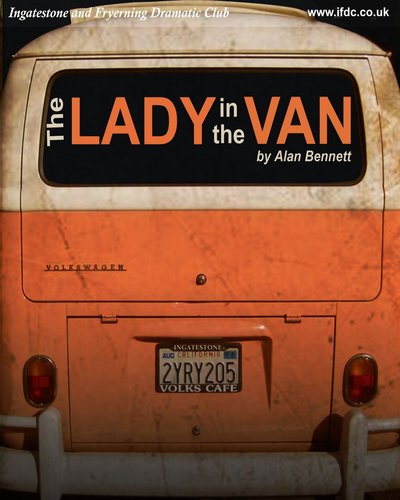
The Lady in the VanThanks to the film adaptation, or I wouldn’t have known about this amazing story. Acclaimed English playwright Alan Bennett’s play is not fiction but a memoir. Bennett saw a transient woman living in a van on the street. Trying to help her out, he let her park on his own driveway for three weeks so she could sort things out and move on. Well, Miss Shepherd stayed for 15 years. Not surprisingly, she and the playwright form an unlikely bond of friendship. This ‘mostly true’, incredulous story needs to be told for its unique human scenario. From play to film is probably the best route to reach many more viewers. Who else other than Maggie Smith best fit the role as Miss Shepherd? And so she did, with Alex Jennings as Alan Bennett. Supporting cast includes Jim Broadbent, Dominic Cooper, and James Cordon. The is the third film wherein director Nicholas Hytner and playwright Alan Bennett team up. Their previous collaborations are The History Boys (2006) and The Madness of King George (1994).

The Martian by Andy Weir

The Martian movie tie in editionHere’s a Cinderella story that all bloggers can cheer for. In 2009, Andy Weir started posting on his personal blog as a post-by-post serial his well-researched sic-fi story about an astronaut stranded on Mars. Chapter by chapter he attracted numerous readers who, after the story was finished, suggested he publish it as an eBook so people could read it online as a whole. Weir did that and his eBook soon hit the top of Amazon’s best selling sic-fi list. Not long after, Random House stepped in and took it from there, from e to reality. Four days later, “Hollywood called for the movie rights,” Weir recalled. As I type, on this second week of September, Weir’s book is number one on the New York Times Best Sellers Trade Paperback Fiction list. And the movie? The legendary Ridley Scott takes the helm, with NASA consulting, Matt Damon stars, and an A-list supporting cast includes Jessica Chastain, Chiwetel Ejiofor, and Jeff Daniels. World premiere at TIFF before a general release later in October. And it all started with a blog post.

Room by Emma Donoghue

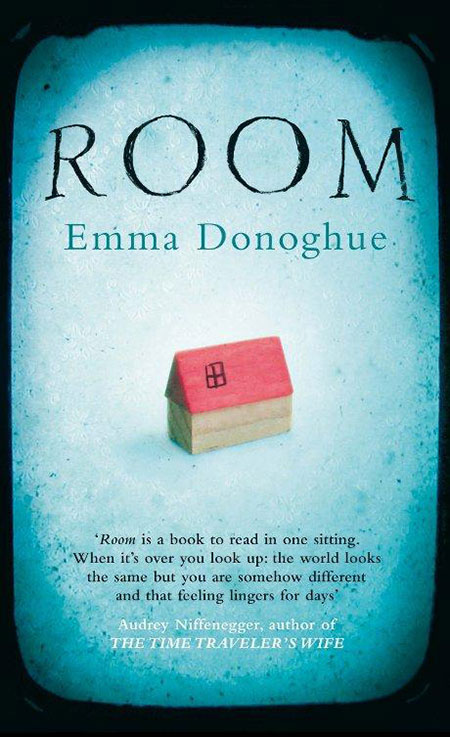
roomThe 2010 Booker-prize shortlisted novel by Irish-Canadian author Emma Donoghue reads like you’d want to see it visualized. Indeed, hearing constantly the voice of a 5 year-old could have that effect on you. So here we are. A movie adaptation. Locked in a room and made captive by a psychotic abuser, a young mother gives birth and for the next five years raises her child Jack in a shed. At 5, Jack has known no other worlds, but now begins to ask questions. Ma cannot contain the make-believe anymore so she tells Jack there’s a world out there, and starts to prepare him for a possible escape. The multiple-award winning novel is written from the child’s perspective. It depicts the power of love and the indomitable spirit of resilience and hope, but maybe not for the claustrophobic. The movie trailer is impressive; the 1.5 minute clip is powerful, consuming, and very moving. The film premiered at Telluride International Film Festival in early September and stunned the audience, drawing multiple standing ovations. Donoghue wrote the screenplay herself, that could well be a definite asset. Lenny Abrahamsson directs, with Brie Larson as Ma, Jacob Tremblay as Jack, Joan Allen and William H. Macy supporting.

UPDATE Sept. 20, 2015: ROOM has just won the Grolsch People’s Choice Award at TIFF15 tonight. FYI, a few of TIFF’s previous winners had gone on to win the Oscar Best Picture including 12 Years A Slave (2013), The King’s Speech (2010), Slumdog Millionaire (2008), American Beauty (1999).

***

Flight of the Red Balloon (2007)

In honour of Taiwanese director Hou Hsiao-hsien winning the Best Director award last Sunday at the 2015 Cannes Film Festival, I’m re-posting a review I wrote a few years back on Hou’s Flight of the Red Balloon (2007).

***

flight-of-the-red-balloon

In celebration of its 20th anniversary, the Musée d’Orsay in Paris has commissioned four notable directors to create a series of commemorative films. One of them is Olivier Assayas with his Summer Hours (l’Heure d’été) which I have reviewed.  Another is the highly acclaimed Taiwanese auteur Hou Hsiao-hsien. Flight of the Red Balloon is a unique piece of film art gently crafted by Hou in homage to Albert Lamorisee’s Oscar winning short Le Ballon Rouge (1956). Hou has long been garnering awards in international film festivals throughout Europe and Asia since the 1980’s, albeit relatively unknown in North America. Flight of the Red Balloon is his first French language film.

The little boy in this 2007 rendition is Simon (Simon Iteanu), a child growing up in the hustle and bustle of Paris. With an absentee father somewhere in Montreal pursuing his writing, and a frantically busy mother Suzanne (Juliette Binoche), Simon is alone in an adult world. Overloaded with her work as a voice-over artist in a puppet production plus other personal matters, Suzanne hires Song (Fang Song), a film student from Beijing, to look after Simon for her.

Suzanne is the embodiment of urban frenzy. As a single mother, she has to shuttle between home and work, deal with the eviction of a bad tenant in her lower apartment, confront her non-committal husband on the phone to Montreal, and connect with her daughter in Brussel, all in a day’s work. Simon is most perplexed.  “Why are you so busy, Mama?”, he asks.

song-and-simon

Song, on the other hand, offers the tranquility that is needed to balance life in the midst of chaos. As a film student, she uses her hand-held camera to record Simon’s activities, and by her quiet demeanor and calm observing, she reflects pleasure in the mundane, everyday trivialities called life. This is reality show without sensationalism.  Hou has ingeniously conveyed his perspective of realism with artistic overtone. No doubt, there is a lack of plot, suspense, or climax, but there is character contrasts, cinematic offerings in sights and sounds, and realistic, natural performance. Juliette Binoche has once again assured me why she is one of my favorite actresses. And no, you are not watching paint dry, you are watching life unplugged.

The red balloon forms the focal point of Hou’s signature long take. The almost God-like omnipresence hovering over buildings in the Paris skyline is a joyful symbol of childhood. Its silent drifting is as elusive as the fleeting memories of happiness. Even little Simon achingly remembers the pleasant days he had shared with his much older sister, who is now living in Brussel. We are all trying to catch and hold on to fond memories and meaningful relationships. Yet as the busyness of urban living numb our senses, we ignore and shove away what we think is a hindrance to our time, just like the people rushing out of the subway station, shoving away the red balloon. Only a child would try to catch and befriend it.

Complementing the cinematic artistry is the equally mesmerizing piano music, meditative, serene and restoring, setting the mood and the preamble of the film.  Other musical numbers are equally soulful. Click here for the official IFC site where you can have a taste of the sights and sounds of the film.

felix-vallotton-le-ballon-1899I particularly enjoy the ending. As Simon goes on a school trip to the art gallery of the Musée d’Orsay, the children gather on the floor to talk about Félix Vallotton’s 1899 painting Le Ballon, he leans back, slightly removes himself from his school mates, and lays on his back. As he looks up to the glass canopy of the museum ceiling, he sees it again, the red balloon, that omnipresence, watching over him, removed yet engaged, far away, yet ever so near.

~ ~ ~ Ripples

***

Other Related Posts on Ripple Effects:

Conversation with Juliette Binoche

Tuffing it out at TIFF14

Summer Hours (l’Heure d’été) by Olivier Assayas

Yasujiro Ozu and the Art of Aloneness

***

Conversation with Juliette Binoche

The highlight of my TIFF14 experience is attending the Mavericks Conversation with Juliette Binoche.

Conversations with Juliette Binoche

Director of TIFF Piers Handling structured the conversation in three sections preceded by showing excerpts of Binoche’s filmography in chronological order. Thanks to these visual gems, the audience got the sense of the actor’s wide repertoire. At fifty, Binoche has had more than thirty years of acting experience, and 50 feature films under her belt.

Juggling with my iPhone for photos, a pen and a small notebook, keeping my eyes on the maverick on stage, looking through photographers and audience sticking their hands out into the aisle and midair to take photos, I managed to jot down some sketchy notes.

Juliette Binoche knew she wanted to act at age 15 when her mother brought her to Paris to see a stage play. After she had made up her mind, “I was unstoppable.” She went to drama school in Paris, from the stage she soon landed film roles, and the rest is history.

Binoche had worked with numerous legendary directors who are cinematic icons themselves. Here are some samples:

The first director she worked with was Jean Luc Godard in Hail Mary (1985), later André Téchiné in Rendez-vous (1985), Krzysztof Kieslowski in Three Colours: Blue, White, Red (1993-94), Hou Hsiao-Hsien in Flight of the Red Balloon (2007), Abbas Kiarostami in Certified Copy (2010), Olivier Assayas in Summer Hours (2008), and now Clouds of Sils Maria at TIFF14, just to name a few.

But she has also said no to others. Stephen Spielberg came to her three times to no avail. “I don’t want to be in any system. Hollywood is a system. Not even in French system.”

Director she likes to work with: Michael Haneke (Amour, 2012; The White Ribbon, 2009) Binoche worked with him in Hidden (2005) and Code Unknown (2000).

Juliette Binoche

North American audience might have known some of her more popular works like her Oscar winning The English Patient (1996), or Chocolat (2000), but I was gratified to see clips from her lesser known works like:

The Unbearable Likeness of Being (1988, adaptation of Milan Kundera’s novel, with Daniel Day-Lewis), or Three Colours: Blue (1993, Krzysztof Kieslowski directs, the first of the Trilogy)

But the stage is still very much on her mind. “I love the theatre.” She was in August Strindberg’s Mademoiselle Julie, Harold Pinter’s Betrayal, and soon a new production of Sophocles’s Antigone on the London stage.

**

Some more sketchy notes:

On long takes: “fantastic, close to life, liberation, freedom, trust, thrilling.”

On aging: “It’s truth”

On the relationship between the director, the actor, and the script:

“The actor and director are one in the film. Nothing about me. It’s the director bringing out [the script] through me. Words are written on the page then you live it, like an incarnation. You live it, bring the script to life.”

“Trust is what makes the miracle… trust between actor and director.”

On actors:

“We are incarnated philosophers.”

On genres:

“I never divide. You cannot divide things. The comic side of life and the tragic side come together… connected. I never divide into genres.”

When asked about “failure”:

“What does ‘failure’ mean? You learn about yourself through extremes, over obstacles. How you see success depends on your point of view. To me it’s a journey… taking risks, facing the unknown. That’s the joy of it.”

**

Of all the film clips, one struck deep in me with inexplicable resonance. And that’s from Binoche’s Oscar winning role as the WWII nurse Hana in The English Patient (1996). For me, that was one of the most memorable movie moments of all time.

Here’s that tender scene when Hana is led by candles on the path to Kip, who then takes her to the Medieval Chapel. He harnesses and raises her up to look at the frescoe paintings on the walls. Holding a flare for light, she dangles from the ceiling, immersed in pure delight. And the music, composer Gabriel Yared’s Bach-like melody has remained in my mind ever since:

On her role playing Hana:

“She has to start from scratch. I like people who have to start over again.”

On director Anthony Minghella: “friendly and loving.”

And Michael Ondaatje’s reaction to that mesmerizing cinematic moment: “I wish I had written this scene in my book.”

 **

The conversations were just a little over an hour. The standing in line waiting for 90 minutes in front of CBC’s Glenn Gould Studio to get in (for a good seat to take my photos, but as you can see, still not close enough) was worth it. I likely won’t have another chance to see and hear Juliette Binoche in person again.

***


Tuffing it out at TIFF14

Attending TIFF is always a memorable experience. The tough part, I’ve to admit, is the constant waiting in line to enter the theatre even when you have a ticket. It’s all for your advantage of course, with the general seating, the earlier in line the better seat you can find. Hundreds of ticket holders queuing up around the block is a typical TIFF sighting in downtown Toronto every September.

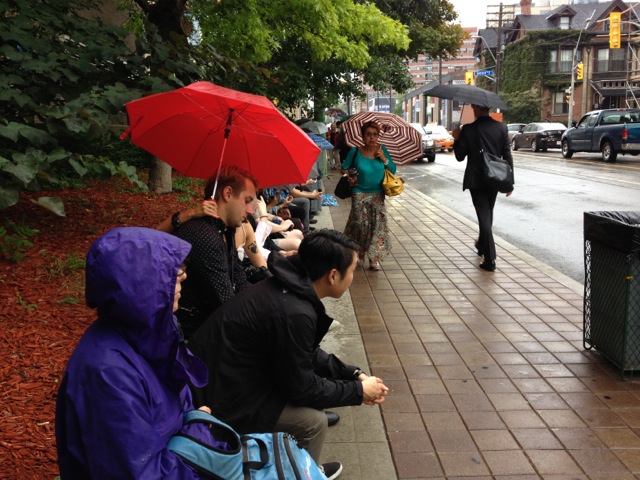
But waiting in line for over an hour to see a 70 minute film? That was for the screening of Jean-Luc Godard’s newest work Goodbye to Language 3D. Was it worth it? Let’s just say, it’s an existential experience. And we even had the privilege of sitting down, albeit in the rain, Waiting for Godard:

Waiting for Godard

As expected, Godard himself didn’t show. But I got to experience his latest work wearing 3D glasses. Never imagined the legendary French New Wave auteur whose first works date back to the 1950’s, and who had made such iconic films like Breathless (1960) and Vivre Sa Vie (1962), now at 83, would be stirring up a newer wave of postmodern, visual fragments in 3D. The concept of ‘film’ just might need to be redefined with his Goodbye To Language 3D.

I’d seen twelve films over the ten-day film festival, purposely skipping those which I think would likely be released in our theatres in the next few months. So no, I didn’t watch the Grolsch People’s Choice Award Winner, The Imitation Game, starring Benedict Cumberbatch. All the buzz surrounding it points to the repeat of previous People’s Choice winners like 12 Years A Slave (2013), Silver Linings Playbook (2012), The King’s Speech (2010), Slumdog Millionaire (2008), with a trajectory towards the Oscars.

Nor have I seen other more popular productions like Black and White, Mr Turner, The Judge, The Theory of Everything, While We Were Young, Whiplash, Wild, Hector and the Pursuit of Happiness, which I just might have the chance for a free promo ticket coming up in our city soon.

The highlight for me has to be the Mavericks Conversation with Juliette Binoche. The 1.5 hour standing in line outside CBC’s Glenn Gould Studio was worth it. Juliette Binoche is one of my all time favourite actors. So this 90 mins. of conversations, retrospective film clips of her works, Q & A is one of the gem of TIFF14 for me. A more detailed post will come later.

In chronological order over ten days, here’s the annotated list of my viewing, for now. Detailed reviews might follow:

Clouds of Sils Maria — Clouds appear like a slithering snake at the top of the Swiss Alps. They silently creep in, wrap the mountains and disappear just as you begin to marvel. Apt metaphor for aging, fame, and the ephemeral. While Juliette Binoche always delivers, it’s Kristen Stewart that had my full attention and respect. Kudos to acclaimed French director Olivier Assayas.

Winter Sleep — Winner of this year’s Palme d’Or at the Cannes Film Festival, three hours of incisive and meditative exploration into the human soul. According to IMDb, Turkish director Nuri Bilge Ceylan has won 62 times. But this my first taste of his work and yes, that’s the kind of films I look for in a film festival.

Force Majeure — A loving married couple bringing their two young children on a ski vacation is confronted with a most unexpected and testing scenario. Should the husband’s spontaneous response to a near accident be the gauge of his love for and loyalty to his wife and family? A stylish and at times very funny, well crafted film.

High Society — Not all festival films are created equal. Here’s one that, alas, is a waste of my time standing in line and sitting through. The topic is interesting enough, albeit has been dealt with countless times: a love (or lust?) affair shattered by class and social differences. Well intentioned, but just another cliché riddled with flaws.

Still Alice — Julianne Moore is very effective in portraying a Columbia U. linguistic prof afflicted with early onset Alzeimer’s, adapted from the popular book by Lisa Genova. This might just be Moore’s chance for another Oscar nom. Can a film be too loyal to the book? Yes, I think it is here. While the movie is well executed, I think the director could have taken a little more liberty in using the medium for more cinematic moments.

Maps to the Stars — Nom for the Palme d’Or, and Julianne Moore winning Best Actress at Cannes this year, Canadian director David Cronenberg’s newest feature is a bold, dark, and wild satire of the celeb life of Hollywood’s rich and famous. Problem is, maybe it’s the public who’d like to see Hollywood glamourized. They want to follow the maps to the stars. So, would they want to see a film that shatter their fantasy? And, would Hollywood insiders like to be depicted as thus?

Goodbye to Language 3D — See my opening paragraphs

Seymour: An Introduction — Ethan Hawke’s documentary on the once prominent concert pianist turned inspiring piano prof at NYU. Quiet, gentle and full of wisdom, Seymour Bernstein imparts not only musical knowledge and skills to his students, but changing their perspectives on life as well. The film also explores the interface between talent and craft. A classical music lover’s film. Pure joy.

Miss Julie — Jessica Chastain is Miss Julie in this newest film adaptation of August Strindberg’s play. Screenplay written and directed by the legendary Bergman actress Liv Ullmann. Beautiful set design and cinematography. The opening leads me to reminiscence of Fanny and Alexander. Chastain offers an exquisite portrayal of the messed up and very lonely Miss Julie; Colin Farrell is surprisingly good, while Samantha Morton has a strong supportive role.

Kahlil Gibran’s The Prophet — An international collaboration of animators crafted this beautifully rendered story embedding sayings from Kahlil Gibran’s classic The Prophet. Liam Neeson is the voice of the Poet. Beast of the Southern Wild‘s child star Quvenzhané Wallis is Almitra. The end credits lead me to a surprise finding: With thanks to the government of Alberta and B.C. Now I’m intrigued.

My Old Lady — Playwright Israel Horovitz wrote the screenplay from his stage play, came on stage to introduce the film. Mentioned Maggie Smith was willing to be part of it because she didn’t die at the end; Kevin Kline took up the role because “this could be my last chance to get the girl.” The girl? The ever beautiful Kristin Scott Thomas. A charming film.

Time Out of Mind — If there’s any major disappointment at TIFF for me it’s this one. If as some say, The Secret Life of Walter Mitty is Ben Stiller’s vanity project, then Time Out Of Mind is Richard Gere’s. First off, spending some time on the street digging inside garbage bins, sleeping on park benches, or not shaving for a few days don’t make one a homeless man. A homeless man lives a homeless life, and that’s the essence of the being. A Hollywood celeb’s portrayal by Gere is putting on make-up to look like one, pretentious, exposing the inauthenticity. Even his gait gives him away. The camera work and sounds are showy and contrived; trying to be naturalistic, they present a flashy and artificial rendition. To capture a day in the life of the homeless, go do a documentary. Yes, I’m afraid I totally disagree with the critics on this one.
 

Books Into Movies at Upcoming Film Festivals

One consolation of seeing leaves turn yellow (yes, I’m seeing it already) is the kick-off of fall Film Festivals. This year at TIFF and NYFF, there are several movie adaptations of books and stage plays. The following are some titles announced so far. (Images below are book covers. For film images click on links.)

Toronto International Film Festival (TIFF Sept. 4 – 14)


hector and the search for happinessHector And the Search for Happiness by François Lelord

I don’t like to compare, but for this one, the film version may just be better than the book which I found disappointing considering the appealing title. With a globe-trotting storyline, what better way to experience it than to see the sights and hear the sounds on the big screen. But of course, how it’s adapted is crucial. Considering the cast, I hope the film can bring at least a couple hours of happiness: Simon Pegg, Rosamund Pike, Toni Collette, Stellan Skarsgård, Christopher Plummer.


The HumblingThe Humbling by Philip Roth

In this adaptation of Roth’s 30th book (published 2009), Al Pacino plays the older man attempting to experience a total rejuvenation via an affair with a much younger woman, played by Greta Gerwig. Directed by Barry Levinson (Oscar Best Director for Rain Man, 1988). I’d read several of Roth’s previous books and learned not to be shocked by what he described. However, would I be interested to explore what’s in store in The Humbling? TIFF has about 300 films screening, I think I’ll let the diehard Roth or Pacino fans rush in for this one, albeit I’m quite fond of Greta Gerwig. BTW, a film adaptation of his Pulitzer Prize (1998) winning American Pastoral had been announced.


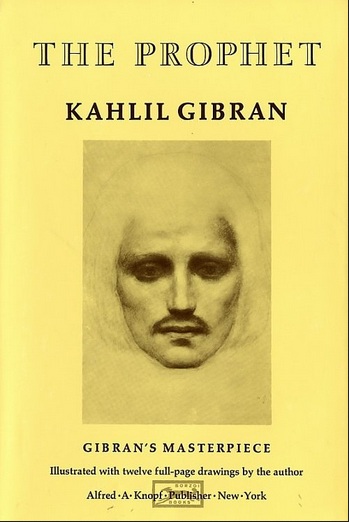
The Prophet

Kahlil Gibran’s The Prophet

If Proust’s Remembrance of Things Past can be turned into graphic novels, Kahlil Gibran’s The Prophet can be visualized in an animated film. Animations are not my usual movie choice in recent years but this time at TIFF I’d like to catch this one. The adaptation is a collaboration of international animation artists, voiced by Beasts of the Southern Wild‘s child star Quvenzhané Wallis, with Liam Neeson voicing the poet. Directed by Roger Allers, who is the writer and/or director of some memorable Disney collection such as The Little Matchgirl (2006), The Lion King (1994), Aladdin (1992), Beauty and the Beast (1991).


Plays of StrindbergMiss Julie (Play) by August Strindberg

Newest film version of the 1888 play by Swedish playwright August Strindberg. Adapted and directed by Liv Ullmann, the famous Ingmar Bergman actress; maybe relevant here is her role in Persona (1966). Apparently, or maybe not so, Strindberg was exploring the psychological make-up of ‘womanhood’ and the complex interplay of nature, nurture, and circumstance. I finished reading the play with an apprehensive sigh… will this be a good role for Jessica Chastain? This is not a sympathetic character, Miss Julie, a confused, flirtatious mistress seducing her valet. A film that would rest mainly on character and acting. So maybe Chastain is a good choice. The valet? Colin Farrell, not too sure about that one. Samantha Morton’s the cook, thus forms the triangle of power play.


My Old LadyMy Old Lady (Play) by Israel Horowitz

American playwright Israel Horowitz adapted his own 1996 stage play onto screen and directed it, with three prominent actors performing. This one is on my must-see list at TIFF. An American inherited from his late father a Paris apartment which to his surprise, is occupied by an old lady who, according to the legal arrangement, has the right to live there till she dies. Her daughter forms the invincible alliance. This entangled threesome: Two-time Oscar winner Maggie Smith (The Prime of Miss Jean Brodie, California Suite), who will turn 80 later this year, her equally formidable daughter, Kristin Scott Thomas (Oscar nom for The English Patient), and the unlucky (or maybe not) American, Kevin Kline (Oscar winner for A Fish Called Wanda). Whether a stage play or film, these three would make a dream cast.


Still Alice

Still Alice by Lisa Genova

Julianne Moore plays an accomplished academic, Columbia (Harvard in book) University professor battling early onset Alzheimer’s disease, based on the novel by neuroscientist turned writer Lisa Genova. Genova first self-published her book, later Simon and Schuster picked it up and the rest is history. It’s now selling in 30 countries and translated into more than 20 languages. Genova, a Ph.D in neuroscience, gives much credibility to her book. How will the film pan out? Julianne Moore would be one who can deliver a nuanced performance. Cast includes Kristen Stewart and Alec Baldwin.


WildWild by Cheryl Strayed 

On the heels of his Oscar nominated Dallas Buyers Club last year, Canadian director Jean-Marc Vallée brings out a totally different kind of production. Wild is based on the NYT #1 Bestseller memoir by Cheryl Strayed. Screenplay by the reliable Nick Hornby (Oscar Best Adapted Screenplay nom for An Education, 2009). Following the death of her mother, Strayed, then 26, divorced, devastated, drugged, went on a long-distance hike, 1,100 miles on the Pacific Crest Trail through California and Oregon. ‘Wild’ has a double inference here: the nature trail and the character walking on it. The journey could well be redemptive and perilous at the same time. The books in Strayed’s backpack included Faulkner and Flannery O’Connor. Reese Witherspoon and Gaby Hoffmann star.


**


NEW YORK FILM FESTIVAL (NYFF Sept. 26 – Oct. 2)


Gone GirlGone Girl by Gillian Flynn
To open NYFF is the premiere of this highly anticipated film adaptation of Gillian Flynn’s popular suspense novel. Two-time Oscar Best Director nominee David Fincher (The Social Network, 2010; The Curious Case of Benjamin Button, 2009) helms. Yes, the buzz is also due to Ben Affleck (Oscar winner, Argo, 2012) playing the husband who finds his wife missing one day and thus begins the extraordinary sequence of events down the rabbit hole. Rosamund Pike plays the mysteriously gone girl. Yes, I’ve read the book. And just because of that, knowing the twists and ending, will I still be interested in watching this ‘suspense thriller’?


Inherent ViceInherent Vice by Thomas Pynchon
Five-time Academy Award nominee, writer/director Paul Thomas Anderson’s works include The Master (2012) and There Will Be Blood (2007) for which Daniel Day-Lewis won one of his three Best Actor Oscars. But the film I like best is his Punch-Drunk Love (2002). Author Pynchon’s most famous book probably is Gravity’s Rainbow, which I’ve only heard of but not read. Actually, I haven’t read any of Pynchon’s noir detective novels. Pot seems to be the motif. Anderson directs Joaquin Phoenix again after The Master, cast includes Reese Witherspoon, Josh Brolin, Owen Wilson, Jena Malone.


***