Ripple Effects has come of age

Got this from WordPress a couple days ago. How time flies!


RIPPLE EFFECTS
Coming of Age

Ripple Effects has been tracking my life for the past 18 years! The movies I’ve seen, books I’ve read, birds I’ve captured with my camera, places I’ve travelled, film festivals I’ve attended, and through the years with special thoughts every Easter and at Christmas, Reading the Season inspirational book sharing.

Through the years I’ve been featured on WordPress’ Freshly Pressed, and Rotten Tomatoes had reached out inviting me to be their Tomatometer Approved Critic. I’ve gained over 7,600 followers, treasured the friendship made with some of you both virtually via the blogosphere and personally. For this I’m truly grateful.

If I ever write a memoir, this is my manuscript. To browse through these posts is to know me. Thank you all for the pebbles you’ve thrown into the Pond to create your own ripples. Many of you are recent followers, but there are some who have been with me from early on. And I’m sure you’d find it revealing to read your own thoughts way back then.

Who knows what the future holds. As far as I’m given the opportunity, I’ll continue to document my pondering and wandering here at Ripple Effects. Hope this site can be your restful retreat in your journey through life as well.

~ ~ ~ ~

Easter: the Joy of Eternal Hope

A time to be silent, and a time to speak.

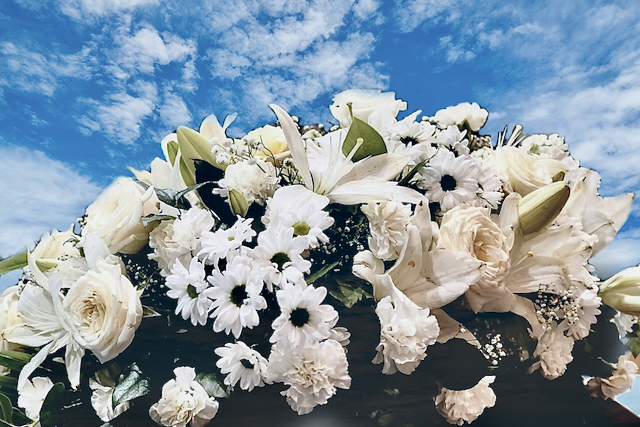
What better days than Easter to speak of death, and life eternal.

“I am the resurrection and the life. Whoever believes in me, though he die, yet shall he live, and everyone who lives and believes in me shall never die.” (John 11: 25-26)

The past few months I’ve been silent on Ripple Effects. Actually, for the past year, I’d been posting just occasionally. Fact is, for fifteen months, I’ve been caring for my husband afflicted with cancer. It had been a roller coaster ride of ups and downs. On some days, he was well enough that we could go out to have a meal in a restaurant; on other days, it would be just a tiny morsel or nothing at all. All these months, I’d learned to find joy in afflictions, and be grateful for just being able to sit down at the breakfast table together, the warm, morning rays seeping in, and immersed in the moment.

This year started with an ominous diagnosis. The metastasized cancer cells had not only mutated but the new growth was extremely aggressive. Battling terminal illness had made everything superfluous, books, movies, or music. What was left was the very essence of my being, faith in the risen Christ. Both of us were often revived by the promises of the living God, inspired by His Word, and sustained by the encouragement and prayers of countless supporters the world over via online prayer groups. It had been a journey of faith. Ultimately, it’s all grace.

But we have this treasure in jars of clay, to show that the surpassing power belongs to God and not to us. We are afflicted in every way, but not crushed; perplexed, but not driven to despair;  persecuted, but not forsaken; struck down, but not destroyed… (2 Corinthians 4:7-9)

On March 21, my husband departed to a better country. We were not unfamiliar with the immigrant experience. Now, a final move to that eternal kingdom, a homeland much more beautiful than anywhere in this world. He had arrived there first, I’ll join him one day. He was accepting, which was grace in itself. We were prepared, even planned his celebration of life service together. The event turned out to be a memorable occasion for hundreds to gather for a collective remembrance in peace and even joy.

Therefore we do not lose heart. Though outwardly we are wasting away, yet inwardly we are being renewed day by day.  For our light and momentary troubles are achieving for us an eternal glory that far outweighs them all.  So we fix our eyes not on what is seen, but on what is unseen, for what is seen is temporary, but what is unseen is eternal. (2 Corinthians 4:16-18)

All because He is risen. He is risen indeed!

***

Happy Easter!

***

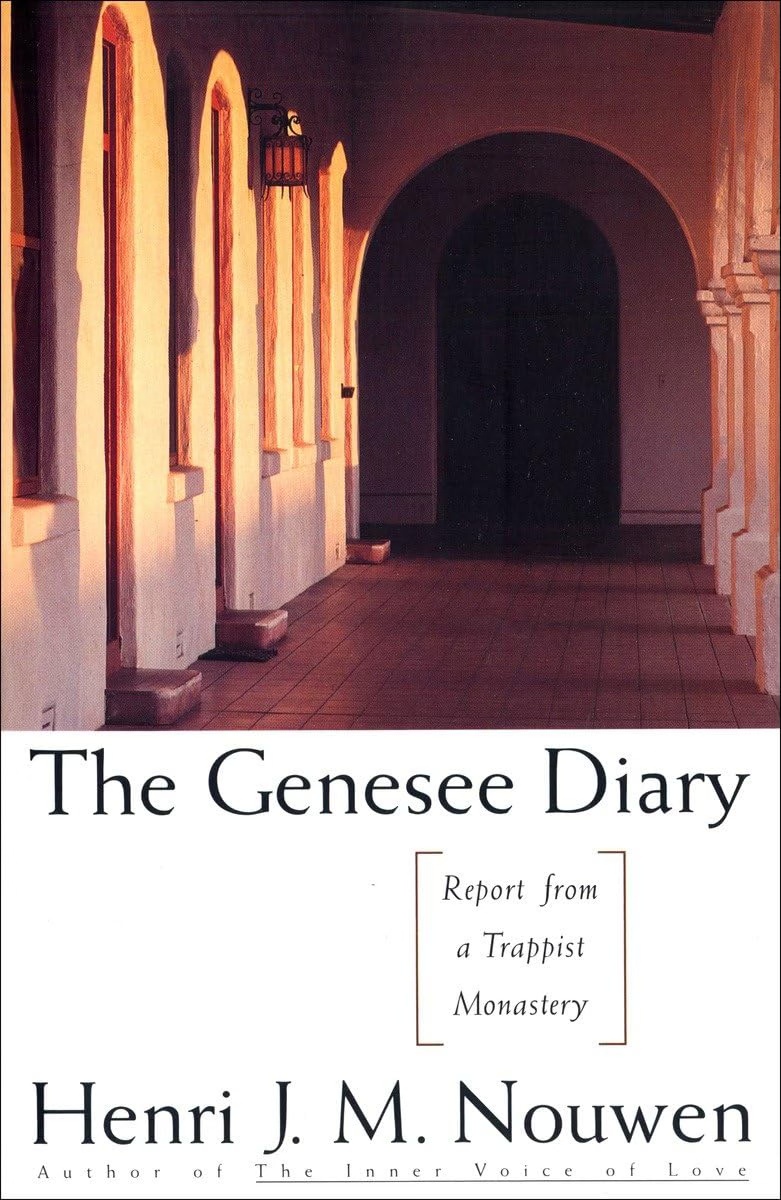
Reading the Season: The Genesee Diary by Henri J. M. Nouwen

I started this annual post at Christmas time in 2008, calling it Reading the Season. As the song goes, this might be ‘the most wonderful time of the year’, but it could well be the most distressing to many. In the hustle and bustle of the Season on the heels of that perennial frenzy called ‘Black Friday’, I hope Ripple Effects can be a respite from the busyness by offering a reading suggestion that could bring some quietude and to slow down the running wheel, hopefully the heart rates as well.  

Henri Nouwen wore many hats, priest, speaker, writer, professor at Yale and Harvard Divinity Schools, and in the last ten years of his life from 1986-1996, quit his university teaching to live and serve as pastor among a community of intellectually disabled men and women, L’Arche–Daybreak in Ontario, Canada. 

Twelve years before he made that life-changing commitment to L’Arche, in 1974, Nouwen spent seven months in a Trappist Monastery, the Abbey of the Genesee, in Upstate, New York. He started a diary in June as he began this experience and ending with the last entry on Christmas Day. He was searching for peace and quietude and to practice the contemplative life away from his busy commitments. His entries show his utter honesty with himself and total humility with God, and was always open to love and appreciate those around him. The monastery wasn’t cocoon living, he was in touch with world events and could grasp firmly the role of history in the present, and the continuity of the past in one’s personal journey. I’m glad to find too that he’s an avid bird watcher, and from nature, he gleans deeper understanding of self and God.  

I’ve highlighted many passages, these are some of them. As a birder, I find this so intriguing. It may sound somber and serious, but I can also see the humour in it:

This morning Father John explained to me that the killdeer is a bird that fools you by simulating injury to pull your attention away from her eggs which she lays openly on a sandy place… I have asked pity for a very unreal problem in order to pull people’s attention away from what I didn’t want them to see.

Sometimes it seems that every bird has institutionalized one of my defence mechanisms. The cowbird lays her eggs in some other bird’s nest to let them do the brooding job; the Baltimore oriole imitates the sounds of more dangerous birds to keep the enemies away, and the red-wing blackbird keeps screaming so loudly overhead that you get tired of her noise and soon leave the area that she considers hers. It does not take long to realize that I do all of that and a lot more to protect myself or to get my own will done.

I wonder if I really have listened carefully enough to the God of history, the God of my history, and have recognized him when he called me by my name, broke the bread, or asked me to cast out my nets after a fruitless day? Maybe I have been living much too fast, too restlessly, too feverishly, forgetting to pay attention to what is happening here and now, right under my nose. Just as a whole world of beauty can be discovered in one flower, so the great grace of God can be tasted in one small moment. Just as no great travels are necessary to see the beauty of creation, so no great ecstasies are needed to discover the love of God. But you have to be still and wait so that you can realize that God is not in the earthquake, the storm, or the lightning, but in the gentle breeze with which he touches your back.

And a thought that for me brings a new perspective on Advent:

Advent does not lead to nervous tension stemming from expectation of something spectacular about to happen. On the contrary, it leads to a growing inner stillness and joy allowing me to realize that he for whom I am waiting has already arrived and speaks to me in the silence of my heart. Just as a mother feels the child grow in her and is not surprised on the day of the birth but joyfully receives the one she learned to know during her waiting, so Jesus can be born in my life slowly and steadily and be received as the one I learned to know while waiting.

***

Reading the Season in Previous Years:

2023: Reading the Season: Babe or Man, Man or King? A Poem by Luci Shaw

2022: Dietrich Bonhoeffer’s God is in the Manger

2021: Sabbath Poems by Wendell Berry

2020: Jack by Marilynne Robinson

2019: ‘A Hidden Life’ – A Film for the Season

2018: A Verse from Madeleine L’Engle’s The Irrational Season

2017: A Wrinkle in Time by Madeleine L’Engle

2016: Silence by Shusaku Endo

2015: The Book of Ruth

2014: Lila by Marilynne Robinson

2013: Poetry by Madeleine L’Engle

2012: Surprised by Joy by C. S. Lewis

2011: Walking on Water by Madeleine L’Engle 

2010: A Widening Light by Luci Shaw

2009: The Irrational Season by Madeleine L’Engle

2008: The Bible and the New York Times by Fleming Rutledge 

2008: A Grief Observed by C. S. Lewis

Easter Thoughts from Madeleine L’Engle

“Easter, which turns a terrible Friday into Good Friday. It is almost too brilliant for me to contemplate; it is like looking directly into the sun; I am burned and blinded by life.

**

There are times when I feel that He has withdrawn from me… but Easter is always the answer to My God, my God, why has thou forsaken me!

**

Easter is the most brilliant of all blessings.

–––––– Madeleine L’Engle, The Irrational Season

The following excerpt doesn’t directly refer to Easter, but its inherent meaning does:

I am encouraged as I look at some of those who have listened to their “different drum”: Einstein was hopeless at school math and commented wryly on his inadequacy in human relations, Winston Churchill was an abysmal failure in his early school years… Byron had to compensate for a club foot; Demosthenes for a stutter; and Homer was blind… Socrates infuriated his countrymen.
And what about Jesus, if we need an ultimate example of failure with one’s peers?
Or an ultimate example of love?

______ Madeleine L’Engle, A Circle of Quiet

And in a lighter mode:

Pride is heavy.
It weighs.
It is a fatness of spirit,
an overindulgence in self.
This gluttony is earthbound,
cannot be lifted up.
Help me to fast,
to lose this weight.
Otherwise, O Light one,
how can I rejoice in your
Ascension?

(Photos taken by Arti at Lake Ontario shore, Sept. 2022.)

****

To those who celebrate this life transforming, historical event, Happy Easter to you all!

When the birds are gone

It may still be summer, but most of the migratory birds have started their winter journey south. My favourite avian friends seem to have departed without saying goodbye. So, I train my eyes to look at all the beauties that I haven’t noticed before when I was only focused on birding. Even the dandelions look good when contrasted with the clear, blue river, or the small butterfly, or is it a moth?

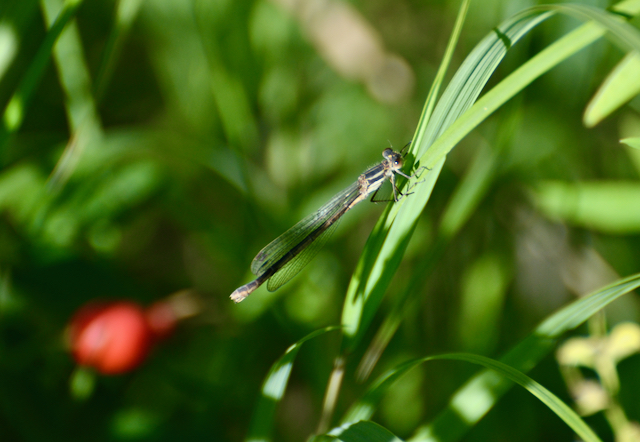
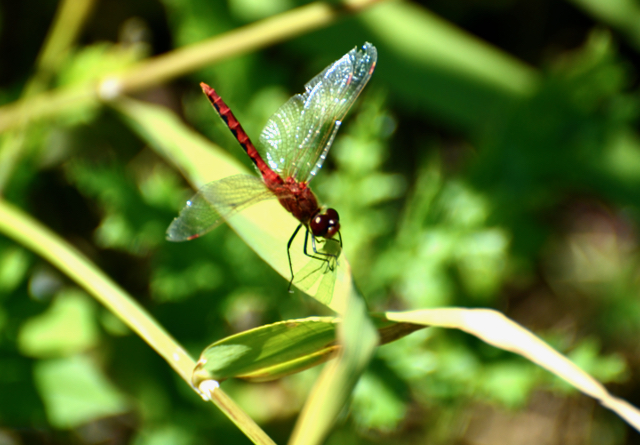
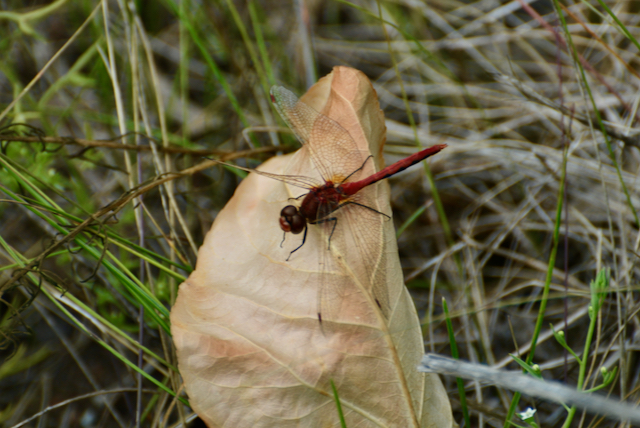
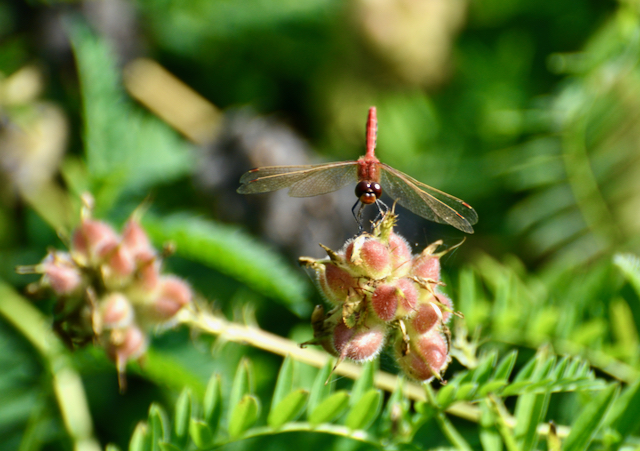
I’ve discovered a brand new interest. What are these red flying objects in front of my eyes, so many of them darting around. Red dragonflies… I haven’t noticed them before. My curiosity sent me to Google and yes, I’m sure they are dragonflies and not damselflies. The main difference is that dragonflies’ wings spread out like this when they’re at rest:

while damselflies fold up their wings at rest like this:

I’ve seen blue dragonflies before, lots of them here, but this time it’s the red dragonflies that are so abundant. I haven’t noticed them before. They are beautiful and easier to capture in photos than birds:

some intimate moments:

Of course I’ll miss my avian friends for another long absence until next spring, but there are other beauties to behold. It’s small things like these that sometimes make me jump out of bed with excitement. No, they won’t be around come winter, but I’m sure there are other blessings to explore then.

***

A Midsummer Day’s Meditation

Many gems in this treasure trove of poetry from Mary Oliver’s Devotions. For a birder, these simple words particularly resonate. Sharing a few here:

THIS MORNING

This morning the redbirds’ eggs
have hatched and already the chicks
are chirping for food. They don’t
know where it’s coming from, they
just keep shouting, “More! More!”
As to anything else, they haven’t
had a single thought. Their eyes
haven’t yet opened, they know nothing
about the sky that’s waiting. Or
the thousands, the millions of trees.
They don’t even know they have wings.

And just like that, like a simple
neighborhood event, a miracle is
taking place.

I WAKE CLOSE TO MORNING

Why do people keep asking to see
God’s identity papers
when the darkness opening into morning
is more than enough?
Certainly any god might turn away in disgust.
Think of Sheba approaching
the kingdom of Solomon.
Do you think she had to ask,
“Is this the place?”

ON MEDITATING, SORT OF

Meditation, so I’ve heard, is best accomplished
if you entertain a certain strict posture.
Frankly, I prefer just to lounge under a tree.
So why should I think I could ever be successful?

Some days I fall asleep, or land in that
even better place—half asleep—where the world,
spring, summer, autumn, winter—
flies through my mind in its
hardy ascent and its uncompromising descent.

So I just lie like that, while distance and time
reveal their true attitudes: they never
heard of me, and never will, or ever need to.

Of course I wake up finally
thinking, how wonderful to be who I am,
made out of earth and water,
my own thoughts, my own fingerprints—
all that glorious, temporary stuff.


THE WORLD I LIVE IN

I have refused to live
locked in the orderly house of
reasons and proofs.
The world I live in and believe in
is wider than that. And anyway,
what’s wrong with Maybe?

You wouldn’t believe what once or
twice I have seen. I’ll just
tell you this:
only if there are angels in your head will you
ever, possibly, see one.

***

A Summer Splash

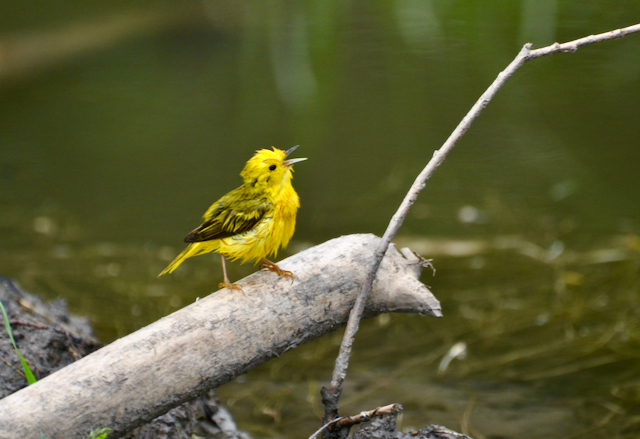
A few days ago, I happened to catch sight of a jolly yellow warbler bathing (or playing) in the water. He plunged right into the shallow stream, splashed around, after that flew up on a branch preening, singing, then splashed right back into the water and do it all over again just for the fun of it.

I’d like to tell you it was a bright, sunny day, inviting a cooling summer splash. But I can’t because it wasn’t. The day was grey, overcast, chilly even and with a thunder storm in the forecast.

This tiny warbler’s joie de vivre defies the gloominess of the day or any imminent storm… a mighty hard lesson to learn from a three inch creature.

***

Clashing Beauty

Whenever I photograph birds, I try to avoid any human structures in the frame, even houses from a far distance, but that’s not possible all the time. Sometimes, the juxtaposition of human society and nature can be seen aesthetically, and not as a clash.

These pelicans are like dancing musical notes flying into the sky.

A steel and concrete bridge could be a major obstruction to natural beauty, but it’s there because a river runs through it:

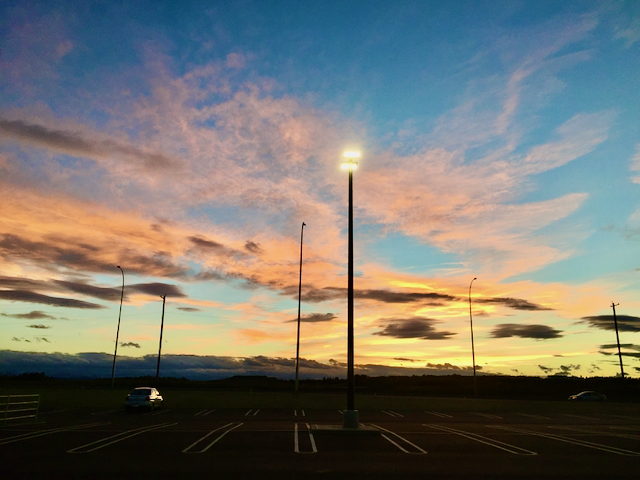
A sunset is still a sunset, even from the parking lot of a Costco. This is the first Costco opened on First Nation land in North America. Located in the Tsuu T’ina Nation bordering the southwest boundary of Calgary, Alberta, not too far from the Pond. A sunset is still a sunset no matter where you see it.


That voice from 1992 LA still rings true: we need to get along, human and nature, human and human. Signage in that Costco is bilingual, English and the Dene language (Northern Athabaskan) of the Tsuu T’ina Nation. We’re used to bilingualism in Canada, but this is the first time I see an Indigenous language posted together with English.

A needed directional pointer for things to come, not to stop but to press forward to accommodate multiplicity and live in harmony. That too, is a form of beauty.

***

Birding with Annie Dillard

This is not merely wishful thinking.

I read Annie Dillard’s Pilgrim at Tinker Creek years ago. At this moment in time, with the pandemic and disruptions, it seems like what she describes in her book is a piece of Arcadia, a setting in a totally bygone era, idyllic, clean and pristine, and also something I’ve long swept to the back of my mind. Just this week, I’ve the chance to listen to the audio version of the book, read by the marvellous Tavia Gilbert, a very ‘Dillardy’ voice. Her narration prompted me to dig out my copy of Tinker Creek.

This time, Dillard’s nature writing meant much more to me. When I first read it years ago, I wasn’t a birder, couldn’t even ID a chickadee. Now, though still with minimal knowledge, at least I know what bird it is she’s describing.

It’s her chapter entitled “Seeing” that grabs me most. Her words I must quote directly:

Unfortunately, nature is very much a now-you-see-it, now-you-don’t affair… the brightest oriole fades into leaves. These disappearances stun me into stillness and concentration; they say of nature that it conceals with a grand nonchalance, and they say of vision that it is a deliberate gift…

I know how hard it is to capture an oriole before it ‘fades into leaves’:

Oriole

For nature does reveal as well as conceal: Now-you-don’t-see-it, now-you-do. For a week last September migrating red-winged blackbirds were feeding heavily down by the creek at the back of the house. One day I went out to investigate the racket; I walked up to a tree, an Osage orange, and a hundred birds flew away.  They simply materialized out of the tree. I saw a tree, then a whisk of color, then a tree again. I walked closer and another hundred blackbirds took flight. Not a branch, not a twig budged…

Even though I haven’t seen an Osage orange before, I know exactly what Dillard means by hundreds of blackbirds taking flight from one single tree. I’ve seen not blackbirds, but waxwings or starlings like that. As for our blackbirds, they usually gather at the Pond, solitary among cattails, seldom in flocks of hundreds:

RWBB

How I get what she means by nature reveals as well as conceals. Just a few days ago, I had both of these experiences.

I saw a pelican swimming peacefully on the Pond:
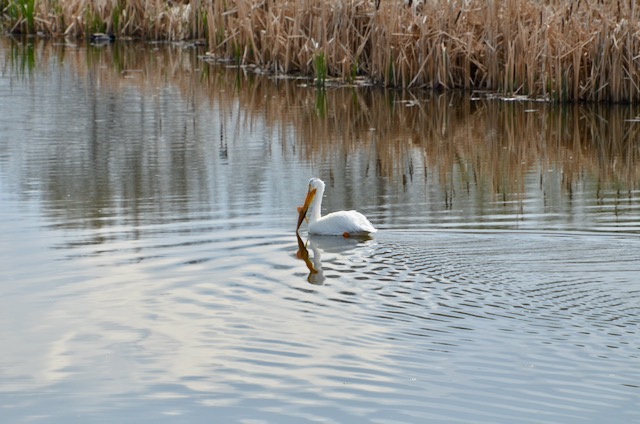
Pelican in serenity

Just as I went closer, she flew away. It happens a lot of times when I try to take bird photos:
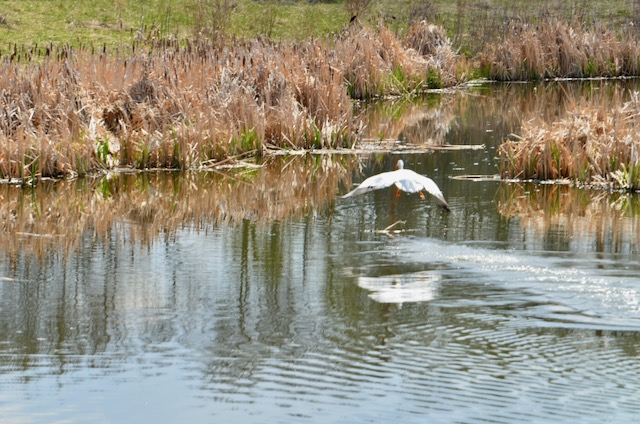
Pelican Flying Away

And conversely, I also have a now-you-don’t-see-it, now-you-do moment. Walking in the woods, I suddenly caught sight of something in a distance, a ghostlike appearance:
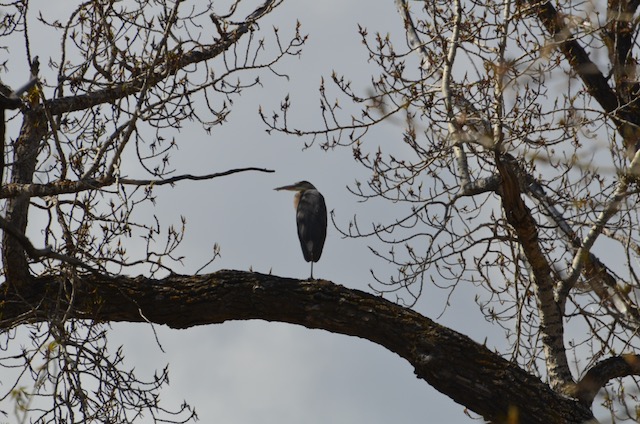
Distant finding

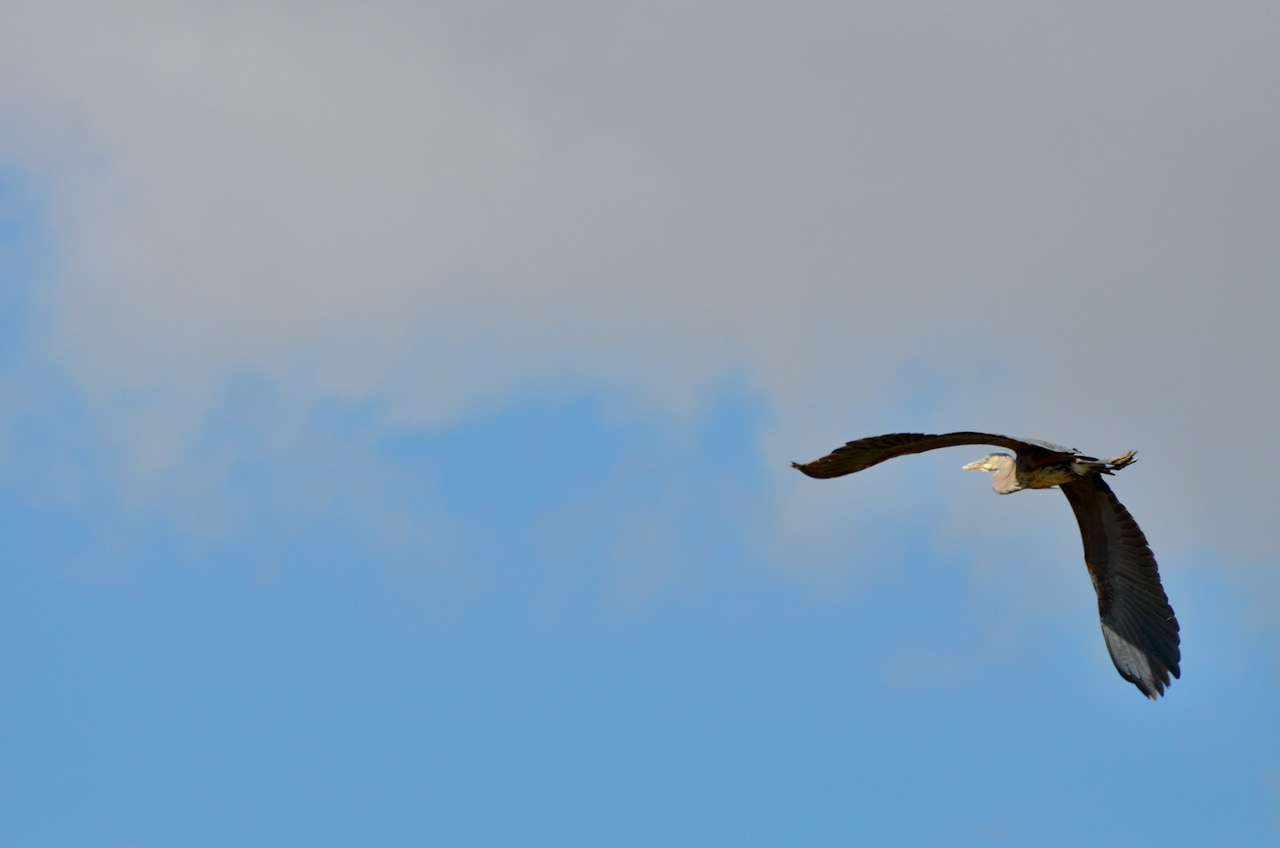
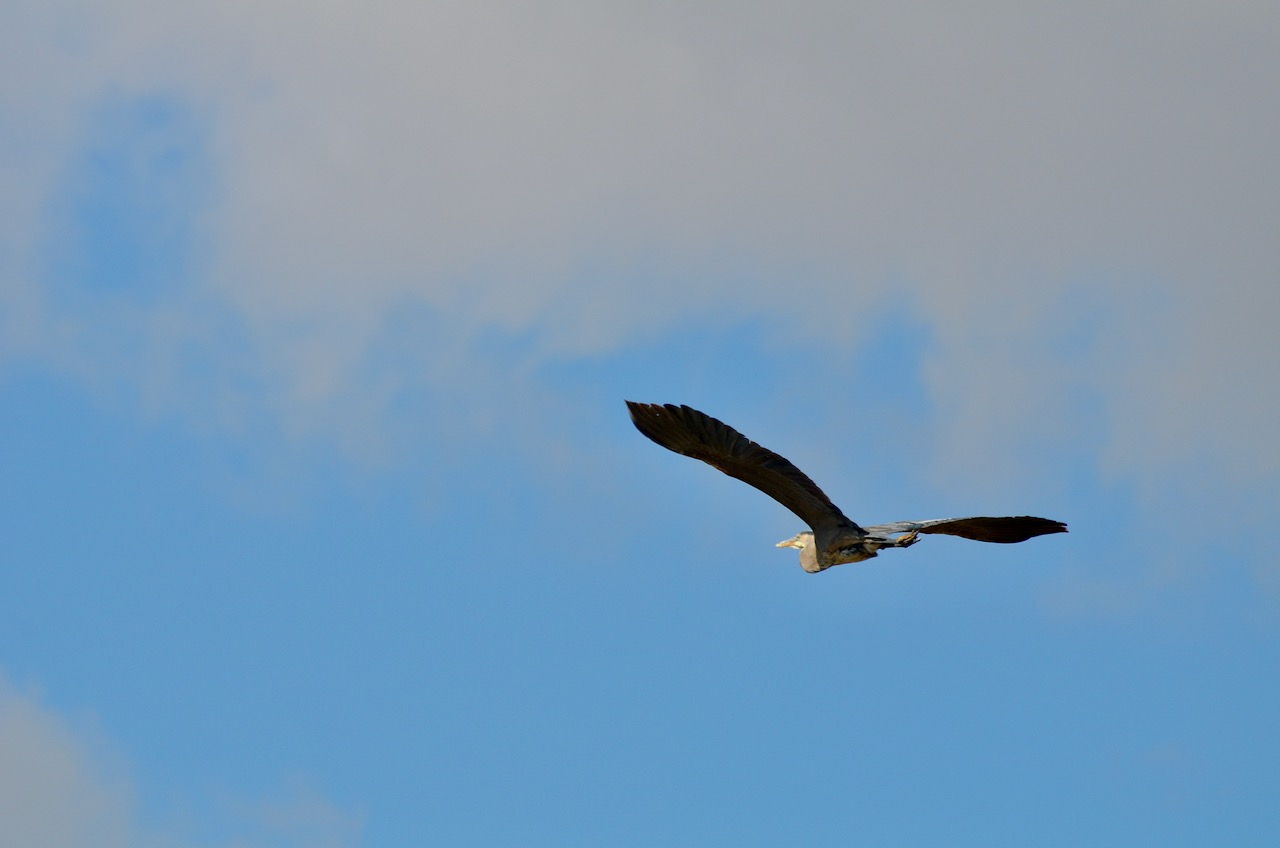
As I waded around fallen trunks and leaves to get closer to investigate, hopefully to get to the front to take a picture, I lost sight of it. Then suddenly, something huge close by me flew away. It was right beside me!
GB Fly away

GBH Fly 2

It was a Great Blue Heron. I’d never seen it in the woods perching on a tree, only by the water. Just as I didn’t expect it, I saw it, and just as I realized what it was, it disappeared.

Now-you-don’t-see-it, now-you-do, now-you-don’t again. “These disappearances stun me into stillness and concentration,” Dillard writes. Too mundane to even mention? Far from it. “The grand nonchalance” of nature keeps us in a place of humility and evokes our need for sharper senses.

Yes, a better camera.


***
Urban Progress, The Wasteland and An Easter Thought

Many contemporary films from China showcased at Film Festivals in recent years tend to use the country’s fast-paced urban development as backdrop. This new wave of filmmakers situate their characters and tell their stories amidst dilapidated buildings marked for demolition, sometimes the whole community torn down to make way for new projects. In the name of progress, many are uprooted and displaced.

In Life After Life (2017), we see a village abandoned as its former residents have all moved to the city. In Dead Pigs (2018) we see the feisty owner of the last house in an urban community standing alone, refusing to sell to the developer. The acclaimed auteur Jia Zhangke’s Cannes winning A Touch of Sin (2013) follows desperate individuals wrestled down by the strong arms of economic progress and capitalistic greed. His latest “Ash is Purest White” (2018) may be of a crime genre but we see the protagonist being swept along the tumultuous torrents of technological change and urban development, seeking whatever humanness that remains.

The most haunting has to be the 2018 film by the talented, young director Hu Bo, An Elephant Sitting Still. Hu parallels the desolation of the urban environs with the inner world of his characters: Despondent youths in a school bound for demolition, not that they have bright futures even if the school remains; aimless adults desperately seeking connection but ending in betrayal and loss; a grandfather facing gloomy days ahead as he’s cut off from his son’s family… Hu’s accusation of his society was astute and unsparing.

At one point in the film, The Wasteland is alluded to, certainly not only referring to the physical environs. That it is mentioned as a deadpan jest to make fun only exposes the indifference of the speaker to its meaning. Tragically life imitates art, Hu took his own life during the film’s post-production. He was 29.

Eliot wrote The Wasteland in the aftermath of WWI, lamenting the desolation and that dry, cracked piece of soil deep in the human soul, derelict and barren in the midst of post-war development and the loss of spirituality.

“What are the roots that clutch, what branches grow
Out of this stony rubbish? Son of man,
You cannot say, or guess, for you know only
A heap of broken images, where the sun beats,
And the dead tree gives no shelter, the cricket no relief,
And the dry stone no sound of water. Only
There is shadow under this red rock,
(Come in under the shadow of this red rock),
And I will show you something different from either
Your shadow at morning striding behind you
Or your shadow at evening rising to meet you;
I will show you fear in a handful of dust.”

….

Cut to Easter. I’ve been pondering these seemingly unrelated ripples from films during this Easter weekend, at a place thousands of miles from home. Then came this Easter thought. When that stone was rolled away at the grave, the Son of God reversed the trajectory of the human race. With that ultimate miracle of the resurrection, He’d blown life into the dry stone that is the human heart, turned wasteland into fertile soil, opening up the way to save us from ourselves.

Herein lies hope.

***

Ripple Effects Turns a New Page in 2019

Ripple Effects has reached a new milestone. After almost twelve years in the blogosphere, Arti has finally fought off procrastination and taken up an upgraded version. From now on, there will be no ads even if you’re not a WordPress blogger visiting (let me know if you still see them). What more, there’s a new URL address to the Pond, aptly:

rippleeffects.reviews


But if you type in the old, longer one it will redirect you to the right place here at the Pond as well.

While birding is still my passion, I’ll be posting mostly film and book reviews on Ripple Effects. My avian friends will probably fly by during intermission.

Your two pebbles are welcome as before. Throw them in, stir up some ripples. As always, I hope you’ll find here a respite for quiet thoughts and prompting to some interesting viewing and reading. I await your visits.

***
Have you ever seen so many people lining up to go into a public library? It happened right here in my city, Calgary, Alberta, on November 1, 2018, when our New Central Library opened. 50,000 visitors in the first four days. Yes, there will be talks of books and movies here on Ripple Effects.

New Central Public Library, Calgary.jpg

The Calgary Central Library was one of Architectural Digest’s 12 most anticipated buildings opening in 2018. Check it out here.

***


The Outsider Visualized

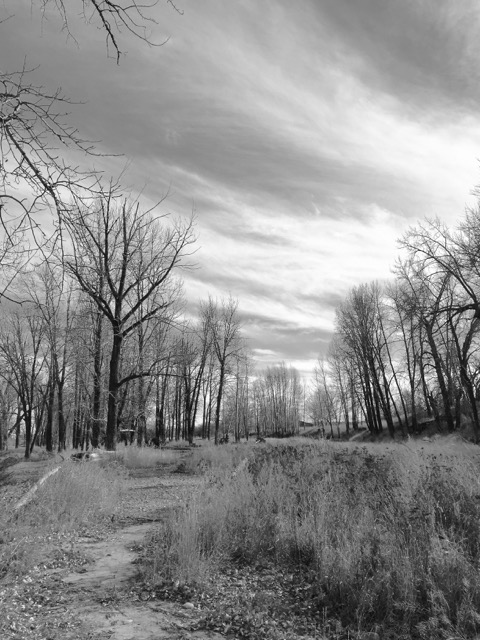
Just finished rereading Albert Camus’s The Outsider (or, The Stranger, L’Étranger). For some reasons, I find these two photos which I took late last fall well represent my thoughts. Words may come later in another post; until then, these visuals will suffice.

The Outsider 2

IMG_3400 (1)

***