
A couple of years ago, I was surprised to read about Jhumpa Lahiri moving to Italy to live, even just for a few years. Author of four works of fiction – Interpreter of Maladies, The Namesake, Unaccustomed Earth, and The Lowland – at the prime of her writing and teaching career, having received the O. Henry Award in 1999, the Pulitzer in 2000, and her latest The Lowland shortlisted for the Booker in 2013, Lahiri decided to uproot her family and move to Italy to totally immerse in the Italian language. That means speaking, reading and writing in Italian.
In Other Words is Lahiri’s brave and candid account as a language learner. It compiles twenty-one essays and two short stories which she wrote in Italian. She uses the metaphor of swimming out into the lake instead of safely hugging the shore to refer to her Italian language learning experience. From her descriptions of the challenges and risks, the loss of anchor, the inability to express herself and be literate, let alone literary, the disorientation, the total humbling, her Italian venture is more like jumping off a precipice to billowy waters of unfathomable depth.
My hat off to Lahiri’s honest revealing of her frustrations and strive for a new identity; yes, after all, language is a major determinant of identity, one which is, unfortunately, superseded by one’s outer appearance and racial features. So it is heart-wrenching to read that despite her love of the Italian language, her total devotion to adopt it not just to live but as a tool of her trade as a writer, she is often seen as an outsider, a foreigner, barred from acceptance. Even when she speaks to Italians fluently in their language, they would respond to her in English.
English, that’s the rub. I was surprised to read that, while the author had achieved so much in her literary career as a writer in English, she chose to discard it to totally immerse in Italian. In the chapter entitled “The Metamorphosis”, she candidly admits that her writing in Italian (which she had been learning in America for some twenty years before) is a flight:
“Why am I fleeing? What is pursuing me? Who wants to restrain me?
The most obvious answer is the English language. But I think it’s not so
much English in itself as everything the language has symbolized for me…
It has represented a culture that had to be mastered, interpreted. I was
afraid that it meant a break between me and my parents. English denotes
a heavy, burdensome aspect of my past. I’m tired of it….”
Of course, that’s also the language that she loved, and succeeded with. The conflict in identity, first as an Indian immigrant with Bangali as her mother tongue, then as a writer in English who had garnered the Pulitzer Prize – an award that she felt she did not deserve – had shrouded her with unresolved tensions. Lahiri had felt deeply the tug of war between her parental heritage and adopted land. A rejection of both had silently crept in. Italian provides a way out:
“Italian offers me a very different literary path. As a writer I can demolish
myself, I can reconstruct myself, I can join words together and work on
sentences without ever being considered an expert. I’m bound to fail when
I write in Italian, but, unlike my sense of failure in the past, this doesn’t
torment or grieve me.”
Unbelievably surprising and honest, written in Italian and translated by The New Yorker editor Ann Goldstein, the bilingual book opens up to a dual English and Italian version. The short essays chronicle the progress of not only an insightful identity search and reconstruction of selfhood, but an invaluable personal documentation of second – no, additional – language learning journey. If this book was published a couple of decades earlier, I would likely have another topic for my thesis in my graduate work on second language learning; not only that, my view of English being the lingua franca, the language holding linguistic hegemony, would have completely changed as well.
After reading In Other Words and my surprising discovery of Lahiri’s ‘tormenting sense of failure’ with the English language (for all its symbolic meaning) or even her ‘undeserving’ feeling towards her award in her writing, I am relieved of a hidden burden. I don’t feel so badly about having had to constantly check and re-check my English: prepositions, idiomatic expressions, phrasal verbs usage, subject verb agreement… All the hurdles that confront me every time I write a post or an article. If Lahiri can be so candid about her frustrations and errors when it comes to language learning, why can’t I?
~ ~ ~ ~ Ripples
***
My thanks to Asian American Press for allowing me to post my book review here on Ripple Effects. The last paragraph is added in just for my Ripple readers.
Related Posts on Ripple Effects:
The Namesake by Jhumpa Lahiri: Book Review
The Namesake (2006, DVD): Movie Review
Unaccustomed Earth by Jhumpa Lahiri





 Often it’s the cast of an upcoming movie that prods me to read a book. This one has been on the New York Times Bestseller List for years since its publication. No matter how popular it is, I’m motivated only now mainly because of the first rate cast: Alicia Vikander, Michael Fassbender, Rachel Weisz, directed by Derek Cianfrance. Instead of a place beyond the pines (his last work) we have an island off the Australian coast, with the story about a lighthouse keeper and his wife bringing up a baby they found in a boat washed up onshore.
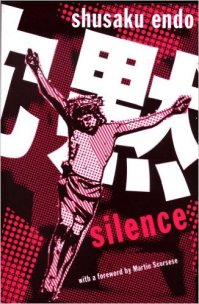 This one is just the opposite. I want to read it regardless of whether it will be made into a film or not. But what a bonus it is to know the adaptation is a Martin Scorsese’s work with Liam Neeson, Adam Driver, Andrew Garfield, and Ciarán Hinds. I highly anticipate this film, albeit I expect the viewing experience won’t be pleasant. I’ve read it before but want to reread it before watching. The book is heart-wrenching as Endô describes the persecutions and tortures Christians and Jesuit missionaries suffered in 17th century Japan. How Scorsese, a Catholic himself, handles the subject matter – the choice between apostasy vs. martyrdom – and have these character actors interpret the internal and physical torments will be intriguing to see. Scorsese wrote the forward of this edition of the book (image here).
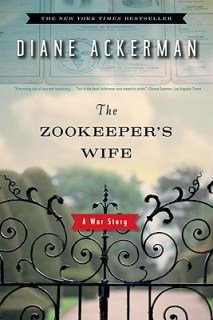 This is a worthy, true story to be made into film. Jan and Antonina Zabinski were keepers of the reputable Warsaw Zoo. During the Holocaust, Jan smuggled Jews out of the Warsaw Ghetto into their facility, saving hundreds. Antonina did the day-to-day chores of protecting them, hiding them in the cages, feeding them and keeping their spirits up. The parallel and irony of men and beasts are obvious. Acclaimed nature writer Diane Ackerman drew from Antonina’s diary to write her non-fiction work, a historical account of a heroic rescue mission. Screenplay by Angela Workerman, a scribe to note. Jessica Chastain and Daniel Brühl play the altruistic Zabinski couple.
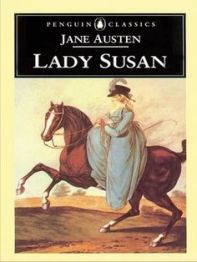 This has been in my iBooks for a long while, so long that I’d deleted it and now reloaded it again as the film adaptation is coming out. Entitled Love and Friendship, screenplay is based on Austen’s early novella Lady Susan, with Kate Beckinsale as Lady Susan Vernon. It will be interesting to see how the epistle form is translated onto screen. It will premiere at the Sundance Film Festival Jan. 23. Whether we will actually see it in our movie theatres is another matter. I hope it will be screened in the not too distant future.
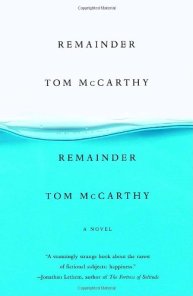 I bought this book at Harvard Book Store – the independent book store in Harvard Square since 1932 – during my New England Road Trip last fall. I’d read McCarthy’s 2015 Booker shortlisted Satin Island and knew Remainder had been adapted into film before I went on the trip. So it was a title I’d intended to get at that bookstore. Remainder is McCarthy’s debut work (2006). An unnamed Londoner is struck by a falling object and lapse into a coma. As he awakes, he has lost all memory and needs to re-enact his past to find his identity and authenticity of being. The Telegraph had called McCarthy “a Kafka for the Google Age”. Interesting to see how that translates onto screen. The film premiered at the BFI London Film Festival last October. Will screen at Berlin International Film Festival in February, 2016.
 The film adaptation of Booker short-listed and multiple award winning novel by Irish writer Sebastian Barry has already been completed, but has yet come up with a release date. So, I’ve plenty of time to read the book. The narrator is a 100 year-old mental hospital patient recalling her life. The old and the young are played by Vanessa Redgrave and Rooney Mara respectively. Directed by Jim Sheridan, the Oscar nominated director who introduced us to Daniel Day-Lewis in the excellent productions first in My Left Foot: The Story of Christy Brown and later In the Name of the Father.
 Ripple Effects