2025 is a Year of Anniversaries

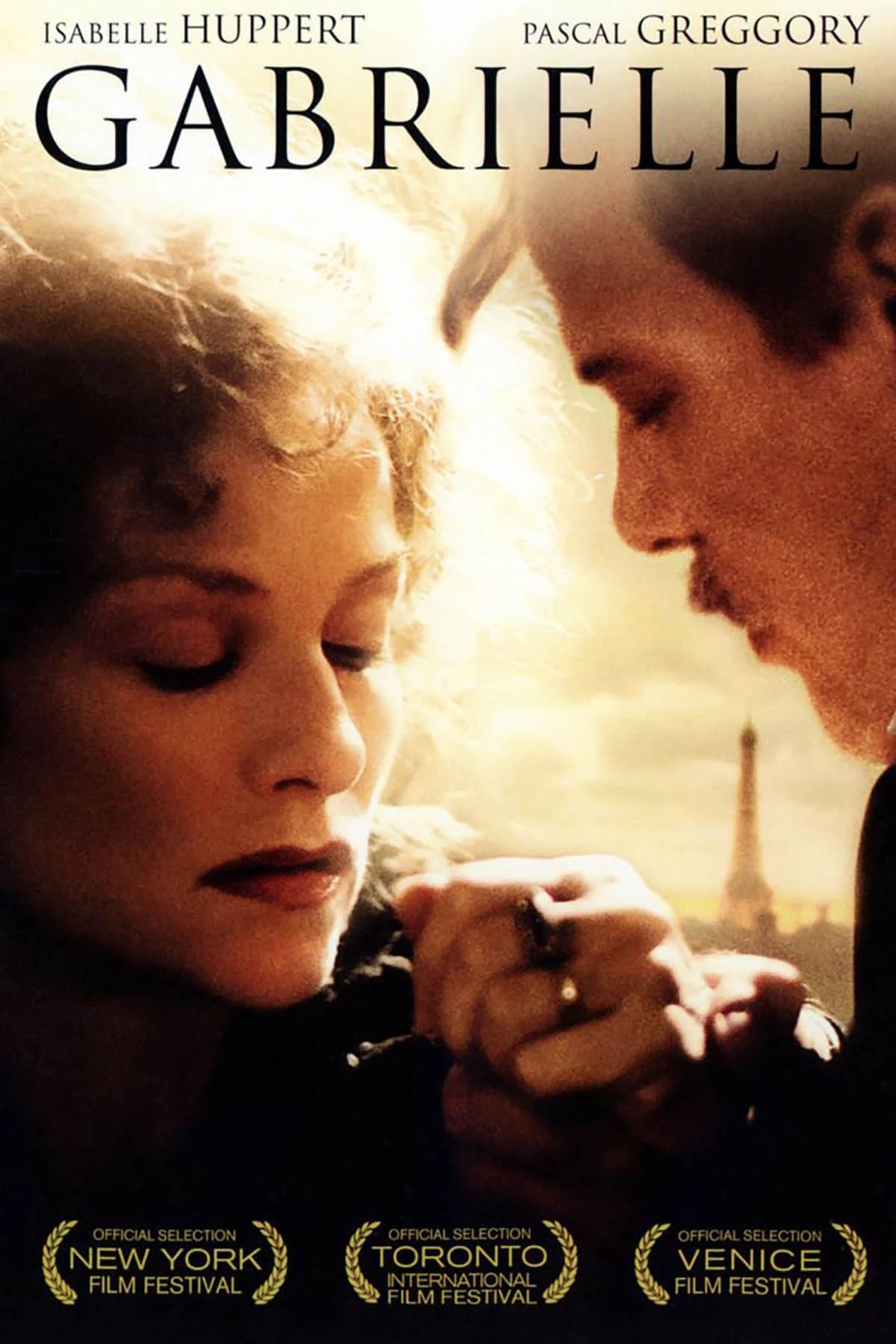
250th Birth Anniversary of Jane Austen (December 16)

It’s a great loss that Jane died so young, at 41, from a painful illness. The legacy of her six completed novels continue to thrive today. Movie adaptations are still being made, most notable is the upcoming new version of Pride and Prejudice with Emma Corrin as Lizzy, Jack Lowden as Mr. Darcy, and Olivia Colman as Mrs. Bennet. But we will never forget that iconic wet shirt scene of Colin Firth diving into the pond way back in 1995, thirty years ago.
30th Anniversary* of Jane Austen Screen Adaptations:

Pride and Prejudice Austenmania was ignited with this six-part BBC TV series. Andrew Davis’ screenplay brings Colin Firth and Jennifer Ehle together as the pivotal pair. To many, myself included, the definitive version of all the adaptations; yes, my prejudice here. 

Sense and Sensibility That same year, 1995, we saw the breakout work of Taiwanese American director Ang Lee, proving his versatility, with Emma Thompson basking in the limelight receiving her Best Adapted Screenplay Oscar.
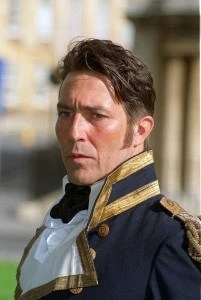
Persuasion While not as popular as Pride and Prejudice, a novel that shows a more mature writer showing her own sense of wisdom in handling love and life. Ciaran Hinds is an impressive Captain Wentworth. 

Clueless One of the first modern renditions of Austen novels. Here’s an American teenager playing Emma in her high school. What follows are numerous contemporary parallels of Austen’s works, like Bridget Jones’s Diary, and across cultures, Bride and Prejudice, From Prada to Nada. 

*Jane Austen’s House in Chawton is celebrating the 30th Anniversary of these adaptations with their own special AUSTENMANIA! events.

***

100th Anniversary of the publication of some modern classics, books and poems* Listing a few here:
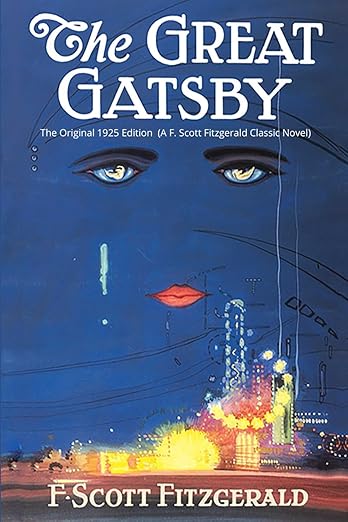
The Great Gatsby by F. Scott Fitzgerald

One of my all-time favourite books. Filmmaker Baz Luhrmann highlights all the zeitgeist of the jazz age, the wild parties, and the gaudy excess but fails to bring out the deep character of the man behind those façade, a romantic hanging on hope and seeing every obstacle as a green light. My Ripple Review here.

Mrs. Dalloway by Virginia Woolf

This is one example that the movie adaptation is as good as or even surpasses the book, for it shows more than words can tell. While I admire Woolf’s stream of consciousness, both in expression and withholding, director Steven Daldry’s multi-faceted depiction of Clarissa’s internal world projected into the psyche of two other women is exceptional. David Hare’s screenplay adapting Michael Cunningham’s The Hours is an exemplary transposition of literature onto the screen. And watching Meryl Streep, Nicole Kidman and Julianne Moore in one film is sure worth one’s ticket, or time. 

The Painted Veil by W. Somerset Maugham

Somerset Maugham is one of those writers who take you to places but still remain intact with his characters, the backdrop of foreign lands are merely that, backdrop, while the characters lead the story. I’ve seen the movie adaptation, and in my Ripple review I had written this: “Transforming great lines from a book into equally inspiring visual story-telling is an arduous task, and it’s something that mere beautiful cinematography cannot suffice.”

Carry On, Jeeves by P. G. Wodehouse

The third of Wodehouse’s 20 Jeeves and Wooster books. Jeeves is a marvellous invention, a character that reminds me of Mr. Carson of Downton Abbey. There are lots of LOL moments. He’s like a Swiss army knife, a tool of multiple usages. Wodehouse makes him more than utilitarian though. In the interactions between employer and butler, the joke always falls on the former. And that’s the fun of it. 

No More Parades by Ford Madox Ford

No More Parades is the second book in the Parade’s End tetralogy by Ford Madox Ford (1873-1939) Set in the time of WWI, where poetry was written in the trenches. In its core a love story movingly depicted in the BBC five-episode TV series (2012), one of the most understated and neglected productions. A young Benedict Cumberbatch and Rebecca Hall are the mismatched couple, but it’s the pristine Adelaide Clemens that shines as idealistic suffragette Valentine. 

The Hollow Men by T. S. Eliot

‘The Hollow Men’ is the title poem of this collection of poetry by Eliot, astute critic of his times. “We are the hollow men/we are the stuffed men/Leaning together/Headpiece filled with straw.” Alas, a look at our world today one would find how after one hundred years, Eliot’s critique of his society still stands.

*The popular ‘Year Reading Club’ on Kaggsy’s and Simon’s book blogs are featuring the 1925 Club reading event this October, where we read books published in 1925 and share our thoughts in our blogs.

***

50th Anniversary of some iconic movies:

Where were you in 1975? Watched any of these movies in the theatre?

Jaws dir. by Stephen Spielberg

One Flew Over the Cuckoo’s Nest dir. by Miles Forman

The Man Who Would be King dir. by John Houston

Monty Python and the Holy Grail dir. by Terry Gilliam and Terry Jones

Dog Day Afternoon dir. by Sidney Lumet

Barry Lyndon dir. by Stanley Kubrick

The Return of the Pink Panther dir. by Blake Edwards

Three Days of the Condor by Sydney Pollack

Farewell, My Lovely dir. by Dick Richards

Funny Lady dir. by Herbert Ross

***

Not born yet? How about 1985?

40th Anniversary of:

The Breakfast Club dir. by John Hughes

Back to the Future dir. by Robert Zemeckis

The Color Purple dir. by Stephen Spielberg

A Room with a View dir. by James Ivory

Out of Africa dir. by Sydney Pollack

The Purple Rose of Cairo dir. by Woody Allen

Vagabond dir. by Agnès Varda

Witness dir. by Peter Weir

***

Numerous posts on Jane Austen, as well as movies and books mentioned in the above lists are posted here at Ripple Effects. Seek them out using the Search feature on the top of the left sidebar.

From Book to Screen 2024 Fall

Late August kicks off the annual film festival season, and come September, arrays of new offerings on streaming platforms. I haven’t done actual research, but just a feeling that nowadays, more and more movies are adapted from printed sources. The following is a list of upcoming books adapted to full features in theatres, or TV movies and series for streaming:

Conclave by Robert Harris (2016) 

International Premiere at TIFF in September, in theatres November. Directed by Edward Berger (2023 Oscar winner All Quiet on the Western Front) with a stellar cast led by Ralph Fiennes, Stanley Tucci, and John Lithgow. Peter Straughan (Tinker Tailor Soldier Spy, 2011) adapts from Harris’s novel revealing the dark secrets and intrigues in the intense proceedings in electing a new Pope.

The Critic or Curtain Call (2015) by Anthony Quinn

Had its world premiere at TIFF last year and slowly trickling to theatres this September. Directed by Anand Tucker (Girl with a Pearl Earring, 2003) with an exciting British cast with Ian McKellen as the eponymous, acerbic critic, his power and influence affecting many. Co-stars include Lesley Manville, Gemma Arterton, Mark Strong, Romola Gerai, Ben Barnes.

The Day of the Jackal by Frederick Forsyth (1971) 

10 episodes on Peacock, remake of the iconic 70’s movie. Political thriller recounting the plot to assassinate French President Charles de Gaulle after he signed the treaty leading to Algeria’s independence. In this new version, Eddie Redmayne is the assassin Jackal.


Disclaimer by Renée Knight (2015)

Oscar winning director Alfonso Cuarón (Roma, 2018) helms a stellar cast including Cate Blanchett, Lesley Manville, Kevin Kline, Sacha Baron Cohen, Kodi Smit-McPhee. A mini-series where Blanchett plays a TV documentary journalist who exposes dark secrets of others is threatened with the revealing of her own past. Canadian premiere at TIFF in September, mini series on Apple TV+

Here, graphic novel (2014) by on Richard McGuire

McGuire’s works are multi-faceted and highly acclaimed, as permanent collections at MoMA, The Morgan Library and others, print form in The New Yorker, The New York Times, Le Monde… Can a movie version do justice to this multi-talented artist? The team that made the eras-spanning Forrest Gump (1994), director Robert Zemeckis, screenwriter Eric Roth, star Tom Hanks and Robin Wright re-unite to bring us Here. Interesting addition to the cast that I look forward to is Michelle Dockery. In theatre come November.

Interior Chinatown by Charles Yu

The National Book Award winning novel of 2022, a genre defying writing that fuses a novel and a screenplay. The story of a young Chinese American actor struggling to escape stereotypical roles in Hollywood. Stand-up comedian and actor Jimmy O. Yang (Crazy Rich Asians, 2018) stars. 10 episodes on Hulu.

The Nickel Boys by Colson Whitehead (2019) 

New York Film Festival’s (Sept. 27 – Oct. 14) opening film. The winner of the 2020 Pulitzer Prize for Fiction is adapted into film with the title slightly changed to Nickel Boys. Friendship between two Black teenagers in the notorious reform institution, the Dozier School for Boys in Jim Crow-era Florida sustains the two of them during their harrowing residency. 

The Outrun by Amy Liptrot (2016)

Liptrot’s award winning memoir of her troubled past is adapted to the screen and directed by Nora Fingscheidt (The Unforgivable, 2021) starring Saoirse Ronan. From wild living and alcoholic ruin in London, Liptrot rehabilitates herself as she seeks the sanctuary of nature and her childhood home in Orkney off the northeastern coast of Scotland.

The Perfect Couple by Elin Hilderbrand (2018) 

A Nantucket-set wedding disrupted by a murder which makes everyone a suspect. Goodreads declares Hilderbrand “the queen of the summer beach read.” Nicole Kidman, Live Schreiber, Dakota Fanning anchor the Netflix mini-series coming out in September.  

The Return based on The Odyssey by Homer (ca. 8th – 7th C. BC)

World premiere at TIFF, in theatres December. Ralph Fiennes as Odysseus, returning home to Ithaca after the Trojan War and misadventures twenty years later to find his kingdom changed. Juliette Binoche is the patient wife Penelope, trying to buy time to wait for his return and at the same time warding off unruly suitors. Son Telemachus (Charlie Plummer) not so patient. 

Wicked by Gregory Maguire (1995)

Based on the musical, which in turn adapted from the book by L. Frank Baum’s The Wonderful Wizard of Oz (1900), this new rendition as a movie is directed by Jon M. Chu (In the Heights, 2021; Crazy Rich Asians, 2018) Cynthia Erivo (Harriet, 2019) and Jonathan Bailey (Bridgerton, 2020-2024) star.

***

More to come…

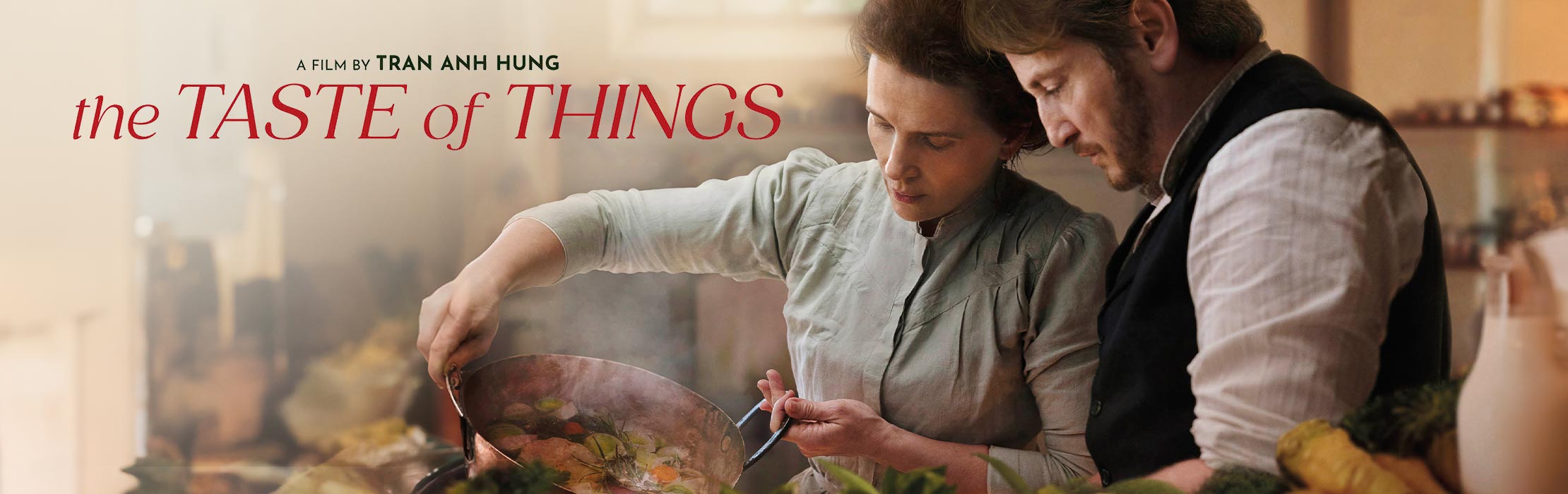
‘The Taste of Things’: the Country Kitchen as Vermeer’s Studio

At last year’s Oscar time, I was a little surprised that the buzzy Anatomy of a Fall wasn’t selected as the official entry by France to enter the race for Best International Feature Film. Instead, it was The Taste of Things. Now that I have the chance to watch it, I can understand why it was the choice and I totally agree with it. That it did not win seems immaterial, for its aesthetic value and the honour of being chosen to represent France make it a worthy accolade.

The Taste of Things is a delectable feature, a celebration of French gastronomy and its historic, culinary traditions, an exquisite and aesthetically riveting period film set in a country house. Vol-au-vent, pot-au-feu, roast rack of veal with braised vegetables… To say it’s a delicious food movie is just lowering the level of enjoyment, like eating an ice cream cone compared to being served baked alaska prepared by a gourmet. The film is not just about the taste of food, but of love, beauty, sensuality, and human connection, offering a deeply gratifying viewing experience.

Directed by the Vietnamese-French filmmaker Anh Hung Tran––whose first film The Scent of Papaya won a César Award in 1994 as well as accolades at Cannes––The Taste of Things sent Tran to Cannes again in 2023 and this time a Palme d’Or nominee and winning Best Director.

Tran reunited Juliette Binoche with her ex Benoît Magimel for the film. The two were divorced twenty years ago. Maybe a past relationship had some bearings on stirring up fond memories, for the pair exudes admirable chemistry on screen. Magimel plays the fictional gourmet Dodin Bouffant, nickname ‘Napoleon of gastronomy’, who resides in a country house during the late 19th century. His cook for twenty years has been Eugénie, superbly portrayed by Binoche, ethereal even in a rustic kitchen.

While Babette’s Feast (1988 Oscar’s Best Foreign Language Film) comes to mind readily, it’s the visual memory of Girl with a Pearl Earring (2004) that enhances my appreciation of The Taste of Things. Indeed, Dodin’s kitchen is like Vermeer’s studio, large window allowing natural light to pour in, the colour scheme of period costume and set design (Tran’s wife Nu Yên-Khê Tran), the naturalistic capturing of characters and their movement make it an exquisite, artistic production.

Inspired by Marcel Rouff’s novel La vie et la passion de Dodin-Bouffant, Gourmet (The Life and Passion of Dodin-Bouffant, Gourmet), writer director Tran wrote the screenplay of The Taste of Things as a prequel to Rouff’s novel, imagining the bond of love between Dodin and his longtime cook Eugénie. Dodin has proposed marriage to Eugénie time and again but is turned down every time. The twist comes when Eugénie falls ill and the reversal of roles emerges. Dodin begins to cook for her––love expressed through the ingenuity of new dishes meticulously prepared and the enjoyment of watching her savour his handiwork.

It’s interesting to note that there’s no music in the whole film. Massenet’s Méditation in piano version comes on only when the end credits roll. With no soundtrack, the essence is in the ambient sounds of nature, bird songs outside the country kitchen, and inside, the sounds of cooking, the crackling of the fire, and the gentle conversations among the characters as they prepare meals. In an interview, Tran mentions that: “The sound is the flavour of the picture. The picture has the beauty; the flavour of it comes from the sound.” 

Another crucial ingredient is the camerawork. Cinematography (Jonathan Ricquebourg) is the key in capturing the overall aesthetics and mood of the film. The camera is like a quiet observer, moving gently, often in long takes, following the characters in the kitchen, their movement like a choreographed sequence, smooth, seamless, serene and subtle. While the food preparation may seem complicated and time-pressed, the overall mood in the kitchen is always harmonious. The would-be apprentice, fourteen-year-old Pauline (Bonnie Chagneau-Ravoire) is particularly impressive. A tidbit: The French chef Pierre Gagnaire, owner and head chef of his eponymous restaurant, is the consultant for the movie. He himself has a role in there as well.

Overall, an artistic achievement to savour. Vermeer’s kitchen or Dodin’s studio? A fitting fusion of imaginary connections.

~ ~ ~ 1/2 Ripples

***

Thanks to Words and Peace for hosting Paris in July 2024

Note: All posts on Ripple Effects written by Arti, the real person.

***

Related Posts on Ripple Effects:

Anatomy of a Fall or how to dissect a marriage

Paris in July 2022: A Culinary Sojourn

Girl with a Pearl Earring: the painting, the novel, and the movie

A Tribute to Canada’s Nobel Laureate Alice Munro: Munro and Movies

Alice Munro had died at the age of 92 on Monday, May 13, 2024, in Port Hope, Ontario. Winner of the Nobel Prize for Literature in 2013 and the Man Booker International Prize in 2009, Munro solidified her stature in literature with her mastery of the short story. As a tribute to her passing, I’m reposting something I wrote on the occasion of her Nobel Prize win back in 2013 in the following. In that article, I’d also included a short review of the film Away From Her, based on her short story “The Bear Came Over the Mountain”.

_____________

On October 12, 2013, I wrote:

Thanks to the Swedish Academy, Alice Munro doesn’t need a blockbuster movie to raise awareness of her works. Described by The New York Times as ‘Master of the Intricacies of the Human Heart’, and with her story settings mostly in rural counties and small towns, the 82 year-old writer must have known how the small and intimate can have far-reaching effects.

The short story as a literary form too must have gained importance and legitimation overnight now that Munro is honored as Nobel Laureate. The novel isn’t the only peak of the mountain of literary pursuits. Readers too, can now be totally comfortable with reading ‘just a short story’.

Back to movies, with our contemporary mega, blockbuster culture, it sure looks like the general public needs to see a movie before knowing about a literary work. While I don’t like the idea, I’ve to admit that could well be the case nowadays. But for Munro, can anyone name a full feature movie that’s based on her short stories?

Right. Actually there are four* (see correction below). Edge of Madness (2002) is relatively unknown. Another one interestingly is an Iranian film, Canaan, which won the Audience Awards–Best Film at the Fajr International Film Festival in 2008. A better known adaptation is Away From Her (2006). It remains one of my all time favorite films. The most recent completed production is Hateship Loveship which premiered at TIFF13. I regret missing it when I was there in September. A film based on her story ‘Runaway’ is currently in development.

With Munro winning the Nobel, hopefully we’ll have the chance to see a general release of Hateship Loveship. So there you go, Munro could well be helping to reverse the trend: the writer promoting the film.

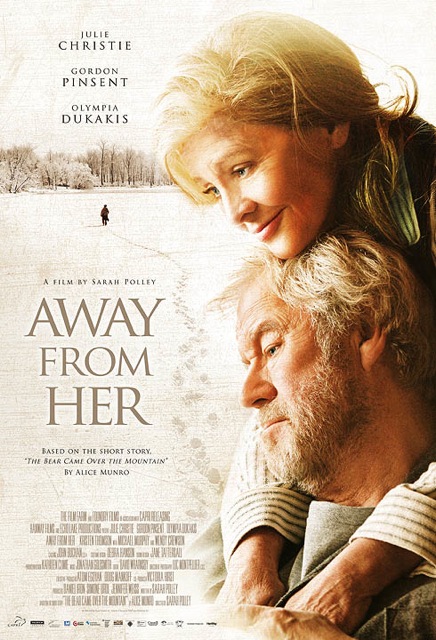
To celebrate Munro’s Nobel win, I’d like to repost in the following a review of Away From Her which I wrote in 2008. The film was directed by the young and talented Canadian actor/director Sarah Polley, who was nominated for an Oscar for her adapted screenplay based on Munro’s short story ‘The Bear Came Over the Mountain’. Julie Christie received an Oscar nomination for her role as Alzheimer’s afflicted Fiona.

You can read Munro’s story ‘The Bear Came Over the Mountain’ now online, thanks to a timely reprint by The New Yorker.

Capri_AwayFromHer_PosterB

AWAY FROM HER: A Short Review

How can you turn a good short story into a full length movie without compromising its quality? By turning it into a screenplay written by an equally sensitive and passionate writer, and then, through her own talented, interpretive eye, re-creates it into a visual narrative. Along the way, throw in a few veteran actors who are so passionate about what the script is trying to convey that they themselves embody the message.

Sarah Polley has made her directorial debut with a most impressive and memorable feat that I’m sure things will go even better down her career path. What she has composed on screen speaks much more poignantly than words on a page, calling forth sentiments that we didn’t even know we had. As Alzheimer’s begins to take control over Fiona, what can a loving husband do? Julie Christie and Gordon Pinsent stir up thoughts in us that we’d rather bury: how much are we willing to give up for love? Or, how would we face the imminence of our loved ones’ and our own mental and physical demise?

Based on the story by Alice Munro, ‘The Bear Came Over the Mountain’, Polley brings out the theme of unconditional love not with your typical Hollywood’s hot, young, and sexy on screen, but aging actors in their 60’s and 70’s. It may not be as pleasurable to watch wrinkled faces hugging and kissing, or a man and a woman in bed, bearing age spots and all, but such scenes effectively beg the question: why feel uncomfortable?

Why does love has to be synonymous with youth, beauty, and romance? It is even more agonizing to watch how far Grant is willing to go solely for love of Fiona. Lucky for us, both writers spare us the truly painful at the end. It is through persistent, selfless giving that one ultimately receives; however meager and fleeting that reward may seem, it is permanence in the eyes of love. And it is through the lucid vision of a youthful 28-year-old writer/director that such ageless love is vividly portrayed…. Oh, the paradoxes in life.

~ ~ ~ Ripples

* Correction: According to IMDb, there are 14 screen adaptations of Munro’s work, both in movies and TV. Runaway is in production currently.

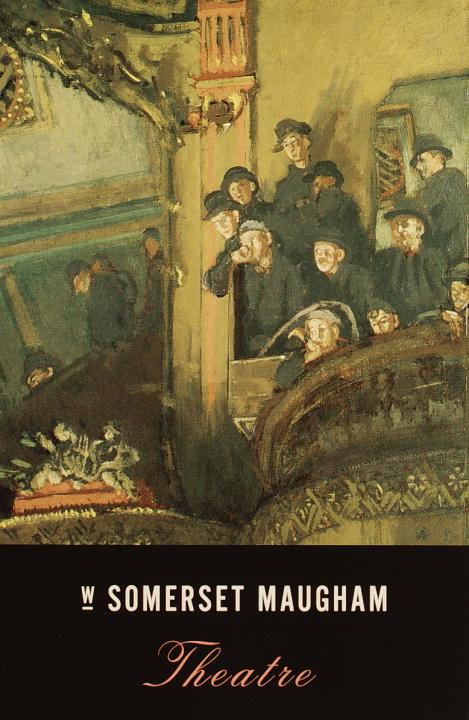
The 1937 Club: Maugham’s ‘Theatre’ from Book to Screen

To wrap up my week for The 1937 Club, I’m re-posting my review of W. Somerset Maugham’s Theatre published in 1937 which some of you have read. As I’m still reading Virginia Woolf’s The Years, haven’t time to reread Maugham’s book this time. I want to re-post my review mainly because I’d like to share my thoughts back in 2010 when I wrote it, and see how much our society has changed in terms of what is real, the main issue by which in Maugham’s book, the son Roger is so disturbed regarding his theatre actress mother Julia Lambert.

As for book turned into films, those familiar with Ripple Effects know that I see the literary and the visual as different art forms, therefore being ‘faithful’ isn’t the major qualifier for a good adaptation. However, in this case, I’m quite disappointed that the essence or, the main issue, as represented by Roger’s frustration with his mother has not been transposed onto the screen, downplaying the tension and conflict that’s so crucial in the book.

_____________________

Two pages into the book I knew right away I had seen it before. Of course, that’s the movie Being Julia (2004). Annette Bening got a Best Actress Oscar nom for her portrayal of Julia Lambert, a famous actress on the London stage in the 1930’s. The movie is a colourful account of how a successful stage actress deals with her mid-life crisis. Garnering fame, fortune, and achievement in bounty, what more could she ask for but… love and passion. And during the course, obstacles, jealousy, and betrayal are all overcome, and revenge carried out; on or off stage, no matter, it’s equally exciting for the glamorous Julia Lambert.

But not until I read this novel on which the movie was based did I realize that a most important passage had been left out. And oh what an omission! For the crux of the book rests on those few pages. And not only that, the screenwriter had chosen to alter a character to suit his fancy, rounding off the edges of conflicts and alleviating tensions in presenting a smooth and suave storyline.

In the movie, Julia’s son Roger is a young man fresh out of Eton and planning to attend Cambridge after the summer. That much is true to the book. Roger is shown to be a devoted son, lovingly supportive of his mother in her pursuits in career and love life. But this is not the case in the novel.  Maugham has crafted Roger as a critical young man, offering the necessary tension to the story. In a crucial scene at the end of the book, he questions Julia’s behaviour and integrity. These challenges form the climatic confrontation between mother and son, projecting the meaning behind the very title of the novel.

Here is an excerpt from this scene that captures the essence of the whole book. Julia asks Roger:

“What is it you want?”
Once again he gave her his disconcerting stare.  It was hard to know if he was serious, for his eyes faintly shimmered with amusement.
“Reality.”
“What do you mean?”
“You see, I’ve lived all my life in an atmosphere of make-believe…. You never stop acting. It’s second nature to you. You act when there’s a party here. You act to the servants, you act to Father, you act to me. To me you act the part of the fond, indulgent, celebrated mother. You don’t exist, you’re only the innumerable parts you’ve played. I’ve often wondered if there was ever a you or if you were never anything more than a vehicle for all these other people that you’ve pretended to be. When I’ve seen you go into an empty room I’ve sometimes wanted to open the door suddenly, but I’ve been afraid to in case I found nobody there.”

By turning Roger into a complacent and docile young man, the screenwriter had failed to present the necessary tension in the story. Further, by avoiding the character foil between the successful actress mother and her meaning-pursuing, idealistic son, the movie fails to deliver the essential subtext, despite an impressive performance by Annette Bening.

Further, the best is yet to come in the book… such is the ingenuity of Maugham.  After a superb, revengeful performance, overarching her rival, the young and beautiful Avice Crichton, and drawing everyone’s admiration back to herself, Julia celebrates on her own with a nice meal and mulls over a gratifying notion, on the very last page:

“Roger says we don’t exist. Why, it’s only we who do exist. They are the shadows and we give them substance. We are the symbols of all this confused, aimless struggling that they call life, and it’s only the symbol which is real. They say acting is only make-believe. That make-believe is the only reality.”

This is ever so relevant for us today. With all the online personae we can create and project, all behind the guard of anonymity, Roger’s quest for what’s real remains a valid search.

Sherry Turkle, the acclaimed ‘anthropologist of cyberspace’, has observed the liminal reality in our postmodern world and stated her own quest:

“I’m interested in how the virtual impinges on what we’ve always called the real, and how the real impinges on the virtual.”

Let’s just hope that the advancement of technology would not get the better of us, blurring the lines of fact and fiction, offering shields for fraud and deceits. Behind the liminal existence, let’s hope too that we still care what’s real and what’s not, and that our humanity will still be valued and not be compromised or lost in the vast abyss of bits and bytes.

The upcoming Academy Awards too, is another platform to showcase such a duality. I always find the acceptance speeches of award winners intriguing: what’s genuine and what’s fake in their thank you’s. Are they presenting their real self or merely acting? Outside of their roles, which part of them is authentic? Or, do they ever get out of their roles?

It’s interesting too to explore the influence of movies nowadays. Again, the postmodern emphasis is on the narrative, multiples of them, and storytelling the vehicle of meaning. Does the notion of Maugham’s character Julia mirror our world… that movies have become the symbols of what we call life? That make-believe has sometimes been merged with reality? Can we still tell them apart? Or, should we even try? Considering the pervasive effects of pop culture in our life today, considering a single movie can command a worldwide box office sale of $2.4 billion, and counting… Maugham was prophetic indeed.

***

Again, I thank Simon and Karen for hosting. Looking forward to the next year club in the coming months.

The 1937 Club: ‘Out of Africa’ Book to Movie

Twice a year, Simon at Stuck in a Book and Karen at Kaggsy’s Bookish Ramblings host an interesting reading event, the year club. We read books published in that year indicated by the number and write our reviews. This time, from April 15-21, we are doing the year 1937.

Many fine titles were published in 1937, but for me, it’s an easy choice: Out of Africa, the memoir of Danish author and baroness Karen Blixen (1985-1962). Interesting to note that she had several pen names. In the English speaking countries, she was Isak Dinesen.

Ever since watching the 1985 movie Out of Africa, I’ve always wanted to read the source material, Blixen’s autobiography about her seventeen years (1914-1931) living in Kenya operating a coffee farm. In a way, I want to cast aside the image from the movie, however romantic, of Meryl Streep and Robert Redford sitting in green pastures picnicking, with Mozart’s Clarinet Concerto coming out from a gramophone, the music sweeping serenely across the pristine African landscape.

Blixen’s life in Kenya was no small venture: a pioneer woman operating a coffee farm situated in the six thousand acres of her land at the foothills of the Ngong Mountains. She rode horses, went on safaris, shot lions to defend her oxen, herself and others. When in the capital, Nairobi, she was a business woman; when on her farm, she was doctor to those lined up to see her with their sickness and ailments. She sent those that she couldn’t handle to the hospital and visited them, seeing to their recovery.

Blixen’s chronicles of her life in Africa intertwine objective observations and intimate thoughts. When describing the different ethnic groups in the land, the Natives Kikuyu, or her neighbours the Masai, or the immigrants the Somali… her writing is like an astute anthropologist, always with admiration. When referring to the Somali women, she writes:

There was no ignorance in their innocence. They had all assisted at childbirths and death-beds… Sometimes to entertain me, they would relate fairy tales in the style of the Arabian Nights, mostly in the comical genre, which treated love with much frankness. It was a trait common to all these tales that the heroine, chaste or not, would get the better of the male characters and come out of the tale triumphant… I felt the presence of a great ideal… the idea of a Millennium when women were to reign supreme in the world. (131)

Considering the above was noted earlier than 1931 (the year she left) in Africa, was Blixen a visionary ahead of her times, or… was it the Somali women?

When describing those close to her, like her invaluable assistant Farah, she presents a character study with free flowing, deep feelings of love and respect. In the essay collection at the back of this book, Shadow on the Grass, she has a whole chapter on Farah, of whom she describes a special relationship of Unity, that of Master and Servant, in no subordinate sense but an indispensable bond of loyalty and mutual respect. Blixen gives a few examples of such Unity, like Don Quixote and Sancho Panza. For contemporary readers like us, maybe the Downton relationship between Robert Crawley and John Bates would be a more visible example.

[Spoiler Warning here] Unlike the movie, Blixen mentions her friend Denys Finch-Hatton (Robert Redford in the movie) only sporadically in the first half of the book. Towards the end she devotes a few chapters on him upon his tragic plane crash. The two chapter titles are indicative of his character: ‘The Noble Pioneer’ and ‘Wings.’ Denys had almost become a Native himself, knowing the people of the land thoroughly, having had spent decades there, his love for them is reciprocal. His bi-plane is an apt metaphor for his courage and unbound spirit of exploration. His gramophone is an object of desire as the music it plays is a shared joy between him and Blixen, as well as a novel attraction mesmerizing all those on the farm. Of Denys, Blixen writes:

What they really remembered in him was his absolute lack of self-consciousness, or self-interest, and unconditional truthfulness which outside of him I had only met in idiots. (247)

Kudos to film director Sydney Pollack, the movie shows what’s unsaid between the lines. Blixen had deep feelings for Denys, but from the text, she’s restrained and devoid of sentimentality. That’s what makes the final chapters so poignant. Unlike the movie, there’s no romance depicted, just friendship and mutual admiration. There are letters and other writings of Blixen’s which I’m sure the filmmakers had researched on, and thus the more intimate dramatization of them as lovers in the movie. Furthermore, the aerial shots of Deny’s bi-plane over the African landscape, hills and valleys, plains and waters, spurring flocks of shore birds to soar to the sky, our reading imagination visualized; John Barry’s heart-stirring, expansive score complements the mesmerizing cinematography. And yet, I’ve fully enjoyed Blixen’s writing as well, intimate and poignant.

The farm eventually failed financially and Blixen had to move back to Denmark. Selling it out and bidding farewell is like leaving her soul there. She describes her last safari at dusk:

The plains with the thorn-trees on them were already quite dark, but the air was filled with clarity – and over our heads, to the west, a single star which was to grow big and radiant in the course of the night was now just visible, like a silver point in the sky of citrine topaz. The air was cold to the lungs, the long grass dripping wet, and the herbs on it gave out their spiced astringent scent. In a little while on all sides the cicadas would begin to sing. The grass was me, and the air, the distant invisible mountains were me, the tired oxen were me. I breathed with the slight night-wind in the thorn-trees. (191)

This is one of those books that will linger in my heart long after I finish and to which I know I will return.

***

Related Post on Ripple Effects:

‘Flappers and Philosophers’ by F. Scott Fitzgerald: My entry into the 1920 Club

The Zone of Interest and the Banality of Evil

How does a German family spend their summer holidays? Imagine this one with mom and dad and their five children in a country house. Family picnic by the river, dad fishing, mom admiring her large and impressive garden, children splashing in the pool. Dad got a surprise birthday present, a canoe, which he takes to the quiet stream with two of his older children surrounded by bird songs. Dad not only loves his family, but his horse, his dog, and those lilac bushes.

A picture of an idyllic and peaceful family life. Zoom out a bit, the country house is right adjacent to the Auschwitz concentration camp, separated by just a wall, barbed wire on top. We can only see the top of the prison buildings. Yes, we also see heavy smoke shooting out from tall chimneys.

This is an actual, historic setting. The master of the household is Rudolf Höss (Christian Friedel), commandant of the Auschwitz concentration camp. He rides to work on his beloved horse, doesn’t have far to go, only next door. An idyllic family life and the horrors of genocide co-exist side by side, the Garden of Eden and Hell separated by just one wall. As for the wall, Rudolf’s wife Hedwig (Sandra Hüller) is thinking of growing some vine to cover it, making it disappear altogether.

Writer-director Jonathan Glazer’s Zone of Interest is a macabre juxtaposition of normality and atrocity, a cinematic representation of what the political thinker and philosopher Hannah Arendt calls the banality of evil. It doesn’t take a monster to commit monstrous acts. Ordinary people had committed them without questioning, as Judith Butler wrote about Arendt’s book on the trial of Adolf Eichmann, one of the organizers of the Holocaust:

In a sense, by calling a crime against humanity ‘banal’, [Arendt] was trying to point to the way in which the crime had become for the criminals accepted, routinised, and implemented without moral revulsion and political indignation and resistance.

The Guardian, Aug. 29, 2011

Glazer’s ingenuity in depicting the ‘horror next door’ is by not showing us visually but audibly. While we see the Höss family going about their daily life, we can hear constant gunshots, dogs barking, guards yelling, furnace rumbling, and anguished cries. Indeed, the whole Höss family have learned to ignore such ‘disturbances.’ Their callousness is chilling. When Rudolf received the order to transfer from Auschwitz to Oranienburg, Hedwig tells him that she wants to stay right there with the children while Rudolf can attend his new post alone. Their rationale: “The life we enjoy is very much worth the sacrifice.” Hedwig adds in, “this is the way Hitler would want us to live.” Here is their dream home.

If such a normal family can be complicit to evil without questioning, Arendt’s implication is that we who consider ourselves ordinary folks can also be susceptible to commit criminal wrongdoings out of the desire for group conformity or self-interest. It doesn’t take a villainous monster to commit atrocious acts, we all have the propensity for evil. That wall separating the garden and hell could be the metaphoric, thin line between good and evil within ourselves. Another chilling thought, this time much closer in our own backyard.

Two-time Oscar nominated cinematographer Lukasz Zal (Cold War, 2019; Ida, 2015) placed cameras in and outside of the house unobtrusively to capture the actors in their natural way. Shot in natural lighting, with no camera people on set, the film is a raw depiction of the behavior of a family in their mundane mode of living, a heartless picture of irony to what’s taking place on the other side of the wall.

Two scenes particularly stand out for me. Hedwig tries on a long fur coat––loot from the prisoners next door––looking into a full-length mirror, clutching the collars and posing from side to side as if trying it in a boutique shop. Another scene is one of the older boys using his flashlight to examine something while in bed at night. An insert shot shows what he’s studying: teeth with gold trims; not hard to figure out where they come from.

Any relief from such insensitivity? Glazer has inserted some fairytale-like sequences in reverse black and white of a girl hiding food in the bushes, for the prisoners we presume, that’s when we hear the voice-over of Rudolf reading to his children the story of Hansel and Gretel in their bed. Fairytale or dream sequence, or for real, is that one of the Höss girls? No matter, that’s the humanity we seek.

Loosely based on Martin Amis’ novel, Zone of Interest is an ‘arthouse’ style of filmmaking that offers a unique perspective of the Holocaust without showing any of the prisoners, except the one that works in the Höss garden. Sounds elicit unseen implications. The film starts and ends with a long, eerie cacophony of anguish and squeals with the screen a blurry mass of grey. The effects evoked are none less haunting than actual shots of the concentration camp. The ending scene comes back to today and the way the camera captures the people there is most effective in wrapping up this retelling of history.

With its one hour and forty-five minutes duration, the film is succinct, well-paced and edited, naturalistic in its styling, and leaves viewers with haunting ponderings after. Winner of four Cannes Prizes, The Zone of Interested is nominated in five categories in this coming Academy Awards on March 10: Best Picture, Best International Feature Film, Director, Adapted Screenplay, and Sound. Hope it could get some worthy recognition on this side of the Atlantic.

~ ~ ~ ~ Ripples

Related Ripple Reviews:

Anatomy of a Fall

Ida’s Choice: Thoughts on Pawlikowski’s Ida

‘NYAD’ is a movie of two heroes

Diana Nyad is the first person to swim more than 100 miles from Havana, Cuba to Key West, Florida without a protective shark cage. The date was September 2, 2013. Nyad reached Florida shore after 53 hours of swimming in open water at the age of 64.

First off, I’m aware of the controversy surrounding this achievement of Nyad’s, as well as those of her past as a marathon swimmer. However, I’m here to discuss the movie NYAD only, so that’s what this post is about. The movie is based on Diana Nyad’s memoir Find a Way: the Inspiring Story of One Woman’s Pursuit of a Lifelong Dream (2016); since I’ve not read the book, I won’t be touching on any of its content or comparing the source material with the adaptation.

NYAD is the first narrative feature of Oscar winning documentarian couple Jimmy Chin and Elizabeth Chai Vasarhelyi. Chin himself is no stranger to extreme sports. An acclaimed mountaineer and National Geographic photographer who has reached the top of Mount Everest twice and skied down its vertical surface. With Free Solo (my review), the husband-and-wife filmmakers won the Best Documentary Feature Oscar in 2019. The film chronicles rock climber Alex Honnold scaling the 3,000 feet vertical wall of El Capitan in California’s Yosemite National Park using his bare hands and feet, solo and free from ropes and safety gears.

I can see right away how this feat of Honnold’s parallels that of Nyad’s, who swam in the open ocean with no enclosed protection from sharks, albeit in her successful, final attempt, donned a jellyfish protective suit to finish her challenge. Both the mountain climber and the marathon swimmer possess the same drive: an obsessive, iron will.

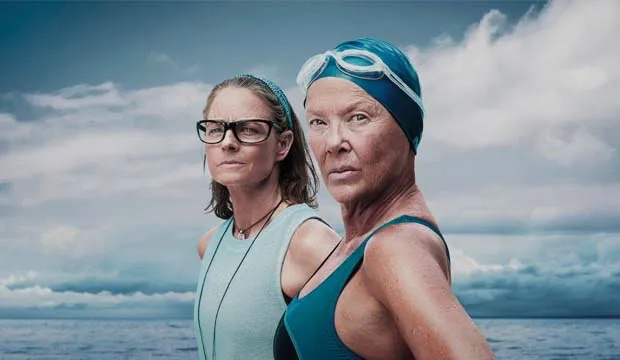
Annette Bening is perfect in her portrayal of Nyad, a determined but difficult, and sometimes abrasive character. It takes such kind of one-track stubbornness––and a whole supporting team including an expert navigator (John Bartlett, aptly played by Rhys Ifans), boat pilot, medic, jellyfish expert, shark detracting divers, and others––sailing alongside the marathon swimmer to achieve such an arduous venture.

Above all, it’s Nyad’s lifelong friend and coach Bonnie Stoll––superbly-matched casting of Jodie Foster––who supports and trains her during this grueling ordeal, albeit reluctantly at the start. Nyad might be the ultimate triumph, but it is Bonnie, the loyal friend being pushed into her own onerous hero’s journey that makes it possible, preparing the swimmer both physically and psychologically to realize her dream. Bening and Foster playing off each other is the best stroke of the movie. A moving scene towards the end shifts the focus of the motivating force, surely it requires an indomitable will, but it’s deep, genuine love that finishes the course.

As documentary filmmakers shooting their first dramatic narrative, Chin and Vasarhelyi deftly insert actual footage of Nyad’s earlier failed attempts, the first one when she was only 28, as well as her interviews and talks. Such inclusions strengthen the authenticity of the drama. It’s inspiring to see that Nyad is not afraid to look at her past failures. Ironically, it is her first failed attempt at 28 that sparks the idea to try again when she’s 60, and prods her to face the challenge head-on at 61, then tries again, and again, until she finally achieves her goal in her fifth attempt at 64. Showing such repeated efforts could make the film look redundant, but Bening and Foster’s on screen relationship captures my attention throughout.

Bening needs to be applauded for her willingness to go all out to portray Nyad in the most realistic way she could. Chin had noted in an interview that the actress spent four to eight hours a day in the water shooting the film, “and she did all the swimming.” To prepare for her role, Bening, who was well into her 60’s at the time, had to go through a year of intense training in swimming and physicality before the production. Most likely Mary Oliver had struck Bening just the same as her poetic voice had moved Nyad. In the movie, these lines from ‘The Summer Day’ were the initial motivation inspiring Nyad to take up such a Herculean challenge at 60:

“Doesn’t everything die at last, and too soon?
Tell me, what is it you plan to do
with your one wild and precious life?”

Another insertion the directors use to dramatize the seemingly monotonous swims is fantasy sequences, which are not too well received by some reviewers. Not for me. Like one lost in the desert wearing out to the brink of expiring with thirst, mirages appear in the hallucinated mind. This is a parallel situation. In the dire demand of the grueling swim in treacherous waters almost to the brink of death, disorientation could set in.

Another dramatic device are the faded flashbacks of Nyad as a young swimmer, including some hazy implications of abuse. While serving the biopic element of the feature, these flashbacks lack the significance and continuity with the present day Nyad and her goal. Tighter editing and elaboration of these scenes might serve their purpose better.

Must mention is the original score by Alexandre Desplat whose expansive repertoire include two Oscar wins (The Shape of Water, The Grand Budapest Hotel). The song selections are interesting as well, maybe only appeal to certain demographics; some of these titles must have brought back fond memories from viewers of Nyad’s generation. The opening of the film are underwater shots of Nyad swimming in the pool, and to my pleasant surprise, ‘The Sound of Silence’ comes on, reminiscence of a similar scene where a dazed Benjamin, freshly graduated from college trying to figure out his path in life. We all know where that comes from.

I’m excited to see Chin and Vasarhelyi venture out into the narrative feature genre. The fusion of dramatization with actual documentary footage is an effective transition into their new mode of storytelling. NYAD is an inspiring film not just for its subject matter but for the performance of the two lead actors which is most memorable.

~ ~ ~ Ripples

***

Books to Screen Adaptations 2023 and Beyond

Like to read the book first before watching the movie adaptation in the theatre or streaming? Here’s a new list.

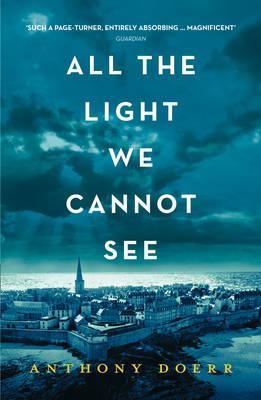
All the Light We Cannot See by Anthony Doerr

The 2015 Pulitzer Prize for Fiction winner is being developed into a Netflix mini-series. To seek authentic representation, the filmmakers embarked on a global search for a blind actor to play Marie-Laure, one of the two main characters in the historical novel set in WWII. Penn State doctoral student Aria Mia Loberti won the casting call. An outstanding academic achiever, this will be Loberti’s acting debut.

A Man Called Otto (Ove) by Fredrik Backman

The English version of the heartwarming Swedish novel-turned-movie A Man Called Ove, about a grumpy old man’s suicide attempt being disrupted by his boisterous new neighbours. The title character’s name is changed to a relatively more common name and will be played by an even more familiar name, Tom, Tom Hanks.

A Haunting in Venice (Hallowe’en Party) by Agatha Christie

The adaptation of Hercule Poirot’s 32nd mystery will be directed by once again, Kenneth Branagh, his third Poirot role, after Murder on the Orient Express and Death on the Nile. Set in post WWII Venice where the renowned detective finds himself again as an accidental sleuth in a murder mystery. An eclectic cast with Kelly Reilly (abrasive Yellowstone schemer), James Dornan (no shade), Tina Fey (no kidding), and Michelle Yeoh (for kicks?)

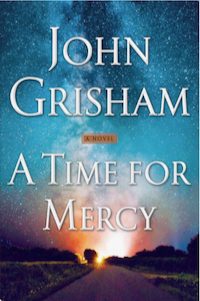
A Time for Mercy by John Grisham

A sequel to Grisham’s debut novel A Time to Kill (1989). Matthew McConaughey will reprise his role as lawyer Jake Brigance, from the 1996 movie adaptation. A Time for Mercy (2020) is Grisham’s third Brigance novel after Sycamore Row (2013). It will be adapted into an HBO series.

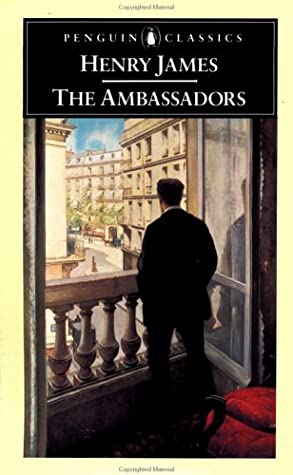
The Ambassadors by Henry James

In pre-production and to be directed by Mike Newell whose filmography include Four Weddings and a FuneralGreat Expectations, and The Guernsey Literary and Potato Peel Pie Society, among 78 titles, which means, he can do rom coms and literary adaptations. The heavy and serious Henry James just might get a makeover under the helm of Newell. I have this book on my shelf, now’s a good time to dust it off.

The Critic (Curtain Call) by Anthony Quinn

A crime thriller in a theatre setting. According to IMDb, it’s a story of ambition, blackmail and desire… a whodunnit wrapped in a Faustian pact. And the cast just makes it hard to resist: Leslie Manville, Gemma Arterton, Romola Garai, Mark Strong, Ian McKellen, Ben Barnes. Directed by Anand Tucker (Girl with a Pearl Earring

The Maid by Nita Prose 

The popular novel would make one entertaining movie. Molly Gray, a maid in a luxury hotel, is caught in a web of a murder mystery, her innocence and pure heart is no defence from the accusations and schemes of the real world. Many readers and reviewers place her in an autistic spectrum but I just see her as the female version of Sheldon Cooper (of The Big Bang Theory and Young Sheldon). Florence Pugh (Oscar nom for her role as Amy in Little Women, 2019) is on board to play Molly, a good choice. 

Disorientation by Elaine Hsieh Chou

Nobel Laureate Malala Yousafzai’s own production company, Extracurricular, is in talks to adapt Chou’s debut novel for an Apple TV+ series. That’s a most interesting combination of talents. Book is a satire, yes, LOL humour at times, about a Taiwanese American doctoral student playing literary sleuth and trying to stay afloat in the turbulent academic sea. Reminds me of Sandra Oh in The Chair.

The Nightingale by Kristin Hannah

Kristin Hannah’s worldwide bestseller about two estranged sisters during the German occupation of France in WWII will be played by real life sisters Dakota and Elle Fanning, each a star in their own right. Its release had been delayed, but might not need to wait till 2023. The latest info is late December, 2022.

__________

Upcoming Remakes:

The Color Purple by Alice Walker

Never Let Me Go by Kazuo Ishiguro

The Spy Who Came in from the Cold by John Le Carr´é

One Day by David Nicholls

‘Mrs. Harris Goes to Paris’ is a respite for any season

Like a gentle breeze under the shade of a full, oak tree to dispel the summer heat, this little gem of a movie is a fairy tale, surely pure escapism from a harsh and scorching world. Newly released on July 15, this is a delightful watch not just for the summer.

Mrs. Ada Harris (Lesley Manville) is a cleaning lady and war widow in 1957 London, scraping by counting pennies cleaning people’s homes and offering to do invisible mending in her spare time. One day, seeing a Christian Dior dress while cleaning the home of Lady Dant (Anna Chancellor) sets off an adventure of a lifetime. Mrs. Harris wants to save enough money to go to Paris and buy one for herself. Dreams are for everyone; Mrs. Harris has the will, and she’ll find the way somehow.

Adapted from Paul Gallico’s novella, director Anthony Fabian brings to the screen a fairy tale for adult viewers, and with the cooperation of Christian Dior in Paris, turns the haute couture of fashion into a down-to-earth story of the ordinary people. Mrs. Harris is as invisible as her mending, but her heart and personality stand out to be noticed and exude her vibes in gentle persuasion.

Paul Gallico (1876-1976) is a wonderful weaver of tales. The Snow Goose is the most memorable read from my growing up years. I have not read his Mrs. Harris Goes to... series, but after watching this movie, it’s on my TBR list. Not as soul stirring as The Snow Goose or dramatic as The Poseidon Adventure (1972 movie adaptation), Mrs. Harris nonetheless reaffirms kindness, beauty and hope still exist and are much needed to dispel the harshness of our times.

Lesley Manville is the driving force in this movie. The versatile actor first caught my admiration in Mike Leigh’s Another Year (2010) playing the vulnerable and lonely character Mary, for which she was nominated and had won several acting awards. Manville can also be brutal and violent, like the powerful matriarch in Let Him Go (2020), and then turn into Princess Margaret in The Crown (S5, 2022). But to be more in line with this current film is her role in Phantom Thread (2017) playing Daniel Day-Lewis’ co-dependent sister, a role for which she received an Oscar nom.

Supporting cast is strong. Isabelle Huppert (Things to Come, 2016; Gabrielle, 2005) plays the manager and gatekeeper of the Dior fashion house, Mrs. Colbert, a character that reminds me of Meryl Streep in The Devil Wears Prada (2006). In a scene towards the end of the movie, we see a different Mrs. Colbert in her humble home, stripped down, ordinary and vulnerable. A poignant moment. Other supporting roles are also effective, like Mrs. Harris’ loyal friend Vi (Ellen Thomas), the gentle and caring Archie (Jason Isaacs), and the young pair of fresh faces, Alba Baptista playing Natasha, the model with a deeper aspiration and her secret admirer André (Lucas Bravo, Emily in Paris).

What caught my attention from the start was the original soundtrack composed by Rael Jones (Suite Française, 2014). The music corresponds perfectly with the lighthearted mood, flowing by smoothly like a whimsical character. At the end as the credits roll, there’s a piece with a waltz styling. I noticed as the audience exited, what looked like a mother and her adult daughter dancing to the tune, the first time I saw such a spontaneous ripple effect in a movie theatre.

There are some down period in the middle of the film, however, the cast and the camera make up for such moments. Overall, a delightful two-hour respite from the summer heat, or any season.

~ ~ ~ Ripples

__________________

A Paris in July 2022 post, event hosted by Thyme for Tea and Readerbuzz.

Paris in July: Isabelle Huppert & Pascal Greggory superb in ‘Gabrielle’

Paris in July is a good opportunity to explore French films. I’ve watched a few in the past weeks. Here’s one that I’d like to write about, Gabrielle (2005). I found it on Kanopy, free streaming if you have a library card.

Language here makes an interesting transference. The film Gabrielle is an adaptation of a Joseph Conrad novella entitled The Return. Polish-born Conrad wrote it in English (available online here.) The end credits of the film note that the script is based on the French version Le Retour, translated by Georges Jean-Aubry. Screenplay co=written by director Patrice Chéreau and Anne-Louise Trividic. The title is changed to Gabrielle. Lastly, the literary is transposed into the visual form.

Isabelle Huppert (Things to Come, 2016)) and Pascal Greggory (La Vie en Rose, 2007) bring to the screen expert performance of a marriage in dissolution. Knotted ten years in a loveless marital relationship, the high society couple Gabrielle (Huppert) and Jean (Greggory) Hervey, a self-assured businessman and newspaper financier, keep up appearances by throwing lavish dinner parties in 1912 Paris.

They entertain no less than fifty of their friends and acquaintances every week in their mansion served by numerous maids. Interestingly, no butler or footmen. The film won Best Production Design and Best Costume Design César Awards in 2006. A visually gorgeous setting, especially at the dinner table with guests.

In ironic contrast to the aesthetic beauty and richness of interior design, Jean and Gabrielle are impoverished in their passion for each other. Ten years ago, Jean claimed a trophy wife. In his voiceover narrative, Gabrielle is “well bred and intelligent… no ordinary woman. I love her as a collector does his most prized item.”

Camera work is captivating. Director Patrice Chéreau uses mirrors around the house to capture his characters in psychological reflections. Stylistically, he adopts two visual modes on screen, interchanging colour with black and white to juxtapose present reality with memory or imaginary scenario. Interesting is that in a film with the title of the female character, the wife, the voiceover narrator and point of view is the husband’s, conveying subliminally who holds the control of the relationship. Throughout, a film exudes with realism and at times, a touch of Hitchcockian suspense. Occasionally, large written words are flashed on screen like silent movies, a whimsical stroke that well serves as comic relief.

The tipping point crashes down when Jean comes home one day to find a note left by Gabrielle saying she has left him with another man. The short note is like a bombshell to Jean, for he hasn’t noticed any issue with their marriage. His immediate concern is how this will look in front of his servants and in society? And there’s a Thursday dinner party coming up.

His devastation is short however, for in just a few hours, Gabrielle returns. On the surface, her return seems to bring back the status quo, but it only rings in the death knell of a dissipating marriage. Huppert and Greggory bring out their characters’ boiling psychological turmoil and relational conflicts to the surface expertly; the intense emotional transactions in their dialogues are rare in today’s movies. These lines follow Jean’s questioning of his wife:

Gabrielle: When I decided to go to him, I wrote the note.

Jean: So you saw a lot of him? Then this letter is not the worst of it?

Gabrielle: The worst is my coming back.

Jean, the smug and successful businessman assures himself that ‘the law is on my side.’ It’s only Gabrielle who suffers the more damage if she chooses to leave. But of course, Gabrielle cares more for finding true love than fame or fortune. Anna Karenina comes to mind. As well, the power imbalance in their relationship reminds me of the tragic heroine Isabel Archer in Henry James’s The Portrait of a Lady.

The very literary rendition of the film makes quotable quotes out of many verbal exchanges and the voiceover narrative throughout the film. Why is appearance the main concern for Jean to start with? Because the society people coming to their home every week are “men and women who fear emotion and failure more than fire, war, or fatal disease.”  

The twist at the final scene see a change come to Jean when Gabrielle, with a passive-aggressive undercurrent, offers her physical body unreservedly to Jean only to let him see intimacy doesn’t mean love, and without which, all is meaningless. He breaks away from her suddenly, staggers down the stairs and stumbles out of the house like a man gone mad. At the risk of leaving any spoilers, for this is after all a classic written in the late 19th century, I’m sure this can be excused: the last words flashed on the screen are the exact three words that end Conrad’s story.

~ ~ ~ Ripples

***

Paris in July 2022 is co-hosted by Tamara at Thyme for Tea and Deb of Readerbuzz

______________

Other French films reviewed on Ripple Effects:

Faces Places dir. by Agnes Varda

Coco Before Chanel dir. by Anne Fontaine

Things to Come dir. by Mia Hansen-Løve

Cleo from 5 to 7 dir. by Agnes Varda

Diary of a Country Priest dir. by Robert Bresson

Clouds of Sils Maria dir. by Olivier Assayas

Hamaguchi takes ‘Drive My Car’ to the highway of life

Among the ten Best Picture Oscar nominees this year, one is Japan’s official entry for Best International Feature Film. That Drive My Car is nominated also in the Best Picture category as well as in Directing and Adapted Screenplay is a major boost for director Ryûsuke Hamaguchi. The most recent precedent would be the South Korean feature Parasite in 2020.

The following is my review of Drive My Car, a screen adaptation based on Haruki Murakami’s short story. I thank Asian American Press for allowing me to repost it in full here on Ripple Effects.

___________

Ever since his five-hour epic Happy Hour garnered accolades in 2015, Japanese director Ryûsuke Hamaguchi has continued to fascinate juries in the festival circuit. During a pandemic year, he made two features, both screened to high acclaims. Wheel of Fortune and Fantasy won the 2021 Silver Berlin Bear Jury Prize and Drive My Car swept Cannes, winning Best Screenplay, the FIPRESCI Prize and the Prize of the Ecumenical Jury.

Hidetoshi Nishijima and Toko Miura in “Drive My Car”

Drive My Car is Hamaguchi’s creative and imaginative extension of Haruki Murakami’s minimal short story included in his collection Men Without Women. Two individuals unlikely to meet in ordinary circumstances, bare their soul to each other, one a stage actor and director Kafuku (Hidetoshi Nishijima), the other, a young female driver Misaki (Tôko Miura). The conversations that take place in the car prompt them to confront their own past.

The film opens with a long backstory. Kafuku has a loving and intimate relationship with his wife Oto (Reika Kirishima), a TV writer. Her story ideas come while the couple is making love. Both being in the arts, they support each other in an intimate way until one day Kafuku comes home unexpectedly and finds Oto in bed with another man. Kafuku walks back out quietly. The next day, Oto suggests they talk that night when he returns from work. Deeply hurt but fear for the collapse of their marriage, he delays coming home. When he finally gets home late that night he finds Oto has collapsed from a cerebral hemorrhage. She dies later without regaining consciousness. 

This prologue takes 40 minutes and that’s when the introductory credits appear on screen. Hamaguchi will take another two hours and more to tell the rest of his story which begins two years after Oto’s death. Despite the three-hour duration, the film captivates with thought provoking parallels between art and life and reveals the characters’ existential anguish with a quiet poignancy. 

Kafuku loves to drive his fire red Saab 900. He practices his lines while driving by interacting with dialogues recorded by his late wife Oto. As this main section of the movie begins, Kafuku is driving to Hiroshima to direct Anthon Chekhov’s Uncle Vanya at a theatre festival. However, upon arrival, he is disappointed to learn that due to insurance stipulations, he is not allowed to drive but the festival has provided him with a driver to drive his car. She is twenty-three year old Misaki (Toko Miura). 

The audition soon takes place. Kafuku has chosen actors from various Asian countries who deliver their lines in their native language including Korean, Mandarin, Japanese, Tagalog, and Korean sign language used in a most poignant way by a deaf actress. With such a cast, this performance of Uncle Vanya will be a powerful display of shared humanity.

Coming to the audition is Takatsuki (Masaki Okada). Kafuku recognizes him right away as the man he had seen making love to his wife in his home. To Takatsuki’s surprise, Kafuku casts him in the lead role. The two start to have talks with each other outside of the rehearsal, the subject they share: Oto.  

The parallel between the lines in Uncle Vanya Kafuku practices in the car and his real-life predicament is startling, and poignantly so. If he had returned home earlier that fateful night he might have been able to save Oto. Seized with guilt and grief, he recites the lines, ‘I am forty-seven years old. I may live to sixty; I still have thirteen years before me; an eternity! How shall I be able to endure life for thirteen years? What shall I do? How can I fill them? … If only I could live the rest of my life in some new way!’

A play within a film and lines corresponding to the real-life situation of the character is an intriguing way to tell a story. The mirroring effect can be emotionally gripping. Olivier Assayas’s Clouds of Sils Maria (2014) comes to mind. As Maria Enders (Juliette Binoche) practices the lines of the play she’s going to perform with the help of her assistant Valentine (Kristen Stewart), she is actually describing her own predicament. 

Reticent and appearing nonchalant, driver Misaki has a scarred childhood. Hearing the lines spoken in the car and as Kafuku talks about his guilt and loss, she too opens up. Two characters with a shattered past is thrown into each other’s internal turmoil, thus begins the healing of wounds and a step towards recovery. The aerial shot of the red Saab smoothly moving on the highway could well be a metaphor for the tranquility and freedom both occupants are seeking desperately.

A twist in the plot makes Takatsuki unable to perform in the play. Kafuku takes up the role as Vanya, a miserable man despondent with life. In a cathartic, final scene of the play, the lines are delivered in silence as the deaf actress playing Sonya encourages Vanya with her expressive sign language. The audience in the theatre, close up on Misaki, read the subtitles above the stage: ‘We must live our lives. Yes, we shall live, Uncle Vanya. We’ll patiently endure the trials that fate sends our way…’ As she finishes her speech pointing to eternal rest when they see God, the stage lights dim, with an oil lamp offering a tiny flicker of flame.

The last few minutes of the epilogue wraps the feature with a gratifying end.

____________

~ ~ ~ 1/2 Ripples