The Sense of an Ending the Movie

When I first knew that The Sense of an Ending was being adapted into a movie, I thought whoever that took up the project had a tall order. That it’s a Booker Prize winner automatically adds pressure and expectations, but the more important consideration is the nature of the book, introspection saturated with internal dialogues.

The novel is powerful and intense in that, in merely 150 pages, Barnes has dismantled the scaffold of self-knowledge in his protagonist by challenging the accuracy of his memories. The eerie effect is, that can happen to us too. How accurate are our memories of ourselves, of others, of events in our life? It’s crucial because what we remember about them build up the person who we think we are today.

So, who had taken up this difficult task to helm the movie? It’s Ritesh Batra, the Mumbai born, Indian director who brought us the interesting film The Lunchbox (2013). Batra has an excellent cast to work with, that should have made his job a bit easier. But one can see he follow the script pretty closely and that’s what made me wish there could be more stylistic touch. Similarly, the screenplay by Nick Payne could have been spiced up a bit. However, its being overall loyal to Barnes’s novel, except a few addons, may have cleared up some ambiguity for the reader.
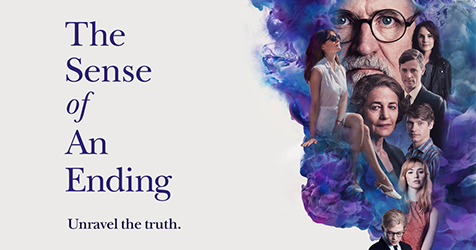
The Sense of an Ending

In his old age, Tony Webster (Jim Broadbent) received a registered letter notifying him of a small inheritance from someone he had known way back in his university days. The money isn’t the important thing, it’s the diary that is supposed to go with it that opens up a door to his past. And so begins the story. Tony has to rethink everything about himself (younger played by Billy Howle), his first love Veronica Ford (younger played by Freya Mavor), Veronica’s family, in particular his mother Sarah (Emily Mortimer), and his school friends Adrian Finn (Joe Alwyn, who plays Billy Lyn in Ang Lee’s 2016 movie).

There are hits and misses in this adaptation. Broadbent delivers a solid performance as the clueless Tony Webster, a man who has lived all his life lacking the lucidity of seeing himself and others in the proper light, or is it selective memory? The little bit of addon is good, letting Tony set up an old camera shop to get him out of bed everyday. It’s also a good link because when he first met Veronica, she was toying with one, and he had received one from her as a gift as well. Herein lies the linkage of the object with the distant past.

Tony has his ex-wife Margaret (Harriet Walters) to thank, for she humours him by meeting him time and again just to listen. She may be doubting what Tony is telling her, but she is patient and wait for him to slowly rediscover himself. That’s what a good listener does, isn’t it, she helps you question yourself.

Adding the plotline of Tony’s daughter Susie (Michelle Dockery) giving birth to a baby is effective. Those who miss Downton Abbey would be glad to see Mary Crawley again, in a new role. But the real effect here is that her giving birth to a newborn son leads me to appreciate the title of the book, something that I did not quite get when I was reading. I wondered about the relevance of the book title when I was reading it. The movie’s last scene clears this up for me. After all these years of misinformed self-knowledge, Tony finally comes to the end of a chapter in his old age, still not too late. With the renewed relationship with his ex Margaret, and a new grandchild, Tony is ready to call an end to a clueless life and start anew. Once more, with feeling.

The weakest link I feel is with the elderly Veronica character played by Charlotte Rampling. It’s a missed opportunity for the director to draw out more from this veteran actor. Unlike in the book, which depicts an absolutely frustated Veronica, possibly traumatized by what had happened to her in life, finding Tony not understanding a bit about the past. “You just don’t get it, do you?” Exasperated, she has said this several times in the book, if my memory serves me correctly.

So here in the movie, the most crucial scenes ought to be Tony’s meeting with the older Veronica for the first time after all those decades and Veronica seeing Tony still oblivious to what had happened. But no, we see an utterly aloof Veronica, too calm for those tense cinematic moments. “You just don’t get it, do you?” has not been said even once, if my memory serves me correctly.

And the most crucial line in the pub when Tony finds out the truth, it ought to be the climax but the scene is so understated that any built up has been eroded. Now he gets it, and what reaction does he show at the moment and afterwards? I feel it’s the director’s job to augment the moment, and let it ripple into the next sequences. I’m sure the cast can easily oblige. Just for the sake of eliciting more emotional engagement from the viewers. I remember how sensational it felt when I came to that part in the book.

Overall, it’s a pleasure watching these veteran actors in the same production. Together with the above-mentioned cast members, there are also Matthew Goode, the history teacher, but not in a scene with Michelle Docerty, and Merchant Ivory star James Wilby playing the small role of Veronica’s father.

That it is shot on location in London, especially watching Tony meet Veronica again on “the wobbly bridge” leading to Tate Modern is particularly poignant in light of recent events. Overall, a watchable adaptation to go with the book.

~ ~ ~ Ripples

***

Related Posts on Ripple Effects:
The Sense of an Ending Book Review

The Lunchbox Movie Review

New Announcements of Books to Screen

Some exciting announcements of upcoming adaptations:

howards-end-by-e-m-forsterHowards End by E. M. Forster

E. M. Forster’s 1910 novel Howards End is to be adapted into a four-part TV miniseries produced by BBC and Starz, to be helmed by the Oscar nominated Manchester by the Sea director Kenneth Lonergan. Hayley Atwell plays Margaret Schlegel, Matthew Macfayden takes the role of Henry Wilcox, and Tracey Ullman is Aunt Juley Mund. I just can’t help but compare this new cast to that of the, shall I say, definitive 1992 Merchant Ivory production with Emma Thompson, Helena Bonham Carter, Anthony Hopkins and Vanessa Redgrave. Inimitable. Yet, I’m glad to hear of a rebirth of this brilliant E. M. Forster novel.

.

guernsey-literary-and-potato-peel-pie-societyThe Guernsey Literary and Potato Peel Pie Society by Anne Barrows and Maryanne Shaffer
At long last, the best-selling novel (2009) is finally adapted for the big screen, renamed Guernsey. Phew! While its popularity has subsided by now, I hope the movie will revive it, for it’s a delightful read and the characters are resilient residents on German occupied Guernsey Island during WWII. Written as a series of letters between a London writer Juliet Ashton and her friend and publisher Sydney Stark and later, with the charming Guernsey folks, the book exalts the power of reading, not potato peeling. How do you turn epistles into a movie? We’ll have to see. Downton Abbey‘s Lily James will play Juliet, after first Kate Winslet then Rosamund Pike dropped out. Hope this will go to completion. The director is Mike Newell, known for Great Expectations (2012), Mona Lisa Smile (2003), and perhaps the most memorable, Four Weddings and a Funeral (1994).

.

the-child-in-timeThe Child in Time by Ian McEwan

At last something to look forward to after Downton. Ian McEwan’s Whitbread winning novel (1987) about the perpetual trauma of a lost child will be adapted into a 90 min. TV drama co-produced by BBC and Masterpiece. Benedict Cumberbatch to star. With the Sherlock series going down an erratic rather than rational path, I hope this one is a more grounded outlet for Benedict’s superb acting skills, like his Parade’s End (2013). This is his second time in a McEwan novel. Back in 2007, he played a supporting role in the Oscar nominated Atonement, relatively unknown, stressing on the ‘relatively’. And hats off to actors who can navigate freely between the big and small screen platforms.


.

51p921wTKtL._SX308_BO1,204,203,200_ (1).jpg

The Sea Change by Elizabeth Jane Howard

Glad to learn that Kristin Scott Thomas (I’ve Loved You So Long, The English Patient) is stepping out from her long acting career into the director’s chair, and acting too in this adaptation of English author Elizabeth Jane Howard’s novel. While I haven’t read any of Howard’s works, I’d seen the screenwriter Rebecca Lenkiewicz’s, and that’s her screenplay for the Oscar winning Polish film Ida (2013). I highly anticipate Lenkiewicz’s new work. Glad she’s collaborating with Scott Thomas in her directorial debut. Mark Strong is said to be in talks to join the project. Of course, my dream cast would be Colin Firth with Kristin Scott Thomas.


.

crazy-rich-asians

Crazy Rich Asians by Kevin Kwan

According to director Jon Chu (Now You See Me 2), this will be “the first all-Asian cast feature from a Hollywood studio in a long, long time.” Umm… since Joy Luck Club (1993) that is. A risk or a good opportunity? Constance Wu (TV’s “Fresh Off the Boat”) is on board to play a major role. If you’ve not read the book, rest assure that with a title like this, it has got to be a satire, and not a get-rich-quick manual. Not that I’m crazy, nor rich, but reading Kwan’s imaginary yet true-to-life characters is an extravagantly wild ride. His astute and bold satire of modern day’s opulent Singaporean families (his own cultural background) is what Jane Austen would have loved to poke fun of if she found herself in a 21st century rich Asian home. But of course, just like the writing of our dear Jane of yesteryears, the heroine (Rachel in Kwan’s book) is your everyday middle class, highly educated yet modest gal growing up in (immigrant) America, finding (surprise!) that her boyfriend actually is Mr. Darcy incognito when she travels back with him to his family home in Singapore for the wedding of his best friend. I highly anticipate this one, but with great trepidations. They better make this work, or it could easily be a disaster of ethnic proportions.

***

Related Post on Ripple Effects:

Howard’s End by E. M. Forster
Ida’s Choice: Thoughts on Pawlikowski’s Ida
I’ve Loved You So Long movie review
The Guernsey Literary and Potato Peel Pie Society Book Review

Silence the Movie Arrives in the Most Unwelcome Time


Why is La La Land being embraced so readily and Silence shunned? Evidence from box office sales and nominations during this Awards Season clearly show the difference between the two. Just now, the Oscar Nominations are in. La La Land: 14  Silence: 1

Allow me to speculate.

One in glamorous primary colours, the other shrouded in misty shades of gloom. One a fantasy, romance in song and dance, the other realism of suffering, persecution, death. One is layback, relaxing entertainment, the other is 2.5 hours of intense engagement. One charms, the other disturbs. When offered at the end of a tumultuous year, and as we step into a new one when hopes and fears are renewed, the choice is easy. La La Land is an amiable feature (although I won’t get into the overrated debate here), but Silence sure doesn’t deserve the disregard it’s getting.

It’s just that Silence arrives in the most unwelcome time. But then again, there’s no suitable time for a feature like it. Isn’t it revelatory and even prophetic that this film, probably director Martin Scorsese’s most important in his oeuvre, seems to be a total outcast, a lost cause? Exactly, that’s just as it would have ended up.

It would be ironic, wouldn’t it, for a film about spirituality, other-worldly and intangible values, and challenges of faith in the face of persecution to be celebrated by this power and fame-obsessed, material world? For it to receive praise and honor would be the ultimate irony indeed.

In a society which aims at being great, where ratings, numbers, wealth and social media status define success, where loudness rules and silence shunned, it is only expected that a film entitled “Silence” will not be cheered on. It runs against the grains of popularism, for it’s a film about failure.

I have posted a book review of Silence back in December, 2016. In it is a historical note. To summarize, Christianity was introduced to Japan by Francis Xavier in 1549. It was well received then, and by 1600, there were 300,000 Christians in Japan. But the Edo Period beginning in 1603 changed everything. Ruler Tokugawa Ieyasu ordered expulsion of foreign influences and Christianity had to survive underground. Torture was used to drive Christians to disavow their faith. Stepping on the fumie, a brass plague engraved with a Christ figure, is the convenient way to show one’s apostasy, leading to instant release. During this time, the Catholic Church received the news that the stalwart leader of the Jesuits mission in Japan, Father Christovao Ferreira had disavowed his faith and became an apostate. He had since lost contact with the Church.

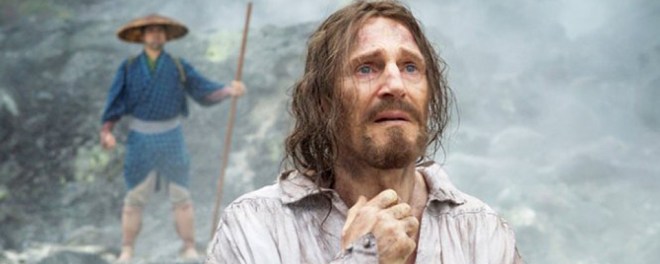
The film doesn’t need many words to explain these historical events, for its visuals are self-explanatory. It starts off with father Ferreira’s apostasy, apparently under duress as he sees his flock being tortured to death. Liam Neeson’s gaunt and horrified expressions speak all. That’s the power of cinema.

ln-in-silence

Back in Portugal, two young priests, Father Sebastian Rodrigues (Andrew Garfield) and Father Garupe (Adam Driver) appeal to their superior Father Valignano (Ciarán Hinds) to allow them to go to Japan to look for Ferreira and to seek the truth of the situation. Thus begins the story.

I’ve long learned not to judge a movie adaptation according to how loyal it is to the book, for the two are different art forms and a direct transposition may not be possible. But here is one exception. I’m glad that Scorsese’s Silence, co-written with screenwriter Jay Cock (Gangs of New York, 2002), is surprisingly faithful to Shusaku Endo’s historical novel, and that ‘faithfulness’ is both desirable and most admirable here.

By following Endo’s storyline to the dot, extracting pertinent text from the book as dialogues and voiceover, and spending time to cover the all important Epilogue, the director shows his desire to honour the author’s work, a wish that had long hidden in his heart. Indeed, it has been twenty-five years since Scorsese first read Endo’s masterpiece and was so deeply moved that he knew he needed to film it one day.

Another way we see Scorsese’s regard for Endo is his restraint when portraying the tortures of Japanese Christians. What we have, surely, is visual, graphic scenes which, while reading the book are left to the author’s descriptions and our imagination, but on screen are left to the director’s discretion. Kudos to Scorsese, those scenes are done with much restraints. This was a welcome surprise to me. I went into the theatre braced for his treatment like the ending scene of Taxi Driver (1976), or the bloody mayhem in Gangs of New York (2002). I need not have worried. But what I was hit with I had not expected.

Scorsese can definitely unleash more gore in Silence. But he chose not to. The scenes in the film are done with the utmost respect and dignity for the persecuted. Here’s a confession, I’m not one who easily succumbs to emotions, never need a Kleenex while watching a movie in the theatre. Here in Silence, as I watched the three Japanese Christians hanging on the makeshift crosses at the seashore swallowed up by the rising waves, tears slowly streamed down my face. What more, the guy sitting behind me was sniffing away, uncontrollably.


The main actors are powerful in taking hold of our emotions. Liam Neeson’s painful expressions both at the beginning and the end are very moving. Adam Driver lost 50 pounds for his role. His skeletal form is almost painful to watch. The Japanese actor Yôsuke Kubozuka is effective as Kichijiro, the ‘Judas character’.

The emotion of the whole film, however, is driven by two actors: Andrew Garfield as young father Rodrigues and the calculated, ruthless inquisitor Inoue played by Issei Ogata. The two form a stark foil: the hot-blooded idealist slaughtered slowly by the cold, harsh ruler. A tidbit for those who had watched Taiwanese director Edward Yang’s Yi Yi (2000), Ogata is Mr. Ota in there.

Garfield is effective in leading us to feel for Father Rodrigues’ sad and tragic journey. Martyrdom is the path to glory, and an easy way out. But no, Rodrigues isn’t given that luxury. Rather, he is faced with a most precarious test, tearing his soul and conscience, that is to apostatize or see his flock die by torture. It is unfortunate that the film has not been well received. Garfield deserves a nomination for Silence.

While it may be about the hidden church that runs underground to avoid annihilation, Silence is more about one man’s struggle with faith and doubt, and ultimately, making his choice and living with it for the rest of his life.

Here’s the rub. In this ‘either or’ society we live in, Rodrigues’s predicament is particularly distressing for us. It is often convenient and tempting to oversimplify issues and splitting them into clean-cut opposing sides, either B or W, L or R, D or R. In Silence, we’re confronted with yet another dichotomy: Devout or Apostate. What Scorsese reveals to us with his last scene is that, the line separating the two is blurry and permeable.

silence-and-beauty-free-chapter-mako-fujimura-1

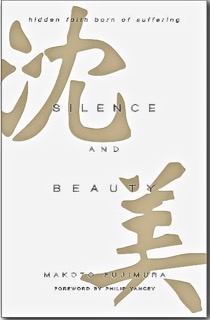
In his compendium book to the movie, Silence and Beauty: Hidden Faith Born of Suffering, Japanese-American artist Makoto Fujimura, who is special adviser to the film, discusses the necessary existence of a ‘hidden’ identity to those practising Christianity in that historical era in Japan. For 250 years during the anti-foreign, ironclad Shogunate rule of the Edo Period (1603-1868), the only way to survive as Christians was to become hidden, Kakure Kirishitans as they were called in Japan. Stepping on the fumie, as the officials say, could well be only a formality, for it likely did not represent the heart. It is unfortunate that the persecuted Kakure Kirishitans had to succumb to this double life. As outsiders looking in, should we be so easy to judge them? Silence challenged us with that question. Unlike the bold declaration of Western Christianity, the Kakure Kirishitans held on to an inner faith that on the outside was wrapped with weakness and failure, total submission to the ruling authority. A painful, paradoxical existence.

The crucial, final scene in the film, which is the Epilogue of Endo’s book, holds the key to the question. I appreciate Scorsese’s closure. That is also how Fujimura explains Endo’s viewpoint. No spoiler here. Cinematically, the production is an artistic and powerful work worthy of Endo’s masterpiece. Scorsese’s quarter-century quest had not been in vain. Being recognized or not in the Awards Ceremonies just may not be as important an issue.

Of course, there’s always the bottom line. After investing so much resources, time and talents in the production, it is only natural to wish for a positive return. Could the voice that speaks to Rodrigues at that most crucial fumie moment speaks also to Scorsese as well regarding his film Silence?

“Trample! Trample! It was to be trampled on by men that I was born into this world…”


~ ~ ~ ~ Ripples


***

CLICK HERE to read my review of the book Silence by Shusaku Endo

Lion: From Personal Memoir to the Big Screen

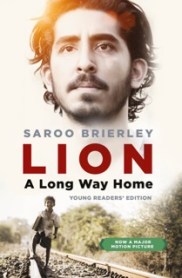
The memoir A Long Way Home by Saroo Brierley, first published in 2014, has officially changed its name to Lion. This may well be a metaphor for its author. Only a change in the name, but everything inside remains intact. From a child lost on the streets in Calcutta, India, to a man grown up in Hobart, Tasmania, Saroo remains who he is. He writes in his memoir: “I now have two families, not two identities. I am Saroo Brierley.”

lion-movie-tie-in-edition

Lion (previously titled A Long Way Home) the memoir by Saroo Brierley

5 year-old Saroo was lost in a Calcutta (now Kolkata) train station, almost a thousand miles away from his home in a small village, Ganesh Talai. With no language (a different dialect), not clear of the name of the place he calls home (mispronounced by him as “Ginestlay”) or even his own last name, Saroo is utterly alone and helpless. Living dangerously on the streets of Calcutta for some weeks, he was picked up and sent to a youth detention centre, which was only a tiny bit safer from the streets. Subsequently Saroo was sent to an orphanage, Nava Jeevan (“new life”), run by the benevolent Mrs. Sood. There she arranged for his adoption by a loving Australian couple, John and Sue Brierley.

That could have been the happy ending of a tumultuous experience for Saroo, as he grew up in calm and beautiful Hobart, Tasmania, well adjusted and dearly loved by his adoptive parents. But for twenty-five years, Saroo has not forgotten his first home. As he grew, he was all the more tormented by the memory of his birth mother, and the brothers and sisters who had shared the first five years of his life. An important message he has always wanted to convey to them is that he’s ok, and that they need not worry about him. For years he has been haunted by the thoughts that his mother and older brother Guddu must have been devastated with losing him without a trace, as it was Guddu who had left him alone on a bench at the train station near his home, telling him to stay put as Saroo was too sleepy to tag along on that fateful night.

With the help of Google Earth twenty years later, and vague memories of the physical features of his home surrounding, Saroo finally located his village and flew back to India to search for his mother. They reunited a few doors down from his old home, as his mother had persisted all these years to not move away but stay there to wait for him, hoping against hope that her son would come back to her. The photo inserts in the book add even more poignancy as we see the Brierleys meet Saroo’s birth mother Kamla in India.

Utterly moving, authentic, genuine and real. While Slumdog Millionaire may be entertaining and eye-opening for those of us who are not familiar with Indian’s millions of children living on the streets, Lion is a true portrayal of one lost child, determined to find his way back home twenty-five years later across the oceans.

**

Lion the Movie

Is the movie any good? For those who think it’s always the book that’s better, here’s my answer: Yes, very good. Premiered at TIFF16 last September, Lion has since garnered awards and nominations, including young Sunny Pawar, his debut performance as an actor. Kudos to all those involved in transporting this story from a personal memoir onto the big screen for international viewers. If not for the movie, even though it has been reported in India and Australia, I for one in North America would not have known about this real life miracle.

So, hats off to Australian director Garth Davis, screenwriter, the acclaimed Australian  poet/writer Luke Davies, and the cast, Sunny Pawar as young Saroo, Dev Patel (Slumdog Millionaire, 2008) as the adult, Nicole Kidman and David Wenham the adoptive parents, Rooney Mara the girlfriend, and the cast of Saroo’s Indian family. They have delivered an authentic and moving real-life story.

Basically structured into three parts, the first focuses on five year-old Saroo, living in poverty but is loved by his mother and siblings. One night he pleads with his older brother Guddu to go with him to his night work, salvaging garbage left on trains. After reaching the closest station from his home village, Saroo is too tired, so he stays behind sleeping on a bench to wait for Guddu. He wakes up in the middle of the night to find himself all alone. He gets on one of the parked train to look for Guddu but falls asleep again in there. He wakes to his horror as he finds he is being transported in the speeding train further and further away from his home.

Cinematographer Greig Fraser (Zero Dark Thirty, 2012; Bright Star, 2009) uses his camera effectively showing some haunting images, a horrified 5 year-old, alone on a train speeding to the unknown. Throughout the film as well, he tells the story poignantly with his camera. Scores composed by Volker Bertelmann and Dustin O’Halloran add power in eliciting emotions, taking us closely with Saroo on his incredulous life journey.

Second part we see Saroo grown up in Australia, having a good relationship with his adopting parents but troubled nonetheless by his past. The frustration of having only vague memories of the physical features of the train station near his home makes it an impossible task to search for an unknown town in the vast land of India. Thanks to Google Earth and his unyielding perseverance, the adult Saroo was rewarded with a dream come true.

While the physical locales might be distant and vague, memories of his childhood experiences are lucid and close. In the second part, the director and screenwriter have deftly inserted Saroo’s memories of his childhood days in India, enriching the screen story of his intimate relationships with his family. These inclusions add to the texture and are placed aptly to enhance the continuity of the child and the man. Very effective.

I welcome the quiet and slower pace in Part Two, and appreciate Patel’s portrayal of inner turmoils. Kidman has done an amiable job as the adoptive mother trying to hold the family together, with two Indian boys, now grown men, both deeply troubled by their past in different ways. If Part One is about the outward dangers of a lost child, Part Two illustrates the internal turmoils one still wages into adulthood.

Part three is that triumphant and exhilarating reunion. How we want to see a happy ending by then. Although we know that is forthcoming, it is still exciting and gratifying to embrace the uplifting end. Lion is a story well told cinematically, and worth every minute of a viewer’s attention. Do wait till the very end before you leave the theatre, the photos at the closing credits make a beautiful wrap. And why the title Lion? That’s for you to find out.

~ ~ ~ ~ Ripples 

for both Book and Movie

***

Related Reviews on Ripple Effects:

Slumdog Millionaire

The Best Exotic Marigold Hotel

The Second Best Exotic Marigold Hotel

The Lunchbox

Books before Films 2017

The first movie I watched in 2017 is Alfred Hitchcock’s Vertigo. This time around, I noticed that it was based on a book (1954 French crime novel by Boileau & Narcejac). Just reinforced a fact that’s so interesting, and mind-bloggling for me, that a major portion of movies are adapted from books and printed sources. Not that I mind at all.

Here are some more for 2017 and beyond, on big and small screens. Some have set dates of release, some still in development. No harm reading ahead (as if you need more to stack higher that TBR pile), or rereading.

***

a-man-called-oveA Man Called Ove by Fredrik Backman

Grumpy old man, Swedish style. Through Ove, writer Backman shows us not so much about getting old but becoming human. Never too late to change. A thoughtful and poignant story as we follow grumpy Ove, the strict enforcer of by-laws for his condo association. Backman is clever in leading us to discover slowly why Ove behaves as he does. For me as a reader, it’s a lesson on empathy and understanding. The film adaptation is Sweden’s official entry to the coming Oscars, now one of nine remaining in the Best Foreign Language Film category. Nominations announcement on Jan. 24, 2017. (Update: A Man Called Ove is now an Oscar nominee for Best Foreign Language Film.)


b-bBeauty and the Beast

Yes, from a book. La Belle et la Bête is the fairy tale written by French novelist Gabrielle-Suzanne Barbot de Villeneuve, published in 1740. Classics, by definition, appeal despite the passage of time, in this case, a few centuries. This newest adaptation, which I highly anticipate, has a cast that I’m eager to see in a musical: Dan Stevens (Beast), Emma Watson (Belle), Ewan McGregor (Lumiere), Emma Thompson (Mrs. Potts), Ian McKellen (Cogsworth), Kevin Klein (Maurice)… Can they sing?To be released in March, 2017.


the-children-act

The Children Act by Ian McEwan

Richard Eyre (Notes on a Scandal, 2006) to direct Emma Thompson playing the role of Judge Fiona Maye who has to rule on a case in which a 17 year-old leukaemia patient refuses potentially life-saving blood transfusion as it’s against his religious belief. And as life would have it, Maye has her own marital issues to deal with at this trying point of her life. McEwan’s 2014 novel is on my TBR pile, and I look forward to Thompson’s major role in years. Film now in development.


handmaids-taleThe Handmaid’s Tale by Margaret Atwood

Atwood’s renowned story of a dystopia ruled by theocratic dictatorship will be adapted into a 10 episodes TV series. Interesting concept from book to longer TV programming, which would definitely be quite different from its previous adaptation in 1990, a 109 min. movie with screenplay by Harold Pinter and cast of Natasha Richardson, Faye Dunaway, Elizabeth McGovern, Robert Duvall. This time, a new generation of actors and a very different socio-political milieu. Will it be even more relevant?


lion-1Lion by Saroo Brierley  (Memoir originally titled A Long Way Home)

Now showing in theatres. Never mind Slumdog Millionaire, this is for real and utterly moving, with the same Dev Patel. At age 5, Saroo was lost in a Calcutter train station almost a thousand miles from his home village. Alone and drifting on the streets, he was picked up and sent to an orphanage where an Australian couple later adopted him. Twenty-five years in Tasmania had not diminished his desire to see his mother’s face again. Thanks to Google Earth, he finally found his way home. I’ve just seen the film and is now reading the book. A must-see.


nightingaleThe Nightingale by Kristin Hannah

Goodreads Choice Awards Best Historical Fiction 2015, Hannah’s WWII novel lends itself to ready cinematic rendition. Game of Thrones director Michelle MacLaren to helm the project. MacLaren has been noted to be able to tell stories that are ‘epic and intimate’. So this may just fit her really well. Two sisters’ coming of age experience during the Nazi occupation in France, with Ann Peacock (Narnia, 2005, Nights in Rodanthe, 2008) writing the screenplay. The book has sold more than 2 million copies in the U.S. and been published in 39 languages. The cast still to be determined. Your choice?


zookeepers-wifeThe Zookeeper’s Wife by Diane Ackerman

This is a worthy, true story to be made into film. Jan and Antonina Zabinski were keepers of the reputable Warsaw Zoo. During the Holocaust, their premises is the hiding place for hundreds of Jews. Antonina did the day-to-day chores of protecting them in the cages, feeding them and keeping their spirits up. The parallel and irony of human and beasts are obvious. Acclaimed nature writer Diane Ackerman drew from Antonina’s diary to write her account of a heroic rescue mission. Acclaimed New Zealand director Niki Caro (McFarland, 2015, North Country, 2005) helms. Screenplay by Angela Workerman, a scribe to note. Jessica Chastain and Daniel Brühl play the Zabinski couple. Trailer is out and looks good. To be released in March, 2017.


***


Arrival: From Novella to Film

The following discussion is relatively spoiler free. To talk about the novella and the film without giving out the most crucial piece of information is like writing with both hands tied at my back, and trying to hold a pen with my mouth to scribble down words. A difficult task. But it’s all worth it, as that’s the main thrust of the story: to communicate takes effort and hard work.

After watching the movie, spellbound for two hours, I left the theatre knowing  I must get hold of the story to read. I found it here. But, I most likely will seek out Ted Chiang’s other sci-fi fiction to explore more, despite not being a regular reader of the genre. His writing just grabs me with its insight and sensitivity.

Novella: “Story of Your Life”

The source material of the movie Arrival is Ted Chiang’s “Story of Your Life”, winner of the Nebula Award in 2000.  A host of aliens had touched down in numerous spots in different countries on Planet Earth; in the U.S. alone there are nine. Their intention does not appear to be conquest. With multiple tentacles that look somewhat like an octopus, they are hence called heptapods by their cautious human observers. In order to understand their purpose, the U.S. Government sends teams of physicists and  linguists to establish communication with the foreign arrivals. They do this via the aliens’ transparent, face-to-face meeting devices, again, nicknamed by humans “the looking glass”. The large, two way glass separates the two living species, but joining them is the desire to communicate peacefully using each other’s language.

An ideal case Chiang has depicted. One, that the aliens come in peace; two, that humans respond with peaceful means all for the purpose of understanding and communication. A much needed case study for us Earthlings today. While they have set up military base surrounding the alien spacecraft in the open field to stand guard, the commander Colonel Weber leaves the task of communicating with the foreign arrivals to linguist Dr. Louise Banks and physicist Dr. Gary Donnelly.

Running parallel to this major plot line we see a more intimate story of human interactions, Louise and her daughter. Chiang’s writing is emotionally subtle and sensitive as he juxtaposes different episodes to depict the bond between Louise and her daughter through the stages of her life, as infant, child, teenager and later adult. Every stage we read some realistic situations. The human mother-child relationship is not without conflicts, but all interwoven with the bond of love. That’s the whole package of motherhood, the joys, the risks, the pains.

The language the aliens use to communicate with humans looks like a system of semagrams, each semantic symbol referring to a concept. It doesn’t appear to have a phonetic association, i.e., can’t be read out audibly, but is visually transmitted. Here’s Chiang’s eloquent description through Louise’s words:

“If I wasn’t trying to decipher it, the writing looked like fanciful praying mantids drawn in a cursive style, all clinging to each other to form an Escheresque lattice, each slightly different in its stance.”

I just love this idea: “An Escheresque lattice”. Fascinating.

MOVIE: ARRIVAL

Arrival.jpg

A movie will be the best means to depict such kind of a language system. But then again, the movie Arrival is much more than illustrations of the story. In this case, Arrival is one of the most apt transference of art forms, from literary to cinematic that I’ve seen.

Arrival the film has magically lifted the story out of the page. It has transferred the imaginary onto a visual plane in an aesthetic and inspiring way. We see the alien spacecraft suspended just slightly above ground in the open field like a vertical Hindenburg, or a stylistic installation of an objet d’art balancing in midair.

Canadian director Denis Villeneuve (Sicario, 2015; Incendies, 2010) and cinematographer Bradford Young (Selma, 2014) had transported Chiang’s eloquence from page to screen affectively, emotionally enhanced. The juxtapositions of time is seamless and effective, spurring my curiosity to think. Villeneuve leads us through a passage of cerebral perplexity, prodding me to decipher, to try to understand, like linguist Dr. Louise Banks (Amy Adams) does through her experience.

Amy Adams’ nuanced performance is effective in emotional capture. That’s the key factor for the film to work. Kudos also to Jeremy Renner as physicist Dr. Ian Connelly. The leading man Renner, who usually plays the cool hero in other movies here steps aside to let Louise run the show, offering his support and tender loving care wherever needed, most moving in the climatic scene.

Of course there are alterations and elaborations for dramatic effects. In situations like this where different countries on Planet Earth need to operate in a united front to share information and knowledge, there’s bound to be conflicts and dissensions. So some countries decide on military action to assault and take down the arrivals soon after attempts at understanding fail.

Computer technology might have helped Louise to decipher each symbol and finally the whole train of alien thoughts, it is her inner passion that drives her to persist and continue with the peaceful means to communicate, against the order of Colonel Weber (Forest Whitaker) to withdraw the operation and leave the military to handle the situation.

Computer technology is crucial no doubt, but it is the human heart that has motivated Louise Banks to reach out, to achieve a Non-Zero-Sum Game: a win-win situation for both sides. The aliens’ gains does not necessarily mean human’s loss. Both sides can benefit from their exchanges.

In the grand scheme of things, however small the individual human may seem, the significant acts could be the everyday choices one makes. For Louise Banks, choosing to take up the role as a frontline translator to liaise with unknown aliens is a courageous act, but then again, so is choosing to embark on love and to take up the whole package of motherhood, with all that her choice will entail.

***

Short Story and Film:

~ ~ ~ ~ Ripples

Books to TV Adaptations

It’s a consolation that no matter how crazy the world spins, one can always retreat into books for respite. And film adaptations, when done well, can double the enjoyment. And now, there are TV mini series.

As if you need more suggestions to read this fall, here are some titles that are in various stages of development, but this time, not on the big screen but for TV. TV looks to be the next great realm to conquer, for even A-list movie stars and directors have started to cross over. It’s not surprising then that more books are being turned into TV miniseries.*

Here are a few upcoming titles:

The Luminaries by Eleanor Catton

the-luminaries

The 2013 Man Booker Prize winning novel is to be made into a six-part BBC drama series. Author Catton will be writing the adaptation herself. Six parts to put the 832 page book into perspective. Set in the New Zealand gold rush era, the Victorian mystery tale is a first for Catton in TV writing. Other than the longest book to win the Booker Prize, Catton is also the youngest winner at 28.
A thriller, suspense, with lots of characters and stories during the 19th C. New Zealand gold rush; sounds like a wealth of materials to turn into a TV miniseries.


The Miniaturist by Jessie Burton

The Miniaturist.jpg
BBC loves suspense thrillers. Here’s another one. The Miniaturist is British actress Jessie Burton’s debut novel that had sold over 1 m copies in 37 countries. Set in 17th C. Amsterdam, the story looks like a version of the movie Crimson Peak. A young bride married to a merchant trader is left in his huge mansion alone with his sister most of the time. Her wedding gift is a cabinet-sized replica of their home. A miniaturist comes in to create the items of the mansion in smaller, parallel version. Secrets begin to unveil as the miniature house takes shape. Sounds eerie.


We Are All Completely Beside Ourselves by Karen Joy Fowler

we-are-all-completely-besider-ourselves-2


On this side of the Atlantic, we too have the Book into TV kind of phenom. HBO is turning Karen Joy Fowler’s Booker shortlisted, PEN/Faulkner Award winning novel into a miniseries. Now this one I’ve read, and I admit it’s quite incredulous a story. Natalie Portman is to produce and star and is ready to create a sisterly bond with a chimpanzee as they grow up together in the same home. That’s the storyline, but do they now have to train a chimp to star with her?


American Gods by Neil Gaiman

american-gods

Gaiman fans rejoice. A new TV series to come in 2017 based on his multiple award-winning fantasy American Gods, with the author writing the episodes. Gaiman is prolific in various realms and no stranger to TV productions. Many will likely remember his Coraline, turned into the Oscar nominee for Best Animated Feature Film in 2010. For TV, there are Dr. Who, Lucifer, Eternals and his short stories into miniseries. Now American Gods, old mythological super beings challenged by modern day gods in America; they exist as people believe in them. Their names: Media, Technology, Internet, …


Alias Grace by Margaret Atwood

alias-grace-book-cover.jpg

Canada will not be left behind. Our own wonder woman Sarah Polley, actress and director, is adapting the work of another prominent Canadian, Margaret Atwood. Alias Grace will be a six-hour miniseries to air on CBC-TV and Netflix. Polley’s previous adaptation of a short story by Alice Munro, retitled Away From Her, brought her an Oscar nom for Best Adapted Screenplay (2008). Alias Grace is in good hands then. Historic fiction inspired by a 19th c. double murder, the story is about a maid named Grace Marks who was convicted, had spent 30 years in prison, and finally exonerated.


Are you aware of other book to TV adaptations? Do fill me in and expand this list.

* See ‘Comments’ for clarification.

***

Reviews of Adaptations on Ripple Effects (for a complete list, click here):

Stillman’s Love & Friendship: More than Book Illustration

Brooklyn: From Book to Film

Life of Pi

Never Let Me Go

Away From Her

Can a movie adaptation ever be as good as the book?

Summer Reading

The remaining summer month isn’t going to be long enough for a slow reader like me to finish all the books I’ve started. There are 7 titles on Goodreads that I’m ‘currently reading’, one of them has been there since the Jurassic Period. Ok, maybe not that long, but I haven’t given up The Guermantes Way just yet, so I won’t delete it. I’m sure Proust understands, for there are more pressing matters.

First off, the horrific terror attack and mass murder in Nice sparked off an urge in me to, somehow, in whatever way, connect with France. It’s a bit late to participate in the blog event ‘Paris in July’. But since Nice, I’d started two France related books. And then there’s Germany, and now a priest inside a church while conducting mass…

Here are two titles I’m reading with European connection:

The Angel of the Left Bank: The Secrets of Delacroix’s Parisian Masterpiece by Jean-Paul Kauffmann

Angel of the Left BankThis enticingly thin paperback has been sitting on the shelf quietly for years. I’ve long wanted to read it although I’d no idea what it was about, one of the hand-me-downs from my son’s college reads. Now that I’ve started it, I know this one’s going to be a slow cook. Even though just 217 pages, I know I can’t rush it. Exactly as the title denotes, the book is about one painting, Eugène Delacroix’s (1798-1863) ‘Jacob Wrestling with the Angel’, a wall mural in the Chapel of the Holy Angels inside The Church of Saint Sulpice in Paris. Why did Kauffmann write about this particular painting? Why did Delacroix choose to paint this enigmatic episode of the Bible? Who is the ‘Angel’? I want to find out the hidden story behind the creation of this masterpiece. Apparently there are secrets to be told.  I’m most curious to see the epiphany that both the painter and the writer must have experienced relating to it. Simply put, for us who feel there are days wrestling means nothing close to a TV pseudo sports program, maybe this book could be an enlightenment.


The Little Paris Bookshop by Nina George

Paris bookshopFirst published in Germany, now an international bestseller, The Little Paris Bookshop is a barge floating on the Seine River in Paris. Monsieur Perdu, the ‘Literary Apothecary’, is the owner. Now this is an interesting concept. M. Perdu prescribes books for any ailment his customers happen to be afflicted with. Bibliotherapy if you will. Not a bad idea. He has a book suggestion for everyone he encounters, so a clever way for German author Nina George to weave in her views on various literary works, her salutation to literature and reading. But of course, George isn’t just leading a book club discussion but telling a story. So she deftly brings us to learn more about M. Perdu’s past. While well-versed in bibliotherapy, M. Perdu has a wound that’s deep and sore, for he’s a victim of a lost love. Can the Apothecary heal himself? All signs point to a heartening, summer read.


Here’s one that I think I’ll finish first:

Words Without Music by Philip Glass

words-without-music-a-memoirThis one beats all my current reads in capturing my attention and interest. The contemporary composer Philip Glass (born 1937) is renowned as a ‘minimalist’ in his musical style, a label he frowns upon. Now about a quarter into Glass’s memoir, so mainly about his early life and the start of a career, I find what’s minimal is only the physical materials of life, the lack of money to pursue his dream. As for passion and talents, Glass is endowed with abundance, and the artistic milieu in which he immersed himself is astoundingly rich and fertile. Above all, the Bohemian living during his early days is idyllic. That’s why I’m mesmerized by his story, the pursuit of a dream driven by pure passion and inner drive.

Born in Baltimore to a middle-class, secular Jewish family, Glass left home at just 15 to enter the University of Chicago, majoring in philosophy and mathematics. After that, he knew he wanted a career, no, a life, in music, against the wishes of his mother and uncles, who ran a family building supplies business in his hometown and wanted him to take over some day. But Glass was determined to march to a different drummer. After Chicago, he went to NYC mainly to get into Juilliard, not knowing he wasn’t even qualified. So he started with an extension course to work his way in. Later as a full-fledged Juilliard student, he devoured every learning opportunity. He had earned his living doing all sorts of jobs, laborer, steel mill worker, taxi driver. Later to Paris, India, Glass shows us a life journey full of gratifying struggles and interesting encounters. What more, the memoir is a social history of the Beat Generation. Deeply immersed in the zeitgeist of the time, Glass’s personal connections with other musicians, artists, poets, writers, theatre actors and producers, and filmmakers make a fascinating insider’s story. His contact list a who’s who of the Beat Generation. Lots of ripples stirred up in me and definitely a future post coming.


This one patiently waits:

The Moviegoer by Walker Percy

The MoviegoerI had listened to the audio book a few years back, and wanted to reread it right away, but didn’t. After that, I forgot about it. By chance I saw it in the Bookstore at Regent College on UBC campus a couple months ago, I quickly took that single copy out from the shelf. There are few books I buy at regular price, this is one of them. I want to revisit it; with my own copy, I can write on the margin, and I know I will with this one. Despite the title, it has nothing to do with the glamour of Hollywood movies, or the pop entertainment culture of the day. Rather, this National Book Award winner (1961) is internal, reminiscent of European writers like Camus or today’s Tom McCarthy.


These two will take a while to get to:

The Truth According to Us by Annie Barrows

The Truth According to UsBarrows’ previous book is the wildly popular The Guernsey Literary and Potato Peel Pie Society published eight years ago. I’d enjoyed the lively characters in Guernsey amidst the troublesome setting of WWII, with the island occupied by German soldiers. Just curious to read children’s author Barrows’ first solo publication for adults. The Truth brings Barrows back to the home state of her aunt and primary writer of Guernsey, Mary Ann Shaffer, who died before completing the book. Family saga in small town West Virginia in 1938. If you’ve read this one, how is it compared with Guernsey? Should I even start it?


The Nest by Cynthia D’Aprix Sweeney

The+Nest+-+book+coverIf I want a breezy summer beach read, maybe I should start with this one. But this too can wait. I got it mainly because of the future film adaptation. Sweeney’s debut work reportedly fetched a 7-figure advance from Ecco; not surprisingly, film rights were snatched up soon after. What should be noted is: by whom? Well, as evidence of the booming book/movie enterprise, Amazon Film it is, and Jill Soloway (Transparent) will direct. Note also, just saying, here’s a book with Amy Poehler’s endorsement on the cover. Have you read it? Are you looking forward to its movie adaptation?


***

Related Review Posts on Ripple Effects:

Inside Llewyn Davis: A Serious Man in Greenwich Village

The Guernsey Literary and Potato Peel Pie Society

The Elegance of the Hedgehog

August: Osage County


Stillman’s Love & Friendship: More than Book Illustration

Back in 2007, the Welsh-born film director Peter Greenaway made the following stark comment:

“Cinema is predicated on the 19th-century novel. We’re still illustrating Jane Austen novels — there are 41 films of Jane Austen novels in the world — what a waste of time.”

I’m afraid since then, must be to Greenaway’s disdain, more Jane Austen movie adaptations had come out. As recent as early this year, Greenaway had reiterated his stance with an even starker comment: “all film writers should be shot.

Not that he’s anti-Austen, or holds a grudge against Tolkien or Rowling… I don’t think, but that he is pushing for a non-text-based, purely visual medium for movies.

Well, I’m glad his view remains just that, a personal opinion, and that writer/director Whit Stillman had not become a casualty of such an incendiary thought.

love-and-friendship-08.png

For thanks to Stillman, we have an intelligent, delightful and worthy adaptation of Jane Austen’s novella Lady Susan, a first for the author’s lesser known Juvenilia, apart from her famous six novels. The film is definitely not an illustrated book, but a worthy stand-alone cinematic production that Jane would approve.

As for dear Jane, I think she’d be pleased to know that her works are being cherished enough to be adapted into this modern invention called a movie two centuries later, and that in this post-modern era, we have a director by the name of Whit Stillman who’s enthused enough to turn her novella, written when she was still in her teenage years, into a movie production.

The epistolary novella “Lady Susan” was deemed unfinished and published posthumously. So this is a plus as Stillman could finished it for Jane, with an ending that’s aligned with the plot’s trajectory, and in a style that’s so well melded one would marvel at the perfect alchemy of Austenesque characters and language. Smartly borrowing the name of another of her novella “Love and Friendship”, Stillman toys with dear Jane’s uncontested approval.

While written in letters format, “Lady Susan” is highly entertaining. Austen’s talent is apparent on every page. How well she presents her characters merely through their written correspondences. Acerbic commentaries from an 18 year old? Hard to believe. But indeed, here are some lines describing Mr. Johnson (Stephen Fry), Lady Susan’s only friend Alicia’s (Chloë Sevigny) husband:

“My dear Alicia, of what a mistake were you guilty in marrying a man of his age! just old enough to be formal, ungovernable, and to have the gout; too old to be agreeable, too young to die.” (Letter 29, Lady Susan Vernon to Mrs. Johnson)

Interestingly, Stillman has toned down Lady Susan’s language and made her a more amicable heroine. The above lines were shortened and delivered by Kate Beckinsale in a casual manner. Yes, turning the letters into movie scenes are tricky, crafting mere letter writers into flesh and blood can be challenging, something I hope Greenaway can appreciate.

Stillman has taken Love & Friendship to 21st C. audience with fast paced, short scenes. The settings are elegant, the period costumes appealing, overall, a fine cinematic production. It is an apt visual presentation of Austen’s ingenuity. Writing “Lady Susan” while merely 18 or 19, she had seen through the marriage system of her country, understood human nature and foibles, depicting her characters and the main heroine, no, anti-heroine, with piercing sarcasm and generosity.

Having read the novella first could be an advantage as the viewer knows exactly who the characters are and the backstory as the film begins. With the literary source in mind, the viewer can also have a heightened appreciation of the cinematic rendering and alterations needed to make it work as a movie. The fusion of Austen / Stillman humour is most delightful, punctuated with some whimsical rendering on screen that I won’t mention here but leave for viewers to enjoy.

Kate Beckinsale portrays Lady Susan with deadpan astuteness. Deadpan or dead-on, no matter, for Beckinsale is a fine Lady Susan, newly widowed, not too young to be gullible and definitely not too old to flirt for her own gains. Don’t blame her, for she has a sixteen year-old daughter Frederica (Morfydd Clark) to mind, and so, two eligible candidates who need to wed.

If one were to find fault, blame it on the social system allowing the female population only one track to go for sustainability, i.e. to find a husband. The ultimate goal of the marriage contract is more for finance than romance. (Maybe that’s why we love Pride and Prejudice so much, for its triumph of true love.) Here in this story, it’s a social milieu where love is remote and friendship useful. Lady Susan Vernon ultimately finds her conquest, never one to boast, just a project accomplished, all bottom lines met.

Stillman has a wonderful cast to work with, and they look like they had a lot of fun making the film, the most lively being Sir James Martin (Tom Bennett). It must be a joy to be silly without restraint, yes, let it all out.

Alicia, Lady Susan’s only friend, is aptly played by Chloë Sevigny, who reunites with Kate Beckinsale from “The Last Days of Disco” (1998) where the two are the yuppie heroines under Stillman’s direction. Great to see the two friends in “Disco” have now emerged as allies yet again, this time in a comedy of manners with real Austen roots.

Stillman is a master of dialogues, and so’s Austen. In both the novella and the film, conversations make the characters. But mind you, Janeites know this, and it shows in Stillman’s film, Austen’s humour is not your roll on the floor laughing type of funny

rofl_1

but a clever kind of jokes that elicits a knowing chuckle or a smile, ones that exude insight into human nature, ones that you’d want to jot down:

images.jpg

And for those who have read the epistolary novella penned by a young female writer of the 18th century, one cannot help but marvel at her prodigious astuteness and now director Stillman’s revealing of her brilliant mind. A long time Austen ‘apologist’, Stillman’s previous work “Metropolitan” (1990) is unabashedly a “Mansfield Park” of the time. My favorite line in that movie is uttered by the Fanny Price parallel character Audrey Rouget (Carolyn Farina), when she is talking to Tom Townsend (Edward Clements) about one of her favorite Austen works, Mansfield Park. Tom has not read any Austen but feels qualified to criticize nonetheless:

Tom: But it’s a notoriously bad book. Even Lionel Trilling, one of her greatest admirer thought that.

Audrey: Well, if Lionel Trilling thought that, he’s an idiot.

(But of course, it was Tom who hasn’t read any Austen that has misread Trilling.)

That was Stillman’s debut film. Since “Metropolitan”, he had proven his mastery in the comedy of manners in our times… preppies, yuppies, and maybe someday I hope,  millennials. To say his oeuvre is a conglomeration of Woody Allen, Noah Baumbach, and Wes Anderson would be unfair, neglecting his own style of humour and social observations, although his works do leave traces of all the above.

When awards season comes, I anticipate the film to receive some nominations, specifically Adapted Screenplay, Set Design, Costumes and Hair, and perhaps directing.

Here’s my recommendation: read Jane’s novella Lady Susan first before watching the movie would probably reap the most enjoyment. Afterwards, there’s the bonus. Yes, Whit Stillman has wrapped it all up with the novel Love & Friendship: In Which Jane Austen’s Lady Susan Vernon Was Entirely Vindicated published by Little, Brown and Co. in May, 2016. Icing on the cake.

Jane Austen doesn’t need a defender, but I’m sure she wouldn’t mind getting acknowledgement for her lesser known Juvenilia, some works started when she was only twelve. “Love & Friendship” is a first attempt and a worthy homage to her ingenuity. I’m glad there are many prospects. Whit Stillman and Jane Austen make one fine match indeed.

~ ~ ~ 1/2 Ripples

***

Related posts on Ripple Effects:

Love & Friendship and Other Prospects

Too Much Jane?

Why We Read Jane Austen

Mansfield Park: Jane Austen the Contrarian


Love and Friendship and Other Prospects

Whit Stillman’s “Love & Friendship” (review coming soon on Ripples) opens up a whole new world of Jane Austen for modern day readers and viewers. All we’ve been familiar with are Austen’s six novels, with 60 plus adaptations of full features and TV series according to IMDb.

Based on Austen’s novella Lady Susan written likely when she was only 18 or 19, “Love & Friendship” is a first time movie adaptation of this lesser-known work. Director Stillman got the name from one of Austen’s short stories with one major alteration: &. The film was a big hit. It premiered at Sundance Film Festival this January to critical acclaims. Everywhere since, “Love & Friendship” has left audience fully entertained for 90 minutes. Surprising, or not, for it’s Whit Stillman’s work that’s a long time coming. A specialist in comedy of manners in our modern time, Stillman wrote the screenplay himself, even has it published as a new novel together with Austen’s original work, 2 in 1. Now that’s a must read. And as Stillman said in an interview :”I vastly prefer the kind of collaboration I had with Jane Austen to those living authors… She has no complaints! I can assure you she has no complaints. I know that for a fact.”

After the world was awakened to this relatively ‘unknown’ Austen work being brought to the big screen, now comes another one: “Sanditon”, Austen’s unfinished novel when she died in 1817. So much the better, with an unfinished novel, a screenwriter and director can have the freedom to use their creative flair to boundless possibilities.  (Note: in 1975, a ‘completed Sanditon’ was published, authored by ‘Another Lady’, a writer who chose to follow Jane’s step of anonymity.) This upcoming film adaptation, however, is written by a known name, British playwright / producer/ director Simon Reade, who has many titles adapted on the British stage. Of note is his adaptation of Pride and Prejudice, a sell out run at The Regents Park Open Air Theatre. Oscar nominated Charlotte Rampling will play dowager Lady Denham in a production helmed by Jim O’Hanlon, who directed the 2009 BBC TV version of Emma.

If Lady Susan and Sanditon can be adapted to the big screen, lots more can come. A treasure trove of unfilmed works await in Austen’s bibliography. The Watsons, short stories, even letters can be put into good use as movie ideas. Lots of prospects lining up:

Frederic and Elfrida
Jack and Alice
Edgar and Emma
Henry and Eliza
Love and Friendship
A History of England
The Three Sisters
Lesley Castle
Evelyn
Catherine, or the Bower
The Watsons

“Love & Friendship” could be kicking off a Jane Austen revival in the coming years.

***

Just posted a new list of Books to Movie Adaptations coming out this year or in development on Shiny New Books Issue #10. CLICK HERE to read.

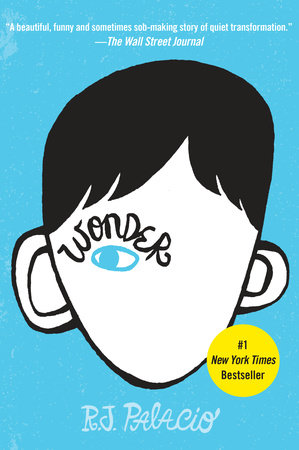
Wonder by R. J. Palacio: Required Reading for All

Wonder Book Cover

I woke up this morning thinking about Auggie. I missed him.

His extraordinary face with the unevenly positioned eyes, one half-shut all the time, the cleft lip and misshapen ears, abnormal features (I’ve learned not to use the word ‘deformed’ now) indelibly imprinted would elicit fear from those who see him the first time, especially unexpectedly. The shock may send out an uncontrolled gasp or even a scream. And if one is  maliciously driven, tiny-framed Auggie is a ready and easy target for bullying, especially in the setting he’s in now, middle school, the breeding ground for raw emotions and unchecked cruelty in both words and deeds. The ten year old has had twenty-seven surgeries big and small so far in his life. Homeschooled until now, Auggie is stepping out into 5th grade with unimaginable trepidation, mustering a courage no less than that required for all the surgeries he’d faced in his life.

Auggie, or, August Pullman, is a fictional character from R. J. Palacio’s book for 9-12 year olds, but he’s as real as my neighbor’s son, or even, my own. That’s the power of Palacio’s nuanced and realistic writing. This is a book for all ages, a required reading for every human being if I have my way, for Palacio has painted a perfect world.

In a perfect world, there are still babies born with facial abnormality. But that little life is still wrapped with warmth and cuddled with love and acceptance.

In a perfect world, that child will grow up not thinking himself ‘different’ or deficient, but as normal as any other kid his age. He can still enjoy reading his comics, be read to and tugged in at bedtime, master video games, watch Star War movies, play with his light saber, hug his doggie, and all those he loves: mom, dad and older sis. The child knows no deficiency.

In a perfect world, even after that child steps out of his well protected, comfort zone and ventures precariously into the reality of middle school, he can still find friends, however few at the beginning.

In a perfect world, there are still bullies and jerks. The child will still have to face incredulous challenges and learn to ignore horrible remarks more distorted than his facial features. In a perfect world, even in this seemingly cruel microcosm of the human society, this child can still find love, support, acceptance, and life-sustaining kindness.

In a perfect world, that child is considered a gift and a blessing, a challenge for us to be better human beings.

In a perfect world, good will overcome evil.

Seldom does a children’s book has such power over me. Actually, seldom do I read a children’s book, haven’t for a long, long while. But glad I’ve discovered Wonder. Auggie will live in my mind for a while even now that I’ve finished the book. I wish author R. J. Palacio’s Choose Kind anti-bullying movement will continue to flourish.

A book like this deserves a good movie adaptation. A recent announcement has given me hope that a worthy one might be on the drawing board. Well, just with the two being cast so far. Jacob Tremblay, the wonder boy who plays Jack in the acclaimed movie adaptation of Emma Donoghue’s Room is to play Auggie. His mom? Julia Roberts. As a mother of 10 and 8 year-olds, Roberts would have some insights to instill into her role.


***

Books Before Films 2016

There are several books on my shelf and in my TBR box that will be turning into films coming out in 2016. I must get to them soon. How time flies, one day’s gone already.

The Light Between Oceans by M. L. Stedman

The Light bet OceansOften it’s the cast of an upcoming movie that prods me to read a book. This one has been on the New York Times Bestseller List for years since its publication. No matter how popular it is, I’m motivated only now mainly because of the first rate cast: Alicia Vikander, Michael Fassbender, Rachel Weisz, directed by Derek Cianfrance. Instead of a place beyond the pines (his last work) we have an island off the Australian coast, with the story about a lighthouse keeper and his wife bringing up a baby they found in a boat washed up onshore.


Silence by Shûsaku Endô

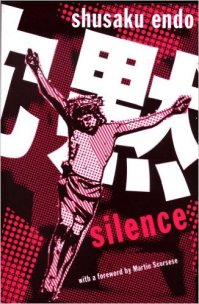
SilenceThis one is just the opposite. I want to read it regardless of whether it will be made into a film or not. But what a bonus it is to know the adaptation is a Martin Scorsese’s work with Liam Neeson, Adam Driver, Andrew Garfield, and Ciarán Hinds. I highly anticipate this film, albeit I expect the viewing experience won’t be pleasant. I’ve read it before but want to reread it before watching. The book is heart-wrenching as Endô describes the persecutions and tortures Christians and Jesuit missionaries suffered in 17th century Japan. How Scorsese, a Catholic himself, handles the subject matter – the choice between apostasy vs. martyrdom – and have these character actors interpret the internal and physical torments will be intriguing to see. Scorsese wrote the forward of this edition of the book (image here).


The Zookeeper’s Wife by Diane Ackerman

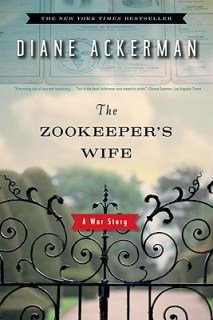
The Zookeeper's WifeThis is a worthy, true story to be made into film. Jan and Antonina Zabinski were keepers of the reputable Warsaw Zoo. During the Holocaust, Jan smuggled Jews out of the Warsaw Ghetto into their facility, saving hundreds. Antonina did the day-to-day chores of protecting them, hiding them in the cages, feeding them and keeping their spirits up. The parallel and irony of men and beasts are obvious. Acclaimed nature writer Diane Ackerman drew from Antonina’s diary to write her non-fiction work, a historical account of a heroic rescue mission. Screenplay by Angela Workerman, a scribe to note. Jessica Chastain and Daniel Brühl play the altruistic Zabinski couple.
 

Lady Susan by Jane Austen

Lady Susan Book CoverThis has been in my iBooks for a long while, so long that I’d deleted it and now reloaded it again as the film adaptation is coming out. Entitled Love and Friendship, screenplay is based on Austen’s early novella Lady Susan, with Kate Beckinsale as Lady Susan Vernon. It will be interesting to see how the epistle form is translated onto screen. It will premiere at the Sundance Film Festival Jan. 23. Whether we will actually see it in our movie theatres is another matter. I hope it will be screened in the not too distant future.
 

Remainder by Tom McCarthy

RemainderI bought this book at Harvard Book Store – the independent book store in Harvard Square since 1932 – during my New England Road Trip last fall. I’d read McCarthy’s 2015 Booker shortlisted Satin Island and knew Remainder had been adapted into film before I went on the trip. So it was a title I’d intended to get at that bookstore. Remainder is McCarthy’s debut work (2006). An unnamed Londoner is struck by a falling object and lapse into a coma. As he awakes, he has lost all memory and needs to re-enact his past to find his identity and authenticity of being. The Telegraph had called McCarthy “a Kafka for the Google Age”. Interesting to see how that translates onto screen. The film premiered at the BFI London Film Festival last October. Will screen at Berlin International Film Festival in February, 2016.


The Secret Scripture by Sebastian Barry

the_secret_scripture_bookcover The film adaptation of Booker short-listed and multiple award winning novel by Irish writer Sebastian Barry has already been completed, but has yet come up with a release date. So, I’ve plenty of time to read the book. The narrator is a 100 year-old mental hospital patient recalling her life. The old and the young are played by Vanessa Redgrave and Rooney Mara respectively. Directed by Jim Sheridan, the Oscar nominated director who introduced us to Daniel Day-Lewis in the excellent productions first in My Left Foot: The Story of Christy Brown and later In the Name of the Father.

***