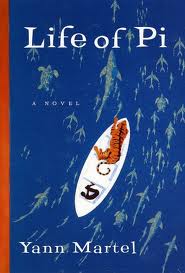
Life of Pi by Yann Martel: Take the Literary Journey before the 3D Experience

CLICK HERE to read my review of Ang Lee’s film Life of Pi in 3D

**

“I have a story that will make you believe in God.” — Life of Pi

I usually like to read the book first before seeing the film. I know full well that the two are different forms of artistic medium, but I’m intrigued by the adaptation process of transposing the literary into the visual. So, before Ang Lee’s 3D production comes out in the fall, I’ve recently reread Life of Pi, the 2002 Man Booker Prize winner by Canadian author Yann Martel.

After finishing Midnight’s Children a couple of months ago, also in preparation for the upcoming film version, I feel like I am all toned-up for magic realism.  Life of Pi leads me to retake a magical journey. This time around, I am much fonder of the delightful tale, deceptively simple and yet full of insights. The reader might first find the tidbits of animal facts and behavior amusing, only to resonate with their parallels in the human society.

Martel’s allegory is at times humorous, at times poetic and poignant, and throughout, engaging storytelling with heart and soul.

Pondicherry entered the Union of India on November 1, 1954. The Pondicherry zoo is in the Pondicherry Botanical Gardens. It is founded, owned and operated by Santosh Patel, father of Piscine Molitor Patel, more succinctly, Pi, the protagonist of our story.

Pi grows up in the zoo, animal lover by nature, animal keeper by nurture, and God seeker by creation. So when his father decides to sell the zoo, due to a lack of interest from the public, Pi, though young, understands it is only a sign of the times. The zoo and religion, both are misconstrued as confinement:

I know zoos are no longer in people’s good graces. Religion faces the same problem. Certain illusions about freedom plague them both.

Pi’s father plans to leave India and start a new life in Canada. Other than the lack of prospect in the zoo business, Mrs. Ghandi’s government measures also play a part in his decision. In June, 1977, the Patel family steps on board the Japanese cargo ship Tsimtsum and set sail for Canada, with them are the animals sold to various zoos in North America.

Here begins the adventure of Pi. Unable to sleep one night, Pi walks out of his cabin only to hear an explosion moment later. Thus his life is spared as he is thrown into a lifeboat while his family is still trapped below deck. All alone, 16 year-old Pi looks back from the lifeboat in horror and watches helplessly as the ship carrying his family quickly sinks into the dark, oblivious ocean.

For 227 days, Pi drifts in the vast open sea in a 26-foot lifeboat. Not quite alone, for there with him are a zebra, an orangutan named Orange Juice, a spotted hyena, and a 450-pound Bengal tiger called Richard Parker. Soon, there remain only two of them, Richard Parker by his mere physical might, and Pi, by his intelligence and resourcefulness.

Suddenly his brute strength meant only moral weakness. It was nothing compared to the strength in my mind.

Wise beyond his years, Pi has to use available resources to get food and water, set up routines, defend himself from predators, assert his spacial and social dominance, and above all, conquer loneliness and despair. Ironically, in the minimal existence on the 26- foot lifeboat, Pi finds motivation to live in the company of the hungry Bengal tiger Richard Parker. He has successfully turned a threat into comradeship.

After many days, they drift towards an island of meerkats. There Pi finds an abundance of algae and meerkats as food. Complacency begins to set in until the chilling discovery of human teeth drives him out to sea again.

What sets this book apart from just another survival, castaway story is its spiritual quest lyrically expressed. Pi is a deeply religious soul. While he has embraced various paths in his search, his ultimate goal is to find God. It is in his tumultuous ordeal, a tiny speck in the vast ocean, tossed and thrown by unconquerable elements that Pi experiences the presence of God. The author’s seemingly straight forward adventure embeds a magical, existential allegory.

In bare existence, Pi can still find exhiliaration in the smallest of blessings:

… You get your happiness where you can. You reach a point where you’re at the bottom of hell, yet you have your arms crossed and a smile on your face, and you feel you’re the luckiest person on earth. Why? Because at your feet you have a tiny dead fish.

And in the midst of utter despair, the spiritual faculty can still respond. Amidst turmoils and rough seas, Pi rejoices as he beholds the wonders of creation, the inexhaustible menagerie of life, and nature displayed, raw and uncensored. One time, a magnificent bolt of lightning arouses a thunderous cosmic effect without and within, striking him speechless:

This is miracle. This is an outbreak of divinity. .. this thing so vast and fantastic. I was breathless and wordless. I lay back on the tarpaulin, arms and legs spread wide. The rain chillded me to the bone. But I was smiling… I felt genuine happiness.

That momentary happiness is finally realized in true salvation. Pi and Richard Parker are saved as their boat drifts near the shore of Mexico where they are rescued. Richard Parker quickly disappears into the jungle. But the story doesn’t end there. It’s the last bit that makes Life of Pi even more thought-provoking.

Two Japanese employees of the shipping company come to interview Pi in order to find out the cause of the shipwreck. As they question the lone survivor of the Tsimtsum in a Mexican hospital, they respond to Pi’s retelling of his ordeal with polite skepticism and denial. The magical is not easily accepted by realists.

Author Yann Martel tells us a compelling survival story only to have it negated by two people convinced of its implausibility, rationalists bent on seeking evidence based only on reasoning. Fantasy and imagination are often readily presumed to be falsehood.

With Pi’s tale being dismissed by the interviewers, Martel has ingeniously crafted an allegory showing us the value of stories, teasing us with the definition of truth and reality, while transporting us to a realm beyond the limits of the intellect… maybe on that level, somehow, like Pi, we can get a glimpse of God.

~ ~ ~ ~ Ripples

Life of Pi by Yann Martel, Vintage Canada Edition, 2002, 354 pages.

The three cover images on this post: Vintage Canada edition, U.S. Mariner Books edition, and movie-tie-in edition coming out October, 2012, also from Mariner Books.

This review has been published in the August 31, 2012 print issue of Asian American Press. Online edition here. For those curious about what Arti is like, the mystery is revealed there.

CLICK HERE to watch the TRAILER of the film, opener of the 50th New York Film Festival on Sept. 28th, 2012.

CLICK HERE for a list of highly anticipated film adaptations from literary sources coming out this fall.

***

Coda

I had the pleasure to meet author Yann Martel in a reading two years ago. He was very friendly and affable, took time to chat with me, signed my copy of the book and another one I’d intended for my son. Not a tale, here are the photos:

In the title page of my son’s copy, he wrote:

“To ___,

May you reach the coast of Mexico.”

Don’t we all need to find shore to land?

***

This Fall: Read the Book Before you See the Film

UPDATE: This list will be updated whenever there’s new info. So, bookmark it if you like. Just added Lincoln (Team of Rivals), The Reluctant Fundamentalist, and The Hobbit: An Unexpected Journey. CLICK ON THE TITLES to read my book and film reviews. For others, the link will lead you to info of the production.

**

Some highly anticipated film adaptations from literary sources will be coming out this fall. Released in this latter part of the year, to be premiered at major film festivals, some of them are poised for the Awards Season next spring.

Here’s an update of these great expectations. The Great Gatsby for some reasons has delayed its release until next summer, so one less book to read if you’re to finish them before the movies come out.  These titles also make good selections for book groups:

Anna Karenina by Leo Tolstoy

To premiere in the UK and at Toronto International Film Festival (TIFF) on the same date, September 7. You still have time to read this masterpiece before the film comes out as a general release in November. You may need to read a bit more than 10 pages a day if you start now. But still doable. Update: The Read-Along has just been completed. The film is now screening in selective cities. Read my book reviews here for first half and here for the last parts.

.

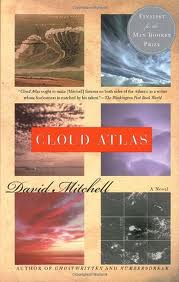
Cloud Atlas by David Mitchell

To premiere at TIFF on Sept. 8. Legendary filmmakers Tom Tykwer (Run Lola Run), Andy and Lana Wachowski (The Matrix) join hands to make this ‘unfilmable’ acclaimed literary work. Tom Hank, Halle Berry, Jim Broadbent…

Update: The film has been released and has received mixed reviews. 

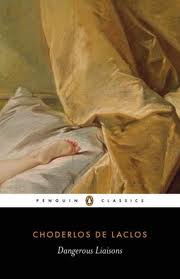
Dangerous Liaisons by Pierre Choderlos de Laclos

How about this… The French notorious literary classic Les Liaisons Dangereuses by Pierre Choderlos de Laclos, published in 1782, adapted into film in the 21st C. with a setting in 1930’s Shanghai, China, helmed by Korean director Hur Jin-Ho, cast with Chinese and Korean actors. I’ve seen two adaptations in the past, Michelle Pheiffer/John Malkovich’s Dangerous Liaisons (1988) and Annette Bening/Colin Firth’s Valmont (1989), but this one strikes me as something totally different.

Great Expectations by Charles Dickens

In time to mark this bicentenary of the birth of Charles Dickens, a showcase of British talents: screenplay by David Nicholls (Tess of the D’Urbervilles, When Did You Last See Your Father) directed by Mike Newell (Four Weddings and A Funeral, Harry Potter), Ralph Fiennes (The English Patient), Helena Bonham Carter (The King’s Speech), Jeremy Irvine (War Horse)…

.

The Hobbit by J. R. R. Tolkien

World premiere Nov. 28, 2012 in New Zealand for Part 1 of the Trilogy, ‘The Hobbit: An Unexpected Journey’, ‘The Hobbit: The Desolation of Smaug’ in Dec. 2013, and ‘The Hobbit: There and Back Again’ in July, 2014. Peter Jackson attempts to reprise his Rings magic with cast from previous Rings Trilogy Elijah Wood, Ian McKellen, Cate Blanchett, Orlando Bloom… Again, we’ll get to see beautiful New Zealand as setting.

.

Les Misérables by VIctor Hugo

A film version of the stage musical to be released in December. Directed by Oscar winner Tom Hooper of The King’s Speech. If you want to hear them sing, here’s the chance… Anne Hathaway, Hugh Jackman, Russell Crowe, Helena Bonham Carter, Amanda Seyfried…  The trailer is mesmerizing. Update: The production has just been shown in industry screenings and received euphoric reception. Major contender for 2013 Oscars.

.

Life of Pi by Yann Martel

To open the 50th NY Film Festival on Sept. 28 with its world premiere. I’m glad this 2003 Booker Prize winning novel by Canadian author Yann Martel finds its film adaptation in the hands of Oscar winning director Ang Lee. From the trailer, I have the feeling that Lee has masterfully grasped the magical realism of the book. Lee’s versatility ranges from Jane Austen (Sense and Sensibility) to martial art (Crouching Tiger, Hidden Dragon). I highly anticipate this one, albeit as someone prone to motion sickness, I’m apprehensive about seeing the rough ocean journey in 3D.

.

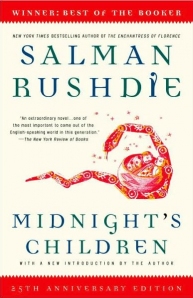
Midnight’s Children by Salman Rushdie. Film Review

To premiere at the Gala Presentation at TIFF Sept. 9. Salman Rushdie turns his Best of the Booker, epic novel into screenplay, working closely with Canadian director Deepa Mehta on the film production. I’m interested to see how magic realism transposes from the literary to the visual, albeit I know full well the two are different forms of artistic medium. For the few of us who had spent four months reading along, I think the only regret we have might be that we can’t go to see the film together.

.

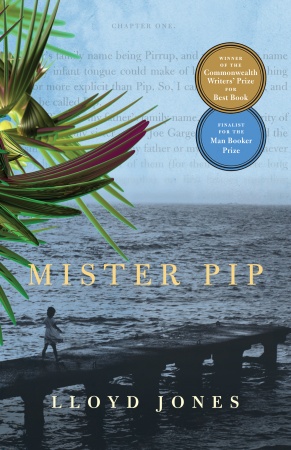
Mr. Pip by Lloyd Jones

Winner of the 2007 Commonwealth Prize, Lloyd Jones’s character Pop Eye Mr. Watts brings to the Papua New Guinea island of Bougainville during the civil war in the 1990s not just Charles Dicken’s Great Expectations, but friendship to a 13 year-old girl Matilda. Film adaptation directed by Chronicles of Narnia‘s Andrew Adamson. And for all you fans of ‘House’, Mr. Pip is none other than Hugh Laurie.

.

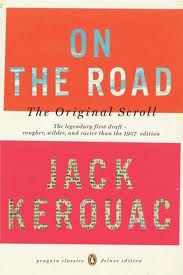
On The Road by Jack Kerouac

First screened at Cannes Film Festival in May and later in Europe, producer Francis Ford Coppola’s adaptation of this beat generation classic finally comes to North American at TIFF this Sept. Directed by Walter Salles (Motorcycle Diaries) and with a cast including Kristen Stewart, Amy Adams, Viggo Mortensen, Kirsten Dunst.

.

The Reluctant Fundamentalist by Mohsin Hamid

Published in 2007, the book was included in Guardian‘s list of 50 books that defined the decade and shortlisted for the Booker Prize. The story of a young Pakistani working in NYC, graduated top of his class from Princeton, finding love in an American girl, and success on Wall Street, has his world turned upside down after 9/11. The film just opened the 69th Venice Film Festival last night. Directed by the acclaimed, India-born Mira Nair (Monsoon Wedding, The Namesake), the film and the book should stimulate lively discussions in your book group. Stars Riz Ahmed, Kate Hudson, Kiefer Sutherland, Liev Schreiber.

Teams of Rivals by Doris Kearns Goodwin. Film Review.

It has been noted that Steven Spielberg ensured the film rights to Goodwin’s book even before she wrote it. His film Lincoln is partly based on it, an epic production that reportedly involves more than 140 speaking parts. Acclaimed as a strong Oscar 2013 contender, the film portrays Lincoln’s tenacious fight for the passage of the 13th Amendment.

.

What Maisie Knew by Henry James

James’s novel published in 1897 has its film adaptation set in modern day New York City. It depicts a family break down from the point of view of a six-year-old girl as she is torn between her parents going through a divorce. Film directed by Bee Season and The Deep End’s Scott McGehee and David Siegel, Julianne Moore and Alexander Skarsgård star.

.

***

Posts you may like:

Lincoln (2012): Some Alternative Views

Anna Karenina Read-Along: Parts 1-4, Parts 5-8

Midnight’s Children Read-Along

Midnight’s Children Film Adaptation: Movie Review

Life of Pi by Yann Martel: Read the book Before the 3D Experience

CLICK on the following links to my previous posts for lists of film adaptations from other literary titles in development or with film rights sold:

Great Film Expectations

Upcoming Books Into Movies — List 3

More Upcoming Books Into Movies

***

Midnight’s Children by Salman Rushdie, Book Two (Part A)

CLICK HERE to read my Movie Review of Midnight’s Children

***

While Part One of the book is a macro view of historical background and family genealogy dating back a few generations, Part Two is what we’re all waiting for, the emergence of Midnight’s Children, in particular, our young hero Saleem Sinai. This present section of our Read-Along is the first part of Book Two, ending with the chapter ‘Alpha And Omega’.

We see Saleem Sinai growing up from a protected infant doted on by mom Amina and maid Mary to a thinking, mature, yet mildly timid and clumsy ten year-old. He shares his childhood in the family with his sister Brass Monkey, one year younger, ‘untamed, unfeminine’. Faced with the ambivalence of sibling rivalry and camaraderie, he learns in time the axiom that blood is thicker than water.

By all standards, Saleem’s first ten years (so far) have been eventful. Not long after his birth, Ghandi is assassinated. Saleem’s father Ahmed’s assets are frozen but later rescinded by the court. He spies on his mother and follows her secretly as she meets her ex-husband, now the Communist Party leader.

Saleem’s great sense of imagination is nurtured by various cultural traditions, a generous share of fairy tales, super heroes and the cinema.

Hatim Tai and Batman, Superman and Sinbad helped to get me through the nearlynine years… I became Aladdin, voyaging in a fabulous cave… I imagined Ali Baba’s forty thieves hiding in the dusted urns… I turned into the genie of the lamp… I was mild-mannered Clark Kent protecting my secret identity…

Other memorable episodes include a first taste of unrequited love from his crush on Evie Burn. As for school, colonial traditions stay. Saleem goes to a Christian mission school where he gets his multi-cultural exposure. Some learning is hard, that’s expected. But he gets more than his fair share as he tastes the ultimate in corporal punishment and humiliation as a clump of his hair is pulled out by his Peruvian geography teacher. Later in the school dance, in front of his new crush Masha Moviac, he shows her he is a man after all as he knees his insulters. Mayhem ensues that ends with a mutilated finger in the emergency room.  I can see lots of movie moments, hilarious yet endearing.

But above all, growing up in Methwold’s Estate and his part of Bombay is a close encounter with multiplicity. And to a young boy tossed in the net of a myriad of interwoven cultural strands, Saleem is preoccupied with the search for an identity. Further, with his secret, supernatural gift of tuning into other people’s mind, he eagerly looks for a purpose and meaning to his life. And here is how Rushdie so brilliantly parallels Saleem’s birth to that of a nation.

On my tenth birthday, everyone at Methwold’s Estate tried hard to be cheerful, but beneath this thin veneer everyone was possessed by the same thought: “Ten years, my God! Where have they gone? What have we done?

Saleem holds a Midnight’s Children Conference right in his mind, he himself the self-imposed leader of the 581 surviving Midnight’s Children, all born with unusual gifts. His leadership is challenged by none other than his changeling, Shiva, born at the stroke of midnight with him. While Saleem ponders on the purpose and reason for his supernatural power, his counterpart Shiva, coming from the slums, opposes him with the facts of life:

Rich kid,” Shiva yelled, “you don’t know one damn thing! What purpose, man? What thing in the whole sister-sleeping world got reason, yara? For what reason you’re rich and I’m poor? Where’s the reason in starving, man? God knows how many millions of damn fools living in this country, man, and you think there’s a purpose! Man, I’ll tell you–you got to get what you can, do what you can with it, and then you got to die. That’s reason, rich boy. Everything else is only mother-sleeping wind!

Crisp and simple. Existential pondering a luxury to many… ?

How I look forward to the rest of the book, and the movie. BTW, it has been shown to selective previewers, who were told not to write any reviews as yet. They sure know how to build up expectations and curiosity.

***

CLICK HERE to BOOK TWO: Part B
CLICK HERE to BOOK THREE CONCLUSION

Read-Along Participants’ Posts for Book Two (Part A):

Bellezza at Dolce Bellezza 

Gavin of Page247

Janell of An Everyday Life

Jerika at averydisorientedreader

ds at third-storey window

If you’ve written a post on this section, do let us know in a comment. I’ll add your link on the list.

Next section: Book Two, Part B. From ‘The Kolynos Kid’ to the end of Book Two. Share your view May 31st. You still have time to catch up if you like to start the book now.

***

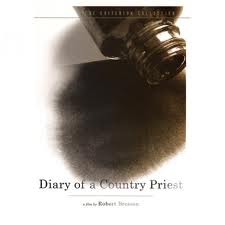
Diary of a Country Priest: Film Adaptation (1951)

For me, the cinema is an exploration within. — Robert Bresson (1903-1999)

Robert Bresson is one of the most influential figures in French cinema. The acclaimed New Wave director Jean-Luc Godard once noted: “Robert Bresson is French cinema, as Dostoevsky is the Russian novel and Mozart is German music.”

I know, Austrians would say Mozart was Austrian. But this just shows his influence can cross borders. Same with Bresson, who is acclaimed as one of the forefathers of the French New Wave, even though his style is not experimental. The iconic Swedish director Ingmar Bergman had specifically cited Diary of a Country Priest as influence for his Winter Light.

Before Bresson adapted Diary of a Country Priest, two previous screenplays were attempted by others but turned down by the author Georges Bernanos himself. Bresson’s film was made after Bernanos died. Bernanos had nothing to worry about with Bresson’s interpretation, for the film is an almost literal and a worthy cinematic translation. It won the Prix Louis Delluc in France (best film of the year) and several international film awards. Bresson was given the Career Golden Lion at the 1989 Venice Film Festival.

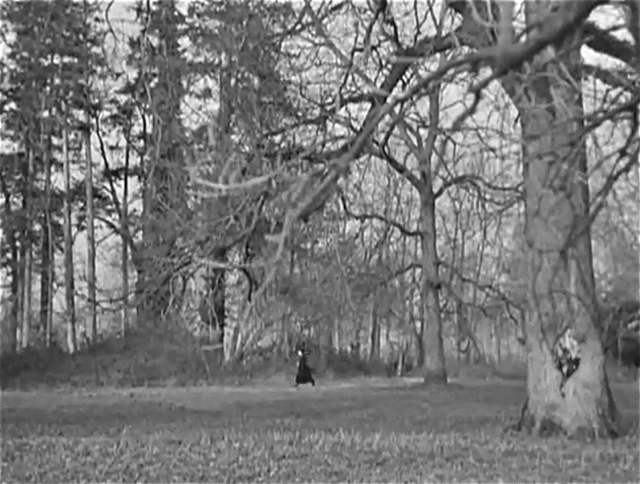
That Bresson, a professed agnostic, would choose to adapt a work by the Catholic writer Bernanos shows the moving power and the universal appeal of the book. The parish of Ambricourt is a microcosm of the human world. The seemingly placid village hides a spiritually barren landscape and a cocoon of depravity. The young priest, an unwelcome alien, is captured cinematically as small and vulnerable, an apt depiction of how he feels within:

An outsider barred from a gated mansion of dark secrets, like here at the front gate of the Château.

The light comes into the world, but the darkness refuses it. On screen, we see the young priest often shut out of gates and windows. The glass pane allows him to be observed from the inside, yet he is very much on the outside isolated, the weight of the world heavy on his face.

Bresson’s style is minimal, you may find this film somewhat austere. But I’m gratified by such style, devoid of color and whatever additives we find in movies today. Instead, every frame conveys an aesthetic simplicity and thematic purpose.

To explore the drama within, Bresson chose ‘non-actors’. “As far as I can, I eliminate anything which may distract from interior drama,” Bresson was quoted saying, and distractions included ‘acting’. He selected his ‘models’ (as he called them, not ‘actors’) first for their voice. He particularly looked for inexperience. The young Curé of Ambricourt was Claude Laydu’s first film role. Others that Bresson used were often one-time actors just for the film he was making.

The Criterion Collection DVD has a most helpful commentary by film historian Peter Cowie. His insight is invaluable to the appreciation of Bresson’s adaptation. One of his remarks is the off-screen sounds we often hear in a scene. The most intense one would have to be the climatic spiritual battle between Mme la Comtesse and the young priest. Totally engulfed by grief, hatred and bitterness, and living in isolated misery all the years since her young son died, Mme la Comtesse finally releases her pain and receives blessings from the priest. And what sound do we hear off-screen the whole time they are engaged in this soul-piercing scene in the drawing room: the gardener’s raking of dead leaves.

Another source I’ve often sought out is the book written by Paul Schrader: Transcendental Style in Film: Ozu, Bresson, Dreyer. Yes, if I must choose a word to describe Bresson’s style, I would use Schrader’s term: transcendental. His minimal, aesthetically simple, ‘non-acting’ style raises the viewer to a meditative plane which is beyond the material, beyond all distractions. That’s the essence of cinema that I find so meaningful and gratifying.

And finally, despite succumbing to his illness, the young priest leaves a legacy that his superiors, the senior vicars, could not have: an embodiment of the suffering Christ and the redemptive power of grace. Despite his own frailty and ultimate death, the young country priest  triumphs through his faith, however feeble it may have seemed in his own eyes. It does not matter, for all is grace.

~ ~ ~ ~ Ripples

***
AND TO ALL, A HAPPY EASTER!
***
Other related posts on Ripple Effects:
.
.
.
.
***

Midnight’s Children by Salman Rushdie, Book One

CLICK HERE to read my Movie Review of Midnight’s Children

***

In his introduction to the 25th Anniversary Edition of Midnight’s Children, Salman Rushdie writes:

In the West people tended to read Midnight’s Children as a fantasy, while in India people thought of it as pretty realistic, almost a history book.

I admit, when I started reading Midnight’s Children, I was frustrated. I knew I just couldn’t read it purely as a fantasy. Why, these are real dates in history, important events, the World Wars, the Mahatma’s call for an independent India with non-violent means, the separation of India and Pakistan along religious lines… There must be more, I told myself. I knew I could never read it as an insider, but I could at least peek through the fences, and get a glimpse of what’s going on inside.

And so I did. I searched for background info and author interviews, both online and off. As a result, my reading pleasure is enhanced after I found out how realistic the novel is. Personal happenings actually correspond with important historical events, not unlike the movie Forrest Gump, little people tossed in the currents of history.

Rushdie in an interview noted that instead of using an Austenesque way to tell his story by focusing on the details and the minute, he chose to adopt a Dickensian approach, placing his characters on a macro, societal canvas. As a result, we have a monumental epic. Mind you, he just wanted to write a novel about childhood, he said.

The narrator, Saleem Sinai, started with his Grandfather Aadam Aziz in 1915, thirty-two years before India’s independence. The young doctor examined his patient and future wife Naseem through a perforated sheet a bit at a time, under the close supervision of her cautious father. When at last she complained of a headache, he finally could see her face, “on the day the World War ended.” It’s pure humor also, and I’ve enjoyed Rushdie’s free wheeling brush strokes.

But often the comical may just serve to bring out more poignantly a sombre reality. When I first read the ‘Mercurochrome’ chapter, it didn’t hit me at all. Later, I read about the atrocity that had actually happened on April 13th, 1919, the Amritsar massacre. British Brigadier-General Reginald E. H. Dyer ordered Marshal Law regulations, banning all assemblies. A large crowd defied his orders and started converging in the compound Jallianwala Bagh for a peaceful protest. Dyer marched fifty riflemen up and ordered them to shoot at the crowd indiscriminately, men, women children.

They have fired a total of one thousand six hundred and fifty rounds into the unarmed crowd. Of these, one thousand five hundred and sixteen have found their mark… ‘Good shooting,’ Dyer tells his men, ‘We have done a jolly good thing.’ (p. 34)

A few days ago, Aadam helped the wounded on the streets and got Mercurochrome all over his white shirt, and had to explain to wife Naseem the red stains were not blood. Now on this fateful day, Naseem assumed the red was Mercurochrome again, but was told, “it’s blood,” and she fainted.

The relevance of the perforated sheet reemerges in the next generation when Amina Sinai, Saleem’s mother, has to learn to love her husband Ahmed Sinai one fragment at a time:

 ‘Who, after all,’ she reasoned privately, ‘ever truly knows another human being completely?’

The last two chapters ‘Methwold’ and ‘Tick, Tock’ strike a chord in me. Why, I’m not totally an outsider after all. For the first fifteen years of my life, I was a colonial. I was born and grew up in the then British colony of Hong Kong. So reading Book One of Midnight’s Children, I feel certain affiliation. It reminds me of my childhood days, which were also filled with multiplicity of cultures, the fusion of languages, and fortunately, the calm co-existence of religions. There were spittoons and Mercurochrome. I was familiar with bilingual usages, aware of the divide between the subject and the ruling, the East and the West. Even now, I can spot the ‘imitation Oxford drawls’. My “Tick, Tock” moment was when I watched on TV here in Canada the last governor of Hong Kong Chris Patten standing in the rain holding the British Colony flag, saying goodbye to all that on July 1, 1997.

Rushdie’s animated style makes his India colourful and fascinating. His characters, descriptions and dialogues are like the splashes of a Pollock painting. That’s where the fantasy comes in, I suppose, on the large canvas of history.

Book One ends with intrigue. Saleem Sinai, it turns out, is a changeling. At the stroke of midnight August 15, 1947, two boys were born, but was soon mixed up by midwife Mary Pereira in a wilful act of self-assertion. This too has its deeper reference:

When we eventually discovered the crime of Mary Pereira, we all found that it made no difference! I was still their son: they remained my parents. In a kind of collective failure of imagination, we learned that we simply could not think our way out of our pasts…

I look forward to reading the childhood of these two changelings Saleem and Shiva, and their  journeys ahead.

***

Here are the other Read-Along Posts for Book One (so far):

Bellezza at Dolce Belleza
Gavin of Page247
Janell of An Everyday Life
Jerikavonalexandra of averydisorientedreader
Colleen of Books in the City 

If you’ve written a post for our Read-Along, do let us know in a comment.

***

CLICK HERE to Book Two: Part A
CLICK HERE to Book Two: Part B
CLICK HERE to Book Three Conclusion

CLICK HERE to read a March 1, 2012 interview of director Deepa Mehta on CBC news.
CLICK HERE to read about the filming of Midnight’s Children.

Great Film Expectations

For an updated list of 2012 premieres of film adaptations, CLICK HERE.

With written works from Suzanne Collins’ The Hunger Games to Shakespeare’s Coriolanus materialized on the big screen, what else can we anticipate in this year and next?

Here’s an update of some upcoming film adaptations from literary works. Great choices for book groups too.

A Most Wanted Man by John Le Carré

On the heels of the acclaimed “Tinker Tailor Soldier Spy”, this time, Philip Seymour Hoffman is the man. Directed by Anton Corbijn whose last film was the deep and thoughtful “The American, a film I found to be much better than the book.

.

Anna Karenina by Leo Tolstoy

Finally, dates are set for the premiere: Sept. 7 in the UK, Nov. 9 in the US. I look forward to this one: Tom Stoppard screenplay, Joe Wright (Atonement, Pride & Prejudice) directs, Keira Knightly as Anna, Matthew MacFadyen Oblonzky, Jude Law Alexai, Aaron Johnson Count Vronsky, and Downton Abbey‘s Michelle Dockery (Lady Mary) as Princess Myagkaya, plus many other British stars.

.

Cloud Atlas by David Mitchell 

Winner of multiple awards and shortlisted for a Booker in 2004, the apocalyptic novel is adapted by Tom Tykwer (Run Lola Run) and The Wachowski’s (Matrix’s). Tom Hanks, Halle Berry, Susan Sarandon, Ben Whishaw (Bright Star), Hugh Grant, Jim Broadbent. Here’s Susan Sarandon’s take on the production.

.

The Emperor’s Children by Claire Messud 

Some big names affiliated with this project are Richard Gere, Eric Bana, Keira Knightly, Emma Thompson, Rachel McAdams. Director Scott Cooper (Crazy Heart) on board. But I can find no more news after this announcement, which is fine, gives me more time to get to the book first. It’s been on my TBR list for a few years now.

.

Great Expectations by Charles Dickens

To coincide with the 200th birthday of Charles Dickens and the Olympics in London, Mike Newell (Enchanted April, Four Weddings and a Funeral) directs, screenplay by David Nicholl (One Day, Tess of d’Urbervilles, When Did You Last See Your Father) who may be also writing the third Bridget Jones movie. Ralph Fiennes is Magwitch, Helena Bonham Carter Miss Havisham, Jeremy Irvine, Pip.

.

The Great Gatsby by F. Scott Fitzgerald 

What will F. Scott think when he sees his masterpiece produced in 3D in the 21st Century? Woody: do give us a sequel to “Midnight In Paris” with your brilliant imagination. Australian director Bez Luhrmann is poised to bring us this new version of Gatsby in 3D, which I’m sure will stir up lots of discussions. It has already. But no matter how I dislike 3D (except Hugo), I want to see Leo DiCaprio play Jay G., Carey Mulligan, Daisy B., and Tobey Maguire, Nick C. Do Click Here to read a Guardian preview close to 3D.

.

The Guernsey Literary and Potato Peel Pie Society by Mary Ann Shaffer and Annie Barrows

Kenneth Branagh will direct Kate Winslet in this popular novel about the power of literature in desperate wartime. This is a reprise of their cooperation from 1996, when Branagh, as Hamlet, also directed Winslet as Ophelia. No dates have been set for its production or release, but something to keep in mind.

.

The Hobbit by J. R. R. Tolkien

Coming out in three parts. “The Hobbit: An Unexpected Journey” in 2012, and “The Hobbit: The Desolation of  Smaug’ in Dec. 2013, and ‘The Hobbit: There and Back Again’ in July, 2014. Peter Jackson attempts to reprise his Rings Trilogy magic. Elijah Wood, Ian McKellen, Cate Blanchett, Orlando Bloom… the whole gang. Again, we’ll get to see beautiful New Zealand as setting.

.

The Invisible Woman: The Story of Nelly Ternan and Charles Dickens by Claire Tomalin

Claire Tomalin’s account of Charles Dickens’ affair with the young writer Nelly Ternan will be brought to screen with script from Abi Morgan (Shame, The Iron Lady) to be directed by Ralph Fiennes, who will play Dickens himself. To add to the rave, Kristin Scott Thomas is also on board. Felicity Jones will be playing Nelly Ternan. Fiennes never ceases to amaze us with his versatility, after directing Shakespeare’s Coriolanus in postmodern style.

.

Les Miserables by Victor Hugo

Tom Hooper of “The King’s Speech” directs an all star cast in this musical offering. Hugh Jackman as Jean Valjean, Russell Crowe as Inspector Javert (is he going to sing too?), Helena Bonham Carter, Anne Hathaway join in the chorus. Just too bad Geoffrey Rush and Colin Firth are missing here. Release date for North America is Dec. 2012, which means it can be a contender in next Awards Season.

.

Life of Pi by Yann Martel

Director Ang Lee picked 17 year-old Suraj Sharma of Delhi, India, from 3,000 teenagers to play Pi Patel. Interesting that Tobey MacGuire will play Yann Martel, the author of the book which won the 2002 Man Booker Prize. The film to be shot in 3D has a December 2012 release date. Again, films opening in December usually have eye on the next Awards Season. Will keep our eyes peeled.

.

Midnight’s Children by Salman Rushdie

The Booker of Bookers winning work will see its author Salman Rushdie team up with acclaimed Canadian director Deepa Mehta in the film adaptation. Mehta in a recent interview hinted it will debut either at the Venice or the Toronto Film Festival this fall. You can still join us for a slow Read-Along of Midnight’s Children before the film comes out.

.

Rebecca by Daphne DuMaurier 

On the drawing board of Dreamwork and Working Title. Who can take the helm to reprise an adaptation made famous by Alfred Hitchcock, and actors to replace Sir Laurence Olivier as Mr. de Winter and Joan Fontaine as the new Mrs? Now, why does Carey Mulligan emerges in my mind… and Michael Fassbender

.

What Maisie Knew by Henry James

Looks like a good classic to read before seeing the movie. Julianne Moore and Alexander Skarsgård lead the cast. I’ve enjoyed previous Henry James adaptations of The Wings of the Dove, The Golden Bowl, and The Portrait of a Lady. Look forward to this one.

.

Books to be turned into TV series:

The Corrections by Jonathan Franzen

To be adapted into an HBO TV series with an all-star cast under the helm of Noah Baumbach (The Squid and the Whale). Stars include Ewan McGregor, Maggie Gyllenhaal, Rhys Ifans, Dianne Wiest, Chris Cooper and Greta Gerwig. But, will the author be involved in any of the writing?

.

A Visit From the Goon Squad by Jennifer Egan

Again, HBO has bought the rights to this one. The 2011 Pulitzer Prize winner is to be adapted into a half-hour TV series.

.

.

The Art of Fielding by Chad Harbach

Yet again, it’s HBO that will be developing the novel into a TV drama series, another project by the “uber producer” Scott Rudin, who also oversees “The Corrections.”

.

***

What are some of  your most anticipated films or books in the coming year(s)?

We Need To Talk About Kevin (2011)

On International Women’s Day, we need to talk about mothers. Motherhood, the role that can bring so much joy, and so much grief. No grief can compare to that of seeing your child self-destruct, and in the process, destroying others.

To start with, the wandering, free-spirited Eva (Tilda Swinton) before motherhood reflects an unsettling soul. Seems like she accidentally trespasses into the territory that calls for extreme commitment when she gets pregnant. While other expectant mothers fully embrace their swollen bellies, Eva faces her pregnancy with apprehension and awkwardness. Once Kevin is born, she knows full well that it is an irreversible life-long occupation.

Kevin screams all day and night as a baby, is incommunicable as a toddler, foul-mouthed, menacing and hateful as a child. The first thing he does to his newborn younger sister while visiting her in the hospital is to splash water into her eyes. This act will be repeated when he becomes a teenager, but it won’t be as harmless as water. Can’t his parents see it coming? I must give credit to Tilda Swinton, who has given us an audacious and engaging performance as Eva, but one, I’m afraid, that may not appear quite as sensible as it should.

If you are not a tiger mom, but has a tiger son on your hands, what are you to do? Wouldn’t you have sought professional help for your child, or counselling for yourself? Yes, we see Eva take Kevin to a doctor when he’s a non-communicating toddler, but what about all the years hence, until at 16 when all hell breaks loose? Ezra Miller as teenaged Kevin is a persona of a most disturbed young man; unfortunately, his self-absorbed, relentless evil scheming renders his performance two-dimensional.

I have not read the book by Lionel Shriver. We Need to Talk About Kevin was the Orange Prize Winner of 2005, an award honoring women’s writing. Shriver might well have depicted her characters and their inner turmoils with more depth, as a literary rendition can.

I knew of the plot in general before I stepped into the theatre. My expectation was that the film would be exploring the issues of parental responsibility and guilt from raising a wayward child despite all good intentions. I thought it would deal with the problem of evil, or the issue of nature and nurture, and the choices we can make in spite of our predicament.

But the film surprises me in that it has not delivered what could have been a study of any of the above issues. Maybe parental guilt, but still, not in depth. We only see the stunned look of Eva in every scene. Even before the tragic end, with overwhelming evidences of a terribly disturbed son, we hear little communication between Eva and her unsuspecting husband Franklin (John C. Reilly), who encourages Kevin’s interest in archery. (ah-ha… big hint)  Seems like director Lynne Ramsay’s goal is just to shock and disturb with exaggerated visuals and sounds, or its lack of to create mood. The ubiquitous red, another obvious hint. It is effective as an absorbing, suspenseful thriller, relentless in its portrayal of evil, but for the purpose of…?

The film has been talked about much in the UK. And on both sides of the Atlantic, many critics have given it high acclaim; others have pointed to its Oscar snub. While I had high expectation before I saw it, I left with a void of disappointment, which, I’m afraid, has extinguished my interest to read the book. If you have read it, I’d love to hear you tell me otherwise.

But on this very day, let us give kudos to all mothers who, regardless of results, stay true to their role and love in spite of everything. This we can see in the final scene and the last shot, the embrace in prison, probably the most meaningful in the whole film.

~ ~ 1/2 Ripples

***

The End of the Affair: Book and Movie

It’s a bit ironic to post this on Valentine’s Day. It’s a story of an extramarital affair, and it doesn’t end well. But then again, maybe this is the best time to talk about it.

This is my second instalment to meet the Graham Greene Challenge hosted by Carrie of Books and Movies. Spoiler Alert here. But since it’s a classic, I’m sure many of you have read it or seen the movie.

The End of the Affair

The book opens with a meeting between novelist Maurice Bendrix and civil servant Henry Miles on a cold, rainy night in 1946 London. Miles’ wife Sarah had ended an affair with Bendrix 18 months earlier. Bendrix has not seen them since. In this chance meeting on the street, Bendrix observes that Miles is heavy-laden, suspecting Sarah has ‘secrets’. Volunteering to hire a detective to tail the wife for the husband, Bendrix is in fact acting out of jealousy, for he too wants to find out who Sarah is seeing now. “Anyone who loves is jealous.”

Again, in just 160 pages, Greene has intricately explored the depth and complexity of the human psyche, love and hate, trust and insecurity, faith and lameness. Yes, the lameness in Bendrix’s leg can well be a metaphor for his numbness of unbelief. Isn’t there such an argument: “If God does not exist, everything is permitted?”

Love with all its smothering, blinding passion, its persistent, burning desire, its all-consuming emotions that distill into pure jealousy and hate… Graham Greene is a master of such incisive descriptions. But here’s the rub, they’re all found in an adulterous affair.

Isn’t that a pity that such intensity of love is often depicted outside of a marriage. Why, we see them all the time in literature and movies. And, don’t we tend to cheer for the romantic heroes and heroines? Guinevere and Lancelot, for example, to whom Bendrix in the book alludes when he talks to the detective Parkis, who has named his son Lance. Readily come to mind are some others: Madame Bovary, Anna Karenina, and in the epic cinematic versions like The English Patient, in a more restrained way Out of Africa, and the near success in The Bridges of Madison County…  didn’t you wish Meryl Streep would have gone with Clint Eastwood? I’m just thinking, if Ralph Fiennes were the one beckoning her, she’d probably had jumped out of her husband’s truck.

O the fantasy of romance vs. the mundane reality of a marriage. The forbidden fruit seems sweeter, for it arouses excitement, it entices with adventure. Bendrix accuses the oblivious and dull husband Henry Miles as an accomplice in Sarah’s affairs, calling him ‘an eternal pimp’:

“You pimped with your ignorance. You pimped by never learning how to make love with her, so she had to look elsewhere. You pimped by giving opportunities… You pimped by being a bore and a fool…”

There might be some truths in his rants. But then again, are these reasons enough to drive one to discard the marriage vow and seek other allurements? Alas, it seems like boredom is the major impediment to fulfilling that commitment… “If I could love a leper’s sores, couldn’t I love the boringness of Henry?” Sarah tries to reason with herself.

But of course, here, the key is the End of the affair between Bendrix and Sarah. What causes the end is none other than God Himself according to Sarah. A bomb drops near Bendrix’s home while they are both there, striking him dead. Sarah, in her horror and desperation, prays to a God she doesn’t believe to exist, but pleads for the life of her lover just the same. She makes the promise that if God gives Bendrix back his life, she would stop seeing him. As she’s still kneeling by her bed praying, Bendrix walks into the room, injured but very much alive. Thus begins the agony of keeping a promise to a God whose existence now has become an inconvenient truth.

We learn at the end, Sarah has attempted to shift her love from Bendrix to God, albeit with much searing pain. She has gone to a priest and converted to Catholicism. In the crucifix she knows that God Himself is a suffering God too. If only she can see the scale of the pain in the nail-pierced hands in a greater cosmic proportion compared to her own…

***

The marvellous cinematography, the diffused lighting of many scenes, all work to cast a romantic veil over an adulterous affair. Two Oscar noms in 2000 included one in cinematography and one for Julianne Moore as Sarah Miles. Ralph Fiennes plays Bendrix, a suitable choice. He is in his element. Since The English Patient (1996), Fiennes seems to have mastered the persona of the romantic tragic hero and obsessed lover.

While the screenwriter is understandably free to invent more scenes for the visual storytelling and change some plot points, one alteration I feel  is definitely unacceptable and that’s the character Richard Smythe. In the book, Smythe is an atheist whom Sarah visits several times to discuss views about atheism. Ironically it is Smythe’s atheistic stance that drives Sarah into believing God. She then confides in Father Crompton her wish to convert to Catholicism. But in the film, Smythe is the priest, and what more, he is implied to be another of Sarah’s lovers. I think here is where integrity to the source material should have given priority over dramatic effects.

***

And what does Colin Firth have to do with The End of the Affair? Well, for all you Colin fans, he is among some A-list stars to have signed with the UK audiobook provider Audible to record their reading of their favorite classic novel.

Audible’s founder, Donald Katz, told the Observer: “Colin Firth could read me the back of a Marmite jar and I would listen.” Well, Colin has chosen, not Marmite or Cornflakes, but for more flavour, Graham Greene’s The End of the Affair. CLICK HERE to read the announcement and see what other stars are reading for Audible’s recordings.

Now we have another portal to appreciate Colin, and, another channel to enjoy a Graham Greene book.

Update May 7, 2012: The Audiobook The End of the Affair narrated by Colin Firth is released today.

***

The Quiet American by Graham Greene: Book and Movie

This is my first selection for the Graham Greene Challenge hosted by CarrieK at Books And Movies.

I watched the film The Quiet American some years back, but not read the book. And my memory is vague. Only remember Michael Caine and Brendan Fraser, the setting in Vietnam, in the early 50’s, a complex fusion of political thriller, murder mystery, and a love triangle.

But now that I’ve read the book I’m thoroughly intrigued, thanks to this Penguin Classics Graham Greene Centennial Edition (1904 – 2004), with the intro written by American novelist Robert Stone. Stone’s novel Dog Soldiers about the Vietnam war and its effects won the 1975 National Book Award. From his introduction, I’ve come to appreciate how intricate and multi-layered the conflicts are, and, how political the novel stands.

Interesting to learn from Stone about the joke embedded in the title: the only quiet American is a dead American. In the midst of a colonial war between the French and the communists in 1950’s Saigon, American Alden Pyle’s subversive brand of democracy satisfied none other than his own idealism. A Harvard grad, armed with naiveté and book knowledge, a CIA under the guise of the American Economic Attaché, Pyle’s involvement might well represent American meddling in other country’s affairs in the name of spreading democracy.

We see all these through the eyes of the narrator, the British reporter Thomas Fowler. Much older, more experienced, and having been posted in Vietnam for some years, Fowler has grown to love the humanity therein, but is plagued by bitter cynicism. He doesn’t take sides, he just writes his story as an observer, smokes his opium pipe prepared by his young mistress Phuong, and lies in bed with her. But Fowler’s noncommittal stance comes to a breaking point at the end:

… one has to take sides. If one is to remain human.

The Quiet American is noted for its divergent from Greene’s ‘Catholic’ novels. But the existential issues are very much in the forefront. Fowler is a man of conscience, albeit aloof in his outward stance. The climax comes as he resolves a moral dilemma. Guilt is his nemesis, regarding his wife in England, regarding Phuong, and much more acutely at the end of the novel, regarding Pyle. The book ends with this line:

I wished there existed someone to whom I could say that I was sorry.

And then there’s Phuong, manipulated by her older sister, weaves herself between the two foreigners whom she sees as her ticket out of the country and into a dream future. I find her reaction to Pyle’s death most disturbing.

In a short 180 pages, Greene has brilliantly depicted the political complexities of the conflicts at the time, and addressed the internal war waged within a man’s conscience, ironically, a man whose outward creed is noninvolvement. I’m thoroughly intrigued by the story that is told with depth, eloquence and skill by a master storyteller.

~ ~ ~ 1/2 Ripples

***

The Movie: DVD

I watch the film again after finishing the book. It has altered some characters, and taken a more sympathetic view of Phuong. But the overall story and perspective remain intact. Upon this second time viewing, I find several interesting facts that I wasn’t aware of before.

Michael Caine was nominated for a Best Actor Oscar and Golden Globe in 2003 for his role as British reporter Thomas Fowler. He has portrayed the character convincingly. Brendan Fraser as the young American I feel is a miscast. If they’re making the film today, James Franco would be my choice for Alden Pyle.

Director is the award-winning Australian Phillip Noyce. (Rabbit-Proof Fence, 2002). One of the two screenwriters is Christopher Hampton who got an Oscar nom for his adapted screenplay Atonement from Ian McEwan’s novel. He is also the screenwriter for the current film A Dangerous Method. Executive producers were two personalities whom I highly respect, Anthony Minghella of The English Patient fame plus some more, and Sydney Pollack whose credits are too numerous to mention. It was a great loss that they both passed away within two months in 2008.

The DVD comes with a resource of special features. Other than all the interviews and making-of, there is a useful “Vietnam Timeline”, outlining the history of Vietnam from 1940 to 1980. Further, I appreciate the inclusion of original book reviews. One line particularly stands out. From the 1956 review of the book by John Lehman of The New Republic: 

The Quiet American is one of the most icily anti-American books I’ve ever read.

Oh…  the wealth of information one can gather from watching these special features.

~ ~ ~ Ripples

***

Year End Tally and 2012 Outlook

Lots to say on this post, but I promise you I’ll keep the pace swift. First off, a wrap-up of this my fourth year of blogging. I’m always amused to see what words people use to come to Ripple Effects. So, here are some of them over this past year.

Search Engine Terms

  • modern day insane asylum
  • stranger than fiction free will or predestination
  • Vermeer skulls
  • how many hunting license were sold before and after  the movie Bambi
  • Toronto International Film Festival social impact
  • culture and imperialism in Mansfield Park
  • Shawshank Redemption sewer pipe
  • Hemingway beaten up by Canadian authors
  • what value in life if not together
  • how to get in touch with Diane Keaton

Give you a feel of what Ripple Effects is all about, right? Yes, it’s a mixed bag of ruminations on books and films, where crawling through a sewer pipe could be noted as an existential quest, and always, a lookout for the minutest ripples of current culture… while maintaining humor and sanity doing all that. And, if you know how to get in touch with Diane Keaton, do let me know.

Most Popular Post

Slowly heading towards half a million views, this turtle does not intend  to win any races, but is glad just the same to see some posts maintaining their popularity. This is the all time most popular post:

Memorable Movie Love Quotes which I compiled and posted for Valentine’s Day 2008. I sure hope that the 24,000 views in 2011 have contributed to some consolidation (and conciliation?) of relationships.

My Personal Best Picks

There are posts people may like, there are also posts that I favour more. Books into films is Arti’s ‘specialty’, and it’s always fun to link the two, albeit I know they are distinctly different art forms.  Some of my favorite posts in 2011 are:

And that leads me to the coming new year. From my upcoming book to movie lists, I look forward to reading the following titles, as they are in development with their film adaptations:

Books to Read in 2012 (before the film comes out)

  • The Marriage Plot by Jeffrey Eugenides
  • The Emperor’s Children by Claire Messud
  • Runaway (short story) by Alice Munro
  • Midnight’s Children by Salman Rushdie
  • As I Lay Dying by William Faulkner

Book Challenges in 2012

I’m excited to sign up for two Book Challenges sponsored by CarrieK. at Books And Movies.

2012 Graham Greene Challenge — What better way to delve into books and movies than reading Graham Greene, who had almost all of his works adapted into feature film or TV series. I’ve selected these titles:

  • The Quiet American
  • The End of the Affair
  • Brighton Rock

.

2012 Ireland Challenge — I’m to pick four titles, including fiction and non-fiction by Irish writers with setting in Ireland. Now this is uncharted water for me. I’ve John Banville and Anne Enright in my TRB pile which I want to get to, and Deirdre Madden’s book suggested by litlove. I’m open to other recommendations.

  • Molly Fox’s Birthday by Deirdre Madden
  • The Sea by John Banville
  • The Gathering or
  • The Forgotten Waltz by Anne Enright

Most Anticipated Books to be Released in 2012

  • When I Was a Child I Read Books by Marilynne Robinson
  • Some Assembly Required: A Journal of My Son’s First Son by Anne Lamott

I’ll be reading screenplays too. Selections will likely be driven by spur of the moment, but these I’d like to get hold of:

Screenplays to Read in 2012

  • The Descendants (see how Alexander Payne adapts from novel)
  • Midnight In Paris (Woody Allen’s always fun to read)
  • Young Adult (Screenwriter Diablo Cody’s script after Juno)

Ironically, I find reading and blogging feed my procrastination. Finishing a book or a blog post is usually the best reason to delay, pulling me away from ‘real’ writing… I still have a screenplay half finished. 2012 looks like a good year to get that done.

And then of course…

The Awards Season 2012

  • Golden Globes – Jan. 15
  • SAG Awards (Screen Actors Guild) – Jan. 29
  • BAFTA Awards (British Academy) – Feb. 12
  • WGA Awards (Writers Guild) – Feb. 19
  • Independent Spirit Awards – Feb. 25
  • The 84th Academy Awards – Feb. 26

As we edge towards the end of the year, my thanks to all who have visited, and those who have stirred up ripples by leaving their thoughts. The pond is all yours.

Best Wishes to All for a Wonderful 2012!

Happy New Year!

***

Upcoming Books Into Movies — List 3

For an update of this post, CLICK HERE to Great Film Expectations.

What makes a book movie material? I’m not thinking of the plot-driven page turners. I mean literary fiction, albeit the term is open to debate. Anyway, what baffles me is, how do filmmakers determine whether a book is good for a movie adaptation? Just let me give a few examples.

The English Patient. Michael Ondaatje’s Booker Prize winning novel that reads like poetry and leaves me swirling in nostalgic daze. When Anthony Minghella finished reading it in one sitting late one night, he knew right away that he must make the movie. Well, he did and won 9 Oscars for his film. But for another equally poetic work that I’ve enjoyed, Fugitive Pieces by Anne Michaels, its movie adaptation just didn’t work that well for me.

I can name many others. Muriel Barbery’s philosophical novel The Elegance of the Hedgehog stirred up deep resonance in me, but its movie adaptation Le Hérisson failed to produce such impact. Booker Prize winner Kazuo Ishiguro’s novel The Remains of the Day delves into the internal worlds of the two main characters, and is turned into film effectively, thanks to the fine performance of the actors, Anthony Hopkins and Emma Thompson.  Ishiguro’s more recent work, Never Let Me Go is both cerebral and emotionally charged, it too enjoys a good film transposition.

Or, how about short stories like Alice Munro‘s “The Bear Came Over The Mountain”, about an elderly couple dealing with the wife’s Alzheimer’s. When 28 year-old Sarah Polley finished reading the short story on the plane, she decided she would adapt it into film and who she would get to play the main character. The result is Polley’s directorial debut, the Oscar nominated film Away From Her, with Julie Christie getting a nom for Best Actress and Sarah Polley for Best Adapted Screenplay.

I’ve learned to appreciate books and movies as two distinct art forms. While I used to delve into the ‘loyalty’ issue, how close the film is to its source material, now I’m more accepting to new interpretations and diverse visual representations as long as the work holds up to its artistic values. But one thing still baffles me: How does a filmmaker decide whether a book is movie material?

The following are my recent findings on some literary works that are or will be adapted into films (ie, movie rights sold). On the top of the list, generating a lot of buzz these days is Jeffrey Eugenides’s The Marriage Plot. Now, it’s on my TBR list, as I’m still no. 213  in the hold lineup at my local library. But for those of you who have read the book, what do you say? Do you think the book makes good movie material? And the most intriguing for me, as always, how do you transpose philosophical ruminations into a visual medium? How do you dramatize intellectual angst?

Here’s Ripple Effects generated Upcoming Books Into Movies — List 3.  If you’ve missed List 1 and List 2, just click on the links. Some of the works mentioned on those previous lists have already been shown on screen. Arti will continue to furnish you with updated info on future books into films.  And all ye book group members, here are your 2012 suggestions:

Upcoming Books Into Movies — List 3

The Marriage Plot by Jeffrey Eugenides (2015, Scott Rudin producer, who will also bring you Jonathan Franzen’s The Corrections in 2013. Impressive record as a producer of modern literary works into films: Revolutionary RoadDoubtNo Country for Old MenTrue Grit… and soon Extremely Loud and Incredibly Close)

The Emperor’s Children by Claire Messud (Keira Knightly, Richard Gere, Eric Bana, Emma Thompson, Rachel McAdams will be directed by Scott Cooper, who did Crazy Heart, 2009)

The Paris Wife by Paula McLain (From producer Ileen Maisel who’s bringing you a new Romeo & Juliet in 2012. I’m curious to see how they approach this adaptation, a sequel to Midnight In Paris?)

A Visit from the Goon Squad by Jennifer Egan (TV movie. The Pulitzer Prize winning novelist cited the HBO series The Sopranos as her inspiration.)

The Weekend by Bernhard Schlink (2013, Schlink has a previous work The Reader adapted into film.)

Before I Go To Sleep by S. J. Watson (Ridley Scott has got the film rights, and it’s going to be “a blend of the popular and the literary.” What’s popular may well be the subject matter these days, memory and the loss of it.)

Les Misérables by Victor Hugo (2012, A Musical in “good old-fashioned 2D”, directed by Tom Hooper of The King’s Speech. Anne Hathaway, Huge Jackman, Russell Crowe, Helena Bonham Carter, Geoffrey Rush. Sorry, no Colin Firth singing here.)

Runaway by Alice Munro (short story, screenplay by Jane Campion. Like I said earlier in this post, a short story can be turned into a deep feature film. I await this one from Campion, who won a screenwriting Oscar as well as the Palme d’Or for her 1994 film The Piano. Her more recent Bright Star on the poet John Keats reaffirms her literary style in the visual medium.)

***

Other related posts on Ripple Effects:

Can a movie adaptation ever be as good as the book?

Upcoming Books Into Films (List 1)

More Upcoming Books Into Movies (List 2)

Movies Reviewed

Photo Source: Films, Wikimedia Commons, Books, Arti’s file.

Book Trailers: Ads, Lure, and Paradox

Watched any good book trailers lately?  No, not movies, books. Book trailers… they’ve been around since 2003. You might be aware that more and more publishers and authors are embracing this marketing tool in recent years.

If you type in the term ‘book trailers’ on YouTube, you can find many of them cater to the mash and morph generation. Quirk Books, publisher of Pride and Prejudice and Zombies, has produced some popular trailers of their modern takes on classic works. Amazon named their  “Sense and Sensibility and Sea Monsters” book trailer as the best book trailer of 2009.

Now, I don’t want to digress and start talking about the morphing of the classics with contemporary culture, or things like getting the news from The Colbert Report, I’ll leave those to another post. But since book trailers have piqued my interest lately, let me show you their more recent release: The Meowmorphosis, a contemporary twist on Kafka’s classic. Here’s the book trailer (If you can’t view the videos on this post, click on the link to watch them on YouTube. And, do come back):

But of course, book trailers are for all. When you spread your net, you want to catch as wide a multitude as possible, don’t you? Look at this one promoting an upcoming book by the popular crime fiction writer Michael Connelly:

You probably think you’re watching a movie trailer. And that’s what I speculate, book trailers just might well be prompts for potential movie adaptations. Film option, anyone? And for Connelly, he already has two of his books turned into popular movies: ‘Blood Work’ (2002, Clint Eastwood), and ‘The Lincoln Lawyer’ (2011, Matthew McConaughey)

But really, book trailers are an attractive bunch, most of them. They appeal to the digitally savvy and visually driven. While some readers may not appreciate the visualization of the literary, leaving little room for imagination, others welcome these dramatizations and animations. Their stunning effects can be just mesmerizing. Look at this trailer with over 1 million views, Going West by New Zealand novelist Maurice Gee:

What a marvel of video production, don’t you agree? Now, here’s a more important question: Will you go and buy this book to read after watching the trailer, or, are you more likely to just add another view count to the video and a click on ‘like’?

This last trailer just about sums up the apparent paradox: It takes the visual to sell the word. I’d held Lane Smith’s appealing hardcover children’s book It’s A Book in my hands in a bookstore, marvelled at its conception. Look at this adorable trailer:

In this eWorld of ours, we need a real hardcover book to explain to children what a book is… or used to be, if you take the apocalyptic view.  We’re told a book isn’t something you scroll, tweet, or text, and no need to charge up. But the fact is, those are the very functions you do to view and share the trailer.

And it’s a book trailer, with all its visual images and special effects, uploaded and viewed online and hopefully gone viral, that helps boost book sales. Another mash? Or simply an inevitable paradox nowadays?

And, speaking of paradox, can you imagine the eBook version of It’s A Book?

***