Two Guys Read Jane Austen: Again, the Gender Issue

two-guys-read-jane-austen 

Some guys would rather have jaw surgery than to read JA.  Steve Chandler could well have been one of them.  As an English major in college, now a successful writer in his sixties, Steve has miraculously managed to avoid reading JA all his life, until now.  On the other hand, his co-author Terrence N. Hill, an award-winning playwright and author, has read Pride and Prejudice three times, good man.  Prompted by their wives, Steve and Terry embarked on this new project in their “Two Guys” series, taking the risk of treading no man’s land.  However, considering their previous “Two Guys” titles, Two Guys Read Moby Dick and Two Guys Read the Obituaries, they are well-primed for this venture.

Thanks to blog reader Julie for sending me a copy of this book,  I’ve been thoroughly entertained.  Attaining to true Austenesque style, the two lifelong friends read two JA novels and wrote letters to each other about their thoughts over a six-month period. I must admit I’m surprised (sorry guys) at the incisive look and the fresh perspective they bring to the forefront.  Their sharp observations, humorous takes on many issues, their LOL commentaries on popular culture, and intelligent analysis on various topics make this a most gratifying read for both men and women, Janeites or would be’s.

Many do not want to read JA because they think she was just a 19th Century rural spinster awashed in naiveté, who had never heard of Napoleon or the war he was raging, ignorant about the slave trade from which England was benefiting, or couldn’t tell the difference between a country and a continent.  The most they might think of her is the mother of all modern day chick lit or the romance novel.  Well, these myths are all dispelled by two guys that have experienced Jane Austen first-hand, and lived to tell their discovery.

Here are some of their insights and words of wisdom as they read Pride and Prejudice and Mansfield Park.  I’m quoting directly from their letters to each other:

  • Jane’s got more adoring female fans than Brad Pitt, and my guess is they’re more intelligent too.
  • JA (through Elizabeth) is a witty, rebellious voice for intelligence and passion in the face of those stuffy British strictures.  I love this.  I love a woman (or a man, for that matter) who has no need to win anyone over.
  • Wasn’t Elizabeth Bennet heroic because she was such a totally self-responsible, proudly independent person?  Wasn’t Darcy the same?
  • I really enjoy how much you like Jane Austen, that you cry when reading her books, and that you can still be a man… A man not afraid of the feminine principle becomes even more of a man.
  • …elegantly cerebral.  But once you acclimate yourself to the flow of the language, it is addictive.  JA’s writing becomes more captivating with each new chapter because of how many layers of psychological posturing she strips away.
  • Men are often accused of putting their wives on a pedestal. Women build a pedestal and then spend their time trying to create something worthy of going on it.
  • I don’t think Austen ever gets proper credit for her role in the development of the comic novel.
  • Jane never attended school after the age of 11.  After that she was entirely self-taught…  S&S, P&P, NA, three of the greatest novels of all time–all written by 25.  Thinking of myself at that age.  If I had had time on my hands I could well imagine having written three novels… What I can’t imagine is that they would have been any good.  Ah, but then I had the disadvantage of an education.
  • The true measure of her characters is their hearts and minds.  What the movies cannot get to – or do justice to – is the intelligence.
  • What has excited Henry Crawford the most is Fanny’s inner strength.  On the surface she is delicate and demure.  But underneath she is power itself.  That’s what makes JA so great and so endearing.
  • Jane is all about principle.  Living true to your highest ideals, your highest self… she shows us there is a beauty to morality… there’s beauty in integrity!

Need I say more?

Two Guys Read Jane Austen by Steve Chandler and Terrence N. Hill, Robert D. Reed Publishers, Bandon OR.  2008, 126 pages.

*****

This article has been published in the Jane Austen Centre Online Magazine, where you can read more about Jane and the Regency Period.
Rewards and Awards of Blogging

Why do we blog? WordPress seems to have grasped the psyche of bloggers in five words: “Express yourself. Start a blog.” If being free to self-expression is the intrinsic reward of blogging, then being heard and read is the extrinsic reward. And, to top it all off, getting unexpected awards for what one already enjoyed doing is the icing on the cake.  A few months ago Arti had the first taste when she received the Excellent Blog Award.  This past week Arti has tasted more icing from fellow bloggers in the form of two awards.  In chronological order, they are:

The Premio Dardos from Ms. Place (Vic) of Jane Austen’s World. Thank you Vic for naming Arti as one of your 15 recipients of this award “that is given for recognition of cultural, ethical, literary, and personal values transmitted in the form of creative and original writing”. Thanks Vic for the honor and for the translation from Portuguese:“O conceito deste prémio passa por reconhecer valores culturais, éticos, literários e pessoais, transmitidos de forma criativa e original nos pedacinhos rabiscados por cada blogueiro que o receba.”

To meet the requirement, in turn, I am naming the following blogs to receive the same award.   To avoid duplication and to make it more meaningful, I have selected 10 instead of the 15 suggested.  Here are their excellent sites in alphabetical order:

  1. Austen Quotes is the blog of Lori Smith, writer of the book A Walk with Jane Austen, her personal experience of treading the paths of Jane’s in England.  She has inspired me with quotes from the works and letters of JA, some witty, some wise, some poignant, and all of them delightful.  Lori may have taken a hiatus due to physical ailment, but what she already has chronicled in her site is worth reading time and time again.
  2. Austenprose is a wealth of JA information and forum. Laurel Ann offers Janeites with a wealth of Regency knowledge, book discussion, interviews… a delight to visit every time.  This is one of the first blogs that got me hooked on JA…, no I wasn’t born a Janeite.  I only discovered this wonderful world a few years back.  And it’s blogs like this that feed me to my fill.
  3. Blogging for a Good Book is created by the staff of Williamsburg Regional Library.  In there you’ll find in-depth and insightful book reviews.  With several contributors, the blog offers a new post almost every day, keeping us up-to-date with newer titles. The quality writing and informative entries are enjoyable to read.
  4. Film Think is a site where films, theology, and criticism meet.  Writer M. Leary offers a wealth of resources and knowledgeable discussions and critique for those interested in the intellectual pursuit of the art of film, and its interaction with Christianity, criticism theory, other art forms, and their relevance in society today.
  5. Itinerant Idealist is Sarah’s journal  “in search of a soul awake”.  I’ve enjoyed her excellent writing.  In her casual way, Sarah embeds her prose and poems with style and spiritual insights.  Hers is one of the long time blogs I’ve been reading since the beginning of my own blog.  I’ve learned and gained much from reading her posts.
  6. Looking for Life’s Humor looks at life and brings out the joyous perspective.  As a mom with an autistic child, the writer of this blog depicts the humor and love that we often miss in many of life’s circumstances.  A heart-warming and delightful read in every post.  A truly enjoyable break in the midst of daily chores and chaos.
  7. Of Books and Bicycles As a book lover and an avid cyclist, Dorothy has successfully created a concoction of writings involving both…well maybe more about books.  Informative reviews and personal book experiences can be found here, while she has another site dedicated more to bikes and her training as a cyclist.
  8. So Many Books Stefanie chronicles “the agony and ecstasy of a reading life” with detailed research and insightful commentaries.  This is a literature lover’s blog.  Just the Blogroll is impressive enough, for there are probably hundreds of lit blogs on her list to provide almost unlimited avenues for blogging and reading pleasure.
  9. The Happy Wonderer It’s a joy every time I visit Ellen’s blog.  As a happy wonderer, Ellen wanders in the fields of photography, food, life, family, and the Bible, offering us musings, pictures, and inspiration, a celebration of life every day. This is one of the earliest blogs I found when I first started blogging, and I’ve been reading her since.  “To honor and encourage”, that is exactly so.
  10. The Task At Hand What Linda Leinen has created here in her relatively new blog is nothing short of a compilation of model writing.  Every single post is an example of style and inspiration.  At this point of her life she is a boat varnisher along the Texas Gulf Coast (how cool is that!), and she writes what she lives.  In her blog, she has woven artfully a tapestry of penetrative observations and skillful, affective writing.  I have gained and learned much from reading her every single post.

*****

The other award I received just a couple of days ago is the Arte y Pico given by Linda of The Task at Hand. Directly translated from Spanish means “Art and Peak”, at the peak of its art. Linda has included Arti’s Ripple Effects for its “creativity, design, content and contribution to the blogging community, regardless of language”.  Thank you Linda, I’m greatly humbled by such an honor.

To fulfill the requirement of the Arte y Pico, I’m naming 5 other blogs to be recipients in turn.  Noting that it’s Spanish in origin, and the phrase “regardless of language”, I attempt to highlight some of the ones I visit that have a different geographical or cultural flavour, although I admit they are all in English.

  1. Blogging in Paris As a 64 years-old cancer survivor, Claude’s attempt at blogging is in itself inspiring.  She writes from Paris, and from her many travels in Europe, affecting us with her zest for life and eye for beauty.  It’s a mixed bag in her blog, some photography, some journal writing, some personal musings.  A delight to visit.
  2. Moderato brings a European perspective to the discussions of art, books, music, films, and literature.  The writer offers in-depth and well researched commentaries on the subjects.  A very fine and intellectual lit blog.  Some great You-tube clips to augment the enjoyment.
  3. The Errant AEsthete From New York, “Essentials for the Cocktail Swilling Savant”, ok, it may sound a bit exclusive, but the art, photography and visuals presented in the blog are stunning and often thought-provoking.  And since it’s located in the ever widening blogosphere, anyone can visit and better yet, no dress code.
  4. Hidden Art A blog for the arts and crafters among us. The name says it all… art can be found and creativity unleashed in almost every homely place.  I’ve enjoyed the casual atmosphere and the stimulating ideas for mixed media and paper arts that are achievable by those who, like myself, are not art school graduates.  Accessible art speaks a universal language.
  5. Edible Landscape This is a unique blog on food written by a young guy from Hong Kong, an interesting diversion from the blogs on food and cooking we see from North America.  Wilson concocts an international flavour with his fine, quality writing on food and restaurants.  What more, where do you ever read a 20-something young man writing about cooking and cuisine art with such expertise?

Wow, that’s a mouthful!  Why do we blog?  The above are some of the obvious answers.

Art Imitates Life, Life Imitates Art, or…

Neither. After reading Tomalin and Shields on the life of Jane Austen, I am inclined to draw that conclusion. The often sanguine outlook of Austen’s works is deceptive.  The seemingly jovial ending may lead some to assume they are reading the simplistic stories of a woman wrapped in romantic bliss all her life.

Reality is, that Austen could persevere, write and published is already an incredible achievement considering the confining social environment she was in. Instead of embracing the normative female role in comfort, she chose to trod the road less traveled to become a writer despite the gloomy prospect of poor spinsterhood,  enduring rejection even from her own mother. She wrote in secret and struggled in isolation. For a long period she battled depression. Upon her death, her beloved sister Cassandra could not attend her funeral because the presence of females at such events was not sanctioned, apparently for fear of any outbursts of emotion.

It is Austen’s imagination that empowers her to break free of her reality and to rise above her constraints. She has created her art from the palette of  the imaginary, as Tomalin has lucidly observed:

Hampshire is missing from the novels, and none of the Austens’ neighbours, exotic, wicked or merely amusing, makes recognizable appearance.  The world of her imagination was separate and distinct from the world she inhabited.

Austen’s contemporary, the renowned Gothic writer Ann Radcliffe, has attested that it is the imagination and not real-life experience which gives rise to story-telling. A scene in the movie Becoming Jane (2007) has vividly illustrated this point.

In the famous little book, The Educated Imagination, a must-read for any literature student, the late great Canadian literary critic Northrop Frye states that :

The world of literature is a world where there is no reality except that of the human imagination.

Austen has great proficiency in the language of imagination. In her novels, she has created a world that never was, but one that makes her readers yearn for. There is no Mr. Darcy in real life, or Elizabeth Bennet for that matter, but we could well use them as the ideal types to measure by, or, to strive for.

What about the satirist in Austen? How can the social critic be extracted from reality?  How can one write social commentaries devoid of real life input? Austen may have toiled in isolation for fear of social repercussion, she did not write in a vacuum.  While her art did not imitate her life, Austen had the chance to sharpen her observation from the very public sitting-room of her home and those of her relatives and friends, an opportunity that was conducive to her novel writing, as Virginia Woolf has pointed out.  Ever since her childhood, the Austen home was the hub of family readings and discussions.  Her brothers grew up to be men well versed in the fields of the military, clergy, and business.

In her ingenious way, by satirizing the things that ought not to be, Austen is bringing out the world that ought to be. In Frye’s words:

The fundamental job of the imagination in ordinary life, then, is to produce, out of the society we have to live in, a vision of the society we want to live in.

If art imitates life, it would be just a reproduction; if life imitates art, well… ours would be one very wacky world. But life could well be the reason for creating art, channeling our imagination to build a sublime vision of the ideal.

Visual: Starry Night by Vincent van Gogh

Update: This article has just been published in the Jane Austen Centre Online Magazine. Click here to go there for other interesting reads on Jane Austen and the Regency World.


*****


Reading, Writing, and the Gender Issue

With all these posts lately about Jane Austen on Ripple Effects, Arti feels there is a need for an erratum.  Before the comedy of errors gets to Austenesque proportion, and considering Arti’s minute talent in writing such that there being no aspiration to become a modern day George Eliot, a major confession is called for here:  Arti is A Lady.

At first when I started Ripple Effects, I thought that the name “Arti” is neutral enough like “Les”, “Chris”, or “Alex”.  I subscribe to the ideal that great literature and good writing is gender neutral, by this I mean their relevance and significance surpass the boundaries of gender to reach the universal, be it the work of Jane Austen or George Orwell.   And, laying aside the gender issue, good books deserve to be read.  The novels of Jane Austen come to mind.  The gender of a writer should not be an impediment if the writing speaks to all.  Arti proceeded to write all reviews and articles based on this premise, attempting to strive, albeit remotely, towards this ideal.

I hope the disclosure of Arti’s gender does not diminish readers’ enjoyment of Ripple Effects.  Definitely, Arti does not want to be accused of carrying a concealed weapon, or acting as an undercover agent when it comes to the battle of the sexes.  So here I am, coming out with both hands up in the air.

As readers can quickly observe, Ripple Effects encompasses not only Austen, or just books.  But because Arti is endowed with only 24 hours in a day,  wherein a few have to be allotted to that essential yet elusive activity called sleep, there is just not enough time to see all the many exciting worlds Arti would like to explore.  To alleviate this deficiency,  Arti visits other people’s blogs to quench the thirst.  I thank you all for transporting me to those worlds in this great blogosphere of ours.

In between visits,  Arti will continue to plow through neutral grounds to learn the art and craft of reading, writing, watching, and gleaning the worthy ones to review.

(Visual:  Le Blanc Seing by René Magritte)

What was Jane Austen really like? Reading Tomalin and Shields

As a biographer, Tomalin’s account of Jane Austen’s life is meticulous and exhaustive.  Her analysis is critical and sharp, her writing style bold, precise and cutting.  The following excerpts are prime examples.

When speculating about the possible consequence of Mrs. Austen sending her infants away to be raised, Tomalin makes the following inference:

“The most striking aspect of Jane’s adult letters is their defensiveness.  They lack tenderness towards herself as much as towards others.  You are aware of the inner creature, deeply responsive and alive, but mostly you are faced with the hard shell; and sometimes a claw is put out, and a sharp nip is given to whatever offends.  They are the letters of someone who does not open her heart; and in the adult who avoids intimacy you sense the child who was uncertain where to expect love or to look for security, and armoured herself against rejection.”

Or this to say about mother and daughter:

Mrs. Austen had a sharp tongue for neighbours, appreciated by her daughter and passed on to her.”

Or, with the episode of Jane accepting and later recanting Harris Bigg-Wither’s marriage proposal, Tomalin’s view is clear:

We would naturally rather have Mansfield Park and Emma than the Bigg-Wither baby Jane Austen might have given the world, and who would almost certainly have prevented her from writing any further books.”

If you can appreciate such kind of abrasive commentaries, you would certainly find it entertaining to read Tomalin’s than an otherwise ordinary biographical sketch.  Ironically, I have a feeling that this is the kind of biographies Jane would have written if she could write without censure.

Putting her incisive analysis to good use, Tomalin explores Jane’s creative process, giving credits to her imaginative ingenuity.  The limitation of physical and social mobility render Jane’s world parochial, yet her characters and story lines are diverse and innovative.  Her writing are evidences of pure creative concoctions.

…essentially she is inventing, absorbed by the form and possibilities of the novel… The world of her imagination was separate and distinct from the world she inhabited.”

For Jane, it is imagination and not experience that has given her wings to soar outside of her bleak circumstances.  A vivid example is the writing of the sprightly Pride and Prejudice.  The novel was written during a time of family tragedy with the death of Cassandra’s fiancé Tom Fowle, and amidst Jane’s own disappointment with the evaporation of hope with Tom LeFroy.

All in all, Tomalin’s sharp and cutting writing style works towards Jane’s favour.  Her biography is resourceful and entertaining, her analysis incisive, and her conclusion moving.  Above all, Jane would have found it amusing and satisfying.

Jane Austen: A Life by Claire Tomalin, published by Penguin Books, 2000,  362 pages, including appendices, notes, bibliography, chart, and index.  Additional 16 pages of photos.

*****

Carol Shield’s Jane Austen is a succinct and gentler rendition of Jane’s life.  Shields and her daughter, the writer Anne Giardini, were presenters at the JASNA AGM in Richmond, Virginia in 1996.  This book came out five years after that.  Shields has crafted a highly readable literary gem, adorned by her lucid and flowing writing style.

As a novelist, Shields’ main thrust is to trace Jane’s development as a writer.  Exploring her family circumstances as she was growing up, Shields presents to us a gifted youth of exuberant spirit, one who had known the joy of theatrical performances and experienced the exhilarating power of humor.  Jane’s ingenuity lies in her parodies.  As a young contributor to her older brother James’ weekly magazine The Loiterer , she was already a skillful writer of satires.  Shield notes that:

“…it is the satirical form of her youthful writing that astonishes us today.  What makes a child of twelve or thirteen a satirist?

… Jane Austen had been nurtured, certainly, in a circle appreciative of burlesque… but she was also a small presence in a large and gifted household.  Her desire to claim the attention of her parents and siblings can be assumed.  She gave them what they wanted, that which would make them laugh and marvel aloud at her cleverness”

This yearning to entertain, influence and be acknowledged remained the motivation for Jane’s writing throughout her life. Her youthful gigs and satires transformed into full-fledged novels.   Just take Northanger Abbey for example.  It is a burlesque of the Gothic in a style which she was so familiar with since her girlhood days. And a look at the characters like Mr. Collins in Pride and Prejudice, or Mrs. Elton in Emma, readers could readily appreciate Jane’s “comic brilliance and… consummate artistry”.

Shields offers in-depth analysis of Austen’s works, exploring not just the writing but the psyche of a brilliant mind.  Like Tomalin, she dispels the myth of art imitating life, and credits Jane’s imagination as the key ingredient of her ingenuity:

“Her novels were conceived and composed in isolation.  She invented their characters, their scenes and scenery, and their moral framework.  The novelistic architecture may have been borrowed from the eighteenth-century novelists, but she made it new, clean, and rational, just as though she’d taken a broom to the old fussiness of plot and action.  She did all this alone.”

Considering the physical and social limitations confining Jane, it was her writing that transported her to brave new worlds, and the vehicle was her imagination.

As I finished reading these two biographies, Virginia Woolf’s praise of Jane Austen resonated in my mind:

“Here was a woman about the year 1800 writing without hate, without bitterness, without fear, without protest, without preaching.  That was how Shakespeare wrote.”

While we lament that Jane had left only six complete novels upon her untimely death at forty-one, we treasure these legacies of imagination and the inspiration they evoke for generations to come.

Jane Austen, a Penguin Lives series, by Carol Shields, published by Vikings, 2001,  185 pages.

Update:  This article has been published in the Jane Austen Centre Magazine, where you can read online informative articles on Jane and the Regency Period.

For more on Jane Austen’s creativity, click here to read the post “Life Imitates Art, or Art Imitates Life”.

*****


What was Jane Austen really like? Reading Cassandra & Jane

Reading Jill Pitkeathley’s biographical novel Cassandra & Jane has prompted me to find out what Jane Austen was really like.  The persona depicted in her book is so different from what I had conjured up while reading Austen’s six novels.  Upon finishing Pitkeathley’s fictional account, I could not wait but delve right into Claire Tomalin’s Jane Austen A Life, and Carol Shields’ Jane Austen.  So, kicking off my fall reading, I have devoured, back to back, three biographical works on a woman writer who is more popular today than she was in her time two hundred years ago.

Jill Pitkeathley’s Cassandra & Jane is a fictitious rendering of Jane Austen’s life. It is based on historical facts as recorded in biographies; in fact, it reads like a fictional illustration of Tomalin’s work.  As a novelist, Pitkeathley takes the liberty to fill in the gaps and offers imagined scenarios of events. That is the fun or ambiguity of reading a historical novel.  The intermingling of fact and fiction has spurred me on to explore what actually happened, above all, what kind of a character Jane herself truly was.

I was surprised to find that behind the romantic book cover shrouds a very sombre portrait of Jane Austen.  What is most intriguing is the revelation that, unlike the sanguine ending in Austen’s novels, the very author of these works had led a life filled with misfortunes and disappointments.  And unlike Austen’s heroines, females who could impact and influence those around them, Jane was often bound by powerlessness and subjugated to consequences of familial and social disparities.  For most part of her life until she received the meager profits from her books, she was solely dependent on her father and later her brothers financially that she could not make any travel plans or purchases on her own.

Written from the point of view of Cassandra, who was the sole person privy to the intimate and private side of a beloved sister, the novel depicts a discontented soul, at times critical, at times bitter, and poignantly resigned at the end. Unlike her own novels, which end on a high note with exhilarating conclusion, Jane Austen’s life was far from fulfilling for her in love, in health, and in career.  Within the confines of late 18th and early 19th century England, the lively and soaring spirit of Jane Austen was kept distressingly in check.  What Pitkeathley has chosen to present to us therefore is a multi-layered persona, deep and intriguing.

“Hers was such a complex nature that it was not possible to explain to those who did not love her that she could be cruel and kind, disparaging and compassionate, bitter and hopeful, almost in the same breath.”

Considering the complex character of her beloved sister, her sharp wit and critical eye, her cutting comments on the people and circumstances around her, Cassandra had a very legitimate reason to burn the intimate correspondences she had with Jane, knowing that Jane would easily be misunderstood and even judged by posterity if they were released to the public. Pitkeathley had taken full advantage of this void to fill in the gaps and offer her own renderings of the events and motives marked by silence, albeit based on historical evidences.

The account of the romantic episode with George Atkins is an example.  Regarding the Rev. Atkins, whom Jane met in Lyme, and who received a passing mention in her letters anonymously, Pitkeathley has painted a star-crossed love affair, adding colours to a life that is thought to be devoid of romance.

Considered by some who think her life as uneventful,  and indeed, she may not have travelled far from her home in her short 41 years of life, Jane had had her share of life experiences. First off, from infancy, she had the taste of banishment as all Austen newborns were sent off to be raised elsewhere from home, coming back only as they entered childhood.  Her childhood days with her siblings were probably the most joyous period of her life, growing up in a literary household, devouring books in her father’s library and participating in theatrical gigs her brothers organized. Her strain relationship with her mother however remained a dark spot most of her life.

Jane’s young adulthood saw disappointment of lost love and opportunities, or the lack thereof. Nevertheless, married life to her may not be that appealing, after witnessing two sister-in-laws die at giving birth to their eleventh child.  She had felt the grief of the death of Cassandra’s fiancé days before the wedding.  She was dislocated from home beyond her own choosing, moving to Bath and thus triggering a long period of depression.  She had led a life of poverty, suffered the loss of her dearly beloved father, endured familial and social disparities first as a female, then as an unmarried female, and later as an unmarried female writer.  She had seen her own works rejected, and later even with some of her novels published, had to remain anonymous to avoid social deprecation.  And finally, she saw the bankruptcy of her brothers, jeopardizing her mother’s, her sister’s and her own livelihood, and lastly, faced an untimely death at age 41 after a debilitating and painful illness.

What is left that makes life meaningful and fulfilling?  How can a spirit confined to so many limitations break through and soar?  Pitkeathley has painted a Jane who was resilient and determined.  Choosing a life of literary pursuit over a loveless marriage to Harris Bigg-Wither, Jane was ready to take on the social denigration of spinsterhood and the working woman.  From her writing, Jane had found release from her entrapment. She had created stories wherein heroines were passionate and free like Marianne Dashwood, intelligent and self-assured like Elizabeth Bennet, adventurous and imaginative like Catherine Morland, persistent and morally upright like Fanny Price, lively and mischievous like Emma Woodhouse, and patient and long-loving like Anne Elliot.  From her writing, Jane had opened a way for her own self expression, channelled her indignation of injustices, and found a platform to proclaim her ideals.

At the end, with Cassandra, we lament the short life of Jane Austen, but we cherish a literary talent whose resilience and ideals have inspired readers through the centuries.  Considering the numerous film adaptations today and the proliferation of fan fiction, Jane can finally impact and influence, an ideal she could only imagine in her novel writing.

You are invited to vote on the poll question:  Which Austen heroine do you think Jane was most like? Find the Poll on the top of the side bar. Just check your answer and click “Vote”.

*****

Cassandra & Jane by Jill Pitkeathley, first published 2004, reprinted 2008 by Harper Collins, N.Y.  270 pages.


Literacy and Longing in L.A. Book Review

“Outside of a dog,  a book is Man’s best friend.

And inside of a dog, it’s too dark to read.”

— Groucho Marx (1890-1977)

There’s got to be a name for this genre of work, modern novels written by women authors, savvy, hip, like scripts for romantic comedies, featuring self-deprecating heroines at the crossroads, but alas, with a large dose of literary or scholastic flare.  Simply “Chick Lit” won’t do,  they are not giddy enough; “Intellectual Chick Lit” may sound like an oxymoron.

Well this one is a wild ride, with literary figures and quotes streaming by your window.  Authors Jennifer Kaufman, a staff writer at L.A. Times and Karen Mack, a former attorney and a Golden Globe Award winning TV and Film producer, have performed cleverly the feat of embedding over 200 authors, artists, and works in their story, from Marcel Proust to Andy Warhol, Matthew Arnold to Kurt Vonnegut. To be helpful, a 9-page Book List is included at the back.

This is the story of a bibliomaniac who uses book binges to escape from her problems, and just a little too much wine to de-stress.  As Freud would have put it, it all started with our protagonist as a child.  The fateful incident when Dora (named after Eudora Welty) and her sister Virginia (who else…) were riding in the car with their alcoholic, and literary, mother behind the wheel.  They ended up in the river.  That’s the last straw for their dad, who deserted them a few weeks later.  Ever since that accident, Dora has been using binge reading to cope with life’s disappointments and ennui.  Now as an adult, she “collects new books the way [her] girlfriends buy designer handbags.”

While separated from her second husband, Dora, a former L. A. Times writer, meets Fred in an indie bookstore in L.A.  She is attracted to his intellectual side, and just knowing he’s writing a play is appeal enough for her to fall for him.  As she gets to know more about Fred and some of his family ties, Dora is swirled into problems that her safe, upper middle class life would never come into contact with.  Here the plot thickens.

I’m ambivalent about this one.  First of all, I don’t like the book cover.  The cover directly or subliminally leads to the impression that has given “Chick Lit” its bad rap.  I know, I shouldn’t judge a book by its cover.  I’m attracted by the title, however, and am glad I’ve explored further than the cover.

I often wonder how exactly do two authors write a book together.  Do they each write different chapters?  Well, here in LALILA, it certainly reads like it.  Just as you thought it’s all about a self-deprecating female trying to stay afloat, the story peels off a few layers and reveals the courage and heart underneath the surface.  In contrast to the lighter shade, the darker chapters depict a more complex and thinking individual who is not afraid to care and embrace the pathos in life.

What I enjoy most is the clever inclusion of literary quotes and figures in the story.  Each chapter starts with one that’s pertinent to the content.  Some are funny, some thought provoking, but all smart and relevant.  And for the Janeites among us, I’m afraid the authors have taken side with Mark Twain regarding Jane Austen.  Now those parts you might just want to skim over.

I can also see the debates the book and its many literary quotes could spark in a book discussion group.  LALILA makes one enjoyable title for those looking for light, fun, and contemporary women’s writing.  The ambiguous ending may also spur lively speculations.  And for the bibliomaniacs among us, whether you agree or not with the protagonist’s decisions in life or values in love, you’re bound to empathize with the notion of book binging.  It may not be the solution to life’s problems, but reading is definitely one appealing and enjoyable thing to do in our very stressful modern day living.

The book has a website which includes book discussion questions and a lit quiz, well worth exploring.  Just Click Here to go.

Literacy and Longing in L.A. is written by Jennifer Kaufman and Karen Mack, published by Delacorte Press, 2006, 325 pages.

*******

Then She Found Me: Book Review

This is one of those frequent examples where a film is so drastically different from the book that they are virtually two very separate entities. But what’s unusual is, I’ve enjoyed them both.

Then She Found Me, published in 1990, is written by award winning New England author Elinor Lipman. Helen Hunt, together with Alice Arlen and Victor Levin, wrote the screenplay and turned it into a movie. I can understand why those who have read the book first before seeing the movie are flabbergasted. The only commonality between the book and the film other than the title may just well be the two main characters, the quiet and rational high school Latin teacher April Epner and her birth mother Bernice Graverman, the ostentatious TV talk show host who wants to claim back the daughter she had given up for adoption more than 30 years ago. There are almost no traces of the original story in the movie.

The amusing character contrast in the book is a springboard for some creative channelling for Hunt and her screenwriter team, kudos to Lipman’s original conception of the story idea. Despite its digression from the book, the movie still works and entertains. What more, it has preserved the spirit of the book and has brought to the screen the basic issues the book touches on, the major one being the meaning of motherhood, and the inevitable debate over the value of the birth versus the adoptive mother. For my detailed review of the movie, click here.

The She Found Me is my introduction to Elinor Lipman, the acclaimed author of eight books of fiction and short stories. The book is almost script ready, for it is predominantly dialogues, witty, intelligent, and incisive dialogues. Lipman’s sensitivity and subtle humor effectively bring out the nuances of her characters and their relationships, at times sarcastic, at times genuine, at times poignant.

36 year-old April Epner is a high school Latin teacher, quiet, rational, academic, and single. Her long-sleeved cotton jersey and drop-waist Indian cotton jumper persona hides a kind and genuine soul. The only parents she has known all her life are her adoptive Jewish parents Trude and Julius Epner, Holocaust survivors, who have lovingly brought her up and given her a Radcliffe education. After they have passed away and as she stands in the crossroads of her life, the last thing April needs is to be found by a brassy and impulsive talk show host Bernice Graverman, who claims to be her birth mother. Conscientious April has to match wit with evasive Bernice, with the help of her school librarian Dwight, who happens to be much more than just a supplier of encyclopedic information. Without giving out spoilers, let me just say the story unfolds with sprightly twists and turns, effectively driven by Lipman’s first-rate, cutting and entertaining dialogues.

Those who have seen the movie but have not read the book should move right along to savor the source material. In here you’ll find the intended closure to the seemingly unsolvable conflict and ambivalence. I can see this as a good choice for book/movie discussion in reading groups and book clubs.

As I was reading, I thought I saw Jane Austen cameo. What Lipman has created here is something close to what Austen would have written today: a contemporary comedy of manners, a likable heroine reminiscence of Anne Elliot, an anti-Darcy male character, albeit with similar height and social ineptness, and through the characters and their situations, dares to explore some serious social issues that are masked by very funny, sharp and witty lines. The result is a tasty concoction of humor and heart.

And lo and behold, guess whose portrait I see when I open up Elinor Lipman’s website ?

Then She Found Me by Elinor Lipman is published by Washington Square Press, 1990, 307 pages.

~ ~ ~ Ripples

First Blogaversary and Summer Wrap-up

Last year on this day, August 29, 2007, I began my blogging journey on WordPress.  One year and 104 posts later, this sputtering engine is still chugging along.  I’d like to think of my blogging experience as a road trip.  The kind of vehicle I have in mind is the VW van in the movie Little Miss Sunshine.  Almost an obsolete wreck and yet still functioning, just needs a little running push.   

It has been an eventful summer for me.  Having had to move twice and living out of a suitcase, sustaining the horrors of home renos, tending illness in the family, and caring for two elderly parents have put my life on hold…or maybe this is life.  All this time, I didn’t have easy access to the internet, no TV, or other high tech luxuries.  While my posts have been more sparse than I’d like, blogging, even though infrequent, has at least kept some kind of normalcy for me during this unsettling and chaotic period.

While I’ve missed many important events during these two months, such as Hilary’s concession speech, and the Olympics… I’ve been able to catch some summer flicks and read a few books.  As I take stock of this summer’s entertainment consumption, I’m surprised to find that my list is long despite the interruptions:

The following are straight from memory, in no particular order:

Movies seen at theatres:

  • Mamma Mia! 
  • The Dark Knight
  • Swing Vote
  • Brideshead Revisited

Live Musical:

  • Spamalot

DVD’s watched or re-watched:

  • Persuasion (1996)
  • Persuasion (2008)
  • Sketches of Frank Gehry (2005)
  • Life As A House (2001)
  • Eternal Sunshine of the Spotless Mind (2004)
  • Vantage Point (2008)
  • The Bank Job (2008)
  • Miss Pettigrew Lives for a Day (2008)
  • Plus about 25 titles previewed for a Film Festival

Books read or re-read:

  • Persuasion by Jane Austen
  • Then She Found Me by Elinor Lipman
  • The Savior by Eugene Drucker
  • The Glass Castle by Jeannette Walls
  • Up Till Now by William Shatner
  • Lady Killer by Lisa Scottoline

So this is the summer of 2008.  Will be leaving for Ontario tomorrow to take our son back to university, Arti is wrapping up another summer, and the first year of blogging. 

What’s your blogging trip been like this summer?   And your list of books and entertainment?

                                                                           *****

The Savior: Book Review

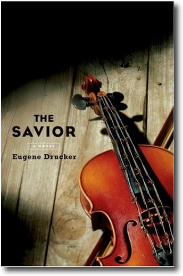
The Savior is the debut novel written by Eugene Drucker, the founding member of the renowned Emerson String Quartet.   It is a fictional Holocaust story, but what it depicts is not far-fetched.  Based on his father Ernst Drucker’s experience as a violinist in Germany during the 1930’s, and mingled with his own performing episodes in hospital wards and infirmaries, Drucker has created a riveting and believable narrative. Most importantly, he has packed into the short 204 pages some questions that humanity has long found impossible to solve, the problem of human depravity and personal redemption.

In the book, the protagonist Gottfried Keller is a young German violinist during WWII. Due to a weak heart, he cannot serve his country in the front line, but he is drafted into the Nazi war machine by the SS for an experiment in a Holocaust death camp. Under the cultured yet ruthless Kommandant, Keller is to play four solo violin concerts to selective Jewish prisoners. The expressed purpose is to test whether music has the power to revive languishing souls.

As I read the summary on the book cover, the image of the movie Shawshank Redemption (1994) came to mind. When the character Andy Dufresne (Tim Robbins) sneaks into the prison control room and broadcasts Mozart’s Sull Aria from The Marriage of Figaro over loud speakers out to the prison grounds, the inmates are instantly mesmerized by the beauty of the duet, the music transporting them from their confinement to lofty realms.

But what readers are confronted with here in The Savior is a drastic contrast. When Keller plays the Bach sonata in G minor for the inmates, he witnesses the horror of despair. The melodies act like whips on their flesh, cruel reminders of the hopelessness they are in. The intricacies of the fugue evoke searing pain rather than the expected comfort and relief, driving them to eerie moans and groans, exasperated in unrestrained sobs and anguish.

The irony is apparent. The redemptive power of music is but a myth. The violinist, acting as a life-giver or at least a boost to waning souls, is but a pawn in a game of cruelty. As the story unfolds, the violinist, the savior himself, finds desperate need for self redemption. Memories of his past, the choice of security over love, come back as torrents pounding on his conscience.

In the discussion of St. Matthew Passion with the young prison guard Rudi, Keller struck the chord of betrayal and remorse. As pathetic as attempting to pull one’s weight off the ground, both Keller and Rudi find It impossible to redeem themselves. The part a person plays in the overall scheme of atrocity needs to be dealt with. Being a pawn in the game does not excuse one from responsibility, even though the issue is a complex one.

As an expert in musicology and a professional musician, the author is able to effectively weave the music of Paganini, Ysaÿe, Hindemith, and Bach into literary form, an expertise only a violinist like himself can provide. The book excels in these detailed renderings of musical and literary tapestry.

However, the mere 204 pages of succinct narrative could be expanded to better handle the complexity of the issues and characterization the book is dealing with. The unfolding of Keller’s love affair with his Jewish girlfriend Marietta could be told in more details to allow the poignancy to linger.

Overall, a captivating story and a springboard to further pondering.

~ ~ ~ Ripples

The Savior by Eugene Drucker, Simon and Schuster, 2007, 204 Pages.

 CLICK HERE TO VIEW A VIDEO of Eugene Drucker playing Bach’s “Chacone” from Partita No. 2 and his explanation of its role in the book The Savior.


                                                            *****

The Glass Castle: Book Review

For my 100th post, I’d like to share an extraordinary personal narrative by writer Jeannette Walls.

The opening of the book grabbed me right away as I was browsing in a bookstore. The author, a successful journalist and writer, was in a taxi, all dressed up for an evening event in New York City. As she glanced out the window, she saw a homeless woman scavenging a garbage bin. A closer look made her realize that was her own mother.

That is one dramatic opening of a book. Knowing that it is the telling of a real-life story intrigued me all the more.

Since its publication in 2005, the award-winning childhood memoir of Jeannette Walls has garnered high acclaims and been on the New York Times Best-Seller List for 100 weeks.

Growing up nomadic is a succinct description of Walls’ childhood. At age four, she had already moved eleven times. Upon the direction of her eccentric father and idealistic mother, and often to escape debts or consequences of misdeeds, the four Walls children were herded across the United States from Arizona to California, across mining towns and even living out open in the Mojave Desert, moving on a whim and often given just minutes to pack up whatever meager possessions they had.

Afflicted with alcoholism, dad Rex had trouble holding down a job. But he was a man with a brilliant mind and a wealth of knowledge which he readily passed to his favorite daughter Jeannette. She learned from him science and engineering, mathematics and history. The glass castle is his promise to her, assuring her one day he would strike gold with the Prospector he had invented, and build the family a glass castle they could all live in. The glass castle remained a glimpse of hope, yet sadly proven to be one illusive dream.

Mom Rose Mary was an idealistic artist and writer. Besides teaching her children to appreciate nature, art and literature, she had taught them adaptability and instilled in them the spirit of resilience. Once driving through the Mojave Desert, they saw an ancient Joshua tree. Growing through the wind swept years, the tree was permanently bent and yet was still firmly rooted. Later, Walls found a sapling growing not far from the old tree and wanted to dig it up and replant it near their home:

I told Mom that I would protect it from the wind and water it every day so that it could grow nice and tall and straight.

Mom frowned at me. ‘You’d be destroying what makes it special,’ she said. “It’s the Joshua tree’s struggle that gives it its beauty.

This book could well be named The Joshua Tree.

Rex’s alcoholism left the family in dire poverty. In this candid and personal account, Walls remembers that often she had to go without food for days. While in school, she would scavenge garbage cans for leftovers after lunch. Often they would have no electricity in the makeshift shack they called home, and took a shower once a week.

Mom was plagued by depression and often lived in a world of her own ideals. Her laissez-faire style of child-rearing often left her kids to fend and provide for themselves. Even if she found a job as a school teacher, she would soon grow tired of it and wouldn’t get up in the morning. The kids would have to drag her up, usually in vain.

I’m surprised the term “Dysfunctional” never occurred in my mind as I read the book. The Walls children were tenacious, resourceful, bold and confident. They were avid readers and did well in school.  What more, they were devoted to each other and loyal to the family. From an early age, they had to learn to handle an alcoholic father, a moody and depressed mother, and mediate their occasional fights and conflicts. The kids had to parent their own misfit mother and father. The Walls might be financially crippled, they were able to maintain strong relationships and an exuberant zest for life.

Walls’ account is candid and personal, poignant with cutting humor. One time in winter, when icicles were formed in their kitchen ceiling because the roof was not insulated and there was no electricity in their home, Walls describes her mom’s response:

All seasons have something to offer,” she said. “Cold weather is good for you. It kills the germs.

How we view the Walls parents of course depends solely on how their daughter presents them in her memoir. And this is precisely my point. Jeannette Walls has painted a loving picture of her parents depsite their failings. She is sympathetic to their struggles with their own demons. Through out the book, I am touched by her capacity to forgive, to persevere, to hope, and to plan for a better future, not only for herself, but for all her siblings.

The last chapters of the book detail how the author and her siblings pursued a new beginning by establishing an independent life in New York City, while still as teenagers. The story of resilience moved on to another phase. Readers are gratified to see a rewarding end to Walls’ years of perseverance.

Film rights have been optioned for the book.  If it is ever turned into a movie, from a visual sense, it is easy to illustrate the hilarious and sensational parts. However, my sincere hope is that the film will keep the integrity and poignancy of the memoir. Often, it is not what has happened that is worth telling, but how the narrator sees what has happened that makes the storytelling moving and memorable. In this case, both the what and the how are extraordinary and uplifting.

The following is a video clip of Jeannette Walls and her mother talking about The Glass Castle.

~ ~ ~½ Ripples

The Glass Castle by Jeannette Walls, published by Scribner, NY. 2005. 288 pages.

NOTE: Here is the latest (April 23, 2012) regarding the film adaptation of the book. Lionsgate has bought the rights and Jennifer Lawrence is in talk for the lead. CLICK HERE to read more.

FOR A LIST OF UPCOMING BOOKS INTO FILMS, CLICK HERE.

***

Beach Reads and Summer Reading 2008

It’s that time of the year when you let it all hang loose and not care about whether what you’re reading is ‘literature’ or not. For some strange reasons, the hot summer months, the taking leave of work and school, the temporal evasion of chores and responsibilities seem to have emboldened us to new adventures, legitimizing ‘escape reading’. But my question is why only in the summer? Do seasons regulate our choices? Should ‘summer reading’ differ from that of the other 10 months in the year? Has the term “Beach Read” been coined merely to jack up book sales?

A look at some current writers’ “summer reading” casts even more doubts on arriving at a clear cut definition of “Beach Reads”. Dan Zak of Washington Post interviewed a sample of them and surveyed their summer reads. Here’s what he found:

  • Mary Higgins Clark: Gift from the Sea by Anne Morrow Lindbergh
  • Susan Choi: War and Peace by Leo Tolstoy
  • Janet Evanovich: The Great Gatsby by F. Scott Fitzgerald
  • Thomas Mallon: Nicholas Nickleby by Charles Dickens
  • Sue Monk Kidd: The Grimke Sisters From South Carolina: Pioneers for Women’s Rights and Abolition by Gerda Lerner.

… and so on and so forth. Click here to read more of Dan Zak’s article on summer reading.

And here’s Arti’s list. I’m currently reading Lisa Scottoline’s Lady Killer, which should satisfy a ‘traditional’ definition of a ‘beach read’. Other than that, I’m also re-reading Jane Austen’s Persuasion, and still plowing through two of Robert K. Johnston’s books, Reel Spirituality: Theology and Film In Dialogue and Reframing Theology and Film. If a ‘beach read’ is defined as a fast pace, plot-driven page-turner, these definitely don’t qualify.

I’ve just finished The Glass Castle by Jeannette Walls, which is one dynamite read, a wild ride any time of the year. It deserves a whole new post. But to categorize it as a ‘beach read’ would seem to have down-graded its quality and impact.

A few titles I plan on getting hold of this summer:

  • Then She Found Me by Elinor Lipman. After watching the film, I’m really interested to find out how a writer instills spirituality into the narrative of everyday living.
  •  Away by Amy Bloom. I’ve wanted to know more about her through her reading. So far I’ve only read one thing from her: Introduction to Jane Austen’s novel Persuasion.
  • The Savior by Eugene Drucker, founding member of the renowned Emerson String Quartet. In this debut novel, he dispels the myth of the saving power of music, using a Holocaust death camp as the backdrop. Should be one poignant read.

What’s your summer reading list like? Typical ‘beach read’ or evidence shattering its existence?

Summer Reading 2009 Click Here.

***