Top 2 Over 90

.

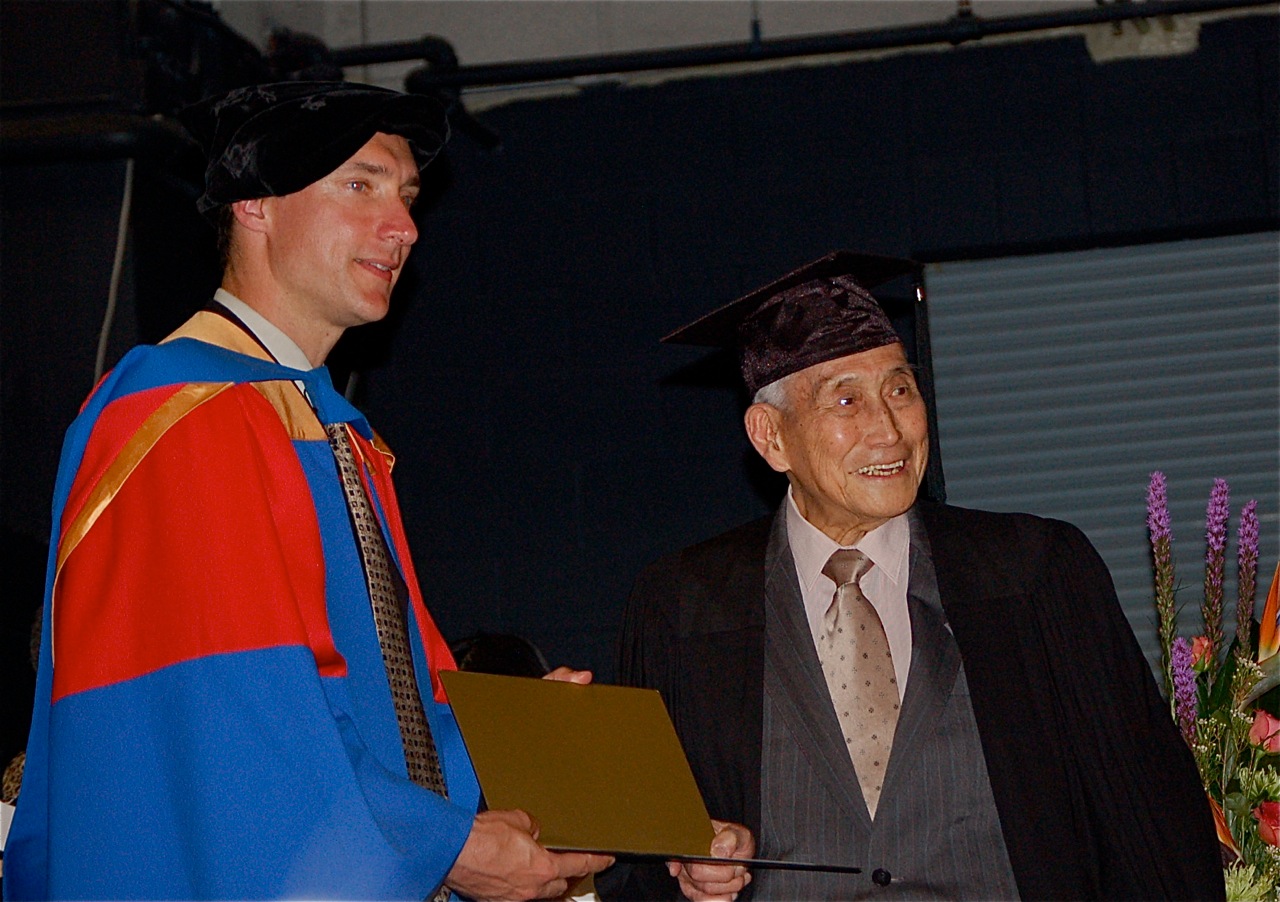
Turning 93 this October, my Dad is one of two recipients of the ‘Lifelong Learning Award’ presented to him by Dr. Scott McLean, Director of Continuing Education, University of Calgary.

In the past two years, he has taken courses from the Calgary Seniors College, co-organized by the U of C Continuing Education and the Evangelical Lutheran Church in Canada. Courses my Dad has taken include Computer, Chinese History, and Chinese Medicine.  Here’s a glimpse of yesterday’s Graduation and Award Ceremony.

No published work, no writing aspiration either.   Just a learner… for life.  Maybe that’s achievement enough.

***

That Was Then… This Is Now

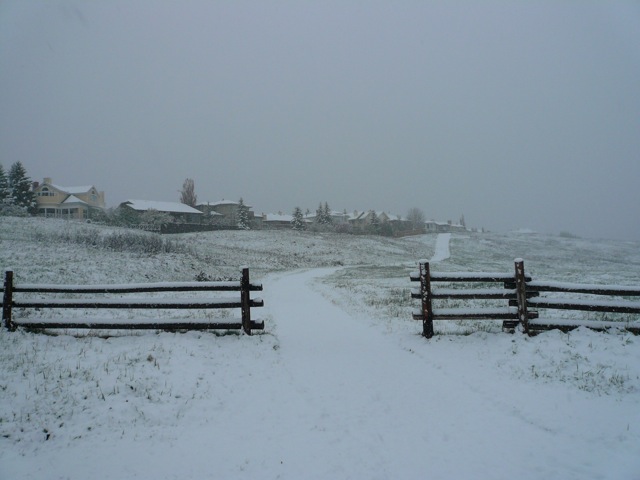
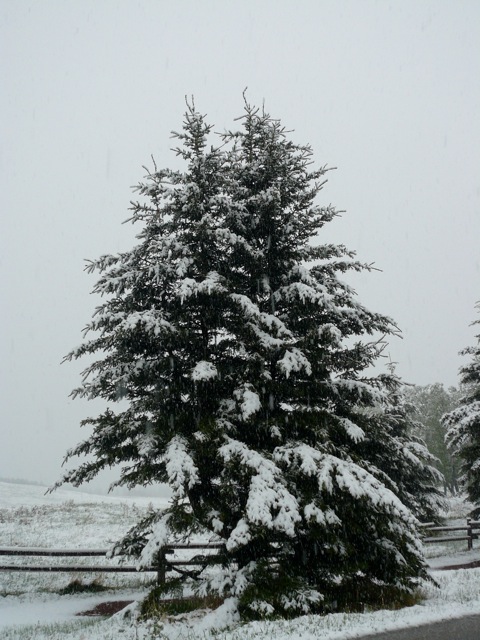
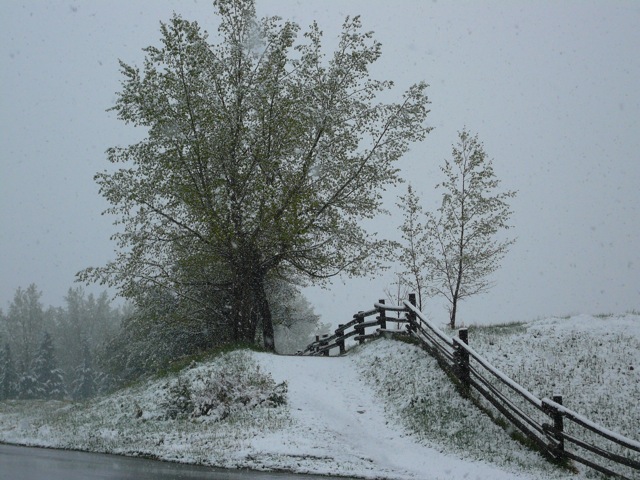
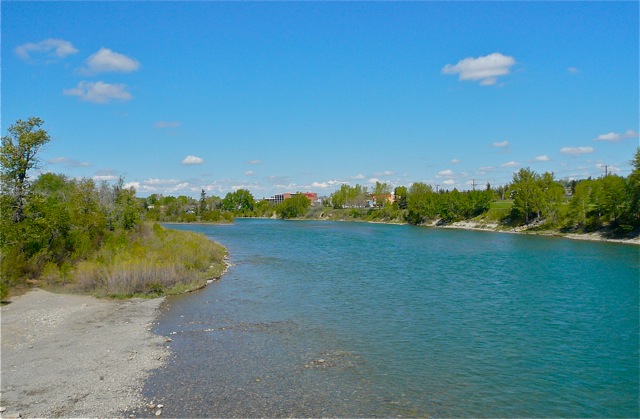
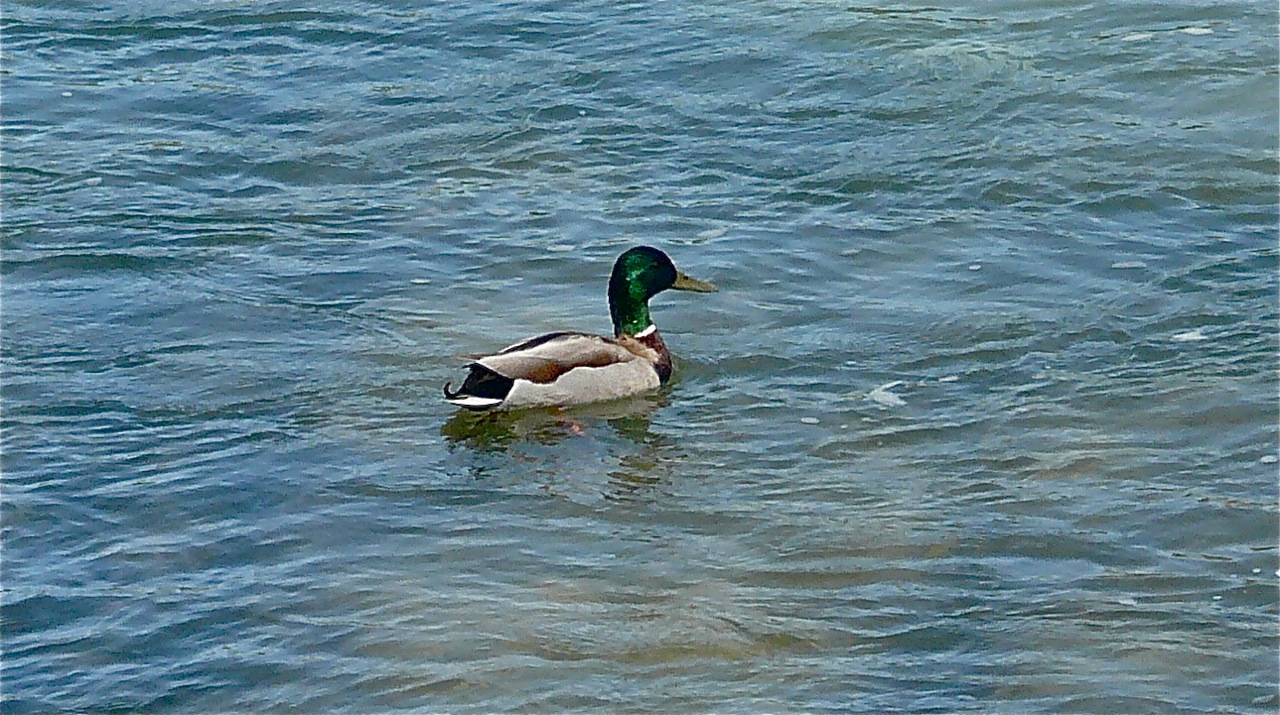
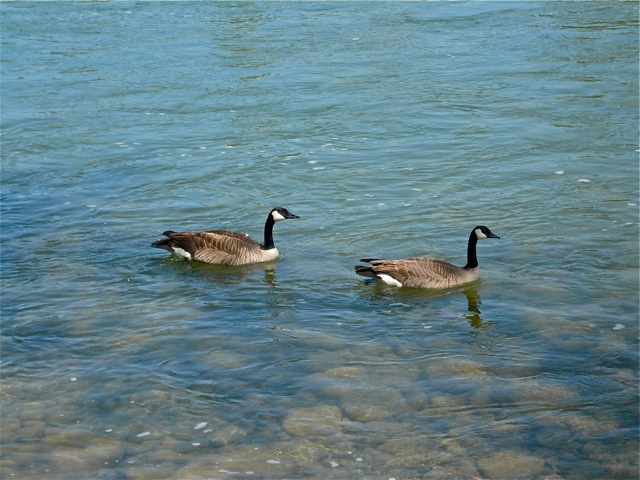
Just three days ago I was walking along The Bow River, enjoying the brilliant double-digit temperature.  Today is quite a different picture.  These are photos I took just a couple of hours ago, temperature hovering around 3 degrees C.  They were taken not too far from the deer sighting location on Mother’s Day. But today, May 27, three days after Victoria Day, the scene is another world.

As one who tries to preserve the most natural and authentic images, I’ve left the photos as they are, no adjustment, not even cropping here.  I like the blurry overtone, their lack of colors, for in reality, it was snowing heavily and the sky was grey.  I’d enjoyed this impromptu photo session.  I came home soaking wet.

But all this time I’ve been thinking about the oil spill down in the Mexican Gulf coast.  It’s one thing about snow in May for us, or even in July, or baseball-size hail in August, or the fierce blizzards in the winter, these we’ve learned to take as they come, knowing they’re ‘act of God’.

But, if something happens due to human errors or negligence, or which is preventable if more caution was paid, or less greed was involved, or political interests were laid aside, or more value placed on life, human or nature, then it’s a different matter.  Such are the times when we can’t be docilely yielding, as to a sovereign deity. Drastic measures are definitely needed in a time such as this.

No doubt, these pictures are thousands of miles from the Gulf coast, a huge gap in climate, a drastic difference in natural habitat.  Nonetheless, the air that once was in Chernobyl would ultimately reach us just the same as the tides from the tsunami of the Indian Ocean.  We’re shrouded by the same atmosphere; we’re linked by the same waters.  So, your pelican is also my pelican, likewise, my deer, your deer.

.

.

.

.

.

All photos taken by Arti of Ripple Effects, May 27, 2010.  ALL RIGHTS RESERVED.

****

A Victoria Day Walk

Today is Victoria Day, when we Canadians are indebted to Queen Victoria (1819-1901) for a nice, long weekend. For many, it marks the first camping trip of the year, a summer kick-off.  Ironically, it’s usually a weekend with overnight frost and even snow.   So the custom is, plant your garden only after Victoria Day.

To commemorate, I should be watching The Young Victoria.  But, for all these years, I haven’t done anything Victorian on this day.  I guess they did take long walks.  So, I took a stroll along the Bow River.  Just as the day, this is a leisurely post.  Here are some sights I captured, yes again, with my pocket camera.  They’re a bit more cheery than the Mother’s Day outing of the deer family.  What a difference two weeks can make.

The Bow River:

A single flowering tree:

Holiday or not, this is life:

Making a splash is way more fun, especially if you can’t swim:

Spring, summer… green or white, we’ll take what comes:

Photos taken by Arti of Ripple Effects on Victoria Day, 2010.  All Rights Reserved.

***

Mother’s Day Picnic

Here we are, our clan of extended family, out for a Mother’s Day picnic.  The weather’s just fine, though a bit chilly.  But for a May afternoon in Cowtown, we think it’s acceptable.

.

Well you got to eat out some time.  What better day than on Mother’s Day.  Why, our human neighbors have to cook… can smell their Bar-B-Q from far.  What a chore!   Wonder if it’s their Mom who has to clean up.  As for us, even though the grass is a bit dry, at least we don’t have to deal with all that trans fat and high sodium.

.

Wait, this is just too good to pass up.

.

And an evening stroll after dinner.  Ahh… Mother knows best.

.

Hey, who’s that trying to take our pictures?  Haven’t you seen a deer family picnic before?  Oh right, not in your backyard… but, isn’t this our backyard?

*

A Note About the Photos:  Arti took them in her neck of the woods, the shared backyard with the Deer Family, on Mother’s Day, 2010.  All Rights Reserved.

***

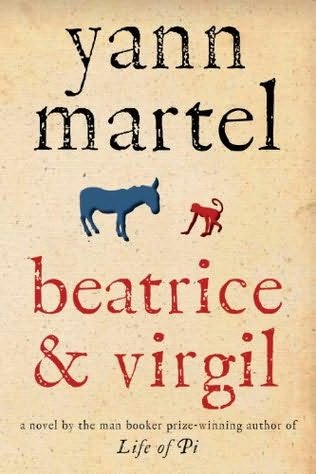
Beatrice & Virgil by Yann Martel

It has been nine years since Yann Martel’s second novel The Life of Pi first published. Its winning the Booker Prize in 2002 has solidly placed him on the international literary stage. Beatrice and Virgil is the long awaited third novel by this Saskatoon based Canadian author.

Beatrice is a donkey.  Virgil, a howler monkey.  They are the two characters in a play written by a taxidermist.  Beatrice and Virgil are also specimens in his shop Okapi Taxidermy.  The two names come from Dante’s Divine Comedy, to which the book has made reference. The metaphor of taxidermy is a fresh frame Martel constructed to look at the Holocaust. The preservation of evidence of lives lived, the mounting of historical facts.

Beatrice and Virgil is also a love story.  The two animals cherish each other and have to face the cruelty of extinction together.  In the play, they have elaborate talks about fruits, a striped shirt, God and faith.  It’s all allegorical of course.  And there’s the rub.

While I fully appreciate Martel’s attempt at creating a new frame to present the atrocity of the Holocaust, I doubt using animals as symbols and parallels, depicting the cruel treatment of them would suffice to convey the magnitude and severity of this horrific crime against humanity.  Despite a sincere intent and the riveting storyline, I feel the book fails to deliver the dynamics and efficacy in its form as an allegory.

Nonetheless, the book conveys some very interesting points, through which Martel has demonstrated the imaginative power of literary creation.  First off, the author plays with the notion that the line separating fiction and non-fiction is indeed blurry.  To make a case of it, he writes himself into the story.  The main character is an author called Henry, whose wife Sarah later on gives birth to their son Theo, the name of Martel’s own son with his partner, the writer Alice Kuipers.

Back to the story, Henry’s second book has stirred international sensations, winning prizes, adopted by schools and book clubs, and adapted into a Hollywood movie.  Life of Pi is all that.  And just like in real life, it has been a few years after that before the fictional Henry completes his third novel, a book on the Holocaust.  But this time, he has trouble finding a publisher (now this may diverge from real life.)

This new book Henry wants to get published is a literary fusion. He wants it to be a ‘flip book’.  One side is fiction, the other side an essay, with the title on both.  And that is exactly what the cover of this book Beatrice and Virgil is like.  Henry observes that all Holocaust accounts have been ‘historical, factual, and literal’, it is worthwhile to create a fictional rendition of it, “a new choice of stories”, providing readers with an artistic expression representing these well documented, horrific happenings.  And this is exactly what Martel has done, constructing imaginary portals based on facts.

Once these layers have been peeled off, there is yet another with Henry meeting the taxidermist who is writing the play using Beatrice and Virgil as the two main characters. Coincidentally, he is also called Henry. So, the amateur writer Henry mysteriously involves the professional writer Henry to help him with the completion of his play on the Holocaust.  But of course, there remains yet another layer of secret.

The image of Escher’s Drawing Hands keeps emerging in my mind as I read the book, how a writer would write himself into the story and into the story.

While the style of storytelling is intriguing, when one considers the topic and the major crux of the book, that being the atrocity that is the Holocaust, it is apparent that the choice of the deadpan treatment of a donkey and a howler monkey in allegorical terms just would not suffice. While the play in the book is reminiscent of other two-character plays, namely, Tom Stoppard’s Rosencrantz And Guildenstern Are Dead and Samuel Beckett’s Waiting For GodotBeatrice and Virgil seems to lack the wit of the former and the depth of the latter.

And as I think about the fact that it has taken the author nine years to come to this one, I wonder, just wonder… Oh, the creative process is indeed an incomprehensible and uncertain path, as cryptic as an Escher drawing.

Beatrice & Virgil by Yann Martel, published by Knopf Canada, 2010, 224 pages.

~~ ½ Ripples

***

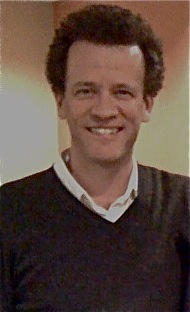
Epilogue:  Yann Martel Reading at the Calgary Public Library

.

.

After writing the above section on Beatrice & Virgil, Arti has the privilege of listening to Yann Martel read from his new book at the Calgary Public Library tonight (April 28, 2010).  It’s always interesting to hear a writer read from his own work.  It’s even more gratifying listening to the Q & A session afterwards.  Yes, he is still sending books to Stephen Harper because he firmly believes that literature is the tool to understand the human condition.

The writer also talked about the creative act, and the use of animals as symbolism. Animals are inherently poignant.  And, how did he know at that pivotal moment of his life, that he wanted to become a writer?  It’s from within, you’d know it because you’d simply want to write without any consideration of monetary gains or praises.  It’s a strong feeling inside moving you to just do it.

Do I need to make any changes to the review above after hearing the author read from the book?  No, I don’t think so.  But what has changed is my view of the writer.  I have come face to face with a very personable and casual human being, someone who is convinced that literature can teach us how to be human, that fiction is as important as facts, and that the creative act of writing is driven by an inherently insatiable desire to simply write, without the intention of being published or any notion of ‘success’ in mind.

***

The AGA Exhibits: Images In Sight And Sound

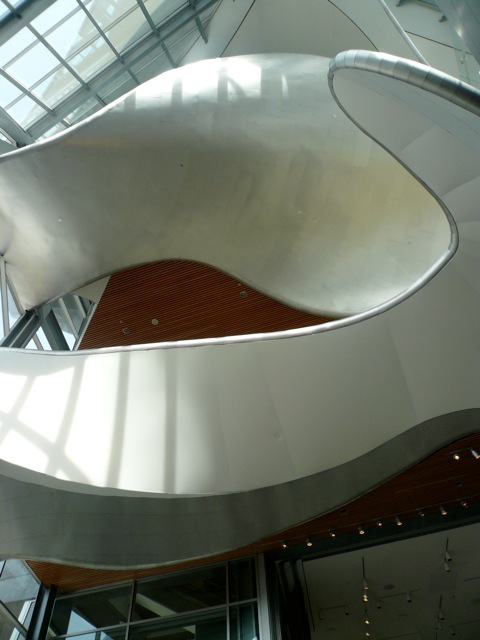
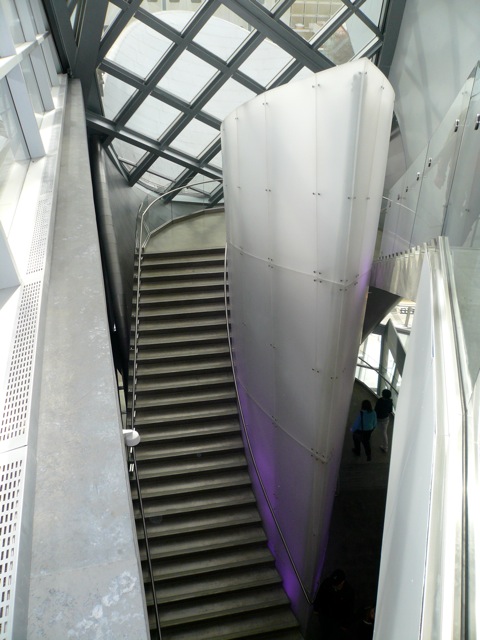
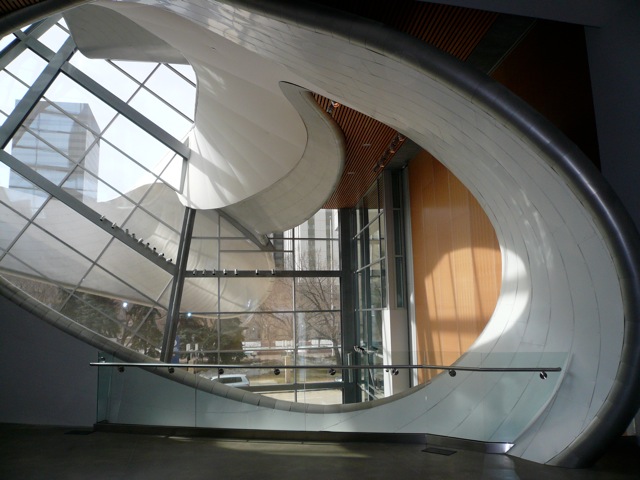
The AGA actually is a much smaller building than I expected.  But what’s appealing is the ubiquitous windows and glass allowing natural light to pour in, visually expanding the interior space.  The windows also make the surrounding downtown buildings visible from within, enhancing the sense of connection with the adjacent urban environs.  The exhibits are distributed among three floors of galleries.

Figures in Motion showcases 40 of Edgar Degas’ (1834-1917) bronze sculptures of dancers, bathers, and horses.  Juxtaposed in the exhibits are paintings, pastels, drawings, and prints of early photographs showing these figures in action.  The nuance of a single movement, as simple as the drying motion of bathers, can turn into a subject of grace and beauty under the sensitive eyes and expressive hands of the artist.

In contrast, Francisco Goya’s (1746-1828) etching prints suites Los Caprichos (1799) and The Disasters of War (1810-1820) are the realistic depiction of the ugliness and foibles of humanity.  A sharp social critic, his art mightier than the sword, Goya’s works expose unreservedly the horror of war and his critique of his time.

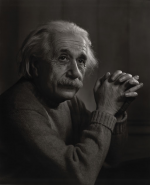
Up to the second floor I came face to face with the archetypal portraits by the renowned Canadian photographer Yousuf Karsh (1908-2002) in the exhibit Karsh: Image Maker.  We all must have seen some of his black and white portraits of famous people, somewhere.  The most well-known probably is Winston Churchill from whose mouth Karsh reportedly pulled out a cigar as he did his work.  Other famous portraits include that of Albert Einstein, Martin Luther King, Ernest Hemingway, Princess Elizabeth, Pablo Picasso, Andy Warhol, Alfred Hitchcock, Helen Keller, Grey Owl and numerous remarkable history makers.  I was totally absorbed as I walked by these meditative portraits of iconic personalities.

It seemed that the exhibits grew more interesting with every flight of stairs I stepped up.  The third floor offered an experience totally new to me.  As far as I can recall, this is the first sound installation mixed media art that I’ve encountered.  In a large, rectangular room occupying the whole floor, The Murder of Crows is installed.  Sound sculptors Janet Cardiff and George Miller have shown this work, their largest sound installation, in Australia, Germany and Brazil.  This is their North American premiere.

98 speakers are placed strategically and aesthetically in a large room, surrounding a table in the middle.  On the table is a megaphone.  Audience seats are grouped in the space encircled by the speakers.  The whole setting visually is a minimalist display.  The photo below is this installation in Berlin.  Even without the sound, the arrangement is an artistic presentation in itself.

But what we had at the AGA was a windowless room with dim lighting.  The added effects were even more haunting and claustrophobic.

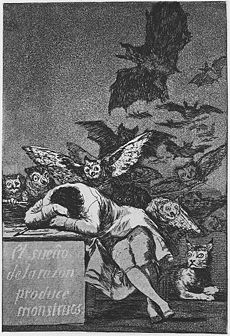
The 30 minutes sound presentation is a fusion of narrations, voices, footsteps, birds and bats, choral and orchestral music.  It evokes sequences of dreamscapes, and in part is an audio rendition of Goya’s etching The Sleep of Reason Produces Monsters in the Los Caprichos series (See image above).  The etching shows the artist himself asleep at his desk, with owls and bats hovering over him. The title divulges layers of meaning, prompting speculations of Goya’s actual thoughts.  The sleep of reason unleashes powerful imagination, even nightmares. Or, the erosion of reason led humanity into chaos and irrationality…

The phrase ‘the murder of crows’ refers to the collective gathering of the ominous birds, re-created here by the groupings of the 98 black speakers, some mounted on stands, some placed on chairs.  The very title and the effects made me feel like I was in the middle of the Hitchcock movie The Birds.  The sound was so riveting that I was glued to my seat in suspense… and the music from the massive choir and orchestra was both amazing and disturbing.  Click here to watch a 5-minute video clip of the sound installation. Click here to read an interview with Cardiff and Miller.

The AGA is not a big structure, but what is offered inside spans the artistic expressions separated by a chasm of time, form, and style.  From Goya’s disturbing etchings to the graceful renditions of Degas’ dancers, to the photographic images of iconic personalities captured by Karsh, and to end with the haunting sound installation The Murder of Crows, the exhibits were rains of pebbles into this quiet pond of thoughts… something I had not anticipated at the start of the trip.

Photography was not allowed in the galleries, so I cannot post any authentic visual experience here.  The above images are from the following sources:

Degas’ bronze sculpture Little Dancer and Karsh’s portrait of Albert Einstein from AGA website http://youraga.ca/current

Goya’s The Sleep of Reason Produces Monsters from Wikipedia Commons

The Murder of Crows sound installation from Cardiff and Miller’s website  http://www.cardiffmiller.com/artworks/inst/murder_of_crows.html

***

Art Gallery of Alberta

Drove up to Edmonton to take in the new Art Gallery of Alberta.  My first impression when I looked at the promotional materials was its similarity to a Frank Gehry like the Disney Concert Hall in L.A. and the Peter B. Lewis Building on the Case Western Reserve University campus.

A look at it in real life confirmed my thought, it sure was a Gehry style architecture.  A little googling later led me to the information that its architect Randall Stout used to work at Frank Gehry’s studio.  CLICK HERE for an extensive interview of Randall Stout and some spectacular images of his portfolio.

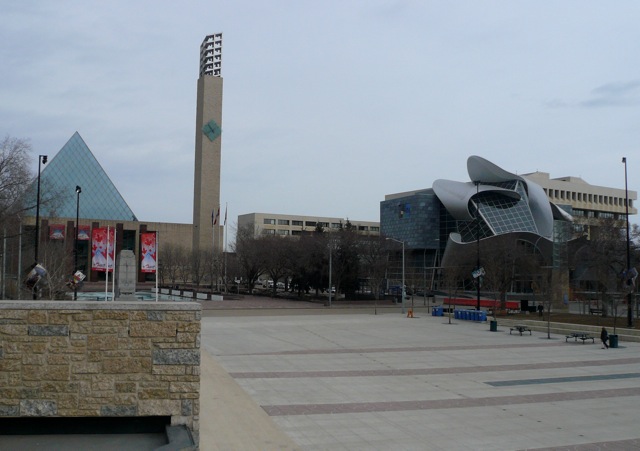
I don’t have any sophisticated photo software to take out the traffic lights and the sewage repair work underway, so the following picture shows the real life street scene of the remarkable structure at its most authentic.  But for some sparkling clear views and a detailed description of the architecture, CLICK HERE.

And here are some pictures of the inside, like the above, were taken by my little Panasonic Lumix pocket camera, no touch-up or editing:

.

.

.

The AGA is situated adjacent the Sir Winston Churchill Square in downtown Edmonton, a public open space linking the City Hall with the arts:

The Winspear Centre, home of the Edmonton Symphony is just across from the Square:

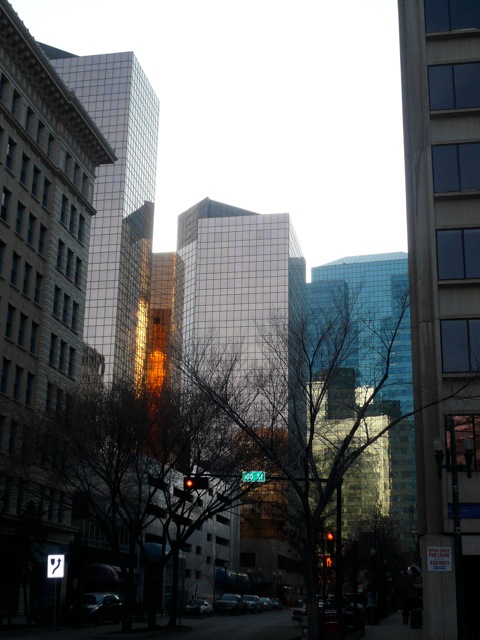
To finish off my day visit, I saw this colourful reflection of the slowly setting sun on the downtown buildings:

.

Of course, I didn’t drive three hours from Calgary just see the the architecture, but the exhibits.  And that has to be another post.

Photos taken by Arti of Ripple Effects, March 2010.
All Rights Reserved

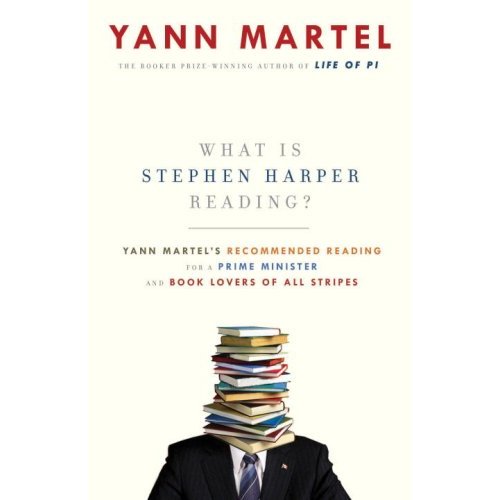
What Is Stephen Harper Reading?

.
Now that the Winter Olympics have come to a close, maybe more of the world would have heard of Stephen Harper.  No, no, he isn’t a medal winner.  Just a hockey fan, and, he happens to be Canada’s Prime Minister.
.

And it’s good time to read this book.  It all started one March day in 2007.  Fifty Canadian artists of all sorts were invited to a Parliamentary session to celebrate the fiftieth anniversary of the Canada Council for the Arts, each of them representing a particular year.

There they were sitting in the Visitors’ Gallery of the House of Commons, waiting for their item to come up on the long agenda of the day.  At 3:00 pm, the business came to the celebration.  All fifty of them were asked to stand up. The Minister for Canadian Heritage, Bev Oda at the time, rose up, acknowledged their presence, and gave a five-minute speech.  Applause.  Then on to the next business item.  Stephen Harper did not even look up at them standing in the Gallery.

The fifty guest artists were incredulous.  Among them was Yann Martel, who received a Canada Council grant in 1991 allowing him to write his first novel.  His literary career reached an admirable high in 2002 when he was awarded The Man Booker Prize for his book Life of Pi.  (CLICK HERE to read one appreciative reader’s response to the book, a personal note from Barack Obama.)

After this incident, driven by frustration, Martel decided to launch a most interesting project.  He started sending Stephen Harper a book every two weeks, with his personal letter introducing  the work, and of course, whenever appropriate, fill him in as to why that’s a good read for a Prime Minister.   With such an intention, one can predict the tone of these letters.  They are mostly sincere, mind you, albeit embedded with the occasional sarcasm, irony, and yes, some condescending subtext.

But overall, these letters to the Prime Minister sent with the books are genuine appeal to the Leader of the country to place more emphasis on the arts. They offer a place of stillness in the busy agenda of a politician.  Martel’s is a gentle voice to remind the prime policy maker the role of the arts, in particular, literature and its appreciation, in the making of a nation, the importance of beauty and the imagination in the building of a vision and in shaping the humanity of her people.

So, it’s not so much as to what Stephen Harper is reading, but what’s on his TBR list.  It remains unknown whether the PM has actually read any of these gifts, although letters of appreciation had been sent to Martel from his office. It’s fun too to read the choices of the titles… and their reasons.  But above all, I’ve enjoyed reading Martel’s insights into how the literary speaks in the context of contemporary political and social landscape.  Here are some examples.  I’ve included a quote or two from Martel’s letter sent with each title:

Animal Farm by George Orwell

Animal Farm is about collective folly.  It is a political book, which won’t be lost on someone in your line of business.  It deals with one of the few matters on which we can all agree:  the evil of tyranny.

Animal Farm is a perfect exemplar of one of the things that literature can be: portable history.  … in a scant 120 pages, … the reader is made wise to the ways of the politically wicked.  That too is what literature can be: an inoculation.”

The Island Means Minago by Milton Acorn (People’s Poet of Canada)

“But any revolution that uses poetry as one of its weapons has at least one correct thing going for it: the knowledge that artistic expression is central to who and how a people are.”

“… the past is one thing, but what we make of it, the conclusions we draw, is another.  History can be many things, depending on how we read it, just as the future can be many things, depending on how we live it… And it is by dreaming first that we get to new realities.  Hence the need for poets.”

The Educated Imagination by Northrop Frye

“Literature speaks the language of the imagination.”

“… the better, the more fertile our imagination, the better we can be at being both reasonable and emotional. As broad and deep as our dreams are, so can our realities become.  And there’s no better way to train that vital part of us than through literature.”

A Modest Proposal by Jonathan Swift

“So, more cuts in arts funding… What does $45 million buy that has more worth than a people’s cultural expression, than a people’s sense of who they are?”

Mister Pip by Lloyd Jones

“Lloyd Jones’s novel is about how literature can create a new world.  It is about how the world can be read like a novel, and a novel like the world.”

The Kreutzer Sonata by Leo Tolstoy

“Why a book on music?  Because serious music, at least as represented by new and classical music, is fast disappearing from our Canadian lives… the latest proof of this: the CBC Radio Orchestra is to be disbanded… How much culture can we do without before we become lifeless, corporate drones?  I believe that both in good and bad times we need beautiful music.”

The Uncommon Reader by Alan Bennett

“The irony in the story is as light as whipped cream, the humour as appealing as candy, the characterization as crisp as potato chips, but at the heart of it there’s something highly nutritious to be digested:  the effect that books can have on a life.”

“Whenever an independent bookstore disappears, shareholders somewhere may be richer, but a neighbourhood is for sure poorer.”

Gilead by Marilynne Robinson

“Speaking of President Obama, it’s because of him that I’m sending you the novel Gilead, by the American writer Marilynne Robinson.  It’s one of his favourite novels.”

“I would sincerely recommend that you read Gilead before you meet President Obama on February 19.  For two people who are meeting for the first time, there’s nothing like talking about a book that both have read to create common ground and a sense of intimacy, of knowing the other in a small but important way.  After all, to like the same book implies a similar emotional response to it, a shared recognition of the world reflected in it. This is assuming , of course, that you like the book.”

Julius Caesar by William Shakespeare

“Since Julius Caesar is about power and politics, we might as well talk about power and politics.  Let me discuss concerns I have with two decisions your government recently announced.

My first concern is about the Social Sciences and Humanities Research Council.  New money allocated to the Council is apparently to be spent exclusively on “business-related degrees”…. we’re losing sight of the purpose of a university if we think it’s the place to churn out MBAs.  A university is the repository and crucible of a society, the place where it studies itself.  It is the brain of a society.  It is not the wallet… A university builds minds and souls.  A business employs.”

Louis Riel by Chester Brown and The Sailor Who Fell From Grace With The Sea by Yukio Mishima

“But I’ve always liked that about books, how they can be so different from each other and yet rest together without strife on a bookshelf.  The hope of literature, the hope of stillness, is that the peace with which the most varied books can lie side by side will transform their readers, so that they too will be able to live side by side with people very different from themselves.”

**

Yann Martel is still sending books to Stephen Harper every two-weeks.  Other authors he has sent include Jane Austen, Flannery O’Connor, Ayn Rand, Gabriel Garcia Marquez, Douglas Coupland, Philip Roth, Alexander Solzhenitsyn, Franz Kafka, Virginia Woolf, Samuel Beckett, Michael Ignatieff, Paul McCartney, Dylan Thomas, Laura and Jenna Bush… quite an eclectic selection. Excellent demonstration of how we can be so drastically different in our perspectives and background, and yet can still stand shoulder to shoulder in this vast land of the free.

To read the full list of all the books he has sent, and yes, including this one, CLICK HERE to go to the official site:  What Is Stephen Harper Reading dot ca

What Is Stephen Harper Reading? by Yann Martel, published by Vintage Canada, 2009, 233 pages.

****

Regarding the role of universities and the humanities as dying disciplines, CLICK HERE to read my post: THE HUMANITIES AS AN ENDANGERED SPECIES.

Haiti Benefit Concert

There was no U2, Bono, or Sir Paul, no Clooney or other big stars answering phone lines, just our own local musicians from Western Canada pitching in to raise funds for earthquake-stricken Haiti. While the Olympic torch had just passed by our city and moved on to cheering crowds in Banff, the flame of compassion burned bright here at the amazing concert last night in Calgary’s Centre Street Church.

Partnered with the Christian relief organization Samaritan’s Purse, the benefit concert was organized on short notice.  With just a few days to prepare, some of Canada’s top Christian musicians and recording artists gathered, together with the Centre Street Church orchestra and choir, to deliver a moving, high-calibred performance.  All funds raised will be sent to Haiti for urgently needed relief work.

I’ve long wanted to hear Juno Award winner, singer songwriter Steve Bell in person, and I had the chance last night.  But I was much more gratified to discover other singers that I would never have known if not for an occasion like this.  For I’m a sporadic listener of Christian music, have not been a fan of the genre, I admit.  But last night I had an altered view and gained a new appreciation for Christian artists and their music.

Steve Bell and Carolyn Arends opened the concert.  Bell had that amazing voice and musicianship.  From his guitar, I could hear chords that seemed to be created new and yet so natural in their progression. From Surrey, B.C., award-winning singer and songwriter Carolyn Arends wrote on her blog about this concert. And there I discovered some inspiring posts.  I was captured by her voice, her lyrics, piano and guitar playing, and now from her blog, her writing.

The spoken words written for the occasion were delivered rap-style, backed by the rhythms of a djembe drum, riveting and forceful. Other musicians came up one after another, among them were Jason Zerbin, Dan Nel, recording artists Raylene Scarrott, John Bauer, the humorous ‘hip hop artist for the night’, Corey Doak, and the group ‘Junkyard Poets’, just love that name.  Brad McGillvrey, with the choir harmonizing, gave a touching rendition of Lenard Cohen’s ‘Hallelujah’.

They came up one after the other, quietly, low-key and unpretentious.  That in itself was moving, for this was not a show for the musicians themselves.  There was no limelight; their performance had only one purpose, to draw our attention to the devastated victims in Haiti.

It wasn’t just music, of course.  A group from Compassion Canada shared their harrowing experience as they arrived Haiti one hour before the earthquake hit.  Their lives were spared as they were tied up with some VIP protocols and were delayed reaching their hotel.  Hotel Montana was crumbled by the quake an hour later.  Spared for what?  Brent Trask of the group shared his insight from the ordeal using Psalm 116.  Spared to fulfill one’s vows to the Lifegiver, to make one’s life count, to serve, to praise.

The finale is a moving sight with all performers coming on stage to wrap up with Carolyn Arends’ ‘Seize The Day’.

We were excited to hear that the effort of the night was well rewarded as we raised $115,000.  With the Canadian government matching the amount, a total of $230,000 will be sent to relieve the urgently waiting victims in devastated Haiti.  No big Hollywood stars, no international phenom’s, just plain local musicians with a heart, and a community of united spirit.  Steve Bell added an apt reminder. Don’t say ‘pray for Haiti’, he urged us, but ‘pray with Haiti’.  We are all in it together, our shared humanity, one communal spirit.  Something worthwhile to ponder as we drove back to our warm and secure homes.

Update Jan. 24, 2010:  Since the concert, more donations have been pouring in.  As of today, the amount is at $134,000. With the government’s matching funds, $268,000… so far.

*****

** All photos taken by Arti, seated in the eighth row from the stage, using a pocket-sized digital camera.  The actual scene was much more impressive than these blurry photos show. **

Alberta Bound

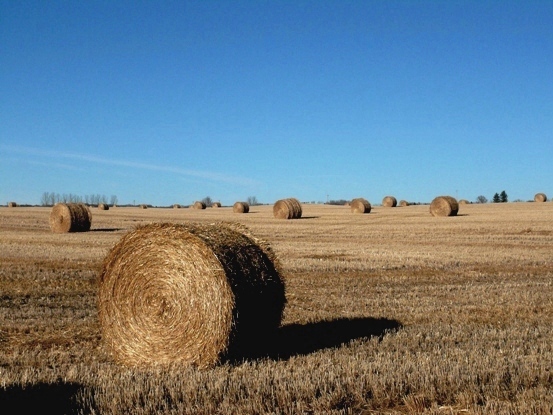
Autumn in rural Alberta is immensity amplified.  Big sky and expanse of farmland is the main scenery, something what W. O. Mitchell describes as “the least common denominator of nature… land and sky.”

The air is crisp, fresh, and dry.  Colors are simple:  Big blue sky, golden harvest, even just hay rolled up in bales.  Farming against the snow-capped Rockies, rustic, serene, rejuvenating, harmonious fusion of nature and human endeavor.

Trees as windbreaks in the summer, nature’s sculpture in the fall.  So the leaves are gone, but only then can we see the beauty of the bare branches, like dancers celebrating the changing of the seasons.

The solitary figure in the field… en masse.

“Think I’ll go out to Alberta,
Weather’s good there in the fall.
Got some friends that I can go to working for…”

For some inexplicable reasons, as I’m posting these photos, a flood of nostalgia whirls up in me.  The melodies and lyrics of those songs and singers that we can claim our own keep filling my mind all day. Not too many up-and-coming like to hang around here, since all the fame and glory one seeks is down south.

But these remain our own: Gordon Lightfoot, Ian and Sylvia Tyson, Neil Young… and songs about Alberta, about heading west to seek a new life, or to escape from the pain of lost love.  Maybe the wide open country, big blue sky and wide expanse of land do have their healing powers.

And memories, forever clear, keep us rooted… here’s home.

****

Photos taken by Arti of Ripple Effects, November, 09.  All Rights Reserved.

From Banff to Jasper

My cousin and her husband came to visit from Ohio.  They wanted to see ‘the most beautiful highway in the world’.  Not that I’m touting my own horn, but if they didn’t mention it I wouldn’t have known of such a claim.  That’s the stretch of roadway from Banff north to Jasper National Park here in Alberta.  Since I considered that part of the country my neck of the woods (relatively speaking), I was glad to take to the road with them as a guide.  Yes, I admit beauty may be subjective, but I’m sure you’ll agree these are some of the most extraordinary sights one can behold.

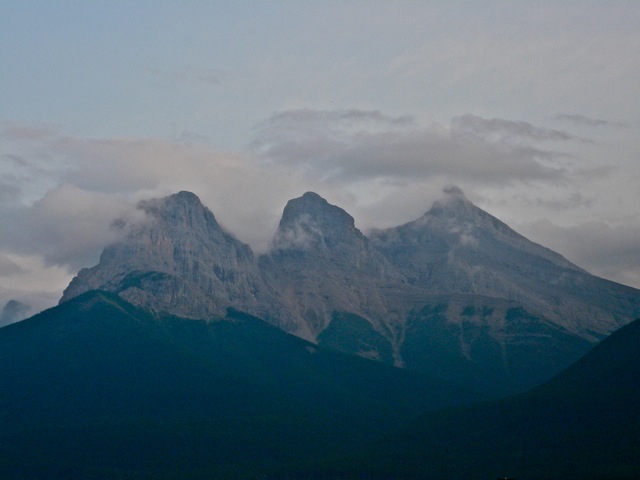
Canmore, Alberta, is the gateway to Banff National Park.  This little town hosted some of the ’88 Winter Olympics events at its Nordic Centre.  Here’s a view of the nearby Three Sisters Mountain at dusk when we arrived:

P1010421_2

From Canmore we headed to Banff National Park the next morning.  Despite the commercialized Banff Avenue, we could still get close to the wild near the Bow River. Elkie was so busy munching his lunch that he seemed oblivious to his human intruders:

P1010403_2

P1010414_3

From Banff, we continued on the Trans Canada Highway to Lake Louise and Moraine Lake. If you happen to have an old Canadian twenty-dollar bill, take a look at the back of it.  Here’s the real thing, Moraine Lake:

P1010472_2

From Moraine Lake, we headed north on highway 93, the Icefields Parkway, towards Jasper National Park. This stretch of the road offered some of the most beautiful sceneries in the world.

Bow Lake at the bottom of glaciated mountains.  The beautiful emerald color is the result of rock flour, moraines grounded to fine powder suspended in the water:

P1010465_2

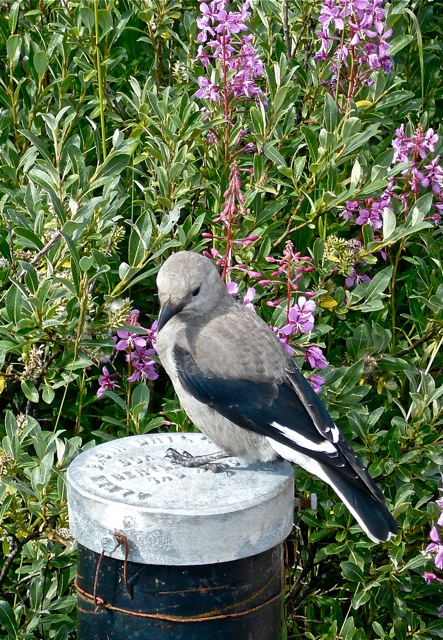
The Clark’s Nutcracker is a common bird in the area, among wildflowers by the glacier water:

P1010468_2_2

P1010457_2

.

.

The serene Waterfowl Lake:

P1010454

After a couple of hours drive, we entered Jasper National Park.  The major attraction as soon as we entered was the Columbia Icefields, the largest body of ice in the Rocky Mountains.  It spans 325 sq. km (130 sq. miles),  with an estimated depth of 365 m. (1,200 ft.)  Elevation averages 3,000 m. (10,000 ft.)

Mount Andromeda:

P1010430_3

The Athabasca Glacier spans an area of 6 sq. km (2.5 sq. mi), with a depth of 90 – 300 m. (270 – 1000 ft.) Its elevation about 2700 m (8900 ft).  Yes, there we were, in the middle of August in our summer clothes, thousands of feet above sea level, walking on the remnant of the last ice age over 10,000 years ago.  Here’s the magnificent view:

P1010445_2

That was only the entrance of Jasper National Park, but more than we could fathom for our short excursion.

**

Header Picture:  Bow Lake, Banff National Park, Alberta, Canada.

All photos taken by Arti of Ripple Effects https://rippleeffects.wordpress.com August, 2009.  ALL RIGHTS RESERVED.

A Midsummer Day’s Dream

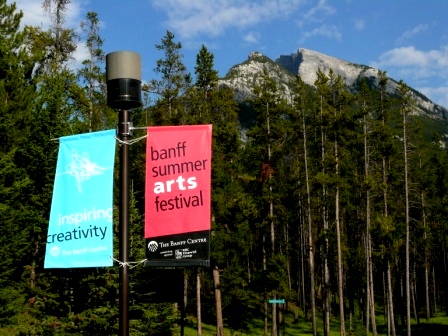
It was pure serendipity.  Finding out there would be an interview with Michael Ondaatje at the Banff Summer Arts Festival was a wonderful surprise.  Hours later I was on my way to Banff National Park.  The 90-minutes drive through the Rockies listening to the soundtrack of The English Patient was surreal.  And the destination was just as picturesque and dreamlike:

Banff Summer Arts Festival

The Banff Centre

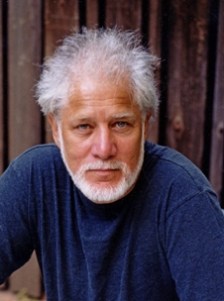
In the event entitled ‘Literary Primetime’, Michael Ondaatje, the Sri Lanka born Canadian poet, novelist, filmmaker, winner of the Booker Prize for The English Patient, was interviewed by Marni Jackson, the Chair of the Literary Journalism Program at The Banff Centre, an acclaimed writer in her own right.

Ondaatje’s impressive body of work includes novels, memoir and a dozen books of poetry, editorial work and documentary filmmaking.  But perhaps the most famous is The English Patient, which was adapted into film by the late Anthony Minghella.  The movie was awarded nine Academy Awards in 1996.

ondaatjeThe literary event started off with Ondaatje reading several passages from Divisadero, a book that brought him the fifth Governor General Literary Award.  I sat in the huge dining hall with an audience of a couple hundreds, entranced.  From afar I held my gaze at the silver haired writer framed by the large picture windows, the evening sun seeping through majestic evergreens, and silence shrouded the place except for one man’s gentle voice.  It was simply mesmerizing.

But it was the interview that made the dreamlike experience most rewarding.  The conversation explored the creative mind behind the writing process.  I jotted down some helpful tidbits:

Curiosity goes a long way.  It sparks off the research process, generating and sustaining the creative energy for the work.

Listen to the rhythm of the sentences.   “He would” or “he’d” could elicit very different effects.  Sound advice from a poet.

I was excited to hear Ondaatje address questions stemming from his book The Conversations: Walter Murch and the Art of Editing Film, which coincidentally, I am currently reading.  Murch was the film editor of The English Patient, one of my all time favorite movies.  The serendipity is most gratifying.  The art of film editing parallels that of writing… the essence is knowing what to cut, and when to move on.

While Minghella was writing the screenplay, Ondaatje was involved in the drafts.  The story had to be taken apart and rewritten to be adapted into film.  When you see your work being dismantled and reconstructed into another form, I imagine it takes courage, trust, and humility to accept that.  Ondaatje appreciates the art form of film and respects others’ expertise, entrusting his work in their hands.  This team effort, this alchemy of talents is most prominent in the making of the movie.

In the Interview, Ondaatje was asked about one excerpt from The Conversations. The writer and the film editor shares a common appreciation for the Chinese auteur Wong Kar Wai and his film In The Mood For Love.  The layering of sounds suggests the multiplicity of going-ons, events happening off-screen.  Such an effect can also be found in The English Patient.  The thickness of the actual and imaginary scenes adds complexity and depth, weaving a much more interesting tapestry.  Again, the parallel can be drawn with novel writing.  It’s the multiple offerings and the possibilities of interpretations that make a piece of writing intriguing:

“We are not held hostage by just one certain story, or if we are, we know it is just one opinion: there are clear hints of other versions.” (The Conversations, p. 160)

There were a couple of ideas I was a bit surprised to find.

First there is the ubiquitous self-doubt throughout the writer’s creative process.  Strange, and yet comforting, to find talented minds share this same psyche.  It is a humble sign to admit self-doubt.  The architect Frank Gehry and the late filmmaker Sydney Pollack came to mind.

“Her only virtue is self-doubt.” (Divisadero).

Second, and perhaps the most precious gem I collected from the event was reflected by Odaajte’s own words on the creation of a story: “I don’t know what would happen… I don’t want to know.”  The excitement of writing is that the story reveals itself as if it has a life of its own.  The writing process is an exploratory experience.  How gratifying to know we don’t need to follow a predetermined structure to plug in the story elements.  The creative mind is not bound by structure.  Let the story lead, and, enjoy the ride.

At the end of the Interview, Ondaatje was asked about a skills and job match questionnaire he once did when he was a young man.  The results showed that he could make one good customs officer.  Aren’t we all glad he had chosen to march to a different drummer and diverged in his career plan.

***