Season’s Musings

At this time of the year I always have a struggle, a fight against numbness.  The hustle and bustle of the Season leaves me striving to grasp something authentic and meaningful.  I have a hard time staying afloat the flood of packaged cheeriness, muzak in jingles or bells, ephemeral Santa’s and reindeer.   With the word “Hallelujah” almost becoming a laughable cliché, an ordinary expression for scenarios from finally finding the right gift for the family pet to paying up the Visa bill,  soon it would take a history lesson to clarify the origin of this festival called Christmas.

Intentionally or not, the Reason of the Season has been masked so not to offend, the birth of Christ replaced by themes acceptable to most cultures, like gift-giving, family reunion, ornaments, decorations, and good will towards all.  ‘Season’s Greetings’ has become the politically correct sign of the time.

On that winter night in Bethlehem, the shepherds bore no gifts. Indeed, their very presence and worship could well be the gift they offered.  Yes, the several wise men brought along gold, frankincense, and myrrh for the Christ child only, not to share among all.  For these gifts symbolized the very reason for His Advent, the infinite King debased, the lowly birth was just the beginning of a short and misconstrued life that ultimately ended in a horrific death.

The Advent, the few weeks before Christmas, is the best time for me to ponder again such a paradox.  If there is any joy or cheeriness, it comes from the initial degradation and ultimate agony of One.  It is from that vicarious suffering with humanity and the offering of substitutional death that Christmas derives its meaning for me.

A few weeks ago during a Sunday message, the name Joni Eareckson re-emerged in my mind.  I was a young teenager when I first read her tragic story.  At 17, she dove into shallow water and broke her neck, and remained a quadriplegic ever since.  I cannot imagine myself paralyzed from the neck down, having had to be lifted from bed to wheelchair for 37 years.

But what she has done sitting in that wheelchair has surpassed many able bodies. Her international ministry to people with disabilities is still thriving after 30 years.  The paintings which she has labored over inch by inch with a paintbrush between her teeth have become a testimony of perseverance, every stroke an ode to life.  Through her writing and broadcasting, Joni has become a voice and inspiration for the disabled and their families, all because she knows her suffering had been vicariously borne by the One who came just to share that pain, and redefine the meaning of life.

The hymn (Phillip Bliss, 1875) that had uplifted Joni in her most despondent hours painted not a cheery figure but a suffering Christ who came with no jingles or bells, and utterly devoid of packaging:  “Man of sorrows, what a name, for the Son of God who came…”

If you have a few minutes in this busy Christmas season, pause and take a look at this short clip.  Of all interviewers, I found Joni talking to Larry King, dated June, 2009.

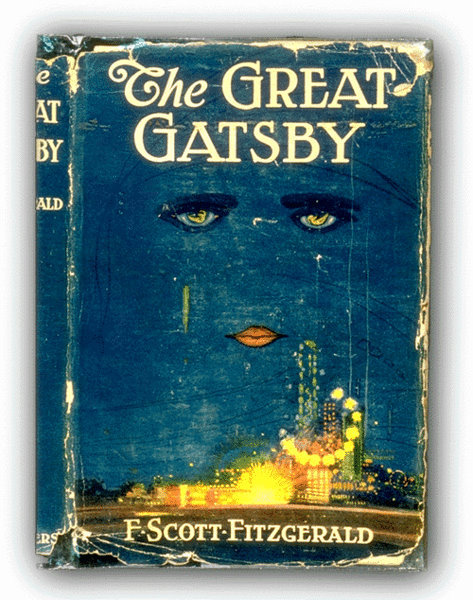
The Great Gatsby on my iPhone

Two years ago I posted about reading Pride and Prejudice on my BlackBerry.  At that time, I was receiving free installments of the book, sent to me daily via email from DailyLit.

Well, I’ve moved on since then.  I’m using an iPhone now, and with the application Stanza, I get access to several online catalogues with over 100,000 selections of classics and contemporary titles and periodicals.  I must add though while the Stanza app is free, some of the eBooks in these catalogues, especially the contemporary ones, are not.

But I’m just interested in the free ones, and there are more than enough to choose from… mainly through Project Gutenberg’s catalogue of 30,000 eBooks in the public domain, classics of over 20 languages.  Not that I’ll be reading one in Icelandic, or Portuguese, or even Esperanto, but it’s good to know that they are there in case you might need them.  All the titles are free to download due to the expiry of their copyrights.  I’ll just stick with the 22,000 English selections for now, from Austen to Zola, from anarchism to zoology… yes, they allow you to search by authors, titles, languages, genres, topics.

Regarding the concept of ‘free’, the Project Gutenberg Website has this important information: ‘Free’ here means both free of charge and freedom to use the titles in whatever way a reader chooses, teaching, adapting, distributing…

So, what has been my experience of reading The Great Gatsby on my iPhone?

First off,  unlike the Kindle, which is the size of a paperback, or larger, the iPhone screen is just 3.5 inch diagonal.  While you can adjust the font size to suit your visual comfort, it just means the inconvenience of turning the pages more often the larger the font.  Reading it horizontally, my setting is about 10 words per line, 14 lines on each page.  I can choose my own style of font and the backlit format.

Compare with reading a hard copy, the iPhone has its convenience, that being smaller, easier to carry. You have your whole library at your fingertip, literally.  But the major advantage over a hard copy, I feel, is the lighted screen.  In other words, you don’t need to turn your bedside table light on to read. In a way, it brings back that childhood experience of reading under a covered blanket with a flashlight.  Ready accessibility, even in the dark.  What a fantastic treat for insomniacs.

Now to something totally different, the affective element of the reading experience.  Strangely enough, reading on the iPhone makes Roland Barthes’ theory a step closer to reality.  Just a recap, I’ve written a post on Barthe’s ‘The Death of the Author’ idea.  The text is the thing, he argues. Let it speak without any reference to its author.  Reading digitally transported me onto that path, whether intentionally or not.

When you’re reading a book, you’re holding the physical object called a ‘book’, with all its cultural meaning and significance, the reality of print on paper, the design and aesthetics of the object itself.  More importantly, from the outset, before you dig in, you’re looking at its cover art, jacket info on the author and the work, with the sometimes additional excerpts of reviews, author bio, introduction to the work… etc. In other words, you cannot avoid knowing who wrote those words you’re reading, his or her background, literary achievement and perspective.

But reading digitally, you’re only seeing the text, unless of course you change the screen to check info about the author or the work.  If you just stay with that screen, you’re only seeing the words per se, unmoved by any of the author’s background, literary style, devoid of any context. And because of the small screen, you’re only reading a few lines at a time. Instead of a complete whole that you can hold in your hands, you are confronted with the fragments, the digitalized, desensitized, deconstructed units of a literary work.

I have read The Great Gatsby before, in hard copy format, and now in the digital mode.  Reading it on the iPhone, I sense that my imagination is more reined in.  I encounter more ‘text’ than ‘images’, and feeling less for the characters.  Interestingly, some details of the plot are clearer this time, but the emotional impact is attenuated.  Of course, one could argue it’s because this is the second time around I read the story… but then again, it has been some years between the two readings.

There’s no perfect solution for everything.  You have the convenience, but the desensitizing of the reading experience.  Nevertheless, the free downloads of world classics at your fingertip is just too good to pass.

My next read from my iPhone library?  Well, there are quite a few choices.  I’m thinking of Proust’s Swann’s Way: In Search of Lost Time Vol. 1. Reading Proust on the iPhone… how much more postmodern can you get? Roland Barthes would have been pleased.

But it might be too daunting a task to attempt, imagine reading 400 plus pages on a 3.5 inch screen, 14 lines at a time.

And for now… let me just head out to the bookstore.  Nothing can compare to the sensation of being surrounded by books, and actually feeling them in your hands, cover, spine, and all.

***

Photo Source:  The Great Gatsby book cover at artistquirk.com

Alberta Bound

Autumn in rural Alberta is immensity amplified.  Big sky and expanse of farmland is the main scenery, something what W. O. Mitchell describes as “the least common denominator of nature… land and sky.”

The air is crisp, fresh, and dry.  Colors are simple:  Big blue sky, golden harvest, even just hay rolled up in bales.  Farming against the snow-capped Rockies, rustic, serene, rejuvenating, harmonious fusion of nature and human endeavor.

Trees as windbreaks in the summer, nature’s sculpture in the fall.  So the leaves are gone, but only then can we see the beauty of the bare branches, like dancers celebrating the changing of the seasons.

The solitary figure in the field… en masse.

“Think I’ll go out to Alberta,
Weather’s good there in the fall.
Got some friends that I can go to working for…”

For some inexplicable reasons, as I’m posting these photos, a flood of nostalgia whirls up in me.  The melodies and lyrics of those songs and singers that we can claim our own keep filling my mind all day. Not too many up-and-coming like to hang around here, since all the fame and glory one seeks is down south.

But these remain our own: Gordon Lightfoot, Ian and Sylvia Tyson, Neil Young… and songs about Alberta, about heading west to seek a new life, or to escape from the pain of lost love.  Maybe the wide open country, big blue sky and wide expanse of land do have their healing powers.

And memories, forever clear, keep us rooted… here’s home.

****

Photos taken by Arti of Ripple Effects, November, 09.  All Rights Reserved.

Edward Hopper, William Safire: The Visual and the Word

If you could say it in words, there would be no reason to paint.

In general it can be said that a nation’s art is greatest when it most reflects the character of its people.

—- Edward Hopper (1882 – 1967)

Edward Hopper’s words point to the power of the visual.  I always find Hopper’s realist paintings hauntingly retrospective, convey indescribable feelings, a sense of loneliness, a touch of alienation, yet, it’s hard to say exactly what it is.

Some use the phrase ‘urban loneliness’ to pinpoint the sentiment, as most readily expressed in his famous painting Nighthawks.  But others find the term too parochial even, opting for the more universal description of the human condition, ‘existential loneliness’.

In this visually-driven age, where pictures are instantly produced by a click, eliminating the wait for film processing, and where digitally created images can elicit unimaginable possibilities, has the value of words diminished, both in function and significance? In a time when ‘reading skills’ refer not only to the comprehension of the written language but the deciphering of graphics and visual symbols, has the power of words been eroded?

Does the recent passing of William Safire, called ‘the oracle of language’ by the NY Times, represent the passing of an era?  How many are left to champion the traditional form of communication, to point out word origin, to extol proper grammar usage?  While these gatekeepers are frowning on the split infinitive, the rest of the world has already jumped on board the newer vessel to boldly go where no person has gone before. The reign of literal communication has gradually (or quickly, or___ you fill in the blank) been replaced by the more accessible instant imaging, flickring, youtubing…

Let’s hope too that the traditional art form of painting will not be soon replaced by iPhone sketching.  If the New Yorker’s cover artist is using an iPhone app to touch-produce its cover pages, will the demise of oils and paints be far away?

Of course, I come to praise Hopper, not to bury words, or paints. Rather than saying his paintings defy literal descriptions, let’s just take up this bemusing challenge and do a role reversal:  What words conjure up in your mind when you look at these Hopper paintings? Let’s celebrate words, and paints, while we still have them.

Of all the subjects in his works, I particularly like the solitary figure, or the non-figure, like the room devoid of human presence.  Here are some of them:

Automat (1927):  Layered with subtext, what are the stories behind this lone female customer at the automat in such hour?  What is a good description of her predicament?

Automat 1927

.

New York Movie (1939): Here’s the reason why I love Hopper’s works.  The contrast, the darker side, the quiet undercurrent beneath the glamorous, the sombre reminder of complexity.

eh_new_york_movie

.

Rooms by the Sea (1951):  A touch of Magritte I feel.  An example of what I call the non-figure.  The philosophical quest of knowing: If nobody’s around to see it, does it still exist?

Edward - Hopper - rooms_by_the_sea

.

Cape Cod Morning (1950):  Unlike his other works, this solitary female figure is positive, eager,  enthused, and achingly expectant.  Is she a symbol of the optimism of a new age, or will she be disillusioned as reality sets in? 1950 or 2009, is there so much difference anyway?

Cape Cod Morning Hopper (1950)

.

Gas (1940):  I’m sure it’s not all about gas… does it allude to the lone traveling salesman like Willy Loman, or the gas station owner like George Wilson in The Great Gatsby?

gas_by_edward_hopper

.

Nighthawks (1942):  Perhaps the most famous of Hopper’s paintings.  As some call it, the depiction of ‘existential loneliness’.  Is that Sartre sitting there all alone at 2:00 am, contemplating in a diner with no exit?

nighthawk-by-edward-hopper

****

Click here to go to a related post ‘Inspired by Vermeer’ with another Edward Hopper painting, Morning Sun.


If I Must Tweet

Don’t look for me on Facebook, I’m not there.  No Twitter account either.  But don’t mistake me for a Luddite, I have my iPhone as my defence… and the Apps for all the social networking sites ready to install.

Truth is, I have no need to lure a million followers.  If there isn’t such a phrase, let me coin it now: ‘Cyber Crowd Phobia’.  I think I have that… or ‘Cyber Agoraphobia’ will work too.  Why would I want to announce to the world what I have for breakfast?  No, I will not fall into the trap of offering free advertising for cereal companies.  Really, who’d care that I’m still having indigestion from last night’s chow mein?

Further, with the limit of just 140 characters to tweet, the message I send must be of prime importance, no verbiage whatsoever.  I can’t think of any such occasions where I need to reveal my predicament publicly except maybe in emergency situations like:

“Having a heart attack! Safeway check-out 5. Call 911!”

or this:

“AAAAARH! Chased by #zombie chickens! @oh dear, oh! Thanks!!”

Less than 60 characters, so I can call out twice.

Ok, seriously,  if I must tweet, I’d probably be tweeting quotes.

Quotes are one-liners, pearls of wisdom.  I know, I know… not all are pearls, but, gems can still be found.  And they fit right in the endurance level of Twitter.  Dense, sharp and swift, ideal for people on-the-go.

Thanks to Shoreacres, I’ve been thinking about quotable quotes after she left an ingenious one in her comment on my last post.  It speaks to those who fondly reminisce the good old days every time they watch the News on TV.  Here’s the line to ponder:

“Nostalgia is like a grammar lesson: you find the present tense, but the past perfect.”

Now, that gets me thinking about the future… simple quotes to tweet for all my followers.  A good quote for every hour of the day.

Let’s say, you’re struggling to get up in the morning, almost losing the battle.  Still lying in bed, you grab your iPhone and check your feeds. I have the best tweet for you, thanks to our modern sage, Woody Allen:

“80% of success is showing up.”

Hey, not bad for just 28 characters.  Showing up needs getting up… that’ll start your day.

Now you’re at the office, you just have a heated argument with your colleague.  As always, he’s wrong, and you’re  gravely mistreated.  But just at that moment, you stop and check your stream of tweets.  How timely,  there’s this piece of sound advice, yes, urging you in earnest from none other than Oscar Wilde himself:

“Always forgive your enemies, nothing annoys them so much.”

Ha… you win again.

Suddenly you hear your boss calling you.  Shucks!  You forgot all about the performance evaluation he wanted to discuss with you.  You start to panic, cold sweat, shortness of breath.  You instinctively get out your phone and check your tweets… Voila!  You’re in luck.  Here’s one just for you, from G.K. Chesterton, … no matter if you haven’t heard of him, just read this instant message:

“I believe in getting into hot water, it keeps you clean.”

Wonderful!  You’re all sweaty anyway.  Quotes on Twitter saves the day… again.

You get my idea… a timely tweet for every moment of your life.

I know how people love quotes.  The most viewed post on Ripple Effects is “Memorable Movie Love Quotes“.  That was for Valentine’s Day last year, now gathering more than 20,000 hits.  I still receive new ones every now and then from readers contributing to the list.

So this is my appeal to you all.  Send me your quotable quotes, 140 characters or less, so I can send them out should I open a Twitter account in the future.  Believe me, this could well be the most meaningful thing you do today, passing on words of wisdom.  And the world will thank you… some day.

The Humanities as an Endangered Species

While there are those who sense that the appreciation of literature and the humanities are slowly fading in our instant-messaging generation, here are some facts.  In an article entitled “The Decline of the English Department” in the current issue of The American Scholar, William M. Chace presents the following data from the academic years between 1970/71 to 2003/04, showing the change in college majors:

English: from 7.6 percent of the majors to 3.9 percent
Foreign languages and literatures: from 2.5 percent to 1.3 percent
Philosophy and religious studies: from 0.9 percent to 0.7 percent
History: from 18.5 percent to 10.7 percent
Business: from 13.7 percent to 21.9 percent

The little bio at the bottom of the article tells me that William M. Chace has taught at Berkeley, Stanford, Wesleyan, and Emory, and served as president of the last two.  So the figures here do carry some weight and urgency.

These numbers are indeed distressing.  If such a trend continues, chances are college English departments would disappear from the face of this earth faster than beluga whales, and philosophy and religious studies as an academic discipline could soon fall off like leaves in autumn.

P1010375

Chace points out that there was once a time when majoring in English literature represented an idyllic pursuit.   It used to reflect the appreciation of a historical tradition and literary culture.  It was a declaration, even a defiance, showing that education was not at all about getting a job.  It was a decision made with much self-reflection, innocence, and yes, an idealistic fervor.  Here’s his own reminiscence, an English major in the 50’s and 60’s :

With the books in front of us, we were taught the skills of interpretation. Our tasks were difficult, the books (Emerson’s essays, David Copperfield, Shaw’s Major Barbara, the poetry of Emily Dickinson, and a dozen other works) were masterly, and our teacher possessed an authority it would have been “bootless” (his word) to question.

Studying English taught us how to write and think better, and to make articulate many of the inchoate impulses and confusions of our post-adolescent minds. We began to see, as we had not before, how such books could shape and refine our thinking. We began to understand why generations of people coming before us had kept them in libraries and bookstores and in classes such as ours.

Alexander W. Astin, director of the Higher Education Research Institute at UCLA, reports that in the mid 60’s, more than 80% of college freshmen rated nothing was more important than “developing a meaningful philosophy of life”.  Less than 45% of them felt “being very well off financially’ was a priority.

The trend saw its reversal by 1977, when financial goals had surged past philosophical ones.  By 2001, more than 70% of undergraduates rated financial success as a much more important pursuit, leaving behind 40% clinging to the search for meaning as their prime objective in college.

But my concern is very simple, and it needs no statistics to sound the alarm:  Who is reading all the ‘great books’?  If the English departments are fighting for their raison d’etre, can Literature survive?

Or, can we still hold on to the idealistic view that Literature has intrinsic value of its own, that in great books, we can still find glimpses of how we should live?  Further, in the face of strangling economic reality, can we still bask in the goodness of beauty and not become a laughing stock if we insist on the pursuit of meaning?

***

To read the article ‘The Decline of the English Department’ in The American Scholar, CLICK HERE.

Top 100 Books & Summer Reading Lists

Summers come and summers go,  reading lists for students tend to remain a constant, or… no?

According to The Boston Globe, the following are a few titles from high school summer reading lists over the years:

1915-1916 (long list of choices for regular year and summer)

  • Walden by Henry David Thoreau
  • Gulliver’s Travels by Jonathan Swift
  • Mill on the Floss by George Eliot
  • Works by Stevenson, Twain, and Dickens

1984 (requirements by grade and academic level)

  • The Grapes of Wrath by John Steinbeck
  • Jane Eyre by Charlotte Bronte
  • The Woman Warrior by Maxine Hong Kingston

2009 (recommendations, not requirements)

  • Twilight by Stephenie Meyer
  • Into the Wild by Jon Krakauer
  • Angels and Demons by Dan Brown
  • Pride and Prejudice and Zombies by Seth Grahame-Smith

ah…  the times they are a-changin.

Instead of (or, hopefully, on top of) reading the original Pride and Prejudice, students today are offered the zombies version… optional, of course.  The current view is, students should be enticed to read, not forced to.  Reading is supposed to be fun, after all, it’s summer.  

Summer

Around the same time, Newsweek published The Meta-List of Top 100 Books of all time.  The List is a compilation of 10 top book lists, including Modern Library, the New York Public Library, St. John’s College reading list, The Telegraph, The Guardian, Oprah’s, and others.  The Meta-List… the mother of all lists.

Here are the top 30,  just for a taste of the selections.  For the complete list, click on the above link.

  1. War and Peace by Leo Tolstoy (1869)
  2. 1984 by George Orwell (1949)
  3. Ulysses by James Joyce (1922)
  4. Lolita by Vladimir Nabokov (1955)
  5. The Sound and the Fury by William Faulkner (1929)
  6. Invisible Man by Ralph Ellison (1952)
  7. To the Lighthouse by Virginia Woolf (1927)
  8. The Illiad and The Odyssey by Homer (8th Century B.C.)
  9. Pride and Prejudice by Jane Austen (1813)
  10. Divine Comedy by Dante Alighieri (1321)
  11. Canterbury Tales by Geoffrey Chaucer (15th Century)
  12. Gulliver’s Travels by Jonathan Swift (1726)
  13. Middlemarch by George Eliot (1874)
  14. Things Fall Apart by Chinua Achebe (1958)
  15. The Catcher in the Rye by J. D. Salinger (1951)
  16. Gone with the Wind by Margaret Mitchell (1936)
  17. One Hundred Years of Solitude by Gabriel Garcia Marquez (1967)
  18.  The Great Gatsby by F. Scott Fitzgerald (1925)
  19. Catch-22 by Joseph Heller (1961)
  20. Beloved by Toni Morrison (1987)
  21. The Grapes of Wrath by John Steinbeck (1939)
  22. Midnight’s Children by Salman Rushdie (1981)
  23. Brave New World by Aldous Huxley (1932)
  24. Mrs. Dalloway by Virginia Woolf  (1925)
  25. Native Son by Richard Wright (1940)
  26. Democracy in America by Alexis de Tocqueville (1835)
  27. On The Origin of Species by Charles Darwin (1859)
  28. The Histories by Herodotus (440 B.C.)
  29. The Social Contract by Jean-Jacques Rousseau (1762)
  30. Das Kapital by Karl Marx (1867)

… and so on and so forth.  You get the idea.  Nothing on the top 100 list is later than 1987 (Beloved by Morrison) except Pullman (no. 84), and quite a few dating back to Centuries B.C. 

Now, is this literary elitism that has not caught up with the times?  Or, has our younger generation been short changed by not being taught to appreciate some valuable cultural legacy?  How do we reconcile the discrepancy between what’s recommended to our students and what experts think are the best books ever written?  Or, reading tastes vary, people are free to read whatever they like… Any list produced is therefore prescriptive and hegemonic?

Of course, one  could argue summer reading lists are not academic syllabi, give our students a break.  They’ll have the chance to read these great books at school… or, will they ever?

Still another debate would be the all too familiar struggle  even among book lovers: Literary or Popular Fiction, old or contemporary classics?   How do we choose?   Reading widely or reading deeply?  

 And, the very practical question:  How can I extend my 24 hours? 

***

More Great Finds!

Call me greedy.  I’ m happy to take the blame.  Since this is the last weekend of the gigantic used book sale at the Crossroad Market, I just had to go again for more treasure hunting.  If you take a look at my second loot list below, you’d have done the same.  As the lady said when I was squeezing my way in,

“It was a zoo yesterday.”

“You came here yesterday too?”  I asked.

“Yeah, sure!”   (Subtext:  What a dumb question… and, why didn’t you?)

So, again, these are all trade paperbacks in mint condition.  They are all a dollar each (Canadian).

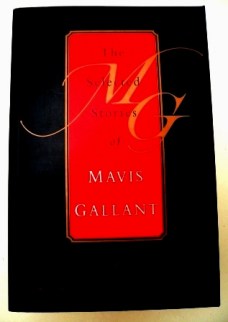
The Selected Stories of Mavis GallantThe Selected Stories of Mavis Gallant:   887 pages.  Having seen the video of Mavis Gallant reading in a Paris book shop and her conversation with Jhumpa Lahiri, thanks to fellow blogger oh introducing the Granta link, I was elated to find this volume.  It looked like it had not been opened, fresh, clean for the picking.

.

The Complete Short Stories of Thomas Wolfe

Short stories, the more the merrier.  I was delighted to find this volume:  The Complete Short Stories of Thomas Wolfe, 621 pages.  I’ve long wanted to read Wolfe, now’s a good time.


..

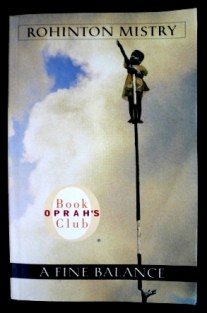
A Fine BalanceA lady held up a heavy box for me to take this one out underneath:  A Fine Balance by Canadian writer Rohinton Mistry.   “That’s a good pick,” she said.
“I’ve seen it many times, but think it’s too thick,”  I said.

“You wouldn’t want it to end,”  she said.    What higher recommendation can you get for a book?


                                        .

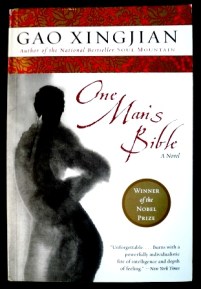
One Man's BibleOne Man’s Bible by Gao Xingjian, winner of the 2000 Nobel Prize for Literature, the first Chinese recipient of the Prize.  Born in China, Gao has been living in France since 1987.  The book is translated into English by Mabel Lee, associate professor of Chinese at the University of Sydney.  Interesting… although this one I can read the original,  the chance of me finding it in a farmers market here in Cowtown, Canada is not great.  I’ll settle for the translation.
.

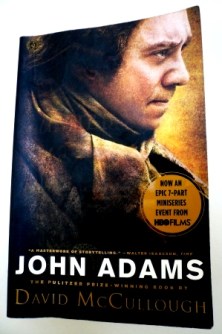
John AdamsI missed the Golden Globe winning TV miniseries.  So, grabbing the original material is just great.  David McCullough’s 721 pages John Adams won the 2002 Pulitzer Prize for biography.  This is a handsome movie-tie-in- cover edition with many color pictures.  What a find!


       .

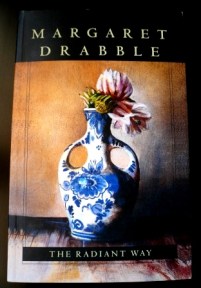
The Radiant WayTalking about wonderful covers.  How about this one:  Margaret Drabble’s The Radiant Way.  I’ve never seen this edition of Drabble’s book.  A pleasure just to look at.


The Devil Wears PradaAnd what’s summer reading without beach reads.  Here’s my copy of The Devil Wears Prada by Lauren Weisberger.  Again, seldom do I see a trade paperback of this title.


..

Here are the rest of  my 20 titles:

  • Digging to America by Anne Tyler
  • A Patchwork Planet byAnne Tyler
  • The Navigator of New York by Wayne Johnston (Giller and GG Finalist)
  • Larry’s Party by Carol Shields (Winner of 1998 Orange Prize and National Book Critics Circle Awards)
  • Fever Pitch by Nick Hornby (Saw the movie starring Colin Firth, quite liked it.)
  • The Book of Lost Things by John Connolly
  • The Reapers by John Connolly
  • The Lovely Bones by Alice Sebold (Just want to read it before the movie comes out.)
  • The Inheritance of Loss by Kiran Desai (Winner of the 2006 Man Booker Prize)
  • Durable Goods by Elizabeth Berg
  • The Gathering by Anne Enright (Winner of the 2007 Man Booker Prize)
  • Fall On Your Knees by Ann-Marie MacDonald
  • The Virgin Blue by Tracy Chevalier (Author of Girl With A Pearl Earring)
  • Bird by Bird:  Some Instructions on Writing and Life by Anne Lamott

It’s a tall order to read all the 40 books I hauled back these two weekends.  It’ll take me years.  But as any book lover can attest, it’s good to know they’re on my shelves.

***

Summer Reading 2009

When does ‘regular reading’ end and ‘summer reading” begin?  Well this year it’s easy.  The gigantic used book sale I went to over the weekend and the loot I brought back make it official:  Let summer reading 2009 begin.

The treasures I found were trade paperbacks in like-new condition.  And because I had twenty, they cost me just one dollar each.  Right, that’s Canadian dollar, even a better bargain.  How I found them was an ordeal.  They were painstakingly selected under smoldering heat at a farmers’ market.  For two hours, I elbowed my way in to grab hold of my targets which I had to eye from a distance over heads and shoulders.  But it’s all worth it.

Here’s a picture and a list of the titles I brought back:

Used Book Sale Loot 1

  • The Corrections by Jonathan Franzen
  • Anna Karenina by Leo Tolstoy
  • Simple Recipes by Madeleine Thien
  • Desperate Characters by Paula Fox
  • Bloodletting & Miraculous Cures by Vincent Lam (Giller Prize Winner)
  • The Sea by John Banville (Man Booker Prize Winner)
  • Saturday by Ian McEwan
  • Goodbye, Columbus by Philip Roth
  • Daisy Miller by Henry James
  • The Stories of Edith Wharton selected by Anita Brookner
  • The Mapmaker’s Opera by Béa Gonzalez
  • Always Now The Collected Poetry of Margaret Avison
  • Breathing Lessons by Anne Tyler (Pulitzer Author)
  • The English Patient by Michael Ondaatje (Booker Prize Winner)
  • Marginalia: A Cultural Reader by Mark Kingwell
  • Rebecca by Daphne Du Maurier
  • A Natural History of the Senses by Diane Ackerman
  • Lost Souls by Lisa Jackson
  • Moral Disorder by Margaret Atwood
  • Exit Music by Ian Rankin

Some of these titles I’ve long wanted to read, like Goodbye, Columbus and Rebecca.   Some are just well known titles or authors that I think I should read, like Tolstoy, Franzen and Tyler.   Some are winners of book prizes that I usually enjoy, the Booker, Giller, Pulitzer.   Some are fine Canadian authors and one of my favorite poets.   And some I’m just curious about like A Natural History of the Senses.  But one stands out.  This time, I’m literally judging a book by its cover:

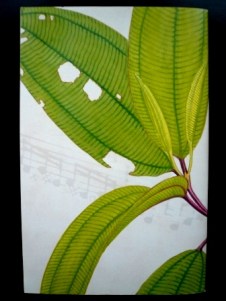
Front Cover Mapmaker's Opera

Back Cover Mapmaker's Opera

The above are the front and back cover of the book.  There’s no title, only on the spine.  It’s enjoyable just looking at it.  But the title is appealing too:  The Mapmaker’s Opera.

Together with the books I’m already reading, plus my long TBR list, I think I’m topped up till next summer.

For More Great Finds, Click Here.

***

Vermeer in Vancouver: Noticing the Obvious

For more Vermeer, Click Here to go to my post “Inspired By Vermeer”.

Vancouver Art Gallery’s premier summer kick-off is the impressive exhibition: Vermeer, Rembrandt and the Golden Age of Dutch Art. The exclusive show of masterpieces from Amsterdam’s renowned Rijksmuseum includes paintings, drawings, and decorative arts from 17th century Holland. After five hours at the Gallery, I left hungry for more Vermeer. Overall it was gratifying, but I was expecting just a few more glimpses of the great master.

Of all the 128 pieces of art work, there’s just one Vermeer painting. Placed at the end of the exhibit, apparently the highlight and climax of the show, is Vermeer’s Love Letter (1669). From his signature point of view, peeking through a partial opening of pulled-back curtain, we look into another room and see a maid just handed her mistress a letter. By the exchange of their glances, it seems they’re sharing a secret understanding. This is another one of Vermeer’s works that’s full of potential stories and rich in subtexts. Actually anyone of them is a novel to be written, not less dramatic as Girl With A Pearl Earring.

Vermeer's The Love Letter

Love Letter by Vermeer (1669-70)

~~

17th century Holland was a new Republic that had just gained independence from Spanish rule. The beginning of the exhibits sets the stage depicting a young nation with great maritime power. Domestically, it was a country marked by a vibrant economy and a rising middle class, as well as the flowering of arts and science, architecture and urban planning.

In the midst of such affluence and fresh hope, some of the artists spoke with their brushes as prophets of their time. Among paintings of naval glory and conquests, as well as glimpses of domestic life of the rich, there are also the quiet displays of still life. I must have seen them before. Why have I not noticed their significance previously?

They are paintings of withered blossoms, burnt out candles, hourglasses, books and musical instruments, and most prominently, skulls, eerie arrays of them, decaying bones and teeth. Why all these objects? The audio commentary confirms that they are Vanitas still life, the term rooted in Ecclesiastes, “Vanity of vanities.” And obviously, they are symbols of the fleeting nature of life, the callous passage of time, the transience of knowledge and human achievements:

Pieter Claesz Vanitas Still Life

Pieter Claesz: Vanitas Still Life (1628)

~

Skulls on a Table

Aelbert Jansz van der Schoor: Skulls on a Table (1660)

~

On the piece of writing crumpled up is one last word, Finis, The End:

Still Life with Books Jan de Heem

Jan Davidsz de Heem, Still Life with Books (1625-29)

It’s commendable that the rich and powerful were willing to be reminded thus, considering these were once paintings adorning the walls of their affluent homes, a nagging presence they could not ignore. And they must have paid to have them painted.

~~

One of my favorites in the exhibition is Nicolaes Maes’ Old Woman in Prayer. Maes, a student of Rembrandt, had captured the simple piety of the old woman of lowly means: her earnest concentration, wrinkled face and hardened hands, the earthen wares and simple meal, and above all, her meager possessions on the ledge, an open Bible, a lamp, an hourglass and a prayer book. The warm light on her face almost makes her look divine. Maes did not forget to include a comic relief, her cat at the lower right bottom must have known what’s for dinner:

Nicolaes Maes Old Woman in Prayer

Nicolaes Maes: Old Woman in Prayer (1650-60)

~~

Sources: Skulls on a Table from Vancouver Sun. All other paintings in this post: Rijkmuseum, Amsterdam.

The Appeal and Fallout of the Susan Boyle Phenomenon

Update:  CLICK HERE to read my post on Susan Boyle’s debut Album ‘I Dreamed A Dream’.

By now, tens of millions have converged on YouTube to watch the sensational phenomenon of Susan Boyle, the middle-age woman from Scotland on Britain’s Got Talent.  Arti has waited for the dust to settle a bit before commenting, allowing her hindsight to catch up.

So, what’s the appeal of Susan Boyle?  The planned and scripted intention of the producer and judges aside, what is so attractive about the 47 year-old woman?  Is it the plain, country look, the greying frizzy hair, the unkempt and overweight physique?  In this image-driven, urbane society of ours, these features definitely aren’t valuable assets.  Or, as so many have claimed, it’s her voice that has enthralled us all.  Yes,  the lady certainly has potential and talent in this regard.   But truth be told, could Susan Boyle have garnered so much praise if she had looked differently?

The universal appeal of Susan Boyle is the mismatch of her look with her voice, a perceived dissonance based on a prejudiced, preconceived notion marking viewers’ expectations.   What talent could a middle-age, plain-looking, hamlet-dwelling woman have?  The public has a real fun case of being fooled.  Ha, the joke is on us.  We’ve been wrong all along.  Unattractive bodies can be talented personalities.  And the audience had enjoyed the twist and surprise.  Susan Boyle’s  TV appearance provides real entertainment value, albeit manipulative according to skeptics of reality shows.  Simon Cowell should be most gratified.   It’s all about the ratings, and future record sales.

susan-boyles-new-lookBut wait, don’t speak too soon.  Now the 47 year-old has a few hairs on her eyebrows plucked, her unruly lock trimmed and dyed a younger look, donned some neater attire.  Lo and behold, the mismatch has diminished.  As the excitement wanes, criticisms arise.  “She shouldn’t change too much,” the public decries.  “That’s the limit that she should go, no further,” the critics advise.  Wouldn’t it be terrible if Susan Boyles decides to join Weight Watchers.  Of course she shouldn’t, it’ll be much less entertaining.

What have we become now?  Spectators of a freak show in a circus?  What about those lyrics that have enthralled us initially?  Can a woman not be allowed to have her own way, make her own decision to change or not, choose her own lifestyle, and interpret her own dream?  Is she selling her soul just by having a facial?  I’m afraid Susan Boyle is no match for our sensationalism and thrill-seeking crowd of  reality TV viewers, or the humongous entertainment business looking to generate more profits in whatever way possible.

I worry too that the overnight rise to stardom is making Susan Boyle equally vulnerable to become an instant victim of the fallout.  A trampled rose or discarded weed, they meet the same destiny.  Of course, I wish her well and that the pursuit of her dream will not become a nightmare in the callous arena of public opinion.

The curious case of Susan Boyle also reminds me of another woman with talent living in obscurity two hundred years ago.  She was a bit younger,  living in rural England, striving to be herself in the pursuit of her dream to become a writer.  Sadly, she did not live to middle-age, nor see her name credited to her work.  To avoid fallouts and social reverberations, she had to seek anonymity.  Now we know her as Jane Austen.

The lyrics of that tune still sound poignant:  “After changes upon changes, we’re more or less the same;  after changes, we’re more or less the same…”

Photo Credit:  Andrew Milligan/PA,  Source: Times Online http://entertainment.timesonline.co.uk/tol/arts_and_entertainment/tv_and_radio/article6161198.ece

***

Original writing by Arti of Ripple Effects.  ALL RIGHTS RESERVED.  If you are reading this on a website other than Ripple Effects, you are reading a post that has been copied without permission.  Go to https://rippleeffects.wordpress.com to read this and other original and interesting articles on entertainment, books and movies.

The Proximidade: Celebrating Closeness

Arti of Ripple Effects is honored to receive The Proximidade Blogging Award from ds of  third-storey window.  A wonderful view she has over there.  Thanks again ds!

“The Proximidade Award believes in the Proximity – nearness in space, time and relationships. These blogs are exceedingly charming. These kind bloggers aim to find and be friends. They are not interested in prizes or self-aggrandizement! Our hope is that when the ribbons of these prizes are cut, even more friendships are propagated. Please give more attention to these writers! Deliver this award to eight bloggers who must choose eight more and include this clever-written text into the body of their award.”

proximade_award1

This is a while back now.  Although ds is very generous as to spare us the obligation to pass it on, I feel I should share this award by naming  some worthy recipients whose blog has closed the gap among us, in one way or another, narrowing our physical distances through common interests and other higher ideals.

It’s my pleasure to pass the Proximidade Award to the following Blogs, in alphabetical order:

Book Club Girl — for closing the gap between authors and readers by her own radio show ‘Authors on Air’.

Classy Music — for drawing us closer with news and views of classy musicians and their performance.  Take note, ye fans of Susan Boyle and Paul Potts.

FilmChat — Movie reviewer Peter Chattaway (no kidding) engages us with insightful and interesting dialogues between faith and film.

Jane Austen Today —  Great job Laurel Ann and Vic,  in connecting Janeites the world over by their excessively diverting blog.   (LA and V:  I’m still working at finding ‘classics’ blogs for the ED Award.)

Visual Dialogues — Blogging from Hong Kong, Molly Mavis closes the gap between East and West with her perceptive photography.

I trust you’ll find the above blogs informative and entertaining, well deserving the Proximidade Award.