Amazing Grace for Christmas

 Amazing Grace

This is one amazing film about an extraordinary man’s fight against slavery in 18th Century England.  The story chronicles Christian Parliamentarian and social reformer William Wilberforce’s mammoth battles in the British political arena to abolish the slave trade.

At that time, slaves were shipped from Africa to the West Indies in appalling conditions, many arriving dead.  They were chained to work on sugar plantations of British owners. Abolishing the slave trade meant a threat to the very economy of Great Britain.  William Wilberforce had given up twenty youthful years and his health to champion the anti-slavery cause.  Three days before his death, he saw his life-long advocacy triumphant as the abolition bill passed in the House of Commons, demolishing the institution of slavery in all of the British Empire.

The film is a display of superb artistry.  First of all, it benefits from a well-written screenplay by Steven Knight.  The award-winning Knight’s other film Eastern Promises (2007) has just garnered 3 Golden Globes nominations including Best Picture.

The exceptional cast is most satisfying to watch. Welsh actor Ioan Gruffudd is William Wilberforce, whose performance is intelligent and engaging.  He is effectively supported by a mass of extraordinary British actors, among them the veterans Albert Finney and Michael Gambon.

Albert Finney plays John Newton, the Pastor and mentor of Wilberforce.  It is from Newton that Wilberforce draws his inspiration and strength for his cause.  Newton himself used to be a slave trader.  His ephiphany came during a deadly storm while he was on a slave ship. The tempest he encountered reflected the torrents of guilt billowing in his own conscience.  Ultimately yielding to a merciful God, Newton was totally changed.  He abandoned the slave trade, his own livelihood, and became a Christian Pastor, spreading the message of God’s love and the freedom God had intended for all people. His writing of the tune and lyrics of Amazing Grace summed up the poignant conversion in his life.

The meticulously researched and designed period costumes and set, together with the fine cinematography bring out a beautiful and engaging film.  In many scenes, I feel like I’m looking through a portal of Rambrandt and Vemeer’s paintings in motion. 

The DVD is packed full of commentary and background information.  The music video of Chris Tomlin playing the piano and singing his contemporary version of Amazing Grace is both a visual and audio delight. 

One note of caution though, the film follows closely the British Parliamentary proceedings and political debates of the time.  Those anticipating a more romantic rendition may not have their expectation met.  However, I find the film very educational, informative, as well as inspiring.  What better gift to give this Christmas than the message inspired by the song Amazing Grace:

Chris Tomlin – Amazing Grace

(My Chains Are Gone)

Amazing grace
How sweet the sound
That saved a wretch like me
I once was lost, but now I’m found
Was blind, but now I see
‘Twas grace that taught my heart to fear
And grace my fears relieved
How precious did that grace appear
The hour I first believed
My chains are gone
I’ve been set free
My God, my Savior has ransomed me
And like a flood His mercy reigns
Unending love, Amazing grace

~ ~ ~ 3 Ripples

Miss Potter for Christmas

It’s not too early to make up a Christmas gift list, or actually start some Christmas shopping. I’ve a recommendation here for a DVD that you can safely watch with your children. But you’d also want to watch it by yourself too, because then you can savour in solitude the touching moments an adult can appreciate, and yes, shed a private tear, and let the movie work its magic freely in your heart.

Miss Potter (2006) is the story of Beatrix Potter, the creator of Peter Rabbit, one of the best loved children icons of all times. The film is a gem glittering with acting talents. As Beatrix, Renée Zellweger (Oscar for Cold Mountain 2003) brings to the screen a most delightful character, her genuine and innocent demeanor captures the audience’s heart the very moment she appears. She receives nominations this year for a Golden Globe and a Saturn Award for her role in Miss Potter, and well deserved.

Ewan McGregor (of Star Wars and Moulin Rouge fame, no relation to farmer McGregor) plays the slightly comical first-time publisher who has made history with his appreciation and confidence in the talents of Beatrix. The two naturally fall in love. Like a Jane Austen novel, such a relationship is frowned upon by Beatrix’s upper-middle class family and openly forbidden. But this time, a hundred years after Jane, Beatrix boldly confronts the inequitable and restrictive Victorian values and norms.

Emily Watson, herself an Oscar nominee for her role in Gosford Park, (and she is excellent in Angela’s Ashes), plays a lively supporting role as McGregor’s unmarried sister. The social issue of the unmarried female in a male-dominated society is freely explored through her outspoken character, but not without poignancy.

I must mention the song written for the movie, which has won the 2007 World Soundtrack Award for Best Original Song Written for Film. “When You Taught Me How To Dance” is sung by Ewan McGregor in the film during a mesmerizing and moving scene. As the credit rolls in the end, this touching tune is heard again, this time in its entirety performed by Katie Melua. Now, she’s another story to write about.

The captivating soundtrack matches the beautifiul scenery and period costume, together with the excellent script and the whimsical animation of Beatrix’s animal friends, make the movie utterly enjoyable and gratifying, but still delivering effectively the depth of sentiments and the dramatic twists and turns.

The DVD includes background on Beatrix Potter, commentary by director Chris Noonan and a making-of documentary with extensive interview with Renee Zellweger, plus a music video performed by Katie Melua singing “When You Taught Me How To Dance”. A valuable collection and I’m sure, a welcomed gift.

~ ~ ~ Ripples

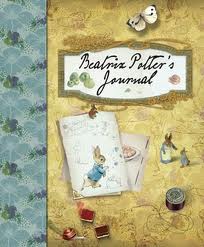
Beatrix Potter: A Journal (2006)

Beatrix Potter A Journal Book Cover

As a companion to the movie, and another great gift idea, is the book Beatrix Potter: A Journal which came out last year. A visual journal in the vein of Nick Bantock, the book is an imaginary scrapbook Beatrix would have made to chronicle her own life, with handwritten entries and notes, amusing drawings, little attached booklets, photo albums, and letters that can be taken out from envelopes. The book corresponds amazingly well with the movie, like a visual commentary.

Here are a couple sample pages from the journal:

webpage-beatrix-journal-3.jpg

webpage-beatrix-journal-4.jpg

~~~3 Ripples for both Movie and Book

Snow Cake: Autism and Beyond

Snow Cake

Snow Cake (2006)–For those who wait for a movie to come out on DVD before seeing it, here’s a recommendation. Snow Cake came out a few months ago on DVD but is still on the current release shelf. It opened the 2006 Berlin International Film Festival with a gala screening, and was shown at numerous film festivals last year including the TIFF.

Seems like a long wait, but well worth it. And for those who have already seen it in theatres, the DVD release could well be the second wind. Considering all the special features of interviews with director and cast, as well as the quality deleted scenes, you might want to keep this one.

Filmed in Wawa, northern Ontario, the Canadian and British collaboration is one of those gems that can be found quite readily in the indy batch. Welsh director Marc Evans has won several European film awards. On top of his sensitive handling of the story, the film benefits greatly from an amazing cast.

Alan Rickman is Alex Hughes. While driving through Ontario to Winnepeg,  he picked up a young hitchiker, Vivienne (Emily Hampshire, who was nominated for a Genie for this role).  During the trip they got into an accident and the girl was tragically killed.  Propelled by guilt and responsibility, Alex went to look for Vivienne’s mother Linda, played by Sigourney Weaver, in the town of Wawa.  Upon finding her, it did not take long for him to notice that she had received the news with a very different light. Linda was autistic. From his short stay with her, coming to invovle in Linda’s life and getting to know her mysterious neighbour Maggie (Carrie-Anne Moss), Alex drove on to his destination a few days later with a new perspective on himself and his ordeal.

Even though short-lived, Vivienne’s character is memorable. Her enthusiasm for life and acceptacne of those around her underscores the film.  The sound of Broken Social Scene adds a touch of lively, contemporary flare, like a tribute to the affable character of Vivienne. In contrast, Alan Rickman’s role as Alex is painfully affective. At times it is heartwrenching to watch as he deals with his internal torments as the story reveals itself.

Sigourney Weaver had spent a whole year researching on autism to ready herself for the role of Linda.  And for most parts, she has delivered a convincing performance. But it is the screenwriter Angela Pell that has so poignantly depicted the limitations but also the different views and insights an autistic person can offer those who are considered ‘normal’. Pell has mingled her characters, autistic or not, into a pool of humanity, revealing the indistinguishable, common thread joining them all.  Her script is at times very funny, and at times permeates with pathos. Through the words of Linda, the punchline is delivered ever so aptly at the end. Angela Pell has indeed written from her heart and her own experience.

She is mother to a nine-year-old autistic son.

~~~3 Ripples

Stranger Than Fiction


“Stranger Than Fiction” (2006)–I always believe that the script is probably the most important element in a movie. If you’ve nothing to say, you’ve got nothing to show, and no story to tell. This may well be an oversimplification. However, watching Stranger Than Fiction, I felt my view confirmed.

The excellent writing by Zach Helm handles a serious subject with style and humor. Reminiscence of “The Truman Show”, “Stranger Than Fiction” is a fresh and classy treatment of the existential questions of free will and fate. Will Ferrell is Harold Crick, an IRS agent. He lives by himself, eats by himself, and his favorite word is ‘integer’. Every morning, he counts the same number of strokes as he brushes his teeth, ties his tie in exactly the same number of seconds, takes exactly the same number of steps to catch his bus. His daily routine runs like clockwork…and he thinks he is in control of the minutest item of his life.

His secure, mundane world is turned upside down one day as he finds out that his life is being narrated, written by someone else. He is in fact a character in a novel, and what’s most devastating is, the author (Emma Thompson) is planning his imminent death. Sunddenly faced with his own impending demise, Harold Crick curses his fate, yells at heaven and protests in vain. Poor Harold is certainly not ready to die, for he hasn’t even begun to live. With the help of a literature professor, aptly played by Dustin Hoffman, Harold tries to turn a tragedy into a comedy. He soon finds out that although he cannot change his own fate, he can change himself, and he can become a happier person if he chooses to be, despite his ominous fate. In the baker (Maggie Gyllenhaal) whom he audits, he discovers for the first time in his life, love. Little does he know that this new found sentiment is a powerful force that has altered his myopic view so much that in an act of altruistic bravery, he steps right in the path of death and stares fate in the eye.

The message of the movie and the subject matters of life and death, fate and free will can easily be perceived as didactic and preachy if not being handled properly, but “Stranger Than Fiction” has successfully dealt with these issues with light-hearted humor and intelligent dialogues and characterization. Overall, an entertaining work of fiction, or, is it a whimsical portrayal of real life? … Strange, they’re so similar.

~~~3 Ripples

Summer of Indulgence

In the July 23, 2007 issue of TIME magazine, an article surveyed several prominent writers as to what guilty pleasures they would indulge in if they were to follow their heart’s desire in their summer reading. Jane Smiley chose an erotica/sadist novel, Magaret Drabble would read Jules Verne’s 20,000 Leagues Under the Sea, Alexander McCall Smith selected Dick Francis, and Joyce Carol Oates opted for Mad Magazine.

Just wondering, what movies would they have chosen to watch, if Dick Francis and Jules Verne are considered guilty pleasure? As for me, watching old movies that I missed some time in my past, and there are a lot, became my summer indulgence. Guilty pleasure? Don’t think I need to feel guilty about them, however, they do represent a quirky and offbeat sort. Here they are, with my hindsight critique…now flashback to:

1986  Pretty in Pink


Why I missed out on preppy movies like this one, I haven’t a clue. But, it’s more than just nostalgic viewing them now. Why, because I’m discovering for the first time Andrew McCarthy, Molly Ringwald, and, yes, James Spader in his youthful days. The power of young love driven by hormonal surge and pure fantasy or infactuation could still be no match for societal norms and peer pressure. Rich boy, poor girl, two starcrossed lovers separated by a mere railway track, a demarkation of social inequality in wealth, opportunities, future…Oh, we’ve seen them before, in the classic Love Story, and the like. But it’s always a treat looking at young, fresh faces like McCarthy and Ringwald, and … Spader… who cares he looks like he’s been repeating his senior year in high school a few times. If it’s a miscast, it doesn’t bother me a bit, because watching Pretty in Pink is like licking a strawberry ice cream cone on a hot summer day, it’s indulgence enough.

1987  Less Than Zero


McCarthy and Spader reprised the next year to make this movie, but this time, Robert Downey Jr. stole the show. Less Than Zero probably is one of the classic drug addiction movies. The story takes place again, among the decadent world of rich, young Californian high school grads. McCarthy, a college freshman came home after his first term of college to find his buddy RDJ helplessly hooked on cocaine and deeply in debt. Together with his girlfriend Gertz, who has shifted her attention to RDJ since he left, McCarthy tried to rescue his friend from his pathetic downfall. This time, Spader acted more like his age, as a slick and manipulative drug dealer. Watching a young man self-destruct was not an enjoyable experience. The pleasure in watching this movie though is that one sees the pivotal performance of a superb actor hitting his stride and gaining momentum in his career. As one critic said, this movie put RDJ on the map. Compared to Maggie Cheung in Clean, which I reviewed some time ago, RDJ comes out a much stronger contender.

1996  2 Days in the Valley

This is what I call indulgence, three Spader movies in a row. This one is a much more interesting mix of characters. Watching it reminds me of “Crash” (2004) where a group of seemingly unattached characters would finally be strung together as the story unfolds, coming to a brilliant and climatic ending. But of course, 2DITV is not Crash, it does not convey a serious message like racism, it just…purely…entertains, pure summer fun. What do a mild-mannered hit man, a female Olympic skier, a snobbish art dealer, a cold blooded killer, a loving widow, a down-and-out movie director, and two vice cops have in common? They don’t, and this is exactly what the movie is saying, hauntingly. 48 hours in the San Fernando Valley, CA, could bring about a lot of changes in these lives. We cross paths with people who may have nothing to do with our lives every day, and yet as circumstances unfold, we are entangled into a web of human relations and coincidents. Our best bet is to take the right step, at least that we can have some control. The superb acting and the intricate plot make it a fun and wild ride. As the saying goes, this movie puts Charlize Theron on the map. Spader as a bespectacled, icy, heartless killer? Seeing is believing. Great summer viewing pleasure.

1997  The Ice Storm

I think this is probably my favorite Ang Lee movies, so far.  The Ice Storm, a story about the dysfunctional relationships within two families in 1973 suburban Conneticut, was Ang Lee’s attempt to prove his versatility after making the 19th Century Austen classic Sense and Sensibility. He has painted a sensitive and poignant portrait of suburban living, or anywhere living, of people struggling to deal with the ennui of superficial existence. Adults exchange spouses as a game, the young seek sexual experiences, or experiment with drugs. Like a fly hitting the window again and again as it frantically tries to escape, the characters in this movie spin deeper and deeper into a meaningless blackhole. That is, until the Ice Storm cometh. It takes the elements, something greater than themselves, to shake them up and have them face the futility of their actions, leading them to a stark awakening. Such is the redemptive power of the Ice Storm, a metaphor for divine intervention, marking the turning point in the lives of these characters. A great cast including Joan Allen, Kevin Kline, Sigourney Weaver, and Elijah Wood makes this film an enjoyable treat, despite the serious subject matter.

Curse of the Golden Flower

Curse of the Golden Flower (2006)–The story took place in 928 A.D., during the Tang Dynasty in China; the movie was produced in 2006, released in January, 2007. Over a thousand years have passed, and times sure have changed the art of storytelling. What Zhang Yimou has constructed is a postmodern fusion of literary classics and cinematic productions: King Lear, Hamlet, MacBeth, Caligula, The Lord of the Rings, and yes, even Braveheart, concocted in a Chinese imperial court setting. Those with the appetite for a smorgasboard will not be disappointed to find something that they like, but COTGF is no gourmet cuisine. Zhang has aptly depicted the decadence behind the facade of opulence and glamour with his trademark exaggerated colours in cinematography. Under the skin of gold and jade hides the rotten flesh of incest, treason, deceit, murder, and rebellion; but one begs to ask, so what’s the difference between this story and others throughout history, or even just movie history? Hailed as the most expensive movie ever produced in China, Zhang seemed to have answered with the massive visual effects of a thousand real life, spear wielding actors in armour (plus the additional help of computer-generated images I assume), swarming the palace gates as ants, the elaborate set designs, and the choreography of uniformity, from the female courtiers to the massive foot soldiers. One gets the feeling that the movie is a spectacle made for foreign markets, and with Zhang himself being the chief director of the opening and closing ceremonies of the 2008 Beijing Olympics, COTGF seems like a dry run for the programs. Nevertheless, kudos go to the actors whose intense performances have supported the storytelling, and newcomer singer-turned-actor Jay Chou has held his ground in front of veterans Gong and Chow. The ironic outcome though is that the intimate, authentic art of storytelling has been overshadowed by the sights and sounds of ostentatious movie-making.

~~1/2 Ripples

‘The Painted Veil’ Movie Adaptation

The Painted Veil (2006)– In contrast to my review of Away From Her (Posted May 22), this is one movie I’m afraid I’ve to say, ‘words are mightier than the scenes’.  Not that I don’t appreciate the great cinematography, the angle, lighting, and the depth of many of the frames in presenting a very appealing piece of cinema artistry, but somehow, I don’t feel for the characters and empathize with their situations as much as when I was reading the novel by William Somerset Maugham. The characters seem to have lost their complexity, the plot thins out and the resolution seems too instant. I miss some great lines in the book that seem to have been unfortunately cut out in the screenplay.

I’ve always enjoyed reading Maugham’s writing, Of Human Bondage, The Razor’s Edge, The Painted Veil as well as his short stories.  However, movie making is a totally different art form and business venture from book writing and publishing.  Finding the key to transform one to the other remains a unique quest for each project.  I’ve thoroughly enjoyed other Maugham’s work in film, such as Being Julia (2004), and quite like Up At The Villa (2000), but not as excited about The Razor’s Edge (1984), and now The Painted Veil (2006).  Transforming great lines from a book into equally inspiring visual story-telling is an arduous task, and it’s something that mere beautiful cinematography cannot suffice.  Nevertheless, I do applaud Edward Norton in his undertaking this difficult assignment…I’m sure shooting a movie in China poses its particular challenges.  I’d love to see more Maugham writing turn into films, and wish more contemporary versions can be made…maybe a modern day Of Human Bondage?

~~ 1/2 Ripples

Mr. Brooks

Mr. Brooks (2007)– What a departure from his past filmography! Mr. Brooks is Kevin Costner’s attempt to cross the great divide, from the heroic and noble to the villainous, from Eliot Ness, Mafia annihilator to Earl Brooks, serial killer. Wait, did he cross that divide or has he got one foot on each side, straddling in a precarious position with shifting identity? Maybe that’s the point this movie is trying to get across. Mr. Brooks is a successful businessman, philanthropist, loving husband and father, and at the same time, serial killer. What an interesting theme to explore, but ironically, the purpose seems to be marred by the attempts at making it work. The film itself is a schizophrenic struggle between classic Hitchcockian psychological thriller and dark humor with a contemporary flare, thanks to comedian Dane Cook fanning the flame. William Hurt’s role as Brooks’ alter ego also is both effective and self-defeating. At times he is the tempter, at other times he is the companion and friend, still other times he is the clairvoyant, predicting the future…Seems like he too has crossed that line from reality to fantasy. The action sequence though is crisp and captivating, particularly in the kidnapping scene of detective Tracy Atwood, played by Demi Moore. Unfortunately, the intersection of Costner and Moore is a story line that the film fails to dwell into, one that could enhance both character development and certainly thicken the plot. Such lack is compensated by the twists in the story, and the ending is thought provoking. Mr. Costner, nice try at being nasty, but somehow your look and demeanor betray your attempt. This movie makes me appreciate all the more the many heroic and redemptive roles you have played in the past. Having said that, I look forward to the new turn of film making you’re venturing out into and I must say, for love of the game, go for it.

~~1/2 Ripples

Away From Her

away-from-her

Update Jan. 28, 2008:  Julie Christie has just won the Screen Actors Guild’s Best Actress Award for her role in Away From Her.

Update Jan. 22, 2008: Julie Christie has just been nominated for a Best Actress Award and Sarah Polley for Best Adapted Screenplay in today’s Oscar Nominations announcement.

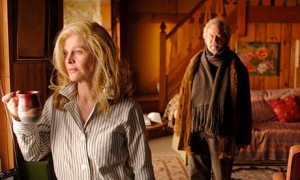
Away From Her (2006)–How can you make a good short story even better? … By turning it into a screenplay written by an equally sensitive and passionate writer, and then, through her own talented, interpretive eye, re-creates it into a visual narrative. Along the way, throw in a few veteran actors who are so passionate about what the script is trying to convey that they themselves embody the message. Such ‘coincidents’ are all happening in the movie Away From Her. Sarah Polley has made her directorial debut with a most impressive and memorable feat that I’m sure things will go even better down her career path. What she has composed on screen speaks much more poignantly than words on a page, calling forth sentiments that we didn’t even know we had. Julie Christie and Gordon Pinsent stir up thoughts in us that we’d rather bury: how much are we willing to give up for love, or, how would we face the imminence of our loved ones’ and our own mental and physical demise. Based on the story by Alice Munro, ‘The Bear Came Over the Mountain’, Polley brings out the theme of unconditional love not by your typical Hollywood’s hot, young, and sexy on screen, but aging actors in their 60’s and 70’s. It may not be as pleasurable to watch wrinkled faces hugging and kissing, or a man and a woman in bed, bearing age spots and all, but such scenes effectively beg the question: why feel uncomfortable? Why does love has to be synonymous with youth, beauty, and romance? It is even more agonizing to watch how far Grant is willing to go solely for love of Fiona. Lucky for us, both writers spare us the truly painful at the end. It is through persistent, selfless giving that one ultimately receives; and however meager and fleeting that reward may seem, it is permanence in the eyes of love. And it is through the lucid vision of a youthful, 28-year-old writer/director, that such ageless love is vividly portrayed….Oh, the paradoxes in life.

~~~ 3 Ripples

(Photo Source: Guardian.co.uk)


Notes on a Scandal

Notes On A Scandal (2006)– Judi Dench and Cate Blanchett have garnered many accolades for their performance in this movie, and I must say well deserved. But I’d just like to give a fair share of credits to Phillip Glass, the minimalist composer. His torrents of symphonic upheavals and tidal waves of nerve wrecking themes effectively create the momentum, sweeping our emotions along the way. Without the music, we would be just watching the flesh without the soul, motion without feelings. Loneliness can be the most powerful potion. It can wreak devastation, bringing destruction to self and others, yet strangely, it can also drive one to seek redemption, as Dench and Blanchett have shown us so powerfully these two scenarios. Kudos also to Bill Nighy, who may well be the ultimate victim of this tragic betrayal. The road to redemption is paved with forgiveness. The construction of which begins with his opening the door and letting his wife back in. After all the tension, I feel relieved to see such a resolution. In contrast, the note of perpetual malice in the final scene resonates in me a most disturbing chord.

~~~3 Ripples

Clean

Clean (2004)– Who am I to disagree with the Cannes Jurors, who gave Maggie Cheung (the ex of Olivier Assayas, director of this movie) the Best Actress Award for her role in this movie, but I just find her portrayal of a drug addict a bit forced. To be truthful, I don’t personally know any heroin addicts, what they should look like is just a constructed image in my mind, although I’m trying my utmost to avoid stereotyping. But, the look of untainted facial features, the smooth and delicate skin, the bright round eyes, the funky hairdo, yes, understandably so with her profession as a recording artist, but still, she is a bit too fresh in looks and demeanor. They say that some actors study and research their role before the actual filming. I just wonder whether she has done any homework. Compared to Charlize Theoron in Monster (2003), it’s easy to find something’s missing here. Yes, it could well be the makeup artist’s fault, but the inner turmoil is lacking. Somehow, none of the characters succeeded to elicit any empathy from me….not even the child….except maybe Nick Nolte…now he has played his role sensitively as a grandfather who’s left with a burden greater than he could bear. As for the plot, I was looking for some sort of a twist but none came. So, if the story is the straight forward (I’m not saying it’s easy) transformation of a life, towards some sort of self-redemptive ending, then good casting and in-depth character development are essential. Short of that, the effect would be too clean to be convincing.

~~2 Ripples

A Perfect World

A Perfect World (1993) — The title itself is hint enough that Eastwood is not bringing out another Dirty Harry sequel, even though it has all the ingredients: an escaped convict, a kidnapped child, an eager sheriff, a host of law enforcement officers whose ammunition is hubris and self-importance. In A Perfect World, the convict is a conscientious man torn between good and evil, a typical human being in any typical town. A kidnapped child is a friendly ghost, just wanting to have some fun, and willingly went along for the ride. And the Law, the law is the ever uncompromising, unbending authority seeking justice without mercy, revenge without compassion. At the end, Eastwood has us thinking, who actually is the good, the bad, and the hybrid? Costner has presented a very convincing character, tormented by his own demons, yet striving to right any wrongs driven by almost quixotic passion, an imperfect man righting the wrongs in an imperfect world. What do we know? As Eastwood’s character concludes at the end…nothing….well worth the time in finding out.

~~~ 3 Ripples