April is National Poetry Month. I’m glad we still celebrate poetry in this day of ephemeral twittering. W. H. Auden once described poetry as “memorable speech”. As millions upon millions join in on-line chats, exchanging the most trivial of their everyday life unreservedly, and even addictively all day long, how we need poetry all the more, to create lines that strive for some memorable quality worthy of keeping.
The late Canadian communication guru Marshall McLuhan was right, the medium is the message. And such is the message of our time. Mind you, I’m no Luddite, my iPhone is evidence. I’ve gone through this before, so I’m not going to dwell on it here again. It’s just that the rash and temporal nature of our medium, and mode, for that matter, make me long for quality and permanence.
After posting an excerpt of T.S. Eliot’s poetry in my last entry, I just didn’t have enough. I re-read and explored more of his work and was amazed at how prophetic his vision was. To celebrate National Poetry Month, here’s Arti’s selections of lines from the work of T.S. Eliot, just for our post-modern, Facebook and Twitter generation.
Twit twit twit
Jug jug “>jug jug jug jug jug
So rudely forc’d.
— The Waste Land (1922)
Teach us to care and not to care
Teach us to sit still.
— Ash Wednesday (1930)
There will be time, there will be time
To prepare a face to meet the faces that you meet;
….
Do I dare
Disturb the universe?
In a minute there is time
For decisions and revisions which a minute will reverse. For I have known them all already, known them all: —
Have known the evenings, mornings, afternoons,
I have measured out my life with coffee spoons;
….
In the room the women come and go
Talking of Michelangelo.
— The Love Song of J. Alfred Prufrock (1915)
The endless cycle of idea and action,
Endless invention, endless experiment,
Brings knowledge of motion, but not of stillness;
Knowledge of speech, but not of silence;
Knowledge of words, and ignorance of The Word. All our knowledge brings us nearer to our ignorance,
All our ignorance brings us nearer to death,
But nearness to death no nearer to God. Where is the Life we have lost in living?
Where is the wisdom we have lost in knowledge?
Where is the knowledge we have lost in information?
The cycles of Heaven in twenty centuries
Brings us farther from God and nearer to the Dust.
So students are sent back to school this week, just in time for Easter. Nobody wants to have a holiday right on Easter week, especially the public school board. That’s how you survive, by being politically correct. And the last two weeks’ holiday is called Spring Break of course. Easter has almost become a banned word, like Christmas. Who wants to be rude and offend others, we’re Canadians after all.
I know, it’s not totally a taboo yet. It’s a much tamer word, Easter, than Christmas, just because it doesn’t have the six-lettered word in it. You can curse with that name, but no, God forbid you should say it in a proper context. I can see you sneer, what’s a proper context, you ask. You’re right of course, no word or context is more proper than others, we’re egalitarians after all. As for Easter, as long as it’s synonymous with eggs and bunnies, pastels and flowers then it’ll never die. Who needs resurrections?
All Fridays are good. They even have a whole restaurant chain commemorating the day. What’s it called… yes, T.G.I. Friday’s. Who says we’re not religious, we thank God for happy hours. We’re much more open-minded now, more civilized, equal and fair, don’t want to pick one day to be better than the others. But definitely we won’t forget Ramadan, or the Chinese New Year.
There’s probably no God, so stop worrying and enjoy your life, the sign on the bus says. So we’re safe? Whew! No God means we can now be happy, worry free, all life, no death, … Umm just let me figure this one out. Give me a minute, I’m just not as smart as them.
Jesus wept. He wept at the graveside of Lazarus, brother of his dear friends Martha and Mary. He wept at the fragility of life. He wept at the searing pain of separation. He wept at the hopeless and uncomprehending expression on Mary’s face, even after he said to her I am the resurrection and the life.
Fleming Rutledge said more than ten years ago: “I am deeply convicted, more so each year, of the profound sinfulness of the human race. Yet because of the Cross and Resurrection of Jesus Christ — because of that and nothing else, because of that and nothing less — I am also convicted of the truth of what the Bible tells us about God’s plan of salvation. The rainbow bridge does not lead to Valhalla, where the gods quarrel so much that they destroy themselves. The rainbow bridge leads to the Cross and to the empty tomb on Easter Day.”
Utterly politically incorrect! Who uses the word sin anymore? Who’s Fleming Rutledge, anyway. Never heard of him. No? It’s a she? No wonder.
Now these words echo loud and clear too, written by T. S. Eliot in… what, 1934? Aren’t they a bit archaic now? Or, maybe they’re really prophetic:
Where is the Life we have lost in living? Where is the wisdom we have lost in knowledge? Where is the knowledge we have lost in information? The cycles of Heaven in twenty centuries Bring us farther from God and nearer to the Dust.
We should go on living, be happy and worry-free, the sign on the bus says.
Roman Catholic Bishops in Italy have added some contemporary relevance in the fasting tradition during Lent: High Tech Fast. The faithful are urged to free themselves from the bondage of technology and gadgets, and refrain from surfing, emailing, twittering, texting … in order to prepare themselves for Easter. This could prove to be a penance much harder to practice than not eating meat, even just on Fridays, for texting could well be the newest form of addiction today.
At about the same time, I heard an interview on the CBC Radio program Spark. Host Nora Young conducted an interview with William Deresiewicz, literary critic and essayist, who has recently written an article entitled ‘The End of Solitude’.
Deresiewicz taught at Yale from 1998 to 2008. When he asked his students what place solitude had in their lives, he got this reply: “Why would anyone want to be alone?”
With the ubiquitous use of high tech gadgets, and the torrents of Internet social networks around us, we are caught in a web of connectivity like never before:
Not long ago, it was easy to feel lonely. Now, it is impossible to be alone.
Not only that, the goal now seems to be to gain as much self-exposure as possible, to be visible. It seems that the number of friends we have on Facebook, and the number of hits on our blog directly leads to our self-esteem and our quality of self. The irony is, the pseudo and the virtual are substituting the genuine and the authentic.
What does friendship mean when you have 532 “friends”? How does it enhance my sense of closeness when my Facebook News Feed tells me that Sally Smith (whom I haven’t seen since high school, and wasn’t all that friendly with even then) ‘is making coffee and staring off into space’?
Deresiewicz notes that solitude used to be a desirable social value. From religious sages to the Romantics like Wordsworth, solitude is the channel one hears the still, small voice of God, or heed the beckoning of Nature. As modernism crept in, the literati turned inward to find validation of self, like Woolf, Joyce, Proust.
Then came urbanization and suburbanization. The generation that used to vegetate in front of the TV has given way to the child of the Internet, the networked self. And we no longer believe in the solitary mind.
So what does it matter when we have lost the moments to be alone? What have we lost?
First, the propensity for introspection, that examination of the self that the Puritans, and the Romantics, and the modernists (and Socrates, for that matter) placed at the center of spiritual life — of wisdom, of conduct.
Also, the urge to be instantly connected has bred a new generation of skippers and skimmers, replacing readers.
… five minutes on the same Web page is considered an eternity
No wonder we’re told to keep our blog posts short if we want to attract readership.
With the loss of the capacity for solitude, we’ve lost the ability to cultivate depth of self and create independent thinking. Emerson said that “Solitude is to genius the stern friend.” Deresiewicz goes on to say:
…no real excellence, personal or social, artistic, philosophical, scientific or moral, can arise without solitude.
The irony is, the more we are connected with the virtual world out there, the less we are connected with ourselves inwardly. But this is what’s valued nowadays, isn’t it, to be open, sociable, gregarious. But to maintain a sense of authentic self, we may have to sacrifice popularity, to be not so polite:
Thoreau understood that securing one’s self-possession was worth a few wounded feelings. He may have put his neighbors off, but at least he was sure of himself.
Those who would find solitude must not be afraid to stand alone.
Maybe this is one meaningful connection we should strive for: solitude, introspection, slow blogging, quality thinking, quality reading, quality writing, quality self.
When the idea of building the World Trade Center Twin Towers began to germinate in NYC, on the other side of the globe, a young man in France started to weave a dream. He wanted to walk across the top of the Towers on a wire after they were built. Six years later, with the Towers nearing completion, Philippe Petit fulfilled his dream a few days short of his 25th birthday. On August 7, 1974, he stepped on a wire strung across the roof top of the then tallest buildings in the world. Hailed as ‘The Artistic Crime of the Century’, Philippe Petit’s breathtaking, and illegal, high wire act is the ultimate test of the human spirit, pushing the limit of audacity and strength.
Based on Philippe Petit’s book To Reach The Clouds, Man On Wire has won over 20 film awards only a few short months after its release, ultimately receiving the Oscar Best Documentary for 2008. Director James Marsh chronicles the extraordinary endeavor of Philippe Petit by means of interviews, dramatic re-creation, and archival footage. Before the WTC, Petit had walked across the two steeples of the Nortre Dame Cathedral in Paris, and the Sydney Harbour Bridge. The WTC Towers meant the summit of his aspirations. In a Sundance Film Festival interview, he described his act as ‘marrying the Towers’.
Director James Marsh has chosen a very human angle to present his subject, such that we’re not just watching an extraordinary circus feat. The documentary reveals a child growing up with unusual physical talents. It vividly depicts the fearlessness of youth, the weaving of a fairy tale, the bond of friendship without which Philippe could not have achieved, and finally the euphoria of a dream fulfilled. The smile on Philippe’s face while on the wire says it all.
The interviews in the film have also brought some very personal elements into this enthralling event. We see Philippe’s childhood friend and accomplice Jean-Louis overcome with emotion, now more than 30 years later, as he recalls and is still moved by the immensity of the experience.
It’s a crime, no doubt, but it’s team work of the highest level of difficulty. That they had to haul hundreds of pounds of wire and equipment up to the roof top, shoot the wire across, anchor it safe, all without detection was itself an incredible feat. Once that was done, the rest was easy for Philippe, he just needed to walk on the wire suspended 1,350 feet above ground.
And that is when the artful part comes in. Philippe had not just walked on tightrope, but performed with grace and serenity, movements conjuring up images of ballet on air. For 45 minutes, he slow-danced across the Towers eight times, lay, knelt, and sat on the wire to the amazement of the awestruck crowd on the ground. There was unspeakable beauty in his magnificent boldness.
Police had to threaten him with a helicopter to get him off. He and his friends were immediately handcuffed, taken to jail, and Phillipe undergone a psychiatric examination. He was later released and given a life-time pass to the Towers. When asked why he did it, he answered:
“There’s no why… Life should be lived on the edge.”
Excellent special features that come with the DVD include Philippe Petit’s 1973 Sydney Harbour Bridge Crossing, exclusive interview with Philippe Petit, and an animated short film based on the children book by Mordicai Gerstein “The Man Who Walked Between the Towers”, narrated by Jake Gyllenhaal. Further, in this post 9/11 world, the DVD is even more significant in that it chronicles someone who had taken the arduous steps to appreciate and to relate to the Towers in a most memorable way.
And then there’s the music. I admit it’s the music that has enthralled me from the start, yes, even with just the menu. While Michael Nyman has written some fantastic original score for the documentary, it’s French composer Eric Satie’s pieces that so captivate me. Satie’s Gymnopedie No. 1 is the music that augments the beauty of Philippe’s poetic walk on wire.
While most of us would rather watch life being lived on the edge from the comfort of our living room, we would be inspired nonetheless to venture out of our couch for a little more excitement, and motivated to take just a bit more risks with our life. For us ordinary folks, maybe living life to the fullest is an aspiration challenging enough.
~ ~ ~½ Ripples
“If no one ever took risks, Michaelangelo would have painted the Sistine floor.” — Neil Simon
The Welsh filmmaker Peter Greenaway once made a controversial remark criticising film versions of literary work as mere “illustrated books”. Regarding Jane Austen’s work, he said:
Cinema is predicated on the 19th century novel. We’re still illustrating Jane Austen novels–there are 41 films of Jane Austen novels in the world.
To the discomfort of Mr. Greenaway, there have been more Austen adaptations made since he spoke. As recent as just two weeks ago, BBC has announced that a four-episode production of Emma will be launched this fall. The award-winning writer Sandy Welch (Jane Eyre, 2006, TV; Our Mutual Friend, 1998, TV) is working on the new script, with actors pending.
Why do we need another Austen adaptation? Do we need another “illustrated book” as Greenaway has argued?
I was surprised to hear such remarks from Mr. Greenaway, himself an art house filmmaker. He certainly doesn’t need to be reminded of the power of the visual. I have expressed my stance against his argument in a previous post entitled ‘Vision not Illustration’. But as more Austen adaptations appear, laying ratings and profits aside, I still believe there is an artistic merit in turning book into film.
The visual has an immense power in bringing out the essence of the literary. An image can elicit deep and hidden thoughts, stir up emotions of past experiences, point to new insights, and unleash multiple responses in just a short lapse of time. The cliché “A picture speaks a thousand words” has its application in this visually driven generation. Not that I do not treasure the classics, or the literary tradition. Far from it. I think a good film adaptation can, at best, enhance our enjoyment of the literary, and if it fails, can only help us appreciate the original genius even more.
If Bach, over 300 years ago, could invent Theme and Variations, why can’t we in this post-modern age, where multiple narratives are cherished, create adaptations to a recognized original? Of course, the key is held by the filmmakers. It takes the insightful and interpretive lens of a good writer, director, and cinematographer to craft a fresh perspective, one that can evoke a new vision and yet still remain true to the spirit of the original.
Kate Harwood of BBC explains why another adaptation of Emma is ensued:
In Emma, Austen has created an intriguing heroine, and our four-hour canvas allows us to explore this multi-faceted character in detail. Emma was Austen’s last novel, written when she was at the height of her craft, and we are delighted that such an esteemed writer as Sandy Welch is bringing her vision to this appealing story.
How appropriate it is for Harwood to see film as a canvasfor visual exploration, and the writer’s vision as a crucial element in the creative process.
I say, bring on more Austen adaptations. Jane would be most pleased… belatedly.
*****
The above posted article has since been published in the Jane Austen Centre Online Magazine, where you can read more about Jane and her world. Click here to go there.
“Jhumpa Lahiri is the kind of writer who makes you want to grab the next person you see and say, ‘Read this!'”
— Amy Tan
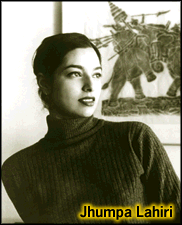
Unaccustomed Earth is one of the five fiction selections of New York Times Best Books for 2008. Jhumpa Lahiri’s debut work, Interpreter of Maladies, a collection of short stories, won the 2000 Pulitzer Prize for fiction, and later received the PEN/Hemingway Award, the New Yorker Debut of the Year award, American Academy of Arts and Letters Addison Metcalf Award, and was translated into twenty-nine languages. Her next work was The Namesake, a novel which was turned into film by acclaimed director Mira Nair. Unaccustomed Earth is her third book.
Jhumpa Lahiri was born in London, England, to Bengali immigrants. Her family later moved to the United States and settled in Rhode Island where she grew up. Lahiri went to Barnard College and received a B.A. in English Literature. She furthered her studies in literature and creative writing and obtained three M.A.’s, and ultimately, a Ph.D. in Renaissance Studies at Boston University. So, she knows her subject matter well. In Unaccustomed Earth, characters are Bengali immigrants, mostly academics, their second generation who are born in foreign soil and their non-Indian friends or spouse. The stories deal with the entanglement of cultural traditions, incompatible values, failed hopes and expectations, and the subsequent internal strives that haunt them all.
But why would we be interested in stories like these? Herein lies Lahiri’s insight. While the viewpoint of these characters might be parochial, Lahiri’s stories bring out the larger universal significance. Who among us doesn’t belong to a community, and at one time or another, question his/her conformity in that very community? Regardless of our ethnicity, who among us isn’t born into a family with its own peculiar traditions and values? Who among us doesn’t feel the distance separating generations in our world of rapidly shifting paradigms, be they cultural, social, or spiritual? And who among us, as one in the mass diaspora of drifting humanity, doesn’t want to lay down roots in fertile soil?
Despite the somber themes, reading Lahiri is an enjoyable ride. Herein lies Lahiri’s talent. She is a sensitive storyteller, personal in her voice, subtle in her description, meticulous in her observation of nuances, and stylish in her metaphoric inventions. Her language is deceptively simple. The seemingly lack of suspense is actually the calm before the storm, which usually comes as just a punchline in the end of each story, leaving you with a breath of “Wow, powerful!” But it is for that very line that you eagerly press on as if you are reading a thriller or a page-turner.
The book is divided into two main parts. The first contains five short stories. The second, entitled “Hema and Kaushik”, consists of three stories but can be read as a novella on the whole, for they are about two characters whose lives intertwine in an inexplicable way. While the characters and their situations are contemporary, their quest is the age old longing for love and connection.
I have enjoyed all the stories, but the most impressionable to me is the title one. In “Unaccustomed Earth”, Ruma is married to an American, Adam, with a young child Akash, and pregnant with another. Her recently widowed father comes to stay with her in Seattle from the East Coast, just for a visit. During his stay, Ruma’s father builds up a bond with his grandson Akash. The two create a little garden at the back of the house, a relationship thus flourishes as the flowers and plants blossom. Ruma struggles with the idea of whether she should welcome her father to live with her for good to fulfil her filial duty, but by so doing, she would be adding a burden to her nuclear family. What she does not know though is that her father has his secret and internal conflict as well. He too wants a life of freedom and love. The story ends with a dash of humor and a little surprise, reminiscent of a Somerset Maugham story. I will not say more, or the spoiler will lessen your enjoyment.
I have read all three of Lahiri’s work. And this is my query: If her first book garnered the many literary awards including the Pulitzer, I just wonder what else could she win with her newest creation, which I enjoy far more.
Unaccustomed Earth by Jhumpa Lahiri, published by Alfred A. Knopf, NY, 2008. 333 pages.
The clear front runner is The Curious Case of Benjamin Button, grabbing 13 nominations, just one short of the record shared by All About Eve (1950) and Titanic (1997).
Slumdog Millionaireis not far behind, a fantastic rags to riches exemplar in itself, garnering 10 nominations.
When I look at the Best Picture categories, I notice that four of the five nominees are produced from an adapted screenplay. Here are the origin of these now famous movies, the source materials that first spark and channel the creative energy of screenwriters, causing them to propel a much lesser known work into the orbit of box office profits:
The Curious Case of Benjamin Button: Loosely based on a short story of the same name by F. Scott Fitzgerald. The imdb site does not even mention this source material. But for those of you who want to acknowledge the original writer’s work, click here to read the short story online.
Frost/Nixon: Based on a play by Peter Morgan. To read the NY Times review of this theatre production, click here.
The Reader: Based on the novel by the German writer Bernhard Schlink. To read the discussion of book into film at guardian.co.uk, click here.
Slumdog Millionaire: Based on the novel Q & A by the Indian novelist Vikas Swarup. To read his interview on guardian.co.uk, click here.
So I say, kudos to all the original writers out there, without getting as much notice, not in this part of the world anyway, until their work is chosen to be made over into a movie, or picked by Oprah (The Reader). It says a lot about our consumer and celebrity driven culture, that a piece of writing gains recognition only when it is released in a movie tie-in edition, or favored by a TV icon.
Well, the message of Wall-E is relevant here. I’m glad to see it getting 6 Oscar nods including Best Original Screenplay. The last time an animated feature received 6 nominations was Beauty and the Beast (1991), itself a case in point with the hype of commercialism boosting the literary form.
And then on another note, I read about the first edition of Emma that Jane Austen signed and gave to her friend Anne Sharp (thought to be the inspiration for the character of Mrs. Weston in Emma) was on sale at the Antiquarian Book Fair in Hong Kong last week, asking price HK$3.95 million (approx. US $500,000). I wonder also how much all those movies profited from adapting her novels. I lament Jane who died impoverished.
Continuing with my review of ‘hopeful movies’ for the new year, this is a must-see… for your whole family.
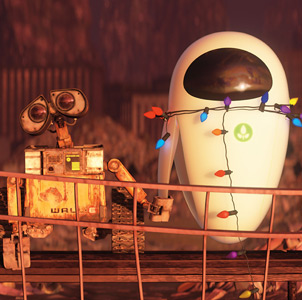
WALL-E has re-defined for me what makes a good movie. It doesn’t need human actors, doesn’t even need dialogues. Its visuals are stunning and thought-provoking, and the silent scenes speak volumes. Especially the first part of the movie, I’m fascinated by how human meanings and sentiments are conveyed with almost no dialogues yet with such eloquence. It is ironic, I know, that it takes an animated robot, or two, to bring out what is important for us humans: The need to connect, the joy of simplicity, the power of a tiny green sapling bursting with life, and love, the essence of being human. The creators of WALL-E have invented a fresh and entertaining way to send these age-old messages back to us humans, with grace, humor, and wonderment. Now that’s creativity.
The time is post-apocalyptic, some time in the future where Earth is no longer habitable because its junks are piled up higher than sky scrappers. WALL-E is a robot with one directive: garbage compacting. Earth is no man’s land now. One ‘human remains’ that WALL-E treasures is an old video tape of “Hello Dolly”. WALL-E plays it constantly to admire that very human act and emotion: courtship and love. One day, he witnesses the landing of a spacecraft, from which comes Eve, an exploratory robot. Now WALL-E has a chance to practice what he has learned.
As Earth is no longer viable for life, humans, ever ingenious, especially when it comes to their own enjoyment and gratuitous consumerism, have branched out into space, the final frontier. They have created for themselves a utopia in a cruise ship, perpetually holidaying in space. Their pastime is lounging on a couch, being served by automated robots. Due to lack of use, their limbs have shrunk while their bodies have bloated. No matter, they only need one finger to press buttons to eat, drink, and be merry. WALL-E’s adventures begin as he follows Eve back to this ultra high-tech space station.
But Earth is home for humans, not a cruise ship in space. Earth is meant for us to cultivate, to nurture, and to enjoy. So, that’s the ultimate epiphany for all these perpetual space vacationers. Herein lies the miniscule hope, symbolized by the tiny sapling of green, that there’s still a chance to return home and set roots once again, to live and grow. The movie ends with all the right notes without being preachy or turning into a propaganda, nor does it wake us up by scare tactics. It leads you on a pleasant ride and brings you to its intended destination without coercion or didactics.
The DVD has some excellent special features including a couple of animated short films, deleted scenes, and many more. But my favorite part is ‘Animation Sound Design: Building Worlds From the Sound Up”, in which the legendary sound designer Ben Burtt shares secrets of creating the sounds of WALL-E. Credited by writer/director Andrew Stanton as the genius behind WALL-E, Burtt has won Oscars for his sound effects in E.T. The Extra-Terrestrial, Star Wars, and Indiana Jones movies.
Teach your children well… while there’s still time, that’s the underlying axiom (the name of the cruise ship) of the movie. An animation more relevant for adults than kids. After all, who are in a better position to bring hope to the next generation other than parents themselves?
Some guys would rather have jaw surgery than to read JA. Steve Chandler could well have been one of them. As an English major in college, now a successful writer in his sixties, Steve has miraculously managed to avoid reading JA all his life, until now. On the other hand, his co-author Terrence N. Hill, an award-winning playwright and author, has read Pride and Prejudice three times, good man. Prompted by their wives, Steve and Terry embarked on this new project in their “Two Guys” series, taking the risk of treading no man’s land. However, considering their previous “Two Guys” titles, Two Guys Read Moby Dick and Two Guys Read the Obituaries, they are well-primed for this venture.
Thanks to blog reader Julie for sending me a copy of this book, I’ve been thoroughly entertained. Attaining to true Austenesque style, the two lifelong friends read two JA novels and wrote letters to each other about their thoughts over a six-month period. I must admit I’m surprised (sorry guys) at the incisive look and the fresh perspective they bring to the forefront. Their sharp observations, humorous takes on many issues, their LOL commentaries on popular culture, and intelligent analysis on various topics make this a most gratifying read for both men and women, Janeites or would be’s.
Many do not want to read JA because they think she was just a 19th Century rural spinster awashed in naiveté, who had never heard of Napoleon or the war he was raging, ignorant about the slave trade from which England was benefiting, or couldn’t tell the difference between a country and a continent. The most they might think of her is the mother of all modern day chick lit or the romance novel. Well, these myths are all dispelled by two guys that have experienced Jane Austen first-hand, and lived to tell their discovery.
Here are some of their insights and words of wisdom as they read Pride and Prejudice and Mansfield Park. I’m quoting directly from their letters to each other:
Jane’s got more adoring female fans than Brad Pitt, and my guess is they’re more intelligent too.
JA (through Elizabeth) is a witty, rebellious voice for intelligence and passion in the face of those stuffy British strictures. I love this. I love a woman (or a man, for that matter) who has no need to win anyone over.
Wasn’t Elizabeth Bennet heroic because she was such a totally self-responsible, proudly independent person? Wasn’t Darcy the same?
I really enjoy how much you like Jane Austen, that you cry when reading her books, and that you can still be a man… A man not afraid of the feminine principle becomes even more of a man.
…elegantly cerebral. But once you acclimate yourself to the flow of the language, it is addictive. JA’s writing becomes more captivating with each new chapter because of how many layers of psychological posturing she strips away.
Men are often accused of putting their wives on a pedestal. Women build a pedestal and then spend their time trying to create something worthy of going on it.
I don’t think Austen ever gets proper credit for her role in the development of the comic novel.
Jane never attended school after the age of 11. After that she was entirely self-taught… S&S, P&P, NA, three of the greatest novels of all time–all written by 25. Thinking of myself at that age. If I had had time on my hands I could well imagine having written three novels… What I can’t imagine is that they would have been any good. Ah, but then I had the disadvantage of an education.
The true measure of her characters is their hearts and minds. What the movies cannot get to – or do justice to – is the intelligence.
What has excited Henry Crawford the most is Fanny’s inner strength. On the surface she is delicate and demure. But underneath she is power itself. That’s what makes JA so great and so endearing.
Jane is all about principle. Living true to your highest ideals, your highest self… she shows us there is a beauty to morality… there’s beauty in integrity!
Need I say more?
Two Guys Read Jane Austen by Steve Chandler and Terrence N. Hill, Robert D. Reed Publishers, Bandon OR. 2008, 126 pages.
For my 100th post, I’d like to share an extraordinary personal narrative by writer Jeannette Walls.
The opening of the book grabbed me right away as I was browsing in a bookstore. The author, a successful journalist and writer, was in a taxi, all dressed up for an evening event in New York City. As she glanced out the window, she saw a homeless woman scavenging a garbage bin. A closer look made her realize that was her own mother.
That is one dramatic opening of a book. Knowing that it is the telling of a real-life story intrigued me all the more.
Growing up nomadic is a succinct description of Walls’ childhood. At age four, she had already moved eleven times. Upon the direction of her eccentric father and idealistic mother, and often to escape debts or consequences of misdeeds, the four Walls children were herded across the United States from Arizona to California, across mining towns and even living out open in the Mojave Desert, moving on a whim and often given just minutes to pack up whatever meager possessions they had.
Afflicted with alcoholism, dad Rex had trouble holding down a job. But he was a man with a brilliant mind and a wealth of knowledge which he readily passed to his favorite daughter Jeannette. She learned from him science and engineering, mathematics and history. The glass castle is his promise to her, assuring her one day he would strike gold with the Prospector he had invented, and build the family a glass castle they could all live in. The glass castle remained a glimpse of hope, yet sadly proven to be one illusive dream.
Mom Rose Mary was an idealistic artist and writer. Besides teaching her children to appreciate nature, art and literature, she had taught them adaptability and instilled in them the spirit of resilience. Once driving through the Mojave Desert, they saw an ancient Joshua tree. Growing through the wind swept years, the tree was permanently bent and yet was still firmly rooted. Later, Walls found a sapling growing not far from the old tree and wanted to dig it up and replant it near their home:
I told Mom that I would protect it from the wind and water it every day so that it could grow nice and tall and straight.
Mom frowned at me. ‘You’d be destroying what makes it special,’ she said. “It’s the Joshua tree’s struggle that gives it its beauty.
This book could well be named The Joshua Tree.
Rex’s alcoholism left the family in dire poverty. In this candid and personal account, Walls remembers that often she had to go without food for days. While in school, she would scavenge garbage cans for leftovers after lunch. Often they would have no electricity in the makeshift shack they called home, and took a shower once a week.
Mom was plagued by depression and often lived in a world of her own ideals. Her laissez-faire style of child-rearing often left her kids to fend and provide for themselves. Even if she found a job as a school teacher, she would soon grow tired of it and wouldn’t get up in the morning. The kids would have to drag her up, usually in vain.
I’m surprised the term “Dysfunctional” never occurred in my mind as I read the book. The Walls children were tenacious, resourceful, bold and confident. They were avid readers and did well in school. What more, they were devoted to each other and loyal to the family. From an early age, they had to learn to handle an alcoholic father, a moody and depressed mother, and mediate their occasional fights and conflicts. The kids had to parent their own misfit mother and father. The Walls might be financially crippled, they were able to maintain strong relationships and an exuberant zest for life.
Walls’ account is candid and personal, poignant with cutting humor. One time in winter, when icicles were formed in their kitchen ceiling because the roof was not insulated and there was no electricity in their home, Walls describes her mom’s response:
All seasons have something to offer,” she said. “Cold weather is good for you. It kills the germs.
How we view the Walls parents of course depends solely on how their daughter presents them in her memoir. And this is precisely my point. Jeannette Walls has painted a loving picture of her parents depsite their failings. She is sympathetic to their struggles with their own demons. Through out the book, I am touched by her capacity to forgive, to persevere, to hope, and to plan for a better future, not only for herself, but for all her siblings.
The last chapters of the book detail how the author and her siblings pursued a new beginning by establishing an independent life in New York City, while still as teenagers. The story of resilience moved on to another phase. Readers are gratified to see a rewarding end to Walls’ years of perseverance.
Film rights have been optioned for the book. If it is ever turned into a movie, from a visual sense, it is easy to illustrate the hilarious and sensational parts. However, my sincere hope is that the film will keep the integrity and poignancy of the memoir. Often, it is not what has happened that is worth telling, but how the narrator sees what has happened that makes the storytelling moving and memorable. In this case, both the what and the how are extraordinary and uplifting.
The following is a video clip of Jeannette Walls and her mother talking about The Glass Castle.
~ ~ ~½ Ripples
The Glass Castle by Jeannette Walls, published by Scribner, NY. 2005. 288 pages.
NOTE: Here is the latest (April 23, 2012) regarding the film adaptation of the book. Lionsgate has bought the rights and Jennifer Lawrence is in talk for the lead. CLICK HERE to read more.
I don’t want to miss any Jodie Foster movies. She’s one of my all time favorites. I’m also eager to watch Abigail Breslin again after her Little Miss Sunshine. Further, after reading Annie Dillard’s novel, I just need something light and mindless. Coincidentally, between these two, I only have to change lenses, for the view is more or less the same: the beauty and wonder of nature.
Nim’s Island is a mixture of Swiss Family Robinson, Home Alone, Stranger Than Fiction, and Mr. Brooks. Based on the popular children’s book of the same name by Wendy Orr, it’s about a girl called Nim who lives an idyllic life on a pristine island with her scientist dad Jack. The island’s rich natural resources and wildlife are the sources of Jack’s research and Nim’s pleasure. Her friends are Selkie the sea lion, Fred the iguana, Galileo the frigate bird, and the giant sea turtle…what’s his name? … Anyway, it’s a zoo out there on Nim’s island, but Nim and Jack keep it real organized, educational, and fun.
One of Nim’s favorite past time is reading the stories of her adventure hero Alex Rover (Gerard Butler, P.S. I Love You, 2007). So, when a huge tropical storm hits the island, and her dad hasn’t come home for a few days collecting protozoa samples out in the open sea, she calls to Alex Rover for help. Actually, it is the creator of Alex Rover that emails Nim first, asking about information to write the next novel, mistakenly thinking Nim is Jack’s research assistant.
Far from being an adventure hero, Alexandra Rover, the author, is a recluse suffering from agoraphobia, whose best friend is her Purell hand sanitizer. She hasn’t been out of her San Francisco apartment for months. But knowing Nim is all alone on an island needing help, and prodded by her own adventure hero, she ventures out against her fears. So there’s the interesting set up of the plot, the rest of the story is the adventures of Alex Rover the writer heading to the island to help out Nim, the real heroine.
The film suffers from some scenes and dialogues that appear to be banal and trite. With its interesting storyline I think it can be done better with more creativity and imagination. Having said that, I must say that the movie is beautifully shot on location in Queensland, Australia. In a day and age when kids, and parents, for that matter, find it impossible to have fun outside of video games and electronic gadgets, this movie and the book can offer a wholesome alternative.
There is a new edition of the book that’s a movie tie-in, including 8 pages of color pictures from the film. It is illustrated whimsically by Kerry Millard. A fun read. And for all the budding biologists, zoologists, oceanographers, and for that matter, environmentalists in your home, this is a must-read.
The intended age group I feel should be a bit lower for both the movie and the book. I’d say a target audience and reader Age 6 – 10 would be more appropriate than the now 9 – 12.
The best combination: Go see the movie and then to the bookstore.
Update April 1: Reader Tom has alerted me to the site for online petition to save the CBC Radio Orchestra. http://www.savecbcorchestra.com Please sign the petition and spread the word.
Another shocking news: The CBC Radio executives have just decreed that The CBC Radio Orchestra is to be dismantled as of November, 2008, on the heels of Cutting Classical Music Programs on Radio 2.
What a swift one-two punch!
Formed in 1938, mandated “to make engaging musical radio programs, commission and perform works by Canadian composers, showcase Canadian performers and conductors, and discover and expose Canadian excellence”, the orchestra has been a Canadian cultural and musical tradition for 70 years.
Does the CBC management even have the right to do that? I thought this is a publicly-owned national radio station. A cultural and arts institution with 70 years of history can be chopped off the Canadian landscape by a few executives like a branch off an old tree in the backyard?
With this executive order, the CBC has finished off a piece of North American history, disbanding the last radio orchestra in the continent.
Again, I was alerted to this piece of appalling news by my teenaged son…talking about axing classical music to attract younger audiences. CBC has gravely miscalculated the musicality of our youth and done an utter disservice to them, depriving them of knowing and appreciating a heritage dating back to hundreds of years of human civilization.
BTW, the Facebook Group ‘Save Classical Music on the CBC’ now has over 8,000 members…I’m not trying to stereotype, but would these not be some of the ‘younger audiences’ CBC is trying to woo?

 So students are sent back to school this week, just in time for Easter. Nobody wants to have a holiday right on Easter week, especially the public school board. That’s how you survive, by being politically correct. And the last two weeks’ holiday is called Spring Break of course. Easter has almost become a banned word, like Christmas. Who wants to be rude and offend others, we’re Canadians after all.
 When the idea of building the World Trade Center Twin Towers began to germinate in NYC, on the other side of the globe, a young man in France started to weave a dream. He wanted to walk across the top of the Towers on a wire after they were built. Six years later, with the Towers nearing completion, Philippe Petit fulfilled his dream a few days short of his 25th birthday. On August 7, 1974, he stepped on a wire strung across the roof top of the then tallest buildings in the world. Hailed as ‘The Artistic Crime of the Century’, Philippe Petit’s breathtaking, and illegal, high wire act is the ultimate test of the human spirit, pushing the limit of audacity and strength.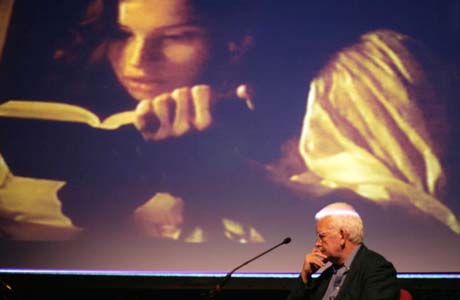

 The book is divided into two main parts. The first contains five short stories. The second, entitled “Hema and Kaushik”, consists of three stories but can be read as a novella on the whole, for they are about two characters whose lives intertwine in an inexplicable way. While the characters and their situations are contemporary, their quest is the age old longing for love and connection.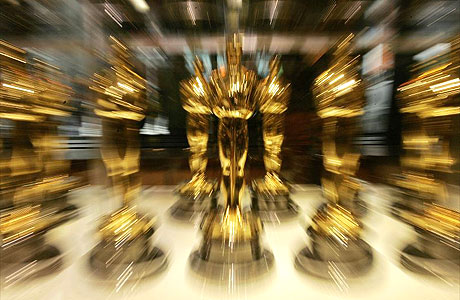



 Ripple Effects