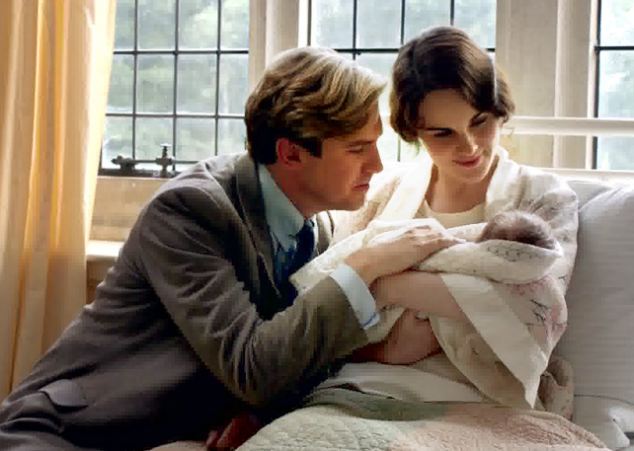
Downton Abbey, The Complete Scripts: Season One

I had once talked with someone who avoided watching the ‘making of’ special feature that comes with a DVD. His reason? He did not want to see his favorite movies demythicized. Well, if you’re that sort of a viewer, then this book is not for you.

Downton Abbey The Complete Scripts Season One

But, if you’ve enjoyed the phenomenon called Downton Abbey, and are curious to learn about the creative writing process that kicked it off, then I’d say, this is an absolute must-read. And for those who keep going online to find quotable quotes from the series, here you have them all, and some more.

As someone interested in screenwriting, I would look for the scripts of movies I like, usually online. So it’s a wonderful discovery for me to see this book at the bookstore. Julian Fellowes has dispelled the magic and shared with us the scripts of all episodes for Seasons One and Two, most importantly, with his own annotations. Consider this the literary version of the ‘making of’ in your special features, more accurately, the screenwriter’s commentary.

In his Foreword, Fellowes introduces the book as ‘the complete scripts of the first series as they were when they went forward into production.’ So here we have the whole idea before cutting and editing, including deleted scenes and dialogues, plus Fellowes’ own explanations for the deletions. He walks us through the whole series, literally, and offers helpful background on the social history of the time, and many more tidbits.

You can also see why the collection is such a useful tool as an exemplar of a successful writing process, in particular, the editing phase. The main reasons for deletion is redundancy, and with a TV production, time. Another is for keeping the integrity and consistency of the characterization and the story. It’s intriguing to see the final version is the outcome of well-pruned and collaborated efforts.

An example of a deleted scene where Matthew answers Robert’s bewildered query about how he would manage to commute and continue to work as a lawyer while being heir of Downton.

Robert: How will you manage it?
Matthew: Like many others, I shall bicycle to the station, take a train there and back, and bicycle home.

Here’s the screenwriter’s commentary:

Here we have Matthew talking about bicycling to the station which is quite unnecessary as we see him do it. When you’re writing something you often forget that it’s going to be told visually, and so there are things that don’t need to be said.

With eighteen characters in the story, the writer has done a superb job in keeping them well developed, and eliciting our interest in each one of them. First I notice how short each scene is, something that just flashed by when watching, but reading it can even be more obvious. I’ve counted most of the scenes to be less than 60 sec. on screen. Each therefore needs to be succinct to make the most of the time. Makes me think of another way to apply that famous Hemingway quest, always aim for that one true scene.

To manage the long list of characters, here’s the brilliant way, something that’s so obvious when Fellowes explains, but then so subliminal while we’re watching them on screen, foils and parallels:

I love Mrs. Patmore. I think Lesley Nicol’s performance is fantastic. She is the kitchen Violet. Maggie Smith delivers the cryptic comments upstairs, Lesley has the barbed tongue downstairs. In a sense they balance each other, as Robert and Bates, or Anna and Mary, balance each other.

And here I add, other pairs we can see upstairs Violet and Isobel, or down, Mr. Carson and Mrs. Hughes. Great performance comes when an actor is given the chance to play against an equal, in character and caliber.

Further, Fellowes reminds us that it’s the actors that give life to mere words on the page. As the actors interpret, take off with and develop the characters on their own, the screenwriter continues with that development and write accordingly in the upcoming episodes. Isn’t this a most fascinating creative process? Writer and actors inspiring each other.

It’s always interesting to see what the screenwriter thinks of the final production. And Fellowes is candid in sharing his views, which reminds me of the fact that it’s all a collaboration, team work, and not just one person’s monopolized brainchild. The writer writes, the actors interpret and live out the words, the director sets the tone, the direction, the cuts, plus numerous others who work on the sets to play their roles.

I most appreciate and am somewhat surprised to find Fellowes uses many of his own experiences, stories he has heard, or memories of his own family, to create the scenes. Some interesting tidbits he shares include the scene in the kitchen rescuing the chicken from the cat before taking it upstairs, that comes from an embarrassing real life episode. Or Violet Crawley’s subtle dominance in the annual flower show, which he adapts from memories of his mother. Or his commentary on Sybil’s covering up of her political expeditions to Ripon, a parenting point:

Once children conceal their purposes or their social engagements or their plans for the weekend, that is the beginning of their move away from the parental set of values. Before that, God knows they may be rude or challenging, but they don’t usually have a private life, a secret agenda. And this is where it begins for Sybil.

It’s commentaries like this that you’d feel Fellowes is candid and open, just talking to you in a down-to-earth manner. Like everyone of us, he’d go online to do his research when he writes, such as the history of cataract surgery when writing about Mrs. Patmore’s.  Or admitting faults in certain scenes, and sharing about his own childhood experience and family dynamics, enlightening us with the norms and etiquettes of the time and the social history behind the scenes.

Demythicize? Definitely, with the effect that you’ll appreciate the production and the writing even more.

~ ~ ~ ~ Ripples

Downton Abbey The Complete Scripts Season One by Julian Fellowes, Harper Collins Publishers, 2012, 396 pages.

***

Related Posts You May Like:

Lady Almina and the Real Downton Abbey: Facts that give rise to Fiction

Quotable Quotes from Downton Abbey

Downton Abbey Season 3: Episodes 1

Season 3: Episodes 2 & 3

Season 3: Episodes 4 & 5

Season 3: Episodes 6 & 7 Finale

***

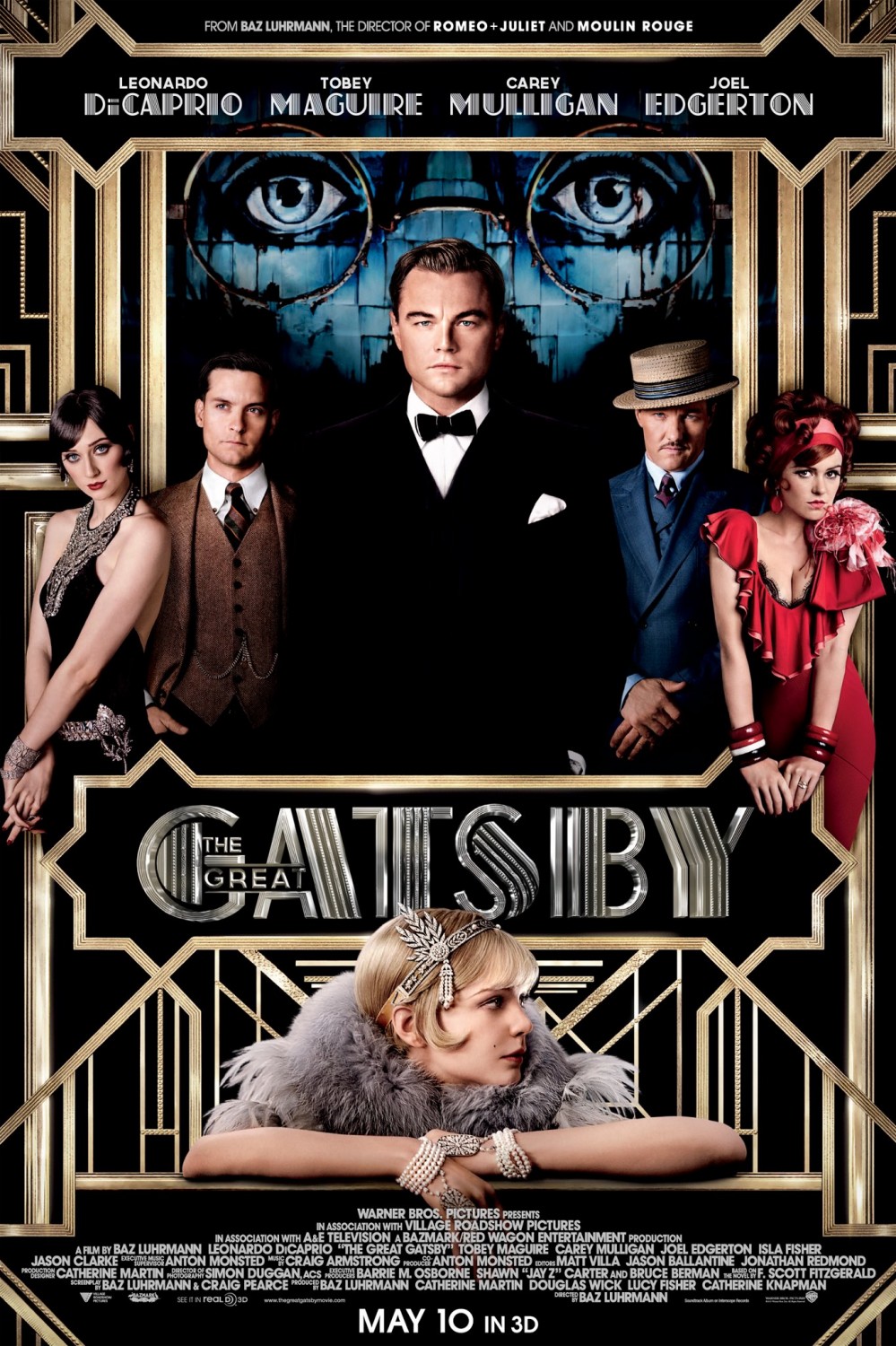
The Great Gatsby (2013): Movie Review

In just 172 pages, F. Scott Fitzgerald has captured the zeitgeist of the Jazz Age, and told the stirring story of love and loss. In this new adaptation of the book, director Baz Luhrmann has used an estimated $127 million, glamorizing with 3D and over the top cinematic effects.

Here is a prime example of ‘the medium is the message.’ Instead of depicting extravagance and excess, the production has become that.

the-great-gatsby-poster1

I went in with an open mind. After all, I had expected a mashed-up, postmodern fusion Luhrmann style. So, even the Jay-Z curated hip hop selections a la Gershwin cacophony was fine with me. After all, it was the unruly Jazz Age, so be it. Gatsby’s creamy yellow roadster speeding towards Manhattan, zigzagging its way through busy streets, Fast and Furious 1920’s version is still acceptable. By the way, the movie was shot in Australia. So, all the Manhattan scenes are visual remixes.

But the main issue for me is the 3D. Not much to be gained there but hindrances. The effects make me feel like I’m looking into a View-Master, artificial and gratuitous. For Gatsby, the extravaganzas in his mansion are only means to an end, to attract his love, Daisy; in Luhrmann’s hands, they are an end in themselves. The flamboyant and ostentatious parties, like their uninvited guests, overstay their welcome in the first part of the almost 2.5 hour production.

If Luhrmann had only used more of his wealth of resources: the rich and talented cast, to explore the story more and go deeper into characterization, and less partying, the movie would have been a wonder.

After all the glitz and glam in the first act, my enjoyment begins when Gatsby meets Daisy in Nick’s humble abode, a set up masterminded by Gatsby. It has taken him five years to this very moment. It is this scene that draws me in from being just an aloof onlooker. From without to within, it is the story and the characters that engage me more than the visual spectaculars.

Leonardo DiCaprio is a fine Gatsby, convincing and comical at times. Carey Mulligan may not be the Daisy I had conjured up from reading the book, but she has mastered her role well on her own terms. She’s a much sweeter, less careless Daisy than I had in mind. Elizabeth Debicki is an apt Jordan Baker. Joel Edgerton as sneaky and snobbish Tom Buchanan needs to smile more, and Tobey Maguire as Nick Carraway less. The veteran actor Amitabh Bachchan is a good choice for Meyer Wolfsheim. Isla Fisher as Myrtle Wilson, what a change from a shopaholic, and Jason Clarke too much a hunk to be wimpy Wilson.

One major alteration that I’ve appreciated is Nick writing out the story as a therapy recommended by his doctor, apparently a psychiatrist. The story of Jay Gatsby is also Nick’s own story as a writer. By articulating his experience in words he pays tribute to an unforgettable character, a dreamer who always sees the green light. Without giving out a spoiler, let me just say, the little twist at the end is a nice touch to this new adaptation of The Great Gatsby.

Does it worth a watch? I’d say yes, even in the 3D version. Curiosity is insatiable. And hopefully, the visual spectaculars can draw the viewer back once again to the literary offering Fitzgerald had first created. That’s one positive effect a movie adaptation can generate.

~ ~ 1/2 Ripples

***

A related Post I wrote 3 years ago at the announcement of this new adaptation. My open letter to Baz Luhrmann:

The Great Gatsby: A New Version

***

Why Did the Pheasant Cross the Road?

Why did the Pheasant cross the road?

  • To test Arti’s reaction time.

How did the Pheasant cross the road?

  • Ignoring traffic, thought he had the right of way. (Although I must mention there was just one car on that quiet road.)

**

So, I passed the test, parked the car quickly, then started stalking him. Just like in the movies…

From a distance, he knew someone was following him, so he quickened his step. And the stalker, with no lightpost to hide behind, picked up the pace but ever so quietly, camera in hand.

From a distance, these photos were taken, just in time for Saturday Snapshot:

Running Pheasant

Running Pheasant 1Male PhaesantI decided to spare him after a few minutes. He was almost in a panic of being followed, albeit from a distance. I’d never seen a bird so colourful and with so long a tail.

After I got home and did some researching and asking, I learned that I had sighted a male Ring-necked Pheasant, the blue-backed variety, which was supposed to be quite rare, at least, rare in my neck of the woods.

***

Saturday Snapshot is hosted by Alyce of At Home With Books. CLICK HERE to see what others have posted.

Ruth Prawer Jhabvala: A Tribute to Rootlessness

On April 3, one day before Roger Ebert died, Ruth Prawer Jhabvala passed away from illness at the age of 85. Her death seemed to have been overshadowed in the next few days by Ebert’s. I feel here’s a life that ought to be noted as well, but maybe for a special reason.

ruth-prawer-jhabvala

Ruth Prawer Jhabvala was best known for her Oscar winning adaptations of E. M. Forster’s A Room With A View and Howards End. Her other screenplays include Kazuo Ishiguro’s The Remains of the Day, Henry James’s The Golden Bowl and The Bostonians, among a total of twenty-six.

But for Ruth (to discard formality and to focus on the person, allow me to call her Ruth), adapting screenplays was only a hobby. Her main calling was to be a writer of her own stories. She had heeded that call with fervour since childhood. Guardian’s obituary mentions Ruth once said about her writing time as “the only three hours in the day I’m really alive.”

There are thirty titles by Ruth Prawer Jhabvala on Goodreads, including novels, short story collections, and her works in anthologies. Among her accolades, most well known is the 1975 Booker Prize for her novel Heat and Dust, about the meeting of East and West in India. Her short stories had been published in The New Yorker since 1957, thirty-nine of them. Her latest appeared just one month before her death. She is the only person who had ever won both the Booker and the Oscar. Two Oscars, to be exact.

Reading her obituaries from several sources, I’m more intrigued by this matter of laying down roots, or rather, of rootlessness in the landscape of our life.

**

Ruth was born in Cologne in 1927 to a Polish father and a German mother. Her family was assimilated Jews in Nazi Germany. Her grandfather was the cantor in Cologne’s biggest synagogue. Her father Marcus was a lawyer. Assimilated or not, Ruth and her brother had to flee with her parents in the nick of time in 1939 to England. She was 12.

For the next twelve years, she grew up in London, learned a new language, adopted a new identity, and later graduated in English literature from Queen Mary College, London University. In 1948, upon finding out all members of his family were killed in the Holocaust, more than forty of them, Ruth’s father took his own life.

In 1951, when she was 24, Ruth married the architect Cyrus Jhabvala in London and followed him back to his native country India. Another uproot and transplant, this time, to a whole new continent. They settled in Delhi. For the next 25 years, Ruth immersed herself in her adopted country as a wife, mother, and writer. Colonial and post-colonial Indian life, East-West relationship and caste conflicts became her subject. Despite her effort in total immersion, she had not taken roots in India.

Finally, In 1976, a third continent, as Ruth and her husband moved to New York City. There, she found a place closest to a notion of home, paradoxically, because of “many people like herself: refugees, outsiders, interesting American discontents,” wrote the remaining Merchant-Ivory-Jhabvala collaborators, director James Ivory, in Time magazine’s tribute.

**

While still in India, Ruth had already collaborated with Merchant and Ivory on several movies. Now in New York, she lived in an apartment on the same block as they. The proximity of actual geographical location fostered a prolific period of their lives. Together, they had joined hands in more than twenty productions. Their forty years of collaboration remains the longest in movie history.

Ivory Jhabvala Merchant
Ivory, Jhabvala, Merchant

How did rootlessness affect her perspective? In Guardian’s obituary, I found this inspiring excerpt:

I stand before you as a writer without any ground of being out of which to write: really blown about from country to country, culture to culture, till I feel—till I am—nothing.” And yet, she said, this was one of her strengths. Many of her stories are about a kind of inner travel: feeling rootless, her protagonists find new ways to feel at home in the worlds they happen to inhabit.

Perhaps, in the vast landscape of literature, such rootlessness is essential for the imagination to take flight. Rootlessness allows flexibility and fluidity of navigation, the freedom to roam. Rootlessness can more readily unlock the wayfaring spirit within, and embrace change.

One result of being rootless could well be the hybrid identity. Amusingly the Merchant-Ivory-Jhabvala team itself is a good example. Producer Ishmael Merchant was a Muslim from Bombay who had settled in America; director James Ivory is the son of a French-Irish American; Ruth Prawer Jhabvala was a Polish-German-Jew from Cologne, Delhi, London, and New York City.

Perhaps as Nick Carraways, the narrator in The Great Gatsby, observes, only by being “within and without” can we see “the inexhaustible variety of life.”

***

Related posts and links:

Obituaries and tributes from The Guardian, The Telegraph, The Paris Review, Time Magazine, The New York Times.

Since 1957, The New Yorker had been publishing Ruth Prawer Jhabvala’s short stories, a total of 39, her last appeared only one month before her death. Thanks to The New Yorker, we can now read Ruth Prawer Jhabvala’s short stories online.

My book review of Howards End, my post on the Merchant Ivory production of Howards End, my review of A Room With A View (TV, 2007)

***

Photo Sources:

First photo from The Paris Review; Second photo from The Telegraph

Roger Ebert, A Close Encounter

In memory of Roger Ebert, I will recount an unforgettable experience I had two years ago. I took the following photos, which now are even more memorable.

He was still tweeting just two days before his passing on April 4. Ebert’s presence and influence had been ubiquitous over his four-decade career as a film critic. But it just takes one single encounter to make all the difference to me.

***

Thanks to the Toronto International Film Festival, in September 2011 I had the chance to meet the legend. It was only natural for me to think that wherever there were film festivals, there were film critics. But I never would have thought that I would see Roger Ebert in person and to shake hands with him.

It was pure serendipity. While browsing in Indigo Books on Bay Street, I noticed a sign saying Roger Ebert would be in that store signing his memoir Life Itself a few days later. I had long followed his reviews since his “Siskel and Ebert” days, the two-thumbs-up duo. By the way, Ebert’s right thumb-up had been trademarked. Reviewing films for the Chicago Sun-Times since 1967, Roger Ebert was the first film critic to win a Pulitzer Prize for criticism (1975). He remained prolific even unto his last days.

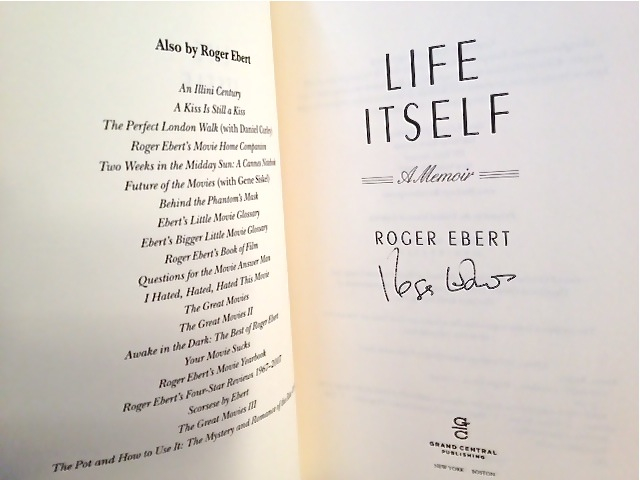
Roger Ebert autograph Life Itself

So after seeing the sign I was thrilled to know I would have a chance to see Ebert in person, right there in Toronto. To me, such an encounter was not just about an autograph, or seeing a celebrity up close. It was about seeing a man who after torturous cancer treatments and surgeries for his thyroid, salivary gland and jaw, had lost a part of his face and the ability to talk and eat, and yet still maintained his humor and passions, who continued to press on to new ventures… this was about seeing life itself.

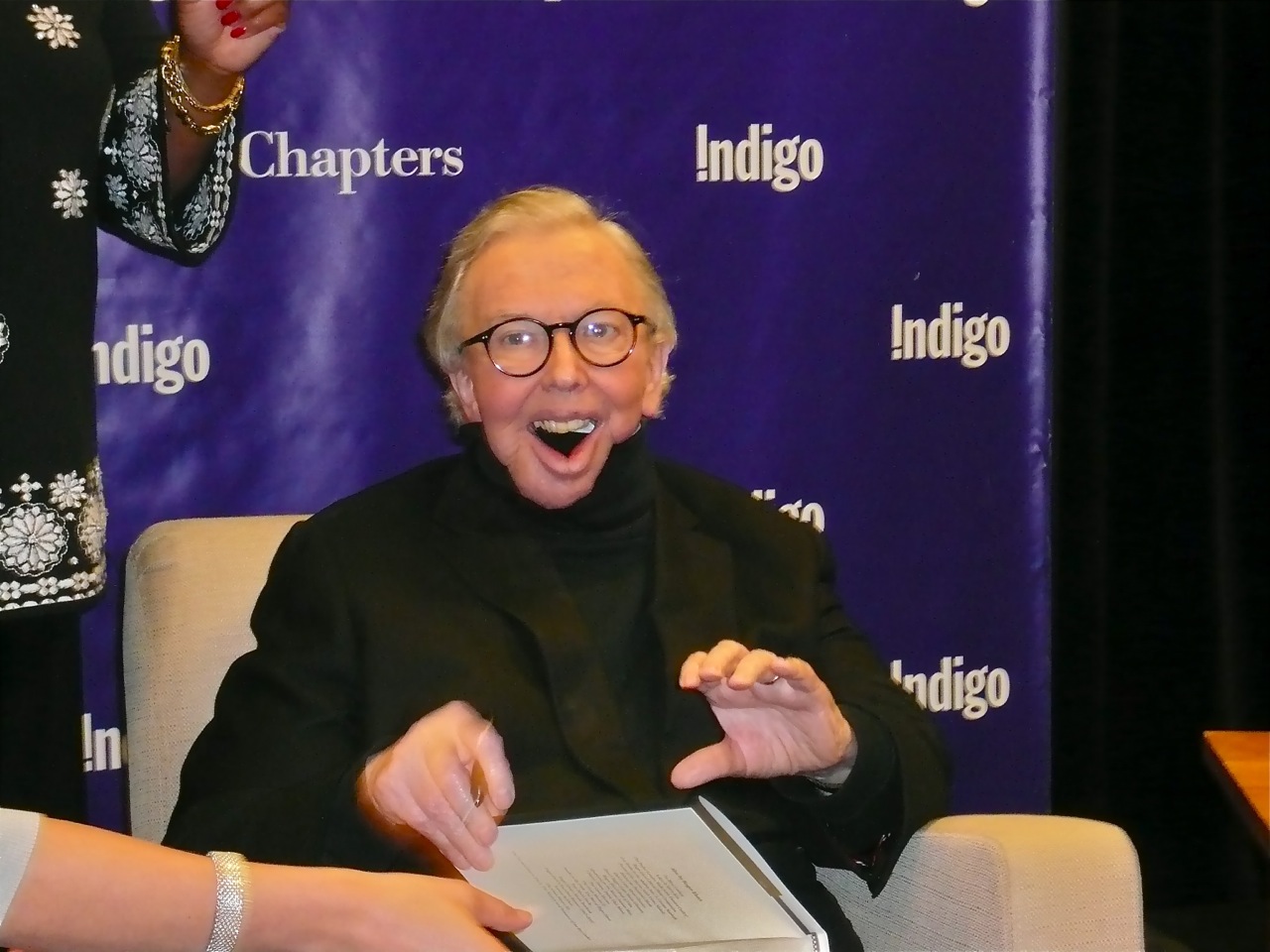
In the late afternoon on September 14, 2011, at the signing area in Indigo Books on Bay Street, people had been lining up for over an hour. I was one of them. At 7 pm, Roger came in walking slowly and with aid, stepped on stage and faced the crowd.

Ebert Signing

Together with his wife Chaz, they gave us a wave. Then he sat down and began signing. Photographs were allowed except for the rule of no posing. I waited my turn to go up to him, shake his hand and get his autograph in my copy of his memoir.

The Q & A session also began.

Roger’s wife Chaz was his voice. Personable and a film lover herself, Chaz shared some of her views of the TIFF selections. As executive producer of “Ebert Presents at the Movies”, she answered some questions without consulting Roger. But for most questions addressed to Roger, he would write in a small coiled notebook, handed it to Chaz to read out his answer.

Roger & Chaz

Here are some of the notes I had taken. Keep in mind this was a casual Q & A session in September, 2011. I’m sure Roger’s view towards 3D and CGI had changed considering his 4-star review of Ang Lee’s Life of Pi.

Q. Who influenced you the most?
A. He pointed to his wife standing behind him.

Q. Which decade is your favorite?
A. The 70’s… where you had The Godfather, Raging Bull…

Q. Buster Keaton or Charlie Chaplin?
A. Buster Keaton, albeit both are great.

Q. 3D?
A. Don’t ask. Story is number one.

Q. CGI (computer-generated imagery)?
A. Movies with CGI are soulless.

Q. All time best?
A. Citizen Kane.

Q. Favorite actor?
A. Robert Mitchum.

Q. Contemporary?
A. Al Pacino, Philip Seymour Hoffman, Tilda Swinton

Q. Favorite Canadian directors?
A. Atom Egoyan, David Cronenberg, Norman Jewison, Guy Maddin (thumb up)

Q. James Cameron?
A. Is James Cameron Canadian? Chaz asked in surprise.

Q. Favorite book?
A. A Fine Balance by Rohinton Mistry (Canadian! A voice came from the back)

Q. Any pressure from movie producers to write a good review?
A. No, he hasn’t been pressured. He was beyond reproach, Chaz answered.

Q. Any movies you haven’t seen?
A. The Sound of Music

Q. If there’s a movie made about you, who’d you want to play you?
A. Philip Seymour Hoffman. Chaz added, Oprah to play me. Diana Ross would be good too.

Q. Advice for potential film critics?
A. Do you want to get paid?

Q. Yes and no. (The questioner covered all bases.)
A. Start blogging. Roger replied. 

Q. How does your life influence the way you review a film?
A. It generates every word.

Definitely more than just an autograph. What an encounter. What a night.

***

Photos of Roger Ebert were taken with just a pocket camera at the event, book autograph page shot with iPhone at home.

Saturday Snapshot is hosted by Alyce of At Home With Books. Click Here to see what others have posted.

Before I Go To Sleep by S. J. Watson

Before I Go to Sleep47 year-old Christine has lost her memory for twenty some years due to trauma. She wakes up every morning to a forgotten past. She spends her day piecing together a life, who and where she is, her personal history, and, who her husband Ben is. Upon the advice of Dr. Nash, she writes it all down in a journal before she goes to sleep at night, for she’ll wake up the next morning wiped clean of her day old memory once again.

The book deals with some interesting issues. If the past is horrible to recall, would it be better if one does not remember, or, would one be better off knowing the truth despite pain? Is one made more vulnerable by knowing or not knowing? Further, if mental images conjure up, how can one be sure they are memories of actual happenings and not one’s imagination?

Author S. J. Watson leads the reader into a maze of intrigues, teasing us with an unreliable narrator Christine, casting shadows of imminent dangers, and trying to capture us with her vulnerability. So memory loss is an effective plot device, keeping us in the dark guessing, creating suspense, and revealing ever so slowly what really had taken place that caused the amnesia to set in, and how she could ever escape.

The book starts off with a most interesting scenario as Christine wakes up to an unknown world, but towards the middle it seems like it has forgotten that it is just the protagonist who has amnesia, not the readers, as it repeats the facts and descriptions with Christine’s journal entries. The last part is a page-turning thriller, albeit with a relatively improbable ending. The last pages explaining everything with a neatly wrapped up ‘here you go, see how logical it is’ kind of finish.

Memories… such a thematic element can be exceptionally gratifying to explore with deeper characterization. Surely the author has brought up the idea that memory defines us, a reader seeking for a more contemplative rendering of such a concept would be disappointed however, for Watson has chosen to use this interesting thematic material to craft a suspense thriller and not an idea-driven literary work. So what we have with notions relating to memories, to the nature of our identity and personality… etc. are merely used to build up a suspenseful plot. As a thriller, the book aims to lead on and not delve in.

Am I being a bit harsh here? Why, I just caught myself. I could well have been more lenient if I were not reading it along with Proust’s In Search of Lost Time (Remembrance of Things Past). Am I being fair to make comparison? It’s like comparing apples with oranges. Yet the coincident is too fascinating… both deal with remembering and sleeping, albeit one trying to fall asleep while the other trying not to. Just thinking… even the book covers that I have are similar.

Lots of ‘I love you’s’ are uttered, but none that can stir up any emotions in me the reader. Several films kept conjuring up in my mind as I read… Memento, Eternal Sunshine of the Spotless Mind, The Vow, and I must say the latter two managed to stir some affective resonance in me while exploring the topic of amnesia and a love relationship. But with this book, I just wanted to race to the end. For some, this might well be proof of an entertaining read.

And that is why I have high hopes for its film adaptation. Yes, I must applaud Watson for his strong debut. This novel published in 2011 has gained awards and accolades, on the bestseller lists in several countries, and translated into 30 plus languages. Its film rights has been snatched up by Ridley Scott. Filming now, it features the impressive cast of Nicole Kidman as Christine, Colin Firth (The King’s Speech) as Ben, and Mark Strong (Zero Dark Thirty) as Dr. Nash; Anne-Marie Duff (Nowhere Boy) is also on board. This is definitely a film I want to watch, not just because of the actors, but the screenwriter Rowan Joffe, who will direct as well. Joffe has shown us, with his script for The American (George Clooney stars) that yes, sometimes the film can be better than the book. Let’s hope this is also the case.

In the end page Watson notes that his novel, though totally fictitious, is inspired by actual medical cases, particularly that of Clive Wearing‘s, the British musicologist, conductor and BBC music producer, who has the same condition as Christine’s, albeit his is an even shorter memory span, just a short minute or so. His real life accounts have been recorded by his loving wife Deborah Wearing in her book Forever Today: A Memoir of Love and Amnesia. While he lives in the constantly present, he does not forget music or his love for his wife. Now that would be one inspiring book to read.

***

Click here to watch a short clip on Clive and Deborah Wearing on YouTube. Does he not remind you of another real life character, a pianist, whose life had also been made into a movie?

Diary of a Country Priest: An Easter Meditation

Last year around this time, I wrote about the book The Diary of A Country Priest by French author Georges Bernanos, (Journal d’un curé de campagne, 1936). I’d like to repost my review this week, for every time I read it, I find the essence of Easter.

***

The Diary of a Country Priest Book Cover

A young priest comes to his first parish, the rural town of Ambricourt, filled with humble hopes. All he wants is to serve the people, to give of himself, to bring God’s love. But as soon as he sets foot in the village, he is engulfed by hatred and rejection. There are dark secrets too sinister to be exposed. The young priest is an unwelcome alien. In a town afflicted by hypocrisy, pride, anger and bitterness, he is despised, taunted and ridiculed. His own innocence is no match even for the children in his catechism class, especially the precocious Seraphitas, a girl ‘with a hardness far beyond her years.’

Ambricourt is a world afflicted by the ‘leprosy of boredom’, a microcosm of the human condition. Bernanos uses diseases to illustrate his point well. The young priest himself is being slowly consumed by terminal illness. The pain in his stomach ultimately defeats his body, cancer. His diet consists mainly of bread dipped in wine which he makes for himself, and some potato soup. Poverty of means, but also frailty of body to take in solid food. Many a times we see him in the Garden of Gethsemane, pleading for strength in anguish. But he faithfully presses on, using his diary to confide his deepest thoughts, a means to commune with his God.

On the outskirt of Ambricourt is the Château of the powerful M. le Comte. The Count needs no priest to know about his adulterous affairs, this time, with the governess Mlle Louise. His wife Mme la Comtesse is totally absorbed by her long-held bitterness and grief from the loss of her young son. And his daughter Mlle Chantal is a deeply disturbed girl eaten up by anger and jealousy. Soon, she will be sent away to England, a most convenient plan devised by her father.

It is with this deep mess of a family that the young priest finds himself entangled. The most intense scene of the whole book, the climatic moment, comes when the priest goes to the Château to meet with Mme la Comtesse. She lost her beloved son when he was only eighteen months old, a child hated by his jealous older sister Chantal.

On his last day they went out for a walk together. When they came back my boy was dead.

Mme la Comtesse is fully engulfed by hatred for her daughter, grief for her lost son, and bitterness towards God.

Hearing her speak, a tear flows down the face of the young priest. “Hell is not to love any more, madame.” The young priest responds. And with miraculous strength, he delivers the following words.

… But you know that our God came to be among us. Shake your fist at Him, spit in His face, scourge Him, and finally crucify Him: what does it matter? It’s already been done to Him.

Towards the end of some soul piercing exchanges, Mme la Comtesse kneels down, releases her pain, and receives blessings from the young priest. Afterwards, she writes to him in a letter:

… I have lived in the most horrible solitude, alone with the desperate memory of a child. And it seems to me that another child has brought me to life again…

And this young child, a priest, consumed by illness, wreaked by frailty of spirit, can only marvel at the power through weakness:

Oh miracle — thus to be able to give what we ourselves do not possess, sweet miracle of our empty hands!

Not long after this, he succumbs to his illness. A life too short, a mission seems unaccomplished. But his last words faintly uttered on his deathbed are as powerful as the God who sends him:

Does it matter? Grace is everywhere…

And in the film, these three words leave me with one of the most impressive endings of all the films that I’ve seen:

“All is grace.”

 ***

~ ~ ~ ~ Ripples

CLICK HERE to read my film review of The Diary of a Country Priest.

The Diary of a Country Priest by Georges Bernanos, translated by Pamela Morris, Perseus Books Group, Philadelphia, PA, 1965, 298 pages.

Journal d’un curé de campagne, 1936, was winner of the Grand prix du roman de l’Académie française.

Quotable Quotes from Downton Abbey Season 3

These are some of my favourite lines from Season 3. They remind me of why I enjoy Downton Abbey in the first place, the humor and subtext, and the superb cast that delivers every time.

Episode 1

The family must never be a topic of conversation. – Violet Crawley

Miss O’Brien, we are about to host a society wedding. I have no time for training young hobbledehoys. – Mr. Carson

Daisy: You’ve still kept me here with a dishonest representation.
Mrs. Patmore: Oh dear. Have you swallowed a dictionary?

Don’t worry about me. I’m an American. Have gun, will travel.  – Cora

Have gun will travel

Forgive, perhaps. Forget, never. – Violet

Come war and peace, Downton still stands and the Crawleys are still in it. – Martha Levinson

Mary, dearest Mary. Now, you tell me all of your wedding plans. I’ll see what I can do to improve them.  – Martha

Edith: There you are. I see you’ve said hello to Grandmama.
Violet: She is like a homing pigeon. She finds our underbelly every time.

I should hate to be predictable. – Mary to Matthew, at her wedding altar

Episode 2

Let me call you sweetheart...

Nothing succeeds like excess. – Violet

Are you not popular downstairs? – Robert to Thomas

Some animals adapt to new surroundings. It seems a better choice than extinction. – Martha to Robert

Well, in my opinion, to misquote Dr. Johnson, if you’re tired of style, you are tired of life. – Mr. Carson

Episode 3

At my age, one must ration one’s excitement.  – Violet

Let him go, let him go. You know he’s right. Don’t stop him doing the only sensible thing he’s come up with in months. – Violet to Edith at the altar

Being tested only makes you stronger. – Cora to Edith

If the poor don’t want it, you can bring it over to me. – Violet to Carson re. the wedding food.

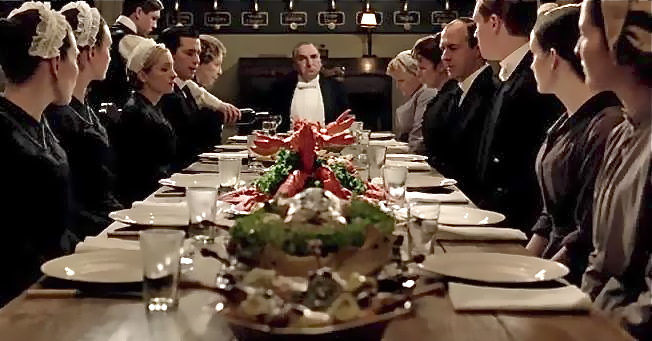
Wedding gourmet for downstairs

And the food? Here it is… probably the best quote of the Episode. In answering Alfred’s remark of: Is this all we’re getting? Just these picketty bits:

These are canapés, Alfred. For your first course, some truffled egg on toast, perhaps? Some oysters a la Russe? There’s lobster rissoles in Mousseline sauce or Calvados-glazed duckling, or do you fancy a little asparagus salad with Champagne-saffron vinaigrette? – Thomas and Mrs. Patmore

Episode 4

Robert: What a harsh world you live in.
Tom: We all live in a harsh world. But at least I know I do.

Carson: But Alfred is very good, you know. He’s very willing. Even if he is Miss O’Brien’s nephew.
Matthew: Clearly, nothing worse could be said of any man.
 

Episode 5

Cora: Sir Philip mustn’t bully him into silence.
Robert: My dear, this is just Clarkson’s professional pride like barbers asking, “Who last cut your hair?”

A woman of my age can face reality far better than most men. – Violet

Sybil, Tom & baby

Edith: She was the only person living who always thought you and I were such nice people. Oh Mary… Do you think we might get along a little better in the future?
Mary: I doubt it. But since this is the last time we three will all be together in this life, let’s love each other now, as sisters should.

Episode 6

There hasn’t been a Catholic Crawley since the Reformation. – Robert

Anyone who has use of their limbs can make a salmon mousse. – Mrs. Patmore

You know the trouble with you lot? You’re all in love with the wrong people. Now take those upstairs! – Mrs. Patmore

Robert: I’m flabbergasted.
Cora: You’re always flabbergasted by the unconventional.

Dr. Clarkson: So you want me to lie to them and say there was no chance at all?
Violet: Lie… is so unmusical a word. I want you to review the evidence honestly and without bias.
Clarkson: Even to ease suffering, I could never justify telling an outright lie.
Violet: Have we nothing in common?

Episode 7

Bates and Anna

But in the meantime, you just rest. Stay in bed, read books. – Robert to Bates

Convince me again. – Matthew to Mary

I do think a woman’s place is eventually in the home, but I see no harm in her having some fun before she gets there. – Violet

What is The Scarlet Letter? – Violet

Robert: Second [condition], you will both admit it when you realize you were wrong.
Violet: Oh, well that is an easy caveat to accept because I’m never wrong.

What’s the matter, Robert? Are you afraid you’ll be converted while you’re not looking? – Cora

Episode 8

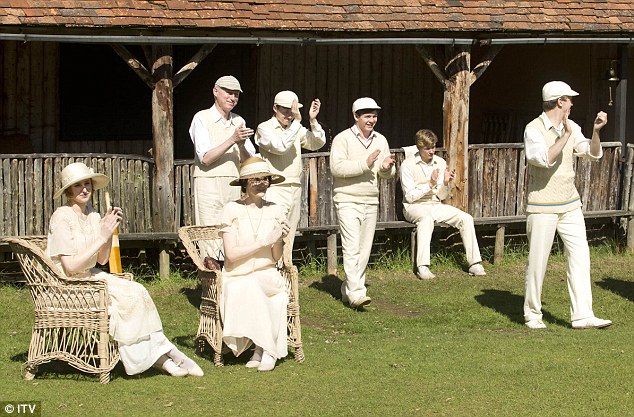
Cricket Match

Matthew: Bates must count himself lucky to be out of it [cricket match].
Anna: I think he’d like to walk normally, sir, even if playing cricket was the price he had to pay.

She hates London, so she’s coming to a great-aunt in Yorkshire to have a good time. How original. –Isobel to Violet re. Rose

Isobel: Of course, if you had had to sell Charlie to the butcher to be chopped up as stew to achieve the same ends, you would have done so.
Violet: Happily, it was not needed.

Episode 9 Finale

Edna: He’s nice looking, I give him that.
Mrs. Hughes: I don’t think you’re required to give him anything.

Don’t dislike him before you know him. That’s the hallmark of our parents’ generation, and I forbid it.  – Matthew to Mary, re. Gregson.

What I want is for her [Rose] to know that family can be a loving thing… Love is like riding or speaking French. If you don’t learn it young, it’s hard to get the trick of it later.  – Shrimpie

Matthew: I fall more in love with you every day that passes.
Mary: I’ll remind you of that next time I scratch the car.

Downton Abbey Christmas Special

*

Oh, but it’s more than just a scratch in the car. We’ll forgive, but not forget. – Arti

*

CLICK HERE to Quotable Quotes from Downton Abbey Season 1 and 2

***

Upcoming Book to Movie Adaptations

2012 has been a great year for movie adaptations based on or loosely tied to books. Argo, Beast of the Southern Wild, Les Misérables, Anna Karenina, Life of Pi, Lincoln, Silver Linings Playbook are all from adapted screenplays.

Now that the Award Season is behind us, time to move forward to see what some of the upcoming movie adaptations are in the works. The following is a list of films in various stages of development, with some scheduled to be released in 2013. Time to read or reread the books before your see the movies.

**

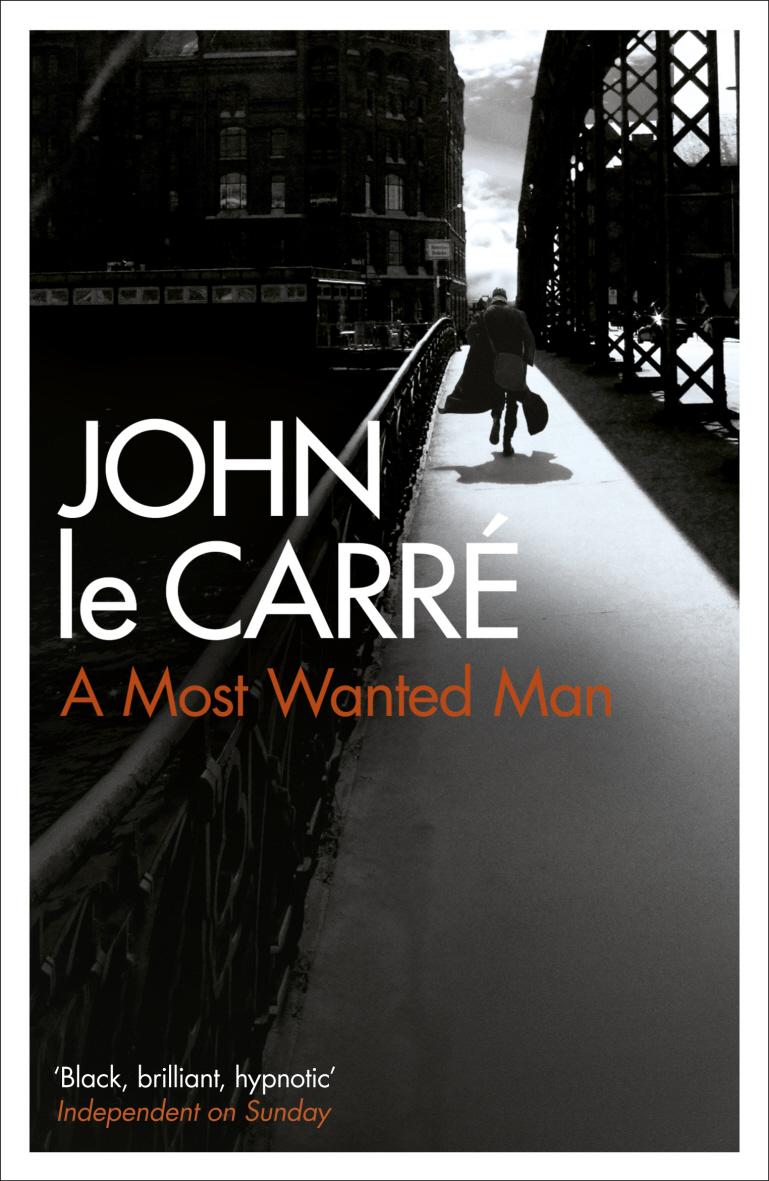
A Most Wanted Man 

A Most Wated Man

Philip Seymour Hoffman stars in John le Carré’s thriller (2008) with a contemporary theme of international war on terror. Hopefully it will reprise the depth of the star-studded Tinker Tailor Soldier Spy. Robert Wright, Rachel McAdams, and Willem Dafoe are in.

A Wrinkle In Time

A Wrinkle in Time

After the success of LOTRNarnia, The Hobbit, some think it’s time to remake Madeleine L’Engle’s YA Sci-Fi classic A Wrinkle In Time. Disney it is, together with Bedrock with Jeff Stockwell (A Bridge to Terabithia, 2007) writing the script. Let’s hope it’s a production worthy of its literary source.

Before I Go To Sleep 

Before I Go to Sleep

Adapted from S. J. Watson’s popular and intriguing novel about a woman having bouts of amnesia every morning she wakes up. If your memory or enthusiasm needs a little prodding, here’s this cast: Nicole Kidman, Colin Firth, and Mark Strong. Nobody can forget Colin Firth as Mr. Darcy (TV 1995), but do you remember Mark Strong as Mr. Knightley in Emma (TV 1996)? Both were in Tinker Tailor Soldier Spy (2011) and Mark Strong in the recent Zero Dark Thirty (2012). I can’t wait for this one. Will have to read the book first.

The Book Thief

The Book Thief

The popular and acclaimed YA book by Markus Zusak with setting in WWII Nazi Germany. YA or not, it’s been on the NYT Bestseller List for over 4 years. Interesting fact is, Downton Abbey director Brian Percival will helm the production, which will star Geoffrey Rush (The King’s Speech, 2010) and Emily Watson (Anna Karenina, 2012). The young Canadian actress Sophie Nélisse who’s brilliant in the Oscar nominated Monsieur Lazhar (Canadian entry for Best Foreign Language Film, 2011) will play young Liesel.

Devil’s Knot

Devil's Knot

Based on Mara Leveritt’s book Devil’s Knot: The True Story of the West Memphis Threethe true case of the wrongful conviction and imprisonment of three teenaged boys for eighteen years for the murder of three children in West Memphis, Arkansas. Colin Firth and Reese Witherspoon star. Acclaimed Canadian director Atom Egoyan helms, with music score by the recent Oscar winning Canadian composer for Life of Pi Mychael Danna. Yes, sounds like an international joint effort. The film has a 2013 release date in the U.S.

The Great Gatsby

The Great Gatsby

Completed in 2012, but delayed its release until May 2013. Just as well, considering all the mighty rivals of last year’s movies. The trailer looks unsettling, and in 3D, I’m afraid the Baz Luhrmann version may focus on the loud and glitzy but ignore the true colours of Jay Gatsby. Of course, innocent until proven guilty. My eyes are peeled. Leo DiCaprio is Jay, Carey Mulligan Daisy, Isla Fisher Myrtle, Tobey Maguire Nick. Quite a cast.

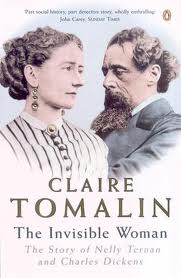
The Invisible Woman

The Invisible Woman

Claire Tomalin’s account of Charles Dickens’ affair with the young writer Nelly Ternan will be brought to screen with script from Abi Morgan (Shame, The Iron Lady) to be directed by Ralph Fiennes, who will play Dickens himself. To add to the rave, Kristin Scott Thomas is also on board. Felicity Jones will be playing Nelly Ternan. Fiennes never ceases to amaze us with his versatility, after directing Shakespeare’s Coriolanus in postmodern style, now comes Dickens.

The Piano Tuner

The Piano Tuner

It has been reported that the iconic German director Werner Herzog (Cave of Forgotten Dreams, 2010) is directing the movie adaptation of this 2002 book by Daniel Mason. Set in 1890’s Burma where the British Empire was having its glorious era, the chords of harmony and dissonance ring. Not a lot of info on it, but as I read a few book reviews, which are all careful not to reveal any spoilers, I can see this can be a colourful and thought-provoking cinematic offering in the hands of an auteur whose career has spanned half a century.

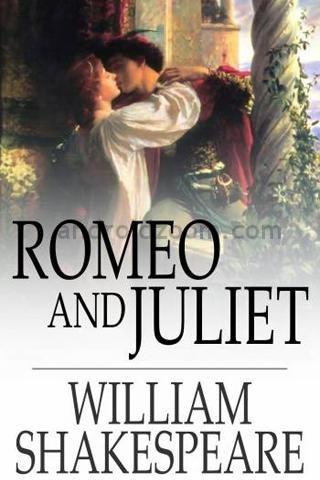
Romeo and Juliet

Romeo and Juliet

Don’t rant about Jane Austen’s novels being turned into just too many movies. Shakespeare probably holds the record. This time, a 21st C. version of Romeo and Juliet will be written by none other than Julian Fellowes, who has brought us the wildly and globally popular Downton Abbey, something Shakespeare just might approve. The new pair of star-crossed lovers? Douglas Booth (Great Expectations, TV 2011) and Hailee Steinfeld (True Grit, 2010), with a cast of prominent US and British actors.

The Sea

The Sea

Irish writer John Banville adapts his own Booker-winning novel (2005) of the same title. Ciaran Hind (Persuasion, 1995) stars. Banville has also written the screenplay of the Oscar nominated movie Albert Kobbs with Glenn Close. I was planning to read The Sea last year for the Ireland Reading Challenge but later made another choice. Now knowing there will be a movie, I should get back to it.

Suite Française

Suite Française

The heart-wrenching novel by Irène Némirovsky with setting in German occupied WWII Paris. Kristin Scott Thomas (I’ve Loved You So Long, 2008) and Michelle Williams star with Rust and Bone actor Matthias Schoenaerts. Glad to know screen adaptation is written by the Oscar winning screenwriter Ronald Harwood, who has given us such memorable films like The Browning Version (1994), The Pianist (Oscar win 2002), Being Julia (2004), The Diving Bell and the Butterfly (Oscar nom, 2007), and the recent Dustin Hoffman directorial debut Quartet (2012). I’m reading this book together with the Bonhoeffer bio. Can’t wait to see the film.

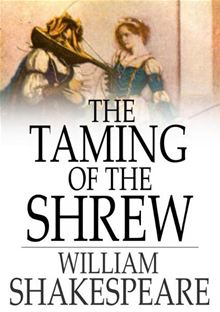
The Taming of the Shrew

Taming of the Shrew

Yes, another Shakespeare’s play in the works. This one will be adapted by the screenwriter who has brought us The Iron Lady (2011), the movie Meryle Streep won an Oscar for playing Magaret Thatcher. Coincident? This time, the iron lady is Katharina, and she’ll be played by recent Oscar winner Anne Hathaway. From Fantine to the Shrew? She’ll need a lot of method acting and we’ll need a lot of forgetting to see her in that new role. As for Petruchio? Let me know who you think should be the one. No, I’m not the casting director, but I’ll put in a good word for you.

***

Do you know of any other literary titles to be adapted into films in the coming year? Let me know in a comment.

Thanks for your input, here are the titles some of you have added to my list:

Serena

Broken

Mr. Morgan’s Last Love

August: Osage County

Much Ado About Nothing

***

Oscar Results 2013

Argo (3): Best Picture, Film Editing, Adapted Screenplay

Life of Pi (4): Best Director Ang Lee, Cinematography, Original Score, Visual Effects

Les Misérables (3): Best Actress in a Supporting Role Anne Hathaway, Makeup & Hairstyling (hair’s new this year), Sound Mixing

Lincoln (2): Best Actor in a Leading Role Daniel Day-Lewis, Best Production Design

Silver Linings Playbook (1): Best Actress in a Leading Role Jennifer Lawrence

Django Unchained (2): Best Supporting Actor Christoph Waltz, Original Screenplay Quentin Tarantino.

Skyfall (2): Best Original Song Adele, Best Sound Editing (draw with ZDT)

Zero Dark Thirty (1): Best Sound Editing

Anna Karenina (1): Costume Design

Amour (1): Best Foreign Language Film

The above is a list of the major winners. For a full list, CLICK HERE.

**

The film winning Best Picture is always considered the major winner. So Argo it is. Interesting that the director of a Best Picture is not even nominated. No matter, the 1979 Iran hostage crisis came to a glorious end for Ben Affleck. “… it doesn’t matter how you get knocked down in life because that’s going to happen. All that matters is you gotta get up.” Glad he thanked Canada in his acceptance speech, along with Iran. Equal opportunity thanker he is.

Life of Pi has the most Oscars. I’m excited for them. Canadian composer Mychael Danna wins with his Indian-influenced score. Director Ang Lee gave a gracious acceptance speech thanking Taiwan, where he filmed the majority of the movie, all the 3,000 people involved in the production, and yes, the author of the Booker Prize winning novel, Canadian writer Yann Martel. For those who are book lovers and don’t want to spoil their good memory of their reading experience, I say, go see the film. It’s worthy of its literary source.

Glad to see Les Miz being honored with three awards. The dream came true for Anne Hathaway, winning her first Oscar, as expected. Deservedly, the Make-up and Hairstyling people won as well, with hairstyling being the first time recognized at the Oscars. Just look at Hugh Jackman at the opening scenes you’d appreciate their effort. That he didn’t eat or drink for over 13 hrs to shoot those scenes helped too. The highlight of last night’s Awards Show for me was the whole Les Miz cast singing on stage.

While I’m at that, get the orchestra back in the Theatre where the action is next time. You can hear the discrepancy in timing with the singing at certain points. And please, don’t rush people off stage by playing all those irrelevant (or maybe tackily relevant) old movie themes. So rude to the present winners and disrespectful to those past productions. Here are some I remember… Jaws, The Magnificent Seven, The Godfather, Gone with the Wind (that’s when Quentin Tarantino was speaking).

Why, with all the technical talents around, the tribute to fifty years of James Bond was done with such a lack-lustre montage? To help us forget it, Shirley Bassey came on stage to sing Goldfinger after that. In my opinion, Goldfinger is probably the best James Bond song. And Bassey just showed, at 76, the unfading colours of a great voice. So’s Barbra Streisand, at 70, delivered a moving The Way We Were after the Memoriam clip, paying tribute to Marvin Hamlisch who wrote the Oscar winning song (1974). Memories flooded back as she sang at the Oscars the first time last night after 36 years. With all due respect to Adele and her Skyfall win, these two veteran singers made a sharp contrast to her shaky performance.

Now, Lincoln‘s disappointing results baffled me. Coming into the Awards Season, it was the strongest contender, with 12 nominations. The only major win was Daniel Day-Lewis who was almost locked-in for Best Actor, and deservedly so. He is now the only actor winning three Oscar Best Actor awards. I’ve seen all his winning films. While his Lincoln portrayal is impressive, I remember being captivated by his first Oscar winning role in My Left Foot (1989) as Irish writer Christy Brown who was afflicted with cerebral palsy and could only use his left foot to write.

And then there’s Jennifer Lawrence, what a good sport. It’s embarrassing falling on the steps going up the stage, but getting an Oscar way over compensates for it. Her performance in Silver Linings Playbook confirms her position as a leading female character actor at 22. I’ve seen her much younger performances before all the Hunger Games hype, and knew that she would be a rising star. The two films I’m thinking of are The Burning Plain (2008) and Winter’s Bone (2010).

As for the film and the actress I’ve been silently rooting for, Zero Dark Thirty and Jessica Chastain, well, at least it has one Oscar. I’m not too disappointed though for I trust Kathryn Bigelow‘s talent and skill can only create more strong productions, and hopefully not being marred by unnecessary controversies like she has with ZDT. As for Jessica Chastain, I know she will deliver in whatever film she’s in… given a good role and in the hands of a capable director. I wish her all the best.

As for next year’s Oscars? Captain Kirk is right… you’d want to honour the film industry, not to spite it with a bad host and degrading jokes, no matter how entertaining the singing and dancing are. Yes, I’m referring to the opening number, plus some other ones that left us with a bad aftertaste. So please, bring on a different perspective, one that represents the other half of the human race. Let’s have Tina Fey and Amy Poehler to co-host next year’s Oscars.

 ***

CLICK ON the following links to my review of:

Life of Pi the movie

Life of Pi the book

Zero Dark Thirty and Argo

Lincoln

Les Miserables

Anna Karenina the movie

Anna Karenina the book

***

Downton Abbey Season 3: Episodes 6 & 7 Finale

WARNING: MAJOR SPOILERS in this post.

Apparently I’m one of the last ones to find out what happens at the end of Season 3. Only a couple of weeks ago, I stumbled upon this video of the Downton Cast meet the Press after their SAG awards. Mrs. Hughes spilled the beans about Dan Stevens not coming back for S4 and what a bombshell for me.

I Googled it right away and found, lo and behold, it was already a known fact since last December. Of course, that’s when Britain had their first round of the Season 3 experience. So now the ripples have finally reached North American shore. What do you call it? Delayed shock? And we’ve just witnessed it. People, face the fact, Matthew Crawley is no more. Now, we have one whole year to process it, let it sink in, accept the fact, and move on to the next Season.

Just a brief recap of these last two episodes.

Episode 6

Mr. Bates is finally released from prison. All your Free Bates posters can now come down. While Thomas is the last one to join the welcome home party, ironically he is the one receiving the good graces of Bates and others. O’Brien has no place in any plot against anyone, for she has her soapy track record. She should have known better.

The clubbing fling of young cousin Rose with a married man old enough to be her father takes us away from Downton a while. The Gatsby-like 20’s atmosphere reminds us what the rest of the world is like if one is not a Downtonite.

And way to go for Edith, finding something to do before she is permanently settled into her destined role at home, at least this is what Granny Violet would have wanted for her Grand-daughter.

The Cricket Match

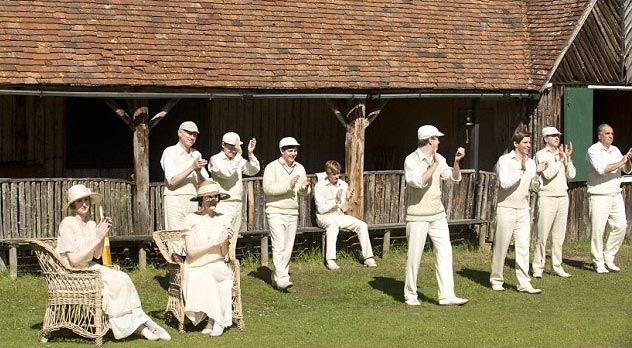
The cricket match is a visually beautiful scene. I love the colour scheme. The character that starts to come alive? Molesley. Wait till E7 where he will show what he’s truly made of.

Episode 7

By now we all know the ending. We have a whole year to forgive and forget. But of course, we’ll treasure the memories… The Scottish vacation takes us away from Downton for a short while to let us see how the usual characters behave in different situations. And that’s when we find O’Brien meeting her equal, Anna’s hidden talents, and Molesley’s true colours. Never underestimate a couple gulps of whiskey can do… total emancipation. Never thought Molesley can be so alive.

It’s the country fair again. Last year, Mrs. Hughes turned down an old crush there. This year, it’s Mrs. Patmore’s turn of stopping just in time of being fooled. Jimmy and Thomas come to an understanding that despite differences, they can still be friends. And Dr. Clarkson and Isobel Crawley? What will happen to them now? And oh, what will Mary name the young heir of Downton? Baby Matthew?

Downton Abbey Christmas Special

If you find Sybil’s death the saddest episode, I don’t know what to call this one. Matthew Crawley, the madly-in-love young husband and day-old new father, terminating his contract with a senseless car crash. After three Seasons, his demise covers less than a minute of screen time. What a difference between the endings of S2 and S3.

All these just show the cruel reality of media contracts and the inevitable plot treatment faced by TV script writers… killing off a character when his/her contract is up. Do you feel betrayed? Short-changed? Are you looking forward to Season 4? Will it begin with a funeral? Can you imagine how everyone will react… I think of Isobel first, then Mary, and Tom who has just found a friend in his new place in Downton. What about Robert, can he wait for another twenty years for the baby heir to grow up?

But most tricky of all… what will happen if another character or characters decide not to renew their contract? Wait, WWII is coming up soon, now that’s easy enough.

***

CLICK on the following links to:

Season 3: Episodes 4 & 5

Episodes 2 & 3 

Episode 1

Quotable Quotes from Downton Abbey (S1 & S2)

***

Downton Abbey Season 3: Episodes 4 & 5

Spoilers Alert! But if you’ve seen the Episodes, throw in your 2 pebbles and make some ripples.

The SAG Win

First off, a huge CONGRATS to the cast of Downton Abbey for their win in the Screen Actor’s Guild Award for Outstanding Performance by an Ensemble in a Drama Series on Sunday, Jan. 27, 2013. Too bad there were only five of them there. An unexpected win, no doubt. Click here to view Mrs. Hughes’s acceptance speech and Tom’s big smile.

Episode 4: Saddest Scene

Now, to a sombre tone. Episode 4 left me stunned and speechless. It will go down my TV viewing history as the saddest scene. Eclampsia was even trending on Twitter, I suppose. But if you Google the word, Sybil and Eclampsia will show up on the first page.

Ok, just a little deconstruction. At least this is how I take myself out of a daze. Sybil’s post-partum death is I’m sure a real life contract issue, and not the misdiagnosis of the high brow Sir Philip from London’s Harley Street. The last time I checked IMDb, Jessica Brown Findlay is filming with Russell Crowe in Winter’s Tale. So, Downton is a nice springboard.

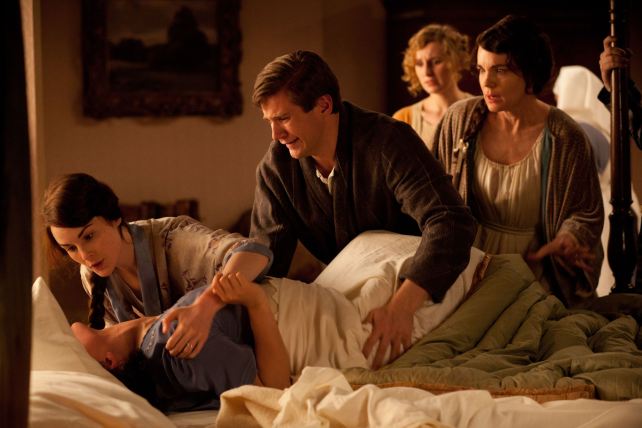
Nevertheless, we will remember her as the most angelic character of them all. The deathbed scene is heart-wrenching. Did you not notice the positions of all the characters? The two doctors turn their backs, friends in need indeed, thanks. Matthew holds onto the bedpost wincing helplessly and Robert stands there stunned. Mary tries to be helpful but has to step back at the end, for the scene belongs to Tom and Cora.

CHRISTMAS 2012 Review 113034

Reaction downstairs is moving too, especially with Thomas. Can he not be a changed man just like the two remaining Crawley sisters, pledge to get along better? But he is a bit changed already, hasn’t he? It’s Mrs. O’Brien who remains the schemer now.

And I must mention the impressive performance by Maggie Smith as the grieving grandmother. Her posture alone is heart-breaking. But soon we find she rises above the tragedy and takes the rational helm of the family. “Cherish our memories, and the child.” She tells Robert.

Episode 5: Quotable Quotes

Just when I thought E4 is a good one, E5 gets even better. Every storyline captures my attention. We have numerous one liners from almost everybody. E5 once again confirms why I like Downton Abbey. Let these dialogues speak for themselves…

Violet Crawley: Grief makes one so terribly tired.

Go home, lie down, life goes on.

And what does life bring? A rift on religion in the Crawley family. Downton writers sure know how to stir the pot, plot. Tom is going to christen his daughter, baby Sybil, in the Catholic tradition. Robert understandably is outraged. He knows his history.

Robert: There hasn’t been a Catholic Crawley since the Reformation!

But Robert, Tom Branson is not a Crawley. For the first time, Robert feels he has totally lost his daughter, and his authority.

Not only that, Robert has lost control of all the ladies in the house, as he finds them sitting at Isobel’s table being served by Ethel the ex-prostitute. More outrage. Flabbergasted.

Cora: You’re always flabbergasted by the unconventional.

Robert, have you forgotten your fling with your former maid, what’s her name?

And all this cannot have happened without Mrs. Patmore going over to help Ethel to fortify her career move as Isobel’s cook.

Ethel: Can I really do it? Salmon mousse?

Mrs. Patmore: Anyone who has use of their limbs can make a salmon mousse.

Easy.

Ethel and Mrs. Patmore

Meanwhile downstairs, Mr. Carson, Robert’s alter ego, is equally indignant with his staff, from associating with an ex-prostitute, to Fox-Trotting, to the giggling of the maids. Don’t they learn any manners from home? Flabbergasted.

Mrs. Hughes: Perhaps their mothers don’t want them in service.

Mr. Carson: What are they supposed to do? Become BANKERS and LAWYERS?

Violet Crawley can certainly add, ‘so middle class.’

As for the vibes downstairs, Daisy, Alfred, Ivy, Jimmy, and Thomas form a love pentagon. Mrs. Patmore is most sensitive with this sort of things.

Mrs. Patmore: You’re all in love with the wrong people. 

And Violet Crawley, she’s always the most rational of them all. Robert and Cora not on speaking terms, the marriage of the grieving couple is crumbling. Grief does not only make one tired, but tired of one another, and let blame set in. Violet knows where the key lies (no pun intended). She persuades Dr. Clarkson to research on Eclampsia to denounce his previous diagnosis.

Dr. Clarkson: Even to ease suffering, I could never justify telling an outright lie.

Violet: Lie is so unmusical a word… Have we nothing in common?

Well, Dr. Clarkson just might not have needed to lie, for as a Tweet says, even a Caecarean Section could not have prevented Eclampsia and death in Sybil’s case in their time, citing this medical article.

You see why Downton Abbey is amazing? Its viewers would go all out to fuse facts and fiction, living vicariously with its characters.

While E4 ends with mourning, sending viewers to devastation, E5 ends with hope and good news. After all his ordeals, Mr. Bates will finally be released from prison. Thanks to the investigative work of Anna. Now, Mr. Bates Legal Team on Twitter can disband, and the real life ‘Free Mr. Bates’ signs can come down.

***

THANKS FOR ALL YOUR COMMENTS AND NOT LETTING OUT ANY SPOILERS.

***

Other Downton Posts:

Downton Abbey Season 3: Episode 6 & 7 Finale

Downton Abbey Season 3: Episodes 2 & 3

Downton Abbey Season 3: Episodes 1

Quotable Quotes from Downton Abbey

Lady Almina and the Real Downton Abbey

***