TIFF19 Review: Military Wives delivers a soothing tune

If being called a ‘feel good movie’ would right away make you think of a thoughtless and syrupy offering aiming just to please, Military Wives would shatter that myth. The reason for the ‘feel good’ effect in this case is largely because it is based on inspiring, real-life events. The spouses and partners of a British military base band together for mutual support and socializing when their loved ones are deployed to Afghanistan on a 6-month tour. At first just for coffee and a sip of wine, later they discover the joy of singing together as a choir. The subsequent events lead them to the Festival of Remembrance at Royal Albert Hall, deep friendship, and healing beyond their expectations.

Military Wives
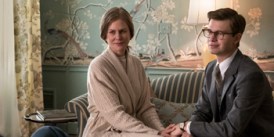
Kristin Scott Thomas in Military Wives. Image Credit: Courtesy of TIFF.

The Military Wives Choir phenomenon had inspired the development of the BBC TV series The Choir. And now its movie version Military Wives has just world premiered at the 44th Toronto International Film Festival. According to their website: There are over 2,000 women with a military connection in 74 choirs based across the UK and in British military bases abroad, including Cyprus, Belgium, Germany and the Netherlands. As well, other countries’ military wives have followed suit, organizing their own choirs. Those with no prior knowledge of this global movement would find this a fresh and interesting subject to put on screen.

Directed by Peter Cattaneo (The Full Monty, 1997) and written by Rosanne Flynn and Rachel Tunnard, Military Wives touts an effective cast to augment their singing. Kristin Scott Thomas is perfect as Kate, the Chair of the social committee on the fictional Flitcroft military base. As the wife of a Colonel, she comes with certain prescribed authority but her bossy personality denies her genuine friendship. Kate has to work together with the leader of the women’s social group, the casual and congenial Lisa (Sharon Horgan). During a brainstorming session, the idea of a choir comes up, something which neither of them has the expertise, or that the group is particularly well-tuned for the task. But living in an isolated military base, the two leaders have to take up the challenge on their own.

Scott Thomas and Horgan are lively foils playing off each other with spot-on comedic timing, both trying to lead the choir in their own way at the same time. Kate is formal and traditional; Lisa is spontaneous and contemporary. While hymns are Kate’s choice for their repertoire, Lisa has no trouble getting the group to belt out pop songs and spark up camaraderie.

Their story however, is deeper than just the catchy tunes. Kate’s son was killed in a previous deployment. Despite her gung-ho and cheery surface, deep down she is still grappling with her loss, and now her husband has gone off to a war zone yet again. Scott Thomas has no trouble bringing out the complexity of her character.

While Kate has to deal with personal loss, Lisa has to raise a rebellious teenaged daughter at the brink of endangering herself. Clashes between Kate and Lisa are inevitable. But instead of telling a mundane, formulaic story, Military Wives succeeds in eliciting genuine emotions and poignancy. These words from a young wife well express their precarious daily life: “every time the phone rings and the doorbell goes, I feel sick.” So, when one of them does meet such a tragic fate, the story gets especially real and poignant.

The ‘feel good’ element is how the women deal with their own personal issue and accept each others’ foibles to work together in harmony, reaping mutual support and deep friendship. The motto of the Military Wives Choir is ‘Stronger Together’. The movie brings out this credo movingly.


~ ~ ~ Ripples


***


Read my other TIFF19 Reviews:

Coming Home Again directed by Wayne Wang

Interview with director Wayne Wang

Parasite directed by Bong Joon-ho

A Girl Missing directed by Kôji Fukada


Toronto International Film Festival 2019

In the coming weeks, I’ll be in Toronto covering the 44th TIFF taking place Sept. 5 – 15. TIFF is my annual destination away from the Pond, my chance to immerse in the celebration of film arts, world premieres of new works, festivities on King Street, and be swept up by the excitement of crowds catching a glimpse of the talents and filmmakers converging there.

For those inclined towards numbers, here are some figures: TIFF19 will screen 333 titles in total, including 245 features, 86 shorts, and 6 series, selected from 6,866 international and 1,059 Canadian submissions. There will be 133 World and 71 North American Premieres. 84 countries are represented with 36% of titles directed, co-directed, or created by women.

It’s a major task to organize one’s own viewing schedule. Films that I want to watch have time conflicts. After several days of juggling and regretful eliminating, I’ve finalized my list, more or less.

The following are some of the feature films on my To-Watch List (All images courtesy of TIFF):

A Girl MissingA Girl Missing directed by Koji Fukada (Japan) North American Premiere. Fukada’s previous film, Cannes’ Un Certain Regard Jury Prize winner Harmonium (2016) grabbed me as a concoction of Hitchcockian suspense and poignant family drama. Excited to see his newest work at TIFF.

A Hidden Life (1)A Hidden Life directed by Terrence Malick (USA, Germany) Canadian Premiere. Based on the true story of Austrian farmer and conscientious objector Franz Jägerstätter, who refused to join the German army in WWII. I expect this newest Malick film to be another soul-stirring work.

The AuditionThe Audition directed by Ina Weisse (Germany, France) World Premiere. Women play major roles in this production as director, screenwriter and cinematographer. But the main attraction for me is actor Nina Hoss, whose riveting performance won her high acclaims in the German films Phoenix (2014) and Barbara (2012).

Coming Home AgainComing Home Again dir. by Wayne Wang (USA/Korea) World Premiere. Wang brought Amy Tan’s The Joy Luck Club to mainstream cinema in 1993, telling generational stories of Chinese-Americans. His newest is based on a personal essay by acclaimed writer Chang-rae Lee about a son coming home to his ailing mother. 

David CopperfieldThe Personal History of David Copperfield dir. by Armando Iannucci (UK) World Premiere. As a book-to-movie enthusiast, I won’t miss this one. What more, the cast looks impressive, and postmodern. Dev Patel of Slumdog Millionaire (2008) fame will play Davy, Tilda Swinton as Betsey, Hugh Laurie as Mr. Dick, and Ben Whishaw the villain Uriah Heep. Turning a 800+ page classic into a two-hour movie is as daunting as Davy’s life journey. But I reserve my judgement.

THE GOLDFINCHThe Goldfinch dir. by John Crowley (USA) World Premiere. The adaptation of Donna Tartt’s Pulitzer Prize-winning novel is helmed by the same director as Brooklyn (2015), with adapted screenplay by Wolf Hall and Tinker Tailor Soldier Spy scribe Peter Straughan. Looks like a top-notch collaboration.

Hope GapHope Gap directed by William Nicholson (UK) World Premiere. This is Nicholson’s second directorial feature which he also wrote. His other screenplays include Les Misérables (2012) and Gladiator (2000) among many others. But what draw my attention are the duo who play a couple at the brink of a marriage breakdown, Bill Nighy
and Annette Bening.

Parasite (1)Parasite directed by Bong Joon-ho (S. Korea) Canadian Premiere. This year’s Palme d’Or winner at Cannes. From the description, it echoes Kore-eda’s Shoplifters, last year’s Cannes winner. But Bong’s audacious and creative styling could make this a fresh approach to the subject of social inequality. Lee Chang-dong’s Burning (2018) also comes to mind.

Varda by Agnes (1)Varda by Agnès directed by Agnès Varda (France) Canadian Premiere. After watching the late French New Wave auteur Agnès Varda’s documentary Faces Places (2017), I’d been looking for this, her last work. Excited to know there will be a special event at TIFF 19 with the screening of Varda by Agnès plus a bonus post-film discussion by a panel of filmmakers.

***

For the full lineup, schedule, and tickets go to tiff.net

My reviews of the above plus other TIFF titles will be published on the websites Asian American Press, Vague Visages, and here at Ripple Effects.


With Bernadette missing, time to revisit Linklater’s ‘Before’ trilogy

Watching Where’d you go, Bernadette has prompted me to reminisce on Linklater’s dialogue-filled trilogy. Re-posting my review of Before Midnight in the following.

**

We are gleaners of memories. An interesting parallel applies to the two characters Celine and Jesse as well as ourselves as audience. But if you haven’t seen Before Sunrise and Before Sunset, it would enhance your viewing pleasure to watch them first.

Flashback: Before Sunrise (1995)

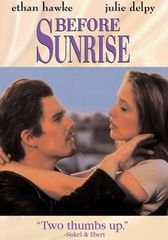
Before SunriseTwo young people, Parisian Celine (Julie Delpy) and American Jesse (Ethan Hawkes) meet on a train passing through Europe. They strike up a conversation and become so in-tuned with each other that when the train arrives Jesse’s stop in Vienna, he convinces Celine to get off with him even though her destination is Paris. There for just one night until sunrise, they walk around the city and talk about life, death, love, religion, relationships, and being transients… for they know this may well be their only encounter with each other in both of their lives. The next morning Jesse has to fly back to the U.S. As they part, they promise to meet again in six month at the same hour, on the same train platform. Throughout the film, we feel fate, or whatever you call it, has a strong presence in their short few hours together. We feel their sincerity in capturing those precious  moments, as we hear Celine’s words ring true:

“If there’s any kind of magic in this world… it must be in the attempt of understanding someone sharing something.”

Flashback: Before Sunset (2004)

Before SunsetNine years after that chance meeting, Jesse is in Paris on the last leg of a book tour. He has written a book based on that memorable encounter nine years ago. At the Shakespeare and Company bookstore, Celine shows up. They now meet for a second time, again for a short few hours before Jesse has to leave on a plane to fly back to the U.S. Their conversation reveals that, alas, their well intended reunion six months after their first chance meeting has turned into a star-crossed, missed opportunity. After that, fate has led them down separate paths. Jesse is now married and has a son. Celine, still on her own, yearns for that first romance to develop but now seems even more elusive.

To the present: Before Midnight (2013)

Before Midnight

So we have been following Jesse and Celine like a longitudinal study, albeit meeting them just twice within this eighteen year period. In the first two films, director Richard Linklater has us follow Jesse and Celine in real time through long takes, walking along with them in Vienna and Paris, listening in on their conversations and see them pour their hearts out, just to be heard, to be known. Those were romantic moments. This time is summer in Greece; this time is reality check.

We see Jesse and Celine now married. What happens in between those nine years is that Jesse has divorced his wife in Chicago, come over to Paris, married Celine and together they have two lovely twin daughters. But things aren’t so idyllic, for Jesse is troubled by not being around for his now young teenaged son Hank from his previous marriage and whom he can only see in the summer. The film begins with Jesse seeing his son off at the airport.

For the next 15 minutes and in one stationary take through the front windshield of the car, we see a happy couple Jesse and Celine driving from the airport to a Greek country house, with their twin daughters sleeping in the backseat. We hear them talk, yes, they love to talk to each other, just as we’ve seen in the past.

In the setting of an idyllic seaside residence, Jesse and Celine join a small gathering of writers. we see them prepare and eat healthy Greek salads and discuss equally idyllic topics such as writing, love, knowing each other, virtual reality (yes, for the contemporary effect), and being transients in life. Again, that first train encounter comes to mind. In conclusion they drink to ‘passing through’.

The next act is reminiscence of previous Before films… Jesse and Celine walk to a hotel paid for by their writer friends, who have also taken up the duty of babysitting their twins so the two of them can fully enjoy each other for the night. For twenty minutes the camera follows them in real time strolling through some scenic rural town toward their country hotel, exchanging thoughts like before. But no, not totally like before, for now they are eighteen years older, 41, and each with emotional undercurrents running deep.

Five minutes in the hotel room, discordant riptides begin to surface. Talk turns into quarrel. Why, this is just too real. In the past, we see them only in romantic mode. Now as they expose their underlying thoughts and suspicions, tempers flare, words turn callous. We would silently say ‘ouch!’ occasionally.

The beginning scene of the first film, Before Sunrise, has become a stark foreshadowing… sitting near Jesse and Celine on that train, two middle-aged couple argue fiercely in German. Seeing their temper flare but not understanding what they were arguing about, Jesse and Celine ponder on the question of how two people can grow old together in harmony.

Now here in what is supposed to be an ideal get-away, for twenty minutes we are the invisible witnesses of a marital conflict, and we would want to stay in there to see what happens next, not because of the schadenfreude effect, but because this is just too real.

Romance is holiday, marriage is work.

Hawke and Delpy own these scenes depicting realistically what marriage could entail. Other films readily come to mind… Ingmar Bergman’s Scenes From A Marriage (1973) and Woody Allen’s Husbands and Wives (1992). Before Midnight is a contemporary version, with a highly watchable backdrop and natural performance. Unlike Bergman and Allen, Linklater is commendable in crafting a more positive ending. It’s refreshing to see a glimmer of hope at the end of nasty quarrels.

In the final act, Jesse attempts to woo his wife back. How he does it is most endearing. Every moment in the present is an opportunity to create a fond memory to look back to in the future. This complicated package called love is a piece of work. Director Linklater and his two stars, who co-wrote the screenplay with him, might well have passed to us the secret of marital success… Before too late, glean fond memories from the past to sustain the relationship at present; before too late, create more loving memories to carry it into the future.

One line from Celine in Before Sunset is most apt here: “Memory is a wonderful thing if we don’t have to deal with the past.” Jesse might have known this too well, not to leave the present a mess for future to deal with, but leave it as a pleasant memory to cherish in the days ahead.

With a trilogy of films beginning with the word ‘Before’ in the title, we should know that time is of the essence. Time to make the present a memorable past for the future, before too late.

That line still lingers as the film ends… ‘To passing through.’

~ ~ ~ 1/2 Ripples for all three films

***

Related Posts on Ripple:

Where’d You Go Bernadette: from book to screen

Boyhood: The Moment Seizes Us

Where’d You Go, Bernadette: From Book to Screen

When I first learned that Maria Semple’s quirky and clever 2012 novel would be turned into a movie, I had that umm… feeling. When I found out Richard Linklater would be directing it, it turned into a whaaat? Sure it’s not a Wes Anderson project?

On the surface a mother-daughter relational story, Semple’s book is deceivingly simple. Underneath the humour is her take on contemporary American society, the tyranny of technology, vulnerability of the non-conforming, sarcasm on the upwardly aspiring middle class, the rat race and its effect on parenting, the outsourcing economy, and even taking a jab on America’s quiet and polite neighbour to the north. As a target, I must give you the following excerpt from the book as evidence of Semple’s spikiness (or is it spunkiness):

You probably think, U.S./Canada, they’re interchangeable because they’re both filled with English-speaking, morbidly obese white people. Well, Manjula (virtual personal assistant from India), you couldn’t be more mistaken.

Americans are pushy, obnoxious, neurotic, crass… Canadians are none of that. The way you might fear a cow sitting down in the middle of the street during rush hour, that’s how I fear Canadians. To Canadians, everyone is equal. Joni Mitchell is interchangeable with a secretary at open-mic night. Frank Gehry is no greater than a hack pumping out McMansions on AutoCAD. John Candy is no funnier than Uncle Lou when he gets a couple of beers in him. No wonder the only Canadians anyone’s ever heard of are the ones who have gotten the hell out. Anyone with talent who stayed would be flattened under an avalanche of equality. The thing Canadians don’t understand is that some people are extraordinary and should be treated as such.

But that’s not in the movie. Why, the movie is a total stripped-down version without the incendiary, sarcastic swipes, or the laugh-out-loud funny, and ah… thanks, Maria Semple, for the words, “it’s flattened under an avalanche of” smoothened edges in characterization and plot.

By the way, if one reads deeper into the Canadian jab quoted above, it wouldn’t be hard to see the layered meaning. Aha, the joke is on which side of the 49th?

Bernadette (1).jpg


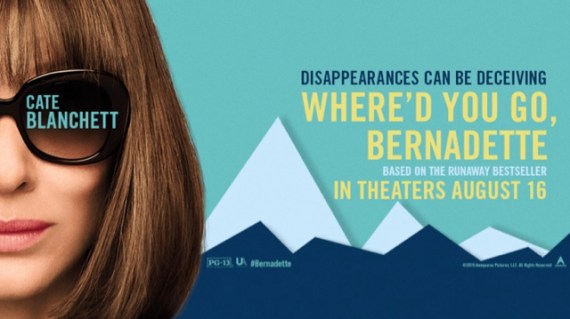
Bernadette Fox (Cate Blanchett) has had her glorious days as an acclaimed architect, pioneer of the green building movement, a MacArthur grant recipient at 32, and a young woman succeeding in a male-dominated profession. Due to an unfortunate incident, her award-winning project was demolished without her knowledge, destroyed by a vengeful neighbour who bought it under an agent’s name. Devastated, Bernadette crashed out of her career, moved to Seattle with her Microsoft, TED Talking husband Elgie (Billy Crudup, a miscast). They bought a huge, dilapidated mansion. For twenty years she had ignored the maintenance of her home and self. The traumatic health issue of her daughter Bee’s (Emma Nelson) early years drives her further into the hole living as a reclusive agoraphobic.

Bernadette and Bee are the best of friends though. Mother/daughter relationship is well portrayed in the movie, a particular gripping scene is their singing the song ‘Time after time’ together in the car ending with a Bernadette meltdown. “You don’t know how hard it is for me.” Bee doesn’t know, viewers need to guess, but readers do, for they are supplied with ample back story. The movie, however, has trouble connecting the past with the present, or presenting sufficient motivation for the actions and behaviour of the characters.

As loving parents, Bernadette and Elgie have to fulfill a promise to Bee, that is she can have anything she asks for if she gets straight A’s; now they’re stuck with making a family trip to Antarctica. For two-third of the movie we see mostly interior shots of home and work building up a case to Bernadette’s disappearance. The momentum picks up only in the last third, the Antarctica episode.

The storytelling in the book is a lively collection of emails, notes, letters, hospital billing, and police report plus personal narrative to present the different voices from various characters. On screen, the Rashomon-like shifting of perspectives are converted into mainly two characters sitting and talking to each other. Surely Linklater is an expert in dialogues with his Before trilogy, where the camera follows two characters Jesse (Ethan Hawke) and Céline (Julie Delpy) talking throughout the movie and yet still captivating viewers as we watch them wander the streets and listening to them chat. But here, that magic is missing. Where’d you go, Linklater?

For the casting of Bernadette, Cate Blanchett is a good choice, her Academy Award winning role in Blue Jasmine comes to mind. Unfortunately, here she is not in her Jasmine form. The major issue is a weak script, hence the directing of it. The screenplay follows the book faithfully but in a minimal, abridged version. It begs the question: does a movie adaptation need to follow the source material to the dot? Here in this very different medium, dialogues are picked right out of the novel while the camera has not been fully utilized, nor any imaginative ingredients been added to the visual adaptation of this quirky and zesty book. Well, yes, it might have been faithful to the letter, but not the spirit.

The title question obviously doesn’t just mean the physical whereabouts of Bernadette but where her talent, creativity, and vitality for life have gone. There’s a scene with Bernadette meeting her previous mentor Paul Jellinek (Laurence Fishburne) who says it explicitly: “People like you must create. If you don’t, you become a menace to society.” Such is a thematic element that needs to be calved out more clearly, a talent caged in by her own disillusionment and her ultimate breakthrough. Don’t blame motherhood, and Bernadette doesn’t, for she sees a beautiful offspring flourishing in Bee. But is parenting a zero-sum game? The context and question should be handled with more depth and inner exploration. With not much contextual support, the case of a self-imposed, locked-up genius is left to the actor Blanchett to portray, and at times it seems forced.

Missing story elements cause lapses in the storytelling. Why does Audrey (Kristen Wiig), Bernadette’s neighbour and archenemy, suddenly becomes friend with her at the most critical moment? Or, during the mudslide, the camera hasn’t shown (without obstruction) what’s written on the sign, which has triggered much of the resentment between Audrey and Bernadette. Readers know, but not viewers if they have not read the source material.

At the end of the book there’s an “About the Author” page. Before writing fiction, Semple had written for the television shows Arrested Development, Mad About You, and Ellen. If one hadn’t known this tidbit already, a natural response would have been “no wonder!” It just points plainly to the ideal person who should have written the screenplay.


~ ~ Ripples

***


Related Reviews on Ripple:

Blue Jasmine: Homage and Reimagining

Boyhood: The Moment Seizes Us 

Before Midnight: Reality Check

The Budapest Hotel: A Grand Escape


Upcoming Book-to-Movie Adaptations: Good Summer Reading

Previously on Ripple, I’d posted lists of books-to-movies coming out soon here and here. If you’ve gone to the theatre lately, you’ve probably seen trailers for some of them: The GoldfinchWhere’d you go Bernadette? or Cats (like a horror movie for someone who has ailurophobia.)

Here are some updates. The following is a list of movie adaptations in development for the big screen or TV series. They are in various stages of production, just announced or in pre-production, release dates unknown or tentative. If you’re the well-prepped movie goer, here’s your list of summer reading:

Where the Crawdads sing.jpegWhere the Crawdads Sing by Delia Owens

Now 46 weeks on the NYT Bestsellers List and has sold more than 1.5 million copies, Owens’s debut novel about a young girl who has raised herself and survived alone in a coastal North Carolina marsh is a mix of nature writing, murder mystery, and coming-of-age story. Reese Witherspoon will be producing it with Fox 2000. Owens is a wildlife scientist and nature writer who had spent years in Africa.


Little Fires Everywhere (1)

Little Fires Everywhere by Celeste Ng

Another project by Witherspoon’s Hello Sunshine production company. Ng’s novel about families in a Cleveland suburb dealing with diversity, teenager angsts, and generational conflicts had been named Best Book of the Year (2017) by NPR, Amazon, Goodreads, The Guardian… just to name a few. It will be adapted into a TV series with the Hulu platform. 


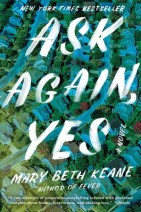
Ask Again, YesAsk Again, Yes by Mary Beth Keane

The producers of American Beauty (1999) which won 5 Oscars in 2000 have bought the movie and TV rights of the book. Another novel about suburban families is being described in Goodreads as “profoundly moving.” Author Keane was a 2015 Guggenheim Fellow in Fiction; her previous works had been a finalist for the PEN/Hemingway Award and garnered Best Book of the year acclaims.


The Silent PatientThe Silent Patient by Alex Michaelides

Screenwriter Michaelides’s debut novel is described by Entertainment Weekly as “a mix of Hitchcockian suspense, Agatha Christie plotting, and Greek tragedy.” A psychotherapist has to unlock the mystery of his patient who’d killed her husband six years earlier and then remained silent since. (Read an excerpt using the link) Meanwhile, Michaelides will write the screenplay, naturally. Brad Pitt’s Plan B and Annapurna Pictures producing.


Tattoist of Auschwitz.jpgThe Tattooist of Auschwitz by Heather Morris

Hailed as the true story of Slovakian Jew, Lali Sokolov, who fell in love with a girl he was tattooing at the Auschwitz concentration camp during WWII, a powerful story of love and survival. British producer Synchronicity Films had secured the rights and a drama series is in development. Here’s the rub: the Auschwitz Memorial Research Centre had disputed the authenticity of the book according to The Guardian. A case of negative publicity is still good publicity?
The Underground Railroad

The Underground Railroad by Colson Whitehead

Colson Whitehead’s Pulitzer Prize for Fiction winner (2017) is adapted by director Barry Jenkins. Jenkins’s name had catapulted to stardom since his Oscar win for Moonlight (2016) and the subsequent If Beale Street Could Talk (2018). The story of the harrowing escape of two Southern slaves Cora and Caesar using the Underground Railroad is adapted into 11 episodes for Amazon Studio.


Washington Black (2)

Washington Black by Esi Edugyan

The book is Edugyan’s second consecutive win of Canada’s Scotiabank Giller’s Prize, also shortlisted for the 2018 Booker Prize. The journey of 11-year-old slave boy “Wash” born on a Barbados plantation is a fantastical story of adventure when he became the personal servant of Englishman Christopher Wilde, inventor, naturalist, explorer, and abolitionist. 20th Century Fox TV, after “an intense bidding war” , had secured the rights to the small screen.


***

‘Faces Places’ with Agnès Varda and JR

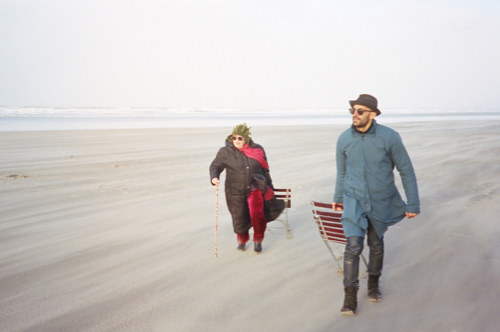
From high art in the gallery (my last post) to street art, here catching the last chance for a Paris in July entry, I’m presenting the fascinating documentary, a road movie of making art in the open milieu of villages and among the working populace. Faces Places (2017) is an account of the venerable auteur of the Nouvelle Vague (The French New Wave: Goddard, Truffaut…) Agnès Varda (1928-2019), then at 89, going on a road trip with photographer and artist JR to scout for ordinary people to photograph in various obscure locales in France.

the world's longest baguette .jpg

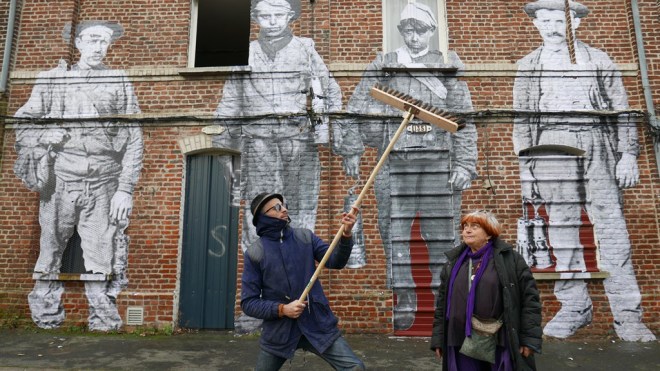
Their larger than life photo prints are then pasted onto buildings or open places for everyone to view, evoking the shared joy of living, working, and the collective memory of a meaningful past. Like this one with photos of pioneer miners pasted on a row of dilapidated homes slated for demolition in a miners’ community. The one remaining homeowner who refused to vacate her house was moved to tears upon seeing the completion of the project.

Miners from days past.jpg

Art undefined and unconfined, once pasted onto these surfaces, JR’s black-and-white photographic images convert the whole building or structure into an art form. The world is his canvas. Unlike Banksy, JR is transparent with his creative process, and lets the public view his work in progress. A TED Prize winner (2011), his large-scale, participatory art projects are installed all over the world, albeit sometimes illegally according to local laws, but the people welcomed him.

At age 89, Agnès Varda became the oldest nominee in Oscar history when Faces Places was nominated for Best Documentary for the 2018 Academy Awards. It’s now on DVD and Blu-ray. Her numerous older works may not be accessible for us so readily. Check your streaming or on demand services. I was able to watch two of her excellent films Vagabond (1985) and Cleo from 5 to 7 (1962, click on link to my review). Don’t miss this short clip on IMDb “Agnès Varda in Memoriam”.

The soul-stirring original music by Matthieu Chedid complement the meaningful duo collaboration. At the beginning, JR talks with Varda to organize the making of their joint project. We see them exchange the following dialogues:

AV:  What I like was meeting amazing people by chance.

JR:  So you want to carry on that way, with no plan or itinerary?

AV:  Yes. Chance has always been my best assistant.

JR:  Do you think chance will work for both of us?

AV:  Maybe.

From the film, we can see chance had worked for both of them marvellously.


AVJR-Chairs-on-the-beach-Normandy (2).jpg


~ ~ ~ ~ Ripples


***


Paris in July is hosted by Tamara at Thyme for Tea

PIJ2019 Tamara

Other Paris in July 2019 Posts on Ripples:

Pictures at an Exhibition 

‘Coco Before Chanel’ directed by Anne Fontaine

‘Gemma Bovery’ to cool your summer day

‘A Sunday in the Country’ is an Impressionist Cinematic Painting

‘Coco Before Chanel’ directed by Anne Fontaine

According to the French Ministry of Culture department that produces and promotes French cinema, 27 percent of French movies were directed or co-directed by women in 2017 compared to 20.8 percent in 2008. (source article here) An improvement, but they are still not pleased with the disparity and working towards a more equal representation.

For comparison, in Hollywood, according to the annual USC Annenberg Inclusion Initiative study (Jan. 2018), the figure is 4%, after examining 1,100 popular films. Now this result is found in the midst of the #MeToo and #TimesUp movements. For those interested to find out more, here’s a comprehensive report from Annenberg (July, 2018) comparing many more aspects of the film industry.

I just find these stats alarming. This is not a post to present an analysis of the issue, that warrants a thesis, but these figures just need to be shared. For Paris in July this week, I’ve chosen a film that showcases a woman succeeding in a man’s world, overcoming what looked to be insurmountable odds. Among its many accolades, I find this one notable: Best Movie About Women, given by the Women Film Critics Circle Awards (2009).

Another film from French director Anne Fontaine. Unlike Gemma Bovery in last week’s movie, this is a real-life heroine.

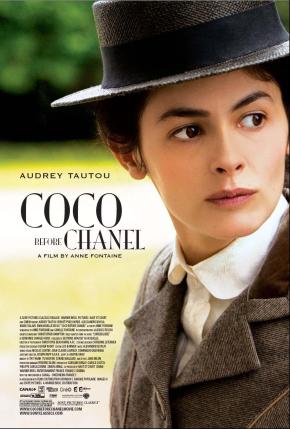
Coco Before Chanel (2009)

I’ve appreciated filmmaker Fontaine not doing a whole life biopic on the fashion icon, but focuses on her early years. What was her background? How did she overcome life’s obstacles to create a path for herself?  The intermingling of fate and choice is one important theme Fontaine had touched on in this cinematic account.


Coco Before Chanel


Gabrielle Chanel’s life is an extraordinary story, and Fontaine respects that. Before she became the world famous icon Coco Chanel, she was Gabrielle Chanel born on August 19, 1883, in Saumur, France.

The film opens with the camera following two young girls being driven to an orphanage. We soon find out they are sisters Gabrielle and Adrienne. What makes the scene sadder is that the driver of the horse-drawn cart in which the sisters are transported is their father. We never see his face. He doesn’t turn to say goodbye. He never visits.

That’s a short beginning. The next scene Fontaine shows us is fifteen years later in a cabaret where the sisters sing and dance. In there, Gabrielle (Audrey Tautou) meets Étienne Balsan (Benoît Poelvoorde), an older military man, paying passing interest in Coco, a name he’s created for her. Fontaine is effective to show us what Coco is like within just a few minutes of the cabaret scene. She’s a calm, self-assured woman, won’t sell herself to appease the guests; as a consequence, she and her sisters are fired. Looks like they’re happy to leave the place too.

They keep their day job as seamstresses but soon part as Adrienne is leaving with a man to live in Paris. Coco decides to go to Compiègne to look for Balsan. Balsan agrees to let her stay there in his country mansion temporarily but Coco has her resourcefulness to change Balsan’s mind. She learns to ride a horse on her own in a day, and soon breaks into the social circle of Balsan’s by distinguishing herself as a woman with style, talent and skills.

A raiser of race horses, Balsan’s social milieu and the horse races where members of the fashionable class exhibit their haute attires inspire the ingenuity of Coco. She begins to design hats for the ladies, and establishes herself as a unique contrarian. She wears a simple straw hat, alters a vest, a white shirt and a tie from Balsan’s closet to suit herself. Her style is “dresses without corsets, shoes with no heels, and hats with no feathers.”

Among Balsan’s business acquaintances is Boy Capel (Alessandro Nivola), a young Englishman. Coco’s short, intimate relationship with him soon changes her outlook in love and life. After a sad incidence, Coco becomes more independent, confident with herself and her skills, and determined to move to Paris to open a hat boutique. With the financial help from Balsan, she begins that first step, and the rest is history.

Tautou has come a long way from her role as Amelie. She is suitably cast as Coco, reflecting the character of the self-made persona. The signature suits she tailors for herself exude elegance devoid of adornments; the simple hats she designs for herself well-match her cool subtlety. Fontaine captures Coco with meticulous care, from nuanced expressions to her confident posture. Of course, kudos goes to costume designer Catherine Leterrier who won, deservedly, a César Award for Best Costume Design and garnered an Oscar nom.

Composer Alexandre Desplat’s score adds to the enjoyment. Not an epic of extraordinary stature, but like the hat Coco wears, the film is stylish without overstating, composed and effective.

~ ~ ~ Ripples 

Coco Before Chanel is on Netflix.

***

This is a review for Paris In July hosted by Tamara at Thyme for Tea.

PIJ2019 Tamara

Some Other Related Ripple Reviews of French Films:

Cleo from 5 to 7

Things to Come

I’ve Loved You So Long


‘Gemma Bovery’ to cool your summer day

This film by the French director Anne Fontaine could offer you a couple hours of  cool entertainment in a lazy, hazy summer afternoon.

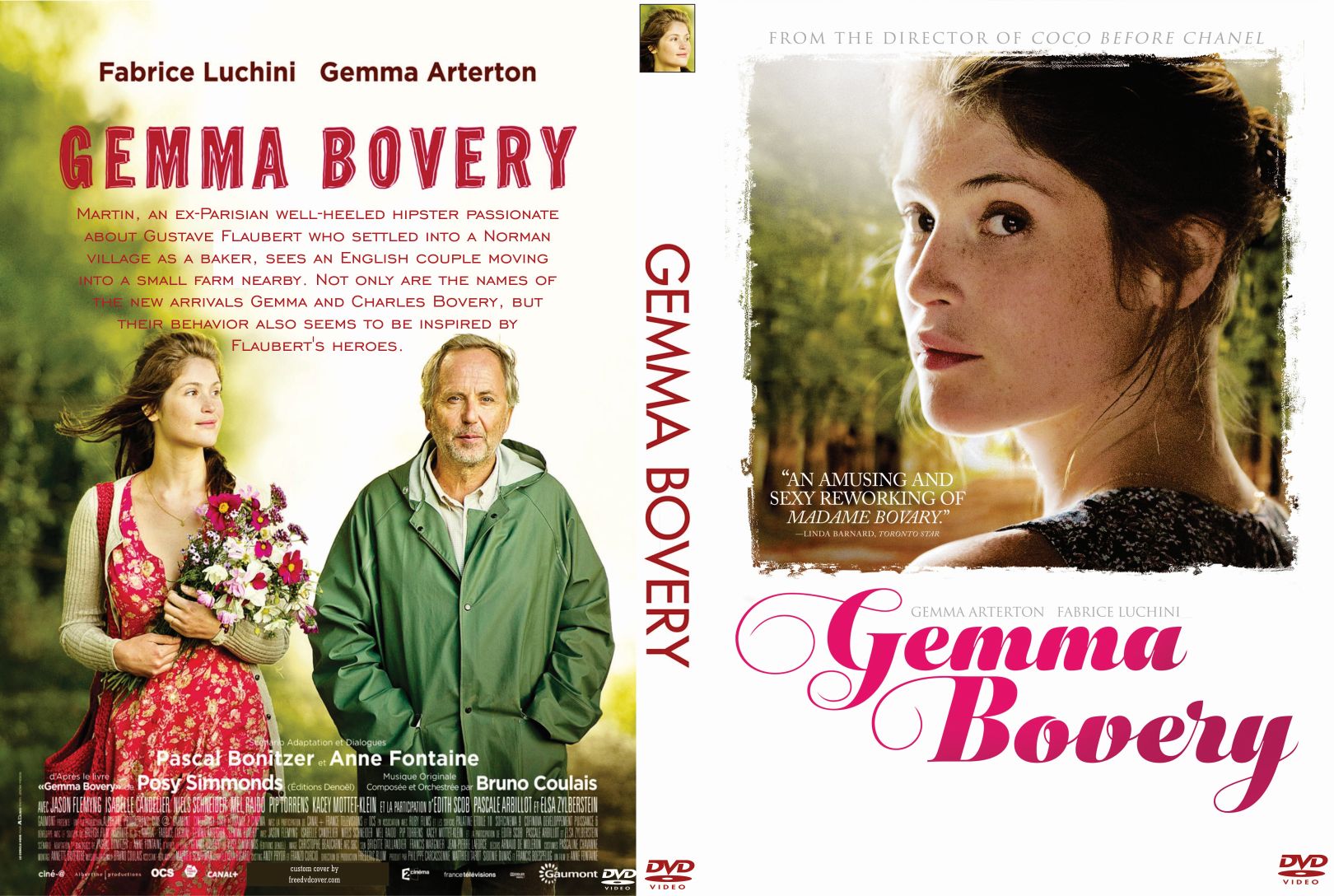
Gemma Bovery (2014)

Related image

Madame Bovary by Gustave Flaubert was published in 1856. There have been no less than half a dozen movie adaptations of this famous piece of literature, dating back as early as 1934 (dir. Jean Renoir). Only in 2014 did a female rendition emerge with Sophie Barthes in the helm and featured Mia Wasikowska as Emma Bovary. It’s a relatively conventional take on Flaubert’s literary classic.

Interestingly, in that same year, another movie version of Madame Bovary also came out. This one is by French director Anne Fontaine (born 1959). Under the helm of the versatile Fontaine, and in the spirit of Emma Bovary, this one looks like it’s a vignette from a parallel universe, defying traditional norms, laced with a deadpan, comical streak, and transported to modern day France.

Martin Joubert (Fabrice Luchini), a long-time academic publisher in Paris, moves back to Normandy to take over his father’s bakery, seeking for a peaceful and balanced life in the quiet region. A literature enthusiast, Martin’s antenna for the literary is sharp and sensitive. When a couple with the names of Charles and Gemma Bovery move into his adjacent house in the country, he quickly stands guard on the affairs of the young woman, as he knows the ending of the novel Madame Bovary by Flaubert. He uses all his male sense and sensibility to avoid a tragedy that could befall his new neighbours.

Director Fontaine’s title gives it away as a parody not to be taken too seriously. Gemma Arterton is a good choice as she appears to be a more convincing Gemma Bovery than Mia Wasikowska’s Emma Bovary. For those watchful for literary adaptations, Arterton was Tess of the D’Urbervilles (2008, TV miniseries) playing alongside Eddie Redmayne as Angel Claire. In a more recent year, Their Finest (2016) also saw her mastering her role poignantly.

Gemma is an interior decorator and Charles a furniture refurbisher. Parallel characters as in Flaubert’s novel appear in Gemma’s life after she moves into the Norman countryside, tempting her to fall into a similar track as Madame B.  Except, we don’t see her buying luxurious goods and remodelling her humble abode. Fontaine is bold to let her viewers see what Flaubert was describing with his words, albeit these scenes are short.

So, is Martin successful in avoiding a tragic end to his imagined literary heroine? No spoilers here. In a lazy, hazy summer afternoon, an ending short of crazy would not be worthwhile for a parody.


~ ~ 1/2 Ripples

**

Do you have a favourite French literature to movie adaptation?


Thanks to Tamara for hosting a 6th annual Paris in July event at Thyme for Tea.

PIJ2019 Tamara

‘A Sunday in the Country’ is an Impressionist Cinematic Painting

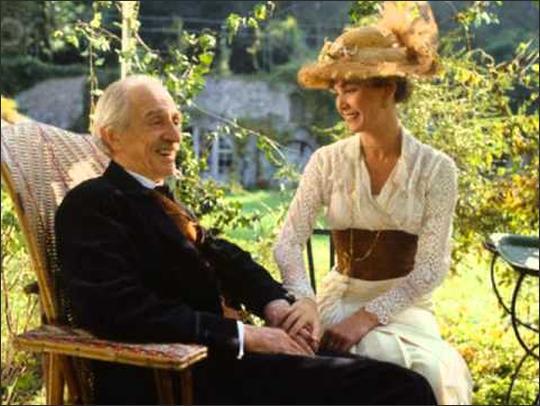
If the Impressionist painters were to make a movie, what would it be like? A Sunday in the Country (1984) could very well be an exemplar. French director Bertrand Tavernier used the camera as a paintbrush to tell his story, while the cast bring to life the human pathos that are deeper than a painting on the wall could convey. 

A Sunday in the Country - Un Dimanche à la Campagne (1984)

Monsieur Ladmiral is an elderly artist living in an idyllic country house on the outskirt of Paris. The setting is pre-WWI. M. Ladmiral is a widower, his daily routines assisted by a lived-in, indispensable housekeeper called Mercédès (Monique Chaumette). His home is cozy with classic charm, the adjacent studio, inspiring. The camera leads us to see every details of M. Ladmiral’s house and moves fluidly from far to close-in on the artist’s workplace, a quiet haven and a treasure trove of memories and life works. With his colours, Ladmiral attempts to capture traces of youth and life.

M. Ladmiral’s son Gonzague (Michel Aumont) and his wife Marie-Thérèse (Genevieve Mnich), together with their three children, come visit him from Paris every Sunday, but not frequent enough still. His two grandsons, Emile (Thomas Duvall) and Lucien (Quentin Ogler), add lively sparks to his serene environs, while little Mereille (Katia Wostrikoff) is simply adorable.

No matter how much Gonzague tries to give him, grandchildren and his family’s frequent visits, the son knows he’s a disappointment to his father. Deep in M. Ladmiral’s heart, he longs to see his daughter Irène (Sabine Azéma), who seldom visits. Irène is single, exuberant, fearlessly independent and cheerful, or at least, on the surface. She drives an automobile, a new invention. “Look at your sister Irene,” Ladmiral tells Gonzague. “She forges ahead.” Then after a beat, “you don’t.” Nice going, Dad.

The pace of the film is leisurely, taking its time for viewers to hear (or read the subtitle of) every single dialogue, capture every nuance, and observe every item in the mise en scène. Life is too precious to hurry by. As well, we get to appreciate the humour, but often as guise to underlying relational tensions.

Tavernier won Best Director at Cannes Film Festival in 1985 with A Sunday in the Country, as well as the César Award for his adapted screenplay. The film also saw Azéma who plays daughter Irene won the Best Actress César Award and Bruno de Keyzer for Best Cinematography.

The film is an adaptation from the French novel by Pierre Bost entitled “Monsieur Ladmiral va bientôt mourir”, translated in English: “Mr. Ladmiral will die soon”. Have to say, the movie title is much more appealing. One note though, be patient with the 1:40 min. of credits rolling at the beginning with just white words on black background without image. You’re looking into the mind of an old man. While the overall mood is warm and amusing, the undercurrents of  disappointment, mortality, and separation gently flow throughout the film.

On that Sunday as Gonzague and his family are visiting, Irene drops in unannounced in her automobile. Free-spirited Irene is a fresh breeze to the hot countryside, her automobile a progressive symbol for everyone to admire. She charms with her energetic presence and spontaneous delights. But as viewers, we are privy to her psyche and anxiety when she’s alone. Tavernier deals with the past and the present seamlessly, melding them as if showing us memories are natural extension of our present self, so’s our imagination. As she stands by the window looking out to the lawn, we see Irene’s flashback of her mother saying, “When will you stop asking so much of life, Irene?” 

Irene’s visit is short, albeit one that leaves a significant impact on her father. She takes him on a ride in her automobile to a guinguette for a drink and a dance, an episode that’s bound to be indelible in M. Ladmiral’s last memories. Guinguettes were open-air taverns in the outskirts of Paris where people would come on Sundays to have drinks and casual meals, listen to music, and dance. In the style of Renoir’s Bal du moulin de la GaletteTavernier paints a beautiful Impressionist movie moment in this scene:

hero_EB20030511REVIEWS08305110301AR

During the memorable father-daughter chat at the guinguette, M. Ladmiral talks about his own style, and admits that he’s a traditionalist unable to catch up with the changes other painters have brought about. Unable or unwilling, no matter, he’s at least honest to himself in painting the way he does, he tells Irene. In tearing eyes, daughter looks fondly at her father and asks him to dance with her.

Irene has to leave right after she drives her father home from the guinguette, upon receiving an upsetting telephone call. Later that evening, Gonzague and his family have to catch the late train back to Paris as well. After seeing them off, M. Ladmiral walks back home from the train station alone. For an old man, every goodbye could be the last.

But the final scene appears to turn the tide. M. Ladmiral goes into his studio, takes down the painting he’s been working on, a still-life subject he’s painted numerous times before and in a style he’s been following all his life. He replaces it with a blank canvas on the easel, sits down, and looks at it ponderously. Like his son’s, his life, too, has been a disappointment to himself. What M. Ladmiral is thinking staring into a blank canvas at that moment is up to anyone’s interpretation. What I see is a slight, nuanced smile on his face. Every blank canvas is a fresh start no matter how old you are.


~ ~ ~ ~ Ripples


***


This film review is a participation of the 6th Paris in July event at
Tamara’s Thyme for Tea. 

PIJ2019 Tamara

Related Posts on Ripple Effects:

Arles: In Search of Van Gogh

Séraphine and the wrought-iron chair

Inspired by Vermeer


The asset of ‘Yesterday’ is recalling Beatles memory

Ah… Summertime, and the viewing is breezy.

Even if you didn’t know the composer is George Gershwin, or Ella Fitzgerald’s voice doesn’t come to mind, you’d probably know I got the line from something bigger than it is, as the original song lyrics had made its way into our communal usage through the years… “Summertime, and the livin’ is easy.”

Here lies the very original story idea of the movie Yesterday: what if there’s no collective memory of The Beatles, except one person. And it happens that this guy is a struggling, busker kind of a singer songwriter on the brink of giving up his music and submitting to a career as a warehouse grocery stocker. Imagine, what would he do now?

Yesterday.jpg

Richard Curtis, whose expertise is writing rom coms, best known for Notting Hill, Love Actually, Bridget Jones and not the least, Mr. Bean, seems to have gone on a breezy trip imagining his newest work. Director Danny Boyle as well, reprises his rags-to-riches gist as in Slumdog Millionaire to create another fantasy. Yesterday looks to have the privilege of a dynamic duo of movie magic, and it seems they’d planned it as a summer joy ride.

To enjoy a fantasy, viewers have to drop their guards and suspend rationale. Stop trying to reason how a 12 seconds global blackout could wipe out the collective memory of The Beatles, both human and online memory that is, while one man, Jack Malik (Himesh Patel), being hit by a bus right at that moment, wakes up to find he has lost only his two front teeth but his memory is fully intact.

In his hospital bed, Jack says to his manager Ellie (the ubiquitous Lily James), who has had an unrequited crush on him since their junior high days, “will you still need me, will you still feed me when I’m 64?” Sure, but why 64? She asks. There’s the first clue.

Later when he gets out of the hospital, his close friends gift him a new guitar to replace the one that’s crushed by the bus. Keep on writing songs, they encourage him. So he sings his newest for them, it’s called “Yesterday”, and they’re almost moved to tears. Here’s the beginning of a world-wide sensation, Jack Malik, the one man show, creator of fresh, hit songs, and the rest is (new) history.

Now consider another premise, or maybe a philosophical construct: if a lesser known gallery painting is taken out of its frame and thrown on the sidewalk, will people have recognized it as a work of art? In parallel, if the collective memory of The Beatles had been wiped out and a Beatles song is sung by Jack Malik, a dowdy guy who doesn’t have the slightest sense of charisma, will it be a hit? Will it ever be turned into a classic? Well, too much thinking here. This is a rom com after all.

Curtis wants to humour us with quick, spontaneous laughs, and he delivers. Like showing us the Google search results for The Beatles when all such memory is lost, or when the less than attentive parents of Jack’s mistakenly remember the title of his new song as “Leave it be”. Or when Ed Sheeran, yes, the real Ed Sheeran, advises Jack on how to create a better song title, “Hey Jude” is a bit old-fashioned he tells him. “Hey Dude” sounds just right.

Kudos to the filmmakers, Jack’s Indian descent isn’t mentioned; he’s just another dude. It’s a kaleidoscope of humanity on our streets, no need to explain. As for the plagiarism issue, no worries, Boyle and Curtis deal with that at the end. So you can leave the theatre at peace with your conscience if you happen to really like the movie.

Jack’s friend and sidekick Rocky (Joel Fry) reminds us of Spike (Rhys Ifans) in Notting Hill, adding both sparks and silliness, especially in the weak, second part of the movie where it feels gas might have run out. As for Jack meeting a guru type of a guy called John in the last act feels an unnecessary add-on. Now Curtis really had run out of ideas.

On another note, I can’t seem to find much chemistry between James and Patel for them to a strike up an intimate relationship. Maybe they’re following to the dot the exact storyline, quiet, unrequited lover meets oblivious subject. Albeit I do see a chance there which unfortunately the director and writer had not pursued further.

The movie can be enriched if James is given more opportunity to perform. In Mamma Mia! Here We Go Again, as young Donna, James has shown herself to be a natural singer and dancer. There’s just one scene in Yesterday, maybe for a minute or less, where we see her character Ellie singing along with Jack in the recording studio. The story could be richer in content and more entertaining if James is given a chance to shine by accompanying Patel in some of his songs. After all, there were four harmonized voices that made up the Fab Four. Further, James’ participation in the music-making could beef up the story and open wider the road to romance as well.

Yesterday has an ingenious idea for a fantasy, Sheeran’s appearance as himself is marvellous. While the storyline turns weak and hard to sustain in the middle of the movie, the 15 Lennon-McCartney compositions save the production. Augmenting Patel’s singing with James’ collaboration would enhance the story and be more entertaining.

So for the overall production, I’ll give 2.5 Ripples, but I’ll still post this as a ‘Fresh’ on Rotten Tomatoes, for the originality of the concept as well as the memory of the Beatles numbers, especially for certain demographics among us.

~ ~ 1/2 Ripples

***

Related Ripple Review:

Nowhere Boy


‘An Elephant Sitting Still’ is a last outcry of a young talent

ElephantSittingStill

I watched An Elephant Sitting Still while covering the Minneapolis St. Paul International Film Festival in April. It remains one of the most unforgettable films in my recent memory, the directorial debut of Hu Bo, a Chinese writer-turned-filmmaker. Hu’s incisive narratives of the human condition won Best First Feature and the FIPRESCI Prize at Berlin International Film Festival in 2018. Sadly, this is the young director’s first and last film, for his career trajectory ended abruptly in October, 2017. Hu took his own life during post-production. He was 29. The feature has since played in numerous international film festivals garnering accolades which Hu himself would never have known.

Hu Bo graduated from Beijing Film Academy majoring in directing. Later went to Taiwan to further his training and came under the mentorship of the venerable auteur Hou Hsiao-hsien (The Assassin, 2015) and subsequently the Hungarian art film director Béla Tarr (The Turin Horse, 2011). Other than making short films and writing screenplays, Hu had authored short stories and an award-winning novella. His debut feature An Elephant Sitting Still was adapted from his short story of the same name.

Hu BoAt the 55th Golden Horse Awards in Taiwan last November, An Elephant Sitting Still won Best Feature Film, Best Adapted Screenplay, and Audience Choice Award. The Best Film prize was presented to Hu’s mother by the Taiwanese American director Ang Lee (Life of Pi, 2012; Crouching Tiger, Hidden Dragon, 2000) who reached out to her with a poignant embrace.


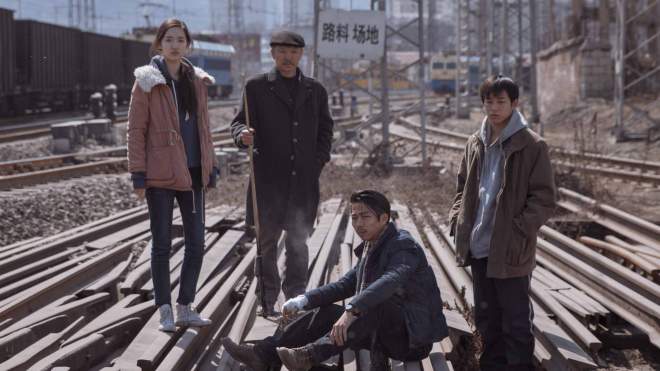
An Elephant Sitting Still is a 230-minute cinematic allegory wrapped in haunting realism. In an unnamed town in Northern China, four characters struggle with their own personal predicament too messy to untangle, all in a day’s time. The four narratives intersect in Hu’s incisive screenplay.

A high school student, Wei Bu (Peng Yuchang), while defending a friend, accidentally pushes a school bully down the stairs leading to his death. Even more tragic, Wei later finds out he has been deceived by the very friend he tries to protect. Wei has to run away as the bully’s older brother Yu Cheng (Yu Zhang), a local gangster, is out looking for him. Yu himself is a man riddled with guilt as he has just witnessed his best friend dash out of the window to his death upon finding out Yu has been sleeping with his wife.

Meanwhile, Wei tries to persuade his unrequited crush, schoolmate Huang Ling (Wang Yuwen) to leave with him. Huang herself has to deal with her alcoholic single mother and is further troubled by the reverberation of her scandalous relationship with her school’s vice dean. The fourth character is a grandfather, Wang Jin (Li Congxi), who is pushed out of his son’s home as the young family needs to move to a smaller apartment in another place so to register their daughter for a better school. A dismal future awaits him away from his granddaughter.

Hu parallels the dilapidated urban environs with the inner world of his characters. Long takes and tracking shots place viewers right in the midst of relational conflicts. A Steadicam follows their uncertain footsteps; blueish-grey overtone transmits the bleakness of their situation. Hu takes time to let the camera linger on his characters’ faces, capturing their troubled psyche. Their seemingly emotionless appearance is reminiscence of Bresson’s ‘non-actors’. Often, their reticence conveys depths that words deem unnecessary.

There’s still another character which is mentioned but remains invisible, and that’s the Elephant. We’re told at the start of the film that it sits very still in a circus in the city of Manzhouli, a distance away. It’s indifferent to people’s taunting and objects thrown at it. The Elephant’s quiet composure exudes a mythical element these characters seem to yearn for. Here, realism is mixed with a touch of magic. As the four-hour film draws to an end, the sequence transcends rationale. Two young people, Wei and Ling, together with the grandfather Wang and his granddaughter depart on a journey to Manzhouli in search for the Elephant.

The ending shot is mesmerizing as the bus to Manzhouli stops temporarily in the night, the passengers get down for a stretch. From a distance, we see our protagonists stand in front of the beam from the bus and start playing hacky sack. The long stay of the camera on them is surreal but needed. The quest for the mythical being is motivational zeal for life, even just for a momentary pleasure. Then we hear off screen the sound of an elephant braying.

The Book Big Crack

Big Crack.jpgIn April I took a trip to Hong Kong and there in a bookstore I found the source material for the film, Big Crack*, written by Hu under his pen name Hu Qian. The book is a compilation of short stories, one of them being ‘An Elephant Sitting Still’, as well as Hu’s award-winning novella Big Crack’. I was eager to explore Hu’s worldview and compare his writing with his cinematic work.

‘An Elephant Sitting Still’ is a 15-page short story. Its protagonist is Yu in the movie, having slept with his best friend’s wife and struggling with guilt as he’s the reason for his friend’s suicide. Yu is drawn to search for the Elephant in Manzhouli, maybe for a redemptive reason. Towards the end, he finds the mythical beast, jumps into its cage and submits himself to let it deal a deadly blow to him, a fate he’s all too willing to accept, a soul that has been hinged on a meaningless existence. The other film materials are mostly philosophical concepts from the novella ‘Big Crack’

Hu’s writing is more direct and visceral than his cinematic creation. In the novella ‘Big Crack’, his characters are students in a bottom-tiered art college somewhere near a remote northern town. The term ‘waste land’ is used to refer to the campus and its adjacent town. The term is also used in the movie. In the book, the words ‘waste land’ are ubiquitous, together with Existential, nihilistic concepts like having no exit and nauseating stenches – as in the beginning of the film with Wei’s father’s furious complaint. In the novella, rampant violence is frequent among different dormitories of the school, often exploding in bloodshed. Violence is more restrained in the film, but often leading to tragic end.

I presume Hu’s use of the phrase ‘waste land’ is an allusion to T. S. Eliot’s epic poem. Eliot wrote ‘The Waste Land’ after WWI as the poet lamented the cultural and spiritual breakdown of Europe. Physical ruins could be rebuilt, but the collapse of moral and spiritual values was hard to replaced.

In what I think is a defying act in a country that monitors and censors Christianity in the public arena, Hu quoted the following verses from the Bible, words printed in bold:

“The Lord saw how great the wickedness of the human race had become on the earth, and that every inclination of the thoughts of the human heart was only evil all the time…. Now the earth was corrupt in God’s sight and was full of violence. God saw how corrupt the earth had become, for all the people on earth had corrupted their ways.”

The Invisible Elephant

Hu is piercing in his observation of the moral void and dry, cracked condition of the human soul; the meaninglessness of life as he saw it could have become too overwhelming for him. But what about the Elephant? Is there a sliver of light coming through that crack?

Some had interpreted the Elephant as a symbol of the government, but considering the way that the beast appeals and draws the protagonists to seek for it, almost like a pilgrimage, that parallel just isn’t probable. Some critics had attributed it to the endurance needed to forsake the world and confront troubles with passive resistance.

When I first came across the mention of the Elephant sitting still, the Beatles song “The Fool on the Hill” came to mind. The lyrics point to a similar quietude and peaceful being, some see the lyrics as a reference to God, “He was oppressed and He was afflicted, yet He did not open His mouth…” I incline to interpret as this, for evidence is overwhelming in Hu’s writing that he was troubled by the depravity of the world as he saw it and wanted to seek for what or who could have been the redemptive way.

As the closing credits roll to the end, we hear the mood has changed from the past three plus hours. We hear jubilant singing voices mixed with the theme music ‘Elephant’, sound of joy for the first time. And in the credits the following acknowledgement appears, ending the whole film:

“Original Acappella, Laomudeng Church Sunday Service Hymn”**

Before his death, a second feature was on the drawing board. Hu named it The Gate of Heaven. The spiritual yearning of this young talent is achingly apparent.


~ ~ ~ ~ Ripples

***


*It’s my understanding that the book comes in only its original Chinese edition. There has yet been an English translation.

** Upon online research, I found that the Laomudeng Christian Church is serenely situated on the top of a mountain in Yunan, famous for its secluded and peaceful environs. The high-pitched A Cappella singing of its congregants is well-known.

Photo Sources:

Film still from Ripple file originally from MSPIFF
Hu Bo photo from Festival Scope Pro
Big Crack book photo from Amazon.com
 

‘Late Night’ Shines with Duo Emma Thompson and Mindy Kaling

“I have spread my dreams under your feet;
Tread softly because you tread on my dreams.”

                                                                                              – W. B. Yeats*

These two lines from Yeats’s poem appear at the beginning of the movie, but with hilarious effect. Director Nisha Ganatra and screenwriter actor Mindy Kaling do not waste time in setting the mood and pace of what is to come. Molly Patel (Kaling), a woman of Indian descent walking briskly on the streets of NYC meets her destiny as a full bag of garbage is thrown at her face while she recites these poetic lines to herself, mustering up courage and confidence as she heads to the interview for her dream job.

late-night-poster (1).jpg


She’s hired, but not based on her merits. Molly is now a writer for the TV talk show host, the iconic Katherine Newbury, whose late night show has been around for nearly three decades. The reason that Molly gets it? ‘Diversity hire’, for Molly has no background in writing comedy except cracking jokes over the PA in the chemical plant where she works as a quality control personnel. One writer in the team groans, “I wish I was a woman of colour so I could get any job I want with no qualifications.” With that line, we know that both Ganatra and Kaling, two ‘women of colour’, are poised to deal with a relevant workplace issue head-on.

Molly’s new work environment might just be as toxic as the chemicals in her previous employment because now she has to prove herself fit for the job, to her colleagues and her boss. The seven others in the writing team are all white male, while two other who used to be there have just been fired by Katherine, one for asking for a raise and the other talking on the phone with his girlfriend. The remaining seven know how to keep their job: colour within the lines and tread as carefully as possible so not to step on their boss’s ego.

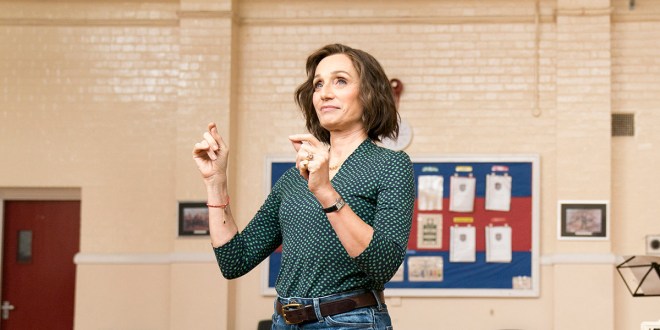
Katherine Newbury is masterfully played by Emma Thompson. She is spot-on in portraying the sharp-tongued, hard-nosed TV anchor who is too blinded by her own light to realize her star rating has been falling like a meteoroid, and that a younger, cocky Daniel Tennant (Ike Barinholtz) is too eager to take over. The studio decision to terminate her show comes as a devastating blow to Katherine.

Scrambling to rescue her place, Katherine Newbury meets her writers for the first time. And in that writing room, the two women, Katherine the star TV anchor clashes with the novice, ex-chemical plant quality controller Molly, who points out––with good intention––Katherine’s lack of relevance in contemporary social media-driven society. Interestingly, as the two women from totally different demographic backgrounds come to interact with each other, the older one begins to feel like she’s looking at her former, younger self. And with that, Kaling brings in yet another critical societal issue: remaining relevant in the battle against ageism.

Thompson is brilliant in delivering depth and not merely a two-dimensional, Cruella type caricature of a boss as in The Devil Wears Prada, although she has plenty of opportunities to do just that. Thanks to Kaling’s subplot bringing in John Lithgow as Katherine’s Parkinson’s afflicted husband Walter, we get to know some of Katherine’s backstory. Although his character isn’t fully developed, Lithgow’s sporadic appearances act as a conduit through which we get to see a hidden facet inside the seemingly tough outer shell of Katherine’s. Kudos to Kaling in not focusing on her own story in the movie but letting Thompson shine in the limelight, and the veteran actor delivers with versatility and energy, probably rescuing  some overtly melodramatic sequences.

Who better to write the script than Mindy Kaling herself. The movie is like a biopic of her own TV career, well, not exactly in the details but definitely the trajectory. Before this her first full feature screenplay, Kaling, the daughter of immigrant parents from India, was first hired as a writer for the pilot of a new TV series called The Office (2005-2013). Exactly, that award winning series which later lasted for nine seasons. Kaling also appeared as the character Kelly Kapoor and became producer as well. After The Office, she went on to create her own series The Mindy Project with six seasons. She is Dr. Mindy Lahiri, the character inspired by Kaling’s mother who was an obstetrician/gynecologist, and the namesake, the author Jhumpa Lahiri. In the meantime, Kaling authored two books, collections of essays sharing candidly her private self and growing-up a child of immigrant parents. Kaling is an iconoclast in her own right.

Vancouver born director Nisha Ganatra is also of Indian descent. I applaud both women’s excellent efforts in bringing this Sundance (2019) acclaimed feature into mainstream entertainment via Amazon Studio with a reportedly $13 million price tag. Late Night is more glam, clever, and lively than Amazon’s The Big Sick two years back at $12 million. It’s my hope that one day, the word ‘diversity’ will not be necessary to describe contributions from ‘minorities’ or ‘non-whites’ as we all belong to the mainstream.


~ ~ ~ Ripples


*From the poem ‘He Wishes for the Cloths of Heaven’


***


Related Review:

‘The Big Sick’: A Real Life Romantic Comedy