‘Coco Before Chanel’ directed by Anne Fontaine

According to the French Ministry of Culture department that produces and promotes French cinema, 27 percent of French movies were directed or co-directed by women in 2017 compared to 20.8 percent in 2008. (source article here) An improvement, but they are still not pleased with the disparity and working towards a more equal representation.

For comparison, in Hollywood, according to the annual USC Annenberg Inclusion Initiative study (Jan. 2018), the figure is 4%, after examining 1,100 popular films. Now this result is found in the midst of the #MeToo and #TimesUp movements. For those interested to find out more, here’s a comprehensive report from Annenberg (July, 2018) comparing many more aspects of the film industry.

I just find these stats alarming. This is not a post to present an analysis of the issue, that warrants a thesis, but these figures just need to be shared. For Paris in July this week, I’ve chosen a film that showcases a woman succeeding in a man’s world, overcoming what looked to be insurmountable odds. Among its many accolades, I find this one notable: Best Movie About Women, given by the Women Film Critics Circle Awards (2009).

Another film from French director Anne Fontaine. Unlike Gemma Bovery in last week’s movie, this is a real-life heroine.

Coco Before Chanel (2009)

I’ve appreciated filmmaker Fontaine not doing a whole life biopic on the fashion icon, but focuses on her early years. What was her background? How did she overcome life’s obstacles to create a path for herself?  The intermingling of fate and choice is one important theme Fontaine had touched on in this cinematic account.
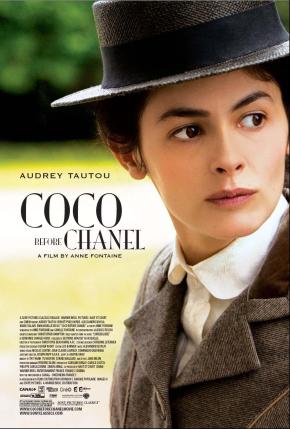
 

Coco Before Chanel


Gabrielle Chanel’s life is an extraordinary story, and Fontaine respects that. Before she became the world famous icon Coco Chanel, she was Gabrielle Chanel born on August 19, 1883, in Saumur, France.

The film opens with the camera following two young girls being driven to an orphanage. We soon find out they are sisters Gabrielle and Adrienne. What makes the scene sadder is that the driver of the horse-drawn cart in which the sisters are transported is their father. We never see his face. He doesn’t turn to say goodbye. He never visits.

That’s a short beginning. The next scene Fontaine shows us is fifteen years later in a cabaret where the sisters sing and dance. In there, Gabrielle (Audrey Tautou) meets Étienne Balsan (Benoît Poelvoorde), an older military man, paying passing interest in Coco, a name he’s created for her. Fontaine is effective to show us what Coco is like within just a few minutes of the cabaret scene. She’s a calm, self-assured woman, won’t sell herself to appease the guests; as a consequence, she and her sisters are fired. Looks like they’re happy to leave the place too.

They keep their day job as seamstresses but soon part as Adrienne is leaving with a man to live in Paris. Coco decides to go to Compiègne to look for Balsan. Balsan agrees to let her stay there in his country mansion temporarily but Coco has her resourcefulness to change Balsan’s mind. She learns to ride a horse on her own in a day, and soon breaks into the social circle of Balsan’s by distinguishing herself as a woman with style, talent and skills.

A raiser of race horses, Balsan’s social milieu and the horse races where members of the fashionable class exhibit their haute attires inspire the ingenuity of Coco. She begins to design hats for the ladies, and establishes herself as a unique contrarian. She wears a simple straw hat, alters a vest, a white shirt and a tie from Balsan’s closet to suit herself. Her style is “dresses without corsets, shoes with no heels, and hats with no feathers.”

Among Balsan’s business acquaintances is Boy Capel (Alessandro Nivola), a young Englishman. Coco’s short, intimate relationship with him soon changes her outlook in love and life. After a sad incidence, Coco becomes more independent, confident with herself and her skills, and determined to move to Paris to open a hat boutique. With the financial help from Balsan, she begins that first step, and the rest is history.

Tautou has come a long way from her role as Amelie. She is suitably cast as Coco, reflecting the character of the self-made persona. The signature suits she tailors for herself exude elegance devoid of adornments; the simple hats she designs for herself well-match her cool subtlety. Fontaine captures Coco with meticulous care, from nuanced expressions to her confident posture. Of course, kudos goes to costume designer Catherine Leterrier who won, deservedly, a César Award for Best Costume Design and garnered an Oscar nom.

Composer Alexandre Desplat’s score adds to the enjoyment. Not an epic of extraordinary stature, but like the hat Coco wears, the film is stylish without overstating, composed and effective.

~ ~ ~ Ripples 

Coco Before Chanel is on Netflix.

***

This is a review for Paris In July hosted by Tamara at Thyme for Tea.

PIJ2019 Tamara

Some Other Related Ripple Reviews of French Films:

Cleo from 5 to 7

Things to Come

I’ve Loved You So Long


‘Working Woman’ is yet another voice of the #MeToo Movement

Israeli director Michal Aviad’s “Working Woman” is a good reminder that even though the momentum of the #MeToo Movement might seem to have quieted down, there are still voices that need to be heard. Screened at international film festivals since last fall, the feature is now being released in selective theatres.

At the start of the movie, the roving camera follows Orna (Liron Ben-Shlush) as she walks briskly to a car her husband is waiting in. She has just come out of a job interview, exciting to be offered an opportunity to assist a real estate developer, Benny (Menashe Noy). There will be attractive financial rewards and career opportunities ahead.

As the husband parks the car on the road and we get to see the couple in their apartment in the next scene, a stationary camera captures all that is important, an establishing shot if you will. In one frame, we see the husband cooking, Orna clearing the table beside him, and not too far away but still within the frame, their children playing at a computer. We soon learn that the computer isn’t working properly, the kids want a new one, and Orna telling them not until the fridge has been paid off. Husband and wife then go on to talk about this new job she really wants to take, he not too sure about the irregular working hours.

In less than five minutes from the opening, we see Orna’s situation. A mother with young children to care for, a husband who is starting a new restaurant and a household that is cash-scrapped. Aviad’s camera work and succinct dialogues prime us with expectations.

Orna starts working as a personal assistant to real estate developer Benny on his flagship project, a skyscraper apartment by the seaside. He needs someone to organize his meetings, see the project through to completion and sell the luxury units. Being Benny’s protégé includes following him around, even waiting while he has a haircut. Orna has no experience in real estate but is a quick study; she has a knack for gaining trust from potential customers and the instinct for a fresh approach to getting things done.

A scene from WORKING WOMAN. A film by Michal Aviad. A Zeigeist Films release in association with Kino Lorber. Photo courtesy Zeigeist Films. 

Benny finds the ideal assistant in Orna. He soon promotes her to sales manager, noting her resourcefulness and creative thinking. His project by the seaside is now in good hands. But reaching that position and gaining her boss’s trust isn’t as smooth as Orna had first thought; it is becoming obvious that Benny appreciates not just her work skills but eyes her as a woman.

It first starts with commenting about her hair and telling her what to wear, then a kiss, for which he apologies. Other kinds of harassment follow, much like juvenile pranks. But a trip to Paris escalates his advances into a sexual assault. Orna’s pushback and outright ‘no’ means nothing to Benny. Aviad’s camera captures the scene matter-of-factly. The realism is disturbing to watch, not that Benny is violent but that it is obvious that the act is not consensual, his brute force the only means to subdue her in gratifying himself.

After coming back home from Paris, Orna is a different person. She is traumatized naturally, but when her suspecting mother asks what happened in Paris, she replies, “I made a mistake.”

That is a crucial statement. Such a mentality could well explain why she isn’t forthright with her husband, fearing his speculation on her part in the event, or maybe fearing his avenging Benny, making the matter worse. But we as viewers are witnesses to the scene. The ‘mistake’ definitely is not hers to shoulder.

Aviad’s storytelling is realistic and engrossing. Her handheld camera follows Orna like a shadow, the slightly roving movement accentuating the tension. Ben-Shlush’s acting is sensitive and nuanced. The screenplay spare and succinct. The 93-minute narrative feature is an effective and clear voice in stating a case of sexual harassment in the workplace, a powerful boss getting his way and taking advantage of a subordinate who needs her job for financial reason.

Fortunately, Aviad leads us towards a positive ending. We get to see Orna rise up from her challenging situation as she gains new strength to open for herself a way out.

Exclusive engagement of “Working Woman” will be screened at Landmark Lagoon Theatre in Minneapolis St. Paul beginning Friday, May 10th, 2019. Hebrew with English subtitles, 93 mins.

~ ~ ~ Ripples

***

‘Claire’s Camera’ is a Whimsical Look at Communication

A Korean director shooting a film while attending the Cannes Film Festival, with two prominent Korean and French actors in his cast, taking just days in shooting to make what seems like a spontaneous gig had resulted in this whimsical 69-minute dramedy. Looks like something only the prolific, Cannes-honored director Hong Sangsoo can pull off. The versatile Isabelle Huppert (Things to Come, Elle) in one of her interviews said it took her only five days to do Claire’s Camera with Hong, with no script, except a daily run-through of the day’s story and lines.

3
Kim Minhee and Isabelle Huppert in Hong Sangsoo’s Claire’s Camera. Photo courtesy of Cinema Guild.

This is Huppert’s second time collaborating with Hong. The parallels in Claire’s Camera with real life are the very elements that lends to the film’s subtle humour. Claire (Huppert) is a school teacher from Paris visiting Cannes for the first time, accompanying a friend to the Film Festival. While wandering alone in this seaside resort taking pictures with her camera, Claire bumps into a triangle entanglement: a Korean director So (Jung Jinyoung), his film’s sales rep Yanghye (Chang Mihee) who has more than just a business relationship with So, and separately, her sales assistant Manhee (played by Hong’s muse Kim Minhee, On the Beach at Night Alone), whom she fires as she finds out Manhee’s one-night stand with the director.

Claire makes fast friends with Manhee after they meet on the beach. Here we see two actors from different countries using English to communicate, a language that’s not their own mother tongue. The verbal limitations may be a bother for some watching the film, but apparently not a hindrance for the two of them striking up an instant, equal friendship. They seem to know what the other is trying to say, and they care to ask each other questions, some quite personal, in order to know the other more.

Contrast that to a conversation where Manhee has with her boss Yanghye over coffee when she gets the message that she’s fired. They share the same Korean language, yet their interlocution is marked by unspoken sentiments and the boss’s minimal attempt to make it a two-way flow. Here’s a realistic depiction of a lopsided communication, one that’s not exclusive to the Korean culture. Those in authority hold the key to conversations.

In another scene, the lack of communication is what makes the naturalistic, deadpan humor work. When Claire first meets director So, the two are sitting at adjacent tables outside a café. As conversation begins, So asks Claire if he can sit with her at her table. She agrees and he stands up and moves to sit by her. But then the two have nothing more to say to each other, maybe due to language limitations. Claire then goes on to Google him on her phone to find out more about this director who’s sitting beside her. One has to take this as a comedic scene to appreciate the irony.

1
Jung Jinyoung and Isabelle Huppert in Claire’s Camera. Photo courtesy of Cinema Guild. 

The film is breezy and leisurely as the Cannes seaside, refreshing as the yellow jacket Claire is wearing; incidentally, her ‘costume’ is the actual wardrobe Huppert had brought when she was attending Cannes at that time. The setting is scenic and pleasant, whether it’s the pounding waves or the small lanes winding along cafes. No, we don’t get to see the red carpet or any of the glamour of the Cannes Film Festival, but we’re led into the side streets of storytelling.

The pitfall for those not familiar with Hong’s eccentric style could be the naturalistic, seemingly unscripted demeanours of his actors and their haphazard dialogues, and in this case especially sound laboured when characters try to interact with each other in a foreign language. And speaking of communication, the usual hard-drinking of his characters—director So here—could well be a language of expression in itself.

As for the camera Claire is always carrying, one would wish Hong could have used that a bit more, cinematically and imbued with deeper meaning. Hers is a Polaroid, so the image appears slowly on a hard copy. But we don’t get to see this effect or be led to any deeper relevance. However, in one notable dialogue towards the end when Manhee finally asks Claire a question that must have been on her mind all along, we finally hear something revealing:

Manhee: Why do you take pictures?

Claire: Because the only way to change things is to look at everything again very slowly.

Manhee: That sounds very nice.

The unfinished part seems to be, “but do we do it?”

Considering Hong Sangsoo’s signature style of repeating his film sequences in a movie like we’re watching it all over again but towards different results, Claire’s words could be more layered than they appear, and the slow appearing of an image on the Polaroid print could well be a mirroring for reflection.

Premiered at the Cannes Film Festival in May, 2017, Claire’s Camera has since been playing in film festivals all over the world. Cinema Guild will be releasing the film on Blu-Ray and DVD beginning Nov. 6, 2018. For more details click here: http://www.cinemaguild.com/theatrical/clairescamera.html

~ ~ ~ Ripples 

 ***

Related Reviews:

Let Things to Come be a Cooling Respite 

Art Imitates Life in Hong Sang-soo’s ‘On the Beach at Night Alone’

‘The Day After’ is a re-enactment Hong Sang-soo Style

Let ‘Things to Come’ be a Cooling Respite

July’s gone, but we’ll always have Paris.

There are many words I can use to describe the Paris born, veteran (here’s one of them) French actress Isabelle Huppert. Prolific, versatile, and age-defying. In 2016, two of her works came to prominence in the awards circuit, two features that show her in distinctly different roles that won her acclaims across the Atlantic. Playing a vigilant woman who schemingly fight back a rapist in her neighborhood in Elle, Huppert garnered a Best Actress Golden Globe and an Oscar nomination.

Things to Come

The other feature is Things to Come. Huppert is Nathalie Chazeaux, a philosophy professor, a published academic writer and editor, a mother of two almost grown children, a wife, a daughter, and a woman at the crossroads in her life.

On the career and academic front, Nathalie’s just been told by her publisher that her textbook would no longer be needed. On the home front, her husband of 25 years, Heinz (André Macron), has just confessed to her that he’s seeing another woman and will be leaving Nathalie to live with his younger love. Even though on good terms with their parents, her two children have grown enough to move away from home. As a daughter, Nathalie has to deal with a dementia-afflicted mother (Edith Scob) who calls her cell phone even while she’s teaching, delusional and threatening suicide. What is Nathalie to do?

Here, I must mention another crucial figure in the production, and that’s director Mia Hansen-Løve, who won Best Director with this feature at the Berlin International Film Festival in 2016. At eighteen, Hansen-Løve was cast by French director Olivier Assayas and later starred in another of his works. Partnered with him for a while, she’d chosen her own path, studying philosophy, writing for the prestigious French film magazine Cahiers Du Cinema, and later, directing.

Daughter of two philosophy professors, Hansen-Løve’s preoccupation with intellectual discourse is apparent in Things to ComeIn an interview, she’d said, “… for me, cinema is nothing but another way to practice philosophy… cinema is a search for wisdom, a search for good and for beauty, like philosophy could have been a search for my parents.” The intellectual exploration of what’s good and Utopian predominates in Things to Come. The film is worth a second, or third viewing just to capture the dialogues.

While she may be tossed like a floating weed in the torrents of life, Nathalie enjoys the fruit of her labor in her former star pupil Fabien (Roman Kolinka), now a writer and activist. However, as she’d influenced Fabien in his pursuit of philosophy and writing, he’d also chosen his own path by living with a few anarchists in a remote cabin in the French countryside. His outlook diverges from hers and which she can’t agree, ironically, that’s the reward of her teaching: training one to think for oneself and to choose one’s own path independently.

Upon his invitation, Nathalie had spent a few days there, an idyllic ,rural setting for her to recuperate from a life unhinged. She’s got her mother’s cat with her, Pandora, a cat that’s not used to the wild but takes off the instant Nathalie takes her out of the cabin. Lost for hours but Pandora finally finds her way back to the country abode in the middle of the night. ‘Instinct’, Fabien says. And that just might be what Nathalie needs to hang on to at this moment of her life.

Surely, Things to Come is a ‘thinking’ film, but viewers will also enjoy the nuanced performance of the cast, and what the camera reveals in the form of natural beauty and serenity for one to search things out. What more, Hansen-Løve lets us see both the larger scale of a flaw-ridden society and the trivial foibles in the interactions between Nathalie and Heinz.

Female viewers would likely find affiliation with Huppert’s role of an urban, professional woman who has to juggle many hats to fulfill her duties. Nathalie’s search for direction at the crossroads may not necessarily lead to obvious answers, but she manages to find comfort and joy in the birth of her grandchild, an endearing scene to end the film.

More importantly, Nathalie seems to have carved out a quiet solitude. an independence to mull on the unfathomable in life. Still searching, but in the meantime, she seems to have found a respite, a new solace to face what things may come.


~ ~ ~ ~ Ripples 


***

‘Cleo from 5 to 7’: A Film for Paris in July

Summertime… and the viewing is nostalgic. On a lazy, hazy summer afternoon, what better way to spend your time than to catch up on classic films that you’d missed through the years, or, rewatch them. Sure, a glass of pink lemonade and some chocolate-dipped madeleines would add to the enjoyment.

Here’s a wonderful film by the venerable Belgium born French director Agnès Varda, who turned 90 on May 30 this year. Just exactly what she was doing a few weeks before her 90th birthday?

On May 12, Varda joined Cate Blanchett in leading 82 female industry figures to walk up the stairs on the red carpet at the Cannes Film Festival, a silent protest symbolizing the challenges women face in climbing the industry ladder. Blanchett gave a speech in English, Varda in French.

Cleo from 5 to 7 (Cléo de 5 à 7) is a 1962 film by Varda, a Cannes Palme d’Or nominee the next year. The story takes place on one single day in the life of a popular recording singer Cleo (as in Cleopatra) who loves everything beautiful looking. But early in the day she receives all sorts of bad omens about her health. Her zest for life fizzles through the day as she would be calling her doctor to find out the result of the medical test she’d taken a couple days ago.

Cleo from 5 to 7.jpg

We follow Cleo on the longest day in 1962, yes, that’s the first day of summer, which could have brought her vitality and joy. How does the fear of illness and mortality affect the beauty-seeking and fun-loving Cleo? It totally changes her outlook. Instead of being cooped up in her apartment with musicians rehearsing her songs, she steps out into the streets of Paris to escape the gloomy sense of despair.

Don’t worry, this is not Sarte or Camus. Cleo is just a gal seeking to be loved, and for the first time in her life, fearing for her own mortality. Varda takes us along the streets of 1962 Paris, and offers us naturalistic scenes of cafes and roadside buskers, and leads us into an art studio as Cleo looks for her friend who works as a model for sculptors.

Finally, she’s alone in a park, the serene, meditative milieu is the ideal setting for her to meet Antoine. The encounter is the magic she needs. The rest you ought to see it for yourself. Varda’s pace is leisurely, her viewpoint insightful, and the ending is satisfying. Maybe by now, Cleo learns the difference between beautiful-looking and beauty.

The original music is soothing and cooling for a summer day, composed by Michel Legrand (who is the piano player in the movie). Legrand is a three times Oscar winning French film composer. Which three times? Yentl (1983), Summer of ’42 (1971), The Thomas Crown Affair (1968).

As I said, summer is the best time for nostalgic viewing.


~ ~ ~ ~ Ripples

***

Paris in July is hosted by Tamara of Thyme for Tea, an annual summer blogging event.

Paris in July 18

***


‘The Rider’ is Poetry on Screen

“The Rider” opens this weekend in selective cities. If it’s screening in your area, don’t miss it.

The Rider

What is a cowboy to do if he cannot live the cowboy life again? Too remote? Substitute ‘cowboy’ with any other activities you love to do, or a role that defines you. Take that away, and what do you have left?

The film focuses on the struggles of a rodeo star and expert horse trainer Brady Blackburn as he rebuilds his life and identity after a severe head injury. Upon the prognosis of his doctor, Brady should never go back to riding and rodeo again, for another injury would be fatal.

“The Rider” is an American feature, unique in its subject matter while its director is an unlikely candidate to share the insight. Chloé Zhao was born in Beijing, had studied in London, then Massachusetts and New York. “The Rider” is her second feature. In her short directorial career, she has gone to Cannes twice, nominated in 2015 for the Caméra d’Or (“Golden Camera”), Cannes’ award for the best first feature film, and winning The CICAE Art Cinema Award in 2017 with “The Rider”. That is, among other international accolades. Zhao is an exemplar of a global citizen in filmmaking.

Chloé Zhao

The actors for “The Rider” exude authenticity, for they are actual cowboys and their family, all playing themselves. Brady Jandreau takes the role of Brady Blackburn, reflecting his real-life persona, a cowboy who is much admired and respected in the rodeo community. His father Tim and sister Lily form the Blackburn family in the film. Zhao’s directorial skills shine forth as she leads the non-actors in front of the camera, capturing them in their natural speech and actions, in particular, offering viewers realistically the dexterity involved in the wrangling work. But the film goes much deeper than the actions.

Recovering from the near-fatal injury pits Brady into a precarious existence and conflicting relationship with his father Wayne (Tim Jandreau). As a tough cowboy himself, Wayne had all along brought Brady up to be resilient and competitive, but now father had to dissuade son from the risky pursuit of bronco riding and rodeo activities. Nursing a wounded body and a tormented mind, Brady has to deal with the painful task of redefining himself. Temporarily working in a supermarket and wearing a store uniform makes Brady a displaced person, a persona out of meaningful context, both to himself and to those who recognize him as they come into the store.

While there are tense undercurrents with his dad, Brady cherishes the intimate bond with his sister Lily (Lily Jandreau), who expresses herself from her own peculiar, internal world. Kudos to Zhao for casting the real-life brother and sister in the film, they need not be experienced actors to conjure up some genuine, moving scenes.

Much of the film’s effectiveness goes to the inspiring cinematography, exposing quietly Brady’s tormented soul. The opening sequence sets the stage right away with riveting close-ups of a horse and its breathing. As the camera turns from beast to man, we see the extent of the injury Brady sustains as he gets out of bed and follows the routine needed to care for his own body, striving to return to a past life and regain some sense of normalcy.

In other sections of the film, the camera pans the vast landscape of the South Dakotan plains with a tiny figure that is Brady walking or riding through. “The Rider” is visual poetry on a subject that is seldom explored, and cinematographer Joshua James Richards is most effective in transposing Brady’s internal quest lyrically on screen: “A horse’s purpose is to run in the prairies; a cowboy’s is to ride.”

Brady’s good friend Lane Scott (Lane Scott) is a painful reminder of the risks a cowboy takes. Paralyzed and brain damaged after a fall in a rodeo event, Scott now communicates barely by spelling out words one letter at a time signing with his fingers. Poignantly, Zhao depicts Brady’s every visit with Lane in the hospital as an encounter of love and hope without sentimentality.

Zhao is nuanced and eloquent in creating impressionistic scenes. And when horse and man are juxtaposed in such intimacy, the parallel is striking. As Brady puts it, when a horse is badly hurt it has to be put down, that is the humane thing to do; when a cowboy is badly hurt, he has to continue to live, for that is what humans are supposed to do. As we come to the turning point of the film towards the end, the presence of family love and support appear to be the key to moving on.

A rare gem of a film. Watch it with a quiet heart.

~ ~ ~ ~ Ripples


***

Don’t just drive past Three Billboards

Three Billboards outside Ebbing, Missouri is a ‘Coen-esque’ feature with Fargo (1996) star Frances McDormand. This might well be one of the better Brit-U.S. collaborations in recent, tumultuous years. And McDormand just might head to another Best Actress Oscar win after Fargo.

Caution: The following discussion involves a minor spoiler. Not so much a spoiler in plot but in idea. I can’t be more obscure in reviewing the film if I’m to delve into meaning.

***

In British writer/director Martin McDonagh’s debut feature In Bruges (2008), the main character, a hitman, Ken (Brendan Gleeson), explains to his angry crime boss Harry (Ralph Fiennes) why he didn’t kill his young protégé Ray (Colin Farrell) as Harry had ordered, saying: “He has the capacity to change. We all have the capacity to change.”

Three Billboards outside Ebbing, Missouri is McDonagh’s damatization of this pivotal idea in full force: We all have the capacity to change. Viewers may not like the characters or their speech, but the dark comedy leads us to the point where we’ll find it worthwhile to hold our judgment, no matter how despicable they behave or speak. And that is the main reason for the gratifying ending of Three Billboards: Change. A change from distraught to calmness, from tension to release.

three-billboards-poster-2

Indeed, language is the spoken expression, the tip of the iceberg. What lies beneath and beyond language is the essence of a character. McDonagh’s script is starkly effective in presenting the different sides of his characters. Not that we should make excuses for their wrongs, but that everyone has a backstory and a present reality to deal with.

Mildred Hayes (Frances McDormand) has lost her teenage daughter Angela (Kathryn Newton) to a most violent, horrific crime, ‘raped while dying’. She is frustrated by the inability of the police to bring in any arrests. The three billboards she pays for outside Ebbing, Missouri advertise to the world her rage, targeting police chief Willoughby (Woody Harrelson). It’s her intention that the publicity they draw could lead to some effective police actions.

McDonagh is apt to instil humour into the sombre subject matter. The dialogues are sharp and the actors deliver. Call it a dramedy if you will, but the spontaneous laughters generated in the theatre are bittersweet, for they are acerbic depiction of racism, injustice, and the grieving rage of the unconsoled.

The three billboards pit Mildred against the town except for her co-worker Denise (Amanda Warren) in the gift shop and an admirer James (Peter Dinklage) in the bar. Her action has put her otherwise devoted son Robbie (Lucas Hedges) in an awkward position in school and inflamed her ex Charlie (John Hawkes), whose 19 year-old girlfriend Penelope (Samara Weaving) is totally oblivious to what’s going on in town. Dixon (Sam Rockwell) from the police station shows his utter disgust with unchecked impulses.

While the ensemble cast deserves kudos, the pivotal acts fall on three characters. Their superb performance augments the incisive and thoughtful script.

McDonagh wrote the role of Mildred Hayes with Frances McDormand in mind, and she delivers with a punch. Her actions as an angry and helpless mother is stark and brutish, but McDonagh also shows us her vulnerable side, a mother who is regretful of the argument she’d had with her daughter on that fateful day, mournful for a daughter who’d never come home, and embittered by the ineptness on the part of the police. McDormand indwells her role so effectively that she makes me see only the angry Mildred, and totally forget the pregnant, innocent police woman in Fargo.

Sam Rockwell’s dimwitted, racist Dixon stirs up non-stop laughs in the theatre. His ultimate change is the powerful force that makes the latter half of the story so gratifying.  Rockwell’s performance is spot-on. McDonagh wants us to have a last laugh on him too: Dixon’s heart may have melted by some kind, motivating words from chief Willoughby, but his intellect remains intact.

Woody Harrelson plays Chief Willoughby with a heart. He is a tough police chief and yet underneath is a kind man, a loving husband to his wife Anne (Abbie Cornish) and a devoted father to his two young girls. Furthermore, Mildred is not the only one bearing life’s harsh blows. While Mildred reacts with rage, Willoughby deals with repressed fears.

A few kind words can cause immense change. And when one person changes, the ripple effects are contagious. The latter part of the film with its twists and turns slowly reveal how positive changes ripple on. For often underneath the hard surface lies a moldable heart. I particularly appreciate the audacity of McDonagh’s writing. Among the tough and macho, love is noted as the key to hold up oneself as love leads to calmness, and calmness to thoughtful actions.

Tying up the emotional bond is the music, in particular, the Irish folk song “The Last Rose of Summer”. Thomas Moore’s lyrics and the soft yearning of Renée Fleming’s voice sings out the sad tune in Mildred’s heart, a cry for justice and the dispelling of emptiness and loss. In the opening scene, the song introduces us to the three billboards as Mildred drives by and contemplates her vengeful scheme, the song reprises as vengeance engulfs a distraught heart and leads to a violent act. Ironically, that scene becomes a pivotal turnaround for Dixon in the police station.

‘Tis the last rose of summer left blooming alone
All her lovely companions are faded and gone
No flower of her kindred, no rosebud is nigh
To reflect back her blushes and give sigh for sigh

The juxtaposition of a quiet Irish folk tune with a fictional, small American town dealing with the fallouts of a horrific, unsolved crime may sound incompatible, but it’s poignant and effective here.

Old loves are irreplaceable, yet regrets cannot heal deep wounds. Lovely companions may have faded, but new ones can be forged, albeit not the same nature, but there’s  hope for new bonds. The last rose of summer dissolves to the first red leaf of fall. It could still be a beautiful season.

~ ~ ~ ~ Ripples

The Shape of Water is all Enfolding

In his review of Guillermo del Toro’s Pan’s Labyrinth (2006), Roger Ebert described it as a fairy tale for adults. Well Roger, the director of fantastical cinematic imagery has given us another one. Compared to Pan’s Labyrinth, this is a simpler and less horrifying tale. The Shape of Water is a delightful love story with a gratifying, requiting end.

The Shape of Water is set during the Cold War, in 1962 U.S., inside a high security, science research centre. Richard Strickland (Michael Shannon) oversees a new arrival from the Amazon (South America that is), a monstrous beast, and if he cares to really examine the creature with an appreciative eye, a beautiful Amphibian Man (clandestinely played by Doug Jones). Yes, the reverse of Hans Christian Andersen’s The Little Mermaid.

In the research centre is Dr. Holffstetler (Michael Stuhlbarg), who has to tend to his covert mission, it is the Cold War after all, but from a scientific point of view, does have an appreciative eye for the creature.

The Shape of Water (1)

At the bottom of the rung are the janitorial staff, Elisa and Zelda, and with them the story comes alive. Sally Hawkins and Octavia Spencer’s duo performance is worth your movie ticket. They are the heart and soul of the story, something which the villain lacks. As a fairy tale, we can identify who that is right away, and the irony of who the monster is quickly becomes apparent.

Elisa is mute, she cannot speak but can hear what you say, so be careful. She knows a language that you’ll need a translator to understand, so be careful about that too. Thanks to Zelda, her official interpreter, she knows what not to translate as Elisa speaks her mind to ruthless Strickland.

Elisa’s neighbour is Giles (Richard Jenkins), an artist who does appreciate the Amphibian Man. He is of immense help to Elisa, a faithful friend to her despite endangering his own life. As a fairy tale, we see the good among the characters in sharp contrast to the villain.

As she cleans the facility, Elisa soon comes to appreciate the Amphibian Man, and the creature soon relates to her as she is, not as a handicapped, low-ranking cleaner. The two forge a bond stronger than any dangerous obstacle. The film moves into the second half as a thriller and leads us to see how love overcomes such obstacles. Love not just between the two obvious characters, but from those built upon friendship and mutual respect. As for the Amphibian Man, he is more powerful than just brute force as the story reaches its climax.

As the Awards Season is well underway, all leading to the finale, the Oscars, we see The Shape of Water gaining tremendous momentum. Among other accolades, it won the AFI Award for Movie of the Year, two Golden Globes: del Toro for Best Director and Alexandre Desplat for Best Original Score, and just received 12 BAFTA nominations. While Sally Hawkins and Octavia Spencer both get acting noms, they face strong contenders such as Frances McDormand (Three Billboards Outside Ebbing, Missouri) and Saoirse Ronan (Lady Bird).

The Shape of Water is a simple depiction of human longings and our universal need for connection. It’s a fairy tale love story and not a treatise on controversial subjects for debates. It offers some interesing cinematic visualization, like the beginning scene of Elisa’s apartment under water. The underwater romantic rendition towards the end of the movie, coincidentally, elicits another indelible cinematic moment from my memory, an underwater love scene also involving a woman who cannot speak, a film with which Marlee Matlin won her Best Actress Oscar with her heart-wrenching performance, and that’s Children of a Lesser God (1986).

Surely, water, the shape of it, all enfolding, is the main idea, for that’s what love is like.

~ ~ ~ 1/2 Ripples


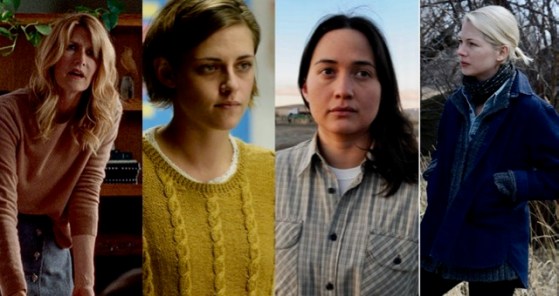
‘Certain Women’: To Connect on a Vast Landscape

The common denominator is the landscape: Montana. Open country, clear, fresh air. The expanse of space could mean the freedom to roam. As we look into the four female characters, however, the vastness of the landscape and the cold winter could infer separateness and the need for connections. In the internal landscape, an assertion of self.

Director Kelly Reichardt (Wendy and Lucy, 2008) has chosen three short stories by Maile Meloy to form a cinematic triptych. Meloy’s stories are lean and succinct. Correspondingly, Reichardt’s style is minimal as with her previous works. She brings together three loosely linked stories that can stand on their own. To review them in a succinct way, I’ll use three words as my focal point for each.

Certain Women.jpg

Authority

Laura (Laura Dern), a woman lawyer in Livingston has to deal with a disgruntled client, Fuller (Jared Harris), who was injured in his construction job. As he has accepted a settlement, he can have no further claim for tort. Laura has explained this to him time and again, but he refuses to believe her until one day, they drive a few hours to another town to seek a second opinion from a personal injury lawyer, a male. As Fuller listens to the lawyer stating the same reason as Laura has been telling him all along, he just says ‘Okay’ and seems to accept the fact. Laura laments: “If I were a man, I could explain the law and people would listen and say ‘Okay.’ It’ll be so restful.”

A few days later, a hostage-taking incident occurs in the middle of the night, and Laura is called by the police. It’s Fuller taking a security guard hostage at a government office and wants her to go in to read him his file regarding compensation. Laura goes in and calmly diffuses the tense situation. The incident sends Fuller to prison. He seems content when Laura visits him. Laura finds a changed and much calmer Fuller. He appreciates her visit, and just wants an occasional letter from her to keep in touch. Laura does have authority after all, albeit may not be as she has hoped in the professional front. Her influence rests on her considerate demeanor making an impact on a personal and human level. And for this, Fuller learns to appreciate.

Authenticity

A city woman Gina (Michelle Williams) wants to build a country dream house, not to move in but as a weekend home. She has her eyes on a pile of sandstones that belong to long time resident of the land, Albert (Rene Auberjonois). The sandstones hold the history of the area, for they are from the original school house. We see the cracks in Gina’s relationship with her husband Ryan (James Le Gros) as they try to smooth-talk Albert, Gina seemingly caring but assertive in what she wants, while Ryan is apologetic and conciliatory. Why would a city woman want a pile of old sandstones for her country home? For authenticity, Ryan tells Albert. Ouch, is that supposed to be helpful or is he being sarcastic? Further, their daughter Guthrie (Sara Rodier) seems to be harder to placate as she is dragged along to the country reluctantly. The crevice in the mother-daughter relationship looks to be a tough fissure to fix.

Alienation

The most moving segment comes last. A young lawyer Beth Travis (Kristen Stewart) has to drive a few hours several nights a week after work from Livingston to Belfry to teach a night course on school law, a prior commitment before she found her present job. At the night class, she encounters a ranch hand, Jamie (Lily Gladstone), who drops in out of curiosity. The short moments of sharing as she accompanies Beth to a diner after class for a meal before she drives back home stir up deep longings. Gladstone’s restraint is particularly moving. Nuanced performance from both.

While she may be adroit with horses, it’s a human connection that Jamie yearns for. She comes to every class until one night, the students are told that the class will be taught by another teacher as Beth has quit due to the long drive. Eager to look for her, the ranch hand drives to Livingston to search for a lawyer named Beth Travis. What follows is an aching attempt to reach out towards an unrequited end. The last scene of the same horse-tending routines Jamie gets back to speaks poignantly. Life goes on despite…

~ ~ ~ 1/2 Ripples

***

Source materials: Short stories by Maile Meloy “Tome” and “Native Sandstone” from the collection Half In Love, and “Travis, B.” from Both Ways is the Only Way I Want it.

Seattle International Film Festival 2017

The Seattle International Film Festival (SIFF) is the largest film festival in the United States, with an annual average attendance of 155,000. The 43rd SIFF kicks off tomorrow, May 18. For 25 days until June 11, film lovers in the Seattle area will be treated to a smorgasbord of films to whet their appetite: features, documentaries, shorts, premieres, competitions, from archival to avant-garde, and any genres to match their mood. SIFF 2017 offers close to 400 titles coming from over 70 countries.

What’s the difference between watching films in a Film Festival (FF) and watching movies in a theatre? You might ask. First off, in a FF, the international aspect is emphasized. True, you’ll have to read subtitles for those not in English, but watching foreign language films is one of the easiest ways to appreciate another culture and expand empathy. You’ll likely find there are more things in common than differences among us all.

Another special feature about FF is that many of the productions are from independent filmmakers. Hollywood and blockbuster movies are the mainstay in our Cineplexes, but in FF’s, we can savor the creative fruits from individual artists. Every year, SIFF receives over 4000 independent film submissions. It is therefore an honor for a film to be an ‘official selection’ at a major FF.

Some of them have come to compete, in other words, you will see quality productions. The SIFF website notes that more than 70% of the films screened at the Festival will not return to theaters. Many of these are works of film arts that are not distributed in commercial theaters. Of course we wish them all the best, especially quality ones and competition winners, as film industry buyers and distributors will be eyeing for good films at FF’s, ready to distribute them for the largest exposure possible later in theatrical releases.

**

In the Seattle area this weekend? Love French films? I’ve a recommendation for you. Here’s my capsule review.

The Midwife

Midwife_KeyArt

Two venerable French actresses in one comedy drama is a major attraction from the director of Séraphine, Martin Provost. Claire (Catherine Frot) is an expert midwife, the encourager of new births. Her personal life though isn’t as up-lifting. One day her deceased father’s former mistress reappeared in her life, hurtful memories re-emerge. She is Béatrice, played by the legendary Catherine Deneuve. Their reunion sparks off comic and dramatic clashes. Béatrice is everything Claire avoids: booze, cigarettes, red meats, frivolity. Yet reconciliation is the only way to deal with their lot in life.

**

The Midwife will screen in Seattle this Friday and Saturday May 19, 20, and Tuesday, May 30. CLICK HERE to SIFF’s webpage for more info, trailer and tickets.

**

Related Post:

Séraphine and the Wrought-iron Chair

The Salesman: A Timely Film

It’s time we get used to reading subtitles.

The Salesman is one of five nominees for Best Foreign Language Film in the upcoming 89th Academy Awards on February 26. Due to the executive order banning travellers from seven Muslim countries, Iranian director Asghar Farhadi will not be attending. The director has indicated he will not accept any exception made for his case. Co-star Taraneh Alidoosti has stated she will boycott the ceremony as a protest.

Whose loss is it that Asghar Farhadi is banned from coming to the Academy Awards?

After the untimely passing last year of Iranian auteur Abbas Kiarostami (Certified Copy, 2010), Farhadi continues to carry the legacy of fine Iranian filmmaking with international accolades. Starting with About Elly, which he won Best Director at Berlinale in 2009, Farhadi went on to capture both the Oscar and the César Award in France for Best Foreign Language Film with A Separation (2011). The Past (2013) brought him two Cannes prizes. His newest work The Salesman won a Best Screenplay for the writer/director and a Best Actor award for his star Shahab Hosseini at Cannes last year. Now North American viewers have a chance to see this engaging family drama.

thesalesman_poster_2764x4096-copy

The story starts off with an evacuation of an apartment building on the verge of collapsing. A couple, Emad (Shahab Hosseini, A Separation, About Elly) and Rana (Taraneh Alidoosti, About Elly) are among the anxious residents fleeing the building. We can see large cracks on the wall in their bedroom. Responding to the shout for help, Emad diverts to his neighbor’s unit to carry his adult, mentally ill son on his own back to go down the stairs. A seemingly spontaneous move in the rush of evacuation, Farhadi lets us see an act of kindness from his main character.

A friend offers Emad and Rana a recently vacated apartment unit to stay. Its previous tenant still has her belongings stored in one room. She has left in haste, a shady figure who has frequent male clients coming to her unit. Emad only learns of this after a violent incident that happens to his wife. Rana is alone in the unit one night. She leaves her apartment door ajar for Emad, thinking he will come home soon while she steps into the shower.

Emad returns home to see traces of blood on the stairs and soon learns that his wife has been taken to the hospital emergency by neighbors. We as viewers do not know exactly what has happened but can conjecture by the circumstance. We see a traumatized Rana with stiches on her forehead. She is released to recover at home, but refuses to let Emad call the police. Later, as Emad discovers a cell phone and a set of keys left by the intruder, he decides to investigate on his own and takes matters into his own hands.

Since the incident, husband and wife begin to drift slowly apart, Rana being reticent and Emad vigilant. Here we see Farhadi’s signature cinematic handling: incisive depiction of domestic tensions shrouded in Hitchcokian suspense. We soon forget we are watching an Iranian couple living in Tehran. As with his previous works, Farhadi is effective here in engaging his viewers and to elicit empathy for both the husband and the wife despite their very opposite response to the attack.

Emad and Rana belong to a local theatre group. They are presently rehearsing for a run of Arthur Miller’s Death of a Salesman, playing Willy and Linda Loman. Farhadi deftly intertwines the on-stage and the real-life couple with intricate parallels. In the play, we see the demise of Willy Loman and the end of a relationship; in their real life, we see Emad and Rana’s marriage deteriorate, and a demise of a different kind for Emad. The cracks on the wall above their bed at the opening scene is now an apt metaphor, their once close bond slowly crumbles.

Actually, there are two plays involved in the film. The obvious one is Miller’s. The other is easy to miss. During the day, Emad is a teacher. In one scene, we see him teaching a play called The Cow, a work written by the prolific Iranian writer Gholām-Hossein Sā’edi. Reminiscent of Kafka’s The Metamorphosis, The Cow evokes much enthusiasm in his class of teenage boys. The play is an allegory about a man who owns the only cow in a village; his daily life is closely tied to the animal, his identity defined by his ownership of this unique possession. When one day he loses his cow in an accident, he ends up turning into one.

Here are two prominent lines. A student asks: “How can you turn into a cow?” Emad answers: “Gradually.” Sounds like a joke, but no student laughs. Farhadi subtly leads us to see how.

The last part of the film is the most crucial. Emad’s good detective work leads him to come face to face with the attacker. He has him locked in a room in their previous, vacated apartment. Playing to the attacker’s fear of revealing to his wife and family what he had done, Emad calls them to come over. Farhadi is brilliant in leading us to a situation where we as viewers are challenged to empathize all his characters despite their opposing sides, and to weigh in on what we would have done. He puts his viewers in the position not as a judge, but witness.

Slowly we are led to see how a man can lose the veneer of civility and change into something else as he allows revenge dominates his emotions. The kind and helpful man we see in the opening scene is now shrouded in a different sentiment. In the most nuanced and quiet manner, Farhadi lets us visualize Emad’s earlier reply to his student, how a man can gradually change into a different being. Or, is it a latent potency we all have that different circumstances would elicit a different aspect of our self?

At this juncture, Farhadi reveals to us a multi-faceted man. A helpful neighbour, loving husband, well-liked teacher, and a cultured stage actor. When put in a situation where vigilante justice takes over, and revenge molds the mind, or even when the social expectation of being a protective male head in a marriage prevails, is Emad free to act? If the accused pleads for his own release, and the victim herself is willing to forgive, should the husband carry out his reprimand? On the other hand, should the attacker just go free?

In the final shot, we see Emad and Rana sit beside each other as make-up is applied to get them ready for their parts as Willy and Linda. Their expressions in the mirrors make one haunting image to end the film.

Banned from entering the United States, what Farhadi will lose are the glitz and glam of the Oscars. By his absence at the ceremony, the Academy will lose the chance to honor an internationally acclaimed director who is a master in revealing human frailties and eliciting from viewers the very empathy we so need in this testing time.

Fortunately we can still watch his film.

~ ~ ~ ~ Ripples

***

Abbey Road & Notting Hill

FRIDAY OCT. 7

For the last day in London, we wanted to grab the chance to go see places we hadn’t been to before. Our plan for the day: first to Abbey Road, then Notting Hill.

This is probably the most famous zebra crossing in the world. And that of course is the location where The Beatles’ Abbey Road album cover was taken. Tourists would gather right at the crossing, stopping cars frequently.:

Zebra Crossing.jpg

… and actually pose crossing it, making numerous takes, cause it’s just hard to find no cars coming, then snapping the right pics at the right time in the right pose:

Pose Crossing.jpg

The other side of the zebra crossing is the famous Abbey Road Studios where The Beatles recorded their albums:

studios

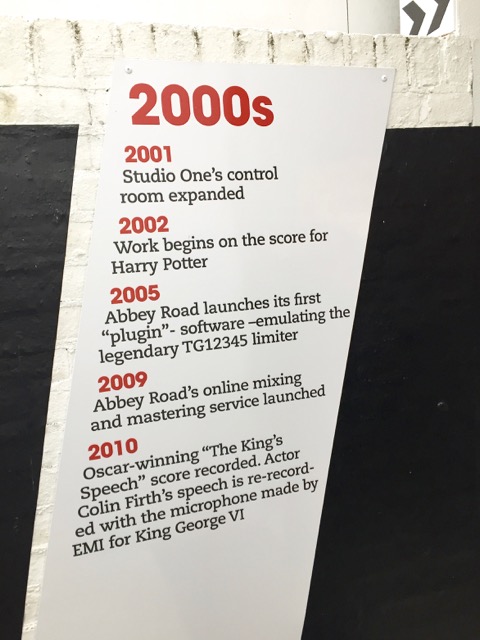
We couldn’t go into the studios, but there was a gift shop adjacent where signs were posted to chronicle the historical significance of the Abbey Road Studios. Sir Edward Elgar opened the Studios in 1931. In 1939, King George VI recorded his now famous “King’s Speech to His Peoples”.  Seventy-one years later in 2010…

Colin Firth.jpg

“Oscar-winning ‘The King’s Speech‘ score recorded. Actor Colin Firth’s speech is re-recorded with the microphone made by EMI for King George VI.”

Looks like we’d come to something truly historic.

**

After Abbey Road, we headed to Notting Hill. I like the movie Notting Hill (1999), have seen it several times especially now it’s on Netflix, but have never been to that part of London. I’d done some Googling before I left home. Notting Hill is the actual movie location, and the famous 2-mile long Portobello Road Market there is one of the best street markets in London. And it’s open on Fridays and Saturdays only.

It was an overcast and chilly Friday morning, the clouds hung heavy, but that didn’t dampen our spirits. We took the Tube from Abbey Road Studios and got off at Notting Hill Gate Station.

In the movie, Portobello Road is where William Thacker (Hugh Grant) has his Travel Book Shop. He walks past the stalls in the Market to get to his shop.

So here it is. Portobello Road, a colourful street lined with antique and curio shops, and on Fridays and Saturdays, open stalls selling all sorts of interesting items, a bazaar like a movie set.

Portobello Rd Market.jpg

Portobello Rd.jpg


street-market

Antiques2.jpg

antique1

Antiques3.jpg

Here’s William’s Travel Book Shop location, now a gift shop. In the movie, that is where William meets American film star Anna Scott (Julia Roberts) the first time. William is totally oblivious to who she is, while a shoplifter recognizes her and has the gut to come right up to ask for her autograph. That’s William’s intro to movie culture. Here’s the location:

The Travel Book Shop.jpg

Afterwards, William buys orange juice across the street and bumps into Anna again, spilling juice on her dress. Thus, leading her to his house with the blue door nearby to clean up.

The tipping point of the movie happens on both sides of that blue door. Apparently tipped off by William’s hairy roommate Spike (Rhys Ifans), a large crowd of paparazzi wait outside that blue door the morning after Anna stays over, ready to snap anything of the star. Unfortunately it’s William who opens the door in his T-shirt and boxer, and after, Anna in her sleep wear, and last but not least, Spike opens again in his brief only.

Well, here it is, that house with the blue door, 280 Westbourne Park Road:

The Blue Door.jpg

280-westbourne-rd


And of course, the first movie I saw after I’d come home was Notting Hill, again.

That’s a wrap of my five-day London experience, my Thelma and Louise escapade for 2016 with my cousin. Obviously, no… we didn’t drive off a cliff.

***

This is a Saturday Snapshot post. Saturday Snapshot is hosted by West Metro Mommy Reads. CLICK HERE to see what others have posted.

***

Here’s a recap of my Five Days in London:

London: West End Theatre

Tate Modern: Georgia O’Keeffe Exhibition 

Day Trip to Cambridge

British Library & St. Pancras Station