Top Ripples 2018

Here’s the other one of my perennial posts, a wrap for the year. Books I’ve read and film experience that top the year for me. Here are the lists, in no particular order:

MOVIES

I’m appreciating foreign language films more and more, for they offer some of the best examples of what cinematic arts can offer, not CGI sparked spectacles. In my Top 10 list, the first four are from non-English speaking countries. They are also short-listed for the coming Academy Awards Best Foreign Language Film category. Links are to my reviews.

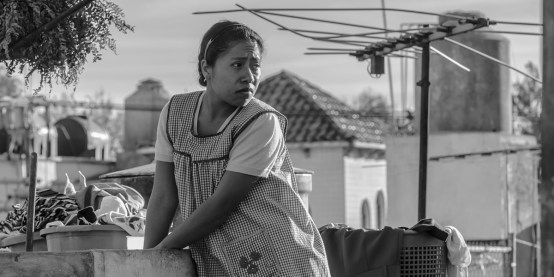
Roma

Shoplifters

Capernaum

Burning

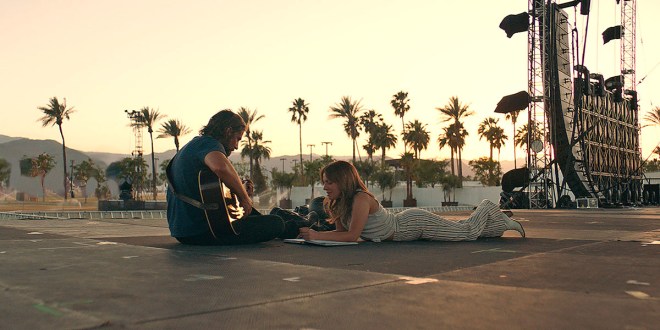
A Star Is Born

Wildlife

The Favourite

Free Solo

Shirkers

The Kominsky Method

I must mention two films that I’d highly anticipated but somehow didn’t connect as I’d wanted to. Maybe if I’ve the chance to watch them again I might change my mind: Cold War and First Reform.

Two movies from 2017 which I hadn’t watched until January this year that should be mentioned here:

Three Billboards Outside Ebbing, Missouri

The Shape of Water


BOOKS

These are not necessarily published in 2018, but the best books that I’ve read this year. I’m not a ‘quantity reader’, nevertheless, a look back at my Goodreads record, I can’t believe I ate all these (links are to my reviews):

The Guermantes Way by Marcel Proust (after 3 years, finally finished)

Middlemarch by George Eliot

The Portrait of a Lady by Henry James

Pachinko by Min Jin Lee

Crime and Punishment by Fyodor Dostoevsky

Of Human Bondage by Somerset Maugham

Not Quite, Note White: Losing and Finding Race in America by Sharmila Sen

David Copperfield by Charles Dickens

The World of Yesterday by Stefan Zweig

Hillbilly Elegy: A Memoir of a Family and Culture in Crisis by J. D. Vance

***

Selective Top Ripples from past years are listed on the side bar. Click on the pictures to my reviews.

Again, thanks for visiting the Pond and throwing in your two pebbles. I’ve enjoyed every single ripple. Hope you’d found a quiet respite here for thoughts and renewal.

And to all, may 2019 bring you more great books and movies to cherish.

HAPPY NEW YEAR!

***

Update: This post should be written on the last day of the year. Since I’d posted it, I saw another film today which I feel should be included here on the Top Ripples 2018 list, and that’s The Favourite (Just opens today in our City). I’m taking The Rider out to keep the list of 10. The Rider I found I’d already included it in my Top Ripples list last year.

‘Shirkers’ Could Well Kick Off Another #Movement

Writer-director Sandi Tan’s bio reads like an anime heroine. Born in Singapore, where chewing gum is outlawed and family expectations confining, teenager Sandi led a subversive life immersed in the rad, forbidden culture of Singapore. At the prodigious age of 14, she wrote for “Big O”, a magazine of Singapore’s underground rock scene. At 16, she started her own zine “The Exploding Cat” with best friend Jasmine Ng. It attracted a cult following; they received fan letters from New York, London, Paris, Jerusalem, even from prisons. But that’s not the exciting part. At the ripe old age of 19, Sandi made the first indie road movie of Singapore, with a few devoted cinephiles and curious onlookers.

Sandi Tan in Shirkers

It all began when an enigmatic American expat called Georges Cardona arriving in Singapore and started a film class attended by mostly 18 and 19 year-old girls. Sandi started Georges’ class with great aspirations. He took her and a few other gals under his wings, went on night drives after class and introduced them to the French New Wave.

In the summer of 1992, energized by youthful zeal, Sandi made a movie called “Shirkers” with people from her filmmaking class, a remarkable feat. She wrote the script and played the main role, a 16 years-old assassin called “S”. Her best friend Jasmine was editor; another friend Sophie Siddique was producer, and Georges, the director. Sophie as executive producer wrote a letter to Kodak and received all film supplies free. How they rounded up supporting actors and extras, location scouts, sound and techs was an endeavour only youthful verve would attempt.

After the completion of the filming, Sandi and her friends left Singapore for University; she went to England, Jasmine to New York, and Sophie to L.A. Georges remained in Singapore. And that was when the girls lost contact with him. None of them had seen any of the footage, and Jasmine had all the intention to return after school term to do editing work. Georges had disappeared without a trace and taken with him all the 16mm reels of their “Shirkers” film. A large chunk of the girls’ life had gone missing, especially Sandi’s, who had put her heart and soul into the venture, and who, on her own, had gone on a road trip in America with Georges, by then her best friend, a man twice her age with a wife and kid.

With Georges’s mysterious exit, the filmmaking dream of the clan had all but vanished into thin air. After finishing university in England, Sandi went back to Singapore and wrote for Singapore’s Straits Times as a film critic, apparently a dream detoured. Yet life went on. A few years later she proceeded to NYC for film school at Columbia University and later settled in the U.S. She had since made a couple of short films and written a novel, The Black Isle (Hachette USA), which was well received. But at the back of her mind, she could not forget “Shirkers”. Then, twenty-five years later, that fateful day arrived.

Without giving out spoilers, somehow events led to the recovery of the complete “Shirkers” in its original condition in 70 canisters of 16mm film, together with storyboards, scripts, mementos and props used in the production. An amazing turn.

The present documentary is not only about the creative process in filmmaking by a group of young enthusiasts, but also a chronicle of a period in Singapore’s social and cinematic history. What’s more, Sandi Tan’s feature could well kick off something like the #MeToo Movement, not about sexual advantage taken by the powerful, but about adults in mentoring positions toying with the hopes and dreams of their protégé, about the betrayal of trust and the robbing of rightful ownership of creative endeavours. But of course, Georges could well be just a deeply disturbed soul shirking from real life challenges and responsibilities.

Shirkers the documentary is a cinematic collage of 16mm film, digital, Super 8, slides, animations, hand-drawn illustrations and writing, a visual cacophony of creative expressions. Cinematographer Iris Ng (The Apology, Stories We Tell) has done a realistic capture of old friends reuniting with the Jasmine and Sophie interviews plus those of other personnel associated with the original production. Jasmine is now a filmmaker and Sophie faculty of Film at Vassar.

The editing in bridging the 25-year-gap is seamless, the mood personal and quirky. Notable also are the sound mixing and the original score. Shirkers is more than just a chronicle of a mysterious lost-and-found, but a narrative that transcends grievances to situate personal experience in a larger social and cultural context.

Shirkers premiered at the 2018 Sundance Film Festival in January where Sandi Tan won the World Cinema Documentary Directing Award. The film was later acquired by Netflix and released October 26 via the streaming service.

Latest news is that Shirkers is among the 166 entries for Best Documentary Feature in the coming Oscars. Nominations for the short-list will be announced on Tuesday, January 22, 2019. The 91st Academy Awards show will be broadcast live on Sunday, February 24, 2019.


~ ~ ~ Ripples


***

Update Nov. 16: Shirkers has just been nominated for Best Documentary Independent Spirit Award.

‘Claire’s Camera’ is a Whimsical Look at Communication

A Korean director shooting a film while attending the Cannes Film Festival, with two prominent Korean and French actors in his cast, taking just days in shooting to make what seems like a spontaneous gig had resulted in this whimsical 69-minute dramedy. Looks like something only the prolific, Cannes-honored director Hong Sangsoo can pull off. The versatile Isabelle Huppert (Things to Come, Elle) in one of her interviews said it took her only five days to do Claire’s Camera with Hong, with no script, except a daily run-through of the day’s story and lines.

3
Kim Minhee and Isabelle Huppert in Hong Sangsoo’s Claire’s Camera. Photo courtesy of Cinema Guild.

This is Huppert’s second time collaborating with Hong. The parallels in Claire’s Camera with real life are the very elements that lends to the film’s subtle humour. Claire (Huppert) is a school teacher from Paris visiting Cannes for the first time, accompanying a friend to the Film Festival. While wandering alone in this seaside resort taking pictures with her camera, Claire bumps into a triangle entanglement: a Korean director So (Jung Jinyoung), his film’s sales rep Yanghye (Chang Mihee) who has more than just a business relationship with So, and separately, her sales assistant Manhee (played by Hong’s muse Kim Minhee, On the Beach at Night Alone), whom she fires as she finds out Manhee’s one-night stand with the director.

Claire makes fast friends with Manhee after they meet on the beach. Here we see two actors from different countries using English to communicate, a language that’s not their own mother tongue. The verbal limitations may be a bother for some watching the film, but apparently not a hindrance for the two of them striking up an instant, equal friendship. They seem to know what the other is trying to say, and they care to ask each other questions, some quite personal, in order to know the other more.

Contrast that to a conversation where Manhee has with her boss Yanghye over coffee when she gets the message that she’s fired. They share the same Korean language, yet their interlocution is marked by unspoken sentiments and the boss’s minimal attempt to make it a two-way flow. Here’s a realistic depiction of a lopsided communication, one that’s not exclusive to the Korean culture. Those in authority hold the key to conversations.

In another scene, the lack of communication is what makes the naturalistic, deadpan humor work. When Claire first meets director So, the two are sitting at adjacent tables outside a café. As conversation begins, So asks Claire if he can sit with her at her table. She agrees and he stands up and moves to sit by her. But then the two have nothing more to say to each other, maybe due to language limitations. Claire then goes on to Google him on her phone to find out more about this director who’s sitting beside her. One has to take this as a comedic scene to appreciate the irony.

1
Jung Jinyoung and Isabelle Huppert in Claire’s Camera. Photo courtesy of Cinema Guild. 

The film is breezy and leisurely as the Cannes seaside, refreshing as the yellow jacket Claire is wearing; incidentally, her ‘costume’ is the actual wardrobe Huppert had brought when she was attending Cannes at that time. The setting is scenic and pleasant, whether it’s the pounding waves or the small lanes winding along cafes. No, we don’t get to see the red carpet or any of the glamour of the Cannes Film Festival, but we’re led into the side streets of storytelling.

The pitfall for those not familiar with Hong’s eccentric style could be the naturalistic, seemingly unscripted demeanours of his actors and their haphazard dialogues, and in this case especially sound laboured when characters try to interact with each other in a foreign language. And speaking of communication, the usual hard-drinking of his characters—director So here—could well be a language of expression in itself.

As for the camera Claire is always carrying, one would wish Hong could have used that a bit more, cinematically and imbued with deeper meaning. Hers is a Polaroid, so the image appears slowly on a hard copy. But we don’t get to see this effect or be led to any deeper relevance. However, in one notable dialogue towards the end when Manhee finally asks Claire a question that must have been on her mind all along, we finally hear something revealing:

Manhee: Why do you take pictures?

Claire: Because the only way to change things is to look at everything again very slowly.

Manhee: That sounds very nice.

The unfinished part seems to be, “but do we do it?”

Considering Hong Sangsoo’s signature style of repeating his film sequences in a movie like we’re watching it all over again but towards different results, Claire’s words could be more layered than they appear, and the slow appearing of an image on the Polaroid print could well be a mirroring for reflection.

Premiered at the Cannes Film Festival in May, 2017, Claire’s Camera has since been playing in film festivals all over the world. Cinema Guild will be releasing the film on Blu-Ray and DVD beginning Nov. 6, 2018. For more details click here: http://www.cinemaguild.com/theatrical/clairescamera.html

~ ~ ~ Ripples 

 ***

Related Reviews:

Let Things to Come be a Cooling Respite 

Art Imitates Life in Hong Sang-soo’s ‘On the Beach at Night Alone’

‘The Day After’ is a re-enactment Hong Sang-soo Style

A Star is Born and the Dilemma of Success

Bradley Cooper and Lady Gaga walked the red carpet at the Toronto International Film Festival (TIFF) this September for the North American premiere of their movie “A Star is Born”, a Gala presentation at TIFF. Now the movie reaches the general public as it is released in theatres worldwide.

A_STAR_IS_BORN
Bradley Cooper as Jack and Lady Gaga as Ally in “A Star is Born”. Photo courtesy of TIFF.

This is a bold and spectacular debut for both of them, Cooper as first time director, and the superstar singer her first leading movie role. The two manifest great chemistry on screen, casual and heartfelt. Cooper plays a famous singer Jackson Maine discovering the sensational voice and talent of a struggling singer/songwriter, restaurant worker Ally, a stripped-down, no (or minimal?) make-up Lady Gaga. It’s also a sad story as one star rises just as fast as the other falls like a meteor, self-destruct by alcoholism.

The love story begins with Maine searches for a drink after a performance one night as he has emptied the bottle in his car. His driver roams the streets for any bar that’s still open. They find one and Maine stumbles in just in time to hear Ally begin her gig. The song that she performs hooks and wows him. It’s “La Vie en Rose“, the iconic number by the legendary French singer Edith Piaf. That’s the inciting incident of the movie.

After the song he goes backstage, needing no introduction; he is Jackson Maine. He sits beside her and watches her take off her make-up, then with her permission, helps her peel off the Edith Piaf thin-lined eye brow. It’s just pasted on, not real. But what’s authentic is her voice, which Jack already knows, and he’ll soon discover, her heart as well.

That night, the two sit in the parking lot outside a grocery mart and chat into the night. Why doesn’t she write songs and sing her own work? People like her songs alright, but not her looks, she tells him. She’s self-conscious about her nose. He traces her facial features tenderly with his finger and tells her she’s beautiful. When his driver drops her off, as she’s walking up to her front door, he calls out from the car window: “Hey”. She looks back, he says: “I just wanted to take another look at you.” This line will later become the ominous turn into a heartbreaking end.

It’s Cooper’s directorial debut, and from this feature, we can see he’s a meticulous, sensitive and conscientious helmer. He catches and releases the right amount of tension and emotion with expert timing. His love lines are nuanced, casual yet touching. His singing is seasoned, a bit raspy and therefore quite moving. A Star is Born is remarkable achievement considering he’s the director, co-writer, actor, singer, and co-songwriter, with Lady Gaga and Lukas Nelson (son of Willie) of the 17 original songs in the production.

Kudos to Lady Gaga, other than a mesmerizing voice, her acting looks to be another talent that’s authentic; indeed, a star is born with this movie debut. But maybe that shouldn’t be surprising. She’s been a bold and versatile performer for a long while. It’s the unplugged looks and demeanour in the movie that’s a pleasant surprise. In reality, she’s already a supernova, so where will this further catapult her career? How will movie success affect other aspects of her life?

In the film, the change of Ally from a plain-looking, struggling artist to a performing star with dyed hair, showy costumes and vibrant dance steps stir Jack to remind her to go deep into her soul. Nothing’s perfect. Success comes with a price. Ally handles it relatively well. What is authentic? Surely not the appearance, the stage persona. At least, she still knows her heart. It looks like Jack has a harder time dealing with Ally’s success than the crumbling of his own. That still may be the easier part when compared to conquering the demon of alcoholism.

The very story of A Star is Born is itself a cautionary tale. Interestingly, Hollywood loves this story. The Cooper and Gaga version is the fourth time the tale is told. The very first A Star is Born back in 1937, its screenplay by Dorothy Parker, was based on a 1932 movie What Price Hollywood? directed by George Cukor. Imagine someone back in 1932 was already mulling on this question.

Cukor later directed Judy Garland and James Mason in the 1954 remake. Fast forward to 1976, Barbra Streisand and Kris Kristofferson starred in another version, this time Joan Didion and her husband John Gregory Dunn co-wrote the screenplay, turning the limelight to the musical stage from the movie industry. The 2018 Cooper-Gaga reprise gives credit to Didion and Dunn’s script.

In a perfect world, artistic success can find an ideal integration and balance with popularism and consumerism, while addictions are absent, superficiality and shallowness all but banished. A perfect scenario, but not in the real world. In the real world, we have stories, some repeated and same old but in different versions. No matter how many times they’ve been told, we still embrace them. All because they are real.

***

TIFF-launched foreign language films shooting for Oscars 2019

Watching foreign language films could be an acquired taste for some, not unlike eating sushi. Once you’ve gotten over the seemingly counter-intuitive idea of eating fish raw and allow the soft texture to melt in your mouth, you’ll be pleasantly surprised by the cold freshness and welcome the brain-stirring sting of the wasabi, as well, appreciate the sweet taste when lightly dipped in soya sauce, balanced by the blandness of the vinegared rice morsel. A delightful exploration.

Film festivals are the best venues for one to have a taste of these international, cinematic delicacies. And as usual, the 43rd Toronto International Film Festival (TIFF) this September was a launching pad for films from all over the world, several were subsequently announced as their country’s official entry to the upcoming Oscars Best Foreign Language Film race.

shoplifters_06

“Shoplifters”, this year’s Palme d’Or winner and Japan’s official entry to the
91st Oscar Best Foreign Language Film race.  Photo courtesy of TIFF

The following is the list of TIFF selections that made it to represent their country at the 91st Oscars. Posted also are their premiere status at TIFF. Some of these I’d seen at the Festival and since reviewed (just click on the links). More reviews are forthcoming. The Oscar nominations will be announced Tuesday, Jan. 22, 2019.

**

El Angel, Argentina, dir. by Luis Ortega, North American (NA) Premiere

Hidden Man, China, dir. by Jiang Wen, International Premiere

Birds of Passage, Columbia, dir. by Cristina Gallego & Ciro Guerra, Canadian (CA) Premiere

Sergio and Sergei, Cuba, dir. by Ernesto Daranas, NA Premiere

Winter Flies, Czech Republic, dir. by Olmo Omerzu, International Premiere

Never Look Away, Germany, dir. by Florian Henckel von Donnersmarck, NA Premiere

Sunset, Hungary, dir. by László Nemes, NA Premiere

The Cakemaker, Israel, dir. by Ofir Raul Graizer

Dogman, Italy, dir. by Matteo Garrone, CA Premiere

Shoplifters, Japan, dir. by Hirokazu Kore-eda, CA Premiere

Capernaum, Lebanon, dir. by Nadine Labaki, NA Premiere

Roma, Mexico, dir. by Alfonso Cuarón, CA Premiere (Review forthcoming)

Cold War, Poland, dir. by Pawel Pawlikowski, (Review forthcoming)

Burning, South Korea, dir. by Lee Chang-dong, NA Premiere

Border, Sweden, dir. by Ali Abbasi, NA Premiere

The Wild Pear Tree, Turkey, dir. by Nuri Bilge Ceylan (Review forthcoming)

**

The 91st Academy Awards ceremony will take place Sunday, February 24, 2019.


‘Hotel Mumbai’ captures both terror and resilience in the tragic attack

On November 26, 2008, the City of Mumbai, India, was under siege by terrorists in a co-ordinated shooting and bombing attack that lasted four days. For long hours until security forces arrived from outside of the City, twelve sites in Mumbai were attacked and civilians were gunned down defenceless or taken hostage.

An Australian production, Hotel Mumbai had its world premiere at the 43rd Toronto International Film Festival in September, 2018. Director Anthony Maras in this his debut feature captures the horrific attack ten years ago with a pace that is intense and sweeping, leaving viewers breathless as they watch terror unfold on screen, acts after acts of senseless violence. But don’t let this drive you away.

The setting of the thriller Hotel Mumbai is the luxury heritage Hotel Taj Mahal Palace, or the Taj, where many foreign, renowned personalities had frequented. It was one of the twelve targets of the terror attacks, for obvious reason. Gunmen armed with AK-47 assault rifle and hand grenades took foreigners hostage at the five-star hotel and shot point-blank many others. In the aftermath, 31 in the hotel were killed, almost half were staff refusing to escape but stayed to defend and assist the trapped hotel guests.

Hotel_Mumbai_0HERO (1)
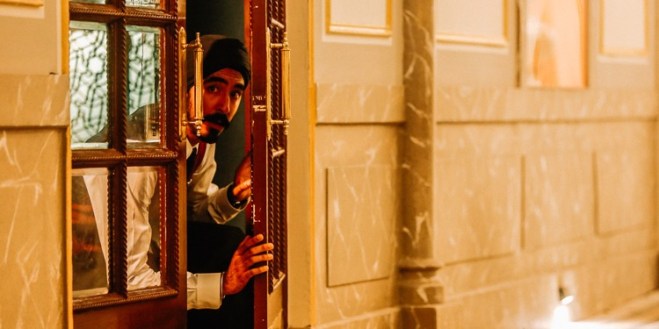
Dev Patel as Arjun in “Hotel Mumbai”. Photo courtesy of TIFF.

The storylines following several guests in the hotel are particularly gripping, like Sally (Tilda Cobham-Hervey) hiding in a closet caring for a baby who wouldn’t stop crying as the baby’s parents David (Armie Hammer) and Zahra (Nazanin Boniadi) are trapped somewhere else in the hotel, trying to get to their infant son.

Dev Patel plays staff server Arjun. The turban he wears makes one of the guests fearful. A crisis situation could tip either way, as an opportunity for understanding and the breakdown of barrier, or an incendiary fuse leading to deeper hatred and animosity. In a volatile situation as the hotel is besieged, complications could be deadly. But Arjun exudes ample dignity and generosity. That turban will later become a symbol of selfless grace.

The consoling breathers and the meaningful elements in the film then were these acts of kindness and courage. Maras captures the human foibles in the face of dangers, as well the strength of the hotel staff in protecting their guests. Their sacrificial, heroic acts render the film not merely a record of atrocity, but a gratifying chronicle of resilience and bravery.

The bullet-riddled and fire damaged five-star hotel was fully reopened after only twenty-one months. A special commemoration was held and a monument set up to honor those who died.


TIFF Hotel Mumbai Press Conference (1)
“Hotel Mumbai” Press Conference at TIFF. From left: Director Anthony Maras, actors Dev Patel, Tilda Cobham-Hervey, Nazanin Boniadi, Anupam Kher, Jason Isaacs, and Armie Hammer (back). Photo by Diana Cheng

There was a good representation of main cast members at the press conference of the film, moderated by Richard Crouse of CTV. Present were director Anthony Maras and actors Dev Patel, Armie Hammer, Nazanin Boniadi, Jason Isaacs, Tilda Cobham-Hervey, and Anupam Kher. They all commended the hotel staff for their extraordinary courage, some they had met in person who were survivors of the attack.

Upon talking with hotel staff and understanding the actual events, the actors were impressed that small acts of kindness were the essence of resistance. There were staff who had escaped but went back to save hotel guests. Some in the kitchen would put cookie sheet inside their clothes as shield to protect themselves in order to cover guests as they escape. One particular poignant observation they all felt was the breakdown of barriers as both staff and guests were all victims of the horrific act of violence. All racial and financial barriers came down in the face of crisis.

The cast also stressed the point that the perpetrators were all misguided and brainwashed young men. Nine of the ten gunmen were killed. But the mastermind, called “the Bull” in the film—who was in constant contact, directing the attackers throughout by means of their cell phones—was never caught.


***


Diversity Wins at TIFF 2018

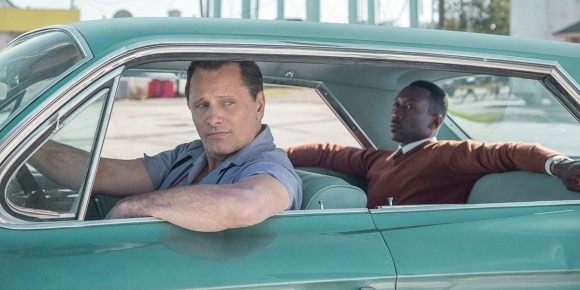
It’s a wrap for the 43rd Toronto International Film Festival as the awards were handed out on Sunday, September 16, 2018, at the TIFF Bell Lightbox Theatre 1. The top prize, the Grolsch People’s Choice Award went to Green Book, a world premiere at TIFF18. Directed by Peter Farrelly, the comedy-drama stars Mahershala Ali as classical pianist Don Shirley and Viggo Mortensen as a working-class Italian-American bouncer getting the job to drive Ali on the road in the American South during the 1960’s. Ali won an Oscar for his role in Moonlight (2016), Mortensen is a two-time Oscar nominee. Looks like the film has just got a huge boost with this win and will travel far in the upcoming Awards Season.

greenbook
Viggo Mortsensen driving Mahershala Ali in “Green Book”. Photo courtesy of TIFF.

If Beale Street Could Talk, a world premiere at TIFF18 and director Barry Jenkins’ follow-up to Moonlight (2016) was the People’s Choice Award First Runner-Up. Based on the novel by James Baldwin, the film tells the love story of a young African American woman trying to prove her imprisoned lover’s innocence. In the TIFF webpage, the film is described as a ‘gorgeous tone poem on love and justice.’

ifbealestreetcouldtalk_01
KiKi Layne and Stephan James in “If Beale Street Could Talk”. Photo courtesy of TIFF.

Alfonso Cuarón’s Roma (my review) came third in the People’s Choice Award. A Canadian Premiere at TIFF18, it is an artistic rendering of a young maid’s experience in a middle-class home in Mexico City during the 1970’s. Of note is the black-and-white film is regarded as a semi-autobiographical account of Mexican director Cuarón, the first Hispanic and Mexican to win the Academy Awards for Best Director with his sci-fi work Gravity (2013).

ROMA.jpg
Yalitza Aparicio as Cleo in Alfonso Cuarón’s “Roma”. Photo courtesy of TIFF.

The high-profile contenders First Man directed by Damien Chazelle with Ryan Gosling as astronaut Neil Armstrong, and Bradley Cooper and Lady Gaga’s A Star is Born did not place.

TIFF’s People’s Choice Award winner is often regarded as a predictor of the next Oscar Best Picture. Past winners that went on to capture the Oscar include Slumdog Millionaire, The King’s Speech, and 12 Years A Slave.

Capturing the People’s Choice Documentary Award is Free Solo, International premiere at TIFF18, directed by E. Chai Vasarhelyi and Chinese-American mountaineer/photographer Jimmy Chin. The duo chronicled the renowned rock climber Alex Honnold’s scaling free solo — without safety ropes — up the 3,000-foot cliff of El Capitan in California’s Yosemite National Park.

People’s Choice Award from the Midnight Madness program went to the The Man Who Feels No Pain, World Premiere at TIFF18, directed by Vasan Bala, one of the young, new wave filmmakers in India. This is a cinematic fusion throwing in Hong Kong martial arts comedy Stephen Chow styling, the agility of Jacky Chan, the Bollywood sensation, the American Superhero momentum, and the inspiration of Buster Keaton. Fits right in the Midnight Madness program of introducing new works by a new generation of filmmakers.

Platform Prize went to Cities of Last Things, directed by Ho Wi Ding. This world premiere at TIFF18 is a collaboration of filmmakers from Taiwan, China, USA, and France. From TIFF’s webpage, “a seamless blending of genres, from sci-fi to noir to romance, the Malaysian-born Ho commandingly employs cinematic language as a tool to discuss the root of our collective sadness, which is perhaps the very thing that makes us human.”

NETPAC Award for the world premiere of international and Asian film went to The Third Wife from female writer-director Ash Mayfair of Vietnam. A film about a 14-year-old girl’s struggles after she becomes the third wife of a wealthy landowner, set in 19th century rural Vietnam.


***


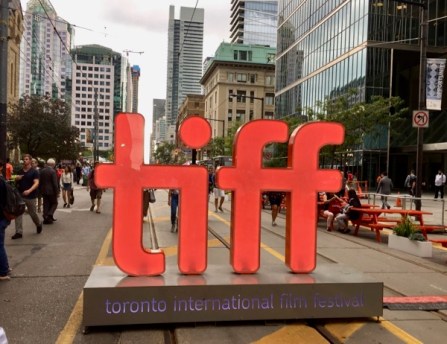
It Takes an International Film Festival to Remind Us

It takes an International Film Festival to remind us that we live in a world with many countries and myriad of cultures, languages and experiences beyond our own. The Toronto International Film Festival (TIFF) opens a window looking out towards such a diverse human kaleidoscope. (All photos in this post are by Diana Cheng, Sept. 2018)

TIFF on Festival Street

What better time than now for us to press on to connect and share when it seems the progress we had made in recent decades had been dismantled in no time. What better means than through the visceral medium of film art in exposing views, eliciting empathy, and inspiring minds. Films could well be the best avenue to reach out and understand, as well, to be understood.

TIFF is the largest public film festival in the world. Its top prize is judged by the audience. Named the Grolsch People’s Choice Award, the annual winner is often a predictor of the next Oscar Best Picture. Some past winners include Slumdog Millionaire, The King’s Speech, 12 Years A Slave.

Glamour aside, the variety of its film selections are examples of diversity and opened doors to places and issues that are foreign to many in the Western world. But then again, finding the gem of universality may just be the serendipitous reward.

This year, the number of films in TIFF’s various programs comes to about 342, representing 83 countries, from Algeria to Kazakhstan to Vietnam, just to go down the alphabetical list. These official selections are chosen from a total of 7,926 submissions, 6,846 from around the world, 1080 from Canada domestically. Among these three hundred some titles, over 80 languages are used. After watching half a dozen of the international entries, reading subtitles at the bottom and watching the whole screen at the same time will become a skill you’ll be happy to have acquired.

Share Her Journey

Further, the Share Her Journey Rally on Saturday, September 8, lends a voice to the #MeToo and #TimesUp movements, pressing for respect and equality for women on both sides of the camera. Attended by hundreds and led by actress Geena Davis among other distinguished guests, the Rally represents a united front to shatter the glass ceiling in the film industry. This year at TIFF, 35% of films are by women filmmakers, a statistic that TIFF is aiming at improving.

During the first few days kicking off the Festival, King Street West was closed for a few blocks for pedestrians to enjoy the fun, food, and free samplings. Here are some sights on Festival Street.

Fusion food is the best sign of diversity. Check these menus out:

Food Truck Menu where East meets West

Fusion

Or, be transported to Paris just for a dream trip:

On Festival Street

and stop for a latté and croissant at Bistro Air France, if you don’t mind waiting:

Bistro Air France

To many, the fun part of TIFF is waiting. Many wait for hours to get just one glimpse of their favourite stars to arrive at a red carpet, there are several in different venues in downtown Toronto:

Star Gazing

Here’s another one, also waiting for their faves:

Still Waiting

**

(All photos in this post are by Diana Cheng, Sept. 2018)

In the days ahead, my list of film reviews on both Asian American Press and Ripple Effects will include (director’s name after title):

Burning, Lee Chang-dong, S. Korea, N. American Premiere
Capernaum, Nadine Nabaki, Lebanon, N. American Premiere
Hotel Mumbai, Anthony Maras, Australia, World Premiere
Kursk, Thomas Vinterberg, Belgium, Luxembourg, World Premiere
Maya, Mia Hansen-Løve, France, World Premiere
Roma, Alfonso Cuarón, Medico, Canadian Premiere
Shoplifters, Hirokazu Kore-eda, Japan, Canadian Premiere
Shadow, Zhang Yimou, China, N. American Premiere
The Wild Pear Tree, Nuri Bilge Ceylan, Turkey, France, Germany, Bulgaria, North American Premiere
Wildlife, Paul Dano, U.S.A., Canadian Premiere

Just to name a few. More reviews coming up. Check out the details of the programs from tiff.net


***

Let ‘Things to Come’ be a Cooling Respite

July’s gone, but we’ll always have Paris.

There are many words I can use to describe the Paris born, veteran (here’s one of them) French actress Isabelle Huppert. Prolific, versatile, and age-defying. In 2016, two of her works came to prominence in the awards circuit, two features that show her in distinctly different roles that won her acclaims across the Atlantic. Playing a vigilant woman who schemingly fight back a rapist in her neighborhood in Elle, Huppert garnered a Best Actress Golden Globe and an Oscar nomination.

Things to Come

The other feature is Things to Come. Huppert is Nathalie Chazeaux, a philosophy professor, a published academic writer and editor, a mother of two almost grown children, a wife, a daughter, and a woman at the crossroads in her life.

On the career and academic front, Nathalie’s just been told by her publisher that her textbook would no longer be needed. On the home front, her husband of 25 years, Heinz (André Macron), has just confessed to her that he’s seeing another woman and will be leaving Nathalie to live with his younger love. Even though on good terms with their parents, her two children have grown enough to move away from home. As a daughter, Nathalie has to deal with a dementia-afflicted mother (Edith Scob) who calls her cell phone even while she’s teaching, delusional and threatening suicide. What is Nathalie to do?

Here, I must mention another crucial figure in the production, and that’s director Mia Hansen-Løve, who won Best Director with this feature at the Berlin International Film Festival in 2016. At eighteen, Hansen-Løve was cast by French director Olivier Assayas and later starred in another of his works. Partnered with him for a while, she’d chosen her own path, studying philosophy, writing for the prestigious French film magazine Cahiers Du Cinema, and later, directing.

Daughter of two philosophy professors, Hansen-Løve’s preoccupation with intellectual discourse is apparent in Things to ComeIn an interview, she’d said, “… for me, cinema is nothing but another way to practice philosophy… cinema is a search for wisdom, a search for good and for beauty, like philosophy could have been a search for my parents.” The intellectual exploration of what’s good and Utopian predominates in Things to Come. The film is worth a second, or third viewing just to capture the dialogues.

While she may be tossed like a floating weed in the torrents of life, Nathalie enjoys the fruit of her labor in her former star pupil Fabien (Roman Kolinka), now a writer and activist. However, as she’d influenced Fabien in his pursuit of philosophy and writing, he’d also chosen his own path by living with a few anarchists in a remote cabin in the French countryside. His outlook diverges from hers and which she can’t agree, ironically, that’s the reward of her teaching: training one to think for oneself and to choose one’s own path independently.

Upon his invitation, Nathalie had spent a few days there, an idyllic ,rural setting for her to recuperate from a life unhinged. She’s got her mother’s cat with her, Pandora, a cat that’s not used to the wild but takes off the instant Nathalie takes her out of the cabin. Lost for hours but Pandora finally finds her way back to the country abode in the middle of the night. ‘Instinct’, Fabien says. And that just might be what Nathalie needs to hang on to at this moment of her life.

Surely, Things to Come is a ‘thinking’ film, but viewers will also enjoy the nuanced performance of the cast, and what the camera reveals in the form of natural beauty and serenity for one to search things out. What more, Hansen-Løve lets us see both the larger scale of a flaw-ridden society and the trivial foibles in the interactions between Nathalie and Heinz.

Female viewers would likely find affiliation with Huppert’s role of an urban, professional woman who has to juggle many hats to fulfill her duties. Nathalie’s search for direction at the crossroads may not necessarily lead to obvious answers, but she manages to find comfort and joy in the birth of her grandchild, an endearing scene to end the film.

More importantly, Nathalie seems to have carved out a quiet solitude. an independence to mull on the unfathomable in life. Still searching, but in the meantime, she seems to have found a respite, a new solace to face what things may come.


~ ~ ~ ~ Ripples 


***

‘Cleo from 5 to 7’: A Film for Paris in July

Summertime… and the viewing is nostalgic. On a lazy, hazy summer afternoon, what better way to spend your time than to catch up on classic films that you’d missed through the years, or, rewatch them. Sure, a glass of pink lemonade and some chocolate-dipped madeleines would add to the enjoyment.

Here’s a wonderful film by the venerable Belgium born French director Agnès Varda, who turned 90 on May 30 this year. Just exactly what she was doing a few weeks before her 90th birthday?

On May 12, Varda joined Cate Blanchett in leading 82 female industry figures to walk up the stairs on the red carpet at the Cannes Film Festival, a silent protest symbolizing the challenges women face in climbing the industry ladder. Blanchett gave a speech in English, Varda in French.

Cleo from 5 to 7 (Cléo de 5 à 7) is a 1962 film by Varda, a Cannes Palme d’Or nominee the next year. The story takes place on one single day in the life of a popular recording singer Cleo (as in Cleopatra) who loves everything beautiful looking. But early in the day she receives all sorts of bad omens about her health. Her zest for life fizzles through the day as she would be calling her doctor to find out the result of the medical test she’d taken a couple days ago.

Cleo from 5 to 7.jpg

We follow Cleo on the longest day in 1962, yes, that’s the first day of summer, which could have brought her vitality and joy. How does the fear of illness and mortality affect the beauty-seeking and fun-loving Cleo? It totally changes her outlook. Instead of being cooped up in her apartment with musicians rehearsing her songs, she steps out into the streets of Paris to escape the gloomy sense of despair.

Don’t worry, this is not Sarte or Camus. Cleo is just a gal seeking to be loved, and for the first time in her life, fearing for her own mortality. Varda takes us along the streets of 1962 Paris, and offers us naturalistic scenes of cafes and roadside buskers, and leads us into an art studio as Cleo looks for her friend who works as a model for sculptors.

Finally, she’s alone in a park, the serene, meditative milieu is the ideal setting for her to meet Antoine. The encounter is the magic she needs. The rest you ought to see it for yourself. Varda’s pace is leisurely, her viewpoint insightful, and the ending is satisfying. Maybe by now, Cleo learns the difference between beautiful-looking and beauty.

The original music is soothing and cooling for a summer day, composed by Michel Legrand (who is the piano player in the movie). Legrand is a three times Oscar winning French film composer. Which three times? Yentl (1983), Summer of ’42 (1971), The Thomas Crown Affair (1968).

As I said, summer is the best time for nostalgic viewing.


~ ~ ~ ~ Ripples

***

Paris in July is hosted by Tamara of Thyme for Tea, an annual summer blogging event.

Paris in July 18

***


‘The Rider’ is Poetry on Screen

“The Rider” opens this weekend in selective cities. If it’s screening in your area, don’t miss it.

The Rider

What is a cowboy to do if he cannot live the cowboy life again? Too remote? Substitute ‘cowboy’ with any other activities you love to do, or a role that defines you. Take that away, and what do you have left?

The film focuses on the struggles of a rodeo star and expert horse trainer Brady Blackburn as he rebuilds his life and identity after a severe head injury. Upon the prognosis of his doctor, Brady should never go back to riding and rodeo again, for another injury would be fatal.

“The Rider” is an American feature, unique in its subject matter while its director is an unlikely candidate to share the insight. Chloé Zhao was born in Beijing, had studied in London, then Massachusetts and New York. “The Rider” is her second feature. In her short directorial career, she has gone to Cannes twice, nominated in 2015 for the Caméra d’Or (“Golden Camera”), Cannes’ award for the best first feature film, and winning The CICAE Art Cinema Award in 2017 with “The Rider”. That is, among other international accolades. Zhao is an exemplar of a global citizen in filmmaking.

Chloé Zhao

The actors for “The Rider” exude authenticity, for they are actual cowboys and their family, all playing themselves. Brady Jandreau takes the role of Brady Blackburn, reflecting his real-life persona, a cowboy who is much admired and respected in the rodeo community. His father Tim and sister Lily form the Blackburn family in the film. Zhao’s directorial skills shine forth as she leads the non-actors in front of the camera, capturing them in their natural speech and actions, in particular, offering viewers realistically the dexterity involved in the wrangling work. But the film goes much deeper than the actions.

Recovering from the near-fatal injury pits Brady into a precarious existence and conflicting relationship with his father Wayne (Tim Jandreau). As a tough cowboy himself, Wayne had all along brought Brady up to be resilient and competitive, but now father had to dissuade son from the risky pursuit of bronco riding and rodeo activities. Nursing a wounded body and a tormented mind, Brady has to deal with the painful task of redefining himself. Temporarily working in a supermarket and wearing a store uniform makes Brady a displaced person, a persona out of meaningful context, both to himself and to those who recognize him as they come into the store.

While there are tense undercurrents with his dad, Brady cherishes the intimate bond with his sister Lily (Lily Jandreau), who expresses herself from her own peculiar, internal world. Kudos to Zhao for casting the real-life brother and sister in the film, they need not be experienced actors to conjure up some genuine, moving scenes.

Much of the film’s effectiveness goes to the inspiring cinematography, exposing quietly Brady’s tormented soul. The opening sequence sets the stage right away with riveting close-ups of a horse and its breathing. As the camera turns from beast to man, we see the extent of the injury Brady sustains as he gets out of bed and follows the routine needed to care for his own body, striving to return to a past life and regain some sense of normalcy.

In other sections of the film, the camera pans the vast landscape of the South Dakotan plains with a tiny figure that is Brady walking or riding through. “The Rider” is visual poetry on a subject that is seldom explored, and cinematographer Joshua James Richards is most effective in transposing Brady’s internal quest lyrically on screen: “A horse’s purpose is to run in the prairies; a cowboy’s is to ride.”

Brady’s good friend Lane Scott (Lane Scott) is a painful reminder of the risks a cowboy takes. Paralyzed and brain damaged after a fall in a rodeo event, Scott now communicates barely by spelling out words one letter at a time signing with his fingers. Poignantly, Zhao depicts Brady’s every visit with Lane in the hospital as an encounter of love and hope without sentimentality.

Zhao is nuanced and eloquent in creating impressionistic scenes. And when horse and man are juxtaposed in such intimacy, the parallel is striking. As Brady puts it, when a horse is badly hurt it has to be put down, that is the humane thing to do; when a cowboy is badly hurt, he has to continue to live, for that is what humans are supposed to do. As we come to the turning point of the film towards the end, the presence of family love and support appear to be the key to moving on.

A rare gem of a film. Watch it with a quiet heart.

~ ~ ~ ~ Ripples


***

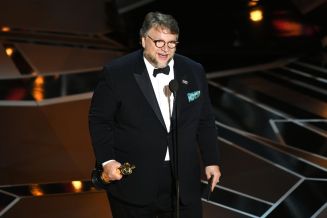
“I am an immigrant” Oscar winning director Guillermo del Toro speaks for millions

Who isn’t from a lineage of immigrants in this relatively new continent of ours ‘discovered’ just a few hundred years ago. Even the indigenous of our land are thought to have had migrated from elsewhere. In his acceptance speech for Best Director at Sunday’s 90th Academy Awards, Mexican film director, writer, and producer of The Shape of Water Guillermo del Toro conveys multiple truths. Indeed, multiplicity looks to be the trend forward.

del Toro

“I am an immigrant,” del Toro declares, these four words bold and clear, albeit humbly and thankfully.

The director continues:

“In the last 25 years I’ve been living in a country all of our own. Part of it is here, part of it in Europe, part of it everywhere.”

del Toro highlighted another truth by saying that being a part of a diaspora, home can be anywhere. While some may oppose to it, one cannot deny the effects of globalization is a breaking down of barriers, the fusing of cultures, and the forming of the world citizen.

del Toro is the third Mexican director to win the Best Picture Oscar. He follows two of his countrymen–‘The Three Amigos’ as they’re called– basking in the Oscar limelight in recent years, Alfonso Cuarón for Gravity in 2013 and Alejandro González Iñárritu in the subsequent two years for Birdman and The Revenant.

“… I think that the greatest thing that our art does and our industry does is to erase the lines in the sand. We should continue doing that when the world tells us to make them deeper.”

The making of the Oscar winning feature The Shape of Water is a testimony of border crossing. Written and helmed by a Mexican director, the film stars a London, England, born Sally Hawkins, supported by a cast of American actors. Original music written by a French film composer, Alexandre Desplat, who won his second Oscar with his water music (his first was The Grand Budapest Hotel in 2015). Director of photography is Danish cinematographer Dan Laustsen. The movie nominated for thirteen Academy Awards and winning four is shot and produced in Toronto and Hamilton, Ontario, Canada. Toronto production designer Paul D. Austerberry and his team garners an Oscar for their creative work, bringing del Toro’s fantastic imagination to life.

del Toro sure knows what it means to erase lines in the sand.

Kazuo Ishiguro

A parallel figure can be found in the world of another art form. The 2017 Nobel Laureate in Literature Kazuo Ishiguro was born in Nagasaki, Japan, in 1954. When he was five, he followed his family to England. At first his parents thought their sojourn would be a short couple of years, but the family ended up staying there ever since. Immigrants as well. Ishiguro had not returned to visit the country of his birth until thirty years later.

His earliest novels are set in Japan confronting Japanese issues; his later works expand out to other locales and even crossing literary genres. His most well-known novel is perhaps The Remains of the Day which was adapted into film starring Anthony Hopkins and Emma Thompson. It is bona fide a British novel.

Is he a Japanese writer or an English writer? Ishiguro was asked this boundary-setting question after his Nobel win. In his own words on the British Council Literature webpage: “I am a writer who wishes to write international novels. What is an ‘international’ novel? I believe it to be one, quite simply, that contains a vision of life that is of importance to people of varied backgrounds around the world. It may concern characters who jet across continents, but may just as easily be set firmly in one small locality.” Only by eliminating borders can one reach the universal.

del Toro had it right when he used the metaphor of lines in the sand. Often borders are not carved in stone but fluid and arbitrary. Surely you can make them deeper. But sand being sand, the lines can be readily washed away as the tides of change come rolling in.

***

I thank Asian American Press for allowing me to repost my article in full.

Related Posts:

The Shape of Water is All Enfolding

Don’t Just Drive Past The Three Billboards

Mudbound: From Book to Screen