Paris in July 2025 – Delightful reads by Antoine Laurain

For Paris in July this year, I want to read an actual Parisian author writing Parisian stories. I did some digging and found Antoine Laurain. I’m late to the party, for Laurain has written more than a dozen books, which have been translated into twenty languages, an award-winning novelist whose talents are multi-faceted: author, journalist, screenwriter, film director, antique collector and dealer.

I’ve read or listened to four of Laurain’s novels in the past weeks: The Red Notebook (2014), The President’s Hat (2012), The Readers’ Room (2020), and The French Windows (2024). I still have many more to savour. These ones I’ve read are all like novellas, less than 200 pages, each unique in its storyline, very entertaining, easily accessible but not shallow. Laurain’s writing is a fusion of the literary and the popular, weaving suspense and romance, or adding a dash of magical realism as in The President’s Hat. Among these four, The Red Notebook is my favourite.
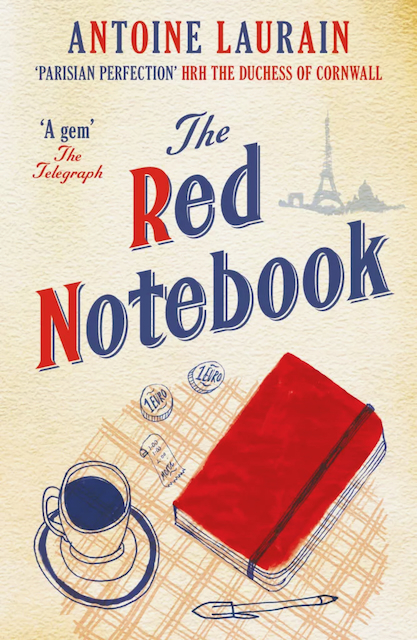
The Red Notebook by Antoine Laurain, Gallic Books (English edition), 2015,
159 pages.

Ahh… The contentment of being sought and found… and to be known.

Laurent, a bookstore owner, finds a woman’s leather handbag in good condition on top of a garbage bin on the street one morning, obviously stolen and discarded there. He takes it to the police station, but is told to wait. Doesn’t have time to spare, Laurent decides to leave it till the next day to hand it in. The mauve handbag is just too much of a lure for Laurent to keep his curiosity in check. That night at home, he opens it gingerly and explores the personal effects inside, hoping to find a name and address so he can return it to its owner.

Among the perfume, hair clip, keys, and numerous other items, there’s a red Moleskin notebook. Just too tempting, how can he not open it? The elegant and fluid handwriting records the owner’s self-reflections, her likes, her fears, her dream.

He had opened a door into the soul of the woman with the mauve bag and even though he felt what he was doing was inappropriate, he couldn’t stop himself from reading on.

It could sound creepy, but Laurain lets his readers empathize with this curious middle-age bookseller, for he is now a detective of the soul. And Laurain knows how to tell his story with humour. As he searches the bag, his girlfriend shows up, complicating matters. Later, adding zest to his quest, his daughter joins in his detective work readily and offers invaluable assistance.

Augmenting Laurent’s eagerness to find the owner of the bag himself instead of letting it go to the police is another object in the handbag, the book Accident Nocturne signed and with a line of dedication handwritten by the French author and Nobel laureate Patrick Modiano. The bookseller is overcome by a surge of passion, for Modiano is his favourite writer. Herein lies the clue to someone who shares the same mind as his. From the line of inscription, Laurent knows the first name of the owner of the bag, Laure.

While ordinary love stories might focus on a person looking for the right one to love, here in The Red Notebook, it describes the complementary side of the search as well, by revealing the one aspect which might be the most gratifying of true love: being sought and found… and to be known.

I like the idea of a man going to so much trouble to find me (no one has ever gone to so much trouble for me before)

While Laure has had men in her life before, but there has never been one who had really stepped inside her mind. Yet here is one stranger who has known and admired her inner being, and is passionate enough to go the distance to find her, and yet…

The ‘and yet…’ is purposely unwritten as I don’t want to give any spoilers. I highly recommend The Red Notebook as a light and entertaining read, one that touches that soft spot of the human heart, to be sought and found… and deeply known.

I await a filmmaker to take this up, write an English screen adaptation and set in New York City, find a perfect cast, and I’m sure it will make one marvellous rom com, or a little more serious but equally heartwarming rom dramedy.

Ah… Celine Song, would you be interested?

***

Paris in July 2025 is hosted by Words and Peace and France Book Tours

Here’s Looking at You, Kid

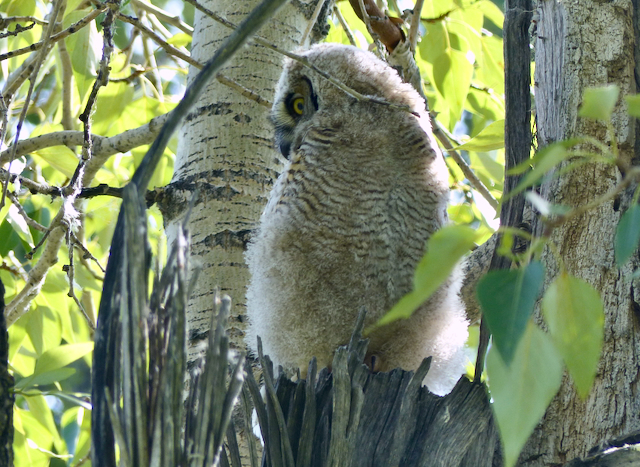
After weeks of waiting, one owlet is big enough to come out… a nesting doll.

Waking up is hard work. Early owly yawn:

like my fur?

Where’s little bro? He’s too young to come out. Still in the nest… taking it all in:

…. six days later, I found little bro out with Papa or Mama, see him?

No? How about now, zooming in:

and a close-up:

Here’s looking at you, kid. Soon, they’ll be gone, and another season of anticipation will pass. The circle of life.

To the movies next.

***

Ripple Effects has come of age

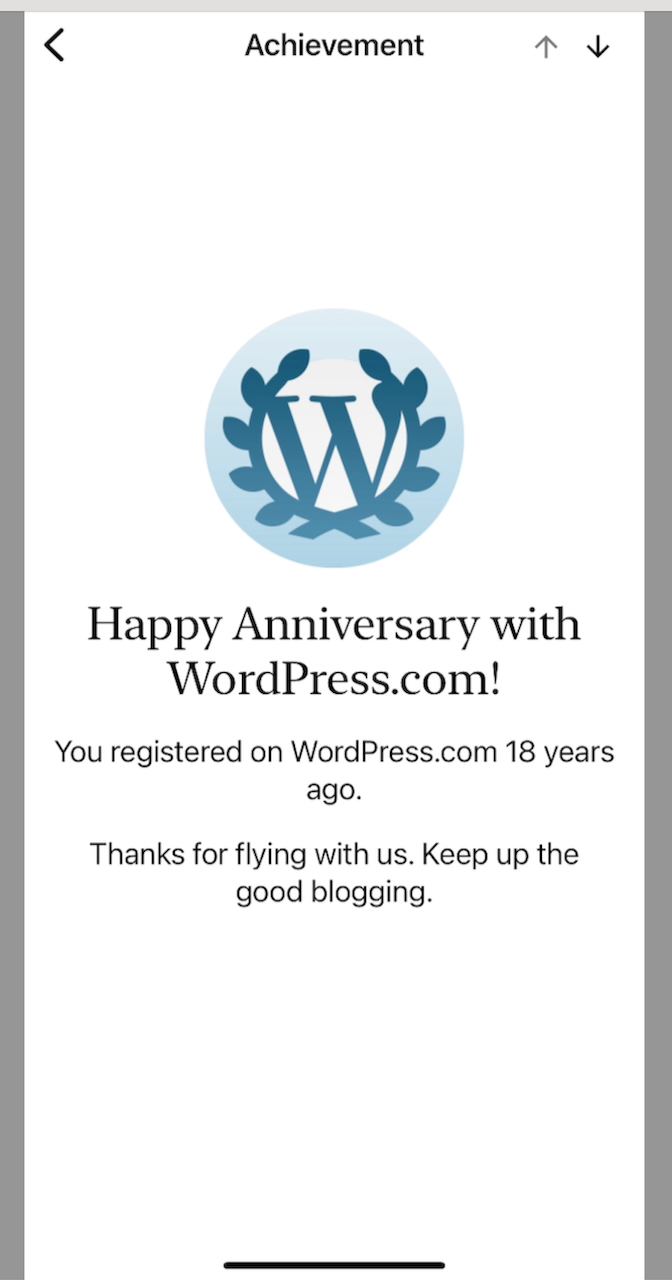
Got this from WordPress a couple days ago. How time flies!


RIPPLE EFFECTS
Coming of Age

Ripple Effects has been tracking my life for the past 18 years! The movies I’ve seen, books I’ve read, birds I’ve captured with my camera, places I’ve travelled, film festivals I’ve attended, and through the years with special thoughts every Easter and at Christmas, Reading the Season inspirational book sharing.
Through the years I’ve been featured on WordPress’ Freshly Pressed, and Rotten Tomatoes had reached out inviting me to be their Tomatometer Approved Critic. I’ve gained over 7,600 followers, treasured the friendship made with some of you both virtually via the blogosphere and personally. For this I’m truly grateful.

If I ever write a memoir, this is my manuscript. To browse through these posts is to know me. Thank you all for the pebbles you’ve thrown into the Pond to create your own ripples. Many of you are recent followers, but there are some who have been with me from early on. And I’m sure you’d find it revealing to read your own thoughts way back then.

Who knows what the future holds. As far as I’m given the opportunity, I’ll continue to document my pondering and wandering here at Ripple Effects. Hope this site can be your restful retreat in your journey through life as well.

~ ~ ~ ~

2025 Babies: First Glimpse

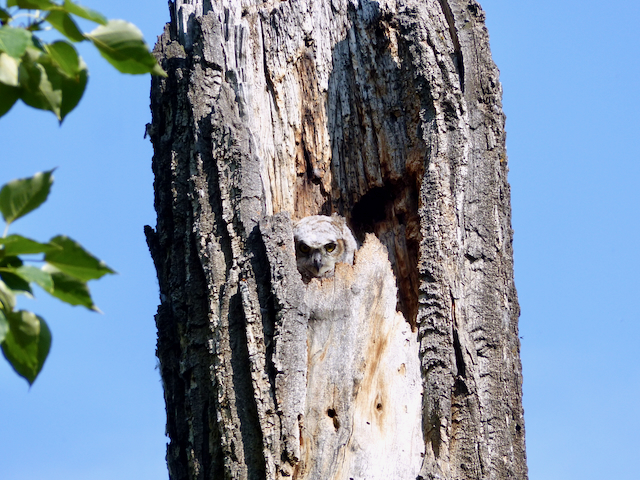
In this indistinct, dead tree trunk hides an annual fanfare,

for such an ordinary tree cavity is the seasonal residence of the Owl Family.

This year, there are two newborns. See them peeking out? For some far-fetched resemblance, I think of Mount Rushmore.

Just a few weeks old, but already gulping down voles and whatever Mama and Papa feed them. Still not out yet, but curious just the same.

Hello world! It’s wonderful to see so many things from high up here. What are all those long black things pointing at us, and all those funny looking, two-legged creatures crawling on the ground, craning their necks to look at us? How funny they look! Hoot, our first glimpse of the world sure is interesting.

Such a sentiment isn’t shared by Papa Owl.

Those two-legged creatures? Just too blasé for me to take a look.

***

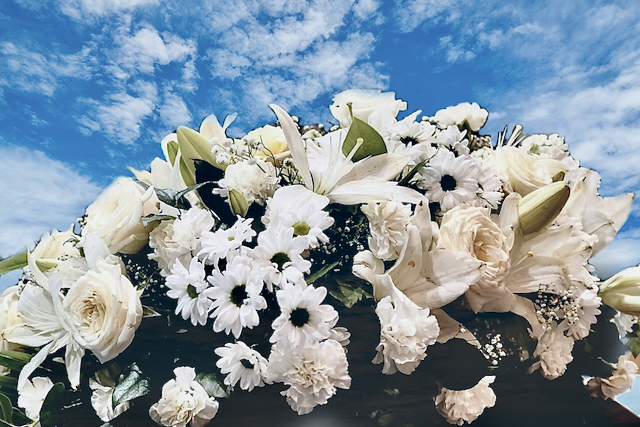
Easter: the Joy of Eternal Hope

A time to be silent, and a time to speak.

What better days than Easter to speak of death, and life eternal.

“I am the resurrection and the life. Whoever believes in me, though he die, yet shall he live, and everyone who lives and believes in me shall never die.” (John 11: 25-26)

The past few months I’ve been silent on Ripple Effects. Actually, for the past year, I’d been posting just occasionally. Fact is, for fifteen months, I’ve been caring for my husband afflicted with cancer. It had been a roller coaster ride of ups and downs. On some days, he was well enough that we could go out to have a meal in a restaurant; on other days, it would be just a tiny morsel or nothing at all. All these months, I’d learned to find joy in afflictions, and be grateful for just being able to sit down at the breakfast table together, the warm, morning rays seeping in, and immersed in the moment.

This year started with an ominous diagnosis. The metastasized cancer cells had not only mutated but the new growth was extremely aggressive. Battling terminal illness had made everything superfluous, books, movies, or music. What was left was the very essence of my being, faith in the risen Christ. Both of us were often revived by the promises of the living God, inspired by His Word, and sustained by the encouragement and prayers of countless supporters the world over via online prayer groups. It had been a journey of faith. Ultimately, it’s all grace.

But we have this treasure in jars of clay, to show that the surpassing power belongs to God and not to us. We are afflicted in every way, but not crushed; perplexed, but not driven to despair;  persecuted, but not forsaken; struck down, but not destroyed… (2 Corinthians 4:7-9)

On March 21, my husband departed to a better country. We were not unfamiliar with the immigrant experience. Now, a final move to that eternal kingdom, a homeland much more beautiful than anywhere in this world. He had arrived there first, I’ll join him one day. He was accepting, which was grace in itself. We were prepared, even planned his celebration of life service together. The event turned out to be a memorable occasion for hundreds to gather for a collective remembrance in peace and even joy.

Therefore we do not lose heart. Though outwardly we are wasting away, yet inwardly we are being renewed day by day.  For our light and momentary troubles are achieving for us an eternal glory that far outweighs them all.  So we fix our eyes not on what is seen, but on what is unseen, for what is seen is temporary, but what is unseen is eternal. (2 Corinthians 4:16-18)

All because He is risen. He is risen indeed!

***

Happy Easter!

***

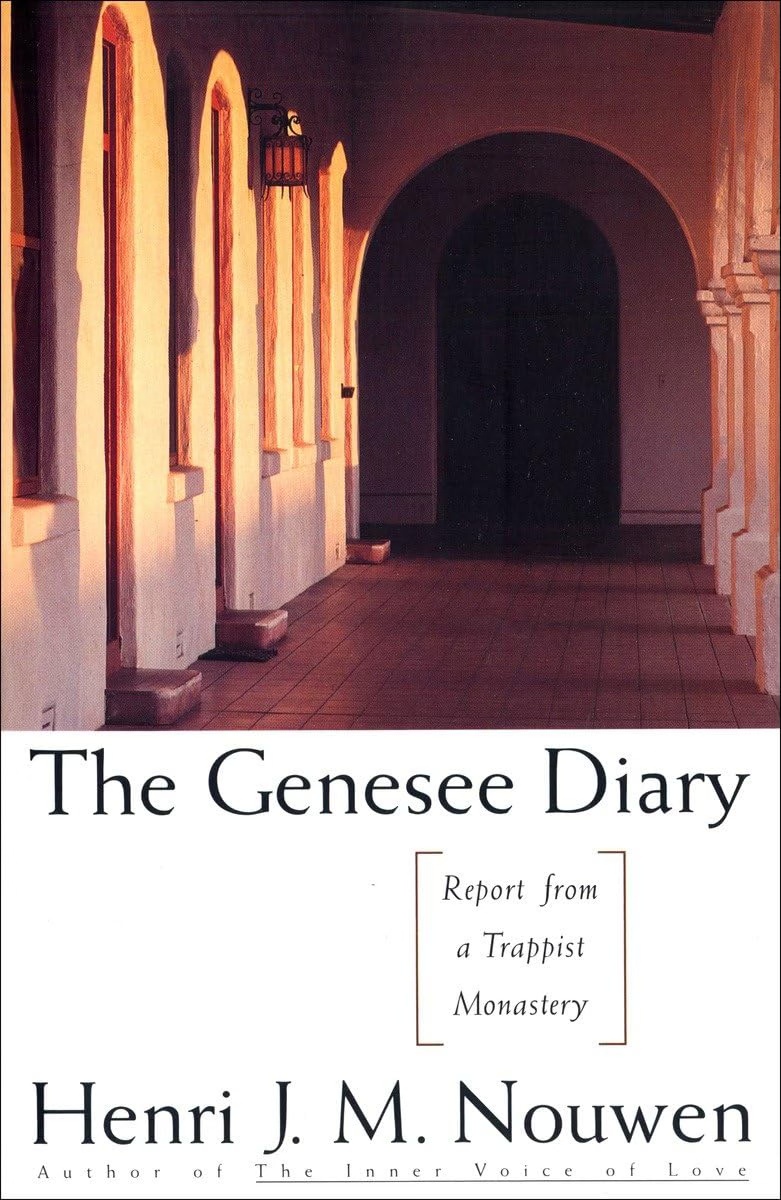
Reading the Season: The Genesee Diary by Henri J. M. Nouwen

I started this annual post at Christmas time in 2008, calling it Reading the Season. As the song goes, this might be ‘the most wonderful time of the year’, but it could well be the most distressing to many. In the hustle and bustle of the Season on the heels of that perennial frenzy called ‘Black Friday’, I hope Ripple Effects can be a respite from the busyness by offering a reading suggestion that could bring some quietude and to slow down the running wheel, hopefully the heart rates as well.  

Henri Nouwen wore many hats, priest, speaker, writer, professor at Yale and Harvard Divinity Schools, and in the last ten years of his life from 1986-1996, quit his university teaching to live and serve as pastor among a community of intellectually disabled men and women, L’Arche–Daybreak in Ontario, Canada. 

Twelve years before he made that life-changing commitment to L’Arche, in 1974, Nouwen spent seven months in a Trappist Monastery, the Abbey of the Genesee, in Upstate, New York. He started a diary in June as he began this experience and ending with the last entry on Christmas Day. He was searching for peace and quietude and to practice the contemplative life away from his busy commitments. His entries show his utter honesty with himself and total humility with God, and was always open to love and appreciate those around him. The monastery wasn’t cocoon living, he was in touch with world events and could grasp firmly the role of history in the present, and the continuity of the past in one’s personal journey. I’m glad to find too that he’s an avid bird watcher, and from nature, he gleans deeper understanding of self and God.  

I’ve highlighted many passages, these are some of them. As a birder, I find this so intriguing. It may sound somber and serious, but I can also see the humour in it:

This morning Father John explained to me that the killdeer is a bird that fools you by simulating injury to pull your attention away from her eggs which she lays openly on a sandy place… I have asked pity for a very unreal problem in order to pull people’s attention away from what I didn’t want them to see.

Sometimes it seems that every bird has institutionalized one of my defence mechanisms. The cowbird lays her eggs in some other bird’s nest to let them do the brooding job; the Baltimore oriole imitates the sounds of more dangerous birds to keep the enemies away, and the red-wing blackbird keeps screaming so loudly overhead that you get tired of her noise and soon leave the area that she considers hers. It does not take long to realize that I do all of that and a lot more to protect myself or to get my own will done.

I wonder if I really have listened carefully enough to the God of history, the God of my history, and have recognized him when he called me by my name, broke the bread, or asked me to cast out my nets after a fruitless day? Maybe I have been living much too fast, too restlessly, too feverishly, forgetting to pay attention to what is happening here and now, right under my nose. Just as a whole world of beauty can be discovered in one flower, so the great grace of God can be tasted in one small moment. Just as no great travels are necessary to see the beauty of creation, so no great ecstasies are needed to discover the love of God. But you have to be still and wait so that you can realize that God is not in the earthquake, the storm, or the lightning, but in the gentle breeze with which he touches your back.

And a thought that for me brings a new perspective on Advent:

Advent does not lead to nervous tension stemming from expectation of something spectacular about to happen. On the contrary, it leads to a growing inner stillness and joy allowing me to realize that he for whom I am waiting has already arrived and speaks to me in the silence of my heart. Just as a mother feels the child grow in her and is not surprised on the day of the birth but joyfully receives the one she learned to know during her waiting, so Jesus can be born in my life slowly and steadily and be received as the one I learned to know while waiting.

***

Reading the Season in Previous Years:

2023: Reading the Season: Babe or Man, Man or King? A Poem by Luci Shaw

2022: Dietrich Bonhoeffer’s God is in the Manger

2021: Sabbath Poems by Wendell Berry

2020: Jack by Marilynne Robinson

2019: ‘A Hidden Life’ – A Film for the Season

2018: A Verse from Madeleine L’Engle’s The Irrational Season

2017: A Wrinkle in Time by Madeleine L’Engle

2016: Silence by Shusaku Endo

2015: The Book of Ruth

2014: Lila by Marilynne Robinson

2013: Poetry by Madeleine L’Engle

2012: Surprised by Joy by C. S. Lewis

2011: Walking on Water by Madeleine L’Engle 

2010: A Widening Light by Luci Shaw

2009: The Irrational Season by Madeleine L’Engle

2008: The Bible and the New York Times by Fleming Rutledge 

2008: A Grief Observed by C. S. Lewis

The Hunters: Two Novellas by Claire Messud

Always been fascinated by Claire Messud’s writing. Glad to discover a gem I’ve missed all these years, The Hunters, Two Novellas (first published 2001, this Norton edition, 2021) which I recently found in the basement of an indie bookstore, where used or overstocked books are stored.

The first novella is A Simple Tale. On the surface, it’s a Canadian immigrant story, how people came to Canada after the second World War to make a home for themselves and their future generation. But it speaks to deeper truths about belonging, hope, resilience, love and alas, family conflicts and disappointment. Immigrant or not, such are universal issues.

Maria Poniatowski was born in the Ukraine. WWII pushed her out of her village, stranded in Europe, and eventually arriving in Canada alone, having lost her family and close friends. She met Lev in the Displaced Persons camp, fell in love, married, and gave birth to baby Radek. Sounds common enough? But not in Messud’s interesting prose:

And finally there, in the Displaced Persons camp, Maria, an old maid of twenty… At long last. Dreamed, discarded, forgotten, it came to her on the sly, slowly at first, shy, and then in full torrent. That’s what the Displaced Persons camp would mean to her, in the ribbon of years: simply, love. (p. 26)

Settling in a new country doesn’t come naturally, especially when it’s totally foreign. Weeping and hardship may be for a short while, for joy soon comes. Maria receives a very Canadian welcoming at the Displaced Persons camp:

In the morning, that first September morning of 1946, there was the piercing early-autumn sunlight sifting through the pines, and the clean odor of the needles as they were trampled underfoot, and the soft damp mulch scent of the forest; and there were maples, in amongst the monstrous evergreens, turning, golden, vermilion, ochre in a riotous celebration of the Poniatowskis’ arrival. (p. 31)

Maria later found a housekeeping job with Mrs. Ellington, and became her life-long companion for decades. As little Radek grows up and Maria and Lev grow old, disappointments set in. The baby son she has raised all the years from the displacement camp to a house in Toronto is now a man with his own will but totally subdued by the girl he chooses to marry, an obvious unfit match, bringing his parents only disappointment and heartbreaks. Having endured and lived through the War and years of adjustments and finally calling a new country home, Maria, a widow now and alienated from her son and his family, watches Mrs. Ellington slip away. Alone again.

________

The second novella, The Hunters, can well be an exemplar for the now popular, contemporary genre of the psychological, suspense novels such as Before I Go to Sleep (J. S. Watson, 2011), Gone Girl (Gillian Flynn, 2012), The Girl on the Train (Paula Hawkins, 2015), The Woman in the Window (A. J. Finn, 2018)… just to name a few. An unreliable narrator, or a misleading perspective taking the story onto twists and turns until the frame of reference unraveled and truth spills out.

What Messud is doing in The Hunter, however, is a much deeper probe into the psyche of a person in solitude, blurring the imaginary with reality. How reliable is our judgement of character, or how accurate is our perception in deciphering facts from the inkling of our subjective mind? How reliable is our view on reality? Can we fully know someone?

An American academic spends a summer in London to do research on a book he or she is writing. Exactly, Messud does not specify the name or the gender of the narrator, this academic. I wonder what purpose would that serve, maybe universality. Nevertheless, Messud is an expert in psychoanalysis, and her prose, exquisite, as she describes the narrator’s state of mind and inner thoughts.

Choosing to stay in a neighbourhood away from the mainstream, academic centre of London, the narrator seeks solitude to nurse the ending of a love relation, as well, to seek refuge in the anonymity of a diverse neighbourhood where nobody knows her and no one the narrator wants to know.

Such a peaceful existence is interrupted one night by a downstairs neighbour Ridley Wandor, coming up to introduce herself and thus intrudes into the privacy and disrupt the solitude of our much annoyed narrator. Ridley Wandor would become the unwanted nemesis that summer, and months later, when a clearer view of facts is revealed, the cause of inescapable guilt.

The Hunters isn’t one of those page turners in which the plot pushes the reader to forge on, but an astute character study of both the hunter and the prey. In a deeper way, Messud challenges her narrator’s sense of reality, and just because of the lack of omniscience––our very limitation as human––shaking the narrator to the core as facts are revealed at the end. It’s hard to find an excerpt in the novella without dropping a hint as spoiler, but this famous line from Atticus Finch comes to me naturally:

You never really understand a person until you consider things from his point of view […] until you climb into his skin and walk around in it.”

For our narrator, this revelation comes a bit too late.

~ ~ ~ ~ Ripples

Novellas in November is co-hosted by 746 Books and Bookish Beck

Related posts on Ripple Effects:

Small Things Like These from novella to screen

The Quiet Girl Movie Review: From the Literary to the Visual

Passing by Nella Larsen: from Novella to Screen

The Gone Girl Phenom

Before I Go to Sleep: Movie or Book?

***

‘His Three Daughters’ is a Rare Gem

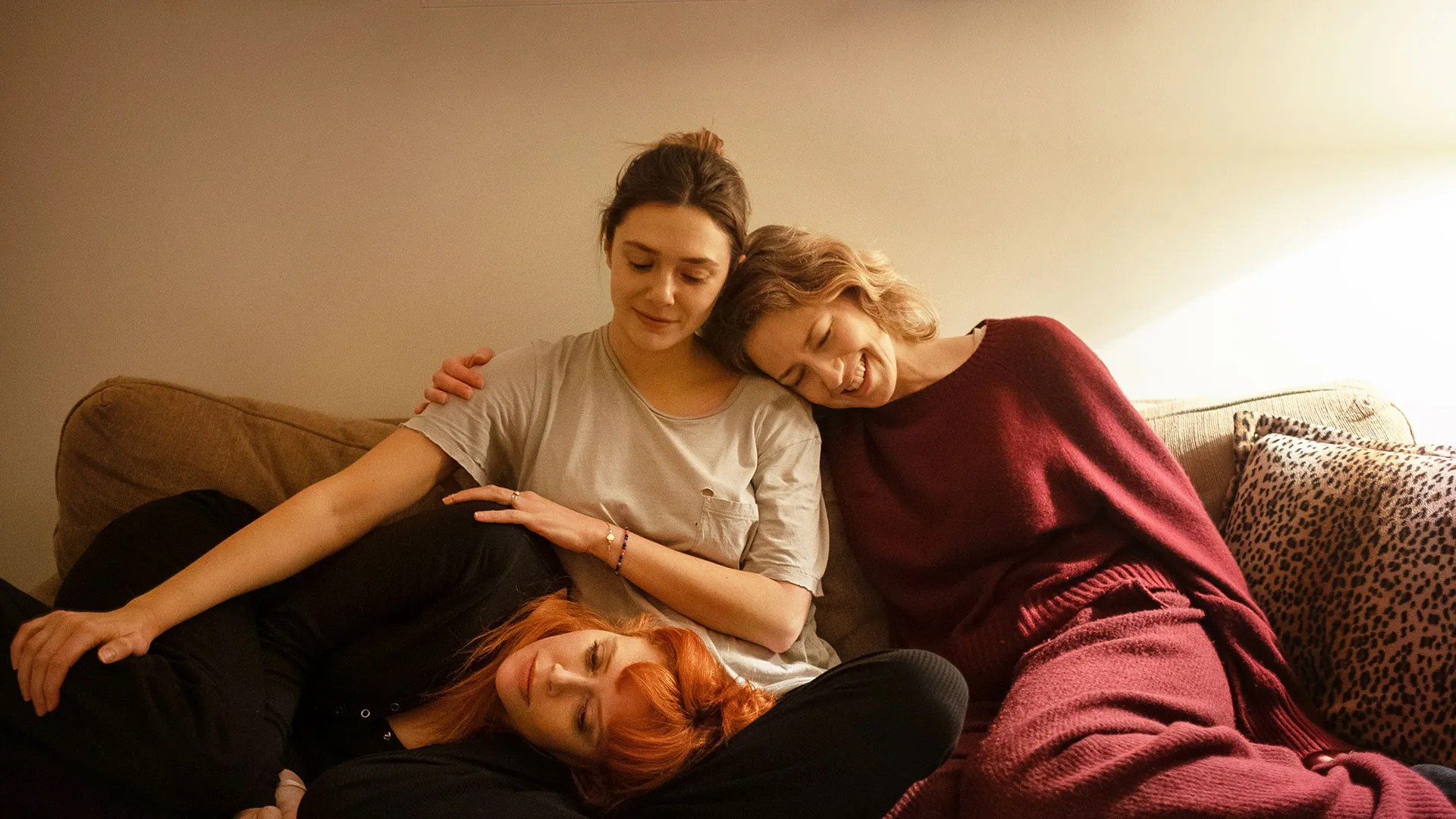
In the midst of spectacles and action thrillers coming out nowadays, it’s refreshing to see a quiet gem has arrived on Netflix. His Three Daughters focuses on a topic common in real life and in movies, siblings coming back to their ailing parents’ home to prepare for their final parting. Maybe to offset such a heavy subject matter some of these movies are handled in a comedic or even farcical way, This is Where I Leave You (2014) and August: Osage County (2013) come to mind. In contrast, writer director Azazel Jacobs in His Three Daughters (2023) confronts the subject in a realistic and mindful way, eliciting from his three main actors honest and powerful performance. Jacobs is apt too in infusing witty dialogues and subtle humour. What a gratifying turn from his previous film French Exit (2020).

Under one roof in their father’s NYC apartment, three estranged sisters learn to live with each other once again. Carrie Coon (The Gilded Age) is the eldest daughter Katie, the take-charge type, from cooking, dealing with palliative nurses, getting a DNR (do-not-resuscitate) form signed by the father before he slips away, to writing his obituary while micro managing her teenage daughter at home in Brooklyn. Her intolerance of her stepsister Rachel (Natasha Lyonne, Orange is the New Black) who smokes weed and bets on sport games constitutes the main conflict in the sibling relationships. Trying to mediate between the two is Christina (Elizabeth Olsen, Sorry for your Loss) who is always reconciliatory. She’s preoccupied with her young daughter and husband at home far away across the country.

As for the father, he remains unseen behind closed or slightly opened door in his bedroom, his presence only denoted by the rhythmic beeping of the monitor to which he’s hooked up. Such concealing allows the viewers to focus on the trio, for what’s equally pressing is the rebuilding of sisterhood and the way to move forward after their father is gone. Dying relationships among the living are crying out to be heard and reconciled.

Rachel has been living in the apartment with their father all along, while the other two sisters just recently arrive to take care of things at this final stage of their father’s life. New house rules are set up. A pivotal scene comes when Rachel’s friend Benjy (Jovan Adepo) confronts the other two sisters as he points out the reality of their family dynamics. A new perspective begins to sink in as they come to realize their own shortfalls, a reality check that doesn’t go down easy for anyone.

In this chamber piece rich in dialogues, Coon, Lyonne, and Olsen are impeccable in displaying the raw and honest emotions of sibling love, hate, overt and hidden sentiments they hold against each other. But the overall mood is not all serious and somber. There’s underlying humour throughout, especially the opening scene, which reminds me of early Woody Allen works. Music is minimal to amplify the conversations, silence to enhance tension and ambivalence. Despite being shot inside an apartment with minimal exterior scenes, the camera is effective in conveying suspense, loss, and love.

As for the twist towards the end, it’s open to interpretations; however, it does seem incongruent with the earlier part. To avoid spoilers, I won’t be discussing it here. No matter, it’s the process reaching to the end that’s what the film so powerfully depicts. I hope to see more of this kind of cinematic gems to appear in theatres and on streaming platforms.

~ ~ ~ 1/2 Ripples

***

Related posts on Ripple Effects:

August: Osage County, Play and Movie Review

The Savages, with Philip Seymour Hoffman and Laura Linney

Into the Summer Woods

The horrific destruction of the town in Jasper National Park by wildfire yesterday makes me feel mournful not only for the human loss of homes and businesses––25,000 residents and visitors have evacuated, many with no homes to return to––but also for the majestic, natural beauty and the wildlife dwelling there. How do animals and even birds escape the engulfing fire, with flames reaching 100 metres high? The drive from Banff to Jasper is one of the most beautiful Parkways in Canada. As I write this, one third of the historic town of Jasper has been burned or damaged. The fire is still going, actually, hundreds of wild fires are still burning in Alberta and BC.

The posting of my birding experience on Ripple Effects seems to have taken a new purpose now:
to preserve memories, my very own encounter with Nature and the raw, authentic moments, for I know, these too are ephemeral.

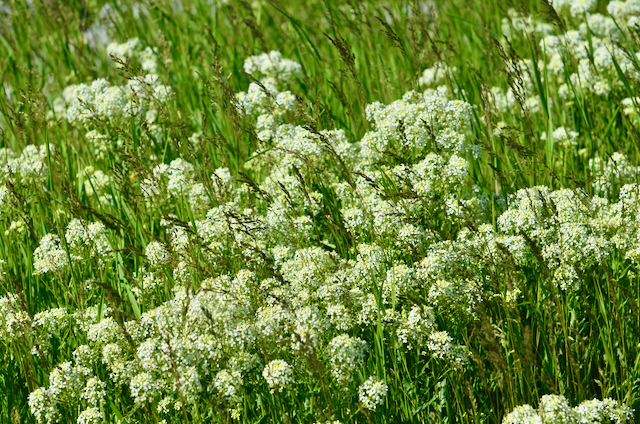
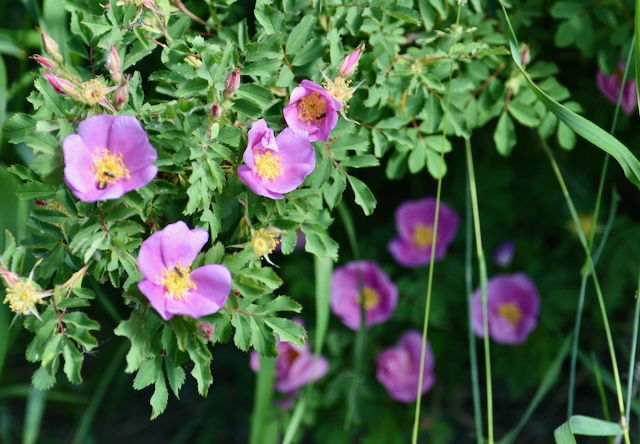
The following are some of the visual memories I’ve gathered in the past month near the Pond. First off, the summer wild flora, blooming bright and colourful are the Alberta provincial flower, the Wild Rose. If you can ID the other ones, do let me know:

Snow in July? Fortunately not. Thanks to poplar cotton, a monotonous stream now looks dramatic:

It’s always a pleasant surprise to see a deer suddenly appear nearby, and this is a handsome, young one:

A favourite sighting any time… the Belted Kingfisher, not easy to spot, but their distinct rattle calls give them away:

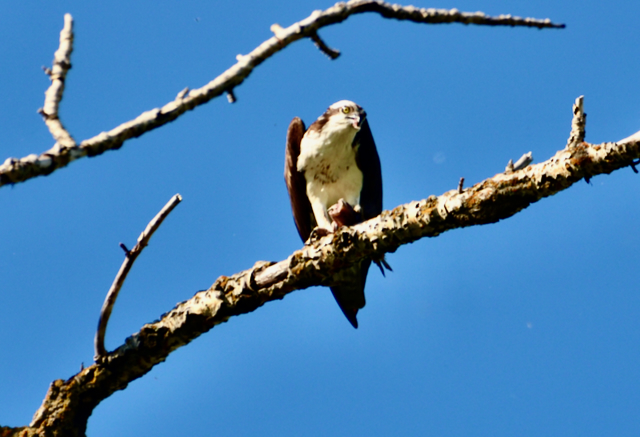
High up on a tree branch, the Osprey is chomping its prey. You can see half a fish under its claws:

For these two hungry baby European Starlings, it’s door dash delivery by Mama Starling, not fast enough as always:

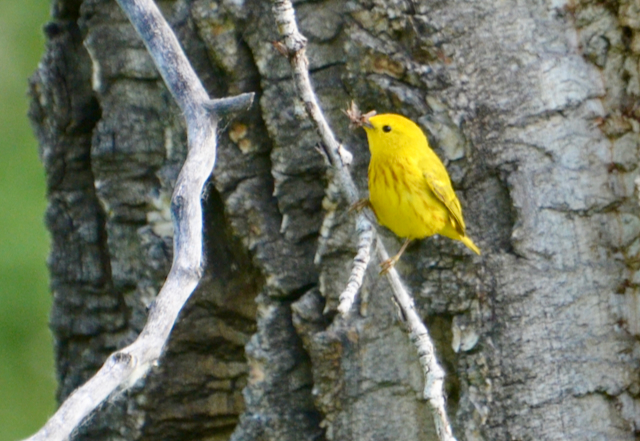
As for Mama, she just can’t wait to see babies grow up to search for their own food, just like these lovely Yellow Warblers:

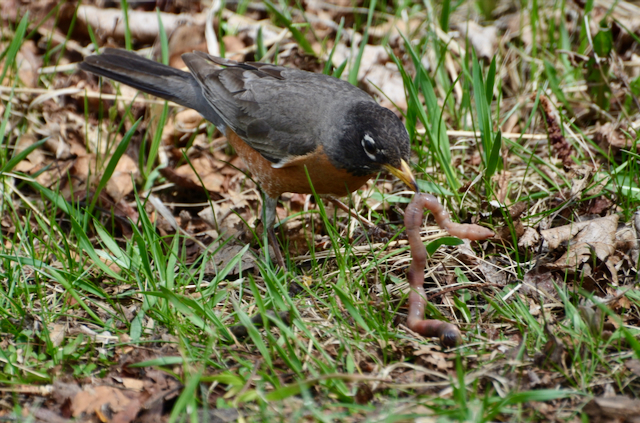
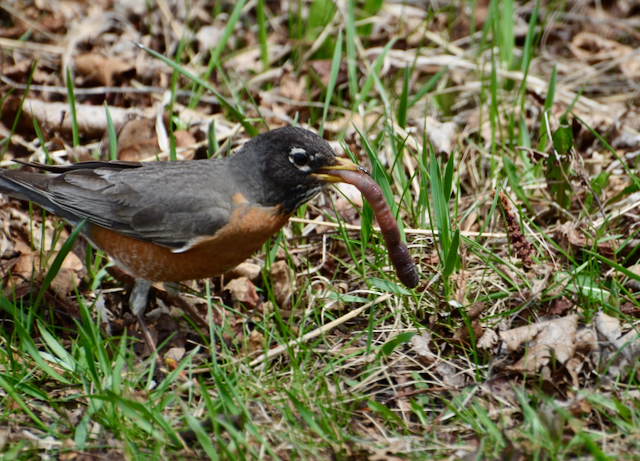
or this hungry Robin, swallowing whole a worm as long as its own body:

The ephemeral nature of life… the worm sure knows what that means.

Virginia Woolf’s The Years sparks some surprising associations… Downton Abbey?

“She wanted to see the owl before it got too dark. She was becoming more and more interested in birds. It was a sign of old age, she supposed.” –––– Virginia Woolf, The Years* (186)

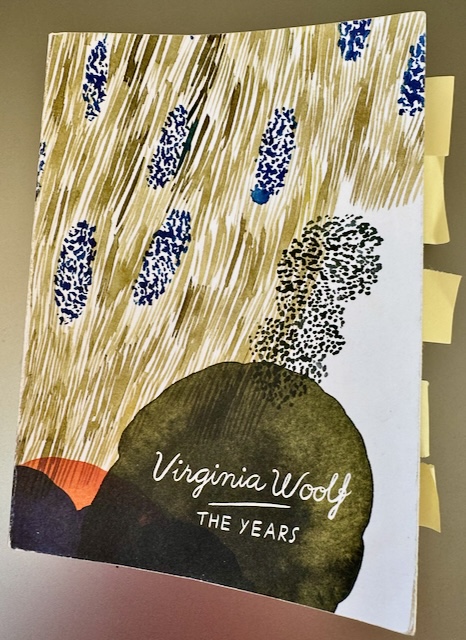
Finally, I finish my other 1937 Club read hosted by Kaggsy and Simon that took place in April, two months late, and that’s Virginia Woolf’s The Years, published in 1937. It sure feels like years for me to finish this book. Better late than never, for I have full intention to see what Woolf had to say in her last novel published during her lifetime (Between the Acts was published shortly after her death in 1941), specifically, what was in her mind just a few years before she took her own life.

The book follows the children of Colonel Abel Pargiter’s family as they go through the years crossing the 19th century into the 20th. It’s a family saga through chapters titled for a specific year, beginning with 1880, 1891, then into the new century 1907, 1908 and to the First World War, and finally the “Present Day” which is the 1930’s. Within each chapter the narratives are episodic, characters appear without introductions; readers would have to piece together who’s who and how they relate to each other.

A few unexpected mental associations came to me during my reading. The quote above at the beginning of this post is one of those surprises. A loud Whoa! when I read it: Interest in birds as a sign of ageing. It’s a thought in the mind of Eleanor, the eldest of the Partiger children, when she is fifty-five. She goes on to live past seventy when the book ends, and I’m sure has seen many more owls.

Another surprise for me in my reading experience of The Years is how it’s like watching an arthouse film, or any good movie for that matter. My first impression of that beginning chapter 1880 is that it reads like a script where the expressions and actions of the characters are highly nuanced and the subtext in their conversations speak volumes. Nothing much is happening but the seemingly uneventful narrative carries unsettling undercurrents.

Here’s an example. The Colonel, with his wife Rose on her death bed, is a troubled and temperamental man whom his seven children fear more than respect or love. He comes back home unexpectedly during supper time in the opening chapter and the way he drinks his tea while trying to strike up conversations in a surly manner with his children reflects his changing mood. A ready movie scene here. I’ve taken out the dialogues, but just the description of his tea-drinking actions reveal a lot about his character:

He stirred his sugar round and round in the cup as if to demolish it… ground the grains of sugar against the walls of his cup. [After some tense conversations with his children] Then he seemed to repent of his gruffness… He drank up his tea. Some drops fell on his little pointed beard. He took out his large silk handkerchief and wipe it impatiently… [Later] the Colonel took up his cup, saw there was nothing in it, and put it down firmly with a little chink. The ceremony of tea-drinking was over. (13-14)

Another surprise is that reading The Years makes me think of Downton Abbey, how a family goes through changes both in the larger socio milieu and in their personal lives through the years. The time-lapse is about the same as the six seasons of Downton, from horses to cars, from candles to electric lights, WWI and the changes it brings. The following line in Woolf’s novel makes me think of the Dowager Violet Crawley:

Then he looked at a car. It was odd how soon one got used to cars without horses, he thought. They used to look ridiculous. (215)

BTW, Edith Crawley, who breaks the mould and ventures out to live in London on her own and heads up a magazine she inherits from Michael Gregson and a London flat, has mentioned that she had met Virginia Woolf there, one of Michael’s Bloomsbury acquaintances. One can imagine the author just might have certain influence on her.

The Years is about lives lived, actions or non-actions, the regrets and the resignation of what had happened, the unchangeability of the past. Check out these lines, the introspection of Eleanor’s, just reminds me of Mary Crawley, who had uttered similar words thinking of her own past errors in judgment:

But once it’s done, there it is… How irrecoverable things are, she thought. We make our experiments, then they make theirs. (185)

Above all else, The Years is about the past and memories, and the meaning of it all. Proust’s Remembrance of Things Past comes to mind, no surprise. Both authors value the writing down of lives lived. But Woolf goes into a more depressed mode of seeing even the futility of it. As the chapters, ie, the years, move on, Woolf is more explicit about her view on life––I suppose that’s her perspective––through Eleanor’s point-of-view. Considering Woolf taking her own life just four years after this book was published, I paid attention to the reflections and internal search for existential meaning, or the failing of which, and find these passages particularly poignant. Short sentences like this: “Scenes passed over scenes; one obliterated another,” to reflection like the following, again, quite a cinematic moment:

Things can’t go on for ever, she thought. Things pass, things change, she thought, looking up at the ceiling. And where are we going? Where? Where?… The moths were dashing round the ceiling; the book slipped on to the floor. .. made an effort; turned round, and blew out the candle. Darkness reigned. (195)

to what seems like ultimate despair, take note that Woolf wrote this in the 1930’s:

But how can one be ‘happy’? she asked herself, in a world bursting with misery. On every placard at every street corner was Death; or worse––tyranny; brutality; torture; the fall of civilization; the end of freedom. (358)

I gave the book 3.5 out of 5 stars in my Goodreads review, an evaluation that’s based on my first reading, having had to figure out who’s who –– considering the Pargiters have seven children and some of them have their own children. And then there are extended family members, cousin, niece and nephew, and servants. I’m sure upon second reading, I’d be able to get a clearer picture of all the characters and would enjoy it more, for it really deserves more than one reading.

__________

* The edition that I used (photo above) is Vintage Classics, Penguin Random House UK, London. 401 pages. Introduction by Susan Hill. With this inscription before the Introduction:
“The text of this edition of The Years is based on that of the original Hogarth Press Edition, published by Leonard and Virginia Woolf on 15th March 1937.”

***

Related Post on Ripple Effects:

In Praise of Austen: Virginia Woolf’s A Room of One’s Own

In Search of Lost Time by Marcel Proust: A Movie Reviewer’s Long Take

My other 1937 Club Posts:

Out of Africa by Karen Blixen from Book to Movie

Somerset Maugham’s Theatre and Screen Adaptation

And now there are four

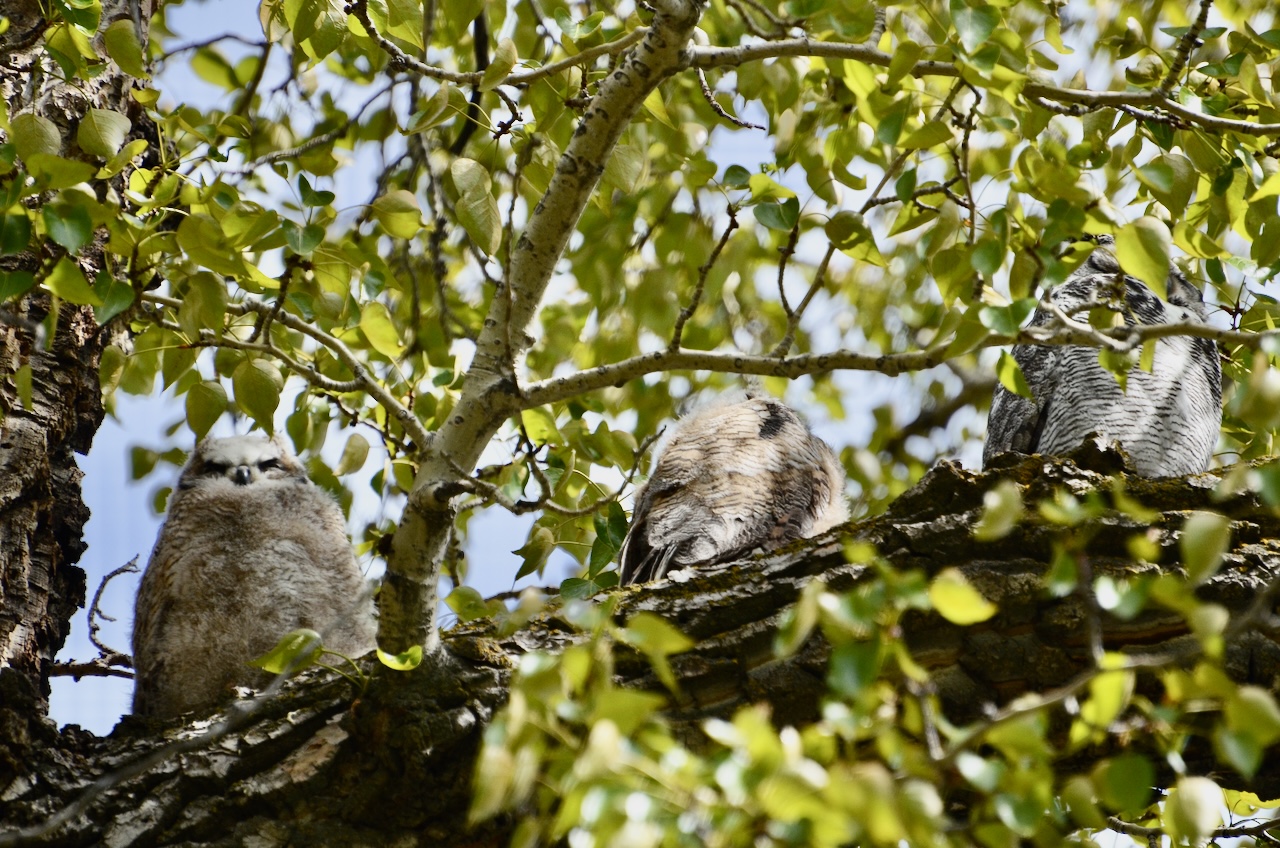
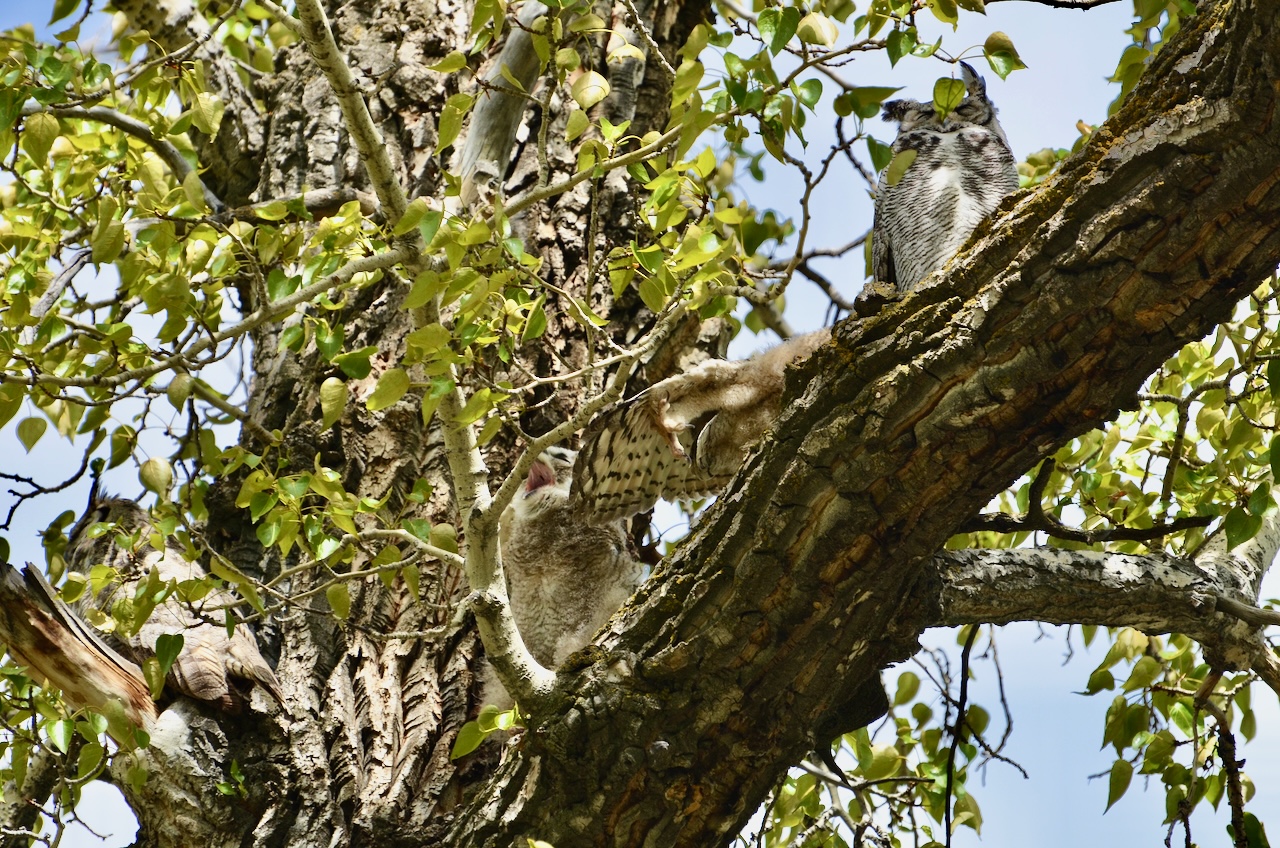
The baby owl that fell out of a tree and taken away by wildlife staff has now returned home. Good to see all the members of the Owl Family are back together again. Hard to find a good camera angle when you’re way down on the ground, but here’s what I’ve captured.

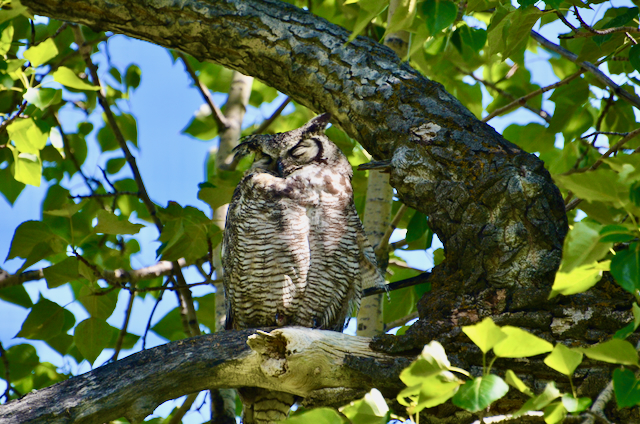
The Owl Family. The two owlets in the middle, with mom and dad on each side of the young. Three of them on one branch, the other parent on another branch to the left:

Can you spot all four of them here?

.
A closer look at three of them:

.
Looks like Baby O. has fledged and learned to spread its wings. What doesn’t kill you makes you stronger. Glad to see all’s well now with the Owl Family:

Soon the young ones will be gone. To where I don’t know. At least I’m glad I’ve a chance to see wings spread out and ready before they fly away. I’m sure Mama and Papa Owls feel the same.

***

‘American Symphony’ is a Must-See 2023 Documentary

While waiting for Maestro to come to our city’s theatres, serendipity strikes. I found this newly released documentary on Netflix. Two classical music features coming out at the same time, I thought. But to my surprise, American Symphony isn’t about a classical music icon like Leonard Bernstein in Maestro but––it would make an interesting contrast–– Jon Batiste, the Louisiana born and Juilliard trained musician, singer, songwriter, composer, pianist and bandleader on The Late Show with Stephen Colbert.

Directed by Matthew Heineman, a multiple award-winning and Oscar nominated director, who has brought us an intimate and moving love story. I knew nothing about Batiste before watching this doc, only seen him on Stephen Colbert, the bandleader that gives an assured, warm smile when the camera focuses on him. American Symphony showcases Batiste’s new composition of the same name, as well as following his celebrated rise to the summit of musical stardom in 2022 when he garnered eleven Grammy nominations across genres and winning five including Album of the Year.

What captivates me is not only Batiste’s talents or his music. Surely these as well as his process of creativity are what make this doc highly entertaining, but what’s inspirational is the focus of his relationship with his wife, writer Suleika Jaouad, whose myeloid leukemia has returned after years of dormancy. In the midst of jubilation and career honors, there’s the searing pain of seeing his wife suffer in hospital. Batiste stays by her side as she goes through bone marrow transplant, and lovingly supports her through the whole treatment.

What is soul-stirring is the inward revealing of Batiste’s faith in his God, his humility in the midst of career wins and recognitions, and his readiness to accept whatever that could come his way. The doc is an intimate look into the duality of triumph and suffering, the vibrancy and the vulnerability of life, a candid and endearing love story.

As for the eponymous ‘American Symphony’, Batiste’s new composition, we get to see its rehearsal process throughout the feature, and savor excerpts of it towards the end. This last section is a revelation. The work had its world premiere in Carnegie Hall to a full house in September 2022. An innovative symphony encompassing tributes to jazz icons and the Black cultural roots, Batiste at the piano, a full orchestra, vocals from classical and gospel traditions, and including Native Americans in their own costumes and with their drums and songs, yearnings of human voices in cacophony, a moving experience. It would be interesting to see Maestro after watching American Symphony.

~ ~ ~ 1/2 Ripples

***