The Power of Aloneness

.

Before the resurrection was the death.
Before the death, the long path of suffering.
Before the suffering, the lonely struggle,
Agonizing solitude.

The Garden of Gethsemane,
Epitome of aloneness.
Even the closest would fall asleep
But one kept watch, awake for all.

Sweat dropped like blood
A heart pierced before nails were hammered in.
The soul cried out no, not this cup
But oh, not my will.

Not fear of sinews tearing from the joints
But the searing pain of separation
A Father who would leave totally alone
the tainted Son of Sin.

A prostrating prayer, a yielding spirit
The power of aloneness thus transformed.
As He got up from that rock, He had risen
Ready to accept the kiss of death.

I would never know the nailing pain
nor the bitter taste of that dreadful cup
But let me feel the power of solitary rest
To stay awake and rise and conquer death.

.

***

Poem by Arti of Ripple Effects
On the Eve of Good Friday, 2010.

Photos taken by Arti in Israel, 2007.
Top: Via Dolorosa, Bottom: A Garden in Jerusalem

All Rights Reserved.

Yasujiro Ozu and The Art of Aloneness

Growing up in Hong Kong during the 60’s, I had my share of Japanese literature and films, as well, the early version of anime.  Books were in Chinese translations, films with Chinese subtitles, and anime needed no language.  As a youngster I had my fix of Samurai action flicks by the legendary Akira Kurosawa, or the early sagas of The Blind Swordsman deftly performed by Shintarô Katsu.  The fast, magical sword-fighting movements displayed in elegantly choreographed sequences defined what ‘cool’ was in the eyes of a very young film lover, decades before Jason Bourne emerged.

But I admit, I had never heard of Yasujiro Ozu (小津 安二郎, 1903-1963) before reading the book The Elegance of The Hedgehog, and since, have become a mesmerized Ozu fan.

In Muriel Barbery’s marvellous work of fiction The Elegance of The Hedgehog, I was fascinated by the following excerpt that led me to explore the world of Ozu. Barbery mentioned some dialogues in the Ozu film ‘The Munekata Sisters’ (1950). Here, after quoting elder sister Setsuko, Barbery wraps up the chapter from the point of view of the concierge Renée, narrator of the book:

SETSUKO
True novelty is that which does not grow old, despite the passage of time.

The camellia against the moss of the temple, the violet hues of the Kyoto mountains, a blue porcelain cup — this sudden flowering of pure beauty at the heart of ephemeral passion: is this not something we all aspire to?  And something that, in our Western civilization, we do not know how to attain?

The contemplation of eternity within the very movement of life.

I could not find any copy of ‘The Munekata Sisters’, but I did manage to find a few other Ozu films on DVD in The Criterion Collection at an independent video store. One particularly stands out, both the film and the special features.  And that’s Tokyo Story (1953), the best known and most acclaimed Ozu work.

.

TOKYO STORY (with spoiler)

.

.

Instead of the macho samurai films of his time, Ozu chose to explore the quiet subject of family relationships, parents and children, brothers and sisters, husbands and wives, and from them come the topics of marriage, loyalty, aging, death, filial duties, parental expectations, and generational conflicts.  Through his perceptive camera work, Ozu sensitively revealed the undercurrents beneath the seemingly calm surface of daily family interactions.

‘Tokyo Story’ is about an aging couple Shukichi (the Ozu actor Chishu Ryu) and Tomi (Chieko Higashiyama) from small town Onomichi going on a trip to visit their adult children in bustling Tokyo.  At that time, postwar Japan was cranking up her economic engine, and urbanization was taking off.  Shukichi and Tomi’s children were all busily engaged in their work and family, with no time or patience to entertain their visiting parents, albeit struggling with a thin sense of obligation. They passed the two old folks from home to home, and finally sent them off to a spa resort on their own, a supposedly well-meant package substituting for their absentee hospitality.

With his subtle cinematic language, Ozu explored the issues facing the family in urban, postwar Japan. I’m surprised that in a time when the rebuilding of national pride was as much an essential as that of the economy,  Ozu was brave enough to depict the collapse of the family, revealing the conflicts and tensions behind the amicable social façade.  It’s interesting how contemporary and universal they are.  Have we not heard of those ubiquitous ‘mother-in-law jokes’ in our modern Western society?  Or, in real life, do we not struggle between taking care of our own family and career, and finding the time and energy to look after our aging parents?

.

But the contemplative cinematic offerings of Ozu draw us into deeper thoughts. ‘Tokyo Story’ quietly depicts the truth of these issues: No matter how many siblings there are in a family, each person is responsible for his or her own decision and action.  Even in a mass society like Japan, one can still make individual choices. Despite the currents, one can stand alone against the tides, and act according to one’s heart and conviction. While the brothers and sister are evading the task of hospitality, the young widowed daughter-in-law Noriko (the Ozu actress Setsuko Hara) chooses to care for her deceased husband’s parents out of genuine love.  She stands alone in her kindness and grace, a selfless heroine in a family hinged upon superficial ties.

Illness and death too have to be borne alone.  Despite their being together all the years of their marriage, Shukichi and Tomi each has to face the imminent all alone.  After Tomi falls ill upon arriving home from Tokyo, the strong bond of togetherness in marriage quickly dissolves into helpless resignation of parting and letting go.  Shukichi soon realizes he has to face life all alone.  The poignant scene though is that despite his loss, he looks out for his daughter-in-law Noriko, appreciating her loyalty, and relieving her of further obligations.  Despite having no blood ties, the two of them have touched each other in a way that’s beyond flesh and blood. Noriko selflessly gives while Shukichi accepts and appreciates in the midst of aloneness. The tables are turned, while they are left to face life alone, they are yet bound together in an unspoken bond, one that’s far stronger than filial ties.

The Criterion Collection carries several sets of Ozu titles.  ‘Tokyo Story’ is one in a trilogy of Noriko’s stories.  Disc Two features ‘I Lived, But…’,  a two-hour documentary on the life of Ozu, and ‘Talking with Ozu’: a 40-minute tribute to the great director featuring reflections from international auteurs Stanley Kwan, Aki Kaurismaki, Claire Denis, Lindsay Anderson, Paul Schrader, Wim Wenders, and Hou Hsiao-hsien.  It also features audio commentary by Ozu film scholar David Desser.

~~~~ Ripples

CLICK HERE to my review of another Ozu classic: Floating Weeds (1959)

Alone Again… Unnaturally

A year ago around this time, I wrote the post ‘No Texting for Lent and The End of Solitude’. It was in response to the news about some Roman Catholic bishops urging the faithful to restrain from texting as a penance during Lent.  And around the same time, I came across the article by William Deresiewicz ‘The End of Solitude’, pointing out the difficulty of remaining alone in our over-connected society.

Now a year after Deresiewicz published his essay, the number of tweets had grown by 1,400%.  Now there are 50 million tweets per day, an average of 600 tweets per second.  So, if you’re calling for ‘No texting’ at Lent, you might as well tell people not to use the phone, the computer, the iPhone, all the smart gadgets, in other words, get off the human race for the time being.

Hey, that may not be such a bad idea.  The current issue of The American Scholar has another article by Deresiewicz, yes, on solitude again.  I’m glad to read articles on ‘Solitude’, why?  There just aren’t too many written on this topic.  And thanks to Deresiewicz, seems like his is the only voice crying in the digital wilderness.  The article is a lecture he delivered to the plebe class at the United States Military Academy at West Point in October of last year, entitled ‘Solitude And Leadership’.

If you want others to follow, learn to be alone with your thoughts.

This quote at the beginning of the article just about sums it all up.

Speaking to this class of freshman, all eager and gung-ho to fall in line with the rank and file of this prestigious Military Academy, Deresiewicz has the audacity (ok, guts) to tell his audience to shun conformity, break away from regimentation, to ask questions, to seek their own reality, to form their own opinion, and to exercise moral courage.  And his main crux: it is only through solitude can they do this.

Facebook and Twitter, and yes, even The New York Times, only expose you to other people’s thinking. Whenever you check your tweets, or get on to your social network, or read the newspaper for that matter, you are only hearing other people’s voices:

That’s what Emerson meant when he said that “he who should inspire and lead his race must be defended from travelling with the souls of other men, from living, breathing, reading, and writing in the daily, time-worn yoke of their opinions.” Notice that he uses the word lead. Leadership means finding a new direction, not simply putting yourself at the front of the herd that’s heading toward the cliff.

He urged them to read books instead.  Well aren’t books other people’s opinion too?  True, sometimes you need to put them down too to visualize you own reality and formulate your own stance.  But, books, especially the time-tested ones, have weathered social scrutinies and oppositions, and yet still stand today offering us wisdom of perspectives in finding our own path.

Further, the major difference between a well-written book and a tweet, or a Comedy Central episode, or even a newspaper article, is basically, time.

The best writers write much more slowly than everyone else, and the better they are, the slower they write. James Joyce wrote Ulysses, the greatest novel of the 20th century, at the rate of about a hundred words a day… for seven years. T. S. Eliot, one of the greatest poets our country has ever produced, wrote about 150 pages of poetry over the course of his entire 25-year career. That’s half a page a month. So it is with any other form of thought. You do your best thinking by slowing down and concentrating.

Of course, this may sound reductionist.  But, I like the idea of slowing down in this rapidly shifting world. Deresiewics urged the freshmen of West Point to practice concentrating and focusing on one thing rather than multi-tasking. He charged them to take the time to slowly read, think, and write, in solitude, an axiom that’s so rad that his audience probably had never heard before.

In this über connected world we’re in, it’s unnatural to be alone.  A solitary moment has to be strived for with extra effort, and much self-discipline.  That means unplugging the phone, turning off the computer and anything smart, yes, including friends, real or virtual.   For Lent or not for Lent, it could well be the only way to find out who we are and where we are heading.  Even if we’re not aspiring to lead, at least we know whom we should follow.  And, you’ll never know, others may be attracted to our slowness and surety that they just might step right behind us.  So it’s best not to steer them too close to the cliff.

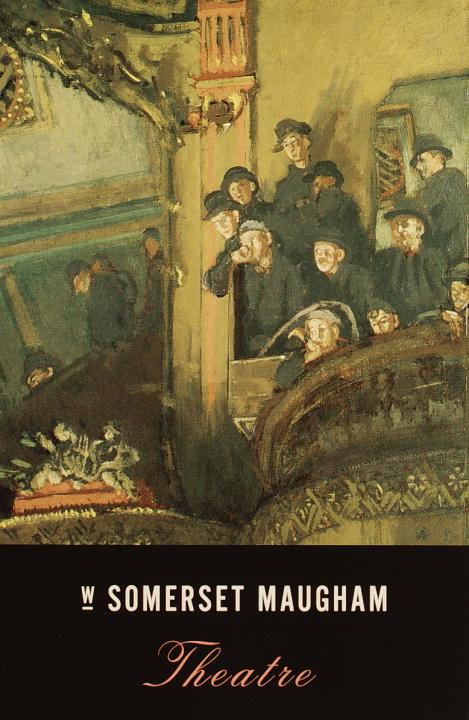
THEATRE by W. Somerset Maugham: In Search of Reality

It was pure serendipity. I thought I knew almost all of Maugham’s titles, but this one just escaped me.  I found it on the ‘New and Notable’ shelf in the public library. It’s a Vintage International edition paperback published in 2001. Not new but it looked untouched and inviting.

Two pages into the book I knew right away I had seen it before. Of course, that’s the movie Being Julia (2004). Annette Bening got a Best Actress Oscar nom for her portrayal of Julia Lambert, a famous actress on the London stage in the 1930’s. The movie is a colorful account of how a successful stage actress deals with her mid-life crisis. With fame, fortune, and achievement in bounty, what more could she ask for but… love and passion. And during the course, obstacles, jealousy, and betrayal are all overcome, and revenge carried out; on or off stage, no matter, it’s equally exciting for the glamourous Julia Lambert.

But not until I read this novel on which the movie was based did I realize that a most important passage had been left out. And oh what an omission! For the crux of the book rests on those few pages. And not only that, the screenwriter had chosen to alter a character to suit his fancy, rounding off the edges of conflicts and alleviating tensions in presenting a smooth and suave storyline.

In the movie, Julia’s son Roger is a young man fresh out of Eton and planning to attend Cambridge after the summer. That much is true to the book.  Roger is shown to be a devoted son, lovingly supportive of his mother in her pursuits in career and love life. But this is not the case in the novel.  Maugham has crafted Roger as a critical young man, offering the necessary tension to the story. In a crucial scene at the end of the book, he questions Julia’s behaviour and integrity. These challenges form the climatic confrontation between mother and son, projecting the meaning behind the very title of the novel.

Here is an excerpt from this scene that captures the essence of the whole book. Julia asks Roger:

“What is it you want?”
Once again he gave her his disconcerting stare.  It was hard to know if he was serious, for his eyes faintly shimmered with amusement.
“Reality.”
“What do you mean?”
“You see, I’ve lived all my life in an atmosphere of make-believe…. You never stop acting. It’s second nature to you. You act when there’s a party here. You act to the servants, you act to Father, you act to me. To me you act the part of the fond, indulgent, celebrated mother. You don’t exist, you’re only the innumerable parts you’ve played. I’ve often wondered if there was ever a you or if you were never anything more than a vehicle for all these other people that you’ve pretended to be.  When I’ve seen you go into an empty room I’ve sometimes wanted to open the door suddenly, but I’ve been afraid to in case I found nobody there.”

By turning Roger into a complacent and docile young man, the screenwriter had failed to present the necessary tension in the story. Further, by avoiding the character foil between the successful actress mother and her meaning-pursuing, idealistic son, the movie fails to deliver the essential subtext, despite an impressive performance by Annette Bening.

Further, the best is yet to come in the book… such is the ingenuity of W. Somerset Maugham.  After a superb, revengeful performance, overarching her rival, the young and beautiful Avice Crichton, and drawing everyone’s admiration back to herself, Julia celebrates on her own with a nice meal and mulls over a gratifying notion, on the very last page:

“Roger says we don’t exist. Why, it’s only we who do exist.  They are the shadows and we give them substance. We are the symbols of all this confused, aimless struggling that they call life, and it’s only the symbol which is real. They say acting is only make-believe. That make-believe is the only reality.”

This is ever so relevant for us today. With all the online personae we can create and project, all behind the guard of anonymity, Roger’s quest for what’s real remains a valid search.

Sherry Turkle, the acclaimed ‘anthropologist of cyberspace’, has observed the liminal reality in our postmodern world and stated her own quest:

“I’m interested in how the virtual impinges on what we’ve always called the real, and how the real impinges on the virtual.”

Let’s just hope that the advancement of technology would not get the better of us, blurring the lines of fact and fiction, offering shields for fraud and deceits. Behind the liminal existence, let’s hope too that we still care what’s real and what’s not, and that our humanity will still be valued and not be compromised or lost in the vast abyss of bits and bytes.

The upcoming Academy Awards too, is another platform to showcase such a duality. I always find the acceptance speeches of award winners intriguing: what’s genuine and what’s fake in their thank you’s. Are they presenting their real self or merely acting? Outside of their roles, which part of them is authentic? Or, do they ever get out of their roles?

It’s interesting too to explore the influence of movies nowadays. Again, the postmodern emphasis is on the narrative, multiples of them, and storytelling the vehicle of meaning. Does the notion of Maugham’s character Julia mirror our world… that movies have become the symbols of what we call life? That make-believe has sometimes been merged with reality? Can we still tell them apart? Or, should we even try? Considering the pervasive effects of pop culture in our life today, considering a single movie can command a worldwide box office sale of $2.4 billion, and counting… Maugham was prophetic indeed.

***

Haiti Benefit Concert

There was no U2, Bono, or Sir Paul, no Clooney or other big stars answering phone lines, just our own local musicians from Western Canada pitching in to raise funds for earthquake-stricken Haiti. While the Olympic torch had just passed by our city and moved on to cheering crowds in Banff, the flame of compassion burned bright here at the amazing concert last night in Calgary’s Centre Street Church.

Partnered with the Christian relief organization Samaritan’s Purse, the benefit concert was organized on short notice.  With just a few days to prepare, some of Canada’s top Christian musicians and recording artists gathered, together with the Centre Street Church orchestra and choir, to deliver a moving, high-calibred performance.  All funds raised will be sent to Haiti for urgently needed relief work.

I’ve long wanted to hear Juno Award winner, singer songwriter Steve Bell in person, and I had the chance last night.  But I was much more gratified to discover other singers that I would never have known if not for an occasion like this.  For I’m a sporadic listener of Christian music, have not been a fan of the genre, I admit.  But last night I had an altered view and gained a new appreciation for Christian artists and their music.

Steve Bell and Carolyn Arends opened the concert.  Bell had that amazing voice and musicianship.  From his guitar, I could hear chords that seemed to be created new and yet so natural in their progression. From Surrey, B.C., award-winning singer and songwriter Carolyn Arends wrote on her blog about this concert. And there I discovered some inspiring posts.  I was captured by her voice, her lyrics, piano and guitar playing, and now from her blog, her writing.

The spoken words written for the occasion were delivered rap-style, backed by the rhythms of a djembe drum, riveting and forceful. Other musicians came up one after another, among them were Jason Zerbin, Dan Nel, recording artists Raylene Scarrott, John Bauer, the humorous ‘hip hop artist for the night’, Corey Doak, and the group ‘Junkyard Poets’, just love that name.  Brad McGillvrey, with the choir harmonizing, gave a touching rendition of Lenard Cohen’s ‘Hallelujah’.

They came up one after the other, quietly, low-key and unpretentious.  That in itself was moving, for this was not a show for the musicians themselves.  There was no limelight; their performance had only one purpose, to draw our attention to the devastated victims in Haiti.

It wasn’t just music, of course.  A group from Compassion Canada shared their harrowing experience as they arrived Haiti one hour before the earthquake hit.  Their lives were spared as they were tied up with some VIP protocols and were delayed reaching their hotel.  Hotel Montana was crumbled by the quake an hour later.  Spared for what?  Brent Trask of the group shared his insight from the ordeal using Psalm 116.  Spared to fulfill one’s vows to the Lifegiver, to make one’s life count, to serve, to praise.

The finale is a moving sight with all performers coming on stage to wrap up with Carolyn Arends’ ‘Seize The Day’.

We were excited to hear that the effort of the night was well rewarded as we raised $115,000.  With the Canadian government matching the amount, a total of $230,000 will be sent to relieve the urgently waiting victims in devastated Haiti.  No big Hollywood stars, no international phenom’s, just plain local musicians with a heart, and a community of united spirit.  Steve Bell added an apt reminder. Don’t say ‘pray for Haiti’, he urged us, but ‘pray with Haiti’.  We are all in it together, our shared humanity, one communal spirit.  Something worthwhile to ponder as we drove back to our warm and secure homes.

Update Jan. 24, 2010:  Since the concert, more donations have been pouring in.  As of today, the amount is at $134,000. With the government’s matching funds, $268,000… so far.

*****

** All photos taken by Arti, seated in the eighth row from the stage, using a pocket-sized digital camera.  The actual scene was much more impressive than these blurry photos show. **

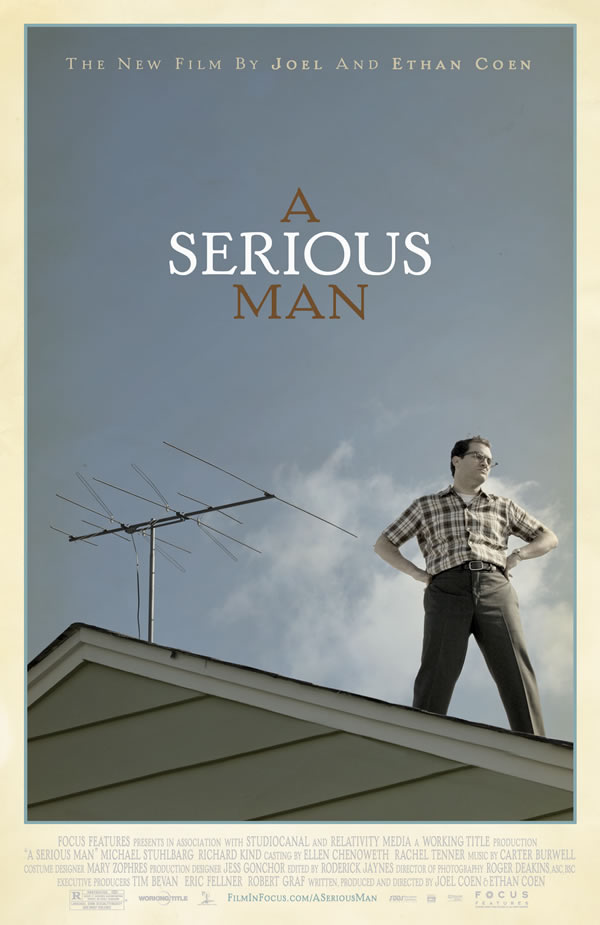
A Serious Man (2009)

UPDATE:  A Serious Man has been nominated for a Best Picture Oscar in the coming 82nd Academy Awards, to be held March 7th, 2010.  Joel and Ethan Coen receive a nod for Best Original Screenplay.

Do we go to the movies to be entertained, or to search for meaning and answers about life? For those who frequent Ripple Effects, you probably can guess what my stance is. Yes, allow me to answer a question with a question… Why must the two be mutually exclusive?

I’m all intrigued about films that explore deep subjects and yet remain as comedies, or, dramedies, as the genre has evolved in recent years. A Serious Man is one such films, entertaining and yet hauntingly serious. But it’s not entertaining with a big splash of hilarity. It is a dark comedy, a film that makes you chuckle in a most poignant way. It’s the deadpan humor that strikes deep. The subject matter in A Serious Man deals with the inscrutable question: Why do bad things happen to good people? And, if we can’t find the answer to the why, then at least, how should we then live?

The film has been described as the most personal of Joel and Ethan Coen’s works; others see it as the most Jewish they’ve done, or even somewhat autobiographical. The setting is 1967 Minnesota, where the Coen brothers grew up.

A Serious Man has won the 2009 Independent Spirit’s Robert Altman Award, and accolades for its screenplay.  It’s one of the American Film Institute’s Top 10 Films of 2009. Michael Stuhlbarg’s excellent performance receives a 2010 Golden Globe nom for Best Actor, Musical or Comedy.

Larry Gopnik (Michael Stuhlbarg) is a college physics professor, a conscientious man who just tries to live his life minding his own business, trying to do what is right.  Yet, it’s trouble he finds everywhere he turns. His wife Judith (Sari Lennick) is divorcing him for their mutual friend Sy Ableman (Fred Melamed); his daughter Sarah (Jessica Mcmanus) is stealing from him to do a nose job; his son Danny (Aaron Wolff) is taking drugs even as he prepares for his bar mitzvah; his unstable brother Arthur (Richard Kind) is staying uninvited in his house and has no intention to leave any time soon.  On the career front, his student Clive (David Kang) is bribing him for a passing grade; his tenure committee is making decision on his future while an anonymous letter is circulating, defaming him. At the same time, his chest x-ray result is back, and, an ominous tornado is making its way to his son’s school. I’m exhausted just to keep up. Can anyone explain why Larry is having so many problems while he is only trying to be a mensch, or, a serious man?

Larry goes searching for answers from three rabbis. While the first two cannot give him a satisfactory answer, the third, the most senior, is too busy to see him. Who then is left to help him through all his troubles?

Many critics equate Larry’s predicament with Job of the Bible, a righteous man facing incredulous torments. But Larry is no Job. He may attempt to be a righteous man, but he is not totally blameless. I feel the film may reflect the notion described in the book of Ecclesiastes even more:

… And yet I perceived that the same event happens to all of them. Then I said in my heart, ‘What happens to the fool will happen to me also.  Why then have I been so very wise?’ … this too is meaningless.

Ecclesiastes 2: 14 – 15

If we have no control over the bad things that happen to all, it’s only natural to question why we ought to be good then. If his wife runs away with another man, is it justified that Larry should lust for another woman? Since bad things will happen to the good and the bad alike, why bother being good? Do we act prudently because we expect positive consequences, or, do we act prudently because it is the right thing to do, period. And now, the moment of decision, the bribe…

A Serious Man throws at us more questions than answers, expectedly so, for who has all the answers? It is in such precarious situations that we look into our hearts and search ourselves. Instead of a challenge thrown at HaShem, God, I see the film as one that’s turned towards us: what would I have done?

~ ~ ~ Ripples

****

Those Magical Numbers: Year-End Musings

10

Are we coming to the end of a decade?  Or still have another year to go?  Does the new decade start with 2010, or 2011?  No matter, that debate is just academic and immaterial in light of the actual events that had taken place after we entered the new century.  From a wider perspective, it’s been a period that TIME magazine called ‘the Decade from Hell’, ‘the Reckoning’, ‘the Decade of Broken Dreams’.  Now, the new normal is recession, terrorism, climate change, pandemic.

On a personal level, a decade sounds weighty enough to send chills down the spine.  Where have all the years gone?  A decade of our life has already slipped by since the beginning of the millenium, the novelty of Y2K rubs off like the fleeting fragrance of the night-blooming flower.  Above all, how do we put into perspective a life among all the tensions on a wider scale?  Can we sculpt out a little private, inner space where peace can still thrive, and faith, hope, and love indwell despite the overwhelming odds in the outside world?

12

According to the liturgical calendar, Christmas celebration continues for 12 more days into the new year, until the Epiphany, January 6th.  With the backdrop of mostly negative global affairs, it’ll do us good to stretch the Christmas spirit a bit longer.  Let the joy and peace last for a few more days.  A reader has reminded me that Christmas Day is arbitrarily picked anyway.  True.  But since we’re given one day to ‘legitimately’ celebrate the birth of Christ, might as well make the best use of it… for I really don’t know how long such a tradition will last, or us given the ‘right’ to mention Christ publicly.  So it’s Epiphany then, 12 more days.  But… is that enough?  I mean the peace and joy, not the hustle and bustle.  Shouldn’t we extend the spirit of Christmas to all the days of the year?  Wouldn’t it be a better world if we let the Word dwell among us just a while longer, or in our wildest dream, let Truth and Grace prevail in every single day?

24

Never mind the decade, just think about the 24 hours I’m endowed with.  How should I spend my next allotment?  Not until I break down the day into 24 units can I find some pressing reality and urgency.  Years back, I used to work in a consulting firm where we had to fill in a time-sheet at the end of the day.  I had to account for my time in 15-minute units, so the firm could charge my time back to the right clients.  My boss would really frown on the category ‘general office’.  That’s what we put down when we were not actually working on a particular project, so our time is charged back to the firm.  I’m afraid it’s ‘general office’ most of the time these days… Is taking care of elderly parents ‘general office’?  umm… what about blogging?  Is it real work?  Who do I charge to?  Can I measure my time in chargeable units?

365

The most amazing site I’ve come across this year is Nina Sankovitch’s Read All Day.  On October 28, 2008 Nina embarked on the 365 Project.  She was to read one book a day and write a review on her blog for one year.  On October 28, 2009 she completed it.  What an incredible endeavour!

Nina lives in Westport, Connecticut, with a family of four reading boys to raise.  Incredible indeed.  Her first book in the Project?  The Elegance of the Hedgehog, one of my favorite books of the year.  Click Here to read her New York Times interview.

As a book lover, there’s nothing more she’d rather do than just to read all day. But Nina embarked on this project for some other reasons as well.  She read to learn, to find her place in the world, to seek directions on how to conduct her life, raise her children, relate to her fellow humanity. Also, four years after the death of her older sister at age 46,  she had now come to that age herself. She wrote on her site her purpose for reading with the most poignant words.  I would not paraphrase a single line:

“This year I am the age she was when she died: 46.  She was too young to die, she loved to read, I am fulfilling maybe even a fraction of the reading she should have had left to her. But I am not only reading to compensate, I am reading to endure.  Books — especially novels — offer a window into how other people deal with life, its sorrows and joys and monotonies and frustrations.  I can find empathy, guidance, fellowship, and experience through my reading.  I will never be relieved of my sorrow for my sister.  I am not looking for relief: I am looking for resilience.”

This is one of the most moving reasons for reading.  Nina Sankovitch now writes a book column for Huffington Post, and is still keeping her Read All Day site, down to maybe three books a week.  She is also preparing for publication a book on her 365 Project.

My next allotment of 365 is coming up very shortly.  I know I can’t take that for granted.  Who can guarantee 365, or even 24.  A book a day, what an inspiring concept… something I can never imagine myself doing.  What motivates me though isn’t her achieving that 365, but maintaining the momentum every 24.

It’s not so much about reaching that magical number, or completing a task, it’s all about finding a purpose, and the resilience to live it every single day.

***

Photo:  Footbridge to Bow Lake, Alberta.  Taken by Arti of Ripple Effects, August, 09. All Rights Reserved.

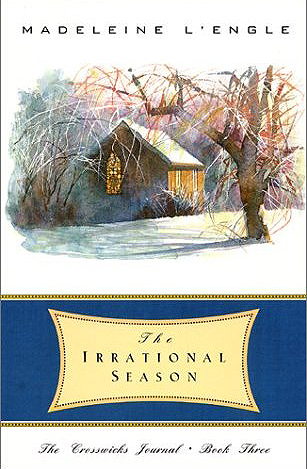
Reading The Season: The Irrational Season by Madeleine L’Engle

Striving to maintain some inner quiet, I casually took from the shelf a book by Madeleine L’Engle. Pure serendipity.  It’s one of The Crosswicks Journals, which I’ve shoved to the back of my mind for years, albeit they’ve been my all time favorite reads.  But how apt it is to flip through The Irrational Season, the third installment of The Crosswicks Journals, at this Christmas time.  Oh what joy to discover Madeleine L’Engle all over again.

Famous for her Newbery Award winning young adult novel A Wrinkle In Time, L’Engle was a prolific writer who had 63 publications to her credits.  Her works span from young adults to adults, fiction, science fiction, memoir, journals and poetry, with non-fiction books on faith, art, family, and humanity.  Yes, I say humanity, because L’Engle’s essays depict her strive to be human, and how her faith has defined the essence in her quest.

The Irrational Season comprises L’Engle’s ruminations on the significant events in the liturgical calendar.  And of course, it is Advent and Christmas that I dwell upon for my seasonal read.  This time, my reading has stirred in me a deeper appreciation of her insight and eloquence.

Art is for me the great integrater, and I understand Christianity as I understand art.  I understand Christmas as I understand Bach’s Sleepers Awake or Jesu, Joy of Man’s Desiring; as I understand Braque’s clowns, Blake’s poetry.  And I understand it when I am able to pray with the mind in the heart… I am joyfully able to affirm the irrationality of Christmas.

…  Christmas evoked in me that response with makes me continue to struggle to understand, with the mind in the heart, the love of God for his creation, a love which expressed itself in the Incarnation.  That tiny, helpless baby whose birth we honor contained the Power behind the universe, helpless, at the mercy of its own creation.

Cribb’d, cabined, and confined within the contours of a human infant.  The infinite defined by the finite?  The Creator of all life thirsty and abandoned?  Why would he do such a thing?  Aren’t there easier and better ways for God to redeem his fallen creatures?

And yet, in His most inscrutable, incomprehensible move, the One who called forth the universe from nothing, the Light and the Word, became flesh and drew near to us, to partake life as mortals knew it, and at the end, willingly go through an excruciating experience no mortals had ever known.  Impossible!  Utterly irrational!  And yet L’Engle embraces such an unimaginable scenario:

I live by the impossible… How dull the world would be if we limited ourselves to the possible.

And how grateful we ought to be, that such an accepting spirit pervaded in Mary’s heart and mind as well…

This is the irrational season
When love blooms bright and wild.
Had Mary been filled with reason
There’d had been no room for the child.

.

.

But now is the hour
When I remember
An infant’s power
On a cold December.
Midnight is dawning
And the birth of wonder.

*****

‘Reading The Season’ Posts over a Decade:

2020: Jack by Marilynne Robinson

2019: ‘A Hidden Life’ – A Film for the Season

2018: A Verse from Madeleine L’Engle’s The Irrational Season

2017: A Wrinkle in Time by Madeleine L’Engle

2016: Silence by Shusaku Endo

2015: The Book of Ruth

2014: Lila by Marilynne Robinson

2012: Surprised by Joy by C. S. Lewis

2011: Walking on Water by Madeleine L’Engle 

2010: A Widening Light by Luci Shaw

2009: The Irrational Season by Madeleine L’Engle

2008: The Bible and the New York Times by Fleming Rutledge 

2008: A Grief Observed by C. S. Lewis

*****

Photos: Except the book cover, all photos taken in Israel by Arti of Ripple Effects, November, 07. All Rights Reserved.

Season’s Musings

At this time of the year I always have a struggle, a fight against numbness.  The hustle and bustle of the Season leaves me striving to grasp something authentic and meaningful.  I have a hard time staying afloat the flood of packaged cheeriness, muzak in jingles or bells, ephemeral Santa’s and reindeer.   With the word “Hallelujah” almost becoming a laughable cliché, an ordinary expression for scenarios from finally finding the right gift for the family pet to paying up the Visa bill,  soon it would take a history lesson to clarify the origin of this festival called Christmas.

Intentionally or not, the Reason of the Season has been masked so not to offend, the birth of Christ replaced by themes acceptable to most cultures, like gift-giving, family reunion, ornaments, decorations, and good will towards all.  ‘Season’s Greetings’ has become the politically correct sign of the time.

On that winter night in Bethlehem, the shepherds bore no gifts. Indeed, their very presence and worship could well be the gift they offered.  Yes, the several wise men brought along gold, frankincense, and myrrh for the Christ child only, not to share among all.  For these gifts symbolized the very reason for His Advent, the infinite King debased, the lowly birth was just the beginning of a short and misconstrued life that ultimately ended in a horrific death.

The Advent, the few weeks before Christmas, is the best time for me to ponder again such a paradox.  If there is any joy or cheeriness, it comes from the initial degradation and ultimate agony of One.  It is from that vicarious suffering with humanity and the offering of substitutional death that Christmas derives its meaning for me.

A few weeks ago during a Sunday message, the name Joni Eareckson re-emerged in my mind.  I was a young teenager when I first read her tragic story.  At 17, she dove into shallow water and broke her neck, and remained a quadriplegic ever since.  I cannot imagine myself paralyzed from the neck down, having had to be lifted from bed to wheelchair for 37 years.

But what she has done sitting in that wheelchair has surpassed many able bodies. Her international ministry to people with disabilities is still thriving after 30 years.  The paintings which she has labored over inch by inch with a paintbrush between her teeth have become a testimony of perseverance, every stroke an ode to life.  Through her writing and broadcasting, Joni has become a voice and inspiration for the disabled and their families, all because she knows her suffering had been vicariously borne by the One who came just to share that pain, and redefine the meaning of life.

The hymn (Phillip Bliss, 1875) that had uplifted Joni in her most despondent hours painted not a cheery figure but a suffering Christ who came with no jingles or bells, and utterly devoid of packaging:  “Man of sorrows, what a name, for the Son of God who came…”

If you have a few minutes in this busy Christmas season, pause and take a look at this short clip.  Of all interviewers, I found Joni talking to Larry King, dated June, 2009.

Alberta Bound

Autumn in rural Alberta is immensity amplified.  Big sky and expanse of farmland is the main scenery, something what W. O. Mitchell describes as “the least common denominator of nature… land and sky.”

The air is crisp, fresh, and dry.  Colors are simple:  Big blue sky, golden harvest, even just hay rolled up in bales.  Farming against the snow-capped Rockies, rustic, serene, rejuvenating, harmonious fusion of nature and human endeavor.

Trees as windbreaks in the summer, nature’s sculpture in the fall.  So the leaves are gone, but only then can we see the beauty of the bare branches, like dancers celebrating the changing of the seasons.

The solitary figure in the field… en masse.

“Think I’ll go out to Alberta,
Weather’s good there in the fall.
Got some friends that I can go to working for…”

For some inexplicable reasons, as I’m posting these photos, a flood of nostalgia whirls up in me.  The melodies and lyrics of those songs and singers that we can claim our own keep filling my mind all day. Not too many up-and-coming like to hang around here, since all the fame and glory one seeks is down south.

But these remain our own: Gordon Lightfoot, Ian and Sylvia Tyson, Neil Young… and songs about Alberta, about heading west to seek a new life, or to escape from the pain of lost love.  Maybe the wide open country, big blue sky and wide expanse of land do have their healing powers.

And memories, forever clear, keep us rooted… here’s home.

****

Photos taken by Arti of Ripple Effects, November, 09.  All Rights Reserved.

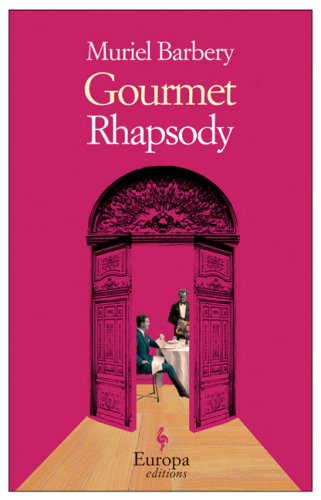
Gourmet Rhapsody by Muriel Barbery

Gourmet Rhapsody

Before the French publishing sensation The Elegance of the Hedgehog, there was Gourmet Rhapsody.  We in English-speaking North America were not aware of such a delicacy until after the translation of Hedgehog was introduced to us.  Too risky to sell to a different palate?

As a first novel, Gourmet Rhapsody, the 156-page collection of short chapters, is like an appetizer to the main dish that is Hedgehog.  It is a foretaste of the more meaty philosophical pondering of the latter.  Now that we have savored the main dish first,  might as well treat Gourmet Rhapsody as the dessert.  Does the cover not make you think of a raspberry sorbet?

If food is a metaphor for life, then the food critic is almost at the status of divinity, especially ‘the greatest food critic in the world’.  That self-ascribed praise is the egotistic utterance of none other than Pierre Arthens, the celeb resident on the fourth floor of the luxury apartment at 7 Rue  de Grenelle, the setting for Hedgehog.

Pierre Arthens’ pen is indeed mightier than the sword.  The knowledgeable and merciless food critic, the ‘true genius of the food world’, is feared from all corners of the world, ‘from Paris to Rio, Moscow to Brazzaville, Saigon to Melbourne and Acapulco’.  He holds the power to exalt a chef and restaurateur to stardom or crush their ego and future like eggshells.

Between these two extremes — the rich warmth of a daube and the clean crystal of shellfish, I have covered the entire range of culinary art, for I am an encyclopedic esthete who is always one dish ahead of the game — but always one heart behind.

But what use is the allure of fame and power when one is on deathbed, at 68, given only 48 hours to live.  Alas, from the years of Epicurean pursuits of cream and butter, oil and sauces, games and other culinary delights, the world renowned food critic is dying not from liver or stomach ailments, but cardiac failure.

Gourmet Rhapsody is a collection of Arthens’ own reminiscence of a life with food and his final quest.  The vividly evoked memories are interspersed with poignant commentaries by those who have come into the path of his life, including his wife, children, nephew, granddaughter, restaurateurs, his doctor, his concierge, his mistress, and even his cat.

And alas, what pity it is to find that none of the entries from these people is positive.  His daughter Laura stays in the stairway, refuses to go into his room to see his last.  His son loathes his ego and his ruthless destruction of theirs.  His wife Anna, whom he had loved as an object of possession, is ever more ambivalent at his deathbed.

And what irony, the only positive review of his life comes from his cat Rick:

… here I am, nineteen years I’ve knocked about as head tomcat on the Persian rugs of my abode;  just me, the favorite, the master’s alter ego, the one and only, to whom he declared his thoughtful, undying love…

So, what does it profit a man if he gains the whole world but loses the love from his wife and children, or respect from those who have crossed his path?  This ultimate question belies the enticing and delicious offering described throughout the chapters.  As in Hedgehog, Barbery has cleverly created a philosophical concoction without appearing didactic.  Here in Gourmet Rhapsody, food is the delightful sauce bringing up the taste of such rumination.

As a lover of sushi and sashimi, my favorite chapter is ‘Raw’, in which Arthens reminisce on his first taste of these Japanese culinary delights:

It was dazzling… True sashimi is not so much bitten into as allowed to melt on the tongue.  It calls for slow, supple chewing, not to bring about a change in the nature of the food but merely to allow one to savor its airy, satiny texture… sashimi is velvet dust, verging on silk, or a bit of both, and the extraordinary alchemy of its gossamer essence allows it to preserve a milky density unknown even by clouds.

But the powerful food critic has but one final quest on his deathbed.  There is one particular food that he wants to taste most before his imminent demise, but which he fails to name.  No, not the coq au vin, or the extravagant pots-au-feu, or poulets chasseur, or the grilled meat of Tangiers, or the Moroccan kesra, or the velvety, melt-in-your-tongue sashimi.  Should I reveal it here?  Alright, Spoiler Alert.

It is the chouquettes, cream puffs, but not from fancy patisserie.  Pierre Arthens wants to taste those chouquettes that are stuffed in plastic bags from the supermarket.  After a life of bourgeois elegance and Epicurean odyssey, it is the mundane, ordinary thing that Arthens seeks on his deathbed.  In the face of mortality, every single moment of mundaneness is something to devour.

If only he had savored that sooner, not just food, but the people in his life, and everything else.

~ ~ ~Ripples

Gourmet Rhapsody by Muriel Barbery, translated by Alison Anderson, Europa Editions, 2009.  156 pages.         

To read my review of  The Elegance of the Hedgehog, CLICK HERE.

***

Whip It (2009)

Whip It

I can’t recall how many times I’d watched roller derby on TV, years back, maybe just a few times.  When I asked my niece who watched the movie with me, as a twenty-something, she hasn’t even seen it once.   But Drew Barrymore, in her directorial debut, has effectively captured the human side of a sport not many know about.  And with it, she has poignantly woven in some relevant issues her audience could relate to, no matter what demographics they’re in: coming-of-age, finding love, confronting parental expectations, searching for personhood and empowerment, parenting and letting go.

After watching Juno (2007), I knew I must see more of Ellen Page.  Here in Whip It, Page has proven that she’s not just impressive as an actor, but also as an athlete.   She plays Bliss Cavendar, a 17 year-old small town Texas girl, bored, docile, shuffled from one beauty pageant to another by her overbearing mother Brooke, a former beauty queen turned middle-age mail clerk (sensitively played by Marcia Gay Harden, Mystic River, 2003; Pollack, 2000).

After she watches a roller derby game with her best friend Pash (Alia Shawkat), and successfully tries out for the team Hurl Scouts in Austin, Texas, Bliss, now Babe Ruthless, sees her life take off with high octane energy.  She has passionately fallen for the high contact sport and a new boyfriend, rock band member Oliver (Landon Pigg).

The head-smashing, rowdy derby culture is probably the farthest away from the frothy and genteel beauty pageants of Texas, thus forms the great chasm between mother and daughter.  Of course Bliss tries to hide all her activities from her mother, until it can’t be covered anymore.  For she has become the poster girl for the final championship.

There are cliché sequences that we’ve all seen before, the light version of physical prowess as in Million Dollar Baby (2004), the get-back-up perseverance of Rocky, and, reminiscence of Shall We Dance (2004) in the final championship.  But, it’s all fun and even exhilarating.  Thanks to a great cast, the humor comes through naturally.  I must mention some great deadpan act from diner manager Birdman (Carlo Alban), who reminds me of Pedro in Napoleon Dynamite (2004).   Another great support is Hurl Scouts coach Razor played by Andrew Wilson.  His performance makes me feel like I’m watching a Wes Anderson movie.  Later I find out he’s older brother to Owen, then it’s all clear to me… it runs in the family.

[picapp src=”6/4/3/c/Whip_It_Los_86ef.JPG?adImageId=5337308&imageId=6660163″ width=”180″ height=”250″ /]  Barrymore has effectively created some powerful and touching scenes that make the comedy worthwhile.  It’s scenes like these that propel a comedy into the realm of meaning.  She has balanced the comical with hard reality, for it’s not simply about a girl choosing what she wants to do, purely from her own point of view.  Often our choices are entangled in a web of relationships.  Yes, we may have the autonomy to choose, but our choices also affect others.  Some gratifying moments are sensitively performed, between mother and daughter, father and daughter, and a 36 year-old derby teammate who openly shares her heart with Bliss in the car, with her young son in the back seat.

Into its second week of screening, Whip It has not fared as well as expected at the box office.  But for screenwriter Shauna Cross, who has turned her own novel Derby Girl into screenplay, I trust this is just another blow she’s got all too used to, as a roller derby girl herself from Austin Texas, before moving to L.A.  She knows how to get back up and keep on skating, even in the aggressive arena that’s L.A.

(Top Photo Source: USA Today, Bottom: PicApp.com)

~ ~ ~ Ripples