Midnight In Paris (2011)

.

.

A Woody Allen movie rated G? Yes, and maybe only in B.C. where I saw it in Vancouver yesterday. If you’re offering charming characters, lively performance from some talented actors, Woody Allen’s own clever screenplay inundated with witty dialogues, and have him direct in the backdrop of dreamlike Paris, the result is pure delight. You don’t need too much of anything extra, hence the MPAA PG-13 rating. And maybe because of that, clean and crisp, this is one of the Woody Allen movies I enjoy most for some years. And yes, this is the one with French first lady Carla Bruni in it, where Allen has to direct under the watchful eyes of the French President and his security personnel.

Gil (Owen Wilson) and Inez (Rachel McAdams) are engaged to be married. They take a trip to Paris with Inez’s parents John (Kurt Fuller) and Helen (Mimi Kennedy) for John’s business merger. While Gil and Inez first appear to be a romantic pair, we soon find them to be incompatible. Gil is an underachieved screenwriter from California, aiming to write his first novel. His dream of Paris is one of the golden age, nostalgically inhabited by the modernists, the artists and literati of the 1920’s.

However, his fiancé Inez fails to see his aspiration or potential, and the imagination that the cultural city can unleash in him. Rather, she falls for their American friend Paul (Michael Sheen), the intellectual snob whose self-importance drives him to snub Gil and even counter their museum guide (Carla Bruni) in the accuracy of her information. But Gil is more preoccupied with his midnight encounters, which ultimately transform him and change their individual paths. These experiences after midnight are just wonderful surprises for Gil, and me. Without giving too much of a spoiler, let’s just say it’s Woody Allen’s version of ‘Back to the Future’.

When I first saw the trailer, I had reservation about Owen Wilson being the leading man in a Woody Allen movie set in Paris. Would that be a miscast? Well, I’m proven wrong the moment he appears on screen. Wilson embodies the unassuming and delusional Gil, screenwriter from Pasadena, CA. He casts all of his previous film roles out of my mind and replaces with only this one of the moment, offering a performance that is impressively convincing. He leads a cast of wonderful actors, including the charming Marion Cotillard, veteran Kathy Bates, the versatile Michael Sheen, and a very dramatic Adrien Brody. And I won’t give away who is supposed to be who, I’ll leave that joy of discovery for you.

This is a movie for art and literature lovers, ideal for book bloggers and discussion groups. Allen has cleverly juxtaposed the modernists in the turn of the 20th century with their contemporary admirer Gil. We encounter all these iconic figures in the film: Ernest Hemingway, Scott and Zelda Fitzgerald, Gertrude Stein, Pablo Picasso, Cole Porter, Salvador Dali, T.S. Eliot and more… it’s so much fun to hear allusion to their works, and some of them utter lines that are their own but in the style and wit of Woody Allen’s.

What makes the movie gratifying of course is not just the visuals, people and places, but how the story leads. The twist towards the end is the pivotal revelation for Gil. While one can bask in nostalgia, one needs to embrace the present in order to fully live. As I watched the movie, I wanted to read the script and capture Allen’s ingenuity. As I left the theatre, I wanted to see it again.

~~~1/2 Ripples

To read my review of Hemingway’s A Moveable Feast CLICK HERE.

A Jane Austen Education by William Deresiewicz

I’ve been following William Deresiewicz’s articles in The American Scholar for a few years. His idea of solitude has inspired my posts “No Texting for Lent and the End of Solitude” and “Alone Again… Unnaturally.”

I’ve not seen any pictures of him, but know that he has taught English at Yale for ten years. So I’ve always thought him to be one calm, cool, and collected (older) academic. Well, I was totally surprised as I read his book A Jane Austen Education: How Six Novels Taught Me About Love, Friendship, and the Things That Really Matter. Expecting a book on literary criticism, and from the title, maybe a dash of personal anecdote, I found it to be much more than these.

It is all of the following: literary analysis, biography, memoir and even confessional. Introduced to Jane Austen by his professor in graduate school, Deresiewicz had encountered numerous ‘eureka moments’ of self-discovery from reading her six novels. He unabashedly discloses how his own life experiences, and often youthful foibles, parallel those of Austen’s characters from each book. For us who have savored Austen’s works, we already know how wise and perceptive she is. But Deresiewicz has gone much deeper by being so brave as to reveal his self-absorbed psyche of younger days, his romantic mishaps, true friends and those who appear to be, the painful conflicts between his parents, and his search for self apart from a domineering father, all in light of Austen’s colorful literary canvas.

So before the calm, cool and collected guy emerged, there was one rebel, alienated follower of the modernists. Seems like every guy who comes to Austen is being dragged along with much reluctance, “just thinking about her made me sleepy.” But his reading, studying and writing a dissertation chapter on Austen’s works totally reshaped his views, and life.

Here’s an outline of Deresiewicz’s journey of maturity, of finding true love, and most importantly, of becoming one who has the capacity to love, all due to Austen’s novels. Too good to be true, isn’t it? I admit at times I found there were too many coincidences and perfect parallels, a bit contrived. But as I read, I knew I must decide one way or the other. And I was persuaded to see it as audacious honesty. His self-deprecating and revealing account of his journey towards maturity and improvement is entertaining, bold even as he mentally draws the line between friends and ‘foes’, true and fake, albeit keeping them anonymous. I’m sure those he’d described would definitely recognize themselves in the book.

As with Austen’s opening lines in her novels, Deresiewicz’s opening line sets the stage of what’s to come:

I was twenty-six, and about as dumb, in all human things, as any twenty-six-year-old has a right to be, when I met the woman who would change my life.

That woman, of course, is Jane Austen. Here are some of the key lessons:

From Emma, he learns to put aside his academic snobbery, that there’s no one too lowly for him to know, nothing too trivial or common for him to pass by. For these are the very ingredients that make up life.

Not that I hadn’t always taken my plans and grand ambitions seriously–of course I had. What I hadn’t taken seriously were the little events, the little moments of feeling, that my life actually consisted of. I wasn’t Stephen Dedalus or Conrad’s Marlow, I was Emma. I was Jane Fairfax. I was Miss Bates. I wasn’t a rebel, I was a fool. I wasn’t floating in splendid isolation a million miles above the herd. I was part of the herd. I was a regular person, after all. Which means, I was a person.

From Pride and Prejudice, he learns to grow up.

For [Austen], growing up has nothing to do with knowledge or skills, because it has everything to do with character and conduct… Growing up means making mistakes… to learn to doubt ourselves…

By making mistakes, and recognizing her mistakes, and testing her impulses against the claims of logic, the heroine of Pride and Prejudice learned the most important lesson of all. She learned that she wasn’t the center of the universe.

From Northanger Abbey, he learns to learn, and by so doing, to teach.

The habit of learning: if Catherine could learn to love a hyacinth when she was seventeen… I could keep learning to love new things my whole life. Of course, it was my professor himself who had helped me learn to love Jane Austen in the first place, against expectations at least as stubborn as the ones that Catherine brought to Northanger Abbey. But I was starting to get it now: the wonderful thing about life, if you live it right, is that it keeps taking you by surprise.

From Mansfield Park, he learns to see it as a mirror of “the rich Manhattanites” circle he was trying to get in.

… the greed beneath the elegance, the cruelty behind the glow–and what I myself had been doing in it… If my friend was a social climber, then what the hell was I?… my attraction to that golden crowd, my ache to be accepted by them, what did it amount to if not the very same thing? Who was I becoming? Who had I already become?

… we also have an aristocracy in this country, and I was looking at it.

From Persuasion, and from his own experience, he learns to prove Nora Ephron wrong. Unlike her movie “When Harry Met Sally”, man and woman can be friends, without “the sex thing getting in the way.”

A man and a woman, even two young, available ones, could talk to each other, understand each other, sympathize with each other, be drawn to each other, even share their intimate thoughts and feelings with each other–as Anne and Benwick did–without having to be attracted to each other–as Anne and Benwick clearly weren’t. They could, in other words, be friends.

Anne and Harville shared a common footing in the conversation, debating each other with mutual respect and affection and esteem. Men and women can be equals, Austen was telling us, so men and women can be friends.

And finally, from Sense and Sensibility, he learns what it means to fall in love.

To Austen, love at first sight is a contradiction in terms… As dull as it sounded, I now saw, Elinor’s way of going about things is the right one: to see a great deal of a person, to study their sentiments, to hear their opinions. … And it is a person’s character, not their body, with which we fall in love.

Like all Austen’s novels, Deresiewicz’s book ends with a marriage, his own. But without first reading the six Austen novels, he would have been totally unprepared for such a relationship. “Love, for Austen, is not becoming forever young. It’s about becoming an adult.” The book is the best way to show his gratitude to the matchmaker.

~ ~ ~ Ripples

***

A Jane Austen Education: How Six Novels Taught Me About Love, Friendship, And The Things That Really Matter by William Deresiewicz, The Penguin Press, New York, 2011, 255 pages.

This article has been published in the Jane Austen Online Magazine. CLICK HERE to go there for more Regency and Austen reads.

CLICK HERE to William Deresiewicz’s website, and watch interviews of him with the editorial director of Penguin Classics, Elda Rotor.

Howards End by E. M. Forster

Howards End requires slow reading. That’s how I savor every page, dig out every gem and delve into every contentious issue it raises. It is a book exploring dichotomies: Rich and poor, male and female, town and country, art and business, life and death.  After reading several contemporary novels, where the everyday vernacular is part of the text, it is immensely gratifying to immerse in the literary and poetic narratives, deep and yet highly amusing story of E. M. Forster’s masterpiece.

Howards End is a cozy country home, pristine and idyllic. Its owner, Ruth Wilcox, like her property, is untainted and well set in traditions. Her husband Henry Wilcox is a stark contrast. He is the new rich, entrepreneurial, business-minded and successful in the London financial circuit. Shortly before her death, Ruth finds a new friend in Margaret Schlegel and is introduced to a different world when Ruth visits her in London. Margaret, her out-spoken sister Helen, and younger brother Tibby who is attending Oxford, represent the new wave of social progressives with a vision of an egalitarian society, and who find their fulfillment in the arts and intellectual pursuits.

Before her passing in a nursing home, Ruth wills that Howards End be left to Margaret Schlegel. This comes as a shock to the rest of the Wilcoxe family, who deliberately disregard the wish. By chance, the Schlegel sisters come across Leonard Bast, an impoverished man who due to some ill advice from Henry Wilcox, has lost his job and livelihood. Herein lies the thread that Forster so skillfully weaves through his characters and storyline, exposing conflicts of the classes, of conscience and ideals.

I’ve seen the Merchant Ivory film adaptation a few times over the years, but this is my first experience with the source material. While I read it with Emma Thompson (Margaret Schlegel), Helena Bonham Carter (Helen Schlegel), Anthony Hopkins (Henry Wilcox), Vanessa Redgrave (Ruth Wilcox), Samuel West (Leonard Bast)… constantly appearing on my mind, they are no hindrances to my enjoyment. Rather, I just have to marvel at how superb their performances had been in light of my reading Forster’s characterization.

.

.

The book transports me to a world different in time and space, but feels ever so close. One hundred years have passed since its publication in 1910, the issues are still relevant, and the characters authentic and real. Like just a few weeks ago, I was writing about the two different art forms of books and films, and how we should treat each one separately to appreciate them. Here’s Margaret addressing this very issue:

What is the good of the arts if they’re interchangeable? What is the good of the ear if it tells you the same as the eye? Helen’s one aim is to translate tunes into the language of painting, and pictures into the language of music…. Oh, it’s all rubbish, radically false. If Monet’s really Debussy, and Debussy’s really Monet, neither gentleman is worth his salt — that’s my opinion.

Thank you Margaret for your comment.

Listening to the sisters arguing about every single issue is most entertaining. Here’s Margaret again:

We have great arguments over it. She says I’m dense; I say she’s sloppy.” (makes me think of Elinor and Marianne Dashwood, Sense and Sensibility)

After all, it’s the reflexive self that’s valuable, and the perceptive Schlegel sisters are prone to analyze. Helen is quick to make Leonard Bast feel comfortable when he accepts the invitation to tea at the Schlegel’s:

Cake?” said Helen. “The big cake or the little deadlies: I’m afraid you thought my letter rather odd, but we’ll explain–we aren’t odd, really–nor affected, really. We’re over-expressive: that’s all.

Thank you Helen, for that last line.

For Leonard Bast, the impoverished clerk with richness of soul, the meeting of the sisters is just too much for him… another world that he yearns to belong but knows he will never enter. Forster’s lyrical description just might well expose his ambivalent psyche. Leaving the Schlegel home, Bast steps out onto the street:

London was beginning to illuminate herself against the night. Electric lights sizzled and jagged in the main thoroughfares, gas-lamps in the side streets glimmered a canary gold or green. The sky was a crimson battlefield of spring, but London was not afraid. Her smoke mitigated the splendour, and the clouds down Oxford Street were a delicately painted ceiling, which adorned while it did not distract. She has never known the clear-cut armies of the purer air. Leonard hurried through her tinted wonders, very much part of the picture. His was a grey life, and to brighten it he had ruled off a few corners for romance. The Miss Schlegels–or, to speak more accurately, his interview with them–were to fill such a corner…

And who would have thought the rich and callous but now widowed Henry Wilcox would ask for Margaret’s hand in marriage. Forster’s sensitive rendering again is marvellous as he describes Henry proposing to Margaret:

She had too much intuition to look at him as he struggled for possessions that money cannot buy. He desired comradeship and affection, but he feared them…

But what kind of a marriage will that be? The following conversation could well foreshadow their future together. This takes place when Margaret asks Henry about his initiated friendly talk with her brother Tibby:

What did you talk about? Me, presumably.”

“About Greece too.”

“Greece was a very good card, Henry… Well done.”

“I was telling him I have shares in a currant-farm near Calamata.”

“What a delightful thing to have shares in! Can’t we go there for our honeymoon?”

“What to do?”

“To eat the currants. And isn’t there marvellous scenery?”

“Moderately, but it’s not the kind of place one could possibly go to with a lady.”

“Why not?”

“No hotels.”

“Some ladies do without hotels. Are you aware that Helen and I have walked alone over the Apennines, with our luggage on our backs?”

“I wasn’t aware, and, if I can manage it, you will never do such a thing again.

The undercurrent of power and conflicts… intriguing storytelling.

And finally, I must stop. But not until I’ve quoted this conversation between Helen and Leonard Bast. The finality of life renders all material goods meaningless. Is this cold comfort though for the poor? Even with such a good line as this one uttered by Helen: “Death destroys a man: the idea of Death saves him.”, Forster may just well be toying with us again. Here’s Helen with her exposition on the existential and Bast’s response:

I love Death–not morbidly, but because He explains. He shows me the emptiness of Money. Death and Money are the eternal foes… Men like the Wilcoxes… building up empires… But mention Death to them and they’re offended, because Death’s really Imperial, and He cries out against them for ever.” …

Leonard looked at her wondering… Death, Life, and Materialism were fine words, but would Mr. Wilcox take him on as a clerk?

Oh, the subtle humour…

And the ultimate ironic ending makes this already enjoyable read ever more intriguing… Forster’s version of the meek inheriting the earth?

~ ~ ~ ~ Ripples


***

Which Jane Austen Heroine Was Jane Most Like?

A while ago due to a glitch on my blog, I lost all the visual images on my side bar, including a poll. Accidentally I found it again today and glad to see the results are still there.

So here it is, for all you Janeites, book and literature lovers out there. If you haven’t voted, you can do that now. If you have voted before, and just might have changed your opinion, vote again. I’m sure Jane wouldn’t mind.

Life imitates art… art imitates life? Which of Jane Austen’s heroines do you think the author most resembled in terms of character?

.

You’re welcome to share with us why you vote that way.

Other related posts on Ripple Effects:

Jane Austen: Sense Or Sensibility?

What Was Jane Austen Really Like? Reading Tomalin and Shields

Art Imitates Life, Life Imitates Art, or

You’ll Never Catch Up

Comments from my last post “Movies to watch with Mom” had me running back to the 60’s, 50’s and even the 30’s for movie recommendations. Admittedly, I’ve been playing catch-up in recent years, watching films I’ve missed, including those from “The Golden Age of Hollywood”, the 30’s and 40’s. TCM is one of my favorite channels. So, thanks to litlove and shoreacres, I’ve been having a fun time digging out gems… IMDb is a great resource.

The oldest movie I’ve seen in its entirety is probably Charlie Chaplin’s “The Kid” (1921). I’ve watched only excerpts of D. W. Griffith‘s “The Birth of a Nation” (1915), so that doesn’t count. Dreyer’s “The Passion of Joan of Arc” is probably the next oldest (1928) I’ve seen. Then comes Ozu’s “A Story of Floating Weeds” (1934). They are all silent films.

Several of my all time favorites are in black and white: “Casablanca” (1942), Ozu’s “Tokyo Story” (1953), Robert Bresson’s “Diary of a Country Priest” (1951) and “Pickpocket” (1959), and to the 60’s, “To Kill a Mockingbird” (1962).

Yesterday, I came across this tweet from Scott Myers of Go Into The Story, a top screenwriting site in the blogosphere:

Thor” is the 46,775th movie registered with MPAA. If u watched 1 movie per day, it would take you 128 years to see them all.

That is… “see them all” up to “Thor”.

So, I don’t feel that bad for having a relatively limited ‘repertoire’. And it’s perfectly justified that I only see and write about those that interest me… That may well explain why you see mostly three out of four ripples in my reviews, since I’ve already eliminated the bulk of them. So, don’t feel bad that you haven’t caught up, it’s humanly impossible. And I’m afraid I’ll have to skip “Thor”.

The same with books.

I joined Goodreads recently. A whole new world opened up for me. I mean, the number of books people have read, or are currently reading… I feel like a tortoise in a race among road runners. Now this is not as easy as adding a friend on Facebook. Turning a ‘currently-reading’ book into ‘read’ is an achievement, not just a click on the ‘confirm’ button.

Lately, there’s a lot of discussions about the topic of being well-read. First off, finding a consensus on its definition is hard enough, let alone its measurement. According to Wikipedia, in 2009, there were 288,355 new books published in the United States (UNESCO data). Now that’s only for one year, in one country. Consider the past decades and centuries and all the classics of all human history and languages.

I like the title of a recent NPR article by Linda Holmes: “The Sad, Beautiful Fact That We’re All Going To Miss Almost Everything”. It begins with this statement:

The vast majority of the world’s books, music, films, television and art, you will never see. It’s just numbers.

We just can’t keep up with them all. In the article, Holmes calculates if you read 2 books a week continuously from age 15 until you’re 80, you’ll have read 6,500 books, which sounds pretty impressive. Let’s say you limit yourself to just read books from the last 250 years, those 6,500 books don’t even make a dent. Further, as you’re reading, catching up with all those already published works, by the time you’re 80, you’ll have missed 65 years of new publications.

Why even bother playing the catch-up game? If there’s any catch-up that’s truly meaningful, catch up with your own passion, curiosity and purpose, instead of heeding the tyranny of the populace. I’d probably enjoy my reading most if I don’t need to achieve anything by it. I’m sure the tortoise would see every single flower along the way.

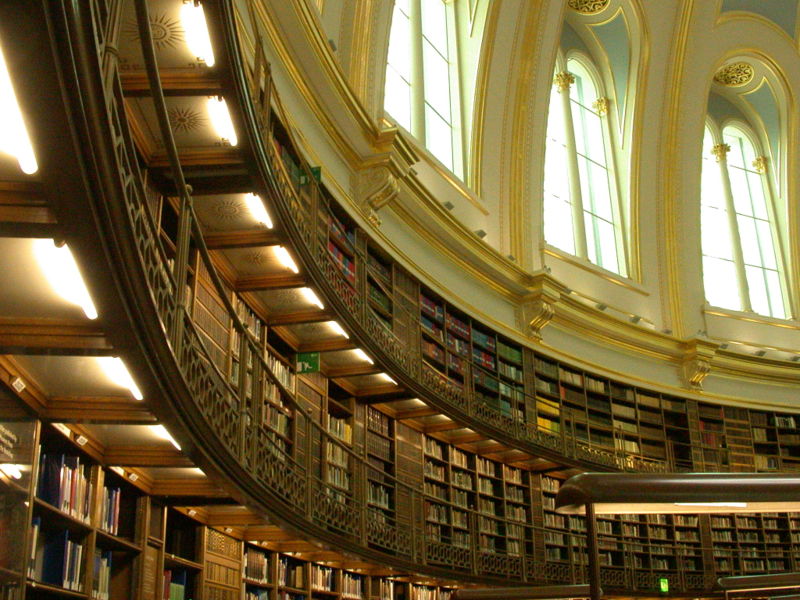
Photo Source: The British Museum Reading Room from Wikimedia Commons

Movies to Watch with Mom

Best time to enjoy some mother-child bonding is to watch a movie together and afterwards, talk about it. The following are Arti’s recommendations for Mother’s Day gifts, DVD’s or Blu-ray’s. Click on the links to read my review for more details.

The King’s Speech (2010) – New release on DVD and Blu-ray, just in time for Mother’s Day. You want to keep this Oscar Best Picture not just for the excellent performance by Colin Firth, Geoffrey Rush, and Helena Bonham Carter, but all the special features that come with: Director Tom Hooper’s commentary, Q & A with principal cast, behind-the-scenes featurette “An Inspirational Story of An Unlikely Friendship”, historical speeches of the real KGVI (and see how good Colin Firth is), and interview with Lionel Logue’s grandson.

True Grit (2010) – Mom might remember the 1969 John Wayne and Glen Campbell version. But tell her this is way better. The Coen brothers have breathed soul into this remake adaptation of Charles Portis’ Western novel. Time well spent if only just to watch the then 13 year-old Hailee Steinfeld’s performance, handling and being handled by Jeff Bridges. 10 big Oscar noms.

Made In Dagenham (2010) – Based on the true story of the 1968 strike at the Ford Dagenham car plant in England, where female workers went on strike to protest sexual discrimination. Sally Hawkins leads a historical, landmark victory for women workers to achieve equal pay. What efforts, torments, and costs to the individuals and their family just to claim something that’s so basic and reasonable.  Remember Sally Field in “Norma Rae” (yes, that’s 1979). This is the modern, British version.

Beauty In Their Eyes (2009) – Won Oscar Best Foreign Language Film. From Argentina, the film offers a gratifying experience, a layered, affective, and captivating combination of crime, suspense, and human sentiments. A retired legal counselor writes a novel based on an unresolved case he handled. While doing that, the flood gate of memories and unrequited love bursts open but in a moving and restrained manner. I was touched by the superb performance, the thematic element, and the heart-stirring music.

And if you’ve missed these ones, now is the time to catch up with Mom together on the comfy couch:

Nowhere Boy (2009) – Biopic of  a teenaged John Lennon (Aaron Johnson). I wrote these words in my review: “I’ve particularly enjoyed the mother-son relationship depicted so poignantly in the movie, and the tug of war between the one who has given birth to and the one who has raised the child.” Kristin Scott Thomas as Aunt Mimi and Anne Marie Duff as Lennon’s birth mother Julia give life to this delightful rendition.

An Education (2009) –  Superb performance by Carey Mulligan who deservedly received an Oscar nom for Best Actress. A coming-of-age story of 16-year-old Jenny when a suave and seemingly classy man twice her age befriends her and captures not only her heart but the trust of her parents. Adapted from Lynn Barber’s memoir. Links to Granta’s interview and excerpt from Barber’s memoir in my review.

Easy Virtue (2008) – Based on Noel Coward’s play, this one is a frothy, light-hearted take on a family feud. If you’ve enjoyed Colin Firth and Kristin Scott Thomas together (a rarity after The English Patient), then this is a must-see. Jessica Biel and Ben Barnes co-star. You’ll see some unlikely feats, like the Firth and Biel tango. But, what are comedies for, if not to highlight the improbable?

Broken Flowers (2005) – I missed this one when it first came out, not a big commotion. Glad to have caught it on DVD. With Bill Murray, you know what to expect, deadpan but also deeper than it looks. An interesting and original story.

Howards End (1992) – I’m a fan of Merchant Ivory productions. So for Mother’s Day, I say, get any of their film adaptations of literary classics, anyone will do: A Room With A View (1985), The Remains of the Day (1993), The Golden Bowl (2000). But “Howards End”, adaptation of E. M. Forster’s novel probably is the best for Mother’s Day viewing, with wonderful performance by Emma Thompson, Helena Bonham Carter, Anthony Hopkins, Vanessa Redgrave… Give Mom the Criterion Collection where you’ll find lots of special features. Click here to my post “The Merchant Ivory Dialogues”.

Thelma and Louise (1991) – This year is the 20th anniversary of this ‘classic’ film. Female friendship strengthened on a road trip with no road blocks. I rewatched it recently and find it still relevant. Best Oscar original screenplay. Geena Davis and Susan Sarandon are heading to Toronto in June for a charity appearance to celebrate the anniversary. If Mom’s a fan, send her a ticket to the event. Not possible? The 20th Anniversary Blu-ray might do.

Girl WIth A Pearl Earring (2003) – Both book and film are fine. Delightful gifts for Mother’s Day. Colin Firth as painter Vermeer and Scarlett Johansson as Griet the servant girl. Subtle yet dynamic, cinematography to match Vermeer’s works.

***

And to all who play a mothering role:

Happy Mother’s Day !!

Let The Great World Spin: How not to judge a book by its cover

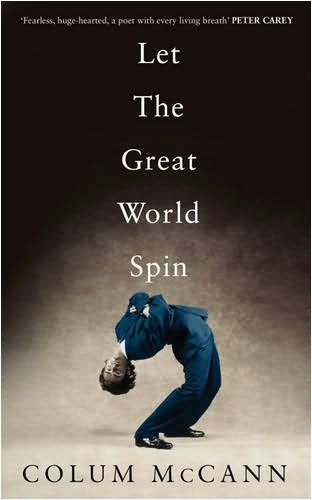
There was a lot of buzz when this book came out a couple of years ago but I’ve been avoiding it, albeit a bit curious to know what it’s about. My reason? I just didn’t like the cover, still don’t. This is what I see in our local bookstores:

But after two years, and knowing that it has won the National Book Award  (Fiction, 2009), I could not resist anymore. I read it recently and was pleasantly surprised by its structure and intricately woven content. Allow me to offer a glimpse into what’s inside the cover… for those who still have not ventured into it.

The book begins with the true event of the Man On Wire. On a fine August day in 1974, NYC, in the early morning hour, an extraordinary feat took place in front of unbelieving eyes on the streets in Manhattan. One hundred and ten stories above ground, between the newly built Twin Towers, a man was walking, dancing, even lying on a wire strung across the two buildings. Interestingly, the novel is not so much about this man with extraordinary courage and skills, his name not even mentioned until the “Author’s Note” just before the back cover. Instead, the book is about the ordinary humanity on the ground. On that day they are joined by amazement of one man walking precariously in midair, oblivious that it is a metaphor for some of them and their life down on the streets. Here are the stories of a few individuals on that otherwise very ordinary day:

Corrigan, a young priest from Dublin, lives in a rough and drug-infested neighborhood, fending for and befriending prostitutes and the poor. McCann’s characterization is complex and layered. On the surface, we see an altruistic worker, sacrificing his youth, health and even life for the lowly, abused, and despised:

“The comfort he got from the hard, cold truth–the filth, the war, the poverty–was that life could be capable of small beauties. He wasn’t interested in the glorious tales of the afterlife or the notions of a honey-soaked heaven… Rather he consoled himself with the fact that, in the real world, when he looked closely into the darkness he might find the presence of a light, damaged and bruised, but a little light all the same.”

As I read deeper, and with McCann’s captivating storytelling of Corrigan’s broken home while growing up in Dublin, and his strained relationship with his estranged father, I suspect that his transplanted life in NYC could well be a search for redemption, or maybe subconsciously, a defiance against a cruel world, an act just to spite his past.

We read too about a mother and daughter’s entanglement in the underworld of prostitution. We see the reality they have to deal with, as another generation of young daughters are growing up under their care. And yet, as if life has not dealt harshly enough, tragedy strikes. But McCann does not leave us in despair. Through the ingenious weaving of characters and circumstances, he skillfully lifts us out of a miry mess onto a higher plane.

We also read about a support group of mothers who have lost their sons in the Vietnam War.  McCann has sensitively shown us that, even sharing the same loss and grief, their common ground could easily be shaken by the nuances of class and race, as those magnified in the interactions between Claire, the wife of a judge living on Park Avenue and Gloria, a black woman from a housing project in the Bronx. And yet, we are gently led to experience the exhilarating triumph of how compassion can turn mere common ground into powerful bonds, changing grief into commitment and purpose.

Finally we are led one full circle back to the man on wire, and the judge who has to handle his case. Judge Soderberg himself is a father who has lost a son in Vietnam. Like the man on wire, his son had taken the risk to enlist by his own will, not as a fighting soldier but only to offer his computer expertise. No matter, risks are what the two face and one of them succumbs to it. As a judge, how is he going to rule this 25 year-old risking his life to do something he believes to be purposeful and rewarding?

The book ends in the modern day, when a younger generation witness an extreme act of malice done to the Twin Towers. But we also see a new generation raised by grace–fruits of the very individuals who were impacted on that fateful day when the man walked on wire a thousand feet in midair decades earlier. It’s about the choices we make, despite the miry mess we tread on the ground.

While McCann presents these characters and their stories as separate threads in different chapters, he eventually weave them together, tying all loose ends to make a beautiful human tapestry. Like the wire walker, their own lives are no less challenging. They too have to take risks to step out and deal with their circumstances. Theirs is a balancing act as well, in their choices to do the right thing, in their search for meaning, every step of the way.

McCann’s storytelling is visual, his descriptions stylish, many scenes made alive by real-life dialogues that one would expect in the filthy, dark corners of NYC. The book offers an experience quite like my reading of screenplays, but with its literary form, it is much more gratifying.  Also, I was not too surprised to find out that Colum McCann is not only a novelist but a screenwriter as well. Further search leads me to the info that “Let the Great World Spin” is now a film in development by producer J.J. Abram of “Star Trek”(2009) fame.  mmm… let’s just hope the movie adaptation won’t be a 3D spectacular, but a real, human experience as the novel has so sensitively portrayed.

~~~1/2 Ripples

Let the Great World Spin by Colum McCann, HarperCollins Publishers, 2009, 349 pages.

***

If I’d seen this cover in the store, I would have grabbed it at first sight:

CLICK HERE to Colum McCann’s beautifully-designed website, and an exploration of the cover art.

CLICK HERE to go to the artist Matteo Pericoli’s wonderful website which I highly recommend.

Can a movie adaptation ever be as good as the book?

The more I watch movies and read books, the more I see the two as totally different art forms. They evoke different kinds of pleasure and enjoyment. A direct translation just may not work. I used to seek for how ‘faithful’ a movie is compared to its literary source, but more and more, I’m looking for how good it stands alone as a production in terms of cinematic elements.

A film adaptation can make an apt homage to the original literary work. It is not merely an ‘illustrated book’, but a new creation, if you will, one that offers a different experience from reading. In telling the story from a visual and sound perspective, it offers a multidimensional take on the original work. By so doing, it may need to alter the source material. But then again, how do you know the images on-screen are not those already conjured up in some readers’ minds as they interact with the text… or, theirs are not even more far-fetched?

While a film is the artistic expression of the filmmaker’s interpretation, it is also a collaboration of talents and perspectives, as cast and crew contribute their expertise, in cinematography, set design, costume, writing, sound, music, editing… all under the artistic direction and insight of the auteur. It is an alchemy of sights and sounds. On top of that, there are the key agents of delivery, the actors. An intelligent and nuanced performance can bring out the literary essence, unfurling the thematic matter, characters and conflicts, and above all, the humanity embedded in the text.

In his article entitled “Snobbery”, Ta-Nehisi Coates, senior editor for The Atlantic, says that as he reads Pride and Prejudice, Austen’s brilliant literary depiction has formed some vivid images in his mind.

I like the pictures in my head, and would not see them overthrown.

Yes, that’s usually the case with many readers who guard the ownership of their imagination as sacred territory, hence, the refusal to step out to explore other grounds of artistic expressions. So, despite hearing how splendid the BBC version of Pride & Prejudice is, Ta-Nehisi Coates has this to say:

I don’t doubt it–but I think mine is better. For right now, I’m just a snob that way. I reserve the right to change.

I’ve been mulling over this ‘snobbery’ idea after reading his article back in March, and feel that another word might be more apt to describe such a condition: “hegemony”… the claim of the literary being supreme, over other forms of artistic expression. On a personal level, it is also the hegemony of subjectivity… valuing one’s own mental images exclusively. It’s about sharing, isn’t it, seeing and experiencing what others’ imaginary worlds are like in response to a piece of literary work? I believe we are richer when we share, especially, our vision and imagination.

As a literature lover and a Janeite myself, I’m only glad to hear another high praise of Austen’s ingenuity, not that her works need any more approval to be of value. However, as a film lover I don’t want to wage war by dichotomizing the literary and the visual. They are two different art forms, two distinct vehicles of storytelling. Even though the story comes from the same source, it could be told from different perspectives, filtered through different lenses, structured in different styles, and ultimately received by interacts with the reader and the viewer in a very individual and personal way.

I’ve appreciated Kazuo Ishiguro’s openness regarding the creative process during the film adaptation of his book Never Let Me Go. According to a TIME magazine article, Ishiguro said to Alex Garland, the screenwriter:

Your only duty is to write a really good screenplay with the same title as my book.

What ended up was both the author and the screenwriter share a very similar vision. Here is what director Romanek has done to bring out the literary:

… he imparts a mood so subtle, with so many emotional cataclysms conveyed through a glance or a few tears, that the film might have been made by the Japanese master Yasujiro Ozu.  The nuance is both emotional and visual… Romanek also researched the Japanese notion of wabi-sabi, ‘which is the beauty of things that are broken and worn and rusted and imperfect. So production designer Mark Digby and I, we just wabi-sabied everything. The dried flowers are an example of that. There’s nothing new in the film. Everything shows the wear of time.

Watching a film then is like listening to another language, the language of the visual, and appreciating the significance of mise-en-scène.

***

As a language and literature lover as well as a movie buff, I’m always on the lookout for the perfect fusion. To those who insist that a movie will never be as good as the book, allow me to suggest the following sampler. No, they aren’t perfect, but some are close to it. They are all worthy of and have done justice to their source material. Just from memory I’ve made the following list. All I’ve read and watched, some several times. (click on the link to read my review). There are more good movie adaptations of course, but I’m just listing those which I’ve both read the book and seen the film, thereby able to evaluate the adaptions against their source material:

Great Expectations (1946)
Novel by Charles Dickens, directed and screenplay co-written by the legendary David Lean.

Diary of a Country Priest (1951)
Novel by Georges Bernanos, screenplay and directed by Robert Bresson

To Kill A Mockingbird (1962)
Novel by Harper Lee, Robert Mulligan director, Gregory Peck IS Atticus Finch

The Heart is a Lonely Hunter (1968)
Novel by Carson McCullers, Memorable performance by Alan Arkin

A Room With A View (1985)
Novel by E. M. Forster, a Merchant Ivory film. Helena Bonham Carter emerged.

Howards End (1992)
Another E. M. Forster/Merchant Ivory film. Ruth Prawer Jhabvala won Oscar for Best Adapted Screenplay, Emma Thompson Best Actress. Beautiful rendition of sight and sound. Helena Bonham Carter, Vanessa Redgrave, Anthony Hopkins and many more made up the talented cast.

The Music of Chance (1993)

Paul Auster’s absurdist/existential novel is hauntingly adapted into film (How can you show philosophical concepts? Here it is) perfectly interpreted by James Spader and Mandy Patinkin. Excellent cast and superbly directed by Philip Haas.

The Remains of the Day (1993)
Kazuo Ishiguro’s Booker Prize winning novel, another Merchant Ivory film. Poignant performance by Emma Thompson and Anthony Hopkins.

Pride and Prejudice (1995, BBC)
In my opinion, the definitive version of Jane Austen’s film adaptation. BBC production, Andrew Davis screenplay. Colin Firth remains the inimitable Mr. Darcy to this day.

Sense and Sensibility (1995)
Emma Thompson did justice to Jane Austen with her Oscar winning screenplay. Ang Lee directs Emma Thompson, Kate Winslet, Alan Rickman, Hugh Grant. Still my favorite version of S & S.

The English Patient (1996)
Booker Prize winning novel by Michael Ondaatje, directed and screenplay written by Anthony Minghella. Ralph Fiennes, Kristin Scott Thomas, Juliette Binoche.

Girl With A Pearl Earring (2003)
Novel by Tracy Chevalier, Peter Webber directs Colin Firth as Johannes Vermeer, Scarlett Johansson as the servant girl Griet. An artistic, nuanced production.

Bleak House (2005, BBC)
The TV mini-series that prompted me to read the 1,000 page book by Charles Dickens. Gillian Anderson, Anna Maxwell Martin, Denise Lawson, and a cast of talented actors delivered a most enjoyable and exceptional rendition.

Away From Her (2006)
Short story by Alice Munro, the young Canadian talent Sarah Polley wrote the screenplay and directed veteran actors Julie Christie and Gordon Pinsent. A moving portrait of the destruction of a marriage by Alzheimer.

3:10 to Yuma (2007)

Short story by Elmore Lenard, James Mangold directs Christian Bale and Russell Crowe. Movie captures the psychological conflicts marvellously.

Atonement (2007)
Novel by Ian McEwan, Joe Wright directs Keira Knightly and James McAvoy. Saoirse Ronan’s breakout performance.

When Did You Last See Your Father? (2007)
Memoir by Blake Morrison, David Nicholls screenplay. Anand Tucker directs Colin Firth, Jim Broadbent, Juliet Stevenson and the young rising stars Carey Mulligan and Matthew Beard.

The Diving Bell and the Butterfly (2007)
Jean-Dominique Bauby ‘wrote’ the book by blinking one eye. Julian Schnabel director. Mathieu Amalric plays Bauby, the true story of a stroke survivor who was left paralyzed except the movement of his left eye.

Never Let Me Go (2010)
Novel by Kazuo Ishiguro, Alex Garland screenplay, Mark Romanek directs the talented British trio of Carey Mulligan, Keira Knightly, and Andrew Garfield.

True Grit (2010)

Book by Charles Portis. This is an updated movie version by the Coen brothers, Hailee Steinfeld’s breakout role, deservedly garnering her an Oscar nom. Jeff Bridges is better than John Wayne I feel. 10 Oscar nominations in total.

Still more…

The Hours (2002)
Pulitzer Prize winning novel by Michael Cunningham, David Hare screenplay, Stephen Daldry directs. Homage to Virginia Woolf and Mrs. Dalloway. Nicole Kidman won Oscar Best Actress as V. Woolf. Moving performance also by Julianne Moore, Meryle Streep, and Ed Harris.

Doubt (2008)
John Patrick Shanley wrote the play, later the screenplay as well as directed the film. Engaging performance by Meryl Streep, Amy Adams, Phillip Seymour Hoffman, Viola Davis. (For this one, I’ve yet to read the play)

A Single Man (2009)
Novel by Christopher Isherwood, Tom Ford’s directorial debut. Colin Firth’s first Oscar nom. Julianne Moore, Matthew Goode, Nicholas Hoult. Heart- stirring music.

An Education (2009)
Memoir (essay) by Lynn Barber, screenplay by Nick Hornby, directed by Lone Scherfig. Carey Mulligan got her first Oscar nom. Peter Saarsgard, Dominic Cooper, Rosamund Pike, Olivia Williams.

Life of Pi (2012)

12 Years A Slave (2013)

2015 UPDATES:

45 Years (based on the short story “In Another Country” by David Constantine)

Room 

2016 UPDATES:

Love & Friendship

Arrival

Silence

2017

Lion: From Personal Memoir to the Big Screen

Certain Women

Mudbound

2018

Wildlife

2019

Little Women

2021

Nomadland

Passing

2022

The Power of the Dog

Drive My Car

2023

The Quiet Girl

**What are your favourite film adaptations of literary works?

***

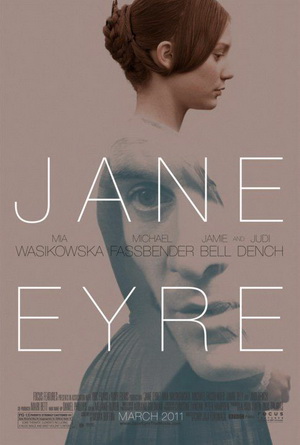
Jane Eyre (2011): Another Movie Adaptation

The perils of making a movie of a well-known literary classic that already has over 20 adaptations are: If you are faithful to your source, there bound to be scenes that look like you have just taken out from previous versions; if you are not, you risk accusations from the purists. On top of that, you will have to condense a relatively long story into two hours of screen time. So, why would anyone want to do such an arduous task? Hopefully there is an answer waiting when we come to the end of this post.

What would you do differently to appeal to 21st century viewers? A splash of defiance and independence from Jane could work. But still, even the smart and cerebral lines uttered by her we have all heard before, for they are written by Brontë. So what merits can a new adaptation claim?

Another way to retell an old tale to today’s audience is offering a fresh perspective. Here, director Cary Fukunaga (Sin Nombre, 2009) has effectively crafted a non-linear structure of storytelling. Even for those who have not refreshed their classics memory lately, the movie’s smooth time changes should not pose a problem, for they are quite well done. It begins with Jane running away from Thornfield, desolate on the moors, but fortunate enough to be rescued and cared for by the pious but stern St. John Rivers (Jamie Bell of Billy Elliot fame, 2000) and his sisters. Upon questioning, Jane’s abused childhood and her time at Thornfield are revealed through flashbacks. It picks up from the opening scene again about three-quarters of the way, and pushes towards the anticipated ending.

Mia Wasikowska (Alice In Wonderland, 2010) faces a huge challenge to portray a Jane that’s convincing, and has to be compared to so many who had attempted in the past. Now Mia is the young Australian actor who has turned down the coveted role of Lisbeth Salander in “The Girl With the Dragon Tattoo” trilogy’s English version, and opted for the role of Jane Eyre. In an interview, she reveals that it all started when she was reading Charlotte Bronte’s 1847 novel about two years ago. By Chapter 5, she talked to her agent on the phone and asked whether by any chance there was an adaptation in the works. She knew she had to be Jane. Not long after that she received the screenplay by Moira Buffini. Thus began this newest cinematic rendition of Jane Eyre.

As a 19 year-old at the time of production, Mia was the right age for the role. That’s when Jane leaves Lowood School and heads out into the world to seek her own destiny. Brontë offers us a heroine who has a firm grip of self-respect and moral direction despite an abused upbringing. This is the Jane that has captured the hearts of so many throughout the years and who still appeals to us modern readers.

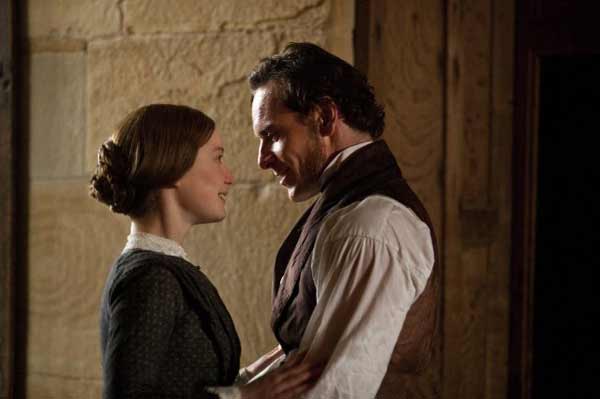
So our protagonist meets her fate as she lands a job at Thornfield as a governess to Adele, the ward of the enigmatic Edward Rochester, played by Michael Fassbender (Fish Tank, 2009). Fassbender just may have replaced Ciarán Hinds as my favorite Rochester. At 34, he might not be old enough to be faithful to the novel, but his performance is captivating and convincing. The two make a visually compatible pair. However, I have one major issue: the romance seems too restrained that it almost fails to ignite, especially on the part of Jane. With a movie like this, of course we go not so much for the Gothic, but for the passion. I wanted eagerly to be enthralled. But what I saw was a passionate Rochester wooing a repressed Jane. It’s ironic that almost throughout the film I remained emotionally disengaged, albeit thoroughly enjoying the performance of both characters.

Ultimately it comes, the scene that captures my heart. After the disclosure of the dark secret and the wedding called off, Jane desperately tries to fight off her deep yearning and love for Rochester by refusing his advance and embrace. She literally has to run away from Thornfield to uphold her moral choice and escape from her heart. And finally, for those who long for a cathartic reunion of the lovers, the ending again teases us by offering a closure that’s a bit too short and swift.

Still another and probably most effective way to appeal to modern viewers is the visuals. Kudos to both the director Fukunaga and cinematographer Adriano Goldman. They have answered the frequently asked question of “Why make another movie adaptation of a literary work?” We love to roam in our own privately constructed imaginary world when we read. A movie is the visualization of that world. It is an artistic display of a filmmaker’s interpretation and private imagination. It may not match our own, but surely can still be an enjoyment if it is presented with cinematic beauty.

We see Jane running away from Thornfield, our destitute heroine determined to make the moral choice despite the yearning of her heart. The fragile figure pitted against the harsh and barren moors, or the overhead shot of Jane standing at the crossroads … all effective visuals to present the literary, and by so doing, augment our appreciation of it. Here, you can see your own imagination realized, or see what others have conjured up in their minds. The few scenes where we have the shaky camera must be mentioned also. Generally I’m not a fan of hand-held camera work, but here in the film, such jerky moments are effective in depicting Jane’s troubled soul and inner turmoil. The camera lens following her has become the portal into her agitated and unsettling state of mind. Just another way the literary can be effectively translated into the visual.

Yet another movie adaptation of Jane Eyre? Why not… and I’m sure, there are more to come. I appreciate a filmmaker’s attempt to display the visual artistry that can be extracted from the literary. Words and visuals, they can go hand in hand in this image-driven age. And hopefully through popular screening and the viral medium, we can give recognition to the source materials that have entranced us for so long, giving credits to both the author and the writing.

~ ~ ~ Ripples

Austen Inspired Acceptance Speech

2011 is the 200th anniversary of the publication of Jane Austen’s Sense And Sensibility, her first published novel.  And since we are in the midst of Awards Season, inundated (or soon to be) with speeches, I’d like to join these two occasions and celebrate both Austen and fine speeches.

The 1995 film adaptation of Sense and Sensibility had received numerous awards, most notably accolades for Emma Thompson’s screenplay, which had garnered the Golden Globe, BAFTA, and ultimately, the Oscar. I have posted this before a few years ago, but think it is high time we read or reread Austen’s wonderful novel and be entertained again by the very talented Emma Thompson.

Also, I’m sure you would love to read a transcript of it, one of the most unique awards acceptance speeches of some time. Since the event occurred some fifteen years ago, I have taken the liberty to annotate (in parentheses) and format it in a way to enhance your reading pleasure.

Here it is, Emma Thompson’s Acceptance Speech at the 53rd Golden Globe, 1996, for Best Adapted Screenplay, Sense And Sensibility:

“I can’t thank you enough, Hollywood Foreign Press, for honouring me in this capacity.  I don’t wish to burden you with my debts, which are heavy and numerous, but I think that everybody involved in the making of this film knows that we owe all our pride and all our joy to the genius of Jane Austen.  And, it occurred to me to wonder how she would react to an evening like this.  This is what I came up with:

Four A.M.   Having just returned from an evening at the Golden Spheres, which despite the inconveniences of heat, noise and overcrowding, was not without its pleasures.  Thankfully, there were no dogs and no children.  The gowns were middling.  There was a good deal of shouting and behaviour verging on the profligate, however, people were very free with their compliments and I made several new acquaintances.

  • Miss Lindsay Doran (producer), of Mirage, wherever that might be, who is largely responsible for my presence here, an enchanting companion about whom too much good cannot be said.
  • Mr. Ang Lee (director), of foreign extraction, who most unexpectedly appeared to understand me better than I understand myself.
  • Mr. James Schamus (co-produceer), a copiously erudite gentleman, and
  • Miss Kate Winslet (role of Marianne Dashwood) , beautiful in both countenance and spirit.
  • Mr. Pat Doyle, a composer and a Scot, who displayed the kind of wild behaviour one has learnt to expect from that race.
  • Mr. Mark Canton, an energetic person with a ready smile who, as I understand it, owes me a vast deal of money.
  • Miss Lisa Henson — a lovely girl, and
  • Mr. Gareth Wigan — a lovely boy.

I attempted to converse with Mr. Sydney Pollack (executive producer), but his charms and wisdom are so generally pleasing that it proved impossible to get within ten feet of him.  The room was full of interesting activity until eleven P.M. when it emptied rather suddenly.  The lateness of the hour is due therefore not to the dance, but to the waiting, in a long line for a horseless carriage of unconscionable size. The modern world has clearly done nothing for transport.

P.S. Managed to avoid the hoyden Emily Tomkins who has purloined my creation and added things of her own.  Nefarious creature.

With gratitude and apologies to Miss Austen, thank you.”

***

Transcript of Emma Thompson’s speech taken from the book The Sense And Sensibility Screenplay & Diaries by Emma Thompson, published by Newmarket, 2007.

Note here on the back of the cover page these words:

ACKNOWLEDGEMENTS

“I should like to acknowledge the profoundest debt for my having developed any sense of humour to Jane Austen, Monty Python and The Magic Roundabout


More Gifts … Books and Movies

Continue from last post… succumbing to the Boxing Day craze.

Other than the art calendars, I found these bargains, books that kick off my 2011 reading plan and some DVD’s at very collectible prices:

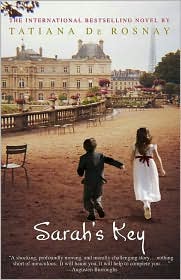
Sarah’s Key by Tatiana De Rosnay

Already made into a movie (Elle s’appelait Sarah by French director Gilles Paquet-Brenner) premiered at Cannes and TIFF last year.  A journalist discovering a holocaust story about a ten year-old Jewish girl who tried to save her younger brother from the police by locking him in a cupboard.  The key will play a major part in a moral dilemma.  This much I know and it’s already captivating, especially with Kristin Scott Thomas playing the role as the journalist in the film.


The Finkler Question by Howard Jacobson

The winner of the 2010 Man Booker Prize.  Here’s the description from the Man Booker’s official site: “a scorching story of friendship and loss, exclusion and belonging, and of the wisdom and humanity of maturity. Funny, furious, unflinching, this extraordinary novel shows one of our finest writers at his brilliant best.”  I’ve enjoyed reading some of the past winners and look forward to this one.


Extremely Loud & Incredibly Close by Jonathan Safran Foer

I got this over the holidays and have already finished reading it.  I have mixed feelings about it. The 9/11 story from the POV of a 9 year-old boy is poignant, and the way JSF presents and illustrates (the visuals) it is a new reading experience for me.  A movie is in the works with Tom Hanks and Sandra Bullock co-starring.  Mmm…


Music of Chance by Paul Auster

I have quickly devoured this one over the holidays together with the turkey.  The reason I was looking for this book is because of the movie.  I first saw the film adaptation a few years back and it stirred in me an unsettling resonance beyond words.  It’s a modern day Sisyphus story pitting man against chance, absurdity, and himself.  You must read it and then see the film, which unfortunately, is so overlooked that you’ll have a hard time finding it. But it deserves high acclaim, especially the performance by James Spader.  The film is also one of the best ‘Book Into Movie” adaptations I’ve seen.


In Search of Lost Time (Vol. 1) Swann’s Way by Marcel Proust

Translated by Moncrieff and Kilmartin.  I know many of you have read Proust and some may be Proust scholars, let me know what you think.  As for me, its attraction is simple.  How can you resist a beautiful Modern Library Classic edition with such an appealing cover?  It’s comforting just to see and touch it.  I’ve downloaded an e version into my Stanza app some time ago, but could never get into it by reading it on my iPhone.


The Early Work Of Philip K. Dick, (Vol. 1): The Variable Man And Other Stories

The main reason I got this, yes, it’s also a bargain at $5, hardcover… but the main reason is it contains a story I was looking for: ‘The Adjustment Team’, which is an upcoming movie (with Matt Damon and Emily Blunt).  I’m not a Sci-fi fan, but did enjoy some of Dick’s works adapted into films, like Minority Report (2002).  Others including Blade Runner (1982) and Total Recall (1990) are all ‘classics’ now in the Sci-fi film genre.


And some very collectible DVD’s:

When Harry Met Sally


I finished Nora Ephron’s I Remember Nothing and Other Reflections not too long ago.  It’s a revealing and amusing memoir.  That’s what prompted me to grab this DVD when I browsed the 50% off table at Chapters (Canada’s equivalent of Barnes & Nobles), about $5.  When Harry Met Sally (1989) is Ephron’s breakout screenplay in the romantic comedy genre.  After that is history… Sleepless In Seattle (1993), You’ve Got Mail (1998), and most recently, Julie and Julia (2009).  But do you know she also wrote the screenplay for Silkwood?

Children of a Lesser God


This is probably one of the most forgotten films that deserves more mention.  There is inherent difficulty in the execution of a film where one of the two major characters is a deaf-mute.  But the relationship and the communication conflicts between Marlee Matlin as a student in a deaf school and William Hurt as a speech teacher just show how realistic these obstacles are.  Marlee Matlin won the Academy Award for Best Actress in 1987 for her role, not bad for a debut. Her affective performance was made even more poignant due to her real life impediment.  It has been decades now since I first saw it in the theatre. I was delighted to be able to find a copy to keep, $4.

Scorsese: The Martin Scorsese Film Collection


A classy box set of four films:

  • Raging Bull — Special 2 Discs Edition, lots of special features. Classic Scorsese that gave Robert De Niro the Oscar, plus seven noms for the film.
  • The Last Waltz — Bob Dylan, Eric Clapton, Neil Young, Joni Mitchell, Van Morrison, Neil Diamond, Emmylou Harris… this is rock history in film.
  • New York, New York — Liza Minnelli and Robert De Niro, a spectacle.
  • Boxcar Bertha — Barbara Hershey and David Carradine… historical too.

And the best is the price: I paid $10.

***


Now let me shift gear to the 68th Golden Globes this Sunday, January 16…

2010: Another Year of Books and Films

The discussion of movies is frequently more interesting than the movies themselves.

——   A. O Scott, NYT Movie Critic

Thanks to A. O. Scott, in his recent article on Films, Themes, and Trends, he has spelt out for me the raison d’etre of Ripple Effects.  As I always say, I’m just throwing a pebble into the pond.  It’s watching the splash and the out-reaching ripples that makes it so gratifying.  Thanks to all your responses, the discussions following the posts have made it all worthwhile.

2010 is my record year for movies watched. As a previewer for an international film festival, I’ve had the experience of viewing over 50 features, docs, and shorts in one month.  As a film lover, I’ve seen another 50 more of my own choice in the other months.  They are not all 2010 productions.  The oldest film for me this year is a silent black and white Ozu work, A Story of Floating Weeds (1934).  I’ve also discovered Robert Bresson.  His Diary of a Country Priest (1950) is probably one of the best Book Into Film adaptations I have encountered.

But, to remain timely, and we all like lists, here are Arti’s favourite movies released in 2010 (in no particular order).  Click on link to read my review:

  1. The King’s Speech (review coming up)
  2. The Secret In Their Eyes
  3. Another Year
  4. Nowhere Boy
  5. Never Let Me Go

Is it coincidental that all of the above except one are from the UK?  The Secret In Their Eyes is Argentinian.  It won the Best Foreign Language Film Oscar for 2010.

**

Favourite books read in 2010 (again, in no particular order):

  1. Snow Country by Yasunari Kawabata
  2. Diary of a Country Priest by Georges Bernanos
  3. The Music of Chance by Paul Auster
  4. Never Let Me Go by Kazuo Ishiguro
  5. Theatre by William Somerset Maugham

**

Favourite Interesting Search Engine Terms (words people use to arrive at Ripple Effects this year):

  • elegance of the hedghog movie restroom music
  • banksy telephone booth
  • bird front view
  • darcy wet shirt
  • colin firth wet darcy
  • wet colin firth
  • colin fith
  • darcy kiss amanda in lost austen
  • little miss sunshine van
  • free great gatsby iphone
  • imprisonment in snow country
  • revolutionary road insane son controlling mother
  • to see the lost cattails soft winds and roses
  • what color are pussy willows?
  • virginia woolf’s crusading novel a room of one’s own
  • pregnant man giving birth
  • giving birth naturally
  • noomi rapace piercings
  • vw van
  • flotsam? i’ve gotsam
  • funny things inside mad magazine
  • the girl with the dragon typo
  • stranger
  • lust

Just a sampler showing you how eclectic Ripple Effects can be.

I look forward to throwing more pebbles in the coming year.  Again, a hearty thank-you to all my regular readers and occasional visitors.  Thank you for taking the time to comment.  You are the fuel for this journey called blogging, and without your responses and discussions, there’s simply no raison d’etre for Arti to press forward another year.


To All, A Happy New Year!

Dive in, make waves… it’s warmer than you think.

***