Jane Austen: Sense Or Sensibility?

With PBS Masterpiece Classic broadcsting Sense and Sensibility (2008 ) again on Feb 1 and 8, it’s good time to muse on the question:  Which Austen heroine was Jane herself most like?  You can see the poll on my side bar, and the results so far. 

As you watch Sense and Sensibility once again, look closer at Elinor and Marianne.  Mind you, if you have a chance, watch the 1995 movie too, then you’d appreciate Emma Thompson and Kate Winslet in bringing out the differences between sense and sensibility even more clearly I think.

No doubt, we all like to perceive Jane herself as the very source that had inspired the creation of our all time heroine, Elizabeth Bennet of Pride and Prejudice, intelligent, witty, self-assured, sharp in her critique of social norms, and brave enough to challenge, and diverge.  She dominates our popular votes here with a 44% lead… so far.

But Anne Elliot of Persuasion is also a popular choice, mature, patient and wise.  The silent lover is a strong second with 23%.

magrittes-le-blanc-seing

After reading the biographies of Jane, knowing how she had loved the burlesque and to play a part in the family’s performances, how openly she had engaged in activities with her brothers and the student boarders in her home, how she had  written satires while still a youngster, how critical she could be, and above all, upon my reading Claire Tomalin’s incisive analysis of Jane’s relationship with her older sister Cassandra, I tend to lean toward a very unpopular choice. 

I think Jane by nature was more like Marianne Dashwood, passionate, spontaneous, expressive and bold.  It’s Cassandra, like Elinor, who reminded her to rein in her emotions, to keep her skepticism in check, and to help her fit into a world that was not ready for a female like her.  Have you wondered why Cassandra needed to burn so many of Jane’s letters to her after Jane’s death?

Is it sense and sensibility we’re talking about here, or rather nature and nurture? 

No matter.  It’s best that our favorite writer remains an enigma.  But, if you have to choose, thinking back to all the Austen heroines in her six novels, who do you think Jane resembled the most?

Cast your vote and let Janeites decide.

To read my review of Sense and Sensibility (2008, TV), Part 1, Click here.

Click here for Part 2.


*****  

Unaccustomed Earth by Jhumpa Lahiri

unaccustomed_earth

“Jhumpa Lahiri is the kind of writer who makes you want to grab the next person you see and say, ‘Read this!'”

— Amy Tan

Unaccustomed Earth is one of the five fiction selections of  New York Times Best Books for 2008.  Jhumpa Lahiri’s debut work, Interpreter of Maladies, a collection of short stories, won the 2000 Pulitzer Prize for fiction, and later received the PEN/Hemingway Award, the New Yorker Debut of the Year award,  American Academy of Arts and Letters Addison Metcalf Award, and was translated into twenty-nine languages.  Her next work was The Namesake, a novel which was turned into film by acclaimed director Mira Nair.  Unaccustomed Earth is her third book.

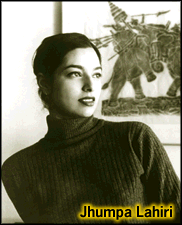
Jhumpa Lahiri was born in London, England, to Bengali immigrants.  Her family later moved to the United States and settled in Rhode Island where she grew up. Lahiri went to Barnard College and received a B.A. in English Literature.  She furthered her studies in literature and creative writing and obtained three M.A.’s, and ultimately, a Ph.D. in Renaissance Studies at Boston University.  So, she knows her subject matter well.  In Unaccustomed Earth, characters are Bengali immigrants, mostly academics, their second generation who are born in foreign soil and their non-Indian friends or spouse.  The stories deal with the entanglement of cultural traditions, incompatible values, failed hopes and expectations, and the subsequent internal strives that haunt them all.

But why would we be interested in stories like these?  Herein lies Lahiri’s insight.  While the viewpoint of these characters might be parochial, Lahiri’s stories bring out the larger universal significance.  Who among us doesn’t belong to a community, and at one time or another, question his/her conformity in that very community?   Regardless of our ethnicity, who among us isn’t born into a family with its own peculiar traditions and values?  Who among us doesn’t feel the distance separating generations in our world of rapidly shifting paradigms, be they cultural, social, or spiritual?   And who among us, as one in the mass diaspora of drifting humanity, doesn’t want to lay down roots in fertile soil?

Despite the somber themes, reading Lahiri is an enjoyable ride.  Herein lies Lahiri’s talent.  She is a sensitive storyteller, personal in her voice, subtle in her description, meticulous in her observation of nuances, and stylish in her metaphoric inventions.  Her language is deceptively simple.  The seemingly lack of suspense is actually the calm before the storm, which usually comes as just a punchline in the end of each story, leaving you with a breath of  “Wow, powerful!”  But it is for that very line that you eagerly press on as if you are reading a thriller or a page-turner.

jhumpa_lahiriThe book is divided into two main parts.  The first contains five short stories.  The second, entitled “Hema and Kaushik”, consists of three stories but can be read as a novella on the whole, for they are about two characters whose lives intertwine in an inexplicable way.  While the characters and their situations are contemporary, their quest is the age old longing for love and connection.

I have enjoyed all the stories, but the most impressionable to me is the title one.  In  “Unaccustomed Earth”,  Ruma is married to an American, Adam, with a young child Akash, and pregnant with another.   Her recently widowed father comes to stay with her in Seattle from the East Coast, just for a visit.   During his stay, Ruma’s father builds up a bond with his grandson Akash.   The two create a little garden at the back of the house, a relationship thus flourishes as the flowers and plants blossom.  Ruma struggles with the idea of whether she should welcome her father to live with her for good to fulfil her filial duty, but by so doing, she would be adding a burden to her nuclear family.  What she does not know though is that her father has his secret and internal conflict as well.  He too wants a life of freedom and love.  The story ends with a dash of humor and a little surprise, reminiscent of a Somerset Maugham story.  I will not say more, or the spoiler will lessen your enjoyment.

I have read all three of Lahiri’s work.  And this is my query:  If her first book garnered the many literary awards including the Pulitzer, I just wonder what else could she win with her newest creation, which I enjoy far more.

Unaccustomed Earth by Jhumpa Lahiri, published by Alfred A. Knopf, NY, 2008.  333 pages.

~ ~ ~ Ripples

****


Tess of the D’Urbervilles (2008, TV): Part 2

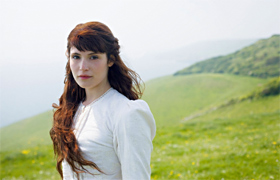
tessThe “lite version” of Part 1 has turned into a heavy and somber continuation on PBS Masterpiece.  In this second and final part, screenwriter David Nicholls and director David Blair unleash the gloomy Hardy worldview unreservedly,  releasing the bleak and dismal elements that are almost too much for new year viewing.  The music has played a major and dramatic role in setting the tone and mood of the movie.  The cinematography too, in contrast to the lush green opening in the first part, has drawn us into a slough of mud, grey and black.  Hardy’s view of nature lamenting the tragic condition of his heroine is effectively conveyed, engrossing albeit a tad too melodramatic.

Kudos to David Nicholls for a meticulous job in adaptation.  He has kept the plot intact, for the most part faithful to Hardy’s book.  While a couple of incidents are left out, quite meaningful and symbolic too, but not to diminishing effects.  These include the sleepwalking episode, the Freudian slip of Angel’s innermost longing to love Tess despite all restraints.  The second being Tess’ mercy-killing of pheasants wounded by hunters, a sensitive portrayal of her own predicament.  However, Hardy would not have her killed off so easily.  Like the sadistic “President of the Immortals” in his view, Hardy the author wreaks havoc on his heroine, leading her into scenes after scenes of tragic events beyond her control.

tess-part-23

Tess can forgive Angel for his sexual sin, but he refuses to forgive her.  Actually, what sin has she committed if she was innocently violated by Alec D’Urberville when she was a young girl.  She loves Angel unconditionally, but his love for her is marred by constraints.  Later, she cannot avoid stalking by Alec, who keeps preying on her, and in her most needy and vulnerable, takes advantage of her again by manipulating her love for her family.  Whatever dignity she may have Tess ultimately sacrifices it for her beloved family.  But I admire Tess’  integrity, yes I like to see it as integrity, and not pride, that has sustained her until that very end when she finally has no choice but to yield to Alec’s sinister scheme.

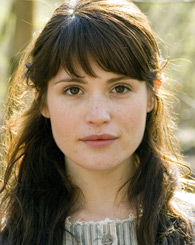
It is for this reason that I find Gemma Arterton’s portrayal of Tess as just a proud and feisty gal to suit modern viewers incongruent with the book.  She may look innocent enough, but her performance at times is contrived and lacks the striving complexity required.  But her tears are effective and moving, I must say.  While Hans Metheson has delivered his diabolic role adequately, Eddie Redmayne as the losing lover at the end is a bit lacking.

And Angel, oh, what a tragic character.  The seemingly altruistic lover cannot stand the test against social mores.  In the book, the chapter describing the mutual confession of sins between the newlyweds is aptly entitled:  “The Woman Pays”.  What an irony of double standard!  This might well be the name of the novel.  While Hardy may have held an entangled and agnostic view of the transcendent, his social critique is incisive and spot-on.

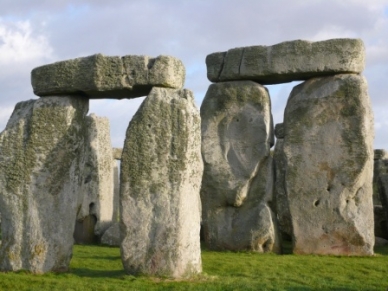
the-stonehenge-1

At long last, Tess and Angel can enjoy marital bliss, but only for a painful, fleeting moment.  Tess says in her anguish:  “It is too late”,  the four words that define the tragedy of her life.  As a young girl, she did not understand the meaning of Alec’s sinister advances until too late.  And now as a married woman, her husband has come to her rescue too late.  I learn from the end notes of my Penguin edition that the original title of the book was Too Late, Beloved! What a heart-wrenching story.

PBS has a link to an online interactive Q & A with screenwriter David Nicholls.  In there he  answers the many questions viewers have regarding the process of turning book into film. I have enjoyed Nicholls’ previous adaptation of Blake Morrison’s memoir into the movie “And When Did You Last See Your Father”, starring Colin Firth and Jim Broadbent, an excellent and sensitive film.  I look forward to seeing more of Nicholls’ work in the future.

~ ~ ½ Ripples

Click here to go back to Tess of the D’Urbervilles, Part 1.

*****

Tess of the D’Urbervilles (2008, TV): The Lite Version

tess-of-the-durbervilles-movie

After reading Thomas Hardy’s Tess of the D’Urbervilles just shortly before watching the new re-make on PBS Masterpiece, I can fully understand why screenwriter David Nicholls has done what he did.  He has turned a heavyweight into a light classic.  For if Hardy’s book is to be adapted in spirit and letter, it would certainly be less appealing and just too heavy a burden to cast upon our collective psyche.

As an author, Hardy himself personifies the sadistic ‘President of the Immortal’ he perceives.  Humans are just the playthings for The Immortal’s jest.  As an agnostic, he can’t just outright blame it all on God, since he isn’t sure even if God exists.  But in the book, he makes his readers know clearly the cosmic tragedy his characters are caught in, by turning Browning’s lines into:

God’s not in his heaven:  all’s wrong with the world!

If we can see Hardy on the streets today, I’m sure he’s the guy who takes Murphy’s Law to heart:  Anything bad that can happen will happen.  That’s what he makes of his heroine Tess in the story.  A pure, beautiful and innocent country girl, fresh and untouched for life, is being caught in all sorts of circumstances that will bring only heart-wrenching consequences, one after the other all the way to the end.

David Nicholls has spared us the looming Hardy worldview and lightened it up for us, and I don’t blame him for that.  For who needs more tragedies of cosmic proportion in this very tumultuous time in our human history.   Mind you, he has presented the plot faithfully.  In this first part at least, you see the sequence of events in the book adapted to the dot, albeit in a much more condensed and hurried pace.  Considering the full length of the book is about 400 pages, and the made-for-TV movie is four hours long, that means for every hour he has to cover 100 pages.  From this first part, I’d say he has done an admirable job.

tess-and-alec

Now to Gemma Arterton.  I’ve enjoyed her role as Elizabeth Bennet in ITV’s Lost In Austen.  So it is with high expectation that I come to watch Tess.  If the screenplay is a light version, then Arterton’s Tess is aptly portrayed, for I have a feeling that she has turned it into a comic character at the beginning of the movie.  But maybe that is to contrast her later portrait of lost innocence.  Nevertheless, I feel there is something lacking, maybe the almost god-like purity and depth of love in Tess are qualities just too demanding for so young an actress to depict.

Hans Matheson’s Alec D’Urberville is much more attractive than the detestable Alec described in the book.  Though the obvious villain, his dark and sensual appearance is symptomatic of a soul in turmoil. He has added complexity to his character that even sheds a bit of appeal. I look forward to his crucial role in the latter part of the story.

angel-clareIn contrast, Angel Clare is the innocent lover.  His willing to challenge his strict Victorian upbringing in a clergy family for love of a milkmaid indicates his bold rejection of social norms and family expectations… up to this stage.   Eddie Redmayne has delivered a convincing performance.

The character that really draws my attention, surprisingly, is Tess’ younger sister Liza-Lu, played by Jo Woodcock.  For some reason that face has the look and intensity that’s so fitting in a film like this.  And the three milkmaids that offer the much needed relief to the story, Marion, Retty and Izz, are well cast and portrayed.  They play no minor roles in Tess’ life.

Finally, I must also mention the new host of Masterpiece Laura Linney.  I admit, she’s more what I had in mind for the character of Tess while reading the book.  Unfortunately that part is taken.  Oh well, I’ll see her again next week, and in future Masterpiece presentations.

So, for a lighter and entertaining take on the tragic story of Tess,  and to browse through the plot in a few visually appealing hours while sidestepping the somber philosophical view of Hardy’s, this BBC production offers a viable choice.

(Photos Source: bbc.co.uk)

~ ~ ½ Ripples (so far)

Click here to go to Tess of the D’Urbervilles, Part 2

*****


Reading the Season: Fleming Rutledge

Two things I always do whenever I go to Vancouver:  Check out the indie movies and visit the Regent College Bookstore on the UBC campus.  I admit before that gloomy December day when I entered the Regent Bookstore,  I had not heard of the name Fleming Rutledge.  Thanks to Regent’s gigantic book sale, I came out with, among others, two of Rutledge’s titles:  The Bible and The New York Times and The Battle for Middle-earth, a commentary on Tolkein’s writing.  For the purpose of basking in the Christmas Season in a more meaningful way, I delved right into The Bible and The New York Times.

The theologian Karl Barth has a famous axiom that says sermons should be written with the Bible in one hand and the newspaper in the other.  This book is evidence that Fleming Rutledge has taken this motto to heart in her over twenty years of preaching and teaching ministry.  The book is a compilation of her sermons delivered in the 80’s and 90’s from the pulpit of Manhattan’s Grace (Episcopal) Church where she has served for 14 years, as well as from her visits to other churches in Eastern U.S.  As for her writing, Annie Dillard has commented that, “this is beautiful, powerful, literary writing.”

The 34 sermons are arranged according to the liturgical calendar, all eloquent reflections on the meaning of the occasion, from Thanksgiving to Advent, Christmas to Lent.  I’ve heard numerous sermons in my life, countless I dare say, but I admit this is the first time that I read through a compilation of sermons and thoroughly enjoy them all like a page-turner.  They throw light on events of our world, from politics to popular culture, addressing them as springboard to a spiritual perspective albeit not without practical wisdom; her commentaries on the human condition are incisive and spot-on.  I’ve come out heartily admiring Rutledge’s intellectual prowess and literary repertoire, but above all, her boldness in proclaiming what may not be politically correct in this day.

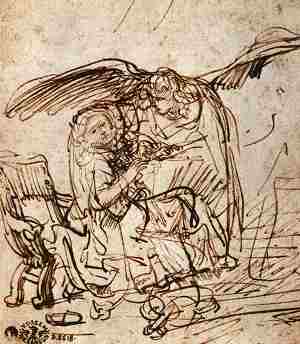
rembrandts-annunciation-of-the-angel-gabriel-to-mary

The four Advent Sundays are preparatory for the main event of Christmas.  Rutledge reminds us that without recognizing the darkness we are in, there is no need for the Light.  Oblivious to unresolvable conflicts and the depravity of our human condition, we would not be desperate enough to search for truth and redemption.  Without being shattered by tragedies and wounded by sorrow and grief, we would not be genuinely seeking solace and healing.  And, not until we see the absurdity of our human world, we would not humbly seek meaning in the transcendent.

In one of her Advent sermons, actually exactly today, the last Sunday of Advent, Rutledge relates the spiritual experience of John Updike one time when he was alone in a hotel room in Finland.   He was besieged by a sense of awareness that pulled him to confront what he called a “deeper, less comfortable self.”   She quotes Updike’s own words:

“The precariousness of being alive and human was no longer hidden from me by familiar surroundings and the rhythm of habit.  I was fifty-five, ignorant, dying, and filling this bit of Finland with the smell of my stale sweat and insomniac fury.”

Rutledge notes that at the time:

Updike is in the prime of his life, at the peak of his powers and the pinnacle of his fame.  Yet even a celebrity has to be alone with himself at three o’clock in the morning, even as you and I.

If we approach Christmas in such a state of  “deeper, less comfortable selves”, then we might come closer to appreciate the magnitude of its significance and meaning.

Annie Dillard has commented that Rutledge “writes as a person who knows she is dying, speaking to other dying people, determined not to enrage by triviality.”  The world situation today is grave, our hope lies not within but beyond ourselves.  For this reason the Word became flesh and dwelt among us.

Emmanuel, God with us …

This is the meaning of the Virgin Birth:  God has moved.  God has moved, not we to him in our impotence, but he to us.

This is not the Season to be merely festive and jolly.  Christmas is the celebration of the Grand Entrance into humanity, thus reason for deep rejoicing.

“All hopes and fears of all the years,

Are met in Thee tonight.”

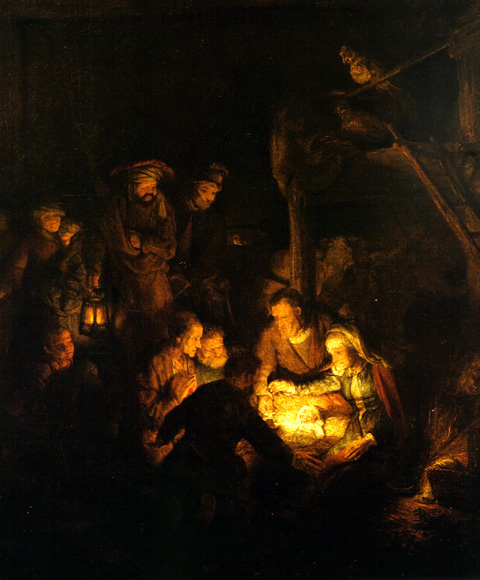
rembrandts-adoration-of-the-shepherds

******

Art images:  Rembrandt’s Annunciation of the Angel Gabriel to Mary and Adoration of the Shepherds

‘Reading The Season’ Posts over a Decade:

2020: Jack by Marilynne Robinson

2019: ‘A Hidden Life’ – A Film for the Season

2018: A Verse from Madeleine L’Engle’s The Irrational Season

2017: A Wrinkle in Time by Madeleine L’Engle

2016: Silence by Shusaku Endo

2015: The Book of Ruth

2014: Lila by Marilynne Robinson

2012: Surprised by Joy by C. S. Lewis

2011: Walking on Water by Madeleine L’Engle 

2010: A Widening Light by Luci Shaw

2009: The Irrational Season by Madeleine L’Engle

2008: The Bible and the New York Times by Fleming Rutledge 

2008: A Grief Observed by C. S. Lewis

Reading the Season: A Grief Observed by C. S. Lewis

c-s-lewis2To embrace the Christmas season in a more meaningful way, I’ve been trying to stay close to the heart of the matter by reading.

A Grief Observed by C. S. Lewis is one of my selections. Now, of all the wonderful books by the Oxford scholar, why would I choose this title for the Season?

From my reading of Joan Didion’s The year of Magical Thinking, I learned that during her mourning for the loss of her husband, she had read C. S. Lewis’ A Grief Observed. That sparked my curiosity. After finishing Didion, I turned right away to explore Lewis’s book about his own experience of loss.

After 58 years of bachelorhood, Lewis found the love of his life in Helen Joy Gresham, an American author who had come all the way to England in search of a genuine and credible faith. Their love story is poignantly portrayed in the movie Shadowlands (1993). In Helen Joy Gresham (‘H’ in the book),  Lewis found his equal in wit, intellect, and a faith that had endured testing and evolved from atheism to agnosticism and ultimately reaching irrevocable belief. Lewis entered into marriage with Joy at her hospital bed as she was fighting bone cancer. She did have a period of remission afterwards, during which the two enjoyed some traveling together. Regretfully, only four years into their marriage, Joy succumbed to her illness.

shadowlands

A Grief Observed is a courageous and honest disclosure of a very private pain. But what’s so different about this personal loss is that this prominent Christian apologist, acclaimed academic and writer, was willing to lay bare his questioning mind and disquiet heart to his readers. As his step-son Douglas Gresham wrote in the Introduction, the book is “a man emotionally naked in his own Gethsemane”. By crying out in anguish and exposing his torments, he shared his personal journey of painfully seeking the meaning of death, marriage, faith, and the nature of God. Lewis was brave enough to question “Where is God?” during his most desperate moments, when his heart was torn apart by searing pain and his intellect failed him with any rational answers.

Gradually he came out of despair realizing that the loudness of his screams might have drowned out the still, small voice speaking to him.

The time when there is nothing at all in your soul except a cry for help may be just the time when God can’t give it:  you are like the drowning man who can’t be helped because he clutches and grabs…

After all, you must have a capacity to receive, or even omnipotence can’t give.

After the fog of doubt has dispersed and the dust of despair has settled, Lewis saw the dawning of a gentle glimmer. He realized that he had been mourning a faint image or memory of his beloved, but not beholding the reality of her. The fickleness of his senses offered only fading fragments of her image. However, it is in praise that he could enjoy her the best.

I have discovered, passionate grief does not link us with the dead but cuts us off from them. This become clearer and clearer.  It is just at those moments when I feel least sorrow–getting into my morning bath is usually one of them–that H. rushes upon my mind in her full reality, her otherness.

Praise is the mode of love which always has some element of joy in it. Praise in due order; of Him as the giver, of her as the gift.

Further, as with God, he knew he should grasp the reality, not just the image.  He should treasure God Himself, not just the idea of Him:

I need Christ, not something that resembles Him.  I want H., not something that is like her.

Upon this revelation, Lewis powerfully points out that the Incarnation, the Word becoming flesh, is how God reveals Himself to us in His full reality.  Our ideas of God are shattered by Christ Himself.

The Incarnation… leaves all previous ideas of the Messiah in ruins.  And most are ‘offended’ by the iconoclasm; and blessed are those who are not.

As Christmas draws near, I ponder once again the humbling of the Creator God, born a babe to grow up to experience the full spectrum of being human, showing us by His life and death the reality of God, an iconoclastic act only He can perform.

Lewis has drawn me to the heart of the matter, the crux of the Season:

And the Word became flesh and dwelt among us, and we have seen his glory, glory as of the only Son from the Father, full of grace and truth.

— John 1:14

*****

‘Reading The Season’ Posts over a Decade:

2020: Jack by Marilynne Robinson

2019: ‘A Hidden Life’ – A Film for the Season

2018: A Verse from Madeleine L’Engle’s The Irrational Season

2017: A Wrinkle in Time by Madeleine L’Engle

2016: Silence by Shusaku Endo

2015: The Book of Ruth

2014: Lila by Marilynne Robinson

2012: Surprised by Joy by C. S. Lewis

2011: Walking on Water by Madeleine L’Engle 

2010: A Widening Light by Luci Shaw

2009: The Irrational Season by Madeleine L’Engle

2008: The Bible and the New York Times by Fleming Rutledge 

2008: A Grief Observed by C. S. Lewis

Two Guys Read Jane Austen: Again, the Gender Issue

two-guys-read-jane-austen 

Some guys would rather have jaw surgery than to read JA.  Steve Chandler could well have been one of them.  As an English major in college, now a successful writer in his sixties, Steve has miraculously managed to avoid reading JA all his life, until now.  On the other hand, his co-author Terrence N. Hill, an award-winning playwright and author, has read Pride and Prejudice three times, good man.  Prompted by their wives, Steve and Terry embarked on this new project in their “Two Guys” series, taking the risk of treading no man’s land.  However, considering their previous “Two Guys” titles, Two Guys Read Moby Dick and Two Guys Read the Obituaries, they are well-primed for this venture.

Thanks to blog reader Julie for sending me a copy of this book,  I’ve been thoroughly entertained.  Attaining to true Austenesque style, the two lifelong friends read two JA novels and wrote letters to each other about their thoughts over a six-month period. I must admit I’m surprised (sorry guys) at the incisive look and the fresh perspective they bring to the forefront.  Their sharp observations, humorous takes on many issues, their LOL commentaries on popular culture, and intelligent analysis on various topics make this a most gratifying read for both men and women, Janeites or would be’s.

Many do not want to read JA because they think she was just a 19th Century rural spinster awashed in naiveté, who had never heard of Napoleon or the war he was raging, ignorant about the slave trade from which England was benefiting, or couldn’t tell the difference between a country and a continent.  The most they might think of her is the mother of all modern day chick lit or the romance novel.  Well, these myths are all dispelled by two guys that have experienced Jane Austen first-hand, and lived to tell their discovery.

Here are some of their insights and words of wisdom as they read Pride and Prejudice and Mansfield Park.  I’m quoting directly from their letters to each other:

  • Jane’s got more adoring female fans than Brad Pitt, and my guess is they’re more intelligent too.
  • JA (through Elizabeth) is a witty, rebellious voice for intelligence and passion in the face of those stuffy British strictures.  I love this.  I love a woman (or a man, for that matter) who has no need to win anyone over.
  • Wasn’t Elizabeth Bennet heroic because she was such a totally self-responsible, proudly independent person?  Wasn’t Darcy the same?
  • I really enjoy how much you like Jane Austen, that you cry when reading her books, and that you can still be a man… A man not afraid of the feminine principle becomes even more of a man.
  • …elegantly cerebral.  But once you acclimate yourself to the flow of the language, it is addictive.  JA’s writing becomes more captivating with each new chapter because of how many layers of psychological posturing she strips away.
  • Men are often accused of putting their wives on a pedestal. Women build a pedestal and then spend their time trying to create something worthy of going on it.
  • I don’t think Austen ever gets proper credit for her role in the development of the comic novel.
  • Jane never attended school after the age of 11.  After that she was entirely self-taught…  S&S, P&P, NA, three of the greatest novels of all time–all written by 25.  Thinking of myself at that age.  If I had had time on my hands I could well imagine having written three novels… What I can’t imagine is that they would have been any good.  Ah, but then I had the disadvantage of an education.
  • The true measure of her characters is their hearts and minds.  What the movies cannot get to – or do justice to – is the intelligence.
  • What has excited Henry Crawford the most is Fanny’s inner strength.  On the surface she is delicate and demure.  But underneath she is power itself.  That’s what makes JA so great and so endearing.
  • Jane is all about principle.  Living true to your highest ideals, your highest self… she shows us there is a beauty to morality… there’s beauty in integrity!

Need I say more?

Two Guys Read Jane Austen by Steve Chandler and Terrence N. Hill, Robert D. Reed Publishers, Bandon OR.  2008, 126 pages.

*****

This article has been published in the Jane Austen Centre Online Magazine, where you can read more about Jane and the Regency Period.

Lost in Austen: Episode 1 (TV, 2008)

lost-in-austen

What a delight it was for me to catch the Canadian premiere of Lost in Austen on the new VIVA channel last night, two months after its UK debut on ITV. No, I had not anticipated it with much eagerness, I admit, nor had I held any expectations before I watched it. But, what a pleasant surprise.

I was somewhat skeptical about another time-travel movie and yet another take on Pride and Prejudice. It seems we are doing Jane Austen a disservice to have so many different “versions” of her ingenious work, turning P & P into a modern day literary cliché. How many more original antics can screen writers squeeze out after all the adaptations and fan fiction spin-offs in recent decades? But this one is fresh and original. It is laugh-out-loud funny, entertaining, with intelligent dialogues and a new perspective. I’m afraid to say too, that there are moments with SNL type of parody on the story and its characters, especially Colin Firth’s role as Mr. Darcy.

But it’s all harmless fun. “No offense taken.” I’m sure Jane, with her sense of humor and satire, would have responded, or Colin, for that matter.

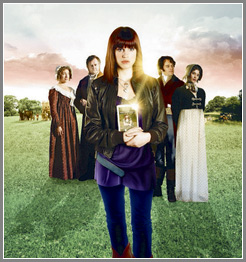
lost-in-austen-amanda-priceAmanda Price (Jemima Rooper, The Black Dahlia, 2006), a modern day working female living in Hammersmith, London, is a JA addict. Reading Pride and Prejudice has become her escape from her lacklustre life. She reminds me of Renée Zellweger’s Bridget Jones, although Amanda here manages to keep her weight under control and has a boyfriend that gets drunk on beer and proposes to her with a beer bottle tag as a wedding ring. So, it is a real fantasy for her to find Elizabeth Bennet (Gemma Arterton, Quantum of Solace, 2008 ) in her bathroom, showing her a portal that leads straight to the Bennet house. But understandably, Amanda is a bewildered and reluctant time-traveler, at least at this point.

The freshness of the story comes from all the twists that do not follow Jane Austen’s story. As with my usual reviews, I don’t like to give out spoilers. But I have to say, the key to these ingenious renderings is that Amanda Price swaps places with Elizabeth Bennet. With Lizzy out of the picture in P & P, the rest of the story is up to the screen writer Guy Andrews’ and director Dan Zeff’s own imagination.

In this first episode, most of the major characters are introduced. All of them deliver a lively performance, although I’m particularly fond of Amanda and Mr. Bingley (Tom Mison). The music reminds me of the 1995 BBC production, energetic and swift. In turn, the pacing is quick and effective. My main criticism though, is the set design of the interior of the Bennet house. It looks more like a modern day rather than an early 19th Century setting, quite incompatible with the exterior of the house.

Right from the start, I have resolved to not take this TV production too seriously, but just immerse myself in the wild and fanciful ride it freely takes me. After all, Jane herself had excelled in this very act, transporting us to meet all sorts of characters and situations through the imaginary worlds of her novels. I’m sure she would have a good laugh too tonight if she were watching with me… now that would be a fantasy indeed.

Just Click to read my review of the other episodes:

Episode 2

Episode 3

Episode 4

*****


Art Imitates Life, Life Imitates Art, or…

Neither. After reading Tomalin and Shields on the life of Jane Austen, I am inclined to draw that conclusion. The often sanguine outlook of Austen’s works is deceptive.  The seemingly jovial ending may lead some to assume they are reading the simplistic stories of a woman wrapped in romantic bliss all her life.

Reality is, that Austen could persevere, write and published is already an incredible achievement considering the confining social environment she was in. Instead of embracing the normative female role in comfort, she chose to trod the road less traveled to become a writer despite the gloomy prospect of poor spinsterhood,  enduring rejection even from her own mother. She wrote in secret and struggled in isolation. For a long period she battled depression. Upon her death, her beloved sister Cassandra could not attend her funeral because the presence of females at such events was not sanctioned, apparently for fear of any outbursts of emotion.

It is Austen’s imagination that empowers her to break free of her reality and to rise above her constraints. She has created her art from the palette of  the imaginary, as Tomalin has lucidly observed:

Hampshire is missing from the novels, and none of the Austens’ neighbours, exotic, wicked or merely amusing, makes recognizable appearance.  The world of her imagination was separate and distinct from the world she inhabited.

Austen’s contemporary, the renowned Gothic writer Ann Radcliffe, has attested that it is the imagination and not real-life experience which gives rise to story-telling. A scene in the movie Becoming Jane (2007) has vividly illustrated this point.

In the famous little book, The Educated Imagination, a must-read for any literature student, the late great Canadian literary critic Northrop Frye states that :

The world of literature is a world where there is no reality except that of the human imagination.

Austen has great proficiency in the language of imagination. In her novels, she has created a world that never was, but one that makes her readers yearn for. There is no Mr. Darcy in real life, or Elizabeth Bennet for that matter, but we could well use them as the ideal types to measure by, or, to strive for.

What about the satirist in Austen? How can the social critic be extracted from reality?  How can one write social commentaries devoid of real life input? Austen may have toiled in isolation for fear of social repercussion, she did not write in a vacuum.  While her art did not imitate her life, Austen had the chance to sharpen her observation from the very public sitting-room of her home and those of her relatives and friends, an opportunity that was conducive to her novel writing, as Virginia Woolf has pointed out.  Ever since her childhood, the Austen home was the hub of family readings and discussions.  Her brothers grew up to be men well versed in the fields of the military, clergy, and business.

In her ingenious way, by satirizing the things that ought not to be, Austen is bringing out the world that ought to be. In Frye’s words:

The fundamental job of the imagination in ordinary life, then, is to produce, out of the society we have to live in, a vision of the society we want to live in.

If art imitates life, it would be just a reproduction; if life imitates art, well… ours would be one very wacky world. But life could well be the reason for creating art, channeling our imagination to build a sublime vision of the ideal.

Visual: Starry Night by Vincent van Gogh

Update: This article has just been published in the Jane Austen Centre Online Magazine. Click here to go there for other interesting reads on Jane Austen and the Regency World.


*****


Reading, Writing, and the Gender Issue

With all these posts lately about Jane Austen on Ripple Effects, Arti feels there is a need for an erratum.  Before the comedy of errors gets to Austenesque proportion, and considering Arti’s minute talent in writing such that there being no aspiration to become a modern day George Eliot, a major confession is called for here:  Arti is A Lady.

At first when I started Ripple Effects, I thought that the name “Arti” is neutral enough like “Les”, “Chris”, or “Alex”.  I subscribe to the ideal that great literature and good writing is gender neutral, by this I mean their relevance and significance surpass the boundaries of gender to reach the universal, be it the work of Jane Austen or George Orwell.   And, laying aside the gender issue, good books deserve to be read.  The novels of Jane Austen come to mind.  The gender of a writer should not be an impediment if the writing speaks to all.  Arti proceeded to write all reviews and articles based on this premise, attempting to strive, albeit remotely, towards this ideal.

I hope the disclosure of Arti’s gender does not diminish readers’ enjoyment of Ripple Effects.  Definitely, Arti does not want to be accused of carrying a concealed weapon, or acting as an undercover agent when it comes to the battle of the sexes.  So here I am, coming out with both hands up in the air.

As readers can quickly observe, Ripple Effects encompasses not only Austen, or just books.  But because Arti is endowed with only 24 hours in a day,  wherein a few have to be allotted to that essential yet elusive activity called sleep, there is just not enough time to see all the many exciting worlds Arti would like to explore.  To alleviate this deficiency,  Arti visits other people’s blogs to quench the thirst.  I thank you all for transporting me to those worlds in this great blogosphere of ours.

In between visits,  Arti will continue to plow through neutral grounds to learn the art and craft of reading, writing, watching, and gleaning the worthy ones to review.

(Visual:  Le Blanc Seing by René Magritte)

What was Jane Austen really like? Reading Tomalin and Shields

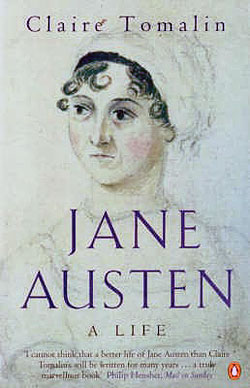
As a biographer, Tomalin’s account of Jane Austen’s life is meticulous and exhaustive.  Her analysis is critical and sharp, her writing style bold, precise and cutting.  The following excerpts are prime examples.

When speculating about the possible consequence of Mrs. Austen sending her infants away to be raised, Tomalin makes the following inference:

“The most striking aspect of Jane’s adult letters is their defensiveness.  They lack tenderness towards herself as much as towards others.  You are aware of the inner creature, deeply responsive and alive, but mostly you are faced with the hard shell; and sometimes a claw is put out, and a sharp nip is given to whatever offends.  They are the letters of someone who does not open her heart; and in the adult who avoids intimacy you sense the child who was uncertain where to expect love or to look for security, and armoured herself against rejection.”

Or this to say about mother and daughter:

Mrs. Austen had a sharp tongue for neighbours, appreciated by her daughter and passed on to her.”

Or, with the episode of Jane accepting and later recanting Harris Bigg-Wither’s marriage proposal, Tomalin’s view is clear:

We would naturally rather have Mansfield Park and Emma than the Bigg-Wither baby Jane Austen might have given the world, and who would almost certainly have prevented her from writing any further books.”

If you can appreciate such kind of abrasive commentaries, you would certainly find it entertaining to read Tomalin’s than an otherwise ordinary biographical sketch.  Ironically, I have a feeling that this is the kind of biographies Jane would have written if she could write without censure.

Putting her incisive analysis to good use, Tomalin explores Jane’s creative process, giving credits to her imaginative ingenuity.  The limitation of physical and social mobility render Jane’s world parochial, yet her characters and story lines are diverse and innovative.  Her writing are evidences of pure creative concoctions.

…essentially she is inventing, absorbed by the form and possibilities of the novel… The world of her imagination was separate and distinct from the world she inhabited.”

For Jane, it is imagination and not experience that has given her wings to soar outside of her bleak circumstances.  A vivid example is the writing of the sprightly Pride and Prejudice.  The novel was written during a time of family tragedy with the death of Cassandra’s fiancé Tom Fowle, and amidst Jane’s own disappointment with the evaporation of hope with Tom LeFroy.

All in all, Tomalin’s sharp and cutting writing style works towards Jane’s favour.  Her biography is resourceful and entertaining, her analysis incisive, and her conclusion moving.  Above all, Jane would have found it amusing and satisfying.

Jane Austen: A Life by Claire Tomalin, published by Penguin Books, 2000,  362 pages, including appendices, notes, bibliography, chart, and index.  Additional 16 pages of photos.

*****

Carol Shield’s Jane Austen is a succinct and gentler rendition of Jane’s life.  Shields and her daughter, the writer Anne Giardini, were presenters at the JASNA AGM in Richmond, Virginia in 1996.  This book came out five years after that.  Shields has crafted a highly readable literary gem, adorned by her lucid and flowing writing style.

As a novelist, Shields’ main thrust is to trace Jane’s development as a writer.  Exploring her family circumstances as she was growing up, Shields presents to us a gifted youth of exuberant spirit, one who had known the joy of theatrical performances and experienced the exhilarating power of humor.  Jane’s ingenuity lies in her parodies.  As a young contributor to her older brother James’ weekly magazine The Loiterer , she was already a skillful writer of satires.  Shield notes that:

“…it is the satirical form of her youthful writing that astonishes us today.  What makes a child of twelve or thirteen a satirist?

… Jane Austen had been nurtured, certainly, in a circle appreciative of burlesque… but she was also a small presence in a large and gifted household.  Her desire to claim the attention of her parents and siblings can be assumed.  She gave them what they wanted, that which would make them laugh and marvel aloud at her cleverness”

This yearning to entertain, influence and be acknowledged remained the motivation for Jane’s writing throughout her life. Her youthful gigs and satires transformed into full-fledged novels.   Just take Northanger Abbey for example.  It is a burlesque of the Gothic in a style which she was so familiar with since her girlhood days. And a look at the characters like Mr. Collins in Pride and Prejudice, or Mrs. Elton in Emma, readers could readily appreciate Jane’s “comic brilliance and… consummate artistry”.

Shields offers in-depth analysis of Austen’s works, exploring not just the writing but the psyche of a brilliant mind.  Like Tomalin, she dispels the myth of art imitating life, and credits Jane’s imagination as the key ingredient of her ingenuity:

“Her novels were conceived and composed in isolation.  She invented their characters, their scenes and scenery, and their moral framework.  The novelistic architecture may have been borrowed from the eighteenth-century novelists, but she made it new, clean, and rational, just as though she’d taken a broom to the old fussiness of plot and action.  She did all this alone.”

Considering the physical and social limitations confining Jane, it was her writing that transported her to brave new worlds, and the vehicle was her imagination.

As I finished reading these two biographies, Virginia Woolf’s praise of Jane Austen resonated in my mind:

“Here was a woman about the year 1800 writing without hate, without bitterness, without fear, without protest, without preaching.  That was how Shakespeare wrote.”

While we lament that Jane had left only six complete novels upon her untimely death at forty-one, we treasure these legacies of imagination and the inspiration they evoke for generations to come.

Jane Austen, a Penguin Lives series, by Carol Shields, published by Vikings, 2001,  185 pages.

Update:  This article has been published in the Jane Austen Centre Magazine, where you can read online informative articles on Jane and the Regency Period.

For more on Jane Austen’s creativity, click here to read the post “Life Imitates Art, or Art Imitates Life”.

*****


What was Jane Austen really like? Reading Cassandra & Jane

Reading Jill Pitkeathley’s biographical novel Cassandra & Jane has prompted me to find out what Jane Austen was really like.  The persona depicted in her book is so different from what I had conjured up while reading Austen’s six novels.  Upon finishing Pitkeathley’s fictional account, I could not wait but delve right into Claire Tomalin’s Jane Austen A Life, and Carol Shields’ Jane Austen.  So, kicking off my fall reading, I have devoured, back to back, three biographical works on a woman writer who is more popular today than she was in her time two hundred years ago.

Jill Pitkeathley’s Cassandra & Jane is a fictitious rendering of Jane Austen’s life. It is based on historical facts as recorded in biographies; in fact, it reads like a fictional illustration of Tomalin’s work.  As a novelist, Pitkeathley takes the liberty to fill in the gaps and offers imagined scenarios of events. That is the fun or ambiguity of reading a historical novel.  The intermingling of fact and fiction has spurred me on to explore what actually happened, above all, what kind of a character Jane herself truly was.

I was surprised to find that behind the romantic book cover shrouds a very sombre portrait of Jane Austen.  What is most intriguing is the revelation that, unlike the sanguine ending in Austen’s novels, the very author of these works had led a life filled with misfortunes and disappointments.  And unlike Austen’s heroines, females who could impact and influence those around them, Jane was often bound by powerlessness and subjugated to consequences of familial and social disparities.  For most part of her life until she received the meager profits from her books, she was solely dependent on her father and later her brothers financially that she could not make any travel plans or purchases on her own.

Written from the point of view of Cassandra, who was the sole person privy to the intimate and private side of a beloved sister, the novel depicts a discontented soul, at times critical, at times bitter, and poignantly resigned at the end. Unlike her own novels, which end on a high note with exhilarating conclusion, Jane Austen’s life was far from fulfilling for her in love, in health, and in career.  Within the confines of late 18th and early 19th century England, the lively and soaring spirit of Jane Austen was kept distressingly in check.  What Pitkeathley has chosen to present to us therefore is a multi-layered persona, deep and intriguing.

“Hers was such a complex nature that it was not possible to explain to those who did not love her that she could be cruel and kind, disparaging and compassionate, bitter and hopeful, almost in the same breath.”

Considering the complex character of her beloved sister, her sharp wit and critical eye, her cutting comments on the people and circumstances around her, Cassandra had a very legitimate reason to burn the intimate correspondences she had with Jane, knowing that Jane would easily be misunderstood and even judged by posterity if they were released to the public. Pitkeathley had taken full advantage of this void to fill in the gaps and offer her own renderings of the events and motives marked by silence, albeit based on historical evidences.

The account of the romantic episode with George Atkins is an example.  Regarding the Rev. Atkins, whom Jane met in Lyme, and who received a passing mention in her letters anonymously, Pitkeathley has painted a star-crossed love affair, adding colours to a life that is thought to be devoid of romance.

Considered by some who think her life as uneventful,  and indeed, she may not have travelled far from her home in her short 41 years of life, Jane had had her share of life experiences. First off, from infancy, she had the taste of banishment as all Austen newborns were sent off to be raised elsewhere from home, coming back only as they entered childhood.  Her childhood days with her siblings were probably the most joyous period of her life, growing up in a literary household, devouring books in her father’s library and participating in theatrical gigs her brothers organized. Her strain relationship with her mother however remained a dark spot most of her life.

Jane’s young adulthood saw disappointment of lost love and opportunities, or the lack thereof. Nevertheless, married life to her may not be that appealing, after witnessing two sister-in-laws die at giving birth to their eleventh child.  She had felt the grief of the death of Cassandra’s fiancé days before the wedding.  She was dislocated from home beyond her own choosing, moving to Bath and thus triggering a long period of depression.  She had led a life of poverty, suffered the loss of her dearly beloved father, endured familial and social disparities first as a female, then as an unmarried female, and later as an unmarried female writer.  She had seen her own works rejected, and later even with some of her novels published, had to remain anonymous to avoid social deprecation.  And finally, she saw the bankruptcy of her brothers, jeopardizing her mother’s, her sister’s and her own livelihood, and lastly, faced an untimely death at age 41 after a debilitating and painful illness.

What is left that makes life meaningful and fulfilling?  How can a spirit confined to so many limitations break through and soar?  Pitkeathley has painted a Jane who was resilient and determined.  Choosing a life of literary pursuit over a loveless marriage to Harris Bigg-Wither, Jane was ready to take on the social denigration of spinsterhood and the working woman.  From her writing, Jane had found release from her entrapment. She had created stories wherein heroines were passionate and free like Marianne Dashwood, intelligent and self-assured like Elizabeth Bennet, adventurous and imaginative like Catherine Morland, persistent and morally upright like Fanny Price, lively and mischievous like Emma Woodhouse, and patient and long-loving like Anne Elliot.  From her writing, Jane had opened a way for her own self expression, channelled her indignation of injustices, and found a platform to proclaim her ideals.

At the end, with Cassandra, we lament the short life of Jane Austen, but we cherish a literary talent whose resilience and ideals have inspired readers through the centuries.  Considering the numerous film adaptations today and the proliferation of fan fiction, Jane can finally impact and influence, an ideal she could only imagine in her novel writing.

You are invited to vote on the poll question:  Which Austen heroine do you think Jane was most like? Find the Poll on the top of the side bar. Just check your answer and click “Vote”.

*****

Cassandra & Jane by Jill Pitkeathley, first published 2004, reprinted 2008 by Harper Collins, N.Y.  270 pages.