Roger Ebert in Toronto: A Close Encounter

Thanks to the Toronto International Film Festival, I have the chance to encounter the legend. It’s only natural that wherever there are films, there are film critics. But I never would have thought that I would see Roger Ebert in person and shake hands with him.

It was pure serendipity. While browsing in Indigo on Bay Street, I noticed a sign saying Roger Ebert would be in that store signing his memoir Life Itself a few days later. I’d followed his reviews since his “Siskel and Ebert” days, the two-thumbs-up duo. By the way, Ebert’s right thumb up had been trademarked. Reviewing films for the Chicago Sun-Times since 1967, Roger Ebert was the first film critic to win a Pulitzer Prize for criticism (1975), prolific all the way till his last two days.

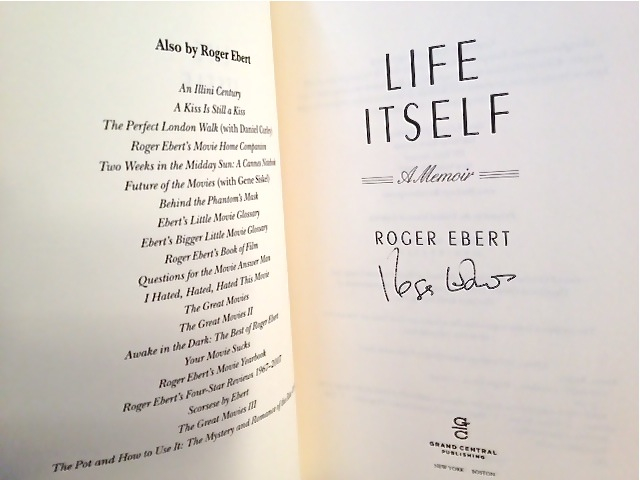
Roger Ebert autograph Life Itself

This was not just about an autograph, or seeing a celebrity up close. It was about seeing a man who after torturous cancer treatments and surgeries for his thyroid, salivary gland and jaw, had lost a part of his face and the ability to talk and eat, and yet still maintained his humor and passions, who continued to press on to new ventures… this was about seeing life itself.

In the late afternoon on September 14, 2011, at the signing area in Indigo Books on Bay Street, people had been lining up for over an hour. I was one of them. At 7 pm, Roger came in walking slowly and with aid. He came on stage and faced the crowd. Together with his wife Chaz, they gave us a wave. Then he sat down and began signing. Photographs were allowed except for the rule of no posing. The Q & A session also began.

Chaz was his voice. She was personable and a film lover herself. She shared some of her views of the TIFF selections. As executive producer of “Ebert Presents at the Movies”, Chaz answered some questions without consulting Roger. But for most questions addressed to Roger, he would write on a small spiral notebook, handed it to Chaz to read out his answer.

Here are some of the notes I’d taken:

* Who influenced you the most?
He pointed to his wife standing behind him.

* Which decade is your favorite?
The 70’s… where you had The Godfather, Raging Bull…

* Buster Keaton or Charlie Chaplin?
Buster Keaton, albeit both are great.

* 3D?
Don’t ask. Story is number one.

* CGI (computer-generated imagery)?
Movies with CGI are soulless.

* All time best?
Citizen Kane.

* Favorite actor?
Robert Mitchum.

* Contemporary?
Al Pacino, Philip Seymour Hoffman, Tilda Swinton

* Favorite Canadian directors?
Atom Egoyan, David Cronenberg, Norman Jewison, Guy Maddin (thumb up)

* James Cameron?
Is James Cameron Canadian? Chaz asked in surprise.

* Favorite book?
A Fine Balance by Rohinton Mistry (Canadian! A voice came from the back)

* Any pressure from movie producers to write a good review?
No, he hasn’t been pressured. He was beyond reproach, Chaz answered.

* Any movies you haven’t seen?
The Sound of Music

* If there’s a movie made about you, who’d you want to play you?
Philip Seymour Hoffman. Chaz added, Oprah to play me. Diana Ross would be good too.

* Advice for potential film critics?
Do you want to get paid? Roger answered with a question.
Yes and no. The questioner covered all bases.
Start blogging. Roger replied.

* How does your life influence the way you review a film?
It generates every word.

Definitely more than just an autograph. What an encounter. What a night.

***

CLICK HERE to listen to an interview of Roger Ebert on CBC Radio during TIFF. Roger used a text-to-voice software as his speaking voice.

***

Cut! Costume and the Cinema: An Exhibit

This is the closest I could get to a movie set. The actual costume worn by prominent screen actors in period movies, that’s the current exhibit “Cut! Costume and the Cinema” at the Glenbow Museum in the centre of Cowtown. Some of the designs had garnered Academy Awards.

Since I could not take any photos inside, this outdoor poster is the only one that I could capture on my camera to give you a sense of what’s in the exhibit: 43 costumes from 25 blockbusters, worn by 30 stars. Mind you, just watching the clothes on headless mannequins is not the same as seeing them on real people with all the set and props you see on screen. So in a way, this is a deconstruction of the magic. However, to have such an exhibition come to Cowtown, I’m excited just the same.

All the items from the exhibition are from the renowned costume house Cosprop of London, England. I learn that for those representing a period before the sewing machine, they have to be hand sewn to reflect authenticity. And due to the cost and labor involved, costumes are usually altered from other existing costumes, seldom are they made from scratch.

Here’s a sample of what I saw, costumes worn by:

Kate Winslet as Marianne Dashwood in “Sense and Sensibility”

Renée Zellweger as Beatrix Potter in “Miss Potter

Emmy Rossum as Christine in “The Phantom of the Opera”

Maggie Smith as Constance Trentham in “Gosford Park”

Vanessa Redgrave as Ruth Wilcox in “Howards End”

Scarlett Johansson as Olivia Wenscombe in “The Prestige”

Colin Farrell as Captain Smith in “The New World”

Johnny Depp as Jack Sparrow in “Pirates of the Caribbean”

Robert Downey Jr. and Jude Law as Sherlock Holmes and Dr. Watson

Keira Knightly as Georgiana and Ralph Fiennes as the Duke in the Oscar winning costume design of “The Duchess”

… and some others.

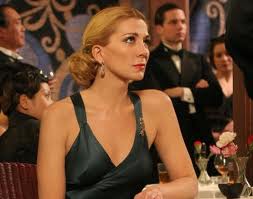
But what resonated most with me was that deep turquoise long dress worn by Natasha Richardson as Countess Sofia Belinskya, matching with Ralph Fiennes’s dark green plaid suit jacket in his role as the blind Todd Jackson in “The White Countess.” Looking at the costumes brought back scenes from that movie… the quiet resilience of Sofia, the white countess from Russia, now a refugee in WWII Shanghai, turning a new page in her life with the wounded but passionate ex-diplomat Todd Jackson. Just sad to know she’s no longer with us.

***

CLICK HERE to an informative video on the exhibit by the Boca Raton Museum of Art in Florida. A 5 min. virtual tour with commentary by Cut! curator Nancy Lawson. 

You may also be interested in these previous posts on Ripple Effects:

Natasha Richardson: Nell and The White Countess

The Merchant Ivory Dialogues

Howards End by E. M. Forster

Miss Potter for Christmas

Austen-inspired Acceptance Speech

More Upcoming Books into Movies

Wondering what to read in the fall? Here are some books being adapted into movies at various stages of development. Some may come out later this year, most in 2012, and others may materialize even further. Your book group may be interested to look at the following titles. Some are bound to generate lively discussions. Consider this a sequel to my earlier list which you can find by clicking here.

***

Anna Karenina by Leo Tolstoy (Can’t resist mentioning this again. Joe Wright of ‘Atonement’ directing, Tom Stoppard screenplay, and an excellent British cast)

As I Lay Dying by William Faulkner (James Franco directing)

Austenland by Shannon Hale (Keri Russell)

The Book of Negroes by Lawrence Hill

Coriolanus by William Shakespeare (Ralph Fiennes directs and stars)

Crooked House by Agatha Christie (Gemma Arterton)

Gods Behaving Badly by Marie Phillips

Great Expectations by Charles Dickens (Helena Bonham Carter, Ralph Fiennes)

The Guernsey Literary and Potato Peel Pie Society by Mary Ann Shaffer and Annie Barrows (Kenneth Branagh directing)

The Humbling by Philip Roth

The Hypnotist by Lars Kepler

Italian Shoes by Henning Mankell (Kenneth Branagh directing Anthony Hopkins)

Ivan the Fool by Leo Tolstoy

King Lear by William Shakespeare (Al Pacino)

Let The Great World Spin by Colum McCann

The Lucky One by Nicholas Sparks

Major Pettigrew’s Last Stand by Helen Simonson

Midnight’s Children by Salman Rushdie

Mister Pip by Lloyd Jones (Hugh Laurie)

Paradise Lost by John Milton (Bradley Cooper as Lucifer)

Romeo and Juliet by WIlliam Shakespeare (Hailee Steinfeld)

What Maisie Knew by Henry James (Julianne Moore)

The Winter Queen by Boris Akunin

***

I know many book lovers are usually hesitant to see their beloved stories and fictional characters transposed on screen. But just imagine for a moment a best-case scenario, which book would you like to see adapted into a movie? And, who do you have in mind as the ideal cast?

***

CLICK HERE to read related posts:

“Can a Movie Adaptation Ever be as Good as the Book?”

“Upcoming Books Into Movies — List 3”

**

A Sequel to Days of Heaven, Mr. Malick?

It has been over thirty years since you directed the cinematic “Days of Heaven” on location here in Southern Alberta. The four-foot tall wheat in the massive field near Lethbridge was the main attraction I understand. So it’s been decades now, lots have changed. But as to this relatively pristine province of Alberta, I can say the land is still wide and the sky still blue after all these years.

As I was driving through the open country a couple of weeks ago, I was captivated by, no, not the wheat fields, but the rapeseed farms (a better term is canola). The colour was brilliant yellow, equally cinematic as the golden wheat fields. A thought came to me…

Mr. Malick, how about coming back for a sequel to your beautiful film “Days of Heaven”?

Here are some sights I took in on that brilliant mid-summer day:

And if you need a location scout…

***

All photos on this post are taken by Arti of Ripple Effects in July 2011. ALL RIGHTS RESERVED.

To read my review of Days of Heaven, CLICK HERE.

To read my review of The Tree of Life, CLICK HERE.

The Tree of Life by Terrence Malick

(It is impossible to review The Tree of Life without writing about what it is about, hence: Spoiler Alert for this post.)

“The Tree of Life” is the fifth feature film in the forty-year career of the reclusive director Terrence Malick. It received mixed reactions at the Cannes Film Festival in May this year. There were boos and applause. That it finally won the top prize at the festival, the prestigious Palme d’Or, indicates which side was gratified. But, it is a film that needs to be experienced personally before one takes side, and maybe seeing it more than once.

Watching the film is an experience in itself. It starts off with this quote from Job 38: 4 and 7:

Where were you when I laid the foundation of the earth? When the morning stars sang together
 and all the sons of God shouted for joy?

With this premise, the film pours forth mysterious yet majestic visual sequences depicting the cosmos, our molten earth, prehistoric era where dinosaurs roam, early life forms, the roaring ocean, blood streams, fetal heartbeats. The first part.

Upon such visuals we hear a voice over:

There are two ways through life — the way of nature and the way of grace. You have to choose which one you’ll follow. Grace doesn’t try to please itself. Accepts being slighted, forgotten, disliked. Accepts insults and injuries. Nature only wants to please itself. Get others to please it too. Likes to lord it over them. To have its own way…

From the macro scale of the universe we now focus on the micro, something with which we can identify, a family. We see it from the point of view of Jack O’Brien (Sean Penn). An architect now, Jack is haunted by memories of his past, in particular, the death of his younger brother at age 19. We see scenes of his parents receiving the bad news. We hear his yearning for the people he loves through his whisper in voice over: ”Brother, mother.” We are then privy to Jack’s childhood days in 1950’s Texas.

From the O’Brien family we see how grace and human nature play out. Jack’s childhood in Waco, Texas, begins in innocence. With a capable father (Brad Pitt) and an almost angelic mother (Jessica Chastain) who is loving, nurturing, grace manifest, young Jack’s (Hunter McCracken) early days are blissful. Two younger brothers later, the siblings form a close bond. But as the boys grow older, the father becomes stern and strict, callous with his sons, demanding total obedience, expecting love where the seeds of fear are sown. From this character, we see human nature manifest in its destructive, self-seeking mode.

Other incidents further shatter the once blissful young life. Jack goes to town with his mother and brothers, he sees a crippled man make his way awkwardly across the street. He also witnesses the unlawful being arrested. While at the swimming pool, he watches a boy drowned despite frantic rescue. We hear young Jack’s whisper in voice over: “Was he bad? Where were you? You let a boy die.” The problem of pain, suffering, and evil begin to churn in his mind. Direct questions to God, not unlike Job.

Watching his father’s harsh handling of his sons, young Jack slowly discovers that he himself too has the latent capacity to not just think, but to commit wrongs, “I do what I hate.” In a moving scene, after he has hurt his little brother, Jack becomes remorseful and asks for forgiveness. We see the power of love at work. We also see his innocence slowly taken over by conflicts in his heart, love and hate, good and evil… grace and nature.  The second part.

Jack’s father loses his job and the family has to leave town. The uprooting is the most painful the boys have experienced. Everything is lost, it seems, friends, the house, the neighborhood, memories, … But among the loss, we hear the graceful voice of Jack’s mother: “The only way to be happy is to love. Unless you love, your life will flash by… Do good, wonder, hope.” Yet poignantly, she experiences the most devastating blow later, the death of her own son. We hear her heartbreaking whisper in voice over: “Where were you? Did you know?” Again, reiterating the questions that were on Job’s mind.

But ultimately light takes over darkness. We are assured that all is not lost. We hear Jack’s yearning whisper, like a prayer: “Keep us, guide us, to the end of time.” In the eternal scheme of things, shown by the display of the magnificent cosmic visuals, we see all members of the O’Brien family reunite and bathed in a warm bright light. Jack once again embraces the ones he loves, his mother and his brothers. He also stands shoulder to shoulder with the one who has inflicted in him the mixed emotions of pain, anger and love, his father, now reconciled under the brilliant light.  The third part.

Yes, we have the big names. Sean Penn as adult Jack appears only sporadically. Brad Pitt nails his role as the stern and difficult father. The relatively new film actor Jessica Chastain is grace embodied. In an interview she recalls that director Terrence Malick had asked her to watch a lot of Lauren Bacall movies to prepare for her role. But the most impressive of all is Hunter McCracken playing young Jack. The casting is brilliant here. His mesmerizing portrayal of a conflicting boy incubating the later character of a tormented adult Penn is deeply moving, a reflection too of Malick’s sensitive direction. As with his other films, cinematography is superb. You’ll have plenty of time to savour the long sections of cosmic and natural wonders.

“The Tree of Life” is for the patient viewer. It is a slow movie, and rightly so. You have to take the two hours and eighteen minutes as a respite from your busy schedule, and experience the film as a quiet meditation on life, family, God, and relationship with Him. It is also a portrait of love, faith, doubts, and promise. It poses questions in whispers, and answers with majestic visuals in silence, and at times, in engulfing themes of torrential music. Smetana’s “The Moldau” still flows through my mind at 4:30 a.m.

Boos or applause, what does it matter? To quote Bresson: “All is grace.”

~ ~ ~ ~ Ripples

***


CLICK HERE to read my post on another Malick film, Days of Heaven (1978), which won an Oscar for Best Cinematography.

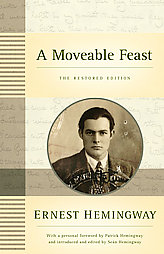
A Moveable Feast (Restored Edition) by Ernest Hemingway

Reading A Moveable Feast is like walking along the sea shore. On the fine sandy beach you see many attractive shells, but you don’t have a bucket with you. You pick the finest ones and put them in your pockets, until they’re full. But every step you take further, you see more that you want to keep. This post is too limited for me to display all the shells I’ve collected, but allow me to just pour them out from my pockets, without sorting, sand and all.

I first read about the term “Moveable Feast” while sitting in an Anglican church in Vancouver, flipping through the The Book of Common Prayer. After some googling later, I got the idea. A feast in the liturgical calendar that you commemorate no matter which date it falls on year after year. In the Foreword of this restored edition, Hemingway’s son Patrick (with second wife Pauline Pfeiffer) writes:

The complexity of a moveable feast lies in the calculation of the calendar date for Easter in a given year, from which it is simple enough then to assign a calendar date to each and every moveable feast for a given year. Palm Sunday is seven days before Easter.

A memorable experience that will follow you all the years of your life. You’ll cherish it whenever and wherever you are. Hemingway’s friend A. E. Hotchner suggested this title. Author of the biography Papa Hemingway, Hotchner recalls Hemingway once said to him:

If you are lucky enough to have lived in Paris as a young man, then wherever you go for the rest of your life, it stays with you, for Paris is a moveable feast.

Like Rick says to Ilsa in “Casablanca”: “We’ll always have Paris.” Same sentiment.

A Moveable Feast is Hemingway’s memoir written from notes he had forgotten in two steamer trunks stored at the Ritz Hotel in Paris since 1928. In 1956 he repossessed the treasure trove, upon the urging of the hotel management. The book details his experience while living in Paris from 1921 to 1926, when the author was in his early 20’s. The memoir was first published posthumously in 1964. The Paris Years was a period when Hemingway, just married Hadley Richardson, young and care-free, decided to give up journalism to strive at being a novelist.

He would write in a rented room or in a café over café crème,
meet Gertrude Stein for critique of his writing, go back home for lunch with wife Hadley, or have oysters and wine in a restaurant, socialize with Fitzgerald, Ezra Pound, and other expats, borrow piles of books from Sylvia Beach’s library in her bookshop Shakespeare and Company, visit Luxembourg gardens and museum…

Two people, then, could live comfortably and well in Europe on five dollars a day and could travel.

No wonder Gil in “Midnight in Paris” dreams of such a life.

What strikes me initially is Hemingway’s frankness, sometimes blatant description of his opinion about the people he met. Like the first time he saw the artist Wyndham Lewis through Ezra Pound:

I watched Lewis carefully without seeming to look at him, as you do when you are boxing, and I do not think I had ever seen a nastier-looking man… I tried to break his face down and describe it but I could only get the eyes. Under the black hat, when I had first seen them, the eyes had been those of an unsuccessful rapist.

According to grandson Sean Hemingway who edited and wrote the introduction of this restored edition, Hemingway developed his sharp eye and ear during these Paris years. Here’s an account of Scott Fitzgerald when Hemingway first met him in the Dingo bar:

Scott was a man then who looked like a boy with a face between handsome and pretty. He had very fair wavy hair, a high forehead, excited eyes and a delicate long-lipped Irish mouth that, on a girl, would have been the mouth of a beauty. His chin was well built and he had good ears and a handsome, almost beautiful, unmarked nose.

This is only a little excerpt in a two page description of Scott’s appearance. It’s sentences like these that stand out for me. They all point to the writer at work: observing.

I kept on looking at him closely and noticed…”

“I kept on observing Scott.

And putting down in words later:

I wasn’t learning very much from looking at him now except that he had well shaped, capable-looking hands, not too small, and when he sat on one of the bar stools I saw that he had very short legs. With normal legs he would have been perhaps two inches taller.

But it was Scott’s talents despite his eccentricities and alcoholism that formed the building blocks of their friendship.

When I had finished the book [The Great Gatsby] I knew that no matter what Scott did, nor how preposterously he behaved, I must know it was like a sickness and be of any help I could to him and try to be a good friend. …   If he could write a book as fine as The Great Gatsby I was sure that he could write an even better one. I did not know Zelda yet, and so I did not know the terrible odds that were against him.

It is perhaps with such candour and devotion in writing that he constantly sought to “write one true sentence.” Woody Allen has grasped the essence in this juicy line from “Midnight in Paris”:

No subject is terrible if the story is true, if the prose is clean and honest, and if it affirms courage and grace under pressure.

The restored edition brings back sections missing in the earlier 1964 publication which was edited by fourth and last wife Mary. According to Sean Hemingway, this restored work represents the content that Hemingway himself had intended the book to have, with the chapter “Nada y Pues Nada” (Nothing And Then Nothing) written three months before his suicide.

The second last chapter “The Pilot Fish and the Rich” shows he was remorseful over the breakdown of his first marriage to Hadley towards the end of his Paris days. A mutual friend they both knew, journalist Pauline Pfeiffer, came in between them. “You love them both now… Everything is split inside of you and you love two people now instead of one.”

But A Moveable Feast belongs to Earnest and Hadley and their young son Bumby.  “… this is how Paris was in the early days when we were very poor and very happy.” As a reader, I feel a sense of loss as I come to the end, for Earnest and Hadley were so much in love the first few years in Paris:

She: ‘And we’ll never love anyone else but each other.’

He: ‘No. Never.’
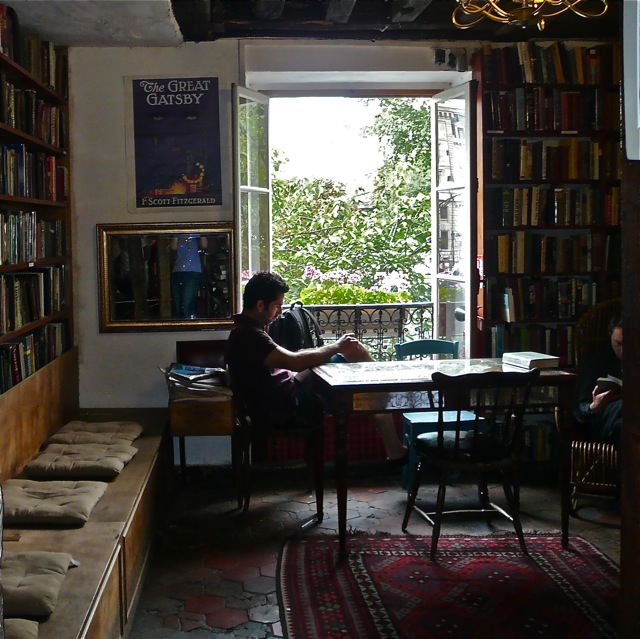
Their 2-room rental walk-up with no electricity and no hot water had been a haven of warm meals and intimate talks. It was the time when he was “a young man supporting a wife and child … learning to write prose.” Their short marriage lasted only six years. In 1927 Hemingway married Pauline, four months after divorcing Hadley.

The last section at the end of the book is entitled “Fragments”. These are “false starts”, beginning paragraphs of an introduction Hemingway tried to write for this book. Interestingly, every one of these attempts starts with: “This book is fiction.” Many include this sentence: “I have left out much and changed and eliminated and I hope Hadley understands.” In another fragment he wrote: “No one can write true fact in reminiscences…”

I’m baffled. But maybe unnecessarily. From our very subjective mind, our often hazy view of what did happen and what we wish to have happened and what could have happened, we conjure up a fusion. Should there be a clear line separating them? It’s because the demarkation of fact and fantasy is fluid that we can appreciate the arts, such as the film “Midnight in Paris.” The events that happen to Gil after midnight would remain fondly with him as reality, so real that they change his decision regarding his future. Facts or fiction… or fusion?

~ ~ ~ 1/2 Ripples

***

A Moveable Feast: The Restored Edition by Ernest Hemingway, published by Scribner, NY, 2009, 240 pages. Foreword by Patrick Hemingway, introduced and edited by Sean Hemingway.

This post is to participate in the Paris In July blogging event hosted by Karen of BookBath and Tamara of Thyme for Tea. You can also find another review of A Moveable Feast here at Dolce Bellezza.

To read my review of “Midnight In Paris”, CLICK HERE.

Photos: Paris, Shakespeare and Company, Writers’ portraits and The Library in Shakespeare and Company taken by Arti of Ripple Effects, Aug. 2010. All Rights Reserved.

Click on the following links for some insightful interviews:

National Post Interview with Sean Hemingway on the restored edition

Interview with Woody Allen on making “Midnight In Paris”
True Grit: A Cool Summer Read and Movie

14 year-old Mattie Ross has just got herself a place on my short list of favorite fictional heroines, alongside Elizabeth Bennet. Come to think of it, if Jane Austen were to write a Western novel, I’m sure she’d have created a character like Mattie Ross, determined, principled, curious, fearlessly independent, her heart sincere and her morals strong.


Kudos must go to author Charles Portis, who has described with succinct and flowing prose the captivating adventure of Mattie Ross. It’s a hero’s journey, but Mattie is no reluctant heroine. No more than a child, she hires the meanest of them all, Marshal Rooster Cogburn in Fort Smith, Arkansas, and goes with him, against his strong objection, to hunt down Tom Chaney, the killer of her father.

Portis’s storytelling is alluring and comedic, capturing my attention from the opening lines. The vision of 14 year-old Mattie is clear and crisp. Reminiscing as an adult now, her voice is vivid and affective. I’m won over soon by her articulate dealing in the adult world, protecting her own interest and yet still pouring out the heart of a child. Portis’s description is lucid, at times eloquent, and at times, deadpan humorous. His characters come alive with their vernacular dialogues of the American South after the Civil War. Many of the pages are script-ready for their cinematic effects.

I admit this is my first Western novel if my memory serves me correctly. My other one in the Western genre is Elmore Leonard’s short story “3:10 to Yuma” which I read after watching the movie. Here the reason is similar. I waited in a long line of holds from the public library for this book because of the fine movie adaptation I’d seen. The Coen brothers’ soulful rendition of True Grit (2010) got me curious… I just wonder how much of the movie is their creation, and how much is the author’s own.

I’m totally surprised to learn from reading the novel that the remake of “True Grit” is mostly a faithful adaptation of Portis’s novel. Not that I’m concerned it needs be accurately transposed, for I don’t expect movies to go the fidelity route anymore. But that’s exactly my surprise, that the Coen brothers have stayed with the plot and character development, and derived their scene sequences almost to the dot, unlike the 1969 John Wayne flick, which has changed the ending totally.

Not only that, under Joel and Ethan Coen’s direction, the movie is imbued with soul and heart. The Biblical quotes and allusions in Portis’s novel are eloquently woven into the narration and music of the film, something that’s missing in the 1969 version. The leitmotif of “Leaning On the Everlasting Arm” is deadpan ironic in the ending, albeit instilling meaning throughout. Without their leaning on each other they would not have overpowered Tom Chaney (Josh Brolin) and the bandits with whom he takes cover, and definitely would not have survived at the end.

In True Grit, characters make the movie. The film is spot-on in depicting the dynamics of the man-hunt trio, Mattie Ross (Hailee Steinfeld), Federal Marshal Rooster Cogburn (Jeff Bridges), and Texas Ranger LaBoeuf (Matt Damon). Hailee Steinfeld is a natural, and owns the role of tough and precocious Mattie, deservedly receiving a Best Actress Oscar nom at this year’s Academy Awards. At 13, Steinfeld beat out 15,000 other girls in the audition to get the role.  Just one year later, she has landed at the Oscars.

Portis’s intricate portrayal of the threesome in the novel is sensitively transposed visually on screen. The common goal in capturing a killer supersedes any rivalry between the two men in front of a 14 year-old girl, who has got both of them “pretty well figured”. One day when he has a sober minute to look back to his drunken, drifting life, Rooster would likely credit this episode of his journey with Mattie to capture the coward Tom Chaney as the most rewarding. The girl has gotten and drawn out the best of him.

First published in 1968, the book has since become a modern American classic. Some have compared it with Huckleberry Finn. But it has been neglected in subsequent years until the 2010 Coen brothers’ adaptation came out. It has garnered 10 Oscar noms earlier this year, including Best Picture, Best Director and Best Adapted Screenplay. Now we see the fresh reprints by The Overlook Press, New York. Thanks to the movie, the once overlooked book is back in print and on the new and popular shelves in bookstores, even now months after the Oscars.

Ah yes… books and movies, still the best summer treats.

True Grit by Charles Portis, published by The Overlook Press, NY. 2010, with Afterword by Donna Tartt, 235 pages.

Book and Movie:

~ ~ ~ 1/2 Ripples

Midnight In Paris (2011)

.

.

A Woody Allen movie rated G? Yes, and maybe only in B.C. where I saw it in Vancouver yesterday. If you’re offering charming characters, lively performance from some talented actors, Woody Allen’s own clever screenplay inundated with witty dialogues, and have him direct in the backdrop of dreamlike Paris, the result is pure delight. You don’t need too much of anything extra, hence the MPAA PG-13 rating. And maybe because of that, clean and crisp, this is one of the Woody Allen movies I enjoy most for some years. And yes, this is the one with French first lady Carla Bruni in it, where Allen has to direct under the watchful eyes of the French President and his security personnel.

Gil (Owen Wilson) and Inez (Rachel McAdams) are engaged to be married. They take a trip to Paris with Inez’s parents John (Kurt Fuller) and Helen (Mimi Kennedy) for John’s business merger. While Gil and Inez first appear to be a romantic pair, we soon find them to be incompatible. Gil is an underachieved screenwriter from California, aiming to write his first novel. His dream of Paris is one of the golden age, nostalgically inhabited by the modernists, the artists and literati of the 1920’s.

However, his fiancé Inez fails to see his aspiration or potential, and the imagination that the cultural city can unleash in him. Rather, she falls for their American friend Paul (Michael Sheen), the intellectual snob whose self-importance drives him to snub Gil and even counter their museum guide (Carla Bruni) in the accuracy of her information. But Gil is more preoccupied with his midnight encounters, which ultimately transform him and change their individual paths. These experiences after midnight are just wonderful surprises for Gil, and me. Without giving too much of a spoiler, let’s just say it’s Woody Allen’s version of ‘Back to the Future’.

When I first saw the trailer, I had reservation about Owen Wilson being the leading man in a Woody Allen movie set in Paris. Would that be a miscast? Well, I’m proven wrong the moment he appears on screen. Wilson embodies the unassuming and delusional Gil, screenwriter from Pasadena, CA. He casts all of his previous film roles out of my mind and replaces with only this one of the moment, offering a performance that is impressively convincing. He leads a cast of wonderful actors, including the charming Marion Cotillard, veteran Kathy Bates, the versatile Michael Sheen, and a very dramatic Adrien Brody. And I won’t give away who is supposed to be who, I’ll leave that joy of discovery for you.

This is a movie for art and literature lovers, ideal for book bloggers and discussion groups. Allen has cleverly juxtaposed the modernists in the turn of the 20th century with their contemporary admirer Gil. We encounter all these iconic figures in the film: Ernest Hemingway, Scott and Zelda Fitzgerald, Gertrude Stein, Pablo Picasso, Cole Porter, Salvador Dali, T.S. Eliot and more… it’s so much fun to hear allusion to their works, and some of them utter lines that are their own but in the style and wit of Woody Allen’s.

What makes the movie gratifying of course is not just the visuals, people and places, but how the story leads. The twist towards the end is the pivotal revelation for Gil. While one can bask in nostalgia, one needs to embrace the present in order to fully live. As I watched the movie, I wanted to read the script and capture Allen’s ingenuity. As I left the theatre, I wanted to see it again.

~~~1/2 Ripples

To read my review of Hemingway’s A Moveable Feast CLICK HERE.

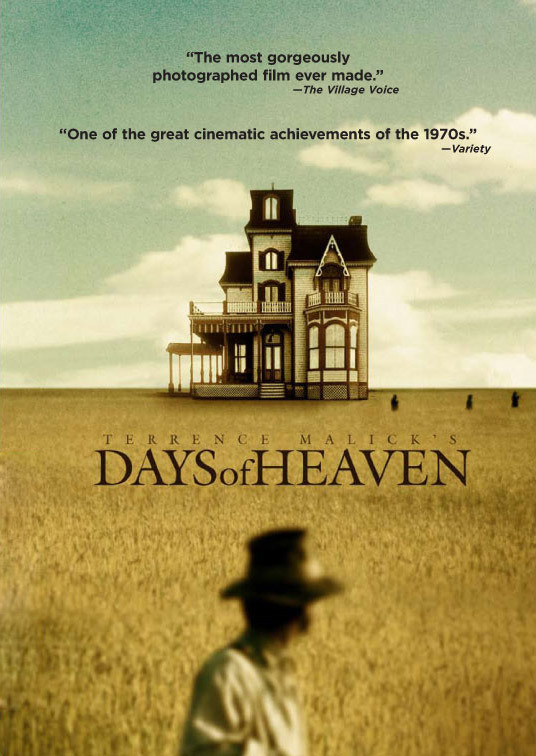
Days of Heaven (1978) by Terrence Malick

It all began when I watched the “The Tree of Life” trailer in the theatre. I was mesmerized. A few seconds into the trailer I decided it would be a must-see for me. Then later it won the Palme d’Or at the Cannes Film Festival on May 22. I’m now catching up on Terrence Malick’s previous works before “The Tree of Life” screens here in our city in a few weeks time.

The reclusive auteur Terrence Malick has only made five feature films in his directing career which spans four decades: Badlands (1973), Days of Heaven (1978, Won Oscar for Best Cinematography), The Thin Red Line (1998, seven Oscar noms), The New World (2005), and The Tree of Life (2011, Won Palme d’Or at Cannes, so far). His academic background in philosophy at Harvard and later as a Rhode Scholar at Oxford has found its expressions in his cinematic creation.

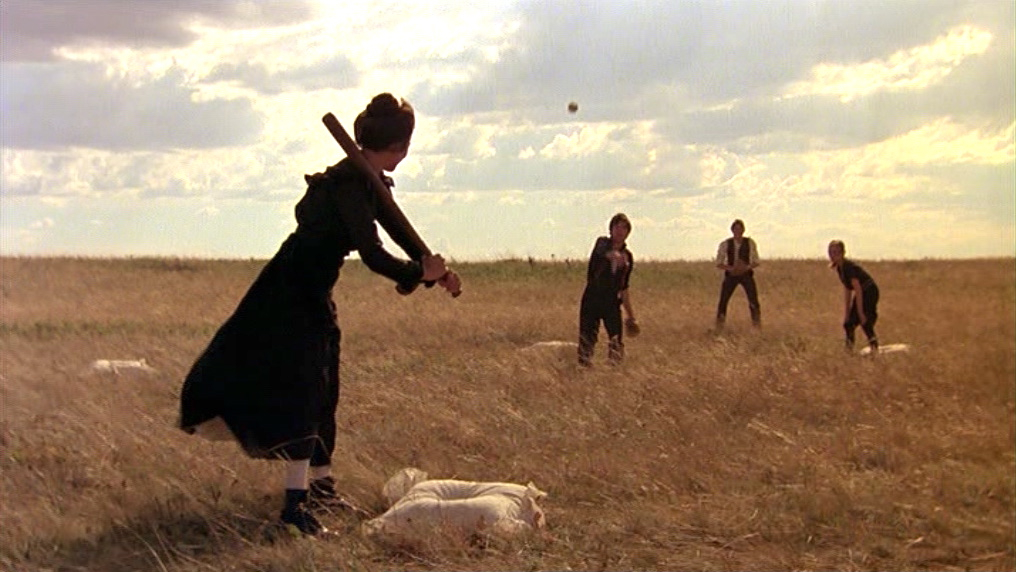
“Days of Heaven” in the Criterion Collection is a fantastic restoration and transfer. I watched it on the DVD. I suppose the Blu-ray would be even more spectacular. Some call “Days of Heaven” one of the most beautiful films ever made. Well, I haven’t seen all movies ever made to say that, nevertheless, of all that I have seen, such a statement is certainly not an exaggeration. Using mostly natural light, every shot is cinematic poetry. Enthralling scene sequences joined together to produce a piece of artwork that speaks the quiet, and sometimes silent, language of visual eloquence.

Written and directed by Malick, the film is nostalgically set in the 1910’s. The story is about Bill (Richard Gere), a hot-tempered steel mill worker in Chicago, who has to flee after an altercation leaving a man dead. He and his lover Abby (Brook Adams), and his younger sister Linda (Linda Manz) run away together and end up working in the harvest on a Texas farm. Pretending to be Bill’s sister, Abby is soon courted by the farmer (Sam Shepard). Overhearing that the farmer has only a year to live due to an illness, Bill persuaded Abby to marry the farmer so they can inherit his properties after his death. Every choice has its consequence. The plot unfolds in intriguing ways. Biblical parallels are deftly embedded in the scenes, Abraham and Sarah, the plague of locusts, Linda’s voice over allusion to the apocalypse… not just offering stunning images but thought-provoking as well.

And I must mention, I have a connection to the movie. It was shot right here in southern Alberta, and some scenes right here in Calgary, in Heritage Park to be exact. No, I wasn’t an extra. But proud that this regarded by some as one of the most beautiful films was shot entirely on location here in this province. It is the magnificent expanse of Alberta’s wheat fields and not those in Texas that we see in the film. The reason: from the DVD commentary I learn that the wheats were four feet tall in Alberta while those in Texas were only two feet.


***

CLICK HERE to read my review of The Tree of Life (2011) by Terrence Malick.

CLICK HERE to my post “A Sequel to Days of Heaven, Mr. Malick?”

Photo Source: Screenmusings.org. Use as per outlined in Fair Use, for review and educational purposes only.

You’ll Never Catch Up

Comments from my last post “Movies to watch with Mom” had me running back to the 60’s, 50’s and even the 30’s for movie recommendations. Admittedly, I’ve been playing catch-up in recent years, watching films I’ve missed, including those from “The Golden Age of Hollywood”, the 30’s and 40’s. TCM is one of my favorite channels. So, thanks to litlove and shoreacres, I’ve been having a fun time digging out gems… IMDb is a great resource.

The oldest movie I’ve seen in its entirety is probably Charlie Chaplin’s “The Kid” (1921). I’ve watched only excerpts of D. W. Griffith‘s “The Birth of a Nation” (1915), so that doesn’t count. Dreyer’s “The Passion of Joan of Arc” is probably the next oldest (1928) I’ve seen. Then comes Ozu’s “A Story of Floating Weeds” (1934). They are all silent films.

Several of my all time favorites are in black and white: “Casablanca” (1942), Ozu’s “Tokyo Story” (1953), Robert Bresson’s “Diary of a Country Priest” (1951) and “Pickpocket” (1959), and to the 60’s, “To Kill a Mockingbird” (1962).

Yesterday, I came across this tweet from Scott Myers of Go Into The Story, a top screenwriting site in the blogosphere:

Thor” is the 46,775th movie registered with MPAA. If u watched 1 movie per day, it would take you 128 years to see them all.

That is… “see them all” up to “Thor”.

So, I don’t feel that bad for having a relatively limited ‘repertoire’. And it’s perfectly justified that I only see and write about those that interest me… That may well explain why you see mostly three out of four ripples in my reviews, since I’ve already eliminated the bulk of them. So, don’t feel bad that you haven’t caught up, it’s humanly impossible. And I’m afraid I’ll have to skip “Thor”.

The same with books.

I joined Goodreads recently. A whole new world opened up for me. I mean, the number of books people have read, or are currently reading… I feel like a tortoise in a race among road runners. Now this is not as easy as adding a friend on Facebook. Turning a ‘currently-reading’ book into ‘read’ is an achievement, not just a click on the ‘confirm’ button.

Lately, there’s a lot of discussions about the topic of being well-read. First off, finding a consensus on its definition is hard enough, let alone its measurement. According to Wikipedia, in 2009, there were 288,355 new books published in the United States (UNESCO data). Now that’s only for one year, in one country. Consider the past decades and centuries and all the classics of all human history and languages.

I like the title of a recent NPR article by Linda Holmes: “The Sad, Beautiful Fact That We’re All Going To Miss Almost Everything”. It begins with this statement:

The vast majority of the world’s books, music, films, television and art, you will never see. It’s just numbers.

We just can’t keep up with them all. In the article, Holmes calculates if you read 2 books a week continuously from age 15 until you’re 80, you’ll have read 6,500 books, which sounds pretty impressive. Let’s say you limit yourself to just read books from the last 250 years, those 6,500 books don’t even make a dent. Further, as you’re reading, catching up with all those already published works, by the time you’re 80, you’ll have missed 65 years of new publications.

Why even bother playing the catch-up game? If there’s any catch-up that’s truly meaningful, catch up with your own passion, curiosity and purpose, instead of heeding the tyranny of the populace. I’d probably enjoy my reading most if I don’t need to achieve anything by it. I’m sure the tortoise would see every single flower along the way.

Photo Source: The British Museum Reading Room from Wikimedia Commons

Movies to Watch with Mom

Best time to enjoy some mother-child bonding is to watch a movie together and afterwards, talk about it. The following are Arti’s recommendations for Mother’s Day gifts, DVD’s or Blu-ray’s. Click on the links to read my review for more details.

The King’s Speech (2010) – New release on DVD and Blu-ray, just in time for Mother’s Day. You want to keep this Oscar Best Picture not just for the excellent performance by Colin Firth, Geoffrey Rush, and Helena Bonham Carter, but all the special features that come with: Director Tom Hooper’s commentary, Q & A with principal cast, behind-the-scenes featurette “An Inspirational Story of An Unlikely Friendship”, historical speeches of the real KGVI (and see how good Colin Firth is), and interview with Lionel Logue’s grandson.

True Grit (2010) – Mom might remember the 1969 John Wayne and Glen Campbell version. But tell her this is way better. The Coen brothers have breathed soul into this remake adaptation of Charles Portis’ Western novel. Time well spent if only just to watch the then 13 year-old Hailee Steinfeld’s performance, handling and being handled by Jeff Bridges. 10 big Oscar noms.

Made In Dagenham (2010) – Based on the true story of the 1968 strike at the Ford Dagenham car plant in England, where female workers went on strike to protest sexual discrimination. Sally Hawkins leads a historical, landmark victory for women workers to achieve equal pay. What efforts, torments, and costs to the individuals and their family just to claim something that’s so basic and reasonable.  Remember Sally Field in “Norma Rae” (yes, that’s 1979). This is the modern, British version.

Beauty In Their Eyes (2009) – Won Oscar Best Foreign Language Film. From Argentina, the film offers a gratifying experience, a layered, affective, and captivating combination of crime, suspense, and human sentiments. A retired legal counselor writes a novel based on an unresolved case he handled. While doing that, the flood gate of memories and unrequited love bursts open but in a moving and restrained manner. I was touched by the superb performance, the thematic element, and the heart-stirring music.

And if you’ve missed these ones, now is the time to catch up with Mom together on the comfy couch:

Nowhere Boy (2009) – Biopic of  a teenaged John Lennon (Aaron Johnson). I wrote these words in my review: “I’ve particularly enjoyed the mother-son relationship depicted so poignantly in the movie, and the tug of war between the one who has given birth to and the one who has raised the child.” Kristin Scott Thomas as Aunt Mimi and Anne Marie Duff as Lennon’s birth mother Julia give life to this delightful rendition.

An Education (2009) –  Superb performance by Carey Mulligan who deservedly received an Oscar nom for Best Actress. A coming-of-age story of 16-year-old Jenny when a suave and seemingly classy man twice her age befriends her and captures not only her heart but the trust of her parents. Adapted from Lynn Barber’s memoir. Links to Granta’s interview and excerpt from Barber’s memoir in my review.

Easy Virtue (2008) – Based on Noel Coward’s play, this one is a frothy, light-hearted take on a family feud. If you’ve enjoyed Colin Firth and Kristin Scott Thomas together (a rarity after The English Patient), then this is a must-see. Jessica Biel and Ben Barnes co-star. You’ll see some unlikely feats, like the Firth and Biel tango. But, what are comedies for, if not to highlight the improbable?

Broken Flowers (2005) – I missed this one when it first came out, not a big commotion. Glad to have caught it on DVD. With Bill Murray, you know what to expect, deadpan but also deeper than it looks. An interesting and original story.

Howards End (1992) – I’m a fan of Merchant Ivory productions. So for Mother’s Day, I say, get any of their film adaptations of literary classics, anyone will do: A Room With A View (1985), The Remains of the Day (1993), The Golden Bowl (2000). But “Howards End”, adaptation of E. M. Forster’s novel probably is the best for Mother’s Day viewing, with wonderful performance by Emma Thompson, Helena Bonham Carter, Anthony Hopkins, Vanessa Redgrave… Give Mom the Criterion Collection where you’ll find lots of special features. Click here to my post “The Merchant Ivory Dialogues”.

Thelma and Louise (1991) – This year is the 20th anniversary of this ‘classic’ film. Female friendship strengthened on a road trip with no road blocks. I rewatched it recently and find it still relevant. Best Oscar original screenplay. Geena Davis and Susan Sarandon are heading to Toronto in June for a charity appearance to celebrate the anniversary. If Mom’s a fan, send her a ticket to the event. Not possible? The 20th Anniversary Blu-ray might do.

Girl WIth A Pearl Earring (2003) – Both book and film are fine. Delightful gifts for Mother’s Day. Colin Firth as painter Vermeer and Scarlett Johansson as Griet the servant girl. Subtle yet dynamic, cinematography to match Vermeer’s works.

***

And to all who play a mothering role:

Happy Mother’s Day !!

Let The Great World Spin: How not to judge a book by its cover

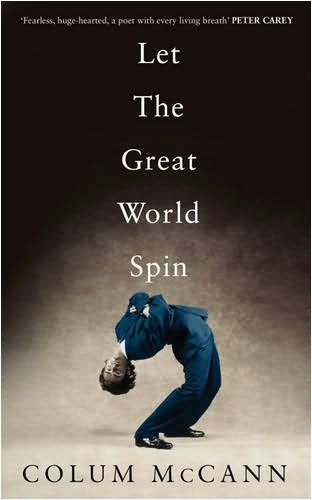
There was a lot of buzz when this book came out a couple of years ago but I’ve been avoiding it, albeit a bit curious to know what it’s about. My reason? I just didn’t like the cover, still don’t. This is what I see in our local bookstores:

But after two years, and knowing that it has won the National Book Award  (Fiction, 2009), I could not resist anymore. I read it recently and was pleasantly surprised by its structure and intricately woven content. Allow me to offer a glimpse into what’s inside the cover… for those who still have not ventured into it.

The book begins with the true event of the Man On Wire. On a fine August day in 1974, NYC, in the early morning hour, an extraordinary feat took place in front of unbelieving eyes on the streets in Manhattan. One hundred and ten stories above ground, between the newly built Twin Towers, a man was walking, dancing, even lying on a wire strung across the two buildings. Interestingly, the novel is not so much about this man with extraordinary courage and skills, his name not even mentioned until the “Author’s Note” just before the back cover. Instead, the book is about the ordinary humanity on the ground. On that day they are joined by amazement of one man walking precariously in midair, oblivious that it is a metaphor for some of them and their life down on the streets. Here are the stories of a few individuals on that otherwise very ordinary day:

Corrigan, a young priest from Dublin, lives in a rough and drug-infested neighborhood, fending for and befriending prostitutes and the poor. McCann’s characterization is complex and layered. On the surface, we see an altruistic worker, sacrificing his youth, health and even life for the lowly, abused, and despised:

“The comfort he got from the hard, cold truth–the filth, the war, the poverty–was that life could be capable of small beauties. He wasn’t interested in the glorious tales of the afterlife or the notions of a honey-soaked heaven… Rather he consoled himself with the fact that, in the real world, when he looked closely into the darkness he might find the presence of a light, damaged and bruised, but a little light all the same.”

As I read deeper, and with McCann’s captivating storytelling of Corrigan’s broken home while growing up in Dublin, and his strained relationship with his estranged father, I suspect that his transplanted life in NYC could well be a search for redemption, or maybe subconsciously, a defiance against a cruel world, an act just to spite his past.

We read too about a mother and daughter’s entanglement in the underworld of prostitution. We see the reality they have to deal with, as another generation of young daughters are growing up under their care. And yet, as if life has not dealt harshly enough, tragedy strikes. But McCann does not leave us in despair. Through the ingenious weaving of characters and circumstances, he skillfully lifts us out of a miry mess onto a higher plane.

We also read about a support group of mothers who have lost their sons in the Vietnam War.  McCann has sensitively shown us that, even sharing the same loss and grief, their common ground could easily be shaken by the nuances of class and race, as those magnified in the interactions between Claire, the wife of a judge living on Park Avenue and Gloria, a black woman from a housing project in the Bronx. And yet, we are gently led to experience the exhilarating triumph of how compassion can turn mere common ground into powerful bonds, changing grief into commitment and purpose.

Finally we are led one full circle back to the man on wire, and the judge who has to handle his case. Judge Soderberg himself is a father who has lost a son in Vietnam. Like the man on wire, his son had taken the risk to enlist by his own will, not as a fighting soldier but only to offer his computer expertise. No matter, risks are what the two face and one of them succumbs to it. As a judge, how is he going to rule this 25 year-old risking his life to do something he believes to be purposeful and rewarding?

The book ends in the modern day, when a younger generation witness an extreme act of malice done to the Twin Towers. But we also see a new generation raised by grace–fruits of the very individuals who were impacted on that fateful day when the man walked on wire a thousand feet in midair decades earlier. It’s about the choices we make, despite the miry mess we tread on the ground.

While McCann presents these characters and their stories as separate threads in different chapters, he eventually weave them together, tying all loose ends to make a beautiful human tapestry. Like the wire walker, their own lives are no less challenging. They too have to take risks to step out and deal with their circumstances. Theirs is a balancing act as well, in their choices to do the right thing, in their search for meaning, every step of the way.

McCann’s storytelling is visual, his descriptions stylish, many scenes made alive by real-life dialogues that one would expect in the filthy, dark corners of NYC. The book offers an experience quite like my reading of screenplays, but with its literary form, it is much more gratifying.  Also, I was not too surprised to find out that Colum McCann is not only a novelist but a screenwriter as well. Further search leads me to the info that “Let the Great World Spin” is now a film in development by producer J.J. Abram of “Star Trek”(2009) fame.  mmm… let’s just hope the movie adaptation won’t be a 3D spectacular, but a real, human experience as the novel has so sensitively portrayed.

~~~1/2 Ripples

Let the Great World Spin by Colum McCann, HarperCollins Publishers, 2009, 349 pages.

***

If I’d seen this cover in the store, I would have grabbed it at first sight:

CLICK HERE to Colum McCann’s beautifully-designed website, and an exploration of the cover art.

CLICK HERE to go to the artist Matteo Pericoli’s wonderful website which I highly recommend.