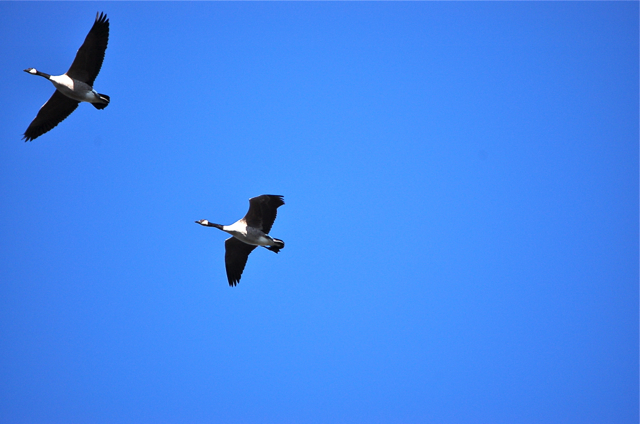
While I was birdwatching this week, I saw a flock of Canada Geese fly overhead in perfect V formation. With my recently trained quick reaction, I pointed my camera up, framed them so beautifully in my viewfinder, and CLICK. Shoot, my camera was turned off. Another quick reaction, I turned it back on and tried again… catching the tail end of the troop.
Here it is, better late than never:
Thanks to Alyce of At Home With Books for hosting Saturday Snapshot, let me have a chance to hone my eye-hand coordination.
***
Tomorrow September 30 is our Anna Karenina Read-Along First Post: Parts 1-4. Stop by again to join in the discussion and make some ripples.
An Autumn birdwatching course I just started brings me to a whole new world I haven’t explored before. Of course I’ve observed birds, appreciated and even photographed them occasionally, but never so up close and personal, and purposeful.
Some in my group are equipped with long 400mm lens, nature paparazzi. But we leave nature be, of course, and being so far away from our subjects, no invasion of privacy. This pensive Gull isn’t a bit bothered by us.
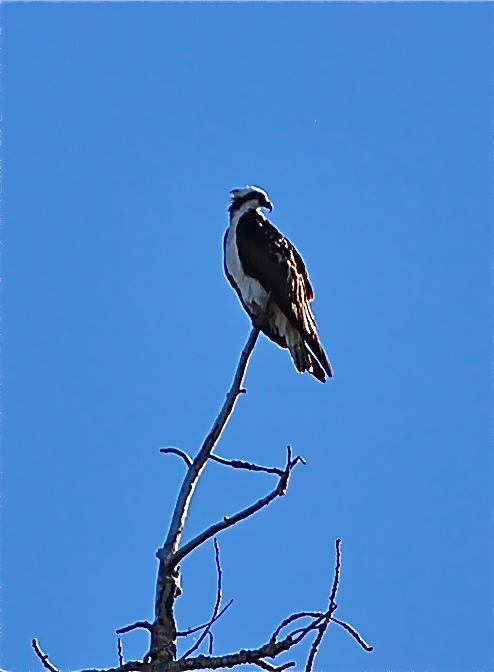
With just a 50-200mm lens, this is the best I can do. The Osprey is harder to capture of course. With a little help from iPhoto, here’s a closer look of her/him perched high up in a tree, and even farther cruising in the bright blue sky.
I can only wonder why it has taken me so long to come to such a fascinating world. 12 more weeks to go, yes, into the snow likely.
Five years ago in this last week of August I started Ripple Effects on WordPress. I still remember that first prompting from my son that I should start a blog.
“What’s that?” I asked.
I just can’t capture all that have come along since then.
To all of you who have visited, subscribed, followed, read, commented, and shown your support and encouragement in ways you might not have realized, I thank you all.
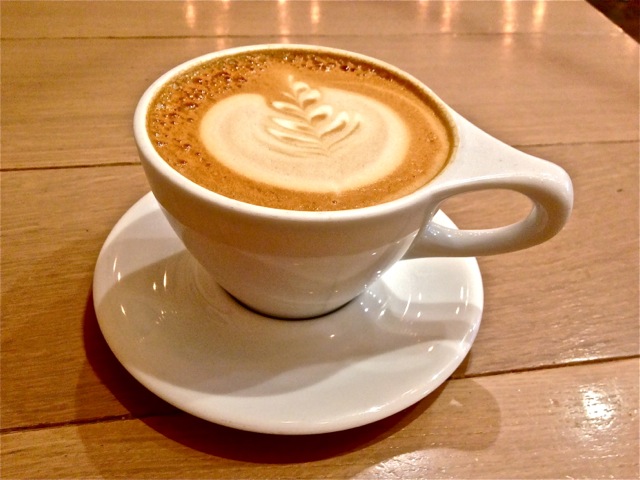
Here’s a cup of latte to celebrate and a teaser: How do you drink the latte without disturbing the beautiful foam art on top?
Well, it was pure serendipity that I managed to do just that. This is the photo during that occasion. I only have the ‘Before’ but not thought of taking an ‘After’ shot. But trust me, it wasn’t a mirage when I got near to the bottom of the cup.
What did I do? I was chatting away with a friend for maybe 10 minutes before I started sipping it slowly. By that time the top foam had been cooled down a bit and slightly ‘dried’. Disclaimer: I haven’t tested it again, but I will. Just to see if it really wasn’t a mirage that I saw.
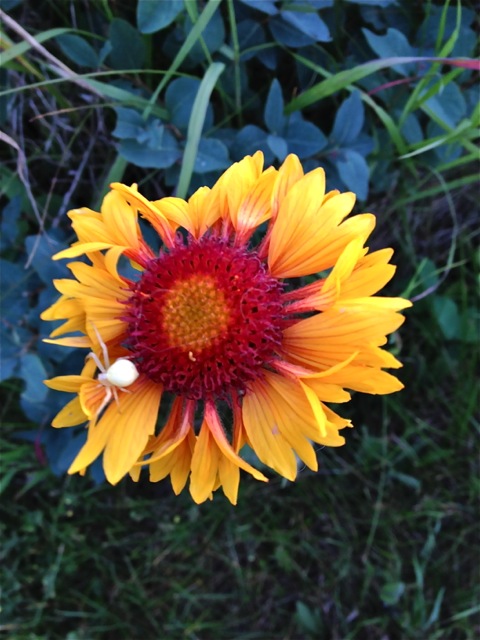
Found this while taking my evening walk a few days ago. A white spider on what looks like a miniature sunflower. Can anyone identify both? I’ve never seen a spider like that before, or such a flower in the wild.
Soon it begins its acrobatic routine:
a natural for the Cirque du Soleil:
These last two shots are taken pointing to the light, hence the hazy result. But if you look closely you can see this little spider having fun.
The Brasserie Balzar Near the Sorbonne, Sarte and Camus’s frequent hangout where they dined and debated. Insert shot of Menu: Breakfast for 6 Euros includes a croissant, tartine, confiture, hot drink, orange juice.
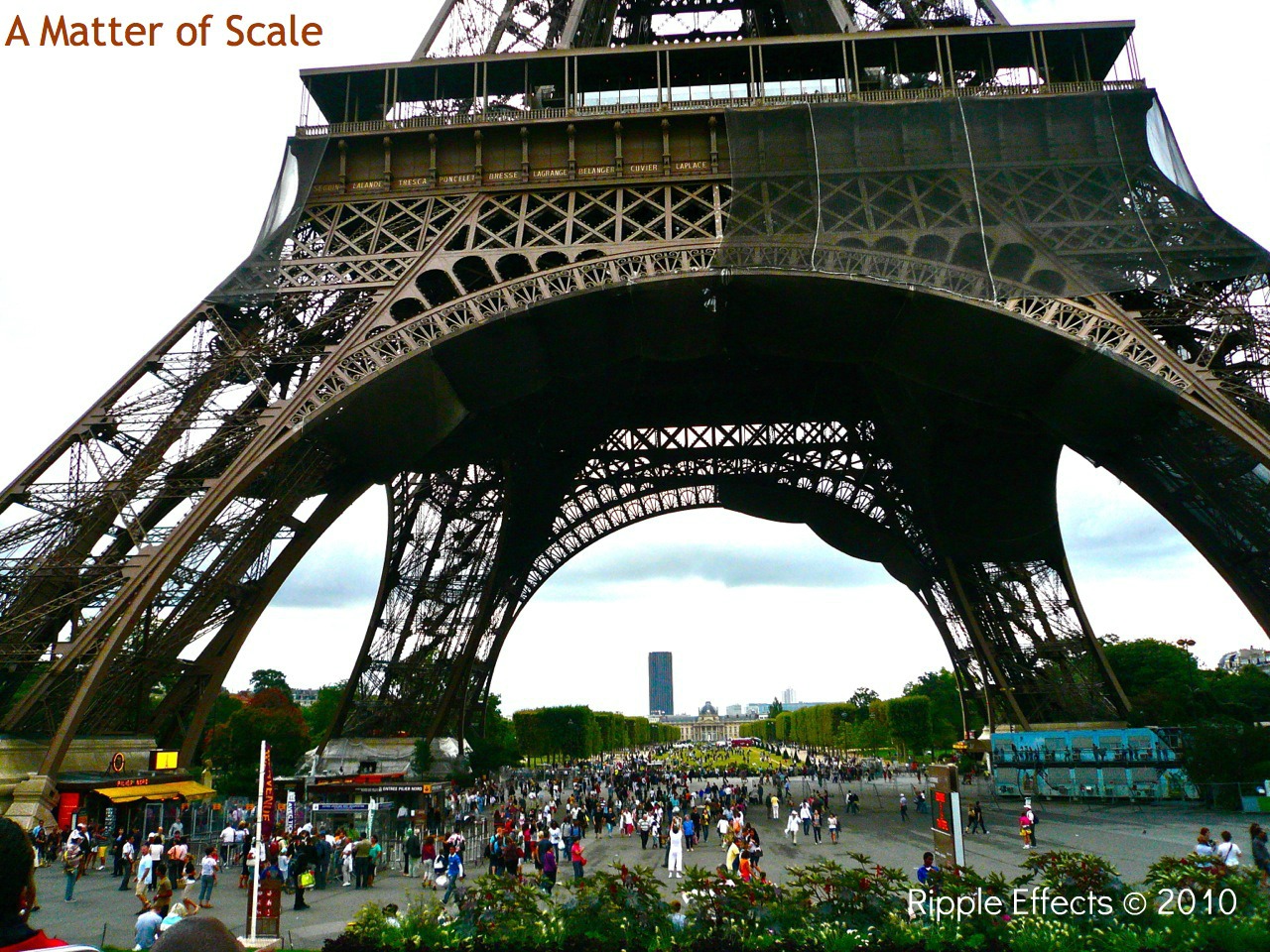
A View of the Tower Size is relative.
The Paris Apple Store Probably the most elegant of all the Apple branches.
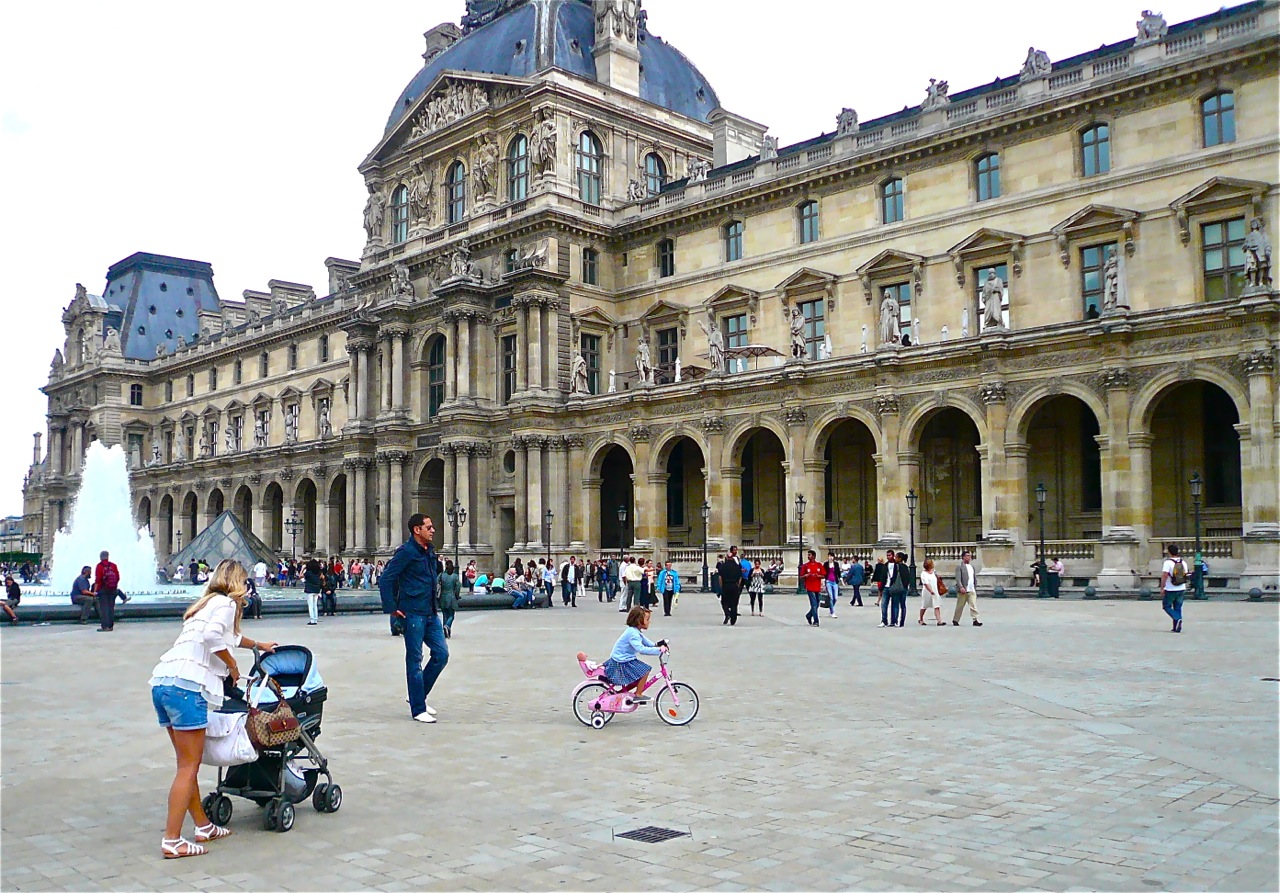
The Paris Collage
As you can see, I got a bit carried away playing with the features in the photo editing site Picmonkey.
Watching the movie Séraphine (my last post) made me think of another artist tormented by mental illness. Vincent Van Gogh (1853-1890) was born in the Netherlands. His artistic imagination was ignited when he moved to Paris in 1886 and saw the works of the impressionists. But the prolific period of his life began only after he went south to Arles.
I visited Provence in August, 2010, went on a walking tour of Arles following the footsteps of Van Gogh. For Paris in July hosted by Karen of Bookbath and Tamara of Thyme for Tea, I’m reposting an excerpt of my travelogue here. Some of you may remember my series of travel posts, but many of you have come to Ripple Effects only recently. Please join me as I revisit Arles and its nearby St-Rémy-de-Provence.
***
Van Gogh moved to Arles from Paris in 1888, seeking the tranquility that was so elusive to him in the big city. In his letter to his brother Theo upon arrival to Arles, he wrote:
It seems to me almost impossible to be able to work in Paris, unless you have a refuge in which to recover and regain your peace of mind and self-composure. Without that, you’d be bound to get utterly numbed.” — Tuesday, Feb. 21, 1888.
The fresher and more colourful palette is apparent during this most prolific period of the artist’s life. Bright yellows, blues, shorter and swirling brush strokes established his signature style.
As for me, I was a bit disappointed to see the sunflowers have already withered in late August. Fields of yellow were now massive brown. They would be harvested at a later time for their oil, a good reminder that, for tourists, it’s the view and the photos, but for those living here, it’s their livelihood. The lavenders on the Luberon mountains too had long passed the season. Note to myself: Early to Mid July is best if I ever come this way again.
But all was not lost. I was gratified to follow some of Van Gogh’s footsteps as I explored the clearly posted Van Gogh sites in the town, the scenes and locales where the artist so vividly captured in his paintings.
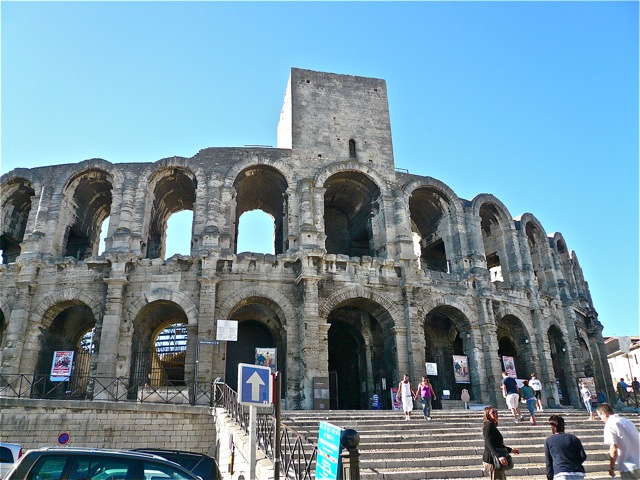
Arles is a Roman town. What more prominent landmark to reflect its past glory than the Roman Arena in the town centre. Why all the arches? The free flow of pedestrian traffic. The full seating capacity, 20,000 people, could exit the Arena in 7 minutes.
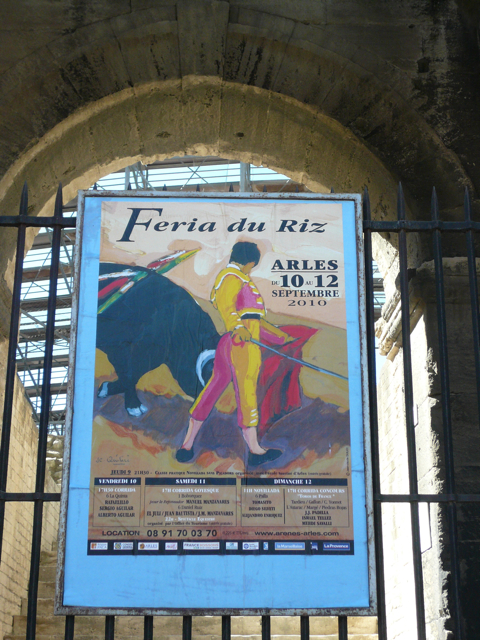
Used by gladiators in ancient time, the Arena is still the venue for bullfights:
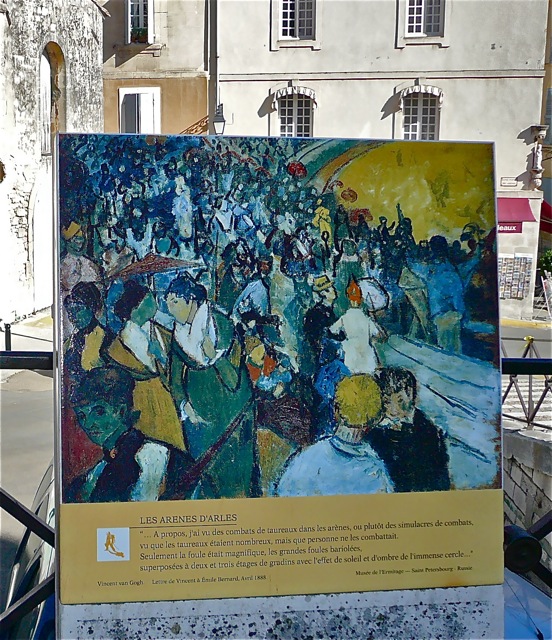
But Van Gogh’s interest was not so much in the violent action of bullfighting than the people, as his painting Spectators In The Arena At Arles (December, 1888) clearly shows:
The Café Terrace on the Place du Forum was his hang-out, renamed Café Van Gogh now. The yellow café upon the backdrop of the blue, starry night had deeply inspired the artist:
Café Terrace At Night (September, 1888):
Van Gogh had wanted to make Arles a hub for fellow artists. Upon his urging, Gauguin came to join him in October, 1888. The two painters frequented the Café Terrace many a night but only for two short months. What happened on December 23rd was reported by the local paper the next day:
At 11:30 pm., Vincent Vaugogh [sic], painter from Holland, appeared at the brothel at no. 1, asked for Rachel, and gave her his cut-off earlobe, saying, ‘Treasure this precious object.’ Then he vanished.
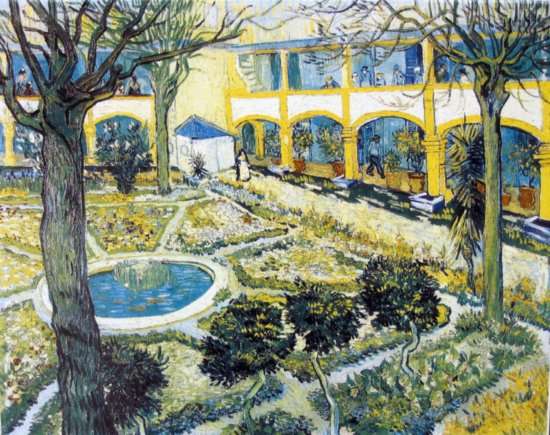
After this incident, Van Gogh was admitted to a local hospital, now the Espace Van Gogh in Arles, a cultural centre:
And here is Van Gogh’s rendering when he was staying there:
In January, 1889, Van Gogh returned home to his ‘Yellow House’ (which has now been torn down and reconstructed), but for the next few months, suffered onslaughts of hallucinations and delusions. His view of his own condition nevertheless was lucid and even progressive for his time. His letter to Theo is poignant, as he openly faced his predicament and earnestly sought a solution:
And for the time being I wish to remain confined, as much for my own tranquillity as for that of others.
What consoles me a little is that I’m beginning to consider madness as an illness like any other and accept the thing as it is, while during the actual crises it seemed to me that everything I was imagining was reality.”
— Sunday, April 21, 1889.
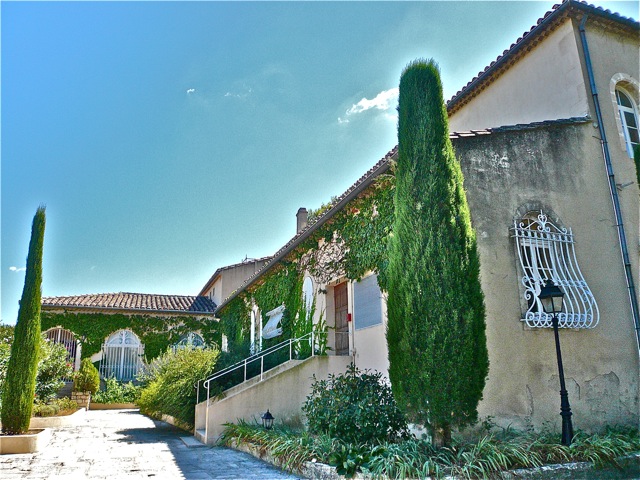
On May 8, 1889, he checked himself into the Saint Paul de Mausole, the mental hospital at St-Rémy-de-Provence. Under the care of his doctor Théophile Peyron, the artist’s condition improved and he thrived in the idyllic environment there. Art therapy had brought healing and prolific output. Van Gogh stayed there for a year and created more than 150 paintings.
Dr. Théophile Peyron out at the front garden of Saint Paul de Mausole hospital:
The olive grove outside:
Olive Grove (June, 1889):
To his brother Theo, he wrote on Sunday, May 11, 1890:
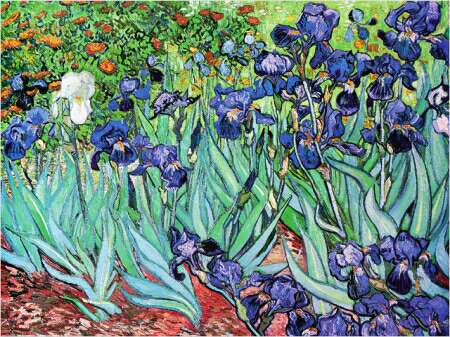
At the moment the improvement is continuing, the whole horrible crisis has disappeared like a thunderstorm, and I’m working here with calm, unremitting ardour to give a last stroke of the brush. I’m working on a canvas of roses on bright green background and two canvases of large bouquets of violet Irises…
My Van Gogh trip ended at St. Rémy, and so be it. I’ve seen the sites wherein the artist was at his most prolific. I’ve seen the town and surroundings where he found inspiration. I’ve seen his final solace where he attained some stability and painted with passion. I’d like to keep these as memories of my travel to Provence. I could hardly bear to think of his last days, discharged from St. Rémy just a few days after the above letter, headed north to Auvers-sur-Oise on the outskirt of Paris, and in just two short months, succumbed to the recurrence of his illness. He shot himself in the chest with a revolver on July 27, 1890, and died of his wound two days later.
Back to the thoughts I wrote about: How do we keep art from turning into a cliché? I think it takes a certain awareness of the artist as a person, plus a measure of empathy and respect for the struggle to live and create… and realizing that the beautiful works are often triumphs in spite of life’s overwhelming adversities, rather than the natural products of bliss and fortune.
To wrap up my travel posts, and taking the risk of turning it into a cliché albeit my motive is pure, here’s the YouTube clip again, Don McLean’s tribute to Vincent:
In August, 2010, I was in Paris, stayed at a small hotel on a side street in the Latin Quarter, across from the Sorbonne. And just recently I was reading the book The Hundred-Foot Journey (my last post). In the book, the protagonist Hassan was offered a place to start his own restaurant, at 11 Rue Valette, near the Panthéon. When I came to that part of the book, I quickly went Googling and found, ta-da! Hassan’s restaurant was within walking distance of the hotel I stayed in.
This is what happens, you fuse together reality and fiction… that’s the joy of reading. And I could even imagine stopping by the restaurant to have a taste of Hassan’s haute French cuisine.
No, I didn’t get to Hassan’s Le Chien Méchant, but found this little cinema not far from our hotel on another narrow side street, Cinema du Panthéon, and it was showing the acclaimed film Des Hommes Et Des Dieux.
I had an urge to go in and watch it, but on second thought, I was in Paris, a French film showing in Paris would probably not have English subtitles.
I did get to see the film Of Gods and Men (2010) when I came back home, French with English subtitles.
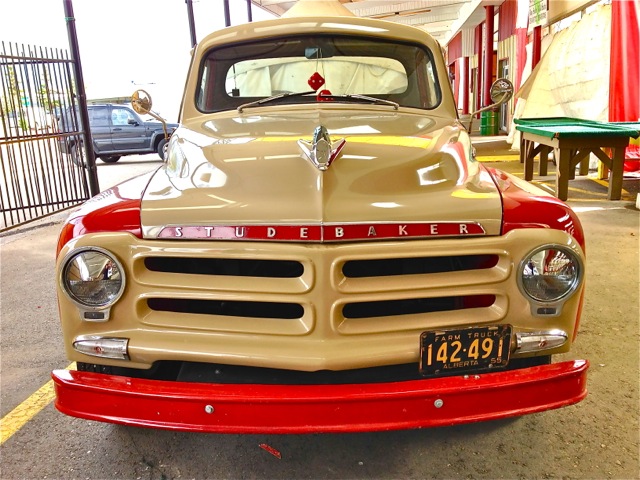
You can imagine what a pleasant surprise it was for me as I came out of the Book Sale at Crossroads Market. The name on the back of that antique truck had an almost electrifying effect: STUDEBAKER.
Wow here it is, a real-life, bright and shiny Studebaker. From the antique license plate at the front you can see it’s a 55. I know the one that brings Baby Saleem home has to be 1947 or older, and definitely not a farm truck.
Here are the back, side, and front views… exact sequence of my discovery. O what joy. Those two people watching me take photos of it with my iPhone must have thought I was … uh… born yesterday.
***
Thanks to Alyce of At Home With Books for hosting Saturday Snapshot… for keeping my eyes peeled, making finding a farm truck as exciting as watching a sunset.
From the comments in my last post, seems like Egyptology is a favorite subject of many, if not now, at least some time in our curious life. I’ve had the chance to visit Egypt twice during my travels to the Middle East. Since now is the warm month of May, kicking off the travelling season, and alas, since going anywhere far is a remote possibility for me at present, an armchair revisit is timely, if only to suppress burning wanderlust.
Here are some file photos from my last trip to Egypt five years ago. I only stayed in Cairo and its vicinity. But from my recent reading of Lord Carnarvon and Carter’s King Tut Tomb discovery, I regret I didn’t venture further to the Valley of the Kings in Luxor. However, I did see the iconic King Tut’s mummy mask at Cairo’s Egyptian Museum. Photography was forbidden, so no King Tut’s portrait here.
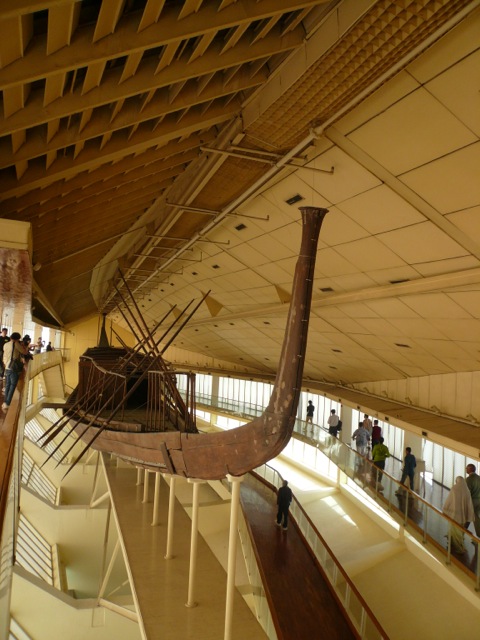
But I can show you another marvellous exhibit. In 1954, a Pharoah’s boat dating back four millenium was dug up in pieces and since reassembled. Beautifully showcased in another museum near the Great Pyramid of Giza. Photos were allowed here, but Arti’s pocket Lumix wasn’t enough to capture the magnificent whole. If you’re interested, click here to a full description.
Pharaoh’s Boat buried 26th Century B.C.
Another view:
The Pyramid and the Sphinx are probably what travellers go to Egypt for. While the Sphinx is a limestone statue of the mythical creature with the lion body and the human head, the Pyramid was piled up in stones. Can’t say which one is easier to make.
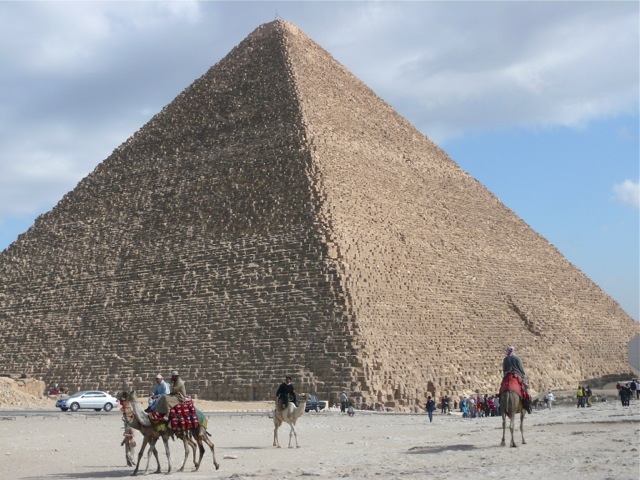
The oldest of the Seven Wonders of the Ancient World that is still standing, The Great Pyramid of Giza was built for the fourth dynasty Egyptian Pharaoh Khufu, a 20 year construction process which concluded around 2560 B.C. (Wikipedia data) As for Arti, no exact date was needed. Standing at the foot of the humungous pile of neatly stacked up stones was an experience itself.
The Great Pyramid of Giza
Not far from the Pyramid, The Sphinx:
The Pyramid and The Sphinx
A closer look… so what if I’ve lost a nose, I still stand sit after all these years:
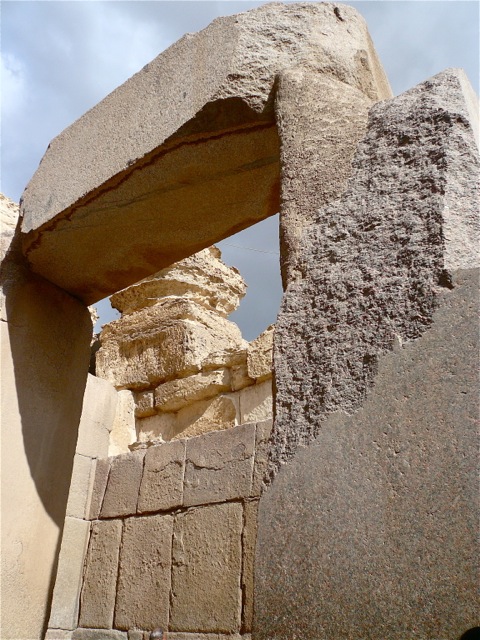
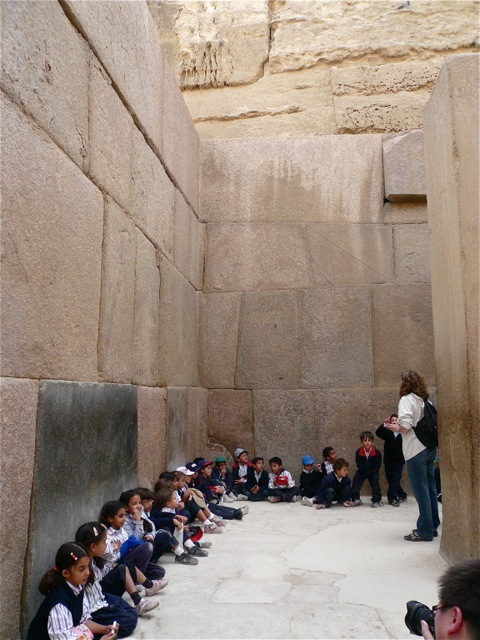
Let the stones speak:
and the children listen:
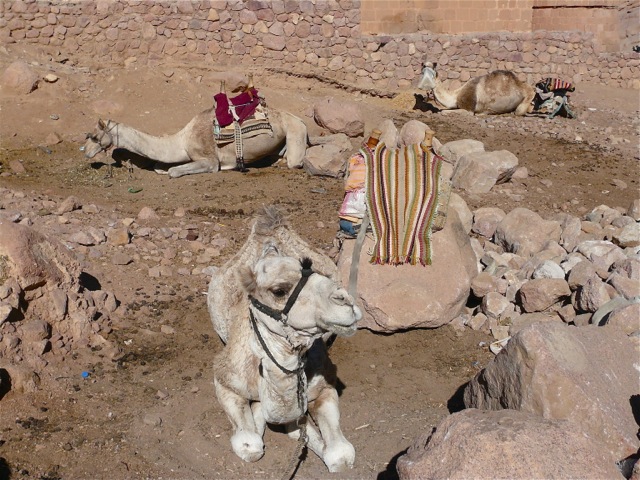
We were travelling in a bus through the desert, and stopped for a view. Here are some other children I saw, took this picture through the window:
Mount Sinai, the legendary place Moses received the Ten Commandments from God. At the foot of the mountain range is St. Catherine’s Monastery:
Man’s best friend. They wait without complaint:
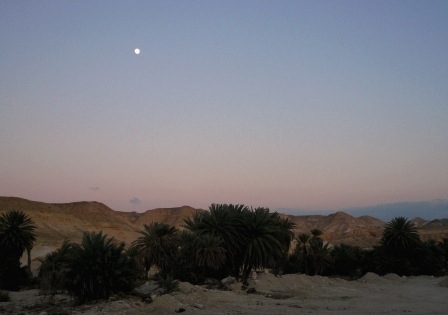
The desert is mesmerizing regardless of the hour:
Desert moon at dusk
While I faithfully pick up mail for neighbors gone to Paris, or read with pleasure blog posts of your recent travels, I feel like jumping on the armchair bandwagon and join the massive global tourism movement. Ok everyone, I’m coming along.
I’ve seen lush green meadows, full bloom flowers, and fresh plump berries from many of your spring posts. I must share with you what I’m getting…
It’s a long process before green appears, but we’re used to that. Spring for us is a gestation of life, a long process. There can be false starts too, teasing us with more snow. It tests our patience.
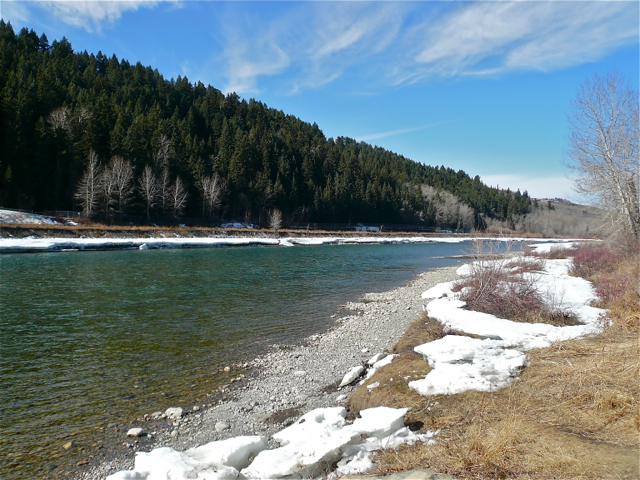
First we wait for all the snow to melt:
The melting Bow RiverAnother view, another colour
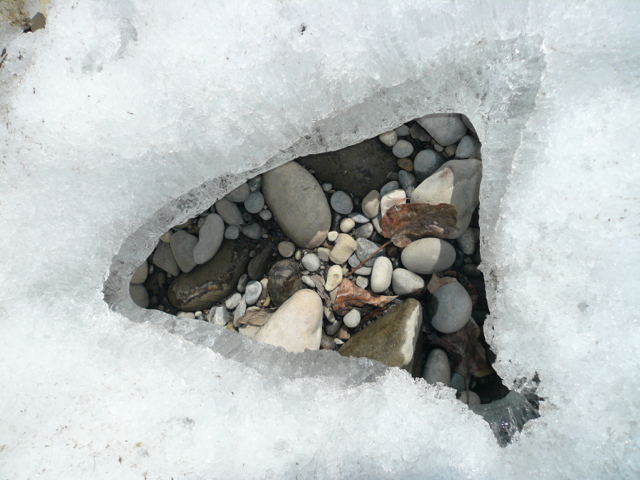
A closer look only fascinates me more, the sight and sound of spring… a rythmic ploink… ploink.
Dripping ice water Icy frame of a kaleidoscope
The slowness of spring allows me to cherish a while longer the sights of a season past:
Snow bank along the BowRemnants of a colourful fall
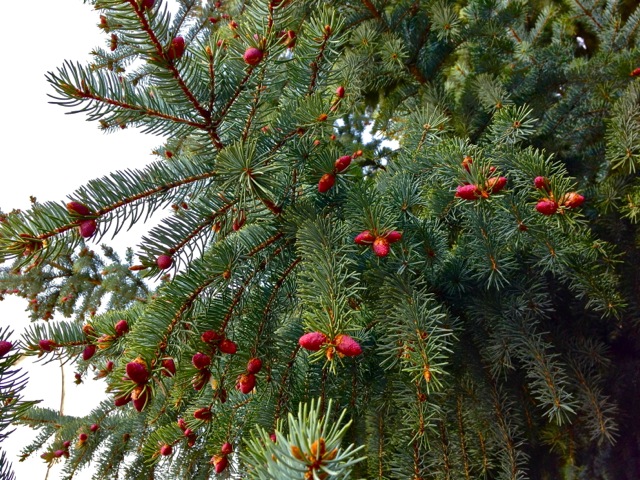
Meanwhile… the buds silently appear. No greens yet, but still a sure sign of spring. Brown tips burgeoning out everywhere, keen and strong:
Sure sign of spring
Before the greens, many colours have to parade by, nature’s processional. As a spectator, I can only applaud.
Spring will burst forth in all its glory… in its time.

























 Ripple Effects