Lee Daniel’s The Butler (2013): The Trouble with Famous Faces

The Butler is none other than Cecil Gaines, an African American who has worked in the White House serving eight presidents from the late 50’s to the 80’s. Never heard of him? Good, because, as screenwriter Danny Strong (who wrote the Sarah Palin satire Game Change) has emphasized, Cecil Gaines is a fictional character, albeit there was a real life person who had done similar things for thirty-four years through eight Administrations in the White House. He was Eugene Allen. The movie is fiction inspired by that true story. But here, it’s all about Cecil Gaines, a character that Forest Whitaker portrays convincingly.

That leads to this Disclaimer: This is not an Accuracy Police report. But, uh… just a memo from the Facial ID department.

The Butler Movie Poster

After watching The Butler, I’d like to recommend that movie stars go on sabbatical leaves. After a certain number of years of high-profile, on-screen appearances, famous actors or talk show hosts should pursue other interests, anything that’s behind the camera… write, direct, produce, compose, climb K2… before coming back out for another movie role. For here, I can see the distractions that can come from too famous a face.

Why? It takes me a long while to adjust to Oprah being the alcohol-dependent Mrs. Gaines, despite her strong performance, or, tell myself that’s Dwight D. Eisenhower I’m looking at, not Robin Williams. With every Administration that flashes by, my focus as a viewer is more on figuring out which famous star is playing which famous politician. That’s James Marsden as JFK, and Liev Schreiber as uh… comical LBJ… sitting on a toilet while barking instructions to his staff?

By the time John Cusack comes on screen, I’m asking myself, now, who is he supposed to be? I can only see John Cusack, and it looks like he’s trying to convince me that, “No! I’m Richard Nixon!” He too, looks like a caricature. Later when Ronald Reagan appears, I can only see the make-up. Sorry Alan Rickman,  didn’t recognize you. Looks like you’re wearing a Halloween mask. I must say though, hats off to Jane Fonda, she’s one good Nancy look-alike, although I know she has her share of protests. Now, that’s another issue… the incompatibility of ‘Hanoi Jane’ taking up the role of Nancy Reagan. I can understand why some Vietnam War vets are up in arms.
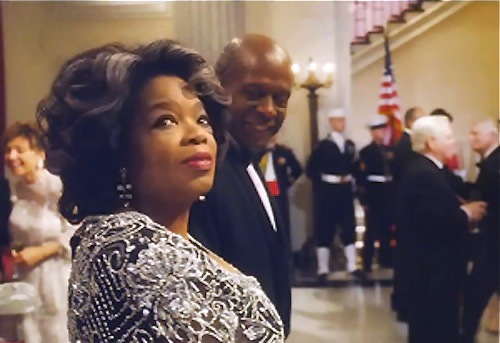
The Butler & his wife

The trouble with famous faces… they have a hard time convincing viewers that they are not who they appear but the character they are playing. In The Butler, that just might not be a problem because it seems the filmmakers are confident that star power can get us through. Further, the sequences of Administrations go by so quickly, they are more like passing spectacles than memorable episodes.

Other than star powers that function only on appearance, there are some riveting scenes from the main storyline, that of a father-son relationship against the backdrop of racial turmoils in America. While Cecil Gaines works as a butler in the White House all those years, his son Louis (David Oyelowo) has been deeply involved in the Civil Rights Movement, arrested and jailed several times, often putting his life at risk. Major differences in political viewpoints generate sparks and tensions to eventual deep gulf between father and son.

A memorable scene is when father and son argue at the dinner table over Sidney Poitier winning the Academy Award. Cecil thinks that is a sign showing white people are accepting and honoring blacks. But son Louis points out Poitier is appeasing white viewers in presenting himself as a white, black man. Interesting thought, not unheard of. The subsequent result of the argument makes a memorable scene.

Juxtaposing actors’ performance with visceral archival footage of racial violence like the lunch counter sit-ins, the Freedom Bus burning by the Ku Klux Klan, the assassination of Martin Luther King… makes some informative and engaging storytelling. That may be the reason why, after the pivotal historical accounts of the Civil Rights Movement, the movie begins to lose my attention. What looks to be significant begins to appear parochial towards the end, where I even feel some partisan undercurrents.

Overall, the movie may have been too ambitious in covering everything, a father-son relationship, the black family, the country’s racial conflicts, the Vietnam War, to South Africa’s Apartheid. Its Forest Gump-esque storytelling lacks a unified and consistent styling. The incompatibility applies to the choice of music too. I’m fine with the period music of the eras, but using the Schumann Piano Concerto in A Minor at the opening scene feels like a mismatch. Other familiar classical pieces like Mozart’s piano sonatas for White House scenes sound like casual and superficial picks.

A movie riding on its star-studded cast… a mixed bag of famous faces. If you like a parade, this is fun to look at.

~ ~ 1/2 Ripples

***
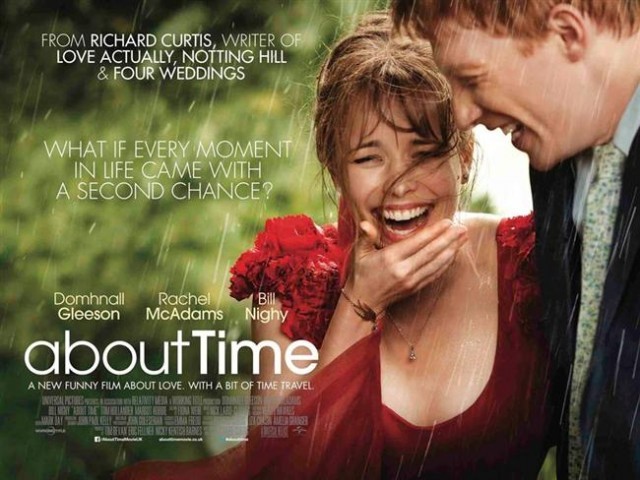
About Time (2013): The Use and Abuse of Superpower

Time travel can be tricky. The idea has been used so many times that it has almost turned into a cliché. While it can bring about interesting cinematic moments, offering some creative, postmodern juxtapositions, it is hard to navigate that overused capsule of storytelling to new height.

This is a movie I’d anticipated. Not that I’m a fan of Richard Curtis, but I do find a couple of his works delightful. He is the prolific writer/director/producer of many popular romantic comedies. His works in any of the above-mentioned capacities include Four Weddings and a Funeral (1994), Notting Hill (1999), Bridget Jones’s Diary and its sequel (2001, 2004), Love Actually (2003), The Girl in the Café (2005), and the not so romantic comedies of Mr. Bean (1992-2007), among many other titles. About Time is his third movie as director.

While I’m indifferent to the travel back in time story idea, I do have fond memories of a few movies which now have found a place in my mental playlist, tagged time travel. They include Somewhere In Time (1980), Kate and Leopold (2001), and the more recent, Midnight In Paris (2011). As for About Time, despite my high anticipation, I’m afraid it will slip away in no time.

About Time

The year Tim (Domhnall Gleeson) turns 21, his Dad (Bill Nighy) tells him a secret: all the men in his family have the power to travel back in time. Fine. What you will use this extraordinary power for is totally up to you. Dandy. Tim knows exactly what to do with it: find a girl to love. Not a hard decision, for Tim tends to be a novice in relationships and unsure of himself. He soon sets his eyes on Mary (Rachel McAdams).

Tim has the time of his life trying out his new-found power. He uses it to redo the mistakes he has made, erase the speech bubbles he has messed up, reappear as more savvy than he really is. To his advantage, he hits on Mary and repeats his romancing act with her multiple times, she oblivious of being played. This being the brunt of a joke is highly problematic. That it is a comical episode does not mask the fact that this is an obvious abuse of superpower.

But of course, the film is made up of many more episodes. We see Tim and Mary get married and have children of their own. There are accidents and mishaps, and Tim soon finds out that even though he can go back in time, he cannot avoid consequences of actions, his and others. The last part of the movie seems a shift from earlier segments in delivering lines that get a bit too sentimental and preachy, utterances of platitudes.

Director Curtis has a fine cast in his hands. However, maybe because of the romcom genre, they give the impression of an overacting bunch. If Domhnall Gleeson does not ring a bell you might want to travel back to Harry Potter movies, True Grit, and last year’s Anna Karenina where he played Levin in the adaptation of Tolstoy’s classic. I definitely enjoyed his Levin role more. Rachel McAdams, interestingly, has been in several time travel movies, including Midnight in Paris. Again, her act there is more convincing. Well, to quote Mr. Darcy, the epitome of aloof coolness, they ‘smile too much.’

So that’s when I doubly appreciate Bill Nighy. You don’t have to smile in order to be funny. Actually, you should refrain from doing just that. He is the veteran here and I feel he saves the show. Nighy’s performance turns sentimental episodes into moving moments, especially with the father-son relationship.

A lightweight, sugar-coated romcom, definitely an item on the dessert menu, that is, if you don’t much care for the main dish.

~ ~ 1/2 Ripples

***

Other related reviews on Ripple Effects:

Midnight In Paris (2011)

The Girl In The Café (2005): The Hunger for Connection

Anna Karenina (2012)

True Grit: A Cool Summer Read and Movie

***

All Is Lost (2013)

If Life of Pi (2012) is magical realism, then All Is Lost is absolute realism. Some say it’s a modern version of Hemingway’s The Old Man and the Sea. I tend to see it as the flip side of Life of Pi. It is the magical, the supernatural that we pant for while watching the man in the film silently struggle to stay alive in the middle of the Indian Ocean. Without a miracle, this is what it is.

At the back of my mind was this query… In our age driven by visual spectacles and mega sights and sounds, why would someone take up a project of this nature, a 106 minute feature film with just one character and no dialogue, except for a few words from voice over in the opening when the man utters what seems to be his last words to his loved ones.

I admire the courage and talent of writer/director J. C. Chandor, who writes a 32 page script (according to IMDb) and directs it as a minimalist production in a time when the movie industry has gone ultra mega and high tech. All Is Lost is only Chandor’s second feature film. His directorial debut which he also wrote? Margin Call (2011), about the tempest in the tumultuous ocean of investment banking. Versatility is the mark of talent indeed.

But the film belongs to Robert Redford. No longer The Sundance Kid (1969) here but a 77 year-old actor playing a man dangling over the edge of survival. Redford just might have put forth the definitive performance in his long career. He has taken on the role with grace and gentleness, a paradox to his predicament in such a physical drama. He carries the whole film by engaging our empathy. His screen presence is the replacement of fancy plot lines, setting and dialogues. He plays a character with no name. Only when the end credits roll do we find out that he is called ‘Our Man’. 

Robert Redford in All is Lost

Unlike Tom Hanks in Cast Away (2000), who speaks and yells his mind, and socializes with a volley ball, Our Man is the epitome of restraint. He is the strong and silent type of veteran sailors on a solo voyage, who encounters the misfortune of being stranded in the vast ocean. At the beginning of the film we see Our Man wake up to find his sailboat has been hit by a loose cargo container floating by. The sailboat is taking on water through a hole in the hull. The radio and equipments are damaged. Our Man deals with the situation resourcefully. He uses a repair kit to mend the damage, pump water out, dry out his boat. We see him eat and shave. 

Just as he has made some headway to restore safety, an impending storm blows his way. Our Man is no match for nature’s callous ferocity. He ends up having to escape a sinking boat and jump into a life raft, bringing with him a meager supply of food and water. He learns to use a sextant, and carefully charts his drift. His only hope is to be seen if his raft drifts into the course of cargo ships. He utters no words except for a futile S.O.S. call while in his sinking boat, and one expletive out of total frustration in the raft after a few days of bare survival.

One man, one raft, one sea. The wide-screen cinema is probably the best medium to depict such an existential predicament. We don’t need special effects, for this is all that we have. And the nameless ‘Our Man’ shows how universal he is. And what of him? A patient and courageous man trying with all that he has and all that he is to stay alive, waiting to be found, hoping to be saved.

Do we need to know the name on that cargo container that hit his boat? It really is immaterial considering all that Our Man has gone through and all the efforts he has put forth to be saved. But just for information, we see the name in English, ‘Ho Won’, an obvious translation from the two Chinese words below: “Good Luck”. A jest too harsh.

Spoiler Alert. If you have not seen the film, you might want to skip the next paragraph, just that one. If you have seen the film, you’re most welcome to share your thoughts on the ending.

Like Life of Pi, the ending is open to your own interpretation. Two lines of thoughts conjured up as I watched the open-ended final scene: Only when one has lost all would one be saved. Or, go into that good night with gentleness, for brightness awaits. I can see both these scenarios to be applicable here. Again, this is one of those films that leaves the viewer to draw the conclusion, a type of ending which may not be very popular but one that conveys the multiplicity of reality.

As the credits roll, we hear the song for the film. I first thought singer songwriter Alex Ebert was calling ‘Our Man’ throughout his song. As I later found in the credits, it was ‘Amen’ (with the ‘Ah’ sound). Yes, ‘Amen’ is the title of the song.

A fine movie to watch with a quiet mind and patient disposition. A necessary offering in our present day of excess among some numbing and mindless entertainment. It’s like holding your breath in your hectic course of life for 106 minutes, and survive.

~ ~ ~ Ripples

***

Click here to listen to Alex Ebert’s song ‘Amen’ and watch the trailer of the movie All Is Lost.

***

The Fifth Estate (2013)

First off, Julian Assange had condemned the making of the film. The WikiLeaks founder had written to Benedict Cumberbatch (12 Years a Slave, August: Osage County) to dissuade him from picking up the role as his onscreen persona. The letter was published on his website days prior to the film’s general release in theatres. After seeing the movie, I can understand why.

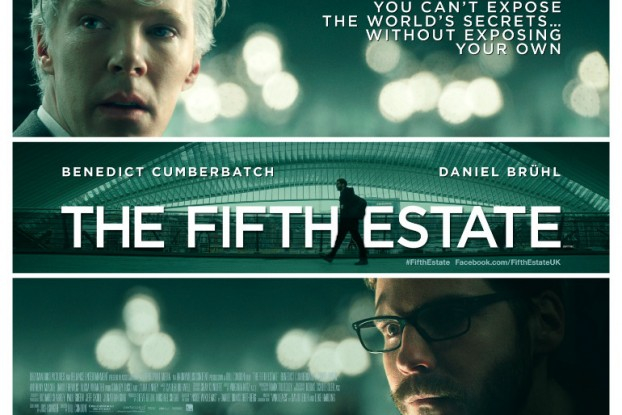
The Fifth Estate Movie Poster copyCumberbatch has presented to us, kudos to his gripping performance and transformation to the Australian accent, an Assange that is fully committed to his cause of absolute freedom to access of information and safe-guarding of whistleblowers in the world with his online organization WikiLeaks, and yet, viewers also see a man who is egotistic, callous, and even to the point of fanatical.

With the portrayal of the different facets of the man, we are confronted with both sides of the issue of transparency. On the one hand, governments, banks, and institutions are made accountable and corruptions and wrongdoings can be exposed. A consequence could be, as in the leaks of 250,000 US diplomatic cables (Cablegate), the inevitable compromising of privacy and security of individuals, leaving lives at stake, such as informants in dictatorial regimes as their identities are disclosed.

Indeed, we live in a messy, messy world. It would be much easier if things are in black and white, and if events can happen much slower for our grasp. The styling of the film could well have conveyed some of that sentiment. It tells the story of Assange’s founding of WikiLeaks and its cases in slick, flashy and fast paced, montage-like treatment. Certain concepts are rendered in a fanciful, almost cartoonish way. Coming into the theatre without much expectation, I have no qualms with the visual metaphors in depicting cyberspace and the digital hacking workhouse.

Following the cases that flash by may be a bit rash on first viewing, but they are thrilling sequences. From a David and Goliath battle of one man against money laundering in the giant Swiss Julius Baer Bank, to political death squad in Kenya, to the now termed ‘collateral murder’ of Reuter reporters and innocent bystanders by U.S. helicopter pilots in Iraq, to the recent Bradley (now Chelsea) Manning leaks of Afghan and Iraq army logs and 250,000 diplomatic cables, we as viewers may want more in-depth handling. However, as this is not a documentary, director Bill Condon (Dreamgirls, Gods and Monsters) has dealt with the subject relatively well within a two hour period.

The movie is based on two books which Assange had denounced in his letter to Cumberbatch, claiming their malicious intent and the lack of truths. One is Inside WikiLeaks: My Time with Julian Assange at the World’s Most Dangerous Website by Daniel Domscheit-Berg, an initial follower who soon becomes Assange’s right-hand-man, until the leaks of the diplomatic cables. Domscheit-Berg’s main concern is the lives that would be compromised if the cables are published without redacting and screening, while Assange insists on unedited, all out exposure. For his role as Daniel Domscheit-Berg, Daniel Brühl (Rush) delivers a convincing performance that matches Cumberbatch’s in the film.

Benedict Cumberbatch & Daniel Brühl copy

While the cast includes such fine supporting actors as Laura Linney, Stanley Tucci, David Thewlis, Dan Stevens… it is Cumberbatch and Brühl that carry the whole show, with the two starting off as complementary partners, albeit Assange remains the domineering one, to the disintegration of their relationship. For those who like to compare movies with similar subject matter, this is no Social Network. ‘Socializing’ is too trivial a word here. WikiLeaks involves much more dangerous and deadly issues. If anything, Condon’s is a light approach to presenting the complex and controversial subjects of transparency, privacy, and global security.

After watching the movie, I was surprised to discover the generally low ratings it receives. I admit, one can’t compare it to the intricacy of The Social Network, but it is still an entertaining, visual synopsis of some ongoing news events that deserve our attention. The film is a springboard to some needed thinking and discussions before drawing conclusions for ourselves, as the character Assange urges us to do at the end of the movie. Alas, here’s the rub. In our messy and blurry world of truths and fiction, that just may not be an easy task to do.

~ ~ ~ Ripples

***

Munro and Movies

Thanks to the Swedish Academy, Alice Munro doesn’t need a blockbuster movie to raise awareness of her works. Described by The New York Times as ‘Master of the Intricacies of the Human Heart’, and with her story settings mostly in rural counties and small towns, the 82 year-old writer must have known how the small and intimate can have far-reaching effects.

The short story as a literary form too must have gained importance and legitimation overnight now that Munro is honored as Nobel Laureate. The novel isn’t the only peak of the mountain of literary pursuits. Readers too, can now be totally comfortable with reading ‘just a short story’.

Back to movies, with our contemporary mega, blockbuster culture, it sure looks like the general public need to see a movie before knowing about a literary work. While I don’t like the idea, I’ve to admit that could well be the case nowadays. But for Munro, can anyone name a full feature movie that’s based on her short stories?

Right. Actually there are four. Edge of Madness (2002) is relatively unknown. Another one interestingly is an Iranian film, Canaan, which won the Audience Awards–Best Film at the Fajr International Film Festival in 2008. A better known adaptation is Away From Her (2006). It remains one of my all time favorite films. The most recent completed production is Hateship Loveship which premiered at TIFF13. I regret missing it when I was there in September. A film based on her story ‘Runaway’ is currently in development.

With Munro winning the Nobel, hopefully we’ll have the chance to see a general release of Hateship Loveship. So there you go, Munro could well be helping to reverse the trend: the writer promoting the film.

To celebrate Munro’s Nobel win, I’d like to repost in the following a review of Away From Her which I wrote in 2008. The film was directed by the young and talented Canadian actor/director Sarah Polley, who was nominated for an Oscar for her adapted screenplay based on Munro’s short story ‘The Bear Came Over the Mountain’. Julie Christie received an Oscar nomination for her role as Alzheimer’s afflicted Fiona.

You can read Munro’s story ‘The Bear Came Over the Mountain’ now online, thanks to a timely reprint by The New Yorker.

**

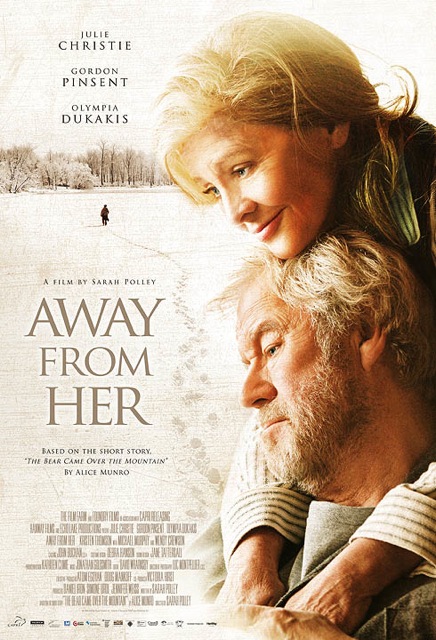
Capri_AwayFromHer_PosterB

AWAY FROM HER: A Short Review

How can you turn a good short story into a full length movie without compromising its quality? By turning it into a screenplay written by an equally sensitive and passionate writer, and then, through her own talented, interpretive eye, re-creates it into a visual narrative. Along the way, throw in a few veteran actors who are so passionate about what the script is trying to convey that they themselves embody the message.

Sarah Polley has made her directorial debut with a most impressive and memorable feat that I’m sure things will go even better down her career path. What she has composed on screen speaks much more poignantly than words on a page, calling forth sentiments that we didn’t even know we had. As Alzheimer’s begins to take control over Fiona, what can a loving husband do? Julie Christie and Gordon Pinsent stir up thoughts in us that we’d rather bury: how much are we willing to give up for love? Or, how would we face the imminence of our loved ones’ and our own mental and physical demise?

Based on the story by Alice Munro, ‘The Bear Came Over the Mountain’, Polley brings out the theme of unconditional love not with your typical Hollywood’s hot, young, and sexy on screen, but aging actors in their 60’s and 70’s. It may not be as pleasurable to watch wrinkled faces hugging and kissing, or a man and a woman in bed, bearing age spots and all, but such scenes effectively beg the question: why feel uncomfortable?

Why does love has to be synonymous with youth, beauty, and romance? It is even more agonizing to watch how far Grant is willing to go solely for love of Fiona. Lucky for us, both writers spare us the truly painful at the end. It is through persistent, selfless giving that one ultimately receives; however meager and fleeting that reward may seem, it is permanence in the eyes of love. And it is through the lucid vision of a youthful 28-year-old writer/director that such ageless love is vividly portrayed…. Oh, the paradoxes in life.

~ ~ ~ Ripples

***

The Disappearance of Eleanor Rigby: Him and Her (2013)

I keep reminding myself, my evaluation of The Disappearance of Eleanor Rigby: Him and Her should not be affected by the appearance of Jessica Chastain, her real self, in the theatre. That was an unexpected and most exhilarating episode in my TIFF13 experience.

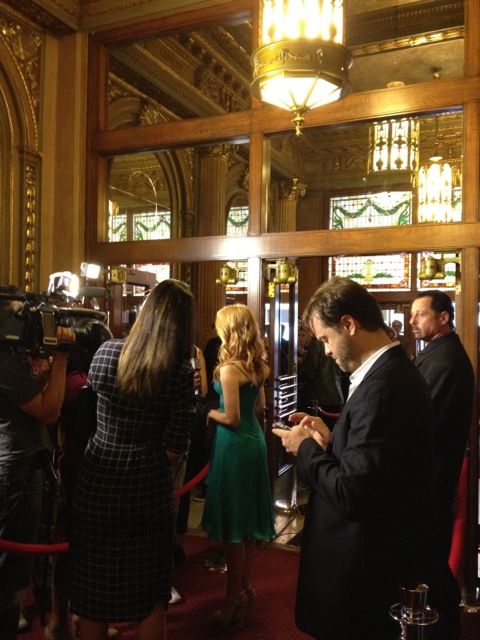
After over an hour waiting inline outside, we were ushered into the historic building (100th anniversary this year) that housed the beautiful Elgin and the Winter Garden Theatres. And lo and behold, I saw Jessica Chastain standing right there in a press line answering questions. Who can take a focused shot with steady hands while being herded like sheep quickly passing by Jessica Chastain?

Jessica Chastain

Here’s a sharper view but no better vantage point:

JC Another View

**

Disappearance is two films in one. It tells how a couple deals with loss, and the subsequent effect on their relationship, from His and Her point of view. Each is a 90 minute film that can stand on its own. We were shown first Him, then Her, with no intermission. I know at some other screenings, it’s the other way round. Now, that is intriguing. Will the audience perceive quite a different story then?

The concept had been found in previous films. Kurosawa’s classic Rashomon comes to mind. It presents four different points of view consecutively in one film from those involved in a crime. A more recent movie Vantage Point uses the idea but is miserably repetitive.

With Disppearance, we have a fresh, contemporary take on this high concept. Being made into two films allow deeper character development and more complex storytelling. It is innovative but not redundant as one might suspect. And that’s the ingenuity of writer/director Ned Benson. His screenplays for both are intelligent, perceptive and thought-provoking.

The first part Him is more elliptical. As viewers, we know little to start, but are eager to find out more about the couple. Why does an amicable and romantic relationship becomes incommunicable, and with the wife disappearing, walking out of the relationship? We soon find out the reason. I would not spoil it for you.

To deal with his situation, the husband, Conor (James McAvoy, Atonement), spends his energy on saving a losing business, his little restaurant in NYC. I suppose, as a man would, diverging his focus into career and business. Ciaran Hinds plays his father, a successful restaurateur who offers his son what he has established, a proposal that is turned down.

Bill Hader is deadpan funny as Conor’s good friend and chef in the restaurant. A friend can help him cope, but Conor knows ultimately he has to walk the path himself. The last scene is open-ended, a good lead into the Her perspective.

Him: ~ ~ ~ Ripples

**

After watching Him, I was eager to find out Her story. Jessica Chastain (Zero Dark Thirty, The Tree of Life) is Eleanor Rigby, her parents having met in a Beatles concert, thus the namesake. But the film is not about the song, albeit we do hear the relevant line.

This second part is most gratifying. Not only does it fill in the gaps, it has gone deeper into Eleanor’s pains and her struggles to find herself once again… or maybe, for the first time. While Conor immerses himself in his restaurant, Eleanor returns to her family.

William Hurt plays Eleanor’s dad, a psychology professor who stands by as a loving father would, albeit helplessly. He suggests Eleanor take courses part time, which she does. Thus leads to some interesting scenes and meaningful dialogues with her prof played by Viola Davis, a role that the talented actor deserves. She gets to deliver that poignant line in the Beatles song:

All the lonely people, where do they all come from?

The veteran French actor Isabelle Huppert is Eleanor’s mother, always with a glass of wine in hand. There is no perfect family. She has her own issues to deal with, let alone contributing to a healing process.

Jess Weixier as Eleanor’s sister puts forth an excellent, complementary performance to Chastain’s. She is a single mother living in her parents’ house and raising an eight year-old son. She too, has to play the hand life deals her as best she can. From the Q and A after the screening, we learn of the long-time friendship between Chastain and Weixier, and it shows. Their performance makes me long for the experience of sisterhood.

And we learn too that Ned Benson wrote Her especially for Jessica Chastain, who ten years earlier introduced herself after watching Benson’s short film and was much impressed by it. Chastain was emotional when recounting the incident, moved that now ten years later, Benson is finally being acknowledged.

With such a high calibre cast, I could have sat there for another hour. There are lots to think about, and the cast makes it enjoyable for us to do just that in the films.

How can a response to any situation be shared while we see and feel so differently? One’s perspective is uniquely one’s own, an interplay of subjective perceptions, past experiences, psychological makeup, temperaments, rationality…. These two films screened back-to-back is the most vivid way to convey this point. How then can two people unite despite differences in perspectives?

As I write this post, Proust’s madeleines eating episode comes to mind. The memory and sentiments elicited from an experience is personal and subjective. And that’s what these two films show us. Even within the same scene, the camera takes on a different angle and point of view. Most interesting is that, even the dialogues are different. We can see the discrepancies in their memories and knowledge (or lack of) of themselves and each other. And when it comes to love, how each would want to hear the other taking the initiative to say ‘I love you.’

Her: ~ ~ ~ 1/2 Ripples

**

To top it off, we were given a chance to hear the cast share their experience in a Q and A session after the screening. From left to right Jess Weixier, Cirian Hinds, James McAvoy, Jessica Chastain.

Disappearance of ER Q & AWhole Experience: ~ ~ ~ ~ Ripples

***

All photos in this post taken by Arti of Ripple Effects. Please do not copy or reblog.

***

Blue Jasmine (2013): Homage and Re-Imagining

Sometimes when we see different versions of an original piece of art we tend to dismiss them as cheesy imitations, turning art into a cliche, like, the many faces and parodies of the Mona Lisa.

And sometimes, when we see a work that we know is a new version of an older masterpiece and yet we appreciate it, all because it brings us a breath of fresh air, a different perspective, new insights, a re-imagining, or offers us some new pleasures.

Here are a few examples. Robert Bresson’s Pickpocket (1959) is the auteur’s version of Dostoevsky’s Crime and Punishment, and movingly crafted. West Side Story (1961), we appreciate it as a different styling of Romeo and Juliet. Kurosawa’s Ran (1985), we know it to be a Japanese rendition of King Lear, and we marvel at the director’s handling of a Shakespearean classic from a different culture. A bit later, the younger generation in the 1990’s enjoyed Clueless (1995) even though they may not have noticed the resemblance to Jane Austen’s Emma. With Disturbia (2007), we see Alfred Hitchcock’s Rear Window making its way into the minds of teenaged viewers, and who cares that they didn’t even know it.

Woody Allen has done that many a times in his over four decade career as a director, creating different versions of the works from those he had expressed deep admiration. Call it homage, if you will, or borrowing, but we never have the impression that he’s ‘copying’. Copying is mindless triviality. But a look at Allen’s Interiors, we’ll see the deep shadow of Ingmar Bergman’s Cries and Whispers, the intense yet intimate styling of a chamber drama. Or Hannah and Her Sisters, an apt parallel with Bergman’s Fanny and Alexander. Crimes and Misdemeanors and Match Point, we see him deal with the issue of Dostoevsky’s Crime and Punishment, or rather, crime and the absence of punishment. I’m sure you can think of some more examples.

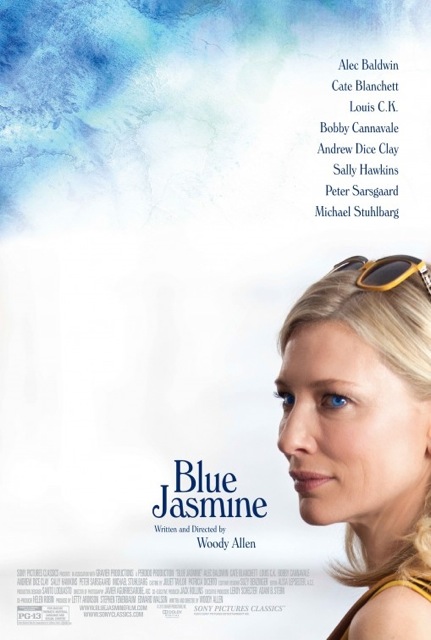
Blue Jasmine Movie Poster

So here with Allen’s 48th feature Blue Jasmine, does it matter that its structure and characterization parallel Tennessee Williams’ A Streetcar Named Desire, the Elia Kazan 1951 classic movie? Especially when we see such a finely crafted, enjoyable, and impressively performed modern version, we can only admire Allen’s imagination and creativity. I have a feeling that he (or his casting staff) gets Cate Blanchett to star as Jasmine because of her on-stage mastery of Blanche Du Bois in Tennessee Williams’ A Streetcar Named Desire performed not too long ago.

With Blue Jasmine, the 77 year-old director seems to have hit his stride yet again. Two years ago, Midnight in Paris brought him the highest opening box office gross in his career, now Blue Jasmine has surpassed that. Blue Jasmine will also be the widest screened Woody Allen movie, so far. It reaffirms the director’s talent in how he can bring out the best from his actors.

Cate Blanchett turns from blanche to blue, but just the same as she steps down the social ladder in a fragile mental state, dependent on a cocktail of alcohol and anti-depressants. She is Jasmine, a New York socialite who has to go stay with her working class sister Ginger (Sally Hawkins) in San Francisco after her husband Hal (Alec Baldwin) meets the full legal consequence of his fraudulent business dealings, a definite change of course from Allen’s earlier movies Crimes and Misdemeanors and Match Point.

The real and imaginary in Jasmine’s mind is smoothly shifted as we see her delusional self living in the present and the past at the same time. Allen handles it very well. The non-lineal storytelling is seamless. Blanchett is superb in her lucid performance, portraying convincingly a whole spectrum of emotions and mental states, while tugging at our heartstrings as we see her try desperately to stand on her own two feet for the first time in her life. This is where Allen is best, piercing sad human situations with light and gentle humor.

Allen has plenty of materials to poke fun at and chances to deliver his social commentaries. Yes folks, there is a class system in democratic America, and the humor in the film is at the expense of both the upper class and maybe more, the menial workers. Mind the gap, for it is unbridgeable. Fact is, the fun of the film, I’m afraid, is at the expense of depicting some of the characters a bit like caricatures. Having said that, I must applaud the wonderful acting from the supporting cast. They look like they are convinced first of their character’s idiosyncrasy, making their portrayals so unabashedly natural.

Further, Allen seems to redeem himself in presenting a moralistic stance. True love can be found right there in Ginger’s circle with her devoted boyfriend Chilli (Bobby Cannavale), whom Jasmine calls a ‘loser’; the deceivers are from the upper crust, Hal (Alec Baldwin) being the prominent figure. Others who may look like a step up for Ginger could well be a mirage. The wonderful supporting cast includes Andrew Dice Clay as Ginger’s ex-husband Augie, Louie C. K. the seemingly hopeful sound engineer, Michael Stuhlbarg, the serious man turned desperate dentist, and Peter Sarsgaard as Dwight, no doubt the parallel of Mitch (Karl Malden) in A Streetcar Named Desire (1951).

Blanchett’s Jasmine performance has already sent out Oscar buzz, and it’s only August. She carries the film through brilliantly. An Oscar nomination should be well deserved. We are glad to find too that Allen has not missed a beat after his success with Midnight in Paris, still churning out enjoyable films on an annual basis, while sometimes a superb actor can much enhance our appreciation, as it is the case here. 

~ ~ ~ Ripples

Other related posts:

Midnight In Paris

A Serious Man (Michael Stuhlbarg)

An Education (Peter Sarsgaard)

Do we need a Rebecca Remake? Another Grapes of Wrath?

Art and Cliché

***

Before Midnight (2013): Reality Check

Spoiler Alert: It’s impossible to discuss this film meaningfully without giving out the storyline, same with the two prequels.

***

We are gleaners of memories. An interesting parallel applies to the two characters Celine and Jesse as well as ourselves as audience. But if you haven’t seen Before Sunrise and Before Sunset, it would enhance your viewing pleasure to watch them first.

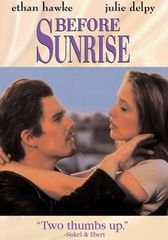
Flashback: Before Sunrise (1995)

Before SunriseTwo young people, Parisian Celine (Julie Delpy) and American Jesse (Ethan Hawkes) meet on a train passing through Europe. They strike up a conversation and become so in-tuned with each other that when the train arrives Jesse’s stop in Vienna, he convinces Celine to get off with him even though her destination is Paris. There for just one night until sunrise, they walk around the city and talk about life, death, love, religion, relationships, and being transients… for they know this may well be their only encounter with each other in both of their lives. The next morning Jesse has to fly back to the U.S. As they part, they promise to meet again in six month at the same hour, on the same train platform. Throughout the film, we feel fate, or whatever you call it, has a strong presence in their short few hours together. We feel their sincerity in capturing those precious  moments, as we hear Celine’s words ring true:

“If there’s any kind of magic in this world… it must be in the attempt of understanding someone sharing something.”

Flashback: Before Sunset (2004)

Before SunsetNine years after that chance meeting, Jesse is in Paris on the last leg of a book tour. He has written a book based on that memorable encounter nine years ago. At the Shakespeare and Company bookstore, Celine shows up. They now meet for a second time, again for a short few hours before Jesse has to leave on a plane to fly back to the U.S. Their conversation reveals that, alas, their well intended reunion six months after their first chance meeting has turned into a star-crossed, missed opportunity. After that, fate has led them down separate paths. Jesse is now married and has a son. Celine, still on her own, yearns for that first romance to develop but now seems even more elusive.

To the present: Before Midnight (2013)

Before Midnight

So we have been following Jesse and Celine like a longitudinal study, albeit meeting them just twice within this eighteen year period. In the first two films, director Richard Linklater has us follow Jesse and Celine in real time through long takes, walking along with them in Vienna and Paris, listening in on their conversations and see them pour their hearts out, just to be heard, to be known. Those were romantic moments. This time is summer in Greece; this time is reality check.

We see Jesse and Celine now married. What happens in between those nine years is that Jesse has divorced his wife in Chicago, come over to Paris, married Celine and together they have two lovely twin daughters. But things aren’t so idyllic, for Jesse is troubled by not being around for his now young teenaged son Hank from his previous marriage and whom he can only see in the summer. The film begins with Jesse seeing his son off at the airport.

For the next 15 minutes and in one stationary take through the front windshield of the car, we see a happy couple Jesse and Celine driving from the airport to a Greek country house, with their twin daughters sleeping in the backseat. We hear them talk, yes, they love to talk to each other, just as we’ve seen in the past.

In the setting of an idyllic seaside residence, Jesse and Celine join a small gathering of writers. we see them prepare and eat healthy Greek salads and discuss equally idyllic topics such as writing, love, knowing each other, virtual reality (yes, for the contemporary effect), and being transients in life. Again, that first train encounter comes to mind. In conclusion they drink to ‘passing through’.

The next act is reminiscence of previous Before films… Jesse and Celine walk to a hotel paid for by their writer friends, who have also taken up the duty of babysitting their twins so the two of them can fully enjoy each other for the night. For twenty minutes the camera follows them in real time strolling through some scenic rural town toward their country hotel, exchanging thoughts like before. But no, not totally like before, for now they are eighteen years older, 41, and each with emotional undercurrents running deep.

Five minutes in the hotel room, discordant riptides begin to surface. Talk turns into quarrel. Why, this is just too real. In the past, we see them only in romantic mode. Now as they expose their underlying thoughts and suspicions, tempers flare, words turn callous. We would silently say ‘ouch!’ occasionally.

The beginning scene of the first film, Before Sunrise, has become a stark foreshadowing… sitting near Jesse and Celine on that train, two middle-aged couple argue fiercely in German. Seeing their temper flare but not understanding what they were arguing about, Jesse and Celine ponder on the question of how two people can grow old together in harmony.

Now here in what is supposed to be an ideal get-away, for twenty minutes we are the invisible witnesses of a marital conflict, and we would want to stay in there to see what happens next, not because of the schadenfreude effect, but because this is just too real.

Romance is holiday, marriage is work.

Hawke and Delpy own these scenes depicting realistically what marriage could entail. Other films readily come to mind… Ingmar Bergman’s Scenes From A Marriage (1973) and Woody Allen’s Husbands and Wives (1992). Before Midnight is a contemporary version, with a highly watchable backdrop and natural performance. Unlike Bergman and Allen, Linklater is commendable in crafting a more positive ending. It’s refreshing to see a glimmer of hope at the end of nasty quarrels.

In the final act, Jesse attempts to woo his wife back. How he does it is most endearing. Every moment in the present is an opportunity to create a fond memory to look back to in the future. This complicated package called love is a piece of work. Director Linklater and his two stars, who co-wrote the screenplay with him, might well have passed to us the secret of marital success… Before too late, glean fond memories from the past to sustain the relationship at present; before too late, create more loving memories to carry it into the future.

One line from Celine in Before Sunset is most apt here: “Memory is a wonderful thing if we don’t have to deal with the past.” Jesse might have known this too well, not to leave the present a mess for future to deal with, but leave it as a pleasant memory to cherish in the days ahead.

With a trilogy of films beginning with the word ‘Before’ in the title, we should know that time is of the essence. Time to make the present a memorable past for the future, before too late.

That line still lingers as the film ends… ‘To passing through.’

~ ~ ~ 1/2 Ripples for all three films

***

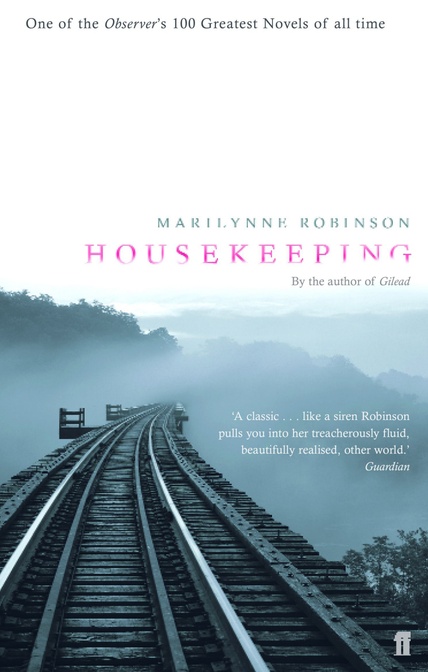
Housekeeping by Marilynne Robinson

I just finished reading Marilynne Robinson’s first novel Housekeeping, and I’m stunned.  The title is simple enough, but the subject matter is expansive, haunting, and unresolvable. Yes, from the title, you could assume it’s about family, and true, we have the story about two sisters Ruth and Lucille abandoned by their mother Helen. After leaving her two young daughters with their belongings at her mother’s home in the remote town of Fingerbone, Idaho, Helen goes out and drives her car off the cliff.

The book won the Hemingway Foundation/Pen Award for Best First Novel in 1980, and nominated for a Pulitzer that same year.

It’s about sisterhood, how Ruth and Lucille grow up first under the care of their aloof grandmother, then after her death, their two grand aunts, who can’t wait for a younger person to raise these children. So, finally, their mother’s younger sister Sylvie, the estranged daughter of their grandmother, the aunt they have never known, comes back home to Fingerbone to take care of them.

Housekeeping by Marilyn Robinson

So yes, we can expect some dysfunctional upbringing. But that’s not it. Robinson’s narratives are lyrical, internal, thought-provoking and poignant. Rather than making a social comment on a dysfunctional family, it searches deep into the human condition.

It’s about loneliness, that haunting, inconsolable feeling that can drive one off the cliff of sanity. It’s about survival, how being constrained by such loneliness, one can still go on, striving to find some meaning in blood and kin, facing others during the day and oneself in the deep darkness of the night.

It’s also about personhood, how you might think after such a childhood experience, the two sisters would have clung to each other in an inseparable bond, and yet, one can still escape to another life by squeezing out of the relational cocoon.

And it points to the larger scheme of things, that all are transient, however static we may feel about our situations. No matter how well a housekeeping job we do to keep up an orderly life or fulfill expectations, we cannot ignore our inner chamber. We’re all a diaspora of transient humanity longing for home.

So the transients wandered through Fingerbone like ghosts, terrifying as ghosts are because they were not very different from us… Sylvie was an unredeemed transient, and she was making a transient of me.

I read Gilead years ago. I don’t know why I’ve waited until now to savour Robinson’s other fictional works. Housekeeping is hauntingly true and intellectually satisfying. I know this is a book I need to reread many times in order to grasp all that the author is saying… if I can ever do that, gleaning all that Robinson had meant to say. So many thoughts in just 219 pages.

Many images from other books and movies conjured up in my mind as I was reading: the movies Thelma and LouiseStand By Me, and Jeannette Walls’s memoir The Glass Castle. And Chapter 10, where Robinson puts the story in the context of Biblical allusions, Terrence Malick’s The Tree of Life came to mind. But of course, those are merely images, or interactive memories. What draws my attention page after page is  the voice of Robinson’s narrator Ruth, and her heart-wrenching and yet unsentimental storytelling.

~ ~ ~ ~ Ripples

Housekeeping by Marilynne Robinson, published by Faber and Faber, London. Third Edition, 2005. 219 pages.

***

Related Post:

Lila by Marilynne Robinson

Dances With Words (where there’s a short write-up on Gilead)

The Glass Castle Book Review

The Tree Of Life Movie Review

***

Our Mega Culture

A look at our summer offerings on the big screens can readily point to one fact: Bigger and louder is what we get. Apparently, they seem to be the key to box office sales. After all, aren’t those figures the raison d’etre, the reason why movies are made in the first place?

From Box Office Mojo come these stats: Iron Man 3 ($400m+ domestic box office sales, 8 weeks in release), Star Trek Into Darkness ($200m+, 6 weeks), Man of Steel ($200m+, 2 weeks), World War Z ($88m, 1 week). Don’t think it’s only the superheroes and zombies that dominate, Luhrmann’s spectacle The Great Gatsby rakes in $142 million in 7 weeks.

Here’s the irony: the bigger your city is, the more small movies you can see. And if you’re like me dwelling in one of those hamlets not on the list of ‘selective cities’, then you’re stuck with bigness all summer, like it or not. (This is my list of ‘small’ movies I’m waiting for.)

The French director Jean-Luc Godard once said:

As soon as you can make films, you can no long make films like the ones that made you want to make them.

The legendary film critic Pauline Kael interpreted his statement as follows [1]:

This we may guess is not merely because the possibilities of making big expensive movies on the American model are almost nonexistent for the French but also because as the youthful film enthusiast grows up, if he grows in intelligence, he can see that the big expensive movies now being made are not worth making. And perhaps they never were: the luxury and wastefulness, that when you are young seems … magical, become ugly and suffocating when you’re older and see what a cheat they really were.

Kael wrote that in 1966, that’s forty-seven years ago. How I wish she could be around now. Sure like to hear what she has to say about all the summer blockbusters we’re getting. What we have mainly are sequels to previous blockbusters, their makers hoping the trend would perpetuate. Would Kael revise her view now? Big movies not only are still being made, they have become more and more popular. It seems viewers don’t care much that the emperor has no clothes.

It’s Gatsby’s idea, isn’t it? The grander, louder and more spectacular the party you throw, the higher chance you just might get what you’re looking for. Alas, look at the ending.

Who makes the trend? The marketers of movies would tactfully say they’re just offering what people want. But subtly, or not so subtly, what people want is also shaped by marketers. Mass appeal and popularity have overridden discernment and individuality. Do you find viewers’ tastes have changed over the years? Or, do movie goers nowadays belong to a different demographics than before?

What I’m concerned is the obliteration of the already elusive notion of film as an art form. We’re now too dominated by bigness, and spectacles, and technologies, rather than going into the story, characters, techniques, meaning… the still, small voice of fine artistry.

Star Trek Into Darkness

I’d the chance, ok, my choice, to go watch Star Trek Into Darkness and Man of Steel recently. Interesting contrasts there. I used to be a Star Trek fan. Yes, used to be because the Star Trek we have today is a totally different product altogether, albeit the character names remain the same. This current one looks like school children play-acting… serious pretending, frantic scurrying here and there, and loud blasts into oblivion. The only adult seems to be Benedict Cumberbatch as Khan.

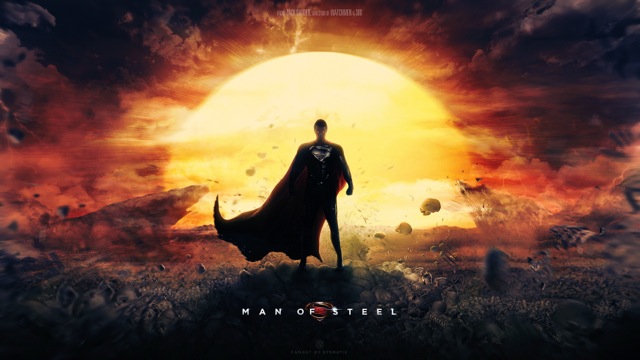
Man of Steel has more mature actors and more serious acting, but the second half is not much different, gratuitous CGI action sequences that are 30 minutes too long, and loud blasts into oblivion.

The constant bombardment of expanded loudness in the theater had only one effect on me, made me turn off my receiver, same effect as somebody wanting to win an argument by raising his voice at me.

Man of Steel 1

Truth be told, because of the cast I went to see this revision of Superman. Kevin Costner and Diane Lane as Clark Kent’s earth parents? Who can miss that? Amy Adams as Lois Lane? I’m sold. And, Michael Shannon as the evil General Zod coming to turn earth into Krypton? I must see how he does it.

And the current Star Trek, what strange new world it has gone to where no one had predicted before. My favorite is still the original TV series. As for the movies? It’s Star Trek VI: The Undiscovered Country (1991). That’s the swan song of the original TV cast and one where Christopher Plummer as the Klingon General Chang recites Shakespeare like he’s at the Stratford Festival. His lines come from The Merchant of Venice, The Tempest, Romeo and Juliet, Julius Caesar and Hamlet. If you want postmodernism across the media, here you have a perfect mash-up. Yes, light years away from the Star Trek of Summer 2013, and generations apart.

Steven Spielberg in a recent statement made at the opening of a new USC Cinematic Arts building predicted there would be an ‘implosion’ in the movie industry, ‘where three or four or maybe even a half-dozen megabudget movies are going to go crashing into the ground, and that’s going to change the paradigm.”

He also added we might have to pay $25 to see the next Iron Man, but $7 to see Lincoln. A scenario which George Lucas echoed. Umm… if those are the ticket prices for the different kinds of movies in the future, not a bad sort of a paradigm shift.

***

[1] These two quotes are taken from Pauline Kael’s review of Jean-Luc Godard’s Band of Outsiders (1964), from American Movie Critics: An Anthology from the Silents Until Now, Expanded Edition, edited by Phillip Lopate, published by The Library of America, N.Y., 2008.

Drifting with the Current of Memory: Kon-Tiki (2012)

Once upon a time a young school girl, an English language learner in the then British Colony of Hong Kong, had to read an abridged version of the book The Kon-Tiki Expedition written by Norwegian explorer Thor Heyerdahl. The ESL student was told it was a true story. She was most curious to find out the details of this extraordinary journey of six men on an open raft roughing it on the tumultuous South Seas. But due to her limited English language skills, she had a hard time comprehending the details of the adventure Heyerdahl described.

Now decades later, as soon as she knows that a movie by the name of Kon-Tiki is showing on the big screen, her long tucked-away curiosity is unleashed. Now she finally has a chance to find out what this sea voyage is all about. Here are the ripples.

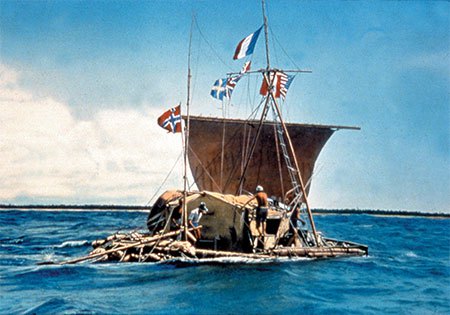
Norwegian ethnologist and explorer Thor Heyerdahl embarked on The Kon Tiki expedition in 1947 to prove his own theory that the Polynesian Islands on the Pacific Ocean were first colonized by people from Peru in South America some 1,500 years ago, and not those of nearby Asian countries as generally thought. Heyerdahl and five other men built a raft with balsa wood, using ropes and technology of pre-Columbian times, and set sail on it by letting it drift with the current from Peru, just to prove the feasibility of such a journey. Only one of the men had had some navigation experience, and, we found out later in the film, Heyerdahl himself could not swim. But in 1947, after a period of 101 days, they succeeded in reaching the Polynesian islands, almost 5,000 miles away. Quite a risky trip to prove a self-propelled theory. Herein was sown the seed of adventure and endurance.

Kon-Tiki (2012)

The film is 2013 Oscar nominee for Best Foreign Language Film from Norway. It starts off well by showing a young Heyerdahl as a child in Norway already a risk taker who seeks out the most dangerous feats to perform. The camera works at eliciting interesting human faces with close-ups of a mischievous child growing into a tall, blond hair, blue-eyed, chiselled physique, explorer of the Polynesian Islands. Listening to an aboriginal elder tell their people’s story, Heyerdahl (Norwegian actor Pål Sverre Hagen) is determined to test his theory with his life on the line, against the restrained protest of his wife Liv (Norwegian actress Agnes Kittelsen). More treatment of the conflicts is much wanting here, as enthusiasm of the adventurous husband meets exasperation from his wife and mother of his two boys.

Likewise, while on the rough seas, conflicts and comradeships among the six men seem to give way to tense moments of swashbuckling shark fights. At certain points, scenes from Life of Pi came to mind… the flying fish, the whale circling under the raft, the shark attacks, the sun sinking beneath the horizon. Moments that are aesthetically gratifying in Pi appear to be quite matter-of-fact here. No matter, Norwegian directors Joachim Rønning and Espen Sandberg chose to use a simple and straightforward style to tell their story, nothing philosophical to be pondered as in Pi.

If just to satisfy the curiosity of the once bewildered school girl, the movie suffices. It captures my attention and offers some suspenseful and thrilling scenes, at times reminiscence of yet another movie, Jaws. So, Pi and Jaws, what images the Kon-Tiki movie leaves me with that are its own are basically the six messy blond hair and bearded, muscular (except one), well tanned Norwegian and Swedish men speaking English, and, looking quite similar to each other. Eventually, they see a gull flying in the sky. Spirits are highest at that point, for land is near.

What’s quite effective is the inclusion of what seems to be the archival black and white footages of the original trip well mashed into this modern version. But here’s my disclaimer: Upon this first viewing, I’m not too sure if they are the actual footage, or imitation archival footage. I have tried to find out on Google but to no avail. However, I did find out that all the ocean life of sharks, whales, and fish are CGI, computer generated images… just like in Pi.

It’s also interesting to note that, at the end of the movie when the credits roll, there is a disclaimer stating the movie is fictional and that any relationship to the facts is accidental or coincidental. With this, I as a viewer is at a loss as to the accuracy of the whole storytelling on screen. This points to the value of the actual footage which the real life Thor Heyerdahl shot with his 16mm camera, later edited into a feature film that won the 1951 Academy Awards for Best Documentary.

We know for a fact that they reached their destination, no small feat of survival and endurance that from my childhood memory, was much more detailed even in the abridged ESL version of the book. So, yes, it looks a bit too easy and simplified in this movie. And, the ultimate argument still remains like a hung jury. The fact that they had succeeded in reaching the Polynesian Islands on an open raft all the way from Peru did not prove that the Peruvian had colonized the Islands. The film did not deal with this argument. But, just for satisfying the curiosity of the once young and bewildered English learner, it is a sufficiently entertaining movie. A highly watchable summer beach flick.

~ ~ ~ Ripples

***

Related Posts:

Life of Pi: The Magical 3D Experience

Life of Pi by Yann Martel: Take the Literary Journey Before the 3D Experience 

***

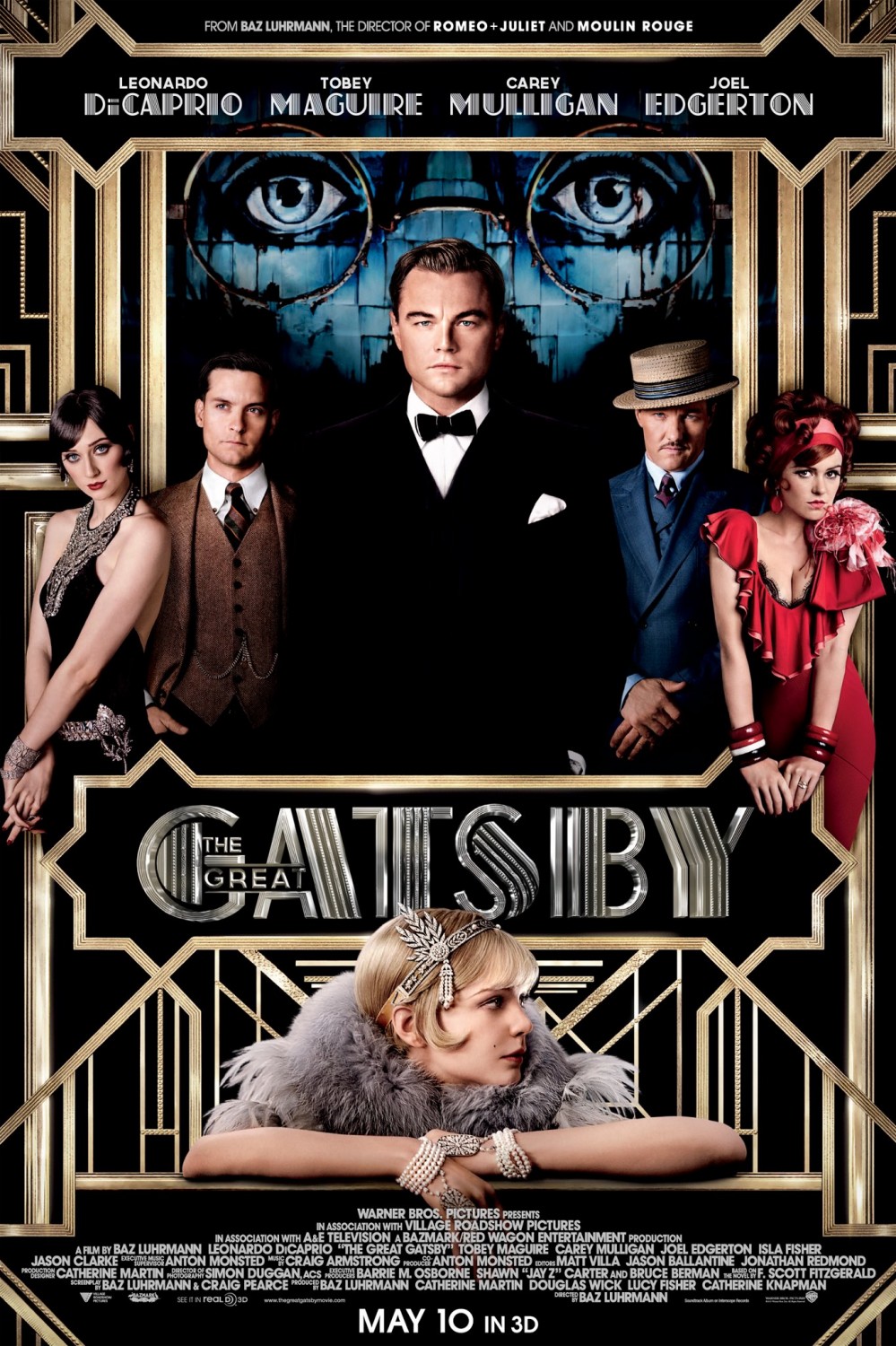
The Great Gatsby (2013): Movie Review

In just 172 pages, F. Scott Fitzgerald has captured the zeitgeist of the Jazz Age, and told the stirring story of love and loss. In this new adaptation of the book, director Baz Luhrmann has used an estimated $127 million, glamorizing with 3D and over the top cinematic effects.

Here is a prime example of ‘the medium is the message.’ Instead of depicting extravagance and excess, the production has become that.

the-great-gatsby-poster1

I went in with an open mind. After all, I had expected a mashed-up, postmodern fusion Luhrmann style. So, even the Jay-Z curated hip hop selections a la Gershwin cacophony was fine with me. After all, it was the unruly Jazz Age, so be it. Gatsby’s creamy yellow roadster speeding towards Manhattan, zigzagging its way through busy streets, Fast and Furious 1920’s version is still acceptable. By the way, the movie was shot in Australia. So, all the Manhattan scenes are visual remixes.

But the main issue for me is the 3D. Not much to be gained there but hindrances. The effects make me feel like I’m looking into a View-Master, artificial and gratuitous. For Gatsby, the extravaganzas in his mansion are only means to an end, to attract his love, Daisy; in Luhrmann’s hands, they are an end in themselves. The flamboyant and ostentatious parties, like their uninvited guests, overstay their welcome in the first part of the almost 2.5 hour production.

If Luhrmann had only used more of his wealth of resources: the rich and talented cast, to explore the story more and go deeper into characterization, and less partying, the movie would have been a wonder.

After all the glitz and glam in the first act, my enjoyment begins when Gatsby meets Daisy in Nick’s humble abode, a set up masterminded by Gatsby. It has taken him five years to this very moment. It is this scene that draws me in from being just an aloof onlooker. From without to within, it is the story and the characters that engage me more than the visual spectaculars.

Leonardo DiCaprio is a fine Gatsby, convincing and comical at times. Carey Mulligan may not be the Daisy I had conjured up from reading the book, but she has mastered her role well on her own terms. She’s a much sweeter, less careless Daisy than I had in mind. Elizabeth Debicki is an apt Jordan Baker. Joel Edgerton as sneaky and snobbish Tom Buchanan needs to smile more, and Tobey Maguire as Nick Carraway less. The veteran actor Amitabh Bachchan is a good choice for Meyer Wolfsheim. Isla Fisher as Myrtle Wilson, what a change from a shopaholic, and Jason Clarke too much a hunk to be wimpy Wilson.

One major alteration that I’ve appreciated is Nick writing out the story as a therapy recommended by his doctor, apparently a psychiatrist. The story of Jay Gatsby is also Nick’s own story as a writer. By articulating his experience in words he pays tribute to an unforgettable character, a dreamer who always sees the green light. Without giving out a spoiler, let me just say, the little twist at the end is a nice touch to this new adaptation of The Great Gatsby.

Does it worth a watch? I’d say yes, even in the 3D version. Curiosity is insatiable. And hopefully, the visual spectaculars can draw the viewer back once again to the literary offering Fitzgerald had first created. That’s one positive effect a movie adaptation can generate.

~ ~ 1/2 Ripples

***

A related Post I wrote 3 years ago at the announcement of this new adaptation. My open letter to Baz Luhrmann:

The Great Gatsby: A New Version

***