Season’s Musings

At this time of the year I always have a struggle, a fight against numbness.  The hustle and bustle of the Season leaves me striving to grasp something authentic and meaningful.  I have a hard time staying afloat the flood of packaged cheeriness, muzak in jingles or bells, ephemeral Santa’s and reindeer.   With the word “Hallelujah” almost becoming a laughable cliché, an ordinary expression for scenarios from finally finding the right gift for the family pet to paying up the Visa bill,  soon it would take a history lesson to clarify the origin of this festival called Christmas.

Intentionally or not, the Reason of the Season has been masked so not to offend, the birth of Christ replaced by themes acceptable to most cultures, like gift-giving, family reunion, ornaments, decorations, and good will towards all.  ‘Season’s Greetings’ has become the politically correct sign of the time.

On that winter night in Bethlehem, the shepherds bore no gifts. Indeed, their very presence and worship could well be the gift they offered.  Yes, the several wise men brought along gold, frankincense, and myrrh for the Christ child only, not to share among all.  For these gifts symbolized the very reason for His Advent, the infinite King debased, the lowly birth was just the beginning of a short and misconstrued life that ultimately ended in a horrific death.

The Advent, the few weeks before Christmas, is the best time for me to ponder again such a paradox.  If there is any joy or cheeriness, it comes from the initial degradation and ultimate agony of One.  It is from that vicarious suffering with humanity and the offering of substitutional death that Christmas derives its meaning for me.

A few weeks ago during a Sunday message, the name Joni Eareckson re-emerged in my mind.  I was a young teenager when I first read her tragic story.  At 17, she dove into shallow water and broke her neck, and remained a quadriplegic ever since.  I cannot imagine myself paralyzed from the neck down, having had to be lifted from bed to wheelchair for 37 years.

But what she has done sitting in that wheelchair has surpassed many able bodies. Her international ministry to people with disabilities is still thriving after 30 years.  The paintings which she has labored over inch by inch with a paintbrush between her teeth have become a testimony of perseverance, every stroke an ode to life.  Through her writing and broadcasting, Joni has become a voice and inspiration for the disabled and their families, all because she knows her suffering had been vicariously borne by the One who came just to share that pain, and redefine the meaning of life.

The hymn (Phillip Bliss, 1875) that had uplifted Joni in her most despondent hours painted not a cheery figure but a suffering Christ who came with no jingles or bells, and utterly devoid of packaging:  “Man of sorrows, what a name, for the Son of God who came…”

If you have a few minutes in this busy Christmas season, pause and take a look at this short clip.  Of all interviewers, I found Joni talking to Larry King, dated June, 2009.

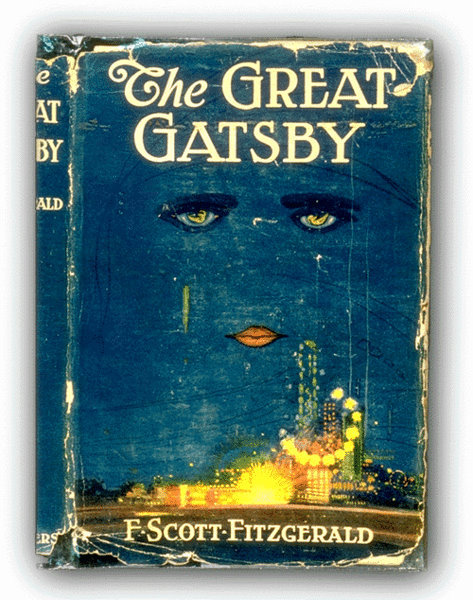
The Great Gatsby on my iPhone

Two years ago I posted about reading Pride and Prejudice on my BlackBerry.  At that time, I was receiving free installments of the book, sent to me daily via email from DailyLit.

Well, I’ve moved on since then.  I’m using an iPhone now, and with the application Stanza, I get access to several online catalogues with over 100,000 selections of classics and contemporary titles and periodicals.  I must add though while the Stanza app is free, some of the eBooks in these catalogues, especially the contemporary ones, are not.

But I’m just interested in the free ones, and there are more than enough to choose from… mainly through Project Gutenberg’s catalogue of 30,000 eBooks in the public domain, classics of over 20 languages.  Not that I’ll be reading one in Icelandic, or Portuguese, or even Esperanto, but it’s good to know that they are there in case you might need them.  All the titles are free to download due to the expiry of their copyrights.  I’ll just stick with the 22,000 English selections for now, from Austen to Zola, from anarchism to zoology… yes, they allow you to search by authors, titles, languages, genres, topics.

Regarding the concept of ‘free’, the Project Gutenberg Website has this important information: ‘Free’ here means both free of charge and freedom to use the titles in whatever way a reader chooses, teaching, adapting, distributing…

So, what has been my experience of reading The Great Gatsby on my iPhone?

First off,  unlike the Kindle, which is the size of a paperback, or larger, the iPhone screen is just 3.5 inch diagonal.  While you can adjust the font size to suit your visual comfort, it just means the inconvenience of turning the pages more often the larger the font.  Reading it horizontally, my setting is about 10 words per line, 14 lines on each page.  I can choose my own style of font and the backlit format.

Compare with reading a hard copy, the iPhone has its convenience, that being smaller, easier to carry. You have your whole library at your fingertip, literally.  But the major advantage over a hard copy, I feel, is the lighted screen.  In other words, you don’t need to turn your bedside table light on to read. In a way, it brings back that childhood experience of reading under a covered blanket with a flashlight.  Ready accessibility, even in the dark.  What a fantastic treat for insomniacs.

Now to something totally different, the affective element of the reading experience.  Strangely enough, reading on the iPhone makes Roland Barthes’ theory a step closer to reality.  Just a recap, I’ve written a post on Barthe’s ‘The Death of the Author’ idea.  The text is the thing, he argues. Let it speak without any reference to its author.  Reading digitally transported me onto that path, whether intentionally or not.

When you’re reading a book, you’re holding the physical object called a ‘book’, with all its cultural meaning and significance, the reality of print on paper, the design and aesthetics of the object itself.  More importantly, from the outset, before you dig in, you’re looking at its cover art, jacket info on the author and the work, with the sometimes additional excerpts of reviews, author bio, introduction to the work… etc. In other words, you cannot avoid knowing who wrote those words you’re reading, his or her background, literary achievement and perspective.

But reading digitally, you’re only seeing the text, unless of course you change the screen to check info about the author or the work.  If you just stay with that screen, you’re only seeing the words per se, unmoved by any of the author’s background, literary style, devoid of any context. And because of the small screen, you’re only reading a few lines at a time. Instead of a complete whole that you can hold in your hands, you are confronted with the fragments, the digitalized, desensitized, deconstructed units of a literary work.

I have read The Great Gatsby before, in hard copy format, and now in the digital mode.  Reading it on the iPhone, I sense that my imagination is more reined in.  I encounter more ‘text’ than ‘images’, and feeling less for the characters.  Interestingly, some details of the plot are clearer this time, but the emotional impact is attenuated.  Of course, one could argue it’s because this is the second time around I read the story… but then again, it has been some years between the two readings.

There’s no perfect solution for everything.  You have the convenience, but the desensitizing of the reading experience.  Nevertheless, the free downloads of world classics at your fingertip is just too good to pass.

My next read from my iPhone library?  Well, there are quite a few choices.  I’m thinking of Proust’s Swann’s Way: In Search of Lost Time Vol. 1. Reading Proust on the iPhone… how much more postmodern can you get? Roland Barthes would have been pleased.

But it might be too daunting a task to attempt, imagine reading 400 plus pages on a 3.5 inch screen, 14 lines at a time.

And for now… let me just head out to the bookstore.  Nothing can compare to the sensation of being surrounded by books, and actually feeling them in your hands, cover, spine, and all.

***

Photo Source:  The Great Gatsby book cover at artistquirk.com

Alberta Bound

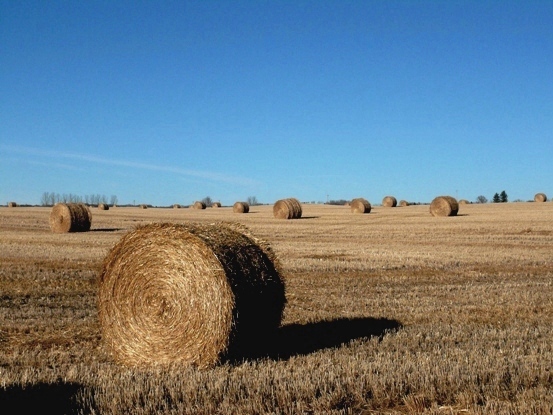
Autumn in rural Alberta is immensity amplified.  Big sky and expanse of farmland is the main scenery, something what W. O. Mitchell describes as “the least common denominator of nature… land and sky.”

The air is crisp, fresh, and dry.  Colors are simple:  Big blue sky, golden harvest, even just hay rolled up in bales.  Farming against the snow-capped Rockies, rustic, serene, rejuvenating, harmonious fusion of nature and human endeavor.

Trees as windbreaks in the summer, nature’s sculpture in the fall.  So the leaves are gone, but only then can we see the beauty of the bare branches, like dancers celebrating the changing of the seasons.

The solitary figure in the field… en masse.

“Think I’ll go out to Alberta,
Weather’s good there in the fall.
Got some friends that I can go to working for…”

For some inexplicable reasons, as I’m posting these photos, a flood of nostalgia whirls up in me.  The melodies and lyrics of those songs and singers that we can claim our own keep filling my mind all day. Not too many up-and-coming like to hang around here, since all the fame and glory one seeks is down south.

But these remain our own: Gordon Lightfoot, Ian and Sylvia Tyson, Neil Young… and songs about Alberta, about heading west to seek a new life, or to escape from the pain of lost love.  Maybe the wide open country, big blue sky and wide expanse of land do have their healing powers.

And memories, forever clear, keep us rooted… here’s home.

****

Photos taken by Arti of Ripple Effects, November, 09.  All Rights Reserved.

Books and the Gender Issue

My review of Girl With A Pearl Earring has recently been linked to a book list. While I appreciate the link, I must admit it has stirred up in me some unintended ripples.  It’s the title of the list:  ‘101 Books Every Woman Should Read’.

Now I’m always wary about books that are labeled and geared towards one gender.  Like recently I came across a book entitled 100 Places in Italy Every Woman Should Go… makes you wonder what exactly they’re luring you into. Imagine a book called 100 Places Every Man Should Go…

Anyway, back to the list of books every woman should read.  The range is eclectic with the titles neatly categorized.

Just let me list a sample from each of the categories:

The Classics: Frankenstein by Mary Shelly, The Fountainhead by Ayn Rand, Howards End by E. M. Forster, To Kill a Mockingbird by Harper Lee, Pride and Prejudice by Jane Austen, Wuthering Heights by Emily Bronte, Middlemarch by George Eliot, Mrs. Dalloway by Virginia Woolf…

Children’s Literature:  Pippi Longstockings by Astrid Lindgren, The Wizard of Oz by L. Frank Baum, Charlotte’s Web by E. B. White, Alice’s Adventures in Wonderland by Lewis Carroll…

Books into Movies:  The English Patient by Michael Ondaatje, Beloved by Toni Morrison, Memoirs of a Geisha by Arthur Golden, Out of Africa by Isak Dinesen…

Books Featuring Familial Relationships:  The Joy Luck Club by Amy Tan, The Poisonwood Bible by Barbara Kingslover, The God of Small Things by Arundhati Roy, Away by Jane Urquhart…

Books Celebrating the Strength of Women:  Jane Eyre by Charlotte Bronte, The Bell Jar by Sylvia Plath, The Scarlet Letter by Nathaniel Hawthorn, Babette’s Feast by Isak Dinesen…

Current Literature:  Unaccustomed Earth by Jhumpa Lahiri, The Elegance of the Hedgehog by Muriel Barbery, Water for Elephants by Sara Gruen…

Books about Finding Oneself:  Bee Season by Myla Goldberg, The Heart is a Lonely Hunter by Carson McCullers…

Stories of Real Women: I Know Why the Caged Bird Sings by Maya Angelou,  Amelia: A Life of the Aviation Legend by Donald M. Goldstein and Katherine V. Dillon, Diary of a Young Girl by Anne Frank, The Story of My Life by Helen Keller, Portrait of an Artist: A Biography of Georgia O’Keeffe by Laurie Lisle…

Banned or Challenged Books:  Leaves of Grass by Walt Whitman, Fahrenheit 451 by Ray Bradbury, Of Mice and Men by John Steinback, The Kite Runner by Khaled Hosseini.

Non-Fiction: Pilgrim at Tinker Creek by Annie Dillard, Silent Spring by Rachel Carson, Gorillas in the Mist by Dian Fossey, On Death and Dying by Elisabeth Kubler-Ross,  A Room of One’s Own by Virginia Woolf

You get my point.  Sounds like any typical high school and college reading list, but why specify women?

Yes, they’re mostly written by women authors, and many with strong female protagonists.  They depict the journey of self-discovery, of overcoming odds, of seeking meaningful relationships and ideals in a hostile world.  In the non-fiction section there are influential books that have achieved significance in the area of writing, psychology, environmentalism, social justice.

But my query is:  If these books depict the inner journey of women, or portray the poignant reality of their struggles, if they have shed any light on the human race in terms of equality, justice, or existential meaning, are these not all the more reasons for men, or anyone, to read them?

Of course, for the sake of argument, one could point out that the statement “books every woman should read” doesn’t preclude that men should not.  But that’s just being contentious.

Books for women, books for men, why can’t books be just books?  Maybe it has to do with the writing of books, or, step back further, society’s view on male and female authors.

Posting on the Guardian blog, writer and editor Harriet Evans vehemently declares that:

“I’m fed up with seeing some of our best novelists written off as ‘chick lit’ — you don’t see the same belittling line taken with male writers…

It winds me up that books about young women are seen as frivolous and silly, while books about young men’s lives that cover the same topics, are reviewed and debated, seen as valid and interesting contributions to the current social and media scene.

And regarding the reading public, it has been noted that women read more than men, both in the U.S. and the U.K.  With that in mind, Evans goes on to state that:

The truth is, women happily read books (and watch films and TV) aimed primarily at men…. They read thrillers, travel books, biographies – and yet the majority of these books are marketed for men… But men rarely try women’s fiction, because they’ve been conditioned to think they can’t pick up a book with a pink cover.”

Indeed, worthy literature written by women authors are sometimes reduced to ‘romance’ or ‘chick lit’.  Jane Austen is a prime example.  Her incisive social satires, eloquent writing and sense of humor have often been swept aside while the romantic union of the protagonists at the end is given the main focus.  In this way, her work is conveniently labeled as ‘chick lit’, dreaded by male readers, until some brave souls dare to take up the challenge and are floored by her relevance and intelligence.

Virginia Woolf sharply observes in her Cambridge lecture series compiled in A Room Of One’s Own that historically, social norm has always been one that coops up women in the domestic while offering men the world.

Taking her view further, I can understand why the dichotomy, however arbitrary, in male and female writing, their difference in subject matters, subsequently, books for men and books for women.

I have a feeling that if the protagonist of The Catcher In The Rye is called Helen Caulfield, the book could well be dismissed as another trivial version of teen angst, schoolgirl blues, fussing over boys and growing up.  And likely we won’t see it on any reading list.

Writing from Memory and Imagination

P1010393

Upon a request from her friend and Granta Magazine editor to submit a birdwatching article, journalist Lynn Barber instead sent in a piece of memoir.   Well it was published just the same, in the 2003 Spring Issue of Granta… good to have friends in the right places.  But why not, it was an entertaining piece, albeit the name of the article might be a bit of a surprise to the editor:  ‘An Education’.  And who would have known that six years later, the short memoir would evolve into a full length, award-winning film.

In her recent article in Granta, Lynn Barber reminisced on the creative process and the adaptation from print to screen.  I find the article both amusing and enlightening.  Here are some tidbits.

Soon after her memoir was published in Granta, Barber was contacted by film producer Amanda Posey about turning it into film.  (Now that’s quick! But no… don’t think I’ll start writing a memoir, not just yet.)  But Barber was too preoccupied with other personal matters at that time to take it seriously.  Nevertheless she said okay to the proposal.  Months passed, and a contract ‘the size of a phone directory’ arrived.  Then she realized it wasn’t just talk after all.

Now to the screenwriting process.  Barber declined to write the screenplay herself, to the delight of film producer Posey, who had someone in mind already.  That was her then boyfriend and now husband the writer Nick Hornby.  Hornby’s books include About A Boy, Fever Pitch, and High Fidelity, all turned into well-received movies.  But what caught my attention is Barber’s comment:

I found it odd (still find it odd) that this pre-eminently ‘boy’ writer should so completely understand what it felt like to be a sixteen-year-old schoolgirl who was on the one hand very bright but on the other very ignorant about the world but, miraculously, he did. He even seemed to understand my parents, which is more than I could ever say myself.

Do writers always understand their own gender better?  Are they necessarily less equipped to write about their opposite sex?  Barber’s comment mentioned Hornby had grasped an understanding of her parents just as well.  Maybe it’s not so much a gender issue but one of sensitivity, empathy, and observational skills:  A good writer is a good reader of people, regardless of their gender, or age, for that matter.

It took years for the screenplay to evolve, after eight drafts to be exact.  The last one is quite a divergence from the very first.  Herein lies another interesting point.  The first draft is close to the memoir, while the last has taken a life of its own, reality has been altered to fit the screenplay genre.  The ending has also been tailored to elicit intended effects.  It speaks to the creative writing process:  Memories may be the initial springboard, but imagination is the fuel that propels the work to a visual realm.

The adaptation from memoir to screen has been a long process.  Barber notes:

Years passed, draft screenplays came and went, possible backers came and went. I would have given up by year two, but Nick and Amanda and their partner Finola Dwyer persisted and eventually, last year, the film went into production.

Apart from creativity and talent, persistence and diligence could well be the key ingredients in all sorts of production.

And finally, it boils down to memories again.  When asked about her thoughts upon seeing her sixteen-year-old self being portrayed on-screen, Barber, now at sixty-five, has no immediate answer.  She is lost in memory, again.  What exactly was her feeling at sixteen?  Or, for that matter, what had happened at twenty, or thirty?

Poignantly she asks:  Who owns memories after all?

Do memories belong to one’s subjective self?  Or to those around you who had shared your experience?  Is it merely age that has blurred the boundaries between memories and imagination, or is it our creative mind?

Or, does it even matter anyway… as long as you don’t call it non-fiction.

***

To read my review of the movie An Education, CLICK HERE.

To read Lynn Barber’s personal essay on her memoir, CLICK HERE.

Photo:  Banff, Alberta.  Taken by Arti of Ripple Effects, August, 09.  All Rights Reserved.

An Education (2009)

2725416803.JPG

UPDATE Feb. 21:  Carey Mulligan just won Best Actress at the BAFTA (British Academy of Films and Television Arts) Awards. CLICK HERE to read more. 

UPDATE Feb. 2, 2010 OSCAR NOMINATIONS: An Education receives a nomination for Best Picture in the coming 82nd Academy Awards.  Carey Mulligan gets a nod in the Best Actress category, and Nick Hornby gets a nom for Best Adapted Screenplay.

Update Jan. 23, 2010:  Carey Mulligan is a Best Actress nominee and a presenter at the Screen Actors Guild Award tonight.

Update Dec. 16:  Carey Mulligan has been nominated for a Golden Globe Best Actress Award.

Now is the time of the year that’s most gratifying. The awards season is coming up in just a few months. So this is when possible contenders are released, albeit some with just limited screening, and they aren’t likely to be your Hollywood blockbusters that might stay on for a while. That’s why I opted for ‘An Education’ over the weekend. ‘A Christmas Carol’ can wait.

An Education is the little British film that comes with high acclaim. The coming-of-age story is based on the memoir by British journalist Lynn Barber.  It first appeared in Granta magazine, later published by Penguin. The screenplay is written by Nick Hornby, the popular writer who gave us About A Boy, Fever Pitch, and High Fidelity, all turned into movies.

An Education won the Audience and Cinematography Awards at Sundance earlier this year.  And it might well propel Carey Mulligan to an Oscar nomination, which she so deserves. She has been noted as the young, modern Audrey Hepburn. But my impression of her is one fresh acting talent, sweet and extremely amiable. I’ve enjoyed her role in the BBC TV drama Bleak House as Ada Carstone. She’s Kitty Bennet in the 2005 version of Pride and Prejudice, and has a small role in the memorable When Did You Last See Your Father (2007). An Education is her first major role in a feature film.

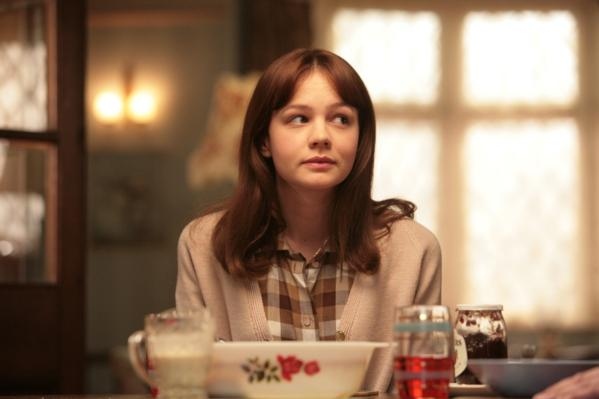
Carey Mulligan plays 16 year-old Jenny convincingly. Jenny is a top high school student aiming for Oxford as she graduates in a few months, an aspiration directed by her protective yet gullible father (Alfred Molina). Oxford is certainly within reach. Jenny is smart, talented, and self-assured. She has all the potentials needed to excel academically and to launch a successful future in life. She loves art, foreign films, classical music, and French pop culture.  The city of her dream is, naturally, Paris.

1-500x332

In the cloister of 1961 Twickenham, a suburb of London, all a girl needs is just a little door opened for her and she’ll leap right out. This door to the adult world and high culture seems to have swung wide open as she meets David (Peter Sarsgaard), a man in his 30’s who offers her a ride home from school in the rain one day. That fateful afternoon marks the beginning of a dramatic turn in her life.

David brings her to art auctions, concerts, fancy restaurants and ultimately, Paris. Yet he remains secretive regarding his work. No, he did not go to Oxford, but he has graduated with flying colors from the University of Life. Thinking her new-found friend is their daughter’s ticket to higher society, Jenny’s parents gladly give their consent to their friendship, but not without some suave persuasion from David.

David also introduces Jenny to his friend and business partner Danny (Dominic Cooper, Mamma Mia!, 2008; Sense and Sensibility 2008) and his girlfriend Helen (Rosamund Pike, Jane Bennet in Pride & Prejudice, 2005)  They are to Jenny the mesmerizing and glamorous circle of adult sophistication.

Cheered on by her peers, Jenny is only frowned upon by two people, her hard-nosed headmistress (effectively played by Emma Thompson) and her English teacher Miss Stubbs (Olivia Williams, who plays Jane Austen in Miss Austen Regrets, 2008), whose devotion to her student turns out to be extremely valuable. And then there’s her school mate Graham (Matthew Beard, When Did You Last See Your Father, 2007) who has a crush on her but is no match in front of towering David.

An Education is a film of revealing. Danish director Lone Scherfig takes her time in telling the story, leading the audience through passages of beautiful cinematography and fine acting, suspenseful scenes and memorable interludes. David does not at all appear to be the nasty predator. And Jenny, on her part, also attempts to test the limit. She’s not vain, but honestly dazzled and bewildered. The consent of her naive parents passes the ball back to her court, she must learn to make choices for herself.

And so the story leads the audience through twists and turns to a gratifying end. After the ordeal, Jenny said: “I feel old, but not very wise.”  It could well be the sign of maturity itself.  There’s no short cut to adulthood after all. Great cast, impressive performance, entertaining story, enjoyable education.

~ ~ ~ 1/2 Ripples

***

CLICK HERE to read Lynn Barber’s essay in Granta magazine, chronicling the process of writing from memory, and transporting print onto screen.

AFTER you’ve watched the movie, you might like to CLICK HERE to read an excerpt of Lynn Barber’s memoir.  I urge you NOT to read it if you don’t want SPOILERS before watching the movie.


A Thousand Responses

In the postmodern scheme of things, the old saying ‘A picture is worth a thousand words’ takes on a whole new meaning.  It is not so much what those thousand words are that the picture intends to convey, but rather what the thousand responses it evokes.  Be it a painting, a film, or a literary work, all have the potential to elicit a myriad of responses, reactions as varied as each individual life lived.

Some ready examples can be found in Ripple Effects’ comment sections.  On a post about a movie I highly recommended, a reader responded that she had fallen asleep while watching it.  Or, take the Edward Hopper paintings.  While I found the phrase ‘existential loneliness’ to be an apt description for his works Nighthawk and Automat, a commenter expressed a sense of coziness and quiet content as her response to these paintings. Conversely, while I perceive Cape Cod Morning as anticipatory with positive excitement, the commenter sees “a woman trapped, caught in frustration or even despair, longing to move into the world but still constrained inside the structures of her life.”

magritte01

There had been readers’ responses in the past long before the computer age. But what we have now is nothing short of phenomenal.  The Internet has enabled us to share and exchange our very personal reaction to a single source material simultaneously, allowing multiple voices to resound instantaneously from all corners of the world.  Every voice has the potential to call forth attention, every subjectivity can be equally amplified.  Reader’s response is thus given a heightened significance.

From this perspective then, the reality of a piece of writing, or artwork, seems to have shifted from the author to the reader, or the artist to the viewer, for it is the recipient now that speaks to the work, giving it meaning and application.

Should we still be concerned with the original intent of the piece?  Is it mere speculation to discuss about it, while in the mean time, it is more real and substantial to talk about what our response is, our own personal engagement with it?  Further, instead of focusing on one intended interpretation, should we explore rather the multiplicity of interpretations elicited from readers’ own perspectives and experiences?

Writing before the rise of the Internet, the French literary critic Roland Barthes put it most starkly in his essay “The Death of the Author”:

“… a text is made of multiple writings, drawn from many cultures and entering into mutual relations of dialogue, parody, contestation, but there  is one place where this multiplicity is focused and that place is the reader, not, as was hitherto said, the author.  The reader is the space on which all the quotations that make up a writing are inscribed without any of them being lost; a text’s unity lies not in its origin but in its destination…”

and a warning here, the language used in the following excerpt may be objectionable to some:

“Classic criticism has never paid any attention to the reader; for it, the writer is the only person in literature.  We are now beginning to let ourselves be fooled no longer by the arrogant antiphrastical recriminations of good society in favor of the very thing it sets aside, ignores, smothers or destroys; we know that to give writing its future, it is necessary to overthrow the myth:  the birth of the reader must be at the cost of the death of the Author.”

The postmodern theorist Michel Foucault wraps it up succinctly:

“What difference does it make who is speaking?”

The listener seems to have taken up a much more significant role these days.

Our postmodern literary theorists have thus spoken: The author is dead, long live the reader, and the words.

This idea may not sound so radical, for similar notions have been expressed. Instead of an all-knowing authority, the author is more like a recorder of a tale, the scribe writing down the oracle.  The Canadian writer Michael Ondaatje’s words come to mind.  Even as an author, it seems his creative process is one that awaits the revealing of his story, capturing it in words as it unfolds itself:

“I don’t know what would happen… I don’t want to know.”

Further, Ondaatje welcomes the multiplicity of interpretations.  In his discussion with film editor Walter Murch, he addresses this issue in a positive light:

“We are not held hostage by just one certain story, or if we are, we know it is just one opinion: there are clear hints of other versions.”   — The Conversations, p. 160.

Multiplicity enhances and enriches a scene.  That is the amiable way of putting it, while Barthes is more matter-of-fact in pointing out where meaning and significance lie:

“… it is language which speaks, not the author.”

In a way, such a perspective could be a much-needed humbling reminder in our too crazed, celebrity-driven culture.

But for those of us who strive with all earnestness and honesty to instill meaning in our writing, who have been meticulous and intentional in our craft and guarding its integrity as we create, when we speak, don’t we wish someone out there would receive our message accurately, as it is intended?

Why do we write, or create anyway?  Do we want our readers to know about us or just to hear the words we happen to utter?  Further, shouldn’t we be concerned that what we elicit could well be interpretations far from what we have intended to get across?  How do we balance author’s intent with readers’ response?

Simple questions, but ones which I’m sure can elicit a thousand responses.

***

To read Roland Barthes’s essay ‘The Death of the Author’,  Click Here.

To read Michel Foucault’s essay ‘What Is an Author’,  Click Here.

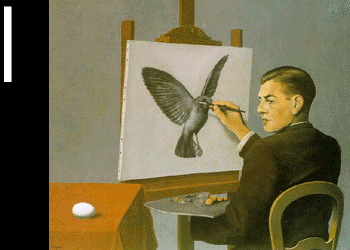
Visual: ‘Self Portrait’ by René Magritte, 1936.

Bright Star (2009)

Bright Star 1

Was it a vision, or a waking dream?

Fled is that music:– Do I wake or sleep?

— John Keats, Ode to a Nightingale (1819)

1819 was the most prolific year of the English Romantic poet John Keats.  Many of his well-known works were created then, two years before his untimely death from tuberculosis at age 25.  His muse was Fanny Brawne, his 18 year-old neighbor, a fresh and self-assured young fashion designer whom he met a year earlier. Untrained in poesy or prose, Fanny Brawne had nothing in common with the brooding poet, but Fate, cruel or kind, instilled in them a burning passion for each other.

Unable to maintain a living financially, Keats was honorable to restrain his love for Fanny, knowing marriage would never be realized.  Yet Fanny’s incessant devotion for him soon won him over.   In a short time, she devoured all of Keats’ poetry, as well as other literary works through the ages.  Their short-lived romance culminated in an engagement.  But they were never married.  Stricken by tuberculosis,  Keats left for Italy in 1820 to seek better climate for his ailing health, knowing that would be their last farewell.

When I have fears that I may cease to be

Before my pen has glean’d my teeming brain…

Nominated for a Palme d’Or at the Cannes Film Festival this year, Jane Campion’s Bright Star is a beautiful tapestry weaving together the visual and the word.  Based partly on Sir Andrew Motion’s biography on Keats, the film depicts the bittersweet romance between the poet and his muse, tragically short-lived yet ever burning bright.

Bright Star 3

Campion has created on screen the dazzling visuals of the master painters.  There are numerous Vermeer moments in the interior shots, all done by the window with natural light seeping in as Fanny sews, makes her laces, reads love letters.  Outdoor scenes are a natural cinemascape reminiscence of impressionist vision.  Like the paintings of Monet and Seurat, hazy and dreamlike, they effectively convey the illusive union the young lovers achingly long for but is teasingly placed out of their reach.

Although never consummated, their passion for each other is no less ablaze.  The film is a clear statement that love is not synonymous with nudity and sex on screen.  Campion has depicted their passionate ardor with sensitivity and restraints.  There are moments of utter quietness, for love needs no language.  There are scenes adorned with melodious vocals and instrumentals, augmenting the yearning within.  Campion is a master of cinematic effects.

The talented Ben Whishaw (Perfume: The Story of a Murderer, 2006) is aptly cast as Keats.  Fanny Brawne is played by Abbie Cornish (Elizabeth: The Golden Age, 2007).  Both are award-winning rising stars in their homeland of England and Australia.  Bright Star could well be their breakout work in North America.

Bright Star 2

Paul Schneider (Lars and the Real Girl, 2007) is convincing as Keats’ friend Charles Brown, and what looks like Fanny’s love rival.  A stark contrast in character with the poet, Brown offers much needed tension and conflicts. Fanny’s adorable little sister Toots (Edie Martin) gets some of the best lines. Her brother and chaperone Samuel is played by Thomas Sangster.  But why Thomas Sangster?  The talented young actor who has held his own in such films as Love Actually (2003), Nanny McPhee (2005), and The Last Legion (2007) playing against such calibre actors as Liam Neeson, Ben Kingsley, Colin Firth and Emma Thompson, is put in the background only, with less than half a dozen speaking lines.  There’s definitely a miscast here. (Watch for his role as Paul McCartney in the upcoming John Lennon biopic Nowhere Boy.)

While the film is a beautiful testament of a star-crossed romance, compared to Campion’s previous works, I find it lacks the depth and complexity of The Piano (1993, Palme d’Or) and the intensity and riveting effect of The Portrait of a Lady (1996).  I have no problem with the slow pacing of Bright Star, but I do wish to see more dramatic conflicts and deeper exploration of character.  A thing of beauty should indeed bring us joy, or deep emotion, but for some reasons the visual beauty has not come across to me as affectively and engagingly as they are intended.

Nevertheless, as the only woman director to have won the Palme d’Or in the 62 years history of the Cannes Film Festival, and one of three women ever nominated for an Oscar in directing, Campion has much to offer.  I’m excited to see that it looks like the trajectory of Bright Star is one that shoots for the Academy Awards comes next March.

~ ~ ~ Ripples

(Photo Sources: canada.com, ctv.ca)

***

Gourmet Rhapsody by Muriel Barbery

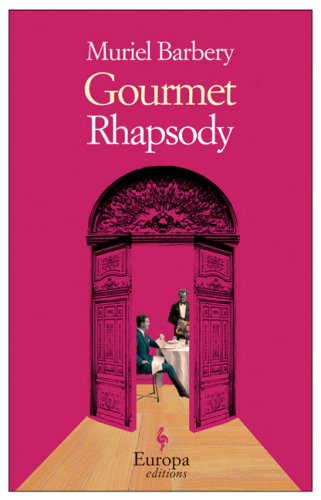
Gourmet Rhapsody

Before the French publishing sensation The Elegance of the Hedgehog, there was Gourmet Rhapsody.  We in English-speaking North America were not aware of such a delicacy until after the translation of Hedgehog was introduced to us.  Too risky to sell to a different palate?

As a first novel, Gourmet Rhapsody, the 156-page collection of short chapters, is like an appetizer to the main dish that is Hedgehog.  It is a foretaste of the more meaty philosophical pondering of the latter.  Now that we have savored the main dish first,  might as well treat Gourmet Rhapsody as the dessert.  Does the cover not make you think of a raspberry sorbet?

If food is a metaphor for life, then the food critic is almost at the status of divinity, especially ‘the greatest food critic in the world’.  That self-ascribed praise is the egotistic utterance of none other than Pierre Arthens, the celeb resident on the fourth floor of the luxury apartment at 7 Rue  de Grenelle, the setting for Hedgehog.

Pierre Arthens’ pen is indeed mightier than the sword.  The knowledgeable and merciless food critic, the ‘true genius of the food world’, is feared from all corners of the world, ‘from Paris to Rio, Moscow to Brazzaville, Saigon to Melbourne and Acapulco’.  He holds the power to exalt a chef and restaurateur to stardom or crush their ego and future like eggshells.

Between these two extremes — the rich warmth of a daube and the clean crystal of shellfish, I have covered the entire range of culinary art, for I am an encyclopedic esthete who is always one dish ahead of the game — but always one heart behind.

But what use is the allure of fame and power when one is on deathbed, at 68, given only 48 hours to live.  Alas, from the years of Epicurean pursuits of cream and butter, oil and sauces, games and other culinary delights, the world renowned food critic is dying not from liver or stomach ailments, but cardiac failure.

Gourmet Rhapsody is a collection of Arthens’ own reminiscence of a life with food and his final quest.  The vividly evoked memories are interspersed with poignant commentaries by those who have come into the path of his life, including his wife, children, nephew, granddaughter, restaurateurs, his doctor, his concierge, his mistress, and even his cat.

And alas, what pity it is to find that none of the entries from these people is positive.  His daughter Laura stays in the stairway, refuses to go into his room to see his last.  His son loathes his ego and his ruthless destruction of theirs.  His wife Anna, whom he had loved as an object of possession, is ever more ambivalent at his deathbed.

And what irony, the only positive review of his life comes from his cat Rick:

… here I am, nineteen years I’ve knocked about as head tomcat on the Persian rugs of my abode;  just me, the favorite, the master’s alter ego, the one and only, to whom he declared his thoughtful, undying love…

So, what does it profit a man if he gains the whole world but loses the love from his wife and children, or respect from those who have crossed his path?  This ultimate question belies the enticing and delicious offering described throughout the chapters.  As in Hedgehog, Barbery has cleverly created a philosophical concoction without appearing didactic.  Here in Gourmet Rhapsody, food is the delightful sauce bringing up the taste of such rumination.

As a lover of sushi and sashimi, my favorite chapter is ‘Raw’, in which Arthens reminisce on his first taste of these Japanese culinary delights:

It was dazzling… True sashimi is not so much bitten into as allowed to melt on the tongue.  It calls for slow, supple chewing, not to bring about a change in the nature of the food but merely to allow one to savor its airy, satiny texture… sashimi is velvet dust, verging on silk, or a bit of both, and the extraordinary alchemy of its gossamer essence allows it to preserve a milky density unknown even by clouds.

But the powerful food critic has but one final quest on his deathbed.  There is one particular food that he wants to taste most before his imminent demise, but which he fails to name.  No, not the coq au vin, or the extravagant pots-au-feu, or poulets chasseur, or the grilled meat of Tangiers, or the Moroccan kesra, or the velvety, melt-in-your-tongue sashimi.  Should I reveal it here?  Alright, Spoiler Alert.

It is the chouquettes, cream puffs, but not from fancy patisserie.  Pierre Arthens wants to taste those chouquettes that are stuffed in plastic bags from the supermarket.  After a life of bourgeois elegance and Epicurean odyssey, it is the mundane, ordinary thing that Arthens seeks on his deathbed.  In the face of mortality, every single moment of mundaneness is something to devour.

If only he had savored that sooner, not just food, but the people in his life, and everything else.

~ ~ ~Ripples

Gourmet Rhapsody by Muriel Barbery, translated by Alison Anderson, Europa Editions, 2009.  156 pages.         

To read my review of  The Elegance of the Hedgehog, CLICK HERE.

***

Whip It (2009)

Whip It

I can’t recall how many times I’d watched roller derby on TV, years back, maybe just a few times.  When I asked my niece who watched the movie with me, as a twenty-something, she hasn’t even seen it once.   But Drew Barrymore, in her directorial debut, has effectively captured the human side of a sport not many know about.  And with it, she has poignantly woven in some relevant issues her audience could relate to, no matter what demographics they’re in: coming-of-age, finding love, confronting parental expectations, searching for personhood and empowerment, parenting and letting go.

After watching Juno (2007), I knew I must see more of Ellen Page.  Here in Whip It, Page has proven that she’s not just impressive as an actor, but also as an athlete.   She plays Bliss Cavendar, a 17 year-old small town Texas girl, bored, docile, shuffled from one beauty pageant to another by her overbearing mother Brooke, a former beauty queen turned middle-age mail clerk (sensitively played by Marcia Gay Harden, Mystic River, 2003; Pollack, 2000).

After she watches a roller derby game with her best friend Pash (Alia Shawkat), and successfully tries out for the team Hurl Scouts in Austin, Texas, Bliss, now Babe Ruthless, sees her life take off with high octane energy.  She has passionately fallen for the high contact sport and a new boyfriend, rock band member Oliver (Landon Pigg).

The head-smashing, rowdy derby culture is probably the farthest away from the frothy and genteel beauty pageants of Texas, thus forms the great chasm between mother and daughter.  Of course Bliss tries to hide all her activities from her mother, until it can’t be covered anymore.  For she has become the poster girl for the final championship.

There are cliché sequences that we’ve all seen before, the light version of physical prowess as in Million Dollar Baby (2004), the get-back-up perseverance of Rocky, and, reminiscence of Shall We Dance (2004) in the final championship.  But, it’s all fun and even exhilarating.  Thanks to a great cast, the humor comes through naturally.  I must mention some great deadpan act from diner manager Birdman (Carlo Alban), who reminds me of Pedro in Napoleon Dynamite (2004).   Another great support is Hurl Scouts coach Razor played by Andrew Wilson.  His performance makes me feel like I’m watching a Wes Anderson movie.  Later I find out he’s older brother to Owen, then it’s all clear to me… it runs in the family.

[picapp src=”6/4/3/c/Whip_It_Los_86ef.JPG?adImageId=5337308&imageId=6660163″ width=”180″ height=”250″ /]  Barrymore has effectively created some powerful and touching scenes that make the comedy worthwhile.  It’s scenes like these that propel a comedy into the realm of meaning.  She has balanced the comical with hard reality, for it’s not simply about a girl choosing what she wants to do, purely from her own point of view.  Often our choices are entangled in a web of relationships.  Yes, we may have the autonomy to choose, but our choices also affect others.  Some gratifying moments are sensitively performed, between mother and daughter, father and daughter, and a 36 year-old derby teammate who openly shares her heart with Bliss in the car, with her young son in the back seat.

Into its second week of screening, Whip It has not fared as well as expected at the box office.  But for screenwriter Shauna Cross, who has turned her own novel Derby Girl into screenplay, I trust this is just another blow she’s got all too used to, as a roller derby girl herself from Austin Texas, before moving to L.A.  She knows how to get back up and keep on skating, even in the aggressive arena that’s L.A.

(Top Photo Source: USA Today, Bottom: PicApp.com)

~ ~ ~ Ripples

Screenwriting: The Visual and the Word

My screenwriting course is wrapping up soon.  For the past six months, I’ve been learning a new language, the language of the visual.  It’s not as easy as it looks.  I’ve to un-learn a lot of ingrained principles of prose writing to re-learn a whole new genre.  And it has been an ego-shattering process.

Take this for example.  A comment on one of my assignments:

“… I’d also like to see you snip away at excess verbiage in both dialogue and action paragraphs.”

Ouch!  That hurts!  Honestly, it took me a few weeks to get over that one.

‘Verbiage’.  When the word is not used by yourself as a self-deprecating joke, now that’s tough to hear.   The reason for such a judgment?  Simply because I used complete sentences in my descriptions.  The language of the screenplay, I’ve learned, is condensed language, not unlike poetry.  It should be spot on, visually driven, and clear.

Readability is the key.  I’ve been learning to write a ‘good read’.   Reality is, my script will first be sent to the ‘gatekeepers’ of the film industry, and many of them may not be readers (that, I was told).  So, nobody wants to see a bunch of words crowding the page.  White spaces are what keep them interested.   So, make it swift, succinct, use minimum number of words to convey maximum information.  Yup, just like that, easy.

Right… so, here are some notes to myself, gleaning from the books I’ve read on the subject of screenwriting, to personalized feedbacks:

  • Sentence fragments, though frowned upon by English teachers, are welcome in scripts.
  • Action speaks louder than words: Whatever that can be conveyed by actions, no need for dialogues.
  • Enter a scene as late as you can and get out before it finishes.
  • Think minimalist and evocative.
  • Layers, layers, layers
  • Avoid clichés like the plague, both visuals and words.
  • Avoid ‘On The Nose’ dialogues: stating directly what the writer needs to convey, instead of the more realistic everyday mundane, allusive, cut-off, inarticulate, real life conversations.
  • As with all literature, learn to write subtexts, the undercurrents of emotions and contexts that are meant to be hidden, but only revealed by actions and dialogues.
  • Do the above with razor-sharp clarity.
  • The central dramatic question should be clear and simple, but not simplistic.
  • Have the proper proportion of words and pictures to create a synchronicity of content and poetry.
  • Don’t insult your actors by writing down specific reactions, or telling them their tone of voice…etc.
  • Write organically: If a writer knows what is going to happen before writing, then the scene will often feel contrived because it will fail to surprise the writer, therefore the audience.

Now, come to think of these points, aren’t they useful for writing in other genres as well?  Except the sentence fragments recommendation, that is, if you’re writing prose.  And, the last point exactly echoes what I’ve heard Michael Ondaatje say:

“I don’t know what would happen, I don’t want to know”

Let the scene breath on its own, take its shape and grow.

Or the advice given by Anne Lamott reinforcing succinct writing:

“You listen to how people really talk, and then learn little by little to take someone’s five-minute speech and make it one sentence, without losing anything.”

And… the wonders of paradox:  ‘Expressing the visual in words’,  ‘Be clear in conveying subtext’,   ‘The minimalist creating layers of complexity’, ‘Write organically within the structure’…

Oh… the bittersweet experience of screenwriting.

****

Edward Hopper, William Safire: The Visual and the Word

If you could say it in words, there would be no reason to paint.

In general it can be said that a nation’s art is greatest when it most reflects the character of its people.

—- Edward Hopper (1882 – 1967)

Edward Hopper’s words point to the power of the visual.  I always find Hopper’s realist paintings hauntingly retrospective, convey indescribable feelings, a sense of loneliness, a touch of alienation, yet, it’s hard to say exactly what it is.

Some use the phrase ‘urban loneliness’ to pinpoint the sentiment, as most readily expressed in his famous painting Nighthawks.  But others find the term too parochial even, opting for the more universal description of the human condition, ‘existential loneliness’.

In this visually-driven age, where pictures are instantly produced by a click, eliminating the wait for film processing, and where digitally created images can elicit unimaginable possibilities, has the value of words diminished, both in function and significance? In a time when ‘reading skills’ refer not only to the comprehension of the written language but the deciphering of graphics and visual symbols, has the power of words been eroded?

Does the recent passing of William Safire, called ‘the oracle of language’ by the NY Times, represent the passing of an era?  How many are left to champion the traditional form of communication, to point out word origin, to extol proper grammar usage?  While these gatekeepers are frowning on the split infinitive, the rest of the world has already jumped on board the newer vessel to boldly go where no person has gone before. The reign of literal communication has gradually (or quickly, or___ you fill in the blank) been replaced by the more accessible instant imaging, flickring, youtubing…

Let’s hope too that the traditional art form of painting will not be soon replaced by iPhone sketching.  If the New Yorker’s cover artist is using an iPhone app to touch-produce its cover pages, will the demise of oils and paints be far away?

Of course, I come to praise Hopper, not to bury words, or paints. Rather than saying his paintings defy literal descriptions, let’s just take up this bemusing challenge and do a role reversal:  What words conjure up in your mind when you look at these Hopper paintings? Let’s celebrate words, and paints, while we still have them.

Of all the subjects in his works, I particularly like the solitary figure, or the non-figure, like the room devoid of human presence.  Here are some of them:

Automat (1927):  Layered with subtext, what are the stories behind this lone female customer at the automat in such hour?  What is a good description of her predicament?

Automat 1927

.

New York Movie (1939): Here’s the reason why I love Hopper’s works.  The contrast, the darker side, the quiet undercurrent beneath the glamorous, the sombre reminder of complexity.

eh_new_york_movie

.

Rooms by the Sea (1951):  A touch of Magritte I feel.  An example of what I call the non-figure.  The philosophical quest of knowing: If nobody’s around to see it, does it still exist?

Edward - Hopper - rooms_by_the_sea

.

Cape Cod Morning (1950):  Unlike his other works, this solitary female figure is positive, eager,  enthused, and achingly expectant.  Is she a symbol of the optimism of a new age, or will she be disillusioned as reality sets in? 1950 or 2009, is there so much difference anyway?

Cape Cod Morning Hopper (1950)

.

Gas (1940):  I’m sure it’s not all about gas… does it allude to the lone traveling salesman like Willy Loman, or the gas station owner like George Wilson in The Great Gatsby?

gas_by_edward_hopper

.

Nighthawks (1942):  Perhaps the most famous of Hopper’s paintings.  As some call it, the depiction of ‘existential loneliness’.  Is that Sartre sitting there all alone at 2:00 am, contemplating in a diner with no exit?

nighthawk-by-edward-hopper

****

Click here to go to a related post ‘Inspired by Vermeer’ with another Edward Hopper painting, Morning Sun.