
“Reading good books ruins you for enjoying bad books.”
A novel in the form of letters? I admit it wasn’t much of an appeal to me at first. After it has maintained its position on the New York Times Bestseller List for months, and now the trade paperback holding the first spot there, I just can’t resist anymore.
The book begins with a series of letters between a London writer Juliet Ashton and her friend and publisher Sydney Stark shortly after WWII. Later, upon receiving a letter from Dawsey Adams, a resident of Guernsey of the Channel Islands, Juliet starts to correspond with the charming folks living there.
So how does the book title come about? Guernsey Island was occupied by the Germans during the war. It happens that one night after a secret ‘pig out’, a few Guernsey residents are found breaking the curfew. To find an excuse quickly when confronted by German soldiers, Elizabeth, our heroine, makes up the story that she and her fellow members have to leave a literary society meeting late as they’ve been so immersed in a German book.
This impromptu excuse soon takes shape in reality. Thus begins the odyssey of reading, book discussions, and the members’ correspondences with Juliet Ashton. Juliet is so immersed in their lives and moved by their situation that she later decides to go visit them, making the Guernsey Literary Society the subject of her next book.
Many of the letters are poignant descriptions of lives during the difficult war years. The Guernsey residents have to suffer the searing pain of evacuating their own children to England for safety, seeing the young and healthy sent to war, finding others just disappear to concentration camps, and hearing eye witness accounts of heroic sacrifices for utter strangers. While all these years on the Island, they have to endure deprivation of food, basic necessities, and freedom. But the literary society meetings and the few reading materials in their possession remain their lifeline to humanity and dignified living.
“Everyone was sickly from so little nourishment and bleak from wondering if it would ever end. We clung to books and to our friends; they reminded us that we had another part to us.”
Author Mary Ann Shaffer passed away in February 2008 and was succeeded by her niece Annie Barrows in finishing the novel. In the Acknowledgment, Shaffer had written these words in December 2007:
“I hope, too, that my book will illuminate my belief that love of art — be it poetry, storytelling, painting, sculpture, or music — enables people to transcend any barrier man has yet devised.”
Despite the subject matter, readers will find the book witty and delightful. Authors Shaffer and Barrows have depicted a myriad of lively characters, charmingly joined in their humanity by their strengths and weaknesses. Yes, we can also visualize the madness of war. But we’re relieved to see too that people can weather hardship much better when they have a common bond, here, in the reading and sharing of fine literary works. Mind you, these are not your academics and scholars. The Guernsey residents are mainly pig farmers and vegetable growers. As we read their letters, we soon see them as friends, Amelia, Dawsey, Isola, Eben, Eli, Elizabeth and little Kit…
And, am I such a Jane Austen fan that I’m seeing this: Juliet Ashton (J.A.), Dawsey (Darcy), and Elizabeth, beloved heroine of all time.
What impresses me most is that the Guernsey Islanders are so willing to open their hearts and lives to writer Juliet, an absolute stranger, mainly because of their common love of the written words. They find it an honor to be able to correspond with a real life writer, pouring their hearts out in respect and admiration, and quickly confiding in her. A writer as a celebrity and friend? It’s just fiction, you may say. But, why can’t it be real?
As for the art of letter writing, has it been lost as some have claimed, or has it merely been transformed into … yes, blogging, for example? Because as I was reading the book, it flashed by me at times that I was reading some blog posts. Are the writings that we post in the blogosphere a kind of open letter? Our exchanges in the comment box our correspondences? And, to push it a bit further, the telegram of old the early form of twitter?
The Guernsey Literary and Potato Peel Pie Society by Mary Ann Shaffer and Annie Barrows, Dial Press Trade Paperback Edition, 2009, 288 pages.
***
Click here to go to the Guernsey Literary and Potato Peel Pie Society website. As for the potato peel pie recipe, yes, at the Jane Austen Society of North America website.
 Nocturnes is a recently published short stories collection by
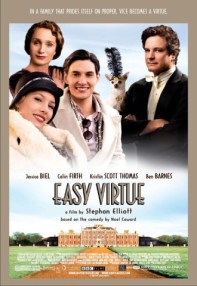 Can we all get along? That poignant plea is ever applicable, from L.A to all corners of the world, today or years past. And when it comes to families, which one doesn’t have its ups and downs? So, since the answer is obvious, might as well make comedies out of the situation.
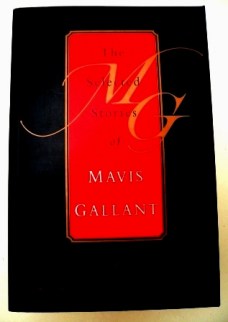 The Selected Stories of Mavis Gallant: 887 pages. Having seen the video of Mavis Gallant reading in a Paris book shop and her conversation with Jhumpa Lahiri, thanks to
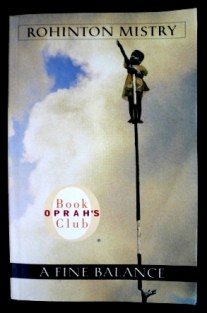 A lady held up a heavy box for me to take this one out underneath: A Fine Balance by Canadian writer Rohinton Mistry. “That’s a good pick,” she said.
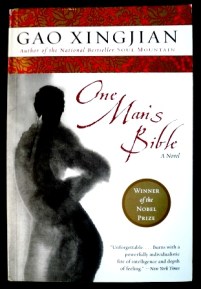 One Man’s Bible by Gao Xingjian, winner of the 2000 Nobel Prize for Literature, the first Chinese recipient of the Prize. Born in China, Gao has been living in France since 1987. The book is translated into English by Mabel Lee, associate professor of Chinese at the University of Sydney. Interesting… although this one I can read the original, the chance of me finding it in a farmers market here in Cowtown, Canada is not great. I’ll settle for the translation.
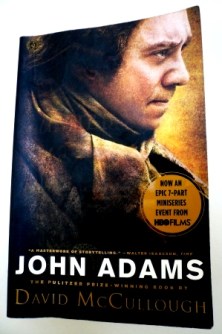 I missed the Golden Globe winning TV miniseries. So, grabbing the original material is just great. David McCullough’s 721 pages John Adams won the 2002 Pulitzer Prize for biography. This is a handsome movie-tie-in- cover edition with many color pictures. What a find!
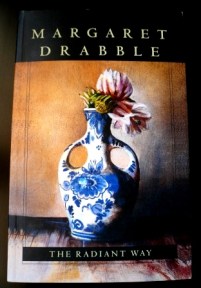 Talking about wonderful covers. How about this one: Margaret Drabble’s The Radiant Way. I’ve never seen this edition of Drabble’s book. A pleasure just to look at.
 And what’s summer reading without beach reads. Here’s my copy of The Devil Wears Prada by Lauren Weisberger. Again, seldom do I see a trade paperback of this title.

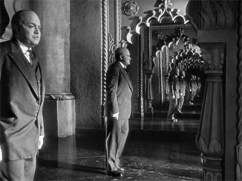

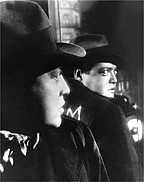 Motion pictures are an effective medium to convey the human condition. In Fritz Lang’s thriller M (1931), the letter obviously refers to the murderer, a child killer that the whole town was after. The not-so-obvious is the depiction of universal depravity, from the police to the masses, the message that we’re all complicit in the moral fabric of our society. Similarly, Mel Gibson puts himself in his movie The Passion of the Christ (2004) as the Roman soldier nailing Christ on the cross.
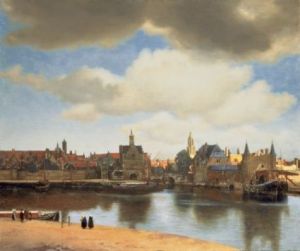
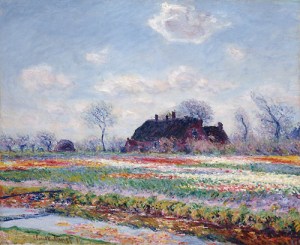





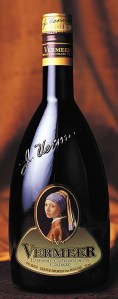
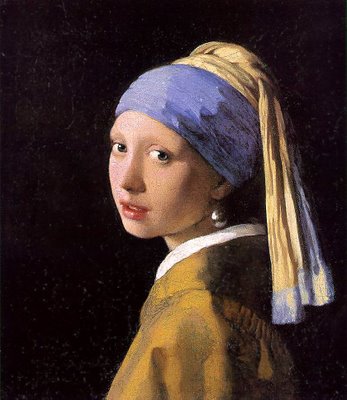
 It was this book that first sparked curiosity in me about Vermeer and his works. Tracy Chevalier has done a superb job in creating out of her imagination the story behind the girl with the pearl earring, within the realistic social and historical contexts. She has brought to the surface layers of possible subtexts hidden in this seemingly simple portrait.















 Ripple Effects