Spring Cleaning

A Purification

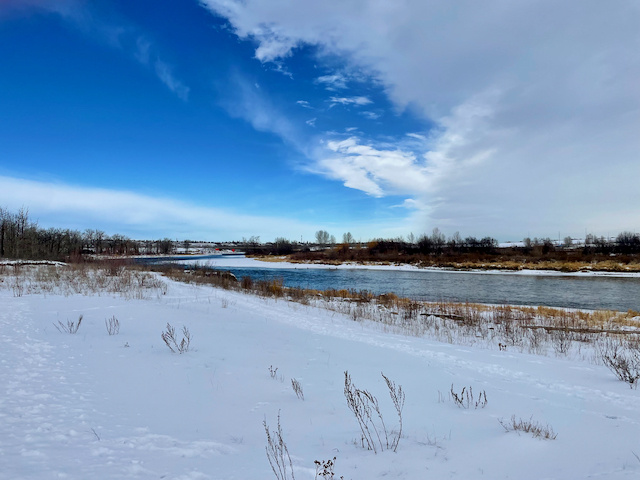
At start of spring I open a trench
in the ground. I put into it
the winter’s accumulation of paper,
pages I do not want to read
again, useless words, fragments,
errors. And I put into it
the contents of the outhouse:
light of the sun, growth of the ground,
finished with one of their journeys.
To the sky, to the wind, then,
and to the faithful trees, I confess
my sins: that I have not been happy
enough, considering my good luck;
have listened to too much noise,
have been inattentive to wonders,
have lusted after praise.
And then upon the gathered refuse
of mind and body, I close the trench,
folding shut again the dark,
the deathless earth. Beneath that seal
the old escapes into the new.

–– Wendell Berry

Women Direct Films 2022

Director Jane Campion and cinematographer Ari Wegner on the set of
The Power of the Dog (Source: Netflix)

Last year on this day, March 8, I listed films directed by women in recent years. A month later, Chloe Zhao became the second woman in the 93 year history of the Oscars to win Best Director with Nomadland. And this year, in the upcoming 94th Academy Awards on March 27, two of the ten Best Picture nominees are directed by women, Jane Campion’s The Power of the Dog and Sian Heder’s CODA.

This may look bright and hopefully the trend will hold. After all, women first directed films in 1896! I wrote about that in my March 8 post last year. However, the latest data aren’t that promising. According to the Celluloid Ceiling Report (Figure 2) published in January 2022, the percentage of women directors working on the top 100 films decreased from a record high of 16% in 2020 to 12% in 2021.

For this March 8, 2022, here’s a new list of some upcoming movies directed by women. There are, needless to say, many more women working behind the scenes as film editors, script writers, cinematographers, production designers, sound professionals, costume and makeup artists, composers, casting directors, producers… all striving to break through the celluloid ceiling.

________

Aline directed by Valérie Lemercier, a fictionalized biopic of Céline Dion.

Where the Crawdads Sing directed by Olivia Newman, adaptation of the popular novel by Delia Owens.

Hallelujah: Leonard Cohen, A Dream, A Song a documentary co-directed by Dayna Goldfine

She Said ­­directed by Maria Schrader, based on the book that chronicles the fall of Harvey Weinstein and the rise of a movement. Carey Mulligan and Zoe Kazan star.

Barbie directed by Greta Gerwig, the cast that brings a doll to life includes Margot Robbie, Ryan Gosling, America Ferrera, Simu Liu.

Turning Red directed by Domee Shi, whose animated short Bao won her an Oscar in 2019. Sandra Oh, Billie Eilish and Finneas O’Connell lend their voice and talents.

Don’t Worry Darling directed by Olivia Wilde, who has been called ‘a modern-day renaissance woman’. Attractive cast includes Florence Pugh, Harry Styles, Chris Pine, Gemma Chan.

I Wanna Dance With Somebody directed by Kasi Lemmons, acclaimed director of Harriet (2019) turns her attention to depict the life of Whitney Houston.

The Stars at Noon directed by Claire Denis, who just won the Silver Berlin Bear for Best Director at Berlinale 2022. Adaptation of the 1986 novel by Denis Johnson.

Catherine, Called Birdy directed by Lena Dunham, based on the children’s novel by Karen Cushman, on the adventures of a 14 year-old girl in medieval England.

The Mother directed by Niki Caro, who has helmed an interesting variety of works like Mulan (2020), The Zookeeper’s Wife (2017), Whale Rider (2002). An action thriller, The Mother stars Jennifer Lopez and Joseph Fiennes.

Lady Chatterley’s Lover directed by Laure de Clermont-Tonnerre, adaptation of D. H. Lawrence’s classic novel.

Persuasion directed by Carrie Cracknell. Another Jane Austen classic to be transposed onto screen coming out this year.

Rosaline directed by Karen Maine. A comedic take on Romeo and Juliet from the POV of Rosaline Capulet, Juliet’s cousin and Romeo’s first love.

***

Waiting for Spring

Waiting for Spring

Though cloudy skies, and northern blasts,
Retard the gentle spring awhile;
The sun will conqu’ror prove at last,
And nature wear a vernal smile.

The promise, which from age to age,
Has brought the changing seasons round;
Again shall calm the winter’s rage,
Perfume the air, and paint the ground.

The virtue of that first command,
I know still does, and will prevail;
That while the earth itself shall stand,
The spring and summer shall not fail.

Such changes are for us decreed;
Believers have their winters too;
But spring shall certainly succeed,
And all their former life renew.

Winter and spring have each their use,
And each, in turn, his people know;
One kills the weeds their hearts produce,
The other makes their graces grow.

Though like dead trees awhile they seem,
Yet having life within their root,
The welcome spring’s reviving beam
Draws forth their blossoms, leaves, and fruit.

But if the tree indeed be dead,
It feels no change, though spring return,
Its leafless naked, barren head,
Proclaims it only fit to burn.

Dear Lord, afford our souls a spring,
Thou know’st our winter has been long;
Shine forth, and warm our hearts to sing,
And thy rich grace shall be our song.

–––– John Newton

Hamaguchi takes ‘Drive My Car’ to the highway of life

Among the ten Best Picture Oscar nominees this year, one is Japan’s official entry for Best International Feature Film. That Drive My Car is nominated also in the Best Picture category as well as in Directing and Adapted Screenplay is a major boost for director Ryûsuke Hamaguchi. The most recent precedent would be the South Korean feature Parasite in 2020.

The following is my review of Drive My Car, a screen adaptation based on Haruki Murakami’s short story. I thank Asian American Press for allowing me to repost it in full here on Ripple Effects.

___________

Ever since his five-hour epic Happy Hour garnered accolades in 2015, Japanese director Ryûsuke Hamaguchi has continued to fascinate juries in the festival circuit. During a pandemic year, he made two features, both screened to high acclaims. Wheel of Fortune and Fantasy won the 2021 Silver Berlin Bear Jury Prize and Drive My Car swept Cannes, winning Best Screenplay, the FIPRESCI Prize and the Prize of the Ecumenical Jury.

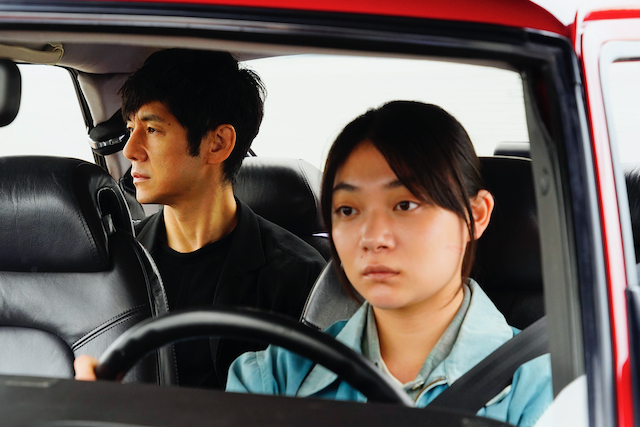
Hidetoshi Nishijima and Toko Miura in “Drive My Car”

Drive My Car is Hamaguchi’s creative and imaginative extension of Haruki Murakami’s minimal short story included in his collection Men Without Women. Two individuals unlikely to meet in ordinary circumstances, bare their soul to each other, one a stage actor and director Kafuku (Hidetoshi Nishijima), the other, a young female driver Misaki (Tôko Miura). The conversations that take place in the car prompt them to confront their own past.

The film opens with a long backstory. Kafuku has a loving and intimate relationship with his wife Oto (Reika Kirishima), a TV writer. Her story ideas come while the couple is making love. Both being in the arts, they support each other in an intimate way until one day Kafuku comes home unexpectedly and finds Oto in bed with another man. Kafuku walks back out quietly. The next day, Oto suggests they talk that night when he returns from work. Deeply hurt but fear for the collapse of their marriage, he delays coming home. When he finally gets home late that night he finds Oto has collapsed from a cerebral hemorrhage. She dies later without regaining consciousness. 

This prologue takes 40 minutes and that’s when the introductory credits appear on screen. Hamaguchi will take another two hours and more to tell the rest of his story which begins two years after Oto’s death. Despite the three-hour duration, the film captivates with thought provoking parallels between art and life and reveals the characters’ existential anguish with a quiet poignancy. 

Kafuku loves to drive his fire red Saab 900. He practices his lines while driving by interacting with dialogues recorded by his late wife Oto. As this main section of the movie begins, Kafuku is driving to Hiroshima to direct Anthon Chekhov’s Uncle Vanya at a theatre festival. However, upon arrival, he is disappointed to learn that due to insurance stipulations, he is not allowed to drive but the festival has provided him with a driver to drive his car. She is twenty-three year old Misaki (Toko Miura). 

The audition soon takes place. Kafuku has chosen actors from various Asian countries who deliver their lines in their native language including Korean, Mandarin, Japanese, Tagalog, and Korean sign language used in a most poignant way by a deaf actress. With such a cast, this performance of Uncle Vanya will be a powerful display of shared humanity.

Coming to the audition is Takatsuki (Masaki Okada). Kafuku recognizes him right away as the man he had seen making love to his wife in his home. To Takatsuki’s surprise, Kafuku casts him in the lead role. The two start to have talks with each other outside of the rehearsal, the subject they share: Oto.  

The parallel between the lines in Uncle Vanya Kafuku practices in the car and his real-life predicament is startling, and poignantly so. If he had returned home earlier that fateful night he might have been able to save Oto. Seized with guilt and grief, he recites the lines, ‘I am forty-seven years old. I may live to sixty; I still have thirteen years before me; an eternity! How shall I be able to endure life for thirteen years? What shall I do? How can I fill them? … If only I could live the rest of my life in some new way!’

A play within a film and lines corresponding to the real-life situation of the character is an intriguing way to tell a story. The mirroring effect can be emotionally gripping. Olivier Assayas’s Clouds of Sils Maria (2014) comes to mind. As Maria Enders (Juliette Binoche) practices the lines of the play she’s going to perform with the help of her assistant Valentine (Kristen Stewart), she is actually describing her own predicament. 

Reticent and appearing nonchalant, driver Misaki has a scarred childhood. Hearing the lines spoken in the car and as Kafuku talks about his guilt and loss, she too opens up. Two characters with a shattered past is thrown into each other’s internal turmoil, thus begins the healing of wounds and a step towards recovery. The aerial shot of the red Saab smoothly moving on the highway could well be a metaphor for the tranquility and freedom both occupants are seeking desperately.

A twist in the plot makes Takatsuki unable to perform in the play. Kafuku takes up the role as Vanya, a miserable man despondent with life. In a cathartic, final scene of the play, the lines are delivered in silence as the deaf actress playing Sonya encourages Vanya with her expressive sign language. The audience in the theatre, close up on Misaki, read the subtitles above the stage: ‘We must live our lives. Yes, we shall live, Uncle Vanya. We’ll patiently endure the trials that fate sends our way…’ As she finishes her speech pointing to eternal rest when they see God, the stage lights dim, with an oil lamp offering a tiny flicker of flame.

The last few minutes of the epilogue wraps the feature with a gratifying end.

____________

~ ~ ~ 1/2 Ripples

‘The Power of the Dog’: Exquisite Cinematic Storytelling

From the very beginning as the opening credits appear, the premise of the story is laid out for the viewers. This is a crucial introduction as it sets the stage for what the story is about, how a son would do all he could to save his mother from suffering. The narrator is Peter (Kodi Smit-McPhee) via a voiceover: 

“When my father passed, I wanted nothing more than my mother’s happiness. For what kind of a man would I be if I did not help my mother? If I did not save her?’

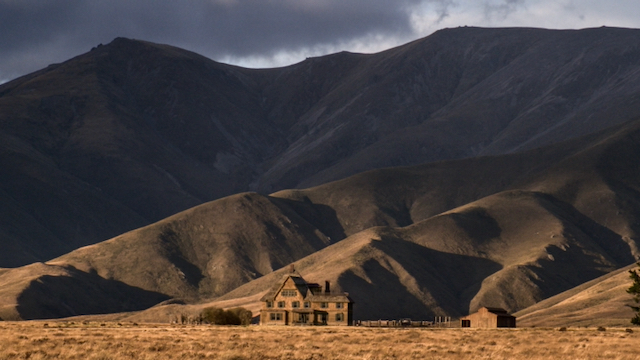
It is Montana in 1925. Peter’s mother Rose (Kirsten Dunst) runs The Red Mill restaurant and lodge in the remote landscape of the wild. One day a group of cowhands driving their cattle passes by. While dining at the restaurant, their leader, rancher Phil Burbank (Benedict Cumberbatch), picks on the effeminate Peter as he serves them. Rose is distraught, but the kindness and love of Phil’s brother George (Jesse Plemons) wins her over. Not long after that the two are married. The downside of an otherwise beautiful relationship is having to live under the same roof with Phil in the Burbank family ranch home. 

The Burbank family ranch in The Power of the Dog. Photo: Kirsty Griffin/Netflix

Rose lives in fear of Phil, a bully who can crush her fragile psyche by just whistling. Phil’s masterful banjo playing is a slap in the face and a show of force as Rose struggles to learn to play the piano. George while loving is oblivious or rather subdued by Phil as well. Peter has gone away to study medicine but is back in the summer to be with his mother, observing keenly her deteriorating psychological state and addiction to alcohol for relief. The relevance of the opening lines in the voiceover begins to brew. 

New Zealand born director Jane Campion, one of only seven women ever to have been nominated for an Oscar in directing (The Piano, 1993), comes back with an exquisite production shot on location in New Zealand, twelve years after her last feature film. The Power of the Dog is an exemplar of superb cinematic storytelling.

Campion has an exceptional team under her helm. The four main characters are strong talents. Cumberbatch’s nasty streak is conveyed not only by his demeaning words but his posture and the confident way he walks and rides. However, nothing pierces as sharply as his often silent and chilly manner, staring his opponent down with his ominous gaze, a role that’s against type for the British actor who had brought Sherlock to a new generation and had since been nominated for an Oscar playing WWII math genius Alan Turing in The Imitation Game (2014). Cumberbatch’s performance here is in top form, likely getting him another Oscar nomination.

It is Smit-McPhee who steals the scene as the effeminate, slim and pale Peter. Underneath his appearance of weakness is his tenacity and a smart mind, especially when his self-imposed mission is to save his mother. Discovering accidentally Phil’s secret hideout, Peter comes to realize that hidden behind Phil’s macho front is a gay man. Knowing this, he gains Phil’s trust and admiration to turn the tables on him. The whole revealing of the plot flows out seamlessly; no doubt, credits also to the author of the 1967 novel the film is based on, Thomas Savage.

Campion’s storytelling is masterful in that she drops hint after hint as the film moves on, all important cues leading to the ultimate end. Without spilling any spoilers in this review, look out for these scenes: cows dead from anthrax, Peter’s anatomy exercise in his room, his exploring the mountains by himself and skinning the hide of a dead cow he comes across there, his gloved hands.

Cinematographer Ari Wegner frames her shots exquisitely and imbues them with contextual meaning to move the story along. The topography of the New Zealand location in place of Montana’s wild west exudes the beauty of the natural landscape, creating a colour palette of the open range with shades of brown, teal, and dusty rose for Dunst, at times capturing the natural light of the golden hour; Terrence Malick’s Days of Heaven comes to mind. From her camera, the interior set design of the ranch home and the barn are framed with superb aesthetics.

The score composed by Jonny Greenwood (Phantom Thread, 2017) augments the suspenseful mood, particularly effective is the dissonance of the strings, revealing the discords among the characters and their internal strife.

A Western only in its setting, with no shootouts but no less intense, characterization astute, conflicts psychological. The finale leaves a slight, nuanced smile on the face of the victor. He can now ride off into the sunset with relief as the Bible verse the title comes from, Ps. 22:20, is fulfilled: ‘deliver me from the sword, my precious life from the power of the dog.’ A new chapter begins for Rose and George as they step back into the ranch home as a free and happy couple.

~ ~ ~ ~ Ripples

___________________

The Power of the Dog is now streaming on Netflix.

The Lost Daughter: From Book to Screen

Elena Ferrante’s book The Lost Daughter (2006) is a harsh look at motherhood, shattering the romantic view associated with the word like maternal love and sacrificial nurturing. The protagonist Leda is torn between the demanding duties of caring for two young daughters and her own academic career. Overwhelmed and feeling suffocated, she abandons her children Bianca and Martha, 7 and 5, for three years.

Years later, Leda has become a successful academic and divorced. Her two daughters are now grown up and living with their father in Toronto. While taking a working holiday at the Ionian seaside, a boisterous family disrupts her peace and solitude on the beach. Though annoyed by their rowdy interruption, she’s drawn to a young mother, Nina, who has to constantly attend to a clingy three-year-old daughter Elena. Memories gush out from her own experience as a young mother, and with that, guilt. However, her guilt may not be so much about her abandonment of her daughters but that she “felt amazing without them.”

For a short while on the beach, Elena is lost. Nina and all the family are frantic in search of her. Leda finds her and brings her back to the fold. Just as she does this good deed, she hides a doll that Elena is attached to dearly. The family is now frantic in finding the lost doll as Elena is inconsolable. She later admits to Nina that “I’m an unnatural mother.” Is that enough to excuse herself?

While Ferrante doesn’t offer a psycho-analytical explanation, she does drop hints as to Leda’s own family background in Naples, her father coming from violent and vulgar association. Her mother had threatened abandonment verbally to her children but never did. To Leda, her mother was better off escaping and disappeared. “How ashamed I was to have come out of the belly of such an unhappy person,” she laments. 

Leda left her family at eighteen to go to Florence for more cultured and academic pursuit, determined to sever an undesirable family tie. While the little girl Elena is lost for a short while on the beach, Leda herself could well be the lost daughter that had never been found.

___________________

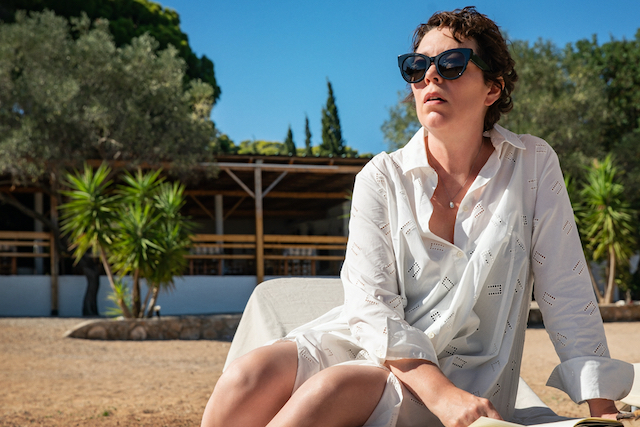
Olivia Colman as Leda in The Lost Daughter directed by Maggie Gyllenhaal

The Lost Daughter movie adaptation is Maggie Gyllenhaal’s directorial debut. She has a strong cast, notably Olivia Colman (The Favourite, The Crown) as Leda. Colman slips into the character perfectly and gives a natural and nuanced performance. Jessie Buckley as young Leda is another appropriate choice. The talented singer actor plays an exhausted mother convincingly. While away from her daughters and husband at a conference, she has an affair with a prominent academic, Professor Hardy, played by Gyllenhaal’s husband Peter Sarsgaard, whose performance carries traces of another role he’d played years ago as the smooth seducer David in Carey Mulligan’s breakout feature An Education (2009).

Other supporting cast is also strong with Dakota Johnson as Nina and Ed Harris as Lyle the seaside rental caretaker. It’s interesting to see his short interactions with Leda reveal Leda’s unreliable perception of others. Paul Mescal plays Will who works at the beach, reprising an understated performance as in Normal People (2020, TV series), adaptation of Sally Rooney’s novel.

Gyllenhaal has mastered the story idea aptly, developing the screenplay like a character study which it ought to be. The effect of a handheld roving camera adds immediacy and suspense as we follow Leda in her short but eventful seaside vacation. Patricia Highsmith comes to mind. Gyllenhaal has altered the Neapolitan protagonist and the rowdy family into American, Leda from Cambridge near Boston, and the disruptive family as American tourists.

The present is interspersed with flashbacks seamlessly to depict Leda’s early years as a young mother torn between the constant demands of child-caring and her personal needs and ambition. Professor Hardy during his lecture in the conference mentions a quote by Simone Weil: “Attention is the rarest and purest form of generosity.” At the time, to a young and rising academic, the relevance had not sunk in for Leda.

Overall a stirring screen adaptation with superb performance. However, one crucial element in the book has been left out and just replaced with a few dialogues and that’s Leda’s own family background and a mother who had always wanted to abandon her children. The lack of a more solid backstory about Leda’s own upbringing stirs up questions as to her present behaviour. Of course, as a two-hour movie, Gyllenhaal has the difficult task of choosing what to leave out from the book. The missed component of Leda’s own lack of maternal attention while growing up could have stripped off a deeper layer in the storytelling.

The ending is reaffirming. It’s good to know that Leda’s two daughters are forgiving young women, as they care for their mother and check up on her via long distance while she’s by herself on a seaside vacation in Greece. It’s good to see too that ‘bad mothering’ doesn’t need to perpetuate. 

~ ~ ~ Ripples

The Lost Daughter is now streaming on Netflix.

***

Top Ripples 2021

December 2021 was a hectic month, thus the delay of this year-end wrap up. 2021 was another unusual year. No in-person at a theatre to watch movies, but there were several excellent titles. Glad I could watch them online. As for books, I surprised myself as I counted over 50 books from my list on Goodreads, albeit I admit, many of them are audiobooks.

Here are the Top Ripples of my 2021. Links are to my reviews.

MOVIES

Carey Mulligan and Ralph Fiennes in The Dig, based on an historic event in Suffolk, England, 1939.

The Dig – I’d left this one out on my last list by (a huge) mistake, now corrected. This is one of the best movies I’ve watched during the pandemic. Carey Mulligan and Ralph Fiennes in their unusual roles based on a true, historic event. Beautifully shot.

Passing – Both book and movie adaptation are very well done.

Nomadland – Oscar 2021 Best Picture, Director and Actress. Both book and film are inspiring.

Minari – Autobiographical pic of Korean American director Lee Isaac Chung. Yuh-Jung Youn won the Oscar Best Actress in a Supporting Role for playing the eccentric grandma.

The Father – Anthony Hopkins nails it as the father afflicted with dementia and deservedly won his second Oscar at 84, the oldest Acting Oscar winner.

Promising Young Woman – Excellent Oscar winning screenplay by debut director Emerald Fennell. But it’s Carey Mulligan’s performance that speaks most poignantly for promising young women.

Drive My Car – Japanese director Ryûsuke Hamaguchi has created a play within a play while adapting a short story by Haruki Murakami. How ingenious is that? Japan’s official entry to the coming 94th Academy Awards. (Link to my review on Asian American Press)

BOOKS

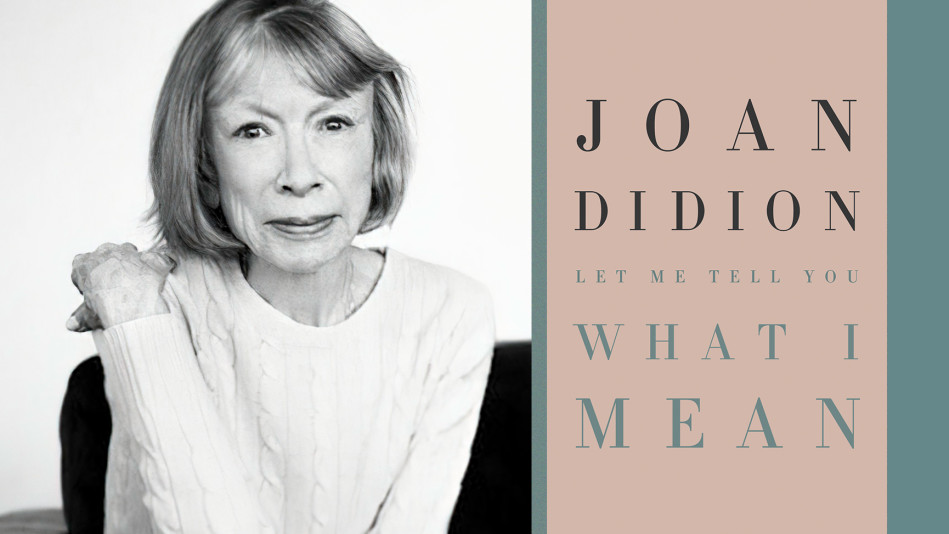
Joan Didion, Dec. 5, 1934 – Dec. 23, 2021.

The Brothers Karamazov by Fyodor Dostoevsky

Let Me Tell You What I Mean by Joan Didion

The Education of an Idealist: a Memoir by Samantha Power

Station Eleven by Emily St. John Mandel

Passing by Nella Larsen

Brat: an 80’s Story by Andrew McCarthy

The Lost Daughter by Elena Ferrante

Kant’s Little Prussian Head and Other Reasons Why I Write by Claire Messud

***

Books to Screen in 2022

What to read and watch in this new year? Here’s a list of movie adaptations, some just announced, some in development and some filming. If Omicron doesn’t have its way and productions can continue, we’ll likely see them come out this year. Of course, things are as fluid as ever, but the books are always there for us to explore.

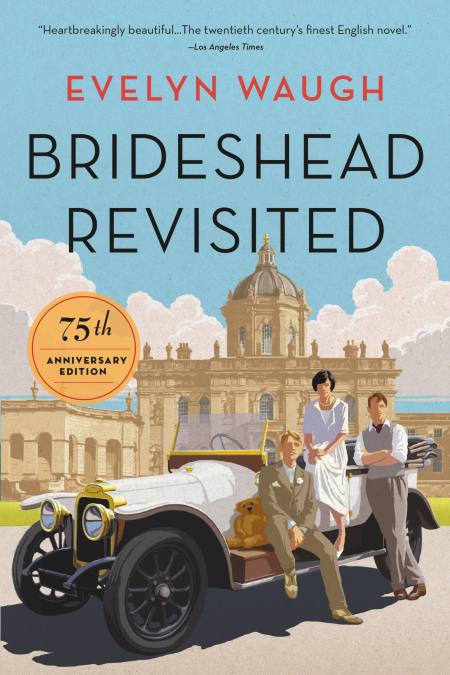
Brideshead Revisited by Evelyn Waugh

To be directed by Luca Guadagnino (Call Me by Your Name, 2017) with a star-studded cast including Andrew Garfield, Cate Blanchett, Ralph Fiennes, Joe Alwyn and Rooney Mara. Although the 2008 rendition is a fine one, I welcome a fresh take. Andrew Garfield has proven to be highly versatile, would make an effective Charles Ryder. I’m eager to see Cate Blanchett as Lady Marchmain, and Ralph Fiennes would likely deliver lots of drama, especially under the helm of Guadagnino.

The Cactus by Sarah Haywood

Published in Jan 2018, selected as Reese’s Book Club pick in June 2019, the adaptation will likely star Reese Witherspoon as the protagonist Susan Green, who is unexpectedly pregnant at 45. Currently a feature film in development by Netflix. The short phrases on the cover make an effective blurb: ‘It’s never too late to bloom,’ and this one: ‘Even the prickliest cactus has its flower.’

Conversations with Friends by Sally Rooney

With every book she published, Irish author Rooney is shot to a higher plane. Conversations with Friends is her debut novel, followed by the acclaimed Normal People, which already has an impressive screen adaptation. Beautiful World, Where Are You is her notable latest whose film rights will likely be snatched up soon I presume. Conversations with Friends is a simpler and more quiet novel, not less entangled with human relationships, with two young people grappling with love and life. Coming out this year as a series on Hulu.

Crying in H Mart by Michelle Zauner

The film rights of this wildly popular, food-rich memoir of Zauner growing up Korean American has been sold to MGM’s Orion Pictures. Zauner will be adapting her book to the screen, chronicling her growing up as a mixed race gal in Oregon, and how her relationship with her cancer stricken mother has led her to discover her Asian root. Zauner will also provide the soundtrack for the feature with her own indie music band Japanese Breakfast.

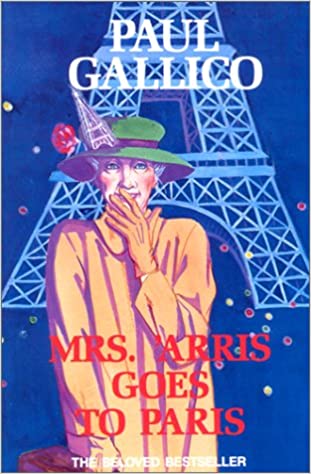
Mrs. Harris Goes to Paris by Paul Gallico

Several of Paul Gallico’s stories had been adapted onto screen, on top of his own screenwriting work. This one sounds cheery, just right for an uncertain new year. Mrs. Harris, a London charlady, discovers Dior when tidying the fancy wardrobe of one of her clients, Lady Dant. Paris becomes her dream and goal. When finally she has saved enough to head over to the House of Dior in Paris, she finds a new world and adventure awaits her. Delightful, isn’t it? What’s more enticing is the cast, two ladies, Leslie Manville and Isabel Huppert.

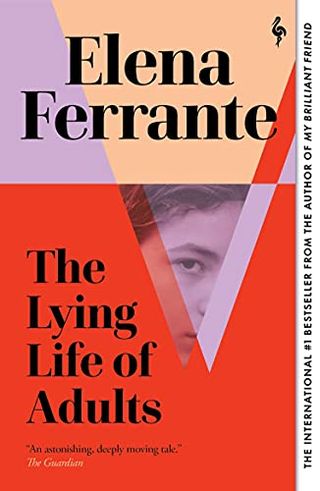
The Lying Life of Adults by Elena Ferrante

This will be the second adaptation of Ferrante’s works, after The Lost Daughter (my Ripple review coming soon.) Another Netflix development, The Lying Life will be a series to be shot in Naples. Giovanna is a young woman growing up in Neapolitan society struggling to navigate the adult world and seeking for what’s real. The series will be in Italian, but just like Ferrante’s books, the appeal and relevance will be international.

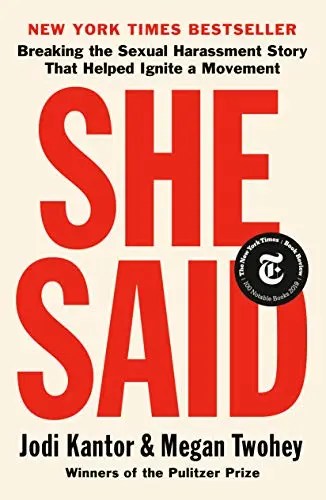
She Said by Jodi Kantor & Megan Twohey

Subtitled: Breaking the Sexual Harassment Story That Helped Ignite a Movement. NYT journalists Kantor and Twohey were winners of the 2018 Pulitzer Prize in Public Service for their work in exposing the Hollywood mogul Harvey Weinstein’s longtime sexual misconduct, incendiary journalism that led to the #MeToo Movement. Screen adaptation directed by Maria Schrader; Carey Mulligan plays Twohey, Zoe Kazan as Kantor, Patricia Clarkson, editor Rebecca Corbett. Mulligan is an ideal cast on the heels of her impressive Oscar nominated role in Promising Young Woman.

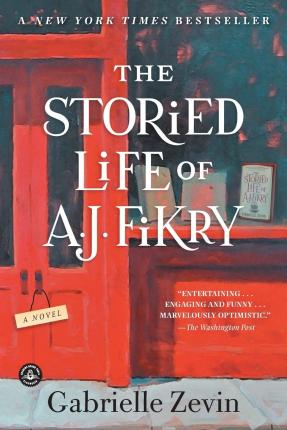
The Storied Life of A.J. Fikry by Gabrielle Zevin

A. J. Fikry is a bookseller whose personal life is just as disappointing as the sales of his books. While there are people around him who are steadfast in their support for him, it’s an unexpected package, a baby, outside his door one fateful day that turns his life around and gives him a new view of things. A booklovers’ story. Screenplay written by the author Zevin, directed by Hans Canosa.

Women Talking by Miriam Toews

Reviewed on the NYT as a Mennonite #MeToo novel, this time the Mennonite community Canadian author Toews writes about is fictional, and the horrors the girls and women experience therein make this a crime thriller. But Toews apparently intends more than just to shock. Deeper issues such as collective guilt, the existence of evil, and forgiveness are explored. Movie adaptation directed by the acclaimed Sarah Polley (Oscar nom Adapted Screenplay for Away From Her), great cast with Frances McDormand, Jessie Buckley, Claire Foy, Ben Whishaw, Rooney Mara.


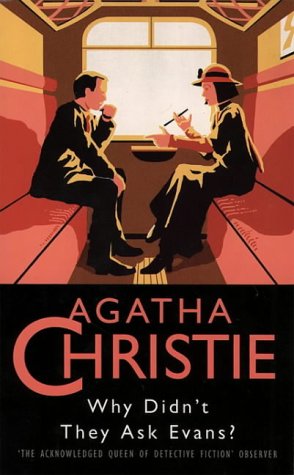
Why Didn’t They Ask Evans by Agatha Christie

This Christie mystery without Hercule Poirot but featuring two amateur sleuths was a beloved novel of British actor Hugh Laurie (Dr. House) back in his youth. He’ll write and direct the 3-part adaptation. Christie’s book, published in 1934, tells the story of two friends while looking for a golf ball discover a dying man whose last words––the eponymous title of the book––lead them to the investigation of the mystery. Laurie fans would be glad to actually see him in a role as Dr. Nicholson.

Oh little light… whispering hope

Two of my favourite songs, one for the Season, one for always. May your Christmas be a little light that shineth and a spark of hope.

Oh little town of Bethlehem, how still we see thee lie
Above thy deep and dreamless sleep the silent stars go by
Yet in thy dark streets shineth, the everlasting light
The hopes and fears of all the years are met in thee tonight.

+++

Whispering hope
Oh, how welcome Thy voice
Making my heart
In its sorrow rejoice

+++

Merry Christmas!

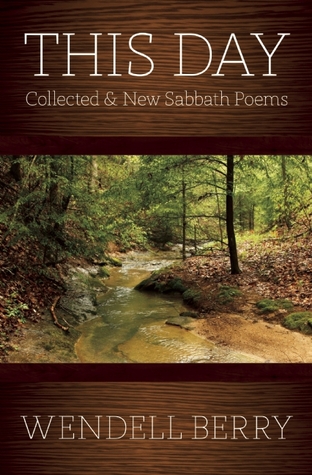
Reading the Season: Sabbath Poems by Wendell Berry

Wendell Berry’s Sabbath poems are an apt respite for our busy Christmas Season. A lover of nature––yet not a pantheist––his belief is specific, the Creator behind all that he can see and hear when he goes out to take long walks or work on his farm. However, his poetic imagination can deftly ripple out from the specific to the universal.

The following poems are selected from This Day: Collected and New Sabbath Poems, 1979-2013, all relating to Christmas and striking a deeper resonance as they end.

+++


Remembering that it happened once,
We cannot turn away the thought,
As we go out, cold, to our barns
Toward the long night’s end, that we
Ourselves are living in the world
It happened in when it first happened,
That we ourselves, opening a stall
(A latch thrown open countless times
Before), might find them breathing there,
Foreknown: the Child bedded in straw,
The mother kneeling over Him,
The husband standing in belief
He scarcely can believe, in light
That lights them from no source we see,
An April morning’s light, the air
Around them joyful as a choir.
We stand with one hand on the door,
Looking into another world
That is this world, the pale daylight
Coming just as before, our chores
To do, the cattle all awake,
Our own white frozen breath hanging
In front of us; and we are here
As we have never been before,
Sighted as not before, our place
Holy, although we knew it not.

+++

Born by our birth
Here on the earth
Our flesh to wear
Our death to bear

Our Christmas tree is
not electrified, is not
covered with little lights
calling attention to themselves
(we have had enough
of little lights calling attention
to themselves). Our tree
is a cedar cut here, one
of the fragrances of our place,
hung with painted cones
and paper stars folded
long ago to praise our tree,
Christ come into the world.

+++

The incarnate Word is with us,
is still speaking, is present
always, yet leaves no sign
but everything that is.

_______________

‘Reading The Season’ over a decade:

2020: Jack by Marilynne Robinson

2019: ‘A Hidden Life’ – A Film for the Season

2018: A Verse from Madeleine L’Engle’s The Irrational Season

2017: A Wrinkle in Time by Madeleine L’Engle

2016: Silence by Shusaku Endo

2015: The Book of Ruth

2014: Lila by Marilynne Robinson

2013: Poetry by Madeleine L’Engle

2012: Surprised by Joy by C. S. Lewis

2011: Walking on Water by Madeleine L’Engle 

2010: A Widening Light by Luci Shaw

2009: The Irrational Season by Madeleine L’Engle

2008: The Bible and the New York Times by Fleming Rutledge 

2008: A Grief Observed by C. S. Lewis

‘Breakfast at Tiffany’s’: from Novella to Screen

Truman Capote’s novella was published in 1958. The setting is 1940’s New York City. Social currents have flowed by, and reading the book now in 2021 makes it interesting to compare back to the era when Capote wrote. Some might feel the currents fast changing, some would lament at the slow pace when women and people from a different cultural background still strive for equal standing in our society today.

WWII is the background and Capote’s handling of a Japanese character is relatively gracious, for he never uses negative descriptions about his appearance; Mr. Yunioshi only shouts when irritated.

While the novella reflects the social culture and values of the time, what’s seemingly timeless is the iconic character, Holly Golightly, a café society gal of just around nineteen who has left indelible marks in the hearts of many men. Holly is a tough gal in a man’s world, and shows she has the iron will of doing things on her own terms; although sadly, she depends on men for her livelihood.

The unnamed narrator of the novella probably knows Holly best among all her numerous society acquaintances. He is a writer and her upstairs neighbour in the NYC East Seventies brownstone. The gal is a walking contradiction. He’s intrigued at first, in love––albeit unrequitedly––towards the end. Here’s how Capote describes his enigmatic yet mesmerizing protagonist Holly Golightly:

She was a triumph over ugliness, so often more beguiling than real beauty, if only because it contains paradox… the trick had been worked by exaggerating defects; she’d made them ornamental by admitting them boldly. Heels that emphasized her height, so steep her ankles trembled; a flat tight bodice that indicated she could go to a beach in bathing trunks; hair that was pulled straight back, accentuating the spareness, the starvation of her fashion-model face. Even the stutter, certainly genuine but still a bit laid on, had been turned to advantage. It was the master stroke, that stutter; for it contrived to make her banalities sound somehow original, and secondly, despite her tallness, her assurance, it served to inspire in male listeners a protective feeling. (44)

But it’s not merely her appearance that pulls at the heartstrings of the narrator’s, it’s what’s hidden. She’d clam up just the moment when you think she’s ready for ‘volunteering intimate information’. She doesn’t know what she wants, “when I find out you’ll be the first to know.” She avoids the zoo, ‘couldn’t bear to see anything in a cage,’ yet she’s always looking for a place she can call home. Once she finds it, she’ll give her cat a name. Her card says it all: Miss Holly Golightly, Traveling.

Tolkien had famously said, ‘not all those who wander are lost.’ Here’s a case of one who wanders and is lost yet enjoys it immensely.

Is she for real, or a phony? To be exact, she’s been called a real phony… that is, she believes in her own makeover of herself. Capote reveals Holly’s past history in a poignant way. Best to savour his storytelling first hand. But Holly, whoever she is now, will remain so and go on her diverting life path. The past is exactly where she has left it. At the story’s end, the narrator reminisces with bar owner Joe Bell whom he and Holly used to patronize. Both men know Holly will continue with her ‘travelling’––this time all the way to Brazil––and lament her leaving them behind with mere elusive memories.

_______

Holly Golightly (Audrey Hepburn) looking into the window at Tiffany’s

Directed by Blake Edwards and screenplay by George Axelrod, Capote’s novella is transposed on screen in 1961 as a romantic comedy, a launching pad for a career takeoff for Audrey Hepburn as Holly Golightly. Capote’s intended female for the role was Marilyn Monroe. Apparently the filmmakers had an eye for the right one. In the movie, Hepburn is an almost exact fit corresponding to Capote’s descriptions, better yet, more mature and alluring, and the stutter replaced by witty eloquence. What more, Hepburn shows the confidence and independence Holly exudes which many thought Monroe could not have matched.

However, a casting that’s a discredit to an otherwise delightful movie is Mickey Rooney as Mr. Yunioshi, the neighbour on the top floor of the brownstone and whose bell Holly rings whenever she loses her front door key, often in the deep of night. In the book, Capote only mentions him shouting down from his top floor, but never describes his appearances. The movie makes a caricature out of Mr. Yunioshi, an offensive portrayal thick with demeaning stereotyped features and mannerism.

Film historian David Thomson refers Rooney’s performance as ‘toxically racist’, and further writes that ‘some people on that picture––the screenwriter George Axelrod, notably––fought with Blake Edwards, the director, about the characterization, but Edwards paid no heed.’ (Thomson, 402)

Notwithstanding, the movie has left audiences with some memorable moments and Hepburn had become an icon. The narrator is given a name and personality; George Peppard plays Paul with matching charm. His quiet and sensible demeanor is a sturdy support to Holly and a needed check to her unbridled exuberance. The pair save each other from their own foibles and failings, bringing the film to a happy romcom ending unlike the book.

The most memorable moment from the film is probably the tune that lingers after all these years. Henry Mancini’s ‘Moon River’ is sung longingly by Holly as she sits on the sill of the open window by the fire escape strumming a guitar. Incidentally, that was a scene at first intended to be cut out if not for Hepburn’s vigorous insistence to keep it in the movie. And we’re all glad that the strong-willed Holly Golightly had her way.

__________

Breakfast at Tiffany’s by Truman Capote, first published by Random House, NY, 1958.

David Thomson’s quote is taken from his book The Big Screen, published by Farrar, Straus, and Giroux, NY, 2012.

This wraps up Novellas in November at Ripple Effects. Once again, I thank Rebecca of Bookish Beck and Cathy of 746 Books for hosting. Do check out others’ reviews.

***

Novellas in November on Ripple Effects, from book to screen:

The Bookshop by Penelope Fitzgerald

Passing by Nella Larsen

Bunner Sisters by Edith Wharton

Breakfast at Tiffany’s by Truman Capote

Bunner Sisters by Edith Wharton

A lesser known novella by Edith Wharton, included in her book Xingu and Other Stories published in 1916. Two sisters operate a millinery shop, the eponymous Bunner Sisters, designing ladies hat in a run-down district of New York City.

A ladies hat shop in a shabby neighbourhood sounds incompatible and that’s the reality the Bunner sisters are dealing with, business barely sustaining their living with only a little left for a surprise birthday gift. Ann Eliza uses her savings to buy a new clock for younger sister Evelina’s birthday. Thus begins the turn in their lives.

Ann Eliza and Evelina remind me of Elinor and Marianne in Jane Austen’s Sense and Sensibility. The older is almost resigned to her fate but the younger constantly suppresses a bubbling, fleeing spirit yearning for fancier and more adventurous experiences. And that’s Ann Eliza’s wish for her sister as well. As the older sibling, she’s willing to give up her own bliss for Evelina’s happiness.

Well, that’s until lately, when Ann Eliza notices Mr. Herman Ramy, the clock maker who owns a dustier shop than theirs in the neighbourhood. Here’s how Wharton describe Ann Eliza’s change:

All the small daily happenings which had once sufficed to fill the hours now appeared to her in their deadly insignificance; and for the first time in her long years of drudgery she rebelled at the dullness of her life. With Evelina such fits of discontent were habitual and openly proclaimed, and Ann Eliza still excused them as one of the prerogatives of youth.

Anne Eliza finds opportunities to go to the clock shop to meet Mr. Ramy or in other places such as the market, but often comes to disappointments. There’s humour in these circumstances, her best laid plans often go awry, crashed by Evelina unknowingly. Ann Eliza always being the patient and self-sacrificing one, sees her chances slip away. As days go by, fate does seem to smile upon Evelina and leaves Ann Eliza behind.

Any more hints I’ll be spilling out spoilers, and that will crash your enjoyment. There are twists and turns. Looks like Wharton is influenced more by Henry James than Austen in leading her readers into the stark reality of being a woman at that time, and her astute revealing of her characters’ psychological states.

I’m always interested in why a filmmaker thinks a certain literary work is good movie material. Bunner Sisters is now a TV movie in development. Edith Wharton’s most well known, both book and adaptation, is probably The Age of Innocence. Bunner Sisters will be a much smaller project for sure, but still piques my curiosity. The Custom of the Country is also on the drawing board. Hope it will take off soon.

_________________

Here’s a piece of fond memory from my road trip to New England a few years ago when I visited Edith Wharton’s home The Mount. Relating to #NovNov event, I’m sharing a photo I took, Wharton’s home library:

One wall
Edith Wharton’s personal library at The Mount, photo taken by Arti, Oct. 2015

***

Bunner Sisters can be read online at Project Gutenberg. Here’s the link.

Check out what others are reading for Novellas in November hosted by Bookish Beck and Cathy746Books.