Paris in July 2025 – Delightful reads by Antoine Laurain

For Paris in July this year, I want to read an actual Parisian author writing Parisian stories. I did some digging and found Antoine Laurain. I’m late to the party, for Laurain has written more than a dozen books, which have been translated into twenty languages, an award-winning novelist whose talents are multi-faceted: author, journalist, screenwriter, film director, antique collector and dealer.

I’ve read or listened to four of Laurain’s novels in the past weeks: The Red Notebook (2014), The President’s Hat (2012), The Readers’ Room (2020), and The French Windows (2024). I still have many more to savour. These ones I’ve read are all like novellas, less than 200 pages, each unique in its storyline, very entertaining, easily accessible but not shallow. Laurain’s writing is a fusion of the literary and the popular, weaving suspense and romance, or adding a dash of magical realism as in The President’s Hat. Among these four, The Red Notebook is my favourite.
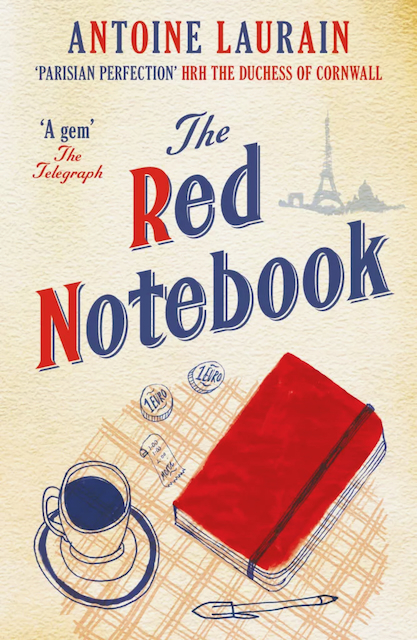
The Red Notebook by Antoine Laurain, Gallic Books (English edition), 2015,
159 pages.

Ahh… The contentment of being sought and found… and to be known.

Laurent, a bookstore owner, finds a woman’s leather handbag in good condition on top of a garbage bin on the street one morning, obviously stolen and discarded there. He takes it to the police station, but is told to wait. Doesn’t have time to spare, Laurent decides to leave it till the next day to hand it in. The mauve handbag is just too much of a lure for Laurent to keep his curiosity in check. That night at home, he opens it gingerly and explores the personal effects inside, hoping to find a name and address so he can return it to its owner.

Among the perfume, hair clip, keys, and numerous other items, there’s a red Moleskin notebook. Just too tempting, how can he not open it? The elegant and fluid handwriting records the owner’s self-reflections, her likes, her fears, her dream.

He had opened a door into the soul of the woman with the mauve bag and even though he felt what he was doing was inappropriate, he couldn’t stop himself from reading on.

It could sound creepy, but Laurain lets his readers empathize with this curious middle-age bookseller, for he is now a detective of the soul. And Laurain knows how to tell his story with humour. As he searches the bag, his girlfriend shows up, complicating matters. Later, adding zest to his quest, his daughter joins in his detective work readily and offers invaluable assistance.

Augmenting Laurent’s eagerness to find the owner of the bag himself instead of letting it go to the police is another object in the handbag, the book Accident Nocturne signed and with a line of dedication handwritten by the French author and Nobel laureate Patrick Modiano. The bookseller is overcome by a surge of passion, for Modiano is his favourite writer. Herein lies the clue to someone who shares the same mind as his. From the line of inscription, Laurent knows the first name of the owner of the bag, Laure.

While ordinary love stories might focus on a person looking for the right one to love, here in The Red Notebook, it describes the complementary side of the search as well, by revealing the one aspect which might be the most gratifying of true love: being sought and found… and to be known.

I like the idea of a man going to so much trouble to find me (no one has ever gone to so much trouble for me before)

While Laure has had men in her life before, but there has never been one who had really stepped inside her mind. Yet here is one stranger who has known and admired her inner being, and is passionate enough to go the distance to find her, and yet…

The ‘and yet…’ is purposely unwritten as I don’t want to give any spoilers. I highly recommend The Red Notebook as a light and entertaining read, one that touches that soft spot of the human heart, to be sought and found… and deeply known.

I await a filmmaker to take this up, write an English screen adaptation and set in New York City, find a perfect cast, and I’m sure it will make one marvellous rom com, or a little more serious but equally heartwarming rom dramedy.

Ah… Celine Song, would you be interested?

***
Paris in July 2025 is hosted by Words and Peace and France Book Tours
2025 is a Year of Anniversaries

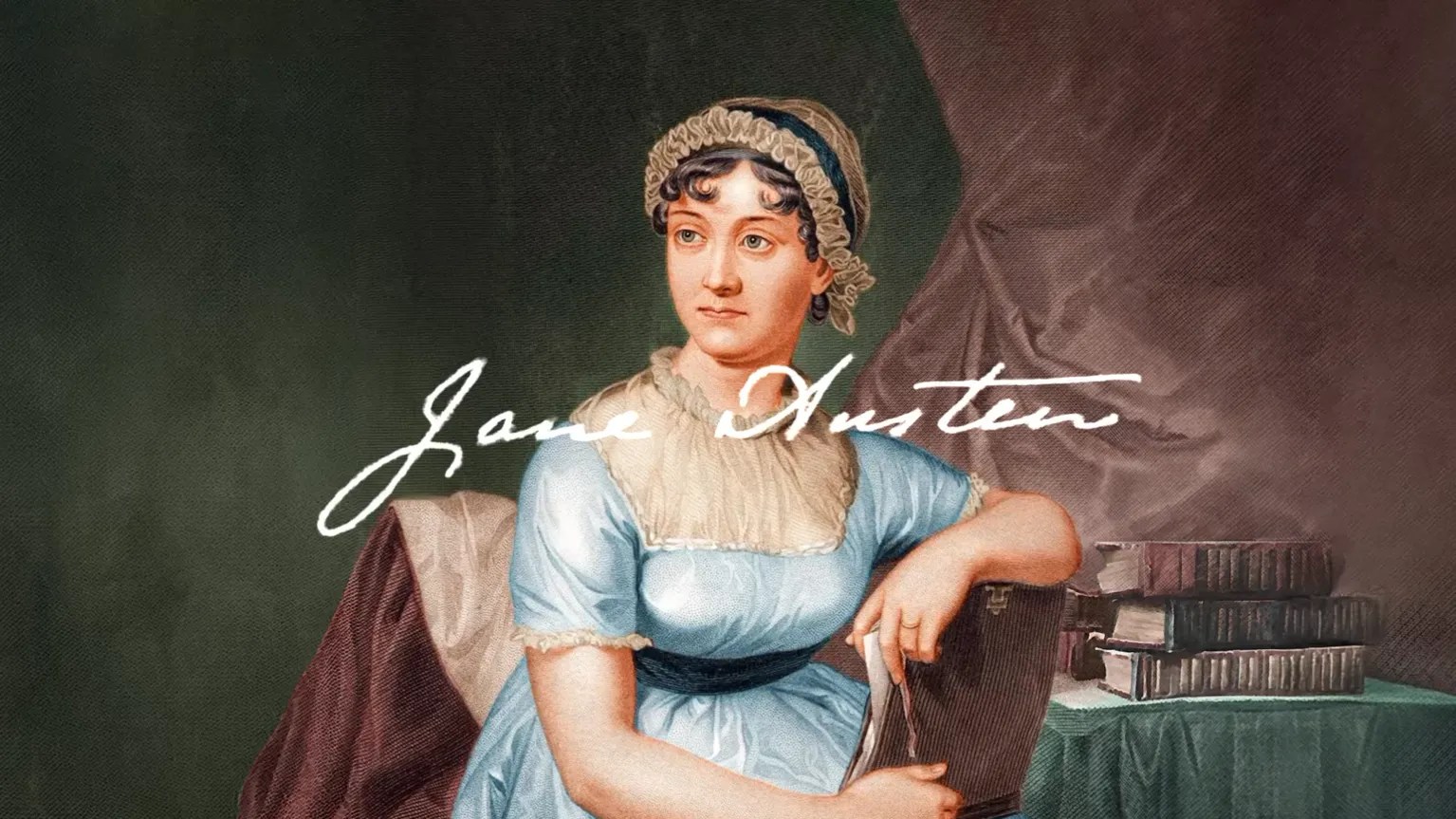
250th Birth Anniversary of Jane Austen (December 16)

It’s a great loss that Jane died so young, at 41, from a painful illness. The legacy of her six completed novels continue to thrive today. Movie adaptations are still being made, most notable is the upcoming new version of Pride and Prejudice with Emma Corrin as Lizzy, Jack Lowden as Mr. Darcy, and Olivia Colman as Mrs. Bennet. But we will never forget that iconic wet shirt scene of Colin Firth diving into the pond way back in 1995, thirty years ago.

30th Anniversary* of Jane Austen Screen Adaptations:

Pride and Prejudice Austenmania was ignited with this six-part BBC TV series. Andrew Davis’ screenplay brings Colin Firth and Jennifer Ehle together as the pivotal pair. To many, myself included, the definitive version of all the adaptations; yes, my prejudice here. 

Sense and Sensibility That same year, 1995, we saw the breakout work of Taiwanese American director Ang Lee, proving his versatility, with Emma Thompson basking in the limelight receiving her Best Adapted Screenplay Oscar.

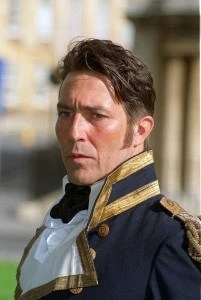
Persuasion While not as popular as Pride and Prejudice, a novel that shows a more mature writer showing her own sense of wisdom in handling love and life. Ciaran Hinds is an impressive Captain Wentworth. 

Clueless One of the first modern renditions of Austen novels. Here’s an American teenager playing Emma in her high school. What follows are numerous contemporary parallels of Austen’s works, like Bridget Jones’s Diary, and across cultures, Bride and Prejudice, From Prada to Nada. 

*Jane Austen’s House in Chawton is celebrating the 30th Anniversary of these adaptations with their own special AUSTENMANIA! events.

***

100th Anniversary of the publication of some modern classics, books and poems* Listing a few here:

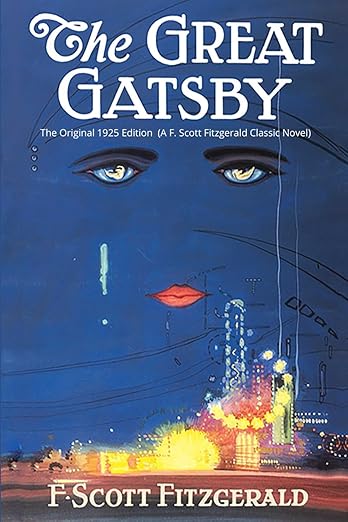
The Great Gatsby by F. Scott Fitzgerald

One of my all-time favourite books. Filmmaker Baz Luhrmann highlights all the zeitgeist of the jazz age, the wild parties, and the gaudy excess but fails to bring out the deep character of the man behind those façade, a romantic hanging on hope and seeing every obstacle as a green light. My Ripple Review here.

Mrs. Dalloway by Virginia Woolf

This is one example that the movie adaptation is as good as or even surpasses the book, for it shows more than words can tell. While I admire Woolf’s stream of consciousness, both in expression and withholding, director Steven Daldry’s multi-faceted depiction of Clarissa’s internal world projected into the psyche of two other women is exceptional. David Hare’s screenplay adapting Michael Cunningham’s The Hours is an exemplary transposition of literature onto the screen. And watching Meryl Streep, Nicole Kidman and Julianne Moore in one film is sure worth one’s ticket, or time. 

The Painted Veil by W. Somerset Maugham

Somerset Maugham is one of those writers who take you to places but still remain intact with his characters, the backdrop of foreign lands are merely that, backdrop, while the characters lead the story. I’ve seen the movie adaptation, and in my Ripple review I had written this: “Transforming great lines from a book into equally inspiring visual story-telling is an arduous task, and it’s something that mere beautiful cinematography cannot suffice.”

Carry On, Jeeves by P. G. Wodehouse

The third of Wodehouse’s 20 Jeeves and Wooster books. Jeeves is a marvellous invention, a character that reminds me of Mr. Carson of Downton Abbey. There are lots of LOL moments. He’s like a Swiss army knife, a tool of multiple usages. Wodehouse makes him more than utilitarian though. In the interactions between employer and butler, the joke always falls on the former. And that’s the fun of it. 

No More Parades by Ford Madox Ford

No More Parades is the second book in the Parade’s End tetralogy by Ford Madox Ford (1873-1939) Set in the time of WWI, where poetry was written in the trenches. In its core a love story movingly depicted in the BBC five-episode TV series (2012), one of the most understated and neglected productions. A young Benedict Cumberbatch and Rebecca Hall are the mismatched couple, but it’s the pristine Adelaide Clemens that shines as idealistic suffragette Valentine. 

The Hollow Men by T. S. Eliot

‘The Hollow Men’ is the title poem of this collection of poetry by Eliot, astute critic of his times. “We are the hollow men/we are the stuffed men/Leaning together/Headpiece filled with straw.” Alas, a look at our world today one would find how after one hundred years, Eliot’s critique of his society still stands.

*The popular ‘Year Reading Club’ on Kaggsy’s and Simon’s book blogs are featuring the 1925 Club reading event this October, where we read books published in 1925 and share our thoughts in our blogs.

***

50th Anniversary of some iconic movies:

Where were you in 1975? Watched any of these movies in the theatre?

Jaws dir. by Stephen Spielberg

One Flew Over the Cuckoo’s Nest dir. by Miles Forman

The Man Who Would be King dir. by John Houston

Monty Python and the Holy Grail dir. by Terry Gilliam and Terry Jones

Dog Day Afternoon dir. by Sidney Lumet

Barry Lyndon dir. by Stanley Kubrick

The Return of the Pink Panther dir. by Blake Edwards

Three Days of the Condor by Sydney Pollack

Farewell, My Lovely dir. by Dick Richards

Funny Lady dir. by Herbert Ross

***

Not born yet? How about 1985?

40th Anniversary of:

The Breakfast Club dir. by John Hughes

Back to the Future dir. by Robert Zemeckis

The Color Purple dir. by Stephen Spielberg

A Room with a View dir. by James Ivory

Out of Africa dir. by Sydney Pollack

The Purple Rose of Cairo dir. by Woody Allen

Vagabond dir. by Agnès Varda

Witness dir. by Peter Weir

***

Numerous posts on Jane Austen, as well as movies and books mentioned in the above lists are posted here at Ripple Effects. Seek them out using the Search feature on the top of the left sidebar.

Top Ripples 2024

A list of books and movies I’ve rated highly in 2024, not necessarily current year releases. Links are to my reviews. The last section lists several books that I bought which I must mention.

MOVIES

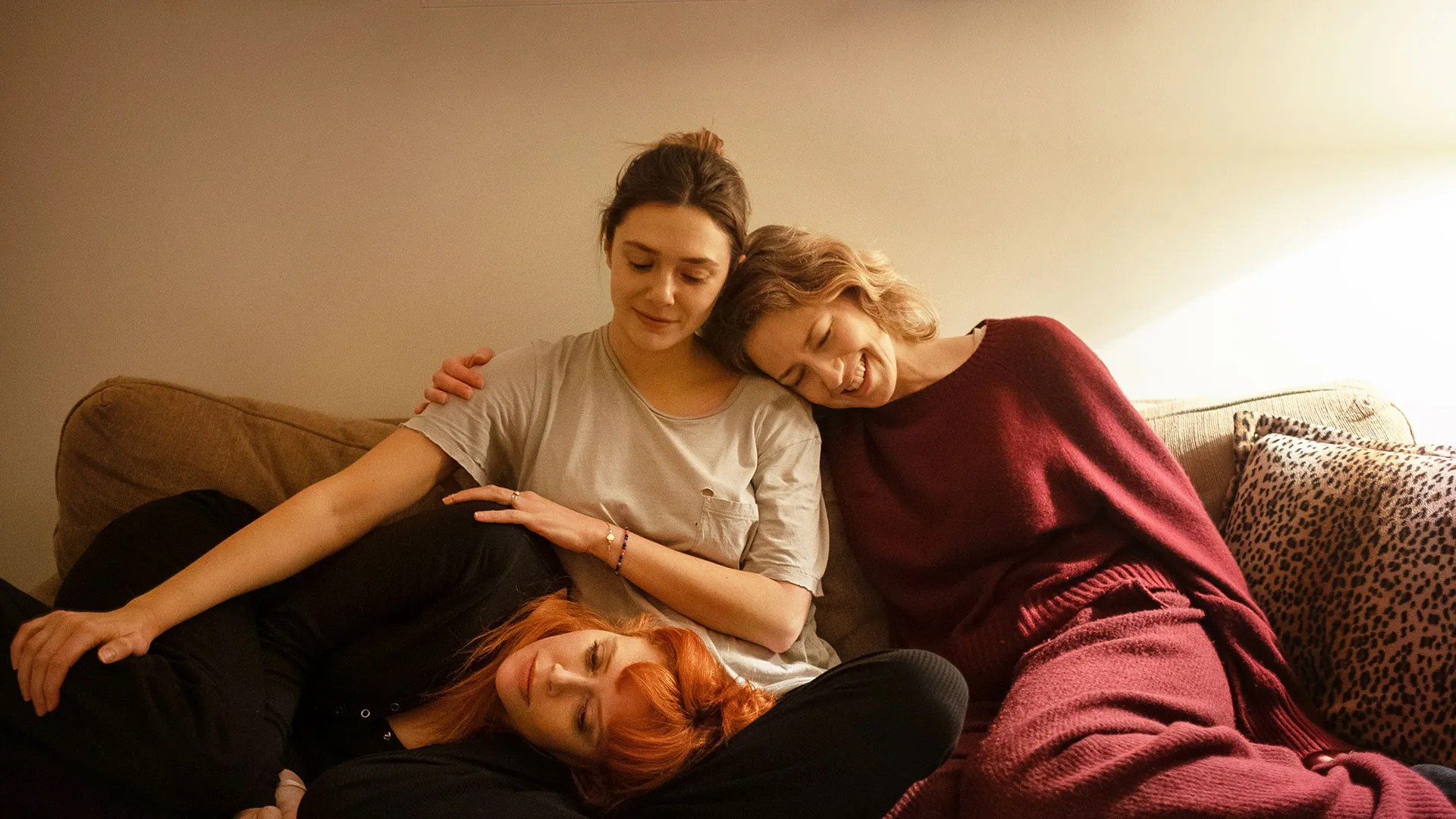
His Three Daughters
director Azazel Jacobs, starring Carrie Coon, Natasha Lyonne, Elizabeth Olsen

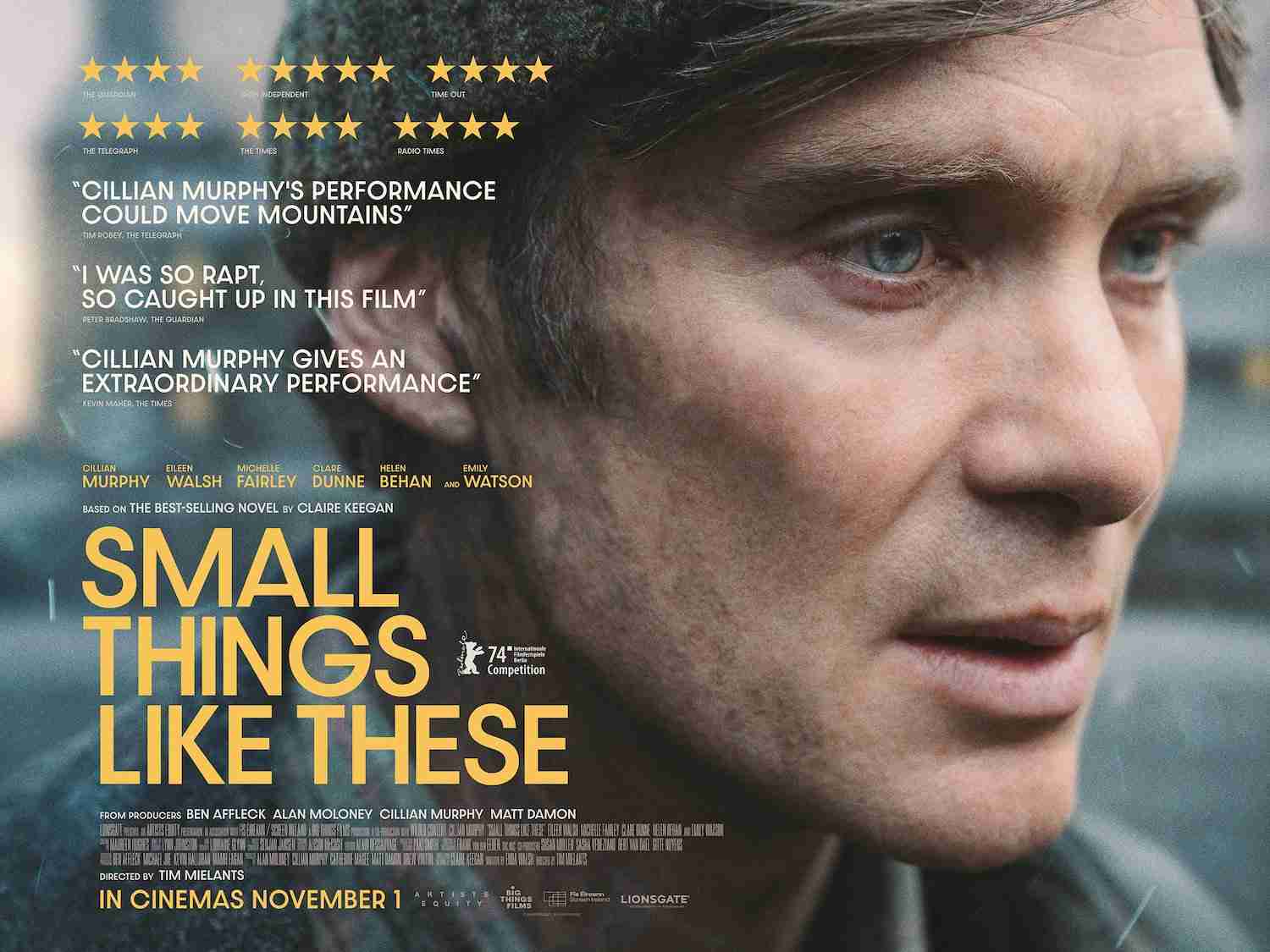
Small Things Like These
director Tim Mielants, starring Cillian Murphy, Eileen Walsh, Emily Watson

The Taste of Things
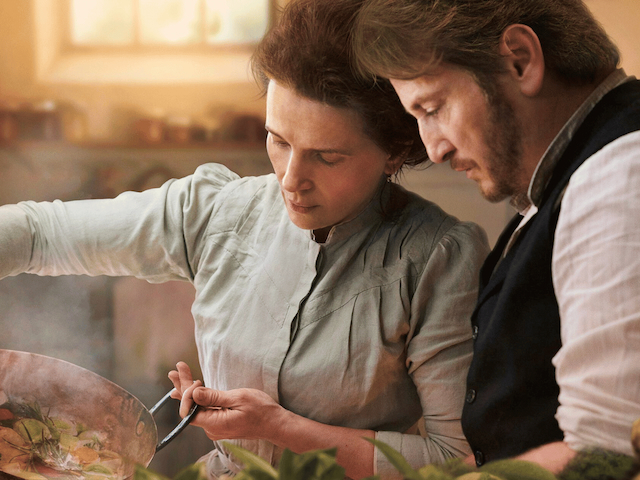
director Anh Hung Tran, starring Juliette Binoche, Benoit Magimel, Emmanuel Salinger

BOOKS

James by Percival Everett

This Strange Eventful History by Claire Messud

The Hunters: Two Novellas by Claire Messud

Table for Two by Amor Towles

The Lincoln Highway by Amor Towles

Knife: Meditations after an Attempted Murder by Salman Rushdie

Greek Lessons by Han Kang

The Final Curtain by Keigo Higashino

MY BEST BOOK BUYS
My favourite book purchases of the year, three at bargain prices, i.e. below $10. I was delighted to have found them, all brand new. What attracted me was first their appealing covers and one with marvellous colour art illustrations. These are examples and reasons why I’m not a Kindle user but still very much into tangible reading materials which I can hold in my hands, flip the pages, savour their content and visuals. I’ve started all of them, don’t intend to read like a page-turner, but for slow reading, or even just for looking up as reference with no pressure to read through from cover to cover. Additions to my long TBR list… come 2025.

A Writer’s Britain by Margaret Drabble, first attracted by the front photo, the feel of the special dust cover in my hands and yes, surprised to find there’s a bookmark ribbon that matched the greenery of the front design. British writers and poets and the landscape that inspired them.

The Autobiography of Alice B. Toklas by Gertrude Stein, illustrations by Maira Kalman, who contributed numerous full-page colour art illustrations that remind me of the scenes from the movie Midnight in Paris, especially the scenes inside Gertrude Stein’s home. I’ve a feeling that the set designer Hélène Dubreuil must have used this book in her research, for the movie had made these pictures come to life.

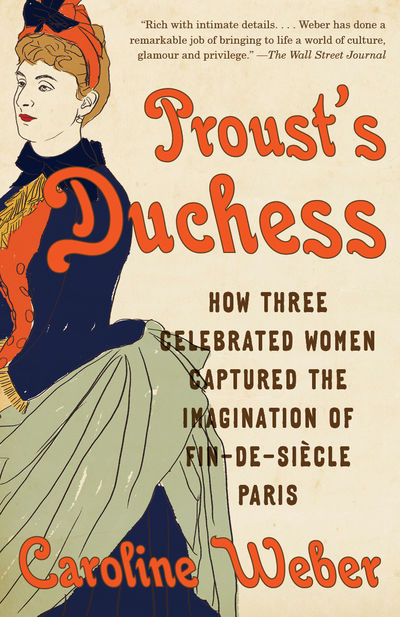
Proust’s Duchess by Caroline Weber, the times of Proust’s Paris, and the three women who inspired him to create the Duchesse de Guermantes from his In Search of Lost Time. Extensive research with numerous notes and references.

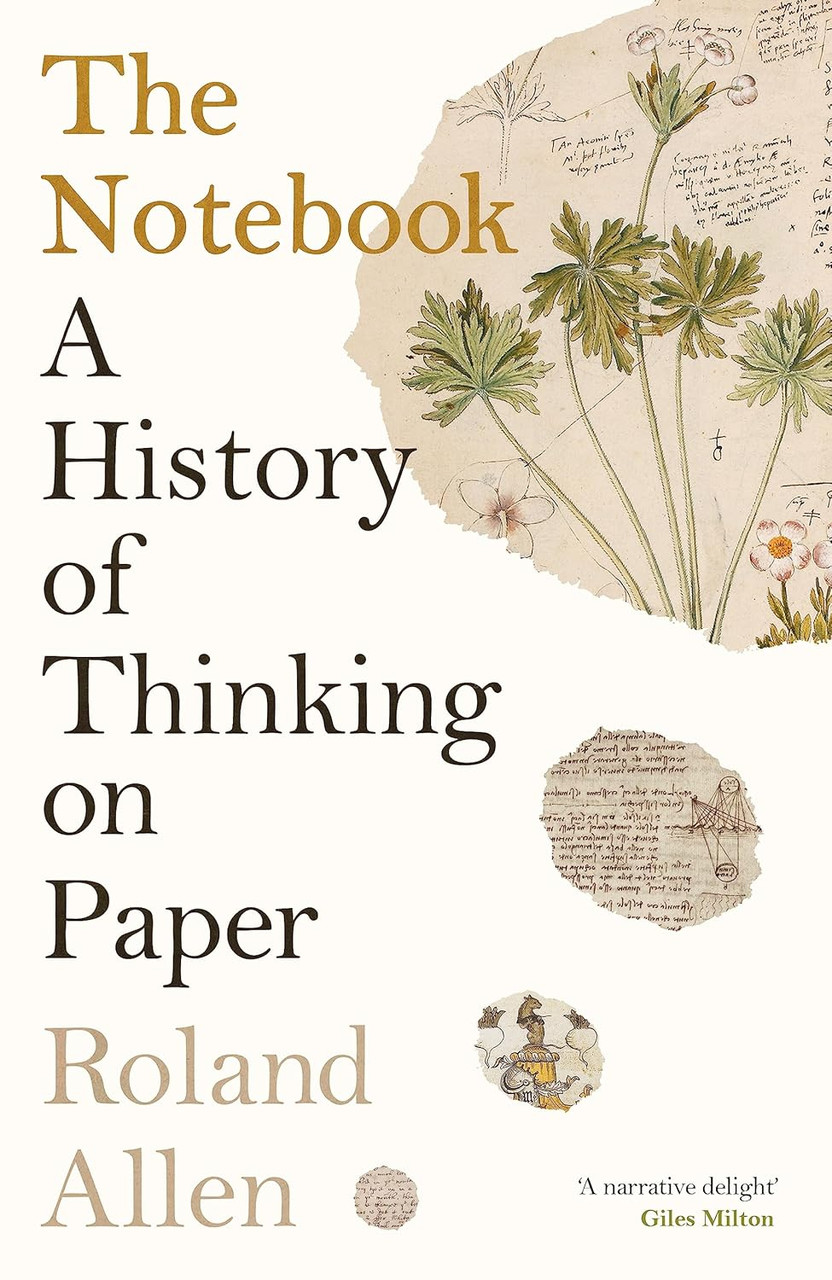
The Notebook: A History of Thinking on Paper by Roland Allen, a look into the history of the notebook, including journals, field notes, commonplace book… and exploration of those belonging to geniuses and the legendary throughout time. Extensive research by the author. What attracted me was the title. No, didn’t find this on the bargain table, as this is a current year publication, a notable best book of 2024 by The New Yorker and other acclaims.

***

A Happy 2025 to all!

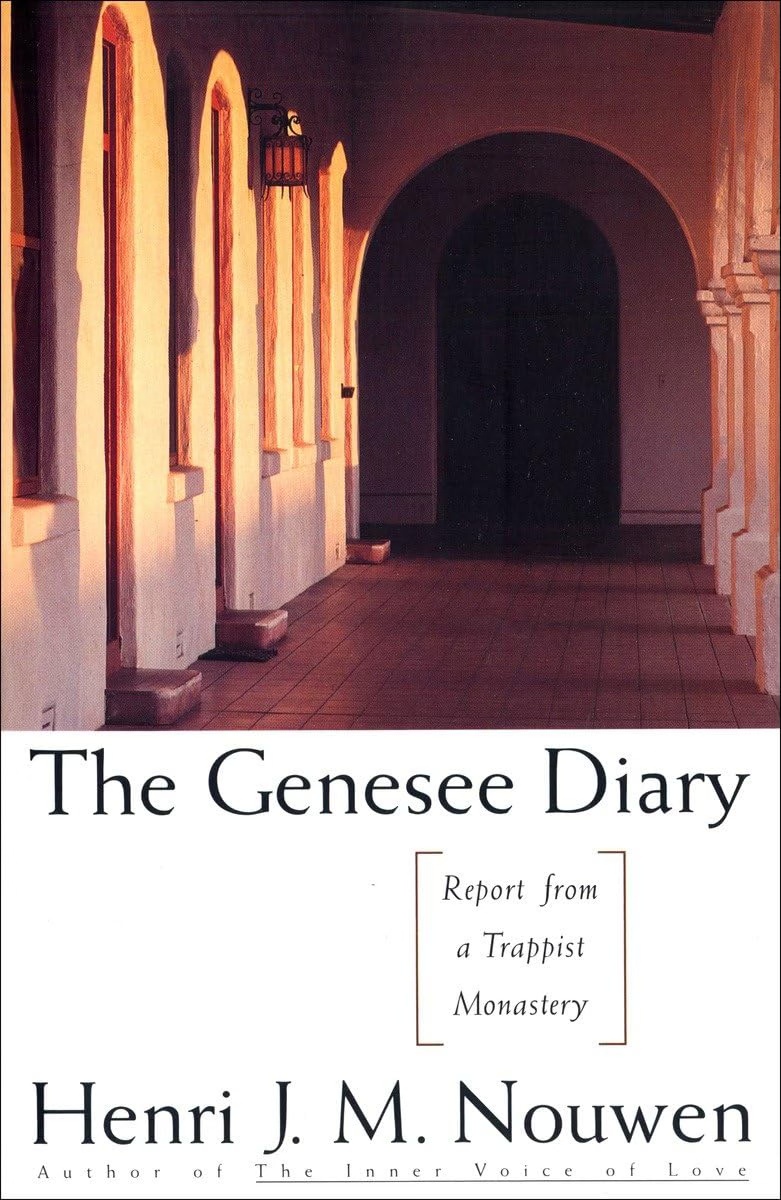
Reading the Season: The Genesee Diary by Henri J. M. Nouwen

I started this annual post at Christmas time in 2008, calling it Reading the Season. As the song goes, this might be ‘the most wonderful time of the year’, but it could well be the most distressing to many. In the hustle and bustle of the Season on the heels of that perennial frenzy called ‘Black Friday’, I hope Ripple Effects can be a respite from the busyness by offering a reading suggestion that could bring some quietude and to slow down the running wheel, hopefully the heart rates as well.  

Henri Nouwen wore many hats, priest, speaker, writer, professor at Yale and Harvard Divinity Schools, and in the last ten years of his life from 1986-1996, quit his university teaching to live and serve as pastor among a community of intellectually disabled men and women, L’Arche–Daybreak in Ontario, Canada. 

Twelve years before he made that life-changing commitment to L’Arche, in 1974, Nouwen spent seven months in a Trappist Monastery, the Abbey of the Genesee, in Upstate, New York. He started a diary in June as he began this experience and ending with the last entry on Christmas Day. He was searching for peace and quietude and to practice the contemplative life away from his busy commitments. His entries show his utter honesty with himself and total humility with God, and was always open to love and appreciate those around him. The monastery wasn’t cocoon living, he was in touch with world events and could grasp firmly the role of history in the present, and the continuity of the past in one’s personal journey. I’m glad to find too that he’s an avid bird watcher, and from nature, he gleans deeper understanding of self and God.  

I’ve highlighted many passages, these are some of them. As a birder, I find this so intriguing. It may sound somber and serious, but I can also see the humour in it:

This morning Father John explained to me that the killdeer is a bird that fools you by simulating injury to pull your attention away from her eggs which she lays openly on a sandy place… I have asked pity for a very unreal problem in order to pull people’s attention away from what I didn’t want them to see.

Sometimes it seems that every bird has institutionalized one of my defence mechanisms. The cowbird lays her eggs in some other bird’s nest to let them do the brooding job; the Baltimore oriole imitates the sounds of more dangerous birds to keep the enemies away, and the red-wing blackbird keeps screaming so loudly overhead that you get tired of her noise and soon leave the area that she considers hers. It does not take long to realize that I do all of that and a lot more to protect myself or to get my own will done.

I wonder if I really have listened carefully enough to the God of history, the God of my history, and have recognized him when he called me by my name, broke the bread, or asked me to cast out my nets after a fruitless day? Maybe I have been living much too fast, too restlessly, too feverishly, forgetting to pay attention to what is happening here and now, right under my nose. Just as a whole world of beauty can be discovered in one flower, so the great grace of God can be tasted in one small moment. Just as no great travels are necessary to see the beauty of creation, so no great ecstasies are needed to discover the love of God. But you have to be still and wait so that you can realize that God is not in the earthquake, the storm, or the lightning, but in the gentle breeze with which he touches your back.

And a thought that for me brings a new perspective on Advent:

Advent does not lead to nervous tension stemming from expectation of something spectacular about to happen. On the contrary, it leads to a growing inner stillness and joy allowing me to realize that he for whom I am waiting has already arrived and speaks to me in the silence of my heart. Just as a mother feels the child grow in her and is not surprised on the day of the birth but joyfully receives the one she learned to know during her waiting, so Jesus can be born in my life slowly and steadily and be received as the one I learned to know while waiting.

***

Reading the Season in Previous Years:

2023: Reading the Season: Babe or Man, Man or King? A Poem by Luci Shaw

2022: Dietrich Bonhoeffer’s God is in the Manger

2021: Sabbath Poems by Wendell Berry

2020: Jack by Marilynne Robinson

2019: ‘A Hidden Life’ – A Film for the Season

2018: A Verse from Madeleine L’Engle’s The Irrational Season

2017: A Wrinkle in Time by Madeleine L’Engle

2016: Silence by Shusaku Endo

2015: The Book of Ruth

2014: Lila by Marilynne Robinson

2013: Poetry by Madeleine L’Engle

2012: Surprised by Joy by C. S. Lewis

2011: Walking on Water by Madeleine L’Engle 

2010: A Widening Light by Luci Shaw

2009: The Irrational Season by Madeleine L’Engle

2008: The Bible and the New York Times by Fleming Rutledge 

2008: A Grief Observed by C. S. Lewis

The Hunters: Two Novellas by Claire Messud

Always been fascinated by Claire Messud’s writing. Glad to discover a gem I’ve missed all these years, The Hunters, Two Novellas (first published 2001, this Norton edition, 2021) which I recently found in the basement of an indie bookstore, where used or overstocked books are stored.

The first novella is A Simple Tale. On the surface, it’s a Canadian immigrant story, how people came to Canada after the second World War to make a home for themselves and their future generation. But it speaks to deeper truths about belonging, hope, resilience, love and alas, family conflicts and disappointment. Immigrant or not, such are universal issues.

Maria Poniatowski was born in the Ukraine. WWII pushed her out of her village, stranded in Europe, and eventually arriving in Canada alone, having lost her family and close friends. She met Lev in the Displaced Persons camp, fell in love, married, and gave birth to baby Radek. Sounds common enough? But not in Messud’s interesting prose:

And finally there, in the Displaced Persons camp, Maria, an old maid of twenty… At long last. Dreamed, discarded, forgotten, it came to her on the sly, slowly at first, shy, and then in full torrent. That’s what the Displaced Persons camp would mean to her, in the ribbon of years: simply, love. (p. 26)

Settling in a new country doesn’t come naturally, especially when it’s totally foreign. Weeping and hardship may be for a short while, for joy soon comes. Maria receives a very Canadian welcoming at the Displaced Persons camp:

In the morning, that first September morning of 1946, there was the piercing early-autumn sunlight sifting through the pines, and the clean odor of the needles as they were trampled underfoot, and the soft damp mulch scent of the forest; and there were maples, in amongst the monstrous evergreens, turning, golden, vermilion, ochre in a riotous celebration of the Poniatowskis’ arrival. (p. 31)

Maria later found a housekeeping job with Mrs. Ellington, and became her life-long companion for decades. As little Radek grows up and Maria and Lev grow old, disappointments set in. The baby son she has raised all the years from the displacement camp to a house in Toronto is now a man with his own will but totally subdued by the girl he chooses to marry, an obvious unfit match, bringing his parents only disappointment and heartbreaks. Having endured and lived through the War and years of adjustments and finally calling a new country home, Maria, a widow now and alienated from her son and his family, watches Mrs. Ellington slip away. Alone again.

________

The second novella, The Hunters, can well be an exemplar for the now popular, contemporary genre of the psychological, suspense novels such as Before I Go to Sleep (J. S. Watson, 2011), Gone Girl (Gillian Flynn, 2012), The Girl on the Train (Paula Hawkins, 2015), The Woman in the Window (A. J. Finn, 2018)… just to name a few. An unreliable narrator, or a misleading perspective taking the story onto twists and turns until the frame of reference unraveled and truth spills out.

What Messud is doing in The Hunter, however, is a much deeper probe into the psyche of a person in solitude, blurring the imaginary with reality. How reliable is our judgement of character, or how accurate is our perception in deciphering facts from the inkling of our subjective mind? How reliable is our view on reality? Can we fully know someone?

An American academic spends a summer in London to do research on a book he or she is writing. Exactly, Messud does not specify the name or the gender of the narrator, this academic. I wonder what purpose would that serve, maybe universality. Nevertheless, Messud is an expert in psychoanalysis, and her prose, exquisite, as she describes the narrator’s state of mind and inner thoughts.

Choosing to stay in a neighbourhood away from the mainstream, academic centre of London, the narrator seeks solitude to nurse the ending of a love relation, as well, to seek refuge in the anonymity of a diverse neighbourhood where nobody knows her and no one the narrator wants to know.

Such a peaceful existence is interrupted one night by a downstairs neighbour Ridley Wandor, coming up to introduce herself and thus intrudes into the privacy and disrupt the solitude of our much annoyed narrator. Ridley Wandor would become the unwanted nemesis that summer, and months later, when a clearer view of facts is revealed, the cause of inescapable guilt.

The Hunters isn’t one of those page turners in which the plot pushes the reader to forge on, but an astute character study of both the hunter and the prey. In a deeper way, Messud challenges her narrator’s sense of reality, and just because of the lack of omniscience––our very limitation as human––shaking the narrator to the core as facts are revealed at the end. It’s hard to find an excerpt in the novella without dropping a hint as spoiler, but this famous line from Atticus Finch comes to me naturally:

You never really understand a person until you consider things from his point of view […] until you climb into his skin and walk around in it.”

For our narrator, this revelation comes a bit too late.

~ ~ ~ ~ Ripples

Novellas in November is co-hosted by 746 Books and Bookish Beck

Related posts on Ripple Effects:

Small Things Like These from novella to screen

The Quiet Girl Movie Review: From the Literary to the Visual

Passing by Nella Larsen: from Novella to Screen

The Gone Girl Phenom

Before I Go to Sleep: Movie or Book?

***

Book to Screen in Development 2024 and Beyond

Last post I listed some adaptations from books to the big and small screens coming out this fall in the festival circuit or via streaming platforms. Here are more titles currently in development or in production.

James (2024) by Percival Everett

Stephen Spielberg executive producer, in pre-production, to be directed by Taika Waititi (Jojo Rabbit, 2019) James is Percival Everett’s re-imagination of The Adventure of Huckleberry Finn from the perspective of escaped slave Jim. Currently, the highly acclaimed novel is long-listed for this year’s Booker Prize. Short list will come out Sept. 16 and James is expected to be on there. This is the second movie adaptation of Everett’s novels. After the success last year of his Erasure being turned into the Oscar winning American Fiction–for Best Adapted Screenplay–James is a highly anticipated encore. 

Hamnet (2020) by Maggie O’Farrell

Another one on Stephen Spielberg’s list as producer, now in production. The adaptation of O’Farrell’s novel is directed by Nomadland’s Oscar winning Chloé Zhao, with a talented British cast: Jessie Buckley, Emily Watson, Paul Mescal, and Joe Alwyn. The book is a fictional account of Shakespeare and his wife’s loving relationship with their son Hamnet and their coping with his tragic death at the age of eleven. Zhao’s previous films (before Marvel’s The Eternals) are nuanced and soulful cinematic works. I look forward to her helming this adaptation about love and grief.

Knife: Meditations after an Attempted Murder (2024) by Salman Rushdie

Rushdie’s personal account of the traumatic, life altering event of being stabbed multiple times while on stage in upstate New York, August 2022, and his slow and painful recuperation. Ironically, he was speaking on the topic of keeping writers safe. His memoir will be adapted to the screen by the Oscar winning documentarian Alex Gibney. I’ve given this book 4 stars on Goodreads, was totally riveted by Rushdie’s writing. Hope Gibney’s is an effective documentation and a cautionary testimonial to safeguard artists from harm.

The Chronicles of Narnia (1950’s) by C. S. Lewis

After crashing the glass ceiling, catapulting Barbie to a record $1.4 billion box office sale by a sole woman director, Greta Gerwig is tasked to write and helm at least two of C. S. Lewis’s beloved children series as Netflix films. In a BBC interview, Gerwig said: “I’m slightly in the place of terror because I really do have such reverence for Narnia… I’m intimidated by doing this. It’s something that feels like a worthy thing to be intimidated by.” Let’s hope her fear is a driving force to push her towards excellence in adapting this meaningful book series.

Crying in H Mart (2021) by Michelle Zauner

Poignant memoir of Zauner’s, singer songwriter of the band Japanese Breakfast, about her rediscovery of her Korean heritage and reestablishing a deeper mother-daughter relationship through food and cooking… alas, after her mother’s terminal cancer diagnosis. As an Asian American, her father is Caucasian of Jewish heritage, Zauner’s book is a new and significant voice. She is writing the script herself, Will Sharpe (The White Lotus) directing. Zauner will create the soundtrack with her group Japanese Breakfast. The memoir is an American Book Award winner (2022) and the 2021 Goodreads Choice Award for Memoir & Autobiography, 55 weeks in the NYT Bestseller list.

Tomorrow and Tomorrow and Tomorrow (2022) by Gabrielle Zevin

Here’s another contemporary, literary voice from a biracial American writer. Like H Mart author Zauner, Zevin’s father is of Jewish and mother Korean heritage. Its title alluding to Shakespeare’s Macbeth, Tomorrow and Tomorrow and Tomorrow is a unique and original story about self, love, and video games. Goodreads Choice Awards in Fiction (2022) and top book of the year on numerous lists, and one of my best reads last year. Excited to find out that Paramount Pictures had acquired the film rights even before the book was published, and recently learned that Siân Heder, the Oscar winning director of CODA (2021), has signed on to direct.

The Woman in Cabin 10 (2016) by Ruth Ware

Ruth Ware’s popular suspense thriller takes place on a cruise ship, with British star Keira Knightley on board as a journalist who is the only eyewitness to a murder. The Netflix movie will be directed by Simon Stone (The Dig, 2021). Other Ruth Ware books on the drawing board for adaptation are The Turn of the Key and The It Girl. No further info on these.

Run Rose Run (2022) by Dolly Parton and James Patterson

Dolly Parton and country music fans take note, the legendary singer’s dip into the literary ink pot with her first fiction, a thriller she co-wrote with James Patterson, is to be adapted onto screen. The NYT bestseller about a young singer songwriter on the rise and on the run will be produced by Reese Witherspoon.

***

Do you have any books you’d like to see adapted to a movie or TV series?

From Book to Screen 2024 Fall

Late August kicks off the annual film festival season, and come September, arrays of new offerings on streaming platforms. I haven’t done actual research, but just a feeling that nowadays, more and more movies are adapted from printed sources. The following is a list of upcoming books adapted to full features in theatres, or TV movies and series for streaming:

Conclave by Robert Harris (2016) 

International Premiere at TIFF in September, in theatres November. Directed by Edward Berger (2023 Oscar winner All Quiet on the Western Front) with a stellar cast led by Ralph Fiennes, Stanley Tucci, and John Lithgow. Peter Straughan (Tinker Tailor Soldier Spy, 2011) adapts from Harris’s novel revealing the dark secrets and intrigues in the intense proceedings in electing a new Pope.

The Critic or Curtain Call (2015) by Anthony Quinn

Had its world premiere at TIFF last year and slowly trickling to theatres this September. Directed by Anand Tucker (Girl with a Pearl Earring, 2003) with an exciting British cast with Ian McKellen as the eponymous, acerbic critic, his power and influence affecting many. Co-stars include Lesley Manville, Gemma Arterton, Mark Strong, Romola Gerai, Ben Barnes.

The Day of the Jackal by Frederick Forsyth (1971) 

10 episodes on Peacock, remake of the iconic 70’s movie. Political thriller recounting the plot to assassinate French President Charles de Gaulle after he signed the treaty leading to Algeria’s independence. In this new version, Eddie Redmayne is the assassin Jackal.


Disclaimer by Renée Knight (2015)

Oscar winning director Alfonso Cuarón (Roma, 2018) helms a stellar cast including Cate Blanchett, Lesley Manville, Kevin Kline, Sacha Baron Cohen, Kodi Smit-McPhee. A mini-series where Blanchett plays a TV documentary journalist who exposes dark secrets of others is threatened with the revealing of her own past. Canadian premiere at TIFF in September, mini series on Apple TV+

Here, graphic novel (2014) by on Richard McGuire

McGuire’s works are multi-faceted and highly acclaimed, as permanent collections at MoMA, The Morgan Library and others, print form in The New Yorker, The New York Times, Le Monde… Can a movie version do justice to this multi-talented artist? The team that made the eras-spanning Forrest Gump (1994), director Robert Zemeckis, screenwriter Eric Roth, star Tom Hanks and Robin Wright re-unite to bring us Here. Interesting addition to the cast that I look forward to is Michelle Dockery. In theatre come November.

Interior Chinatown by Charles Yu

The National Book Award winning novel of 2022, a genre defying writing that fuses a novel and a screenplay. The story of a young Chinese American actor struggling to escape stereotypical roles in Hollywood. Stand-up comedian and actor Jimmy O. Yang (Crazy Rich Asians, 2018) stars. 10 episodes on Hulu.

The Nickel Boys by Colson Whitehead (2019) 

New York Film Festival’s (Sept. 27 – Oct. 14) opening film. The winner of the 2020 Pulitzer Prize for Fiction is adapted into film with the title slightly changed to Nickel Boys. Friendship between two Black teenagers in the notorious reform institution, the Dozier School for Boys in Jim Crow-era Florida sustains the two of them during their harrowing residency. 

The Outrun by Amy Liptrot (2016)

Liptrot’s award winning memoir of her troubled past is adapted to the screen and directed by Nora Fingscheidt (The Unforgivable, 2021) starring Saoirse Ronan. From wild living and alcoholic ruin in London, Liptrot rehabilitates herself as she seeks the sanctuary of nature and her childhood home in Orkney off the northeastern coast of Scotland.

The Perfect Couple by Elin Hilderbrand (2018) 

A Nantucket-set wedding disrupted by a murder which makes everyone a suspect. Goodreads declares Hilderbrand “the queen of the summer beach read.” Nicole Kidman, Live Schreiber, Dakota Fanning anchor the Netflix mini-series coming out in September.  

The Return based on The Odyssey by Homer (ca. 8th – 7th C. BC)

World premiere at TIFF, in theatres December. Ralph Fiennes as Odysseus, returning home to Ithaca after the Trojan War and misadventures twenty years later to find his kingdom changed. Juliette Binoche is the patient wife Penelope, trying to buy time to wait for his return and at the same time warding off unruly suitors. Son Telemachus (Charlie Plummer) not so patient. 

Wicked by Gregory Maguire (1995)

Based on the musical, which in turn adapted from the book by L. Frank Baum’s The Wonderful Wizard of Oz (1900), this new rendition as a movie is directed by Jon M. Chu (In the Heights, 2021; Crazy Rich Asians, 2018) Cynthia Erivo (Harriet, 2019) and Jonathan Bailey (Bridgerton, 2020-2024) star.

***

More to come…

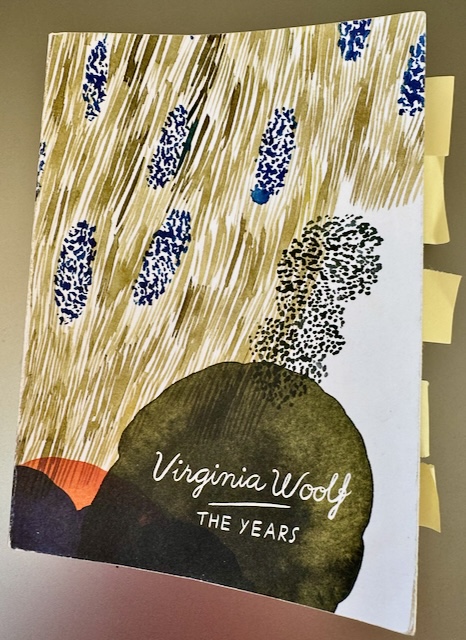
Virginia Woolf’s The Years sparks some surprising associations… Downton Abbey?

“She wanted to see the owl before it got too dark. She was becoming more and more interested in birds. It was a sign of old age, she supposed.” –––– Virginia Woolf, The Years* (186)

Finally, I finish my other 1937 Club read hosted by Kaggsy and Simon that took place in April, two months late, and that’s Virginia Woolf’s The Years, published in 1937. It sure feels like years for me to finish this book. Better late than never, for I have full intention to see what Woolf had to say in her last novel published during her lifetime (Between the Acts was published shortly after her death in 1941), specifically, what was in her mind just a few years before she took her own life.

The book follows the children of Colonel Abel Pargiter’s family as they go through the years crossing the 19th century into the 20th. It’s a family saga through chapters titled for a specific year, beginning with 1880, 1891, then into the new century 1907, 1908 and to the First World War, and finally the “Present Day” which is the 1930’s. Within each chapter the narratives are episodic, characters appear without introductions; readers would have to piece together who’s who and how they relate to each other.

A few unexpected mental associations came to me during my reading. The quote above at the beginning of this post is one of those surprises. A loud Whoa! when I read it: Interest in birds as a sign of ageing. It’s a thought in the mind of Eleanor, the eldest of the Partiger children, when she is fifty-five. She goes on to live past seventy when the book ends, and I’m sure has seen many more owls.

Another surprise for me in my reading experience of The Years is how it’s like watching an arthouse film, or any good movie for that matter. My first impression of that beginning chapter 1880 is that it reads like a script where the expressions and actions of the characters are highly nuanced and the subtext in their conversations speak volumes. Nothing much is happening but the seemingly uneventful narrative carries unsettling undercurrents.

Here’s an example. The Colonel, with his wife Rose on her death bed, is a troubled and temperamental man whom his seven children fear more than respect or love. He comes back home unexpectedly during supper time in the opening chapter and the way he drinks his tea while trying to strike up conversations in a surly manner with his children reflects his changing mood. A ready movie scene here. I’ve taken out the dialogues, but just the description of his tea-drinking actions reveal a lot about his character:

He stirred his sugar round and round in the cup as if to demolish it… ground the grains of sugar against the walls of his cup. [After some tense conversations with his children] Then he seemed to repent of his gruffness… He drank up his tea. Some drops fell on his little pointed beard. He took out his large silk handkerchief and wipe it impatiently… [Later] the Colonel took up his cup, saw there was nothing in it, and put it down firmly with a little chink. The ceremony of tea-drinking was over. (13-14)

Another surprise is that reading The Years makes me think of Downton Abbey, how a family goes through changes both in the larger socio milieu and in their personal lives through the years. The time-lapse is about the same as the six seasons of Downton, from horses to cars, from candles to electric lights, WWI and the changes it brings. The following line in Woolf’s novel makes me think of the Dowager Violet Crawley:

Then he looked at a car. It was odd how soon one got used to cars without horses, he thought. They used to look ridiculous. (215)

BTW, Edith Crawley, who breaks the mould and ventures out to live in London on her own and heads up a magazine she inherits from Michael Gregson and a London flat, has mentioned that she had met Virginia Woolf there, one of Michael’s Bloomsbury acquaintances. One can imagine the author just might have certain influence on her.

The Years is about lives lived, actions or non-actions, the regrets and the resignation of what had happened, the unchangeability of the past. Check out these lines, the introspection of Eleanor’s, just reminds me of Mary Crawley, who had uttered similar words thinking of her own past errors in judgment:

But once it’s done, there it is… How irrecoverable things are, she thought. We make our experiments, then they make theirs. (185)

Above all else, The Years is about the past and memories, and the meaning of it all. Proust’s Remembrance of Things Past comes to mind, no surprise. Both authors value the writing down of lives lived. But Woolf goes into a more depressed mode of seeing even the futility of it. As the chapters, ie, the years, move on, Woolf is more explicit about her view on life––I suppose that’s her perspective––through Eleanor’s point-of-view. Considering Woolf taking her own life just four years after this book was published, I paid attention to the reflections and internal search for existential meaning, or the failing of which, and find these passages particularly poignant. Short sentences like this: “Scenes passed over scenes; one obliterated another,” to reflection like the following, again, quite a cinematic moment:

Things can’t go on for ever, she thought. Things pass, things change, she thought, looking up at the ceiling. And where are we going? Where? Where?… The moths were dashing round the ceiling; the book slipped on to the floor. .. made an effort; turned round, and blew out the candle. Darkness reigned. (195)

to what seems like ultimate despair, take note that Woolf wrote this in the 1930’s:

But how can one be ‘happy’? she asked herself, in a world bursting with misery. On every placard at every street corner was Death; or worse––tyranny; brutality; torture; the fall of civilization; the end of freedom. (358)

I gave the book 3.5 out of 5 stars in my Goodreads review, an evaluation that’s based on my first reading, having had to figure out who’s who –– considering the Pargiters have seven children and some of them have their own children. And then there are extended family members, cousin, niece and nephew, and servants. I’m sure upon second reading, I’d be able to get a clearer picture of all the characters and would enjoy it more, for it really deserves more than one reading.

__________

* The edition that I used (photo above) is Vintage Classics, Penguin Random House UK, London. 401 pages. Introduction by Susan Hill. With this inscription before the Introduction:
“The text of this edition of The Years is based on that of the original Hogarth Press Edition, published by Leonard and Virginia Woolf on 15th March 1937.”

***

Related Post on Ripple Effects:

In Praise of Austen: Virginia Woolf’s A Room of One’s Own

In Search of Lost Time by Marcel Proust: A Movie Reviewer’s Long Take

My other 1937 Club Posts:

Out of Africa by Karen Blixen from Book to Movie

Somerset Maugham’s Theatre and Screen Adaptation

A Tribute to Canada’s Nobel Laureate Alice Munro: Munro and Movies

Alice Munro had died at the age of 92 on Monday, May 13, 2024, in Port Hope, Ontario. Winner of the Nobel Prize for Literature in 2013 and the Man Booker International Prize in 2009, Munro solidified her stature in literature with her mastery of the short story. As a tribute to her passing, I’m reposting something I wrote on the occasion of her Nobel Prize win back in 2013 in the following. In that article, I’d also included a short review of the film Away From Her, based on her short story “The Bear Came Over the Mountain”.

_____________

On October 12, 2013, I wrote:

Thanks to the Swedish Academy, Alice Munro doesn’t need a blockbuster movie to raise awareness of her works. Described by The New York Times as ‘Master of the Intricacies of the Human Heart’, and with her story settings mostly in rural counties and small towns, the 82 year-old writer must have known how the small and intimate can have far-reaching effects.

The short story as a literary form too must have gained importance and legitimation overnight now that Munro is honored as Nobel Laureate. The novel isn’t the only peak of the mountain of literary pursuits. Readers too, can now be totally comfortable with reading ‘just a short story’.

Back to movies, with our contemporary mega, blockbuster culture, it sure looks like the general public needs to see a movie before knowing about a literary work. While I don’t like the idea, I’ve to admit that could well be the case nowadays. But for Munro, can anyone name a full feature movie that’s based on her short stories?

Right. Actually there are four* (see correction below). Edge of Madness (2002) is relatively unknown. Another one interestingly is an Iranian film, Canaan, which won the Audience Awards–Best Film at the Fajr International Film Festival in 2008. A better known adaptation is Away From Her (2006). It remains one of my all time favorite films. The most recent completed production is Hateship Loveship which premiered at TIFF13. I regret missing it when I was there in September. A film based on her story ‘Runaway’ is currently in development.

With Munro winning the Nobel, hopefully we’ll have the chance to see a general release of Hateship Loveship. So there you go, Munro could well be helping to reverse the trend: the writer promoting the film.

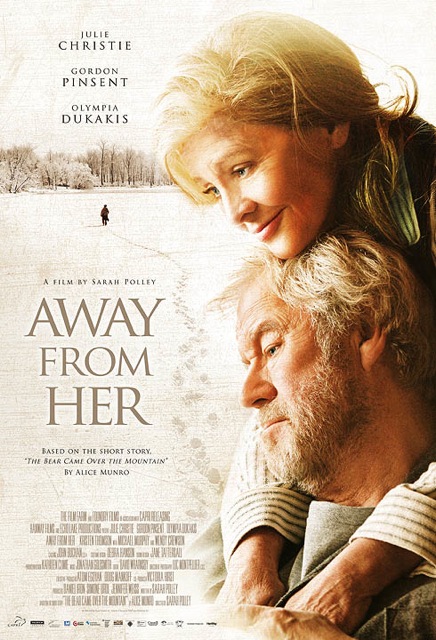
To celebrate Munro’s Nobel win, I’d like to repost in the following a review of Away From Her which I wrote in 2008. The film was directed by the young and talented Canadian actor/director Sarah Polley, who was nominated for an Oscar for her adapted screenplay based on Munro’s short story ‘The Bear Came Over the Mountain’. Julie Christie received an Oscar nomination for her role as Alzheimer’s afflicted Fiona.

You can read Munro’s story ‘The Bear Came Over the Mountain’ now online, thanks to a timely reprint by The New Yorker.

Capri_AwayFromHer_PosterB

AWAY FROM HER: A Short Review

How can you turn a good short story into a full length movie without compromising its quality? By turning it into a screenplay written by an equally sensitive and passionate writer, and then, through her own talented, interpretive eye, re-creates it into a visual narrative. Along the way, throw in a few veteran actors who are so passionate about what the script is trying to convey that they themselves embody the message.

Sarah Polley has made her directorial debut with a most impressive and memorable feat that I’m sure things will go even better down her career path. What she has composed on screen speaks much more poignantly than words on a page, calling forth sentiments that we didn’t even know we had. As Alzheimer’s begins to take control over Fiona, what can a loving husband do? Julie Christie and Gordon Pinsent stir up thoughts in us that we’d rather bury: how much are we willing to give up for love? Or, how would we face the imminence of our loved ones’ and our own mental and physical demise?

Based on the story by Alice Munro, ‘The Bear Came Over the Mountain’, Polley brings out the theme of unconditional love not with your typical Hollywood’s hot, young, and sexy on screen, but aging actors in their 60’s and 70’s. It may not be as pleasurable to watch wrinkled faces hugging and kissing, or a man and a woman in bed, bearing age spots and all, but such scenes effectively beg the question: why feel uncomfortable?

Why does love has to be synonymous with youth, beauty, and romance? It is even more agonizing to watch how far Grant is willing to go solely for love of Fiona. Lucky for us, both writers spare us the truly painful at the end. It is through persistent, selfless giving that one ultimately receives; however meager and fleeting that reward may seem, it is permanence in the eyes of love. And it is through the lucid vision of a youthful 28-year-old writer/director that such ageless love is vividly portrayed…. Oh, the paradoxes in life.

~ ~ ~ Ripples

* Correction: According to IMDb, there are 14 screen adaptations of Munro’s work, both in movies and TV. Runaway is in production currently.

The 1937 Club: Maugham’s ‘Theatre’ from Book to Screen

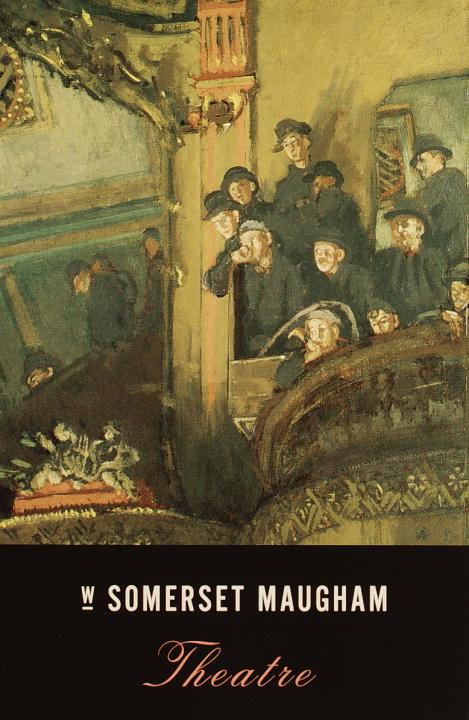
To wrap up my week for The 1937 Club, I’m re-posting my review of W. Somerset Maugham’s Theatre published in 1937 which some of you have read. As I’m still reading Virginia Woolf’s The Years, haven’t time to reread Maugham’s book this time. I want to re-post my review mainly because I’d like to share my thoughts back in 2010 when I wrote it, and see how much our society has changed in terms of what is real, the main issue by which in Maugham’s book, the son Roger is so disturbed regarding his theatre actress mother Julia Lambert.

As for book turned into films, those familiar with Ripple Effects know that I see the literary and the visual as different art forms, therefore being ‘faithful’ isn’t the major qualifier for a good adaptation. However, in this case, I’m quite disappointed that the essence or, the main issue, as represented by Roger’s frustration with his mother has not been transposed onto the screen, downplaying the tension and conflict that’s so crucial in the book.

_____________________

Two pages into the book I knew right away I had seen it before. Of course, that’s the movie Being Julia (2004). Annette Bening got a Best Actress Oscar nom for her portrayal of Julia Lambert, a famous actress on the London stage in the 1930’s. The movie is a colourful account of how a successful stage actress deals with her mid-life crisis. Garnering fame, fortune, and achievement in bounty, what more could she ask for but… love and passion. And during the course, obstacles, jealousy, and betrayal are all overcome, and revenge carried out; on or off stage, no matter, it’s equally exciting for the glamorous Julia Lambert.

But not until I read this novel on which the movie was based did I realize that a most important passage had been left out. And oh what an omission! For the crux of the book rests on those few pages. And not only that, the screenwriter had chosen to alter a character to suit his fancy, rounding off the edges of conflicts and alleviating tensions in presenting a smooth and suave storyline.

In the movie, Julia’s son Roger is a young man fresh out of Eton and planning to attend Cambridge after the summer. That much is true to the book. Roger is shown to be a devoted son, lovingly supportive of his mother in her pursuits in career and love life. But this is not the case in the novel.  Maugham has crafted Roger as a critical young man, offering the necessary tension to the story. In a crucial scene at the end of the book, he questions Julia’s behaviour and integrity. These challenges form the climatic confrontation between mother and son, projecting the meaning behind the very title of the novel.

Here is an excerpt from this scene that captures the essence of the whole book. Julia asks Roger:

“What is it you want?”
Once again he gave her his disconcerting stare.  It was hard to know if he was serious, for his eyes faintly shimmered with amusement.
“Reality.”
“What do you mean?”
“You see, I’ve lived all my life in an atmosphere of make-believe…. You never stop acting. It’s second nature to you. You act when there’s a party here. You act to the servants, you act to Father, you act to me. To me you act the part of the fond, indulgent, celebrated mother. You don’t exist, you’re only the innumerable parts you’ve played. I’ve often wondered if there was ever a you or if you were never anything more than a vehicle for all these other people that you’ve pretended to be. When I’ve seen you go into an empty room I’ve sometimes wanted to open the door suddenly, but I’ve been afraid to in case I found nobody there.”

By turning Roger into a complacent and docile young man, the screenwriter had failed to present the necessary tension in the story. Further, by avoiding the character foil between the successful actress mother and her meaning-pursuing, idealistic son, the movie fails to deliver the essential subtext, despite an impressive performance by Annette Bening.

Further, the best is yet to come in the book… such is the ingenuity of Maugham.  After a superb, revengeful performance, overarching her rival, the young and beautiful Avice Crichton, and drawing everyone’s admiration back to herself, Julia celebrates on her own with a nice meal and mulls over a gratifying notion, on the very last page:

“Roger says we don’t exist. Why, it’s only we who do exist. They are the shadows and we give them substance. We are the symbols of all this confused, aimless struggling that they call life, and it’s only the symbol which is real. They say acting is only make-believe. That make-believe is the only reality.”

This is ever so relevant for us today. With all the online personae we can create and project, all behind the guard of anonymity, Roger’s quest for what’s real remains a valid search.

Sherry Turkle, the acclaimed ‘anthropologist of cyberspace’, has observed the liminal reality in our postmodern world and stated her own quest:

“I’m interested in how the virtual impinges on what we’ve always called the real, and how the real impinges on the virtual.”

Let’s just hope that the advancement of technology would not get the better of us, blurring the lines of fact and fiction, offering shields for fraud and deceits. Behind the liminal existence, let’s hope too that we still care what’s real and what’s not, and that our humanity will still be valued and not be compromised or lost in the vast abyss of bits and bytes.

The upcoming Academy Awards too, is another platform to showcase such a duality. I always find the acceptance speeches of award winners intriguing: what’s genuine and what’s fake in their thank you’s. Are they presenting their real self or merely acting? Outside of their roles, which part of them is authentic? Or, do they ever get out of their roles?

It’s interesting too to explore the influence of movies nowadays. Again, the postmodern emphasis is on the narrative, multiples of them, and storytelling the vehicle of meaning. Does the notion of Maugham’s character Julia mirror our world… that movies have become the symbols of what we call life? That make-believe has sometimes been merged with reality? Can we still tell them apart? Or, should we even try? Considering the pervasive effects of pop culture in our life today, considering a single movie can command a worldwide box office sale of $2.4 billion, and counting… Maugham was prophetic indeed.

***

Again, I thank Simon and Karen for hosting. Looking forward to the next year club in the coming months.

The 1937 Club: ‘Out of Africa’ Book to Movie

Twice a year, Simon at Stuck in a Book and Karen at Kaggsy’s Bookish Ramblings host an interesting reading event, the year club. We read books published in that year indicated by the number and write our reviews. This time, from April 15-21, we are doing the year 1937.

Many fine titles were published in 1937, but for me, it’s an easy choice: Out of Africa, the memoir of Danish author and baroness Karen Blixen (1985-1962). Interesting to note that she had several pen names. In the English speaking countries, she was Isak Dinesen.

Ever since watching the 1985 movie Out of Africa, I’ve always wanted to read the source material, Blixen’s autobiography about her seventeen years (1914-1931) living in Kenya operating a coffee farm. In a way, I want to cast aside the image from the movie, however romantic, of Meryl Streep and Robert Redford sitting in green pastures picnicking, with Mozart’s Clarinet Concerto coming out from a gramophone, the music sweeping serenely across the pristine African landscape.

Blixen’s life in Kenya was no small venture: a pioneer woman operating a coffee farm situated in the six thousand acres of her land at the foothills of the Ngong Mountains. She rode horses, went on safaris, shot lions to defend her oxen, herself and others. When in the capital, Nairobi, she was a business woman; when on her farm, she was doctor to those lined up to see her with their sickness and ailments. She sent those that she couldn’t handle to the hospital and visited them, seeing to their recovery.

Blixen’s chronicles of her life in Africa intertwine objective observations and intimate thoughts. When describing the different ethnic groups in the land, the Natives Kikuyu, or her neighbours the Masai, or the immigrants the Somali… her writing is like an astute anthropologist, always with admiration. When referring to the Somali women, she writes:

There was no ignorance in their innocence. They had all assisted at childbirths and death-beds… Sometimes to entertain me, they would relate fairy tales in the style of the Arabian Nights, mostly in the comical genre, which treated love with much frankness. It was a trait common to all these tales that the heroine, chaste or not, would get the better of the male characters and come out of the tale triumphant… I felt the presence of a great ideal… the idea of a Millennium when women were to reign supreme in the world. (131)

Considering the above was noted earlier than 1931 (the year she left) in Africa, was Blixen a visionary ahead of her times, or… was it the Somali women?

When describing those close to her, like her invaluable assistant Farah, she presents a character study with free flowing, deep feelings of love and respect. In the essay collection at the back of this book, Shadow on the Grass, she has a whole chapter on Farah, of whom she describes a special relationship of Unity, that of Master and Servant, in no subordinate sense but an indispensable bond of loyalty and mutual respect. Blixen gives a few examples of such Unity, like Don Quixote and Sancho Panza. For contemporary readers like us, maybe the Downton relationship between Robert Crawley and John Bates would be a more visible example.

[Spoiler Warning here] Unlike the movie, Blixen mentions her friend Denys Finch-Hatton (Robert Redford in the movie) only sporadically in the first half of the book. Towards the end she devotes a few chapters on him upon his tragic plane crash. The two chapter titles are indicative of his character: ‘The Noble Pioneer’ and ‘Wings.’ Denys had almost become a Native himself, knowing the people of the land thoroughly, having had spent decades there, his love for them is reciprocal. His bi-plane is an apt metaphor for his courage and unbound spirit of exploration. His gramophone is an object of desire as the music it plays is a shared joy between him and Blixen, as well as a novel attraction mesmerizing all those on the farm. Of Denys, Blixen writes:

What they really remembered in him was his absolute lack of self-consciousness, or self-interest, and unconditional truthfulness which outside of him I had only met in idiots. (247)

Kudos to film director Sydney Pollack, the movie shows what’s unsaid between the lines. Blixen had deep feelings for Denys, but from the text, she’s restrained and devoid of sentimentality. That’s what makes the final chapters so poignant. Unlike the movie, there’s no romance depicted, just friendship and mutual admiration. There are letters and other writings of Blixen’s which I’m sure the filmmakers had researched on, and thus the more intimate dramatization of them as lovers in the movie. Furthermore, the aerial shots of Deny’s bi-plane over the African landscape, hills and valleys, plains and waters, spurring flocks of shore birds to soar to the sky, our reading imagination visualized; John Barry’s heart-stirring, expansive score complements the mesmerizing cinematography. And yet, I’ve fully enjoyed Blixen’s writing as well, intimate and poignant.

The farm eventually failed financially and Blixen had to move back to Denmark. Selling it out and bidding farewell is like leaving her soul there. She describes her last safari at dusk:

The plains with the thorn-trees on them were already quite dark, but the air was filled with clarity – and over our heads, to the west, a single star which was to grow big and radiant in the course of the night was now just visible, like a silver point in the sky of citrine topaz. The air was cold to the lungs, the long grass dripping wet, and the herbs on it gave out their spiced astringent scent. In a little while on all sides the cicadas would begin to sing. The grass was me, and the air, the distant invisible mountains were me, the tired oxen were me. I breathed with the slight night-wind in the thorn-trees. (191)

This is one of those books that will linger in my heart long after I finish and to which I know I will return.

***

Related Post on Ripple Effects:

‘Flappers and Philosophers’ by F. Scott Fitzgerald: My entry into the 1920 Club

Japanese Literature Challenge 17: Keigo Higashino’s Latest, ‘The Final Curtain’

Keigo Higashino is a prolific writer, more than sixty novels published and not only in the mystery genre, yet only thirteen have been translated into English. The Final Curtain is his latest, albeit it was published in Japan in 2014. English version by Giles Murray in 2023.

Thanks to Bellezza for hosting Japanese Literature Challenge for the seventeenth year, I get the chance to read this book with her. Yes, she has been my read-along pal all through my blogging years, dating way back to Midnight’s Children in 2012, and later Anna Karenina, Middlemarch, just to name a few.

Now, to Higashino. In The Final Curtain, something hits home for Detective Kaga, for it involves the death of his mother, who had deserted his father and him when he was a teenager. We learn that years ago Kaga knows of his mother’s mysterious death in the city of Sendai from an unknown woman who opens a bar there. That begins the rich and multi-layered story. As it turns out, the person that secretly releases the information to the bar owner is tied to at least two deaths in Tokyo in present day, weaving up a complex net of stories and family relations.

Yes, it’s sometimes confusing trying to figure out which character is which, for the names can be hard to distinguish. Be glad that the translator has a list of characters in the first page of the book where you can always turn to refresh your memory. The middle part could make a reader feel sluggish somewhat, but don’t get bogged down by it because this part sets the stage for a page-turning last section. Beginning with Chapter 22, there’s a dramatic switch in character description and perspective, you’ll be hooked to find out what had happened years ago that had led to the present day behaviour and demeanor of the characters.

Once again, Kaga comes through as a deep thinking, rational, and very clever young man. I don’t think of him as “A modern-day Poirot” as the description says on the book cover. Why, Kaga is a broad shouldered man with an impressive physique and in this book, a notable point and a crucial thread to the mystery is that Kaga is a kendo (Japanese sword) champion.

Every time I read Higashino I’m not only intrigued by the interwoven plot and the connections of characters, but the cultural aspects he presents during his storytelling. One notable point here is the importance of early school life has on the characters, and how readily old school mates are able to recall past events of students and teachers. People do have great memory power in Higashino’s novels.

Another aspect of Japanese culture I specifically look for is what the characters eat and drink. I’ve always had my eyes peeled to note Higashino’s description of Japanese food. Kaga and his detective cousin Matsumiya like to exchange info over beer. And what goes with it? “Matsumiya popped a few beans into his mouth and took a swig of beer as he contemplated his cousin.” And Kaga “shoveled some simmered burdock into his mouth with his chopsticks.” I admit I’ve to Google what burdock is. Other culinary delights mentioned are sashimi, grilled fish, tofu and rolled omelet.

I’d rate The Final Curtain to be one of my favourite Higashino mysteries, together with The Devotion of Suspect X. While it reveals the causes of the three major deaths in Tokyo, the ending of The Final Curtain gives me a feeling of ‘to be continued’, as the mystery of Kaga’s mother still lingers in my mind. I look forward eagerly to more Higanshino to be translated soon.

~ ~ ~ Ripples

Other Keigo Higashino Ripple reviews:

JLC16: The Swan and The Bat

The Devotion of Suspect X

Newcomer