‘The Farewell’ transcends cultural borders to bring out the universal

When an elderly, beloved family member is diagnosed with stage four lung cancer and has only three months to live, will you let her know the prognosis or hide it and spare her of fear and burden? Chinese-American director Lulu Wang has turned her real-life family experience into first, a radio program on “This American Life” (aptly entitled ‘In Defense of Ignorance’), and subsequently adapted it into a movie, The Farewell. The Chinese title is more direct: 別告訴她, “Don’t tell her.”

The-Farewell-movie-poster

In the film, the family decides not to tell their beloved matriarch grandmother, Nai Nai, (Shuzhen Zhao), about her health status. She’s living contentedly, doing her morning exercise with gusto, relatively independent, with her younger sister Little Nai Nai (Lu Hong) keeping a watchful eye on her.

To arrange for everyone to say farewell and see Grandma Nai Nai one last time, older son Haibin (Yongbo Jiang) and his family will return from Japan, staging a hasty wedding of their son Hao Hao (Han Chen) to his Japanese girlfriend of just three months, Aiko (Aoi Mizuhara). Their plan is to have the celebration in the city where Nai Nai lives, Changchun.

Nai Nai’s younger son Haiyan (Tzi Ma) and his wife Jian (Diana Lin) will go back from New York for the wedding. Such a ruse is not received well by their daughter Billi (Awkwafina), born in China but raised in America, who upholds the values of individual rights and transparency.

Easy, her parents tell her she doesn’t need to go as they are afraid her Americanized expressiveness will give it away the moment Nai Nai sees her face. Billi won’t stand for that either, for she loves her grandma, with whom she’d had a close bond as a child until she left for the U.S. at the age of six. She still keeps in touch with Nai Nai by phone with her passable Mandarin. So Billi goes to China on her own, a surprise for the whole family––a pleasant one for Nai Nai, but a precarious risk for everyone else.

Since its debut at Sundance early this year, The Farewell has been winning audience’s hearts. Wang’s film is greeted as another strong voice in the diversity movement within the movie industry, following the flagship crowd-pleaser Crazy Rich Asians last summer. With a mostly Chinese main cast, shot in Changchun and New York City, Wang’s feature aptly depicts the cultural clashes immigrants face when leaving their home and settling in the West, or the older, first generation with their America born or raised children.

The wide reception the movie has been garnering is a reflection that this kind of dilemmas or conflicts are not limited to one cultural group. The issues families face, illness and death, parenting our own elderly parents, resolving disagreements and maintaining relationships are but some universal experiences joining us all.

The Farewell is Wang’s second directorial work after her 2014 debut feature Posthumous. In this her sophomore film, looks like she has established a personal style of her own. The slow pacing depicts effectively the internal world of the characters. While the middle section feels a little bogged down, the ensemble performance of the whole cast soon lifts us up and lands us on a higher plane.

Awkwafina’s (a.k.a. Nora Lum) performance is spot-on in depicting the conflicting emotions Billi is riding through. It’s obvious she has found her niche and developed into a full-fledged actor who can carry a story soundly on her own. She has morphed from rapper to actor, from being just a sidekick in Ocean’s Eight and Crazy Rich Asians to a dramatic lead. Thanks to Wang’s script, Awkwafina has several cathartic, moving moments showcasing her skills. For this role, she won a Golden Globe for Best Actress, Motion Picture – Musical or Comedy, and became the first actor of Asian descent to capture that top prize.

Humor is the key to the heartstrings of the audience, and Wang has splashed it throughout readily, however deadpan it may come in. While the subject matter is somber, the comedic elements are ubiquitous. Some may require discernment from the audience to laugh where it’s meant to laugh, and refrain from it when it’s meant to be serious; that’s an interesting observation I got as I sat in the theatre. Dramedy? Dark comedy? Light drama? Genre fusing no doubt.

The music of the film particularly stands out. The selections could well be influenced by Wang’s own classical music training before her filmmaking career. During the pivotal scene of the wedding banquet, the operatic aria “Caro Mio Ben” is performed (soundtrack sung by South Korean soprano Hyesang Park with piano accompaniment by Wang herself.) The longing tune alone captivates, but knowing the lyrics will add credit to the mindfulness of Wang’s selection: “Dearest, my beloved, believe me at least this much, without you, my heart languishes.”

Composer Alex Weston’s original score augments the emotional power of the story by weaving a soulful voice motif across the scenes, stirring up a reflective and poignant tone throughout. Indeed, the fusion of Western music in an Eastern culture is all realistic in our contemporary world, its purpose could well be drawing out the universal, uniting us all in our humanity.

Overall, the ingenuity of Wang’s feature has effectively bridged two seemingly dichotomized cultural views, the East and the West, regarding the serious issue of to tell, or not to tell when a beloved, elderly family member is diagnosed with terminal illness. In just 100 minutes of screen time, Wang has brought a contentious, ethical issue to a human level and wrapped it with heart. The Farewell is a worthy addition to a hopefully sustaining trend of diversity and representation in the film industry.


~ ~ ~ 1/2 Ripples

***
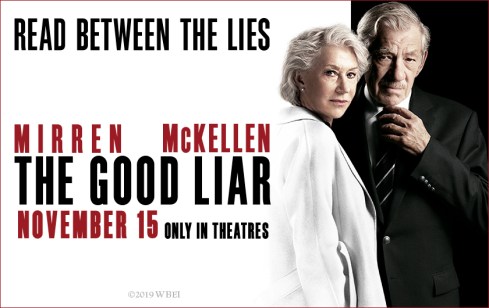
The Good Liar Movie Review

From an online dating site, two people meet. They are two seniors, con artist Roy (Ian McKellen) and his seemingly easy prey Betty (Helen Mirren), a wealthy widow. That’s all I knew about the movie before I went into the theatre. When I came out, I was surprised by its intensity and scope. Not something I’d expected. Definitely not a romantic dramedy but a suspense thriller that drops hints along the way and slowly peels off its layers of disguise. 

The Good Liar

That’s all I’m going to say about the plot because any more details I give out would diminish your enjoyment. However, I’m sure there are those who, like me, had never expected the personal history behind these two characters. Some might have been caught so off guard that they’d find the story preposterous. To them I say, it’s no more preposterous than Gone Girl, or The Debt, or Inglorious Basterds, which Roy and Betty watch in the movie. The interplay between Mirren and McKellen more than compensates for the lack of plausibility in the revealing of truth in the latter part. Further, it’s these elements of surprise that make the movie entertaining. Take it as pure escapism.

The Good Liar is based on the debut novel by British author Nicholas Searle, a pseudonym. The author worked as a UK intelligence officer before becoming a full-time writer. After watching the movie now I’m piqued to read the book, not to explore deep subject but just for its structure, to see how Searle tells his story interweaving the present and the past. This is one good case for not reading the book before watching the movie.

Mirren and McKellen, two British acting icons for the stage and screen, deliver a captivating performance playing off each other and enjoying themselves too, by the look. Director Bill Condon deftly leads us on to some revealing that makes one think twice about the meaning of the title. Condon directed Dreamgirls (2006) to two Oscar wins and received a Best Writing Oscar for adapting Gods and Monsters (1998) and a nom for his screenplay for Chicago (2002).

Other cast members include Jim Carter and Russell Tovey, both lending good support. I admit I have to try hard to cast away images of Mr. Carson of Downton Abbey when I watch Carter in The Good Liar, no matter how modern his hairdo.

Cinematographer Tobias A. Schliessler (A Wrinkle in Time 2018; Beauty and the Beast, 2017) offers some interesting vantage points, in particular the aerial shots in several scenes. The beginning of the movie grabs our attention right away with the credits being typed out on screen and a high angle shot of the two main characters connecting online on a dating site, then pulling in closer. The extreme close-ups of their eyes prepare us for intrigues. The story moves right in wasting no time. Overall, just watching the duo play off each other is entertaining enough.


~ ~ ~ Ripples


Original Screenplays Written Directly for the Screen: What to Watch in November and December 2019

The Academy has separate award categories for writing: Screenplay adapted from another source and screenplays written directly for the screen. My last post is a list of movie adaptations coming out this fall/winter. In this post is a list of some highly anticipated features based on an original screenplay, all poised for the Awards Season, eyeing the 2020 Oscars race.


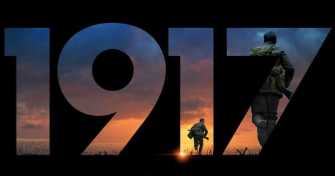
1917

1917.jpg

Director Sam Mendes takes a fragment of a story his grandfather Alfred Mendes had told him and wrote this original screenplay. During WWI, two young privates (one apparently represents his grandfather) race against time to deliver a message deep into enemy territory to save 1,600 British soldiers from heading into a death trap. In real life, Alfred Mendes was given a Military Medal for his bravery in taking up the mission voluntarily. So, the movie has a particular personal meaning for the younger Mendes. The Oscar winning director (for American Beauty) has an exceptional track record of top features including Bond movies Skyfall, Spectre, and the adaptation of Richard Ford’s Revolutionary Road. In 1917, Mendes has a stellar cast to work with, including Benedict Cumberbatch, Colin Firth, Richard Madden, Mark Strong. Roger Deakins just might get another Oscar nom for cinematography.


A Hidden Life 

A Hidden Life

Here’s another hero’s story but of a very different nature. This time in WWII during Nazi occupation of Austria. Franz Jägerstätter is a farmer in a small village, leading a simple and idyllic family life. Everything changes when he’s conscripted to serve in the German army. Jägerstätter refuses to take the oath of loyalty to Hitler as he considers Hitler’s war unjust and evil. Not a pacifist, but a conscientious objector due to his Christian faith. The consequence of refusing to take the oath is death. Director Terrence Malick after The Tree of Life offers us a poignant and beautiful meditation on this hidden hero, bravery no one would have noticed, on the contrary, bravery that is met with spite and hatred even by his own village folks. I watched this at TIFF and can attest that these could well be the most meaningful 3 hours in this holiday season.

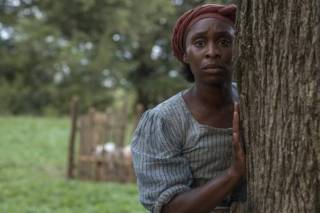
Harriet

Harriet.jpg

Yet another hero’s story. Harriet Tubman escaped slavery via the Underground Railroad and became an abolitionist and leading ‘conductor’, helping many slave families to freedom. During the American Civil War, Tubman worked for the Union Army in various capacities. Director Kasi Lemmons researched and wrote the screenplay with Gregory Allen Howard. This is the kind of movies where historical facts and dramatization would usually come under scrutiny. In an interview with IndieWire, Lemmons has made this statement: “Of course I embellished, I’m a screenwriter… I added to the story because anybody that’s a writer that approaches a real story has to embellish.” Cynthia Erivo plays Harriet, Leslie Odom Jr. and Joe Alwyn co-star.


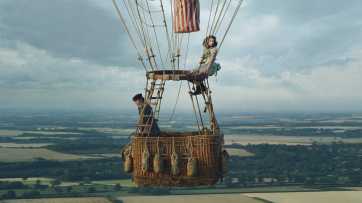
The Aeronauts

the-aeronauts.jpg
British duo Eddie Redmayne and Felicity Jones reunite for another scientific venture after their Stephen Hawking biopic The Theory of EverythingThe Aeronauts has these two stuck in a hot air ballon 40,000 ft. above ground. The movie is loosely based on the real-life feats achieved by James Glaisher and Henry Tracey Coxwell, who, in 1862, flew higher into the atmosphere than anyone had ever done before. For story appeal, Coxwell is replaced by the female balloonist Amelia Rennes. Looks like the dramatization of historical discoveries and scientific breakthroughs has developed into a genre of their own, such as The Current War, The Imitation Game, and Hidden Figures. Directed and co-written by Tom Harper. In N. American theatres Dec. 6 then on Amazon Prime Video Dec. 20. But looks like this one should be watched on the big screen.

Marriage Story

Marriage Story.jpeg
Back on the ground, a very realistic depiction. Noah Baumbach has written an insightful script on the dissolution of a marriage. I watched this at TIFF. Adam Driver and Scarlett Johansson deliver a superb performance as a couple going through a divorce. You’d think the process involves the husband, the wife, and the child only. But no. It looks like the lawyers are the major players in our adversarial legal system. Things get much more complicated and pricier than the couple have first thought and uglier than they’d wanted to go. Laura Dern, Ray Liotta, and Alan Alda are the lawyers, solid casting. A strong Oscar hopeful. After a limited release in theatres, this will go straight to Netflix.

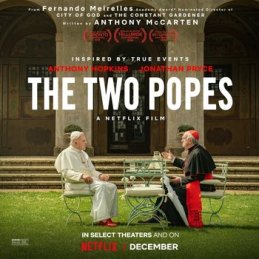
The Two Popes

The Two PopesFor originality of a screenplay this probably is a good example. Imagine the conservative Pope Benedict XVI meeting the relatively more progressive Pope Francis I as they hang out with each other, a few years before Francis became Pontiff. Maybe a get-to-know-you, pre-screening interview for the Pope-in-waiting. Anthony Hopkins plays the conservative and Jonathan Pryce, the liberal. Helmed by acclaimed Brazilian director Fernando Meirelles whose past works include the Oscar nominated City of God and The Constant Gardener where Rachel Weisz won her Oscar. Screenplay by Anthony McCarten, 3-time Oscar nominee for Bohemian Rhapsody, Darkest Hour, and The Theory of Everything. Again, Netflix will have it after a limited theatrical run in December. 


***


Related Posts:

Movies Based on Books in Nov. and Dec. 2019

David Copperfield: From Book to Film

Downton Abbey the movie not just for fans

Movies based on books in November and December 2019

Here are several films coming out this fall/winter that are based on books. Usually features given a release date during this time come with some buzz as the awards season has kicked off. Surely there are also those that are from original screenplays, a few are highly anticipated titles as well. Another post for them.

Here’s a list of upcoming book to screen features. Some are in theatres already.


The Good Liar

The Good Liar.jpg

This is an interesting premise: From an online dating site, two people meet, each having an agenda of his/her own. They are octogenarian con artist Roy and his seemingly easy, slightly younger prey Betty, a wealthy widow. Played by two veterans of the stage and screen, Ian McKellen and Helen Mirren, just to watch their performance would be pleasure enough, not to mention how the plot thickens. Bill Condon directs. Based on the debut novel by Nicholas Searle; the name BTW, is a pseudonym. The author is a former UK intelligence officer before turning full-time writer. Now that’s intriguing.


The Irishman 

The Irishman.jpg

A highly anticipated Scorsese movie and it’s based on a book; many of the director’s works are.  This one is adapted from Charles Brandt’s true crime novel about the ‘Irishman’ Frank Sheeran, the hitman who murdered Teamsters boss Jimmy Hoffa. Screenplay is by Steven Zaillian, the Oscar winning writer who adapted Schindler’s List for the big screen. A Scorsese cast with Robert De Niro as Sheeran, Al Pacino, Joe Pesci, Anna Paquin. Limited release in theatres, then on Netflix, which makes it another potential clash with studio gatekeeper Spielberg.


Jojo Rabbit

Jojo Rabbit Movie Still


Winner of the Grolsch People’s Choice Award at TIFF 2019. The award has always been cited as an indicator of Oscar Best Picture, like last year’s The Green Book. But just like last year, the feature is embraced by viewers but received mixed reviews by critics. Billed as an ‘Anti-Hate Satire’, the farcical rendition is helmed by New Zealand director Taika Waititi who also stars as Adolf Hitler, a caricature and imaginary friend of 10 yr. old Jojo going through tough times towards the end of WWII. Scarlett Johansson and Sam Rockwell co-star. The movie is loosely based on the book Caging Skies by New Zealand-Belgian novelist Christine Leunens. How much has Waititi taken out from the book and how much is his own imagination? A good case study of the boundary and definition of movie adaptations.


Motherless Brooklyn

Motherless Brooklyn.jpg

Edward Norton has wanted to make the movie ever since he read Jonathan Lethem’s detective novel, a 1999 National Book Critics Circle Award winner. So, it’s taken him 20 years to do it, himself being the screenwriter, director, actor, and producer. Norton plays Lionel Essrog, a detective with Tourette’s syndrome, a disorder which afflicts him with involuntary tics. While keeping the location in NYC, Norton has changed the time to the 50’s from 1999, thereby introducing some nostalgic designs and costumes, and noir for taste. Cast includes Gugu Mbatha-Raw, Willem Defoe, Bruce Willis, and Alec Baldwin.


Little Women

Saoirse-Ronan-Jo-Character-Poster-0fb3.jpg

It has been 25 years since the last full feature adaptation of Louisa May Alcott’s classic Little Women. This updated remake is in the hands of Greta Gerwig, whose Lady Bird (2017) brought her two Oscar noms, for Best Director and Original Screenplay. But what left an indelible memory for me is her role as Frances in Noah Baumbach’s Frances Ha (2012). Now thinking back to her character Frances, a young dancer striving on her own in NYC, it shares the spirit of Jo March in Little Women: independent, fresh, and authentic. Great cast with Saoirse Ronan, Emma Watson, Florence Pugh, Timothée Chalamet, Laura Dern, Meryl Streep. A film I most look forward to this holidays season.


Cats

Cats.jpeg

For all ye ailurophiles and musical lovers. Based on T. S. Eliot’s collection of poems Old Possum’s Book of Practical Cats, Andrew Lloyd Webber’s Cats is hailed as one of the biggest hits in theatrical history on their website. Director Tom Hooper has another musical-turned-movie under his belt: Les Misérables (2012) which won 3 Oscars. Attractive cast in Cats the movie: Idris Elba, Jennifer Hudson, Judi Dench, Rebel Wilson, Ian McKellen, James Corden, Taylor Swift.

***


‘Parasite’ is an Entertaining Wild Ride

Parasite won the prestigious Palme d’Or at Cannes this May. I watched it at the Toronto International Film Festival (TIFF) and reviewed it for Asian American Press in September. I thank AAPress for the permission to re-post my full review here on Ripple Effects. The film is now released in selective theatres.

Parasite
Brother and sister seeking Wi Fi reception in Parasite. Image Credit: Courtesy of TIFF19

South Korean director Bong Joon-ho can make social statements in the most unconventional ways, like through the friendship between a child and a giant pig in Okja (2017) to draw awareness to our meat-obsessed economy, or, environmental warnings in the apocalyptic action thriller Snowpiercer (2013).

His latest work, the 2019 Cannes Palme d’Or winning Parasite, has its Canadian Premiere at the 44th Toronto International Film Festival in September. Its subject matter––the gap between the rich and the poor in contemporary Asian society––had been covered by two acclaimed productions at Cannes last year, Japanese director Hirokazu Kore-eda’s Palme d’Or winner Shoplifters, and Burning, which brought South Korean Lee Chang-dong a Best Director win. Under Bong’s helming, the subject matter is approached with a fresh, new take showcasing his signature audacious and inventive handling.

With Parasite, Bong has surpassed himself by delivering a genre-fusing feature, confronting economic disparity in his home country of South Korea. It opens as a dark comedy filled with funny tricks and clever twists, then develops with rising suspense while still keeping its comedic styling, eventually rolling into a chaotic mayhem of an action thriller.

Living in a cramped and squalid semi-basement unit, the Kim family takes up odd jobs to scrape by. They are father Ki-taek (Kang-ho Song), mom Chung-sook (Hyae Jin Chang) and their adult son Ki-woo (Woo-sik Choi) and daughter Ki-jung (So-dam Park). The son has failed the university entrance exam four times. As we learn in the film, in a society where an opening for a security guard position could attract 500 university level applicants, the Kims have no luck but to share the plight of unemployment.

One day Ki-woo meets an old school friend who is going away for a short while. He recommends Ki-woo take over his tutoring job at the rich Park family to help their daughter with English. Mr. Park (Sun-kyun Lee) is the president of a high-tech company. Ki-woo accepts the challenge with apprehension, but knowing the opportunities this could open up, he forges ahead. With a little help from his artistically inclined sister, Ki-woo heads to the Parks’ residence and presents his best self to the lady of the house, Mrs. Park, the beautiful but naive wife Yeon-kyo (Yeo-jeong Jo). Ki-woo is hired on the spot and thus begins a life-altering adventure and mishaps for both families.

The Park family of four lives in an architect-designed residence, with lush grounds and gardens. As he gets to know the teenaged Park daughter Da-hye (Jung Ziso) and her younger brother Da-song (Jung Hyeon Jun), the quick-thinking Ki-woo begins to pave a path for his own family members to benefit from his new position. Anything more mentioned here will be spoilers to some clever and funny plot lines.

Another crucial character living in the luxury abode is the housekeeper Moon-Gwang (Lee Jung Eun). A long-time resident in the estate as she has been working there since the previous ownership. She is an indispensable help to the Parks’ daily living. Moon-Gwang gives the impression of a Mrs. Danver type of character as in Hitchcock’s Rebecca. With Bong’s script, there’s always something more than the appearance conveys.

A distinguished feature of the film is the original score by Korean composer Jaeil Jung. Classical styling from full orchestral to piano, harpsichord, strings, and percussions, the music in Parasite is a major force augmenting the suspense and the overall storytelling, as well as enhancing the production with a touch of elegance. Just listening to the soundtrack is an enjoyment in itself.

Parasite is slick and smooth-pacing, towards the end, it turns into a Bong-style action thriller, bloody and graphic. Snowpiercer comes to mind. Can the rich and the poor live peacefully together? No answer is offered here, for nothing is as simple as it appears. What Bong presents with Parasite is a scenario provoking the imaginary. The bottom line could well be just the wild wide of pure entertainment.

~ ~ ~ Ripples

***

My other related reviews on AAPress:

Shoplifters

Burning

The Personal History of David Copperfield: From Book to Film

In a previous post I reviewed The Goldfinch, one of two literary adaptations on my list to watch while I was at the Toronto International Film Festival (TIFF) in September. The Personal History of David Copperfield is the other one, which also had its world premiere at TIFF; it represents a totally different approach to bringing a literary work to the big screen.

If The Goldfinch is an example of a traditional way of adaptation, striving at loyalty to the literary source while overlooking cinematic elements, David Copperfield is a brave venture out wielding post-modern strokes, not that it is changed into a contemporary setting, but that it is adapted with a modern-day zeitgeist. Here’s director Armando Iannucci’s rationale during a TIFF interview: Just as Dickens wrote David Copperfield reflecting life and society of his time, as a filmmaker today, he directs the adaptation through a frame of our time. 

David Copperfield
Dev Patel as David Copperfield. Image Credit: Courtesy of TIFF19

What stands out in such post-modern filmmaking is the ‘colour-blind casting’ of the production. David Copperfield is played by Dev Patel, a young British actor of Indian descent. Known for his breakout role in Slumdog Millionaire (2008), Patel has established a popular screen presence with a charisma that whisked him through many subsequent successful features such as the two Best Exotic Marigold Hotel (2011, 2015) and Lion (2016). Other non-white actors taking up main roles include Benedict Wong (Avengers: Endgame, 2019) as Mr. Wickfield, Rosalind Eleazar (Howards End, 2017) as Agnes and Nikki Amuka-Bird (The Children Act, 2017) as Mrs. Steerforth. It is a bold statement Iannucci is making: skin colour is not an issue. These talents are first and foremost, actors.

Iannucci indicated that he’d always have Patel in mind ever since he watched Lion (2016), a true story about an Indian boy separated from his older brother in a Calcutta train station and later sent away for adoption in Australia. Twenty-five years later, after a long search, he finally located and reunited with his mother in an Indian village. Watching Patel in Lion, Iannucci thought, that’s David Copperfield for him. Indeed, Dickens’s character David Copperfield could well be a metaphor for those who had suffered much in childhood and yet against all odds, have survived and grown up to be resilient and compassionate human beings.

The adaptation exudes energy and humour. Iannucci has chosen his cinematic palette with bright colours and sprinkled with comedic sparks. Surely, Dickens’s Copperfield has a sad upbringing, orphaned after his beloved mother dies young, and mistreated by his stepfather Mr. Murdstone and his sister Jane Murdstone, later having had to fend for himself as a child labourer at the ripe age of 12. Yet Dickens’s humour never fades. His light-hearted depiction of Aunt Betsey Trotwood or Mr. Micawber offer some hilarious characterization. Later, David’s brave and arduous escape to seek the shelter of Aunt Betsey turns his life around. The autobiographical fiction could well represent Dickens’s view that, in the midst of misfortunes and human pathos, there still lies a deeper essence, and that’s the joy of life. Iannucci deftly capitalizes this inherent quality in the the author’s writing and adorns his film with humour and jollity.

Here’s a note on Wikipedia on Armando Iannucci that I find interesting: “Born in Glasgow to Italian parents, Iannucci studied at the University of Glasgow followed by the University of Oxford, leaving graduate work on a D.Phil about John Milton to pursue a career in comedy.” I’m sure the story about his academic pursuit and career change entail more than just this one line can say, but that’s enough to give us the background of who’s bringing David Copperfield to the screen now. Iannucci is the creator and writer of the award-winning TV series Veep (2012-2019), the Oscar nominated political satire In the Loop (2009), and the dark comedy The Death of Stalin (2017), for which he won Best Director and Best Writer at BAFTA.

To those wary about the lack of seriousness, the superb cast is poised to deflect such criticisms. Tilda Swinton (Oscar winner Michael Clayton, 2007) as Betsey Trotwood and Hugh Laurie (Golden Globe Best Actor The Night Manager, House) as Mr. Dick are the anchors that complement Patel’s spirited performance. They are pivotal in transferring Dickens’s moral insights onto screen. Aunt Betsey’s kindness towards Mr. Dick, who in today’s term would be one stricken with mental illness, is a lesson in example, influencing David’s mutual friendship with him. The same with David’s support and acceptance of Mr. Micawber (Peter Capaldi) and his family while they are in dire financial distress. If we need a villain, Ben Whishaw’s Uriah Heep is there to show vividly the face of hypocrisy and the consequence of jealousy and deceit.

Such a light handling of the classic novel has its weakness naturally. While the moral lesson of good over evil still stands, David’s growing insights about love, life, and faith which Dickens writes about so eloquently have not been transferred onto screen as successfully. It is unfortunate that the movie does not elaborate on the effects of David’s misplaced adulations of Steerforth (Aneurin Barnard, The Goldfinch, 2019) nor does it focus on his awakening to the fervency Agnes has for him. David’s blindspot and Agnes’s hidden love for him would have made a poignant storyline. Nevertheless, the two eventually do come together, but just as a coda, with Dora (Morfydd Clark, Love & Friendship, 2016) getting the inkling of a mismatch between herself and the emerging writer to gracefully step aside, sparing David the deathbed scene from the book.

Overall, the adaptation is a joy to watch, and one of those films that I’d like to rewatch. It has just been screened at London Film Festival in early October, release dates in North America unknown. The casting might pose an issue for some, but it just may be another object lesson for today.


~ ~ ~ Ripples


***

Related Reviews on Ripple Effects:

The Goldfinch

Lion

Love & Friendship


Downton Abbey the movie not just for fans

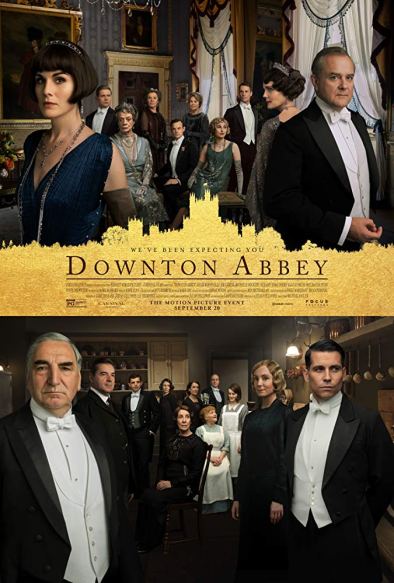
At the end of every Downton TV Season, there’s a two-hour Finale. Downton Abbey the movie feels like one of those grand finish. If there’s any TV series that can move to the big screen with just a TV script, Downton Abbey will be it. The iconic Jacobean styled mansion, superb cast, beautiful costumes and set design, not to mention creator/writer Julian Fellowes’ screenplay are its assets. Nothing close to the caliber of Gosford Park (2001) which brought Fellowes a Best Writing Oscar, but this will do. Nothing deep and poignant as some of the TV episodes, but for two hours of viewing time in the theatre, there are a lot to see and savour.

Downton.jpg

Just by listening to the rhythmic rumbling bringing out the single melody line of the theme music can send vibes of excitement. The majestic aerial shots in the setting sun (or is it rising sun?) establishing the grand manor Downton Abbey’s stature on the big screen is a thrilling experience for fans. In the theatre I was in, almost full house with fans obviously, laughing out loud at all the jokes and witty lines, embracing the film with a celebratory mood. After 6 Seasons, 3 Golden Globes and another 54 wins and 219 nominations (according to IMDb) plus three years of absence, a Downton movie is something worth celebrating.

But this isn’t just for fans. For those who come to Downton the first time, they might have missed six Seasons and 52 episodes of backstory, the movie could be an appetizer whetting their appetite for the full feast that’s offered in the PBS Masterpiece series. The estate that they must have heard in recent years called Downton Abbey, possibly wondering if it’s a cloister for monks or nuns, is now magnified on the big screen with stunning establishing shots. No medieval garbs or habits but 1920’s, Gatsby-styled fashion and hairdo. Inviting cinematography both exterior and interior familiarize them with the setting, albeit fans might find watching in a theatre is more dim with the cinematic mode, less vibrant than via their home TV which they can adjust the brightness.

Those not comfortable with the priggish social system of the past (and present to be sure, and not only limited to England) can look deeper into the series for some revelatory themes. While The Crawley’s are originally contented with their status quo and privilege, and some rejecting all forms of modernity, like Violet’s complaint about the ‘blinding’ electric lights or Mr. Carson’s fear of the telephone, the Great War (1914-1918) changes everything. Lady Sybil goes into nursing to contribute to the war effort, the whole Downton is turned into a convalescent hospital for the wounded (a historic fact of Highclere Castle), heir Matthew Crawley and footman William fight side-by-side in the trenches, and later Lady Edith venturing out on her own to start a journalism career. The most significant is probably Lady Sybil marrying Tom Branson, the driver of Downton who’s on the ‘wrong’ side of politics, Irish republican. In this movie, he reiterates his stand: “You can love people you disagree with.”

Director Michael Engler picks up from Season 6 Finale and set the time to a year later, 1927. The movie starts with a reminiscence of the very first episode in the first Season with a train pulling into the station and a telegram delivered to Lord Grantham (Hugh Bonneville). No Titanic bad news this time but earth-shattering nonetheless, King George V (Simon Jones) and Queen Mary (Geraldine James) will be coming to Downton Abbey  and stay for one night while on route to the Yorkshire area.

The household is in warp speed mode preparing for the royal visit in just two weeks. Before the arrival, the royal management team plus chef come to set up their commanding post, brushing away the Downton stalwarts downstairs. A coup is planned subsequently to offset such an invasion. Thus the movie diverge from its realist styling to a bit of a comedic/fantasy mode. That storyline lasts for the first hour. Then the subplots begin, allowing more interesting development.

Why Downton hasn’t lost its appeal through the years is highly due to the characters and how the actors slip into their skin so perfectly. Every character has his/her own back story, idiosyncrasy, viewpoint, and despite the class system that seems to segregate upstairs from downstairs, they are relatively free individuals who can and usually speak their minds. Take Daisy (Sophie McShera), for example, a kitchen maid, expresses her view against royalties, while Tom (Allen Leech), despite his stance for a republic Ireland, chooses to support his father-in-law Lord Grantham nonetheless. Just reflects the complexity of each individual character, a key asset of the TV series which a two-hour movie is impossible to delve into.

Thanks to scribe Fellowes, there are more duels of dialogues between Dowager Countess Violet Crawley (Maggie Smith) and Isobel Merton (Penelope Wilton), two darlings of opposing views. Here are some samples from the movie:

(Spoiler Alert: If you haven’t seen the movie, you might want to skip these lines so you can experience them first hand.)

______________________

When talking about the coming royal visit, Violet and Isobel have the following exchange.

Violet:  Will you have enough clichés to get you through the visit?
Isabel:  If not, I’ll come to you. (Not missing a beat.)

Or here, as the family talk about a relative who’ll be coming with the royalties:

Isobel:  You’re plotting something. I see a Machiavellian look in your eye.
Violet:  Machiavelli is frequently underrated. He had many qualities.
Isobel:  So did Caligula — not all of them charming.

_________________________

As with the finale of the last Downton Season, we see romantic pairings and the movie picks up where it left off.  Edith (Laura Carmichael) and Bertie (Harry Hadden-Paton) are happily married, so are Isobel and Lord Merton (Douglas Reith); Anna (Joanne Froggatt) and John Bates (Brendan Coyle) finally living in bliss, Tom meets a comparable mate, and that dancing scene outdoor with the two of them in silhouette is nicely shot. Downstairs Andy (Michael Fox) makes his intention known to Daisy, and Barrow (Robert James-Collier) finds a friend. While Molesley (Kevin Doyle) isn’t seen with Miss Baxter (Raquel Cassidy), he has the time of his life serving the King and Queen.

New members to the cast include Imelda Staunton (spouse of real-life Mr. Carson, Jim Carter) as the Queen’s lady-in-waiting Lady Bagshaw and Tuppence Middleton playing her maid Lucy Smith, a pleasant addition and a character with some significance. The short vignettes of Princess Mary’s (Kate Phillips) unhappy marriage to Henry Lascelles (Andrew Havill) has historic basis and it’s side stories like these that make the movie more interesting. Surprisingly, Tom Branson is the thread that weaves these characters together, and saves the day too.

An important conversation between Violet and granddaughter Lady Mary (Michelle Dockery) towards the end may have dropped a hint for the future. And what of Mary’s new hubby Henry Talbot (Matthew Goode)? He appears like a flash and cameo. I just wonder if Dan Stevens (Mary’s first love Matthew Crawley) ever regretted leaving Downton so soon.

Beautifully shot, classy costumes, and as always, top performance from a great cast, while not delving into deeper stories, the movie overall can satisfy fans’ longing and make a good introduction to pique the interest of first timers, hopefully prodding them to binge on the full-fledged episodes.


~ ~ ~ Ripples

***


I’ve a write-up for every episode beginning with Season 3 of Downton Abbey here on Ripple. The following post has the links to all of them plus some other related topics:

Quotable Quotes from Downton Abbey


Toronto International Film Festival 2019

In the coming weeks, I’ll be in Toronto covering the 44th TIFF taking place Sept. 5 – 15. TIFF is my annual destination away from the Pond, my chance to immerse in the celebration of film arts, world premieres of new works, festivities on King Street, and be swept up by the excitement of crowds catching a glimpse of the talents and filmmakers converging there.

For those inclined towards numbers, here are some figures: TIFF19 will screen 333 titles in total, including 245 features, 86 shorts, and 6 series, selected from 6,866 international and 1,059 Canadian submissions. There will be 133 World and 71 North American Premieres. 84 countries are represented with 36% of titles directed, co-directed, or created by women.

It’s a major task to organize one’s own viewing schedule. Films that I want to watch have time conflicts. After several days of juggling and regretful eliminating, I’ve finalized my list, more or less.

The following are some of the feature films on my To-Watch List (All images courtesy of TIFF):

A Girl MissingA Girl Missing directed by Koji Fukada (Japan) North American Premiere. Fukada’s previous film, Cannes’ Un Certain Regard Jury Prize winner Harmonium (2016) grabbed me as a concoction of Hitchcockian suspense and poignant family drama. Excited to see his newest work at TIFF.

A Hidden Life (1)A Hidden Life directed by Terrence Malick (USA, Germany) Canadian Premiere. Based on the true story of Austrian farmer and conscientious objector Franz Jägerstätter, who refused to join the German army in WWII. I expect this newest Malick film to be another soul-stirring work.

The AuditionThe Audition directed by Ina Weisse (Germany, France) World Premiere. Women play major roles in this production as director, screenwriter and cinematographer. But the main attraction for me is actor Nina Hoss, whose riveting performance won her high acclaims in the German films Phoenix (2014) and Barbara (2012).

Coming Home AgainComing Home Again dir. by Wayne Wang (USA/Korea) World Premiere. Wang brought Amy Tan’s The Joy Luck Club to mainstream cinema in 1993, telling generational stories of Chinese-Americans. His newest is based on a personal essay by acclaimed writer Chang-rae Lee about a son coming home to his ailing mother. 

David CopperfieldThe Personal History of David Copperfield dir. by Armando Iannucci (UK) World Premiere. As a book-to-movie enthusiast, I won’t miss this one. What more, the cast looks impressive, and postmodern. Dev Patel of Slumdog Millionaire (2008) fame will play Davy, Tilda Swinton as Betsey, Hugh Laurie as Mr. Dick, and Ben Whishaw the villain Uriah Heep. Turning a 800+ page classic into a two-hour movie is as daunting as Davy’s life journey. But I reserve my judgement.
THE GOLDFINCHThe Goldfinch dir. by John Crowley (USA) World Premiere. The adaptation of Donna Tartt’s Pulitzer Prize-winning novel is helmed by the same director as Brooklyn (2015), with adapted screenplay by Wolf Hall and Tinker Tailor Soldier Spy scribe Peter Straughan. Looks like a top-notch collaboration.

Hope GapHope Gap directed by William Nicholson (UK) World Premiere. This is Nicholson’s second directorial feature which he also wrote. His other screenplays include Les Misérables (2012) and Gladiator (2000) among many others. But what draw my attention are the duo who play a couple at the brink of a marriage breakdown, Bill Nighy

and Annette Bening.

Parasite (1)Parasite directed by Bong Joon-ho (S. Korea) Canadian Premiere. This year’s Palme d’Or winner at Cannes. From the description, it echoes Kore-eda’s Shoplifters, last year’s Cannes winner. But Bong’s audacious and creative styling could make this a fresh approach to the subject of social inequality. Lee Chang-dong’s Burning (2018) also comes to mind.

Varda by Agnes (1)Varda by Agnès directed by Agnès Varda (France) Canadian Premiere. After watching the late French New Wave auteur Agnès Varda’s documentary Faces Places (2017), I’d been looking for this, her last work. Excited to know there will be a special event at TIFF 19 with the screening of Varda by Agnès plus a bonus post-film discussion by a panel of filmmakers.
***

For the full lineup, schedule, and tickets go to tiff.net

My reviews of the above plus other TIFF titles will be published on the websites Asian American Press, Vague Visages, and here at Ripple Effects.


With Bernadette missing, time to revisit Linklater’s ‘Before’ trilogy

Watching Where’d you go, Bernadette has prompted me to reminisce on Linklater’s dialogue-filled trilogy. Re-posting my review of Before Midnight in the following.

**

We are gleaners of memories. An interesting parallel applies to the two characters Celine and Jesse as well as ourselves as audience. But if you haven’t seen Before Sunrise and Before Sunset, it would enhance your viewing pleasure to watch them first.

Flashback: Before Sunrise (1995)

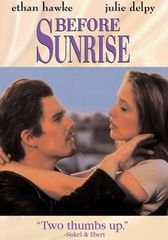
Before SunriseTwo young people, Parisian Celine (Julie Delpy) and American Jesse (Ethan Hawkes) meet on a train passing through Europe. They strike up a conversation and become so in-tuned with each other that when the train arrives Jesse’s stop in Vienna, he convinces Celine to get off with him even though her destination is Paris. There for just one night until sunrise, they walk around the city and talk about life, death, love, religion, relationships, and being transients… for they know this may well be their only encounter with each other in both of their lives. The next morning Jesse has to fly back to the U.S. As they part, they promise to meet again in six month at the same hour, on the same train platform. Throughout the film, we feel fate, or whatever you call it, has a strong presence in their short few hours together. We feel their sincerity in capturing those precious  moments, as we hear Celine’s words ring true:

“If there’s any kind of magic in this world… it must be in the attempt of understanding someone sharing something.”

Flashback: Before Sunset (2004)

Before SunsetNine years after that chance meeting, Jesse is in Paris on the last leg of a book tour. He has written a book based on that memorable encounter nine years ago. At the Shakespeare and Company bookstore, Celine shows up. They now meet for a second time, again for a short few hours before Jesse has to leave on a plane to fly back to the U.S. Their conversation reveals that, alas, their well intended reunion six months after their first chance meeting has turned into a star-crossed, missed opportunity. After that, fate has led them down separate paths. Jesse is now married and has a son. Celine, still on her own, yearns for that first romance to develop but now seems even more elusive.

To the present: Before Midnight (2013)

Before Midnight

So we have been following Jesse and Celine like a longitudinal study, albeit meeting them just twice within this eighteen year period. In the first two films, director Richard Linklater has us follow Jesse and Celine in real time through long takes, walking along with them in Vienna and Paris, listening in on their conversations and see them pour their hearts out, just to be heard, to be known. Those were romantic moments. This time is summer in Greece; this time is reality check.

We see Jesse and Celine now married. What happens in between those nine years is that Jesse has divorced his wife in Chicago, come over to Paris, married Celine and together they have two lovely twin daughters. But things aren’t so idyllic, for Jesse is troubled by not being around for his now young teenaged son Hank from his previous marriage and whom he can only see in the summer. The film begins with Jesse seeing his son off at the airport.

For the next 15 minutes and in one stationary take through the front windshield of the car, we see a happy couple Jesse and Celine driving from the airport to a Greek country house, with their twin daughters sleeping in the backseat. We hear them talk, yes, they love to talk to each other, just as we’ve seen in the past.

In the setting of an idyllic seaside residence, Jesse and Celine join a small gathering of writers. we see them prepare and eat healthy Greek salads and discuss equally idyllic topics such as writing, love, knowing each other, virtual reality (yes, for the contemporary effect), and being transients in life. Again, that first train encounter comes to mind. In conclusion they drink to ‘passing through’.

The next act is reminiscence of previous Before films… Jesse and Celine walk to a hotel paid for by their writer friends, who have also taken up the duty of babysitting their twins so the two of them can fully enjoy each other for the night. For twenty minutes the camera follows them in real time strolling through some scenic rural town toward their country hotel, exchanging thoughts like before. But no, not totally like before, for now they are eighteen years older, 41, and each with emotional undercurrents running deep.

Five minutes in the hotel room, discordant riptides begin to surface. Talk turns into quarrel. Why, this is just too real. In the past, we see them only in romantic mode. Now as they expose their underlying thoughts and suspicions, tempers flare, words turn callous. We would silently say ‘ouch!’ occasionally.

The beginning scene of the first film, Before Sunrise, has become a stark foreshadowing… sitting near Jesse and Celine on that train, two middle-aged couple argue fiercely in German. Seeing their temper flare but not understanding what they were arguing about, Jesse and Celine ponder on the question of how two people can grow old together in harmony.

Now here in what is supposed to be an ideal get-away, for twenty minutes we are the invisible witnesses of a marital conflict, and we would want to stay in there to see what happens next, not because of the schadenfreude effect, but because this is just too real.

Romance is holiday, marriage is work.

Hawke and Delpy own these scenes depicting realistically what marriage could entail. Other films readily come to mind… Ingmar Bergman’s Scenes From A Marriage (1973) and Woody Allen’s Husbands and Wives (1992). Before Midnight is a contemporary version, with a highly watchable backdrop and natural performance. Unlike Bergman and Allen, Linklater is commendable in crafting a more positive ending. It’s refreshing to see a glimmer of hope at the end of nasty quarrels.

In the final act, Jesse attempts to woo his wife back. How he does it is most endearing. Every moment in the present is an opportunity to create a fond memory to look back to in the future. This complicated package called love is a piece of work. Director Linklater and his two stars, who co-wrote the screenplay with him, might well have passed to us the secret of marital success… Before too late, glean fond memories from the past to sustain the relationship at present; before too late, create more loving memories to carry it into the future.

One line from Celine in Before Sunset is most apt here: “Memory is a wonderful thing if we don’t have to deal with the past.” Jesse might have known this too well, not to leave the present a mess for future to deal with, but leave it as a pleasant memory to cherish in the days ahead.

With a trilogy of films beginning with the word ‘Before’ in the title, we should know that time is of the essence. Time to make the present a memorable past for the future, before too late.

That line still lingers as the film ends… ‘To passing through.’

~ ~ ~ 1/2 Ripples for all three films

***

Related Posts on Ripple:

Where’d You Go Bernadette: from book to screen

Boyhood: The Moment Seizes Us

Where’d You Go, Bernadette: From Book to Screen

When I first learned that Maria Semple’s quirky and clever 2012 novel would be turned into a movie, I had that umm… feeling. When I found out Richard Linklater would be directing it, it turned into a whaaat? Sure it’s not a Wes Anderson project?

On the surface a mother-daughter relational story, Semple’s book is deceivingly simple. Underneath the humour is her take on contemporary American society, the tyranny of technology, vulnerability of the non-conforming, sarcasm on the upwardly aspiring middle class, the rat race and its effect on parenting, the outsourcing economy, and even taking a jab on America’s quiet and polite neighbour to the north. As a target, I must give you the following excerpt from the book as evidence of Semple’s spikiness (or is it spunkiness):

You probably think, U.S./Canada, they’re interchangeable because they’re both filled with English-speaking, morbidly obese white people. Well, Manjula (virtual personal assistant from India), you couldn’t be more mistaken.

Americans are pushy, obnoxious, neurotic, crass… Canadians are none of that. The way you might fear a cow sitting down in the middle of the street during rush hour, that’s how I fear Canadians. To Canadians, everyone is equal. Joni Mitchell is interchangeable with a secretary at open-mic night. Frank Gehry is no greater than a hack pumping out McMansions on AutoCAD. John Candy is no funnier than Uncle Lou when he gets a couple of beers in him. No wonder the only Canadians anyone’s ever heard of are the ones who have gotten the hell out. Anyone with talent who stayed would be flattened under an avalanche of equality. The thing Canadians don’t understand is that some people are extraordinary and should be treated as such.

But that’s not in the movie. Why, the movie is a total stripped-down version without the incendiary, sarcastic swipes, or the laugh-out-loud funny, and ah… thanks, Maria Semple, for the words, “it’s flattened under an avalanche of” smoothened edges in characterization and plot.

By the way, if one reads deeper into the Canadian jab quoted above, it wouldn’t be hard to see the layered meaning. Aha, the joke is on which side of the 49th?

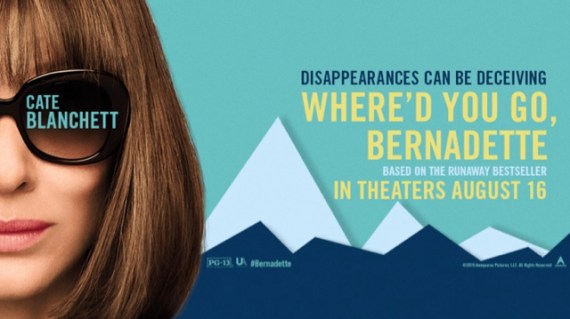
Bernadette (1).jpg


Bernadette Fox (Cate Blanchett) has had her glorious days as an acclaimed architect, pioneer of the green building movement, a MacArthur grant recipient at 32, and a young woman succeeding in a male-dominated profession. Due to an unfortunate incident, her award-winning project was demolished without her knowledge, destroyed by a vengeful neighbour who bought it under an agent’s name. Devastated, Bernadette crashed out of her career, moved to Seattle with her Microsoft, TED Talking husband Elgie (Billy Crudup, a miscast). They bought a huge, dilapidated mansion. For twenty years she had ignored the maintenance of her home and self. The traumatic health issue of her daughter Bee’s (Emma Nelson) early years drives her further into the hole living as a reclusive agoraphobic.

Bernadette and Bee are the best of friends though. Mother/daughter relationship is well portrayed in the movie, a particular gripping scene is their singing the song ‘Time after time’ together in the car ending with a Bernadette meltdown. “You don’t know how hard it is for me.” Bee doesn’t know, viewers need to guess, but readers do, for they are supplied with ample back story. The movie, however, has trouble connecting the past with the present, or presenting sufficient motivation for the actions and behaviour of the characters.

As loving parents, Bernadette and Elgie have to fulfill a promise to Bee, that is she can have anything she asks for if she gets straight A’s; now they’re stuck with making a family trip to Antarctica. For two-third of the movie we see mostly interior shots of home and work building up a case to Bernadette’s disappearance. The momentum picks up only in the last third, the Antarctica episode.

The storytelling in the book is a lively collection of emails, notes, letters, hospital billing, and police report plus personal narrative to present the different voices from various characters. On screen, the Rashomon-like shifting of perspectives are converted into mainly two characters sitting and talking to each other. Surely Linklater is an expert in dialogues with his Before trilogy, where the camera follows two characters Jesse (Ethan Hawke) and Céline (Julie Delpy) talking throughout the movie and yet still captivating viewers as we watch them wander the streets and listening to them chat. But here, that magic is missing. Where’d you go, Linklater?

For the casting of Bernadette, Cate Blanchett is a good choice, her Academy Award winning role in Blue Jasmine comes to mind. Unfortunately, here she is not in her Jasmine form. The major issue is a weak script, hence the directing of it. The screenplay follows the book faithfully but in a minimal, abridged version. It begs the question: does a movie adaptation need to follow the source material to the dot? Here in this very different medium, dialogues are picked right out of the novel while the camera has not been fully utilized, nor any imaginative ingredients been added to the visual adaptation of this quirky and zesty book. Well, yes, it might have been faithful to the letter, but not the spirit.

The title question obviously doesn’t just mean the physical whereabouts of Bernadette but where her talent, creativity, and vitality for life have gone. There’s a scene with Bernadette meeting her previous mentor Paul Jellinek (Laurence Fishburne) who says it explicitly: “People like you must create. If you don’t, you become a menace to society.” Such is a thematic element that needs to be calved out more clearly, a talent caged in by her own disillusionment and her ultimate breakthrough. Don’t blame motherhood, and Bernadette doesn’t, for she sees a beautiful offspring flourishing in Bee. But is parenting a zero-sum game? The context and question should be handled with more depth and inner exploration. With not much contextual support, the case of a self-imposed, locked-up genius is left to the actor Blanchett to portray, and at times it seems forced.

Missing story elements cause lapses in the storytelling. Why does Audrey (Kristen Wiig), Bernadette’s neighbour and archenemy, suddenly becomes friend with her at the most critical moment? Or, during the mudslide, the camera hasn’t shown (without obstruction) what’s written on the sign, which has triggered much of the resentment between Audrey and Bernadette. Readers know, but not viewers if they have not read the source material.

At the end of the book there’s an “About the Author” page. Before writing fiction, Semple had written for the television shows Arrested Development, Mad About You, and Ellen. If one hadn’t known this tidbit already, a natural response would have been “no wonder!” It just points plainly to the ideal person who should have written the screenplay.


~ ~ Ripples

***


Related Reviews on Ripple:

Blue Jasmine: Homage and Reimagining

Boyhood: The Moment Seizes Us 

Before Midnight: Reality Check

The Budapest Hotel: A Grand Escape


Upcoming Book-to-Movie Adaptations: Good Summer Reading

Previously on Ripple, I’d posted lists of books-to-movies coming out soon here and here. If you’ve gone to the theatre lately, you’ve probably seen trailers for some of them: The GoldfinchWhere’d you go Bernadette? or Cats (like a horror movie for someone who has ailurophobia.)

Here are some updates. The following is a list of movie adaptations in development for the big screen or TV series. They are in various stages of production, just announced or in pre-production, release dates unknown or tentative. If you’re the well-prepped movie goer, here’s your list of summer reading:

Where the Crawdads sing.jpegWhere the Crawdads Sing by Delia Owens

Now 46 weeks on the NYT Bestsellers List and has sold more than 1.5 million copies, Owens’s debut novel about a young girl who has raised herself and survived alone in a coastal North Carolina marsh is a mix of nature writing, murder mystery, and coming-of-age story. Reese Witherspoon will be producing it with Fox 2000. Owens is a wildlife scientist and nature writer who had spent years in Africa.


Little Fires Everywhere (1)

Little Fires Everywhere by Celeste Ng

Another project by Witherspoon’s Hello Sunshine production company. Ng’s novel about families in a Cleveland suburb dealing with diversity, teenager angsts, and generational conflicts had been named Best Book of the Year (2017) by NPR, Amazon, Goodreads, The Guardian… just to name a few. It will be adapted into a TV series with the Hulu platform. 


Ask Again, YesAsk Again, Yes by Mary Beth Keane

The producers of American Beauty (1999) which won 5 Oscars in 2000 have bought the movie and TV rights of the book. Another novel about suburban families is being described in Goodreads as “profoundly moving.” Author Keane was a 2015 Guggenheim Fellow in Fiction; her previous works had been a finalist for the PEN/Hemingway Award and garnered Best Book of the year acclaims.


The Silent PatientThe Silent Patient by Alex Michaelides

Screenwriter Michaelides’s debut novel is described by Entertainment Weekly as “a mix of Hitchcockian suspense, Agatha Christie plotting, and Greek tragedy.” A psychotherapist has to unlock the mystery of his patient who’d killed her husband six years earlier and then remained silent since. (Read an excerpt using the link) Meanwhile, Michaelides will write the screenplay, naturally. Brad Pitt’s Plan B and Annapurna Pictures producing.


Tattoist of Auschwitz.jpgThe Tattooist of Auschwitz by Heather Morris

Hailed as the true story of Slovakian Jew, Lali Sokolov, who fell in love with a girl he was tattooing at the Auschwitz concentration camp during WWII, a powerful story of love and survival. British producer Synchronicity Films had secured the rights and a drama series is in development. Here’s the rub: the Auschwitz Memorial Research Centre had disputed the authenticity of the book according to The Guardian. A case of negative publicity is still good publicity?
The Underground Railroad

The Underground Railroad by Colson Whitehead

Colson Whitehead’s Pulitzer Prize for Fiction winner (2017) is adapted by director Barry Jenkins. Jenkins’s name had catapulted to stardom since his Oscar win for Moonlight (2016) and the subsequent If Beale Street Could Talk (2018). The story of the harrowing escape of two Southern slaves Cora and Caesar using the Underground Railroad is adapted into 11 episodes for Amazon Studio.


Washington Black (2)

Washington Black by Esi Edugyan

The book is Edugyan’s second consecutive win of Canada’s Scotiabank Giller’s Prize, also shortlisted for the 2018 Booker Prize. The journey of 11-year-old slave boy “Wash” born on a Barbados plantation is a fantastical story of adventure when he became the personal servant of Englishman Christopher Wilde, inventor, naturalist, explorer, and abolitionist. 20th Century Fox TV, after “an intense bidding war” , had secured the rights to the small screen.


***

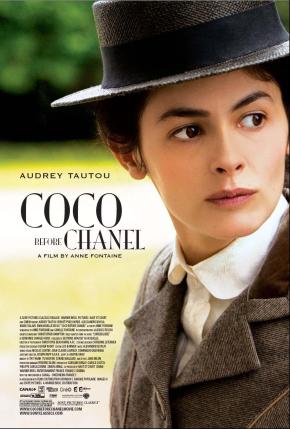
‘Coco Before Chanel’ directed by Anne Fontaine

According to the French Ministry of Culture department that produces and promotes French cinema, 27 percent of French movies were directed or co-directed by women in 2017 compared to 20.8 percent in 2008. (source article here) An improvement, but they are still not pleased with the disparity and working towards a more equal representation.

For comparison, in Hollywood, according to the annual USC Annenberg Inclusion Initiative study (Jan. 2018), the figure is 4%, after examining 1,100 popular films. Now this result is found in the midst of the #MeToo and #TimesUp movements. For those interested to find out more, here’s a comprehensive report from Annenberg (July, 2018) comparing many more aspects of the film industry.

I just find these stats alarming. This is not a post to present an analysis of the issue, that warrants a thesis, but these figures just need to be shared. For Paris in July this week, I’ve chosen a film that showcases a woman succeeding in a man’s world, overcoming what looked to be insurmountable odds. Among its many accolades, I find this one notable: Best Movie About Women, given by the Women Film Critics Circle Awards (2009).

Another film from French director Anne Fontaine. Unlike Gemma Bovery in last week’s movie, this is a real-life heroine.

Coco Before Chanel (2009)

I’ve appreciated filmmaker Fontaine not doing a whole life biopic on the fashion icon, but focuses on her early years. What was her background? How did she overcome life’s obstacles to create a path for herself?  The intermingling of fate and choice is one important theme Fontaine had touched on in this cinematic account.


Coco Before Chanel


Gabrielle Chanel’s life is an extraordinary story, and Fontaine respects that. Before she became the world famous icon Coco Chanel, she was Gabrielle Chanel born on August 19, 1883, in Saumur, France.

The film opens with the camera following two young girls being driven to an orphanage. We soon find out they are sisters Gabrielle and Adrienne. What makes the scene sadder is that the driver of the horse-drawn cart in which the sisters are transported is their father. We never see his face. He doesn’t turn to say goodbye. He never visits.

That’s a short beginning. The next scene Fontaine shows us is fifteen years later in a cabaret where the sisters sing and dance. In there, Gabrielle (Audrey Tautou) meets Étienne Balsan (Benoît Poelvoorde), an older military man, paying passing interest in Coco, a name he’s created for her. Fontaine is effective to show us what Coco is like within just a few minutes of the cabaret scene. She’s a calm, self-assured woman, won’t sell herself to appease the guests; as a consequence, she and her sisters are fired. Looks like they’re happy to leave the place too.

They keep their day job as seamstresses but soon part as Adrienne is leaving with a man to live in Paris. Coco decides to go to Compiègne to look for Balsan. Balsan agrees to let her stay there in his country mansion temporarily but Coco has her resourcefulness to change Balsan’s mind. She learns to ride a horse on her own in a day, and soon breaks into the social circle of Balsan’s by distinguishing herself as a woman with style, talent and skills.

A raiser of race horses, Balsan’s social milieu and the horse races where members of the fashionable class exhibit their haute attires inspire the ingenuity of Coco. She begins to design hats for the ladies, and establishes herself as a unique contrarian. She wears a simple straw hat, alters a vest, a white shirt and a tie from Balsan’s closet to suit herself. Her style is “dresses without corsets, shoes with no heels, and hats with no feathers.”

Among Balsan’s business acquaintances is Boy Capel (Alessandro Nivola), a young Englishman. Coco’s short, intimate relationship with him soon changes her outlook in love and life. After a sad incidence, Coco becomes more independent, confident with herself and her skills, and determined to move to Paris to open a hat boutique. With the financial help from Balsan, she begins that first step, and the rest is history.

Tautou has come a long way from her role as Amelie. She is suitably cast as Coco, reflecting the character of the self-made persona. The signature suits she tailors for herself exude elegance devoid of adornments; the simple hats she designs for herself well-match her cool subtlety. Fontaine captures Coco with meticulous care, from nuanced expressions to her confident posture. Of course, kudos goes to costume designer Catherine Leterrier who won, deservedly, a César Award for Best Costume Design and garnered an Oscar nom.

Composer Alexandre Desplat’s score adds to the enjoyment. Not an epic of extraordinary stature, but like the hat Coco wears, the film is stylish without overstating, composed and effective.

~ ~ ~ Ripples 

Coco Before Chanel is on Netflix.

***

This is a review for Paris In July hosted by Tamara at Thyme for Tea.

PIJ2019 Tamara

Some Other Related Ripple Reviews of French Films:

Cleo from 5 to 7

Things to Come

I’ve Loved You So Long