For the tenth year, I’m sharing a Christmas read here at the Pond. For the first time, it’s a book written for young readers but is ever so relevant for us grown-ups. Herein lies the ingenuity of writer Madeleine L’Engle. Time to dig out that copy that you might have read when you were a youngster. If you haven’t read it, now’s a good time.
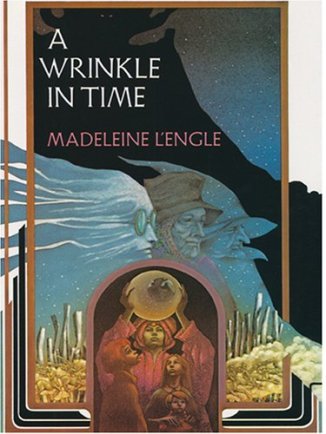
Newbery Medal winner A Wrinkle in Time is the first book in the Time Quintet series of fantasy YA fiction about the Murray family, scientist parents and four children Meg, twins Dennys and Sandy, five year-old genius Charles Wallace, and that special friend of Meg’s, Calvin O’Keefe. The deceptively simple odyssey in time and space is packed with wonder and wisdom.
The book not only exudes insights but shows L’Engle’s remarkable foresights. Take this for an example, dematerializing and materializing for easy transport. Published in 1962, the book came out four years before Scotty beamed Kirk up using the same method in the first season of Star Trek.
Or this fancy idea, ‘tesseracting’, that is, travelling through space and time via a wrinkle in time. The shortest distance between two points is not a straight line, but through a wrinkle when two points are folded. That’s fifty years before Christopher Nolan sends Matthew McConaughey interstellar travelling.
All concepts held in a simple plot. Meg, Charles Wallace, together with friend Calvin, go on an interstellar quest to look for Meg and Charles’ physicist father who had gone missing for almost a year while doing some classified scientific work for the government. This little, unequipped search party is initiated and aided by three celestial beings: Mrs. Whatsit, who’s much wiser than she appears, Mrs. Which, who doesn’t bother materializing but remains as a shimmering beam, and Mrs. Who, who speaks in quotes.
The more a man knows, the less he talks.
Their odyssey brings them finally to the planet Camazotz, where they find Mr. Murray confined by the evil Dark Thing, or IT (Surprise! 24 years before Stephen King’s book and now movie) The smart alecky Charles Wallace is easy prey and quickly influenced by IT. (And for Luddites, what better parallel to address our technology now, the evil IT) Ultimately, it’s Meg, our reluctant and timid heroine, who has to be the one to go fight IT to rescue her little brother.
The foolishness of God is wiser than men; and the weakness of God is stronger than men… God hath chosen the foolish things of the world to confound the wise; and God hath chosen the weak things of the world to confound the things which are mighty.
Meg knows Charles Wallace is not himself but trapped and deceived, and must be snatched from the evil force IT. She has just one weapon as her ammunition, given to her by Mrs. Whatsit, that one thing IT doesn’t have: LOVE. With her single act of bravery, she brings the family together again.
When I was a child, I read like a child, I thought like a child. When I became an adult, I can read like a child and like an adult too. That’s the joy of reading A Wrinkle in Time. One can find pleasure in the adventure and feel the vulnerability of the children, as well delve deeper into its symbolism and parallels, and ponder its layers of meaning.
L’Engle writes to the child and the adult in us. She can convey scientific and spiritual concepts at the same time and in a way that both young and old (and those in between) can enjoy. There’s no conflict between the cerebral and the spiritual; they co-exist comfortably in L’Engle’s work. Not only that, they fuse together and from that alchemy rises a whole new, inexplicable entity: Faith.
That first Christmas day when a baby was born in a lowly manger, the war against IT had started to win. Although the last, painful battle on the hill of Calvary had not been waged, the outcome was cast, just because LOVE came.
And the light shineth in darkness; and the darkness comprehended it not.
The Movie
‘Tis the Season to read or reread A Wrinkle In Time before the movie adaptation comes out in 2018. Helmed by Selma (2014) director Ava DuVernay, screenplay by Frozen (2013) scriptwriter Jennifer Lee, with some stellar beings including Rees Witherspoon, Oprah Winfrey, Mindy Kaling, Chris Pine et al.
***
Past Reading the Season Selections:
2014: Lila by Marilynne Robinson
2013: Poetry by Madeleine L’Engle
2012: Surprised by Joy by C. S. Lewis
2011: Walking on Water by Madeleine L’Engle
2010: A Widening Light, Luci Shaw

 This enticingly thin paperback has been sitting on the shelf quietly for years. I’ve long wanted to read it although I’d no idea what it was about, one of the hand-me-downs from my son’s college reads. Now that I’ve started it, I know this one’s going to be a slow cook. Even though just 217 pages, I know I can’t rush it. Exactly as the title denotes, the book is about one painting,
 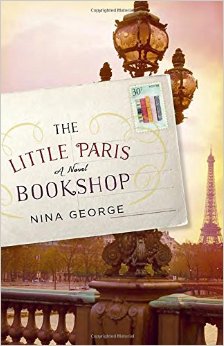 First published in Germany, now an international bestseller, The Little Paris Bookshop is a barge floating on the Seine River in Paris. Monsieur Perdu, the ‘Literary Apothecary’, is the owner. Now this is an interesting concept. M. Perdu prescribes books for any ailment his customers happen to be afflicted with. Bibliotherapy if you will. Not a bad idea. He has a book suggestion for everyone he encounters, so a clever way for German author Nina George to weave in her views on various literary works, her salutation to literature and reading. But of course, George isn’t just leading a book club discussion but telling a story. So she deftly brings us to learn more about M. Perdu’s past. While well-versed in bibliotherapy, M. Perdu has a wound that’s deep and sore, for he’s a victim of a lost love. Can the Apothecary heal himself? All signs point to a heartening, summer read.
 This one beats all my current reads in capturing my attention and interest. The contemporary composer Philip Glass (born 1937) is renowned as a ‘minimalist’ in his musical style, a label he frowns upon. Now about a quarter into Glass’s memoir, so mainly about his early life and the start of a career, I find what’s minimal is only the physical materials of life, the lack of money to pursue his dream. As for passion and talents, Glass is endowed with abundance, and the artistic milieu in which he immersed himself is astoundingly rich and fertile. Above all, the Bohemian living during his early days is idyllic. That’s why I’m mesmerized by his story, the pursuit of a dream driven by pure passion and inner drive.
 I had listened to the audio book a few years back, and wanted to reread it right away, but didn’t. After that, I forgot about it. By chance I saw it in the
  Barrows’ previous book is the wildly popular The Guernsey Literary and Potato Peel Pie Society published eight years ago. I’d enjoyed the lively characters in Guernsey amidst the troublesome setting of WWII, with the island occupied by German soldiers. Just curious to read children’s author Barrows’ first solo publication for adults. The Truth brings Barrows back to the home state of her aunt and primary writer of Guernsey, Mary Ann Shaffer, who died before completing the book. Family saga in small town West Virginia in 1938. If you’ve read this one, how is it compared with Guernsey? Should I even start it?
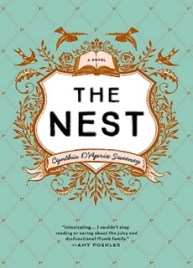 If I want a breezy summer beach read, maybe I should start with this one. But this too can wait. I got it mainly because of the future film adaptation. Sweeney’s debut work reportedly fetched a 7-figure advance from Ecco; not surprisingly, film rights were snatched up soon after. What should be noted is: by whom? Well, as evidence of the booming book/movie enterprise, Amazon Film it is, and Jill Soloway (Transparent) will direct. Note also, just saying, here’s a book with Amy Poehler’s endorsement on the cover. Have you read it? Are you looking forward to its movie adaptation?
 Often it’s the cast of an upcoming movie that prods me to read a book. This one has been on the New York Times Bestseller List for years since its publication. No matter how popular it is, I’m motivated only now mainly because of the first rate cast: Alicia Vikander, Michael Fassbender, Rachel Weisz, directed by Derek Cianfrance. Instead of a place beyond the pines (his last work) we have an island off the Australian coast, with the story about a lighthouse keeper and his wife bringing up a baby they found in a boat washed up onshore.
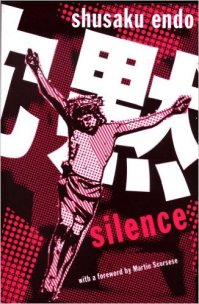 This one is just the opposite. I want to read it regardless of whether it will be made into a film or not. But what a bonus it is to know the adaptation is a Martin Scorsese’s work with Liam Neeson, Adam Driver, Andrew Garfield, and Ciarán Hinds. I highly anticipate this film, albeit I expect the viewing experience won’t be pleasant. I’ve read it before but want to reread it before watching. The book is heart-wrenching as Endô describes the persecutions and tortures Christians and Jesuit missionaries suffered in 17th century Japan. How Scorsese, a Catholic himself, handles the subject matter – the choice between apostasy vs. martyrdom – and have these character actors interpret the internal and physical torments will be intriguing to see. Scorsese wrote the forward of this edition of the book (image here).
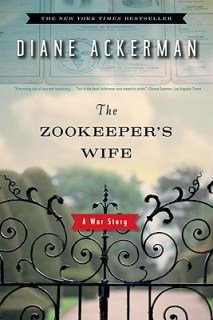 This is a worthy, true story to be made into film. Jan and Antonina Zabinski were keepers of the reputable Warsaw Zoo. During the Holocaust, Jan smuggled Jews out of the Warsaw Ghetto into their facility, saving hundreds. Antonina did the day-to-day chores of protecting them, hiding them in the cages, feeding them and keeping their spirits up. The parallel and irony of men and beasts are obvious. Acclaimed nature writer Diane Ackerman drew from Antonina’s diary to write her non-fiction work, a historical account of a heroic rescue mission. Screenplay by Angela Workerman, a scribe to note. Jessica Chastain and Daniel Brühl play the altruistic Zabinski couple.
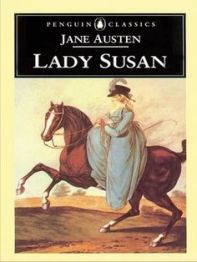 This has been in my iBooks for a long while, so long that I’d deleted it and now reloaded it again as the film adaptation is coming out. Entitled Love and Friendship, screenplay is based on Austen’s early novella Lady Susan, with Kate Beckinsale as Lady Susan Vernon. It will be interesting to see how the epistle form is translated onto screen. It will premiere at the Sundance Film Festival Jan. 23. Whether we will actually see it in our movie theatres is another matter. I hope it will be screened in the not too distant future.
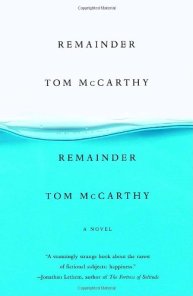 I bought this book at Harvard Book Store – the independent book store in Harvard Square since 1932 – during my New England Road Trip last fall. I’d read McCarthy’s 2015 Booker shortlisted Satin Island and knew Remainder had been adapted into film before I went on the trip. So it was a title I’d intended to get at that bookstore. Remainder is McCarthy’s debut work (2006). An unnamed Londoner is struck by a falling object and lapse into a coma. As he awakes, he has lost all memory and needs to re-enact his past to find his identity and authenticity of being. The Telegraph had called McCarthy “a Kafka for the Google Age”. Interesting to see how that translates onto screen. The film premiered at the BFI London Film Festival last October. Will screen at Berlin International Film Festival in February, 2016.
 The film adaptation of Booker short-listed and multiple award winning novel by Irish writer Sebastian Barry has already been completed, but has yet come up with a release date. So, I’ve plenty of time to read the book. The narrator is a 100 year-old mental hospital patient recalling her life. The old and the young are played by Vanessa Redgrave and Rooney Mara respectively. Directed by Jim Sheridan, the Oscar nominated director who introduced us to Daniel Day-Lewis in the excellent productions first in My Left Foot: The Story of Christy Brown and later In the Name of the Father.








 Ripple Effects