Ripple Effects has come of age

Got this from WordPress a couple days ago. How time flies!


RIPPLE EFFECTS
Coming of Age

Ripple Effects has been tracking my life for the past 18 years! The movies I’ve seen, books I’ve read, birds I’ve captured with my camera, places I’ve travelled, film festivals I’ve attended, and through the years with special thoughts every Easter and at Christmas, Reading the Season inspirational book sharing.

Through the years I’ve been featured on WordPress’ Freshly Pressed, and Rotten Tomatoes had reached out inviting me to be their Tomatometer Approved Critic. I’ve gained over 7,600 followers, treasured the friendship made with some of you both virtually via the blogosphere and personally. For this I’m truly grateful.

If I ever write a memoir, this is my manuscript. To browse through these posts is to know me. Thank you all for the pebbles you’ve thrown into the Pond to create your own ripples. Many of you are recent followers, but there are some who have been with me from early on. And I’m sure you’d find it revealing to read your own thoughts way back then.

Who knows what the future holds. As far as I’m given the opportunity, I’ll continue to document my pondering and wandering here at Ripple Effects. Hope this site can be your restful retreat in your journey through life as well.

~ ~ ~ ~

Easter: the Joy of Eternal Hope

A time to be silent, and a time to speak.

What better days than Easter to speak of death, and life eternal.

“I am the resurrection and the life. Whoever believes in me, though he die, yet shall he live, and everyone who lives and believes in me shall never die.” (John 11: 25-26)

The past few months I’ve been silent on Ripple Effects. Actually, for the past year, I’d been posting just occasionally. Fact is, for fifteen months, I’ve been caring for my husband afflicted with cancer. It had been a roller coaster ride of ups and downs. On some days, he was well enough that we could go out to have a meal in a restaurant; on other days, it would be just a tiny morsel or nothing at all. All these months, I’d learned to find joy in afflictions, and be grateful for just being able to sit down at the breakfast table together, the warm, morning rays seeping in, and immersed in the moment.

This year started with an ominous diagnosis. The metastasized cancer cells had not only mutated but the new growth was extremely aggressive. Battling terminal illness had made everything superfluous, books, movies, or music. What was left was the very essence of my being, faith in the risen Christ. Both of us were often revived by the promises of the living God, inspired by His Word, and sustained by the encouragement and prayers of countless supporters the world over via online prayer groups. It had been a journey of faith. Ultimately, it’s all grace.

But we have this treasure in jars of clay, to show that the surpassing power belongs to God and not to us. We are afflicted in every way, but not crushed; perplexed, but not driven to despair;  persecuted, but not forsaken; struck down, but not destroyed… (2 Corinthians 4:7-9)

On March 21, my husband departed to a better country. We were not unfamiliar with the immigrant experience. Now, a final move to that eternal kingdom, a homeland much more beautiful than anywhere in this world. He had arrived there first, I’ll join him one day. He was accepting, which was grace in itself. We were prepared, even planned his celebration of life service together. The event turned out to be a memorable occasion for hundreds to gather for a collective remembrance in peace and even joy.

Therefore we do not lose heart. Though outwardly we are wasting away, yet inwardly we are being renewed day by day.  For our light and momentary troubles are achieving for us an eternal glory that far outweighs them all.  So we fix our eyes not on what is seen, but on what is unseen, for what is seen is temporary, but what is unseen is eternal. (2 Corinthians 4:16-18)

All because He is risen. He is risen indeed!

***

Happy Easter!

***

Top Ripples 2024

A list of books and movies I’ve rated highly in 2024, not necessarily current year releases. Links are to my reviews. The last section lists several books that I bought which I must mention.

MOVIES

His Three Daughters
director Azazel Jacobs, starring Carrie Coon, Natasha Lyonne, Elizabeth Olsen

Small Things Like These
director Tim Mielants, starring Cillian Murphy, Eileen Walsh, Emily Watson

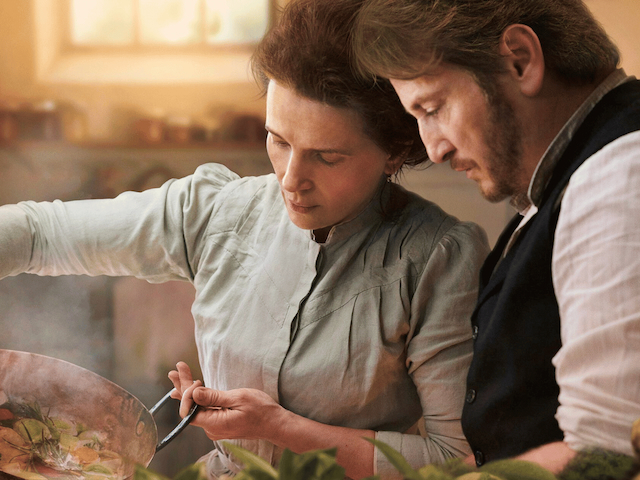
The Taste of Things
director Anh Hung Tran, starring Juliette Binoche, Benoit Magimel, Emmanuel Salinger

BOOKS

James by Percival Everett

This Strange Eventful History by Claire Messud

The Hunters: Two Novellas by Claire Messud

Table for Two by Amor Towles

The Lincoln Highway by Amor Towles

Knife: Meditations after an Attempted Murder by Salman Rushdie

Greek Lessons by Han Kang

The Final Curtain by Keigo Higashino

MY BEST BOOK BUYS
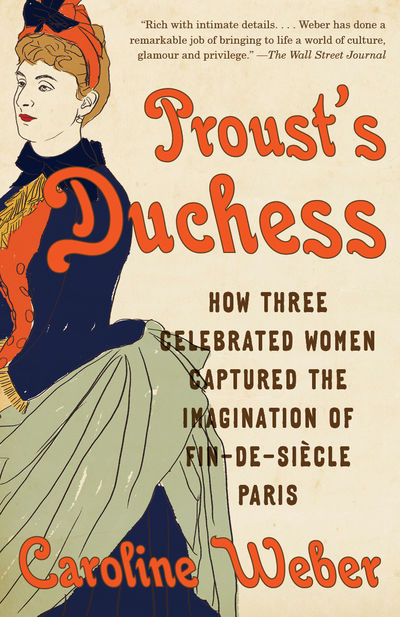
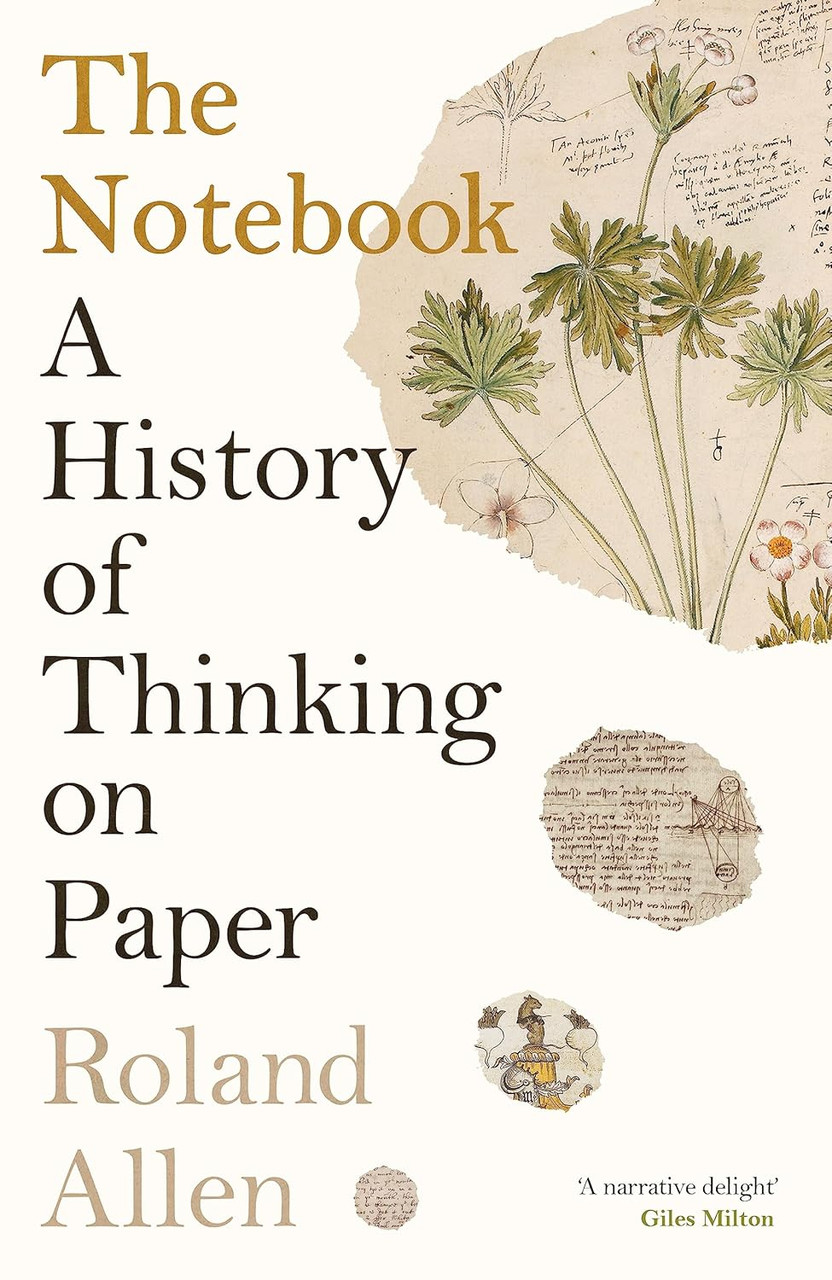
My favourite book purchases of the year, three at bargain prices, i.e. below $10. I was delighted to have found them, all brand new. What attracted me was first their appealing covers and one with marvellous colour art illustrations. These are examples and reasons why I’m not a Kindle user but still very much into tangible reading materials which I can hold in my hands, flip the pages, savour their content and visuals. I’ve started all of them, don’t intend to read like a page-turner, but for slow reading, or even just for looking up as reference with no pressure to read through from cover to cover. Additions to my long TBR list… come 2025.

A Writer’s Britain by Margaret Drabble, first attracted by the front photo, the feel of the special dust cover in my hands and yes, surprised to find there’s a bookmark ribbon that matched the greenery of the front design. British writers and poets and the landscape that inspired them.

The Autobiography of Alice B. Toklas by Gertrude Stein, illustrations by Maira Kalman, who contributed numerous full-page colour art illustrations that remind me of the scenes from the movie Midnight in Paris, especially the scenes inside Gertrude Stein’s home. I’ve a feeling that the set designer Hélène Dubreuil must have used this book in her research, for the movie had made these pictures come to life.

Proust’s Duchess by Caroline Weber, the times of Proust’s Paris, and the three women who inspired him to create the Duchesse de Guermantes from his In Search of Lost Time. Extensive research with numerous notes and references.

The Notebook: A History of Thinking on Paper by Roland Allen, a look into the history of the notebook, including journals, field notes, commonplace book… and exploration of those belonging to geniuses and the legendary throughout time. Extensive research by the author. What attracted me was the title. No, didn’t find this on the bargain table, as this is a current year publication, a notable best book of 2024 by The New Yorker and other acclaims.

***

A Happy 2025 to all!

Virginia Woolf’s The Years sparks some surprising associations… Downton Abbey?

“She wanted to see the owl before it got too dark. She was becoming more and more interested in birds. It was a sign of old age, she supposed.” –––– Virginia Woolf, The Years* (186)

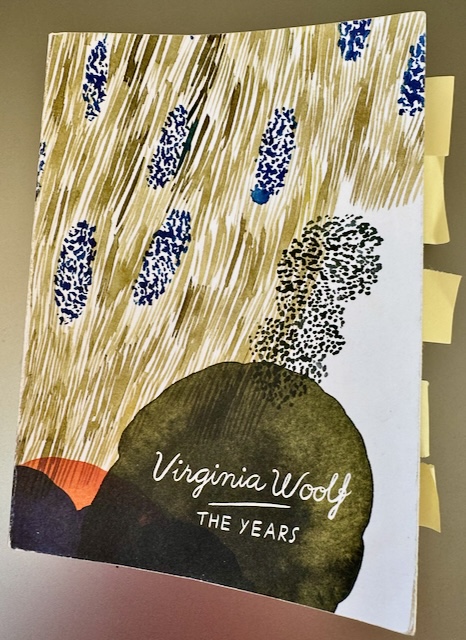
Finally, I finish my other 1937 Club read hosted by Kaggsy and Simon that took place in April, two months late, and that’s Virginia Woolf’s The Years, published in 1937. It sure feels like years for me to finish this book. Better late than never, for I have full intention to see what Woolf had to say in her last novel published during her lifetime (Between the Acts was published shortly after her death in 1941), specifically, what was in her mind just a few years before she took her own life.

The book follows the children of Colonel Abel Pargiter’s family as they go through the years crossing the 19th century into the 20th. It’s a family saga through chapters titled for a specific year, beginning with 1880, 1891, then into the new century 1907, 1908 and to the First World War, and finally the “Present Day” which is the 1930’s. Within each chapter the narratives are episodic, characters appear without introductions; readers would have to piece together who’s who and how they relate to each other.

A few unexpected mental associations came to me during my reading. The quote above at the beginning of this post is one of those surprises. A loud Whoa! when I read it: Interest in birds as a sign of ageing. It’s a thought in the mind of Eleanor, the eldest of the Partiger children, when she is fifty-five. She goes on to live past seventy when the book ends, and I’m sure has seen many more owls.

Another surprise for me in my reading experience of The Years is how it’s like watching an arthouse film, or any good movie for that matter. My first impression of that beginning chapter 1880 is that it reads like a script where the expressions and actions of the characters are highly nuanced and the subtext in their conversations speak volumes. Nothing much is happening but the seemingly uneventful narrative carries unsettling undercurrents.

Here’s an example. The Colonel, with his wife Rose on her death bed, is a troubled and temperamental man whom his seven children fear more than respect or love. He comes back home unexpectedly during supper time in the opening chapter and the way he drinks his tea while trying to strike up conversations in a surly manner with his children reflects his changing mood. A ready movie scene here. I’ve taken out the dialogues, but just the description of his tea-drinking actions reveal a lot about his character:

He stirred his sugar round and round in the cup as if to demolish it… ground the grains of sugar against the walls of his cup. [After some tense conversations with his children] Then he seemed to repent of his gruffness… He drank up his tea. Some drops fell on his little pointed beard. He took out his large silk handkerchief and wipe it impatiently… [Later] the Colonel took up his cup, saw there was nothing in it, and put it down firmly with a little chink. The ceremony of tea-drinking was over. (13-14)

Another surprise is that reading The Years makes me think of Downton Abbey, how a family goes through changes both in the larger socio milieu and in their personal lives through the years. The time-lapse is about the same as the six seasons of Downton, from horses to cars, from candles to electric lights, WWI and the changes it brings. The following line in Woolf’s novel makes me think of the Dowager Violet Crawley:

Then he looked at a car. It was odd how soon one got used to cars without horses, he thought. They used to look ridiculous. (215)

BTW, Edith Crawley, who breaks the mould and ventures out to live in London on her own and heads up a magazine she inherits from Michael Gregson and a London flat, has mentioned that she had met Virginia Woolf there, one of Michael’s Bloomsbury acquaintances. One can imagine the author just might have certain influence on her.

The Years is about lives lived, actions or non-actions, the regrets and the resignation of what had happened, the unchangeability of the past. Check out these lines, the introspection of Eleanor’s, just reminds me of Mary Crawley, who had uttered similar words thinking of her own past errors in judgment:

But once it’s done, there it is… How irrecoverable things are, she thought. We make our experiments, then they make theirs. (185)

Above all else, The Years is about the past and memories, and the meaning of it all. Proust’s Remembrance of Things Past comes to mind, no surprise. Both authors value the writing down of lives lived. But Woolf goes into a more depressed mode of seeing even the futility of it. As the chapters, ie, the years, move on, Woolf is more explicit about her view on life––I suppose that’s her perspective––through Eleanor’s point-of-view. Considering Woolf taking her own life just four years after this book was published, I paid attention to the reflections and internal search for existential meaning, or the failing of which, and find these passages particularly poignant. Short sentences like this: “Scenes passed over scenes; one obliterated another,” to reflection like the following, again, quite a cinematic moment:

Things can’t go on for ever, she thought. Things pass, things change, she thought, looking up at the ceiling. And where are we going? Where? Where?… The moths were dashing round the ceiling; the book slipped on to the floor. .. made an effort; turned round, and blew out the candle. Darkness reigned. (195)

to what seems like ultimate despair, take note that Woolf wrote this in the 1930’s:

But how can one be ‘happy’? she asked herself, in a world bursting with misery. On every placard at every street corner was Death; or worse––tyranny; brutality; torture; the fall of civilization; the end of freedom. (358)

I gave the book 3.5 out of 5 stars in my Goodreads review, an evaluation that’s based on my first reading, having had to figure out who’s who –– considering the Pargiters have seven children and some of them have their own children. And then there are extended family members, cousin, niece and nephew, and servants. I’m sure upon second reading, I’d be able to get a clearer picture of all the characters and would enjoy it more, for it really deserves more than one reading.

__________

* The edition that I used (photo above) is Vintage Classics, Penguin Random House UK, London. 401 pages. Introduction by Susan Hill. With this inscription before the Introduction:
“The text of this edition of The Years is based on that of the original Hogarth Press Edition, published by Leonard and Virginia Woolf on 15th March 1937.”

***

Related Post on Ripple Effects:

In Praise of Austen: Virginia Woolf’s A Room of One’s Own

In Search of Lost Time by Marcel Proust: A Movie Reviewer’s Long Take

My other 1937 Club Posts:

Out of Africa by Karen Blixen from Book to Movie

Somerset Maugham’s Theatre and Screen Adaptation

Try to remember the kind of September…

My few weeks of hiatus from the Pond led me to the bustling city of Toronto. Just the second weekend of September there were over 80 events planned across the city: festivals, concerts, food fares, cultural celebrations… In the downtown core, road closures, frenzy and chaos. The main attraction with international focus of course is the Toronto International Film Festival. Since this is the first in person TIFF after two years of Covid measures, I chose to avoid the huge gatherings and stay closer to nature, far from the madding crowd… I’ll have to wait to watch the selections hopefully later in the year.

Then came the sad news of the passing of Queen Elizabeth II, 70 years on the throne, the longest reigning British monarch and the longest female sovereign in history. Politics aside, being born and raised during my formative years in the former British colony of Hong Kong, I much appreciate the freedom to grow up in an environment where East meets West, unlike what Kipling had surmised.

I studied both classical Chinese as well as English literature in school, donning a uniform in cheongsam (do google it if you’re not sure what it is) but wore bell bottom pants when out; grew up watching numerous kung fu movies while following closely all James Bond flicks; savoured home cooked Chinese meals as well as those from international sources; yes, and love the fusion of Hong Kong style western cuisine, street foods and snacks. A prime example is Hong Kong style milk tea with condensed milk, best to pair with a pineapple bun with a piece of ice cold butter in the middle, oh, and egg tarts.

Pineapple bun with butter, egg tarts at back.

Looking back, it was a period when I was free to explore different world views and thinking. I still remember following a classmate to a secondhand bookstore in an obscure alley after school, looking up books on psychology and philosophy; or one time, catching another classmate secretly reading her own book held under her desk during class. When I asked her later out of curiosity what she was reading, no, it wasn’t a comic book or a teen magazine, but Somerset Maugham’s short stories. That was my intro to the wonderful writer.

My nanny loved Chinese operas. She was a versatile, middle age woman who lived in our home and acted almost as my substitute mother. She read Dream of the Red Chamber at night before she slept, daytime too busy for her. I grew up reading Chinese translations of world literature for children and some Enid Blyton, while also saved up enough pocket money to buy my Mad Magazine. I learned to play the piano and listened to The Beatles and The Monkees. The first LP album in our home was My Fair Lady.

What do all these memories have to do with the Queen? For me, it was a period of growing up experiencing both East and West in a British colony that didn’t require its citizens to sing “God Save the Queen,” or demand The Union Jack be hoisted in schools. I’d enjoyed the freedom to explore despite a rigid home environment. If I were to write a memoir some day, it would likely be in the theme of a growing up where East meets West, where the fusion of the two is exciting and appealing, and where opportunities are plentiful, and I was free to live life in an interesting, borderless fusion of cultures.

So, it was the end of an era when the Queen passed. Now the world seems to have grown polarized, tempers flare when people of opposite views confront, and where the ominous observation by Kipling is becoming all the more acute as autocracy begins to prevail.

As I was wandering the lakeshore in Toronto, I caught sight of some lively monarch butterflies. It was a pleasant surprise, as I wasn’t expecting seeing them in such an urban environ. From one Monarch to another, may these monarchs be free and lively as they migrate thousands of miles south, following the instinct endowed by their Creator’s design.

From one Monarch to another:

***

Easter 2021

“April is the cruellest month…” says T. S. Elliot in The Waste Land. He has his reasons. For me, April teases us with uncertainties, so in that sense, it’s a bit cruel. Just when you think it’s spring, a snow storm cometh. And just as that snow has melted and the temperature goes way above freezing and you step out to that bright sunshine, the brutal wind blows your optimism away and drops you back to sub-zero chill.

Just like this frequent visitor to my backyard. Crept underneath the fence to hide in her favourite spot under the spruce tree, uncertain which coat to wear, winter or spring, white or brown:


Just as our world has lived through a pandemic year, now with vaccines in hand, here come the new waves of variant outbreaks, bringing more uncertainties.

I wrote this poem at Easter exactly ten years ago. At that time I was dealing with a bit of a writer’s block, some kind of brain freeze while facing the real freeze outside. The next time I re-posted the poem a few years later in 2016, I was stressed out dealing with the post-surgery care of a family member. Thanks to all who had commented then, we got out of it slowly and experienced the grace of healing.

Easter 2021 is none like others. Distressful situations have multiplied, their magnitude in epic scale. As with everyone else in this world, I’ve lived through a pandemic year, which alas, still has no end in sight with the outbreaks of variants. And personally, I’m wary even just walking in public, not only for Covid risk, but having to look out to avoid being spat at or punched in the face due to all the unprovoked violence against Asians, or women, or both. Face masks may help protect us from a physical virus, but not that stemming from the human heart. Looking out to the world political stage, looming conflicts breed like a plague.

That first Easter wasn’t a celebration but an execution. A dark day, a torturous public punishment, Crucifixion. It was there in the middle of the world––signifying the centre and reaching to all––one sacrificial death unleashed the power of divine love to save us from ourselves, a concept I’m beginning to grasp as more and more urgent and relevant now. After death came the ultimate miracle, resurrection. That same resurrecting power today can raise the deadest of soul to a brand new life.

_______

An Easter Poem

April is the month of empty dreams
Half the days gone
waiting for words and spring
still frozen ground
and on the screen
a frigid page as white as snow.

Brown could be the color of hope
After the white
for all I know
green is too much to wish for
I’m contented to see a patch
of dry and withered brown.

The sun is a perpetual sign
that there’s still hope
But it’s no herald of the seasons
for its presence comforts all year long
warming my blank and barren state
as I await for words and spring.

But Easter is an apt reminder
that The Word had come
spoken clear to half-frozen ears
His body hung on a lifeless tree
Blood and water flowed
onto parched and dusty earth

So what if no words come to me
That dreaded writer’s block
reigning the winter of sterility
numbing senses,
snatching thoughts,
seizing any sign of spring.

It’s not about a post or a blog,
Or even buds and melting snow.
The Word had come
lived and loved among us,
broken, bled, died and rose,
melting frozen hearts to greet
a new dawn and eternal Spring.

–– Arti (April, 2011)

________

That historic Event in the past overrides all uncertainties in the future. He is risen!

HAPPY EASTER!

‘Edith’s Diary’: Madness, Escape, or Creativity?

“I’ve had lots of troubles, so I write jolly tales.”    ––– Louisa May Alcott
.

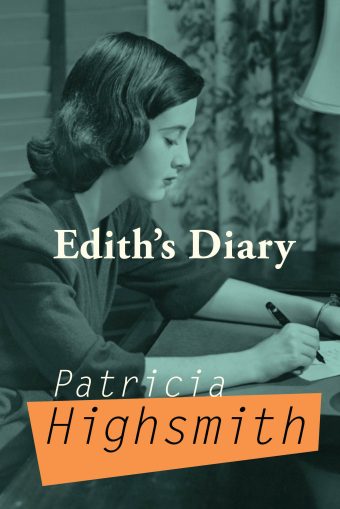
Edith's DiaryMy point of contact with Patricia Highsmith’s work is mainly in the movies: Strangers on a Train, The Talented Mr. Ripley, Two Faces of January, and Carol based on her novel The Price of Salt which I’d read. Edith’s Diary, first published in 1977, is a very different work from all the above.

As the book begins, Edith Howland, 35, her husband Brett, and their ten year-old son Cliffie have just moved into small town Brunswick Corner, Pennsylvania, from New York City. The year is 1955. The reason for the move is for Cliffie to grow up in a country environment with more space to roam. Edith’s diary is a precious possession wherein she records her experiences.

Edith is quick to immerse in the community and makes a few friends. With Gert, she successfully revitalizes the local paper Bugle, and she continues with her freelance writing. It’s Cliffie that’s her main concern. Cliffie isn’t a normal boy. He keeps to himself, is indifferent to his parents, unkind to their cat Mildew, makes no friends and doesn’t do well in school. That’s enough for alarm, but Edith’s attitude is concern mixed with appeasement. 

Not long after they’ve moved into their house, Brett’s elderly uncle George comes to live with them, a decision not from mutual consent between the couple. Edith has to take care of George, cook and bring his meals to his bedside, keep the house in good order, write for Bugle and pitch to magazines, all while keeping an amicable social front.

Ten years gone by, life hasn’t aligned much with Edith’s wishes. Far from it. Cliffie can’t make it into any college, no full-time job and turns to alcohol and drugs to pass his days. Old George still hangs in there needing more of Edith’s time and attention. Most devastating to her psyche is Brett, who has left her and moved back to NYC to a new life of his own by marrying his young secretary. Highsmith is meticulous in detailing the psychological world of Edith’s, her frail personality, appeasing her son and yielding to her husband.

But as life’s burdens become heavier and things get gloomier, Edith’s entries in her diary shift to a more and more uplifting tone. She creates a different life for her son in her diary entries, imagining Cliffie successfully graduates from Princeton and begins a good career, marries a sweet girl who later bears her a grandchild.

Edith’s diary is an imaginary narrative that’s totally different from her real life. Towards the end, madness takes over and Highsmith’s ending is both shocking and dismissing. No spoiler here. However, reading the book makes me think of a quote from Little Women‘s author Louisa May Alcott:

I’ve had lots of troubles, so I write jolly tales.    ––– Louisa May Alcott

What’s the difference between Alcott writing jolly tales and Edith’s detailing an alternative life in her diary? If Edith isn’t writing into a diary, which is supposed to be ‘non-fiction’, isn’t she just creating a work of fiction? Where’s the line between escape and creativity?

Highsmith drops obvious clues for us describing Edith’s sinking deep into the slough of madness as she actually prepares for her imaginary Cliffie’s visit to her home for dinner with wife and son in tow. So, it looks like Highsmith is showing us the demarkation, when the two lives, the imaginary and the real, merge into one, therein lies madness.

But, is Edith’s diary an evidence of madness, or an imaginary work of fiction? Hmm… that would be my question to Highsmith if I were a journalist interviewing her. Now, just let me dwell on that thought some more…

***

Edith’s Diary by Patricia Highsmith, Grove Press, New York, 2018. 393 pages.

Note: Patricia Highsmith’s own diaries will be published in the coming year. Now that would be an interesting read.


Middlemarch: You be the Screenwriter

It’s a wrap. Here’s my finale for our Middlemarch in May Read-Along.

You may be a print purist, don’t want to see a movie made. Just take this as an imaginary writing exercise then:

You’re offered the job of writing a screenplay, the tall order of turning Eliot’s 800-page novel into a movie. The task at hand is to choose from the numerous storylines and just focus on a few that your feature will cover.

The following are some of the main storylines and thematic matters in Eliot’s Middlemarch. This list is just off the top of my head, feel free to add in. Which ones would you select and elaborate?

**

Sisterhood between Dorothea and Celia

Dorothea’s marriage to Casaubon

Celia and Sir James Chettam

Mr. Brooke’s political involvement

Politics, power and influence in Middlemarch

The mysterious cousin of Casaubon: Will Ladislaw’s backstory

Relationship between Casaubon and Ladislaw

Newcomer Lydgate: the young, aspiring doctor

Old vs. New: The introduction of new ideas and methods and their reception or rejection in Middlemarch

Lydgate’s character: idealism vs. practice

The Vincy family: Mr & Mrs., Fred and Rosamund

The Caleb Garth family: Mr. & Mrs., Mary Garth

Fred Vincy and Mary Garth

Fred’s lifestyle, his love and dreams, and his change

Rosamund’s lifestyle, her love and dreams, and her change (or, has she?)

Featherstone: The subjective construction of will and estate

Mary Garth’s moral dilemma in dealing with Featherstone’s order regarding his will

Farebrother and family: Farebrother’s role in joining Fred and Mary despite his secret love for her.

Raffles the disruptor of Bulstrode’s life: the wages of sins, or, the consequences of actions that last beyond the statute of limitations

Ladislaw’s true identity and Bulstrode’s dark history

Raffles’ falling ill and Bulstrode taking him in for fear of reverberation, hence leading to the suspected ‘wrongful death’ incident and the presumed guilty of bribery between Bulstrode and Lydgate.

Will Ladislaw being victim of class discrimination and racial prejudice in the provincial town of Middlemarch

Family finance, debts and gambling endangering a fragile marriage between Fred and Rosamund

How to choose a mate, keys to a happy marriage

Difference between romance and love, looking at three pairs of relationships: Lydgate and Rosamund, Fred and Mary, Dorothea and Will

And for that matter, how about intellectualism vs. passion, the marriage of Dorothea and Casaubon

Choices of actions of the characters based on values (or lack of), principles, and plain gut

Poverty, welfare, and social actions, responsibilities of the rich

Male/Female relationships in marriage and society, and how Dorothea both fulfills prescribed duties and overrides expectations.

Finally, probably the most important element in a movie, the emotional impact it elicits in your viewers: Which of the above storylines will you focus on to bring out such effects?

We all love the Finale of the book. But why does Eliot spend so few pages in describing the love relations between Dorothea and Will? They are seldom seen together, and in the rare occasions that we do see them, they’re caught in awkward and embarrassing situations. Would you give them more screen time together in a positive light?

I think one reason Eliot doesn’t elaborate on their courtship could be because she doesn’t want to mislead her readers that this is a ‘romance novel’. Rather, she brings out a kind of sublime love between the two, particularly on the part of Dorothea, a noble love that motivates her to give up her wealth, position and the familiarity of Middlemarch. These in Dorothea’s views are but shackles restraining her to do what she wants and to love freely.

Finally, any casting suggestions?

**

A huge thank-you to all participants and spectators for your input, comments and posts. It’s been a pleasurable ride, even though the length and numerous storylines and characters may have bogged us down occasionally. I appreciate the pebbles thrown into the Pond to make all those ripples.

Enjoy your summer!


In Other Words: Lahiri’s Reconstruction of Self

In Other Words book cover

A couple of years ago, I was surprised to read about Jhumpa Lahiri moving to Italy to live, even just for a few years. Author of four works of fiction – Interpreter of Maladies, The Namesake, Unaccustomed Earth, and The Lowland – at the prime of her writing and teaching career, having received the O. Henry Award in 1999, the Pulitzer in 2000, and her latest The Lowland shortlisted for the Booker in 2013, Lahiri decided to uproot her family and move to Italy to totally immerse in the Italian language. That means speaking, reading and writing in Italian.

In Other Words is Lahiri’s brave and candid account as a language learner. It compiles twenty-one essays and two short stories which she wrote in Italian. She uses the metaphor of swimming out into the lake instead of safely hugging the shore to refer to her Italian language learning experience. From her descriptions of the challenges and risks, the loss of anchor, the inability to express herself and be literate, let alone literary, the disorientation, the total humbling, her Italian venture is more like jumping off a precipice to billowy waters of unfathomable depth.

My hat off to Lahiri’s honest revealing of her frustrations and strive for a new identity; yes, after all, language is a major determinant of identity, one which is, unfortunately, superseded by one’s outer appearance and racial features. So it is heart-wrenching to read that despite her love of the Italian language, her total devotion to adopt it not just to live but as a tool of her trade as a writer, she is often seen as an outsider, a foreigner, barred from acceptance. Even when she speaks to Italians fluently in their language, they would respond to her in English.

English, that’s the rub. I was surprised to read that, while the author had achieved so much in her literary career as a writer in English, she chose to discard it to totally immerse in Italian. In the chapter entitled “The Metamorphosis”, she candidly admits that her writing in Italian (which she had been learning in America for some twenty years before) is a flight:

“Why am I fleeing? What is pursuing me? Who wants to restrain me?
The most obvious answer is the English language. But I think it’s not so
much English in itself as everything the language has symbolized for me…
It has represented a culture that had to be mastered, interpreted. I was
afraid that it meant a break between me and my parents. English denotes
a heavy, burdensome aspect of my past. I’m tired of it….”

Of course, that’s also the language that she loved, and succeeded with. The conflict in identity, first as an Indian immigrant with Bangali as her mother tongue, then as a writer in English who had garnered the Pulitzer Prize – an award that she felt she did not deserve – had shrouded her with unresolved tensions. Lahiri had felt deeply the tug of war between her parental heritage and adopted land. A rejection of both had silently crept in. Italian provides a way out:

“Italian offers me a very different literary path. As a writer I can demolish
myself, I can reconstruct myself, I can join words together and work on
sentences without ever being considered an expert. I’m bound to fail when
I write in Italian, but, unlike my sense of failure in the past, this doesn’t
torment or grieve me.”

Unbelievably surprising and honest, written in Italian and translated by The New Yorker editor Ann Goldstein, the bilingual book opens up to a dual English and Italian version. The short essays chronicle the progress of not only an insightful identity search and reconstruction of selfhood, but an invaluable personal documentation of second – no, additional – language learning journey. If this book was published a couple of decades earlier, I would likely have another topic for my thesis in my graduate work on second language learning; not only that, my view of English being the lingua franca, the language holding linguistic hegemony, would have completely changed as well.

After reading In Other Words and my surprising discovery of Lahiri’s ‘tormenting sense of failure’ with the English language (for all its symbolic meaning) or even her ‘undeserving’ feeling towards her award in her writing, I am relieved of a hidden burden. I don’t feel so badly about having had to constantly check and re-check my English: prepositions, idiomatic expressions, phrasal verbs usage, subject verb agreement… All the hurdles that confront me every time I write a post or an article. If Lahiri can be so candid about her frustrations and errors when it comes to language learning, why can’t I?

~ ~ ~ ~ Ripples 

***

My thanks to Asian American Press for allowing me to post my book review here on Ripple Effects. The last paragraph is added in just for my Ripple readers.

Related Posts on Ripple Effects:

 The Namesake by Jhumpa Lahiri: Book Review

The Namesake (2006, DVD): Movie Review

Unaccustomed Earth by Jhumpa Lahiri


Reading the Season: The Book of Ruth

For the past seven years, I’ve a special post at Christmas which I’d named Reading the Season, just to help me dwell on the Reason behind all the festivities. Some past authors I’d read include Marilynne Robinson, C. S. Lewis, Madeleine L’Engle, Luci Shaw. This year I’m going back to the source material, The Bible, for my Christmas read. And no, my selection isn’t from Luke 2, which Linus so eloquently delivers every year in the delightful A Charlie Brown Christmas.

I reread the little love story in The Book of Ruth, one of the earliest parallels pointing to the Christmas story. This time I found it particularly relevant. So here it goes…

moonrise


A long time ago in a land far, far away a man named Elimelech and his wife Naomi, together with their two sons Mahlon and Chilion, had to pack up and leave their hometown of Bethlehem in Judah to escape from a famine in the land. As migrants, they travelled to a foreign country called Moab.

Alas, Elimelech died soon after and left behind Naomi and their two sons. Years passed, the sons married two Moabite gals, Orpah and Ruth. Could it be the food there, for not long after Naomi’s two sons also died. Bitter and despondent, Naomi sent her two daughters-in-law back to their own family and began her lone journey to return to Bethlehem.

But Ruth was adamant to follow Naomi back to where she came from with this moving vow:

Don’t urge me to leave you or to turn back from you. Where you go I will go, and where you stay I will stay. Your people will be my people and your God my God.

Touched by her loyalty, Naomi let Ruth travel with her back to Bethlehem. She was like a migrant all over again. To the people there Naomi, if anyone still recognized her, was now widowed, sonless, bitter and destitute. The two women didn’t even have a refugee camp to take shelter.

To survive, Ruth went out to the fields to glean the grains left by the harvesters. It happened that they were in the fields of a kind landowner Boaz, who after noticing Ruth and hearing of her love for her mother-in-law, told his workers to leave more grains in the fields for her to glean. Yes, it just happened that she’d come to the right field.

When Naomi learned of Boaz, she saw a glimpse of hope. Definitely this was more than the food bank; this generous landowner actually was a relative belonging to her late husband’s clan. Out of desperation, she sent Ruth on a risky mission: to go to Boaz at night and approach him tactfully, letting him know of their ties in kinship.

Lo and behold, Boaz, an honourable and compassionate man, was harbouring a deep and ardent love for Ruth. That night, though surprised to see Ruth, he received her readily and with respect, restraining and keeping his torrid passion well under wraps, umm like… Mr. Darcy.

According to the law of the land, the closest relative had the first right to redeem the lands that Naomi’s late husband Elimelech had sold and to marry Ruth to carry on the family line. But lo, Boaz wasn’t that person; instead, he did the honourable thing, extending the first right of redemption to the closest relative, yes, like umm… Mr. Collins.

And it happened that Mr. Collins was willing to buy back the land but wait a minute, he couldn’t take Ruth as a wife. There could be reverberations, for Ruth was a foreigner, a Moabite. Further, the land was for her to continue with Naomi’s family ownership, and would not be under his name. “I pass,” he said in the sight of ten elder witnesses. Phew!

So only then did Boaz declare not only his willingness to redeem the land once owned by Elimelech, but also his desire to take Ruth as his wife to save her from destitute, poverty, and childlessness. How marvellous it was that Boaz, a legit kinsman redeemer according to the laws, was also truly, madly, and deeply in love with his redeemed.

And we are definitely indebted to the two lovers for producing the line of descendants, for Ruth later became the great grandmother of David, from whose ancestral line generations later came Jesus.

With this beautiful ending I come back to Christmas 2015, and ponder on the lowly birth of Christ at the manger, to become our Kinsman for the ultimate purpose as Redeemer.

“And the Word was made flesh, and dwelt among us… full of grace and truth.”  – John 1:14

DSC_0034

**

The Risk of Birth

This is no time for a child to be born,
With the earth betrayed by war & hate
And a comet slashing the sky to warn
That time runs out & the sun burns late.
That was no time for a child to be born,
In a land in the crushing grip of Rome;
Honour & truth were trampled by scorn–
Yet here did the Saviour make his home.
When is the time for love to be born?
The inn is full on the planet earth,
And by a comet the sky is torn–
Yet Love still takes the risk of birth.

                              – Madeleine L’Engle

***

Previous ‘Reading The Season’ Posts:

2014: Lila by Marilynne Robinson

2013: Poetry by Madeleine L’Engle

2012: Surprised by Joy by C. S. Lewis

2011: Walking on Water by Madeleine L’Engle

2010: A Widening Light, Luci Shaw

2009: The Irrational Season 

2008: The Bible and the New York Times by Fleming Rutledge

2008: A Grief Observed by C. S. Lewis

Write Where You Are

During my New England road trip, I’ve visited several literary places. Now these are my own way of storing my memories. Whatever site I’ve been that relates to a literary figure, I categorize it as such. And it’s interesting to note the different sources of inspiration.

Thoreau went for the minimal, the Spartan way of existence. So he built a log cabin in the woods and kept only the simplest furniture. Why he only stayed for two years two months and two days may be self-explanatory. But no matter, we’re glad he had tasted the bare minimum for us so we can read all about it in his book.

Interior

By comparison, his friend Ralph Waldo Emerson, who owned those woods where Thoreau had his experiment, lived in relative luxury and comfort. Here’s his residence, not a mansion but still a handsome house.

DSC_0561

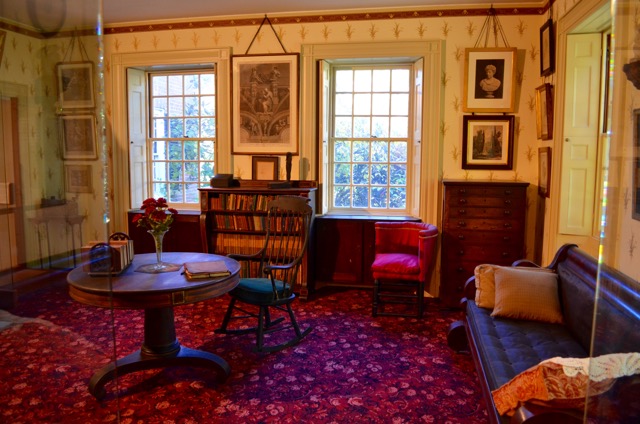
And inside the Concord Museum I saw his study with a flashy fuchsia decor which Thoreau might not have raved about. Just might not, but one never knows. They were friends.

Emerson's Study

Ralph Waldo’s grandfather The Rev. William Emerson’s house, The Old Manse (Scottish term for ‘Minister’s House’), wasn’t shabby either. Quietly situated by the river, a historic residence where literary figures gathered and where Ralph Waldo had lived for a while and wrote Nature, which sparked the Transcendental Movement (1834-35).

Manse 2

Nathaniel Hawthorne had lived in the same house too for a few years (1842-45), writing a book called Mosses from an Old Manse. He enjoyed the garden immensely; it was planted by Thoreau in 1842 to celebrate Hawthorne’s marriage to Sophia Peabody. Hawthorne could have found inspiration right there among the beets.

The Beets

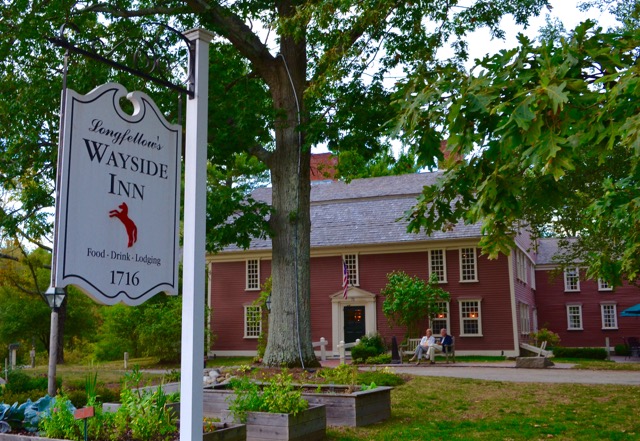
Longfellow, on the other hand, was intrigued by an old tavern and boarding house he had stayed one time in 1862. A homestead made into a lodge for itinerant farmers and transient guests had put stories in the mind of the creative, hence the publication of the Poet’s Tales of a Wayside Inn. For its namesake, the premises had since been named Longfellow’s Wayside Inn.

DSC_0193

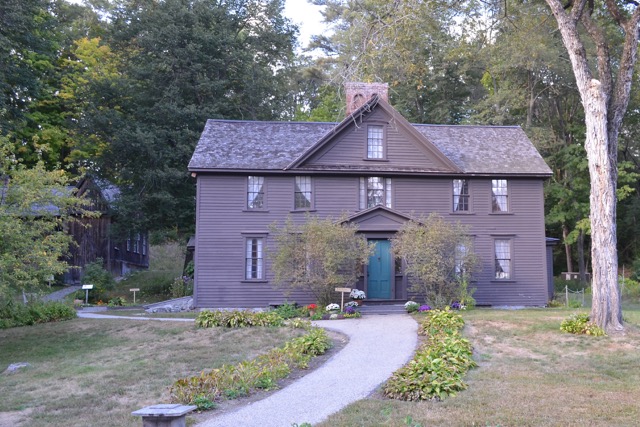
Louisa May Alcott’s Orchard House looks like a warm haven for story brewing too, even though the family could have used more material goods than their philosophically-minded father had provided:

The Orchard House

Back to Nature, the aspiring young poet Edna St. Vincent Millay climbed to the top of Mt. Battie in Camden and beheld the magnificent bird’s eye view of Penobscot Bay. Sky and water pressed close into the impressionable mind of young Edna, triggering a catalyst reaction of permanent change.

View from the top 3

For another, it’s the connection with the land, the toiling of the soil, the gathering of its fruits that inspired. He might have many roads to choose, but aren’t we glad Robert Frost had chosen orchard tending in Vermont and not the ones he did not; we get plenty of thoughts.

Frost's Apple

And for those born into affluence and wed into more, life was a choice of how to use the resources one gets. I’m glad that Edith Wharton had spent her fortune on something that can be left behind for me to set foot on, yes, The Mount.

EW's Garden

I learned too that her legacy had been more than literary pleasures and architectural delights, but something more altruistic after she moved to Paris.

As WWI broke out, Wharton could have gone back to America for safe haven. But she stayed in France, and poured herself in the war efforts, which was inspiration in itself. Here I quote from The Mount’s webpage:

“She set up workrooms for unemployed seamstresses, convalescent homes for tuberculosis sufferers, hostels for refugees, and schools for children fleeing war-torn Belgium. In the first seven months of her efforts, nearly 900 refugees were cared for, “including the nuns and about 200 infirm old men and women, who are ‘children’ too … and could not be left alone in the ruins.” (Edith Wharton, New York Times, 1915)”

and the story didn’t end there… Click on the above link to read more.

Where does one find inspiration, motivation? The answer can vary as much as asking what I should eat today. But one thing I’d experienced on this trip was that life can be lived in myriads of ways, and with it comes inspiration; it could be as simple as a leaf on the ground, or as huge as a war. But I’ll choose the leaf, thank you.

The Leaf

Wherever I am, that’s a good start.

***

My New England Road Trip Series:

Out of the Budding Grove

When I picked up Swann’s Way earlier in March, I had no idea that 2013 is the 100th Anniversary of its publication. Now in hindsight, I’m all the more excited with this serendipitous selection for a Read-Along. And what discoveries I’ve made reading Proust!

Six months later in September, I started Vol. II Within A Budding Grove, allowing myself and any fellow reader two months to finish this 730 page volume.

Within A Budding Grove Modern Library

I reiterate, I’ve encountered thickets blocking the way through the budding grove, but I must say, the enjoyment I’ve reaped from slashing and plowing through it is greater than my frustration. All in all, coming out of it feels like finding my way through a corn maze. Out I come dazed but gratified.

I’ve posted some thoughts on Part One of Within A Budding Grove here. This latter part is about Balbec, a seaside resort the adolescent narrator travels with his Grandmother to stay for the summer to recuperate his health. Like his memories of Combray, Proust’s description of Balbec is detailed and colourful. He relays to his reader his journey, the scenery, the Grand Hotel they stay in, its guests and their social hierarchical interactions, his new-formed friendship with the painter Elstir who introduces him to the band of girls the young narrator admires but is too shy to greet on his own, Albertine, Andrée, Rosemonde, Gisele…

The original title of this volume is In the Shadow of Young Girls in Flower (À l’ombre des jeunes filles en fleurs) which I think is spot on. But, the budding grove is an apt metaphor too for his adolescent self discoveries of love and passion. And in one hilarious scene with Albertine, Proust has shown he can be a writer for Saturday Night Live any time. Too long to quote here but well worth the read. (p. 700-701 in case you want to skip the first 699 pages.)

And young Marcel is ever in-touch with his own feelings for these girls, especially Albertine. Here is his honest analysis:

At the start of a new love as at its ending, we are not exclusively attached to the object of that love, but rather the desire to love from which it well presently arise (and, later on, the memory it leaves behind)… (p. 676)

Ahh… romancing a desire and a future memory.

What about Gilberte, Swann’s daughter, with whom the young narrator is so obsessed earlier? To his credit, young Marcel has a full grasp of his own psyche. Why? It’s all a matter of Habit, he reasons. Since Gilberte has snubbed him, he needs to forget her and let go of any form of Habit reminding him of his previous life in pursuing her. This trip to Balbec takes him away from the familiar and replaces his memories of Gilberte, and a static existence, with fresh experiences and revitalized senses. Getting out of his home in Paris and going away might just be the best medicine:

… one’s days being paralysed by a sedentary life, the best way to gain time is to change one’s place of residence. My journey to Balbec was like the first outing of a convalescent who needed only that to convince him that he was cured. (p. 301)

Even before he gets to Balbec, while on the train stopping at a station, the sensitive and observant narrator is already filled with delight as he sees a young milk-girl carrying a jar of milk walking to the train at the break of dawn:

She passed down the line of windows, offering coffee and milk to a few awakened passengers. Flushed with the glow of morning, her face was rosier than the sky. I felt on seeing her that desire to live which is reborn in us whenever we become conscious anew of beauty and of happiness. (P. 318)

My own memories of the changing hue on those Bohemian Waxwings come to mind. Proust has effectively conveyed the power of association, the linking of words on a page to the reader’s own memory and the joy it had once elicited.

**

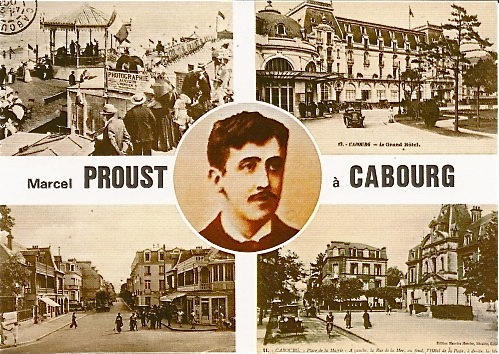
Proust in Cabourg copy 1
Photo Source: franceculture.fr

Proust insists that In Search of Lost Time is not autobiographical, but said “The pleasure that an artist gives us, is to introduce us to another universe.” No matter, his writing relates closely to his life experiences, parallel universe if you will.

Balbec is the fictitious reconstruction of Cabourg, a seaside resort town in the Basse-Normandie region of France where Proust frequented between 1907-1914. While Proust explores voluntary and involuntary memories in his long work, he could well be weaving memories with imagination, fusing fiction with real life experiences, creating an intricate tapestry.

Lydia Davis, translator of the most recent edition of Swann’s Way (The Way by Swann’s), offers this insight: “this novel is not autobiography wearing a thin disguise of fiction but . . . fiction in the guise of autobiography.”

Right.

Whichever way you slice it, it’s still as delicious as madeleines dipped in tea.

***

Some Relevant Links:

The TLS blog: French literary anniversaries, part 4 – Du côté de chez Swann

CLICK HERE to a webpage on Cabourg where you can see the video of The Grand Hotel, with Proust’s room still being kept there.

Proust in Cabourg

In The Shadow of Young Girls in Flowers, from The Modernism Lab at Yale University

Photo Source: franceculture.fr

***

Related Posts on Ripple Effects:

Half Way Through a Budding Grove

Swann’s Way Part I: Combray

Parts 2 & 3: Swann In Love

***