Saturday Snapshot Feb. 9: Flying

I only started birdwatching in September last year. In these short few months I’ve come to discover the three levels of joy in birding.

First is the pleasure of sighting a species I’ve never seen before. Then it’s taking photos of birds perching or staying still. The most gratifying is to capture them in flight and when I come home and upload the photos onto my laptop, find them relatively in focus.

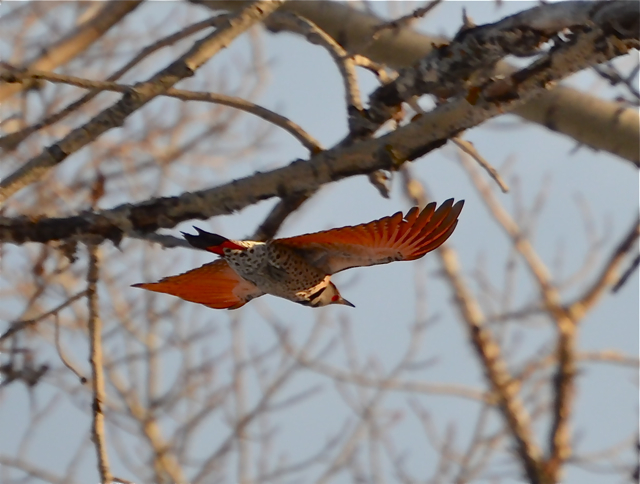
This past week, I’d the pure joy of finding the Red-Shafted Northern Flicker again, and photographing its take-off and landing.

Here is a series of shots:

DSC_0005

DSC_0006

DSC_0007

No words needed.

***

Saturday Snapshot is hosted by Alyce of At Home With Books. CLICK HERE to see what others have posted. Again, thanks Alyce for motivating me to get out of the house, walk and shoot, even in minus temperatures.

***

PREVIEW OF UPCOMING POSTS:

FEB. 12: A Valentine’s Meditation

FEB. 15: Bonhoeffer Read-Along First Post, Chapters 1-18
(Look forward to reading your thoughts so far)

Bonhoeffer Pastor Martyr Prophet Spy-Eric Metaxas

***

Saturday Snapshot Jan. 26: Winter Birding

The sun and the birds are the main reasons for going into the woods in January. These are common birds for us, but catching a good photo of them is always a challenge. That’s when the common becomes a joy.

The Northern Flicker, I know where they hang out. And they’re not too hard to photo when perching or pecking.

Northern Flicker pecking

But what I’ve been aiming for is when they fly, I can shoot from below, for the orange underwing is beautiful. I’ve spent frustrating hours wading and standing in deep snow just to wait for such a moment. Here’s a semi-successful one.

Northern FlickerThis is my first photo of a Common Redpoll. Look at her demure pose.

Redpoll

This Red-Breasted Nuthatch is easy. She comes near me as if to greet a friend:

Red-Breasted Nuthatch

And for all ye squirrel lovers, here’s another one, too oblivious to be bothered by me taking pictures of her (him?) having breakfast. Look at the open mouth:

Squirrel at breakfast

***

Saturday Snapshot is hosted by Alyce of At Home With Books. CLICK HERE to see what others have posted.

***

Saturday Snapshot January 19

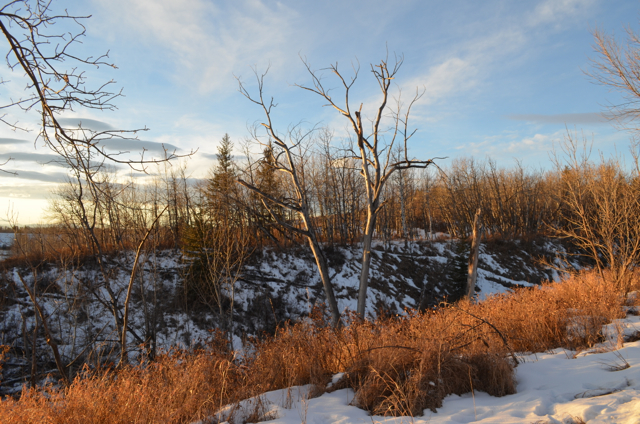
Winter in snow country. Here are some photos I took while trying out my new camera, a Nikon D5100. No editing has been done here, not even cropping.

I admit these are the more successful ones. There are lots that I’m not satisfied, with capturing light and focusing. Still figuring out how to use it, especially for birds. If you’re familiar with this camera, do let me know what’s the best settings for flying objects, identified or not.

Fences

Sunset at 4

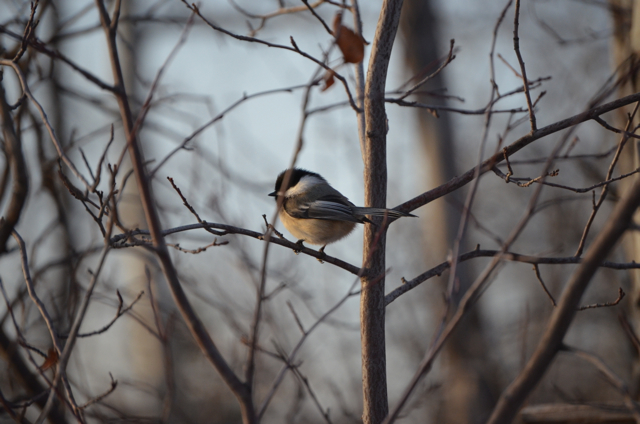
Black-capped Chickadee

Squirrel

Saturday Snapshot is hosted by Alyce of At Home With Books. CLICK HERE to see what others have posted.

***

Saturday Snapshot Dec. 15

Some more photos I took a few weeks ago. This time, shorebirds. Before the birding course, all birds on water were the same to me. Now I can tell the difference between some of them. And oh… they can fly too other than swim. I’m learning everyday, weather permitting.

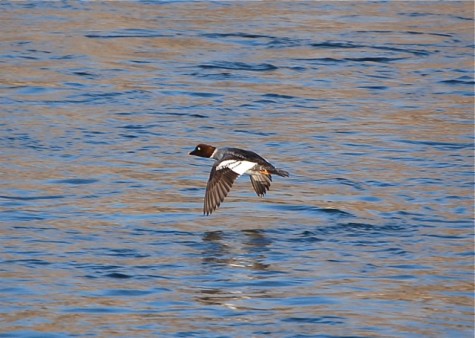
Common Goldeneye, male:

Male Golden Eye

Common Goldeneye, female:

Common Goldeneye, female

Male and female Mallard, first time I noticed the beautiful metallic blue on the male wing:

Male & Female Mallard

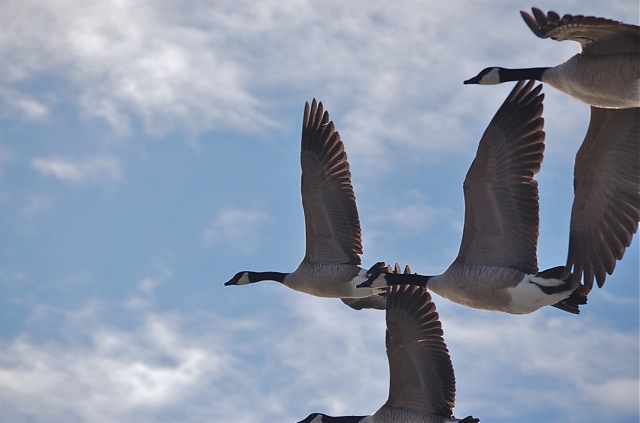
Canada Geese by the snowy shore:

Canada GeeseTaking flight:

Taking Flight

This one so close, it’s like I’m flying with them, no cropping has been done:

Flying

***

Thanks to Alyce of At Home With Books for hosting Saturday Snapshot.

Life of Pi (2012): The Magical 3D Experience

Movies this fall is a bumper crop of film adaptations from literary sources. Two belong to the same genre of magic realism. While Midnight’s Children is more akin to realism, Life of Pi is pure magic.

Ang Lee has done it, filming what is considered the ‘unfilmable’. Canadian author Yann Martel’s Booker Prize winning novel Life of Pi is an existential fantasy, a story that challenges the limitations of human reasoning and opens the door to the imaginary and the quest for the Transcendent. What Martel has succeeded in literary form, Lee has realized in this visually stunning cinematic offering. While I know book and film are two very different art forms, I am glad that screenwriter David Magee has stayed true to the spirit of the novel, which I think is crucial in this case. Cinematographer Claudio Miranda’s creative camera work is also essential in turning Martel’s imaginary world into mesmerizing visuals on screen.

The difficulties are not just transposing the philosophical ruminations from book to screen, but to keep the audience’s attention and interest for two hours when the bulk of the story is about a 16 year-old boy adrift at sea for 227 days in a lifeboat with a Bengal tiger. Kudos to Lee for taking up this daunting task, a project of which several other directors had bowed out, including Jean-Pierre Jeunet (Amélie), M. Night Shyamalan (The Sixth Sense), and Alfonso Cuaron (Harry Potter and the Prisoner of Azkaban).

The production has taken Lee years to complete. He had to build the world’s largest self-generating water tank of its kind in Taiwan to shoot his film, utilize 3D technology and CGI to overcome many obstacles, do extensive research, and above all, find an actor who is capable to be Pi.
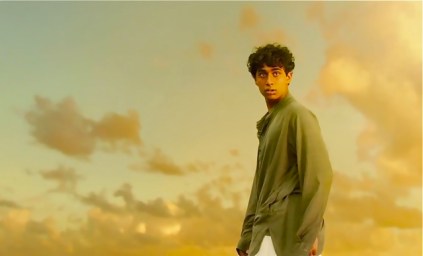
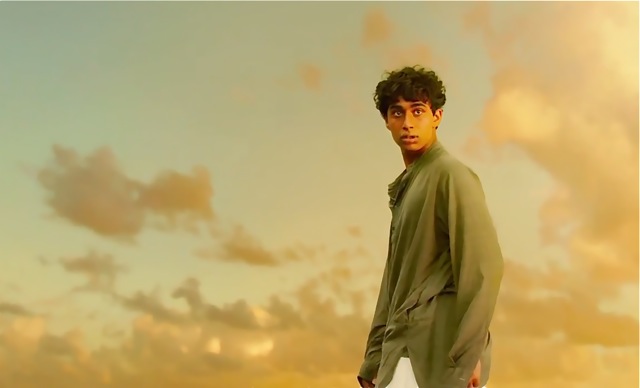
Ultimately Lee found 17 year-old Suraj Sharma in Delhi, India, from 3,000 candidates. Fate has it that Sharma was just accompanying his younger brother to the audition. The next set of challenges for Lee soon follows: directing Sharma who has never acted before, and, coaching him to imagine there is a fierce tiger present at the scenes, for Richard Parker is a virtual reality.

As I watched the film, I could see Lee’s own tenacity reflected in the character of Pi. In fact, the whole process of the production parallels the thematic significance of the story: the essence of reality, the nature of storytelling, the role of the imagination and faith in survival and in life.

**

The film begins with Pi as a boy (Gautam Belur at 5, Ayush Tandom at 12) growing up in Pondicherry, India. His father (Adil Hussain, English Vinglish) owns the Pondicherry Zoo. The most impressionable lesson he learns from his father is, the tiger is not his friend.

Pi has a loving mother (Tabu, The Namesake), and an older brother Ravi (Ayan Khan 7, Mohd Abbas Khaleeli 14, Vibish Sivakumar 19), a typical older sibling who teases and dares. This first act of family life is a delight, and the 3D effect in the opening sequence is wonderful to watch. The original score composed by Mychael Danna matches well with the exotic context.

We soon realize the story we are watching actually is the adult Pi (Irrfan Khan, Slumdog Millionaire) telling what had happened to him as a boy to a Canadian writer (Rafe Spall, A Room With A View), a story, Pi claims, that will make him believe in God.

Pi is short for Piscine. After the boy is constantly teased by his schoolmates with the pun of the name, he begins to introduce himself as Pi. He just might not have known how prophetic his name is. Precocious and earnest by nature, Pi embraces Hinduism, Christianity and Islam in his search for the divine. The value of Pi, the mathematical symbol, is 3.14, a number that goes on to infinity, which aptly reflects the boy’s heart for the Eternal.

**

When he is 16 (Suraj Sharma), Pi’s family emigrates to Canada. They set sail on the Japanese cargo ship Tsimtsum, bringing on board the zoo animals. One stormy night, tragedy strikes. A shipwreck sends Tsimtsum to the bottom of the Pacific Ocean. Pi alone is saved as some sailors throw him overboard onto a lifeboat. Thus begins the magical journey of life in an open boat. Pi soon finds out he is not alone, for there in the boat is a hyena, a zebra, an orangutan called Orange Juice, and Richard Parker, a Bengal tiger. Soon there remain only two survivors, a 16 year-old Indian boy and a hungry tiger.
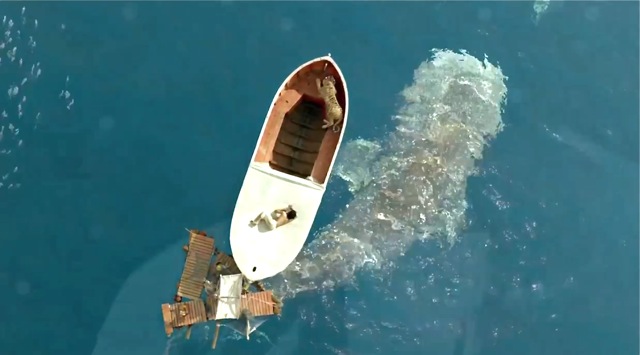
Lee demonstrates his technical and directorial prowess in this major second act of the film. He has aptly chosen to use the 3D camera. I’m not a fan of 3D, nor animal movies, but Lee’s usage of it makes what could have been an uneventful drifting at sea into an extraordinary movie experience.

What I read in the book jump out alive in magnificent visuals: the squall of flying fish, the gigantic whale shooting up from the ocean deep, the cosmic showcase of thunder and lightning, and the island overrun by meerkats. Magical realism in 3D, pure cinematic fantasy.

Lee’s style is minimalist: a life boat, a makeshift raft, a boy, a tiger, the open sea. Its simplicity exudes immense beauty; its stillness evokes quiet ruminations. This is not just a castaway, survival story. It depicts a close encounter of a soul experiencing nature and its maker. It also portrays an unlikely companionship between a boy and a tiger. Despite the loss of his family and the perils thrown at him, Pi clings to life with bare faith and the companionship he finds in Richard Parker.

The last part comes as a twist. Two employees of the ship’s insurance company interview the sole survivor of the shipwreck after Pi is rescued. Upon hearing Pi tell his ordeal, their rationale overrides any acceptance of the improbable. Here we see the thematic elements of fantasy versus reality, faith versus plausibility cleverly laid out. Like Martel’s novel, it poses a question that is open-ended, more for the viewer to resolve than for Pi to prove. A most thought-provoking end to a magical journey.

~ ~ ~ ~ Ripples

This review has been published in the Asian American Press print version, Nov. 30, 2012 issue. Online edition here. (Hint: There you’ll find Arti morphing from virtual reality into real life… take whatever is real for you.)

**

CLICK HERE to read my Book Review of Life of Pi by Yann Martel.

**

Photos posted here are stills from movie trailer.

A NOTE ABOUT MOVIE PHOTOS: These images are used according to the Fair Use guidelines for criticism, comment and educational purposes. CLICK HERE for more information. CLICK HERE to read the Report of the Ad Hoc Committee of the Society For Cinema Studies, “Fair Usage Publication of Film Stills” by Kristin Thompson.

***

Saturday Snapshot: Gliding Into The Sunset

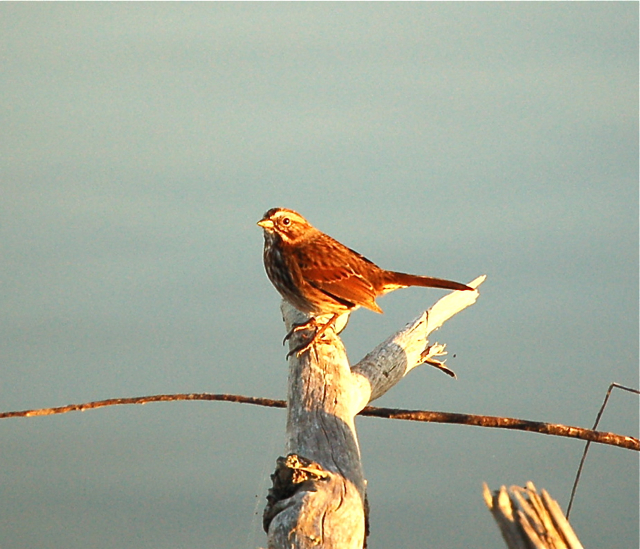
On Thanksgiving Monday (Canada, Oct. 8), I stopped by Iona Beach in Richmond, B.C.  On the smooth water illuminated in a golden hue were Mallards gliding into the sunset.

The common Sparrow too was swept in an amber tone. In that frame, nothing seemed common anymore.

And finally, I saw the sun slide down the distant sky. What a sight to wrap up Thanksgiving. If anything’s common… it’s common grace.

***

Saturday Snapshot is hosted by Alyce of At Home With Books.

A Note About These Photos: No colours had been added nor saturation altered in any of them.

Saturday Snapshots July 21

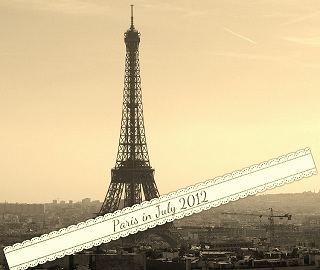
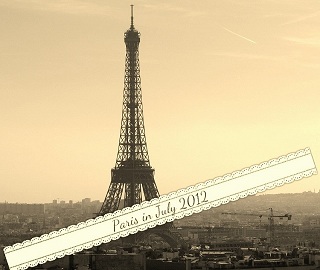
Once again, Saturday Snapshots framed by a Paris in July backdrop…

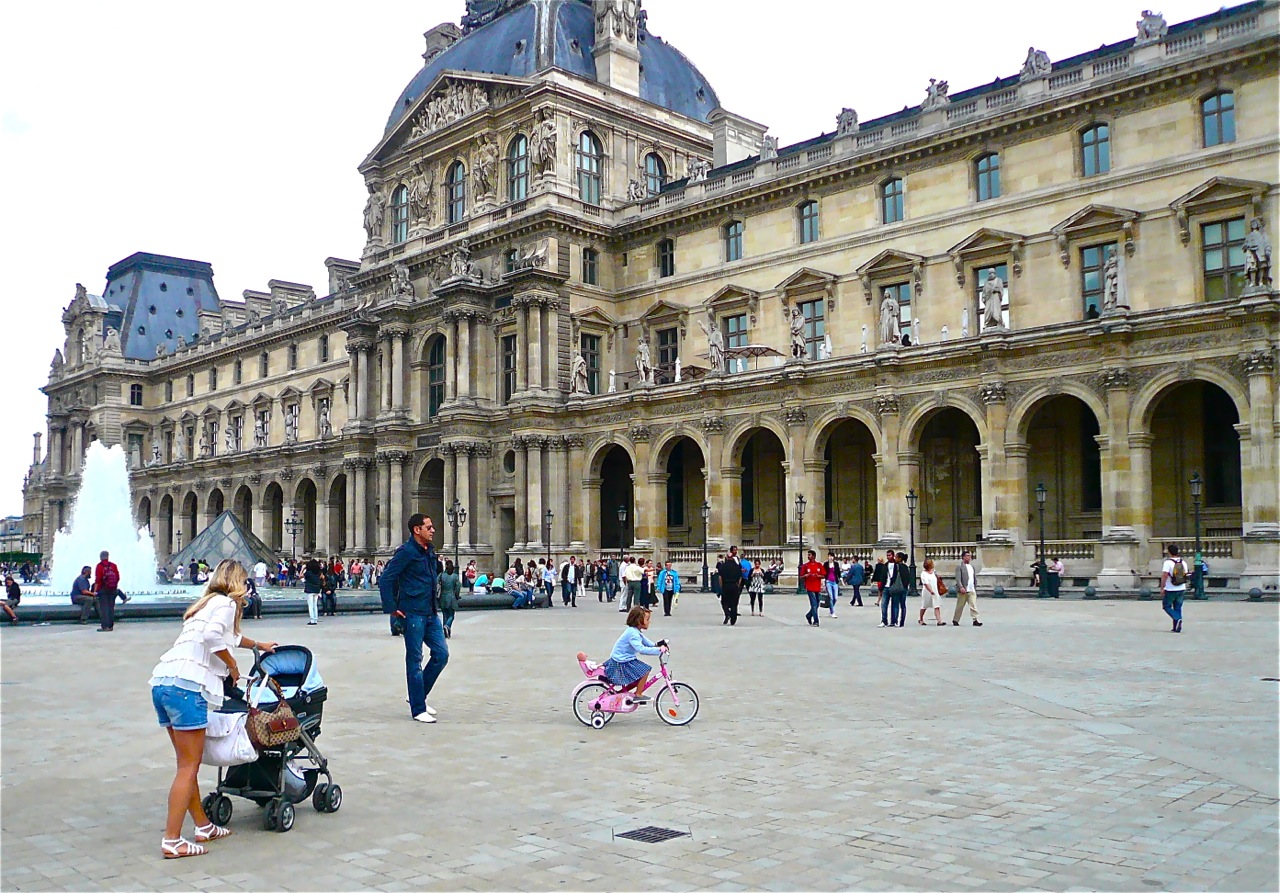
I was pleasantly surprised to find the open space outside the Louvre being used not only for tourist line-ups but as a spot for a family outing.

Dad can keep an eye on Sis biking, while Mom gets baby ready for a video shoot.

And Li’l Bro rides into the sunset.

***

Saturday Snapshot hosted by Alyce of At Home With Books, Paris In July at BookBath and Thyme for Tea.

***

Arles: In Search of Van Gogh

Watching the movie Séraphine (my last post) made me think of another artist tormented by mental illness. Vincent Van Gogh (1853-1890) was born in the Netherlands. His artistic imagination was ignited when he moved to Paris in 1886 and saw the works of the impressionists. But the prolific period of his life began only after he went south to Arles.

I visited Provence in August, 2010, went on a walking tour of Arles following the footsteps of Van Gogh. For Paris in July hosted by Karen of Bookbath and Tamara of Thyme for Tea, I’m reposting an excerpt of my travelogue here. Some of you may remember my series of travel posts, but many of you have come to Ripple Effects only recently. Please join me as I revisit Arles and its nearby St-Rémy-de-Provence.

***

Van Gogh moved to Arles from Paris in 1888, seeking the tranquility that was so elusive to him in the big city. In his letter to his brother Theo upon arrival to Arles, he wrote:

It seems to me almost impossible to be able to work in Paris, unless you have a refuge in which to recover and regain your peace of mind and self-composure. Without that, you’d be bound to get utterly numbed.”  — Tuesday, Feb. 21, 1888.

The fresher and more colourful palette is apparent during this most prolific period of the artist’s life. Bright yellows, blues, shorter and swirling brush strokes established his signature style.

As for me, I was a bit disappointed to see the sunflowers have already withered in late August. Fields of yellow were now massive brown. They would be harvested at a later time for their oil, a good reminder that, for tourists, it’s the view and the photos, but for those living here, it’s their livelihood. The lavenders on the Luberon mountains too had long passed the season. Note to myself: Early to Mid July is best if I ever come this way again.

But all was not lost. I was gratified to follow some of Van Gogh’s footsteps as I explored the clearly posted Van Gogh sites in the town, the scenes and locales where the artist so vividly captured in his paintings.

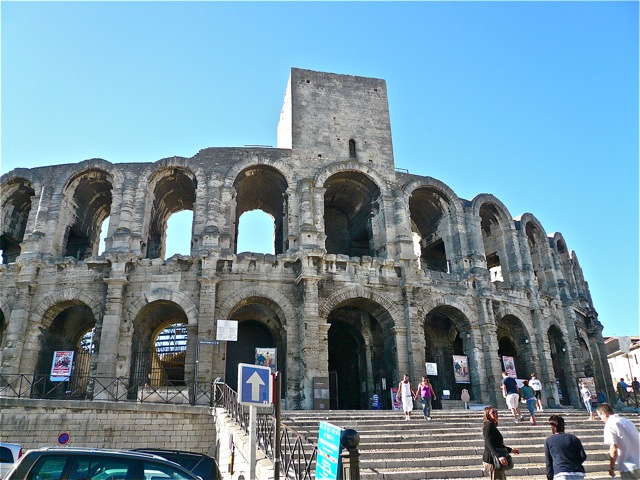
Arles is a Roman town. What more prominent landmark to reflect its past glory than the Roman Arena in the town centre. Why all the arches? The free flow of pedestrian traffic. The full seating capacity, 20,000 people, could exit the Arena in 7 minutes.

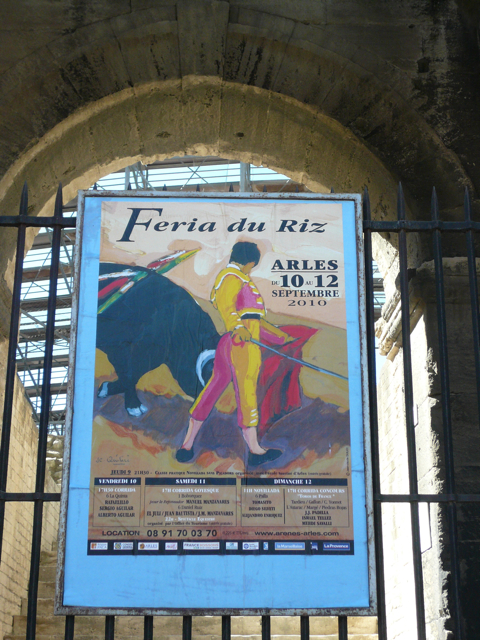
Used by gladiators in ancient time, the Arena is still the venue for bullfights:

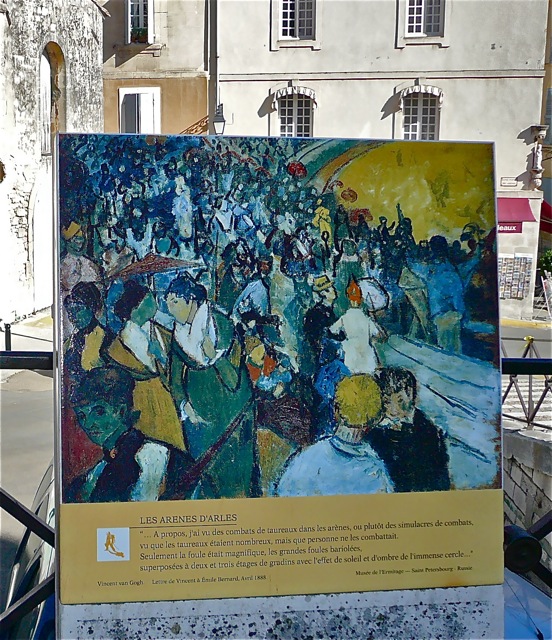
But Van Gogh’s interest was not so much in the violent action of bullfighting than the people, as his painting Spectators In The Arena At Arles (December, 1888) clearly shows:

The Café Terrace on the Place du Forum was his hang-out, renamed Café Van Gogh now. The yellow café upon the backdrop of the blue, starry night had deeply inspired the artist:

Café Terrace At Night (September, 1888):

Van Gogh had wanted to make Arles a hub for fellow artists. Upon his urging, Gauguin came to join him in October, 1888. The two painters frequented the Café Terrace many a night but only for two short months. What happened on December 23rd was reported by the local paper the next day:

At 11:30 pm., Vincent Vaugogh [sic], painter from Holland, appeared at the brothel at no. 1, asked for Rachel, and gave her his cut-off earlobe, saying, ‘Treasure this precious object.’  Then he vanished.

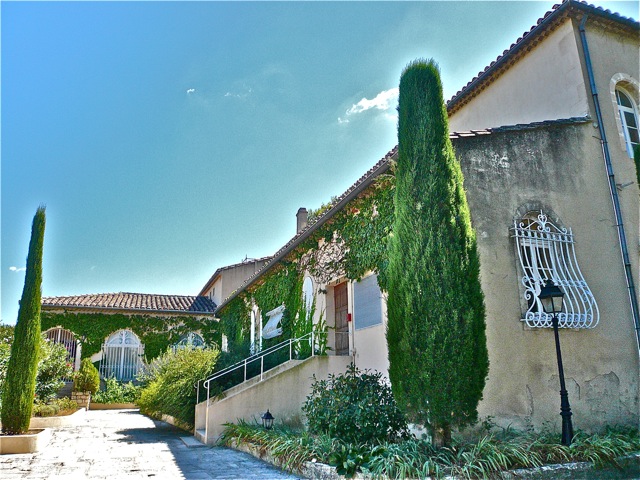
After this incident, Van Gogh was admitted to a local hospital, now the Espace Van Gogh in Arles, a cultural centre:

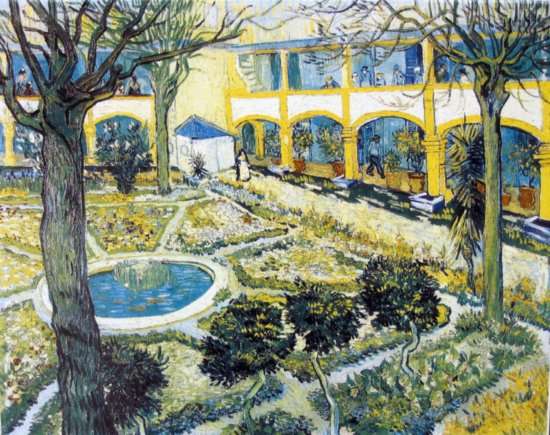
And here is Van Gogh’s rendering when he was staying there:

In January, 1889, Van Gogh returned home to his ‘Yellow House’ (which has now been torn down and reconstructed), but for the next few months, suffered onslaughts of hallucinations and delusions. His view of his own condition nevertheless was lucid and even progressive for his time. His letter to Theo is poignant, as he openly faced his predicament and earnestly sought a solution:

And for the time being I wish to remain confined, as much for my own tranquillity as for that of others.

What consoles me a little is that I’m beginning to consider madness as an illness like any other and accept the thing as it is, while during the actual crises it seemed to me that everything I was imagining was reality.”

— Sunday, April 21, 1889.

On May 8, 1889, he checked himself into the Saint Paul de Mausole, the mental hospital at St-Rémy-de-Provence. Under the care of his doctor Théophile Peyron, the artist’s condition improved and he thrived in the idyllic environment there. Art therapy had brought healing and prolific output. Van Gogh stayed there for a year and created more than 150 paintings.

Dr. Théophile Peyron out at the front garden of Saint Paul de Mausole hospital:

The olive grove outside:

Olive Grove (June, 1889):

To his brother Theo, he wrote on Sunday, May 11, 1890:

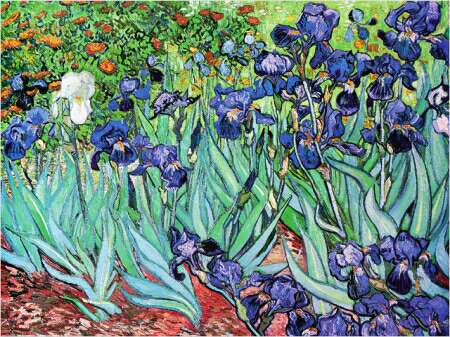
At the moment the improvement is continuing, the whole horrible crisis has disappeared like a thunderstorm, and I’m working here with calm, unremitting ardour to give a last stroke of the brush. I’m working on a canvas of roses on bright green background and two canvases of large bouquets of violet Irises…

My Van Gogh trip ended at St. Rémy, and so be it. I’ve seen the sites wherein the artist was at his most prolific. I’ve seen the town and surroundings where he found inspiration.  I’ve seen his final solace where he attained some stability and painted with passion. I’d like to keep these as memories of my travel to Provence. I could hardly bear to think of his last days, discharged from St. Rémy just a few days after the above letter, headed north to Auvers-sur-Oise on the outskirt of Paris, and in just two short months, succumbed to the recurrence of his illness. He shot himself in the chest with a revolver on July 27, 1890, and died of his wound two days later.

Back to the thoughts I wrote about: How do we keep art from turning into a cliché? I think it takes a certain awareness of the artist as a person, plus a measure of empathy and respect for the struggle to live and create… and realizing that the beautiful works are often triumphs in spite of life’s overwhelming adversities, rather than the natural products of bliss and fortune.

To wrap up my travel posts, and taking the risk of turning it into a cliché albeit my motive is pure, here’s the YouTube clip again, Don McLean’s tribute to Vincent:

***

My five-part travelogue on England and France:

  1. Tate Modern & Billy Elliot
  2. Bath’s Persuasion
  3. Paris: The Latin Quarter
  4. Art and Cliché
  5. Arles In the Steps of Van Gogh

Séraphine and the Wrought-Iron Chair

By day, she scrubs floors, cleans houses, washes dirty linens in the river. By night, she paints. She is Séraphine, a cleaning woman in her fifties. Later, she is better known as Séraphine de Senlis. 

Séraphine (2008), a film based on the life of the early 20th Century French painter Séraphine Louis (1864-1942), won 7 César Awards in France including Best Film of 2009 and Best Actress for Yolande Moreau as Séraphine. True to its subject matter, director Martin Provost has crafted an aesthetically pleasing work of art. The pace is slow for the viewer to savour every bit. Moreau’s charming portrayal of Séraphine is captivating. She wins my heart from the first scene.

It is gratifying to be noticed, to be confirmed of one’s worth. To the dismissive eye, an ageing cleaning woman is nothing to deserve another glance. Makes me think of the concierge Renée in The Elegance of the Hedgehog. In one of the apartment units which Séraphine cleans, a new tenant just moves in. He is Wilhelm Uhde, a noted art critic and collector of Picasso. He is also the one who has discovered Henri Rousseau of the naive art style, a term referring to untrained talents, a term to which Uhde doesn’t subscribe.

And right there in his rental unit Uhde notices another hidden gem of this style, his own housecleaner Séraphine. Uhdle is deeply moved by her work and soon becomes her patron. He stops her from mopping his floor, leads her out into the garden, seats her down in a wrought-iron chair and tells her she has talent. It is a wrought-iron chair that I notice since that scene, and it recurs later in the film, a metaphor for aesthetics, style and elegance, antidote to the crude reality of Séraphine’s life.

Séraphine loves nature, and nature rewards her with inspiration.

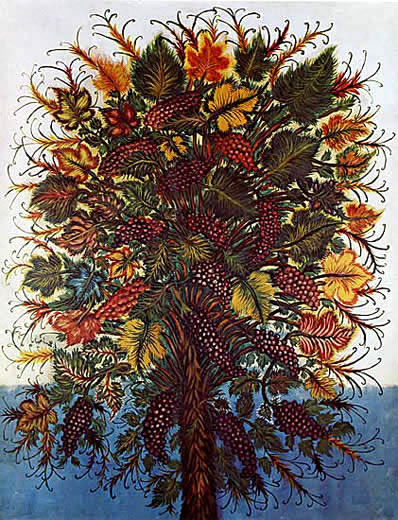
Her subjects are mainly flowers and fruits, their design exquisite, natural, colourful and lively. 

Deep religious fervour soon drives Séraphine to relentless, maddening obsession to paint. She claims to follow voices from her guardian angel. She would sing hymns at the top of her voice while painting through the night, waking up in the morning on the floor with her work-in-progress. She gradually becomes delusional and out of touch with reality.

Why is it that giftedness and mental illness often find affinity for each other? Van Gogh comes to mind. And only recently did I read this Guardian article drawing uncanny similarities between Séraphine and Susan Boyle.

As WWI draws near, the impending conflicts push Uhde out of France and back to Germany. They reunite after the War. Sadly, the painter’s growing achievement brings about more severe delusions. Later the economic depression ends contact between patron and artist for a while.

When Uhde finds Séraphine some years later, she is locked up in an insane asylum. This latter part of the movie is a bit uncomfortable to watch. Uhde is unable to communicate with her as she is restrained in a straight jacket, tied to the bed weeping in anguish.

Months pass and in 1935 Uhde visits her again. He needs to tell Séraphine her paintings are selling. Her condition has stabilized by now but upon doctor’s advice, Uhde should just leave her be. There in the asylum at Asile de Clermont Uhde quietly pays for her a private room with a view out towards a lush green meadow and full, leafy trees.

The ending that follows is one of the best I’ve seen in films. We see Séraphine being led into the room. She sits on her bed, dazed, unfeeling. Then she turns her head and notices the door leading outside to the trees and green meadow. The next three silent minutes bring us to a poignant closing:

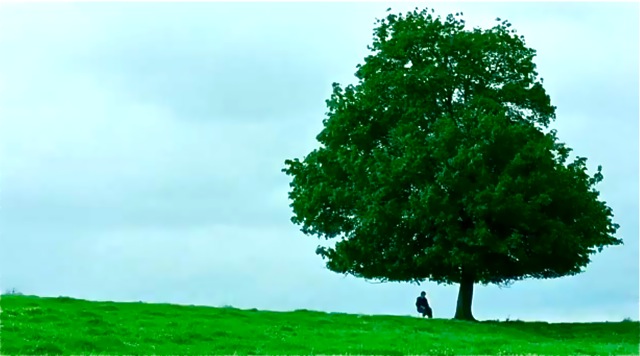
Séraphine slowly gets up and opens the door. She sees a wrought-iron chair on the porch. The frame on screen here is roughly split in two. On the left side is her room with a sterile, wooden chair of the asylum. On the right we see the porch outside with the wrought-iron chair, not unlike the one she had sat on while being declared a talent by Uhde years before. She tentatively steps out of her room, touches and examines the chair, then picks it up and slowly carries it with her up a green hill to a full, beautiful tree. From afar, we see her look at the tree, put the chair under its shade, sit down and tilt her head back, fully relaxed.

In the silence with just the wind blowing, it seems we can hear her gratified sigh of relief, being back in nature, coming home.

~ ~ ~ 1/2 Ripples

CLICK HERE to watch Séraphine’s official trailer on Youtube. You’ll be able to see the ending scene. But of course, nothing compares to watching the film in its entirety.

A NOTE ABOUT MOVIE PHOTOS: These images are used according to the Fair Use guidelines for criticism, comment and educational purposes. CLICK HERE for more information. CLICK HERE to read the Report of the Ad Hoc Committee of the Society For Cinema Studies, “Fair Usage Publication of Film Stills” by Kristin Thompson.

***

This movie review is my third post for Paris in July hosted by Karen of BookBath and Tamara of Thyme for Tea. To read my previous posts you can click HERE and HERE.

***

The Rant of the Armchair Traveller

From the comments in my last post, seems like Egyptology is a favorite subject of many, if not now, at least some time in our curious life. I’ve had the chance to visit Egypt twice during my travels to the Middle East. Since now is the warm month of May, kicking off the travelling season, and alas, since going anywhere far is a remote possibility for me at present, an armchair revisit is timely, if only to suppress burning wanderlust.

Here are some file photos from my last trip to Egypt five years ago. I only stayed in Cairo and its vicinity. But from my recent reading of Lord Carnarvon and Carter’s King Tut Tomb discovery, I regret I didn’t venture further to the Valley of the Kings in Luxor. However, I did see the iconic King Tut’s mummy mask at Cairo’s Egyptian Museum. Photography was forbidden, so no King Tut’s portrait here.

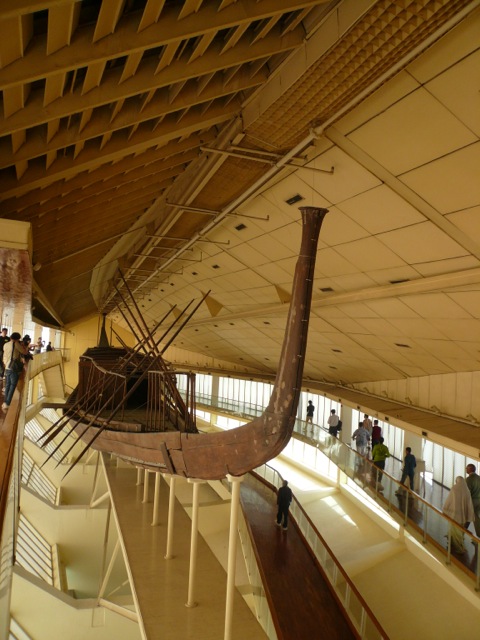
But I can show you another marvellous exhibit. In 1954, a Pharoah’s boat dating back four millenium was dug up in pieces and since reassembled. Beautifully showcased in another museum near the Great Pyramid of Giza. Photos were allowed here, but Arti’s pocket Lumix wasn’t enough to capture the magnificent whole. If you’re interested, click here to a full description.

Pharaoh’s Boat buried 26th Century B.C.

Another view:

The Pyramid and the Sphinx are probably what travellers go to Egypt for. While the Sphinx is a limestone statue of the mythical creature with the lion body and the human head, the Pyramid was piled up in stones. Can’t say which one is easier to make.

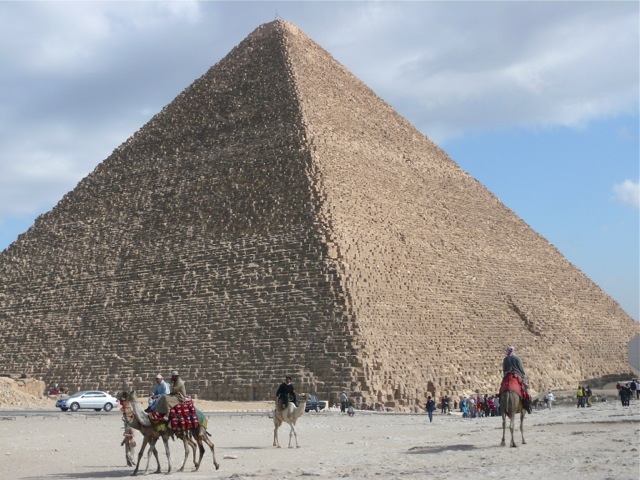
The oldest of the Seven Wonders of the Ancient World that is still standing, The Great Pyramid of Giza was built for the fourth dynasty Egyptian Pharaoh Khufu, a 20 year construction process which concluded around 2560 B.C. (Wikipedia data) As for Arti, no exact date was needed. Standing at the foot of the humungous pile of neatly stacked up stones was an experience itself.

The Great Pyramid of Giza

Not far from the Pyramid, The Sphinx:

The Pyramid and The Sphinx

A closer look… so what if I’ve lost a nose, I still stand sit after all these years:

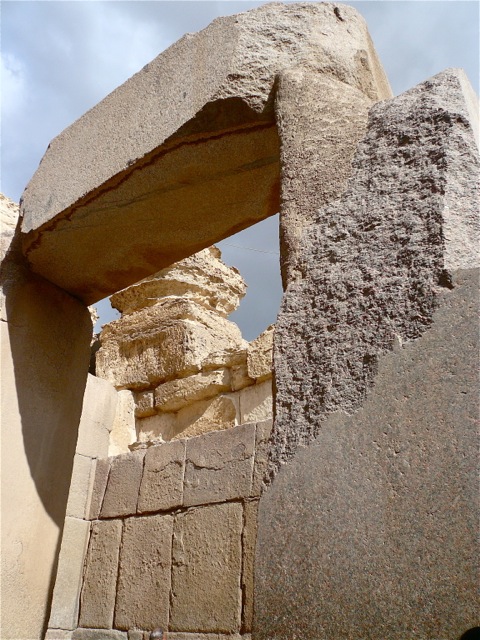
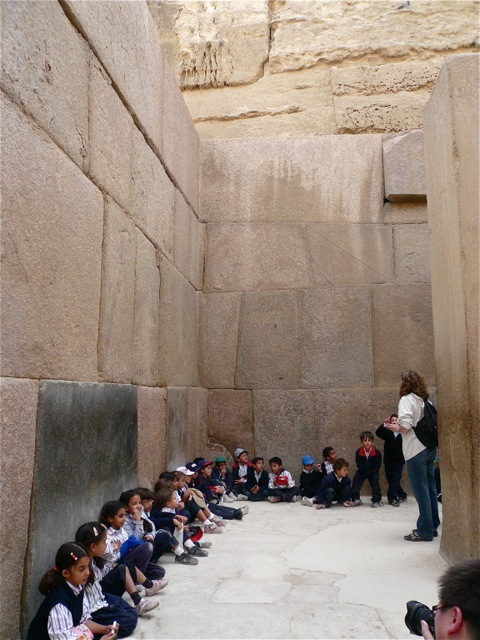
Let the stones speak:

and the children listen:

We were travelling in a bus through the desert, and stopped for a view. Here are some other children I saw, took this picture through the window:

Mount Sinai, the legendary place Moses received the Ten Commandments from God. At the foot of the mountain range is St. Catherine’s Monastery:

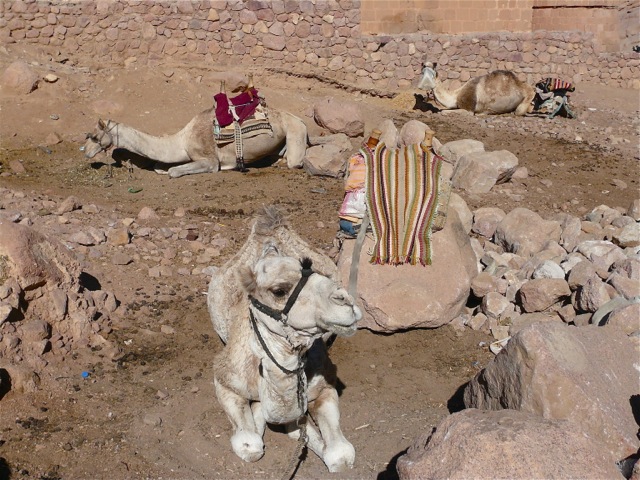
 Man’s best friend. They wait without complaint:

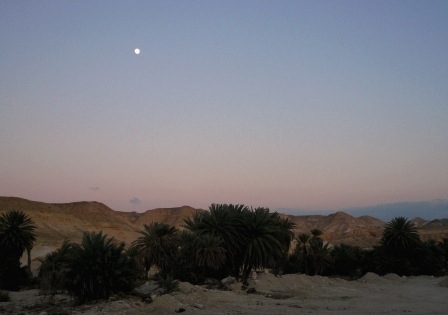
The desert is mesmerizing regardless of the hour:

Desert moon at dusk

While I faithfully pick up mail for neighbors gone to Paris, or read with pleasure blog posts of your recent travels, I feel like jumping on the armchair bandwagon and join the massive global tourism movement. Ok everyone, I’m coming along.

***

Diary of a Country Priest: Film Adaptation (1951)

For me, the cinema is an exploration within. — Robert Bresson (1903-1999)

Robert Bresson is one of the most influential figures in French cinema. The acclaimed New Wave director Jean-Luc Godard once noted: “Robert Bresson is French cinema, as Dostoevsky is the Russian novel and Mozart is German music.”

I know, Austrians would say Mozart was Austrian. But this just shows his influence can cross borders. Same with Bresson, who is acclaimed as one of the forefathers of the French New Wave, even though his style is not experimental. The iconic Swedish director Ingmar Bergman had specifically cited Diary of a Country Priest as influence for his Winter Light.

Before Bresson adapted Diary of a Country Priest, two previous screenplays were attempted by others but turned down by the author Georges Bernanos himself. Bresson’s film was made after Bernanos died. Bernanos had nothing to worry about with Bresson’s interpretation, for the film is an almost literal and a worthy cinematic translation. It won the Prix Louis Delluc in France (best film of the year) and several international film awards. Bresson was given the Career Golden Lion at the 1989 Venice Film Festival.

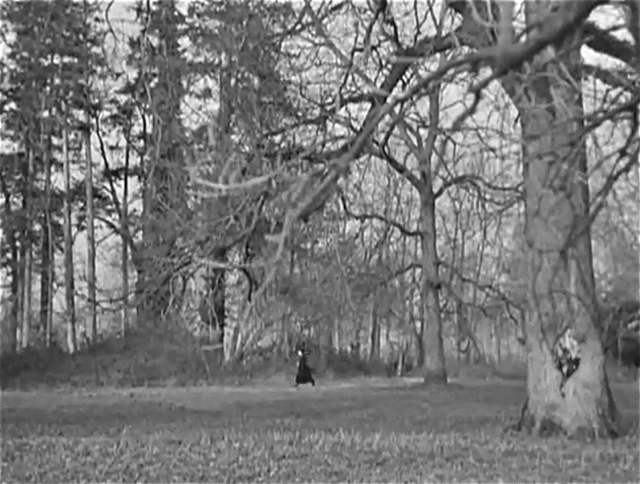
That Bresson, a professed agnostic, would choose to adapt a work by the Catholic writer Bernanos shows the moving power and the universal appeal of the book. The parish of Ambricourt is a microcosm of the human world. The seemingly placid village hides a spiritually barren landscape and a cocoon of depravity. The young priest, an unwelcome alien, is captured cinematically as small and vulnerable, an apt depiction of how he feels within:

An outsider barred from a gated mansion of dark secrets, like here at the front gate of the Château.

The light comes into the world, but the darkness refuses it. On screen, we see the young priest often shut out of gates and windows. The glass pane allows him to be observed from the inside, yet he is very much on the outside isolated, the weight of the world heavy on his face.

Bresson’s style is minimal, you may find this film somewhat austere. But I’m gratified by such style, devoid of color and whatever additives we find in movies today. Instead, every frame conveys an aesthetic simplicity and thematic purpose.

To explore the drama within, Bresson chose ‘non-actors’. “As far as I can, I eliminate anything which may distract from interior drama,” Bresson was quoted saying, and distractions included ‘acting’. He selected his ‘models’ (as he called them, not ‘actors’) first for their voice. He particularly looked for inexperience. The young Curé of Ambricourt was Claude Laydu’s first film role. Others that Bresson used were often one-time actors just for the film he was making.

The Criterion Collection DVD has a most helpful commentary by film historian Peter Cowie. His insight is invaluable to the appreciation of Bresson’s adaptation. One of his remarks is the off-screen sounds we often hear in a scene. The most intense one would have to be the climatic spiritual battle between Mme la Comtesse and the young priest. Totally engulfed by grief, hatred and bitterness, and living in isolated misery all the years since her young son died, Mme la Comtesse finally releases her pain and receives blessings from the priest. And what sound do we hear off-screen the whole time they are engaged in this soul-piercing scene in the drawing room: the gardener’s raking of dead leaves.

Another source I’ve often sought out is the book written by Paul Schrader: Transcendental Style in Film: Ozu, Bresson, Dreyer. Yes, if I must choose a word to describe Bresson’s style, I would use Schrader’s term: transcendental. His minimal, aesthetically simple, ‘non-acting’ style raises the viewer to a meditative plane which is beyond the material, beyond all distractions. That’s the essence of cinema that I find so meaningful and gratifying.

And finally, despite succumbing to his illness, the young priest leaves a legacy that his superiors, the senior vicars, could not have: an embodiment of the suffering Christ and the redemptive power of grace. Despite his own frailty and ultimate death, the young country priest  triumphs through his faith, however feeble it may have seemed in his own eyes. It does not matter, for all is grace.

~ ~ ~ ~ Ripples

***
AND TO ALL, A HAPPY EASTER!
***
Other related posts on Ripple Effects:
.
.
.
.
***

Salk Institute, La Jolla, CA

Hope lies in dreams, in imagination, and in the courage of those who dare to make dreams into reality.  — Jonas Salk

American medical researcher and virologist Jonas Edward Salk (1914-1995) discovered the polio vaccine in 1955. In 1960, he founded the Salk Institute for Biological Studies, to create a collaborative environment for exploring the basic principles of life.

Some of the renowned consulting scientists at the conception of the Institute included Warren Weaver, who first coined the term “molecular biology’, and Francis Crick, co-discoverer of the DNA molecule. The Salk Institute remains one of the top research facilities in the world, generating five Nobel Laureates since its inception.

The building of the Salk Institute began in 1962 on 27 acres of pristine land donated by The City of San Diego. The site is endowed with a vantage point 350 feet above the Pacific Ocean on the coastal bluffs of La Jolla.

Jonas Salk commissioned the renowned architect Louis I. Kahn (1901-1974) to design the structures: “Create a facility worthy of a visit by Pablo Picasso.” Kahn proficiently rose to the challenge.  The Salk Institute was completed in 1965. In 1992, it received the American Institute of Architects Twenty-Five Year Award.

So much for the objective facts. Here’s my experience.

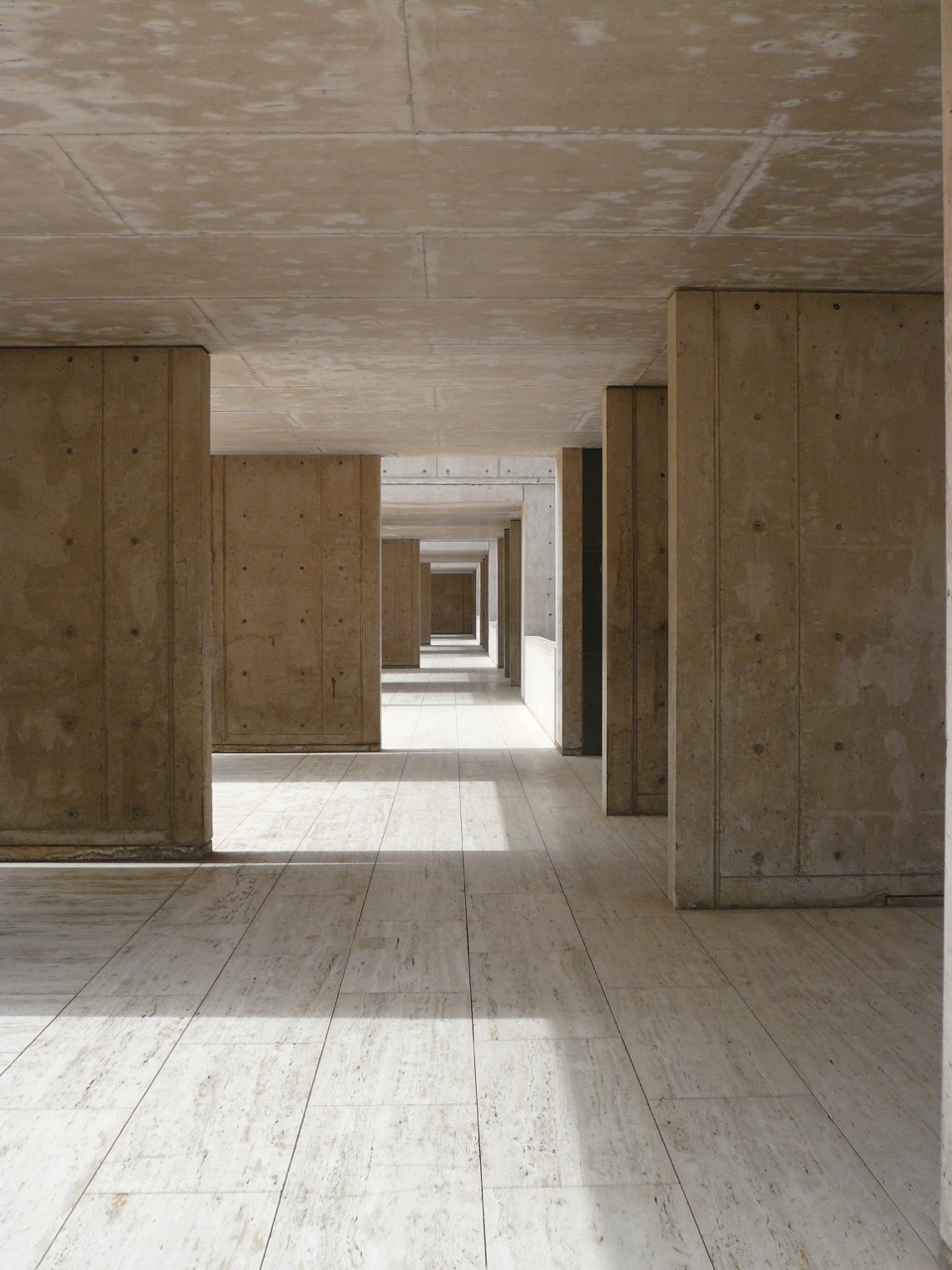
I joined an architectural tour of the site. As I came to the courtyard, the entrance to the main area, I was confronted with this view. This could well be the most existential space I’d ever set foot on:

What first captivated me was the void in between the two mirrored structures. The buildings on both sides act as a frame to augment the negative space in the middle. That lookout is towards the Pacific Ocean. As I saw it then, it looked like a misty unknown, an entrance towards eternity.  The last part of Terrence Malick’s film The Tree of Life came to mind.

“Architecture is the reaching out for the truth.” — Louis I. Kahn

Through the massive centre court made of travertine marble flows a stream towards the direction of the ocean, a visual metaphor for life. The water collects into a pool at the end that leads to a small waterfall, then recirculates:

Angled walls offer view from every step:

“The sun never knew how great it was until it struck the side of a building.” — Louis I. Kahn

Like parallel mirrors, concrete walls can form infinite, interesting vantage points:

Every room of the senior scientists looks out into the ocean… for creativity, inspiration, and the view of the greater scheme of things.

***

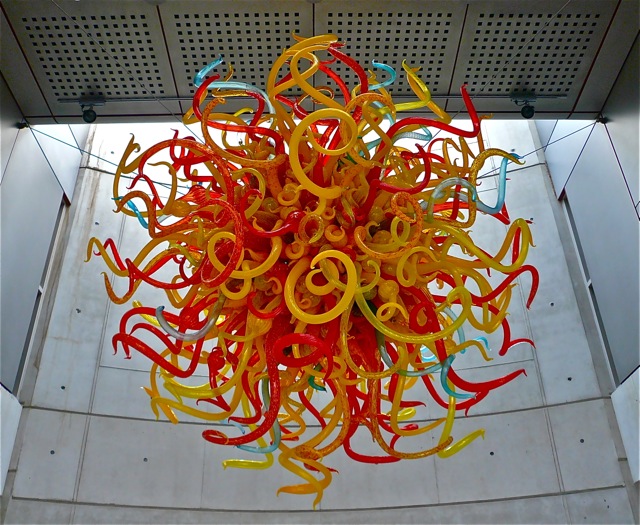
At the reception building where we met to begin the tour, I discovered the work of another artist: Dale Chihuly’s glass work The Sun, suspended from the ceiling:

Chihuly’s glasswork is a showcase of colors and vibrancy, depicting visually the exploratory spirit of the Institute. And I think, a wonderful contrast to the minimalist concrete walls around.

***

As soon as I came back home, I took out a DVD which I’d bought some years now but still haven’t yet watched. How wonderful to have that waiting for me: 2004 Oscar Nominee for Best Documentary, a film by Nathaniel Kahn My Architect: A Son’s Journey.

Son of Louis Kahn and Harriet Pattison, Nathaniel Kahn embarked on a journey to discover the father who died when he was only eleven, a father whom he wishes to have known more before a heart attack ended his life inside a washroom at a New York Subway station.

The film is not only a personal journey, but a reconciliation, a late and poignant search for a father and a son’s identity. Further, it’s a tribute to a great architect from his peers, as his son seeks out those who had known the architect professionally: Philip Johnson, I. M. Pei, Frank O. Gehry, Moshe Safdie, Robert A. M. Stern.

It is also about three women and their families who had experienced the joy and pain of being Kahn’s own, a complicated predicament in his life and after his death.

It is also a virtual gallery of the magnificent works situated all over the world. The most impressive to me, other than Salk Institute, is the one on the cover of the DVD, The National Parliament Building in Dhaka, Bangladesh.

“Design is not making beauty, beauty emerges from selection, affinity, integration, love.” — Louis I. Kahn

***

All photos of Salk Institute taken by Arti of Ripple Effects, Feb. 2, 2012. All Rights Reserved.

Photo of DVD cover from myarchitectfilm.com

***

Click here to read more about Louis I. Kahn

Click here to see glass artist Dale Chihuly’s works.

Click here to read more about the architecture of Salk Institute

Click here to read more about Salk Institute

Click here to read my review of the film The Tree of Life

***