2012 Golden Globes Results

Some of the major winners at the 69th Golden Globes Awards last night.

  • Best Motion Picture – Drama: The Descendants
  • Best Motion Picture – Comedy or Musical: The Artist
  • Best Actress – Drama: Meryl Streep (Iron Lady)
  • Best Actor – Drama: George Clooney (The Descendants)
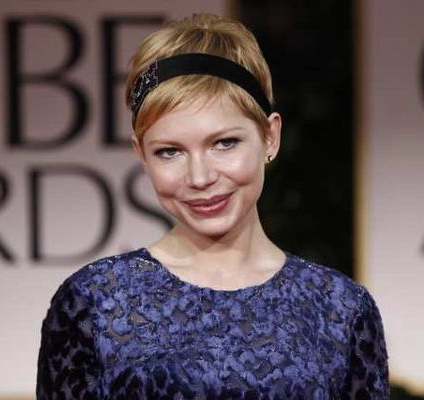
  • Best Actress – Comedy or Musical: Michelle Williams (My Week with Marilyn)
  • Best Actor – Comedy or Musical: Jean Dujardin (The Artist)
  • Best Director – Motion Picture: Martin Scorsese (Hugo)
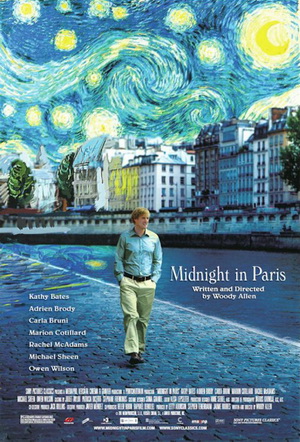
  • Best Screenplay – Motion Picture: Woody Allen, Midnight In Paris

I must say I’m not too excited about this year’s Golden Globes to start with. Main reason: how can they totally snub Terrence Malick’s The Tree of Life? Not even one single nomination for that epic production! I hope the Academy Awards can correct that negligence.

But I’m glad though for The Artist winning Best Picture, Comedy or Musical. It offers me a unique experience: watching a silent movie made in 2011 in the theatre, a successful, nostalgic attempt paying homage to the golden era of Hollywood. Last night, Uggie got a chance to share the spotlight.

Michelle Williams is impressive as Marilyn Monroe. Just a look at her at the Golden Globes and you’ll know how acting and make-up can create a whole world of difference. The transformation of an understated actor into a legendary personality in a dreamscape is what’s so magical about the cinema.


George Clooney is good in The Descendants, a showcase for his acting talent. You can actually see a tear welling up in his eye then flow slowly down his cheek to the tip of his nose. That scene is so deeply imprinted in my memory.

Haven’t seen Iron Lady yet, but what I remember from last night Meryl Streep winning Best Actress is her presenter, the inimitable, ever poised (even more so this time… marvellous result of some great workout?): Colin Firth.

And last but not least, excited to see Woody Allen once again getting recognized for his talent, albeit not in directing, still a worthy nod, winning Best Screenplay with Midnight In Paris. And I must mention this: not too long ago I read a book entitled Insanity Defense: The Complete Prose by Woody Allen. In it I read a story called “A Twenties Memory”.  O what a discovery! Of course! This piece of writing dating back to 1971 must be the original spark that later materialized into the script for Midnight In Paris, some forty years later. CLICK HERE to read “A Twenties Memory”. This just shows it’s never too late to bring ingenuity to life.

***

For a full list of nominations and winners, CLICK HERE.

***

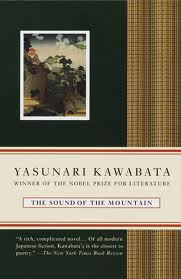
The Sound of the Mountain by Yasunari Kawabata

The Sound of the Mountain (山の音) is my book for Japanese Literature Challenge 5 at Dolce Bellezza, the only one this time and posting it before the Challenge ends this month. It is the first book I finished in 2012, at 1 a.m. January 1st. Truth is, I wanted to finish it by the end of last year, but couldn’t. I’ve been reading it for weeks in December. It’s a book that I had to read ever so slowly.

Yasunari Kawabata (川端 康成, 14 June 1899 – 16 April 1972) is the first of two Japanese Nobel laureates in literature, receiving the honor in 1968 (Kenzaburo Oe in 1994). So far I’ve only read two of Kawabata’s books, Snow Country and The Sound of the Mountain. But from this limited experience, I’ve found that reading Kawabata is like watching an Ozu film. The camera is set low and mostly stationary to depict quiet expressions and gestures. Viewers are engaged by the nuanced dialogues as the director explores in depth thematic materials rather than presents plot-driven sequences. Both masters deal with intimate relationships, their characterization sensitive , their imagery poetic.

Ogata Shingo is in his early sixties, beginning to show signs of old age. Ever introspective and sensitive, he can almost hear the beckoning of death as sound that comes from the mountain to the rear of his house in Kamakura. As he lies in bed at night, beside his oblivious, snoring wife Yasuko, he can distinctly hear that sound:

It was like wind, far away, but with a depth like a rumbling of the earth… The sound stopped, and he was suddenly afraid. A chill passed over him, as if he had been notified that death was approaching.

At most, Shingo feels a duty towards his wife Yasuko. His heart though is drawn to two women, one is his wife Yasuko’s older sister who passed away from an illness some time ago. Yet Shingo still cherishes memories of her. The other is his son Shuichi’s wife, his own daughter-in-law Kikuko, who lives in his house. Nurturing a crush on two women who are not his wife has troubled Shingo deeply.

But the guilt he wrestles with is only a part of the distress he faces so late in life. Shingo has to face the marital problems of both his son Shuichi’s and his daughter Fusako’s.  Shuichi, who lives with his wife Kikuko in the house of his parents, has been seeing another woman, Kinu. And Shingo’s daughter Fusako has recently returned to her parent’s home with her two young children after her husband has deserted them.  Despite their being adults now, Shingo feels responsible for the failure of his children’s marriage.

In a restrained bickering between father and son, Shingo is put on the spot:

I’ve been thinking a little,” muttered Shuichi. “About Father’s life.”
“About my life?”
“Oh, nothing very definite. But if I had to summarize my speculations, I suppose they would go something like this: has Father been a success or a failure?

…..

But whether or not a parent is a success would seem to have something to do with whether or not his children’s marriages are successful. There I haven’t done too well.

As I was reading this book, I thought of Ozu’s films. Like Ozu, Kawabata is bold to expose the breakdown of the traditional family and the threat to paternal authority in post WWII Japan. He depicts the shift from a parent-child emphasis to one between husband and wife. He is honest in revealing the common cracks of unfaithfulness which can destroy marriages. In the book, he openly describes the strain and alienation between generations and within a marriage.

Besides relationships, Shingo has to battle with something more inherent and spiritual. His son Shuichi neglects his wife Kikuko and often goes to his mistress, Kinu, who later becomes pregnant. Shingo not only takes upon himself to deal with Kinu, but is drawn into something even more difficult to confront, for in Shuichi, he sees himself:

Shingo was astonished at his son’s spiritual paralysis and decay, but it seemed to him that he was caught in the same filthy slough. Dark terror swept over him.

Shingo is a man afflicted on severals fronts, guilt, responsibility, spiritual decay. Author Kawabata instills relief for his protagonist as well as his readers by means of Nature.

Gingko Tree in Japan

Shingo is superbly in tune with the natural world, and in turn, nature is a mirror from which he sees himself clearly. The temperamental sky reflects his moods; the typhoon, his inner turmoil; stalks of bamboo broken off by the storm parallel the broken family relationships he lives with; the noise of locust wings spells restlessness; and yet the unseasonable buds on the great gingko tree splashes hope in a troubled time:

The gingko has a sort of strength that the cherry doesn’t,” he said. “I’ve been thinking the ones that live long are different from the others. It must take a great deal of strength for an old tree like that to put out leaves in the fall.

And thus comes the turning point in Shuichi and Kikuko’s marriage, though fragile, still a glimmer of hope, while Fasuko’s marriage comes to an abrupt end like an overnight storm. As for Shingo, we wish him well, like the unseasonable buds on the great gingko tree.

The Sound of the Mountain requires slow reading and quiet contemplation. Like a good film, I know I will go back to it as time goes by.

**

The Sound of the Mountain by Yasunari Kawabata, translated by Edward G. Seidensticker, published by Vintage International, NY., 1996, 276 pages.

Note: ‘gingko’ in this book is spelt differently from our common spelling nowadays ‘ginkgo’

Ginkgo Tree photo from Wikimedia Commons

***

Other related posts on Japanese Literature and Films:

Reading Snow Country in Snow Country

Rouse Up O Young Men of the New Age by Oe

Yasujiro Ozu and the Art of Aloneness 

Notes on the Synthesis of Film, Art… Life?

The Artist (2011)

I like to start the year with something bright and cheerful. Glad I found it in The Artist. It’s a colourful and spirited romance comedy, kicking off the new year with style. The Artist is a black and white silent film made in 2011.

Directed by Michel Hazanavicius, it premiered at Cannes and was nominated for the Palme d’Or. The French actor Jean Dujardin won Best Actor at the Festival. The Artist is now gathering momentum for an Oscar Best Picture nom.

I was totally captivated by the film, an homage to the silent era of Hollywood movie-making. In the style and tradition of Charlie Chaplin and Buster Keaton, The Artist is a comedy with a heart. It’s not a deep exploration of true love, or what makes an artist, but a light, fun and melodramatic genre piece, gratifying without demanding much.

The story is about a silent movie star George Valentin (Jean Dujardin), who is the rave of the time. His presence is cheered by live audiences at the cinema and on the streets, greeted by swarms of women screaming and swooning. One of them is Peppy Miller (Bérénice Bejo), an aspiring actress. Miller’s dance steps and perky personality soon open doors for her into Hollywood. She can now get close to George, who in turn is mesmerized by her.

But the torrents of change are callous and indifferent. The year is 1927, the pioneering of talking movies. Sound quickly replaces silence. George soon finds himself swept from the top of the world into oblivion. He’s dumped by his producer Al Zimmer (John Goodman), for George is now a nobody from yesterday. Reduced to poverty, he has to let go of his last supporter, his faithful butler Clifton (James Cromwell).

Now folks, this is 1927… not unlike what we’re seeing today. All trends are ephemeral. And uh… I hate to say this, but it was mentioned by my college son who saw the movie with me, sound ~ 3D of today?

Seeing George Valentin’s plight, Peppy Miller cautiously comes to the rescue. Now a popular Hollywood star, she knows how proud he is of his career as a silent film actor, an artist, a purist who refuses to be lured into what he perceives as the gimmick of sound productions. So ultimately, the story is about change, and how one can still seek to accommodate without compromising.

The Artist is a genre romance comedy, silent style. That’s when acting and outward expressions of thoughts and emotions take over in the absence of dialogues. I was impressed by how effective it is. I remember in a screenwriting course, I was told to leave the dialogues to the last. Since film is a visual medium, the actions should tell the story even without any words spoken.

How true it is. I can see vividly this axiom in action by watching The Artist. Sure there are prompters for us, like the old silent films where short descriptions of words are inserted on occasions, more for comedic effects I feel. But I can follow the story, totally immersed in the circumstance of the characters, their highs, their lows, purely from watching them act without saying a word. That is a wonderful experience.

It’s not totally silent though… there’s music of course, and it’s an important part of the movie, generating the mood and momentum. I was totally engaged through it.

And last but not least, I must mention this. All ye dog lovers, even if you aren’t, this is a film for you. If there’s an Oscar for the Best Dog Actor, Uggie should definitely get the honor.

A new year bang. Let the silence speak for itself. Uggie never has to say a word.

~ ~ ~ 1/2 Ripples

What If… A Northern Nativity

The late Canadian artist William Kurelek embraced a nativity that’s beyond time and culture. In his children book A Northern Nativity, he envisioned through a little Prairie boy’s dreams the various scenarios: what if Christ was born in the land of deep snow in an Inuit community, or what if Mary and Joseph, homeless on our streets, had to take shelter in a soup kitchen, what if… Would we have noticed? Would we even care?

This is a moving video clip on the paintings in Kurelek’s children book A Northern Nativity, accompanied by Chris de Burgh’s touching piano music “When Winter Comes”.

.

And to All, A Merry Christmas!


***

Reading The Season: Walking On Water by Madeleine L’Engle

It’s that time of the year when a quiet respite is probably the most precious gift. For the past four years since I started blogging, amidst the cacophony of December festivities, I would pick something to read that anchors me to the spiritual meaning of the occasion.  I call these attempts “Reading The Season”. This year, I took down from the shelf a long-time TBR, Walking On Water: Reflection On Faith And Art by Madeleine L’Engle.

After reading it, I went straight to her Newbery Award novel A Wrinkle In Time (another long time TBR for me). Amazed at its wisdom and depth, once I finished it I went back to reread Walking On Water, appreciated all the more L’Engle’s intricate weaving of intellect and spiritual insights.

At the very beginning of the book, these words jumped right out at me:

I sit on my favourite rock, looking over the brook, to take time away from busyness, time to be. I’ve long since stopped feeling guilty about taking being time; it’s something we all need for our spiritual health, and often we don’t take enough of it.

And just a few pages after that, I found this gem:

Leonard Bernstein tells me … for him music is cosmos in chaos. That has the ring of truth in my ears and sparks my creative imagination. And it is true not only of music; all art is cosmos, cosmos found within chaos.

Bernstein might have echoed a Jungian concept of the power of memory and the subconscious self, but there’s a spiritual reality in the thought.

It all began with the calling forth of light from darkness, splendor from void, life from nothingness, the Creation. Terrence Malick’s The Tree of Life comes to mind… the cosmic light and galaxy clouds, the molten lava that spews out of the earth, the roaring breakers of the ocean deep, and my heart resounds: ‘day to day pours forth speech, night to night declares knowledge.’

But what’s most awesome is not just the forming of the cosmos, but the Creator incarnated, the infinite confined, the invincible made vulnerable in order to live the hurts, to share the pains. L’Engle writes:

To be alive is to be vulnerable. To be born is to start the journey towards death… We might paraphrase Descartes to read, ‘I hurt; therefore I am.’

The Creator demonstrated that behind the majesty, there’s the power of love, that driving force behind the willingness to stoop, to be made vulnerable, to be stripped naked, be born a babe. Utterly unfathomable. At one point in human history,  Cosmos entered and lived among Chaos.

And artists, those who write, who paint, who sing, who dance, who act… they are birth-givers. “An act of art is an incarnational activity,” L’Engle writes. Artists partake in the continuation of creation, bringing wholeness to a fragmented world, hope in the slough of despair.

As well, true artists live the vulnerability as the One who first took that cosmic plunge, taking the risk of birth because of love.

Here, take a 3:44 minute respite to enjoy some Seasonal reflections. Click on the video to listen to the music as you read Madeleine L’Engle’s poem:

The Risk of Birth 

This is no time for a child to be born,
With the earth betrayed by war & hate
And a nova lighting the sky to warn
That time runs out & the sun burns late.

That was no time for a child to be born,
In a land in the crushing grip of Rome;
Honour & truth were trampled by scorn–
Yet here did the Saviour make his home.

When is the time for love to be born?
The inn is full on the planet earth,
And by greed & pride the sky is torn–
Yet Love still takes the risk of birth.

Madeleine L’Engle

***

Walking On Water: Reflections On Faith And Art by Madeleine L’Engle, Commemorative Edition, published by Shaw, 1998, 227 pages.

CLICK HERE to Reading the Season 2012: Surprised by Joy

‘Reading The Season’ posts in previous years:

Reading The Season: C. S. Lewis

Reading The Season: Fleming Rutledge

Reading The Season: Madeleine L’Engle’s The Irrational Season

Reading The Season: Luci Shaw

Book Trailers: Ads, Lure, and Paradox

Watched any good book trailers lately?  No, not movies, books. Book trailers… they’ve been around since 2003. You might be aware that more and more publishers and authors are embracing this marketing tool in recent years.

If you type in the term ‘book trailers’ on YouTube, you can find many of them cater to the mash and morph generation. Quirk Books, publisher of Pride and Prejudice and Zombies, has produced some popular trailers of their modern takes on classic works. Amazon named their  “Sense and Sensibility and Sea Monsters” book trailer as the best book trailer of 2009.

Now, I don’t want to digress and start talking about the morphing of the classics with contemporary culture, or things like getting the news from The Colbert Report, I’ll leave those to another post. But since book trailers have piqued my interest lately, let me show you their more recent release: The Meowmorphosis, a contemporary twist on Kafka’s classic. Here’s the book trailer (If you can’t view the videos on this post, click on the link to watch them on YouTube. And, do come back):

But of course, book trailers are for all. When you spread your net, you want to catch as wide a multitude as possible, don’t you? Look at this one promoting an upcoming book by the popular crime fiction writer Michael Connelly:

You probably think you’re watching a movie trailer. And that’s what I speculate, book trailers just might well be prompts for potential movie adaptations. Film option, anyone? And for Connelly, he already has two of his books turned into popular movies: ‘Blood Work’ (2002, Clint Eastwood), and ‘The Lincoln Lawyer’ (2011, Matthew McConaughey)

But really, book trailers are an attractive bunch, most of them. They appeal to the digitally savvy and visually driven. While some readers may not appreciate the visualization of the literary, leaving little room for imagination, others welcome these dramatizations and animations. Their stunning effects can be just mesmerizing. Look at this trailer with over 1 million views, Going West by New Zealand novelist Maurice Gee:

What a marvel of video production, don’t you agree? Now, here’s a more important question: Will you go and buy this book to read after watching the trailer, or, are you more likely to just add another view count to the video and a click on ‘like’?

This last trailer just about sums up the apparent paradox: It takes the visual to sell the word. I’d held Lane Smith’s appealing hardcover children’s book It’s A Book in my hands in a bookstore, marvelled at its conception. Look at this adorable trailer:

In this eWorld of ours, we need a real hardcover book to explain to children what a book is… or used to be, if you take the apocalyptic view.  We’re told a book isn’t something you scroll, tweet, or text, and no need to charge up. But the fact is, those are the very functions you do to view and share the trailer.

And it’s a book trailer, with all its visual images and special effects, uploaded and viewed online and hopefully gone viral, that helps boost book sales. Another mash? Or simply an inevitable paradox nowadays?

And, speaking of paradox, can you imagine the eBook version of It’s A Book?

***

Cave of Forgotten Dreams (2010)

In December 1994, a small team of cave explorers came upon a cave near the valley of the Ardèche River in southern France. They were awestruck as they went inside. Since named after the team leader Jean-Marie Chauvet, the Chauvet Cave had provided the natural canvas for prehistoric paintings dating back 32,000 years to the Upper Paleolithic period, twice as old as those previously found in Lascaux. These are the earliest paintings ever discovered.

The Chauvet Cave is located near the natural limestone bridge over the Ardèche River, the Pont d’Arc, which has been noted to be half a million years old:

.

The acclaimed documentary filmmaker Werner Herzog was granted special permission endorsed by the French Ministry of Culture to go into the Chauvet Cave to film the rock paintings in situ. The result is this mesmerizing documentary.

Following a restricted 2-foot wide pathway, and limited only to a film crew of four, with no heat-emitting lights and only hand-held camera, Herzog made a spellbinding document of epic historical significance. A team of archeologist, paleontologist, art historian and geologist formed the quiet, unobtrusive entourage into this pristine trove of treasures.

Surrounded by pink calcite columns like icicles with glittering crystals, the rock paintings depict a myriad of animals including cave bears, ibexes, deers, owls, mammoths…

Action-packed panels of bisons, horses, and rhinos locking horns:

.

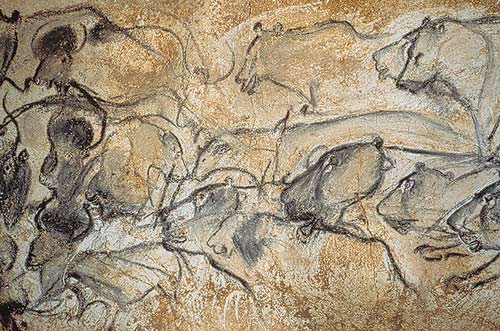
Lions hunting bisons:

A panther and hyenna surprisingly in friendly mood:

.

From the film, archeologists and an art historian inform us that a single artist created most of these works. He had a crooked little finger, and his palm prints could be seen from crouching position to a height of 6 ft.  They are now the oldest human handprints:

.

.

There are animal fossils but no human remains in the cave, suggesting that it was not used for human dwelling but maybe just for painting. A prehistoric art studio? The artist had utilized the curvatures and ridges of the rocks to create fascinating renderings of animals charged with life and energy.

This is where I’d wholeheartedly endorse the 3D technology. Director Herzog, after some hesitations, decided to use a 3D camera to capture the vivid renderings. With the 3D advantage, we can see how the artist utilized the contours of the rocks to depict the animals in a most realistic way.

In the film, we also see multi-legged bisons, like those in cartoon strips or frames in animated films, suggesting movements.

Many of the animals are depicted in perspectives:

.

.

and in layered renderings like this showing lions without manes:

.

.

A few of the paintings are dated to some 5,000 years later, about 27,000 to 25,000 ago, indicating another period of artistic activities there. But since that newer date, no human traces were left. The cave had remained untouched until the recent discovery in 1994.

In the vicinity of the cave, remnants of musical instruments are found, evidence of another form of artistic pursuit. In the film, we hear one of the researcher playing the “Star-Spangled Banner” on what looks like a tiny twig with equally-spaced holes. It would be another extraordinary find if we could discover the pop tunes of the day.

Now, a note about watching this film in 3D. I admit as someone with an acute built-in motion sensor, I had to leave the theatre half way through the film when I first saw it in 3D. The roving camera plus the 3D effects had proven to be worse than being tossed at sea.

But I’m fortunate to be given a second chance. The film is now screened in another theatre without the 3D technology. I knew I must see the rest of it, so I returned for a second viewing. And this time, I stayed till the end.

A must-see documentary for all.

~ ~ ~ 1/2 Ripples

***

Looking for “Intrusions of Grace” in Nature

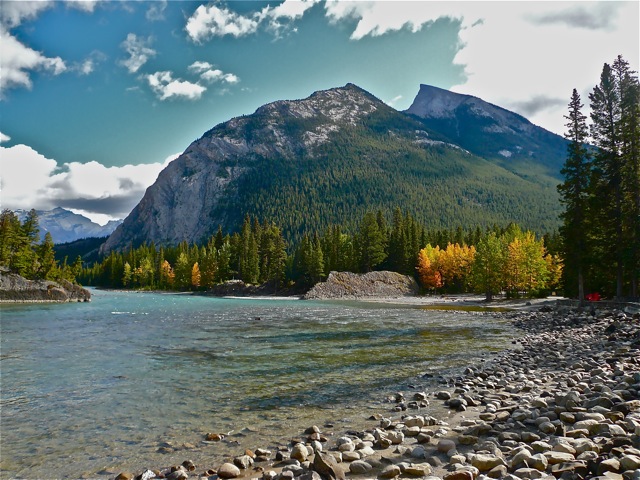
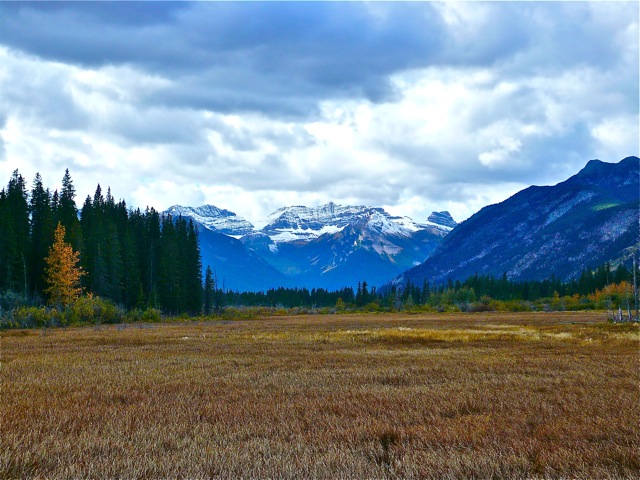
This may be the easiest to find, especially with our glorious fall this year. Not intrusions, but infusion of common grace. I’m amazed because everywhere I turn, I see beauty that’s out there and so accessible to me. Like their raison d’etre is for me to behold and enjoy. From the macro scale like these scenery at Banff National Park:

.

To the medium range, nature in our city streets:

.

To the micro scale. Last long weekend, I walked the Douglas Fir Trail. Again, I’m grateful for our urban parks:

And what an apt occasion, Thanksgiving Day, for me to discover all these minute wonders on the Trail. First, the colours:

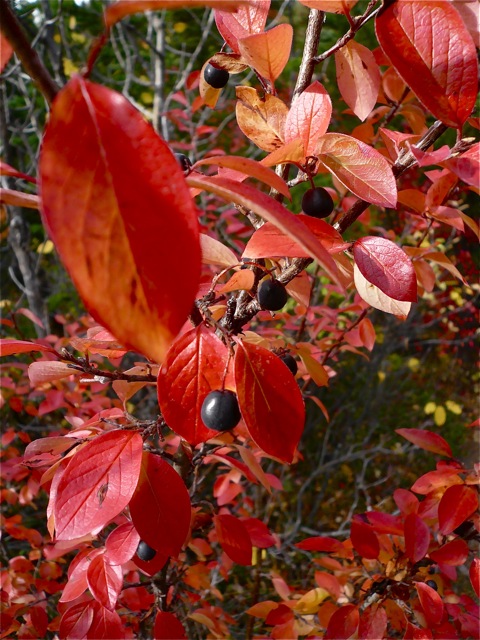
Nature in the miniscule… the varieties of berries. Black against red:

Red against green:

And these pure whites like pearls in the undergrowth:

And the vibrant lives on two fallen twigs… I was mesmerized:

If we’re intruded by grace, I’m more than willing to give in.

***

All photos taken by Arti of Ripple Effects in the fall of 2011. ALL RIGHTS RESERVED.

Signs of Fall

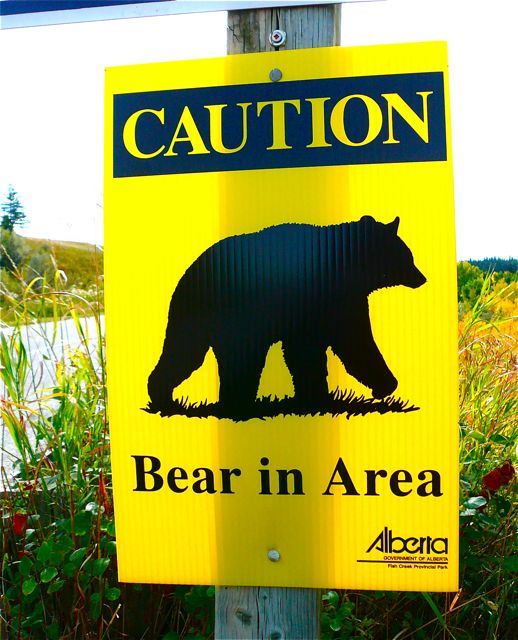
The changing of the seasons is best captured in nature. Immersed in the glorious sunshine and unusually mild temperatures, I took these photos in my neck of the woods on the last day of summer. Yes, I’ve enjoyed my occasional trips out to the B.C. Coast, or my excursions in Toronto, where the sign of fall is the Film Festival. But I’ve been solidly grounded all these years in Southern Alberta.

Here are the reasons…

These are glimpses of Fish Creek Provincial Park, a natural sanctuary of 13.8 km2 (3,330 acres) right within our City’s boundary. It is one of the largest urban parks in North America. This is where I see the signs of fall, Alberta style.

.

.

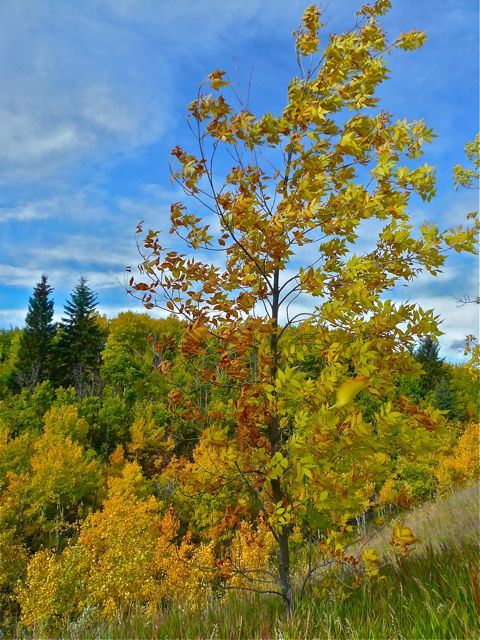
I won’t see the red as in B.C. or the East Coast where maples are prevalent, but here our own golden, rusty shades are soothing and ethereal. Remember the colour scheme in that movie “Far From Heaven” with Julianne Moore, or Terrence Malick’s “Days of Heaven“?  Funny that both films have the same word in their title.

.

.

.

And with succulent fruits ready for the picking, here’s a sure sign of fall:

.

****

All Photos taken by Arti of Ripple Effects, September, 2011.

ALL RIGHTS RESERVED.

For more wonderful fall photos CLICK HERE to my post Looking for ‘Intrusions of Grace’ in Nature

Cut! Costume and the Cinema: An Exhibit

This is the closest I could get to a movie set. The actual costume worn by prominent screen actors in period movies, that’s the current exhibit “Cut! Costume and the Cinema” at the Glenbow Museum in the centre of Cowtown. Some of the designs had garnered Academy Awards.

Since I could not take any photos inside, this outdoor poster is the only one that I could capture on my camera to give you a sense of what’s in the exhibit: 43 costumes from 25 blockbusters, worn by 30 stars. Mind you, just watching the clothes on headless mannequins is not the same as seeing them on real people with all the set and props you see on screen. So in a way, this is a deconstruction of the magic. However, to have such an exhibition come to Cowtown, I’m excited just the same.

All the items from the exhibition are from the renowned costume house Cosprop of London, England. I learn that for those representing a period before the sewing machine, they have to be hand sewn to reflect authenticity. And due to the cost and labor involved, costumes are usually altered from other existing costumes, seldom are they made from scratch.

Here’s a sample of what I saw, costumes worn by:

Kate Winslet as Marianne Dashwood in “Sense and Sensibility”

Renée Zellweger as Beatrix Potter in “Miss Potter

Emmy Rossum as Christine in “The Phantom of the Opera”

Maggie Smith as Constance Trentham in “Gosford Park”

Vanessa Redgrave as Ruth Wilcox in “Howards End”

Scarlett Johansson as Olivia Wenscombe in “The Prestige”

Colin Farrell as Captain Smith in “The New World”

Johnny Depp as Jack Sparrow in “Pirates of the Caribbean”

Robert Downey Jr. and Jude Law as Sherlock Holmes and Dr. Watson

Keira Knightly as Georgiana and Ralph Fiennes as the Duke in the Oscar winning costume design of “The Duchess”

… and some others.

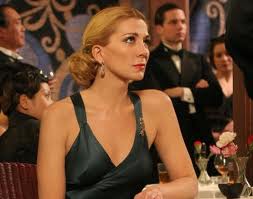
But what resonated most with me was that deep turquoise long dress worn by Natasha Richardson as Countess Sofia Belinskya, matching with Ralph Fiennes’s dark green plaid suit jacket in his role as the blind Todd Jackson in “The White Countess.” Looking at the costumes brought back scenes from that movie… the quiet resilience of Sofia, the white countess from Russia, now a refugee in WWII Shanghai, turning a new page in her life with the wounded but passionate ex-diplomat Todd Jackson. Just sad to know she’s no longer with us.

***

CLICK HERE to an informative video on the exhibit by the Boca Raton Museum of Art in Florida. A 5 min. virtual tour with commentary by Cut! curator Nancy Lawson. 

You may also be interested in these previous posts on Ripple Effects:

Natasha Richardson: Nell and The White Countess

The Merchant Ivory Dialogues

Howards End by E. M. Forster

Miss Potter for Christmas

Austen-inspired Acceptance Speech

A Sequel to Days of Heaven, Mr. Malick?

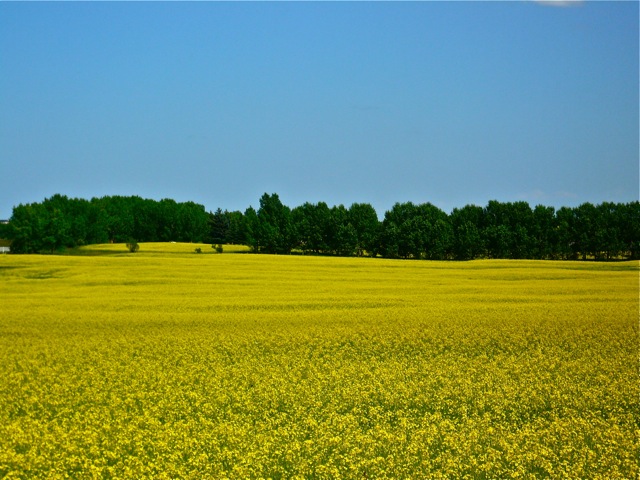
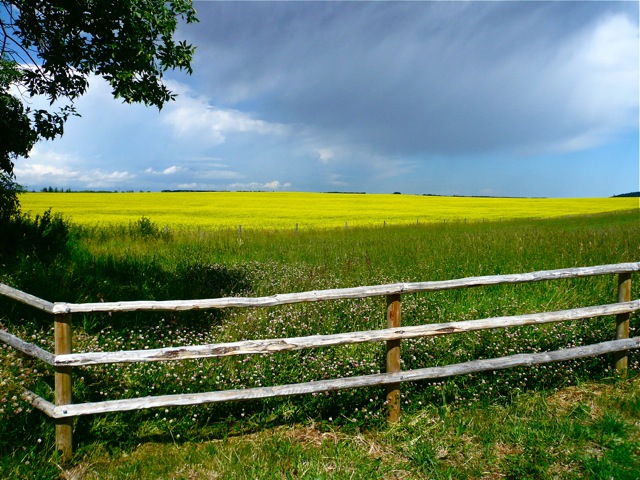
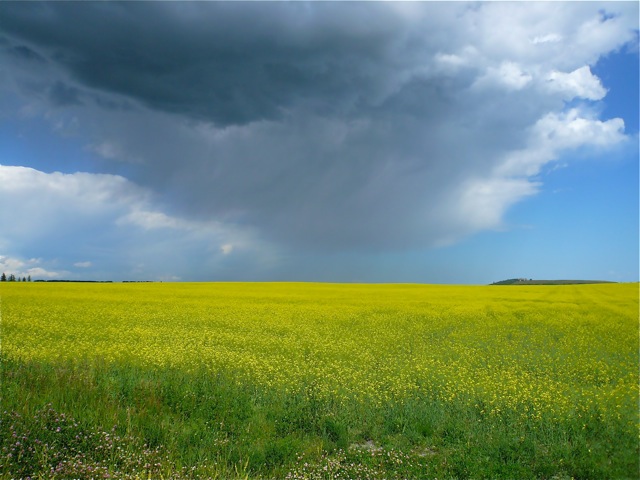
It has been over thirty years since you directed the cinematic “Days of Heaven” on location here in Southern Alberta. The four-foot tall wheat in the massive field near Lethbridge was the main attraction I understand. So it’s been decades now, lots have changed. But as to this relatively pristine province of Alberta, I can say the land is still wide and the sky still blue after all these years.

As I was driving through the open country a couple of weeks ago, I was captivated by, no, not the wheat fields, but the rapeseed farms (a better term is canola). The colour was brilliant yellow, equally cinematic as the golden wheat fields. A thought came to me…

Mr. Malick, how about coming back for a sequel to your beautiful film “Days of Heaven”?

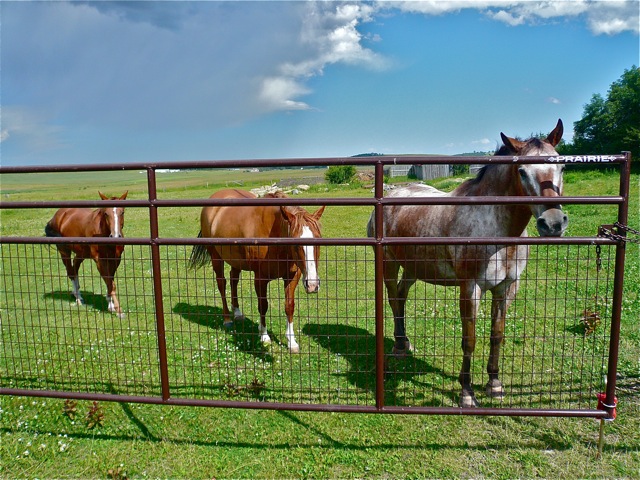
Here are some sights I took in on that brilliant mid-summer day:

And if you need a location scout…

***

All photos on this post are taken by Arti of Ripple Effects in July 2011. ALL RIGHTS RESERVED.

To read my review of Days of Heaven, CLICK HERE.

To read my review of The Tree of Life, CLICK HERE.

The Letters of Vincent van Gogh

While reading van Gogh’s letters is a fascinating journey into the mind of the artist, it is also poignantly heartbreaking. This is an abridged version of van Gogh’s letters, almost all written to his brother Theo from the various places he had stayed from 1872-1890, Holland, Belgium, England and France.

A few decades separate his life from Hemingway’s, but I think he too had his “moveable feast”.  To the painter, it’s not Paris, but the open country of southern France, in particular, Arles and St. Remy’s, Provence.
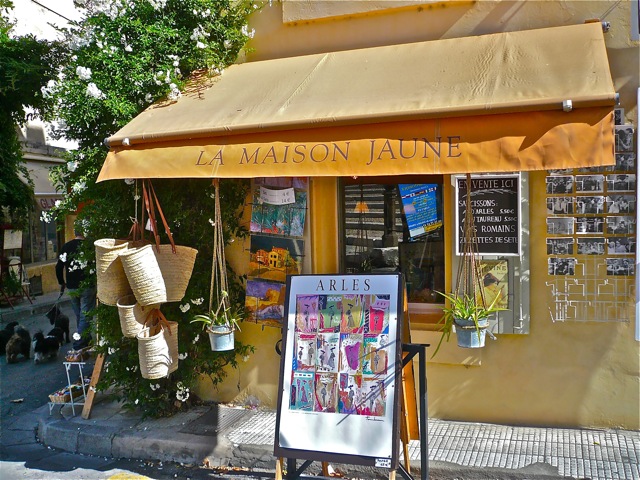
(A corner store in Arles, named after the famous ‘Yellow House’ Van Gogh once lived in)

Unlike Hemingway, van Gogh felt Paris only ‘distracts’. He wrote to his brother Theo after moving to Arles from Paris in February, 1888:

It seems to me almost impossible to be able to work in Paris, unless you have a refuge in which to recover and regain your peace of mind and self-composure. Without that, you’d be bound to get utterly numbed.

While Hemingway sought to “write one true sentence”, van Gogh yearned to reflect what was true through his paintings:

… giving a true impression of what I see. Not always literally exact, rather never exact, for one sees nature through one’s own temperament.

And colours were his tools. Van Gogh began to use a new palette that he did not see in his native Holland. Under the bright Provence sun, the artist excitedly indulged in a myriads of brilliant colours he had not experienced before…”There is that sulphur yellow everywhere the sun lights on.” He eagerly ushered in a new style.

Instead of trying to reproduce exactly what I have before my eyes, I use colour more arbitrarily so as to express myself forcibly… — To Theo from Arles, August 1888
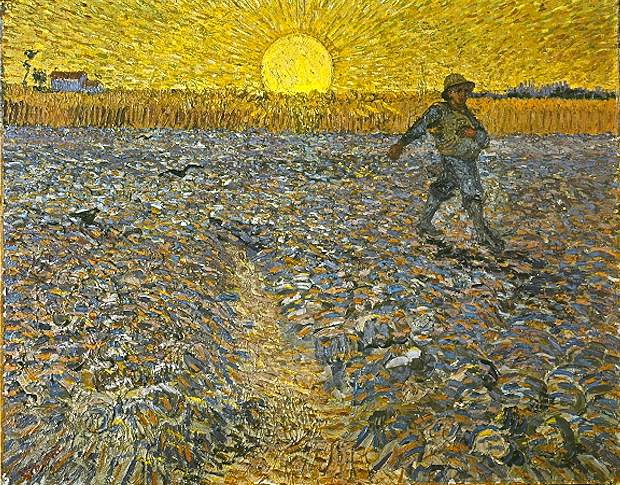
(The Sower)

I believe in the absolute necessity for a new art of colour, of design, and — of the artistic life.”

“But the painter of the future will be such a colourist as has never yet been [emphasis his].

Through the artist’s colourful lens, the view that van Gogh saw was one that I could never imagine. Here he described to his brother Theo a painting he’d finished, in a letter dated September, 1888:

 … the starry sky painted actually at night under a gas jet. The sky is greenish blue, the water royal blue, the ground mauve. The town is blue and violet, the gas is yellow and the reflections are russet gold down to greenish bronze. On the blue-green field of the sky the Great Bear sparkles green and rose, its discreet pallor contrasts with the brutal gold of the gas.

(Starry Night)

Many of the letters are descriptions like this to Theo in Paris. Reading them, I can sense the artist’s excitement and joy in capturing everything he saw in Arles:

At the moment I am working on some plum trees, yellowish white, with thousands of black branches. I am using a tremendous lot of colours and canvases…

… it will be to our advantage to make the most we can of the orchards in bloom. I am well started now, and I think I must have ten more, the same subject. You know, I am changeable in my work, and this craze for painting orchards will not last for ever. After this may be the arenas…

His letters alas are also pleas for funds, as he was “literally starving”. With the last fr.5 he had, he’d spend it on canvases. He lived in dire poverty most of his career, damaging his physical and mental health.

I can’t do without colours, and colours are expensive… I cannot get more on credit. And yet I love painting so…

Worse still, his letters are also accounts of anguish, depression, and “unbearable hallucinations.” He desperately sought cures, admitting himself into the asylum in St. Remy’s. Ironically, it was there that he experienced the most prolific period of his life.

                    (St. Paul’s Hospital at St. Remy’s)
Throughout van Gogh’s numerous letters, there are many beautiful lines, insight into love, art, books, and life. Here are a few:

  • “Since I really love there is more reality in my drawings.” — Autumn 1881
  • “I would not give a farthing for life, if there were not something infinite, something deep, something real.” — December 1881
  • “It is the painter’s duty to be entirely absorbed by nature and to use all his intelligence to express sentiment in his work so that it becomes intelligible to other people. To work for the market is in my opinion not exactly the right way…” — July 1882
  • “I assure you that some days at the hospital were very interesting, and perhaps it is from the sick that one learns how to live.”  — January 1889
  • “I took advantage of my outing to buy a  book… I have devoured two chapters of it… This is the first time for several months that I have had a book in my hand. That means a lot to me and does a good deal towards my cure.” — March 1889
  • “What I should very much like to have to read here now and then, would be a Shakespeare… What touches me, as in some novelists of our day, is that the voices of these people, which in Shakespeare’s case reach us from a distance of several centuries, do not seem unfamiliar to us. — From St. Remy’s Hospital, June 1889.

But tragically, van Gogh succumbed to his mental illness. In July, 1890 two months after moving back to Auvers, north of Paris, he went out to the open fields and shot himself. Two days later he died from his gunshot wound. He was 37.

The Letters of Vincent van Gogh to his Brother and Others. Introduction by his sister-in-law Johanna van Gogh-Bonger, abridged by Elfreda Powell, Published by Constable & Robinson Ltd., 2003, 324 pages.

***

The is my last post for the blogging event Paris in July hosted by Karen of BookBath, and Tamara of Thyme for Tea. My other post is “A Moveable Feast (Restored Edition) by Ernest Hemingway.”

To read my travel post from last August “Arles: In The Steps of Van Gogh” CLICK HERE.

Photos: Van Gogh’s paintings, from Wikimedia Commons, Public Domain. Arles and St. Remy’s by Arti of Ripple Effects, August, 2010.

To read all the 900 letters of van Gogh online, go to this excellent site of the Van Gogh Museum, Amsterdam.