Words Without Music by Philip Glass

“For me music has always been about lineage. The past is reinvented and becomes the future. But the lineage is everything.”    — Philip Glass

This 400 plus page memoir by Philip Glass (1937 -), with 14 pages of photos and 20 pages of index, is nothing short of epic. Glass has not only told us the story of his life so far, but chronicling a generation of American arts and music from an insider’s perspective. The zeitgeist of the Beat Generation and the preoccupation of Eastern philosophy with its search for transcendental experiences make the memoir an interesting and informative read.

Pertaining to Glass’s innovative musical style, I’ve experienced the book in several ways: reading the first half in hardcopy, listening to the latter part in audiobook format via hoopla, superbly performed by narrator Lloyd Jones, and listening to Glass’s works available on hoopla. Hoopla, btw, is wonderful.

Words Without Music Cover

Born 1937 to a secular Jewish family in Baltimore, Glass’s father Ben was a record store owner, mother Ida a librarian. The flute and the violin were his first instruments. Bursting with potentials ready to be unleashed, he left home to attend The University of Chicago at merely 15 years of age majoring in philosophy and mathematics. At Chicago, he’d decided what he wanted to do after graduation, to pursue a career in music, albeit the realization of which was still a blurry vision.

As a young college grad, Glass worked at a steel mill to save enough money to head to NYC for Juilliard, a decision that was against the wish of his mother: “If you go to New York City to study music, you’ll end up like your Uncle Henry, spending your life traveling from city to city and living in hotels.” His uncles also frowned on such an idea. They wanted him to take over the family’s building supplies business.

But the teenaged Glass was determined, only to face a closed door upon audition at Juilliard. No, he wasn’t qualified as a flute player, but, he was given the chance at the extension program to learn composition. Only a detour. Once he’d become a full-fledged student in Juilliard, he devoured all opportunities to learn. You’d think such a talent would become a young success soon after? Well, that wouldn’t have been as interesting a story as real life.

Philip Glass is classified as a ‘minimalist’, a label which he frowns upon. Reading the memoir, I can only say what’s minimal is the material means, money, while all else, passion, intellect, talents, cultural milieu, internal space, and the prolific output of works have been abundant throughout his life journey.

It would be decades later that Glass could earn enough to make a living by only composing. Along the way, he was contented with his day jobs in NYC, including being a furniture mover, plumber, and taxi driver. He nearly got killed driving a cab in NYC, albeit he does recall more pleasant excitement like the time he picked up Salvador Dali from 57th Street to the St. Regis Hotel. During that short trip, he was, alas, tongue-tied. Yes, the word is “contented”, for no matter what he had to do to earn a living—at first just for himself, later a family of four—he seemed happy to be on the right course striving for the ultimate goal. That in itself is inspiring. The tone of the book reflects a quiet and humble soul, reflective and personal.

Glass’s contact list is a who’s who of the Beat Generation and cultural icons in the following decades. He was a contemporary with Jack Kerouac, Jackson Pollack, John Cage, friend with Alan Ginsberg, Doris Lessing, Richard Serra, collaborator with Ravi Shankar, Leonard Cohen, wrote music for the works by Jean Cocteau, Samuel Beckett, composed for Martin Scorsese, Steven Daldry, Woody Allen, studied with Nadia Boulanger as an American in Paris, journeyed to the East to find enlightenment in New Delhi, Katmandu, Darjeeling, explored and created global music with musicians from India, Himalaya, Chinese, Australia, Africa, and South America. Just a few names. The 20 page index is a definite asset.

“I have come to understand that all music, without exception, is ethnic music.”

As for his own music, people always say it’s like “the needle is stuck in the groove.” To understand this, of course, you’ll have to know the operation of a vinyl record. To counteract the general public impression of repetition to no end of his music, he explains in details the Glass music theory. That I let you to explore for yourself.

But here are some passages that I’ve particularly noted with low tech stickies on the side of the page:

About John Cage’s famous piece 4′ 33″, wherein the pianist sits at the piano for four minutes and thirty-three seconds without touching any keys, whatever sound the audience hears during that time lapse becomes the piece, Glass writes:

“… a work of art has no independent existence… What Cage was saying is that there is no such thing as an independent existence. The music exists between you—the listener—and the object that you’re listening to. The transaction of it coming into being happens through the effort you make in the presence of that work. The cognitive activity is the content of the work.” (p. 95)

What goes on internally in the listener is what the piece is about. Makes me think of Roland Barthes’s “The Death of the Author” notion.

So do we have “the death of the composer” now?  Wait, actually, no. You see, Glass has this brilliant point. The composer still lives in that the performer interacts with and interprets his works, thus becoming a co-creator:

“… the performer has a unique function in terms of what I call this transactional reality which comes from being in the presence of the work: that the interpreter/player of the music becomes part of that. Until then, I had really thought of the interpreter as a secondary creative person. I never thought he was on the same level with Beethoven or Bach. But after I had spent some time thinking about all that and began playing myself, I saw that the activity of playing was itself a creative activity… ” (p. 96)

And how should the performer play the music? By listening intently and purposefully:

“The ideal way of performing, to my way of thinking, would be when the performer allows the activity of playing to be shaped by the activity of listening, and perhaps even by the activity of imagining listening.” (p. 97)

In 1957, Jack Kerouac’s On the Road had just been published and “everybody had read it”. With the $750 prize money he received from Juilliard at the end of his third academic year, he bought a motorcycle, probably an unintended item on which the music school would like to see the scholarship spent. Off he went on a cross-country road trip. But what’s the difference between he and his friends and the Kerouac’s clan? Glass writes:

“His [Kerouac’s] book is full of interesting characters, but that’s not what happened for us. We weren’t interested in having those kinds of experiences, we were out and abroad in America, consuming the country visually and experientially by driving through it…. (p. 102)

The renowned sitar virtuoso Ravi Shankar, or Raviji as he was known to friends and colleagues, at that time started collaborating with George Harrison. Glass notes that “The casual drug use by young people particularly upset him. Sometimes he would lecture me about drugs, and I had to remind him that I was drug-free.” Ummm, wonder if Raviji had lectured George Harrison on same.

In 1964, with a Fulbright Scholarship, Glass went to Paris to study with the eminent music guru Nadia Boulanger. For two years, she inspired and led Glass to higher grounds of musical epiphanies. One of the crucial lessons he took away after two years with Boulanger was the route to innovation. First, learn the conventional theoretical foundation, then you diverge and create your own:

“… an authentic personal style cannot be achieved without a solid technique at its base. That in a nutshell is what Madame Boulanger was teaching.” (p. 145)

His mother Ida went by train from Baltimore to NYC for her son’s first concert at Queens College on April 13, 1968. There were only six people in the audience including herself. As Glass drove her back to the train station after the concert, the only comment she made was that his hair was too long.

The second time Ida attended her son’s concert was eight years later in November 1976. This time, she was in the full house audience of four thousand people at the Metropolitan Opera for the performance of his first opera, Einstein on the Beach.

Glass movingly recalls his conversation with his mother at her death bed. She was in and out of a coma. She whispered two last words to him: “The copyrights”. Mother and son came to a perfect understanding. He reassured her, “It’s all taken care of, Mom. I’ve registered them all.”

He’d better.

Glass has composed more than twenty operas, eight symphonies, two piano concertos and concertos for violin, piano, timpani, and saxophone quartet and orchestra, soundtracks to films, 125 credits on IMDb for all sorts: full features, doc, shorts, TV. And more to come.

***

 

Saturday Snapshot July 16: Solace

It’s a mad, mad, mad, mad world.

I’d never imagine myself typing these words other than the title of the 1963 comedy. Tragedy instead, and very real, not in a movie. What’s happening these past days can drive one to despair. I’m not just thinking about the celebratory crowd mowed down by a truck, family with children watching fireworks. Or here, a mother murdered in her own home, her five year-old girl missing and three days late, her body found in a field. O, a national anthem and a peaceful baseball game jeopardized by a lone-wolf tenor. Or, a U.S. presidential candidate vowing to declare war once he’s elected.

That’s why I appreciate the Pond more and more these days. Not just to take me away from screens big and small, get some fresh air, breathe in the sight and sound of another world. No need for words, it’s a living testament of Nature reassuring the Maker’s Grace, antidote of madness. Not so much a place to escape but to think, revive, and just be.

Peace returns soon as I step out of the car. How does that song go? All things bright and beautiful, all creatures great and small. I love them all, well some more than others. Like, I’m partial to the tiny yellow warbler than the muskrat:

Yellow Warbler

YB.jpg

I’ve pictures of the muskrat too, but never mind.

The quiet poise of the Eastern Kingbird. Got a juvenile here, I think, from the downy front. Such a tiny creature unknowingly is a carrier of a reaffirming message:

Eastern KB

Yes, even the ‘common’ sparrow (has a name too, Savannah) looks smart and confident. O the comfort of neither having to reap or sow, of being cared for:

The Sparrow

Or no need to worry what to put on. The Cedar Waxwing is often adorned and well groomed, ready for any photo op., yet raising no jealousy:

Cedar Waxwing

It’s a peaceful world out here by the Pond. Another song just come to mind…


And let it begin with us.

***

Saturday Snapshot is hosted by Metro Mommy Reads. CLICK HERE to see what others have posted.

Stillman’s Love & Friendship: More than Book Illustration

Back in 2007, the Welsh-born film director Peter Greenaway made the following stark comment:

“Cinema is predicated on the 19th-century novel. We’re still illustrating Jane Austen novels — there are 41 films of Jane Austen novels in the world — what a waste of time.”

I’m afraid since then, must be to Greenaway’s disdain, more Jane Austen movie adaptations had come out. As recent as early this year, Greenaway had reiterated his stance with an even starker comment: “all film writers should be shot.

Not that he’s anti-Austen, or holds a grudge against Tolkien or Rowling… I don’t think, but that he is pushing for a non-text-based, purely visual medium for movies.

Well, I’m glad his view remains just that, a personal opinion, and that writer/director Whit Stillman had not become a casualty of such an incendiary thought.

love-and-friendship-08.png

For thanks to Stillman, we have an intelligent, delightful and worthy adaptation of Jane Austen’s novella Lady Susan, a first for the author’s lesser known Juvenilia, apart from her famous six novels. The film is definitely not an illustrated book, but a worthy stand-alone cinematic production that Jane would approve.

As for dear Jane, I think she’d be pleased to know that her works are being cherished enough to be adapted into this modern invention called a movie two centuries later, and that in this post-modern era, we have a director by the name of Whit Stillman who’s enthused enough to turn her novella, written when she was still in her teenage years, into a movie production.

The epistolary novella “Lady Susan” was deemed unfinished and published posthumously. So this is a plus as Stillman could finished it for Jane, with an ending that’s aligned with the plot’s trajectory, and in a style that’s so well melded one would marvel at the perfect alchemy of Austenesque characters and language. Smartly borrowing the name of another of her novella “Love and Friendship”, Stillman toys with dear Jane’s uncontested approval.

While written in letters format, “Lady Susan” is highly entertaining. Austen’s talent is apparent on every page. How well she presents her characters merely through their written correspondences. Acerbic commentaries from an 18 year old? Hard to believe. But indeed, here are some lines describing Mr. Johnson (Stephen Fry), Lady Susan’s only friend Alicia’s (Chloë Sevigny) husband:

“My dear Alicia, of what a mistake were you guilty in marrying a man of his age! just old enough to be formal, ungovernable, and to have the gout; too old to be agreeable, too young to die.” (Letter 29, Lady Susan Vernon to Mrs. Johnson)

Interestingly, Stillman has toned down Lady Susan’s language and made her a more amicable heroine. The above lines were shortened and delivered by Kate Beckinsale in a casual manner. Yes, turning the letters into movie scenes are tricky, crafting mere letter writers into flesh and blood can be challenging, something I hope Greenaway can appreciate.

Stillman has taken Love & Friendship to 21st C. audience with fast paced, short scenes. The settings are elegant, the period costumes appealing, overall, a fine cinematic production. It is an apt visual presentation of Austen’s ingenuity. Writing “Lady Susan” while merely 18 or 19, she had seen through the marriage system of her country, understood human nature and foibles, depicting her characters and the main heroine, no, anti-heroine, with piercing sarcasm and generosity.

Having read the novella first could be an advantage as the viewer knows exactly who the characters are and the backstory as the film begins. With the literary source in mind, the viewer can also have a heightened appreciation of the cinematic rendering and alterations needed to make it work as a movie. The fusion of Austen / Stillman humour is most delightful, punctuated with some whimsical rendering on screen that I won’t mention here but leave for viewers to enjoy.

Kate Beckinsale portrays Lady Susan with deadpan astuteness. Deadpan or dead-on, no matter, for Beckinsale is a fine Lady Susan, newly widowed, not too young to be gullible and definitely not too old to flirt for her own gains. Don’t blame her, for she has a sixteen year-old daughter Frederica (Morfydd Clark) to mind, and so, two eligible candidates who need to wed.

If one were to find fault, blame it on the social system allowing the female population only one track to go for sustainability, i.e. to find a husband. The ultimate goal of the marriage contract is more for finance than romance. (Maybe that’s why we love Pride and Prejudice so much, for its triumph of true love.) Here in this story, it’s a social milieu where love is remote and friendship useful. Lady Susan Vernon ultimately finds her conquest, never one to boast, just a project accomplished, all bottom lines met.

Stillman has a wonderful cast to work with, and they look like they had a lot of fun making the film, the most lively being Sir James Martin (Tom Bennett). It must be a joy to be silly without restraint, yes, let it all out.

Alicia, Lady Susan’s only friend, is aptly played by Chloë Sevigny, who reunites with Kate Beckinsale from “The Last Days of Disco” (1998) where the two are the yuppie heroines under Stillman’s direction. Great to see the two friends in “Disco” have now emerged as allies yet again, this time in a comedy of manners with real Austen roots.

Stillman is a master of dialogues, and so’s Austen. In both the novella and the film, conversations make the characters. But mind you, Janeites know this, and it shows in Stillman’s film, Austen’s humour is not your roll on the floor laughing type of funny

rofl_1

but a clever kind of jokes that elicits a knowing chuckle or a smile, ones that exude insight into human nature, ones that you’d want to jot down:

images.jpg

And for those who have read the epistolary novella penned by a young female writer of the 18th century, one cannot help but marvel at her prodigious astuteness and now director Stillman’s revealing of her brilliant mind. A long time Austen ‘apologist’, Stillman’s previous work “Metropolitan” (1990) is unabashedly a “Mansfield Park” of the time. My favorite line in that movie is uttered by the Fanny Price parallel character Audrey Rouget (Carolyn Farina), when she is talking to Tom Townsend (Edward Clements) about one of her favorite Austen works, Mansfield Park. Tom has not read any Austen but feels qualified to criticize nonetheless:

Tom: But it’s a notoriously bad book. Even Lionel Trilling, one of her greatest admirer thought that.

Audrey: Well, if Lionel Trilling thought that, he’s an idiot.

(But of course, it was Tom who hasn’t read any Austen that has misread Trilling.)

That was Stillman’s debut film. Since “Metropolitan”, he had proven his mastery in the comedy of manners in our times… preppies, yuppies, and maybe someday I hope,  millennials. To say his oeuvre is a conglomeration of Woody Allen, Noah Baumbach, and Wes Anderson would be unfair, neglecting his own style of humour and social observations, although his works do leave traces of all the above.

When awards season comes, I anticipate the film to receive some nominations, specifically Adapted Screenplay, Set Design, Costumes and Hair, and perhaps directing.

Here’s my recommendation: read Jane’s novella Lady Susan first before watching the movie would probably reap the most enjoyment. Afterwards, there’s the bonus. Yes, Whit Stillman has wrapped it all up with the novel Love & Friendship: In Which Jane Austen’s Lady Susan Vernon Was Entirely Vindicated published by Little, Brown and Co. in May, 2016. Icing on the cake.

Jane Austen doesn’t need a defender, but I’m sure she wouldn’t mind getting acknowledgement for her lesser known Juvenilia, some works started when she was only twelve. “Love & Friendship” is a first attempt and a worthy homage to her ingenuity. I’m glad there are many prospects. Whit Stillman and Jane Austen make one fine match indeed.

~ ~ ~ 1/2 Ripples

***

Related posts on Ripple Effects:

Love & Friendship and Other Prospects

Too Much Jane?

Why We Read Jane Austen

Mansfield Park: Jane Austen the Contrarian


The Outsider Visualized

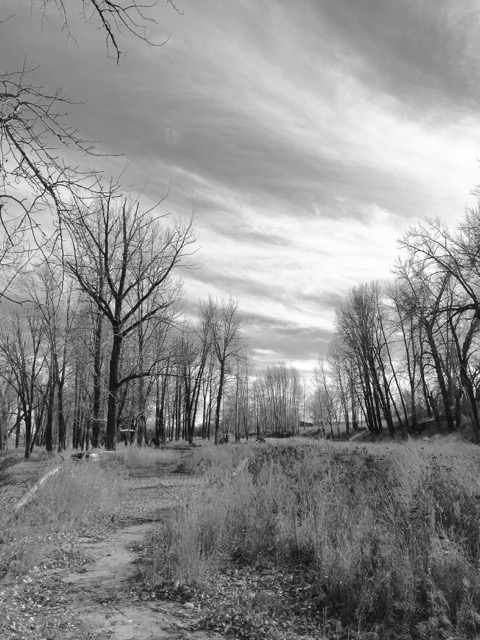
Just finished rereading Albert Camus’s The Outsider (or, The Stranger, L’Étranger). For some reasons, I find these two photos which I took late last fall well represent my thoughts. Words may come later in another post; until then, these visuals will suffice.

The Outsider 2

IMG_3400 (1)

***

Top Ripples 2015

Here are the books and movies, experiences and encounters that I’d rated 4 Ripples this year. Click on the links to read my reviews.

**

~ ~ ~ ~ Ripples 2015 Movies

The Assassin 

Brooklyn 

Clouds of Sils Maria

Ex Machina

Mustang (Review upcoming)

Spotlight

**

Worthy mentions  ~ ~ ~ 1/2 Ripples

Bridge of Spies

The End of the Tour

Jafar Panahi’s Taxi

Leviathan

The Martian

Room 

Suffragette

Testament of Youth

**

At the Cineplex, I’d also enjoyed four National Theatre Live performances on screen direct from the London stage. All of these are memorable. CLICK HERE to read my post on the first three, and HERE for Hamlet:

The Hard Problem by Tom Stoppard

The View from the Bridge by Arthur Miller

Man and Superman by Bernard Shaw

Hamlet by William Shakespeare (with Benedict Cumberbatch)

**

As in years past, the number of books I’ve read is only about half of the films I’ve seen, a stat that I’d like to improve in the future. Here are the Top Ripples in books I’ve read in 2015, not all published in this year obviously.

Nora Webster by Colm Tóibín

Brooklyn by Colm Tóibín

Satin Island by Tom McCarthy

The Age of Innocence by Edith Wharton

Beware of Pity by Stefan Zweig

The Post Office Girl by Stefan Zweig

Terrapin: Poems by Wendell Berry

Leavings by Wendell Berry

Slouching Towards Bethlehem: Essays by Joan Didion

**

Here, I must mention my 4 Ripple Experience: Fall Foliage Road Trip across four New England States two weeks in Sept/Oct., prompting me to write 10 blog posts when I came back. Starting here.

Kancamagus Hwy

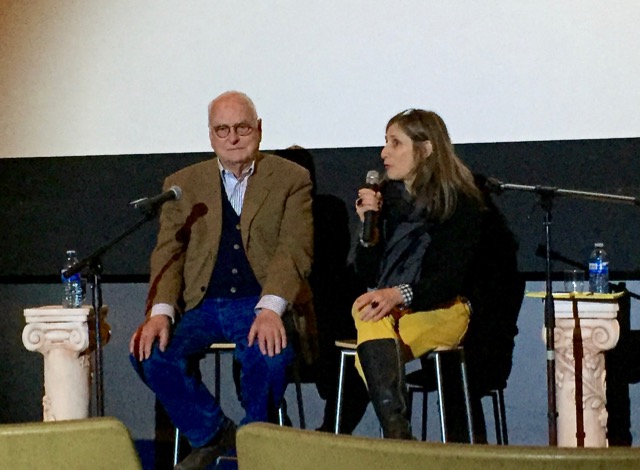
Another 4 Ripple Encounter is attending the Merchant Ivory Retrospective in December. I’d never thought I could actually see director James Ivory in person. And so I did. It was fascinating listening to the 87 year-old, legendary director who’d brought us A Room with a View (1985), Howards End (1992), The Remains of the Day (1993), and many other literary to film adaptations talk about the working dynamics of Ismael Merchant, writer Ruth Prawer Jhabvala and himself in the creative process.

Here’s a photo of the occasion, a Q & A session with film critic Katherine Monk after the screening of Heat and Dust, adaptation of the Man Booker winning novel (1983) by Ruth Prawer Jhabvala:

James Ivory1


And that’s a wrap for 2015.


***

Related posts you might like to read:

Howards End by E. M. Forster

The Merchant Ivory Dialogues 

Ruth Prawer Jhabvala: A Tribute to Rootlessness

Can a Movie Adaptation Ever be as Good as the Book

***


Merry Christmas!

To all, a Merry Christmas!

Merry Christmas

Sharing with you a song for the Season, sung by the a cappella group Pentatonix.


Mary, did you know
that your Baby Boy would one day walk on water?

Mary, did you know
that your Baby Boy would save our sons and daughters?

Did you know
that your Baby Boy has come to make you new?
This Child that you delivered will soon deliver you.

Mary, did you know
that your Baby Boy will give sight to a blind man?

Mary, did you know
that your baby boy will calm the storm with His hand?

Did you know
that your Baby Boy has walked where angels trod?
When you kiss your little Baby you kissed the face of God?

Mary did you know.. Mary did you know

The blind will see.
The deaf will hear.
The dead will live again.
The lame will leap.
The dumb will speak
The praises of The Lamb.

Mary, did you know
that your Baby Boy is Lord of all creation?

Mary, did you know
that your Baby Boy would one day rule the nations?

Did you know
that your Baby Boy is heaven’s perfect Lamb?
The sleeping Child you’re holding is the Great, I Am.

***

Clouds of Sils Maria Movie Review

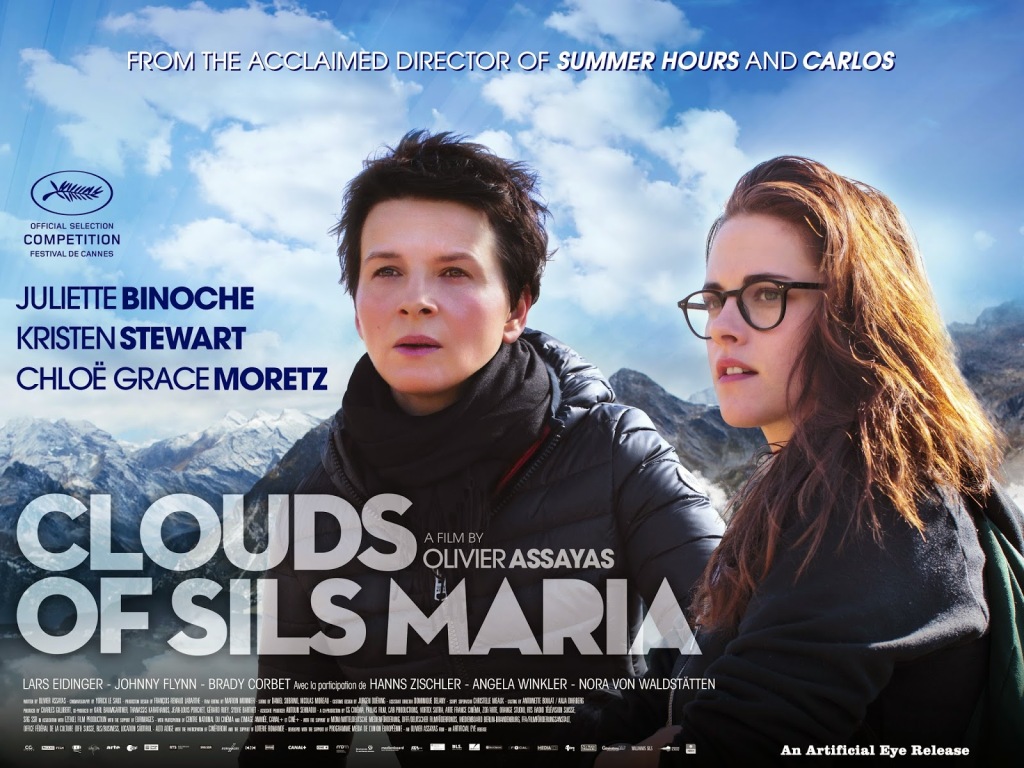
Clouds of Sils Maria is an intricately conceived rumination on the passage of time, ageing, being female, being famous, and for that matter, being gradually becoming obsolete. The newest film from the prominent, Paris born, French director Olivier Assayas, it was nominated for numerous awards at film festivals, including the Palme d’Or at the Cannes Film Festival in 2014. I watched it at TIFF last September, and gladly again at the indie theatre when the film came to our city a few months ago.

Clouds of Sils Maria

A middle-aged celebrated screen and stage actress Maria Enders (Juliette Binoche) is on a train to Zurich with her personal assistant Valentine (Kristen Stewart) to attend a tribute to the playwright Wilhelm Melchior, who had cast her in her breakout role in one of his plays Maloja Snake some twenty years ago. At that time, Maria played a manipulative young office girl Sigrid who had an emotive relationship with her older office boss Helena, driving her to commit suicide.

While on the train to Zurich, Maria gets the news that Melchior has died, an apparent suicide due to a terminal illness. When arriving Switzerland, Melchior’s widow Rosa (Angela Winkler) lets Maria and Valentine stay in her idyllic house in the Swiss Alps, in the Sils Maria locale, while she tries to get away from the sad memories of her late husband. In that serene natural setting, Valentine helps Maria practice her lines for a revival of the play Maloja Snake, re-mounted as a tribute to the late playwright. But this time, Maria is to play the older character Helena, while a wildly popular, scandalous young star Jo-Ann Ellis (Chloë Grace Moretz, the rising star in real life) is to play Sigrid.

If you have the patience to read up to here, you likely can see the parallels: Maria and Valentine – Helena and Sigrid, as well you probably can guess the feelings Maria goes through in this role reversal, for now she is twenty plus years older, and the loss of Melchior could well be the foreshadow of an imminent path everyone has to trod, famous or not. The film is an intricately woven, multi-layered construct, with thought-provoking dialogues and incisive subtexts; the mirroring effect is brilliant especially the scenes when Valentine helps Maria practice her lines and accept the role reversal, from the young to the older.

If you appreciate the characterization and the superb performance of the actresses, you would not only bear with but savour the complexity of the dialogues and scenes. Instead of a litmus test for the viewer’s patience, the complications and layered meaning are a testament of some fine screenwriting and directing. Assayas’ signature realism and naturalistic style works marvellously well; in some scenes towards the end, the honesty is harsh and biting. 

Juliette Binoche always delivers. Here she is an ageing celebrity and star, her outward coolness masks tumultuous insecurities. She is totally natural in her role. Viewers may even feel she’s not acting at all.

But my highest praise has to go to Kristen Stewart. I admit I’m probably one of the few who have not watched, or read, any of the Twilight movies or books. So this is my first Stewart film, and I’m most impressed. She lives and breathes her character Valentine, assistant to Maria Enders. From juggling several smart phones while balancing herself on a moving train, to helping Maria practice her lines adjusting to the older role, Stewart has shown she has mastered the needed nuance, intelligence and sensitivity for her character. She has portrayed convincingly a complex female who, despite her efficiency and strength at her job as assistant to a famous but fast fading star, is herself vulnerable as a female with deep, inner yearnings and conflicts muffled only by her outward sensibility.

With her role as Valentine, Stewart went on to win the 2015 César Award for Best Supporting Actress this February in Paris, the first American actress to win the prestigious French acting award which is equivalent to the Oscar here.

Chloë Grace Moretz aptly plays the youthful, and bratty, rising star Jo-Ann Ellis. She embodies the young and famous, a celeb whom Valentine admires, but whom Maria can never understand as to how the young measures talent or shoots to the peak of popularity despite (or maybe because) of scandals. I’m sure what’s mind boggling to her could well be the thoughts in many a mind of the, alas, fading bunch of old school, superbly trained actors and iconic performers of our days.

The Largo from George Frideric Handel’s opera Serse is poignant, a solemn and grand diction of existential angst as Maria confronts the loss of her beloved and respected artistic mentor, and her own fading glory. Interestingly, the music reminds me of Kon Ichikawa’s The Makioka Sisters (1983), wherein this piece of music also appears, bringing out the poignancy of the passage of time, the erosion of the familiar, the end of an era, of traditions, and of treasured values.

This brings us to the very title of the film. The clouds of the Sils Maria mountain range in the Swiss Alps is famous for their sudden appearance like a snake curling and weaving around the mountains. Many have climbed the peaks only to be disappointed as the clouds may not appear while they are there. In the scene towards the end, just as Maria turns and walks away, the clouds come into view for us audience but not her, indeed, like a snake slithers silently in and in a few seconds, moves out of sight again. Ah… the ephemeral of it all. The ultimate mirroring of nature and life.

Probably the best film I’ve seen so far this year. A film that deserves – and requires – multiple viewings.

~ ~ ~ ~ Ripples

***

This is my last entry to Paris in July 2015 blogging event hosted by Tamara of Thyme for Tea.

Paris in July 2015 Icon***

Other Related Ripple Effects Posts:

Conversation with Juliette Binoche

Summer Hours by Olivier Assayas

My Old Lady 

Suite Française: From Book to Film

Flight of the Red Balloon 

Like Father, Like Son (2013)

In honour of Father’s Day tomorrow, I’m re-posting my review of the acclaimed Japanese film Like Father, Like Son. (Update: Director Hirokazu Koreeda’s most recent work Our Little Sister is a Palme d’Or nominee at Cannes 2015.)

***

I had wanted to see this Japanese film since it came out last year. Missed it at TIFF13 last September, its North American premiere after winning the Cannes Film Festival’s Jury Prize in May. Glad it has finally arrived on Netflix, reaching a much wider audience than just festival goers, deservedly.

Like Father Like Son

Director Hirokazu Koreeda wrote the screenplay based on a disturbing premise: what if after six years of raising your son, the hospital where he was born contacted you and told you that your child was switched at birth, and of course, they sent their apology.

The hospital officials do not take this lightly. DNA tests are done to confirm. They have a lawyer with them, arrange to have you meet the other parents, mediate and ease the proposed switch back, which they recommend with a six-month preparation period, preferably before the boys start grade one in school. They even find out who the nurse is that made the error; due to her own frustrations at the time she knowingly made the switch. Of course, she is deeply sorry for what she had done and duly prosecuted. Monetary compensations are arranged.

But all the above have absolutely nothing to do with easing the shock and alleviating the trauma afflicted upon the families. Formality and legality do not soothe the pain; apologies and money cannot compensate for the abrupt termination of relationships.

Director Kore-eda has treated the subject matter with much tenderness and charm. The cinematography is stylish, the children and adults are all captured in a realistic manner with splashes of endearing humour.

The two families come from very different social strata, and the two boys have been raised in opposite parenting styles. Interestingly, only one of the families seems to take this news much harder. Ryota Nonomiya (Masaharu Fukuyama) is a successful professional who spends most of his time in the glass towers of Tokyo busy at work. His son Keita (Keita Nonomiya), an only child, is raised in a protective environment. Mother Midori (Machiko Ono) is loving but also ambivalent about a husband who puts his career over his family.

The other family is a shop owner in a rural part of the country, their son Ryusei (Shôgen Hwang) is the eldest of three children. Father Yudai Saiki (Rirî Furankî) is every child’s dream. He spends his days playing with his children, fixes their toys, and exerts no rules, albeit Mom Yukari (Yoko Maki) might wish he could have spent more time working.

What makes a father? What makes a son? Fatherhood and bloodline tend to supersede all other factors in a patriarchal society like Japan. But the film reflects the point of view that not all families necessarily embrace such a value. Further, apparently there are different parenting styles even in a homogeneous Japanese society.

If there is ever a Japanese version of the movie Boyhood as we have seen from Richard Linklater, Hirokazu Kore-eda would be the ideal person to direct it. Like Father Like Son follows his previous work I Wish (2011) in its sensitive and incisive depiction of a boy’s heart and yearning. He can tear apart the facade of societal formality – but in a most tender way – and lay bare the hopes and needs, the essence of parents child relationships.

I must give credits to Johann Sebastian Bach, and the late Canadian pianist Glenn Gould. The beginning of Bach’s Goldberg Variations had been used in numerous films, but every time the soulful slow moving piano melody comes on, I am moved, no matter how many times I’ve heard it, and in so many different genres of films. Just from memory, I can think of The English Patient (1996), Hannibal (2001), Shame (2011)… It is so effective in augmenting cinematic moments without becoming clichéd.

Here, the Aria is well placed as director Kore-eda uses it as a motif to spur us into deeper thoughts. What makes a father; what makes a son? What is more important, blood or relationships? What is the role of a wife and mother in a patriarchal society? What is the purpose of giving birth and bringing up a child? What is fulfilling and meaningful to us as human beings? Indeed, a motif that can strike a universal chord of resonance that transcends cultures.

~ ~ ~ 1/2 Ripples

***

National Theatre Live

National Theatre Live launched in June, 2009. Cameras are placed in strategic locations in the theatre to capture the stage performance live and broadcast to various venues the world over. According to the NTL website, over 3.5 million people have experienced this remote viewing of plays from London stages, with over 1,100 venues around the world, 550 in the UK alone. For the price of a movie ticket, I can be transported to the front row of these performances.

I ‘discovered’ this treasure too late, well, too late to see Skylight, with two of my faves Carey Mulligan and Bill Nighy. Skylight received 7 nominations for the Tony Awards coming this Sunday, June 7, including acting noms for Mulligan and Nighy, direction for Stephen Daldry, and overall Best Revival of a Play.

NTL’s Skylight had been shown in our Cineplex already, and I missed it. But, all is not lost. In the past two months since I knew about this treasure, I’ve watched three plays and have bought ticket to the October debut of Hamlet with Benedict Cumberbatch. Looking forward to that.

Here are the three shows I’d watched in the past few weeks. Click on the link to the NTL website for full descriptions. The following is just a summary of my thoughts.

The Hard Problem by Tom Stoppard

The Hard Problem

My full admiration to Tom Stoppard for writing a play to explore this hard problem, one that’s not very popular nowadays when science and technology reign supreme, when Dawkins speaks like the indisputable authority: Is evolutionary biology the all-encompassing codebook answering every human question? Hillary, a psychology research fellow at the Krohl Institute for Brain Science prays to God every night, simply madness to her fellow researcher. Her concerns: Can neuroscience explain consciousness, or beauty, or morality, faith, longings? And, sometimes one does need a miracle or two when dealing with personal regrets. The play is an intellectual odyssey with lively and energetic exchanges of amusing dialogues, humour that teases me with lines reminiscent of Rosencrantz and Guildenstern are Dead.

This is Stoppard’s new play in nine years. Mentored by Samuel Beckett, friend of Harold Pinter, writing for both stage and screen, Stoppard, at 77, remains one of my most respected writers. I’d loved Rosencrantz and Guildenstern are Dead, but his works on screen have been equally impressive with the Oscar winning Shakespeare In Love (1998), Parade’s End (2012, one of my fave TV mini-series), the Oscar nominated Anna Karenina (2012), and Empire of the Sun (1987, a unique and haunting chronicle of childhood).

And for this play, nobody is preaching anything here, there’s no need to, just raising the hard problem, that’s all. We hear that line in Hamlet ring out loud and clear: “There are more things in heaven and earth, Horatio, than are dreamt of in your philosophy.”

**

The View from the Bridge by Arthur Miller

A View from the Bridge performed at Wyndham's Theatre Richard Hansell as Louis, Nicola Walker as Beatrice, Mark Strong as Eddie, Michael Gould as Alfieri, Emun Elliott as Marco ©Alastair Muir 16.02.15

Mark Strong is explosive as Eddie Carbone, the longshoreman who accommodates in his home two of his wife’s cousins, brothers and illegal immigrants just arrived from Sicily. Eddie’s possessive care and love for his niece Catherine who has been living with him all the years, turns to malicious jealousy as she falls for the younger of the brothers. Miller’s play is about the American Dream gone sour.

What an eye-opener of a stage play. Mounted at London’s Young Vic Theatre, the stage design is stylishly minimal. With audience viewing from three sides, it lays bare the human soul and its inexplicable and unbridled emotions. I have not seen anything like it. First off, can you imagine two men taking a shower on stage at the beginning of the play… with real water, and towards the end, that water turns into blood showering down, covering all the characters for the stunning, tragic ending.

**

Man and Superman by Bernard Shaw

Man and Superman

This one, I must say hats off to Ralph Fiennes for his extraordinary energy. Playing Jack Tanner, a radical thinker of his days, and the reluctant guardian and later romantic resolve for a beautiful heiress, Fiennes leads us on a wild ride from reality to fantasy, from earth to hell and back again. Well, no superhero in our CGI saturated movies nowadays can rival. Blurting out lines after lines non-stop for over three hours, in one take, dialogues covering all the brilliance of Shaw’s philosophical, social, and political views, with spot-on timing and great fun. Which comedian can beat that? And of course, what he and Shaw had shown us is that words and the intellect can be more powerful and entertaining than on screen action sequences and technical wizardry.

***

~ ~ ~ ~ Ripples to all of the above 

Flight of the Red Balloon (2007)

In honour of Taiwanese director Hou Hsiao-hsien winning the Best Director award last Sunday at the 2015 Cannes Film Festival, I’m re-posting a review I wrote a few years back on Hou’s Flight of the Red Balloon (2007).

***

flight-of-the-red-balloon

In celebration of its 20th anniversary, the Musée d’Orsay in Paris has commissioned four notable directors to create a series of commemorative films. One of them is Olivier Assayas with his Summer Hours (l’Heure d’été) which I have reviewed.  Another is the highly acclaimed Taiwanese auteur Hou Hsiao-hsien. Flight of the Red Balloon is a unique piece of film art gently crafted by Hou in homage to Albert Lamorisee’s Oscar winning short Le Ballon Rouge (1956). Hou has long been garnering awards in international film festivals throughout Europe and Asia since the 1980’s, albeit relatively unknown in North America. Flight of the Red Balloon is his first French language film.

The little boy in this 2007 rendition is Simon (Simon Iteanu), a child growing up in the hustle and bustle of Paris. With an absentee father somewhere in Montreal pursuing his writing, and a frantically busy mother Suzanne (Juliette Binoche), Simon is alone in an adult world. Overloaded with her work as a voice-over artist in a puppet production plus other personal matters, Suzanne hires Song (Fang Song), a film student from Beijing, to look after Simon for her.

Suzanne is the embodiment of urban frenzy. As a single mother, she has to shuttle between home and work, deal with the eviction of a bad tenant in her lower apartment, confront her non-committal husband on the phone to Montreal, and connect with her daughter in Brussel, all in a day’s work. Simon is most perplexed.  “Why are you so busy, Mama?”, he asks.

song-and-simon

Song, on the other hand, offers the tranquility that is needed to balance life in the midst of chaos. As a film student, she uses her hand-held camera to record Simon’s activities, and by her quiet demeanor and calm observing, she reflects pleasure in the mundane, everyday trivialities called life. This is reality show without sensationalism.  Hou has ingeniously conveyed his perspective of realism with artistic overtone. No doubt, there is a lack of plot, suspense, or climax, but there is character contrasts, cinematic offerings in sights and sounds, and realistic, natural performance. Juliette Binoche has once again assured me why she is one of my favorite actresses. And no, you are not watching paint dry, you are watching life unplugged.

The red balloon forms the focal point of Hou’s signature long take. The almost God-like omnipresence hovering over buildings in the Paris skyline is a joyful symbol of childhood. Its silent drifting is as elusive as the fleeting memories of happiness. Even little Simon achingly remembers the pleasant days he had shared with his much older sister, who is now living in Brussel. We are all trying to catch and hold on to fond memories and meaningful relationships. Yet as the busyness of urban living numb our senses, we ignore and shove away what we think is a hindrance to our time, just like the people rushing out of the subway station, shoving away the red balloon. Only a child would try to catch and befriend it.

Complementing the cinematic artistry is the equally mesmerizing piano music, meditative, serene and restoring, setting the mood and the preamble of the film.  Other musical numbers are equally soulful. Click here for the official IFC site where you can have a taste of the sights and sounds of the film.

felix-vallotton-le-ballon-1899I particularly enjoy the ending. As Simon goes on a school trip to the art gallery of the Musée d’Orsay, the children gather on the floor to talk about Félix Vallotton’s 1899 painting Le Ballon, he leans back, slightly removes himself from his school mates, and lays on his back. As he looks up to the glass canopy of the museum ceiling, he sees it again, the red balloon, that omnipresence, watching over him, removed yet engaged, far away, yet ever so near.

~ ~ ~ Ripples

***

Other Related Posts on Ripple Effects:

Conversation with Juliette Binoche

Tuffing it out at TIFF14

Summer Hours (l’Heure d’été) by Olivier Assayas

Yasujiro Ozu and the Art of Aloneness

***

Saturday Snapshot May 16: Silhouettes

Often when I’m outdoor, the light, shadow, direction of the sun and the time of day are less than ideal for photography. That’s the time when I see beauty from another perspective. The lack of light on the subject, or when it’s backlit, makes it all the more intriguing.

I’ve learned to appreciate silhouettes. They are more soulful and quiet. When devoid of colour, I can see more clearly the subject’s shape and form, and its solitary existence. Here are some photos I’ve taken lately… a kind of Wabi-sabi.

The slow and meditative movement of the Great Blue Heron:

GBH

Great Blue Heron

Great Blue Heron Flying

Look at the shadow in the water, like a Chinese brush stroke:

Chinese brush painting 1


A solitary Belted Kingfisher:

Belted Kingfisher


Cattails by the pond in the evening light:

Cattails


Guess who’s still busy at dusk:

Beaver

***

Saturday Snapshot is hosted by West Metro Mommy Reads. CLICK HERE to see what others have posted.

Photos Taken by Arti of Ripple Effects

Do No Copy or Reblog

***

Woman in Gold (2015): Then and Now

Gustav Klimt (1862 – 1918) was an Austrian Symbolist painter and one of the most prominent members of the Vienna Art Nouveau (Vienna Secession) movement. His major works include paintings, murals, sketches, and other art objects, but the most recognizable piece probably is the painting “Portrait of Adele Bloch-Bauer I” (1907), commonly known as “The Woman in Gold”.

The painting measures 54″ x 54″, oil, silver and gold on canvas, a highly embellished work reflecting the elegant lady active in the Viennese art circle, patron and muse of Klimt’s, Adele Bloch-Bauer. Adele was married to Ferdinand Bloch-Bauer, an Austrian Jewish industrialist who commissioned Klimt to do the two portraits of his wife. It had been hanging in his home until seized by the Nazis.

Portrait of Adele Bloch-Bauer I
Source: Wikipedia

After the war, the famous painting had been hanging in Austria’s federal art museum, the Galerie Belvedere, as a national treasure, until a near eight-year legal battle finally decided its restitution back to the hands of Adele and Ferdinand’s niece, Maria Altmann, who had escaped to the United States before the War broke out. The long legal fight to gain back the painting’s rightful ownership is the focus of this movie.

Arts looted by the Nazis have their screen time twice in the past year, first The Monuments Men, and now Woman in gold. Important subject but unfortunately both films fall short of cinematic rendering. Director Simon Curtis’s handling in Woman in Gold emits less glimmer than his previous My Week with Marilyn.

Helen Mirren delivers a fine performance as the determined yet conflicting Altmann, who, on the one hand, wants to see justice done in the restitution of her family heirloom but reluctant to re-open a traumatic chapter of her life and return to Austria for the case. She remembers her Aunt Adele well, with some endearing and awestruck moments beholding her beauty. The film handles the shifting between the past and present quite well. It is heart wrenching for a daughter to have to make a hasty escape from her home, leaving her parents behind as the Nazis take over the country.

The David and Goliath legal battle is handled by a young and inexperienced Los Angeles attorney E. Randol Schoenberg. Yes, that’s the grandson of the Austrian composer Arnold Schoenberg, who had escaped to the U.S. in time to avoid the Holocaust, just like Altmann. In 2004, the young lawyer argues his case Republic of Austria v. Altmann in the U.S. Supreme Court, and in January, 2006, heads over to Austria to present his arguments in front of a panel for a binding arbitration. An emotional Altmann sits beside Schoenberg as they hear the decision announced by the panel of three Austrian judges ruling in their favour.

The choice of Ryan Reynolds as Randol Schoenberg looks like a miscast. Something’s missing… But then again, it could be the screenplay, maybe infusing more cinematic moments, or cutting some banal scenes and dialogues would help. Katie Holmes who plays Randol’s wife and Daniel Brühl (excellent in Rush, 2013) as a helpful journalist are incidentals. I can understand condensing the almost decade-long legal story into 109 minutes with an ending that is already known is itself a difficult feat. So all the more we need a more effective screenplay.

However, for someone who did not know about the details of this piece of art history, the movie still captured my attention. I watched it like a documentary. Not knowing the details of this legal case, I found the movie informative in taking me through the obstacles, albeit in synopsis format and simplification.

The beginning is probably one of the most appealing sequence of the whole movie, and that’s a close up on the technique the painter Klimt uses on his painting, meticulously forming a gold leaf and pasting it on his work in progress. Unfortunately, the scene is way too short to allow us to savour. This may well be the only artistic spot a viewer will get.

In a post-script text, we learn that Altmann sold “The Woman in Gold” to Ronald Lauder for $135 million in 2006, at the time the highest purchase price on record for a painting. Those living in or visiting New York City now have a chance to see the current exhibition at the Neue Galerie – opened by Lauder in 2001 – “Gustav Klimt and Adele Bloch-Bauer: The Woman in Gold”, April 2 – Sept. 7, 2015.

In August last year, Lauder, as President of the World Jewish Congress, wrote a moving op-ed for the NYT about the persecution of Christians in the Middle East and Africa. He ends with this: “The Jewish people understand all too well what can happen when the world is silent. This campaign of death must be stopped.”

It’s all about speaking out. That’s what makes this movie important. I can’t help but imagine though: what if it were Klimt who made it…

~ ~ 1/2 Ripples

***