‘The Aftermath’ has all the right ingredients except…

From the beginning, all the ingredients seem to be in place for a satisfying period movie. Sumptuous set design, beautiful costume and makeup, even the rubbles and chaos are realistic. What more, three seasoned, popular actors under a helmer who had proven he could do war movies with his Testament of Youth (2014).

Director James Kent is all set to pull us into great expectations from the start. British military wife Rachel Morgan (Keira Knightley) arrives by train in Hamburg, Germany,  in the year 1946.  She is greeted warmly by her husband Lewis (Jason Clarke), a British Colonel stationed there to enforce order in the aftermath of the War.

The Morgans are staying in a mansion requisitioned from the Nazi’s. But due to Lewis’s benevolence, the former owner, handsome German widower Stephen Lubert (Alexander Skarsgård) and his troubled teenaged daughter Freda (Flora Thiemann) are allowed to stay until they are sent to the camp. Why the delay is not explained, an arrangement definitely isn’t going to be too comfortable. Just look here, Rachel, who has lost her young son in the war, refuses to even shake hands with the enemy, now cohabitant of the mansion.

The Aftermath movie still
Alexander Skarsgård, Jason Clarke and Keira Knightley in an early scene of ‘The Aftermath’. Photo: Fox Searchlight.

No sooner had they settled than Lewis needed to go away on military duties, leaving his wife behind. What ensues is predictable, but unfathomable: How a woman who still mourns her lost young son and holds animosity against the enemy, and a German widower who’d lost his wife during the war and with her memory still vivid in the house, can come together so quickly just days of living under the same roof. From refusing to shake hands to sleeping with the enemy in just a few scene changes, the unconvincing storyline abruptly stops any appreciation I’ve had of other cinematic elements up to that point. 

Adapted from the novel by Rhidian Brook, the screenwriters, Joe Shrapnel and Anna Waterhouse, must have thought celebrity actors have the power and charisma to jazz up a weak script. Fact is, even talented actors are bound by the writing, or, hampered by it. Just look at some other works by Knightley, for example, Atonement (2007) or her latest Colette (2018), comparing her performance in those films with her role here in The Aftermath seems like we’re watching the living in contrast to a pedestal decorative that can tear up on demand.

Alexander Skarsgård can release much intensity if the script allows, case in point is his role in Big Little Lies (2017), for which he won a Best Supporting Actor Golden Globe. Instead, his character as Stephen in The Aftermath is bland, driven by inexplicable motive, except maybe an act of violation to avenge. But no, he and Rachel, who are practically strangers, seriously mean love here. Whatever happened to his late wife’s memory at the piano? With Rachel playing her music still placed on the Steinway, even Debussy’s Clair de Lune can’t shine a light on the blurry motive.

Jason Clarke is repeating his demeanour as in Mudbound (2017), a husband oblivious of what’s going on with the affair of his wife. Here in The Aftermath, the underlying motivations of each character and backstory is just slightly touched on without much elaboration. Are the visuals in bed more important than the rational for modern viewers? I sure hope not.

Movies set during the World Wars work only if there are more to mull on rather than just the actions and the aesthetics. Complexity of characters and conflicts are what pull viewers in, eliciting empathy. Some thought-provoking or a bit challenging ideas and dialogues could help too. Several recent examples are Their Finest (2016) and Darkest Hour (2017), or director Kent’s own Testament of Youth (2014); the other end would be the emotionless The Monuments Men (2014).

I can’t help but think of a WWII classic. Why Casablanca (1942) works, among many factors, are the intelligent dialogues and a surprise ending, surprising to the character involved, but gratifying for the viewers, leaving them with much to mull on, values, priorities, and a lingering feeling for two star-crossed lovers. Unfortunately, that kind of  emotions, thoughts and admiration for the characters were not the aftermath as I left the theatre.

~ ~ 1/2 Ripples

***

Books into Movies: 2019 and Beyond

Feeling the post-Oscar blues? How about turning to books, before they in turn are morphed into a movie? The following are some upcoming books being adapted into movies in various stages of development. Some are coming out soon, some just announced.

The Aftermath by Rhidian Brook

The movie adaptation starring Keira Knightley, Alexander Skarsgärd and Jason Clarke is coming out March 19, directed by Testament of Youth (2014) helmer James Kent. In recent years, WWII historical fiction has enjoyed a sensational growth in popularity, The Aftermath is another one of this highly sought after genre. The transfer to movies, while not always as effective, lacks no enthused followers. The Aftermath is set in 1946 Hamburg, a British family and a German widower and his daughter had to live under the same roof during a de-Nazification operation.

Cats: The Musical 

Based on T. S. Eliot’s collection of poems Old Possum’s Book of Practical Cats, Andrew Lloyd Webber’s musical Cats is hailed as one of the biggest hits in theatrical history on their website. Director Tom Hooper has another musical-turned-movie under his belt: Les Misérables (2012) which won 3 Oscars. Attractive cast in Cats the movie: Rebel Wilson, Idris Elba, Jennifer Hudson, Judi Dench, Ian McKellen, James Corden, Taylor Swift.

Death on the Nile & Witness for the Prosecution by Agatha Christie

Kenneth Branagh will direct Wonder Woman Gal Gadot and Armie Hammer in Death on the Nile. Branagh will reprise his role of Hercule Poirot, after starring in and directing Murder on the Orient Express in 2017. Now over forty years after her death, Christie’s influence has not waned. A movie adaptation of Witness for the Prosecution has also been announced with Ben Affleck directing.

The Goldfinch by Donna Tartt

John Crowley is no stranger to literary adaptations; his previous feature, Colm Tóibín’s Brooklyn, was nominated for 3 Oscars. This time, Donna Tartt’s Pulitzer Prize winning The Goldfinch reads like it’s written readily for the camera, considering the eclectic characters and the explosive storylines. Sarah Paulson and Nicole Kidman star. Screenplay adapted by Peter Straughan, who was nominated for a Best Adapted Screenplay Oscar for co-writing the 2012 script for John Le Carré’s Tinker Tailor Soldier Spy (2012).

In the Garden of Beasts by Erik Larson

Larson’s 2011 non-fiction is a captivating look into the power and social structure of Berlin during the emergent years of Hitler’s rule. Focus is on the the true story of William Dodd, a mild-mannered Chicago professor who becomes America’s first ambassador to Hitler’s Germany. And this is relatively hot-off-the-press: English film director Joe Wright will helm the production (See also the last entry of this post). Tom Hanks was originally linked with the role of Dodd (and a good choice I think); whether he will carry it through or just remain as producer is to be seen. This is one movie I’ll definitely watch out for. Before then, the book is a great read to prep for it.

Little Women by Louisa May Alcott

Geared for a Christmas release, this new version of Alcott’s classic is written and directed by Greta Gerwig. Gerwig is acclaimed for her take on the contemporary young woman, her psyche and struggles in films like Frances Ha (2012) and Lady Bird (2017). How will she approach Alcott’s novel of a bygone era? And if you still have Susan Sarandon, Winona Ryder, Kursten Dunst and Christian Bale from the 1994 cast stamped in your mind, now try to imagine Florence Pugh, Saoirse Ronan, Timothée Chalamet, Emma Watson, Meryl Streep and Laura Dern taking their places. Actually, not a bad replacement.

The Personal History of David Copperfield by Charles Dickens

First off, I must say this is one of my all time favourite novels, but I’m no purist. While I welcome new representations and interpretation, I still hope the upcoming movie will be Dickens-approved. A most interesting (postmodern) cast: we have Dev Patel as Davie, Tilda Swinton as Betsey Trotwood, Hugh Laurie as Mr. Dick, Ben Whishaw as the ultimate villain Uriah Heep, Benedict Wong as Mr. Wickfield. Directed by Armando Iannucci (The Death of Stalin, 2017).

Rebecca by Daphne Du Maurier 

In this remake of Rebecca, Armie Hammer will play Maxim de Winter. And who will be Mrs.? None other than Lily James, ubiquitous after Downton Abbey (Lady Rose). Do you think she will make one successful Mrs. de Winter? What I’m most interested in, however, is the production design, headed by 6-time Oscar nominee Sarah Greenwood, whose filmography includes Darkest Hour (2017), Anna Karenina (2012), and Atonement (2007) among many other titles. I think Manderley is in good hands. But will the whole production beat the classic Alfred Hitchcock noir with Laurence Olivier and Joan Fontaine? And who can be more chilling than Judith Anderson as Mrs. Danvers?

The Woman in the Window by A. J. Finn

Another wildly popular genre in recent years along the line of Gone Girl and Woman on the Train etc. is the modern day thriller-cum-unreliable-narrator (and alas, they’re mostly women!) mystery novels. Finn’s (Now what’s with the writer whose real name is Daniel Mallory using a pseudonym close to Flynn, the Gone Girl author?) NYT bestseller is turned into a movie with a top-notch cast. (Aside: do writers nowadays write in preparation for a movie?) Directed by the much sought-after Joe Wright, who’d helmed Darkest Hour (2017), Anna Karenina (2012), Atonement (2007), and Pride and Prejudice (2005). Wright has a dream cast in his hands: Amy Adams, Gary Oldman, Juliane Moore. The movie adaptation is written by Pulitzer winner, playwright/screenwriter Tracy Letts, who gave us August: Osage County.

________________

Which one(s) of the above do you anticipate most? Others not on this list?


***

Dano’s ‘Wildlife’ elicits showcase performance from Carey Mulligan

Wildlife is a detailed capture of the dissolution of a marriage, from the point of view of the couple’s only child. It is also a coming-of-age story as 14 year-old Joe comes to realize the elusiveness of permanence in his parents Jerry and Jeanette’s once loving relationship. If all these names sound too common, that just might be one implication of the film – a specific look into a general human condition.

Wildlife
Carey Mulligan and Jake Gyllenhaal as Jeanette and Jerry in ‘Wildlife’. Photo courtesy of TIFF.

The film adaptation of Richard Ford’s novel is a selection in the Special Presentations program at the 2018 Toronto International Film Festival, screened as a Canadian premiere. It is the directorial debut of actor Paul Dano, co-writing the screenplay with Zoe Kazan (The Big Sick, 2017).

To those unfamiliar with Dano, maybe these titles will help you locate where he’s coming from and appreciate the variety of works he’s been in. Remember Little Miss Sunshine (2006)? He’s Olive’s older brother Dwayne who reluctantly gets into the yellow VW Beetle van and takes a vow of silence, or the dubious preacher confronting Daniel Day-Lewis in There Will Be Blood (2007)as the harsh slave driver in 12 Years a Slave (2013), or in the 2016 TV mini-series War & Peace as Pierre. Not the handsome leading man but always the character actor.

The small family in Wildlife consists of Jerry Brinson (Jake Gyllenhaal), a golf pro who has just moved into the town of Great Falls, Montana, with his wife Jeanette (Carey Mulligan) and son Joe (Ed Oxenbould). Just as they thought they’re settling in Jerry is fired from his job as a golf instructor in a country club. After waiting for a while for her husband to absorb the loss of job and pride but with no solution in sight to the household finance, Jeannette decides to come out of the home to look for work, ultimately finding a position as a swimming instructor at the Y.

That just may not be the cause of the conflict. What begins the total meltdown is when Jerry, out of the blue, packs up and follows a group of men heading to the forests to fight a wild fire fiercely raging near Great Falls, not knowing when he will return or if he can get out of it unscathed. Feeling utterly alone and abandoned, Jeanette begins to react to her precarious situation by venting with some out-of-character behavior. The successful businessman Warren Miller (Bill Camp), Jeannette’s swim student at the Y, just happens to be a convenient escape route. All these familial changes and development are observed uncensored by their sensitive teenaged son Joe.

From this his first attempt at directing, viewers would be gratified to find Dano to be an actor’s director; especially with the excellent cast he has under his helm, this is doubly rewarding. Dano lets the camera rest on the close-up faces of his characters to elicit superb performance, taking his time to capture the nuances in restraints, outburst, or just about any sort of inner feelings to surface.

Carey Mulligan.jpg
Carey Mulligan in ‘Wildlife’. Photo courtesy of TIFF.

This is one of the best, if not the best, performance I’ve seen Carey Mulligan in, changing from the loving wife and devoted mother to the angry and desperate single mom with a son to raise, to totally losing it, testing the boundaries of norms and behavior, and finally to the determined woman striking out on her own yet still bound by unseverable, familial ties. Mulligan deserves an Oscar nom for her role as Jeannette.

Watching his mother get close to Miller, Joe is torn between devotion and incredulity.  Although a successful businessman, Miller is a limping, older man. Joe is utterly perturbed by his mother’s capricious turn. Dano creates some poignant scenes depicting the interactions between mother and son during dad’s absence from home. Often the passive observer, Joe is restrained with countless questions he cannot express in words.

Mulligan gets all the juicy lines. After Jerry is gone to fight the wild fire, Jeanette brings Joe along to Miller’s house for dinner, putting on heavy make-up and dressing in a seductive night gown. She dances with the man intimately in front of her son. In another occasion, she dons cowgirl attire and admires herself in front of the mirror, reminiscing her younger days. Jeanette answers her son’s dazed expression with this line:

“It’s good to know your parents were once not your parents.”

There is a former life in every parent that even the closest child would not have known or understood. There are many thought-provoking lines in the film, but this one is particularly poignant.

Dano takes the liberty to follow the spirit of the text and creates a cinematic ending. His visual wrapping up is clear and spot-on, especially the scene at the studio where Joe works part-time. The final frame of the three sitting down together for a studio shot with Joe between his parents speaks volumes. A wild fire may have been put out, but the smouldering lingers; and the one keeping it under control may well have been a teenaged firefighter.


***


Update Nov. 16:

3 Nominations for “Wildlife” at the Film Independent Spirit Awards – Best First Feature, Best Female Lead, and Best Cinematography.


Arti at TIFF and Ripple on Rotten Tomatoes

DSC_0718

Two major news. Yes, the above title says it all.

I’m in Toronto now, all geared up to watch the screenings of a dozen films I’ve selected at the Toronto International Film Festival Sept. 6 – 16. Will keep you posted on the sights and sounds here.

There are 342 films in TIFF’s various Programs, submitted by filmmakers from 84 countries. Among the selections, 254 are full feature films, 88 shorts. These are selected from 7,926 submissions from all over the world.

Following a Ripple tradition, presenting titles from book to screen, here are some of TIFF’s feature productions that are adaptations from published, written sources:

First Man, dir. by Damien Chazelle, Ryan Gosling as Neil Armstrong, based on the book First Man: The Life of Neil Armstrong by James R. Hansen

Beautiful Boy dir. by Felix Van Groeningen based on two memoirs, Beautiful Boy by father David Sheff and Tweak by son Nic. Steve Carell and Timothée Chalamet play father and son.

Burning dir. by Chang-dong Lee, based on the short story “Barn Burning” by Haruki Murakami, which (in my opinion) is in turn based on the short story of the same name by William Faulkner.

The Hate U Give dir. by George Tillman Jr., based on the book of the same name by Angie Thomas (2017 National Book Award longlist, Young People’s Literature)

If Beale Street Could Talk dir. by Barry Jenkins (2017 Oscar winner ‘Moonlight’), based on the book of the same name by James Baldwin.

The Front Runner dir. by Jason Reitman, based on the book All the Truth Is Out by Matt Bai. Hugh Jackman as the 1987 presidential candidate Gary Hart.

The Sisters Brothers dir. by Jacques Audiard, based on the book of the same name by Patrick Dewitt (shortlisted for the Booker Prize 2011)

Wildlife dir. by Paul Dano, based on the book of the same name by Richard Ford. Carey Mulligan and Jake Gyllenhaal star.

A Million Little Pieces dir. by Sam Taylor-Johnson, based on the (controversial) memoir by James Frey

**

The second piece of news actually is equally exciting. My movie reviews on Ripple Effects are now approved to be included in the Rotten Tomatoes® review aggregation website. That means, yes, my two pebbles will be counted in the Tomatometer® score for a movie which I’ve reviewed on Ripple and submitted to them. (This actually is a spin-off as they first approved me for my reviews on Asian American Press.)

Nothing’s changed. Just feeling good that the Ripples from the Pond can have far-reaching Effects.

***


Summer Reads before the Coming Movies

What to read next? I’m sure that’s not a question in many readers’ mind as their TBR pile is high. But if you love to read the books before watching the movie adaptations, or looking for summer reads, here are some titles that might pique your interest.

Where’d You Go Bernadette? by Maria Semple

Fun to listen to, love that voice in the audiobook. But if you’re a print aficionado, this  would make one breezy summer read and a movie to look forward to this fall. Cate Blanchett is Bernadett Fox, with Kristen Wiig and Judy Greer. Directed by Richard Linklater, who gave us the ‘Before…’ trilogy, Boyhood, and many other wonderful films.

Bel Canto by Ann Patchett 

Ann Patchett’s 2001 novel won the Orange Prize for Fiction and the Pen/Faulker Award. A world-renown opera singer is trapped in a hostage crisis and the subsequent events. Based on a true incident in the Japanese embassy in Lima, Peru in 1996-1997. A movie adaptation has been brewing for some years and finally it’s made. Julianne Moore plays the lead role. Directed by Paul Weitz (About A Boy)

Crazy Rich Asians by Kevin Kwan

Kevin Kwan’s Crazy trilogy is highly readable. Don’t get turned off by the titles like I was at first. They’re no-holds-barred satires that are bound to be eye-openers to many readers. A modern day, Asian version of Lizzy meeting Mr. Darcy. Movie adaptation coming out later this summer and will be a testing ground for audience world-wide with its all Asian cast and director. “Fresh Off the Boat” TV series star Constance Wu plays NYU prof Rachel Chu, Michelle Yeoh (Crouching Tiger), Ken Jeong (Dr. Ken) are in. Jon M. Chu (Now You See Me 2) directs.

The Sisters Brothers by Patrick DeWitt

Among the multiple awards Canadian writer Patrick DeWitt won with his 2012 novel was the Stephen Leacock Medal, which means it’s very humorous. A story about the brothers who share the last name Sisters. If you’re into dark but comedic Westerns, here’s your pick. A-listers Jake Gyllenhaal, Joaquin Phoenix, John C. Reily star. Acclaimed French director Jacques Audiard (Rust and Bone) helms. Story takes place in Oregon and California during the 1850’s. Shot in Romania and Spain. That’s movie making today.

**

Other interesting titles just announced or in development:

David Copperfield by Charles Dickens

Entitled The Personal History of David Copperfield which I believe was the original Dickens title, is now being adapted once again into a contemporary version. Exciting to see old classics not only survive but getting creative remakes for modern-day appeal. This may not sit well with purists, but hey, our world is changing and spinning crazily every minute, so might as well enjoy the ride. This one stars Dev Patel as David Copperfield. You remember that’s the promising young man from Slumdog Millionaire, and after that, some worthy titles. He’s come a long way. An apt choice, I’d say. Tilda Swinton, Ben Whishaw, Hugh Laurie all in.

How to Stop Time by Matt Haig

Benedict Cumberbatch acquired the film rights of Haig’s newest novel even before it’s published. So must be good. Cumberbatch will star as the 41 year-old man who actually has been living for centuries. Must contain some secrets of staying young, or maybe just a condition that you wouldn’t want. British novelist and journalist Haig’s books have been translated into 30 languages world-wide.

“The Judge’s Will” by Ruth Prawer Jhabvala

Ruth Prawer Jhabvala’s last short story will be adapted into film to be directed by Alexander Payne. The ideal screenwriter for this one? James Ivory of course. Ismail Merchant, James Ivory, Ruth Prawer Jhabvala, the literary-to-film triangle, my all time faves. You can read the story right here at The New Yorker online.

**

And here are some literary titles remade for TV series or movie on the small screen now or coming up:

King Lear by William Shakespeare

Vanity Fair by William Makepeace Thackeray

Little Women by Louisa May Alcott

Howards End by E. M. Forster 

The Miniaturist by Jessie Burton


***


The Portrait of a Lady, Sequel, Remake(?)

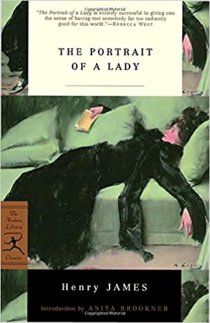
The Portrait of a Lady by Henry James

First, thanks to Bellezza’s open invite to a read-along, posting the photo of John Banville’s newest book Mrs. Osmond, a sequel to The Portrait of a Lady by Henry James. I’d seen the 1996 movie adaptation directed by Jane Campion (The Piano, 1993), but had never read James’s novel. What better time to read both books than now.

The Portrait of a Lady

I got hold of The Portrait of a Lady (Modern Library, just love the cover) read part of it then turned to a sound recording (unfortunately couldn’t find the Juliet Stevenson narrated version). Prompted by JoAnn, I interspersed reading with listening and gleaned much pleasure doing that. Here’s my very short, 5-Star Goodreads review:

“Actually I was listening to the Blackstone Audio version of the book as well as reading  parts of the book to ascertain facts in the story or just savour the passages again. James’s portrait of Isabel Archer is one of the saddest fictional heroines I’ve come across. A reminiscence of Anna Karenina emerged as I read the latter part, but Isabel is a character much more likeable for me. Should she be destined to a ruined life due to a naive misjudgement, ok, maybe even foolishness, by marrying Gilbert Osmond? Osmond is evil personified, and I just can’t shake off the face of John Malkovich (from the movie) whenever I read about his cold, domineering hand over Isabel. Isabel definitely needs redemption and saving grace. So I do hope John Banville’s Mrs. Osmond will grant her that.”

The Portrait of a Lady by Jane Campion

Since the image of John Malkovich kept creeping up my mind as I read the book, I quickly turned to the movie adaptation right after I finished the book. I remember I was most disturbed by Osmond’s callous treatment of Isabel when I first watched it years ago; he appeared as a chilling, silent villain, bullying his innocent victim mercilessly. His stepping on Isabel’s floor-length dress to stop her from walking away was still vivid in my mind.

Nicole Kidman

Now as I saw the movie again, I find the feature more style than content. The tilted camera shots? A bit contrived. Malkovich is still evil, and Kidman still the innocent victim, but there isn’t much complexity in the characterization. The editing and much abridged dialogues leave a vacuum. Considering the rich descriptive prowess of Henry James, much is left to be desired in the film. Yes, I’m one who advocates for the appreciation of books and films as two different art forms, and should not be doing a literal comparison when judging the adaptation. Well, I’m not. I’m weighing the film on its own merits. Yes, set design is rich and some artistic shots, but overall pales despite the sumptuous colours. And, what happened to Nicole Kidman’s hair? As much as I’d appreciated Campion’s works, especially her Oscar winning (Best Original Screenplay) film The Piano, I do feel maybe it’s a good time to do a remake of The Portrait of a Lady.

Mrs. Osmond by John Banville

After the movie I turned right away to Banville’s book. Here’s my review on Goodreads:

Mrs. Osmond

“I jumped to this book right after reading Henry James’s The Portrait of a Lady. As I understand this new work of Banville’s to be a ‘sequel’ to James’s book, I had high expectations of the Booker winning author carrying Isabel Archer’s (Mrs. Osmond’s) story forward, taking her through twists and turns and eventually letting her find redemption and a new life. However this was not to be exactly as I’d envisioned.

Mrs. Osmond is divided into two Parts. Maybe for the benefit of those who haven’t read or reread The Portrait of a Lady in preparation for his book, Banville retells James’s story in Part I. While he’s very detailed in his descriptive style, and to his credit, creeping inside the minds of his characters, he repeats himself frequently in reminding his readers how Isabel Archer got deceived by Madame Merle and fell into the marriage trap of Gilbert Osmond’s. So basically the story remains static throughout Part I.

(Spoiler Alert in the following)

Part II leads us to Isabel’s own scheme of turning the tables on Osmond and Merle, and let them have a taste of their own medicine by just transferring the ownership of her residence the palazzo in Rome over to Madame M. and let the culprits be trapped with each other. That’s all there is to her plan, and it’s an expensive vengeance. As for her own dear life and its purpose for the remains of her days, the path is as obscure as before, albeit Banville has dropped a hint of the suffrage movement being a meaningful direction.

While Mrs. Osmond may not be as gratifying as I’d expected, this is an interesting concept, taking literary classics and imagining a sequel. Now that could lead to a brave new genre of fiction writing.”

A Movie Remake, anyone?

If there’s one, who’d you like to see playing the role of Isabel Archer? Gilbert Osmond? Madame Merle? Director?


***


Related Post:

Can a movie adaptation ever be as good as the book?


Top Ripples 2017

The following is a list of books, movies, and events that stirred up the most ripples for me in 2017. Note that the books and movies are not necessarily releases from 2017 but just what I’ve had the privilege to encounter this year. If you don’t see your book here, it could be that it’s on my TBR list for the coming year. If you don’t see your fave movie here, it could be that I haven’t watched it or that I have but, indeed, it’s not here. Click on the links to read my reviews.


MOVIES

Three Billboards Outside Ebbing, Missouri directed by Martin McDonagh

Mudbound directed by Dee Rees

Certain Women directed by Kelly Reichardt

The Big Sick directed by Michael Showalter

Stefan Zweig: Farewell to Europe directed by Maria Schrader

Wind River directed by Taylor Sheridan

Things to Come directed by Mia Hansen-Løve

Silence directed by Martin Scorsese

The Rider directed by Chloé Zhao (55th NYFF)

The Road to Mandalay directed by Midi Z (NYAFF)

Calvary directed by John Michael McDonagh


BOOKS

At the Existential Cafe: Freedom, Being, and Apricot Cocktails by Sarah Bakewell

Little Fires Everywhere by Celeste Ng

Mudbound by Hillary Jordan

Nutshell by Ian McEwan

Wildlife by Richard Ford

The Noise of Time by Julian Barnes

The God of Small Things by Arundhati Roy


EVENTS

Visit to MoMA Click on the link to my post.

NYFF at Film Society of Lincoln Center: In September I had the chance to attend press screenings of the 55th New York Film Festival. CLICK HERE for all my reviews on AAPress.

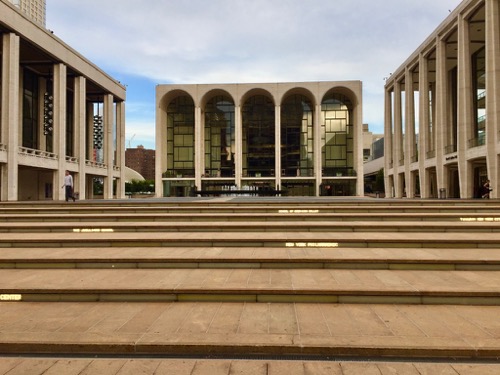
Other than hanging out at the Film Society of Lincoln Centre for the screenings, I’d experienced NYC on the bus, in the subway, and simply on foot, some days close to 20,000 steps, making my NYC trip extra rewarding. Here are some pics of the memorable experience.

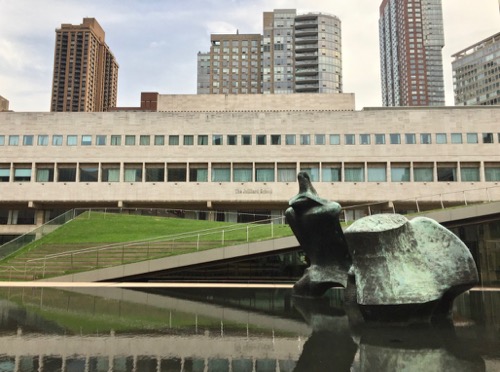
Lincoln Center:

IMG_5673.jpg

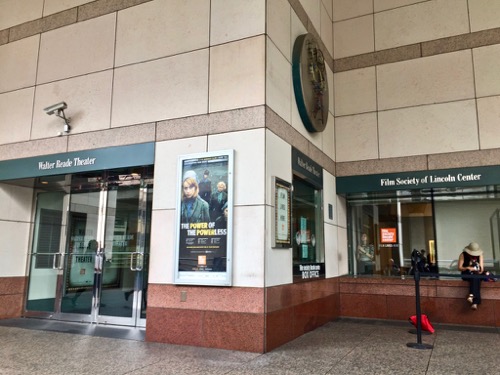
Film Society of Lincoln Center where the screenings took place:

IMG_5676

The Juilliard School:

IMG_5670 (1)

Central Park:


Reflection in Central Park


One World Trade Center:

IMG_5907.jpg

IMG_5860

IMG_5852 (1).jpg

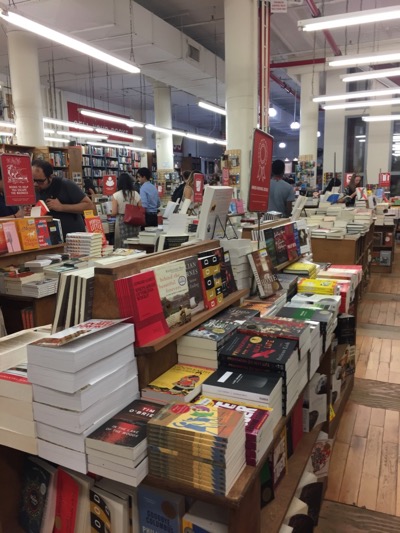
Strand Bookstore:

IMG_5691

IMG_5688

Brooklyn Bridge:

IMG_5784.jpg


IMG_5828

Where I found the best lobster roll I’d ever tasted, at the foot of the Brooklyn Bridge:

IMG_5837


And that’s a wrap.


***

And to all, a wonderful 2018 for books, films, and rewarding encounters! 

Mudbound: From Book to Screen

The Book

Mudbound is Hillary Jordan’s debut novel, published in 2008. It won the Bellwether Prize for fiction, an award founded by author Barbara Kingsolver to promote literature of social justice and responsibility.

Mudbound Book Cover

The setting is WWII and its ending, as two American soldiers return from Europe to their families in Mississippi. One of them is Jamie, white, a flying ace whose co-pilot was shot dead right beside him in a fierce dogfight. The other, Ronsel, black, a decorated war hero who had fought in the tank battalion under General Patton. Both had experienced the war, seen the atrocity, now back home having to deal with the demons of the aftermath: for Jamie, traumatic shocks and survivor’s guilt; for Ronsel, another barbaric battlefront, racism in the Deep South.

Jamie comes back to a cotton farm owned by his older brother Henry McAllan and stays in the lean-to adjacent to the main house, itself but a shack with no running water or electricity. “Mudbound” is the proper name for it. When the rain pours and the wind blows, the mud drowns and pulls everything down, dirtying all from head to toe. A gloomy place to start anew as a farmer.

They weren’t all like that to start with. Henry has an engineering degree. Laura, Henry’s wife from Memphis, is also college educated. She learns of Henry’s intention to move to rural Mississippi and be a cotton farmer only weeks after her marriage. What’s worse, Henry’s obnoxious father, Pappy, will be coming to live with them.

Ronsel’s father Hap Jackson is the sharecropper working in the cotton fields owned by Henry. Fate brought the two families together. Hap and his wife Florence and all his children have been praying for Ronsel’s safe return from the war. Now their prayers are answered, but only pit Ronsel into another battlefront when he meets Jamie and the two strike up friendship, a despicable taboo.

Written in chapters that reveal the point of view of the various characters, the book is a sort of a literary ‘Rashomon’, how different people see the same event in their own light, or the lack of it. Such a writing structure evokes empathy as Jordan leads the reader to delve into the mind of the characters. And as the final climatic chapters come, we as readers get to know a crucial fact, an essential plot point we are privy to but which even other characters are not aware. We have Jordan to thank for such an insightful way to present the omniscient viewpoint in her storytelling.

The trajectory of the friendship between Jamie and Ronsel is tragically predictable. But what’s not predictable is Jordan’s incisive writing. Sometimes adding a short little phrase at the end of a sentence could make it speak much more. It’s writing like this that makes the book enjoyable despite its subject matter. Take this as an example, simple and subtle, but revealing effectively Laura’s inner turmoil after a tumultuous night:

“… I got up and checked on the children. They were sleeping, with an untroubled abandon I envied.”

Or this line to wrap up a climactic chapter. Such descriptions are perfect cues for nuanced  performance on screen:

“What we can’t speak, we say in silence.”

No spoiler here. But this is the kind of writing that conveys powerfully the emotions and events that sweep the reader up while allowing space to mull things over.

***

The Movie

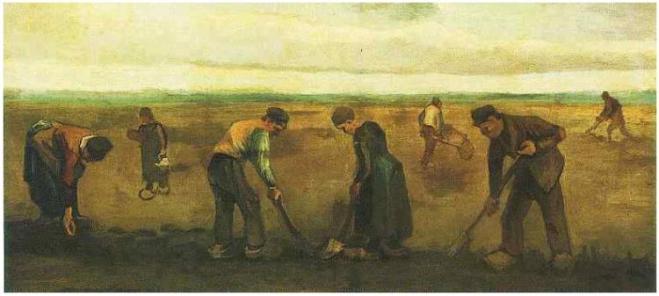
The cinematography (Rachel Morrison) is the most distinguished feature from the beginning. As the title suggests, the colour palette is a spectrum of browns, reminiscence of the paintings of Jean Francois Millet’s farmers toiling in the fields, or this Van Gogh’s Potatoes Farmers:

VVG Farmers-Planting-Potatoes

But before the mud swallows up life, there is the colourful, urbane, Memphis party scene, or the courtship under golden leaves. The contrast is heartbreaking. Laura (Carey Mulligan), who seems to have no say about her life and fate, has to follow her husband Henry McAllan (Jason Clarke) from the city to move to a shack with no running water or electricity on a cotton field in rural Mississippi. Being a landowner is the sole ambition for him.

But of course, not just Laura, but everyone is drawn into the muddy swamp. Hap Jackson (Rob Morgan) is the sharecropper on the McAllan fields. His wife Florence–absorbing performance from “the Queen of Hip-Hop Soul” Mary J. Blige–is soon asked to help Laura with caring for her two girls and household chores. The return of their son Ronsel (Jason Mitchell) and Henry’s younger brother Jamie (Garrett Hedlund) from Europe after the war will eventually link the two families down an inescapable path.

Turning the chapters of internal worlds into visuals on screen is a tall order. Director Dee Rees, who co-wrote the screenplay with Virgil Williams, had done an effective job by voiceovers, which is sometimes frowned upon as they could mean an easy-way out. But here, the voiceovers are intimate and personal. The few simple lines in the voice of the characters draw the viewers closer in. With Carey Mulligan, I admit I’m totally partial. Her alto voice is moving and poignant.

mudbound-movie-stills-4 (3)

Picking the right events from the book is crucial. Director Rees has followed closely to the plot lines using many of Jordan’s words, but also taken the liberty to switch around and combine them in the movie adaptation. Juxtaposing Ronsel and Jamie’s traumatic battle scenes with accidents and illness at home are effective and emotionally engaging; all have to fight their battles, big and small, at home or the frontline.

The most moving juxtaposition comes at the intense, climactic scene where the singing of a hymn replaces dialogues. It’s a juxtaposition of the visual with sound and silence. Jordan’s impressive line from the book is aptly adapted onto screen:

“What we can’t speak, we say in silence.”  Or here, in song.

The ending of the movie is altered, and I’m glad, for they who have suffered so much, so long, deserve a cathartic ending. This is a good example of a fine adaptation. It’s not a page by page transposition from book to screen, ‘faithful’ to the dot. But Rees has taken the liberty to unleash the dramatic, or maybe, melodramatic. It’s always cathartic to see love triumph after all. Mary J. Blige’s “Mighty River” is an appropriate wrap as the end credits roll.

***

~ ~ ~ ~ Ripples
Book and Movie

‘Certain Women’: To Connect on a Vast Landscape

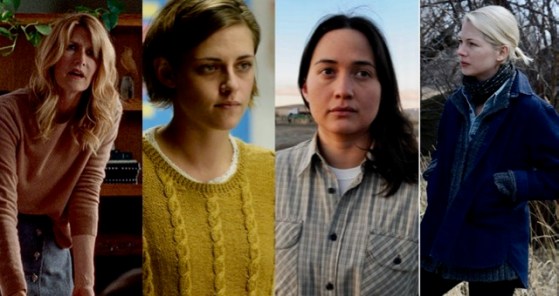
The common denominator is the landscape: Montana. Open country, clear, fresh air. The expanse of space could mean the freedom to roam. As we look into the four female characters, however, the vastness of the landscape and the cold winter could infer separateness and the need for connections. In the internal landscape, an assertion of self.

Director Kelly Reichardt (Wendy and Lucy, 2008) has chosen three short stories by Maile Meloy to form a cinematic triptych. Meloy’s stories are lean and succinct. Correspondingly, Reichardt’s style is minimal as with her previous works. She brings together three loosely linked stories that can stand on their own. To review them in a succinct way, I’ll use three words as my focal point for each.

Certain Women.jpg

Authority

Laura (Laura Dern), a woman lawyer in Livingston has to deal with a disgruntled client, Fuller (Jared Harris), who was injured in his construction job. As he has accepted a settlement, he can have no further claim for tort. Laura has explained this to him time and again, but he refuses to believe her until one day, they drive a few hours to another town to seek a second opinion from a personal injury lawyer, a male. As Fuller listens to the lawyer stating the same reason as Laura has been telling him all along, he just says ‘Okay’ and seems to accept the fact. Laura laments: “If I were a man, I could explain the law and people would listen and say ‘Okay.’ It’ll be so restful.”

A few days later, a hostage-taking incident occurs in the middle of the night, and Laura is called by the police. It’s Fuller taking a security guard hostage at a government office and wants her to go in to read him his file regarding compensation. Laura goes in and calmly diffuses the tense situation. The incident sends Fuller to prison. He seems content when Laura visits him. Laura finds a changed and much calmer Fuller. He appreciates her visit, and just wants an occasional letter from her to keep in touch. Laura does have authority after all, albeit may not be as she has hoped in the professional front. Her influence rests on her considerate demeanor making an impact on a personal and human level. And for this, Fuller learns to appreciate.

Authenticity

A city woman Gina (Michelle Williams) wants to build a country dream house, not to move in but as a weekend home. She has her eyes on a pile of sandstones that belong to long time resident of the land, Albert (Rene Auberjonois). The sandstones hold the history of the area, for they are from the original school house. We see the cracks in Gina’s relationship with her husband Ryan (James Le Gros) as they try to smooth-talk Albert, Gina seemingly caring but assertive in what she wants, while Ryan is apologetic and conciliatory. Why would a city woman want a pile of old sandstones for her country home? For authenticity, Ryan tells Albert. Ouch, is that supposed to be helpful or is he being sarcastic? Further, their daughter Guthrie (Sara Rodier) seems to be harder to placate as she is dragged along to the country reluctantly. The crevice in the mother-daughter relationship looks to be a tough fissure to fix.

Alienation

The most moving segment comes last. A young lawyer Beth Travis (Kristen Stewart) has to drive a few hours several nights a week after work from Livingston to Belfry to teach a night course on school law, a prior commitment before she found her present job. At the night class, she encounters a ranch hand, Jamie (Lily Gladstone), who drops in out of curiosity. The short moments of sharing as she accompanies Beth to a diner after class for a meal before she drives back home stir up deep longings. Gladstone’s restraint is particularly moving. Nuanced performance from both.

While she may be adroit with horses, it’s a human connection that Jamie yearns for. She comes to every class until one night, the students are told that the class will be taught by another teacher as Beth has quit due to the long drive. Eager to look for her, the ranch hand drives to Livingston to search for a lawyer named Beth Travis. What follows is an aching attempt to reach out towards an unrequited end. The last scene of the same horse-tending routines Jamie gets back to speaks poignantly. Life goes on despite…

~ ~ ~ 1/2 Ripples

***
Source materials: Short stories by Maile Meloy “Tome” and “Native Sandstone” from the collection Half In Love, and “Travis, B.” from Both Ways is the Only Way I Want it.

The Glass Castle: From Book to Screen

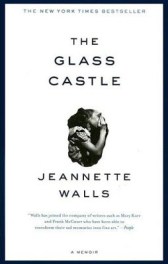
Jeannette Walls’ memoir had a “seven-year run on the New York Times best-seller list” after it was published in 2005, according to a NYT article . Now, 12 years later, a movie adaptation. So, the long wait is over. The wait, of course, belongs to those who don’t mind seeing a book turned into a movie.

As I’m a proponent of judging book and film as two different art forms on their own merits, I welcome movie adaptations. With this memoir, a non-fiction, I do feel the movie lacks the emotional punch as the first person narrative Jeannette Walls has so masterfully presented in her book. Walls’s memoir is a much livelier, engaging, and poignant piece of account depicting an extraordinary growing-up experience, a nomadic life of poverty until she and her siblings escaped from it.

As I’d mentioned in my review of the book, I was browsing in a bookstore when I picked up The Glass Castle randomly. The opening line captured my attention right away:

I was sitting in a taxi, wondering if I had overdressed for the evening, when I looked out the window and saw Mom rooting through a Dumpster.

That instantly drew me in. And for the rest of the book, Walls has not stopped captivating me with her growing up experience. She candidly shares how alcohol had ruined the potentials of her dreamer dad Rex, who had always dreamed of building them a glass castle. She tells us how her artistic mom Rose Mary had coped (or not), and the effects of their unconventional ‘parenting style’ had on the four children. Eventually, starting with the eldest, Lori, the children one by one escaped from their parents to NYC to start anew. As Jeanette saw her Mom digging through a Dumpster in NYC, she was a journalist at that time and living on Park Avenue. No judgement here, for the book explains all. The Glass Castle is a detailed account of Jeanette’s incredulous journey.

TGC_D40-4817.raf

Now, having said all that, I must state that the movie is still a watchable production. Unlike his previous realistic drama Short Term 12 (2013), writer director Deston Daniel Cretton has a tall order here: from the massive field of information in the memoir, to glean and pick just a few episodes to include in the film and string them up as a whole, while making them as interesting and captivating as the book. I know, Cretton must eliminate and condense, the difficult task of a movie adaptation.

Cretton chose to focus on the love hate relationships between father and daughter, and the actors have delivered, thanks to the performance of Woody Harrelson as Rex and the actors who play Jeannette as a youngster, Ella Anderson, and as adult, played by Academy Award Best Actress Brie Larson (Room, 2015). Harrelson is spot-on and dominates the screen.

Mom Rose Mary is played by Naomi Watts. And with this character, I feel there may be a miscast here. For one thing, since the film is heavily weighed on Rex, mom has a much minor role, which is a shortfall, for she does contribute to the children’s development, and taught them to appreciate reading, art, and the value of resilience, using the Joshua Tree as an object lesson, bent but alive. In my mind, Laura Dern could be a more suitable cast.

While the book is chronological, the movie juxtaposes the past with the present. It is done quite well, no confusion or disjointed feeling here. The editing is smooth and moves both storylines forward effectively. The scene of the accident when Jeanette has to cook as a young child and is burned badly is placed aptly at the beginning of the movie. Scars that can be seen visually is a good reminder of one’s past where memories could fade.

One of the main differences between The Glass Castle the book and the movie adaptation is distance. The book is intimate and close. Walls is such a straight forward writer that it feels like she’s right there sharing, opening up herself candidly to the reader. With the movie here, we are just like that, sitting afar as a spectator. It took me a while to engage.

The major issue is the mood. The book depicts a nomadic existence as Jeanette was growing up. The children were herded from place to place across States, often as dad Rex escaped from debtors. They had slept open in the Mohave desert, so, they could pick their own star as a present. Surely these may all be a disguise for their plight, euphemism offered by irresponsible parents. But none can deny the thrills and exhilaration of escapades and adventures. The togetherness of the siblings, the wonder of life are apparent in Walls’ descriptions. The word ‘dysfunctional’ had never appeared in my mind as I read the book.

The film however, focuses on the darker side. The abusive and volatile Rex dominates the screen. Poverty and gloom take over. The tipping point comes as the eldest Lori graduates from high school, and she makes an exit plan. We breathe an air of relief as the children one by one escapes to NYC. A few years later though, Rex and Rose Mary move out to be with them, so they can all be together again as one family.

Is a family being together always the best? As we see, togetherness may not be an ultimate good to pursue when harmony is impossible to reach. What’s more important is keeping oneself intact, one’s past reconciling with one’s present, the integrity of self. In the film, that is the turning point for Jeannette in the scene at the restaurant with an important client of her husband’s. Jeannette comes out from hiding about her family, albeit at the most inopportune moment.

The final scene is a beautiful wrap. The Walls gather together to have a family meal after Rex has died from illness. The siblings chat about their formative years in laughter. Resilience and loyalty to each other have kept them intact. A rewarding closure and a beginning towards a better future.

Do stay behind to watch the video of the real life Jeannette with her mom Rose Mary as the ending credits roll. And do sit through the credits until the very last line, wherein lies the emotional punch of the whole film:

“To all families, despite the scars, still find a way to love.”

~ ~ ~ Ripples


***


Related Post on Ripple Effects:

The Glass Castle Book Review

Metropolitan (1990): Whit Stillman’s Homage to Jane Austen

Thanks to New York born and raised director Whit Stillman, one of Jane Austen’s characters in her juvenilia, Lady Susan Vernon, had a field day last year. For those wondering how that came about, do seek out Stillman’s film Love & Friendship (2016), or his movie-tie-in book Love & Friendship: In Which Jane Austen’s Lady Susan Vernon Is Entirely Vindicated. 

But Janeites may not have noticed, back in 1990, five years before the pivotal year of wet shirt Darcy’s mortifying encounter with Lizzy Bennet, another Austen character was vindicated, Fanny Price of Mansfield Park. And they have Stillman to thank.

What does Jane Austen’s Mansfield Park, published in 1814 England, have in common with a bunch of upper class college freshmen/women in 1990 New York City, calling themselves UHB (Urban haute bourgeoisie), worrying about an ‘escort’ shortage for their debutante parties during their Christmas break?

Wait a minute, UHB? ‘Urban Haute Bourgeoisie‘? Isn’t that the kind of targets that would have interested Jane? Our astute Jane who loved to wield her pen, piercing through the façade of the rich and privileged, shaking the underlying status quo of society of her time? Jane would have loved Stillman’s film. She would be amused by the characters in this comedy of manners and their social commentaries. Debutante parties? Jane would be surprised to hear they still exist in the 20th century. If she were to write the screenplay, Jane would probably be less subtle.

Screen Shot 2017-07-17 at 10.03.38 PM

Stillman’s Metropolitan is not so much an acerbic satire but a gentle poke and  descriptive vignettes of the young UHB’s lifestyle and thinking. From his treatment of his characters, he is gentle and forbearing, albeit incisive, just enough to elicit some knowing chuckles.

In Mansfield Park, Jane presented a heroine that is a contrarian. Fanny Price is unadorned, impoverished, athletically challenged, a misfit and outsider when she enters the upper class home of Sir Thomas Bertram. But it’s her being principled and virtuous that make her stick out like a sore thumb. As Jane ends the book, Fanny gets the final praise, and an oblivious, but decent, Edmund as her ultimate reward.

Stillman’s Metropolitan is set in 1990 NYC. It has two characters that are a type of Fanny Price. First is Tom. He stands for everything that’s the opposite of the UHB. A self-professed socialist, Tom comes from the other side of the track. He wears a raincoat (albeit with a warm lining as he explains) in midwinter, and a ‘snob’ for public transit. Taxi? No, he’d rather walk.

Sure, his new found friends of the UHB know why. How many can afford to take the taxi as their usual means of transport and wears tux to parties? So, to their credit, despite knowing Tom might be from the opposite side of town, they receive him into their midst, especially as the girl Audrey likes him very much and wants him to help solve their, or her, ‘escort shortage’ to the debutante parties.

Audrey is a lover of books. She’s unpretentious, modest, and above all, a sensitive soul not unlike Fanny. In one scene, Audrey serves as a moral compass as the group gathers in the after party to a game that she disapproves of. That’s a Fanny incognito there. She insists on her stance despite everyone, Tom included, feels there’s nothing wrong with the game.

So there are the Austenesque parallels and types. You might be able to identify the Crawfords there too. The youthful characters are all serious in their viewpoints. One must give them credits. In their tux and gowns they discuss social theories. Therein lies Stillman’s gentle satire. While the sarcasm and humour is subtle, there are a few lines that are overt, lines I think Jane would have approved.

In this scene (above photo), Audrey and Tom discuss books. Audrey says Persuasion and Mansfield Park are her favorite Austen books, Tom is incredulous.

Tom:  Mansfield Park! You got to be kidding.

Audrey:  No.

Tom:  But it’s a notoriously bad book. Even Lionel Trilling – one of her
greatest admirers – thought that.

Audrey:  If Lionel Trilling thought that, he’s an idiot.

Jane probably would have thought, “Oh I wish I had written those lines.”

But wait, there’s more. Later in the party, Tom and Audrey continue to discuss Mansfield Park.

Audrey: You find Fanny Price unlikeable?

Tom: She sounds pretty unbearable, but I haven’t read the book.

Audrey: What?

Tom: You don’t have to have read a book to have an opinion on it. I
haven’t read the Bible either.

Audrey: What Jane Austen novels have you read?

Tom:  None. I don’t read novels. I prefer good literary criticism. That way
you get the novelist’s idea as well as the critic’s thinking. With
fiction I can never forget none of that has really happened. It’s all
made up by the author.

Oh I can see Jane ROFL.


~ ~ ~ 1/2 Ripples


***

Related Posts on Ripple Effects:

Stillman’s Love & Friendship: More than Book Illustration

Love & Friendship and Other Prospects

Mansfield Park: Jane Austen the Contrarian 


Upcoming Books to Movies 2017

Half a year’s gone already. How’s your reading and watching coming along? Here are some movie adaptations I anticipate for the latter half of the year.

The Glass Castle by Jeannette Walls

the-glass-castle-bookFinally, the movie adaptation is completed. More than seven years on the NYT Bestseller list, Jeannette Walls’ 2005 memoir of resilience and delight – yes, the two can co-exist – is high on my TBW list. After receiving her Academy Best Actress Award in another book-to-screen adaptation, Room (2015), Larson is back with her Short Term 12 director Destin Cretton. Interesting cast for the parents, Woody Harrelson as dreamer dad Rex Walls and Naomi Watts as uncouth artist mom Rose Mary. Coming out in August. Should be a good summer movie.


Tulip Fever by Deborah Moggach

Tulip FeverMoggach’s best known book is probably The Best Exotic Marigold Hotel, among her many titles. Tulip Fever is the author’s first historical fiction set in 17th century Holland, evoking the paintings of Vermeer’s. The story begins with a rich merchant in Amsterdam commissioning a painter to paint his young bride. The rest is up to the further imagining of Moggach’s creative mind. From book to screen adaptation written by Tom Stoppard, directed by Justin Chadwick, who helmed the adaptation of Philippa Gregory’s The Other Boleyn Girl (2008) and the excellent TV mini series of Dickens’ Bleak House. Cast includes Alicia Vikander, Judi Dench, Christoph Waltz. Coming out in August. Should be another good summer pick.


Wonder by R.J. Palacio

Wonder Book CoverAnother one high on my TBW list. This is one YA novel that appeals to both young and old, for the theme of acceptance and empathy is so much needed in our time. A look at the trailer shows the film is well cast. Room’s breakout young star Jacob Tremblay as disfigured fifth grader, entering school for the first time in his life; Julia Roberts plays mom and Owen Wilson is dad. Stephen Chbosky (The Perks of Being a Wallflower, 2012) directs. To be released November, 2017.
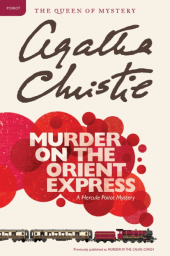


Murder on the Orient Express by Agatha Christie

Murder on the Orient Express.pngDame Agatha Christie’s famous work has gone through many renditions on the big screen, small screen and even a video game. But the classic has to be the Sidney Lumet directed 1974 production with Albert Finney, Lauren Bacall, Ingrid Bergman, John Gielgud, and a young Sean Connery, just to name a few. This 2017 version is directed by Kenneth Branagh who will, of course, takes up the role of Hercule Poirot. Cast include Johnny Depp, Michelle Pfeiffer, Daisy Ridley, Penélope Cruz, Judi Dench, Derek Jacobi, Willem Dafoe, a modern classic in the making? Coming out November, 2017.


EXTRA, EXTRA: Ordeal by Innocence by Agatha Christie

Ordeal by Innocence

Talking about Dame Agatha, the latest, yes just hours ago, it has been announced that the prolific writer – whose books have sold only less than The Bible and Shakespeare according to The Hollywood Reporter – will ring in yet another adaptation by BBC in time for the Christmas season. BBC touts a mighty cast with Bill Nighy, Catherine Keener, Matthew Goode, Eleanor Tomlinson among many talents. A jolly good Christmas for the Brits indeed. We’ll have to wait for Masterpiece to act.


***

Related Ripple Effects Posts:

The Glass Castle Book Review

Wonder by R. J. Palacio: Required Reading for All

The Best Exotic Marigold Hotel 

The Second, Best Exotic Marigold Hotel