Staying Awake in the Garden

I came across this image in Biola University’s Lent Project. It is by the Austrian children’s book illustrator Lisbeth Zwerger. Among several awards she had won, Zwerger received the acclaimed Hans Christian Andersen Medal for illustration—the highest international award given for “lasting contributions to children’s literature”.

Staying Awake in GG

Its title is Jesus praying in the Garden of Gethsemane, from her book Stories From the Bible. Without condescension, Zwerger’s image speaks with clarity such that a child can easily grasp its essence. Three people dozing off, each against a tree. From a distance, under a massive dark cloud, a tiny, lone figure walking towards the ominous void. The illustration is perhaps one of the rarer perspectives that accompanies this narrative:

“Then Jesus went with them to a place called Gethsemane, and he said to his disciples, “Sit here, while I go over there and pray.” And taking with him Peter and the two sons of Zebedee, he began to be sorrowful and troubled. Then he said to them, “My soul is very sorrowful, even to death; remain here, and watch with me.” And going a little farther he fell on his face and prayed, saying, “My Father, if it be possible, let this cup pass from me; nevertheless, not as I will, but as you will.” And he came to the disciples and found them sleeping. And he said to Peter, “So, could you not watch with me one hour? Watch and pray that you may not enter into temptation. The spirit indeed is willing, but the flesh is weak.” Again, for the second time, he went away and prayed, “My Father, if this cannot pass unless I drink it, your will be done.” And again he came and found them sleeping, for their eyes were heavy. So, leaving them again, he went away and prayed for the third time, saying the same words again. Then he came to the disciples and said to them, “Sleep and take your rest later on. See, the hour is at hand, and the Son of Man is betrayed into the hands of sinners. Rise, let us be going; see, my betrayer is at hand.”    – Matthew 26: 36 – 46

What struck me is how modern the feel; these three guys could be anyone. And they are so casual too, like, barefoot in the park. Considering the horrific mission their Master is facing, their body language speaks avoidance, indifference, and, even betrayal. The spirit is willing but the flesh is weak – blame it on the good supper – they’re totally oblivious while their Master in a distance, alone, is fighting the most anguished battle of his life.

Are these guys named Peter, James and John? Why, they could be you and me.

***

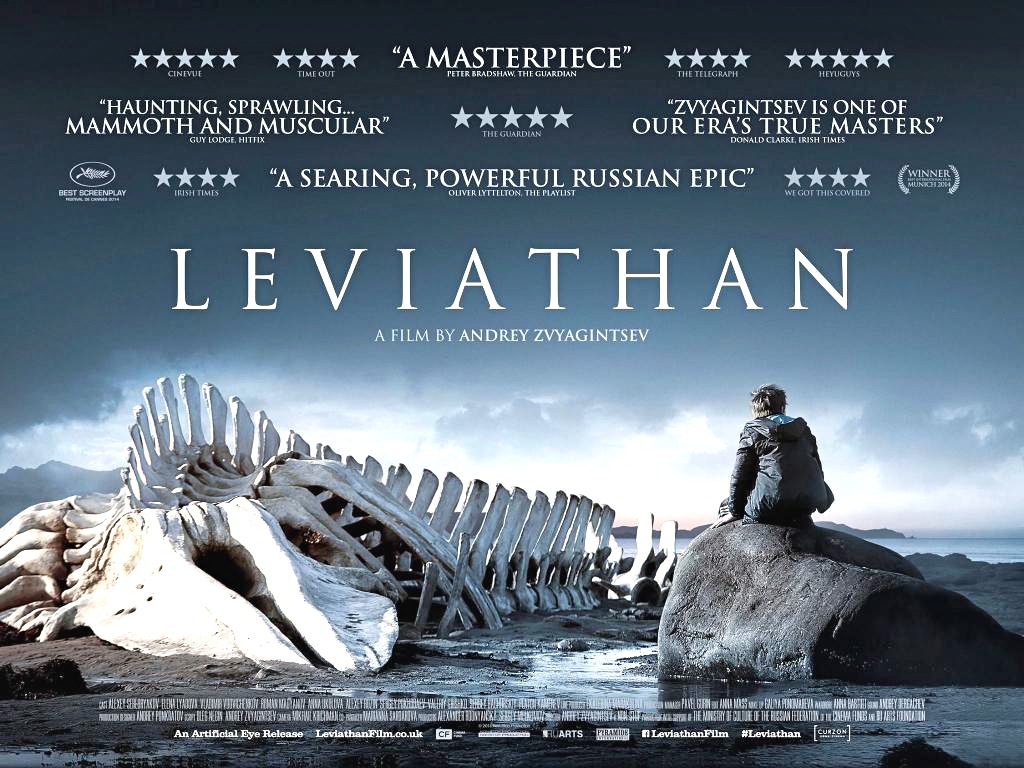
Leviathan: The Beast Within Us

The Chinese have a saying – while we’re at foreign language films – ‘A tyrannical government is more ferocious than the tiger’. That Leviathan is selected as the official entry from Russia to the Oscar race baffles me. But I can also see those in power there just may not be bothered by small town corruptions which the film depicts, for they must be more focused on the larger picture that carries greater magnitude, the scenery in Crimea.

Leviathan, that monstrous beast the priest in the film quotes to the main character Kolya is from the book of Job in the Bible. While the context in the Biblical passage is about the Creator’s might over the huge creature, it is a metaphor with layered meaning in writer/director Andrey Zvyagintsev’s film: A citizen against a powerful mayor vying for his home property, and the monstrous beast inside the characters with which they all have to wrestle.

Leviathan Movie Poster

Kolya (Aleksey Serebryakov) is an apt parallel of a modern day Job in the sense of the misfortunes he encounters. The little guy is no match for a greedy and powerful mayor and a corrupt system when it comes to holding on to what he legally owns, his home on a piece of  land by the shoreline in the coastal town of Pribrezhny. Even his lawyer friend Dimitry (Vladimir Vdovichenkov), who has come all the way from Moscow to advocate for him, falls victim to the small town mayor Vadim (Roman Madyanov).

The seemingly idyllic setting of Kolya’s coastal home is apparently an illusion. The cinematography is stunning and probing at the same time, for apart from the scenic serenity, there are also broken and derelict boats discarded on the shore, as well as carcasses of sea creatures, in particular, a whale-like skeleton that we the audience would gasp upon seeing but that the local residents don’t even take a second look. Their lives are intertwined with the Leviathan, however skeletal its remains.

But Kolya is not Job. He is hotheaded and impulsive. Apart from fighting the external beast of the mayoral hostile take-over of his home property, Kolya has to keep his wife Lilya (Elena Lyadova) at bay from his lawyer friend Dimitry, as well as bring up teenaged son Roman (Sergey Pokhodaev) on a path he himself is at a loss in finding. The worst is yet to come though. We empathize with Kolya, a man so trapped, he is unable to find a way out other than drowning his misery in alcohol. The church is not helping either, why, its most powerful congregation member is the mayor himself.

Too far and remote a film to identify? The setting maybe, but not the story. Leviathan resonates with the human condition it depicts, the Leviathans within us that we have to wrestle wherever we may be. Not just Kolya, but every character is crying for a redemptive way out of his or her predicament, unless blind as the mayor who basks in his own schemes. With the nuanced performance of the cast, we have the pleasure to appreciate a production superbly crafted, and that’s what gratifies when watching a film well made, despite the subject matter.

Leviathan has won 2014 Cannes Film Festival’s Best Screenplay Award, and last month the Golden Globe’s Best Foreign Language Film. This Sunday at the Oscars, Leviathan has a good chance of grabbing the coveted prize in its category, Best Foreign Language Film of the Year.

My pick? Still rooting for Ida, for its positive choice at the end.

~ ~ ~ 1/2 Ripples

***

My Reviews of 2015 Oscar Nominated Films:

Ida

Boyhood

The Grand Budapest Hotel

Whiplash

Gone Girl 

Interstellar and Ida

Reading The Season: Lila by Marilynne Robinson

Every year before Christmas, I read something that can draw me closer to the meaning of the Season. Amidst the busyness of the festivities, I try to carve out a piece of quiet. I name these annual posts Reading The Season. You can click on the links at the bottom for previous entries, dating back to 2008. This year, the publication of Marilynne Robinson’s third Gilead book, Lila, is a most timely read.

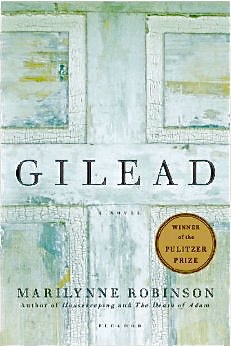
GileadGilead (2004) – Marilynne Robinson’s Pulitzer Prize and National Book Critic Circle Award winning novel introduces us to the fictional town of Gilead, Iowa. We hear the gentle voice of the narrator, the ageing Rev. John Ames, as he writes a letter to his seven-year-old son Robby, leaving a legacy of family heritage, love, forgiveness, and serenity.

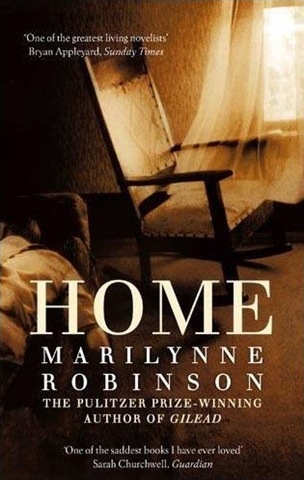
HomeHome (2008) – Based on the same Gilead characters, but from a different point of view allowing us privy to the household of the Rev. Robert Boughton, John Ames’s life long-friend. Glory, Boughton’s daughter, comes home to take care of her ailing father. She is there when her brother Jack returns after an absence of twenty years. The black sheep of the family, Jack’s estranged self yearns for reconciliation like a prodigal. The book, in all its complexities and depiction of alienation, escape, return and lost yet again, suggests home may not be a solace as sweet as one hopes.

Lila

Lila (2014) – Robinson’s newest, and 2014 National Book Award finalist. It is the third novel based on the characters in the town of Gilead, offering yet another point of view. But one can just read it on its own, albeit best to have read Gilead first, then the kind face of John Ames can be conjured up more readily. In this book, the perspective is from Ames’s much younger wife Lila, at first lonely and desolate, slowly drifting into place.

**

Lila Dahl

At the outset, we see Lila as an unwanted child, “cold”, ‘all cried out’. She is rescued by Doll, a destitute woman herself yet still has room in her heart for an abandoned little girl. Doll wraps Lila into her shawl and decides to bring her up. “Lila was the loneliest child, and there they were, the two of them together, keeping each other warm in the rain.” Lila later takes up Doll’s name as Dahl.

The two joins a small group of itinerant field workers led by Doane, living in camps out in the open. But the Depression breaks up the cohesive work party. Lila is later left on her own and for a little while, works in a brothel in St. Louis. Knowing she can’t stay there for long, she slips out one night, escaping from a blackhole of hopelessness.

After that she finds herself a cleaning job at a hotel, from which she has to escape again after seeing her nemesis whom she first encounters while in the brothel. She packs her bag and leaves town, taking rides from strangers going to wherever they drop her. Ultimately, Lila drifts to the outskirt of Gilead, finds an abandoned shack and takes shelter there. She cleans up the shack for a place to sleep, having no plans except to find odd jobs in the town yonder, earn enough money, then moves on, maybe to Sioux City.

Lila lives a life of poverty, loneliness and fear, mistrusting everyone. Doll may have been like a mother to her but she too has her own rough life and struggles. Doll knifes and kills a man who might be Lila’s own father, could well be out of protecting Lila. She is later jailed, leaving the knife in Lila’s possession. Lila keeps it with her all the years as a memento, a murder weapon, yes, but also a symbol of Doll’s loving protection and Lila’s own desolate past.

One day walking into Gilead Lila stumbles into a church to escape the rain, that is the turning point of her life. She sees the old man at the pulpit, the Rev. John Ames, and, he sees her.

John Ames

We know a lot about Ames from Robinson’s first book of Gilead, set in the 1950’s. A Congregationalist pastor in the town, Ames is sixty-seven years old when he first meets Lila, “a big, silvery old man”. Coming from a family tradition of ministers, John Ames is a man with a pastor’s heart.

Ames has had his share of personal grief. He had to bear the death of his beloved wife of his youth and his newborn son as she died in childbirth. Such unspeakable pain he had shared with his best friend Robert Boughton, pastor of the Presbyterian church in Gilead.

Ames and Boughton have been life long friends. They share pastoring advice, discuss foreign policies, debate theological problems, and bear the burden of each other’s family woes. Boughton has his in his son Jack, who takes John Ames’s namesake.

After seeing Lila at the church as she comes in from the rain, Ames keeps her in his heart. Residents of Gilead befriend Lila, giving her jobs, welcoming her in their midst, but Lila is aloof and skeptical, an outsider still. Ames personally engages her to talk and to know her more. One day, he goes to seek her out at the shack. She sees him coming as she walks towards Gilead. There on the path he reaches out to her and promises marriage. An inexplicable love story takes shape.

Sunset

Ames and Lila

“… the old man kept on courting her, like a boy, when she was hard and wary…”

After they are married, however incompatible it looks in Ames’s home, Lila still keeps Doll’s knife with her as a memento and as a symbol of her own tumultuous past, a part of herself. Ames is unperturbed. He lets her keep it, and he even uses it, taking it as a normal tool around the house. Total acceptance.

If condescension is present in the relationship, it is Ames who wants to learn from Lila. His utter humility is what moves her. Barely literate, Lila yearns to know about the Bible, study it and grasp its richness and meaning. They talk about the difficult books of Ezekiel and Job. Ames shares his thoughts about this elusive notion called existence, and listens attentively Lila’s perspective and experiences. Total respect.

Lila has questions rooted in her bitter past, the why’s of misfortunes, cruelty, and the hardships in life. She asks Ames with an inquiring heart. Ames, a pastor of many years, can find no easy answers. He ponders Lila’s queries, and readily and honestly admits his own limitations in knowing, while loving her all the more. Total humility.

Even after they are married, Lila sometimes still conjures up thoughts of leaving. Ames  knows this and gives her the freedom:

… if you ever change your mind, I want you to leave by daylight. I want you to have a train ticket in your hand that will take you right where you want to go, and I want you to take your ring and anything else I have given you. You might want to sell it. That would be all right. It’s yours, not mine… ” He cleared this throat. “You’re my wife,” he said. “I want to take care of you, even if that means someday seeing you to the train.” He leaned forward and looked into her face, almost sternly, so she would know he meant want he said.

She chooses to stay, a genuine response to his love.

When I read the book, I see a tender love story between two utterly incompatible beings, like an allegory and a parallel of the Christmas story, how the Creator God reaches out to take our hand, initiating an unfathomable relationship. Love for the reason of pure love. An unlikely and inexplicable union.

The Christmas Story

I first felt a little uncomfortable about the obvious incongruous pairing of Ames and Lila, yet, their love relation comes to fruition, albeit looking tentative at first. The gap between Ames and Lila is just a crack in the pavement when compared to the abyss separating Creator God and His creation. I see Ames and Lila’s story as an allegory, if you will, a parallel, however meagre, illustrating the joining of two utterly disparate sides.

The essence of the Season is in the reaching out to bridge that huge chasm. As Ames and Lila’s newborn son at the end of the book is an evidence of their love, we too receives a child, born in a manger that day in Bethlehem, a sign of ultimate mending. Total reconciliation.

***

Other Reading the Season Posts:

2020: Jack by Marilynne Robinson

2019: A Hidden Life, a film by Terrence Malick

2018: Madeleine L’Engle’s Poem The Irrational Season

2017: A Wrinkle In Time by Madeleine L’Engle

2016:  Silence by Shusaku Endo

2015: The Book of Ruth

2014: Lila by Marilynne Robinson

2013 Poetry by Madeleine L’Engle

2012: Surprised by Joy, C. S. Lewis

2011: Walking on Water, Madeleine L’Engle 

2010: A Widening Light, Poetry by Luci Shaw

2009: The Irrational Season, Madeleine L’Engle 

2008: The Bible and the New York Times, Fleming Rutledge 

2008: A Grief Observed, C. S. Lewis

 ***

Ida’s Choice: Thoughts on Pawlikowski’s Ida (2013)

This review is about the acclaimed Polish-born director Pawel Pawlikowski’s newest film Ida (2013)It was screened at TIFF 2013, and since then, at numerous other film festivals. Slowly, it has arrived at the big screens in our cities recently. The following post discusses crucial thematic elements. Therefore, spoiler warning.

***

What forms one’s identity? Is it nationality? Race and ethnicity? Or something that transcends these boundaries? And, does one have a choice?

IDA

At the beginning, Anna’s (Agata Trzebuchowska) Catholicism is chosen for her. Raised in a Polish convent as an orphan, Anna knows no other kind of life. As an 18 year-old novitiate on the verge of taking her vow to become a nun, her Mother Superior tells her she should meet her closest relative. The one living relative she has is her mother’s sister, her aunt Wanda (Agata Kulesza).

Wanda is a hard-drinking, life-weary and tormented soul. Having lived through the horror of the second world war, she is confronted by yet another formidable front in post-war Poland, Soviet Communism. As a state prosecutor and later a judge, Wanda survived by compromising with the oppressive regime. She rises to a respectable position while sending many to their doom.

Poland in the 1960’s saw the beginning of wavering in hardline communism, a loosening up in society. Wanda has now become disillusioned and cynical, immersing in alcohol and one-night stands. With Anna appearing at her doorstep, she has to confront with not only a family’s dreadful past but her own existential present. Her licentious lifestyle is a sharp contrast to Anna’s spiritual devotion. A foil of the sacred and the profane, but not in a dogmatic frame. We see the two learning to appreciate and understand each other in a poignant way.

The sacred and the profane

For Anna, coming out of the convent does not mean only an eye-opener of the real world. From her aunt, she learns that her real name is Ida Lebenstein, and she is a Jew. Her parents were murdered during the Nazi occupation of Poland. She was kept safe in the shelter of the Catholic nuns. Her lineage concealed. Now Anna/Ida has to face with a seemingly incompatible identity, as her aunt bluntly puts it, ‘a Jewish nun’.

Aunt and niece go on a road trip to seek out the graves of Ida’s parents and eventually discover more about their deaths. They begin to know each other in a deeper way. The knowledge and the experience they have with each other may be life affirming for Ida; unfortunately for Wanda, they lead to despair.

While on the road, Wanda picks up a hitch-hiker, a young jazz musician, saxophonist Lis (Dawid Ogrodnik). He opens up yet another window for Anna, that of jazz, Coltrane, and all the rest.

The 80-minute, visually inspiring film is shot in aesthetically stunning black and white cinematography, 1.37:1 Academy Ratio with a square frame; the medium is the message. Austere, minimal, suggestive of harsh, bygone days, and with human characters often in the bottom of the frame, small and insignificant compared to the vast landscape. What is human in the whole scheme of things? How does one define oneself?

Small characters against large landscape

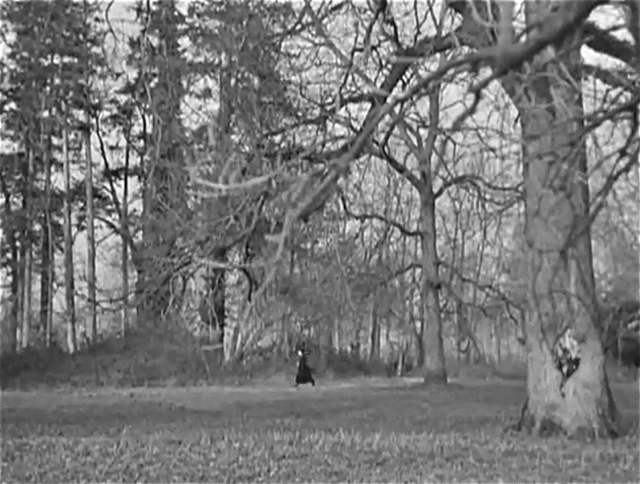
The cinematography reminds me of Robert Bresson’s Diary of a Country Priest. The young priest comes into his first parish, dwarfed and intimidated by the burden of his task, the spiritual warfare for which he is unprepared:

Walking through the woods

Like Bresson, Pawlikowski uses a non-actor for a major role. Agata Trzebuchowska plays Ida. She has never acted before. Pawlikowski found her in a coffee shop. Her portrayal of Anna/Ida is hauntingly authentic. Her face is pristine, yet her gaze is wise beyond her looks. Her aloof expression offers an unspoken evaluation of the world she sees, both in and out of the convent’s walls.

After a pivotal event, Ida tries on her aunt’s dresses, her high heels, smokes her cigarette and imagines another life. In this elegant attire she dances with the Jazz musician Lis. She listens to him play Coltrane on his sax. A whole new world awaits her if she so chooses. But it only entices for a short while. Ida yearns for something deeper, more meaningful. “And then?” she asks Lis several times in response to his offer of coming along with him.

Three characters, three different choices. Wanda chooses a way out that’s tragic.

The young musician Lis chooses jazz and whatever that path might take him. Despite his desire to have Ida come along with him, he does not, or maybe cannot, answer her two-word questions: “And then?” What’s the purpose, after all?

Ida chooses the transcendent over the secular, not that she judges the world, but that she yearns for meaning in the spiritual. It is not so much about choosing Catholicism over her Jewish lineage, but that she has made her own decision in becoming who she is. Ida’s choice is one that surpasses arbitrary, man-made boundaries of race and ethnicity, or the appeal of materials and pleasures; she chooses to devote to her Christ who had sacrificed all.

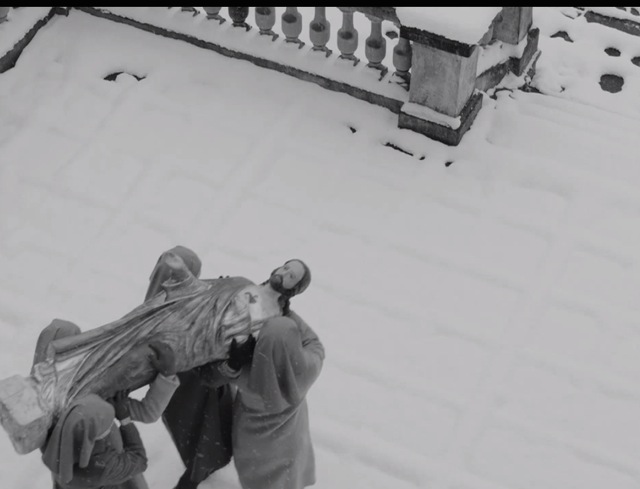
An image from the beginning of the film vividly comes back to my mind. Anna and three others carrying the Christ statue on their shoulders like a cross:

Carrying Christ

In the final shot we see Ida back in her habit attire. The moving camera captures a resolved and almost rejuvenated face, walking briskly with her little suitcase in hand, heading back to the convent. This place is now a personal choice.

~ ~ ~ 1/2 Ripples

***

Awards Update:

Feb. 22, 2015: Ida wins The Oscar for Best Foreign Language Film of the Year.

Feb. 21, 2015: Ida wins Best Foreign Language Film at the Independent Spirit Awards.

Feb. 8, 2015: Wins BAFTA Best Film not in the English Language

Jan. 15, 2015: 2 Oscar noms, Best Foreign Language Film, Best Cinematography

Dec. 11: Golden Globe nom for Best Foreign Language Film

Dec. 7: Ida wins Best Foreign Language Film and Agata Kulesza Best Supporting Actress at the L.A. Film Critics Awards

Dec. 1: Ida wins Best Foreign Language Film from the New York Film Critics Circle

Other posts you might like:

Nebraska: Colour Is Superfluous

Diary of a Country Priest: An Easter Meditation

Diary Of A Country Priest: Film Adaptation

When Easter is the Spring

Quickening

Dead trees draw life
when the days expand and the sun
fulfills its promise, oft delayed
by the clutch of ice.

Clotted, gnarled, knotted twigs
on the trees sense sap and the death
of death. They stretch, begin
to puff green on the end.

We sing new songs
of a Life laid down for rebirth
when Easter is the Spring
and the branch is Christ.

— Mark A. Noll

**

Every new birth is a miracle. I saw two yesterday:

2 Owlets

***

And To All, A Happy Easter!

***

Robert Bresson’s Au Hasard Balthazar (1966): A Timeless Parable

Surely he has borne our griefs
and carried our sorrows;
yet we esteemed him stricken,
    smitten by God, and afflicted. 

— Isaiah 53:4 ESV

Several days before He is crucified, Jesus enters Jerusalem riding on a donkey. I love this scene. If there’s any cognitive dissonance in the crowd, here’s the stark message for their bewilderment. The King for whom they are cheering is not to be a glamorous celebrity. Rather, like the donkey, He comes as a humble servant, one who carries their load, and ultimately, even lays down his life for them. His kingdom belongs to another world.

Marie and Balthazar


As with my Easter viewing from previous years, I watch a film by the French auteur Robert Bresson. Bresson’s work has a transcending and spiritual quality that is deeply moving. In Au Hasard Balthazar, he creates an unusual metaphor using a donkey as his protagonist. We follow Balthazar as a young colt, loved by his first owner Marie. We see him grow up, weaving his life among different owners. We also see Marie grow up. Despite her love for Balthazar, she cannot stop the encroachment of evil, or maybe she is simply powerless. She does not defend Balthazar when a gang of young men abuse the donkey, tormenting him, whipping, mocking.

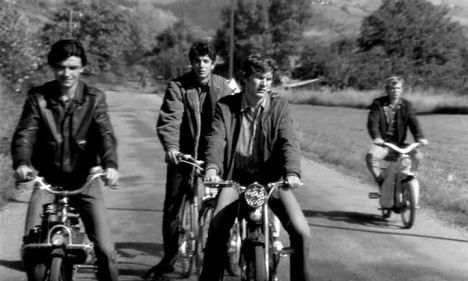
The gang leader is Gérard, whose sadistic, mean streak speaks for human depravity. He would pour gasoline on the road to cause unsuspecting drivers to skid and crash. He and his gang would watch nonchalantly from a distance, gratified that their prank has worked. He steals and deceives. What is a donkey to him if he does not even have the slightest respect for other humans. Once, to prod Balthazar to move forward, Gérard ties a newspaper to his tail and light it on fire.

The Gang

Throughout, Balthazar lives his life quietly in a parallel course to the growing depravity of the humans he serves. He suffers their cruelty in silence, occasionally he would bray in pain, but he continues to bear his load, pull a cart, or do whatever he is prodded to do, even a circus act. Due to neglect and maltreatment, he often becomes ill.

As she grows up, Marie discards childhood innocence and seeks to gratify her sensual pleasures. Against the protest of her parents, she falls for Gérard. She could have another choice, one who offers her genuine love, Jacques, the son of the owner of the farm where Marie and her parents reside. Jacque would come by every summer from the city with his father and sister to stay on the farm. When they were still children, they had spent endearing moments together with Balthazar. Jacques has declared lifelong commitment to Marie. But Gérard is a more instant and attractive outlet for Marie. Ultimately, she is dealt the harshest blow and most degrading abuse from Gérard and his gang as they rape her. Bresson spares us the ugly scene, but in the chilling aftermath, we see the young men walk away, nonchalant, throwing her garments on the ground behind them. After that tragic incident, Marie runs away. Her father is grief stricken, and soon falls ill and dies.

Gérard is unrepentant. After all, it’s self-serving lust he seeks; his callousness is most disturbing. In the last scene, we see he uses Balthazar to do one more job for his gang. They are to smuggle goods across the mountainous border. At night, he loads up his goods on the donkey and leads him to the border. From a distance, he hears gun shots from armed customs police. Gerard and his gang flee, abandoning Balthazar on the mountain. But it’s too late for Balthazar, he has been shot.

The final scene is most moving. In the open field, Balthazar walks slowly, haggard, blood streaming from his leg. He finally lies down, still carrying the goods Gérard has put on him, the load of sin. He breathes his last and quietly dies, alone.

Like Bresson’s Diary of a Country Priest, Au Hasard Balthazar is an apt meditation for Good Friday. But not just for this one day, their timeless message is like the Easter Season itself, a moveable feast.

~ ~ ~ ~ Ripples

***

Related Posts and Links:

Diary of a Country Priest: A Book For Easter

Diary of a Country Priest: Film Adaptation

Video of Robert Bresson on Au Hasard Balthazar

Homage to Flannery O’Connor: Looking for ‘Intrusions of Grace’ in Films

Today is the birthday of Flannery O’Connor. As a tribute, I’m re-posting a piece I wrote a few years ago entitled “Looking for ‘Intrusions of Grace’ in Films: Pickpocket and Drive”

**

Our age not only does not have a very sharp eye for the almost imperceptible intrusions of grace, it no longer has much feeling for the nature of the violence which precede and follow them.” — Flannery O’Connor (quoted in my post A Good Man Is Hard to Find and Other Stories)

Flannery O’Connor made this remark back in 1963. It was not only a sharp social commentary and prophetic, but to me, it also stands as one of the signs of a good film. Amidst the violence and ugliness a film may depict, the presence of grace, however small, or a mere spot of purity, could bring out a powerful contrast. Usually that is what’s needed to emit a redemptive spark, a glimpse of light pointing to the transcendent.

With this frame of grace among violence, I go back to the films I’ve watched and try to find some good examples. My task proves to be more difficult than I first thought. But after some deep searching through my mental archive, several films came to mind. I’ll just mention two for this post.

Pickpocket (1959)


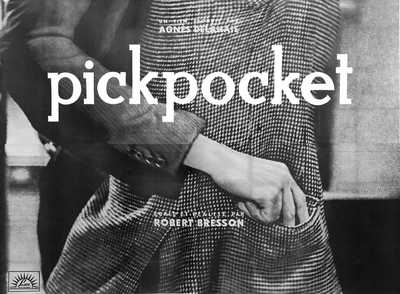
pickpocket movie poster

Robert Bresson’s modern version of Dostoevsky’s Crime and Punishment. Caught in his own desensitized internal world, our protagonist Michel commits acts of theft as a desperate measure to fill the void in his existence. He goes through his days in a haunting vacuum devoid of meaning and emotions. He is unfeeling even towards his own dying mother, reminds me of Meursault in Camus’s The Stranger. Although not an axe murderer like Raskolnikov in Crime and Punishment, Michel theorizes that those with superior talents and intelligence, the supermen in society, should be free to disobey laws in certain cases. He is numbed by his own hubris, and stifled by his cold and absurd worldview. Outright violence is not visible here, but we see the battle of wits he engages with the police inspector behind his trails, and we see him struggle in an amoral and meaningless existence.

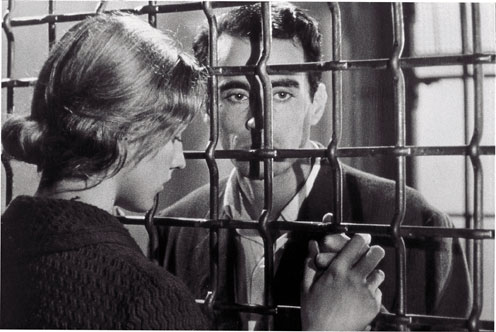
Grace comes as Jeanne, a neighbor and carer of Michel’s ailing mother. Jeanne lives on her own looking after her younger brother. Her father is a drunk and her mother has deserted them. But she continues to live and care. She accepts her circumstances calmly, and extends kindness to those unrelated to her, caring for Michel’s mother, a neighbor on another floor. She stands as a stark contrast to Michel’s aloofness. At the end of the film, Jeanne came to visit Michel in prison after he was arrested, the two separated by the cold iron bars. For the first time, Michel feels love and wants to reciprocate it. And thus the cathartic ending as he totally melts in the presence of pure love and grace, wrapping up the film with this last line:

“Oh, Jeanne, to reach you at last, what a strange path I had to take.”


Pickpocket


**

Drive (2011)

A current release that comes with high acclaims. The film was nominated for the Palme d’Or and Nicolas Winding Refn won Best Director at the Cannes Film Festival this year (2011). With slick and dashing camera work, the violence in “Drive” is visceral and graphic, a big contrast to the black and white, internal “Pickpocket”. However, I see some parallels between these two films made 50 years apart.

Ryan Gosling is “the Driver”. He does not even have a name. He is an expert stunt driver for movies and works at an autobody shop by day, drives a get-away car in the underworld of crimes by night. Like Michel in “Pickpocket”, he drifts in existence, numb and desensitized to the world around him. That is, until he meets Irene (Carey Mulligan), his neighbor.

Drive 1


Mulligan’s almost angelic presence in the film is most effective as a stark contrast to those around her. She lives alone looking after a child and works as a waitress in a diner. She appeals to the Driver by being herself, innocent, taking life as it is, responsible, caring for a child alone while his father is locked up in prison. Irene is a spot of purity in a rough environment. Her mere presence has transformed the Driver. From being aloof the Driver has become engaged emotionally, friendly and protective of both mother and son.

Drive

The plot thickens as Irene’s husband is released from prison and rejoins his family. The Driver is caught in an awkward situation. But he soon realizes that the husband’s resolve for a new start is genuine. The power of transformation is so thorough that the Driver is willing to go out on a limb to help the husband with one last heist in order to break the hold a gang has on the man, his wife and kid. While things go awry terribly and the ending is not as clean-cut as “Pickpocket”, we learn that the Driver remains a changed man from the ephemeral friendship he once had with Irene and her child.

Some might say Mulligan is a miscast, that she’s not “damaged enough”, and would prefer a ‘stronger’ character. I disagree. I feel that Mulligan has portrayed Irene’s innocent persona aptly, and yes, those ethereal dimples can just melt any heart. Hers is the perfect role for exactly the right reason. In the dark underworld of gangs, violence and crimes, she stands out as a tiny source of purity, a spark of grace. It all shows that what may look weak and vulnerable can have transformative power over the strong. A thought that may well be unpopular today.

***

Other related posts from Ripple Effects:

A Good Man Is Hard To Find and Other Stories by Flannery O’Connor

Bernini’s Corpus and Modern Movies

Notes on the Synthesis of Film, Art… Life?

***

Listening for Lent

In the old days, say, six years ago, reading for me was, simply, reading. Holding a book in my hands, read through the printed words, turned the pages manually, feeling the paper at my fingertips. But today, I have several ways to ‘experience’ a book. I can still read in the old traditional way, or download the eBook to my iPad using the app ‘OverDrive’, or, listen to an audiobook, on CD’s or MP3.

As a slow reader, I find listening to audiobooks a time-saving way, albeit I still prefer to hold a book in my hands and see prints on paper. But in this day of multi-tasking, I sometimes listen to audiobooks while driving as I can fit in my reading time. I confess, I could be distracted by the story, or the traffic. But overall, listening to audiobooks while driving is a perfect alternative for me, in lieu of time and space for ‘actual’ reading.

Recently I read an article by T. M. Luhrmann in the New York Times entitled Audiobooks and the Return of Storytelling. This insightful piece introduced me to a different reason for listening to audiobooks.

First off, Luhrmann takes down the generally accepted view that reading with our eyes as ‘more serious, more highbrow’ than listening to a story being told orally. She points to the early childhood experience when way before we could read, we were introduced to stories through listening to them. So maybe such a notion extends to our adult life making us feel that listening to stories is a childlike activity than reading the text on our own.

Many great books were actually oral legends, Luhrmann points out, “… for most of human history literature has been spoken out loud. The Iliad and the Odyssey were sung.” Noted. Can’t say listening to audiobooks is child’s play.

Luhrmann then comes to the crux of her idea. While we listen to an audiobook, we can do something else with our eyes and hands. That’s just obvious, isn’t it? Exactly what I said at the beginning of this post, the benefit of multitasking. But I was too rash to have thought I knew it so. What I read after this was nothing short of an epiphany for me.

No, not while driving, but when Luhrmann is gardening, she listens. Often, she would listen to the Bible. I love what she has to say next (emphasis mine):

Listening to a book is a different sensory experience than reading it. The inner imagining of the story becomes commingled with the outer senses — my hands on the trowel, the scent of tansy in the breeze. The creation of this sensory richness was in fact an explicit goal of the oral reading of the Bible in the medieval European cloister, so that daily tasks would be infused with Scripture, and Scripture would be remembered through ordinary tasks.

Whenever she looks at the “50 polypodium californicas and 50 festuca idahoensis in the dappled light beneath [her] oaks” she would think of “Gatsby’s extraordinary gift for hope.” Why, Luhrmann was listening to Fitzgerald’s novel while planting those the year before. Now looking at the plants would flash upon that inward eye what she had heard.

Of course, that sounds so simple and natural, a kind of classical conditioning, if you will. We fuse our senses and experience. All the more that we should listen to good books or we’ll have bad memories looking at the tasks we’d performed.

And what a wonderful idea Luhrmann had left me with: Scripture-infused daily tasks. That can’t be more apt for Lent.

***

Tanya Marie Luhrmann teaches Anthropology at Stanford.

Related Posts on Ripple Effects:

No Texting for Lent and the End of Solitude

The Dinner by Herman Koch: A Timely Read, for Lent?

Dances With Words

What Makes a Good Audiobook Narrator?

***

And The Word Was Made Homeless

Awesome Sky

The House of Christmas

by G. K. Chesterton (1874–1936)

There fared a mother driven forth
Out of an inn to roam;
In the place where she was homeless
All men are at home.
The crazy stable close at hand,
With shaking timber and shifting sand,
Grew a stronger thing to abide and stand
Than the square stones of Rome.

For men are homesick in their homes,
And strangers under the sun,
And they lay on their heads in a foreign land
Whenever the day is done.
Here we have battle and blazing eyes,
And chance and honour and high surprise,
But our homes are under miraculous skies
Where the yule tale was begun.

A Child in a foul stable,
Where the beasts feed and foam;
Only where He was homeless
Are you and I at home;
We have hands that fashion and heads that know,
But our hearts we lost – how long ago!
In a place no chart nor ship can show
Under the sky’s dome.

This world is wild as an old wives’ tale,
And strange the plain things are,
The earth is enough and the air is enough
For our wonder and our war;
But our rest is as far as the fire-drake swings
And our peace is put in impossible things
Where clashed and thundered unthinkable wings
Round an incredible star.

To an open house in the evening
Home shall men come,
To an older place than Eden
And a taller town than Rome.
To the end of the way of the wandering star,
To the things that cannot be and that are,
To the place where God was homeless
And all men are at home.

*****

“And the Word was made flesh, and dwelt among us.” John 1:14

**

(Photo taken by Arti of Ripple Effects, Sept. 2010. All Rights Reserved.)

***

 MERRY CHRISTMAS EVERYONE!

 
***


Reading the Season: Poetry by Madeleine L’Engle

The brilliance of A Wrinkle in Time is that its author Madeleine L’Engle can convey scientific and spiritual concepts at the same time and in a way that young readers can enjoy. There’s no conflict between the cerebral and the spiritual; they co-exist comfortably in L’Engle’s work. Not only that, they fuse together and from that alchemy rises a whole new, inexplicable entity: Faith.

It’s that time of the year when I try to tune out distractions to dwell on the meaning of the Season, the reason why we have Christmas in the first place. I call these posts ‘Reading the Season’.

This time, I’ve selected four of Madeleine L’Engle’s poetry. ‘After Annunciation’ I have posted before. But I’d like to share it again here because the deceptively simple lines carry much depth and wisdom. Same with ‘The Risk of Birth, Christmas, 1973’. These two remain my favourite thoughts during Advent. 1973 or now? Ever timely. The poems are taken from The Ordering of Love: The New & Collected Poems of Madeleine L’Engle, published by Shaw Books, 2008.

The Ordering of Love

**

After Annunciation

This is the irrational season
When love blooms bright and wild.
Had Mary been filled with reason
There’d have been no room for the child.

**

Sonnet, Trinity 18

Peace is the centre of the atom, the core
Of quiet within the storm. It is not
A cessation, a nothingness; more
The lightning in reverse is what
Reveals the light. It is the law that binds
The atom’s structure, ordering the dance
Of proton and electron, and that finds
Within the midst of flame and wind, the glance
In the still eye of the vast hurricane.
Peace is not placidity: peace is
The power to endure the megatron of pain
With joy, the silent thunder of release,
The ordering of Love. Peace is the atom’s start,
The primal image: God within the heart.

**

Instruments (I)

The sky is strung with glory.
Light threads from star to star
from sun to sun
a liv­ing harp.
I rejoice, I sing, I leap upwards to play.
The music is in light.
My fin­gers pluck the vibrant strings;
the notes pulse, throb, in exul­tant harmony;
I beat my wings against the strands
that reach across the galaxies
I play

NO

It is not I who play
it is the music
the music plays itself
is played
plays me
small part of an innumerable
innum­ber­able
orches­tra.
I am flung from note to note
impaled on melody
my wings are caught on throb­bing fil­a­ments of light
the wild cords cut my pinions
my arms are outstretched
are bound by ropes of counterpoint
I am cross-eagled on the singing that is strung
from puls­ing star
to flam­ing sun
to

I burn in a blaze of song.

**

The Risk of Birth, Christmas, 1973

This is no time for a child to be born,
With the earth betrayed by war & hate
And a comet slashing the sky to warn
That time runs out & the sun burns late.
That was no time for a child to be born,
In a land in the crushing grip of Rome;
Honour & truth were trampled by scorn–
Yet here did the Saviour make his home.
When is the time for love to be born?
The inn is full on the planet earth,
And by a comet the sky is torn–
Yet Love still takes the risk of birth.

***

‘Reading The Season’ Posts over a Decade:

2020: Jack by Marilynne Robinson

2019: ‘A Hidden Life’ – A Film for the Season

2018: A Verse from Madeleine L’Engle’s The Irrational Season

2017: A Wrinkle in Time by Madeleine L’Engle

2016: Silence by Shusaku Endo

2015: The Book of Ruth

2014: Lila by Marilynne Robinson

2012: Surprised by Joy by C. S. Lewis

2011: Walking on Water by Madeleine L’Engle 

2010: A Widening Light by Luci Shaw

2009: The Irrational Season by Madeleine L’Engle

2008: The Bible and the New York Times by Fleming Rutledge 

2008: A Grief Observed by C. S. Lewis

***

Just another Easter thought

This Luci Shaw poem was read out in the Tenebrae service I attended on Good Friday.

***

P1000367

Judas, Peter

because we are all
betrayers, taking
silver and eating
body and blood and asking
(guilty) is it I and hearing
him say yes
it would be simple for us all
to rush out and hang ourselves

but if we find grace
to cry and wait
after the voice of morning
has crowed in our ears
clearly enough
to break our hearts
he will be there
to ask us each again
do you love me

— Luci Shaw

***

A Happy Easter to all!

Saturday Snapshot March 30: Tenebrae

Tenebrae is Latin for shadows. I was in a Tenebrae Good Friday service yesterday, a symbolic visualization of the Easter narrative.

7 candles

Seven lit candles were gradually extinguished between scriptures, poetry, and music, symbolizing the imminent death of Christ. Ultimately only the centre flame, the Christ candle, was burning. Momentarily, it too was snuffed out.

“Then [Peter] began to curse and swear, ‘I do not know the man!’ And immediately a rooster crowed.” — Matthew 26:74

Total darkness.

Tanabrae

Later, the single Christ candle was relit… the resurrection, light illuminating darkness again. The solitary flame is in the lower left in the above photo.

***

Saturday Snapshot is hosted by Alyce of At Home With Books. These two photos were taken from where I sat, using my iPhone.

***