Flight of the Red Balloon (2007)

In honour of Taiwanese director Hou Hsiao-hsien winning the Best Director award last Sunday at the 2015 Cannes Film Festival, I’m re-posting a review I wrote a few years back on Hou’s Flight of the Red Balloon (2007).

***

flight-of-the-red-balloon

In celebration of its 20th anniversary, the Musée d’Orsay in Paris has commissioned four notable directors to create a series of commemorative films. One of them is Olivier Assayas with his Summer Hours (l’Heure d’été) which I have reviewed.  Another is the highly acclaimed Taiwanese auteur Hou Hsiao-hsien. Flight of the Red Balloon is a unique piece of film art gently crafted by Hou in homage to Albert Lamorisee’s Oscar winning short Le Ballon Rouge (1956). Hou has long been garnering awards in international film festivals throughout Europe and Asia since the 1980’s, albeit relatively unknown in North America. Flight of the Red Balloon is his first French language film.

The little boy in this 2007 rendition is Simon (Simon Iteanu), a child growing up in the hustle and bustle of Paris. With an absentee father somewhere in Montreal pursuing his writing, and a frantically busy mother Suzanne (Juliette Binoche), Simon is alone in an adult world. Overloaded with her work as a voice-over artist in a puppet production plus other personal matters, Suzanne hires Song (Fang Song), a film student from Beijing, to look after Simon for her.

Suzanne is the embodiment of urban frenzy. As a single mother, she has to shuttle between home and work, deal with the eviction of a bad tenant in her lower apartment, confront her non-committal husband on the phone to Montreal, and connect with her daughter in Brussel, all in a day’s work. Simon is most perplexed.  “Why are you so busy, Mama?”, he asks.

song-and-simon

Song, on the other hand, offers the tranquility that is needed to balance life in the midst of chaos. As a film student, she uses her hand-held camera to record Simon’s activities, and by her quiet demeanor and calm observing, she reflects pleasure in the mundane, everyday trivialities called life. This is reality show without sensationalism.  Hou has ingeniously conveyed his perspective of realism with artistic overtone. No doubt, there is a lack of plot, suspense, or climax, but there is character contrasts, cinematic offerings in sights and sounds, and realistic, natural performance. Juliette Binoche has once again assured me why she is one of my favorite actresses. And no, you are not watching paint dry, you are watching life unplugged.

The red balloon forms the focal point of Hou’s signature long take. The almost God-like omnipresence hovering over buildings in the Paris skyline is a joyful symbol of childhood. Its silent drifting is as elusive as the fleeting memories of happiness. Even little Simon achingly remembers the pleasant days he had shared with his much older sister, who is now living in Brussel. We are all trying to catch and hold on to fond memories and meaningful relationships. Yet as the busyness of urban living numb our senses, we ignore and shove away what we think is a hindrance to our time, just like the people rushing out of the subway station, shoving away the red balloon. Only a child would try to catch and befriend it.

Complementing the cinematic artistry is the equally mesmerizing piano music, meditative, serene and restoring, setting the mood and the preamble of the film.  Other musical numbers are equally soulful. Click here for the official IFC site where you can have a taste of the sights and sounds of the film.

felix-vallotton-le-ballon-1899I particularly enjoy the ending. As Simon goes on a school trip to the art gallery of the Musée d’Orsay, the children gather on the floor to talk about Félix Vallotton’s 1899 painting Le Ballon, he leans back, slightly removes himself from his school mates, and lays on his back. As he looks up to the glass canopy of the museum ceiling, he sees it again, the red balloon, that omnipresence, watching over him, removed yet engaged, far away, yet ever so near.

~ ~ ~ Ripples

***

Other Related Posts on Ripple Effects:

Conversation with Juliette Binoche

Tuffing it out at TIFF14

Summer Hours (l’Heure d’été) by Olivier Assayas

Yasujiro Ozu and the Art of Aloneness

***

Saturday Snapshot May 16: Silhouettes

Often when I’m outdoor, the light, shadow, direction of the sun and the time of day are less than ideal for photography. That’s the time when I see beauty from another perspective. The lack of light on the subject, or when it’s backlit, makes it all the more intriguing.

I’ve learned to appreciate silhouettes. They are more soulful and quiet. When devoid of colour, I can see more clearly the subject’s shape and form, and its solitary existence. Here are some photos I’ve taken lately… a kind of Wabi-sabi.

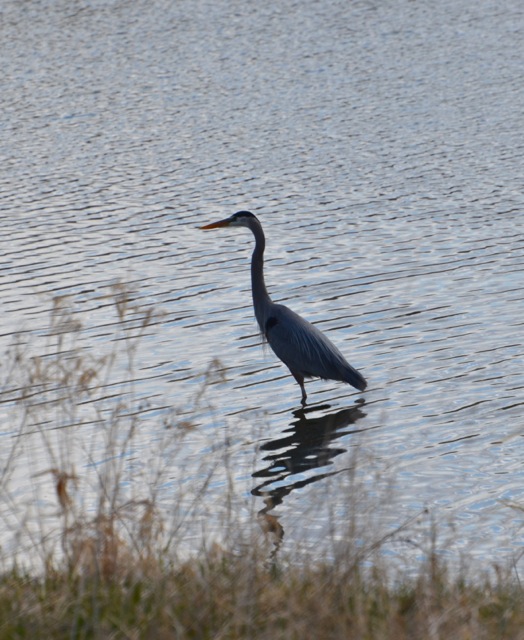
The slow and meditative movement of the Great Blue Heron:

GBH

Great Blue Heron

Great Blue Heron Flying

Look at the shadow in the water, like a Chinese brush stroke:

Chinese brush painting 1


A solitary Belted Kingfisher:

Belted Kingfisher


Cattails by the pond in the evening light:

Cattails


Guess who’s still busy at dusk:

Beaver

***

Saturday Snapshot is hosted by West Metro Mommy Reads. CLICK HERE to see what others have posted.

Photos Taken by Arti of Ripple Effects

Do No Copy or Reblog

***

McFarland, USA (2015): A Worthy Winner

The reason I waited till now to see McFarland, USA is plainly because I thought it would be just another cliché movie on teacher inspiring students, and specifically here, a white teacher coming into a hispanic community, changing their youngsters to what they’re not, the white knight of condescension.

I’m glad that’s all a misconstrued perception. True, there’s a white teacher coming into the poorest town in the USA, McFarland, CA, where most of its population is hispanic, Mexican immigrants labouring in the open fields from morn till dusk picking produce. The hope of the parents’ – if there is any – is for their sons to continue picking produce so they can earn a living for themselves.

What’s best about this movie is that it’s a true story. The script is well-written and the production helmed by a competent director Niki Caro (North Country, 2005; Whale Rider, 2002). While its elements seem like the ingredients of a formulaic teacher changing students feel-good movie, it is surprisingly moving and exceeds my expectation.

Sure, the coach can’t be more white… a Mr. Jim White (Kevin Costner) from Idaho. You can’t find a whiter name. The school is McFarland High School, with low morales and expectations, students from blue-collar Mexican immigrant families. We see Mr. White come to McFarland after some unsuccessful employment at another school. Bringing his wife Cheryl (Maria Bello) and two daughters Julie (Morgan Saylor) and Jamie (Elsie Fisher) with him, White soon finds they are a misfit and maybe even unsafe in the town. Yet, he has no choice; this is his only job offer.

McFarland 1

Hired as a biology and gym teacher, White one day discovers some of his boys are fast long-distance runners. There are the Diaz boys, David (Rafael Martinez), Damacio (Michael Auguero), and Danny (Ramiro Rodriguez, well, maybe not all of them fast) who are waken up by their mother every morning before dawn to go work in the fields before they head to school. Their only way to get to school on time from the field is by running fast. And then there’s Carlos Valles (Carlos Pratts), whose athletic talent is marred by family and personal conflicts.

White sees the potentials in these boys. With no experience whatsoever, he asks for permission to set up a seven-member cross country running team and train the boys for competition. Being the newest team, they have to compete against well-trained and formidable upper-middle-class schools from areas such as Palo Alto. Physical endurance comes much easier than when the McFarland boys have to deal with low self-image and discouragement.

Kevin Costner is the key to the success of the movie. I can’t think of any other actor who is more suitable for the role. Costner is a natural, even without the chance of him pitching a baseball, even having him ride a girl’s Barbie bike (White’s daughter’s apparently) to keep up with the boys in their practice, as he’s just a bit over-the-hill to run with them. A charmer and very convincing here, Costner shows genuine concern for the welfare of his students, even going to the fields to pick produce with them to make up for the time when he takes them out for practice. He soon wins the hearts of the parents and their community.

The movie captures my attention from the very start, any resistance is soon melted by Costner’s performance, and the natural appearance of the students and their families. Most of them are first time actors, and some are residents of McFarland. One soon finds that it’s not a white knight rescuing the underprivileged, but life-changing for them all. The movie sheds no traces of racism or condescension, but paints a realistic picture of family, community and the humanity that binds.

If you want to avoid spoilers here we have the historical facts in the following:

The triumph comes in the final act of the movie when the McFarland Cross Country Team The Cougars won the California States championship in 1987, and subsequently, a total of nine wins over the next fourteen years. And to his credit, White turned down an offer from a Palo Alto high school to stay where he was, at McFarland.

What is most moving is the final text shown on screen telling how the boys had turned out in real life. All of them have no family member who had gone past a grade 9 education, but all seven of them in the cross country team graduated from college. Some of them had gone back to teach at McFarland High School, one became a police detective, one a writer for the L.A. Times. We see their faces as adults, the fruits of everyone’s labour at McFarland.

The triumph of the movie is in its authenticity and uplifting ending. Uplifting because it’s a true story. Of course, the filmmakers have to tweak and add in dramatic elements to turn it into a watchable movie, but the basic facts remain intact. I can’t remember being so moved by a Disney movie. Kudos to the McFarland community for the inspiration.

~ ~ ~ Ripples

***

CLICK HERE to watch a featured video of the movie.

Here’s a “History vs. Hollywood” comparison.

Voice of the Poet: Things Fall Apart

April is National Poetry Month, and three quarters of the days are already gone. Still not too late for me to offer a poetry post. At present, I’m reading Joan Didion’s essay collection Slouching Towards Bethlehem (more about that in a later post). To start off her book, Didion uses W. B. Yeats’ poem “The Second Coming”, from which her book title originates.

Yeats wrote the poem in 1919, shortly after WWI; it was published in 1920. Didion used it like an epigraph for her book published in 1968, about fifty years later, apparently finding it speaks to her collection of essays on her experiences in 1960’s America.

Now almost another fifty years later, the poem still has not lost its relevance. Yeats’ mythical references aside, and just listen to the clearer and more direct words, I can hear the Poet’s voice speak hauntingly to our present world.

**

The Second Coming 
by William Butler Yeats (1865-1939)

Turning and turning in the widening gyre
The falcon cannot hear the falconer;
Things fall apart; the centre cannot hold;
Mere anarchy is loosed upon the world,
The blood-dimmed tide is loosed, and everywhere
The ceremony of innocence is drowned.
The best lack all conviction, while the worst
Are full of passionate intensity.

Surely some revelation is at hand;
Surely the Second Coming is at hand.
The Second Coming! Hardly are those words out
When a vast image out of Spiritus Mundi
Troubles my sight: somewhere in sands of the desert
A shape with lion body and the head of a man,
A gaze blank and pitiless as the sun,
Is moving its slow thighs, while all about it
Reel shadows of the indignant desert birds.
The darkness drops again; but now I know
That twenty centuries of stony sleep
Were vexed to nightmare by a rocking cradle,
And what rough beast, its hour come round at last,
Slouches towards Bethlehem to be born?

**

Especially the first stanza… hear what I mean?

Seven Stanzas for a Happy Easter

Rocks


“Seven Stanzas At Easter” by John Updike

Make no mistake: if he rose at all
It was as His body;
If the cell’s dissolution did not reverse, the molecule reknit,
The amino acids rekindle,
The Church will fall.

It was not as the flowers,
Each soft spring recurrent;
It was not as His Spirit in the mouths and fuddled eyes of the
Eleven apostles;
It was as His flesh; ours.

The same hinged thumbs and toes
The same valved heart
That—pierced—died, withered, paused, and then regathered
Out of enduring Might
New strength to enclose.

Let us not mock God with metaphor,
Analogy, sidestepping, transcendence,
Making of the event a parable, a sign painted in the faded
Credulity of earlier ages:
Let us walk through the door.

The stone is rolled back, not papier-mache,
Not a stone in a story,
But the vast rock of materiality that in the slow grinding of
Time will eclipse for each of us
The wide light of day.

And if we have an angel at the tomb,
Make it a real angel,
Weighty with Max Planck’s quanta, vivid with hair, opaque in
The dawn light, robed in real linen
Spun on a definite loom.

Let us not seek to make it less monstrous,
For our own convenience, our own sense of beauty,
Lest, awakened in one unthinkable hour, we are embarrassed
By the miracle,
And crushed by remonstrance.

– John Updike (1932-2009)

***

Happy Easter to All!

Staying Awake in the Garden

I came across this image in Biola University’s Lent Project. It is by the Austrian children’s book illustrator Lisbeth Zwerger. Among several awards she had won, Zwerger received the acclaimed Hans Christian Andersen Medal for illustration—the highest international award given for “lasting contributions to children’s literature”.

Staying Awake in GG

Its title is Jesus praying in the Garden of Gethsemane, from her book Stories From the Bible. Without condescension, Zwerger’s image speaks with clarity such that a child can easily grasp its essence. Three people dozing off, each against a tree. From a distance, under a massive dark cloud, a tiny, lone figure walking towards the ominous void. The illustration is perhaps one of the rarer perspectives that accompanies this narrative:

“Then Jesus went with them to a place called Gethsemane, and he said to his disciples, “Sit here, while I go over there and pray.” And taking with him Peter and the two sons of Zebedee, he began to be sorrowful and troubled. Then he said to them, “My soul is very sorrowful, even to death; remain here, and watch with me.” And going a little farther he fell on his face and prayed, saying, “My Father, if it be possible, let this cup pass from me; nevertheless, not as I will, but as you will.” And he came to the disciples and found them sleeping. And he said to Peter, “So, could you not watch with me one hour? Watch and pray that you may not enter into temptation. The spirit indeed is willing, but the flesh is weak.” Again, for the second time, he went away and prayed, “My Father, if this cannot pass unless I drink it, your will be done.” And again he came and found them sleeping, for their eyes were heavy. So, leaving them again, he went away and prayed for the third time, saying the same words again. Then he came to the disciples and said to them, “Sleep and take your rest later on. See, the hour is at hand, and the Son of Man is betrayed into the hands of sinners. Rise, let us be going; see, my betrayer is at hand.”    – Matthew 26: 36 – 46

What struck me is how modern the feel; these three guys could be anyone. And they are so casual too, like, barefoot in the park. Considering the horrific mission their Master is facing, their body language speaks avoidance, indifference, and, even betrayal. The spirit is willing but the flesh is weak – blame it on the good supper – they’re totally oblivious while their Master in a distance, alone, is fighting the most anguished battle of his life.

Are these guys named Peter, James and John? Why, they could be you and me.

***

Force Majeure (2014): Act of God or Act of Human

As I’m writing, this just popped up: Force Majerure (Sweden) is now one of nine films shortlisted for the Oscars Foreign Language Film category, advanced from the initial round with features from eighty-three countries. Soon, this list will be further shortened to make up the five nominees for the 87th Academy Awards. Nominations will be announced at 5:00 a.m. PT, January 15, 2015.

Force Majeure

I watched Force Majeure at TIFF in September, a second time again this week as it comes to our local theatre. Please note, it is impossible to discuss this film in an intelligent manner without mentioning the storyline. Therefore, consider yourself warned. Spoiler Alert. But let me assure you, this won’t lessen your enjoyment of the movie; rather, it could prepare you for a more purposeful viewing.

‘Force majeure’ in translation means ‘an overwhelming and irresistible force’. Director Ruben Östlund tells his visual story based on this notion. A young family goes on a week of skiing holiday in the French Alps, a much needed family time as the husband has been busy at work. What is intended to be a fun family vacation is turned into something totally unthought of, making this one of the most original film ideas I’ve come across in years.

The slick and stylish camerawork begins with a close-knit family. Mom and Dad Ebba (Lisa Loven Kongsli) and Tomas (Johannes Kuhnke) look like a well-matched couple; their pair of school-aged children Vera (Clara Wettergren) and Harry (Vincent Wettergren) are smart and charming. All four of them sleep together on one King-sized bed in the resort hotel, wear the same style of underwear, brush their teeth in one accord, do everything together, until one split-second their view of each other is shaken to the core.

Family photo

The ski resort conducts controlled avalanches to maintain the ski slopes. At lunch on the second day, the family sits at a table in the outside terrace, taking in the spectacular scenery. Suddenly a controlled avalanche is launched. At first, everyone is curious and excited, marvelling at the sight. But soon the avalanche appears too close for comfort. Panic begins to send people scattering away from their tables.

Ebba grabs her children, but with two of them, she looks for Tomas to help. Tomas in the mean time is nowhere to be found, for he is the first one to run away from their table. Sounds hilarious? The scenario can be quite comical actually, but that only sets the stage for a critical look at a marriage relationship, and with that, the duties, roles, and expectations of a husband and a father.

Director Östlund aptly presents to us a situation worthy of discussion. What deserves praise is the way he does it: with deadpan humour, slick editing, stylish cinematography and clever dialogues. The music motif captures the mood perfectly with excerpt from Vivaldi’s Four Season, where the intensifying summer storm brewing, and soon wreaks havoc on what could have been a perfect family holiday.

As Ebba relays the embarrassing episode to friends Mats and Fanny, superbly played by supporting actors Kristofer Hivju and Fanni Metelius, the scenario soon divides the two couples along gender lines, and divergent and conflicting views regarding male and female roles and dispositions ensue. Suppressed chuckles in the theatre could well be the intended effects by the director, but I couldn’t help but LOL at certain shots.

Tomas’s earlier denial is later dissolved into concession as he declares himself ‘a victim of his own instincts’. What an intriguing claim. Are we autonomous agents fully responsible for our own actions, or victims of our personality? I first thought the term Force Majuere refers to the avalanche, but as the story unfolds, I begin to see it as the force within, our innate nature, as Tomas puts it, the impulse that drives him to act a certain way. The term ‘controlled avalanche’ is perhaps the most intriguing oxymoron inferring to the nature of our behaviour.

The final act may look a little incompatible with the rest of the film. However, I feel it is a sensitive and nuanced depiction of this thing we can call ‘humanness.’ What’s joining us all is our frailty. A quote from another movie suddenly comes to mind: “The things that people in love do to each other they remember, and if they stay together it’s not because they forget, it’s because they forgive.”

An interesting scenario presented in a visually captivating and delightful cinematic offering. I hope Force Majeure will make it to the final cut in the Oscar race. And, my instinct tells me it just might.

~ ~ ~ 1/2 Ripples

***

Other Related Posts on Ripple Effects:

Ida’s Choice: Thoughts on Pawlikowski’s Ida

Tuffing it out at TIFF14

Top Ripples 2014

Reading The Season: Lila by Marilynne Robinson

Every year before Christmas, I read something that can draw me closer to the meaning of the Season. Amidst the busyness of the festivities, I try to carve out a piece of quiet. I name these annual posts Reading The Season. You can click on the links at the bottom for previous entries, dating back to 2008. This year, the publication of Marilynne Robinson’s third Gilead book, Lila, is a most timely read.

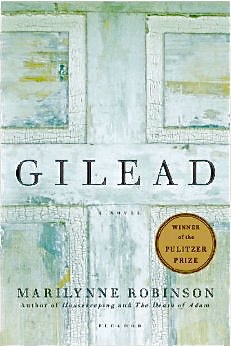
GileadGilead (2004) – Marilynne Robinson’s Pulitzer Prize and National Book Critic Circle Award winning novel introduces us to the fictional town of Gilead, Iowa. We hear the gentle voice of the narrator, the ageing Rev. John Ames, as he writes a letter to his seven-year-old son Robby, leaving a legacy of family heritage, love, forgiveness, and serenity.

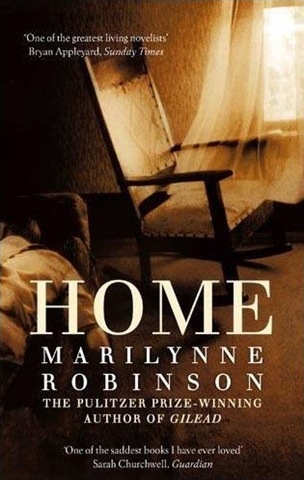
HomeHome (2008) – Based on the same Gilead characters, but from a different point of view allowing us privy to the household of the Rev. Robert Boughton, John Ames’s life long-friend. Glory, Boughton’s daughter, comes home to take care of her ailing father. She is there when her brother Jack returns after an absence of twenty years. The black sheep of the family, Jack’s estranged self yearns for reconciliation like a prodigal. The book, in all its complexities and depiction of alienation, escape, return and lost yet again, suggests home may not be a solace as sweet as one hopes.

Lila

Lila (2014) – Robinson’s newest, and 2014 National Book Award finalist. It is the third novel based on the characters in the town of Gilead, offering yet another point of view. But one can just read it on its own, albeit best to have read Gilead first, then the kind face of John Ames can be conjured up more readily. In this book, the perspective is from Ames’s much younger wife Lila, at first lonely and desolate, slowly drifting into place.

**

Lila Dahl

At the outset, we see Lila as an unwanted child, “cold”, ‘all cried out’. She is rescued by Doll, a destitute woman herself yet still has room in her heart for an abandoned little girl. Doll wraps Lila into her shawl and decides to bring her up. “Lila was the loneliest child, and there they were, the two of them together, keeping each other warm in the rain.” Lila later takes up Doll’s name as Dahl.

The two joins a small group of itinerant field workers led by Doane, living in camps out in the open. But the Depression breaks up the cohesive work party. Lila is later left on her own and for a little while, works in a brothel in St. Louis. Knowing she can’t stay there for long, she slips out one night, escaping from a blackhole of hopelessness.

After that she finds herself a cleaning job at a hotel, from which she has to escape again after seeing her nemesis whom she first encounters while in the brothel. She packs her bag and leaves town, taking rides from strangers going to wherever they drop her. Ultimately, Lila drifts to the outskirt of Gilead, finds an abandoned shack and takes shelter there. She cleans up the shack for a place to sleep, having no plans except to find odd jobs in the town yonder, earn enough money, then moves on, maybe to Sioux City.

Lila lives a life of poverty, loneliness and fear, mistrusting everyone. Doll may have been like a mother to her but she too has her own rough life and struggles. Doll knifes and kills a man who might be Lila’s own father, could well be out of protecting Lila. She is later jailed, leaving the knife in Lila’s possession. Lila keeps it with her all the years as a memento, a murder weapon, yes, but also a symbol of Doll’s loving protection and Lila’s own desolate past.

One day walking into Gilead Lila stumbles into a church to escape the rain, that is the turning point of her life. She sees the old man at the pulpit, the Rev. John Ames, and, he sees her.

John Ames

We know a lot about Ames from Robinson’s first book of Gilead, set in the 1950’s. A Congregationalist pastor in the town, Ames is sixty-seven years old when he first meets Lila, “a big, silvery old man”. Coming from a family tradition of ministers, John Ames is a man with a pastor’s heart.

Ames has had his share of personal grief. He had to bear the death of his beloved wife of his youth and his newborn son as she died in childbirth. Such unspeakable pain he had shared with his best friend Robert Boughton, pastor of the Presbyterian church in Gilead.

Ames and Boughton have been life long friends. They share pastoring advice, discuss foreign policies, debate theological problems, and bear the burden of each other’s family woes. Boughton has his in his son Jack, who takes John Ames’s namesake.

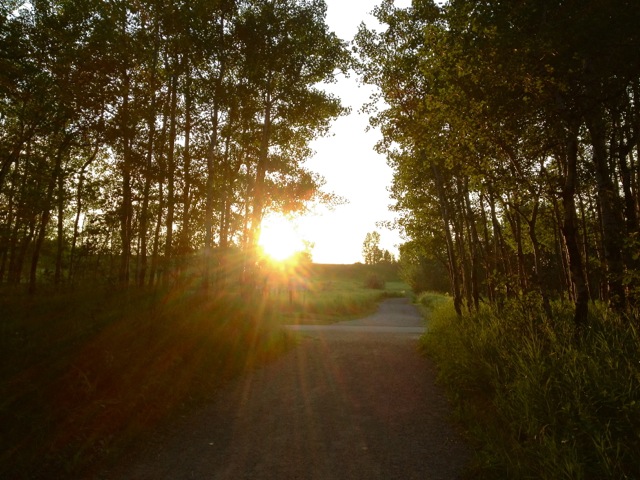
After seeing Lila at the church as she comes in from the rain, Ames keeps her in his heart. Residents of Gilead befriend Lila, giving her jobs, welcoming her in their midst, but Lila is aloof and skeptical, an outsider still. Ames personally engages her to talk and to know her more. One day, he goes to seek her out at the shack. She sees him coming as she walks towards Gilead. There on the path he reaches out to her and promises marriage. An inexplicable love story takes shape.
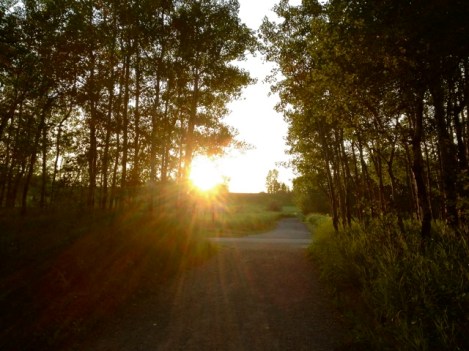
Sunset

Ames and Lila

“… the old man kept on courting her, like a boy, when she was hard and wary…”

After they are married, however incompatible it looks in Ames’s home, Lila still keeps Doll’s knife with her as a memento and as a symbol of her own tumultuous past, a part of herself. Ames is unperturbed. He lets her keep it, and he even uses it, taking it as a normal tool around the house. Total acceptance.

If condescension is present in the relationship, it is Ames who wants to learn from Lila. His utter humility is what moves her. Barely literate, Lila yearns to know about the Bible, study it and grasp its richness and meaning. They talk about the difficult books of Ezekiel and Job. Ames shares his thoughts about this elusive notion called existence, and listens attentively Lila’s perspective and experiences. Total respect.

Lila has questions rooted in her bitter past, the why’s of misfortunes, cruelty, and the hardships in life. She asks Ames with an inquiring heart. Ames, a pastor of many years, can find no easy answers. He ponders Lila’s queries, and readily and honestly admits his own limitations in knowing, while loving her all the more. Total humility.

Even after they are married, Lila sometimes still conjures up thoughts of leaving. Ames  knows this and gives her the freedom:

… if you ever change your mind, I want you to leave by daylight. I want you to have a train ticket in your hand that will take you right where you want to go, and I want you to take your ring and anything else I have given you. You might want to sell it. That would be all right. It’s yours, not mine… ” He cleared this throat. “You’re my wife,” he said. “I want to take care of you, even if that means someday seeing you to the train.” He leaned forward and looked into her face, almost sternly, so she would know he meant want he said.

She chooses to stay, a genuine response to his love.

When I read the book, I see a tender love story between two utterly incompatible beings, like an allegory and a parallel of the Christmas story, how the Creator God reaches out to take our hand, initiating an unfathomable relationship. Love for the reason of pure love. An unlikely and inexplicable union.

The Christmas Story

I first felt a little uncomfortable about the obvious incongruous pairing of Ames and Lila, yet, their love relation comes to fruition, albeit looking tentative at first. The gap between Ames and Lila is just a crack in the pavement when compared to the abyss separating Creator God and His creation. I see Ames and Lila’s story as an allegory, if you will, a parallel, however meagre, illustrating the joining of two utterly disparate sides.

The essence of the Season is in the reaching out to bridge that huge chasm. As Ames and Lila’s newborn son at the end of the book is an evidence of their love, we too receives a child, born in a manger that day in Bethlehem, a sign of ultimate mending. Total reconciliation.

***

Other Reading the Season Posts:

2020: Jack by Marilynne Robinson

2019: A Hidden Life, a film by Terrence Malick

2018: Madeleine L’Engle’s Poem The Irrational Season

2017: A Wrinkle In Time by Madeleine L’Engle

2016:  Silence by Shusaku Endo

2015: The Book of Ruth

2014: Lila by Marilynne Robinson

2013 Poetry by Madeleine L’Engle

2012: Surprised by Joy, C. S. Lewis

2011: Walking on Water, Madeleine L’Engle 

2010: A Widening Light, Poetry by Luci Shaw

2009: The Irrational Season, Madeleine L’Engle 

2008: The Bible and the New York Times, Fleming Rutledge 

2008: A Grief Observed, C. S. Lewis

 ***

Saturday Snapshot November 22: The Woods are Lovely Still

How a couple of weeks have changed the whole landscape. The Boreal forest that’s my neck of the woods has turned into a winter wonderland.

The Woods are Lovely, Still

Snow-covered creek

Cattails in the late afternoon light:

Pussywillow Cattails

Snow may cover the ground, the woods are lovely still, teeming with life.

Official greeter, The Red Squirrel:

Red Squirrel

Winter’s friendly ambassador. Take a bow:

Official Greeter 2

But this baby deer doesn’t look too happy… of course, where’s mama?

Deer

A Red-breasted Nuthatch, beautiful against the evening sun:
Red-breasted Nuthatch

A seed in the beak is better than two in the snow:

Happy Downy

Seed or no seed, this Pileated Woodpecker is busy pecking up the right tree:

Pileated Woodpecker

Pecking up

But the most fascinating of all is my discovery of a Snowy Koala, a rare sighting indeed:

Snowy Koala

I’d rather be Down Under taking photos of his cousins, but this little tree hugger just made my wintry day more bearable.

The woods are lovely, still.

***

Saturday Snapshot is hosted by West Metro Mommy Reads. CLICK HERE to see what others have posted.

All Photos in this post taken by Arti of Ripple Effects

DO NOT COPY OR REBLOG

***

Like Father, Like Son (2013): Parent and Child Reunion

I had wanted to see this Japanese film since it came out last year. Missed it at TIFF13 last September, its North American premiere after winning the Cannes Film Festival’s Jury Prize in May. Glad it has finally arrived on Netflix, reaching a much wider audience than just festival goers, deservedly.

Like Father Like Son

Director Hirokazu Kore-eda wrote the screenplay based on a disturbing premise: what if after six years of raising your son, the hospital where he was born contacted you and told you that your child was switched at birth, and of course, they sent their apology.

The hospital officials do not take this lightly. DNA tests are done to confirm. They have a lawyer with them, arrange to have you meet the other parents, mediate and ease the proposed switch back, which they recommend with a six-month preparation period, preferably before the boys start grade one in school. They even find out who the nurse is that made the error; due to her own frustrations at the time she knowingly made the switch. Of course, she is deeply sorry for what she had done and duly prosecuted. Monetary compensations are arranged.

But all the above have absolutely nothing to do with easing the shock and alleviating the trauma afflicted upon the families. Formality and legality do not soothe the pain; apologies and money cannot compensate for the abrupt termination of relationships.

Director Kore-eda has treated the subject matter with much tenderness and charm. The cinematography is stylish, the children and adults are all captured in a realistic manner with splashes of endearing humour.

The two families come from very different social strata, and the two boys have been raised in opposite parenting styles. Interestingly, only one of the families seems to take this news much harder. Ryota Nonomiya (Masaharu Fukuyama) is a successful professional who spends most of his time in the glass towers of Tokyo busy at work. His son Keita (Keita Nonomiya), an only child, is raised in a protective environment. Mother Midori (Machiko Ono) is loving but also ambivalent about a husband who puts his career over his family.

The other family is a shop owner in a rural part of the country, their son Ryusei (Shôgen Hwang) is the eldest of three children. Father Yudai Saiki (Rirî Furankî) is every child’s dream. He spends his days playing with his children, fixes their toys, and exerts no rules, albeit Mom Yukari (Yoko Maki) might wish he could have spent more time working.

What makes a father? What makes a son? Fatherhood and bloodline tend to supersede all other factors in a patriarchal society like Japan. But the film reflects the point of view that not all families necessarily embrace such a value. Further, apparently there are different parenting styles even in a homogeneous Japanese society.

If there is ever a Japanese version of the movie Boyhood as we have seen here from Richard Linklater, Hirokazu Kore-eda would be the ideal person to direct it. Like Father Like Son follows his previous work I Wish (2011) in its sensitive and incisive depiction of a boy’s heart and yearning. He can tear apart the facade of societal formality–but in a most tender way–and lay bare the hopes and needs, the essence of parents child relationships.

I must give credits to Johann Sebastian Bach, and the late Canadian pianist Glenn Gould. The beginning of Bach’s Goldberg Variations has been used in numerous films, but every time the soulful slow moving piano melody comes out, I am moved, no matter how many times I’ve heard it, and in so many different genres of films. Just from memory, I can think of The English Patient (1996), Hannibal (2001), Shame (2011). It is so effective in augmenting cinematic moments without becoming clichéd.

Here, the Aria is well placed as director Kore-eda uses it as a motif to spur us into deeper thoughts. What makes a father, a son? What is more important, blood or relationships? What is the role of a wife and mother in a patriarchal society? What is the purpose of giving birth and bringing up a child? What is fulfilling and meaningful to us as human beings? Indeed, a motif that can strike a universal chord of resonance that transcends cultures.

~ ~ ~ 1/2 Ripples

Boyhood (2014): The Moment Seizes Us

Boyhood is a groundbreaking film. It has taken director Richard Linklater twelve years to shoot, most uniquely, with the same cast. The actors had to commit to many annual shootings over this twelve-year period. This is not a documentary. Written by Linklater himself, the film follows a linear narrative storyline of a boy named Mason, played by Ellar Coltrane, who is very patient indeed; he had to wait twelve years to have his work put on screen.

We first see Mason in 2001 when he is just six years old starting grade one and 165 minutes later, we see him at eighteen, entering college. He literally grows up in front of our eyes. You may shrug with a casual, ‘Ok… so what?’

Here are the implications of what this all means in the hands of a director with the gift of depicting perceptively the essence of human relationships, most notably, from his trilogy Before Sunrise (1995), Before Sunset (2004), Before Midnight (2013). The passage of time is prominent in his trilogy with the films screened nine years apart. In there, we follow the chance meeting of actors Ethan Hawke and Julie Delpy on a train to their married life eighteen years later. While time is also of the essence here (just a pun, no hurry), Boyhood has a distinct difference.

Boyhood

Like time-lapse photography of a seedling to fruition we used to watch in biology class, Boyhood captures the life of Mason in one seamless unity. The editing is fluid and smooth. We see the passage of time from the games he plays (from Game Boy to Xbox to Wii), the social and political changes, the ephemeral shifting of pop culture, especially music (from Coldplay to Arcade Fire and those in between), and the evolving of technology. Most important of all, we see the human factor tossed and carried along in the current of time.

Linklater leads us to see Mason in the context of his family life, or whatever that defines it. What I see is not a happy boyhood. At the beginning of the film, Mason and his two-year-older sister Samantha (Lorelei Linklater) have to leave their friends and move from small town Texas to Houston, where their determined single-parent mom (Patricia Arquette) can attend college to improve her job prospect. During this time, their divorced and absent dad (Ethan Hawke) suddenly reappears back into their lives.

Dad brings joy to the children. He is full of life and cares about them, at least while it is his turn to take them out. This may be ordinary in America nowadays, divorced parenthood, but I see the yearning in the hearts of the children on screen for a happy, reconciled family. There is deeper pain than just the loneliness we see on the surface of Mason and Samantha.

The brilliance of the director is in the captivating telling of what seems to be an ordinary, typical childhood. In a realistic style as if allowing me the viewer to be an invisible observer, Linklater makes me care for every member of this family.

But the character I find most admirable is mom Olivia. She does her best to improve her lot for the sake of her children. Her decisions may not be welcomed by them, and she makes mistakes, but she sticks to her guns with what she thinks is right and presses on. Ultimately she reaches her goal in getting a college teaching post. Arquette’s performance is understated and affective. My prediction is a possible acting nomination(s) for her come Awards Season.

We soon see Olivia remarry, this time to her psychology professor Bill (Marco Perella). It turns out to be a mistake. Bill later reveals himself to be a controlling alcoholic, abusive to his wife and kids. While Mason and Samantha gain a pair of step brother and sister of their own age, they now live under the roof of a harsh disciplinarian stepfather.

A poignant scene which I will not easily forget is after an abusive episode, Olivia disappears. Unable to find his wife, a fuming Bill has all four children sit on the sofa for interrogation, and gets each of them to hand him his/her cell phone. He checks the messages and usage history to see if any of them has communicated with their mother.

Mason has questioned his mom, “Why do you marry him? He’s a jerk.” Olivia answers, “So you can have a family.” Without missing a beat, he says, “we already have one.” Linklater has me at the edge of the seat, amazing with a film like this, to see how mom Olivia gets herself and her own kids out of such a dire situation under Bill’s roof.

In contrast, it is a joy to see the children with their birth father. And most importably, we see the bond of genuine love between the parents and their children despite the divorce. It is gratifying to see that, through the years, the adults grow up as well.

As time passes, we see Mason emerges to be an artistic youth, with a passion for photography. And yet, like his dad, he disregards rules and structures. We see him continue to seek out what it is that makes life meaningful. And yet, the adults in his life seem to be as confused as he is. Mason sees them make bad choices, struggles with his own, and questions ‘so what’s the point?’ Olivia too, after all that life hands her, and ultimately seeing her kids graduate from high school and herself achieving respectability with her college teaching career, utters “I just thought there will be more.”

Eventually, we see Mason at eighteen. The film ends with his first day of settling in a college dorm. He quickly makes friend with his roommate and his girlfriend and her roommate. They skip the orientation and go hiking. On the mountainous path, they sit down and talk, young people facing a brand new chapter in their lives. Like the vast mountain ranges, their future lays out in front of them, appealing and yet full of challenges and mystery. We see too that Mason has found a new soulmate as the girl shares with him, “You know how everyone’s always saying seize the moment? I don’t know, I’m kind of thinking it’s the other way around, you know, like the moment seizes us.”

As the film fades to black, I breathe out a sigh of relief. At least, there’s no irreparable disaster. No matter what has happened in the past twelve years, the present is most livable, and the future is hopeful.

~ ~ ~ ~ Ripples 

***

Awards Update:

Feb. 22, 2015: Patricia Arquette wins Oscar for Best Supporting Actress.

Feb. 21, 2015: Patricia Arquette wins Best Supporting Actress at Indie Spirit Awards, Richard Linklater wins Best Director.

Feb. 8, 2015: 3 BAFTAs Wins, Best Film, Best Director, Best Supporting Actress

Jan. 15, 2015: 6 Oscar noms, Best Picture, Best Director, Actor, Actress, Original Screenplay, Editing.

Jan. 11, 2015: 3 Golden Globe wins, Best Picture Drama, Best Director, and Best Supporting Actress.

Dec. 11: 5 Golden Globes noms: Best Picture – Drama, Richard Linklater for Best Director and Best Screenplay, Patricia Arquette and Ethan Hawke for Best Supporting Actress and Actor.

Dec. 10: 3 SAG Noms: Best Performance by a Cast in a Motion Picture, Best Male Supporting Actor, Best Female Supporting Actor

Dec.7: Boyhood wins Best Picture, Best Director, Best Actress, and Best Editing in the L.A. Film Critics Awards

Dec. 7: Boyhood wins Best International Independent Film Award at BIFA (UK)

Dec.1: Boyhood wins Best Picture, Richard Linklater Best Director, Patricia Arquette Best Supporting Actress from the New York Film Critics Circle

Dec.1: Boyhood wins Audience Award at Gotham Awards 2014

Other Related Posts:

Before Sunrise, Before Sunset, Before Midnight

The Tree Of Life

Saturday Snapshot August 16: Serendipitous Supermoon

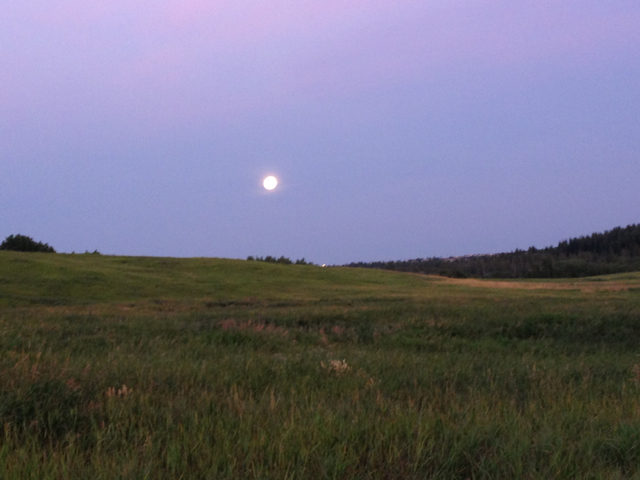
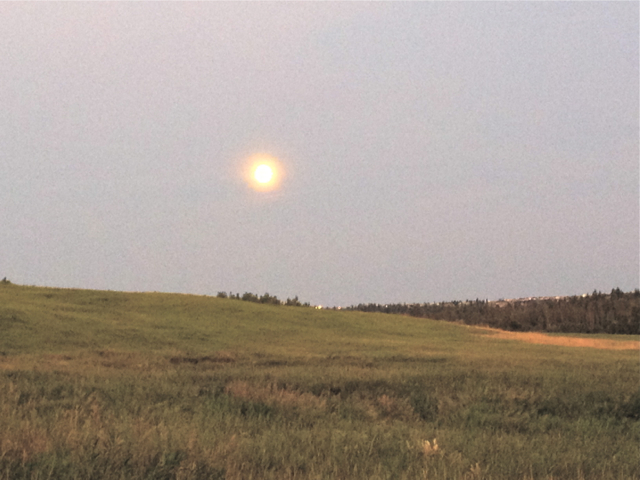
Again, it was pure serendipity. I was driving by a natural area on my way home last Sunday, August 10, when I just casually looked out my side window. The moon was mesmerizing. I did not have my camera with me, but I knew I needed to stop and capture the moment.

I parked my car along the road, got out and took these photos using my iPhone. I’m posting them just as they are, with no editing.

At 9:20 p.m.

Supermoon @920

9:21 p.m.

Supermoon @9-21

9:23 p.m.

Supermoon @923

Interesting, isn’t it? The sky seemed to have brightened as time passed.

Here’s the view as I turned around, the ‘opposite side’ of the evening sky:

Red Sky At Night

Sailor's Delight

Red Sky @926

Only after I got home and watched the news did I realize that was the Supermoon, the brightest celestial beauty we could see this summer. That night, the moon was up to 14 per cent bigger and 30 per cent brighter than a regular full moon.

And with this, I suddenly realized something … Serendipity is more likely to come to those who are uninformed. No wonder they say ignorance is bliss.

***

Saturday Snapshot is hosted by West Metro Mommy Reads. CLICK HERE to see what others have posted.

ALL PHOTOS TAKEN BY ARTI OF RIPPLE EFFECTS.

DO NOT COPY OR REBLOG

***