A Summer in Genoa (2008) DVD

A film that you have not seen in the theatre in North America. It premiered at the 2008 Toronto International Film Festival and disappeared until it emerged on DVD in April, 2012. A Summer in Genoa is a fine film that has slipped through the blockbuster-craving, profit-driven distribution network.

This is from Colin Firth’s pre-Oscar days, a performance that could well be a foreshadow of his Oscar nominated role in A Single Man a year later.

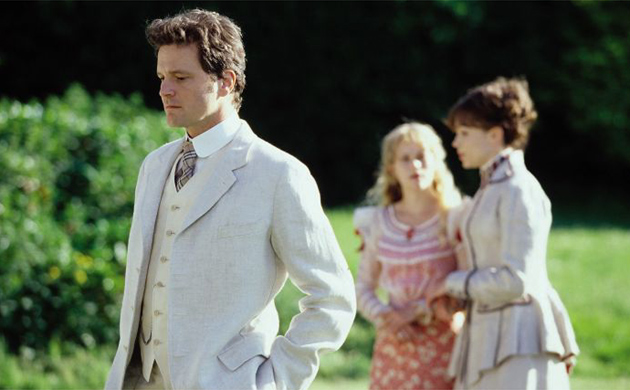
In A Summer in Genoa, Firth plays Joe, an English professor in Chicago who has lost his wife Marianne (Hope Davis) in a car accident. As father to teenager Kelly (Willa Holland) and her younger sister Mary (superbly played by then 10 year-old Perla Haney-Jardine), Joe has to lay aside his grief to continue with his family life in taking care of his daughters.

Five months after the accident, Joe’s old colleague Barbara (Catherine Keener) has lined up a teaching position for him in Genova, Italy. It is summer. The beautiful, historical seaside city will be a totally different scenery from Chicago. Joe thinks that could be a good change for all of them.

How does a family deal with loss? Here we see each person has to face it individually before coming together as a family.

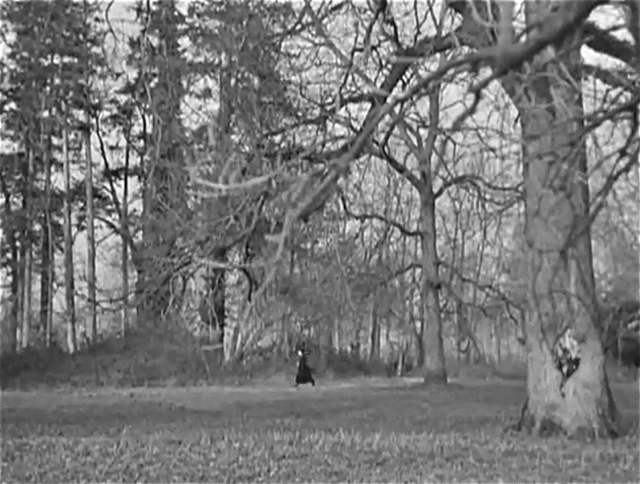
Acclaimed director Michael Winterbottom (A Mighty Heart, 2007) uses a naturalistic style to depict the three of them adjusting to a new situation in their own way. Through a hand-held camera, we are privy to the life of a family like watching a home video. As with any other family, their daily routine is ordinary and mundane. Yet because of their predicament, we care for these characters, especially with young Mary always drifting off on her own. We fear for her safety.

I’ve appreciated Winterbottom’s naturalism throughout the film, not only in the camera work, but with the ‘non-acting’ of the characters (using Bresson’s notion). They come across as real people dealing with daily issues we could relate to. On top of adjusting to a new city and nursing or ignoring a wound that has yet closed, a family still needs to go on living as a family.

We see Joe make breakfast for his girls, go to teach at the university, come home and make dinner. The girls go to their piano lessons, and Kelly takes her younger sister walking in long and narrow alleyways of the old city finding their way. We see Kelly making acquaintances with some young men, and how she riskily push the limits and attempt some youthful explorations. As for the younger Mary, we see her sorely locked in her solitary self of guilt and loss.
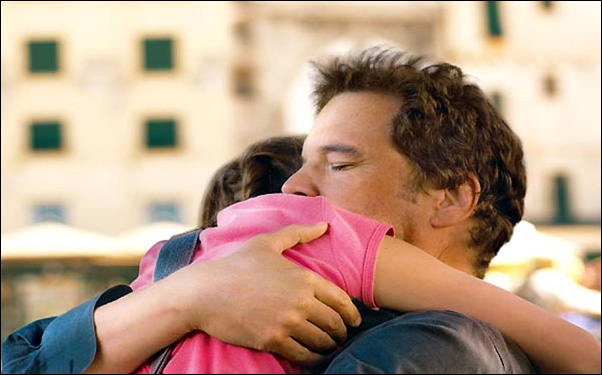
The young actor Perla Haney-Jardine’s performance as Mary is particularly poignant. With her father and older sister preoccupied with their own interests, she is left alone to deal with her private pain. She sees her mother appear to her, communicating to her with her presence and words.

The music selection is a major appeal to me. A film that starts off with the beginning theme of Chopin’s Etude no.3 and carries it as a motif throughout is sure to capture my attention. Music is also a legacy from their mother who used to teach piano at the university.

But I’m totally won over as this is read with a voiceover. A final class assignment Joe gives out to his students. He listens to the recording with them, his face lost in thought. It is so thematically perfect. As he ponders, he must have tasted the relevance of its words to his own predicament, raising his two daughters, through life’s ebb and flow. Here in this shot confirms Firth’s talent of ‘non-acting’.

Shakespeare’s Sonnet 2

When forty winters shall besiege thy brow,
And dig deep trenches in thy beauty’s field,
Thy youth’s proud livery so gazed on now,
Will be a tatter’d weed, of small worth held: 
Then being asked, where all thy beauty lies,
Where all the treasure of thy lusty days; 
To say, within thine own deep sunken eyes,
Were an all-eating shame, and thriftless praise.
How much more praise deserved thy beauty’s use,
If thou couldst answer ‘This fair child of mine
Shall sum my count, and make my old excuse,’
Proving his beauty by succession thine!
This were to be new made when thou art old,
And see thy blood warm when thou feel’st it cold.

Special Features include equally naturalistic behind-the-scenes footage and cast interviews.

~ ~ ~ Ripples

Another title for the film is Genova.

***

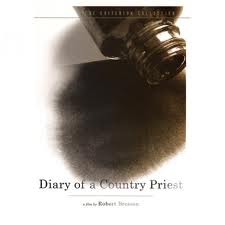
Diary of a Country Priest: Film Adaptation (1951)

For me, the cinema is an exploration within. — Robert Bresson (1903-1999)

Robert Bresson is one of the most influential figures in French cinema. The acclaimed New Wave director Jean-Luc Godard once noted: “Robert Bresson is French cinema, as Dostoevsky is the Russian novel and Mozart is German music.”

I know, Austrians would say Mozart was Austrian. But this just shows his influence can cross borders. Same with Bresson, who is acclaimed as one of the forefathers of the French New Wave, even though his style is not experimental. The iconic Swedish director Ingmar Bergman had specifically cited Diary of a Country Priest as influence for his Winter Light.

Before Bresson adapted Diary of a Country Priest, two previous screenplays were attempted by others but turned down by the author Georges Bernanos himself. Bresson’s film was made after Bernanos died. Bernanos had nothing to worry about with Bresson’s interpretation, for the film is an almost literal and a worthy cinematic translation. It won the Prix Louis Delluc in France (best film of the year) and several international film awards. Bresson was given the Career Golden Lion at the 1989 Venice Film Festival.

That Bresson, a professed agnostic, would choose to adapt a work by the Catholic writer Bernanos shows the moving power and the universal appeal of the book. The parish of Ambricourt is a microcosm of the human world. The seemingly placid village hides a spiritually barren landscape and a cocoon of depravity. The young priest, an unwelcome alien, is captured cinematically as small and vulnerable, an apt depiction of how he feels within:

An outsider barred from a gated mansion of dark secrets, like here at the front gate of the Château.

The light comes into the world, but the darkness refuses it. On screen, we see the young priest often shut out of gates and windows. The glass pane allows him to be observed from the inside, yet he is very much on the outside isolated, the weight of the world heavy on his face.

Bresson’s style is minimal, you may find this film somewhat austere. But I’m gratified by such style, devoid of color and whatever additives we find in movies today. Instead, every frame conveys an aesthetic simplicity and thematic purpose.

To explore the drama within, Bresson chose ‘non-actors’. “As far as I can, I eliminate anything which may distract from interior drama,” Bresson was quoted saying, and distractions included ‘acting’. He selected his ‘models’ (as he called them, not ‘actors’) first for their voice. He particularly looked for inexperience. The young Curé of Ambricourt was Claude Laydu’s first film role. Others that Bresson used were often one-time actors just for the film he was making.

The Criterion Collection DVD has a most helpful commentary by film historian Peter Cowie. His insight is invaluable to the appreciation of Bresson’s adaptation. One of his remarks is the off-screen sounds we often hear in a scene. The most intense one would have to be the climatic spiritual battle between Mme la Comtesse and the young priest. Totally engulfed by grief, hatred and bitterness, and living in isolated misery all the years since her young son died, Mme la Comtesse finally releases her pain and receives blessings from the priest. And what sound do we hear off-screen the whole time they are engaged in this soul-piercing scene in the drawing room: the gardener’s raking of dead leaves.

Another source I’ve often sought out is the book written by Paul Schrader: Transcendental Style in Film: Ozu, Bresson, Dreyer. Yes, if I must choose a word to describe Bresson’s style, I would use Schrader’s term: transcendental. His minimal, aesthetically simple, ‘non-acting’ style raises the viewer to a meditative plane which is beyond the material, beyond all distractions. That’s the essence of cinema that I find so meaningful and gratifying.

And finally, despite succumbing to his illness, the young priest leaves a legacy that his superiors, the senior vicars, could not have: an embodiment of the suffering Christ and the redemptive power of grace. Despite his own frailty and ultimate death, the young country priest  triumphs through his faith, however feeble it may have seemed in his own eyes. It does not matter, for all is grace.

~ ~ ~ ~ Ripples

***
AND TO ALL, A HAPPY EASTER!
***
Other related posts on Ripple Effects:
.
.
.
.
***

Great Film Expectations

For an updated list of 2012 premieres of film adaptations, CLICK HERE.

With written works from Suzanne Collins’ The Hunger Games to Shakespeare’s Coriolanus materialized on the big screen, what else can we anticipate in this year and next?

Here’s an update of some upcoming film adaptations from literary works. Great choices for book groups too.

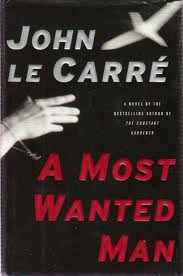
A Most Wanted Man by John Le Carré

On the heels of the acclaimed “Tinker Tailor Soldier Spy”, this time, Philip Seymour Hoffman is the man. Directed by Anton Corbijn whose last film was the deep and thoughtful “The American, a film I found to be much better than the book.

.

Anna Karenina by Leo Tolstoy

Finally, dates are set for the premiere: Sept. 7 in the UK, Nov. 9 in the US. I look forward to this one: Tom Stoppard screenplay, Joe Wright (Atonement, Pride & Prejudice) directs, Keira Knightly as Anna, Matthew MacFadyen Oblonzky, Jude Law Alexai, Aaron Johnson Count Vronsky, and Downton Abbey‘s Michelle Dockery (Lady Mary) as Princess Myagkaya, plus many other British stars.

.

Cloud Atlas by David Mitchell 

Winner of multiple awards and shortlisted for a Booker in 2004, the apocalyptic novel is adapted by Tom Tykwer (Run Lola Run) and The Wachowski’s (Matrix’s). Tom Hanks, Halle Berry, Susan Sarandon, Ben Whishaw (Bright Star), Hugh Grant, Jim Broadbent. Here’s Susan Sarandon’s take on the production.

.

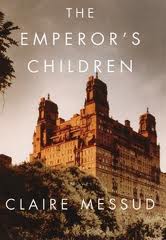
The Emperor’s Children by Claire Messud 

Some big names affiliated with this project are Richard Gere, Eric Bana, Keira Knightly, Emma Thompson, Rachel McAdams. Director Scott Cooper (Crazy Heart) on board. But I can find no more news after this announcement, which is fine, gives me more time to get to the book first. It’s been on my TBR list for a few years now.

.

Great Expectations by Charles Dickens

To coincide with the 200th birthday of Charles Dickens and the Olympics in London, Mike Newell (Enchanted April, Four Weddings and a Funeral) directs, screenplay by David Nicholl (One Day, Tess of d’Urbervilles, When Did You Last See Your Father) who may be also writing the third Bridget Jones movie. Ralph Fiennes is Magwitch, Helena Bonham Carter Miss Havisham, Jeremy Irvine, Pip.

.

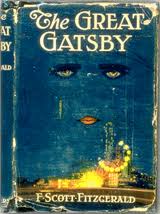
The Great Gatsby by F. Scott Fitzgerald 

What will F. Scott think when he sees his masterpiece produced in 3D in the 21st Century? Woody: do give us a sequel to “Midnight In Paris” with your brilliant imagination. Australian director Bez Luhrmann is poised to bring us this new version of Gatsby in 3D, which I’m sure will stir up lots of discussions. It has already. But no matter how I dislike 3D (except Hugo), I want to see Leo DiCaprio play Jay G., Carey Mulligan, Daisy B., and Tobey Maguire, Nick C. Do Click Here to read a Guardian preview close to 3D.

.

The Guernsey Literary and Potato Peel Pie Society by Mary Ann Shaffer and Annie Barrows

Kenneth Branagh will direct Kate Winslet in this popular novel about the power of literature in desperate wartime. This is a reprise of their cooperation from 1996, when Branagh, as Hamlet, also directed Winslet as Ophelia. No dates have been set for its production or release, but something to keep in mind.

.

The Hobbit by J. R. R. Tolkien

Coming out in three parts. “The Hobbit: An Unexpected Journey” in 2012, and “The Hobbit: The Desolation of  Smaug’ in Dec. 2013, and ‘The Hobbit: There and Back Again’ in July, 2014. Peter Jackson attempts to reprise his Rings Trilogy magic. Elijah Wood, Ian McKellen, Cate Blanchett, Orlando Bloom… the whole gang. Again, we’ll get to see beautiful New Zealand as setting.

.

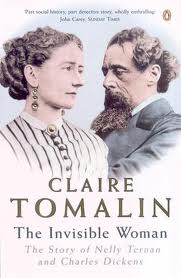
The Invisible Woman: The Story of Nelly Ternan and Charles Dickens by Claire Tomalin

Claire Tomalin’s account of Charles Dickens’ affair with the young writer Nelly Ternan will be brought to screen with script from Abi Morgan (Shame, The Iron Lady) to be directed by Ralph Fiennes, who will play Dickens himself. To add to the rave, Kristin Scott Thomas is also on board. Felicity Jones will be playing Nelly Ternan. Fiennes never ceases to amaze us with his versatility, after directing Shakespeare’s Coriolanus in postmodern style.

.

Les Miserables by Victor Hugo

Tom Hooper of “The King’s Speech” directs an all star cast in this musical offering. Hugh Jackman as Jean Valjean, Russell Crowe as Inspector Javert (is he going to sing too?), Helena Bonham Carter, Anne Hathaway join in the chorus. Just too bad Geoffrey Rush and Colin Firth are missing here. Release date for North America is Dec. 2012, which means it can be a contender in next Awards Season.

.

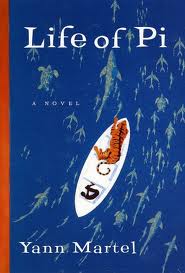
Life of Pi by Yann Martel

Director Ang Lee picked 17 year-old Suraj Sharma of Delhi, India, from 3,000 teenagers to play Pi Patel. Interesting that Tobey MacGuire will play Yann Martel, the author of the book which won the 2002 Man Booker Prize. The film to be shot in 3D has a December 2012 release date. Again, films opening in December usually have eye on the next Awards Season. Will keep our eyes peeled.

.

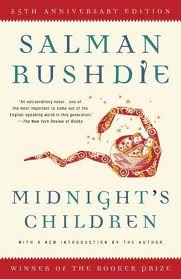
Midnight’s Children by Salman Rushdie

The Booker of Bookers winning work will see its author Salman Rushdie team up with acclaimed Canadian director Deepa Mehta in the film adaptation. Mehta in a recent interview hinted it will debut either at the Venice or the Toronto Film Festival this fall. You can still join us for a slow Read-Along of Midnight’s Children before the film comes out.

.

Rebecca by Daphne DuMaurier 

On the drawing board of Dreamwork and Working Title. Who can take the helm to reprise an adaptation made famous by Alfred Hitchcock, and actors to replace Sir Laurence Olivier as Mr. de Winter and Joan Fontaine as the new Mrs? Now, why does Carey Mulligan emerges in my mind… and Michael Fassbender

.

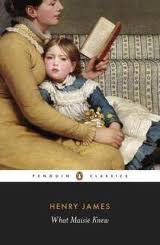
What Maisie Knew by Henry James

Looks like a good classic to read before seeing the movie. Julianne Moore and Alexander Skarsgård lead the cast. I’ve enjoyed previous Henry James adaptations of The Wings of the Dove, The Golden Bowl, and The Portrait of a Lady. Look forward to this one.

.

Books to be turned into TV series:

The Corrections by Jonathan Franzen

To be adapted into an HBO TV series with an all-star cast under the helm of Noah Baumbach (The Squid and the Whale). Stars include Ewan McGregor, Maggie Gyllenhaal, Rhys Ifans, Dianne Wiest, Chris Cooper and Greta Gerwig. But, will the author be involved in any of the writing?

.

A Visit From the Goon Squad by Jennifer Egan

Again, HBO has bought the rights to this one. The 2011 Pulitzer Prize winner is to be adapted into a half-hour TV series.

.

.

The Art of Fielding by Chad Harbach

Yet again, it’s HBO that will be developing the novel into a TV drama series, another project by the “uber producer” Scott Rudin, who also oversees “The Corrections.”

.

***

What are some of  your most anticipated films or books in the coming year(s)?

Quotable Quotes from Downton Abbey

SEASON 6 Recaps:

SEASON 6 FINALE: Goodbye to All That

SEASON 6 Episode 1, Jan.3, 2016

SEASON 6 Episode 2, Jan. 10, 2016

SEASON 6 Episode 3, Jan. 17, 2016

SEASON 6 Episode 4, Jan. 24, 2016

SEASON 6 Episode 5, Jan. 31, 2016

SEASON 6 Episode 6, Feb. 7, 2016

**

‘You can’t do very much as an actress unless you have the proper words to say…’ — Penelope Wilton, Isobel Crawley

Four weeks have passed since Downton Abbey Season 2 Finale aired on PBS. How are you holding up? To alleviate Downton Abbey withdrawal symptoms, I’ve been in a perpetual state of re-watching all the episodes from Season 1 and 2. Downton Abbey on Blu-ray is absolutely beautiful.

Downton Abbey film location: Highclere Castle

This Golden Globe, Emmy, and BAFTA award-winning miniseries has many appeals. For me, apart from the sumptuous setting, attention to details, great acting, and inspiring cinematography, the main attraction is the writing. Julian Fellowes’ script gives us intelligent dialogues reminiscent of Oscar Wilde’s wit and satire.

I have compiled a list of quotes from both Seasons. Lucky for 78 year-old Maggie Smith, she gets the best lines as Violet Crawley, Dowager Countess of Grantham.

Here they are in chronological order so you can reprise the scene. Enjoy!

Season 1

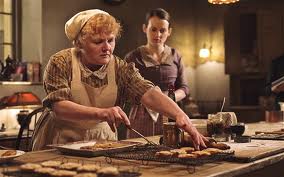
“O, heavens, girl. You’re building a fire, not inventing it.” — Mrs. Hughes to Daisy, S1E1

“Nothing in life is sure.” — Mrs. Patmore, re. Titanic sinking, S1E1

Mrs. Patmore and Daisy

“Every mountain is unclimbable until someone climbs it. So every ship is unsinkable until it sinks.” — Lord Grantham, S1E1

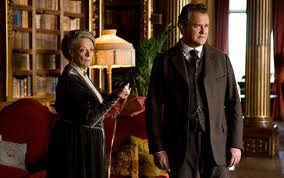
“We are allies, my dear, which can be a good deal more effective.” Violet Crawley, Dowager Countess of Grantham, in reply to Cora Crawley’s “Are we to be friends, then?” S1E1

Violet Crawley, Dowager Countess of Grantham

“What is a ‘weekend’?” — Violet Crawley, S1E2

“Daisy, what’s happened to you? I said you could go for a drink of water, not a trip up the Nile.”  — Mrs. Patmore. S1E3

“Are you afraid someone will think you’re American if you speak openly?” — Lord Grantham to Dowager Countess, S1E3

Dowager Countess and Lord Grantham

“But nobody learns anything from a governess, apart from French and how to curtsey.” Lady Sybil, S1E4

“No one ever warns you about bringing up daughters. You think it’s going to be like Little Women. Instead they’re at each other’s throats from dawn till dusk.” — Cora Crawley,  Countess of Grantham, S1E5

The Crawley Sisters

“Mary can be such a child. She thinks that if you put a toy down, it’ll still be sitting there when you want to play with it again.” — Lord Grantham, S1E5

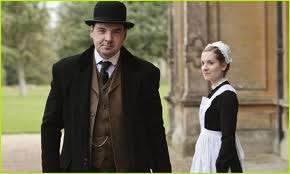
“I love you Mr. Bates. I know it’s not ladylike to say it, but I’m not a lady and I don’t pretend to be.”  — Anna, S1E5
Mr. Bates and Anna
“If she won’t say yes when he might be poor, he won’t want her when he will be rich.” — Violet Crawley, Dowager Countess, S1E7
.
“First electricity, now telephones. Sometimes I feel as if I were living in an H.G. Wells novel.”  — Violet Crawley, S1E7
*****
Season 2
Mary Crawley seeing Matthew off to war.
 “War has a way of distinguishing between the things that matter and the things that don’t.” — Matthew Crawley, S2E1
.
Matthew Crawley in the trench

“I’m not a romantic… But even I concede that the heart does not exist solely for the purpose of pumping blood.” Violet Crawley, S2E2

“I’m a woman, Mary. I can be as contrary as I choose.” Violet Crawley, S2E4

“Are you like everyone else in thinking that because she’s a countess she has acquired universal knowledge by divine intervention?” Isobel Crawley to Dr. Clarkson re. Cora, Countess of Grantham, S2E4  (And you can substitute the word ‘countess’ with any word you need when quoting it.)

Dr. Clarkson and Isobel Crawley

“I’d rather have the right man, than the right wedding.” — Anna, S2E5

“I’m an American, I don’t share your English hatred of comfort.” Cora Crawley to Lord Grantham, S2E6

Lord Grantham and Cora Crawley

“Don’t be defeatist, dear. It’s very middle class.”  Violet Crawley to Edith, S2E8

“Sir Richard, life is a game in which the player must appear ridiculous.” Violet Crawley, Last Episode, Christmas at Downton Abbey.

“I want a good man for you, a brave man. Find a cowboy in the Middle West and bring him back to shake us up a bit.” Robert Crawley to daughter Mary. Last Episode, Christmas at Downton Abbey.

“1920. Is it to be believed? I feel as old as Methuselah.” Violet Crawley, Last Episode, Christmas at Downton Abbey.

***

DOWNTON RECAPS

DOWNTON Season 5 Finale, March 2, 2015: A Moorland Holiday

*

Season 4 Episode 8 (PBS): London 

Season 4 Episode 7 (PBS) 

Season 4 Episode 6 (PBS)

Season 4 Episode 5 (PBS)

Season 4 Episode 4 (PBS)

Season 4 Episode 3 (PBS)

Season 4 Episode 2 (PBS)

Downton Abbey Season 4 Opening (2 Hour) Special 

*

CLICK HERE to Quotable Quotes from Season 3: New List

*

SEASON 3: EPISODE 1  

SEASON 3: EPISODES 2 & 3 

SEASON 3: EPISODES 4 & 5 (More Downton Quotes)

SEASON 3: EPISODES 6 & 7 Finale

CLICK HERE to visit the Highclere Castle website. An absolute must-see.

*

Other posts you might like:

Quotable Quotes from Downton Abbey Season 3

Downton Abbey The Complete Scripts: Season 1

The Downton Ripples

Lady Almina and the real Downton Abbey: Facts that Give Rise to Fiction

***

The Importance of Being Earnest by Oscar Wilde

To celebrate St. Patrick’s Day, I’d like to post my second selection for the Ireland Reading Challenge 2012, and raise a toast to Oscar Wilde for his LOL funny three-act play The Importance of Being Earnest.  

Though written in 1894, Wilde’s work is surprisingly modern. Subtitled “A Trivial Comedy for Serious People”, it is a mashup of mistaken identities, social satire, biting ironies, and one-liners worthy of our late-night talk shows.

You can finish the breezy eighty-some pages in one sitting, but don’t read it in public. You don’t want to be mistaken. To most people, only a lunatic would LOL alone without a bluetooth hanging on his ear.

Jack Worthing is in love with Gwendolen Fairfax of London, cousin of his friend Algernon Moncrieff. But obstacles abound for his courtship. As a country gentleman with many responsibilities, he has to create a wayward younger brother and town-dweller named Earnest as an excuse for him to go out to town for pleasure and to see Gwendolen. While in town, he has taken the name Earnest. Algernon, just the opposite, has to create an invalid Bunbury in the country for him to visit so he can meet and woo Jack’s ward Cecily, while pretending he is Earnest, Jack’s younger brother from London.

Locales may be a hindrance, their major obstacle is Lady Bracknell, Gwendolen’s mother and Algernon’s Aunt, a formidable and feisty gatekeeper of aristocratic matrimony.

With Downton Abbey’s dialogues still ringing in my ears (been re-watching the blu-rays perpetually since its Season 2 Finale on PBS) I can easily imagine the Dowager Countess of Grantham, Violet Crawley, uttering Lady Bracknell’s lines. Screening for Jack’s eligibility as a suitor for her daughter Gwendolen, Lady Bracknell conducts the following interview.

LADY BRACKNELL:  How old are you?

JACK:  Twenty-nine.

LADY BRACKNELL:  A very good age to be married at. I have always been of opinion that a man who desires to get married should know either everything or nothing. Which do you know?

JACK (after some hesitation):  I know nothing, Lady Bracknell.

LADY BRACKNELL:  I am pleased to hear it. I do not approve of anything that tampers with natural ignorance. Ignorance is like a delicate exotic fruit; touch it and the bloom is gone. The whole theory of modern education is radically unsound. Fortunately in England, at any rate, education produces no effect whatsoever…

LADY BRACKNELL:  Are your parents living?

JACK:  I have lost both my parents.

LADY BRACKNELL:  To lose one parent, Mr. Worthing, may be regarded as a misfortune; to lose both looks like carelessness.

JACK:  The fact is, Lady Bracknell … I don’t actually know who I am by birth. I was … well, I was found.

LADY BRACKNELL:  Found!

JACK:  The late Mr. Thomas Cardew, an old gentleman of a very charitable and kindly disposition, found me, and gave me the name of Worthing, because he happened to have a first-class ticket for Worthing in his pocket at the time. Worthing is a seaside resort.

LADY BRACKNELL:  Where did the charitable gentleman who had a first-class ticket for this seaside resort find you?

JACK (gravely):  In a hand-bag.

LADY BRACKNELL:  A hand-bag?

JACK (very seriously):  Yes, Lady Brakcnell. I was in a hand-bag—a somewhat large, black leather hand-bag, with handles to it—an ordinary hand-bag in fact.

LADY BRACKNELL:  In what locality did Mr. Thomas Cardew come across this ordinary hand-bag?

JACK:  In the cloak-room at Victoria Station. It was given to him in mistake for his own.

LADY BRACKNELL:  The cloak-room at Victoria Station?

JACK:  Yes. The Brighton line.

LADY BRACKNELL:  The line is immaterial. Mr. Worhting. I confess I feel somewhat bewildered by what you have just told me. To be born in a hand-bag, whether it had handles or not, seems to me to display a contempt for the ordinary decencies of family life…

And many more lines that would show you Wilde could have made one great Oscar host.

***

The Movie (2002, DVD)

I’ve got the DVD. It never fails to delight no matter how many times I re-watch it. Lady Brecknell is portrayed by Judi Dench, as proficient as any Dench performance, albeit a bit too severe here. But just as well, she’s a monster to Jack Worthing.

Jack is played by the ever talented Colin Firth. Dispelling the Mr. Darcy myth, Firth shows he can be one freewheeling comedic actor. Having seen many of his works, I find that with the right words to say, he can always deliver in style, even if he needs to stammer to get his words out.

Before Mamma Mia! (2008), Colin Firth had sung in a movie strumming a guitar, it is here. With Rupert Everett as the piano playing Algernon, the two come together in a duet to woo their love.

Frances O’Connor, who plays Fanny Price in Mansfield Park (1999), is Gwendolen, animated but much intimidated by her icily fierce mother Lady Brecknell. Reese Witherspoon is Cecily, Jack’s 18 year-old ward. The gals can easily call each other sisters if not for the mistaken identity of their love interest, Earnest. Thinking they are romantic rivals, the ladies are at each other’s throat as much as their genteel upbringing can allow, and  quickly become allies once the misunderstanding clears up.

Both Jack and Algernon are willing to go all out to have their names changed to Earnest via christening by the minister Dr. Chasuble, a role mastered easily by veteran actor Tom Wilkinson. Dr. Chasuble is a silent admirer of Cecily’s governess Miss Prism, played by Anna Massey with much comedic sense and timing.

At the end, Jack finds out his true parentage, realizes that he is more kin than kind to Algernon, and three matrimonies ensue, a happy ending Jane Austen would have approved. The movie adaptation is an enjoyable way to go through the play, not just with sight, sound and cinematic fun, but a delightful all-star cast.

Some tidbits: The film won a Best Costume Design award from Italy, and Reese Witherspoon was a nominee of the Teen Choice Award 2002. Looking at the cast today, we see 3 Oscar winners and 1 Oscar nominee.

As usual, the DVD carries special features like The Making Of and Behind the Scene featurettes, interviews with stars and crew, and audio commentary, always a valuable companion to the main feature.

~ ~ ~ Ripples

The Grey (2012): Of Wolves and Men

There are films that I expect to glean meaning from but leave me disappointed. And then there are those that do not appear to provoke thought at the outset and yet manage to do so, sending me out the theatre with gratified resonance. The Grey is one such film.

A plane carrying a group of Arctic oil-rig workers crash in the deep snow of the Alaskan wilderness. There are seven survivors. The task of leading them out of the crash site to seek safety falls on the shoulders of John Ottway (Liam Neeson). His job at the oil rig is security, a marksman protecting the workers from wild wolves. At the beginning of the film Ottway is shown to be suicidal, overwhelmed with grief from the recent passing of his wife. It is ironic to see at the end, he is propelled by courage to fight for his life.

In the cold expanse of Alaska, Ottway leads the surviving men to trudge through deep snow, trying to get to safety away from wolf territory. The men are pitted against each other, stranded at nature’s mercy, defenceless against a pack of carnivorous grey wolves. It’s a survival story, a suspense thriller that has me on the edge of my seat. But it goes further than that.

Director Joe Carnahan does not just show a group of roughnecks toughing it out in extreme condition, facing death at every turn. He brings to the forefront some existential queries, as one by one the men fall prey to the wild. Stripped to bare existence, how is man different from wolves? For what do we live? For what do we die? Such moments of ruminations are enhanced by Masanobu Takayanagi’s meditative cinematography.

As they leave the crash site, Ottway tells the survivors to collect all the wallets from the victims so they can contact their family, if they ever get back home. From the photos in their wallets, we get a glimpse of lives lived, and know that they have loved ones waiting. Following their treacherous path, we might sense that their outward skepticism masks a painful and silent hope for a transcending force, One who can save them from their fateful predicament.

The men don’t bond right away. The unruly, the scared acting tough. But extreme circumstances change them quickly. Sitting around a fire, they learn to cherish the memories they’ve had in their life, and begin to value each other. We know their fears. We listen to their stories. In one moving moment, Ottway shares a poem he remembers his Irish grandfather had written. Little does he know those words would become the fuel that catapults him to fight for his life at the end.

There’s something about Liam Neeson that stands out in a film. He embodies a kind of dignified charisma. But here in The Grey, it’s not just charisma, it is like poignant reality. The look on his face speaks volumes. In the film, he conjures up in his mind the wife he has loved and lost lying beside him. “Be brave,” he can hear her loving whisper. In real life, he just may be aching for the same, as his wife Natasha Richardson died after an accident in the snow three years ago.

Animal advocacy groups have voiced out their opposition to the portrayal of the Grey Wolves in the movie. Wolves are social animals, gentle and non-aggressive, they argue. The film gives them a bad rap. My thought is this: If a young human can go into his school and massacre his peers, and if humans can murder members of their own clans, why is it hard to imagine carnivorous wild wolves would prey and attack intruders in their territory? Showing that animals do act on their instinct is no disrespect.

After all, this is not a scientific study of wolf behavior. The film is less about wolves than men. The questions it poses cannot be answered by Science. And if you have to be accurate about all the facts, it’s not in Alaska where they shot the film, but here in Arti’s territory of Western Canada, Alberta and British Columbia to be exact. But what does it matter?

I will not give away spoiler about the ending, for it struck me most strongly and left me with deep resonance as I walked out of the theatre. It is poignant and powerful, although I did hear a gasp of ‘what?’ from someone in the dark theatre. If you go to see this movie, do sit through the credits, and stay there until the very end of the roll, you’ll see something more.

Yes, there is suspense and some action. But what’s more important is that there are quiet moments for ruminations. If you are comfortable with that, you would likely care to follow these men in their precarious strive for survival.

~ ~ ~ Ripples

***

We Need To Talk About Kevin (2011)

On International Women’s Day, we need to talk about mothers. Motherhood, the role that can bring so much joy, and so much grief. No grief can compare to that of seeing your child self-destruct, and in the process, destroying others.

To start with, the wandering, free-spirited Eva (Tilda Swinton) before motherhood reflects an unsettling soul. Seems like she accidentally trespasses into the territory that calls for extreme commitment when she gets pregnant. While other expectant mothers fully embrace their swollen bellies, Eva faces her pregnancy with apprehension and awkwardness. Once Kevin is born, she knows full well that it is an irreversible life-long occupation.

Kevin screams all day and night as a baby, is incommunicable as a toddler, foul-mouthed, menacing and hateful as a child. The first thing he does to his newborn younger sister while visiting her in the hospital is to splash water into her eyes. This act will be repeated when he becomes a teenager, but it won’t be as harmless as water. Can’t his parents see it coming? I must give credit to Tilda Swinton, who has given us an audacious and engaging performance as Eva, but one, I’m afraid, that may not appear quite as sensible as it should.

If you are not a tiger mom, but has a tiger son on your hands, what are you to do? Wouldn’t you have sought professional help for your child, or counselling for yourself? Yes, we see Eva take Kevin to a doctor when he’s a non-communicating toddler, but what about all the years hence, until at 16 when all hell breaks loose? Ezra Miller as teenaged Kevin is a persona of a most disturbed young man; unfortunately, his self-absorbed, relentless evil scheming renders his performance two-dimensional.

I have not read the book by Lionel Shriver. We Need to Talk About Kevin was the Orange Prize Winner of 2005, an award honoring women’s writing. Shriver might well have depicted her characters and their inner turmoils with more depth, as a literary rendition can.

I knew of the plot in general before I stepped into the theatre. My expectation was that the film would be exploring the issues of parental responsibility and guilt from raising a wayward child despite all good intentions. I thought it would deal with the problem of evil, or the issue of nature and nurture, and the choices we can make in spite of our predicament.

But the film surprises me in that it has not delivered what could have been a study of any of the above issues. Maybe parental guilt, but still, not in depth. We only see the stunned look of Eva in every scene. Even before the tragic end, with overwhelming evidences of a terribly disturbed son, we hear little communication between Eva and her unsuspecting husband Franklin (John C. Reilly), who encourages Kevin’s interest in archery. (ah-ha… big hint)  Seems like director Lynne Ramsay’s goal is just to shock and disturb with exaggerated visuals and sounds, or its lack of to create mood. The ubiquitous red, another obvious hint. It is effective as an absorbing, suspenseful thriller, relentless in its portrayal of evil, but for the purpose of…?

The film has been talked about much in the UK. And on both sides of the Atlantic, many critics have given it high acclaim; others have pointed to its Oscar snub. While I had high expectation before I saw it, I left with a void of disappointment, which, I’m afraid, has extinguished my interest to read the book. If you have read it, I’d love to hear you tell me otherwise.

But on this very day, let us give kudos to all mothers who, regardless of results, stay true to their role and love in spite of everything. This we can see in the final scene and the last shot, the embrace in prison, probably the most meaningful in the whole film.

~ ~ 1/2 Ripples

***

Oscar Winners 2012

So here we are, another Academy Awards. Despite the gallant effort by Billy Crystal, his ninth time hosting, Oscars 2012 was lackluster and bland. Memorable moments were few. There was the usual glamour and glitter on the red carpet, but inside the ‘Chapter 11 Theatre”, renamed by Crystal, it was a night of mere form devoid of spirit.

With all the talents and resources they put into the production, you’d expect better executions and funnier, more brilliant presentations… The beginning mashup intro of the nominated films went well, starring Billy Chrystal in every one, but I was at a loss to see later a montage made up of clichéd, past movie moments, or that not funny Wizard of Oz focus group clip. A sound problem lasted long enough that I had to switch channel to make sure it wasn’t my TV.

Even before the show began, I was a bit disheartened. The reversal of the Academy decision to let Sacha Baron Cohen attend in character as ‘The Dictator’ could only open up opportunities for stunting. Self-promotion and free publicity aside, the shenanigan on the red carpet was definitely uncalled for. I’m referring to ‘The Dictator’ carrying an urn which he said contained Kim Jong-il’s ashes, as he was fulfilling the late ruler’s dream to attend the Oscars. Even up to then was fine. But, what’s the point of dumping the ashes all over Ryan Seacrest on the red carpet?  If you’ve missed it, click here to see what actually happened.

From ashes to awards, here are some major winners:

The Artist – 5 wins. Best Picture, Best Actor Jean Dujardin, Best Director Michel Hazanavicius, Best Original Score, Best Costume Design.

Hugo – 5 wins. Best Art Direction, Best Cinematography, Sound Editing, Sound Mixing, Visual Effects.

The Iron Lady – 2 wins. Best Actress Meryl Streep, Best Makeup Mark Coulier, J. Roy Helland.

The Help – 1 win. Best Supporting Actress Octavia Spencer.

Midnight In Paris – 1 win. Best Original Screenplay, Woody Allen.

The Descendants – 1 win. Best Adapted Screenplay, Alexander Payne, Nat Faxon, Jim Rash.

Some highlights and tidbits:

Jean Dujardin in his acceptance speech noted Douglas Fairbanks as the first Oscar host in 1929: “Tickets cost $5 and it lasted 15 minutes. Times have changed.” 1929 was the last year that a silent movie won an Oscar.

1929 was also the year Christopher Plummer and Max von Sydow were born, both Best Supporting Actor contenders. Canadian Plummer set the record for the oldest actor to win an Oscar at age 82 for Beginners.

A Separation wins Best Foreign Language Film. Writer/director Asghar Farhadi accepted Iran’s first Oscar. The film is an intense and totally captivating story of domestic conflicts marked by social and religious influences. Farhadi in his acceptance speech movingly distinguished between the people and the politics of his country.

Canadian entertainment troupe Cirque du Soleil added some spectacular performance and much needed energy at an otherwise lacklustre award show.

Colin Firth presenting Best Actress Award to Meryl Streep, his co-star in Mamma Mia! Streep has been nominated 17 times, this is her second Best Actress win since Sophie’s Choice in 1983. She’d also won a Best Supporting Actress Oscar for Kramer vs. Kramer in 1980. In her acceptance speech, she thanked her husband first, before the music drowned out her words she noted. Apparently moved and thrilled:

“When they called my name I had this feeling I could hear half of America going: ‘Aww no. Not her again’. But, you know, whatever.”

Woody Allen wins Best Original Screenplay for Midnight In Paris. I believe it’s an extended version of a short piece he wrote entitled “A Twenties Memory” decades earlier. Will we ever have the chance to hear  Woody Allen’s acceptance speech?

The Artist, a silent movie, wins Best Original Score. Music speaks louder than words.

While Hugo is based on the book The Invention of Hugo Cabret by Brian Selznick, his name was not mentioned by any of the winners in their acceptance speeches. Do authors have to become filmmakers before they are noticed?

***

For a full list of Oscar Winners 2012, CLICK HERE.

***

To read my review of The Artist, CLICK HERE.

To read my review of Midnight In Paris, CLICK HERE.

Oscar Nominations 2012

Feb. 26th is Oscar night. I’m reposting here my take on the Best Picture nominees, and some more… a post I wrote on Jan. 24th, shortly after they were announced at 5:30 am PST.

***

With the announcement of the 84th Academy Awards Nominees this morning, I’ve prepared here a guide to the nominated films for Best Picture plus some more. I’ve seen them all except one, which I admit is somewhat unexpected, that’s Extremely Loud and Incredibly Close. For some of the others, do click on the link in the title to read my full review.

Here are the 9 nominees for Best Motion Picture:

The Artist —  Riding high the waves in this Awards Season, and most likely to grab the top Oscar. Kudos to the filmmakers for taking a bold and contrary step to pay homage to the silent era of Hollywood. Audacious in its attempt at a black and white silent film in 2011, where CGI and 3D’s are the cinematic effects, a long way from the great advancement of sound. Sure it’s light and frothy, which makes me admire all the more the boldness and foresight of the financial backers. Actions do speak louder than words. 10 noms in all.

The Descendants —  Well acted, probably George Clooney’s best performance I’ve seen, a close Oscar contender with Jean Dujardin of The Artist for Best Actor. The idyllic setting in Hawaii shrouds conflicts among family members: between husband and wife, parents and children, and in the extended level, relatives when it comes to monetary gains and interests. A fine film from Oscar winning director Alexander Payne of Sideways fame. While there are interesting twists and turns, the ending is predictable. A close contender with The Artist for Best Picture.

The Tree of Life — I’m excited to see Terrence Malick’s existential epic included in the list.  The film generally draws two opposing reactions, like its premiere in Cannes, boos and applause. Ironically, those might well be the two ways the film portrays, two possible views towards life. Other noms: Terrence Malick for Best Director, and deservedly, Emmanuel Lubezki for Best Cinematography.

Midnight In Paris — It has been a long time since Woody Allen won a Best Picture Oscar (Annie Hall, 1977), glad it’s time again for a nod, even though its chance of winning is slim. As in a few other nominated movies on this list, nostalgia is key. An imaginary trip back to Paris during the literary and artistic golden age of Gertrude Stein, Hemingway and Picasso, an aspiring writer from California learns the notion of golden is only relative. What’s precious may well be the time at hand. Woody Allen also receives noms for Directing and Original Screenplay.

Hugo — Leading the Oscar nom counts with 11. Another homage to the cinema, or, the creation of the cinema dating back to the Lumière Brothers, but specifically to Georges Méliès, the French innovator of cinematic special effects. Interesting to see Martin Scorsese uses the modern technique of 3D to honor the pioneer Méliès. A visually stunning adaptation of Brian Selznick’s The Invention of Hugo Cabret. Scorsese has proven to me that 3D doesn’t have to be synonymous with soulless gimmick. Heart-warming, beautiful film for everyone.

The Help — As Roger Ebert was labelled “a lackey for imperialism” after writing that he likes ‘Downton Abbey’, I must put in this Disclaimer: I have high respect for the courageous fighters in the civil rights movement, both on a societal level like Martin Luther King Jr. and those making personal steps like Rosa Parks. How I feel about this movie is strictly to do with the movie itself. Ok, here it is: I find it riddled with simplistic and contrived sentiments. The pool of major acting talents are morphed into caricatures. As I was watching, I felt they were all acting, not being. Can’t blame them, they were following a script and a director. Viola Davis nom for Best Actress, Jessica Chastain and Octavia Spencer for Best Supporting Actress. And the Oscar likely goes to Spencer.

The War Horse — Again, a Disclaimer here: I’m not against animals in movies… often, it’s the humans that leave much to be desired. Personally, I’m surprised that this is from Spielberg. Lacklustre storytelling, cliché moments and superficial characterization. The most natural and beautiful actor could well be Joey, the horse. The film is an adaptation of the children’s book of the same name written from the POV of the horse. Now, that sounds fresh and unique.

Moneyball — Can strike the heart of even non-baseball fans. A well paced and edited, engaging movie. The real story of Oakland A’s general manager Billy Beane. It’s always satisfying when the underdog wins, David overcoming Goliath, especially when money is involved. Brad Pitt getting Best Actor nom, and Jonah Hill Best Supporting. Other categories include Editing and Adapted Screenplay.

Extremely Loud and Incredibly Close — The is the only one among the nine I have yet to see, for truly I did not expect it to be nominated for Best Picture. I’ve read Jonathan Safran Foer’s novel, the source material, with mixed feelings. And for it to be adapted into a film, much has to be done to interpret, alter, and display.  So, I reserve judgement on the film until I’ve seen it.

Other Nominees:

Meryl Streep for Best Actress in The Iron Lady — If you want historical accuracy, go see a documentary. But even there it depends on the POV of the filmmaker.  Director Phyllida Lloyd (Mamma Mia!) has conjured up an internal world of the only woman Prime Minister of Britain, Margaret Thatcher. Unless she comes to rebut the director’s view, who are we to argue against it? Let’s just go beyond the debates and appreciate the marvellous performance by Meryl Streep. This might well be her chance for a second Best Actress Oscar since Sophie’s Choice in 1983. Jim Broadbent always complements superbly.

Michelle Williams for Best Actress in My Week With Marilyn — Michelle Williams proves her amazing versatility here. I mean, after seeing Wendy and Lucy, Blue Valentine, can you imagine a more diverse role as Marilyn Monroe? She delivers convincingly. Kenneth Branagh gets the nom for Best Supporting Actor as Sir Laurence Olivier. And who’s that obscure chap that gets to spend a week with Marilyn? Why, he’s Eddie Redmayne, Angel Claire in Tess of the D’Urbervilles.

Gary Oldman for Best Actor in Tinker Tailor Soldier Spy — Film scholar David Bordwell suggests that we see it as ‘a moving mosaic’. This film is made up of fragments of John Le Carré’s complex and massive work. So it’s better that you’ve read it first before watching. But if you’re like me, abandoning the book without finishing, you can still appreciate the overall atmosphere and the fine acting. Intricately weaving characters and time frames, the film’s intriguing ending has prompted me to go back to the book after watching it. CLICK HERE to read Bordwell‘s insightful review to help you through the Labyrinth.

***

CLICK HERE for a full list of Nominees.

The End of the Affair: Book and Movie

It’s a bit ironic to post this on Valentine’s Day. It’s a story of an extramarital affair, and it doesn’t end well. But then again, maybe this is the best time to talk about it.

This is my second instalment to meet the Graham Greene Challenge hosted by Carrie of Books and Movies. Spoiler Alert here. But since it’s a classic, I’m sure many of you have read it or seen the movie.

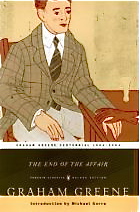
The End of the Affair

The book opens with a meeting between novelist Maurice Bendrix and civil servant Henry Miles on a cold, rainy night in 1946 London. Miles’ wife Sarah had ended an affair with Bendrix 18 months earlier. Bendrix has not seen them since. In this chance meeting on the street, Bendrix observes that Miles is heavy-laden, suspecting Sarah has ‘secrets’. Volunteering to hire a detective to tail the wife for the husband, Bendrix is in fact acting out of jealousy, for he too wants to find out who Sarah is seeing now. “Anyone who loves is jealous.”

Again, in just 160 pages, Greene has intricately explored the depth and complexity of the human psyche, love and hate, trust and insecurity, faith and lameness. Yes, the lameness in Bendrix’s leg can well be a metaphor for his numbness of unbelief. Isn’t there such an argument: “If God does not exist, everything is permitted?”

Love with all its smothering, blinding passion, its persistent, burning desire, its all-consuming emotions that distill into pure jealousy and hate… Graham Greene is a master of such incisive descriptions. But here’s the rub, they’re all found in an adulterous affair.

Isn’t that a pity that such intensity of love is often depicted outside of a marriage. Why, we see them all the time in literature and movies. And, don’t we tend to cheer for the romantic heroes and heroines? Guinevere and Lancelot, for example, to whom Bendrix in the book alludes when he talks to the detective Parkis, who has named his son Lance. Readily come to mind are some others: Madame Bovary, Anna Karenina, and in the epic cinematic versions like The English Patient, in a more restrained way Out of Africa, and the near success in The Bridges of Madison County…  didn’t you wish Meryl Streep would have gone with Clint Eastwood? I’m just thinking, if Ralph Fiennes were the one beckoning her, she’d probably had jumped out of her husband’s truck.

O the fantasy of romance vs. the mundane reality of a marriage. The forbidden fruit seems sweeter, for it arouses excitement, it entices with adventure. Bendrix accuses the oblivious and dull husband Henry Miles as an accomplice in Sarah’s affairs, calling him ‘an eternal pimp’:

“You pimped with your ignorance. You pimped by never learning how to make love with her, so she had to look elsewhere. You pimped by giving opportunities… You pimped by being a bore and a fool…”

There might be some truths in his rants. But then again, are these reasons enough to drive one to discard the marriage vow and seek other allurements? Alas, it seems like boredom is the major impediment to fulfilling that commitment… “If I could love a leper’s sores, couldn’t I love the boringness of Henry?” Sarah tries to reason with herself.

But of course, here, the key is the End of the affair between Bendrix and Sarah. What causes the end is none other than God Himself according to Sarah. A bomb drops near Bendrix’s home while they are both there, striking him dead. Sarah, in her horror and desperation, prays to a God she doesn’t believe to exist, but pleads for the life of her lover just the same. She makes the promise that if God gives Bendrix back his life, she would stop seeing him. As she’s still kneeling by her bed praying, Bendrix walks into the room, injured but very much alive. Thus begins the agony of keeping a promise to a God whose existence now has become an inconvenient truth.

We learn at the end, Sarah has attempted to shift her love from Bendrix to God, albeit with much searing pain. She has gone to a priest and converted to Catholicism. In the crucifix she knows that God Himself is a suffering God too. If only she can see the scale of the pain in the nail-pierced hands in a greater cosmic proportion compared to her own…

***

The marvellous cinematography, the diffused lighting of many scenes, all work to cast a romantic veil over an adulterous affair. Two Oscar noms in 2000 included one in cinematography and one for Julianne Moore as Sarah Miles. Ralph Fiennes plays Bendrix, a suitable choice. He is in his element. Since The English Patient (1996), Fiennes seems to have mastered the persona of the romantic tragic hero and obsessed lover.

While the screenwriter is understandably free to invent more scenes for the visual storytelling and change some plot points, one alteration I feel  is definitely unacceptable and that’s the character Richard Smythe. In the book, Smythe is an atheist whom Sarah visits several times to discuss views about atheism. Ironically it is Smythe’s atheistic stance that drives Sarah into believing God. She then confides in Father Crompton her wish to convert to Catholicism. But in the film, Smythe is the priest, and what more, he is implied to be another of Sarah’s lovers. I think here is where integrity to the source material should have given priority over dramatic effects.

***

And what does Colin Firth have to do with The End of the Affair? Well, for all you Colin fans, he is among some A-list stars to have signed with the UK audiobook provider Audible to record their reading of their favorite classic novel.

Audible’s founder, Donald Katz, told the Observer: “Colin Firth could read me the back of a Marmite jar and I would listen.” Well, Colin has chosen, not Marmite or Cornflakes, but for more flavour, Graham Greene’s The End of the Affair. CLICK HERE to read the announcement and see what other stars are reading for Audible’s recordings.

Now we have another portal to appreciate Colin, and, another channel to enjoy a Graham Greene book.

Update May 7, 2012: The Audiobook The End of the Affair narrated by Colin Firth is released today.

***

The Quiet American by Graham Greene: Book and Movie

This is my first selection for the Graham Greene Challenge hosted by CarrieK at Books And Movies.

I watched the film The Quiet American some years back, but not read the book. And my memory is vague. Only remember Michael Caine and Brendan Fraser, the setting in Vietnam, in the early 50’s, a complex fusion of political thriller, murder mystery, and a love triangle.

But now that I’ve read the book I’m thoroughly intrigued, thanks to this Penguin Classics Graham Greene Centennial Edition (1904 – 2004), with the intro written by American novelist Robert Stone. Stone’s novel Dog Soldiers about the Vietnam war and its effects won the 1975 National Book Award. From his introduction, I’ve come to appreciate how intricate and multi-layered the conflicts are, and, how political the novel stands.

Interesting to learn from Stone about the joke embedded in the title: the only quiet American is a dead American. In the midst of a colonial war between the French and the communists in 1950’s Saigon, American Alden Pyle’s subversive brand of democracy satisfied none other than his own idealism. A Harvard grad, armed with naiveté and book knowledge, a CIA under the guise of the American Economic Attaché, Pyle’s involvement might well represent American meddling in other country’s affairs in the name of spreading democracy.

We see all these through the eyes of the narrator, the British reporter Thomas Fowler. Much older, more experienced, and having been posted in Vietnam for some years, Fowler has grown to love the humanity therein, but is plagued by bitter cynicism. He doesn’t take sides, he just writes his story as an observer, smokes his opium pipe prepared by his young mistress Phuong, and lies in bed with her. But Fowler’s noncommittal stance comes to a breaking point at the end:

… one has to take sides. If one is to remain human.

The Quiet American is noted for its divergent from Greene’s ‘Catholic’ novels. But the existential issues are very much in the forefront. Fowler is a man of conscience, albeit aloof in his outward stance. The climax comes as he resolves a moral dilemma. Guilt is his nemesis, regarding his wife in England, regarding Phuong, and much more acutely at the end of the novel, regarding Pyle. The book ends with this line:

I wished there existed someone to whom I could say that I was sorry.

And then there’s Phuong, manipulated by her older sister, weaves herself between the two foreigners whom she sees as her ticket out of the country and into a dream future. I find her reaction to Pyle’s death most disturbing.

In a short 180 pages, Greene has brilliantly depicted the political complexities of the conflicts at the time, and addressed the internal war waged within a man’s conscience, ironically, a man whose outward creed is noninvolvement. I’m thoroughly intrigued by the story that is told with depth, eloquence and skill by a master storyteller.

~ ~ ~ 1/2 Ripples

***

The Movie: DVD

I watch the film again after finishing the book. It has altered some characters, and taken a more sympathetic view of Phuong. But the overall story and perspective remain intact. Upon this second time viewing, I find several interesting facts that I wasn’t aware of before.

Michael Caine was nominated for a Best Actor Oscar and Golden Globe in 2003 for his role as British reporter Thomas Fowler. He has portrayed the character convincingly. Brendan Fraser as the young American I feel is a miscast. If they’re making the film today, James Franco would be my choice for Alden Pyle.

Director is the award-winning Australian Phillip Noyce. (Rabbit-Proof Fence, 2002). One of the two screenwriters is Christopher Hampton who got an Oscar nom for his adapted screenplay Atonement from Ian McEwan’s novel. He is also the screenwriter for the current film A Dangerous Method. Executive producers were two personalities whom I highly respect, Anthony Minghella of The English Patient fame plus some more, and Sydney Pollack whose credits are too numerous to mention. It was a great loss that they both passed away within two months in 2008.

The DVD comes with a resource of special features. Other than all the interviews and making-of, there is a useful “Vietnam Timeline”, outlining the history of Vietnam from 1940 to 1980. Further, I appreciate the inclusion of original book reviews. One line particularly stands out. From the 1956 review of the book by John Lehman of The New Republic: 

The Quiet American is one of the most icily anti-American books I’ve ever read.

Oh…  the wealth of information one can gather from watching these special features.

~ ~ ~ Ripples

***

Oscar Nominations 2012

With the announcement of the 84th Academy Awards Nominees this morning, I’ve prepared here a guide to the 9 nominated films for Best Picture plus a few more. I’ve seen them all except one, which I admit is somewhat unexpected, that’s Extremely Loud and Incredibly Close. For some of the others, do click on the link in the title to read my full review.

Here are the 9 nominees for Best Motion Picture:

The Artist —  Riding high the waves in this Awards Season, and most likely to grab the top Oscar. Kudos to the filmmakers for taking a bold and contrary step to pay homage to the silent era of Hollywood. Audacious in its attempt at a black and white silent film in 2011, where CGI and 3D’s are the cinematic effects, a long way from the great advancement of sound. Sure it’s light and frothy, which makes me admire all the more the boldness and foresight of the financial backers. Actions do speak louder than words. 10 noms in all.

The Descendants —  Well acted, probably George Clooney’s best performance I’ve seen, a close Oscar contender with Jean Dujardin of The Artist for Best Actor. The idyllic setting in Hawaii shrouds conflicts among family members: between husband and wife, parents and children, and in the extended level, relatives when it comes to monetary gains and interests. A fine film from Oscar winning director Alexander Payne of Sideways fame. While there are interesting twists and turns, the ending is predictable. A close contender with The Artist for Best Picture.

The Tree of Life — I’m excited to see Terrence Malick’s existential epic included in the list.  The film generally draws two opposing reactions, like its premiere in Cannes, boos and applause. Ironically, those might well be the two ways the film portrays, two possible views towards life. Other noms: Terrence Malick for Best Director, and deservedly, Emmanuel Lubezki for Best Cinematography.

Midnight In Paris — It has been a long time since Woody Allen won a Best Picture Oscar (Annie Hall, 1977), glad it’s time again for a nod, even though its chance of winning is slim. As in a few other nominated movies on this list, nostalgia is key. An imaginary trip back to Paris during the literary and artistic golden age of Gertrude Stein, Hemingway and Picasso, an aspiring writer from California learns the notion of golden is only relative. What’s precious may well be the time at hand. Woody Allen also receives noms for Directing and Original Screenplay.

Hugo — Leading the Oscar nom counts with 11. Another homage to the cinema, or, the creation of the cinema dating back to the Lumière Brothers, but specifically to Georges Méliès, the French innovator of cinematic special effects. Interesting to see Martin Scorsese uses the modern technique of 3D to honor the pioneer Méliès. A visually stunning adaptation of Brian Selznick’s The Invention of Hugo Cabret. Scorsese has proven to me that 3D doesn’t have to be synonymous with soulless gimmick. Heart-warming, beautiful film for everyone.

The Help — As Roger Ebert was labelled “a lackey for imperialism” after writing that he likes ‘Downton Abbey’, I must put in this Disclaimer: I have high respect for the courageous fighters in the civil rights movement, both on a societal level like Martin Luther King Jr. and those making personal steps like Rosa Parks. How I feel about this movie is strictly to do with the movie itself. Ok, here it is: I find it riddled with simplistic and contrived sentiments. The pool of major acting talents are morphed into caricatures. As I was watching, I felt they were all acting, not being. Can’t blame them, they were following a script and a director. Viola Davis nom for Best Actress, Jessica Chastain and Octavia Spencer for Best Supporting Actress. And the Oscar likely goes to Spencer.

The War Horse — Again, a Disclaimer here: I’m not against animals in movies… often, it’s the humans that leave much to be desired. Personally, I’m surprised that this is from Spielberg. Lacklustre storytelling, cliché moments and superficial characterization. The most natural and beautiful actor could well be Joey, the horse. The film is an adaptation of the children’s book of the same name written from the POV of the horse. Now, that sounds fresh and unique.

Moneyball — Can strike the heart of even non-baseball fans. A well paced and edited, engaging movie. The real story of Oakland A’s general manager Billy Beane. It’s always satisfying when the underdog wins, David overcoming Goliath, especially when money is involved. Brad Pitt getting Best Actor nom, and Jonah Hill Best Supporting. Other categories include Editing and Adapted Screenplay.

Extremely Loud and Incredibly Close — The is the only one among the nine I have yet to see, for truly I did not expect it to be nominated for Best Picture. I’ve read Jonathan Safran Foer’s novel, the source material, with mixed feelings. And for it to be adapted into a film, much has to be done to interpret, alter, and display.  So, I reserve judgement on the film until I’ve seen it.

Other Nominees:

Meryl Streep for Best Actress in The Iron Lady — If you want historical accuracy, go see a documentary. But even there it depends on the POV of the filmmaker.  Director Phyllida Lloyd (Mamma Mia!) has conjured up an internal world of the only woman Prime Minister of Britain, Margaret Thatcher. Unless she comes to rebut the director’s view, who are we to argue against it? Let’s just go beyond the debates and appreciate the marvellous performance by Meryl Streep. This might well be her chance for a second Best Actress Oscar since Sophie’s Choice in 1983. Jim Broadbent always complements superbly.

Michelle Williams for Best Actress in My Week With Marilyn — Michelle Williams proves her amazing versatility here. I mean, after seeing Wendy and Lucy, Blue Valentine, can you imagine a more diverse role as Marilyn Monroe? She delivers convincingly. Kenneth Branagh gets the nom for Best Supporting Actor as Sir Laurence Olivier. And who’s that obscure chap that gets to spend a week with Marilyn? Why, he’s Eddie Redmayne, Angel Claire in Tess of the D’Urbervilles.

Gary Oldman for Best Actor in Tinker Tailor Soldier Spy — Film scholar David Bordwell suggests that we see it as ‘a moving mosaic’. This film is made up of fragments of John Le Carré’s complex and massive work. So it’s better that you’ve read it first before watching. But if you’re like me, abandoning the book without finishing, you can still appreciate the overall atmosphere and the fine acting. Intricately weaving characters and time frames, the film’s intriguing ending has prompted me to go back to the book after watching it. CLICK HERE to read Bordwell‘s insightful review to help you through the Labyrinth.

***

CLICK HERE for a full list of Nominees.