Heading to Cannes… in my mind 

I’m watching closely the Cannes Film Festival taking place right now. While my tour is virtual and imaginary, I look forward to TIFF in September when I go to Toronto, as some of these Cannes selections might reprise there.

So, if I were in Cannes now, this would be my list of films to watch (links for related films in the list below are to my Ripple reviews):

TÔI YAMANAMINO HIKARI (A PALE VIEW OF HILLS) directed by Ishikawa Kei 

The English translation quickly draws me in: A PALE VIEW OF HILLS is the first novel (1982) by Nobel Laureate Kazuo Ishiguro. An introspection of a Japanese woman living alone in England, spanning decades of life from post-WWII Japan to her resettling in a foreign country. Past memories intermingle with present day reality. Ishiguro is adroit in psychological narratives. I’m curious to see if the film lives up to his credit. Time to reread.

ELEANOR THE GREAT directed by Scarlett Johansson 

Scarlett Johansson’s directorial debut. Eleanor moves to New York City at age 90 for a fresh start and befriends a 19-year-old student. What an idea: A fresh start at 90. Even more amazing in real life, for 95 year-old June Squibb could well be the oldest actor still working, and just recently acclaimed for her performance in Thelma (2025). For those with a longer memory, Squibb was an Oscar nominee for best supporting actress playing Kate Grant in Alexander Payne’s Nebraska (2013). 

THE MASTERMIND directed by Kelly Reichardt

Kelly Reichardt is one of my all-time favourite directors. A look back at her works Wendy and Lucy (2008), Certain Women (2016)First Cow (2019), has piqued my curiosity in how she’d handle this art heist movie, Reichardt’s sensitive rendering of a more popular themed, mainstream subject. And the cast here is a huge attraction: Gaby Hoffman (Field of Dreams, 1989), Josh O’Connor (The Crown, 2020; Emma, 2020), and John Magaro (First Cow, 2019; Past Lives, 2023). 

Nouvelle Vague (NEW WAVE) directed by Richard Linklater

I was captivated by Linklater’s Before trilogy back in the days… Before Sunrise (1995), Before Sunset (2004), and Before Midnight (2013). But he’d shown his versatility by other more subsequent titles such as Boyhood (2014), and Hit Man (2023). Now in 2025, he dives into the French New Waves, his first French language film, creating a making-of feature in black and white to chronicle the shooting of Jean-Luc Godard’s classic Breathless (À Bout De Souffle), which premiered at Cannes in 1960. I anticipate an articulate and adroit handling of this homage to the French cinematic legacy. 

VIE PRIVEE (A PRIVATE LIFE) directed by Rebecca Zlotowski

We know Jodie Foster can speak French, but can she master the language in a full feature film showcased in Cannes, France. I sure hope so because the audience there can be very direct and umm… expressive in showing their love or disapproval. Foster plays a renowned psychiatrist investigating the death of one of her patients. The French cast includes Mathieu Amalric (The Diving Bell and the Butterfly, 2007; The Grand Budapest Hotel, 2014) and Virginie Efira (2023 César Awards Best Actress winner for Revoir Paris

Sentimental Value directed by Joachim Trier

Four years after The Worst Person in the World with which his star Renate Reinsve won Best Actress at Cannes and Trier went on to be nominated at the Oscars for his screenplay and his film representing Norway for Best International Feature Film, now director and star reunite to bring us a story exploring family, memories, and the power of art. Cast includes Stellan Skarsgard and Elle Fanning. 

Left-Handed Girl directed by Shi-Ching Tsou

What attracts me to this film, first is the title, then is the face of the little girl. What’s more intriguing is that Tsou’s directorial debut is produced, edited and co-written by Sean Baker, the US director who won the Palme d’Or last year with Anora, a feature that later went on to win five Oscars. The Left-handed Girl follows a single mother and her two daughters striving to adapt to a new environment in bustling Taipei as they open a stall at a night market.

Renoir directed by Chie Hayakawa

Hayakawa’s first feature film Plan 75 (2022) premiered at Cannes and won the Golden Camera award. It was Japan’s official entry to the Best International Feature Film at the Oscars in 2023. Renoir is Hayakawa’s second film, a coming-of-age story of a sensitive eleven year-old girl growing up in 1980’s Tokyo, living with a stressed-out mother and a terminally ill father. Cast includes Hirokazu Koreeda’s favourite actor Lily Franky (2018 Palme d’Or winner Shoplifters, Like Father, Like Son, 2013)

***
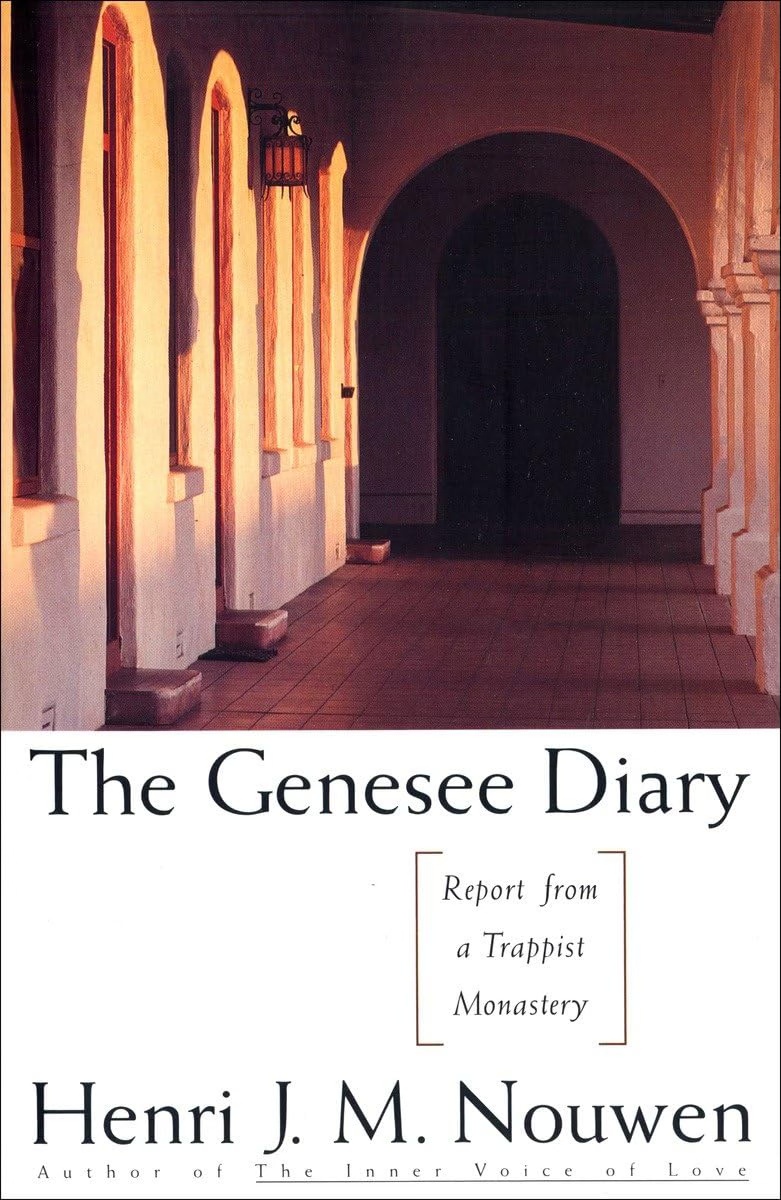
Reading the Season: The Genesee Diary by Henri J. M. Nouwen

I started this annual post at Christmas time in 2008, calling it Reading the Season. As the song goes, this might be ‘the most wonderful time of the year’, but it could well be the most distressing to many. In the hustle and bustle of the Season on the heels of that perennial frenzy called ‘Black Friday’, I hope Ripple Effects can be a respite from the busyness by offering a reading suggestion that could bring some quietude and to slow down the running wheel, hopefully the heart rates as well.  

Henri Nouwen wore many hats, priest, speaker, writer, professor at Yale and Harvard Divinity Schools, and in the last ten years of his life from 1986-1996, quit his university teaching to live and serve as pastor among a community of intellectually disabled men and women, L’Arche–Daybreak in Ontario, Canada. 

Twelve years before he made that life-changing commitment to L’Arche, in 1974, Nouwen spent seven months in a Trappist Monastery, the Abbey of the Genesee, in Upstate, New York. He started a diary in June as he began this experience and ending with the last entry on Christmas Day. He was searching for peace and quietude and to practice the contemplative life away from his busy commitments. His entries show his utter honesty with himself and total humility with God, and was always open to love and appreciate those around him. The monastery wasn’t cocoon living, he was in touch with world events and could grasp firmly the role of history in the present, and the continuity of the past in one’s personal journey. I’m glad to find too that he’s an avid bird watcher, and from nature, he gleans deeper understanding of self and God.  

I’ve highlighted many passages, these are some of them. As a birder, I find this so intriguing. It may sound somber and serious, but I can also see the humour in it:

This morning Father John explained to me that the killdeer is a bird that fools you by simulating injury to pull your attention away from her eggs which she lays openly on a sandy place… I have asked pity for a very unreal problem in order to pull people’s attention away from what I didn’t want them to see.

Sometimes it seems that every bird has institutionalized one of my defence mechanisms. The cowbird lays her eggs in some other bird’s nest to let them do the brooding job; the Baltimore oriole imitates the sounds of more dangerous birds to keep the enemies away, and the red-wing blackbird keeps screaming so loudly overhead that you get tired of her noise and soon leave the area that she considers hers. It does not take long to realize that I do all of that and a lot more to protect myself or to get my own will done.

I wonder if I really have listened carefully enough to the God of history, the God of my history, and have recognized him when he called me by my name, broke the bread, or asked me to cast out my nets after a fruitless day? Maybe I have been living much too fast, too restlessly, too feverishly, forgetting to pay attention to what is happening here and now, right under my nose. Just as a whole world of beauty can be discovered in one flower, so the great grace of God can be tasted in one small moment. Just as no great travels are necessary to see the beauty of creation, so no great ecstasies are needed to discover the love of God. But you have to be still and wait so that you can realize that God is not in the earthquake, the storm, or the lightning, but in the gentle breeze with which he touches your back.

And a thought that for me brings a new perspective on Advent:

Advent does not lead to nervous tension stemming from expectation of something spectacular about to happen. On the contrary, it leads to a growing inner stillness and joy allowing me to realize that he for whom I am waiting has already arrived and speaks to me in the silence of my heart. Just as a mother feels the child grow in her and is not surprised on the day of the birth but joyfully receives the one she learned to know during her waiting, so Jesus can be born in my life slowly and steadily and be received as the one I learned to know while waiting.

***

Reading the Season in Previous Years:

2023: Reading the Season: Babe or Man, Man or King? A Poem by Luci Shaw

2022: Dietrich Bonhoeffer’s God is in the Manger

2021: Sabbath Poems by Wendell Berry

2020: Jack by Marilynne Robinson

2019: ‘A Hidden Life’ – A Film for the Season

2018: A Verse from Madeleine L’Engle’s The Irrational Season

2017: A Wrinkle in Time by Madeleine L’Engle

2016: Silence by Shusaku Endo

2015: The Book of Ruth

2014: Lila by Marilynne Robinson

2013: Poetry by Madeleine L’Engle

2012: Surprised by Joy by C. S. Lewis

2011: Walking on Water by Madeleine L’Engle 

2010: A Widening Light by Luci Shaw

2009: The Irrational Season by Madeleine L’Engle

2008: The Bible and the New York Times by Fleming Rutledge 

2008: A Grief Observed by C. S. Lewis

Delicious Autumn

“Delicious autumn! My very soul is wedded to it and if I were a bird I would fly about the earth seeking the successive autumns.” –– George Eliot, in her letter of Oct., 1841

Successive autumns, and never will winter come. What a marvellous thought! Just yesterday, we had our first snow, icy reminder for what’s to come. But the forecast is that we’ll get back to some warmer, seasonal autumn air in the coming week.

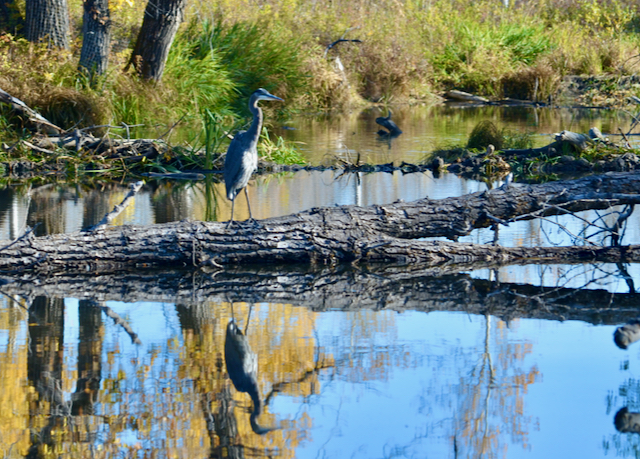
I like to dwell on those sunny days of fall. We don’t have many red leaves here, but the rusty and golden hue all around the pond is enticing and fresh.

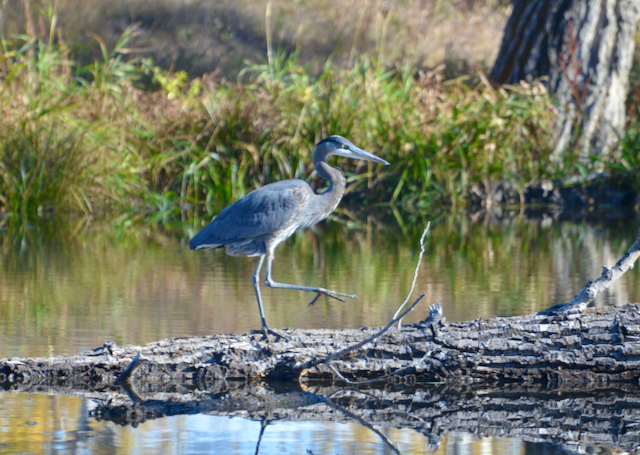
Many birds have migrated south. So, I was surprised and delighted to see this one still lingering …

A Great Blue Heron in this part of the Pond by late October is rare. Like Proust’s madeleine dipped in tea, serendipitous sightings like this can last through many winters as fond memories conjure up during the shut-in, wintry days.

And with this little Proustian teaser, I’m dropping a hint of what’s to come on Ripple Effects in November. Stay tuned.

***

Try to remember the kind of September…

My few weeks of hiatus from the Pond led me to the bustling city of Toronto. Just the second weekend of September there were over 80 events planned across the city: festivals, concerts, food fares, cultural celebrations… In the downtown core, road closures, frenzy and chaos. The main attraction with international focus of course is the Toronto International Film Festival. Since this is the first in person TIFF after two years of Covid measures, I chose to avoid the huge gatherings and stay closer to nature, far from the madding crowd… I’ll have to wait to watch the selections hopefully later in the year.

Then came the sad news of the passing of Queen Elizabeth II, 70 years on the throne, the longest reigning British monarch and the longest female sovereign in history. Politics aside, being born and raised during my formative years in the former British colony of Hong Kong, I much appreciate the freedom to grow up in an environment where East meets West, unlike what Kipling had surmised.

I studied both classical Chinese as well as English literature in school, donning a uniform in cheongsam (do google it if you’re not sure what it is) but wore bell bottom pants when out; grew up watching numerous kung fu movies while following closely all James Bond flicks; savoured home cooked Chinese meals as well as those from international sources; yes, and love the fusion of Hong Kong style western cuisine, street foods and snacks. A prime example is Hong Kong style milk tea with condensed milk, best to pair with a pineapple bun with a piece of ice cold butter in the middle, oh, and egg tarts.

Pineapple bun with butter, egg tarts at back.

Looking back, it was a period when I was free to explore different world views and thinking. I still remember following a classmate to a secondhand bookstore in an obscure alley after school, looking up books on psychology and philosophy; or one time, catching another classmate secretly reading her own book held under her desk during class. When I asked her later out of curiosity what she was reading, no, it wasn’t a comic book or a teen magazine, but Somerset Maugham’s short stories. That was my intro to the wonderful writer.

My nanny loved Chinese operas. She was a versatile, middle age woman who lived in our home and acted almost as my substitute mother. She read Dream of the Red Chamber at night before she slept, daytime too busy for her. I grew up reading Chinese translations of world literature for children and some Enid Blyton, while also saved up enough pocket money to buy my Mad Magazine. I learned to play the piano and listened to The Beatles and The Monkees. The first LP album in our home was My Fair Lady.

What do all these memories have to do with the Queen? For me, it was a period of growing up experiencing both East and West in a British colony that didn’t require its citizens to sing “God Save the Queen,” or demand The Union Jack be hoisted in schools. I’d enjoyed the freedom to explore despite a rigid home environment. If I were to write a memoir some day, it would likely be in the theme of a growing up where East meets West, where the fusion of the two is exciting and appealing, and where opportunities are plentiful, and I was free to live life in an interesting, borderless fusion of cultures.

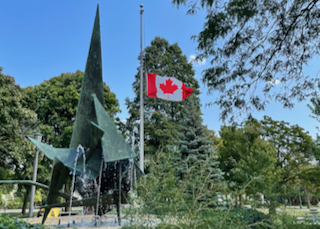
So, it was the end of an era when the Queen passed. Now the world seems to have grown polarized, tempers flare when people of opposite views confront, and where the ominous observation by Kipling is becoming all the more acute as autocracy begins to prevail.

As I was wandering the lakeshore in Toronto, I caught sight of some lively monarch butterflies. It was a pleasant surprise, as I wasn’t expecting seeing them in such an urban environ. From one Monarch to another, may these monarchs be free and lively as they migrate thousands of miles south, following the instinct endowed by their Creator’s design.

From one Monarch to another:

***

Books to Screen 2020 and Beyond

As things go these days, uncertainties abound as to when movies will come out and in what way, big or small screen. So, for those who like to read before you leap, summer’s the best time to catch up with some of these books before their adaptations are released.


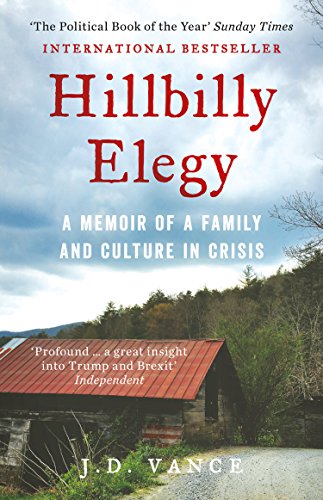
Hillbilly ElegyHillbilly Elegy by J. D. Vance

The runaway bestseller of 2016 is now an upcoming movie on Netflix, directed by Ron Howard. Born and raised a ‘hillbilly’ in Ohio, Vance’s memoir narrates his struggles to arrive at Yale Law School, a personal victory over poverty and a dysfunctional family and culture. He shares insights as an insider of an impoverished social sector. Screenplay by Oscar-nominated Vanessa Taylor (The Shape of Water, 2017). Early Oscar buzz for next year’s Academy Awards and Amy Adams a possible nom.

.

Deep WaterDeep Water by Patricia Highsmith

Highsmith is no stranger to fans of suspense and psychological thrillers with Carol (2015), The Talented Mr. Ripley (1999), and the Hitchcock classic Strangers on a Train (1951). Deep Water (first pub. 1957) is another marital suspense thriller, directed by Adrian Lyne, who’d given us Fatal Attraction (1987), Unfaithful (2002) and the like. So, we know it’s in good hands. Gone Girl‘s Ben Affleck should be quite familiar with playing such genre, add in Ana de Armas, who’s superb in Knives Out, this one should be a thrilling escape.

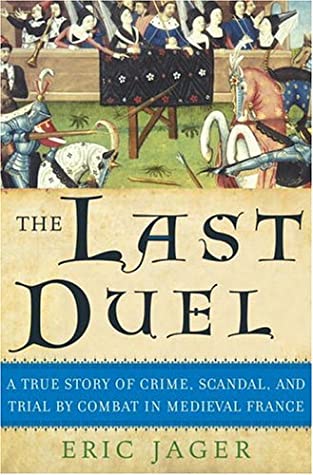
The Last DuelThe Last Duel by Eric Jager

The historical novel is The Last Duel: A True Story of Crime, Scandal, and Trial by Combat in Medieval France, sounds like a sensational movie subject. Author is Eric Jager, medieval literature prof at UCLA. Director is the iconic Ridley Scott, who has brought us numerous big screen epics, Blade Runner (1982), Gladiator (2000), Alien (1979, 2017), just to name a few. Ben Affleck and Matt Damon co-write and co-star, with Jodie Comer of Killing Eve fame also in.


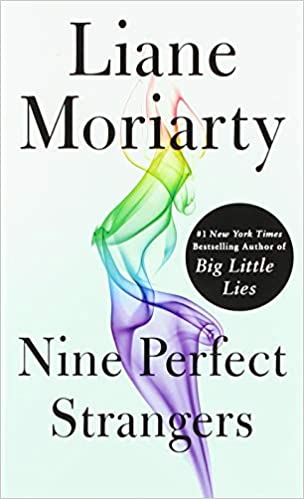
9 Perfect StrangersNine Perfect Strangers by Liane Moriarty
Another TV series (Hulu) from popular Australian author Liane Moriarty whose Big Little Lies has been turned into two successful, star-studded Seasons on HBO. Nine strangers meet at a wellness resort dealing with their own issues and discovering secrets behind the place. Nicole Kidman and Melissa McCarthy co-star. Moriarty has written 8 novels, so far, 5 of which are in various stages of development for the screen.


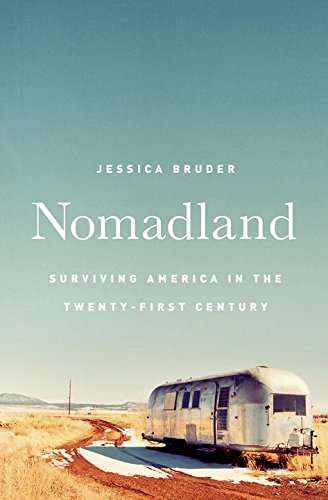
NomadlandNomadland: Surviving America in the Twenty-First Century by Jessica Bruder

Nowadays you hear a lot about migrant workers. Back in the time after the Great Recession, there were workers living like nomads in their trailers and vans, travelling across the western states to look for work. Bruder’s book is about one such ‘workampers’, a woman in her sixties who becomes a nomad worker after losing her home. Frances McDormand stars. Written for the screen and directed by Chloé Zhao, who gave us the soulful The Rider (2017).


ShirleyShirley by Susan Scarf Merrell

Based on the second novel by Merrell published in 2014. Shirley here refers to the American horror/suspense writer Shirley Jackson, played by Elisabeth Moss. The story’s about a graduate student Fred and his wife Rose (Odessa Young) move in to live with professor Stanley Edgar Hyman, a literary critic teaching at Bennington College and his wife Shirley Jackson. Drama ensues when the characters interplay in their peculiar relational dynamics. Directed by Josephine Decker.

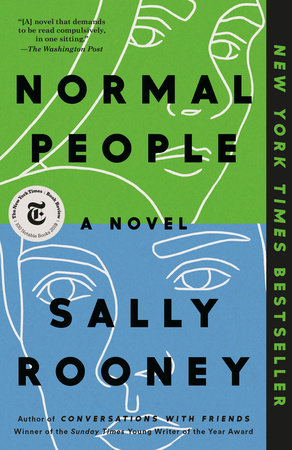
Normal PeopleNormal People by Sally Rooney

Irish millennial lit turned TV. And you thought the upstairs-downstairs kind of stories happen only in Downton Abbey. Rooney’s acclaimed book is about the clandestine romance between rich gal Marianne and Connell whose mother cleans Marianne’s house. The 12 episode TV series adaptation is affective and well performed by Daisy Edgar-Jones and Paul Mescal under the helms of Lenny Abrahamson (Room, 2015) and Hetti Macdonald (Howards End, 2017) On Hulu, BBC3, and CBC Gem now.

Mothering SundayMothering Sunday by Graham Swift

Just announced. Booker Prize winning author Graham Swift’s novel will be adapted into film with a stellar British cast. Mothering Sunday was a day given to domestic servants time off so they could go back home to visit their mother and family. Again, a clandestine romance between two young people of different classes. Eva Husson (Hanna, 2020) directs onscreen royalty Olivia Coleman (QEII in The Crown), Colin Firth (KGVI in The King’s Speech), Josh O’Connor (Prince Charles in The Crown), and Odessa Young. 

__________________

Recent Movies and Series Directed by Women

Yesterday while driving I heard the stirring theme music of the movie The Piano (1993) played on CBC Radio 2. Memories flooded my mind. I recalled watching it in the movie theatre way back then. A deaf-mute unable to speak but can overwhelm others as she plays the piano to express herself.

I thought of Jane Campion, writer/director of the film, marvelled at her skills in conveying thoughts and emotions via the visual medium, and thought of other women directors who’d helmed many of my favourite films. I’ve had two previous posts on Women Directors here and here. Now taking stock mentally of the recent movies and series I’ve watched on Netflix, Amazon Prime, and Kanopy while home-staying, I notice several of them are created and/or directed by women.

The Piano

Consider the following list with my capsule reviews an update of my previous Women Directors posts.

A Beautiful Day in the Neighborhood (Amazon Prime) – Directed by Marielle Heller 

Director Heller and the screenwriters transport Mr. Roger’s child-friendly, essential human wisdom to realistic, adult situations. The film isn’t so much about Mr. Rogers but the real-life story of journalist Tom Junod’s life-changing encounters with Fred Rogers for a magazine assignment. Tom Hanks is ideal as Mr. Rogers, and Matthew Rhys is effective in playing journalist Lloyd Vogel.

Who’s Matthew Rhys, you might ask? I highly recommend you watch “The Americans” series. Or, if you’re an Austen spinoffs fan, he’s Mr. Darcy in the mini-series “Death Comes to Pemberley”, adaptation of the novel by P. D. James. And, if you were around to watch the original Raymond Burr detective series on TV, the Wales-born actor is the new Perry Mason in our time.

Little Fires Everywhere (Amazon Prime) – Created and screenplay by Liz Tigelaar, Directors Lynn Shelton and Nzingha Stewart. 

The 8-Episode mini-series is the screen adaptation of Asian American novelist Celeste Ng’s second novel. My full book review can be found here. The thematic elements of race, motherhood, family secrets, clashes of generations and values are visualized and made more acute as Kerry Washington is cast as an African-American artist playing against Reese Witherspoon as Mrs. Richardson, the gatekeeper of the white upper-middle-class community of Shaker Heights, OH. The artist Mia Warren in Ng’s novel isn’t black, but turning her into one makes the conflict of the story more timely and pressing.

Four episodes are directed by Lynn Shelton who sadly died in May, 2020. Another female director Nzingha Stewart helmed two.

Never have I Ever (Netflix) – Created by Lang Fisher and Mindy Kaling. Directors Linda Mendoza and Anu Valia 

Here’s a recent trend that’s encouraging. Movies and series are created to feature minority cultures in America. The talented Mindy Kaling, who wrote the screenplay and co-starred with Emma Thompson in Late Night (2019) plus many other credits, created this comedy series about high school girl Devi’s experience growing up Indian-American, something Kaling knows full well. Many LOL situations and dialogues throughout the ten episodes. Kaling scouted Maitreyi Ramakrishnan in Mississauga, ON, Canada, to play Devi. A fresh look into the multi-cultural humanity that our North American population comprises. In recent years we talk a lot about representation. This is a humorous and realistic look into a vibrant sector.

The Half of It (Netflix) – Directed by Alice Wu

Here’s another lens to look into our younger generation growing up bi-cultural. The full length feature directed by Chinese-American Alice Wu is this year’s Tribeca Film Festival’s Best Narrative Feature winner. A shy academic ace, Ellie Chu, earns her pocket money from writing essays for her fellow classmates. When one day, she’s recruited by the school jock Paul Munsky to be a ghost writer of poetic love letters to a girl he tries to date, Ellie begins to feel a moral dilemma. The characterization and storyline make this feature a contemporary twist on Shakespeare’s Twelfth Night. Humor is situational with some poignant scenes, making the film all the more enjoyable.

Unorthodox (Netflix) – Created by Anna Winger, Directed by Maria Schrader

Inspired by the memoir of Deborah Feldman, who broke away from her strict Hasidic Jewish community in Brooklyn, NY, and escaped to Berlin where she changed into a new persona and started a different life. I haven’t read the memoir but I know the four-part mini-series take the liberty to re-imagine how she goes about changing her life while in Berlin. The series is captivating as viewers are introduced to the Hasidic, male-dominated and authoritarian community. Again, there are many cultural sectors in our society and through films we get to know a little bit more of how others live and the struggles they go through.

Ophelia (Netflix) – Directed by Claire McCarthy

Adaptation of the book by Lisa Klein, screenplay by Semi Chellas, Ophelia is a re-imagined story of what happened in the royal castle of Elsinore and in particular, Hamlet’s sweetheart. Lots of liberty in tweaking and twisting but still interesting to watch, albeit a lightweight Hamlet compared to the original. Notable cast includes Naomi Watts as Gertrude, Clive Owen as Claudius. Hamlet is played by George MacKay before his titular role in the WWII movie 1917, and Ophelia is Star War‘s Rey Daisy Ridley.

Hamlet (Kanopy) – Film Direction by Margaret Williams, London Stage Direction by Sarah Frankcom

A filmed recording of the play performed in Royal Exchange, Manchester. This Hamlet is a fresh take with Maxine Peake as the emotionally devastated and revengeful Prince of Denmark. Only after watching that I Google search to find the first female to play Hamlet dates back to 1796 in London Drury Lane, then 1820 in New York. Several others had followed since. But this is my first time watching. Maxine Peake’s performance almost instantly cast away all my preset feelings. She’s high-octane energy; her voice, physical stage presence totally captivate, convincing yet delicate. She’s herself and not an impersonator. Modern costume makes it more natural and, love her haircut. Peake makes me look at her not as a female taking up a male role, but a superb actor playing the ‘Everest of roles’.

‘Benjamin Button’: A Curious Look at the Movie Adaptation

The idea of a baby born as an old man and then grows younger––a reverse trajectory of the human experience––is the premise in F. Scott Fitzgerald’s short story published in 1922, reviewed in my previous post. Prompted by a remark made by Mark Twain, Fitzgerald unleashed his imagination and wrote the story.

The tale was adapted into a 2008 movie directed by David Fincher who brought it all the way to the Oscars with 13 nominations the next year. I watch it for the first time in 2020 and am surprised to find its relevance: the fear of strangeness in our age of xenophobia.

As for the 13 Oscar nominations, the movie won only three: Art Direction, Makeup, and Visual Effects. These are difficult feats and deserving wins. Unlike the Academy’s (and some critics’) aloofness in embracing the film’s other achievements, I much appreciate the adapted screenplay and Fincher’s 166 minute visual rendition.

Here’s an exemplar of how a film adaptation diverges from the original literary source and yet still keeps its main concept, but instead of faithfully following the thin, short story, carries it to a different direction, creating an expanded and more gratifying version.

Benjamin Button

Screenwriters for the adaptation are Eric Roth and Robin Swicord. Roth is known for his Oscar winning adapted screenplay for Forrest Gump (1994), and Robin Swicord for her 1994 version of Little Women. They had chosen to turn Fitzgerald’s farcical, acerbic fantasy into a serious film in the vein of magical realism. The magic lies in the imaginary, reverse growth trajectory; the realism is love.

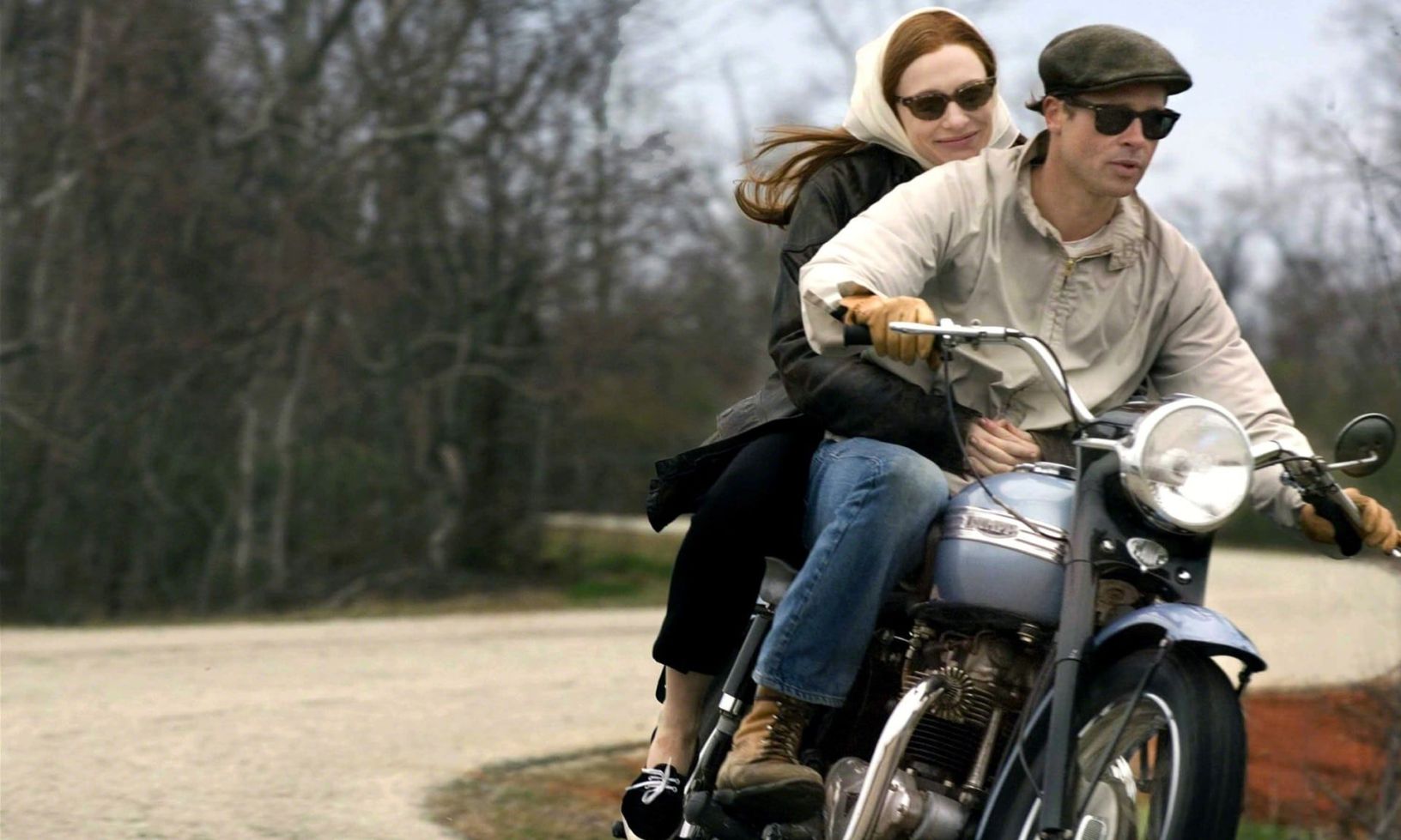
This is not just about love between two star-crossed lovers, Benjamin (Brad Pitt) and Daisy (Cate Blanchett), but about a woman with a huge heart, Queenie (Taraji P. Henson), who embraces a Gollum-like baby abandoned at her doorstep. Instead of a non-mentioned mother in Fitzgerald’s story, Queenie raises Benjamin with devoted affection. There’s love and acceptance as well from those in the old folks lodging house where Queenie works. Further, the movie adds one more layer, and that’s Daisy at her deathbed, sharing the story of her lost love with her daughter Caroline (affectively played by Julia Ormond), leaving her with a legacy of love.

The film makes amends to the sardonic tone of the short story by creating a moving love story. For a short period in their lives, both Benjamin and Daisy are of approximate age, but such joy doesn’t last as one grows older and the other younger. Yet unlike the short story, their love endures, for as long as one can hold on to it despite separation. And we find out that one can, all the way to her deathbed; the other is just too young to remember. What’s left is the transience of time and inevitable fate.

The setting is early 20th century on the cusp of WWI in New Orleans where Benjamin is born, and not 1860 Baltimore. As he grows younger, Benjamin goes through WWII instead of the Spanish-American War in the short story. The movie starts off with a modern time with Daisy’s final hours revealing to her daughter who her real father is. That’s 2005 New Orleans, during a hurricane when the hospital is preparing to evacuate. A disastrous storm as a backdrop in the telling of a billowy story. A name to denote the significance: Katrina. 

The movie is a divergence for Fincher too considering he’s a master of crime thrillers –– Zodiac came out just a year before in 2007, and more recently Gone Girl in 2014, Benjamin Button is Fincher’s only ‘romantic’ drama (The Social Network, 2010, is drama but definitely not ‘romantic’). Crafted in signature Fincher styling with low-light, sepia colour to enhance the period effects, the aesthetics in set design and cinematography bring out the notion of ‘every frame a painting’. 

Brad Pitt’s understated performance characterizes Benjamin aptly. Instead of remaining ‘the other’, Benjamin strives to connect, albeit in a gentle and quiet way. His love at first sight with then 7 years-old Daisy is a poignant encounter. Elle Fanning is a perfect cast. A child who holds no prejudice, she’s fascinated by the ‘strangeness’ in Benjamin. The Heart is a Lonely Hunter comes to mind.

Other curious finds: music by Alexandre Desplat, Tilda Swinton in some memorable sequences, Queenie’s husband Tizzy played by now two-time Oscar winner Mahershala Ali (Green Book, 2018 and Moonlight, 2016).

You probably have watched it before when the film first came out. How the world has changed in just twelve years. Watching it again now would probably bring you a different feel, and more relevance.


~ ~ ~ Ripples


***


Good Friday Separation

The One who had gone through utter isolation and known our griefs laments with us at this time.

A man of sorrows who had experienced the ultimate separation: In a crisis, his followers deserted him, even his closest denied him; above all, the physical torments on the cross couldn’t match the pain of searing separation from his Father, forsaken.

___________

He had no beauty or majesty to attract us to him,
nothing in his appearance that we should desire him.

He was despised and rejected by mankind,
a man of suffering, and familiar with pain.
Like one from whom people hide their faces
he was despised, and we held him in low esteem.

Surely he took up our pain
and bore our suffering,
yet we considered him punished by God,
stricken by him, and afflicted.

But he was pierced for our transgressions,
he was crushed for our iniquities;
the punishment that brought us peace was on him,
and by his wounds we are healed.

–– Isaiah 53: 2-5

***

This song has been on my mind all week. An apt meditation on this Good Friday as we’re all going through separation like never before. I chose a minimal video with just the words and the music. Take a 3 minute respite in your isolation this Good Friday.


***

‘Downhill’: Faux Majeure

Here’s a quote I’ll use again and again, from South-Korean director Bong Joon Ho’s acceptance speech for Parasite winning Golden Globe’s Best Foreign Language Film award in January:

“Once you overcome the one-inch-tall barrier of subtitles, you will be introduced to so many more amazing films.”

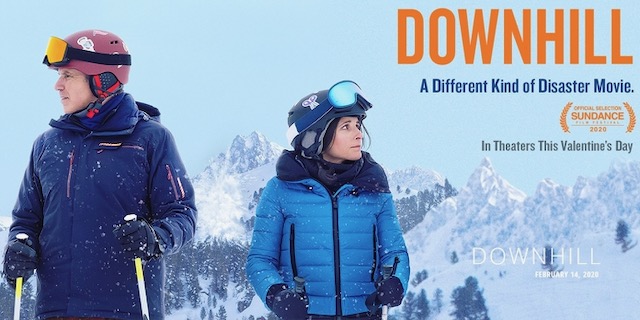
Downhill

Downhill is a case in point. If one is willing to overcome the one-inch tall barrier called subtitles (they are in English, mind you), one will be amazed how true and powerful and entertaining the Swedish film Force Majeure (2014) is, and that watching the Ruben Östlund directed original would likely reap the most enjoyment and provoke some deep thoughts. Maybe an American version isn’t needed to begin with.

Written and directed by Nat Faxon and Jim Rash, with the Oscar nominated Jesse Armstrong as co-writer, if they’re to make an American version, there could have been potential for a fresh take. Force Majeure‘s literal meaning is a superior force, an unavoidable, overtaking power. Here’s the premise of the movie, which in itself is an interesting case for discussion:

A well-intentioned family holiday at a ski resort for bonding is shattered as the result of an instinctive reaction on the part of the husband/father. It happens when a controlled avalanche strikes a little too close to his family sitting at an outdoor dining table, he runs for his life while his wife huddles and protects their two boys. What follows is the underlying current of discontent and anger of the wife’s surfacing like a geyser. 

The producers must have seen the potential comedy in such a scenario. One of them is Julia Louis-Dreyfus, the Emmy and Golden Globe winning comedy actor, and a fan of the original Swedish film. Playing the wife Billie, Dreyfus shows she has her heart in it. In several scenes, she’s effective in bringing out Billie’s frustration. However, the issues of the movie are beyond her control, a real case of force majeure?

First is the casting of the husband Pete with Will Ferrell. Surely, for a comedy, Ferrell would be a natural choice. Call it irony, the indifferent demeanor Ferrell gives out as an actor in this movie actually parallels the husband Pete’s attitude, as if he’s being dragged up the ski hill. Have cell, will travel. His phone is what he’s resorted to as companion on a family holiday that he’s not ready to go on.

Pete’s work friend Zach (Zach Woods) and his girl friend Rosie (Zoe Chao) happen to be near where they vacation, so Pete secretly texts them to come over to their hotel in the guise that it’s their initiative to drop in. Here’s a pair of supporting roles if given more to play can add substance and context to the thin storyline, but they don’t have the chance. In the original Force Majeure, this couple plays a crucial part, especially with Kristofer Hivju’s performance as Mats, who’s full of humor. Hivju is also in Downhill, but only with a very minor role as the ski hill manager.

Other issues pervade, the script could well be a major one. As a comedy, there’s not much for laughs. It presents a problem but doesn’t delve into it; a comedy doesn’t mean superficial treatments. As a film that’s supposed to capture a sporting vacation, it lacks energy. No wonder the kids are so bored. The title is prophetic; I’m sure that’s unintentional. 

If an American version is the intent, then make it truly American, tell an American marriage story with this scenario. With Downhill, however, the European location, the ski resort surroundings, the actual scene of the controlled avalanche mishap, the set design, even the teeth-brushing moments in the hotel bathroom look almost the same as the Swedish original, other than the fact that the actors speak English. With its loose editing and scattered thematic matters, Downhill looks more like a parody of Force Majeure than a stand-alone comedy on its own.


~ ~ Ripples 


***


CLICK HERE to read my review of Force Majeure


Book to Movie Adaptations 2020

A list of upcoming book to screen titles for the new year, eclectic choices for different tastes, varied classics and contemporary notables. Looks like classic literary works of all sorts are enjoying a comeback on the big and small screens.

Classic Suspense:

Classic Mystery.jpgDeath on the Nile by Agatha Christie

Kenneth Branagh returns after his first Hercule Poirot take in Murder on the Orient Express (2017) which he directs. Once again, the prolific screenwriter/adaptor Michael Green pitches in. Interesting cast with Gal Gadot, Armie Hammer, Annette Bening.
.

RebeccaRebecca by Daphne du Maurier

Lily James is ubiquitous ever since she comes out of Downton as Lady Rose. Now she’s the young and naive Mrs. De Winter in a psychological warfare with her nemesis, housekeeper Mrs. Danver played by Kristen Scott Thomas. Can the master of Manderley save her? But of course, he must save himself first. That’s Armie Hammer, equally ubiquitous.
.

Classic Adventure:

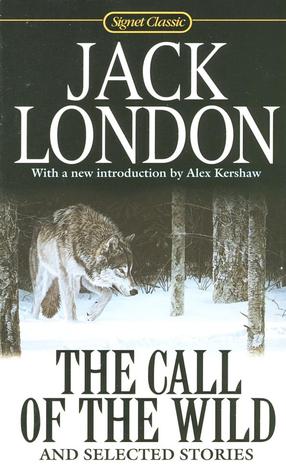
The Call of the Wild.jpgThe Call of the Wild by Jack London

Harrison Ford heeds the call with action star Karen Gillan, Dan Stevens, and the Calgary-born, The Expanse star Cara Gee. Partially filmed in Yukon and some in Vancouver, B.C., Canada. Never heard of the Yukon Territories? This should be a good intro. I’m all for old classics, be they books or actors.
.

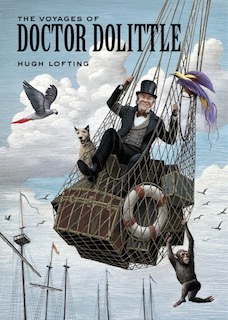
DOCTOR D (1).jpegVoyages of Doctor Dolittle by Hugh Lofting

Movie title Dolittle, an adventure spectacle with Robert Downey Jr. as the eponymous Doctor. See if you can identify the voices of these animals: Rami Malek, Emma Thompson, Ralph Fiennes, Marion Cotillard, Octavia Spencer… just to name a few of the stars in this production. Coming out January 17.

.

Classic Sci-Fi’s:

The Invisible ManThe Invisible Man by H. G. Wells

Classic sci-fi gets a resurrected boost. Wells’ novella and cautionary tale was first published in 1897. Now 123 years later in the 21st century, it’s adapted into a movie for the big screen. The Handmaid’s Tale Elizabeth Moss stars.
.

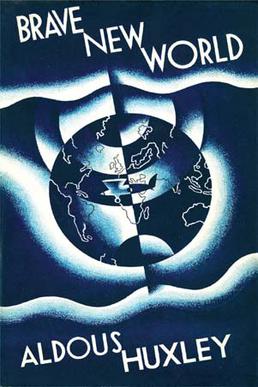
Brave New WorldBrave New World by Aldous Huxley

Huxley’s dystopian, imagined future written in 1931 is adapted into a TV series almost 90 years later. Again, a mark of what makes a book a classic, especially a sci-fi work. Downton early-exit Lady Sybil Jessica Brown Findlay’s in.
.

DuneDune by Frank Herbert

Another sci-fi classic, but closer to our time. A project by the acclaimed French Canadian director Dennis Villeneuve who has done some remarkable works like the Oscar nominated Arrival (2016), Blade Runner 2049 (2017) and Sicario (2015). Adapted into screen by Oscar winning writer Eric Roth (Forest Gump, 1994; A Star is Born, 2018). Timothée Chalamet, Rebecca Ferguson, and Oscar Isaac star.

Classic YA’s: 

Artemis_Fowl_first_edition_coverArtemis Fowl by Eoin Colfer

The first of Colfer’s popular series is a Disney production with Kenneth Branagh directing. A trending genre, the YA fantasy series has great potentials to be successful. A strong cast including Hong Chau, Judi Dench, Josh Gad.


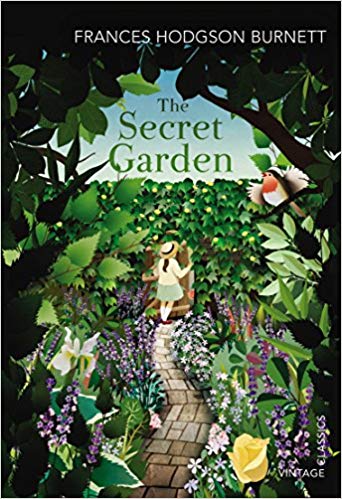
The Secret Garden.jpgThe Secret Garden by Frances Hodgson Burnett

Like Little Women, this classic young reader novel has had several screen adaptations. I have no qualms about this; it only helps to spark renewed interest in the book. This new adaptation will have Colin Firth who was in the 1993 version to play Lord Archibald Craven and Julie Walters as Mrs. Medlock.
.

Contemporary Notables:

I Know this much is True.jpgI Know this much is True by Wally Lamb

Lamb’s novel about a twin brother’s advocacy and care for his paranoid schizophrenic sibling is adapted into a 6 episode TV miniseries. Mark Ruffalo will play both brothers, Dominick and Thomas Birdsey. Director Derek Cianfrance has a few fine works, the Cannes nominee Blue Valentine (2010), The Place Beyond the Pines (2012), and The Light Between Oceans (2016).

Little Fires.jpgLittle Fires Everywhere by Celeste Ng

Goodreads Choice of the Year Best Fiction (2017) and Novel of the Year on other sites, Chinese American writer Celeste Ng’s novel on class/race differences and aspirational conflicts in the idyllic community of Shaker Heights, Ohio, is adapted into a TV miniseries. Reese Witherspoon and Kerry Washington star.

Nine Perfect StrangersNine Perfect Strangers by Liane Moriarty

Moriarty’s website states her books had sold over 14 million copies worldwide. On the heels of her successful Big Little Lies turned into the small screen, Nine Perfect Strangers has already secured Nicole Kidman and Melissa McCarthy on board for the miniseries on Hulu. Her other books will follow.
.

the woman in the window.jpgThe Woman in the Window by A. J. Finn

A shaky narrator seeing a crime happening or being caught in one, Gone Girl was the first to kick off the trend. The Woman in the Window alludes to the Hitchcock classic Rear Window. Directed by Joe Wright (Darkest Hour, 2017; Anna Karenina, 2012), screenplay by Pulitzer winner Tracy Letts (August: Osage County, 2013), and an A-list cast with Amy Adams, Gary Oldman, Jennifer Jason Leigh, Julianne Moore.


‘Little Women’ is not just about heart, but mind, aesthetics, and other enjoyment

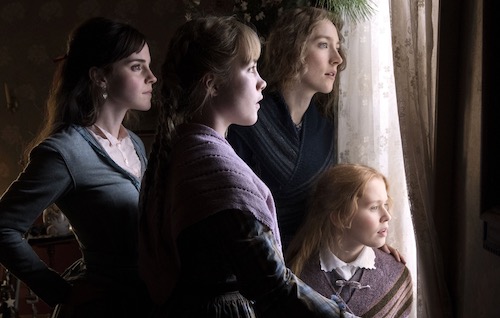
Greta Gerwig’s adaptation of Little Women is a joyous celebration of family and life. It’s an innovative feature, and a worthy rendition keeping Louisa May Alcott’s story intact and her spirit alive. The storytelling is shifted from linear to juxtaposing the timelines of seven years apart, from the March sisters’ teenage years to adulthood. A break from traditional adaptations of the novel, and a structure modern movie goers are familiar with.

LITTLE WOMEN (1)

So, instead of waiting for two hours to see what have become of the girls, viewers get to see how they’ve turned out from the start and throughout the film as the timelines switches back and forth. One effect is the intermingling of memory and present reality, adding texture to just linear storytelling. The editing is smooth as music and sound often overlap the changes of scenes like a visual dissolve.

The Oscar nominated director (Lady Bird, 2017) has surpassed herself in crafting an exquisite piece of artful creation. Unlike most other movies nowadays, Little Women is shot using 35mm film rather than digital technology. Cinematographer Yorick Le Saux offers viewers the inherent aesthetics of the medium, a grainy, more subtle visuals that augment picturesque New England in the exterior shots, and the depth and mood in the low-light interior. The picnic scene at the beach is pure delight. Mixed with Alexandre Desplat’s original music, the film is a beauty to behold.

Alcott’s 19th century American classic (1868-9) has been transposed to the big and small screen many times. No matter what your previously held memory is, Katherine Hepburn as Jo back in the 1933 first adaptation, or Elizabeth Taylor as Amy in 1949, or the 1994 adaptation with Susan Sarandon as Mrs. March and Wynona Ryder as Jo and a few up-and-coming youngsters such as Kristen Dunst, Claire Danes, and Christian Bale (as Laurie), Gerwig’s 2019 rendition is worthy to be the definitive version from now on as we head into the third decade of the 21st century.

The story is told from the point of view of Jo (Saoirse Ronan), an aspiring writer in New York at present. She reflects upon her path so far and reminisces on her family life, the cacophony of sisterhood in a busy household in Concord, MA, during the Civil War. A single woman author pitching to publishers, Jo’s struggles parallel Alcott’s, a woman writer in a man’s world. As well, it would be apt to refer to Gerwig’s own challenges as a female writer/director in the present day movie industry.

The film is an alchemy of authentic, period backdrop and set design, stylish yet down-to-earth costumes, fused with a fresh and contemporary synergy. Credits go to the four young actors bringing to life the March sisters Meg (Emma Watson), Jo (Saoirse Ronan), Beth (Eliza Scanlen) and Amy (Florence Pugh) as they live through hard times while their father has gone with the Union Army as a volunteer chaplain. Their neighbour and friend Laurie (Timothée Chalamet) remains a perpetual presence in their lives. Their altruistic mother, Marmee (Laura Dern), holds the family together and extends her care to those in need outside their home. She is the example of love and heart for her daughters to emulate. Her screen presence is comparatively small though as Gerwig lets her girls shine, especially Jo and Amy.

A touch of surprise for me is that Gerwig has kept the historic period and setting authentic without adding any postmodern quirks to shock or provoke. Her script allows Alcott’s points to flow out through the dialogues and characters within context. This is not fiery feminism, but an intelligent depiction of the status of women in the historic period. It’s an updated version doing justice to Alcott’s astuteness in her social critique which is, alas, still relevant today.

Kudos to Gerwig in bringing out the youngest sister Amy, not so much as a foil to Jo, but a worthy rival. Amy proves that even though bratty and capricious as a child, she has grown up to grasp a clarity in seeing the worth of a woman in her society, which is, not much. The realistic and rich Aunt March (Meryl Streep) has a firm view of this: it’s a lost cause with Jo who says she will not marry, or Meg who falls for a poor teacher and has to curb her material desires, and Beth’s ill health, she has put her hope on Amy to marry rich to dig the family out of poverty. Amy who has lived with her Aunt for a while when Beth is sick with scarlet fever understands her own situation with a cool head as she articulates it to Laurie. Knowing that she doesn’t have what it takes to be a truly great artist––she whose stance is to be great or nothing––Amy sees her predicament clearly. It all comes down to economics:

And as a woman, there’s no way for me to make my own money. Not enough to earn a living or to support my family, and if I had my own money, which I don’t, that money would belong to my husband the moment we got married. And if we had children, they would be his, not mine. They would be his property, so don’t sit there and tell me that marriage isn’t an economic proposition, because it is. It may not be for you, but it most certainly is for me.

Virginia Woolf’s A Room of One’s Own comes to mind as she argues that economic disparity between men and women systemically disadvantages talented women to become successful.

In her research, Gerwig delves into Alcott’s other books as well as letters, thereby knowing her from a deeper perspective and not just from the novel Little Women. This understanding and appreciation is translated into the screenplay, capturing Alcott’s sharpness of mind and the sensitivity of her soul. Here’s a poignant scene as Jo pours out her heart to Marmee after rejecting Laurie’s marriage proposal. Has she made the right decision? In an interview, Gerwig says the words are all Alcott’s, from her book Rose in Bloom, except the last sentence added by Gerwig herself, equally brilliant, piercingly clear, and very Dickinson:

Women have minds, as well as just heart; ambition and talent, as well as just beauty. And I’m so sick of people saying love is all a woman is fit for. But I’m so lonely.

The March family has had their share of misfortune. But life can be beautiful for those who behold it as such and deem it meaningful to pursue one’s own dream or simply to enjoy one’s passion, no matter how short the allotment of time. Despite challenging personal and social reality, it’s a bliss to be alive, and yes, even better when one succeeds. Gerwig has effectively brought out this theme with both sensitivity and heart. The ending scene speaks to this truth. 


~ ~ ~ ~ Ripples


***


Related Posts:

In Praise of Austen: Virginia Woolf’s A Room of One’s Own

Can a movie adaptation ever be as good as the book?