Motherhood and Music

This just happened over the weekend…

It was your typical wedding banquet. The elegant ballroom, the thirty some round tables tastefully decorated, the introduction of the wedding party, the welcoming of out-of-town guests, the buffet, the clinking of glasses…

All the usual stuff at your usual wedding celebration…until…the mother of the groom played Tchaikovsky at the piano.

As a promising, award-winning pianist in the then North Vietnam years back, her talent and future were stifled under the harsh political climate. Thanks to the sponsorship of a Canadian church, the family immigrated to Canada, starting a new life in freedom.

Not long after that, a tragic work-related accident claimed the life of the father. The mother continued to run the family business and raised her young children all by herself, instilling in them the love of music, while laying aside her own musical career…

Until, as a most moving gift of love, she practiced again for her son. On his wedding day, as the lights dimmed, she walked over to the grand piano in the banquet hall, and played with such depth of expression and poignancy, two selections from Tchaikovsky’s The Seasons, May: White Night, and June: Barcarolle. The 300 guests were silent, mesmerized, deeply moved…then the standing ovation.

The love of a mother, the power of music … what a wonderful way to bring up a child, what a remarkable beginning of a marriage.

***

Mansfield Park: Jane Austen the Contrarian

Mansfield Park is probably the most controversial and least favored of all six Austen novels. Drawing the issue of slavery into the limelight, post-colonialist critic Edward Said had certainly stirred up some ripples in alleging Austen’s acceptance of British imperialism with her mention of Sir Thomas Bertram’s Antigua plantation. [1]   Susan Fraiman has aptly presented her rebuttal to Said’s argument, noting in particular Austen’s brilliant irony and metaphor upon deeper reading. [2]   So here, I would just like to concentrate on Austen’s characterization, which I believe is more in line with her central purpose in Mansfield Park. That brings me to the other major controversy.

What makes a heroine?

Published after Pride and Prejudice, Mansfield Park presents a very different heroine from that of Austen’s previous success. Fanny Price is often measured against Elizabeth Bennet, consequently being looked upon as inferior. On the outset, Fanny is indeed everything Lizzy is not. First of all, she is physically fragile, easily succumbs to exhaustion and fainting spells, very unlike Lizzy who can take on extensive walks in the outdoors, happily treading through miles of muddy paths. No rosy cheeks from such exercise for Fanny. She may have grown into a fair lady at eighteen, but she does not have Lizzy’s athletic prowess, or her pair of fine eyes, the trademark of her exuberance.

Further, Fanny Price is painfully shy, an introvert. Readers may find her insipid, lacking glamour, but they may be more impatient with her passive, yielding personality. Why does Jane Austen present to us such a heroine, especially after the very lively and charismatic Lizzy Bennet? Well, I, for one, am glad to see Austen has demonstrated her wisdom by depicting an anti-stereotyped heroine. With Fanny Price, Austen has shattered the image of the typical heroine: a captivating beauty, quick witted and forthright, even audacious at times, endowed with energy and charisma. Why is reticence, or introvert nature being frowned upon? When did we start thinking of long-suffering and perseverance as negative traits? Why is humility not getting its rightful esteem? And, why are the quiet, observant and thinking female not as attractive as those who are more expressive, or who possess only outward beauty?

What Fanny lacks in physical vigor, she more than compensates with her inner strength. And it is in the nobility of character that Austen has chosen to depict her heroine. Underneath Fanny’s fragile appearance is a quiet and principled perseverance. Seeing the impropriety of staging a play which entails the remodelling of Sir Thomas’ very private library in his absence, Fanny stands firm in not participating, despite the pressures and insults from her older cousins, the persuasion from the Crawfords, the scornful criticisms from Mrs. Norris, and even the eventual yielding of Edmund himself.

In her ingenious manner with biting irony, Austen pits Fanny Price against her formidable foe, Mary Crawford. At first sight, “Mary Crawford was remarkably pretty.” Not long after that, Austen adds:

She had none of Fanny’s delicacy of taste, of mind, of feeling; she saw nature, inanimate nature, with little observation; her attention was all for men and women, her talents for the light and lively.

When it comes to moral uprightness, Mary Crawford is no match. Thanks to the way she defends her brother Henry who has snatched Maria away from her husband, even Edmund can now see clearly. Henry Crawford is a carnal schemer, and Mary Crawford is equally manipulative and egotistic. Unfortunately, it takes a scandal and trepidations for others to learn what Fanny has seen clearly from the very beginning.

In a way, Fanny Price is more lucid than Elizabeth Bennet in not succumbing to the lure of vanity with Henry Crawford’s superfluous praise and wooing. If only Elizabeth had conquered that soft spot regarding Wickham earlier on….but of course, there wouldn’t be any story then. And if it is admirably bold for Lizzy to resist Lady Catherine de Bourgh, someone who is of no relation to her, Fanny is all the more courageous in her refusing to marry Henry Crawford by standing up against the very guardian to whom she owes her upbringing and her present living, the patriarch Sir Thomas Bertram. It takes extraordinary fortitude to go against everyone in Mansfield Park, and follow her own heart, while the privilege to explain herself is infeasible.

Compared to other Austen heroines, Fanny Price is equally, if not more, worthy. Fanny has the passion of Marianne, while possessing the rationale of Elinor. That is why her secret love for Edmund can endure unfavorable conditions. Her lucid sense of judgement restrains her to reveal it to Edmund, who, with his emotional frailty, would be exasperated knowing his own beloved cousin is a rival rather than a friend of Mary Crawford. Her perseverance can easily match and surpass that of Anne Elliot. And, she may be uneducated and naive like Catherine Morland to start with, and is equally moldable and respectful when taught, she has way surpassed her mentor in insights and maturity as the story progresses.

By presenting a heroine who may not be a typical favorite, Austen seems to be writing contrary to conventional norms. (But is it just modern audience who have differed in their expectations, resulting in recent film adaptations altering the very spirit and essence of Austen’s characters to appeal to them?) Has Austen created a character so different from her other heroines? Comparing Mansfield Park with all her other novels, I do not feel she is particularly off her usual standpoint. As with her other heroines, Austen is more concerned with character, virtues, and morals, the inner qualities of the person rather than the outer appearance. Mansfield Park is the best manifestation of her stance. Ultimately, what shine through for our Austenian heroine are:

…the sweetness of her temper, the purity of her mind, and the excellence of her principles.

At the end, the steadfast and long-suffering Fanny Price triumphs. And for critics who assert that Austen had silently condoned slavery, the ending of Mansfield Park should silent them all, for it is the socially and economically disenfranchised and marginalized that is exalted and vindicated. In my view, Edmund does not deserve her. However, it is Fanny’s heart and long unrequited love that Austen attempts to satisfy. And I totally concur with that, for our heroine deserves it. And no, Fanny does not become mistress of Mansfield Park, which is also ideal: It is not affluence and materialism that win after all, but spiritual values and nobility of character that overcome, and they are their own rewards. The Parsonage is a most fitting place for both Edmund and Fanny to begin their life together.

Notes:

1. Said, Edward W. Culture and Imperialism. (Alfred A. Knopf, 1993). His chapter on Jane Austen’s Mansfield Park can be read in Dorothy Hale’s The Novel: An Anthology of Criticism and Theory 1900-2000. (Blackwell, 2005) pp. 691-715. You can read part of it online on Google Books by clicking here.

2. Fairman, Susan. Jane Austen and Edward Said: Gender, Culture, and Imperialism. Critical Inquiry, 21 (4), pp. 805-821.

To read my other JA posts, book reviews, movie and TV adaptations, and other related books, just click on ‘Jane Austen’ under categories on my sidebar.

Update:  You can read this article as well as other interesting and informative articles on Jane and the Regency Period in the Jane Austen Centre Online Magazine by clicking here.

CBC Disbands Radio Orchestra

Update April 1:  Reader Tom has alerted me to the site for online petition to save the CBC Radio Orchestra.  http://www.savecbcorchestra.com  Please sign the petition and spread the word. 

Another shocking news:  The CBC Radio executives have just decreed that The CBC Radio Orchestra is to be dismantled as of November, 2008, on the heels of Cutting Classical Music Programs on Radio 2. 

What a swift one-two punch!

Formed in 1938, mandated “to make engaging musical radio programs, commission and perform works by Canadian composers, showcase Canadian performers and conductors, and discover and expose Canadian excellence”, the orchestra has been a Canadian cultural and musical tradition for 70 years.

 Click here for the news coverage in the Globe and Mail of March 27, 2008.

Click here for the Vancouver Sun article on Canada.com: CBC Kills Radio Orchestra

Click here for the article:  The Day The Music Died in The McGill Daily.

Does the CBC management even have the right to do that?  I thought this is a publicly-owned national radio station.  A cultural and arts institution with 70 years of history can be chopped off the Canadian landscape by a few executives like a branch off an old tree in the backyard? 

With this executive order, the CBC has finished off a piece of North American history, disbanding the last radio orchestra in the continent.

Again, I was alerted to this piece of appalling news by my teenaged son…talking about axing classical music to attract younger audiences.  CBC has gravely miscalculated the musicality of our youth and done an utter disservice to them, depriving them of knowing and appreciating a heritage dating back to hundreds of years of human civilization.

To save Classical Music from being axed off the cultural tree, Click here for the Online Petition.

BTW, the Facebook Group ‘Save Classical Music on the CBC’ now has over 8,000 members…I’m not trying to stereotype, but would these not be some of the ‘younger audiences’ CBC is trying to woo?

                                                            ******

CBC Cutting Classical Music Programs

What a shock it is for me to learn that our national radio station CBC Radio 2, is choosing to axe more classical music programs to appeal to a ‘wider audience’.  Why, aren’t we who have been enjoying the arts and music, who have cherished the long tradition of these CBC productions, who have raised our children on them, teaching and nurturing them to appreciate their content, not a part of the general public? 

Click here for Russell Smith’s article in The Globe and Mail on March 13, 2008, “No classical?  Then kill Radio 2 and get it over with.”  Just let me try to fathom the motives behind these further cuts:

1.  Diversity.  If it’s diversity they are aiming at,  they should all the more leave the classical edge in because CBC Radio 2 is the only nation-wide English radio station in Canada that offers classical music.  Which station can I tune in for such extensive and in-depth coverage of the arts and artists, classical music and musicians, live concerts, commentaries, CD reviews and even an audience requests program? What alternative do I have when the only classical music station in Canada decides to go with the flow and become just another dial for easy listening or contemporary pop?  I feel like I’m a CBC copywriter doing a promo for the station…but why would they need me to tell them this?   To CBC Radio: Respect your role in the Canadian cultural landscape.  What ‘diversity’ are you offering if there are no choices in genre? If ‘diversity’, and ‘choice’ are such powerful words nowadays, honor the real meaning of these terms and not just utter them for political correctness. 

2.  Multicultural. The term “Classical Music” has often been misconstrued as being monocultural.  Are CBC program researchers and management not aware that many so called “classical” composers, especially the more contemporary ones, are from a diverse cultural background including not only Western European, but Central and southern European, Scandinavian, Russian, North American, South American, and Asian?  And do they not know that for this last group here, Asian-Canadians, especially appreciate classical music and particularly in the teaching of their young, the next generation of music lovers?  I for one can speak out on this issue where I personally and know and have come into contact with countless parents of Asian descent who have involved their children in the learning of classical music, and have nurtured numerous talented young classical musicians here in Canada.  Jan Wong in her recent book Beijing Confidential notes that there are 30 million piano students and 10 million violin students in China today.  Two of the most popular music icons among the young are Lang Lang and Yundi Li, both world renowned classical pianists in their 20’s. Wouldn’t it be odd that one can enjoy classical music on radio in China but not be able to in Canada?

3.  Education. If it’s just for the sake of our young, we owe them a great heritage if we do not nurture them to appreciate the roots of modern music. Without going deep into music theory, isn’t it true that our contemporary music evolves from classical foundations?  Calling it ‘classical’ sounds so politically incorrect, as it wrongly conveys ‘elitism’ or simply connotations of being passé. But, would you avoid teaching our next generation Canadian history just because history is passé? 

4.  Business. If it’s for marketing reasons, why add one more ‘easy listening’, ‘pop’, ‘jazz’ or ‘contemporary’ station to the already competitive business, why fight for market share while you can distinctly offer something very different and unique, a real alternative to the radio audience in Canada.  If you wish to morph into a more hip mode to appeal to the young, look for younger DJ’s for your classical music programs. If George Stroumboulopoulos (previously of MuchMusic) can become a Canadian news icon on CBC Television, I’m sure you can find young blood equally well versed in the classical music sector.  

5.  Identity. And if it’s Canadian identity they are seeking, trying to appease the ‘general public’ (as if we are not), then CBC Radio 2 should all the more realize, as a publicly owned radio station and a national institution, the classical music they are eliminating is not just a part of Canadian identity, but human civilization…and I suppose western or eastern, old or young, we are a part of that.

Enough said here.  My teenaged son who alerted me to this piece of incredulous news has sent me a link to the on-line petition.  Click here to sign.

Other reactions to this announcement:

 http://www.cbc.ca/arts/media/story/2008/03/04/radio-two.html

http://www.friends.ca/News/Friends_News/archives/articles03200802.asp

A Facebook group has already been formed:  “Save Classical Music on the CBC”, has gathered more than 8,000 members and counting.

August Rush (2007)

Autust Rush

In a fairy tale, you could throw all the right ingredients up in the air, and everything will fall in place into a gourmet feast right in front of you eyes.  Of course, the table will be set in fancy, with candlelights and all that jazz (you know, just like the “Be my guest” scene in Beauty and the Beast).  But moving-making is no fairy tales, even when you’re shooting one. 

A modern version of Dickens’ Oliver Twist, August Rush is a contemporary fairy tale set right in the realistic and metropolitan New York City: great setting.  A boy growing up in a boys’ home heading out to search for his birth parents merely by following the music in his heart: good story line.  That music has the power to unite souls and connect lost relations: magical idea. And the title ‘August Rush’: how cool is that?

Well, August Rush has all the right ingredients… but it lacks the quintessential elements: a good recipe and a good cook.  Without a good script that delivers intelligent and engaging dialogues, and quality directing to bring it to fruition, the characters remain banal, the story and scenes contrived and the intended magic is simply a concoction in saccharine.  It might still please, but not gratify.

Mind you, I wanted to see the film work.  I’d appreciated the music.  I was enthralled by the ingenious scores juxtaposing classical orchestral work with jamming guitars and raucous rock bands.  I’m also a fan of Keri Russell, have thoroughly enjoyed her performance in The Upside of Anger (2005), in particular.  But her great effort here in August Rush just can’t compensate for her lack of chemistry with Jonathan Rhys Meyers, who, I’m afraid, may be a miscast. I also feel that Freddie Highmore’s character August Rush needs a bit more depth (and less smile), and the overacting of Robin Williams may have done more harm than good…but of course, we need a villain in a fairy tale, don’t we.

Keri Russell plays a young cellist Lyla who is rising to fame in NYC.  She gets pregnant by rock band lead singer Louis (Jonathan Rhys Meyers) in a one-night stand.  The next morning Lyla’s father abruptly stops their relationship before it can even get started.  Louis goes back to England, and both give up their musical career. Months later, Lyla gets in a car accident and gives birth to a son but is told by her father that the baby didn’t survive. The boy grows up in an orphanage.  Compelled by the music he has been hearing in his heart, he runs away to NYC to look for his birth parents. He soon befriended a young busker who leads him to the Wizard, a modern day Fagin (Robin Williams).  The Wizard manages a group of young street musicians, squatters in a shabby abandoned building. Seeing the potential gains from his new found talent, the Wizard takes the prodigy under his controlling wings, until the boy breaks free and follows his inner music that ultimately leads him to the end of his search.

I’m all for wholesome, uplifting and inspiring films, and strongly believe in the power of music, but all good intentions cannot catapult August Rush to reach its lofty goals. 

~ ~ ½ Ripples

Jane Making The List of Best Movies Ever Made

With January to April being Jane Austen Season on PBS where The Complete Jane Austen is being aired on Masterpiece, it’s just refreshing to know that three Austen movies made it to the list of 1,000 Best Movies mentioned in my last post. I’m sure Janeites do not need anybody’s approval, but it’s good to have it just the same.

Again, here’s the link to New York Times’ The Best 1,000 Movies Ever Made. It should be noted that the list is based on the second edition of the book The New York Times Guide to the Best 1,000 Movies Ever Made which was published in 2004. The New York Times on-line edition still have the icon and link for readers to click even as recent as March 3, 2008, apparently they have not updated the list since the publication of the book.

The following are the three Jane Austen movie adaptations that made the list.

Persuasion (1995)Persuasion (1995) with Amanda Root as Anne Elliot and Ciaran Hinds as Captain Wentworth. Here’s a little excerpt from the NY Times:

Of course, Austen’s protagonists are never dumb, but Anne, being somewhat older, is also a good deal wiser, and the characters around her accordingly take on greater dimension and subtlety. Naturally, this being an Austen story, all ends well, but the path is somewhat less straightforward than in other films adapted from her work.

*****

Pride and Prejudice 1940

Pride and Prejudice (1940) with Greer Garson as Elizabeth Bennet and Laurence Olivier as Mr. Darcy. The New York Times had this tidbit about the classic adaptation:

Though Austen’s novel was set in 1813, the year of its publication, the film version takes place in 1835, reportedly so as to take advantage of the more attractive costume designs of that period.

*****

Sense and Sensibility (1995)

Sense and Sensibility (1995) with Emma Thompson, Kate Winslet, Hugh Grant and Alan Rickman. New York Times critic Janet Maslin summed it up:

We need no further proof that this material is ageless.

                          ************

It’s interesting to note that a modern version of Emma also gets a nod from the critics. Thus begins the review of Clueless (1995) on the NY Times:

“Jane Austen might never have imagined that her 1816 novel Emma could be turned into a fresh and satirical look at ultra-rich teenagers in a Beverly Hills high school.”

              Clueless (1995)

Jane Austen’s novels are indeed timeless.

New York Times: Best 1,000 Movies Ever Made

Here’s the link to the list of 1,000 Best Movies Ever Made according to New York Times movie critics. The list is based on the book The New York Times Guide to the Best 1,000 Movies Ever Made, second edition, published 2004.

Do you find your favorites here? If not, which movies do you think should be on the list? Which should not be? A list of 1,000 movies spanning almost a century, you might think there should be a lot of choices, right?

My view:

  • I agree maybe Bambi (1942) should be there, but no Out of Africa (1985) or Shawshank Redemption (1994)?
  • Ok, so Bull Durham (1988 ) is in, but where are Field of Dreams (1989) and Dances With Wolves (1990)?
  • I regret to see The Last Temptation of Christ (1988 ) is on the list but not The Passion of the Christ (2004).
  • So they have The Pianist (2002) but ignore Sophie’s Choice (1982) and Life is Beautiful (1997).
  • I see that Chicken Run (2000) gets to rub shoulders with Ben-Hur (1959)….ookay….and, if Working Girl (1988 ) can get a nod, then where’s my Bridget Jones’ Diary?

… and so on and so forth…

Your view?

Ohio Journal

Spent a few days in Ohio a couple of weeks ago. No, this is not about the Debate. But I did have some memorable moments. Here are some pictures I took during my February visit to Cleveland and Kent, Ohio.

The Rock and Roll Hall of Fame in Cleveland, designed by I. M. Pei. Reminiscence of another Hall of Fame…The Louvre:

rock-and-roll-hall-of-fame-cleveland-oh.jpg

Case Western Reserve University in Cleveland is home to several prominent landmarks. The Peter B. Lewis Building houses the Weatherhead School of Management. Frank Gehry’s design never ceases to delight and surprise:

the-school-of-mgmt-frank-ghery-design.jpg

The Cleveland Museum of Art:

the-cleveland-museum-of-art.jpg

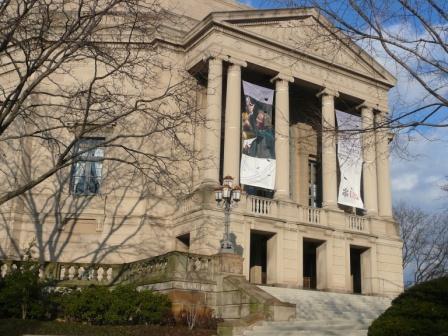
The Severance Hall, home of the Cleveland Orchestra:

severence-hall.jpg

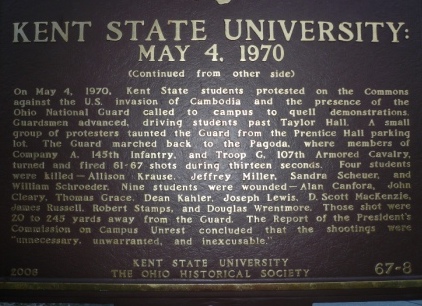
On a more sombre note, I had the chance to visit the student protest site at Kent State University. On May 4, 1970, the Ohio National Guard was sent out to quell an anti-Vietnam-war demonstration. Four Kent State University students were killed and nine wounded. Several Memorials as well as detailed account of the incident were set up at the site:

may-4-memorial-kent-state-u.jpg

student-memorial.jpg

sign-on-student-memorial.jpg

plaque-at-memorial-site.jpg


silhouetted-trees-at-dusk-in-student-protest-site.jpg

As I left the site, it was almost dusk. A red cloud rose up in the distant sky. The scene of silhouetted branches reaching up to the heavens reminded me of another student protest in another place, in which the Square was washed clean of blood the very next morning, wiping out all traces of the tragedy.

What a contrast.

**********

Photo Source: Arti of Ripple Effects, February 2008. All Rights Reserved. www.rippleeffects.wordpress.com

San Francisco Weekend

Spent the past weekend in SF.  The whole Sunday evening was wasted in the airport, couldn’t see the SAG Awards, nor Masterpiece Theatre’s Mansfield Park.  But from what I’ve read in some of your blogs, I didn’t miss much on the PBS’s third installment of The Complete Jane Austen.

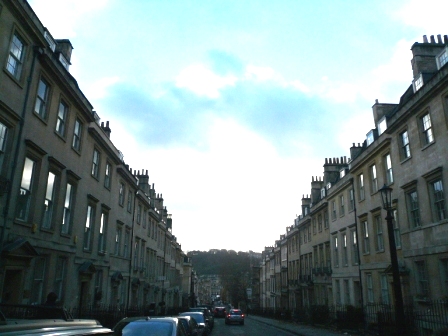
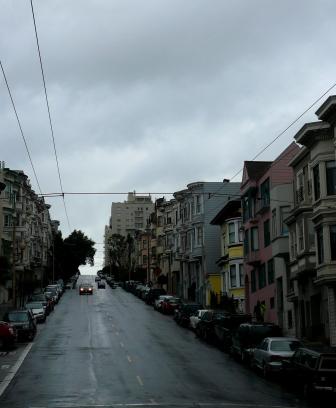
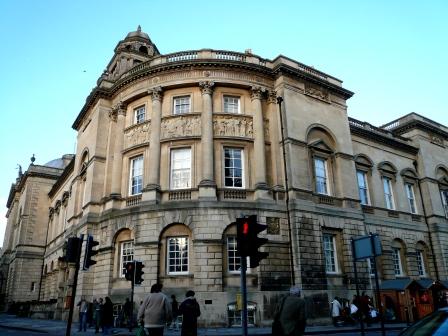
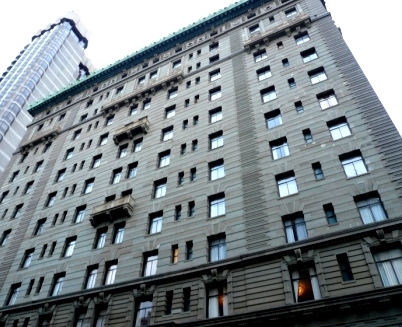
I did have an enjoyable time in SF.  For some reasons, maybe because of the rain, I found SF, some parts of it at least, to resemble Bath, England. I know, by rational thinking, the two places cannot be more different, historic Bath and modern day SF?  But here are some of the pictures of both places:

Gay Street Bath Gay Street, Bath

Union Street SF  Union Street, SF

The Guild Hall, Bath  Guild Hall, Bath

Union Street Bldg, SF Union St. Bldg., SF

The Empire, Bath The Empire, Bath


 Downtown Hotel, SF

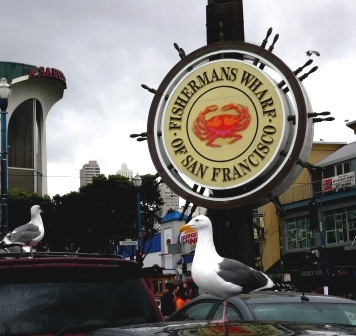
Of course, there are sights and sounds that are uniquely SF:

Fisherman’s Wharf

Crabs

 SF Streetcar

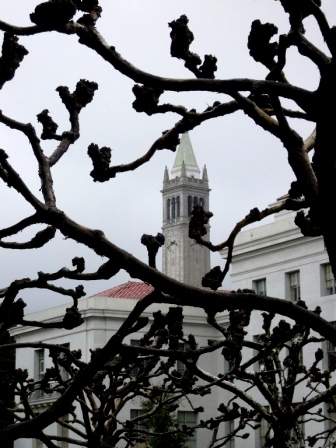
And UC Berkeley, in the rain:

UC Berkeley

Sproul Hall UC Berkeley

Broken Plates Wall

Globe Without Glamour

So the Hollywood Foreign Press Association has officially cancelled the 65th annual Golden Globe Award ceremony on January 13.  Instead, there will be a press conference at the same time (6 pm pst) to announce the winners of the 2008 Golden Globes.  Click here for the official announcement from HFPA.

To maintain solidarity with striking Hollywood writers, the Screen Actors Guild indicated earlier that all the 72 nominees would not show up for the 65th Golden Globe Award. Click here for more details.

For a change, good movies and TV shows are announced without all the glitz and glamour, no fashion statements, no red carpet photo ops… just no-nonsense recognition of some no-nonsense movie making and TV production. 

With all due respect to the writers, and the HFPA’s financial loss in the cancellation, and all the nominees who deserve recognition, I say…a nice change.  

Memorable Movie Quotes

CLICK HERE to an even more updated post: QUOTABLE QUOTES FROM DOWNTON ABBEY, dated March 23, 2012.

For an update of this post, a newer version on the theme of love, click here.  Again, you’re most welcome to contribute to the list there.

Many movie lovers are fond of collecting, mentally at least, memorable movie quotes.  They might watch a movie a few times, savor their favorite dialogues, might even memorize them and use them in their daily conversation.  For others, certain movie quotes ring so true in their depiction of life, love, loss or lust, that they’d treasure them as commentary of their own experiences, or maybe even adopt them as credo for their life.

What’s interesting is, as these words are quoted out of context, they can still conjure up images from the movies, or elicit the particular sentiments that we had when we were watching the film.  This is the power of story-telling when accompanied by visual images, edging in our minds meaningful thoughts and unforgettable sentiments.

I suppose every movie lover has his/her own favorite movie quotes.  Here are some just to tap into that subconscious, hidden repertoire of your movie quotient. First the easy ones, the more recognizable quotes.  Can you tell which movies they are from:

.
* We’ll always have Paris.

* If you build it, he will come.

* After all, tomorrow is another day.

* Love means never having to say you’re sorry.

* Life’s a box of chocolates…You never know what you’re gonna get.

Easy?  Now try these more obscure ones, but just as memorable nonetheless:

* You look stupid and rich…I’m smart and poor.

* I like you very much…just as you are.

* We read and write poetry because we are members of the human race.

* I gotta keep breathing, because tomorrow the sun will rise.  Who knows what the tide could bring?

* Pain is God’s megaphone to rouse a deaf world.

* My life is made up of units of time. Buying CDs – two units. Eating lunch – three units. Exercising – two units.  All in all, I  had a very full life.  It’s just that it didn’t mean anything.

Hey, I just thought it would be a good idea to hear from movie lovers what their personal favorite quotes are.  Let’s hear from you all. Send in your memorable movie quotes in the “Comment” section.  Let’s have a Memorable Movie Quotes Fair!