2025 is a Year of Anniversaries

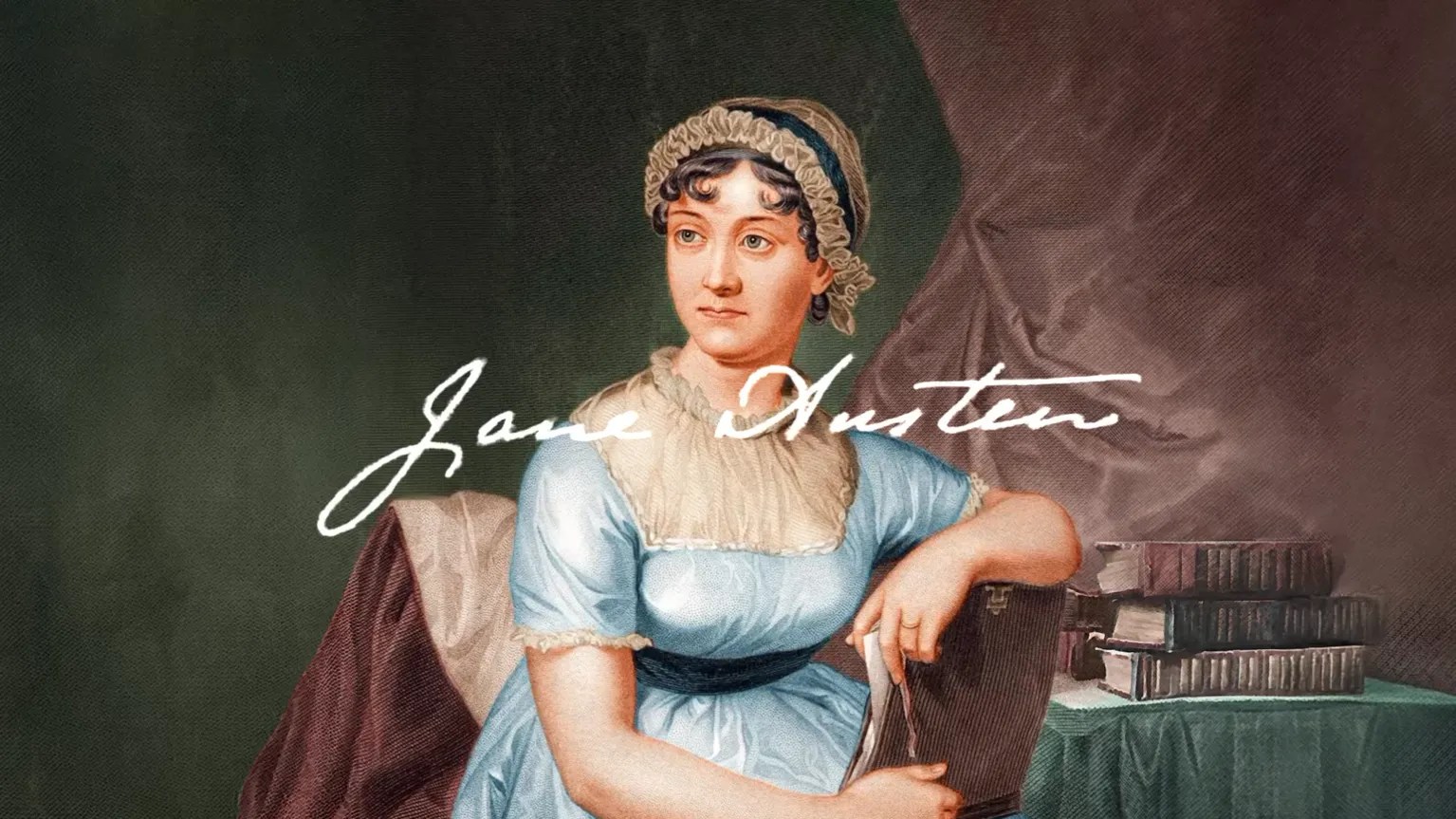
250th Birth Anniversary of Jane Austen (December 16)

It’s a great loss that Jane died so young, at 41, from a painful illness. The legacy of her six completed novels continue to thrive today. Movie adaptations are still being made, most notable is the upcoming new version of Pride and Prejudice with Emma Corrin as Lizzy, Jack Lowden as Mr. Darcy, and Olivia Colman as Mrs. Bennet. But we will never forget that iconic wet shirt scene of Colin Firth diving into the pond way back in 1995, thirty years ago.
30th Anniversary* of Jane Austen Screen Adaptations:

Pride and Prejudice Austenmania was ignited with this six-part BBC TV series. Andrew Davis’ screenplay brings Colin Firth and Jennifer Ehle together as the pivotal pair. To many, myself included, the definitive version of all the adaptations; yes, my prejudice here. 

Sense and Sensibility That same year, 1995, we saw the breakout work of Taiwanese American director Ang Lee, proving his versatility, with Emma Thompson basking in the limelight receiving her Best Adapted Screenplay Oscar.
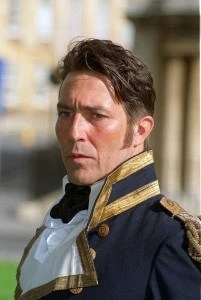
Persuasion While not as popular as Pride and Prejudice, a novel that shows a more mature writer showing her own sense of wisdom in handling love and life. Ciaran Hinds is an impressive Captain Wentworth. 

Clueless One of the first modern renditions of Austen novels. Here’s an American teenager playing Emma in her high school. What follows are numerous contemporary parallels of Austen’s works, like Bridget Jones’s Diary, and across cultures, Bride and Prejudice, From Prada to Nada. 

*Jane Austen’s House in Chawton is celebrating the 30th Anniversary of these adaptations with their own special AUSTENMANIA! events.

***

100th Anniversary of the publication of some modern classics, books and poems* Listing a few here:
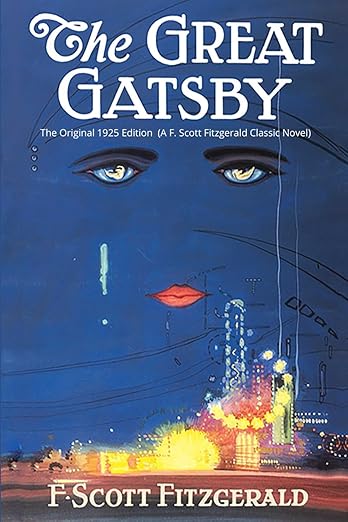
The Great Gatsby by F. Scott Fitzgerald

One of my all-time favourite books. Filmmaker Baz Luhrmann highlights all the zeitgeist of the jazz age, the wild parties, and the gaudy excess but fails to bring out the deep character of the man behind those façade, a romantic hanging on hope and seeing every obstacle as a green light. My Ripple Review here.

Mrs. Dalloway by Virginia Woolf

This is one example that the movie adaptation is as good as or even surpasses the book, for it shows more than words can tell. While I admire Woolf’s stream of consciousness, both in expression and withholding, director Steven Daldry’s multi-faceted depiction of Clarissa’s internal world projected into the psyche of two other women is exceptional. David Hare’s screenplay adapting Michael Cunningham’s The Hours is an exemplary transposition of literature onto the screen. And watching Meryl Streep, Nicole Kidman and Julianne Moore in one film is sure worth one’s ticket, or time. 

The Painted Veil by W. Somerset Maugham

Somerset Maugham is one of those writers who take you to places but still remain intact with his characters, the backdrop of foreign lands are merely that, backdrop, while the characters lead the story. I’ve seen the movie adaptation, and in my Ripple review I had written this: “Transforming great lines from a book into equally inspiring visual story-telling is an arduous task, and it’s something that mere beautiful cinematography cannot suffice.”

Carry On, Jeeves by P. G. Wodehouse

The third of Wodehouse’s 20 Jeeves and Wooster books. Jeeves is a marvellous invention, a character that reminds me of Mr. Carson of Downton Abbey. There are lots of LOL moments. He’s like a Swiss army knife, a tool of multiple usages. Wodehouse makes him more than utilitarian though. In the interactions between employer and butler, the joke always falls on the former. And that’s the fun of it. 

No More Parades by Ford Madox Ford

No More Parades is the second book in the Parade’s End tetralogy by Ford Madox Ford (1873-1939) Set in the time of WWI, where poetry was written in the trenches. In its core a love story movingly depicted in the BBC five-episode TV series (2012), one of the most understated and neglected productions. A young Benedict Cumberbatch and Rebecca Hall are the mismatched couple, but it’s the pristine Adelaide Clemens that shines as idealistic suffragette Valentine. 

The Hollow Men by T. S. Eliot

‘The Hollow Men’ is the title poem of this collection of poetry by Eliot, astute critic of his times. “We are the hollow men/we are the stuffed men/Leaning together/Headpiece filled with straw.” Alas, a look at our world today one would find how after one hundred years, Eliot’s critique of his society still stands.

*The popular ‘Year Reading Club’ on Kaggsy’s and Simon’s book blogs are featuring the 1925 Club reading event this October, where we read books published in 1925 and share our thoughts in our blogs.

***

50th Anniversary of some iconic movies:

Where were you in 1975? Watched any of these movies in the theatre?

Jaws dir. by Stephen Spielberg

One Flew Over the Cuckoo’s Nest dir. by Miles Forman

The Man Who Would be King dir. by John Houston

Monty Python and the Holy Grail dir. by Terry Gilliam and Terry Jones

Dog Day Afternoon dir. by Sidney Lumet

Barry Lyndon dir. by Stanley Kubrick

The Return of the Pink Panther dir. by Blake Edwards

Three Days of the Condor by Sydney Pollack

Farewell, My Lovely dir. by Dick Richards

Funny Lady dir. by Herbert Ross

***

Not born yet? How about 1985?

40th Anniversary of:

The Breakfast Club dir. by John Hughes

Back to the Future dir. by Robert Zemeckis

The Color Purple dir. by Stephen Spielberg

A Room with a View dir. by James Ivory

Out of Africa dir. by Sydney Pollack

The Purple Rose of Cairo dir. by Woody Allen

Vagabond dir. by Agnès Varda

Witness dir. by Peter Weir

***

Numerous posts on Jane Austen, as well as movies and books mentioned in the above lists are posted here at Ripple Effects. Seek them out using the Search feature on the top of the left sidebar.
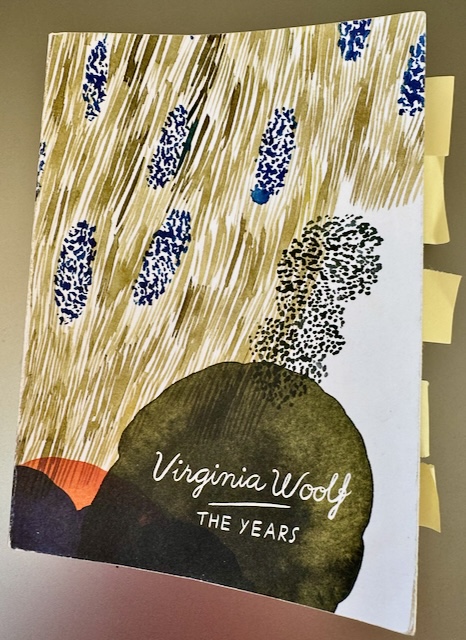
Virginia Woolf’s The Years sparks some surprising associations… Downton Abbey?

“She wanted to see the owl before it got too dark. She was becoming more and more interested in birds. It was a sign of old age, she supposed.” –––– Virginia Woolf, The Years* (186)

Finally, I finish my other 1937 Club read hosted by Kaggsy and Simon that took place in April, two months late, and that’s Virginia Woolf’s The Years, published in 1937. It sure feels like years for me to finish this book. Better late than never, for I have full intention to see what Woolf had to say in her last novel published during her lifetime (Between the Acts was published shortly after her death in 1941), specifically, what was in her mind just a few years before she took her own life.

The book follows the children of Colonel Abel Pargiter’s family as they go through the years crossing the 19th century into the 20th. It’s a family saga through chapters titled for a specific year, beginning with 1880, 1891, then into the new century 1907, 1908 and to the First World War, and finally the “Present Day” which is the 1930’s. Within each chapter the narratives are episodic, characters appear without introductions; readers would have to piece together who’s who and how they relate to each other.

A few unexpected mental associations came to me during my reading. The quote above at the beginning of this post is one of those surprises. A loud Whoa! when I read it: Interest in birds as a sign of ageing. It’s a thought in the mind of Eleanor, the eldest of the Partiger children, when she is fifty-five. She goes on to live past seventy when the book ends, and I’m sure has seen many more owls.

Another surprise for me in my reading experience of The Years is how it’s like watching an arthouse film, or any good movie for that matter. My first impression of that beginning chapter 1880 is that it reads like a script where the expressions and actions of the characters are highly nuanced and the subtext in their conversations speak volumes. Nothing much is happening but the seemingly uneventful narrative carries unsettling undercurrents.

Here’s an example. The Colonel, with his wife Rose on her death bed, is a troubled and temperamental man whom his seven children fear more than respect or love. He comes back home unexpectedly during supper time in the opening chapter and the way he drinks his tea while trying to strike up conversations in a surly manner with his children reflects his changing mood. A ready movie scene here. I’ve taken out the dialogues, but just the description of his tea-drinking actions reveal a lot about his character:

He stirred his sugar round and round in the cup as if to demolish it… ground the grains of sugar against the walls of his cup. [After some tense conversations with his children] Then he seemed to repent of his gruffness… He drank up his tea. Some drops fell on his little pointed beard. He took out his large silk handkerchief and wipe it impatiently… [Later] the Colonel took up his cup, saw there was nothing in it, and put it down firmly with a little chink. The ceremony of tea-drinking was over. (13-14)

Another surprise is that reading The Years makes me think of Downton Abbey, how a family goes through changes both in the larger socio milieu and in their personal lives through the years. The time-lapse is about the same as the six seasons of Downton, from horses to cars, from candles to electric lights, WWI and the changes it brings. The following line in Woolf’s novel makes me think of the Dowager Violet Crawley:

Then he looked at a car. It was odd how soon one got used to cars without horses, he thought. They used to look ridiculous. (215)

BTW, Edith Crawley, who breaks the mould and ventures out to live in London on her own and heads up a magazine she inherits from Michael Gregson and a London flat, has mentioned that she had met Virginia Woolf there, one of Michael’s Bloomsbury acquaintances. One can imagine the author just might have certain influence on her.

The Years is about lives lived, actions or non-actions, the regrets and the resignation of what had happened, the unchangeability of the past. Check out these lines, the introspection of Eleanor’s, just reminds me of Mary Crawley, who had uttered similar words thinking of her own past errors in judgment:

But once it’s done, there it is… How irrecoverable things are, she thought. We make our experiments, then they make theirs. (185)

Above all else, The Years is about the past and memories, and the meaning of it all. Proust’s Remembrance of Things Past comes to mind, no surprise. Both authors value the writing down of lives lived. But Woolf goes into a more depressed mode of seeing even the futility of it. As the chapters, ie, the years, move on, Woolf is more explicit about her view on life––I suppose that’s her perspective––through Eleanor’s point-of-view. Considering Woolf taking her own life just four years after this book was published, I paid attention to the reflections and internal search for existential meaning, or the failing of which, and find these passages particularly poignant. Short sentences like this: “Scenes passed over scenes; one obliterated another,” to reflection like the following, again, quite a cinematic moment:

Things can’t go on for ever, she thought. Things pass, things change, she thought, looking up at the ceiling. And where are we going? Where? Where?… The moths were dashing round the ceiling; the book slipped on to the floor. .. made an effort; turned round, and blew out the candle. Darkness reigned. (195)

to what seems like ultimate despair, take note that Woolf wrote this in the 1930’s:

But how can one be ‘happy’? she asked herself, in a world bursting with misery. On every placard at every street corner was Death; or worse––tyranny; brutality; torture; the fall of civilization; the end of freedom. (358)

I gave the book 3.5 out of 5 stars in my Goodreads review, an evaluation that’s based on my first reading, having had to figure out who’s who –– considering the Pargiters have seven children and some of them have their own children. And then there are extended family members, cousin, niece and nephew, and servants. I’m sure upon second reading, I’d be able to get a clearer picture of all the characters and would enjoy it more, for it really deserves more than one reading.

__________

* The edition that I used (photo above) is Vintage Classics, Penguin Random House UK, London. 401 pages. Introduction by Susan Hill. With this inscription before the Introduction:
“The text of this edition of The Years is based on that of the original Hogarth Press Edition, published by Leonard and Virginia Woolf on 15th March 1937.”

***

Related Post on Ripple Effects:

In Praise of Austen: Virginia Woolf’s A Room of One’s Own

In Search of Lost Time by Marcel Proust: A Movie Reviewer’s Long Take

My other 1937 Club Posts:

Out of Africa by Karen Blixen from Book to Movie

Somerset Maugham’s Theatre and Screen Adaptation

A Tribute to Canada’s Nobel Laureate Alice Munro: Munro and Movies

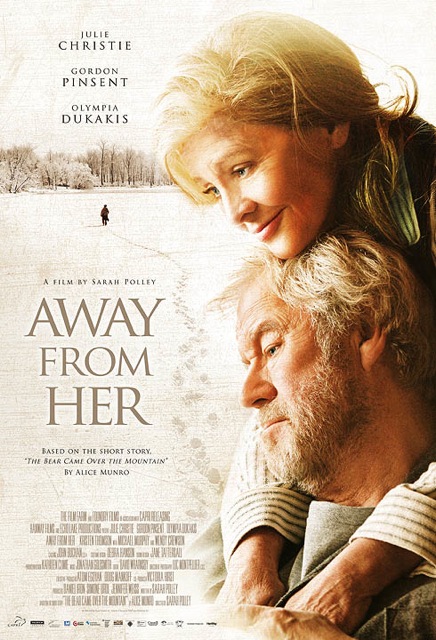
Alice Munro had died at the age of 92 on Monday, May 13, 2024, in Port Hope, Ontario. Winner of the Nobel Prize for Literature in 2013 and the Man Booker International Prize in 2009, Munro solidified her stature in literature with her mastery of the short story. As a tribute to her passing, I’m reposting something I wrote on the occasion of her Nobel Prize win back in 2013 in the following. In that article, I’d also included a short review of the film Away From Her, based on her short story “The Bear Came Over the Mountain”.

_____________

On October 12, 2013, I wrote:

Thanks to the Swedish Academy, Alice Munro doesn’t need a blockbuster movie to raise awareness of her works. Described by The New York Times as ‘Master of the Intricacies of the Human Heart’, and with her story settings mostly in rural counties and small towns, the 82 year-old writer must have known how the small and intimate can have far-reaching effects.

The short story as a literary form too must have gained importance and legitimation overnight now that Munro is honored as Nobel Laureate. The novel isn’t the only peak of the mountain of literary pursuits. Readers too, can now be totally comfortable with reading ‘just a short story’.

Back to movies, with our contemporary mega, blockbuster culture, it sure looks like the general public needs to see a movie before knowing about a literary work. While I don’t like the idea, I’ve to admit that could well be the case nowadays. But for Munro, can anyone name a full feature movie that’s based on her short stories?

Right. Actually there are four* (see correction below). Edge of Madness (2002) is relatively unknown. Another one interestingly is an Iranian film, Canaan, which won the Audience Awards–Best Film at the Fajr International Film Festival in 2008. A better known adaptation is Away From Her (2006). It remains one of my all time favorite films. The most recent completed production is Hateship Loveship which premiered at TIFF13. I regret missing it when I was there in September. A film based on her story ‘Runaway’ is currently in development.

With Munro winning the Nobel, hopefully we’ll have the chance to see a general release of Hateship Loveship. So there you go, Munro could well be helping to reverse the trend: the writer promoting the film.

To celebrate Munro’s Nobel win, I’d like to repost in the following a review of Away From Her which I wrote in 2008. The film was directed by the young and talented Canadian actor/director Sarah Polley, who was nominated for an Oscar for her adapted screenplay based on Munro’s short story ‘The Bear Came Over the Mountain’. Julie Christie received an Oscar nomination for her role as Alzheimer’s afflicted Fiona.

You can read Munro’s story ‘The Bear Came Over the Mountain’ now online, thanks to a timely reprint by The New Yorker.

Capri_AwayFromHer_PosterB

AWAY FROM HER: A Short Review

How can you turn a good short story into a full length movie without compromising its quality? By turning it into a screenplay written by an equally sensitive and passionate writer, and then, through her own talented, interpretive eye, re-creates it into a visual narrative. Along the way, throw in a few veteran actors who are so passionate about what the script is trying to convey that they themselves embody the message.

Sarah Polley has made her directorial debut with a most impressive and memorable feat that I’m sure things will go even better down her career path. What she has composed on screen speaks much more poignantly than words on a page, calling forth sentiments that we didn’t even know we had. As Alzheimer’s begins to take control over Fiona, what can a loving husband do? Julie Christie and Gordon Pinsent stir up thoughts in us that we’d rather bury: how much are we willing to give up for love? Or, how would we face the imminence of our loved ones’ and our own mental and physical demise?

Based on the story by Alice Munro, ‘The Bear Came Over the Mountain’, Polley brings out the theme of unconditional love not with your typical Hollywood’s hot, young, and sexy on screen, but aging actors in their 60’s and 70’s. It may not be as pleasurable to watch wrinkled faces hugging and kissing, or a man and a woman in bed, bearing age spots and all, but such scenes effectively beg the question: why feel uncomfortable?

Why does love has to be synonymous with youth, beauty, and romance? It is even more agonizing to watch how far Grant is willing to go solely for love of Fiona. Lucky for us, both writers spare us the truly painful at the end. It is through persistent, selfless giving that one ultimately receives; however meager and fleeting that reward may seem, it is permanence in the eyes of love. And it is through the lucid vision of a youthful 28-year-old writer/director that such ageless love is vividly portrayed…. Oh, the paradoxes in life.

~ ~ ~ Ripples

* Correction: According to IMDb, there are 14 screen adaptations of Munro’s work, both in movies and TV. Runaway is in production currently.

Books to kick off 2024

Before talking about the top movies of 2023 and the upcoming Oscars nominations later this month, let me start off with books. The first two below I’ve just finished, the rest are TBR ‘on my night table.’

The first book I finished this year is Nita Prose’s The Mystery Guest, her sequel to The Maid, which has brought a fresh take on the mystery genre. Very original, funny, and with a warm touch of human kindness. Molly Gray, now head maid of the Regency Grand Hotel, owes a lot to her upbringing by her grandmother, who had instilled in her a positive outlook, proper etiquette, fearless honesty, and a love of learning. Her innate talent for language and vocabulary surprisingly help her with crime solving while diligently fulfilling her duties at the Regency Grand.

Between Two Kingdoms: a Memoir of Life Interrupted by Suleika Jaouad. I came across this book while writing my review of American Symphony, the documentary on musician Jon Batiste who married Jaouad in 2022. Jaouad had gone through years of gruelling chemo-therapy and other treatments including bone marrow transplant for her acute myeloid leukemia diagnosed when she was 22. I listened to the audiobook narrated by Jaouad herself, with short musical interludes by Batiste. In her calm and clear voice, Jaouad chronicles her excruciating experiences of physical torments, the inner conflicts they bring, and her courageous road trip across the country to visit other sufferers. Poignant and inspiring.

I’ll be joining the Japanese Literature Challenge this month, the 17th year Bellezza has been hosting. This time, I’ll be reading together with Bellezza The Final Curtain, the latest Keigo Higashino’s novels translated into English. This one features Detective Kaga and a revealing of the family secret and mystery behind his mother who had left him and her husband sixteen years ago when Kaga was a teenager. I’ve just finished the first two chapters and it has already captivated me. Another intriguing read by the prolific mystery writer Higashino.

1937 Club sounds alluring. That’s the reading challenge hosted by Simon, and this year it’s reading books published in 1937. Why, I’ve got one on my shelf which I’ve not yet read and the year was right on, published in 1937: Out of Africa by Isak Dinesen, real name Karen Blixen. After watching the movie many years ago, I’d always wanted to read the book. What is it really like in the literary landscape without the images of Meryl Streep and Robert Redford emerging in my mind whenever I think of the title.

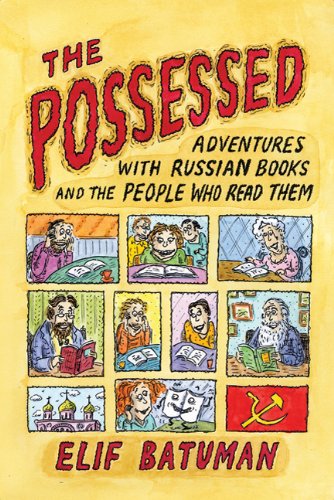
Last year I ‘discovered’ Elif Batuman, read her two novels The Idiot (2017) and Either/Or (2022). The former was a Pulitzer Prize finalist. Autobiographical, these two books are based on the life of a young woman entering Harvard with eye-opening and mind-boggling episodes. Academic and intellectual subjects are involved as well as a crush and the vain search for true love, but what stands out in Batuman’s writing is her humor. Pleasant surprises come with laughing out loud while reading. Recently I bought The Possessed, her first book (2010) –– couldn’t resist the book cover–– a collection of essays about her experiences in her specialization, Russian literature.

Another book cover I simply couldn’t resist while browsing in a bookstore. No, not Manga or graphic novel, but Virginia Woolf’s To The Lighthouse. I read it years ago but forgot most of it. What an interesting book cover. If you enlarge the picture you can see there are bubble dialogues. I’m just too curious to see how the publisher ‘reconciles’ the stream of consciousness content with the comic book like cover. But maybe no need to, after all, it’s a postmodern age we’re in.


The House of Doors by Tan Twan Eng. Longlisted for the 2023 Booker Prize. My main interest is in its storyline of English writer William Somerset Maugham visiting Malaya during the 1920’s, at that time a British colony. I’d watched biographical video on WSM on YouTube and learned that his personal secretary/companion who was with him in his travels to Malaya held a deceitful agenda which ultimately ruined Maugham’s financial assets and alienated him from his family at the end of his life. Just wonder how Tan tells his story re. the relationship between the two.


The Everyman Chesterton. From the Everyman’s Library, the 899 page volume includes some essential reads of the English writer, philosopher, Christian thinker, arts and literary critic G. K. Chesterton: his Autobiography, Biography of Charles Dickens, Commentary on the Victorian Age in Literature, Orthodoxy, The Everlasting Man, St. Thomas Aquinas, Father Brown Stories and Poems. I won’t be reading all of these but will definitely select some of these classic works to explore.


The Hemingway Stories, a book gifted to me which was purchased at the Hemingway House in Key West, Florida. Some of the stories I’d read before, but definitely a memorable collection of the nineteen notable stories from 1923 to 1936, including The Snows of Kilimanjaro, The Killers, The Three Day Blow, and for me to reread A Clean, Well-Lighted Place, and Hills like White Elephants.


The Plays of Anton Tchekov which includes ‘The Sea Gull,’ ‘The Cherry Orchard,’ ‘Three Sisters,’ ‘Uncle Vanya.’ Also a gift to me, and what’s significant about this volume is that it’s a Modern Library, New York edition with a Preface written by Eva Le Gallienne (1899-1991) in the year 1929. Gallienne I just checked was a classic herself, British-American stage actress, producer, director, author, translator. Would this be considered a rare book?

‘Foster’ by Claire Keegan

Reading Ireland Month 2023 has led me to the short stories by Claire Keegan. I’m excited for this ‘new discovery’. Keegan’s is the kind of writing I admire, sparse but telling, simple prose revealing deep emotional undercurrents. 

“Foster” the short story written by Keegan first appeared in The New Yorker. It was later published as a standalone work in book form in 2010. Keegan in an interview had stressed that it was not a novella but a long short story. The book cover in the photo is a new edition that came out in 2022.

The story is written from the point of view of a young girl from an impoverished family, both materially and emotionally. She is sent far away to stay with her mother’s sister Edna and her husband John Kinsella for the summer to lift the burden off her busy mother who has a house full of children and one more expecting. The Kinsellas are childless and live in a farm house in rural Wexford county.

The age of the girl isn’t mentioned, most probably around eight or nine. Interesting too that her name isn’t mentioned except just a few times, Petal, maybe giving a sense of the neglect she has been having all her young life. The title is ironic, I find, for the word foster often comes in contradiction in a lesser sense, or secondary, to natural birth parents. But here during her short stay at the Kinsellas, the girl has made new discoveries she has not experienced before, what it means to be loved and cared for, and begins to learn kindness and self-worth. Moreover, she is also exposed to the complexity and the dark range in the adult world, the loss and pain that come with life.

Foster has been adapted into film with the new title The Quiet Girl. It is Ireland’s official entry to the 95thAcademy Awards held this past Sunday, a nominee in the Best International Feature category, with its language being Irish (Gaelic). I still haven’t the chance to watch it, now a must-see movie for me. Hopefully I can watch it soon before the Reading Ireland event ends.

When I read “Foster”, I noticed that Keegan’s style is an exemplar of that writing advice we hear often: show, not tell. In some passages, Keegan instills in my mind visuals like watching a scene in a good film, actions and nuanced expressions speak clearly in depicting the characters with no need for dialogues. A couple of examples:

Here’s when the girl and his father whom she calls Da have a meal with the Kinsellas after he has dropped her off before heading right back home:

When we sit in at the table, Da reaches for the beetroot. He doesn’t use the little serving fork but pitches it onto the plate with his own. It stains the pink ham, bleeds.

Here’s another example, when Edna brings into her house some fresh rhubarb stalks from her garden for the girl’s father to bring home:

My father takes the rhubarb from her, but it is awkward as a baby in his arms. A stalk falls to the floor and then another. He waits for her to pick it up, to hand it to him. She waits for him to do it. Neither one of them will budge. In the end, it’s Kinsella who stoops to lift it.

‘There now,’ he says.

Just this short description has revealed the character and the relational dynamics among the three adults. Furthermore, these two passages also tell much about the girl, deep within her reticence, she is observant, precocious, and the reader can assume too that she must be eager to experience what’s waiting for her in the days ahead living with these two ‘foster parents’ for the summer.

The Kinsellas hold a family secret, one that’s heavy in their heart and mind, albeit unspoken. Again, Keegan’s writing comes through with subtle yet powerful revealing. The girl learns of their past from a nosy neighbour, and that is a moment of awakening for her. What happens later in the climax I will not spoil anyone’s reading pleasure. However, John Kinsella’s kind words to her observing her quiet demeanour earlier in the story, we know the girl will keep close to her heart for a long time:

‘You don’t ever have to say anything,’ he says. ‘Always remember that as a thing you need never do. Many’s the man lost much just because he missed a perfect opportunity to say nothing.

As she mulls over the Kinsella’s hidden past, and her own experience while staying with them, she is now empowered by love and loyalty to keep silent that which needs to be kept in confidence. The girl might be reticent, but the single word she utters ending the story is most poignant and heart-wrenching. Again, Keegan has used the minimal to bring her readers to the depths of pathos and meaning.

~ ~ ~ ~ Ripples

This is my second post in participation in the Reading Ireland Month hosted by Cathy 746 Books.

Previous post: The Banshees of Inisherin Movie Review

***

Proust and the Multiverse

A pair of wings, a different respiratory system, which enabled us to travel through space, would in no way help us, for if we visited Mars or Venus while keeping the same senses, they would clothe everything we could see in the same aspect as the things of Earth. The only true voyage… would be not to visit strange lands but to possess other eyes, to see the universe through the eyes of another, of a hundred others, to see the hundred universes that each of them sees, that each of them is.  

This could be taken as dialogues from Dr. Strange in the Multiverse of Madness, or, Everything Everywhere All At Once, both 2022 movies flying high on the trending theme of multiple universes. But of course, the excerpt is Proust’s, and the universes he refers to are internal ones.

The above quote is taken from In Search of Lost Time Volume V: The Captive and The Fugitive (343), as the narrator Marcel acknowledges the infinite views that can arise from personal experiences of different individuals filtered through their own subjective lens. There are as many viewpoints as there are people, therefore, every object or event can evoke a variety of perspectives and responses. Subjectivity is Proust’s master stroke. Take this other excerpt from the same volume. As Marcel awakens in the morning:

… from my bed, I hear the world awake, now to one sort of weather, now to another! Yes, I have been forced to whittle down the facts, and to be a liar, but it is not one universe, but millions, almost as many as the number of human eyes and brains in existence, that awake every morning. (V:250)

Today, November 18th, is the centenary of Proust’s death at the age of 51 (1871-1922). A look at his contemporaries could help us place him in a historical context and probably source the influence of his introspective sensitivity and his ultra-reflexive writing. Again, the disclaimer here is that, I’m no Proust scholar… mere ripples out of my own tiny universe. I can think of the following iconic figures as I consider the historical context of Proust’s writing.

It was the era of psychoanalysis. I’m sure Freud (1856-1939) would have been eager to apply his own theory to explain the case of Marcel’s longing for his mother’s goodnight kiss as he lies in bed waiting for her to come up to his room every night. And then there was Carl Jung, (1875 – 1961), whose theory on personality and the unconscious could have sparked some light into Marcel’s epiphany of the involuntary memories: ephemeral flashbacks that fuel his imaginative mind with creative thoughts. It’s such kind of subliminal emergence of Time past that fills him with joy and meaning.

And of course, there are the other writers whom Marcel has mentioned in the book, Henry James (1843-1916) whose brother is also a prominent psychologist of the time, William James (1842-1910), across the Atlantic. Another notable, Marcel’s enthusiasm is heightened when talking about Dostoevsky (1821-1881), the master of characterizing the human psyche.  

And what’s with all the space travel idea, flying from star to star, while the Wright brothers had just successfully flown the very first aeroplane only in 1903? Huge imagination and insight for one to think of multiverses at that time. I’m not sure what the original French word is. Those who read In Search of Lost Time in French, is the word the same as its English translation, ‘universe’? (V: 250, 343)

Reading this sparked a personal flashback as I remember my experience of visiting “The Infinity Mirrored Room” created by the Japanese artist Yayoi Kusama (born 1929) at the Art Gallery of Ontario in Toronto a few years ago. Infinite reflections from these tiny silver balls:

____________________

Having said all the above about Proust’s sensitivity to subjective universes, here’s the rub. It is utterly ironic that these insights are taken from Volume V: The Captive and The Fugitive. Why, here in this volume, Marcel has taken Albertine captive in his parents’ home where he stays while in Paris. He first met Albertine in Balbec; she has now become his lover/mistress. No, she isn’t in chains, but the restraints Marcel puts on her is psychological rather than physical. He tracks her every move, “whenever the door opened I gave a start.” (494) In reality, there just might be two captives in that house, Albertine and Marcel himself, both caught in a psychological tug of war, maintaining a fragile relationship based on lies and evasiveness.

As much as he knows about his own thoughts and feelings, or even that of his housekeeper Francoise’s, Marcel’s empathy does not extend to Albertine’s universe. He might think his keeping her in his house is for her own good, “to save her from her orgiastic life which Albertine had led before she met me.” (474). Yet his ‘love’ for her is built upon his own possessiveness and jealousy; his displeasure with her intensifies when he learns it’s with other women that she seeks intimacy. Eventually, fleeing a stifling life, gasping for the air of freedom, Albertine leaves the house abruptly one morning. The captive now becomes the fugitive.

The events that follow are like a test of Marcel’s love for Albertine, showing if it is genuine or merely self-indulgence, egotism, or even just lust. Spoiler Alert from here on.

Marcel has never gone out to look for the fugitive. Until one day, he gets the news that Albertine has died in a horse-riding accident. Surely there is grief and pain in the immediate aftermath, but what does he miss most? “I needed her presence, her kisses.” (642) While he goes on to reminisce the good and the bad sides of Albertine, not long after that he has given her up for another:

The memory of Albertine had become so fragmentary that it no longer caused me any sadness and was no more now than a transition to fresh desires, like a chord which announces a change of key. And indeed, any idea of a passing sensual whim being ruled out, in so far as I was still faithful to Albertine’s memory, I was happier at having Andrée in my company than I would have been at having an Albertine miraculously restored… my tenderness for her, both physically and emotionally, had already vanished. (809-810)

“like a chord which announces a change of key…” O the fickleness of desire! The deceits of hidden motives and the capricious emotion one calls love. Marcel might be insightful in acknowledging multiple universes within individuals, pure love remains elusive. Dr. Strange crushes his enemies from the multiverse spectacularly, but the beast that lurks within oneself might be more formidable a foe to conquer.

***

The Brothers Karamazov Read Along Part I: What a family!

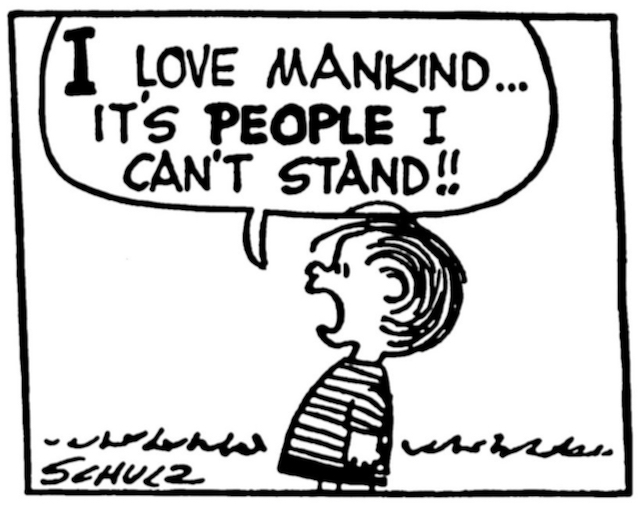
Nov. 12, 1959 Peanuts comic strip by Charles Schulz

And I thought Linus was so ingenious with such self-knowledge and view of mankind! But then again, it could be an example of great minds think alike… Charles Schultz and Fyodor Dostoevsky. Reading this first Part of The Brothers Karamazov (TBK) offers me surprising delights, for I find some well known, thought-provoking quotes in here.

The panel above is the last of the comic sequence where a frustrated Linus replies Lucy when she says he can never be a doctor because he doesn’t love mankind. In TBK, this line is, interestingly, spoken by a doctor, in an anecdote told by the Elder to ‘a lady of little faith’:

“the more I love mankind in general, the less I love people in particular, that is, individually, as separate persons.” (57)

Here’s the edition I use, references to page numbers in brackets are from this Pevear and Volokhonsky translation.

As I learn about the characterization in Part I, focusing on the father Karamazov and his sons, I can see why Dostoevsky created such a famous line.

Fyodor Pavlovich Karamazov – a man described as ‘worthless’, ‘depraved’, ‘muddleheaded’, ‘a buffoon’, and I’d just add womanizer and child abandoner, ‘for the child would have gotten in the way of his debaucheries.’ (p. 10) His eldest is Dmitri from first wife Adelaida Ivanovna, who deserted him and her own son. His second wife Sofia Ivanovna gave birth to Ivan and Alexi, and died when Alexi was four years old. All the brothers grew up away from their father.

Dmitri – Eldest, recently retired from the military. Abandoned by both his parents from birth, was raised by their servant Grigory and his wife for a while then a distant relative took over and some others. What could such a child turn out to be? The military has suited him well, so, at least his physique is well sculpted. However, the animosity towards his father runs deep, with conflicts over inheritance money and, alas, rivalry over the same woman Grushenka.

Ivan – The first son of Fyodor’s second wife. A rational man, argumentative, and an atheist. Expressed his view forthrightly in writing and in speech. While arguing against the existence of an overarching natural law of morality, he presents the scenario that if there’s no God, no immortality, then “nothing would be immoral any longer, everything would be permitted, even anthropophagy.” (p. 69) The Garnett translation uses the word ‘cannibalism’, which is much clearer. Without a universal measurement of good and evil, one cannot say what’s moral or not.

“If there is no immortality of the soul, then there is no virtue, and therefore everything is permitted.” (82)

I find it stimulating and gratifying to see Dostoevsky’s characters discuss issues such as this one openly, which reflects what were the important issues of the time. TBK is a novel of ideas, and Dostoevsky brings them out via lively dialogues and sometimes, surprisingly, in light-hearted strokes.

Alexei – or Alyosha, Dostoevesky’s hero as he states in his Author’s Note before the story begins. A youth who has quit his last year of schooling to return to his father’s town, and enters the monastery to follow the Elder Zosima. A ‘holy fool’ like the main character in Dostoevsky’s earlier book The Idiot. Called ‘an angel’ by his father, for this youngest son “pierced his heart… because he saw everything, and condemned nothing.” (94)

The Elder Zosima – Alyosha’s mentor, a spiritual leader in the monastery who gives advice to seekers. The ailing Elder urges Alyosha to ‘go into the world’ and not stay in the monastery after his death, something his youthful follower is perplexed about at this point in the book.

In a chapter entitled ‘A Lady of Little Faith’ (Bk 2, Ch.4), the Elder offers this advice to a woman who is distressed that she can’t find proof to confirm her faith, and the Elder replies,

“… One cannot prove anything here, but it is possible to be convinced.”

“How? By what?”

“By the experience of active love. Try to love your neighbors actively and tirelessly. The more you succeed in loving, the more you’ll be convinced of the existence of God and the immortality of your soul.” (56)

A crucial chapter is Book 2, Ch. 6, where the three brothers and their father meet at the Elder’s cell in the presence of other monks to seek the Elder’s judgement on the dispute between Fyodor and his son Dimitri. Here’s a prime example of how Dostoevsky lets his characters discuss serious issues embedded with comical effects.

During the meeting, the brothers engage with the monks and discuss serious subjects such as European Liberalism, Russian Liberalism, the role of the Church in the State, and most importantly, the existence of God, while an impatient Fyodor can’t wait to air out the family’s dirty laundry. I find the juxtaposition of these conversations deadpan farcical.

“Dmitri Fyodorovich!” Fyodor Pavlovich suddenly screamed in a voice not his own, “if only you weren’t my son, I would challenge you to a duel this very moment … with pistols, at three paces … across a handkerchief! Across a handkerchief!’ he ended, stamping with both feet.

Dmitri Fyodorovich frowned horribly and looked at his father with inexpressible contempt.

“I thought… I thought,” he said somehow softly and restrainedly, “that I would come to my birthplace with the angel of my soul, my fiancée, to cherish him in his old age, and all I find is a depraved sensualist and despicable comedian!”

 “To a duel!” the old fool screamed again, breathless and spraying saliva with each word. (73-74)

The most important scene that takes place in this meeting is an action by the Elder Zosima. As if to end the Karamazov father and son confrontation, Zosima gets up, goes to Dmitri, kneels before him and bow, touching the floor with his forehead, astonishes everyone there. (74)

Another character, Rakitin, later interprets the Elder’s action as a foreshadowing, Zosima delivering a prophesy of a crime that will take place which has something to do with Dimitri and his father. I will have to read on to find out.

What a family!

Is it a coincidence that the unlovable head of the family Karamazov has the same first name as our author, Fyodor? I think here is a prime example of Dostoevsky’s humour and acerbic self-sarcasm. I gather that it’s the author’s intention to identify with humanity in all their foibles and failures––the fallen man.

As Dmitri tells Alyosha: “Don’t think I’m just a brute of an officer who drinks cognac and goes whoring. No, brother, I hardly think of anything else, of anything but that fallen man… I think about that man, because I myself am such a man.” (107)

Two other quotes that had sent ripples as I read:

“Here the devil is struggling with God, and the battlefield is the human heart.” (108)

“Faith is not born from miracles, but miracles from faith.” (26)

***

Here’s the link to the Intro and Invite Post.

Hope you’re enjoying your read. Have you written a post for Part I? Do let me know so I can link it here.

Dolce Bellezza

What’s That Mark’s Reading!?

The Naptime Author Anne Clare

Turning: A Year in the Water by Jessica J. Lee, Book Review

“There is a great deal of unmapped country within us which would have to be taken into account in an explanation of our gusts and storms.”  ––  George Eliot

_____________________

Turning - Canadian edition

The above quote comes to me as I read Jessica J. Lee’s memoir Turning: A Year in the Water. From the beginning, I’ve an inkling that what she intends to say isn’t just about swimming but something deeper. I’m not disappointed. Swimming in fifty-two lakes throughout one year in Brandenburg in itself is a fascinating idea. What more, I’m much gratified with the candid revealing of her interior journey as she describes the physical terrain she treads. Often, the two mirror one another.

At twenty-eight, Lee goes to Berlin from Canada to do research and complete her doctoral dissertation on environmental history. She brings with her trunks of emotional baggage of hurts and loss from broken relationships and a transient existence,  traversing between Toronto, London, and Berlin.

Born in Canada to a Chinese mother from Taiwan and a father from Wales, Lee has been straddling multiple worlds all her life, first learning Mandarin at home, then English, then French in school. The multiplicity of languages reflects the challenges of growing up bicultural. The divorce of her parents further shakes up the fragile psyche of a teenage girl’s search for a sense of self. As a young adult she looks to other relationships and experiences to find anchor but only reaps disappointments. A move to London, England, later leads to deeper personal loss. By the time she arrives in Berlin, accrued pains and hurts have left indelible marks in her life.

To find strength and healing in a new land where she has to learn yet another language and culture, Lee decides on a venture to come to terms with her predicament. Her plan is to swim in fifty-two lakes near Berlin in the Brandenburg vicinity through every season of one year.

In short chapters under each of the four seasons, Lee captures succinctly her experience carrying out this plan, interspersing a swimming log with the back stories of her life.

Perhaps it was a drastic response. In depression, I had become someone I hadn’t wanted to be, emptied and hardened. I felt that I had to respond to it in kind, as if lake water might blast away my sadness and fear. So, I decided to swim for a year, in the hope of finding some reserve of joy and courage in myself. (6)

This unique resolve of hers fascinates me. Lee’s memoir is a log of a brave yet quiet venture through the seasons. Not only that, she has introduced me to the natural beauty of the Brandenburg landscape and the travelogues of the German writer Theodor Fontane (1819 – 1898). I read with interest the German socio-political situations she shares, also lap up tidbits on the environmental history of lakes, glaciers, and the etymology of terms associated with her experience.

Limnology is the study of lakes. Originally from Greek, but with the German overtone of Schwelle, it refers to an in-between space, an apt metaphor for Lee’s liminal identity between cultures.

Fragments of Chinese slipping out between English and German, as I press new words and places into place. Return. Home is as much in a language as it is in a landscape. (9-10)

In the stillness of the lakes, the border between nature and culture is thinned. Swimming takes place at the border, as if constantly searching for home. (14)

The term ‘Turning’ refers to the movements of the water in a lake. In lakes, there’s stratification of water and overturn, with the different layers of water in constant vertical movement. This action creates ‘cycles that keep the lake alive, ever-changing, breathing oxygen into every part of the lake.’ Isn’t that, too, a beautiful metaphor for our very existence, the essence of life?

Lee’s metaphors are fresh and relevant, akin to her academic field of environmental history. Here are two other ones I’ll remember for a long while. Lakes are markers in time in the glacial retreat:

In Lakes the present history of our world contracts and intensifies, urgent and shrinking like the ice… I take my parents’ divorce to be a marker, a line drawn between childhood and adulthood… For a girl on the cusp of teenhood, there was never going to be a good time. (56)

And this one is another apt description of so many being called diaspora: Glacial Erratics. The word erratics has the Latin root errare meaning to wander, to roam, to be mistaken, to go astray.

Erratics carry their origins with them, telling the story of where a glacier has been and how the ice deposited the erratic in the landscape. An erratic is a rock that doesn’t belong to the geology in which it is planted; instead, it’s a record of another place… Like an erratic, I was carrying past places with me. I felt mistaken. (170)

Above all, I’m mesmerized by a determined mind and body as I read how she adheres to her personally-set rules: no cars, no wetsuits. She bikes to her destinations, carries her bike on public transit when needed, most of the time pedalling for hours. She prepares a light lunch and a change of clothes in her backpack and sets off in the morning, sometimes with a friend, but mostly alone.

Every lake has its own features, the water has its own feel, the sensation swimming there can be different from another, but it doesn’t stray far from calming and revitalizing. In winter, she brings a hammer from home to break the ice on the lake surface before slipping into the frigid water. There’s numbness and pain, surely, but she has developed the courage and the tenacity to face the dark mass and not withdraw.

In solitude, she finds strength; in conquering her fears, freedom. The ghosts of the past might still be there, but she has learned to face them.

Simple yet poetic, honest and mindful. Reading Turning is like dipping slowly into the lake of empathy, gradually getting attuned to the chill to find the water soothing. And you’d want to stay there just a while longer.


~ ~ ~ 1/2 Ripples


_______________

Turning: A Year in the Water A Memoir by Jessica J. Lee, Hamish Hamilton publisher, NY, May 2, 2017. 304 pages.

Canadian Edition (book cover image in this post): Penguin Random House Canada, April 7, 2020. 304 pages.

My thanks to Catapult.co for providing me a pdf version.

_______________


Middlemarch Book II – IV: Inkblot Test

We’ve come to the midpoint of our tentative reading plan. Hard to believe one month’s gone by already. Instead of a review of all the chapters, how about a Middlemarch inkblot test?

What word comes to your mind when you see the following:


  • Dorothea 
  • Casaubon 
  • Ladislaw 
  • Fred 
  • Rosamond 
  • Lydgate 
  • Celia 
  • Mr. Brooke 
  • Mary Garth


I’ll just stop with these ones. Have your views about these characters changed from first you met them?

Any surprises in the storylines?

Which characters do you click ‘Like’?

What to do with the ones we don’t? Is Eliot having fun with Austen’s idea of creating characters whom no one would much like?

Favorite Quotes?

Here are some of mine, for various reasons, but mostly for Eliot’s power of association in her descriptions.

Will Ladislaw’s thought about Dorothea:

“To ask her to be less simple and direct would be like breathing on the crystal that you want to see the light through.”

About Dorothea’s predicament:

“I suppose it was that in courtship everything is regarded as provisional and preliminary, and the smallest sample of virtue or accomplishment is taken to guarantee delightful stores which the broad leisure of marriage will reveal. But the door-sill of marriage once crossed, expectation is concentrated on the present. Having once embarked on your marital voyage, it is impossible not to be aware that you make no way and that the sea is not within sight –– that, in fact, you are exploring an enclosed basin.”

And if Eliot were among us today, she would likely be vocal in the #Metoo and #Timesup movements:

“Society never made the preposterous demand that a man should think as much about his own qualifications for making a charming girl happy as he thinks of hers for making himself happy.”

***

Your two pebbles?

Wood Duck.jpg


***

Other posts from our Read-Along participants:

Men of Middlemarch

Middlemarch –– Ladislaw’s Force of Unreason

Middlemarch by George Eliot –– Completed today


Middlemarch in May: Let the Fun Begin!

A few quotes to set the stage for our Read-Along of Middlemarch by George Eliot.

BBC History Website:

“She used a male pen name to ensure her works were taken seriously in an era when female authors were usually associated with romantic novels.”

**

From “George Eliot: A Celebration” by A. S. Byatt, as introduction to Modern Library’s edition of Middlemarch:

“She had no real heir as “novelist of ideas” in England… Her heirs are abroad—Proust in France, Mann in Germany. Which brings me to another reason for loving her: she was European, not little-English, her roots were Dante, Shakespeare, Goethe, Balzac, not just, as Leavis’s “Great Tradition” implies, Jane Austen. She opened gates which are still open.”

**

From “Why Read George Eliot”, by Paula Marantz Cohen in American Scholar, Spring 2006:

“Eliot’s voice, in its assumption of a wiser, juster, more all-encompassing perspective, is the ligament of her novels. It elevates them from ingenious storytelling to divine comedy…

As Virginia Woolf observed, Eliot wrote novels for grown-up people. Our society and our relationships would be saner and better if more grownups read her.”

**

Last but not least, let’s kick off Middlemarch in May with Henry James’s lively reflections on George Eliot, as quoted in Colm Tóibín’s article “Creating The Portrait of a Lady in The New York Review of Books, July 19, 2007 Issue:

“A specter haunted Henry James: it was the specter of George Eliot. He visited her first in 1869, when he was twenty-six, and wrote to his father:

‘I was immensely impressed, interested and pleased. To begin with, she is magnificently ugly—deliciously hideous…. Now in this vast ugliness resides a most powerful beauty which, in a few minutes, steals forth and charms the mind, so that you end up as I ended, in falling in love with her. Yes behold me literally in love with this great horse-faced blue-stocking.’

Three years later, when Middlemarch appeared, James wrote from Rome to his friend Grace Norton:

A marvellous mind throbs in every page of Middlemarch. It raises the standard of what is to be expected of women—(by your leave!) We know all about the female heart; but apparently there is a female brain, too…. To produce some little exemplary works of art is my narrow and lowly dream. They are to have less “brain” than Middlemarch; but (I boldly proclaim it) they are to have more form.”

**

Let the fun begin!


____________________


Other posts from Read-Along participants:

Middlemarch Has Me Laughing So Soon by Gretchen at Gladsome Lights


My invite post:

Middlemarch in May Read-Along

My Middlemarch Review Posts:

Middlemarch Book I: What are siblings for?

Middlemarch Book II to IV: Inkblot Test

Middlemarch Wrap: You be the screenwriter


Little Fires Everywhere by Celeste Ng: A Book Review

NOTE: I thank Penguin Random House Canada for the reviewer’s copy of the book, and Asian American Press for allowing me to post my review here.

Little Fires Everywhere

Chinese American writer Celeste Ng (伍綺詩) had garnered numerous accolades for her debut novel “Everything I Never Told You”, including a New York Times Notable Book of 2014, Amazon’s #1 Best Book of 2014, winner of the Massachusetts Book Award, and the Asian/Pacific American Award for Literature, just to name a few.

Like the stunning opening in her debut work, Ng in her second novel “Little Fires Everywhere”, begins with a dramatic scene: Mrs. Richardson, after being awaken by the smoke detectors, stands on her front lawn in her pale blue robe and watches firemen saving her house from total burnt down. The prime suspect of the fire is her youngest daughter Izzy. With that, Ng leads us into the story of the Richardsons’, an upper-middle class family living in the quiet suburb of Shaker Heights, Ohio, which was Ng’s hometown during the 90’s.

Ng grew up in Pittsburgh, Pennsylvania, and Shaker Heights, Ohio, her scientist parents having immigrated from Hong Kong. Ng graduated from Harvard University and earned an MFA from the University of Michigan (now the Helen Zell Writers’ Program at the University of Michigan), where she won the Hopwood Award.

The thematic elements of race, parenthood, and family secrets leading to devastating consequences as in her debut novel are carried over. Covering a larger scope, “Little Fires Everywhere” expands to other issues as well, offering us views into a myriad of realistic characters and the interplay of two families, specifically, two mothers holding opposite values. Ng’s riveting storytelling skills carry us through the various plot lines breezily, while taking the time to breathe life into her characters, and deftly locks us into mental debates on contentious issues. Although set in the 90’s, the issues raised are as relevant today.

The Richardson family, one could say, is the epitome of the American Dream. They live in a six- bedroom home in a desirable part of town. The matriarch Elena and her husband Bill are well connected and respectable in the community, she a journalist with the local paper the Sun Press and he a defence lawyer. They have four teenaged children, the eldest Lexie heading to Yale. Second son Trip is popular in school, especially among girls. Third child Moody is wrapped up in his own cocoon. Youngest Izzy is the black sheep of the family. She is not happy despite her family’s affluence, or maybe, if Mrs. Richardson is willing to look deeper into her daughter’s mind, Izzy’s discontent could be exactly due to her family’s secure standing in the rule-constraining suburb. Mrs. Richardson would not trade any of her privileges, for she is living “a perfect life in a perfect place.” Her main task now is to smother any sparks that can disrupt the status quo and surface calmness in her family and community.

Celeste Ng.jpg

As the title suggests, metaphors of fire are everywhere. There are flames of passion, fury, dissatisfactions, and the fuse of suburban ennui, as apparent in the lives of the teenagers, potential fire hazards. These are all inherent threats to the idyllic, quiet town, where high school graduates are expected to head to Ivy league colleges, and where parents are oblivious to the secret lives of their teenagers, and vice versa.

The story begins not with the aftermath of the house fire, but the reason leading to it. Mrs. Richardson has just rented the upper floor of her revenue property, a duplex on the other side of town, to new tenants, single mother Mia Warren and her teenage daughter Pearl. Mia is an artist, her medium, photography. She works at menial jobs to sustain her art, and brings up Pearl moving about the country in their VW Rabbit, forty-six different towns since Pearl’s birth.

As they settle in Shaker Heights, Pearl comes to know the Richardson children and is attracted to their lifestyle. Conversely, Izzy Richardson is mesmerized by Mia’s artist life and hangs around in the duplex to help and learn from her art-making. This time, Mia and Pearl may just be settling down.

It is obvious from the start that Mrs. Richardson and Mia comes from opposing sides of ideals. While suggesting Mia take portraits for people in town to earn more money, thinking about her rents no doubt, Mrs. Richardson is confronted with the notion of the artist as a photographer, as Mia replies, “the thing about portraits is, you need to show people the way they want to be seen. And I prefer to show people as I see them.”

Mia works at the Chinese restaurant Lucky Palace to sustain a living. Mrs. Richardson offers her to work in the Richardsons’ home, cleaning and cooking a few days a week to earn some extra money. Although reluctant about the proposal but to not jeopardize their relationship, Mia agrees. Hence, Mia delves further into the Richardson family life.

As she so deftly deals with in her first novel, Ng weaves into her storylines and characters the subjects of culture and identity. The intermingling of lives between the Richardson family and Mia soon pits them into taking two contentious sides in a prominent court case in town. The Richardsons’ best friends, the McCulloughs, have just adopted a Chinese baby found abandoned at the fire hall, Mirabelle, or May Ling Chow, her birth name. The birth mother Bebe now regrets her decision which she had made in a most dire financial situation at the time. Bebe comes from China, and happens to be Mia’s co-worker at Lucky Palace. Mia is openly supportive of Bebe, while Mr. Richardson represents the McCulloughs. The case has divided the town, and now Mrs. Richardson knows she needs to dig into Mia’s past to discredit Mia and to get back at her for drawing her dear friends the McCulloughs into tormenting legal entanglements.

It is when Ng reveals Mia’s backstory that the narrative is most riveting. We are led to a moving account, a page turner even, on a subject that is complex and crucial: what makes a mother? In her novel, Ng intertwines three possible scenarios of pregnancy, wanted, unwanted, surrogate. And with these contrasting lines, she delves into the issues of adoption and identity. Are babies best brought up by their own biological mothers, especially when culture comes into play? What makes a baby Chinese? American? Or more complex still, Chinese American? The McCulloughs have well intentions to bring Mirabelle up by regular dine-outs in a Chinese restaurant, and finding her ‘Oriental Barbies’ to play with. Are these enough? If not, what is?

Cultural appropriation is a trendy topic nowadays, not only in the adoption circle, but in other realms. These are issues that require deeper pondering and research work, no doubt, ones that should be confronted deeper than Ng can deal with in her novel. Nonetheless, a fictional setting is an interesting place to spark off the debate. Just another one of her little fires in the book.

While “Everything I Never Told You” is a microscopic look at a mixed-race family during the 70’s, dense and intense, not unlike a Bergman chamber work, “Little Fires Everywhere” is looser and more expansive in thematic matters, with sprinkles of laughs here and there, not unlike a John Hughes’ movie in the 80’s. One can feel Ng is freer to roam with the larger, open space. Just as with her debut work, Ng does not shy away from the issues of race and identity, while challenging the notion of ‘success’. One should not be surprised that this is still the fundamental term we are struggling to define in our society today.


~ ~ ~ 1/2 Ripples


***


Here’s a short review of Ng’s debut novel “Everything I Never Told You” (audiobook) I’d posted on Goodreads.


Six Degrees of Separation or Prophetic Voices of our Time

I’ve read several books in recent months that are good evidence of ‘six degrees of separation’, and I’ll just end with four here. But more crucial is why such content at this time? They are all published in 2016 but still enjoy current bestselling positions. All are similar in their historical backdrop, authoritarian dictatorship in the 20th Century in two neighbouring countries, China and Russia. Or, maybe these writers of our time are indeed prophetic voices to stress that eerie caution: “Those who don’t know history are doomed to repeat it.”

Here’s the sequence of my reading:

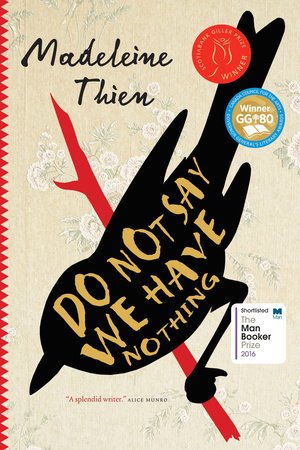
Madeleine ThienDo Not Say We Have Nothing by Madeleine Thien
The top selling book in Canada according to CBC Books, Madeleine Thien’s exceptional novel of three characters, musicians at the Shanghai Conservatory of Music during the Cultural Revolution in China, leads us through decades of contemporary Chinese history from the Communist takeover after WWII to Mao’s Cultural Revolution to the 1989 Tiananmen Massacre, spanning generations and across two continents. Thien was teaching creative writing when her program was abruptly cancelled in the aftermath of the ‘Umbrella Revolution’ sprouting from the Occupy Central led by teenaged students in Hong Kong. That was a motivating force propelling the writing of the book. Following the most recent news that four young student leaders are given months of jail sentences for their actions, we know how timely a voice Thein is with this book.


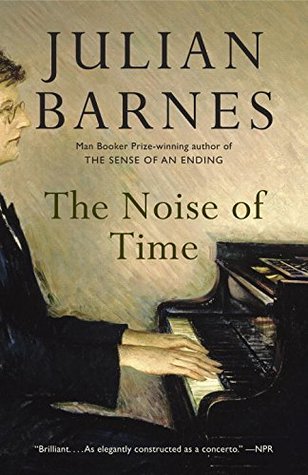
Barnes The Noise of Time.jpgThe Noise of Time by Julian Barnes

Dimitri Shostakovich’s music is in the minds of the three musicians at the Shanghai Conservatory of Thien’s book. Shostakovich, himself a composer treading a precarious line between authenticity and self-preservation under Stalin, is an apt parallel of the situation the trio have to face.

Julian Barnes has crafted an imaginary biopic of Dimitri Shostakovich during Stalin’s tyrannical rule in the Soviet Union (1929-1953). Barnes’ depiction is internal, presenting the struggles, the giving-in and the self-loathing of a world famous composer and pianist who was unable to stand up to a ruthless and manipulative dictator. Speak truth to Power? Who can still stand, or live, after that? And it’s not just about oneself, but one’s family and all those associated.


Cometh the hourCometh the Hour by Jeffrey Archer (#6 of the Clifton Chronicles)

Jeffrey Archer, a prophetic voice? While his Clifton Chronicles have entertained us with imaginary characters spanning three generations of two British families, Archer does have the political mood of our times firmly held under his pen, and Lord Archer is a savvy political historian in his own right. This summer I binged on Jeffrey Archer, okay, not exactly your serious, prophetic voice, but no less relevant. This is especially true when his fictional character, Russian writer Anatoly Babakov, is imprisoned in Siberia for his book Uncle Joe. Based on his own experience while working under Joseph Stalin, Babakov offers readers an insider’s look into the ruler, revealing the ruthless dictator that he really was.

Babakov is awarded the Nobel Prize of Literature while still in prison. But not long after the announcement, he dies of a heart attack. His wife Yelena although escaped out of the country, wants to return to honour her husband. Archer’s character makes me think of the real life dissident Chinese writer and activist Liu Xiaobo, also Nobel laureate, but was denied the freedom to go and accept his Prize. He had been imprisoned for 11 years and sadly, died of liver cancer in July this year, 2017. And even more sadly, Liu’s wife could not see him at his deathbed and had gone missing after his death. Archer’s book was published in 2016. I’d say that’s quite prophetic.


A Gentleman in Moscow by Amor Towles

A Gentleman in MoscowA totally different tone, but the same historical backdrop. Towles has created an interesting and colourful character, the aristocrat Count Alexander Rostov, kept in house arrest when the Bolsheviks overrun the country. True to his personality and lifestyle – the major consolation of such a misfortune – Count Rostov serves his house arrest in the elegant Moscow Metropol Hotel across from the Kremlin, albeit in a cramped room in the attic. With his always pleasant demeanour, the former aristocrat makes himself at home at the grand hotel, meeting interesting characters, wine and dine to his heart’s content. He stays there for decades, with the historic changes happening outside the four walls of the Metropol: Lenin, Stalin, post-Stalin, and further. As fate would have it, Count Rostov encounters an idealistic youngster named Nina, and years later, takes up guardianship of her daughter Sofia, and thus his life and view begin to turn into something more purposeful. The Metropol makes me think of Wes Anderson’s The Grand Budapest Hotel. Instead of speaking truth to power and get slapped in the face or worse, Count Rostov thinks of an ingenious scheme to beat Power at their game. If I were a filmmaker, this is one to bank on.

***

Related Posts on Ripple Effects:

Do Not Say We Have Nothing Book Review

The Budapest Hotel: A Grand Escape