Ripple Effects has come of age

Got this from WordPress a couple days ago. How time flies!


RIPPLE EFFECTS
Coming of Age

Ripple Effects has been tracking my life for the past 18 years! The movies I’ve seen, books I’ve read, birds I’ve captured with my camera, places I’ve travelled, film festivals I’ve attended, and through the years with special thoughts every Easter and at Christmas, Reading the Season inspirational book sharing.

Through the years I’ve been featured on WordPress’ Freshly Pressed, and Rotten Tomatoes had reached out inviting me to be their Tomatometer Approved Critic. I’ve gained over 7,600 followers, treasured the friendship made with some of you both virtually via the blogosphere and personally. For this I’m truly grateful.

If I ever write a memoir, this is my manuscript. To browse through these posts is to know me. Thank you all for the pebbles you’ve thrown into the Pond to create your own ripples. Many of you are recent followers, but there are some who have been with me from early on. And I’m sure you’d find it revealing to read your own thoughts way back then.

Who knows what the future holds. As far as I’m given the opportunity, I’ll continue to document my pondering and wandering here at Ripple Effects. Hope this site can be your restful retreat in your journey through life as well.

~ ~ ~ ~

Easter: the Joy of Eternal Hope

A time to be silent, and a time to speak.

What better days than Easter to speak of death, and life eternal.

“I am the resurrection and the life. Whoever believes in me, though he die, yet shall he live, and everyone who lives and believes in me shall never die.” (John 11: 25-26)

The past few months I’ve been silent on Ripple Effects. Actually, for the past year, I’d been posting just occasionally. Fact is, for fifteen months, I’ve been caring for my husband afflicted with cancer. It had been a roller coaster ride of ups and downs. On some days, he was well enough that we could go out to have a meal in a restaurant; on other days, it would be just a tiny morsel or nothing at all. All these months, I’d learned to find joy in afflictions, and be grateful for just being able to sit down at the breakfast table together, the warm, morning rays seeping in, and immersed in the moment.

This year started with an ominous diagnosis. The metastasized cancer cells had not only mutated but the new growth was extremely aggressive. Battling terminal illness had made everything superfluous, books, movies, or music. What was left was the very essence of my being, faith in the risen Christ. Both of us were often revived by the promises of the living God, inspired by His Word, and sustained by the encouragement and prayers of countless supporters the world over via online prayer groups. It had been a journey of faith. Ultimately, it’s all grace.

But we have this treasure in jars of clay, to show that the surpassing power belongs to God and not to us. We are afflicted in every way, but not crushed; perplexed, but not driven to despair;  persecuted, but not forsaken; struck down, but not destroyed… (2 Corinthians 4:7-9)

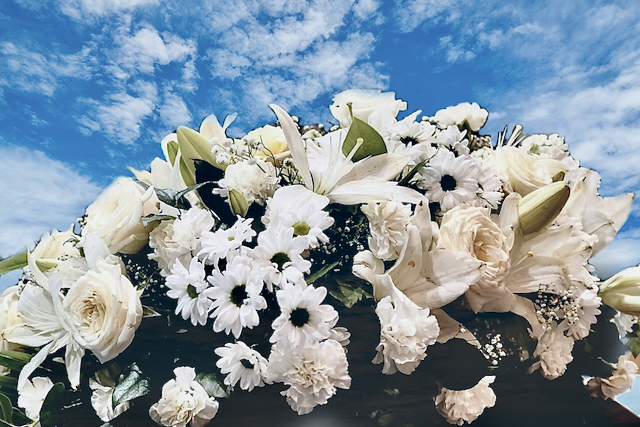
On March 21, my husband departed to a better country. We were not unfamiliar with the immigrant experience. Now, a final move to that eternal kingdom, a homeland much more beautiful than anywhere in this world. He had arrived there first, I’ll join him one day. He was accepting, which was grace in itself. We were prepared, even planned his celebration of life service together. The event turned out to be a memorable occasion for hundreds to gather for a collective remembrance in peace and even joy.

Therefore we do not lose heart. Though outwardly we are wasting away, yet inwardly we are being renewed day by day.  For our light and momentary troubles are achieving for us an eternal glory that far outweighs them all.  So we fix our eyes not on what is seen, but on what is unseen, for what is seen is temporary, but what is unseen is eternal. (2 Corinthians 4:16-18)

All because He is risen. He is risen indeed!

***

Happy Easter!

***

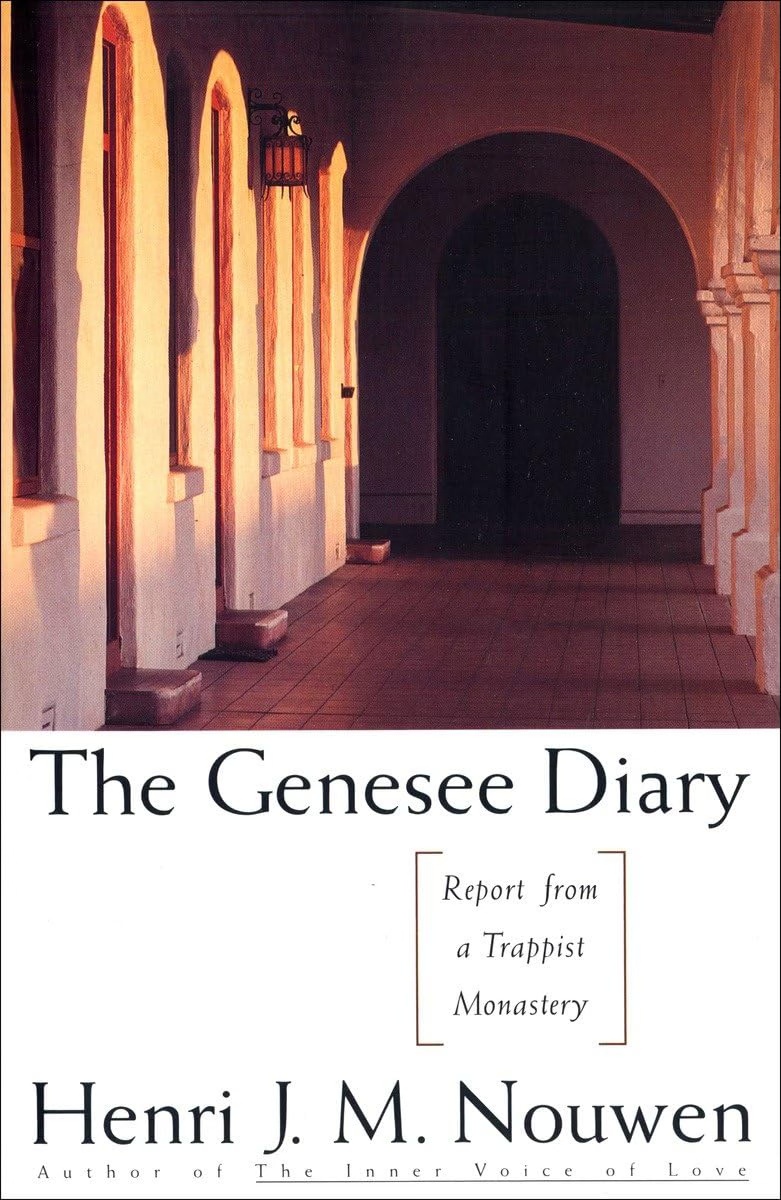
Reading the Season: The Genesee Diary by Henri J. M. Nouwen

I started this annual post at Christmas time in 2008, calling it Reading the Season. As the song goes, this might be ‘the most wonderful time of the year’, but it could well be the most distressing to many. In the hustle and bustle of the Season on the heels of that perennial frenzy called ‘Black Friday’, I hope Ripple Effects can be a respite from the busyness by offering a reading suggestion that could bring some quietude and to slow down the running wheel, hopefully the heart rates as well.  

Henri Nouwen wore many hats, priest, speaker, writer, professor at Yale and Harvard Divinity Schools, and in the last ten years of his life from 1986-1996, quit his university teaching to live and serve as pastor among a community of intellectually disabled men and women, L’Arche–Daybreak in Ontario, Canada. 

Twelve years before he made that life-changing commitment to L’Arche, in 1974, Nouwen spent seven months in a Trappist Monastery, the Abbey of the Genesee, in Upstate, New York. He started a diary in June as he began this experience and ending with the last entry on Christmas Day. He was searching for peace and quietude and to practice the contemplative life away from his busy commitments. His entries show his utter honesty with himself and total humility with God, and was always open to love and appreciate those around him. The monastery wasn’t cocoon living, he was in touch with world events and could grasp firmly the role of history in the present, and the continuity of the past in one’s personal journey. I’m glad to find too that he’s an avid bird watcher, and from nature, he gleans deeper understanding of self and God.  

I’ve highlighted many passages, these are some of them. As a birder, I find this so intriguing. It may sound somber and serious, but I can also see the humour in it:

This morning Father John explained to me that the killdeer is a bird that fools you by simulating injury to pull your attention away from her eggs which she lays openly on a sandy place… I have asked pity for a very unreal problem in order to pull people’s attention away from what I didn’t want them to see.

Sometimes it seems that every bird has institutionalized one of my defence mechanisms. The cowbird lays her eggs in some other bird’s nest to let them do the brooding job; the Baltimore oriole imitates the sounds of more dangerous birds to keep the enemies away, and the red-wing blackbird keeps screaming so loudly overhead that you get tired of her noise and soon leave the area that she considers hers. It does not take long to realize that I do all of that and a lot more to protect myself or to get my own will done.

I wonder if I really have listened carefully enough to the God of history, the God of my history, and have recognized him when he called me by my name, broke the bread, or asked me to cast out my nets after a fruitless day? Maybe I have been living much too fast, too restlessly, too feverishly, forgetting to pay attention to what is happening here and now, right under my nose. Just as a whole world of beauty can be discovered in one flower, so the great grace of God can be tasted in one small moment. Just as no great travels are necessary to see the beauty of creation, so no great ecstasies are needed to discover the love of God. But you have to be still and wait so that you can realize that God is not in the earthquake, the storm, or the lightning, but in the gentle breeze with which he touches your back.

And a thought that for me brings a new perspective on Advent:

Advent does not lead to nervous tension stemming from expectation of something spectacular about to happen. On the contrary, it leads to a growing inner stillness and joy allowing me to realize that he for whom I am waiting has already arrived and speaks to me in the silence of my heart. Just as a mother feels the child grow in her and is not surprised on the day of the birth but joyfully receives the one she learned to know during her waiting, so Jesus can be born in my life slowly and steadily and be received as the one I learned to know while waiting.

***

Reading the Season in Previous Years:

2023: Reading the Season: Babe or Man, Man or King? A Poem by Luci Shaw

2022: Dietrich Bonhoeffer’s God is in the Manger

2021: Sabbath Poems by Wendell Berry

2020: Jack by Marilynne Robinson

2019: ‘A Hidden Life’ – A Film for the Season

2018: A Verse from Madeleine L’Engle’s The Irrational Season

2017: A Wrinkle in Time by Madeleine L’Engle

2016: Silence by Shusaku Endo

2015: The Book of Ruth

2014: Lila by Marilynne Robinson

2013: Poetry by Madeleine L’Engle

2012: Surprised by Joy by C. S. Lewis

2011: Walking on Water by Madeleine L’Engle 

2010: A Widening Light by Luci Shaw

2009: The Irrational Season by Madeleine L’Engle

2008: The Bible and the New York Times by Fleming Rutledge 

2008: A Grief Observed by C. S. Lewis

Remembering Gordon Lightfoot: Pussy Willows, Cattails, Soft Winds and Roses

The passing of Gordon Lightfoot yesterday at the age of 84 evokes a stream of nostalgic consciousness. The following is an old post dating back to more than ten years ago. I wrote it after visiting Unionville in Ontario; the profusion of cattails by the pond stirred up memories of listening to Lightfoot’s song. As a tribute to the Canadian music legend, I’m reposting it here.

____________

Took a short trip to Ontario last week and came home overwhelmed with nostalgia. It all started when I visited the town of Unionville and saw these, crowds and crowds of cattails growing profusely at the pond, the fields, and by the footbridge:

.

For some inexplicable reasons, I’m much fond of cattails. The first time I learned about them was from listening to the song by Gordon Lightfoot… before I’d actually seen one.

Some time in the 70’s, for many afternoons I sat in the art room of a high school somewhere in Alberta, working on some art project, but mostly doing nothing at all while listening to Gordon Lightfoot.  Mr. Hannington held a laissez faire art class… we could do just about anything, or nothing.  Usually, there would only be three or four of us in the room.  We would just sit around, chat, daydream, and immerse in the voice of Gordon Lightfoot on the radio.

I didn’t turn out to be an artist, while one of us did.  But I’ve remained partial to cattails, mesmerized by the song and the singer.  Those Lightfoot afternoons in the art room emerged from the depth of hazy memories, the lyrics were the soft winds caressing naked limbs as I walked in this natural reserve in Unionville.

Pussywillows, cattails, soft winds and roses
Rainpools in the woodland, water to my knees
Shivering, quivering, the warm breath of spring
Pussywillows, cat-tails, soft winds and roses

Catbirds and cornfields, daydreams together
Riding on the roadside the dust gets in your eyes
Reveling, disheveling the summer nights can bring
Pussywillows, cattails, soft winds and roses

Slanted rays and colored days, stark blue horizons
Naked limbs and wheat bins, hazy afternoons
Voicing, rejoicing the wine cups do bring
Pussywillows, cattails, soft winds and roses

Harsh nights and candlelights, woodfires a blazin’
Soft lips and fingertips resting in my soul
Treasuring, remembering, the promise of spring
Pussywillows, cattails, soft winds and roses

(To my artist friend CD: Keep the fire burning.)

***

Some of you had left comments in that old post. If you’re interested to know what you had said, click on the link to find out.

Try to remember the kind of September…

My few weeks of hiatus from the Pond led me to the bustling city of Toronto. Just the second weekend of September there were over 80 events planned across the city: festivals, concerts, food fares, cultural celebrations… In the downtown core, road closures, frenzy and chaos. The main attraction with international focus of course is the Toronto International Film Festival. Since this is the first in person TIFF after two years of Covid measures, I chose to avoid the huge gatherings and stay closer to nature, far from the madding crowd… I’ll have to wait to watch the selections hopefully later in the year.

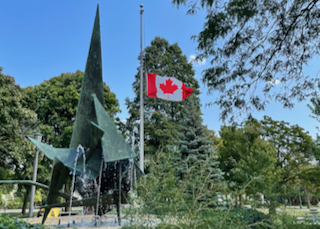
Then came the sad news of the passing of Queen Elizabeth II, 70 years on the throne, the longest reigning British monarch and the longest female sovereign in history. Politics aside, being born and raised during my formative years in the former British colony of Hong Kong, I much appreciate the freedom to grow up in an environment where East meets West, unlike what Kipling had surmised.

I studied both classical Chinese as well as English literature in school, donning a uniform in cheongsam (do google it if you’re not sure what it is) but wore bell bottom pants when out; grew up watching numerous kung fu movies while following closely all James Bond flicks; savoured home cooked Chinese meals as well as those from international sources; yes, and love the fusion of Hong Kong style western cuisine, street foods and snacks. A prime example is Hong Kong style milk tea with condensed milk, best to pair with a pineapple bun with a piece of ice cold butter in the middle, oh, and egg tarts.

Pineapple bun with butter, egg tarts at back.

Looking back, it was a period when I was free to explore different world views and thinking. I still remember following a classmate to a secondhand bookstore in an obscure alley after school, looking up books on psychology and philosophy; or one time, catching another classmate secretly reading her own book held under her desk during class. When I asked her later out of curiosity what she was reading, no, it wasn’t a comic book or a teen magazine, but Somerset Maugham’s short stories. That was my intro to the wonderful writer.

My nanny loved Chinese operas. She was a versatile, middle age woman who lived in our home and acted almost as my substitute mother. She read Dream of the Red Chamber at night before she slept, daytime too busy for her. I grew up reading Chinese translations of world literature for children and some Enid Blyton, while also saved up enough pocket money to buy my Mad Magazine. I learned to play the piano and listened to The Beatles and The Monkees. The first LP album in our home was My Fair Lady.

What do all these memories have to do with the Queen? For me, it was a period of growing up experiencing both East and West in a British colony that didn’t require its citizens to sing “God Save the Queen,” or demand The Union Jack be hoisted in schools. I’d enjoyed the freedom to explore despite a rigid home environment. If I were to write a memoir some day, it would likely be in the theme of a growing up where East meets West, where the fusion of the two is exciting and appealing, and where opportunities are plentiful, and I was free to live life in an interesting, borderless fusion of cultures.

So, it was the end of an era when the Queen passed. Now the world seems to have grown polarized, tempers flare when people of opposite views confront, and where the ominous observation by Kipling is becoming all the more acute as autocracy begins to prevail.

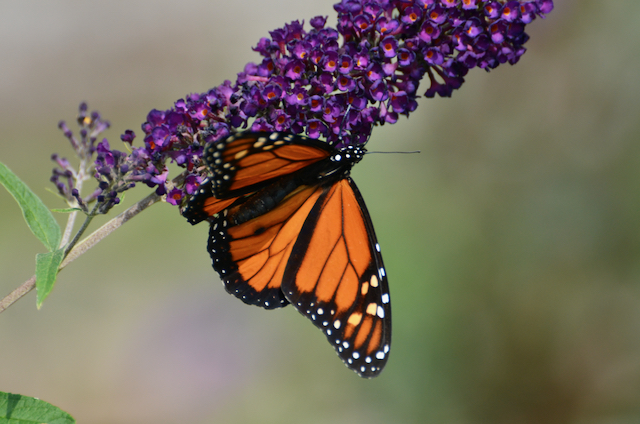
As I was wandering the lakeshore in Toronto, I caught sight of some lively monarch butterflies. It was a pleasant surprise, as I wasn’t expecting seeing them in such an urban environ. From one Monarch to another, may these monarchs be free and lively as they migrate thousands of miles south, following the instinct endowed by their Creator’s design.

From one Monarch to another:

***

Easter 2021

“April is the cruellest month…” says T. S. Elliot in The Waste Land. He has his reasons. For me, April teases us with uncertainties, so in that sense, it’s a bit cruel. Just when you think it’s spring, a snow storm cometh. And just as that snow has melted and the temperature goes way above freezing and you step out to that bright sunshine, the brutal wind blows your optimism away and drops you back to sub-zero chill.

Just like this frequent visitor to my backyard. Crept underneath the fence to hide in her favourite spot under the spruce tree, uncertain which coat to wear, winter or spring, white or brown:


Just as our world has lived through a pandemic year, now with vaccines in hand, here come the new waves of variant outbreaks, bringing more uncertainties.

I wrote this poem at Easter exactly ten years ago. At that time I was dealing with a bit of a writer’s block, some kind of brain freeze while facing the real freeze outside. The next time I re-posted the poem a few years later in 2016, I was stressed out dealing with the post-surgery care of a family member. Thanks to all who had commented then, we got out of it slowly and experienced the grace of healing.

Easter 2021 is none like others. Distressful situations have multiplied, their magnitude in epic scale. As with everyone else in this world, I’ve lived through a pandemic year, which alas, still has no end in sight with the outbreaks of variants. And personally, I’m wary even just walking in public, not only for Covid risk, but having to look out to avoid being spat at or punched in the face due to all the unprovoked violence against Asians, or women, or both. Face masks may help protect us from a physical virus, but not that stemming from the human heart. Looking out to the world political stage, looming conflicts breed like a plague.

That first Easter wasn’t a celebration but an execution. A dark day, a torturous public punishment, Crucifixion. It was there in the middle of the world––signifying the centre and reaching to all––one sacrificial death unleashed the power of divine love to save us from ourselves, a concept I’m beginning to grasp as more and more urgent and relevant now. After death came the ultimate miracle, resurrection. That same resurrecting power today can raise the deadest of soul to a brand new life.

_______

An Easter Poem

April is the month of empty dreams
Half the days gone
waiting for words and spring
still frozen ground
and on the screen
a frigid page as white as snow.

Brown could be the color of hope
After the white
for all I know
green is too much to wish for
I’m contented to see a patch
of dry and withered brown.

The sun is a perpetual sign
that there’s still hope
But it’s no herald of the seasons
for its presence comforts all year long
warming my blank and barren state
as I await for words and spring.

But Easter is an apt reminder
that The Word had come
spoken clear to half-frozen ears
His body hung on a lifeless tree
Blood and water flowed
onto parched and dusty earth

So what if no words come to me
That dreaded writer’s block
reigning the winter of sterility
numbing senses,
snatching thoughts,
seizing any sign of spring.

It’s not about a post or a blog,
Or even buds and melting snow.
The Word had come
lived and loved among us,
broken, bled, died and rose,
melting frozen hearts to greet
a new dawn and eternal Spring.

–– Arti (April, 2011)

________

That historic Event in the past overrides all uncertainties in the future. He is risen!

HAPPY EASTER!

Birding with Annie Dillard

This is not merely wishful thinking.

I read Annie Dillard’s Pilgrim at Tinker Creek years ago. At this moment in time, with the pandemic and disruptions, it seems like what she describes in her book is a piece of Arcadia, a setting in a totally bygone era, idyllic, clean and pristine, and also something I’ve long swept to the back of my mind. Just this week, I’ve the chance to listen to the audio version of the book, read by the marvellous Tavia Gilbert, a very ‘Dillardy’ voice. Her narration prompted me to dig out my copy of Tinker Creek.

This time, Dillard’s nature writing meant much more to me. When I first read it years ago, I wasn’t a birder, couldn’t even ID a chickadee. Now, though still with minimal knowledge, at least I know what bird it is she’s describing.

It’s her chapter entitled “Seeing” that grabs me most. Her words I must quote directly:

Unfortunately, nature is very much a now-you-see-it, now-you-don’t affair… the brightest oriole fades into leaves. These disappearances stun me into stillness and concentration; they say of nature that it conceals with a grand nonchalance, and they say of vision that it is a deliberate gift…

I know how hard it is to capture an oriole before it ‘fades into leaves’:

Oriole

For nature does reveal as well as conceal: Now-you-don’t-see-it, now-you-do. For a week last September migrating red-winged blackbirds were feeding heavily down by the creek at the back of the house. One day I went out to investigate the racket; I walked up to a tree, an Osage orange, and a hundred birds flew away.  They simply materialized out of the tree. I saw a tree, then a whisk of color, then a tree again. I walked closer and another hundred blackbirds took flight. Not a branch, not a twig budged…

Even though I haven’t seen an Osage orange before, I know exactly what Dillard means by hundreds of blackbirds taking flight from one single tree. I’ve seen not blackbirds, but waxwings or starlings like that. As for our blackbirds, they usually gather at the Pond, solitary among cattails, seldom in flocks of hundreds:

RWBB

How I get what she means by nature reveals as well as conceals. Just a few days ago, I had both of these experiences.

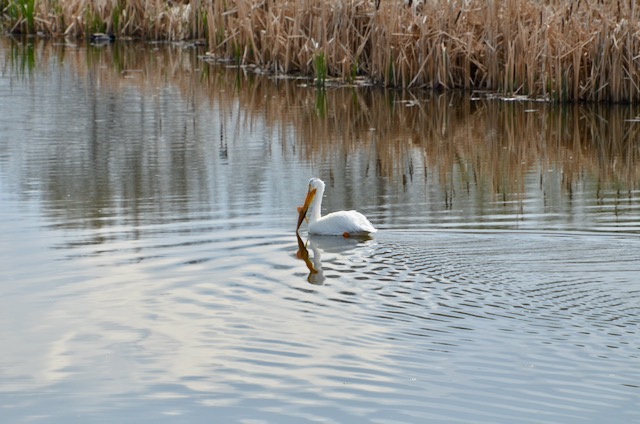
I saw a pelican swimming peacefully on the Pond:

Pelican in serenity

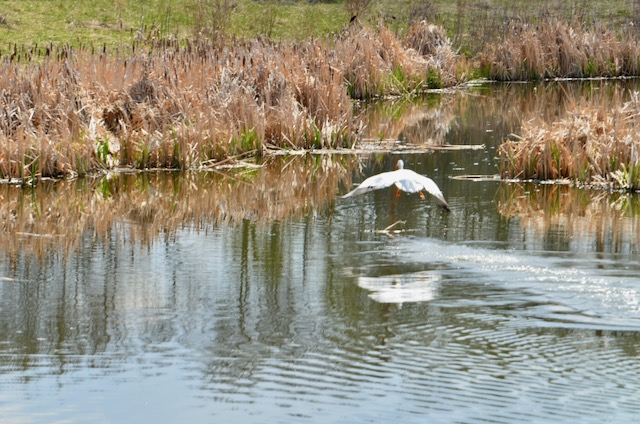
Just as I went closer, she flew away. It happens a lot of times when I try to take bird photos:

Pelican Flying Away

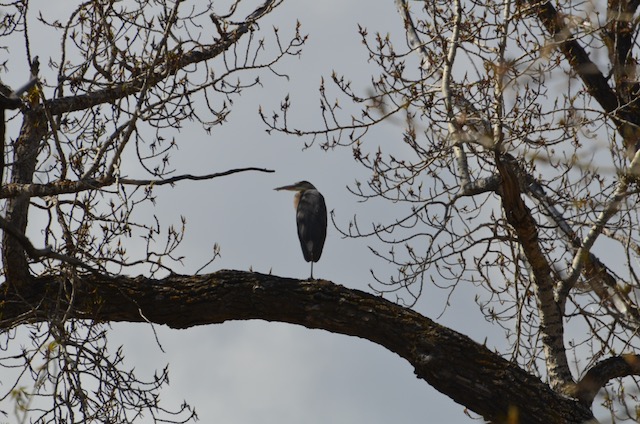
And conversely, I also have a now-you-don’t-see-it, now-you-do moment. Walking in the woods, I suddenly caught sight of something in a distance, a ghostlike appearance:

Distant finding

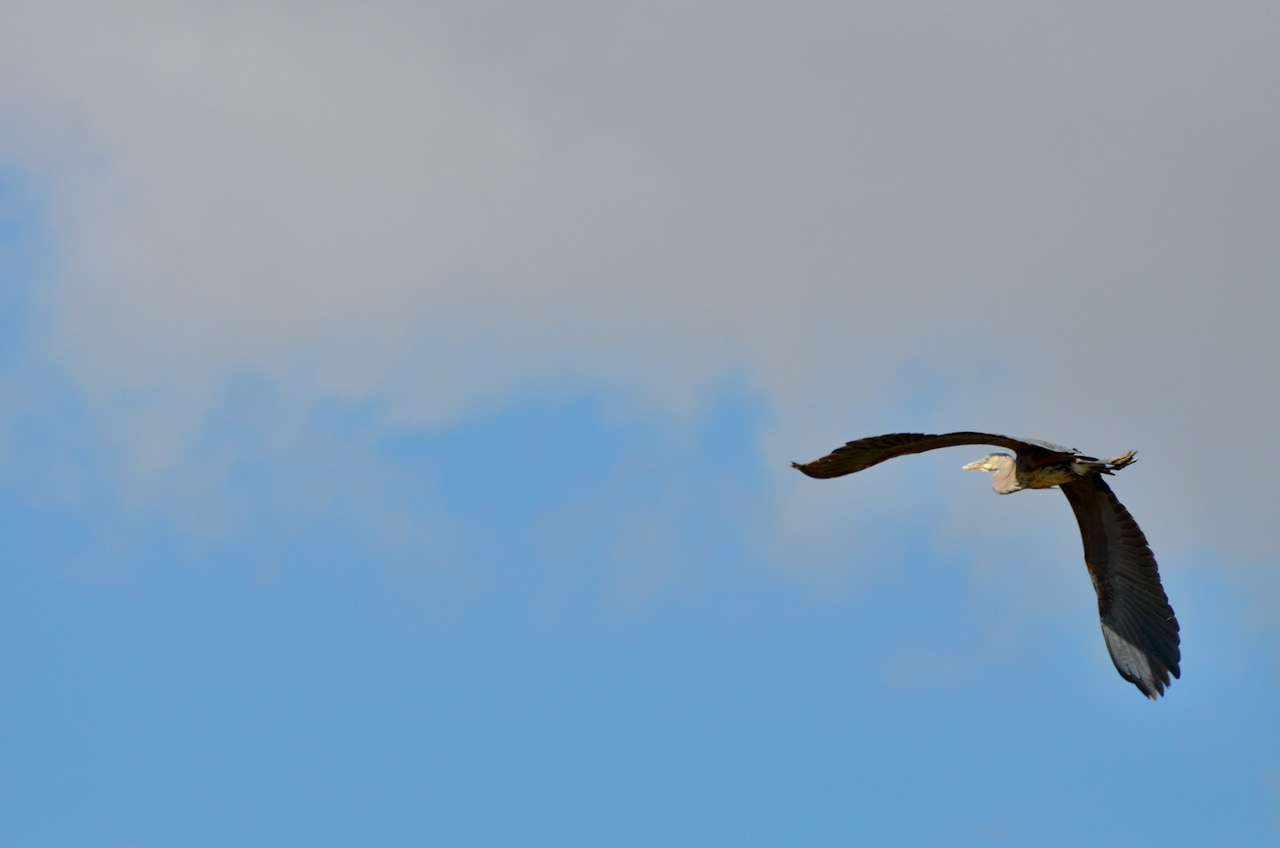
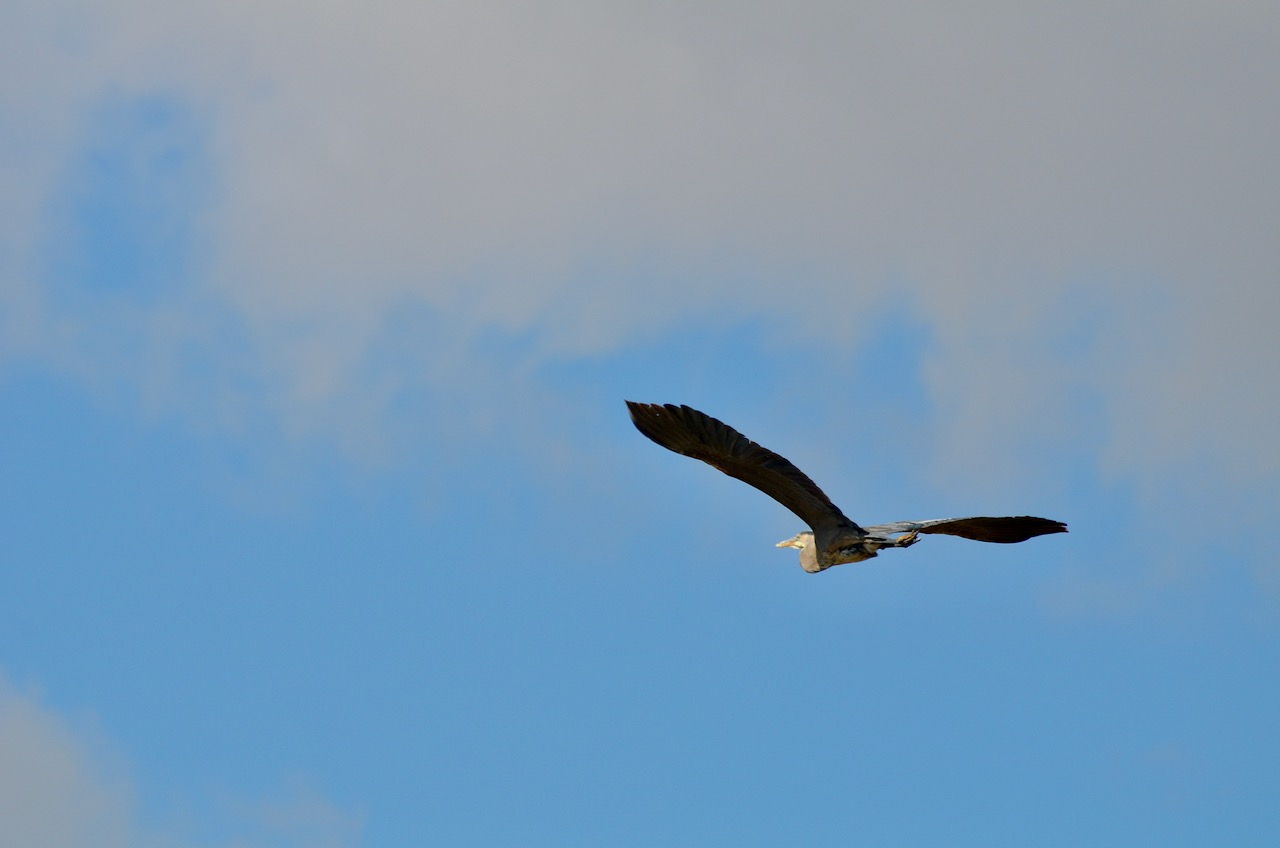
As I waded around fallen trunks and leaves to get closer to investigate, hopefully to get to the front to take a picture, I lost sight of it. Then suddenly, something huge close by me flew away. It was right beside me!

GB Fly away

GBH Fly 2

It was a Great Blue Heron. I’d never seen it in the woods perching on a tree, only by the water. Just as I didn’t expect it, I saw it, and just as I realized what it was, it disappeared.

Now-you-don’t-see-it, now-you-do, now-you-don’t again. “These disappearances stun me into stillness and concentration,” Dillard writes. Too mundane to even mention? Far from it. “The grand nonchalance” of nature keeps us in a place of humility and evokes our need for sharper senses.

Yes, a better camera.


***

Greta Gerwig Creates A Third Way to Adaptation with ‘Little Women’

In recent decades, there seems to have emerged two paths to approach movie adaptations of literary works, especially for a classic: faithful to the source, or awash it with contemporary strokes.

Here’s the rub: total loyalty would trigger criticisms of movies being a kind of illustrated book, simply redundant. But gloss it over with postmodern touches could strip an adaptation of the meaning and authenticity of the original text. Debates arise as to which is a better path.

A few days ago, in a Writers Panel with five screenwriters at the Santa Barbara International Film Festival, Greta Gerwig presented a third way. She didn’t call it that, but that’s how I see it, a happy medium (pun intended). Her approach to Little Women is both loyal to the spirit and letter of Louisa May Alcott’s as well as creating a contemporary, artful production for modern viewers to enjoy.


little-women-1


I’ve to quote her exact words as they are inspiring. Here’s the link to the video. The following quotes can be found from 27 to 36 mins. How does Gerwig handle the loyalty aspect? The writer-director did extensive research in preparation for her screenplay:

I wanted to treat the text of Little Women as almost a sacred text, also other texts that Louisa May Alcott and her family and other contemporaries had generated between letters, and other books that she’d written. I wanted to ground as much as I could in that. I wanted everything to be footnoteable (she well had coined a new word) and I wanted every line you ask me about and I can say it’s here, that I have my references.

How does her version relate with previous adaptations?

But the fact that it’s been adapted for screen seven times, it’s been made into an opera, and made into a musical and made into two anime shows, this is a loved and interpreted work. The way that something that’s been loved and interpreted many times you get this collective memory of what it is.

There’s the text, which is the book, and then there’s urtext, which is every time it’s loved and interpreted again. Urtext does have a relationship with the text, but it’s also separate… I wanted to deliver on the pleasures of Little Women as we’ve collectively come to know them.

And how does the collective interplay with the personal?

Gerwig instilled her own style and framed it in her own light. Quite a few things I’ve observed, the most obvious difference from previous versions is the structure, her juxtaposing the past and present timelines. The story is told as Jo’s memories seamlessly woven with her present as a struggling writer alone in NYC, a fresh take that adds depth and texture.

Gerwig paints the past with a golden hue signifying the warmth of cherished family memories and the present with a cool, blueish tone sending out harsher, lonelier vibes. She has also given an elevated role for Amy to interact with Jo, two seemingly rival siblings but could well be two sides of the same coin. Amy the pragmatic realist who grows up to understand too well her lack of economic status as a woman and who is ready to take financial security over real love ultimately gets both. Jo the dreamer and idealist, who’d vowed she’d never marry, has also carved out a path of her own.

So what does the ending mean?

I don’t want to say: O here’s what the ending means… I wanted to create something that’s open to interpretation along two lines. I think the movie belongs to the audience, so it’s down to the reflection you see…

With the layered ending, Gerwig effectively depicts the struggles of not only the book character Jo as an aspiring author in Little Women, but parallels it with Louisa May Alcott the woman writer in a man’s publishing world, and extending by implication to Gerwig’s own reality as a woman writer-director striving in a male-dominated film industry. The triple-layered final act opens the door to a golden future as we see a progressive school for boys and girls, and a published author giving birth to her work and keeping her own copyright. As for that third, invisible layer, I do wish Gerwig continual success in her writing and filmmaking career despite the obstacles she faces in the real world.

***

Related Posts on Ripple Effects:

Little Women Movie Review

Top Ripples of 2019 and the Decade

Can a Movie Adaptation ever be as Good as the Book?


The Colours of Fall

About this time last year, I had a post entitled “Golden Fall”. Yes, the title says it all. We don’t have much reds in our fall, no maples, but we have foliage like gold.

Here are some photos I took after returning from Toronto a few days ago, just in time to witness the changing of the seasons and catch the last remaining songbirds before they fly south. This is ‘my Pond’, home at the foothills of the Rocky Mountains.

DSC_0563.jpg

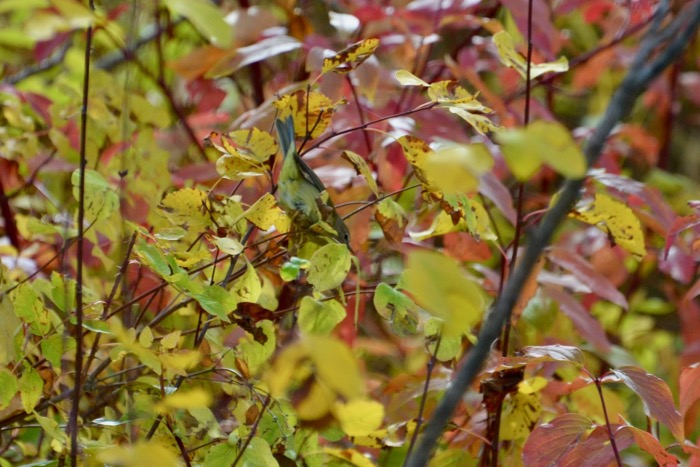
An Orange-crowned Warbler in the golden foliage. It’s goodbye until next Spring, my avian friend:

DSC_0665.jpg

Here’s another one. Olive against red.

DSC_0690.jpg

A ‘Where’s Waldo’ puzzle for you:

DSC_0686.jpg

The White-breasted Nuthatch against a watercolour backdrop:

DSC_0647 (1).jpg

Two-frame capture of a shy subject. See it in both?

DSC_0545 (1).jpg

DSC_0546 (1).jpg

Home is where you know every path and turn, where to shoot with the sun at your back for the best light, and where to look for your friends whatever the season, to wave goodbye as they leave, and then welcome them back for another new lease.

***

Six Degrees of Separation or Prophetic Voices of our Time

I’ve read several books in recent months that are good evidence of ‘six degrees of separation’, and I’ll just end with four here. But more crucial is why such content at this time? They are all published in 2016 but still enjoy current bestselling positions. All are similar in their historical backdrop, authoritarian dictatorship in the 20th Century in two neighbouring countries, China and Russia. Or, maybe these writers of our time are indeed prophetic voices to stress that eerie caution: “Those who don’t know history are doomed to repeat it.”

Here’s the sequence of my reading:

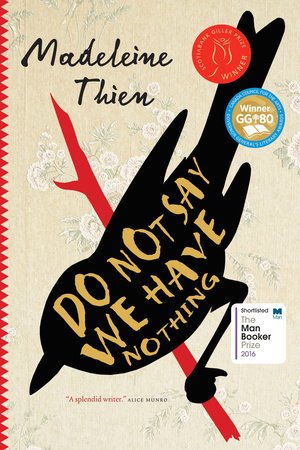
Madeleine ThienDo Not Say We Have Nothing by Madeleine Thien

The top selling book in Canada according to CBC Books, Madeleine Thien’s exceptional novel of three characters, musicians at the Shanghai Conservatory of Music during the Cultural Revolution in China, leads us through decades of contemporary Chinese history from the Communist takeover after WWII to Mao’s Cultural Revolution to the 1989 Tiananmen Massacre, spanning generations and across two continents. Thien was teaching creative writing when her program was abruptly cancelled in the aftermath of the ‘Umbrella Revolution’ sprouting from the Occupy Central led by teenaged students in Hong Kong. That was a motivating force propelling the writing of the book. Following the most recent news that four young student leaders are given months of jail sentences for their actions, we know how timely a voice Thein is with this book.


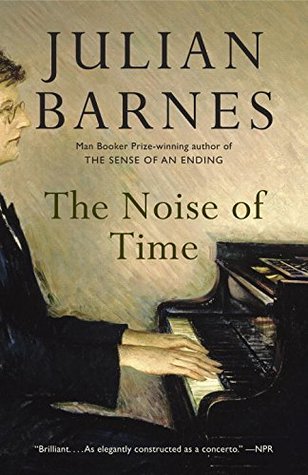
Barnes The Noise of Time.jpgThe Noise of Time by Julian Barnes

Dimitri Shostakovich’s music is in the minds of the three musicians at the Shanghai Conservatory of Thien’s book. Shostakovich, himself a composer treading a precarious line between authenticity and self-preservation under Stalin, is an apt parallel of the situation the trio have to face.

Julian Barnes has crafted an imaginary biopic of Dimitri Shostakovich during Stalin’s tyrannical rule in the Soviet Union (1929-1953). Barnes’ depiction is internal, presenting the struggles, the giving-in and the self-loathing of a world famous composer and pianist who was unable to stand up to a ruthless and manipulative dictator. Speak truth to Power? Who can still stand, or live, after that? And it’s not just about oneself, but one’s family and all those associated.


Cometh the hourCometh the Hour by Jeffrey Archer (#6 of the Clifton Chronicles)

Jeffrey Archer, a prophetic voice? While his Clifton Chronicles have entertained us with imaginary characters spanning three generations of two British families, Archer does have the political mood of our times firmly held under his pen, and Lord Archer is a savvy political historian in his own right. This summer I binged on Jeffrey Archer, okay, not exactly your serious, prophetic voice, but no less relevant. This is especially true when his fictional character, Russian writer Anatoly Babakov, is imprisoned in Siberia for his book Uncle Joe. Based on his own experience while working under Joseph Stalin, Babakov offers readers an insider’s look into the ruler, revealing the ruthless dictator that he really was.

Babakov is awarded the Nobel Prize of Literature while still in prison. But not long after the announcement, he dies of a heart attack. His wife Yelena although escaped out of the country, wants to return to honour her husband. Archer’s character makes me think of the real life dissident Chinese writer and activist Liu Xiaobo, also Nobel laureate, but was denied the freedom to go and accept his Prize. He had been imprisoned for 11 years and sadly, died of liver cancer in July this year, 2017. And even more sadly, Liu’s wife could not see him at his deathbed and had gone missing after his death. Archer’s book was published in 2016. I’d say that’s quite prophetic.


A Gentleman in Moscow by Amor Towles

A Gentleman in MoscowA totally different tone, but the same historical backdrop. Towles has created an interesting and colourful character, the aristocrat Count Alexander Rostov, kept in house arrest when the Bolsheviks overrun the country. True to his personality and lifestyle – the major consolation of such a misfortune – Count Rostov serves his house arrest in the elegant Moscow Metropol Hotel across from the Kremlin, albeit in a cramped room in the attic. With his always pleasant demeanour, the former aristocrat makes himself at home at the grand hotel, meeting interesting characters, wine and dine to his heart’s content. He stays there for decades, with the historic changes happening outside the four walls of the Metropol: Lenin, Stalin, post-Stalin, and further. As fate would have it, Count Rostov encounters an idealistic youngster named Nina, and years later, takes up guardianship of her daughter Sofia, and thus his life and view begin to turn into something more purposeful. The Metropol makes me think of Wes Anderson’s The Grand Budapest Hotel. Instead of speaking truth to power and get slapped in the face or worse, Count Rostov thinks of an ingenious scheme to beat Power at their game. If I were a filmmaker, this is one to bank on.

***

Related Posts on Ripple Effects:

Do Not Say We Have Nothing Book Review

The Budapest Hotel: A Grand Escape


Jane Austen 200: Room or No Room, She Did It

Today is the Bicentenary of Jane Austen’s death. On July 18, 1817, suffering excruciating pain, Jane died of her illness at age 41. As a tribute, I’m reposting my article on Virginia Woolf’s A Room of One’s Own.

***


A Room of One’s Own is based on a series of lecture Woolf delivered at the two women’s colleges in Cambridge University on the topic of “Women and Fiction”.  It was published in 1929.

Woolf lamented the disparities women in a patriarchal society had to face throughout history.  The stream of consciousness flowed into torrents of incisive social observations and satirical commentaries.

She noted that women had long been deprived of equitable opportunities in education and employment. Men were rich, women were poor; men got to roam the country and travel the world, women had to be satisfied with the domestic.  Men were great writers, poets, playwrights, women had to concede to find fulfillment in “making puddings and knitting stockings”. Men had rooms to work, to rest, to create…women, the average, middle class women, seldom had a room of their own.

…to have a room of her own, let alone a quiet room or a sound-proof room, was out of the question, unless her parents were exceptionally rich or very noble, even up to the beginning of the nineteenth century.

And sadly, Woolf had to utter this statement:

Yet genius of a sort must have existed among women as it must have existed among the working classes.

Isn’t it true, Jane spent her most prolific years writing in a very public room in Chawton House.  In the midst of family activities, at a small and spartan desk, she revised Pride and Prejudice and Sense and Sensibility, wrote Mansfield Park, Emma, and Persuasion, and began Sanditon:

Jane's writing desk in Chawton

And isn’t it true that only in movies do we see the idyllic desk against a clear window, with soft light diffusing in, gently illuminating a lady dressed in elegant regency gown, writing on expansive papers and stationary, contemplating in solitude:

Room or no room, recognized or not, something happened towards the end of the eighteenth century that, according to Virginia Woolf, deserved much more mention in history than the Crusades or the Wars of the Roses:  The middle-class woman began to write.

Woolf pointed out that not only did Jane Austen lack a room of her own, having had to write her novels in the very public sitting-room, she had to hide her manuscripts or cover them with a piece of blotting-paper, as observed by her nephew James Edward Austen Leigh in his Memoir of Jane Austen.

Ironically, there lay the genius of Austen, and the few woman writers around her time such as Bronte and George Eliot.  Woolf wrote:

…and we must accept the fact that all those good novels, Villette, Emma, Wuthering Heights, Middlemarch, were written by women without more experience of life than could enter the house of a respectable clergyman; written too in the common sitting-room of that respectable house and by women so poor that they could not afford to buy more than a few quires of paper at a time upon which to write.

Little did they know, it was in such a room that they were trained in the prerequisites of novel writing:

…all the literary training that a woman had in the early nineteenth century was training in the observation of character, in the analysis of emotion.  Her sensibility had been educated for centuries by the influences of the common sitting-room.  People’s feelings were impressed on her; personal relations were always before her eyes.  Therefore, when the middle-class woman took to writing, she naturally wrote novels…

Not only that, they wrote good novels.  With reference to Jane Austen, Virginia Woolf concluded:

Here was a woman about the year 1800 writing without hate, without bitterness, without fear, without protest, without preaching.  That was how Shakespeare wrote.

High praise indeed.


***

Previous Post on Jane Austen 200:

Jane Austen’s Persuasion: A Bath Walking Tour
10 Years

WordPress tells me I’ve been blogging for 10 years now. It’s been a life-changing decade. From a film lover writing reviews just for personal journalling, I’ve developed into writing to share. Hundreds of movies later, I’m now an Arts and Film Writer for Asian American Press. In recent years, I started covering Film Festivals; my appreciation for cinema art and independent films from all over the world had grown deeper.

Books, I’ve read a few, but then again, too few to mention. My TBR piles is expanding much faster than I can tackle. To manage them, I use the simplest method: deleting them from my memory. Many I’ve bought from the annual Book Sale (several posts), but I’ve since donated them back. There’s one on my Goodreads ‘currently reading’ shelf for years now which I don’t want to give up just yet, and that’s Proust’s In Search of Lost Time Vol. 3, The Guermantes Way.  Some day.

Other than books, movies, and my special interest in the transposition of one into the other, I’ve also become an avid birder. Arti of Ripple Effects has turned into a nature paparazzo. I’d thought of starting another blog just for nature photography but thought, hey, everyone needs a respite even from books and films. The Pond is open to all to throw in their two pebbles, make some ripples while enjoying a piece of natural beauty.

WordPress tells me in the side bar that I have 6,843 followers. Simply amazing, considering the number of comments I receive in each post. No matter, commenting isn’t a requirement when you visit the Pond. I’m just glad to know you’ve enjoyed your stay, even if it’s a short minute or two. And to all visitors and followers, a hearty thank-you. You’ve made my presence in the blogosphere meaningful.

To celebrate 10 years, to say goodbye to Spring (already) and welcome Summer, I’ll leave you with a few photos I’ve taken in the past few days.

The forest by the Pond:

DSC_0497 (2)

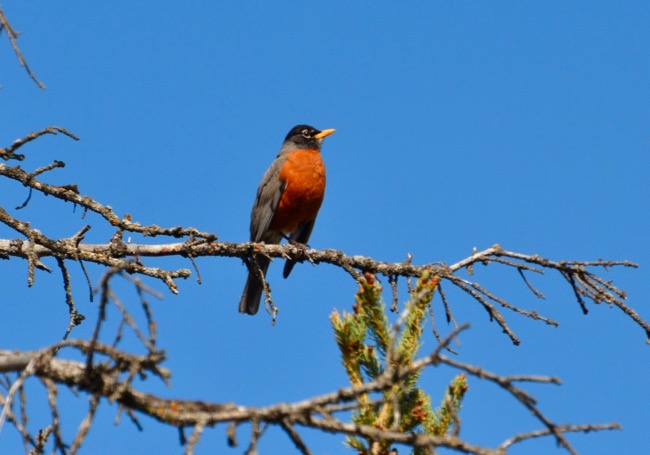
They may be the most common bird, but every Robin is a welcome sight against the blue sky:

DSC_0211

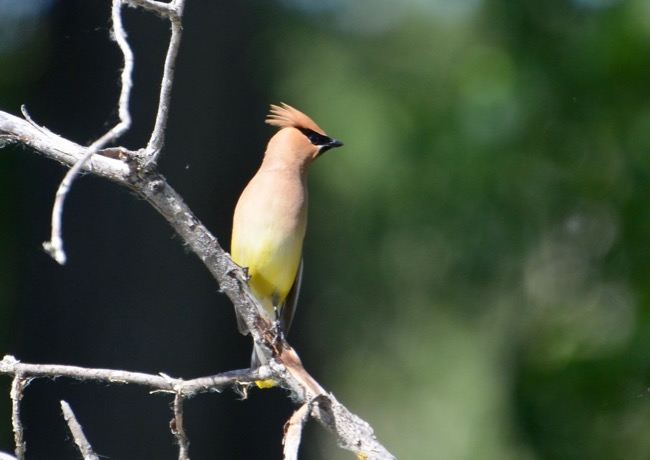
The well-groomed and handsome Cedar Waxwing, always camera ready:

DSC_0428 (1)

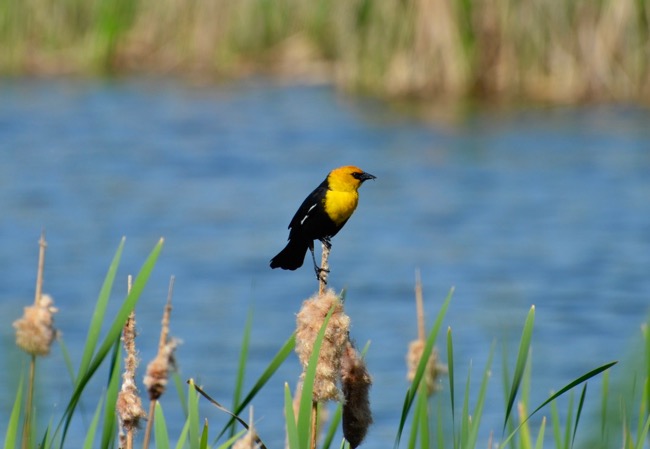
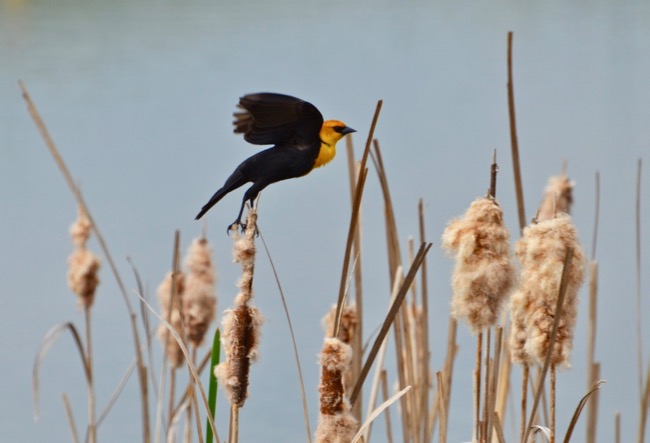
True to their name, the Yellow-headed Blackbird on a cattail:

DSC_0344


DSC_0182.jpg

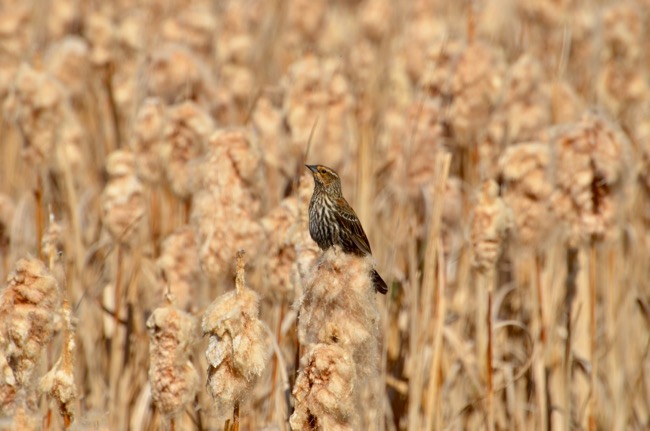
The female Red-Winged Blackbird. Nature endows with different features:

DSC_0060

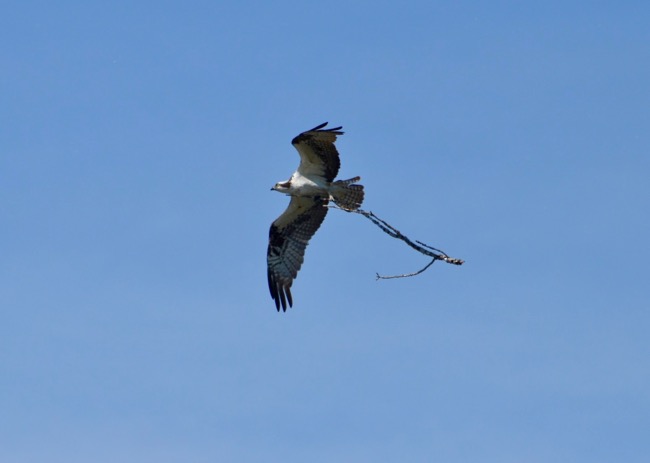
Up in the sky, an Osprey is busy transporting his building materials:

DSC_0289

And a touring group of Pelicans, looking for my Air BnB?

DSC_0479 (1)


More to come.


***