Saturday Snapshot Nov. 2: Cool Blue

Blue is the most cool color for a photo background. Note: not the ‘coolest’ like in temperature, but just real cool as in awesome. We in southern Alberta are blessed with a clear, blue sky most of the time. Here are some photos I’ve taken in the past weeks. No color alteration have been done on them.

On a clear day, you can see the Rockies… like a mirage:

On a clear day you can see...Different shades of blue:

ShorebirdsThe sparrows on the roof enjoy the cloudless blue too:Sparrows nesting on roofCrab apples look more colorful:

CrabapplesSo’s the Northern Flicker:

Northern Flickerand the Pelican, more startling white:

Pelican overheadWe can even live with the snow when the sky is so blue:

God Is LoveWords on the frame of front door: “gud er kaerlighed” (Danish)… “God is Love”.

Which blue is most cool for you?

***

Saturday Snapshot is hosted by Melinda of West Metro Mommy Reads. CLICK HERE to see what others have posted.

All photos on this post taken by Arti of Ripple Effects, 2013. Please do not copy or reblog.

***

Half Way Through a Budding Grove

Half way through reading In Search of Lost Time, Vol. II, Within A Budding Grove, I’ve discovered a key to enjoying Proust. Just as it’s best to eat madeleines by dipping them in tea before putting the moistened petite cakes in your mouth, the most enjoyable way to read Proust is lying in bed with an unhindered mind. In this most relaxed state, I’m at ease to stroll leisurely through a budding grove, or the thickets of a genius’s mind.

Within A Budding Grove Modern Library

So far, I’ve gone passed the narrator Marcel’s painful struggles with adolescent, unrequited love for M. Swann’s daughter Gilberte. In contrast, his crush for Mme Swann has been appreciated and normalized. Unlike the cool and aloof Gilberte, Mme Swann welcomes Marcel into their home warmly, including him in their family outings, and their home gatherings with their friends, thus allowing him an opportunity to meet his literary hero, the writer Bergotte.

And here’s the passage I’m most impressed by, so far. The man Bergotte is very different from the writer Marcel has encountered in his ‘divine writing’. The man appears to be very common, inarticulate even, and devoid of eloquence, a man who spent his childhood in a ‘tasteless household’. Marcel is shocked by this discovery, and scrambles to come to terms with such dissonance. In a most ingenious analysis, the young Marcel comes to this conclusion:

But genius, and even great talent, springs less from seeds of intellect and social refinement superior to those of other people than from the faculty of transforming and transposing them… To mount the skies it is not necessary to have the most powerful of motors, one must have a motor which, instead of continuing to run along the earth’s surface… is capable of converting its speed into lifting power. (p. 175)

As I read these few pages, Jane Austen came to mind. A writer who had lived her short life mainly in a rural setting, her associations parochial and far from ‘high society’, and yet could transport herself and thus her readers to a different world from her mundane social environs. Her imagination soared as it took flight with her incisive observations of human nature.

… the men who produce works of genius are not those who live in the most delicate atmosphere, whose conversation is the most brilliant or their culture the most extensive, but those who have had the power, ceasing suddenly to live only for themselves, to transform their personality into a sort of mirror… genius consisting in reflecting power and not in the intrinsic quality of the scene reflected. (p. 175-176)

The adolescent Marcel’s disillusionment with the discrepancy between the man and writer Bergotte leads him to an uplifting insight:

The day on which the young Bergotte succeeded in showing to the world of his readers the tasteless household in which he had spent his childhood, and the not very amusing conversations between himself and his brothers, was the day on which he rose above the friends of his family, more intellectual and more distinguished than himself; they in their fine Rolls-Royces might return home expressing due contempt for the vulgarity of the Bergottes; but he, in his modest machine which had at last ‘taken off,’ soared above their heads. (p. 176)

Yes, more Proust’s words than mine on this post. Many other highlighted passages and surprising delights, but will have to wait till I’ve come out of the budding grove the end of November. If you’re interested, you’re welcome to join me in a read-along of In Search of Lost Time, Vol. II: Within A Budding Grove.

CLICK HERE to my wrap-up post: Out of the Budding Grove

***

Related Posts:

Proust Read-along Swann’s Way Part I: Combray (Featured in ‘Freshly Pressed’)

The Swann and Gatsby Foil

What Was Jane Austen Really Like? Reading Tomalin and Shields

In Praise of Austen: Virginia Woolf’s A Room of One’s Own

***

Saturday Snapshot Oct. 26: The Woods in the Fall

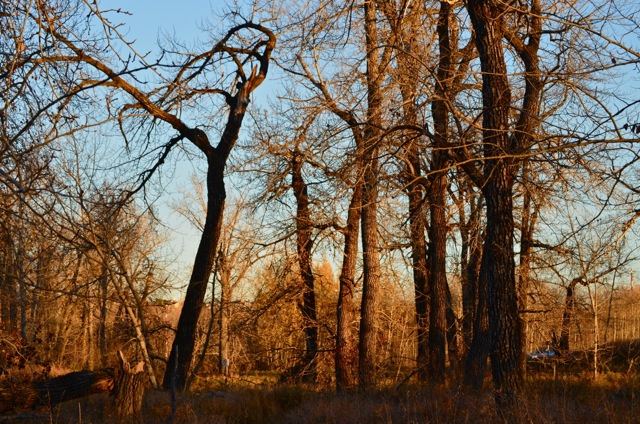
We don’t have the colorful foliage which many of you are privileged to behold, but Beauty dwells within our woods too:

The Woods

Especially in the evening sun:

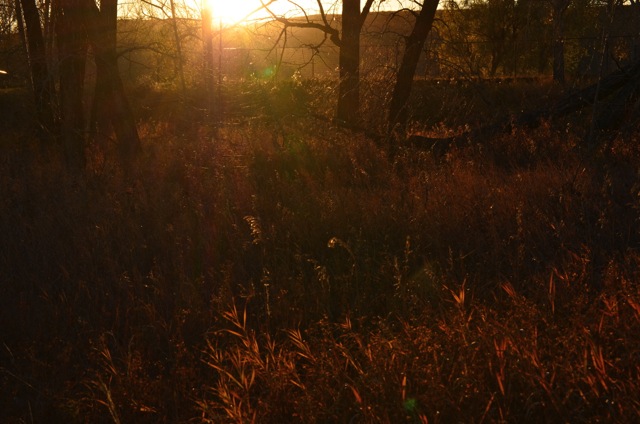
Trees in the duskTrees reaching for the evening skyTrees in the setting sunThe woods are lovely, dark and deep:

Dark and deepBut for these inhabitants, it’s time to eat:

Squirrel

WoodpeckerDinner timeAnd for some others, miles to go before they sleep:

Canada Geeseand miles to go before they sleep:

Miles to go*

Saturday Snapshot is hosted by Melinda at West Metro Mommy Reads. CLICK HERE to see what others have posted.

*

All photos in this post taken by Arti of Ripple Effects, Fall 2013.
Please do not copy or reblog

***

The Fifth Estate (2013)

First off, Julian Assange had condemned the making of the film. The WikiLeaks founder had written to Benedict Cumberbatch (12 Years a Slave, August: Osage County) to dissuade him from picking up the role as his onscreen persona. The letter was published on his website days prior to the film’s general release in theatres. After seeing the movie, I can understand why.

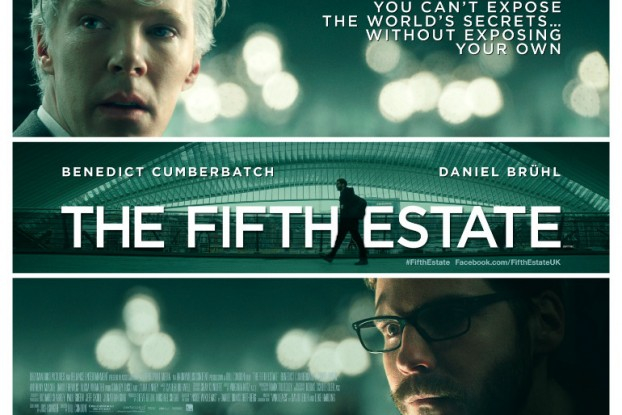
The Fifth Estate Movie Poster copyCumberbatch has presented to us, kudos to his gripping performance and transformation to the Australian accent, an Assange that is fully committed to his cause of absolute freedom to access of information and safe-guarding of whistleblowers in the world with his online organization WikiLeaks, and yet, viewers also see a man who is egotistic, callous, and even to the point of fanatical.

With the portrayal of the different facets of the man, we are confronted with both sides of the issue of transparency. On the one hand, governments, banks, and institutions are made accountable and corruptions and wrongdoings can be exposed. A consequence could be, as in the leaks of 250,000 US diplomatic cables (Cablegate), the inevitable compromising of privacy and security of individuals, leaving lives at stake, such as informants in dictatorial regimes as their identities are disclosed.

Indeed, we live in a messy, messy world. It would be much easier if things are in black and white, and if events can happen much slower for our grasp. The styling of the film could well have conveyed some of that sentiment. It tells the story of Assange’s founding of WikiLeaks and its cases in slick, flashy and fast paced, montage-like treatment. Certain concepts are rendered in a fanciful, almost cartoonish way. Coming into the theatre without much expectation, I have no qualms with the visual metaphors in depicting cyberspace and the digital hacking workhouse.

Following the cases that flash by may be a bit rash on first viewing, but they are thrilling sequences. From a David and Goliath battle of one man against money laundering in the giant Swiss Julius Baer Bank, to political death squad in Kenya, to the now termed ‘collateral murder’ of Reuter reporters and innocent bystanders by U.S. helicopter pilots in Iraq, to the recent Bradley (now Chelsea) Manning leaks of Afghan and Iraq army logs and 250,000 diplomatic cables, we as viewers may want more in-depth handling. However, as this is not a documentary, director Bill Condon (Dreamgirls, Gods and Monsters) has dealt with the subject relatively well within a two hour period.

The movie is based on two books which Assange had denounced in his letter to Cumberbatch, claiming their malicious intent and the lack of truths. One is Inside WikiLeaks: My Time with Julian Assange at the World’s Most Dangerous Website by Daniel Domscheit-Berg, an initial follower who soon becomes Assange’s right-hand-man, until the leaks of the diplomatic cables. Domscheit-Berg’s main concern is the lives that would be compromised if the cables are published without redacting and screening, while Assange insists on unedited, all out exposure. For his role as Daniel Domscheit-Berg, Daniel Brühl (Rush) delivers a convincing performance that matches Cumberbatch’s in the film.

Benedict Cumberbatch & Daniel Brühl copy

While the cast includes such fine supporting actors as Laura Linney, Stanley Tucci, David Thewlis, Dan Stevens… it is Cumberbatch and Brühl that carry the whole show, with the two starting off as complementary partners, albeit Assange remains the domineering one, to the disintegration of their relationship. For those who like to compare movies with similar subject matter, this is no Social Network. ‘Socializing’ is too trivial a word here. WikiLeaks involves much more dangerous and deadly issues. If anything, Condon’s is a light approach to presenting the complex and controversial subjects of transparency, privacy, and global security.

After watching the movie, I was surprised to discover the generally low ratings it receives. I admit, one can’t compare it to the intricacy of The Social Network, but it is still an entertaining, visual synopsis of some ongoing news events that deserve our attention. The film is a springboard to some needed thinking and discussions before drawing conclusions for ourselves, as the character Assange urges us to do at the end of the movie. Alas, here’s the rub. In our messy and blurry world of truths and fiction, that just may not be an easy task to do.

~ ~ ~ Ripples

***

Read Some Possible Oscar Contenders

Emphasis on the ‘possible’. At this point of the race, some films have not been released other than screened in Film Festivals. The frontrunner so far is 12 Years A Slave. And then there are the rest, some long shots, some longer. But I’d like to include them on this list because I want to draw your attention to the books which inspire these film adaptations.

How come Gravity isn’t here? You ask. It’s a frontrunner too. Yes. But, ah… find me the book first. No book? Maybe because it’s much easier to pass you the 3D glasses.

Here’s a list of fall/winter reading to gear up for the upcoming Awards Season.

12 Years A Slave by Solomon Northup

12 Years a Slave copyThe movie adaptation directed by Steve McQueen is TIFF13 People’s Choice Award winner. From past years, this accolade is a good predictor of Oscar wins. Based on the real life story of Solomon Northup, a free black man in Upstate New York who was kidnapped into slavery in Louisiana. For twelve years he suffered in the hands of several masters. First published in 1853, the book is Northup’s first-person accounts of slavery in 19th C. America, noteworthy for its historical value and poignancy. The actor Chiwetel Ejiofor a likely Oscar Best Actor nom for his role as Solomon Northup. You can download the whole book in its original form here.

August: Osage County by Tracy Letts

August Osage CountyThe play won the 2008 Pulitzer Prize for Drama. Members of a dysfunctional family inevitably come together after tragedy strikes. The stage production was described by the NYT as ‘a fraught, densely plotted saga of an Oklahoma clan in a state of near-apocalyptic meltdown’. Before you see how the A-list cast interpret their roles on screen, maybe reading the play is rewarding since you get to experience the story first hand before being influenced by Meryl Streep, Julia Roberts, Benedict Cumberbatch, Ewan McGregor…

The Monuments Men by Robert Edsel

The Monuments MenI’ve mentioned this title in a previous post. Now I’ve got the book in my hands. The true but untold story of how a group of rescuers called the Monuments Men in war-torn Europe saved  art and artifacts from the Nazi’s. In the introduction of the book, the author writes: “Hitler and the Nazis pulled off the ‘greatest theft in history’, seizing and transporting more than five million cultural objects to the Third Reich.” George Clooney, Matt Damon, Cate Blanchett, Jean Dujardin (The Artist), Hugh Bonneville (so Lord Grantham finally gets the chance to go into the battlefield).

A Captain’s Duty: Somali Pirates, Navy SEALS, and Dangerous Days at Sea by Richard Philips

A Captain's Duty..Another likely contender that has been getting a lot of buzz is this thriller starring Tom Hanks, based on Captain Richard Phillips’ real life ordeal in the hands of Somali pirates. A lawsuit will begin in a few weeks filed by the crew of the ship Maersk Alabama against the shipping company for sending them to pirate-infested waters unprepared. They also claim the Captain was at fault in the case. Their attorneys had set up a Webpage to clarify the truths from the fiction. A turbulent epilogue to the real life adventure on high seas.

The Lost Child of Philomena Lee by Martin Sixsmith

The Lost Child of Philomena Lee copyJudi Dench could get a possible Best Actress Oscar nomination with her role as Philomena Lee. In her youth as an unwed mother, Philomena was sent to the convent of Roscrea, Limerick, her baby taken away and ‘sold’ to America for adoption. As she became an adult, Philomena was determined to search for her lost child. I missed this at TIFF13. Maybe an Oscar nomination for Dench could raise the prospect of it being screened in our theatres.

.

‘Hateship, Friendship, Courtship, Loveship, Marriage’ by Alice Munro

Hateship-Friendship-Courtship-Loveship-Marriage-book-cover copyWith Alice Munro garnering the newest top honor as Nobel Laureate, hopefully the film adaption of this short story with a shorter title Hateship, Loveship will receive a wider release. It has been a long while since Away From Her (2006). The film receives positive feedbacks at TIFF13. A good cast with Kristen Wiig (Best Actress and Best Original Screenwriting Oscar noms for Bridesmaids), Guy Pearce (The King’s Speech), Hailee Seinfeld (True Grit), Nick Nolte (too many to name).

The Secret Life of Walter Mitty by James Thurber (Click on link to read the story online.)

The Secret Life of Walter MittyInteresting to see another film adaptation of a short story. This one I have a feeling that it’s very loosely based on Thurber’s character Walter Mitty, considering it’s a Ben Stiller movie. I’m sure many have read this story in school, time to reread just to get the Walter Mitty psyche, then go and check out the Ben Stiller ride. Other than Stiller, there are Kristen Wiig (again, in two short story film adaptations the same year), Sean Penn (can you imagine?), Shirley MacLaine.

The Wolf of Wall Street by Jordan Belfort

The Wolf of Wall Street copyCoincidence that Leonardo DiCaprio jumps from being Jay Gatsby to Jordan Belfort, the real life fraud on Wall Street, notorious for his highflying lifestyle and his operating a boiler room brokerage firm Stratton Oakmont. A multimillionaire at 26, he was later indicted in 1998 for securities fraud and money laundering but only served 22 months in federal prison. The Wolf of Wall Street is his unabashedly candid memoir. Martin Scorsese directs with DiCaprio touted as a likely contender in the Best Actor Oscar category.

The Book Thief by Markus Zusak

The Book Thief copyNo Oscar buzz around this one, but a look at the movie trailer, I know I want to see it. Yes, mainly because of Geoffrey Rush I admit. And also, Brian Percival… ring a bell? Director of Downton Abbey. The film will be released in November, a time slot where contenders are placed. So, you can say it’s a long, long shot for, who knows, maybe Geoffrey Rush, or Emily Watson? I admit I still haven’t read this very popular YA title. I’d like to do that before watching the film. Is this one on your movie viewing radar?

***

Munro and Movies

Thanks to the Swedish Academy, Alice Munro doesn’t need a blockbuster movie to raise awareness of her works. Described by The New York Times as ‘Master of the Intricacies of the Human Heart’, and with her story settings mostly in rural counties and small towns, the 82 year-old writer must have known how the small and intimate can have far-reaching effects.

The short story as a literary form too must have gained importance and legitimation overnight now that Munro is honored as Nobel Laureate. The novel isn’t the only peak of the mountain of literary pursuits. Readers too, can now be totally comfortable with reading ‘just a short story’.

Back to movies, with our contemporary mega, blockbuster culture, it sure looks like the general public need to see a movie before knowing about a literary work. While I don’t like the idea, I’ve to admit that could well be the case nowadays. But for Munro, can anyone name a full feature movie that’s based on her short stories?

Right. Actually there are four. Edge of Madness (2002) is relatively unknown. Another one interestingly is an Iranian film, Canaan, which won the Audience Awards–Best Film at the Fajr International Film Festival in 2008. A better known adaptation is Away From Her (2006). It remains one of my all time favorite films. The most recent completed production is Hateship Loveship which premiered at TIFF13. I regret missing it when I was there in September. A film based on her story ‘Runaway’ is currently in development.

With Munro winning the Nobel, hopefully we’ll have the chance to see a general release of Hateship Loveship. So there you go, Munro could well be helping to reverse the trend: the writer promoting the film.

To celebrate Munro’s Nobel win, I’d like to repost in the following a review of Away From Her which I wrote in 2008. The film was directed by the young and talented Canadian actor/director Sarah Polley, who was nominated for an Oscar for her adapted screenplay based on Munro’s short story ‘The Bear Came Over the Mountain’. Julie Christie received an Oscar nomination for her role as Alzheimer’s afflicted Fiona.

You can read Munro’s story ‘The Bear Came Over the Mountain’ now online, thanks to a timely reprint by The New Yorker.

**

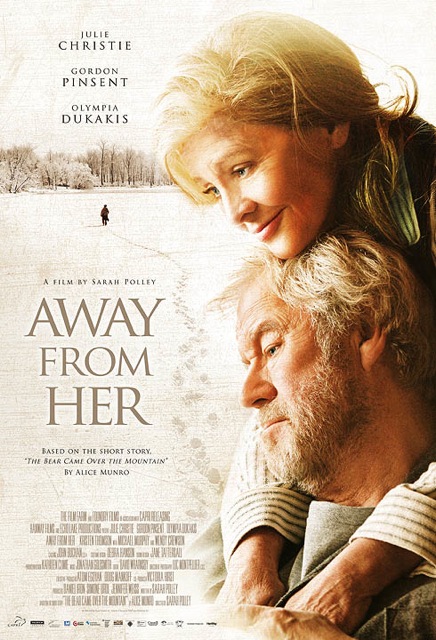
Capri_AwayFromHer_PosterB

AWAY FROM HER: A Short Review

How can you turn a good short story into a full length movie without compromising its quality? By turning it into a screenplay written by an equally sensitive and passionate writer, and then, through her own talented, interpretive eye, re-creates it into a visual narrative. Along the way, throw in a few veteran actors who are so passionate about what the script is trying to convey that they themselves embody the message.

Sarah Polley has made her directorial debut with a most impressive and memorable feat that I’m sure things will go even better down her career path. What she has composed on screen speaks much more poignantly than words on a page, calling forth sentiments that we didn’t even know we had. As Alzheimer’s begins to take control over Fiona, what can a loving husband do? Julie Christie and Gordon Pinsent stir up thoughts in us that we’d rather bury: how much are we willing to give up for love? Or, how would we face the imminence of our loved ones’ and our own mental and physical demise?

Based on the story by Alice Munro, ‘The Bear Came Over the Mountain’, Polley brings out the theme of unconditional love not with your typical Hollywood’s hot, young, and sexy on screen, but aging actors in their 60’s and 70’s. It may not be as pleasurable to watch wrinkled faces hugging and kissing, or a man and a woman in bed, bearing age spots and all, but such scenes effectively beg the question: why feel uncomfortable?

Why does love has to be synonymous with youth, beauty, and romance? It is even more agonizing to watch how far Grant is willing to go solely for love of Fiona. Lucky for us, both writers spare us the truly painful at the end. It is through persistent, selfless giving that one ultimately receives; however meager and fleeting that reward may seem, it is permanence in the eyes of love. And it is through the lucid vision of a youthful 28-year-old writer/director that such ageless love is vividly portrayed…. Oh, the paradoxes in life.

~ ~ ~ Ripples

***

Saturday Snapshot Oct. 5: Wabi-Sabi (3)

I’ll wrap up my mini-series on Wabi-sabi with these photos. Yes, I’m saving the best for last.

By this flood-damaged bridge:

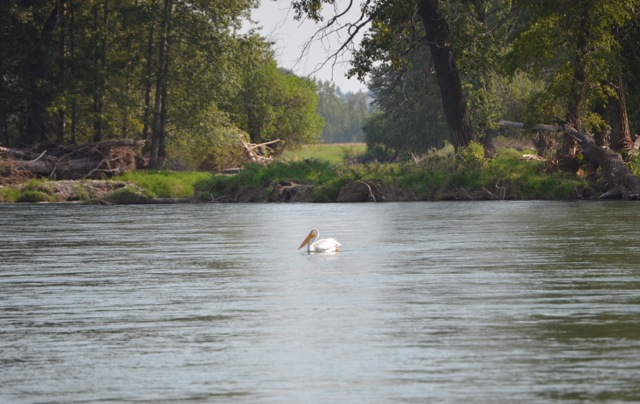
Broken BridgeI came across a rare sighting, for me anyway. For those of you who live near the coast, a Pelican may be as common as a Sparrow, but for me who call the Rockies home, spotting one in our neck of the woods is exhilarating:

PelicanI quickly followed her with my camera from afar. Against a backdrop of debris and damaged bank, she performed a few dance moves for me:

Dance 1Dance 2Dance 3After that, she turned around and swam quietly into the mythical scenery:

Mythical scenery**

I went back a few days later and was gratified some more by these two Cedar Waxwings, chatting away in the afternoon sun, oblivious to the damaged landscape:

Cedar Waxwingsquietly enjoying each other’s company:

Cedar Waxings 1but best of all, looking out together:

Looking out together**

Saturday Snapshot is hosted by Melinda of West Metro Mommy Reads. CLICK HERE to see what others have posted.

Previous posts:

Wabi-sabi (1)

Wabi-sabi (2)

***

All photos taken by Arti of Ripple Effects, August, 2013.

DO NOT COPY OR REBLOG.

***

Saturday Snapshot Sept. 28: Wabi-Sabi (2)

The June flood in Southern Alberta has turned out to be the costliest natural disaster in Canadian history according to the Insurance Bureau of Canada.

To continue with the Wabi-Sabi idea, here is another set of photos. Again, in the midst of ruins, weeks after the flood, I took in these sights…

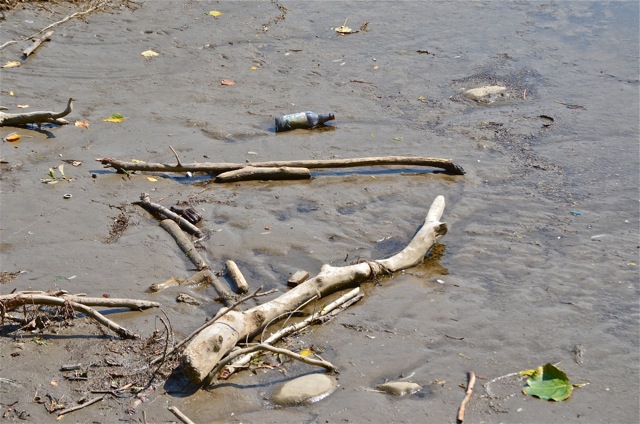
Along the debris-filled, muddy shore of the river:

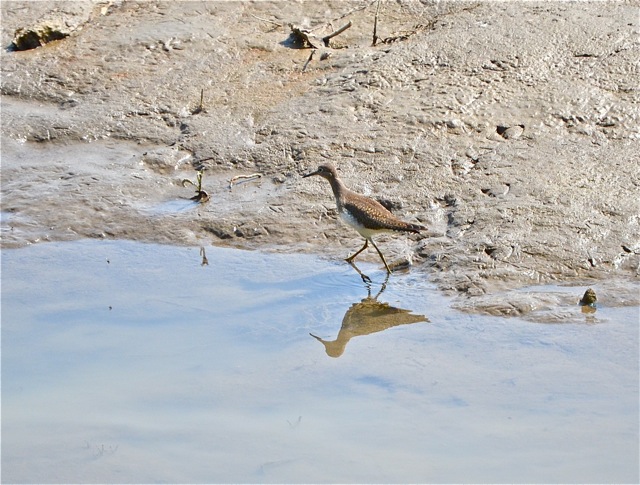
Muddy shoreA sandpiper lightly skimmed over:

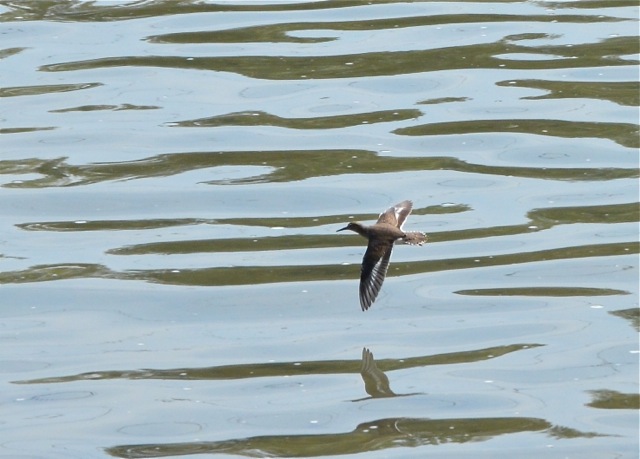
Sandpiperthen took flight:

Sandpiper takes flightA butterfly playing in the sand:

Butterfly on the sandy shore another resting on the rocks:

butterflySome creative souls had even left impromptu monuments:

Monument 1

monumnetA tribute to quiet beauty among torrents of destruction.

Wabi-sabi… beauty in ruins.

**

Saturday Snapshot is hosted by Melinda at West Metro Mommy Reads. CLICK HERE to see what others have posted.

CLICK HERE to Wabi-Sabi (1)

and Wabi-sabi (3)

**

All photos on this post taken by Arti of Ripple Effects,
August, 2013. Do not copy or reblog.

***

Another Proust Read-Along

… as if we’re not busy enough?

Truth is, reading Proust calms me down. Maybe because I’ve to slow down, really slow down, to savor, and decipher. These two have become a fused enjoyment for me while reading Vol. 1 of In Search of Lost Time, Swann’s Way.

After finishing that, I quickly ordered the next volume Within a Budding Grove, but have since put it aside… until now, thanks to Bellezza of Dolce Bellezza, who read Vol. I with me. She’s right, of course, as she wrote on her invitation post for Vol. II:

‘No one should read Proust alone.”

So here we are, embarking on another Proust Read-Along, In Search of Lost Time Vol. II, Within A Budding Grove.

Within A Budding Grove Modern Library

Yes, this is a slow read, as always on Ripple Effects. We plan to finish and post our thoughts on November 30. I just might add in a mid-way post around end of October.

You are invited to join us for another slow and enjoyable ride.

If quantifying makes it easier to grasp, counting the days in October and November, and the 730 pages in my Modern Library Classic edition, you only need to read about 12 pages every day. A very doable plan.

Those of you who have read it all… how about a re-read now?

***

First Post for Vol. II:

Half Way Through A Budding Grove

My posts on Vol. I, Swann’s Way:

Part 1: Combray (my ‘Freshly Pressed’ post)

Wrap-up: The Swann and Gatsby Foil

***

Is This A Library?

(Title inspired by Stefanie of So Many Books)

I gasped and asked myself this question. For Saturday Snapshot Sept. 21, here are some views:

Indoor pond at entranceIMG_1170IMG_1174IMG_1175IMG_1173The answer to the question of course is Yes. It’s the Toronto Reference Library. I was most excited to have made a serendipitous find in there too.

There was a gallery in the library. Its current exhibit was entitled
FLIGHT: A THRILLING HISTORY OF AN IDEA.

Human has long been mesmerized by the idea of flight.

From Daedalus:

Daedalus

to Da Vinci:

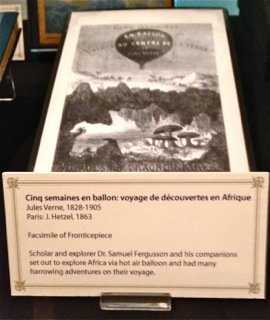
Leonardo Da Vinci and FlightFrom Jules Verne:

Jules Verneto Audubon:

Audubon

Yes, it’s a library all right.

***

Saturday Snapshot is hosted by Melinda of West Metro Mommy Reads. Click Here to see what others have posted.

***

The Disappearance of Eleanor Rigby: Him and Her (2013)

I keep reminding myself, my evaluation of The Disappearance of Eleanor Rigby: Him and Her should not be affected by the appearance of Jessica Chastain, her real self, in the theatre. That was an unexpected and most exhilarating episode in my TIFF13 experience.

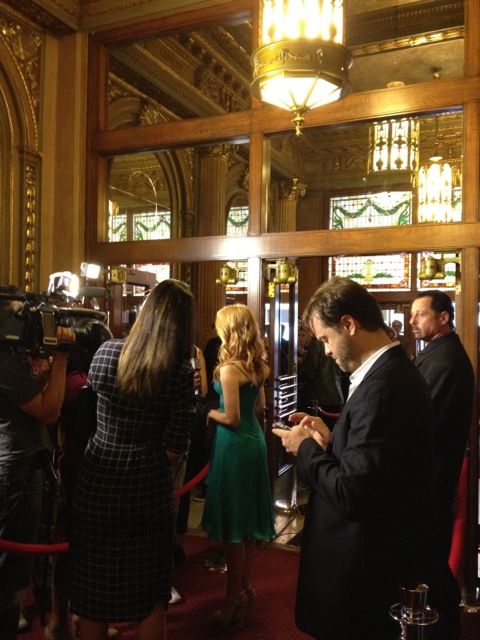
After over an hour waiting inline outside, we were ushered into the historic building (100th anniversary this year) that housed the beautiful Elgin and the Winter Garden Theatres. And lo and behold, I saw Jessica Chastain standing right there in a press line answering questions. Who can take a focused shot with steady hands while being herded like sheep quickly passing by Jessica Chastain?

Jessica Chastain

Here’s a sharper view but no better vantage point:
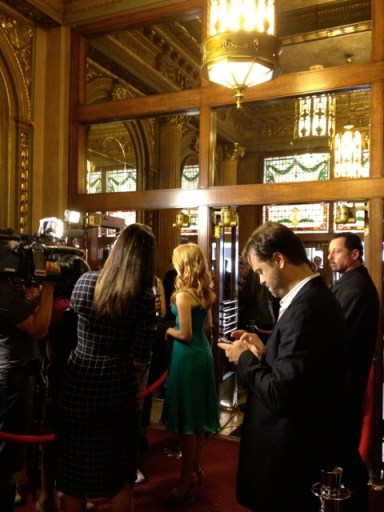
JC Another View

**

Disappearance is two films in one. It tells how a couple deals with loss, and the subsequent effect on their relationship, from His and Her point of view. Each is a 90 minute film that can stand on its own. We were shown first Him, then Her, with no intermission. I know at some other screenings, it’s the other way round. Now, that is intriguing. Will the audience perceive quite a different story then?

The concept had been found in previous films. Kurosawa’s classic Rashomon comes to mind. It presents four different points of view consecutively in one film from those involved in a crime. A more recent movie Vantage Point uses the idea but is miserably repetitive.

With Disppearance, we have a fresh, contemporary take on this high concept. Being made into two films allow deeper character development and more complex storytelling. It is innovative but not redundant as one might suspect. And that’s the ingenuity of writer/director Ned Benson. His screenplays for both are intelligent, perceptive and thought-provoking.

The first part Him is more elliptical. As viewers, we know little to start, but are eager to find out more about the couple. Why does an amicable and romantic relationship becomes incommunicable, and with the wife disappearing, walking out of the relationship? We soon find out the reason. I would not spoil it for you.

To deal with his situation, the husband, Conor (James McAvoy, Atonement), spends his energy on saving a losing business, his little restaurant in NYC. I suppose, as a man would, diverging his focus into career and business. Ciaran Hinds plays his father, a successful restaurateur who offers his son what he has established, a proposal that is turned down.

Bill Hader is deadpan funny as Conor’s good friend and chef in the restaurant. A friend can help him cope, but Conor knows ultimately he has to walk the path himself. The last scene is open-ended, a good lead into the Her perspective.

Him: ~ ~ ~ Ripples

**

After watching Him, I was eager to find out Her story. Jessica Chastain (Zero Dark Thirty, The Tree of Life) is Eleanor Rigby, her parents having met in a Beatles concert, thus the namesake. But the film is not about the song, albeit we do hear the relevant line.

This second part is most gratifying. Not only does it fill in the gaps, it has gone deeper into Eleanor’s pains and her struggles to find herself once again… or maybe, for the first time. While Conor immerses himself in his restaurant, Eleanor returns to her family.

William Hurt plays Eleanor’s dad, a psychology professor who stands by as a loving father would, albeit helplessly. He suggests Eleanor take courses part time, which she does. Thus leads to some interesting scenes and meaningful dialogues with her prof played by Viola Davis, a role that the talented actor deserves. She gets to deliver that poignant line in the Beatles song:

All the lonely people, where do they all come from?

The veteran French actor Isabelle Huppert is Eleanor’s mother, always with a glass of wine in hand. There is no perfect family. She has her own issues to deal with, let alone contributing to a healing process.

Jess Weixier as Eleanor’s sister puts forth an excellent, complementary performance to Chastain’s. She is a single mother living in her parents’ house and raising an eight year-old son. She too, has to play the hand life deals her as best she can. From the Q and A after the screening, we learn of the long-time friendship between Chastain and Weixier, and it shows. Their performance makes me long for the experience of sisterhood.

And we learn too that Ned Benson wrote Her especially for Jessica Chastain, who ten years earlier introduced herself after watching Benson’s short film and was much impressed by it. Chastain was emotional when recounting the incident, moved that now ten years later, Benson is finally being acknowledged.

With such a high calibre cast, I could have sat there for another hour. There are lots to think about, and the cast makes it enjoyable for us to do just that in the films.

How can a response to any situation be shared while we see and feel so differently? One’s perspective is uniquely one’s own, an interplay of subjective perceptions, past experiences, psychological makeup, temperaments, rationality…. These two films screened back-to-back is the most vivid way to convey this point. How then can two people unite despite differences in perspectives?

As I write this post, Proust’s madeleines eating episode comes to mind. The memory and sentiments elicited from an experience is personal and subjective. And that’s what these two films show us. Even within the same scene, the camera takes on a different angle and point of view. Most interesting is that, even the dialogues are different. We can see the discrepancies in their memories and knowledge (or lack of) of themselves and each other. And when it comes to love, how each would want to hear the other taking the initiative to say ‘I love you.’

Her: ~ ~ ~ 1/2 Ripples

**

To top it off, we were given a chance to hear the cast share their experience in a Q and A session after the screening. From left to right Jess Weixier, Cirian Hinds, James McAvoy, Jessica Chastain.

Disappearance of ER Q & AWhole Experience: ~ ~ ~ ~ Ripples

***

All photos in this post taken by Arti of Ripple Effects. Please do not copy or reblog.

***

TIFF 2013: Books into Films

Have been in Toronto all week for the Toronto International Film Festival. Taken a lot of photos but these few I’m going to share with you first for Saturday Snapshot Sept. 14, for they are what Ripple Effects is all about: Books and Films.

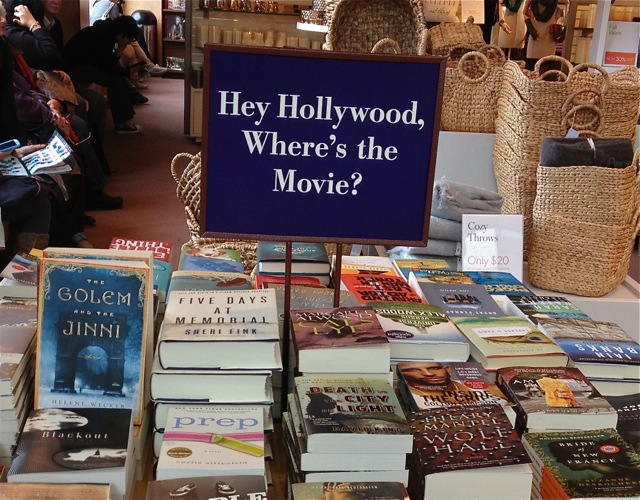
Saw this sign in a major bookstore beside a TIFF screening venue:

Hey Hollywood

The movie is in the book.

Indeed, many of this year’s TIFF selections are based on literary sources.

Film Adaptations at TIFF 2013

Books to filmsFrom biographies to biopics:

Biographies into BiopicsIf you or your book group are starting a new season of reading, you may find some interesting titles in the following list of films screened at TIFF this year (click on link to the film adaptation):

12 Years a Slave by Solomon Northup

August: Osage County by Tracy Letts (Pulitzer Prize-winning play)

Child of God by Cormac McCarthy

The Dinner by Herman Koch

The Double by Fyodor Dostoevsky

The Double by Nobel Prize-winning author José Saramago (Film: Enemy)

Half of a Yellow Sun by Chimamanda Ngozi Adichie

Hateship, Friendship, Courtship, Loveship, Marriage by Alice Munro (Film: Hateship, Friendship)

Horns by Joe Hill

How I Live Now by Meg Rosoff

The Invisible Woman by Claire Tomalin

Known and Unknown by Donald Rumsfeld (Film: The Unknown Known)

Labor Day by Joyce Maynard

Long Walk to Freedom by Nelson Mandela

Mary Queen of Scotland by Stefan Zweig (Film: Mary Queen of Scots)

The Railway Man by Eric Lomax

Salinger by David Shields and Shane Salemo

The Sea by John Banville

The Switch by Elmore Leonard (Film: Life of Crime)

Under the Skin by Michel Faber

***

Saturday Snapshot is hosted by Melinda of West Metro Mommy Reads. Click here to see what others have posted.

***