Blue Jasmine (2013): Homage and Re-Imagining

Sometimes when we see different versions of an original piece of art we tend to dismiss them as cheesy imitations, turning art into a cliche, like, the many faces and parodies of the Mona Lisa.

And sometimes, when we see a work that we know is a new version of an older masterpiece and yet we appreciate it, all because it brings us a breath of fresh air, a different perspective, new insights, a re-imagining, or offers us some new pleasures.

Here are a few examples. Robert Bresson’s Pickpocket (1959) is the auteur’s version of Dostoevsky’s Crime and Punishment, and movingly crafted. West Side Story (1961), we appreciate it as a different styling of Romeo and Juliet. Kurosawa’s Ran (1985), we know it to be a Japanese rendition of King Lear, and we marvel at the director’s handling of a Shakespearean classic from a different culture. A bit later, the younger generation in the 1990’s enjoyed Clueless (1995) even though they may not have noticed the resemblance to Jane Austen’s Emma. With Disturbia (2007), we see Alfred Hitchcock’s Rear Window making its way into the minds of teenaged viewers, and who cares that they didn’t even know it.

Woody Allen has done that many a times in his over four decade career as a director, creating different versions of the works from those he had expressed deep admiration. Call it homage, if you will, or borrowing, but we never have the impression that he’s ‘copying’. Copying is mindless triviality. But a look at Allen’s Interiors, we’ll see the deep shadow of Ingmar Bergman’s Cries and Whispers, the intense yet intimate styling of a chamber drama. Or Hannah and Her Sisters, an apt parallel with Bergman’s Fanny and Alexander. Crimes and Misdemeanors and Match Point, we see him deal with the issue of Dostoevsky’s Crime and Punishment, or rather, crime and the absence of punishment. I’m sure you can think of some more examples.
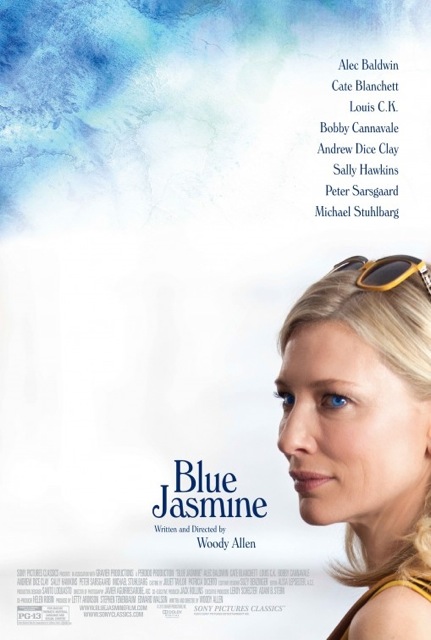
Blue Jasmine Movie Poster

So here with Allen’s 48th feature Blue Jasmine, does it matter that its structure and characterization parallel Tennessee Williams’ A Streetcar Named Desire, the Elia Kazan 1951 classic movie? Especially when we see such a finely crafted, enjoyable, and impressively performed modern version, we can only admire Allen’s imagination and creativity. I have a feeling that he (or his casting staff) gets Cate Blanchett to star as Jasmine because of her on-stage mastery of Blanche Du Bois in Tennessee Williams’ A Streetcar Named Desire performed not too long ago.

With Blue Jasmine, the 77 year-old director seems to have hit his stride yet again. Two years ago, Midnight in Paris brought him the highest opening box office gross in his career, now Blue Jasmine has surpassed that. Blue Jasmine will also be the widest screened Woody Allen movie, so far. It reaffirms the director’s talent in how he can bring out the best from his actors.

Cate Blanchett turns from blanche to blue, but just the same as she steps down the social ladder in a fragile mental state, dependent on a cocktail of alcohol and anti-depressants. She is Jasmine, a New York socialite who has to go stay with her working class sister Ginger (Sally Hawkins) in San Francisco after her husband Hal (Alec Baldwin) meets the full legal consequence of his fraudulent business dealings, a definite change of course from Allen’s earlier movies Crimes and Misdemeanors and Match Point.

The real and imaginary in Jasmine’s mind is smoothly shifted as we see her delusional self living in the present and the past at the same time. Allen handles it very well. The non-lineal storytelling is seamless. Blanchett is superb in her lucid performance, portraying convincingly a whole spectrum of emotions and mental states, while tugging at our heartstrings as we see her try desperately to stand on her own two feet for the first time in her life. This is where Allen is best, piercing sad human situations with light and gentle humor.

Allen has plenty of materials to poke fun at and chances to deliver his social commentaries. Yes folks, there is a class system in democratic America, and the humor in the film is at the expense of both the upper class and maybe more, the menial workers. Mind the gap, for it is unbridgeable. Fact is, the fun of the film, I’m afraid, is at the expense of depicting some of the characters a bit like caricatures. Having said that, I must applaud the wonderful acting from the supporting cast. They look like they are convinced first of their character’s idiosyncrasy, making their portrayals so unabashedly natural.

Further, Allen seems to redeem himself in presenting a moralistic stance. True love can be found right there in Ginger’s circle with her devoted boyfriend Chilli (Bobby Cannavale), whom Jasmine calls a ‘loser’; the deceivers are from the upper crust, Hal (Alec Baldwin) being the prominent figure. Others who may look like a step up for Ginger could well be a mirage. The wonderful supporting cast includes Andrew Dice Clay as Ginger’s ex-husband Augie, Louie C. K. the seemingly hopeful sound engineer, Michael Stuhlbarg, the serious man turned desperate dentist, and Peter Sarsgaard as Dwight, no doubt the parallel of Mitch (Karl Malden) in A Streetcar Named Desire (1951).

Blanchett’s Jasmine performance has already sent out Oscar buzz, and it’s only August. She carries the film through brilliantly. An Oscar nomination should be well deserved. We are glad to find too that Allen has not missed a beat after his success with Midnight in Paris, still churning out enjoyable films on an annual basis, while sometimes a superb actor can much enhance our appreciation, as it is the case here. 

~ ~ ~ Ripples

Other related posts:

Midnight In Paris

A Serious Man (Michael Stuhlbarg)

An Education (Peter Sarsgaard)

Do we need a Rebecca Remake? Another Grapes of Wrath?

Art and Cliché

***

Saturday Snapshot: Blue Moon Rising

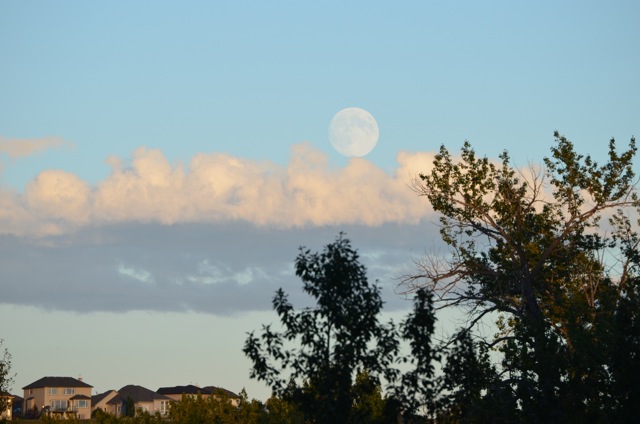
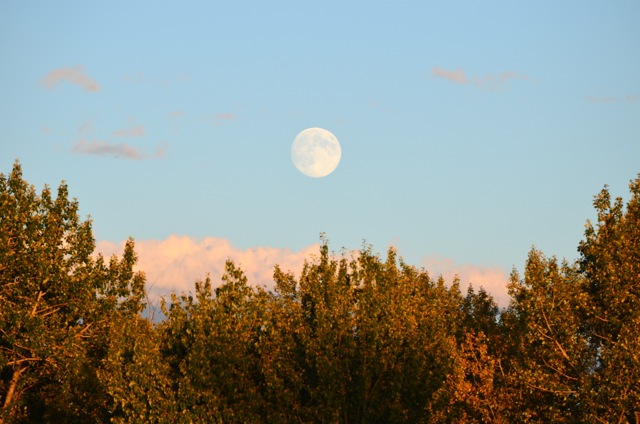
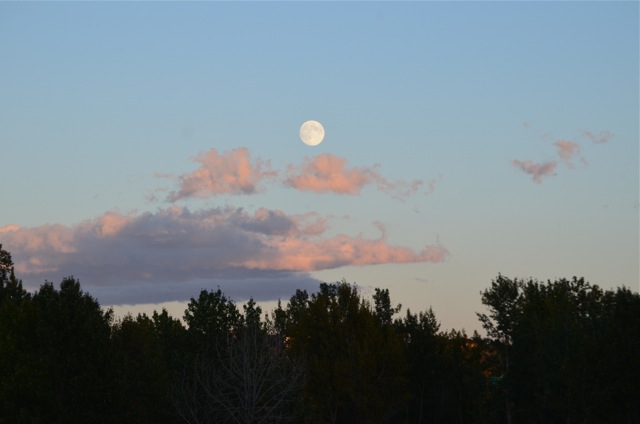
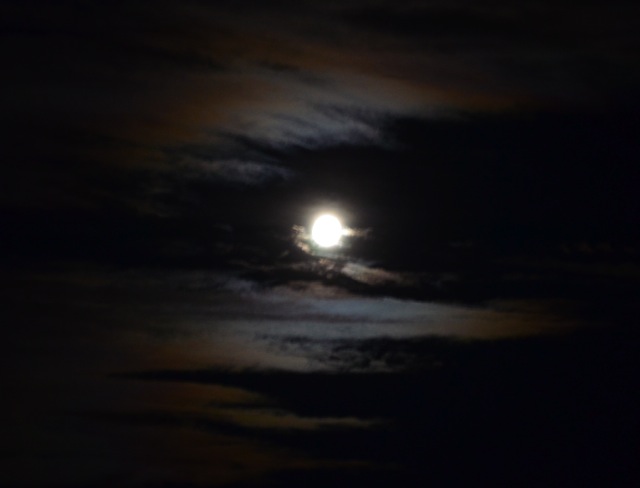
… well almost, since I took these photos on August 19, one day before the actual blue moon appearing. But I was awe-struck just the same. Knowing nothing about the astronomical phases at that time except simply captivated by the beauty of the rising moon while birding, I took these photos.

Not until the next night did I learn about the Blue Moon, elated that I had caught the moonrise serendipitously the day before. Here’s a shortened sequence:

Moonrise 1Moonrise 2Moonrise 4

Moonrise 5Moonrise 6Moonrise 7Moonrise 9Once in a blue moon, I can get the date right. But I’m happy just the same to have hit it a day early out of the blue. Why, the next night was cloudy. So this is a blue moon for me.

All photos on this post taken by Arti of Ripple Effects.

Please DO NOT COPY OR REBLOG.

***

Saturday Snapshot is hosted by Melinda of West Metro Mommy Reads. Click here to see what others have posted.

***

Saturday Snapshot: Wabi-Sabi (1)

To put in very simple terms, the Japanese concept of Wabi-Sabi refers to finding beauty in the withered, aging, destroyed, juxtaposing beauty and sadness.

This notion came to me in the past few days as I surveyed the ruins of the devastating flood now almost two months later. Landscapes had been altered, what once were the healthy homes of birds now destroyed. And yet, from the fallen, a sense of beauty arose.

Here are some photos I took yesterday of the area where I once saw the Merganser family. Remember those baby Mergansers wearing masks heading to the masquerade party?

This is the exact spot where I spotted them before the flood:

Where have all the Mergansers gone?

Wooded area now flattened:

Down & flooded out 1Altered landscape:

Altered landscapeDebris wrapped around tree like an armour of quiet resilience:

Debris wrapped around tree trunk

Wounded spirit:

Wounded SpiritWithered, but with colour:

WitheredBroken, but with character:

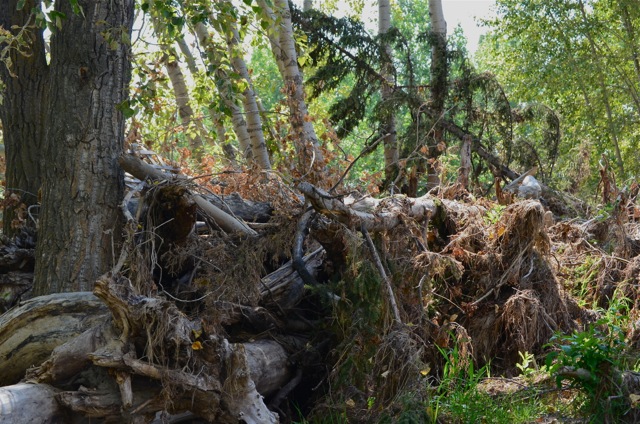
Broken, with characterMost important of all… life shooting out from the ruins:

Flowers shooting out of the ruins

Robin out in the sunDowny Woodpecker

Flicker flying out***

More Wabi-sabi’s to come in upcoming Saturday Snapshot, hosted by West Metro Mommy Reads. Click to see what others have posted.

***

All photos taken by Arti of Ripple Effects, please do not copy or reblog.

***

Before Midnight (2013): Reality Check

Spoiler Alert: It’s impossible to discuss this film meaningfully without giving out the storyline, same with the two prequels.

***

We are gleaners of memories. An interesting parallel applies to the two characters Celine and Jesse as well as ourselves as audience. But if you haven’t seen Before Sunrise and Before Sunset, it would enhance your viewing pleasure to watch them first.

Flashback: Before Sunrise (1995)

Before SunriseTwo young people, Parisian Celine (Julie Delpy) and American Jesse (Ethan Hawkes) meet on a train passing through Europe. They strike up a conversation and become so in-tuned with each other that when the train arrives Jesse’s stop in Vienna, he convinces Celine to get off with him even though her destination is Paris. There for just one night until sunrise, they walk around the city and talk about life, death, love, religion, relationships, and being transients… for they know this may well be their only encounter with each other in both of their lives. The next morning Jesse has to fly back to the U.S. As they part, they promise to meet again in six month at the same hour, on the same train platform. Throughout the film, we feel fate, or whatever you call it, has a strong presence in their short few hours together. We feel their sincerity in capturing those precious  moments, as we hear Celine’s words ring true:

“If there’s any kind of magic in this world… it must be in the attempt of understanding someone sharing something.”

Flashback: Before Sunset (2004)

Before SunsetNine years after that chance meeting, Jesse is in Paris on the last leg of a book tour. He has written a book based on that memorable encounter nine years ago. At the Shakespeare and Company bookstore, Celine shows up. They now meet for a second time, again for a short few hours before Jesse has to leave on a plane to fly back to the U.S. Their conversation reveals that, alas, their well intended reunion six months after their first chance meeting has turned into a star-crossed, missed opportunity. After that, fate has led them down separate paths. Jesse is now married and has a son. Celine, still on her own, yearns for that first romance to develop but now seems even more elusive.

To the present: Before Midnight (2013)

Before Midnight

So we have been following Jesse and Celine like a longitudinal study, albeit meeting them just twice within this eighteen year period. In the first two films, director Richard Linklater has us follow Jesse and Celine in real time through long takes, walking along with them in Vienna and Paris, listening in on their conversations and see them pour their hearts out, just to be heard, to be known. Those were romantic moments. This time is summer in Greece; this time is reality check.

We see Jesse and Celine now married. What happens in between those nine years is that Jesse has divorced his wife in Chicago, come over to Paris, married Celine and together they have two lovely twin daughters. But things aren’t so idyllic, for Jesse is troubled by not being around for his now young teenaged son Hank from his previous marriage and whom he can only see in the summer. The film begins with Jesse seeing his son off at the airport.

For the next 15 minutes and in one stationary take through the front windshield of the car, we see a happy couple Jesse and Celine driving from the airport to a Greek country house, with their twin daughters sleeping in the backseat. We hear them talk, yes, they love to talk to each other, just as we’ve seen in the past.

In the setting of an idyllic seaside residence, Jesse and Celine join a small gathering of writers. we see them prepare and eat healthy Greek salads and discuss equally idyllic topics such as writing, love, knowing each other, virtual reality (yes, for the contemporary effect), and being transients in life. Again, that first train encounter comes to mind. In conclusion they drink to ‘passing through’.

The next act is reminiscence of previous Before films… Jesse and Celine walk to a hotel paid for by their writer friends, who have also taken up the duty of babysitting their twins so the two of them can fully enjoy each other for the night. For twenty minutes the camera follows them in real time strolling through some scenic rural town toward their country hotel, exchanging thoughts like before. But no, not totally like before, for now they are eighteen years older, 41, and each with emotional undercurrents running deep.

Five minutes in the hotel room, discordant riptides begin to surface. Talk turns into quarrel. Why, this is just too real. In the past, we see them only in romantic mode. Now as they expose their underlying thoughts and suspicions, tempers flare, words turn callous. We would silently say ‘ouch!’ occasionally.

The beginning scene of the first film, Before Sunrise, has become a stark foreshadowing… sitting near Jesse and Celine on that train, two middle-aged couple argue fiercely in German. Seeing their temper flare but not understanding what they were arguing about, Jesse and Celine ponder on the question of how two people can grow old together in harmony.

Now here in what is supposed to be an ideal get-away, for twenty minutes we are the invisible witnesses of a marital conflict, and we would want to stay in there to see what happens next, not because of the schadenfreude effect, but because this is just too real.

Romance is holiday, marriage is work.

Hawke and Delpy own these scenes depicting realistically what marriage could entail. Other films readily come to mind… Ingmar Bergman’s Scenes From A Marriage (1973) and Woody Allen’s Husbands and Wives (1992). Before Midnight is a contemporary version, with a highly watchable backdrop and natural performance. Unlike Bergman and Allen, Linklater is commendable in crafting a more positive ending. It’s refreshing to see a glimmer of hope at the end of nasty quarrels.

In the final act, Jesse attempts to woo his wife back. How he does it is most endearing. Every moment in the present is an opportunity to create a fond memory to look back to in the future. This complicated package called love is a piece of work. Director Linklater and his two stars, who co-wrote the screenplay with him, might well have passed to us the secret of marital success… Before too late, glean fond memories from the past to sustain the relationship at present; before too late, create more loving memories to carry it into the future.

One line from Celine in Before Sunset is most apt here: “Memory is a wonderful thing if we don’t have to deal with the past.” Jesse might have known this too well, not to leave the present a mess for future to deal with, but leave it as a pleasant memory to cherish in the days ahead.

With a trilogy of films beginning with the word ‘Before’ in the title, we should know that time is of the essence. Time to make the present a memorable past for the future, before too late.

That line still lingers as the film ends… ‘To passing through.’

~ ~ ~ 1/2 Ripples for all three films

***

Do We Need A Rebecca Remake? Another Grapes of Wrath?

In a previous post Summer Reading and Future Viewing I listed some upcoming movie adaptations of literary works, among them are Daphne du Maurier’s Rebecca and John Steinbeck’s The Grapes of Wrath, incidentally both are Steven Spielberg’s projects.

The earlier adaptations of these two titles had since become classics. Released in 1940, both films shared the limelight in the 1941 Academy Awards. Rebecca won Best Picture and Best Cinematography while John Ford won Best Director for The Grapes of Wrath, and Best Supporting Actress went to Jane Darwell as Ma Joad.

From the comments in that post, it’s interesting to see the ripples from loyal fans of these two classic films. They want to say no thank-you to Mr. Spielberg. Laurence Olivier and Joan Fontaine as Maxim and the new Mrs. de Winter had left an indelible mark in their movie memories which no one else can replace, nor the stern and creepy Mrs. Denvar. Alfred Hitchcock would have been most pleased.

Joan Fontaine & Laurence OlivierLikewise, Henry Fonda owned the role of Tom Joad in The Grapes of Wrath. And, who can match Jane Darwell as the Joad family pillar, Ma, who won an Oscar Best Supporting Actress for her performance.

Family Joad in The Grapes of Wrath

Fond memories aside, a remake could reap some benefits if placed in the right hands. The Great Gatsby is a good example, and it’s not even in perfect hands. But we’ve all witnessed the fanfare, just the buzz of a major movie production can do much to turn a school text into a bestseller.

With the first trailer of Baz Luhrmann’s adaptation released in April, The Great Gatsby had sold more copies than Fitzgerald could ever have imagined. The hype had sent it to the top of Amazon and Barnes and Noble’s sales in both print and eBooks. The title on Kindle had outsold all its paperback. And this even before the movie was released in May. BTW, The book sold less than 25,000 in Fitzgerald’s life time, and he considered himself a failure. If he had known of the Gatsby ripples and splashes half a century later, he would have died a happier man.

A movie adaptation today can be the best promotion for a literary work. If the movie is done well, so much the better. If it’s not, viewers would at least be driven to seek the truth. Is the book that bad? Hopefully they would read to find out. These two new adaptations being produced by Steven Spielberg’s Dreamworks could mean a certain level of standard.

Rebecca Movie PosterThe Grapes of Wrath PosterFor both Rebecca and The Grapes of Wrath, no big screen adaptations had been done since their 1940 productions, so a contemporary remake can be an appealing venture. A modern day take on an old story can refresh it for a new generation of viewers. Come to think of it, how many of today’s Twilight audience have seen Laurence Olivier and Joan Fontaine on screen, big or small? Or even heard of them? Alfred Hitchcock would be more well known among viewers today, but probably because of Psycho rather than Rebecca.

A genre like Rebecca is popular nowadays… Suspense à la romance with a touch of Gothic noir. Manderley can be an interesting set to view with modern cinematic rendering and technology. What more, the latest is that Dreamworks has hired Danish writer/director Nikolaj Arcel to helm the new version. If the name doesn’t ring a bell, then think of The Girl with the Dragon Tattoo (2009). Arcel is co-writer of that original Danish screenplay. You see, he doesn’t need to walk in Hitchcock’s shadow. He only needs to stalk to his own tune. It will be interesting to see his interpretation of du Maurier’s book.

As for The Grapes of Wrath, with its depictions of poverty, the plight of the migrant workers, social and economic disparity, Steinbeck’s 1939 Depression era classic can be a timely and relevant film today. We won’t get back the authentic view of the drought-cracked landscape from Oklahoma (the film was made just one year after the book was published) and follow the Joad family’s beat-up truck sputtering on Route 66, leaving deprivation behind to press on towards a land of elusive dreams, California. I can see the new version inundated with CGI’s fabricating the exact opposite of what we see in The Great Gatsby. But Steinbeck’s story can and should remain intact, regardless of the styling, for its timelessness.

Further, remakes don’t have to be exact modern replicas of their older cinematic versions. Actually, better that they break away from previous adaptations to offer a fresh look, a relevant take for today’s viewers, and entertain with some present-day nuances and humor. An excellent example is the recent Shakespearean remake of Much Ado About Nothing by Joss Whedon, shot in his own Santa Monica home with swimming pool, stuffed toys, wine glasses and smart phones.

Let’s release our hold on these two classic films and come back to the future. I’m most curious to see the new adaptations. Who do you think are the best pair to play Maxim and the young and innocent Mrs. De Winter? My choice would be Michael Fassbender and Carey Mulligan. What about Tom and Ma Joad for The Grapes of Wrath?

***
Some updates on book to film:

Ben Stiller directs and stars in The Secret Life of Walter Mitty based on the famous short story by James Thurber. The film will be the Centerpiece Gala at the NYFF later this fall and with that, Oscar buzz.

Another classic to be adapted will be Madame Bovary by Gustave Flaubert. Mia Wasikowska will transform from Jane Eyre to Emma Bovary. Paul Giamatti also in. Here’s the link to IMDb’s page.

***

Munch 150: The Works Still Scream

This captivating documentary is the second installment of the ‘Exhibition: Great Art On Screen’ series with host Tim Marlow. An ‘event film’, the term refers to this kind of doc focusing on a special occasion, here, the 150th year of the renowned Norwegian expressionist Edvard Munch’s birthday (1863-1944). To celebrate, a comprehensive exhibition of Munch’s works is being held in two venues in Oslo from June to October, 2013, the National Museum and the Munch Museum. The film captures the highlights of this exhibition.

I soon learned too that the theatre charged more for the experience. However, the $17 ticket is acceptable. Short of seeing the actual paintings at the two venues and being free to walk around, I’ve saved a hefty plane ticket to Oslo, and I get to see the works magnified clearly on the big screen and hear expert commentary so I can appreciate even the minute brushstrokes up close. Sure, I can always wear a headphone, if it’s available, to hear the commentary while walking through the exhibition. But it’s a refreshing experience to look at the paintings enlarged on a giant screen, hearing in-depth analysis juxtaposed with dramatized biopic vignettes as I sit back and eat popcorn in a dark, air-conditioned theatre on a hot summer day.

The film Munch 150 has aptly taken advantage of the medium of the cinema. Unlike the previous film in this series, Manet: Portraying Life, which ironically, is devoid of life, Munch 150 has presented to the viewer what such a medium can best do. The camera as a guide and magnifying glass, projecting onto the big screen images larger than life, accompanied by insights from curators and host Tim Marlow, an audio-visual experience. Yes, I’ve mentioned ‘big screen’ several times. That is essentially the benefit that the TV screen or your computer monitor would not suffice.

Edvard Munch (Norwegian pronunciation: [ˈmuŋk], in English, something like ‘Moonk’ with a glottal sound on the ‘n’) was born in 1863 in a small Norwegian village. His family moved to Kristiania (now Oslo) the next year. From an early age, Munch was haunted by death and illness. He first saw his mother die of tuberculosis when he was five, and later, his beloved older sister Sophie tormented and died of the same illness when he was fourteen. He himself was plagued by frequent sickness, and at one time was near death with tuberculosis. Physically struggling with poor health, inwardly, Munch was often stricken by desires and guilt. Nihilistic thoughts added burning fuel to an already troubled soul. These all led to alcoholism, depression and breakdown later in life.

Writing and painting became his outlets. Journals allowed him to spill his thoughts, and the canvas was the visceral medium for him to release deep, psychological turmoils. His fears and anguish, all angst and pains found expression in his art.

The Sick Child

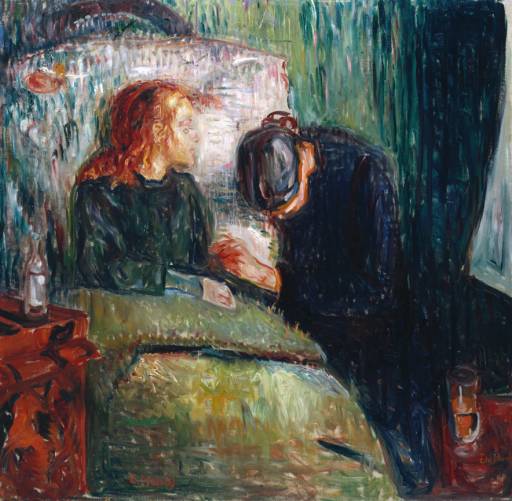
I was particularly impressed by his early work The Sick Child (1885-86), depicting the trauma he had experienced as he watched his beloved, ailing sister Sophie lay in bed frail with tuberculosis. A grieving woman holding her hand, head bowed in sorrow. It was a disturbing scene, and yet I’d appreciated the colours and brushstrokes that seemed as if they were just rendered in a free and haphazard way. From the commentary, I felt the poignancy.

The Sick ChildThe camera and commentator guided me to see the scratches left on the canvas, most noticeably on the pillow near Sophie’s face, something which I wouldn’t have noticed if I just walked by it in the museum. These scratches were troubling to look at, probably made by a pallette knife, or a hard brush. They were marks of anguish and frustration, the outburst of emotions during what must have been a painful process. Munch always left ‘blemishes’ on his paintings. Here, the scratches and patchy layers of paints on paints showed raw emotions unleashed. That was the reason the work was met with criticisms and rejections in his day. It was not pretty and neat as his predecessors had done. He was, literally, painting outside the lines.

The Frieze of Life

Many of Munch’s more well known works are in the series called The Frieze of Life—A Poem about Life, Love and Death. The Munch Museum in Oslo exhibits the paintings as a series on four white walls in a room — and here’s the unconventional — without frames. The curator commented that this was what Munch would have intended. Without the distractions of the frames, the paintings speak out loud and clear. In The Frieze of Life, Munch explored the very essence of being human, the frameless, existential experience that is universal.

The Scream (1893)

The_ScreamThe Scream is in the section of The Frieze of Life categorized as ‘Angst’. It is the most well-known of Munch’s paintings. A deathlike skull-face devoid of gender, hands covering the ears and screaming out into the void. Munch painted this after an actual experience while he was walking in the woods, hearing a huge scream inside him. He was overcome with fear. After that episode, he painted The Scream. In it is a figure that has since become the epitome of existential angst. I’d appreciated the comment in the film stating that ‘it’s an icon, not a cliché.’

The Scream made history just last May. It had set an auction record for a piece of art work, fetching $119.9 million (£74m) at Sotheby’s in New York. Almost seventy years after his death, Munch’s works still scream.

The Girls on the Bridge (1901)

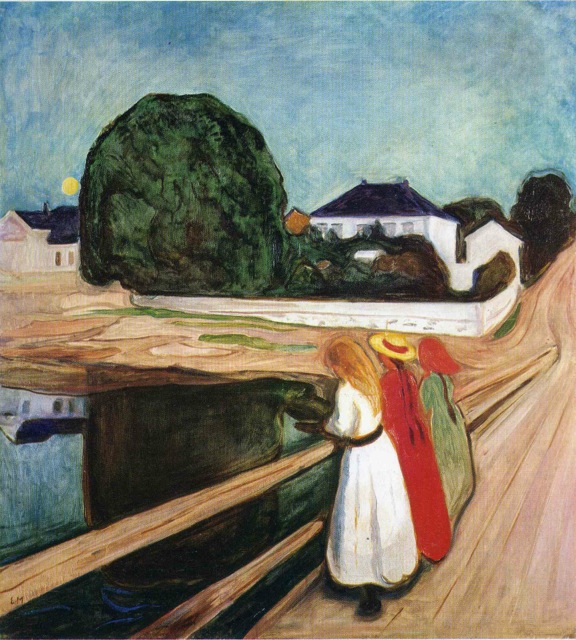
The Girls on the BridgeA more delightful painting, The Girls on the Bridge is fresh, bright, and colourful, exuding a summer spirit. But even in this work, Munch depicted the struggles between innocence (white dress) and desire (red). And while we see the green clump of a tree, full of life, we also see its ominous, dark reflection on the water. In the midst of life, we are in death. Munch seemed like a party pooper, but maybe that’s why he needed to scream. Or else we wouldn’t have heard him.

~ ~ ~ Ripples

The next and last installment in the series is Vermeer and Music.

Sources of images: Wikipedia

***

Related Posts:

Art and Cliché

Arles: In the Steps of Van Gogh

Inspired by Vermeer

Edward Hopper, William Safire: The Visual and the Word

***

When Two Beavers Meet…

For Saturday Snapshot July 20, I present the following sequence of events:

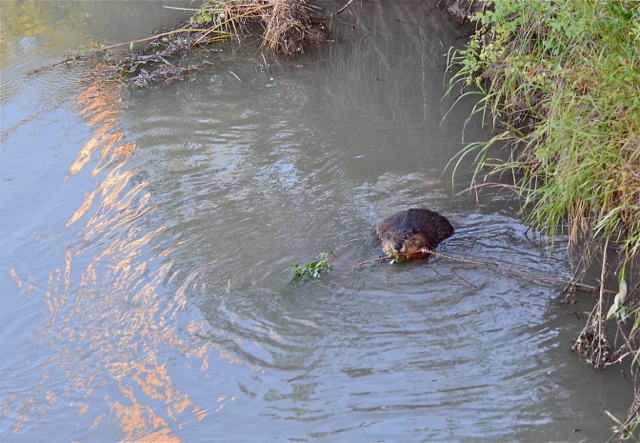
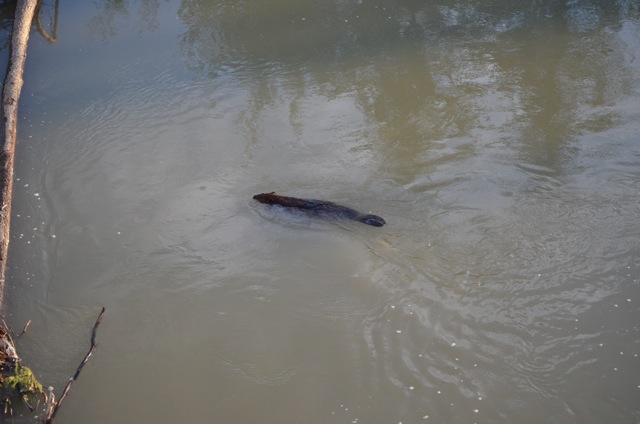
One beaver busy rebuilding after the flood:

Beaver 1

Spotted by another beaver which then quickly made his move:

Beaver 2The following sequence needs no captions:

Meet up

Closer

Closer still… Aaww**

And what happens when two juvenile Robins meet?

Two juvenile RobinsSibling rivalrySibling rivalry.

***

Saturday Snapshot is hosted by Melinda of West Metro Mommy Reads. CLICK HERE to see what others have posted.

***

Summer Reading for Future Viewing

NOTE: Just added Far From The Madding Crowd by Thomas Hardy

Some updates on books into films or TV adaptations. Some I’ve read, some TBR.

Under The Dome copyUnder The Dome by Stephen King — Now a new TV series (CBS) produced by Steven Spielberg’s Amblin Entertainment, joining the trend of bypassing the big screen to opt for TV production. The future is now as the series has already started airing. First episode with 13.5 million viewers. Could this be a foretaste of the ‘implosion’ phenom Spielberg predicted, TV screen replacing the big screen?

.

outlanderOutlander by Diana Gabaldon — This wildly popular, NYT bestselling cross-genre series of novels (Sci-Fi/Romance/Historical/Adventure) will be adapted into a TV series. Again, TV is the emerging medium for literary adaptations. Versatile Gabaldon has multiple degrees in science and was a university professor before creating the Outlander book series. She’s also a comic script writer. Here’s her bio.

.

Winters-Tale-CoverWinter’s Tale by Mark Helprin — Sci-Fi is trending. This one will be on the big screen with some big names such as Will Smith, Russell Crowe, Colin Farrell. But if you are a fan of Downton Abbey, you’d be interested to know this is one of the reasons Lady Sybil met her tragic end. No hard feeling. I wish Jessica Brown Findlay all the best in her pursuit of big screen presence. Take a look at these photos.

.

The Ocean at the End of the LaneThe Ocean at the End of the Lane by Neil Gaiman — Book published June 18, 2013, film rights of Gaiman’s new novel (this one for adults) about childhood memories had already been snatched up by Tom Hanks’ production company Playtone and director found. That’s Joe Wright who brought us the screen adaptation of Ian McEwan’s Atonement (2007) and the most recent version of Anna Karenina (2012). Have put a hold on the audiobook from the library.

.

In The Garden of BeastsIn the Garden of Beasts by Erik Larson — Again, Tom Hanks had picked up the film rights and he will star in it. Before you say ‘Ha! Self-gratification’, I’d say he’s an apt choice to play William E. Dodd, America’s first ambassador to Hitler’s Nazi Germany. Natalie Portman is on board as Dodd’s flirtatious zealous daughter Martha. Michel Hazanavicius, the Oscar-winning director of The Artist (2011), will helm. The book focuses on dry facts and livens up with Martha’s escapades. I can expect how the movie would use them as leverage. But I certainly hope not.

.

The Monuments MenThe Monuments Men by Robert M. Edsel — A different perspective into Nazi atrocities. This time the victims are the art works in Europe. A special force of American and British museum directors, curators, art historians, and others, called the Monuments Men, risked their lives to prevent the destruction of thousands of years of culture under Hitler’s order and for his private gains. George Clooney, Matt Damon, Cate Blanchett star. Downton fans, Hugh Bonneville is also in. I’ve seen a doc based on Edsel’s other book The Rape of Europa, which is excellent. I eagerly await The Monuments Men.

Death Comes to PemberleyDeath Comes to Pemberley by P. D. James — BBC will produce this Austen’s Pride and Prejudice spin-off. Will it shift our devotion for Darcy from Colin Firth to Matthew Rhys? Not a chance. So why do it, especially when the book is overwhelmingly lackluster (there’s a new oxymoron for you). Lots of alterations will be needed for it to be put on screen. Here’s my take on the book.

.

AustenlandAustenland by Shannon Hale — Jane Austen spinoffs have to work extra hard to capture a wider audience, considering there are multitudes in the male population who avoid reading even the brilliant, original author Jane herself. Further, these imaginary sequels to P & P even have to woo female Austen purists. Kerri Russell stars, Stephenie Meyer produces. Maybe Meyer is ok with just reaching her own fans. If you’re not an Austen purist, here’s a beach read for you.

.

RebeccaRebecca by Daphne Du Maurier — Currently in development by Steven Spielberg’s Dreamworks. Do you think the 1940 Hitchcock film needs a makeover? Who should replace Laurence Olivier and Joan Fontaine? A new adaptation means drawing attention once again to Du Maurier’s novel, attracting first time readers. Good choice for book group, especially when you can read, discuss and watch movie together after.

.

Far from the Madding CrowdFar From The Madding Crowd by Thomas Hardy — Carey Mulligan’s next literary adaptation after The Great Gatsby. I’m glad she’s got this role, but, can she beat Julie Christie’s 1967 rendition of Bathsheba? The new version will be helmed by rising star director Thomas Vinterberg (The Hunt). Belgium actor Matthias Schoenaerts (Rust and Bone) and Juno Temple (in talks) also on board. I can see that all these remakes of classic films of literary adaptations are geared at a new generation of viewers. And I say, it’s alright. Another movie version just may draw more attention to reading literature.

the-grapes-of-wrathThe Grapes of Wrath by John Steinbeck — Just as we speak, Steven Spielberg’s Dreamworks is in talks with John Steinbeck’s estate to acquire the film rights, again, to remake another 1940 classic, this one with John Ford directing Henry Fonda. If the talk is successful, which I don’t doubt, who do you think should be in this new version? The book is on my TBR list with East of Eden, which also had plan for a new adaptation a few years back but since no more news had come out.

***

RELATED POSTS:

Upcoming Book to Movie Adaptations

Summer Viewing List

Can a movie adaptation ever be as good as the book?

My Review of:

The Artist

Atonement: Book Into Film

Anna Karenina: Book

Anna Karenina: Movie

Death Comes to Pemberley

***

Saturday Snapshot July 13: Where are they now?

** You’re most welcome to browse and throw in your two pebbles, make some ripples or make a splash. But PLEASE DO NOT REBLOG OR COPY **

***

A few weeks before the worst flooding in our City’s history, I saw these baby Mergansers having a great time by the Bow River with their Mom. Where were they when the flood came? And where are they now?

Here, let me get closer for you to hear what they were saying that one fine day…

“Ok, our goggles on, we’re ready.”

Ok guys, got your goggles on?“Let’s get going.”

Let's get going“Hey you with the camera… what are you looking at? Don’t you know she’s a tough act to follow?”

Hey you with the camera, what are you looking at“Ok kids, do as I do. I dive, you dive.”

Mom's a hard act to follow“I skim, you skim.”

I skim, you skimHope they’re still skimming and diving in some clear, calm water.

**

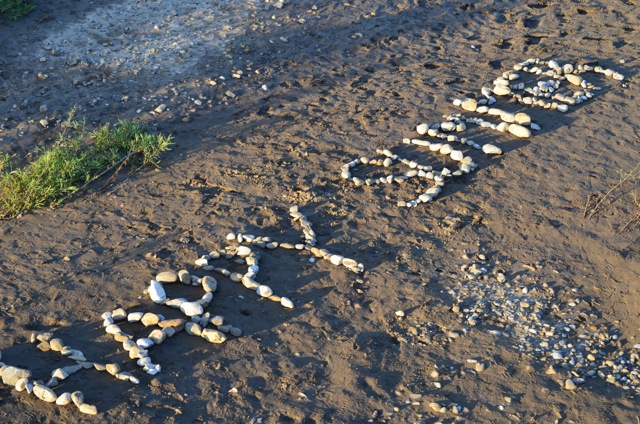
The following photo was taken just a few days ago. Somebody had the good sense to lighten up in the aftermath of the disaster. I shot this looking down from a high bridge onto the muddy bank of the Elbow River . At first I had trouble spotting exactly what we were supposed to be happy about. But later, my heart lifted as I silently thanked the anonymous rock gatherer(s). Yes, to all:

HAPPY SUMMER!

HAPPY SUMMER

And the well wishes extend to all those Down Under as well… a safe and happy winter!

***

Saturday Snapshot is hosted by West Metro Mommy Reads. CLICK HERE to see what others have posted.

RELATED POSTS:

Saturday Snapshot July 6: After the Flood

Saturday Snapshot June 22: The Two Faces of a River

***

Saturday Snapshot July 6: After the Flood

** You’re most welcome to browse and throw in your two pebbles, make some ripples or make a splash. But PLEASE DO NOT REBLOG OR COPY **

**

What happened to the birds during the flood, I can’t say. But after the most serious flooding had passed, these were some of the sights.

Downtown view one day after the heaviest rain:

Downtown View 1 day after

The Glenmore Reservoir, two days after. Yes, that’s where our drinking water comes from. The heavy silts in the water made a peculiar sunset scene. You can see the muddy water in the foreground:

Muddy Sunset over Glenmore Reservoir

Due to flooding, the Weaselhead Natural Area was closed for some time. Two weeks after, I went to survey the aftermath:

Weaselhead Natural Area- Debris & Mud

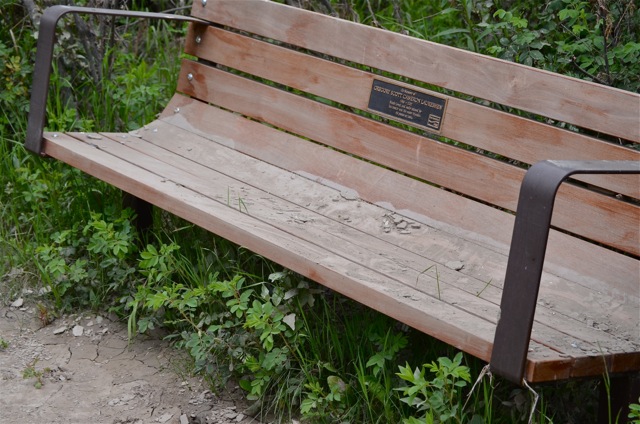
From the mud on this bench, you can see how high the water came up to:

BenchAmong the rubbles of dead trees and debris, what I found amazed me. Do you see what I see? Look, right in the middle:

Do u c what i c?

Not just one or two, but half a dozen Cedar Waxwings frolicking among the ruins:

Cedar Waxwings frolicking

Absolute serenity:

Serene stance

Cedar WaxwingA closer look at the beautiful silky plumage:

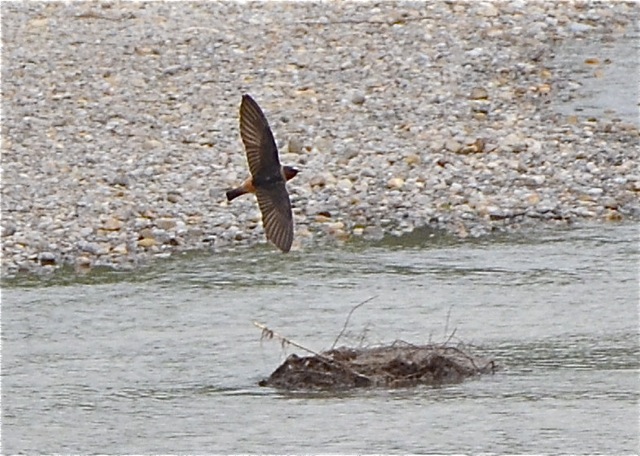
Silky WaxwingNot just the Waxwings, hoards of Cliff Swallows joined in the natural chorus. But they were too fast for me to capture on camera. I could manage just a few shots. In most of the photos they came out too small and blurry:

Cliff Swallow

Cliff Swallow 1

Lots of Wild Roses among muddy leaves. See the bud?

See the bud?

Berries too, red defying brown:

Little red spots

And this little guy came out to greet me on the flood-swept path now dried:

Squirrel

As I was leaving the area, a Small Blue butterfly ensured me…

ButterflyLife goes on.

***

Saturday Snapshot is hosted by Melinda of West Metro Mommy Reads. CLICK HERE to see what others have posted.

***

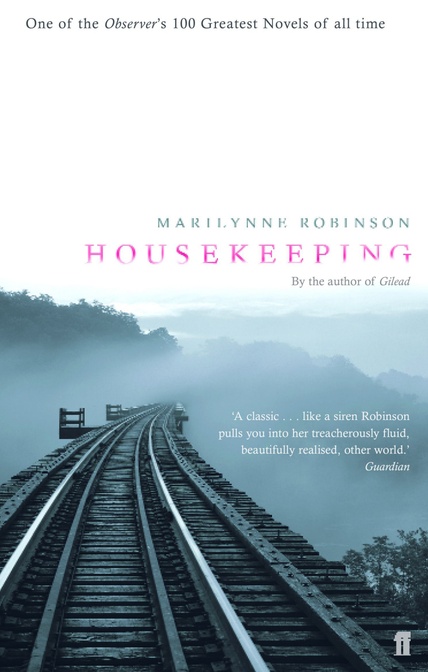
Housekeeping by Marilynne Robinson

I just finished reading Marilynne Robinson’s first novel Housekeeping, and I’m stunned.  The title is simple enough, but the subject matter is expansive, haunting, and unresolvable. Yes, from the title, you could assume it’s about family, and true, we have the story about two sisters Ruth and Lucille abandoned by their mother Helen. After leaving her two young daughters with their belongings at her mother’s home in the remote town of Fingerbone, Idaho, Helen goes out and drives her car off the cliff.

The book won the Hemingway Foundation/Pen Award for Best First Novel in 1980, and nominated for a Pulitzer that same year.

It’s about sisterhood, how Ruth and Lucille grow up first under the care of their aloof grandmother, then after her death, their two grand aunts, who can’t wait for a younger person to raise these children. So, finally, their mother’s younger sister Sylvie, the estranged daughter of their grandmother, the aunt they have never known, comes back home to Fingerbone to take care of them.

Housekeeping by Marilyn Robinson

So yes, we can expect some dysfunctional upbringing. But that’s not it. Robinson’s narratives are lyrical, internal, thought-provoking and poignant. Rather than making a social comment on a dysfunctional family, it searches deep into the human condition.

It’s about loneliness, that haunting, inconsolable feeling that can drive one off the cliff of sanity. It’s about survival, how being constrained by such loneliness, one can still go on, striving to find some meaning in blood and kin, facing others during the day and oneself in the deep darkness of the night.

It’s also about personhood, how you might think after such a childhood experience, the two sisters would have clung to each other in an inseparable bond, and yet, one can still escape to another life by squeezing out of the relational cocoon.

And it points to the larger scheme of things, that all are transient, however static we may feel about our situations. No matter how well a housekeeping job we do to keep up an orderly life or fulfill expectations, we cannot ignore our inner chamber. We’re all a diaspora of transient humanity longing for home.

So the transients wandered through Fingerbone like ghosts, terrifying as ghosts are because they were not very different from us… Sylvie was an unredeemed transient, and she was making a transient of me.

I read Gilead years ago. I don’t know why I’ve waited until now to savour Robinson’s other fictional works. Housekeeping is hauntingly true and intellectually satisfying. I know this is a book I need to reread many times in order to grasp all that the author is saying… if I can ever do that, gleaning all that Robinson had meant to say. So many thoughts in just 219 pages.

Many images from other books and movies conjured up in my mind as I was reading: the movies Thelma and LouiseStand By Me, and Jeannette Walls’s memoir The Glass Castle. And Chapter 10, where Robinson puts the story in the context of Biblical allusions, Terrence Malick’s The Tree of Life came to mind. But of course, those are merely images, or interactive memories. What draws my attention page after page is  the voice of Robinson’s narrator Ruth, and her heart-wrenching and yet unsentimental storytelling.

~ ~ ~ ~ Ripples

Housekeeping by Marilynne Robinson, published by Faber and Faber, London. Third Edition, 2005. 219 pages.

***

Related Post:

Lila by Marilynne Robinson

Dances With Words (where there’s a short write-up on Gilead)

The Glass Castle Book Review

The Tree Of Life Movie Review

***

Our Mega Culture

A look at our summer offerings on the big screens can readily point to one fact: Bigger and louder is what we get. Apparently, they seem to be the key to box office sales. After all, aren’t those figures the raison d’etre, the reason why movies are made in the first place?

From Box Office Mojo come these stats: Iron Man 3 ($400m+ domestic box office sales, 8 weeks in release), Star Trek Into Darkness ($200m+, 6 weeks), Man of Steel ($200m+, 2 weeks), World War Z ($88m, 1 week). Don’t think it’s only the superheroes and zombies that dominate, Luhrmann’s spectacle The Great Gatsby rakes in $142 million in 7 weeks.

Here’s the irony: the bigger your city is, the more small movies you can see. And if you’re like me dwelling in one of those hamlets not on the list of ‘selective cities’, then you’re stuck with bigness all summer, like it or not. (This is my list of ‘small’ movies I’m waiting for.)

The French director Jean-Luc Godard once said:

As soon as you can make films, you can no long make films like the ones that made you want to make them.

The legendary film critic Pauline Kael interpreted his statement as follows [1]:

This we may guess is not merely because the possibilities of making big expensive movies on the American model are almost nonexistent for the French but also because as the youthful film enthusiast grows up, if he grows in intelligence, he can see that the big expensive movies now being made are not worth making. And perhaps they never were: the luxury and wastefulness, that when you are young seems … magical, become ugly and suffocating when you’re older and see what a cheat they really were.

Kael wrote that in 1966, that’s forty-seven years ago. How I wish she could be around now. Sure like to hear what she has to say about all the summer blockbusters we’re getting. What we have mainly are sequels to previous blockbusters, their makers hoping the trend would perpetuate. Would Kael revise her view now? Big movies not only are still being made, they have become more and more popular. It seems viewers don’t care much that the emperor has no clothes.

It’s Gatsby’s idea, isn’t it? The grander, louder and more spectacular the party you throw, the higher chance you just might get what you’re looking for. Alas, look at the ending.

Who makes the trend? The marketers of movies would tactfully say they’re just offering what people want. But subtly, or not so subtly, what people want is also shaped by marketers. Mass appeal and popularity have overridden discernment and individuality. Do you find viewers’ tastes have changed over the years? Or, do movie goers nowadays belong to a different demographics than before?

What I’m concerned is the obliteration of the already elusive notion of film as an art form. We’re now too dominated by bigness, and spectacles, and technologies, rather than going into the story, characters, techniques, meaning… the still, small voice of fine artistry.

Star Trek Into Darkness

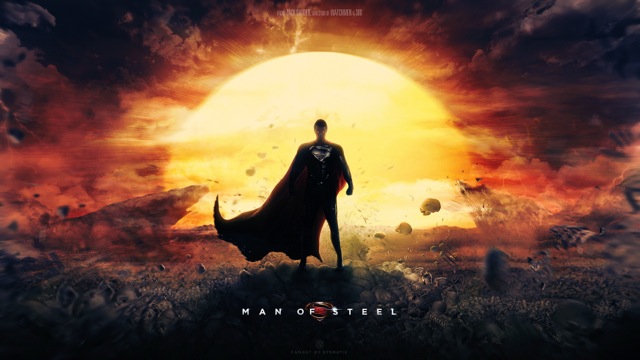
I’d the chance, ok, my choice, to go watch Star Trek Into Darkness and Man of Steel recently. Interesting contrasts there. I used to be a Star Trek fan. Yes, used to be because the Star Trek we have today is a totally different product altogether, albeit the character names remain the same. This current one looks like school children play-acting… serious pretending, frantic scurrying here and there, and loud blasts into oblivion. The only adult seems to be Benedict Cumberbatch as Khan.

Man of Steel has more mature actors and more serious acting, but the second half is not much different, gratuitous CGI action sequences that are 30 minutes too long, and loud blasts into oblivion.

The constant bombardment of expanded loudness in the theater had only one effect on me, made me turn off my receiver, same effect as somebody wanting to win an argument by raising his voice at me.

Man of Steel 1

Truth be told, because of the cast I went to see this revision of Superman. Kevin Costner and Diane Lane as Clark Kent’s earth parents? Who can miss that? Amy Adams as Lois Lane? I’m sold. And, Michael Shannon as the evil General Zod coming to turn earth into Krypton? I must see how he does it.

And the current Star Trek, what strange new world it has gone to where no one had predicted before. My favorite is still the original TV series. As for the movies? It’s Star Trek VI: The Undiscovered Country (1991). That’s the swan song of the original TV cast and one where Christopher Plummer as the Klingon General Chang recites Shakespeare like he’s at the Stratford Festival. His lines come from The Merchant of Venice, The Tempest, Romeo and Juliet, Julius Caesar and Hamlet. If you want postmodernism across the media, here you have a perfect mash-up. Yes, light years away from the Star Trek of Summer 2013, and generations apart.

Steven Spielberg in a recent statement made at the opening of a new USC Cinematic Arts building predicted there would be an ‘implosion’ in the movie industry, ‘where three or four or maybe even a half-dozen megabudget movies are going to go crashing into the ground, and that’s going to change the paradigm.”

He also added we might have to pay $25 to see the next Iron Man, but $7 to see Lincoln. A scenario which George Lucas echoed. Umm… if those are the ticket prices for the different kinds of movies in the future, not a bad sort of a paradigm shift.

***

[1] These two quotes are taken from Pauline Kael’s review of Jean-Luc Godard’s Band of Outsiders (1964), from American Movie Critics: An Anthology from the Silents Until Now, Expanded Edition, edited by Phillip Lopate, published by The Library of America, N.Y., 2008.