Saturday Snapshot June 22: The Two Faces of a River

Household items, children’s toys, swing sets, and the roof of a house should not be flowing down a river. And yet they did. It was painful to watch, even just from a TV screen. You probably have heard about it on social media and in the news, the unprecedented flooding of Southern Alberta, and right here in the City of Calgary.

Record rainfall downstream from the Mountains gathered forces into torrents so fast and furious that caught many off guard. In just a matter of hours, 26 communities in the City had to evacuate, that’s 100,000 people leaving their homes, some had to be rescued by emergency responders in boats. In other towns, many had to be plucked from the rooftop by helicopters.

No I don’t have snapshots of the devastation. Yesterday, I was tense but relieved I didn’t have to evacuate. I was in no mood to head out and snap photos, however rare and newsworthy they could have been. I didn’t want to add any more sensationalism to a dire reality.

The two faces of our rivers. I’ve been birding close to The Bow all this time, knowing it is the lifeline, home and playground for many species of shorebirds. But yesterday, I saw its ferocious side.

For my Saturday Snapshot, I’d like to remember its calm and peaceful face. These photos were taken three weeks ago by The Bow River.

Baby Mergansers’ Day Out with Mom:

Mother Mergenser & Babies

Mom Merganser and Babies

Babies day out

This Canada Goose family had also come out in that beautiful afternoon:

Family Time 1

Canada Geese outing

This is the face of the river I like to remember:

The Calm Face of The Bow

***

Saturday Snapshot is hosted by Melinda of West Metro Mommy Reads. CLICK HERE to see what others have posted.

***

Book Haul 2013

Here I go again, the annual Book Sale at Crossroad Market, organized by the Servants Anonymous Society. It’s a worthy cause, therefore, guilt-free looting of good condition used books, over a million of them donated by citizens like me. But I must say, I haul back more than I donate over the years, for many of them I plan to keep.

Compared to the last few years, I’m a bit more restrained this time. Here are some of my loot, all trade paperbacks for just $2 each:

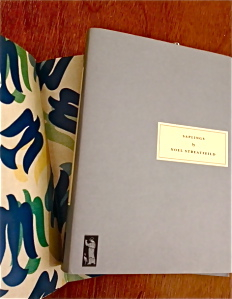
saplings-book-coverSaplings by Noel Streatfeild — I picked it up right away as soon as I saw the grey, minimalist book cover. Delighted to find inside is beautifully designed. Look at the photo I shot on the left. You can see both the dust cover and the inside of the book cover. This is my first Persephone Book, publisher of neglected women writers. I’ve not heard of the title or the author, but trust the London publisher’s choice, and glad to find it in such a mint condition at a used book sale, I quickly grabbed it.

Parade's End BBC Book Cover copyParade’s End by Ford Madox Ford — Truth be told, I’d never heard of FMF until I read Hemingway’s A Moveable Feast a couple of years ago. What a name. The only one I can think of along that line is… William Carlos Williams. Anyway, BBC’s adaptation of Parade’s End as a TV mini-series has added another name to my list of favorite actors: Benedict Cumberbatch (Again, ‘what a name.’) In these dry months in between seasons of Downton Abbey, Parade’s End makes one satisfying treat.

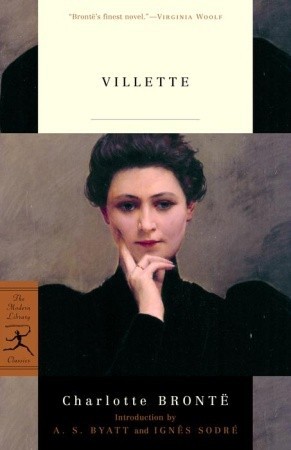
Villette by Charlotte BronteVillette by Charlotte Bronte — Here’s another reason for buying a book because of the publisher. I’m a collector of The Modern Library Classics. So finding this in the Classics section in the book sale was a pleasant surprise. A. S. Byatt offers her views in the intro. Other than Jane Eyre, I’ve not read anything else from Charlotte Bronte. Have you read this?

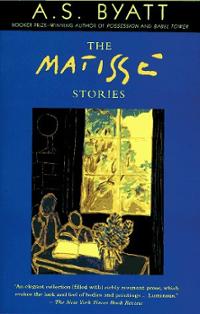
matisse-stories-a-s-byatt-paperback-cover-artThe Matisse Stories by A. S. Byatt — Three stories about three art works by Matisse. A beautiful little book. This from Goodread’s description: “These three stories celebrate the eye even as they reveal its unexpected proximity to the heart… the intimate connection between seeing and feeling…” My kind of stories.

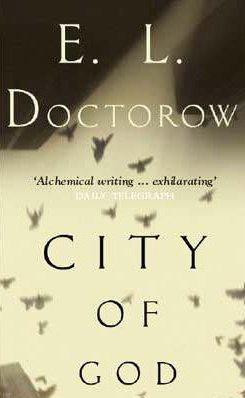
City of GodCity of God by E. L. Doctorow — Some years ago, The New York Times called the film adaptations of Doctorow’s works ‘expensive failures’. Reason: his novels are ‘too cerebral’, ‘too lyrical’, ‘too writerly’ to be transposed into cinematic images. Got it. Whenever I’ve the time and in the mood for some cerebral challenges, I know what book to pick up. After all, I’ve long wanted to read Doctorow. The subject matter of City of God just may arouse interest to help me through the thickets of Biblical proportion.

Becoming George Sand copyBecoming George Sand by Rosalind Brackenbury — George Sand I’ve heard of, Frédéric Chopin’s lover, one of those female writers who had to adopt a male pseudonym in 19th C. society. The interesting part is the modern parallel of the story of a female French professor in Edinburgh. Author Brackenbury (due to my ignorance I’ve not heard of) graduated from Cambridge University (which I’ve heard of) and now Fellow of Creative Writing at the College of William and Mary (that good name I’ve also heard of) in Williamsburg, VA. Enticing enough.

Tell It to the TreesThe Hero’s Walk and Tell It To The Trees by Anita Rau Badami — A look at the book cover of Tell It to the Trees helps me get the idea… The Indian diaspora in cold, wintry Canada, and for that I find a linkage. Not that I’m from India, but close enough. I’m sure Anita Rau Badami has a lot more to tell than adjusting to the climate. Born in India, now living in Montreal, Rau Badami has in recent years emerged as a clear voice in Canada’s literary landscape.

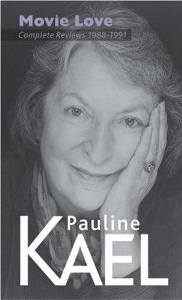
Movie Love Book CoverMovie Love: Complete Reviews 1988-1991 by Pauline Kael — Roger Ebert in his memoir Life Itself acknowledged Pauline Kael (1919-2001) as his mentor and major influence. While Ebert got a Pulitzer for his movie criticism, Kael got a National Book Award. She had been praised for re-inventing the form and aesthetics of the genre of film critiques. Along with a dearth of female literary voices in film criticism like Susan Sontag (1933-2004), seems like such a species had become extinct nowadays. All the more to appreciate ‘a classic’.

Wonderful TownWonderful Town: New York Stories from The New Yorker, edited by David Remnick — A Modern Library edition compiling over forty short stories published in The New Yorker before 2000, since that’s the pub. date. Reading the Table of Content is like reading the Who’s Who of 20th C. literary scene… John Cheever, Irwin Shaw, Philip Roth, Jonathan Franzen, James Thurber, John Updike, Vladimir Nabokov, Jamaica Kincaid, J. D. Salinger, Isaac Bashevis Singer, Susan Sontag, Woody Allen, Jeffrey Eugenides, Bernard Malamud, E. B. White… just to name a few. Woody Allen? You gasped. But, why are you surprised?

***

I’m a keeper of lists. If you’re interested, here are my loots from previous years:

2012

2011

2010

2009

***

Saturday Snapshot June 15: West Coast Birding

Spent a few days in the Metro Vancouver area last week. Didn’t see a lot of variety of shorebirds, but just catching sight of some Great Blue Herons was gratifying enough.

About half a dozen of them, far from where I was standing. They were peaceful and enjoying themselves until a Bald Eagle headed towards them, in a not-too-friendly manner. What was he thinking? He was alone and there were half a dozen Herons. An altercation soon followed, I could only hear the battle cries from afar but couldn’t snap the photos quick enough. But I can tell you, the Bald Eagle had to fly away subdued.

Here’s the approach. Whatever happened next you’re free to imagine:

Bald Eagle approaching Great Blue HeronsAnother time I got the chance to see a solitary Great Blue Heron up close and personal. It was a mesmerizing moment:

Great Blue HeronTakes flight:

GBH takes flight… landing:

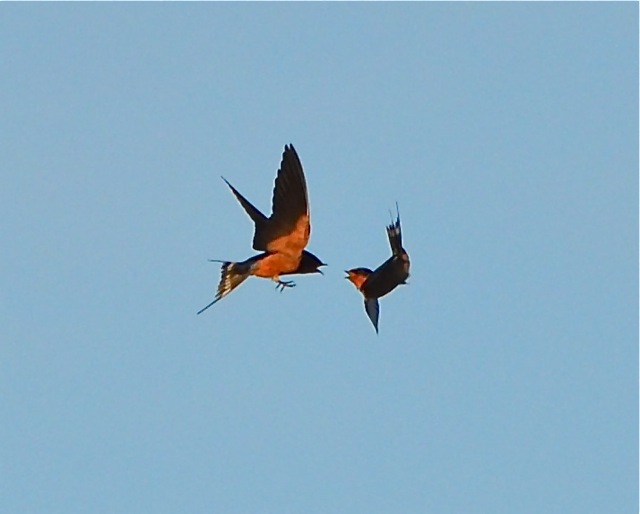
GBH landingAnother day at dusk, above a pond were Swallows mingling in the evening sky. They were flying so swiftly that I could hardly capture them on camera. But after I uploaded the photos, this is what I saw… looks like another mid-air altercation. But since they are of the same species, shall I say this time, a little domestic dispute? Or perhaps just friendly frolicking…

Swallows mid-air disputeHere’s a more serene Canada Geese family outing, a quiet evening swim before bed:

Quiet evening swimDay is done:

Day is done

***

Saturday Snapshot is hosted by Melinda of West Metro Mommy. CLICK HERE to see what others have posted.

***

More Herons photos here:

Sign of Spring: Nesting

***

Drifting with the Current of Memory: Kon-Tiki (2012)

Once upon a time a young school girl, an English language learner in the then British Colony of Hong Kong, had to read an abridged version of the book The Kon-Tiki Expedition written by Norwegian explorer Thor Heyerdahl. The ESL student was told it was a true story. She was most curious to find out the details of this extraordinary journey of six men on an open raft roughing it on the tumultuous South Seas. But due to her limited English language skills, she had a hard time comprehending the details of the adventure Heyerdahl described.

Now decades later, as soon as she knows that a movie by the name of Kon-Tiki is showing on the big screen, her long tucked-away curiosity is unleashed. Now she finally has a chance to find out what this sea voyage is all about. Here are the ripples.

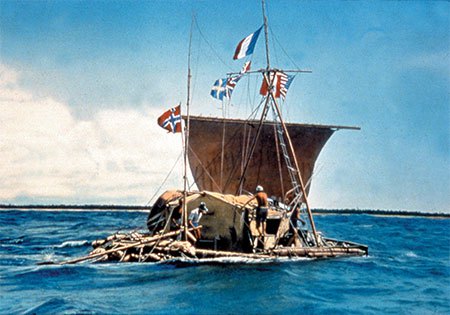
Norwegian ethnologist and explorer Thor Heyerdahl embarked on The Kon Tiki expedition in 1947 to prove his own theory that the Polynesian Islands on the Pacific Ocean were first colonized by people from Peru in South America some 1,500 years ago, and not those of nearby Asian countries as generally thought. Heyerdahl and five other men built a raft with balsa wood, using ropes and technology of pre-Columbian times, and set sail on it by letting it drift with the current from Peru, just to prove the feasibility of such a journey. Only one of the men had had some navigation experience, and, we found out later in the film, Heyerdahl himself could not swim. But in 1947, after a period of 101 days, they succeeded in reaching the Polynesian islands, almost 5,000 miles away. Quite a risky trip to prove a self-propelled theory. Herein was sown the seed of adventure and endurance.

Kon-Tiki (2012)

The film is 2013 Oscar nominee for Best Foreign Language Film from Norway. It starts off well by showing a young Heyerdahl as a child in Norway already a risk taker who seeks out the most dangerous feats to perform. The camera works at eliciting interesting human faces with close-ups of a mischievous child growing into a tall, blond hair, blue-eyed, chiselled physique, explorer of the Polynesian Islands. Listening to an aboriginal elder tell their people’s story, Heyerdahl (Norwegian actor Pål Sverre Hagen) is determined to test his theory with his life on the line, against the restrained protest of his wife Liv (Norwegian actress Agnes Kittelsen). More treatment of the conflicts is much wanting here, as enthusiasm of the adventurous husband meets exasperation from his wife and mother of his two boys.

Likewise, while on the rough seas, conflicts and comradeships among the six men seem to give way to tense moments of swashbuckling shark fights. At certain points, scenes from Life of Pi came to mind… the flying fish, the whale circling under the raft, the shark attacks, the sun sinking beneath the horizon. Moments that are aesthetically gratifying in Pi appear to be quite matter-of-fact here. No matter, Norwegian directors Joachim Rønning and Espen Sandberg chose to use a simple and straightforward style to tell their story, nothing philosophical to be pondered as in Pi.

If just to satisfy the curiosity of the once bewildered school girl, the movie suffices. It captures my attention and offers some suspenseful and thrilling scenes, at times reminiscence of yet another movie, Jaws. So, Pi and Jaws, what images the Kon-Tiki movie leaves me with that are its own are basically the six messy blond hair and bearded, muscular (except one), well tanned Norwegian and Swedish men speaking English, and, looking quite similar to each other. Eventually, they see a gull flying in the sky. Spirits are highest at that point, for land is near.

What’s quite effective is the inclusion of what seems to be the archival black and white footages of the original trip well mashed into this modern version. But here’s my disclaimer: Upon this first viewing, I’m not too sure if they are the actual footage, or imitation archival footage. I have tried to find out on Google but to no avail. However, I did find out that all the ocean life of sharks, whales, and fish are CGI, computer generated images… just like in Pi.

It’s also interesting to note that, at the end of the movie when the credits roll, there is a disclaimer stating the movie is fictional and that any relationship to the facts is accidental or coincidental. With this, I as a viewer is at a loss as to the accuracy of the whole storytelling on screen. This points to the value of the actual footage which the real life Thor Heyerdahl shot with his 16mm camera, later edited into a feature film that won the 1951 Academy Awards for Best Documentary.

We know for a fact that they reached their destination, no small feat of survival and endurance that from my childhood memory, was much more detailed even in the abridged ESL version of the book. So, yes, it looks a bit too easy and simplified in this movie. And, the ultimate argument still remains like a hung jury. The fact that they had succeeded in reaching the Polynesian Islands on an open raft all the way from Peru did not prove that the Peruvian had colonized the Islands. The film did not deal with this argument. But, just for satisfying the curiosity of the once young and bewildered English learner, it is a sufficiently entertaining movie. A highly watchable summer beach flick.

~ ~ ~ Ripples

***

Related Posts:

Life of Pi: The Magical 3D Experience

Life of Pi by Yann Martel: Take the Literary Journey Before the 3D Experience 

***

Summer Viewing List

Summer Reading Lists have begun to sprout everywhere. Some prefer lighter beach reads, and others use this time to catch up on heavier non-fiction works.

While I love book lists and recommendations, as a cinephile, I also have my list… films to be watched, those I highly anticipate to come around hopefully soon to my city. Here’s my TBV (To Be Viewed) list for this summer on the big screen:

Frances Ha – A NYC set black and white film in 2013? The trailer evokes Woody Allen’s Manhattan. I know Noah Baumbach has his own style, considering some of my favourite films are his works, The Squid and the Whale, Fantastic Mr. Fox. Co-writer and star Greta Gerwig, who is a good balance to Ben Stiller in Greenberg and distinctive in To Rome With Love albeit in a minor role, should be a delight. This I highly anticipate.

Before Midnight – The third and final instalment of Richard Linklater’s chance encounters of Before Sunrise, and Before Sunset. Real time, dialogue driven films almost created a genre of their own in the first two instalments. Ethan Hawke and Julie Delpy regroup nine years later in Greece. Whatever had happened in their lives between years?

Summer breeze, makes me feel fine…

Before Midnight

Much Ado About Nothing – Shakespeare and summer go hand-in-hand. Not in the park, this one’s shot right in director/screenwriter, of Avengers’ fame Joss Whedon’s own backyard in Santa Monica, CA. A postmodern take, and … black and white? Keeping the original work handy can help to reveal what’s Shakespeare’s and what’s Whedon’s.

Blue Jasmine – Woody Allen has been bringing us a new film a year over the past four decades. Can you not admire the stamina and creativity of this man, now 78. Allen’s 2013 instalment brings him home to NY and CA. Cate Blanchett, Alec Baldwin, Peter Sarsgaard star. I highly anticipate his 2014 work though, already announced and in pre-production. This time, back to France with Colin Firth. Yes folks, just another year.

Blowing through the jasmine in my mind…

Jasmine

Gambit – scheduled to come out later this year, Colin Firth and Cameron Diaz reprise the 1966 British comedy that starred Michael Caine and Shirley MacLaine. Alan Rickman also in this new remake. Much ado about a fake Monet painting. Should be another breezy flick but probably after summer, if it ever comes this way.

To The Wonder – Terrence Malick’s 2012 work just one year after The Tree of Life still hasn’t arrived here, albeit screened months ago in other more major cities. Not as highly acclaimed as the mesmerizing Tree of Life, To The Wonder is still alluring for me, a Malick fan. Good to see that the reclusive director seems to be busier now so we don’t have to wait for a decade to see his next work.

What Maisie Knew – Again, still not here albeit has been screened in other more major cities. Just rubs it in once more as to where I’m living. Julianne Moore and Alexander Skarsgård lead the cast in this newest Henry James adaptation. I’ve enjoyed previous James’ work on screen like The Wings of the Dove, The Golden Bowl, and The Portrait of a Lady. What Maisie Knew seems like a smaller work, looking at the novel. So would like to read that before seeing the film.

Summer in February – After Downton Abbey, Dan Steven’s new film … looks like an artsy romance. Alas, don’t think it will come to North America though. But hopefully PBS or HBO or the Movie Channel will one day pick it up. Dominic Cooper and Dan Stevens fall for the same girl in an Edwardian artist colony in Cornwall. From the trailer, looks very artsy and Downtony.

Inside Llewyn Davies – Coen Brothers’ newest film on 1960’s NY folk music scene. Oscar Isaac, Carey Mulligan, Justin Timberlake star. And they all sing… Music and singing play a key role in many Coen films. Now this one focuses on a musical period I love, and follows the erratic life of a fictional folk singer/songwriter. Just found out it is scheduled to be released in December. Long wait, but considering the timing, this one is bound to show up as a contender comes next Award Season.

And, while waiting for all these to come on the big screen (yes, I still feel movies ought to be viewed on the big screen, at least the first time), summer is also the best time to catch up on some classics I’ve missed in past years/decades. This list can be unending. Another post.

***

Related posts you might like:

Upcoming Books to Movie Adaptations

Woody Allen’s Midnight In Paris movie review

Terrence Malick’s The Tree of Life movie review

True Grit: A Cool Summer Read and Movie

***

Jasmine photo from Wikipedia Commons, Movie Poster original source unknown

Downton Abbey, The Complete Scripts: Season One

I had once talked with someone who avoided watching the ‘making of’ special feature that comes with a DVD. His reason? He did not want to see his favorite movies demythicized. Well, if you’re that sort of a viewer, then this book is not for you.

Downton Abbey The Complete Scripts Season One

But, if you’ve enjoyed the phenomenon called Downton Abbey, and are curious to learn about the creative writing process that kicked it off, then I’d say, this is an absolute must-read. And for those who keep going online to find quotable quotes from the series, here you have them all, and some more.

As someone interested in screenwriting, I would look for the scripts of movies I like, usually online. So it’s a wonderful discovery for me to see this book at the bookstore. Julian Fellowes has dispelled the magic and shared with us the scripts of all episodes for Seasons One and Two, most importantly, with his own annotations. Consider this the literary version of the ‘making of’ in your special features, more accurately, the screenwriter’s commentary.

In his Foreword, Fellowes introduces the book as ‘the complete scripts of the first series as they were when they went forward into production.’ So here we have the whole idea before cutting and editing, including deleted scenes and dialogues, plus Fellowes’ own explanations for the deletions. He walks us through the whole series, literally, and offers helpful background on the social history of the time, and many more tidbits.

You can also see why the collection is such a useful tool as an exemplar of a successful writing process, in particular, the editing phase. The main reasons for deletion is redundancy, and with a TV production, time. Another is for keeping the integrity and consistency of the characterization and the story. It’s intriguing to see the final version is the outcome of well-pruned and collaborated efforts.

An example of a deleted scene where Matthew answers Robert’s bewildered query about how he would manage to commute and continue to work as a lawyer while being heir of Downton.

Robert: How will you manage it?
Matthew: Like many others, I shall bicycle to the station, take a train there and back, and bicycle home.

Here’s the screenwriter’s commentary:

Here we have Matthew talking about bicycling to the station which is quite unnecessary as we see him do it. When you’re writing something you often forget that it’s going to be told visually, and so there are things that don’t need to be said.

With eighteen characters in the story, the writer has done a superb job in keeping them well developed, and eliciting our interest in each one of them. First I notice how short each scene is, something that just flashed by when watching, but reading it can even be more obvious. I’ve counted most of the scenes to be less than 60 sec. on screen. Each therefore needs to be succinct to make the most of the time. Makes me think of another way to apply that famous Hemingway quest, always aim for that one true scene.

To manage the long list of characters, here’s the brilliant way, something that’s so obvious when Fellowes explains, but then so subliminal while we’re watching them on screen, foils and parallels:

I love Mrs. Patmore. I think Lesley Nicol’s performance is fantastic. She is the kitchen Violet. Maggie Smith delivers the cryptic comments upstairs, Lesley has the barbed tongue downstairs. In a sense they balance each other, as Robert and Bates, or Anna and Mary, balance each other.

And here I add, other pairs we can see upstairs Violet and Isobel, or down, Mr. Carson and Mrs. Hughes. Great performance comes when an actor is given the chance to play against an equal, in character and caliber.

Further, Fellowes reminds us that it’s the actors that give life to mere words on the page. As the actors interpret, take off with and develop the characters on their own, the screenwriter continues with that development and write accordingly in the upcoming episodes. Isn’t this a most fascinating creative process? Writer and actors inspiring each other.

It’s always interesting to see what the screenwriter thinks of the final production. And Fellowes is candid in sharing his views, which reminds me of the fact that it’s all a collaboration, team work, and not just one person’s monopolized brainchild. The writer writes, the actors interpret and live out the words, the director sets the tone, the direction, the cuts, plus numerous others who work on the sets to play their roles.

I most appreciate and am somewhat surprised to find Fellowes uses many of his own experiences, stories he has heard, or memories of his own family, to create the scenes. Some interesting tidbits he shares include the scene in the kitchen rescuing the chicken from the cat before taking it upstairs, that comes from an embarrassing real life episode. Or Violet Crawley’s subtle dominance in the annual flower show, which he adapts from memories of his mother. Or his commentary on Sybil’s covering up of her political expeditions to Ripon, a parenting point:

Once children conceal their purposes or their social engagements or their plans for the weekend, that is the beginning of their move away from the parental set of values. Before that, God knows they may be rude or challenging, but they don’t usually have a private life, a secret agenda. And this is where it begins for Sybil.

It’s commentaries like this that you’d feel Fellowes is candid and open, just talking to you in a down-to-earth manner. Like everyone of us, he’d go online to do his research when he writes, such as the history of cataract surgery when writing about Mrs. Patmore’s.  Or admitting faults in certain scenes, and sharing about his own childhood experience and family dynamics, enlightening us with the norms and etiquettes of the time and the social history behind the scenes.

Demythicize? Definitely, with the effect that you’ll appreciate the production and the writing even more.

~ ~ ~ ~ Ripples

Downton Abbey The Complete Scripts Season One by Julian Fellowes, Harper Collins Publishers, 2012, 396 pages.

***

Related Posts You May Like:

Lady Almina and the Real Downton Abbey: Facts that give rise to Fiction

Quotable Quotes from Downton Abbey

Downton Abbey Season 3: Episodes 1

Season 3: Episodes 2 & 3

Season 3: Episodes 4 & 5

Season 3: Episodes 6 & 7 Finale

***

Spring Babies and Parenting Styles

I’ve been following this Great Horned Owl family for a few months now. At first I only spotted Papa, later I found Mama nesting nearby, now the two Owlets had come out too. Here’s my recent visit, the first Owlet I saw:

Owlet 1

Here’s the second one. Took me some time to spot:

Owlet 2

I didn’t have the chance to take a family photo, since each of them was on different branches, two adults and two young ones, but never far from each other though. Here you can see one parent (not sure if it’s Mom or Dad) keeping an eye on the owlet from a distance. Can you spot them both?

Parent Owl and Owlet

I love this… staying together, but also giving each other room.

**

Here’s a family photo I did manage to take, albeit from afar. Two Canada Geese with their Goslings close by:

Canada Geese with Goslings

Ah… the different parenting styles.

**

Saturday Snapshot is hosted on a new site now: Melinda of West Metro Mommy. CLICK HERE to see what others have posted.

**

Related Posts on the Great Horned Owl Family:

Saturday Snapshot March 9: The Great Horned Owl

Sign of Spring: Nesting

***
Saturday Snapshot May 18: The Bow

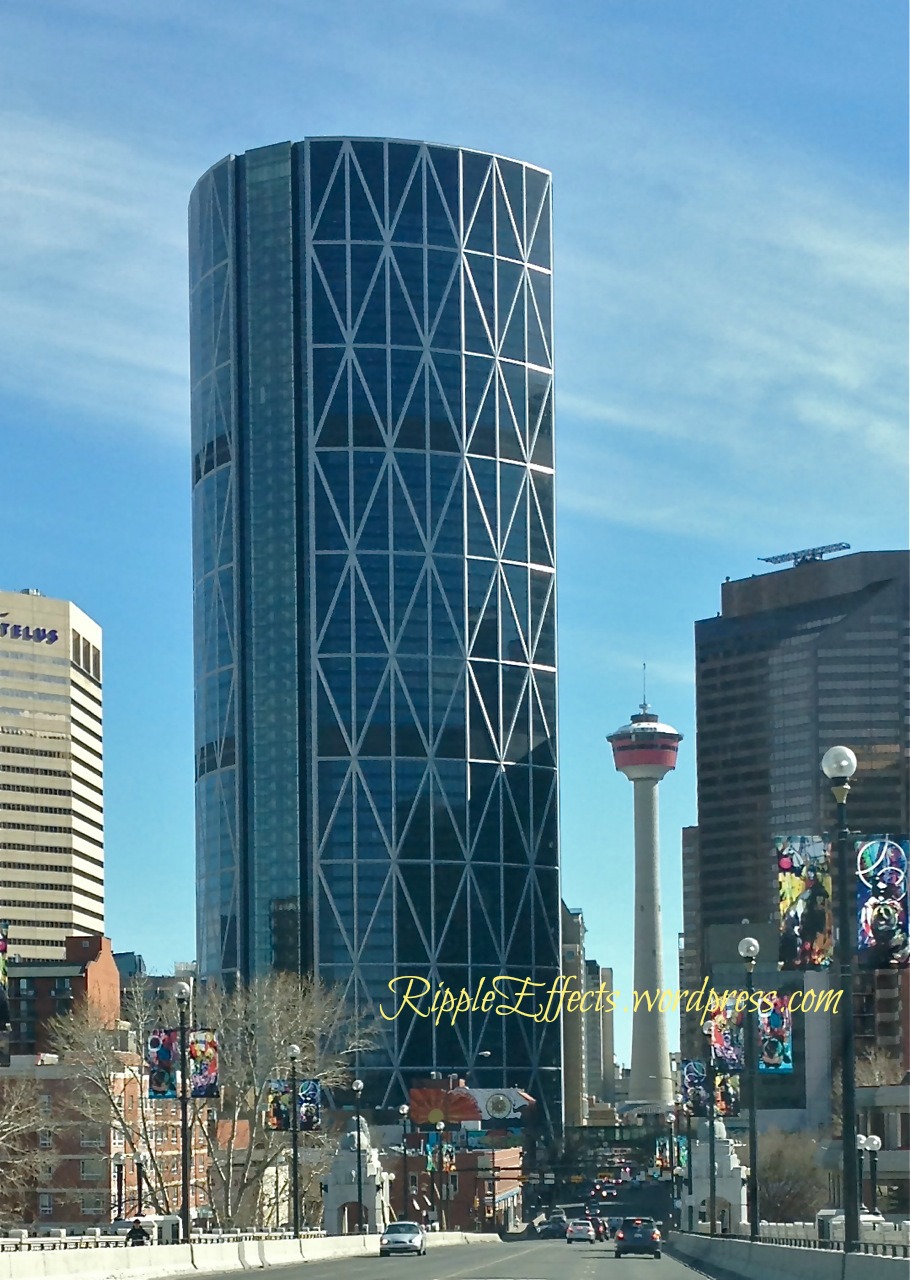
The Bow is the newest addition to our downtown cityscape. Design architects are the acclaimed, London-based Foster and Partners. This new kid on the block has put Cowtown Calgary on the map as it is recently named one of The World’s Most Spectacular Corporate Buildings by the German building database Emporis.

You can see how spectacular it is on Foster and Partners’ website with their professional presentation. But for Arti, the Cowtown inhabitant roaming in the midst of the buzz and the dust, weaving through busy downtown traffic, these snapshots are personal and authentic, no posing, and believe it or not, shot with just her iPhone:

The Bow 1

The Bow is named after the river that winds through our City. So it’s apt to design the building in a crescent shape, fluid as the river, and shaped like a bow:

The Bow 2

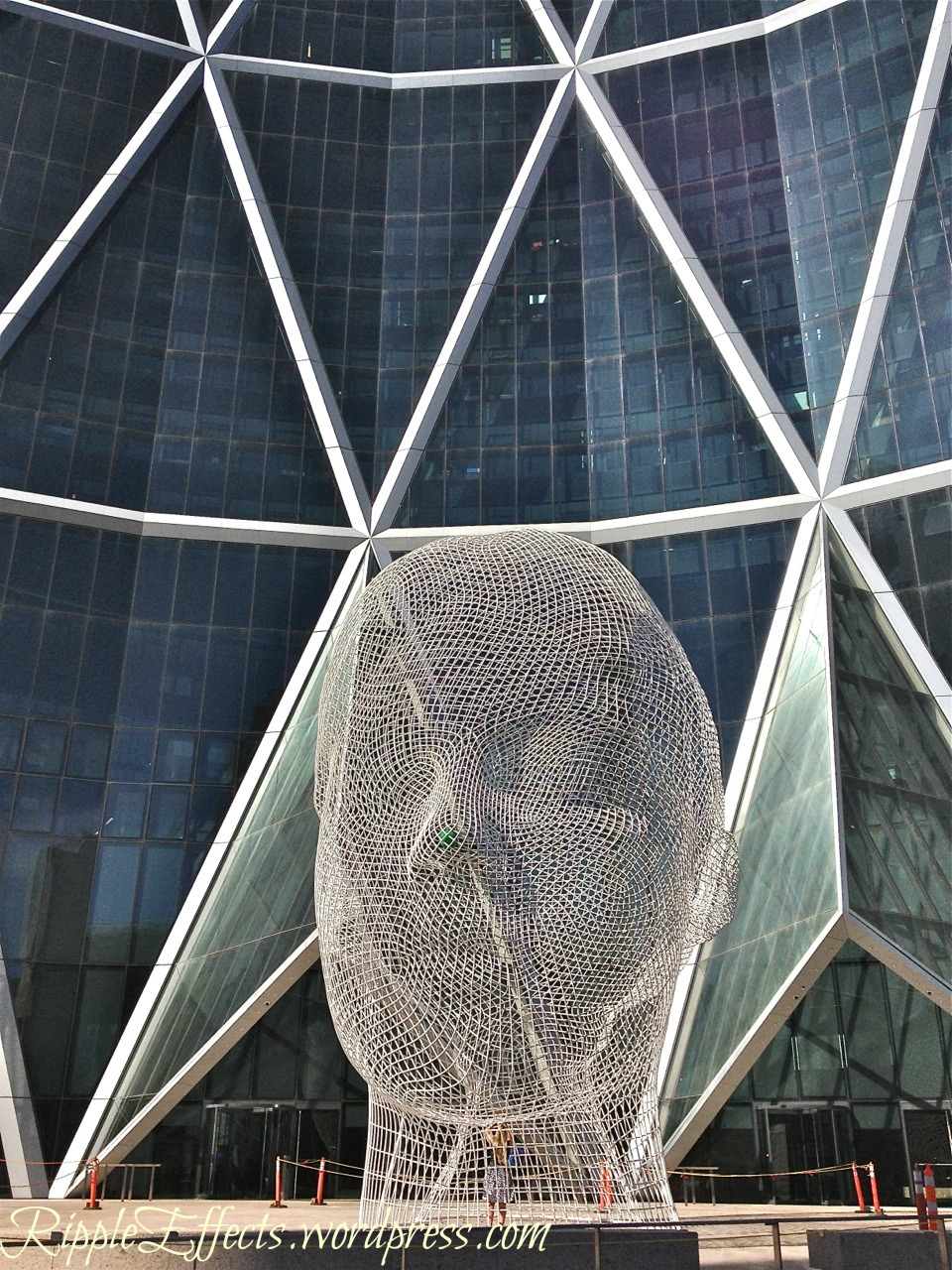
A bit closer now, you can see the art installation in front of the building. It’s a 12 m. tall wire sculpture entitled ‘Wonderland’, created by the renowned Barcelona-based designer Jaume Plensa whose works can be found all over the world:

The Bow 3

It’s the head of a girl, intriguing when you think of the title ‘Wonderland’. Why, of course, it must be a wonder to enter someone’s head. Here, you can do that through a door. See the green balloon inside her nose?

Wonderland

***

Saturday Snapshot is hosted by Alyce of At Home With Books. Click Here to see what other bloggers have posted.

Proust Read-Along: The Swann and Gatsby Foil

“He knew perfectly well as a general truth that human life is full of contrasts…” Swann’s Way, P. 510

While plowing through Part 2, ‘Swann In Love’, I happened to reread The Great Gatsby. Thanks to Baz Luhrmann’s new movie adaptation, I’m sure many more are doing the same. And oh what interesting contrasts Swann and Gatsby make.

Both are deeply in love, yearning for a woman who seems to be utterly elusive. Gatsby frantically maximizes to attract Daisy; Swann willingly minimizes to reach Odette. From a poor background, Gatsby grabs whatever means he can to build his wealth; Swann whose niche belongs to high society, has to pretend that he is nobody special, stooping to ‘a lower social sphere’ (P. 285) to be near Odette.

That distance is more than social. Swann is willing to forsake his cultured tastes of art and music, to lay aside even his own research and writing on Vermeer (Odette: I’ve never heard of him, is he alive still? P. 279). Swann is willing to lay down his interests and privileges for a woman who is uncouth in the sophistication of high society, who has superficial views and flashy tastes, and alas, even promiscuous.

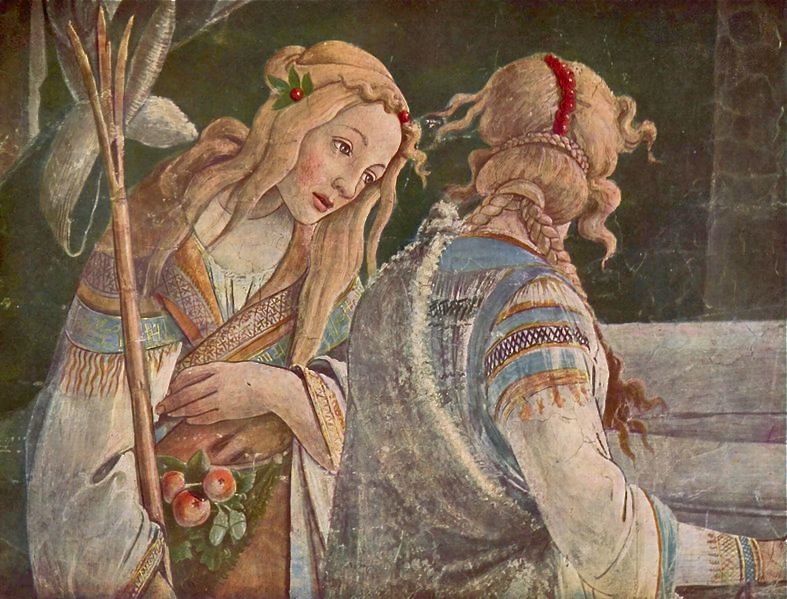
However, love transforms all deficiencies and blemishes into ethereal beauty. Here’s how Swann visualizes Odette. To him, she is like Sipporah, Jethro’s daughter, Botticelli’s fresco in the Vatican’s Sistine Chapel:

Zipporah, Jethro's Daughter by Botticelli

Following Odette to her ‘little nucleus’ at the Verdurins, Swann downplays his association with prominent people and tries not to be so outspoken with his knowledge and opinion about art and music.

When he is alone with Odette, he has taken her values and interests:

he tried at least to ensure that she should be happy in his company, tried not to counteract those vulgar ideas, that bad taste which she displayed on every possible occasion, and which in fact he loved, as he could not help loving everything that came from her, which enchanted him even. (P. 348)

Is this measurement of incompatibility in tastes inherently snobbish? Yes, Swann (or Proust) is sensitive enough to analyze this in depth. What is ‘taste’ anyway, or the intellectual beliefs with which he has been raised from the days of his youth?

… the objects we admire have no absolute value in themselves, that the whole thing is a matter of period and class, is no more than a series of fashions, the most vulgar of which are worth just as much as those which are regarded as the most refined. (P. 350)

So, all for love of Odette, Swann is willing to give up going to the Jockey Club, lunching with the Prince of Wales, or his love of Holland, or a visit to the Versailles (‘which bored her to tears’):

And so he denied himself the pleasure of visiting those places, delighted to tell himself that it was for her sake, that he wished only to feel, to enjoy things with her. (p. 350)

Those colorful shirts Gatsby has hoarded, Odette would have loved them, just like Daisy, and his mansion too… if only Swann had resided in a more prestigious address, somewhere ‘more worthy of him’ instead of his house on the Quai d’Orleans. (P. 346)

Odette’s fondness of Swann begins to wane as Forcheville enters into the picture. She becomes even harder to get. Swann is burned with jealousy, anger and bitterness. Yet he cannot forget her. His love even grows stronger for her, despite receiving an anonymous letter defaming her. Why,

People often say that, by point out to a man the faults of his mistress, you succeed only in strengthening his attachment to her… he had begun to desire the possession — as if that were ever possible — of another person. (P. 517)

Perhaps that is a mark of love: the demand for exclusivity. This is exactly what Gatsby wants Daisy to admit, that she has never loved Tom, that she has always loved him. “Oh, you want too much,” she cried to Gatsby.

But Swann is more fortunate. He knows he must gain back Odette’s full and exclusive devotion and somehow he does. I’m glad to read in Part 3 that eventually Odette does become Mme Swann. I’d be curious to know how that comes about. (Proust’s strategy to get us go on reading the next volumes?)

**

Part 3 is an enjoyable and much swifter read as the narrator remembers his childhood in Paris drown in unrequited love (so far, not sure about how this unfolds later) for Swann and Odette’s daughter Gilberte. Because of his love for Gilberte, the boy is infatuated with M and Mme Swann as well. His crush on the elusive Gilberte parallels Swann’s love for Odette in their earlier days.

The last sentence in Volume 1 of In Search of Lost Time, like that in The Great Gatsby, ends with a haunting remark on memory and the past:

The places we have known… were only a thin slice, held between the contiguous impressions that composed our life at that time; the memory of a particular image is but regret for a particular moment; and houses, roads, avenues are as fugitive, alas, as the years.

There are much more to be said, but nothing can replace the actual experience of reading Proust first hand. From March to May as I plowed through Swann’s Way, there had been up’s and down’s. Numerous times long sentences entangled, yet the very next moment could be so beautiful and lucid it dissipated all frustrations. I now look forward to Volume II.

**

Thanks for joining me in this Read-Along. Finish or not, you’re welcome to share your thoughts. Throw your two pebbles into the pond and make some ripples. If you have written a post, do let me know so I can link it here.

Bellezza of Dolce Bellezza

**

CLICK HERE to my post on Part 1 of Swann’s Way: Combray

***

The Great Gatsby (2013): Movie Review

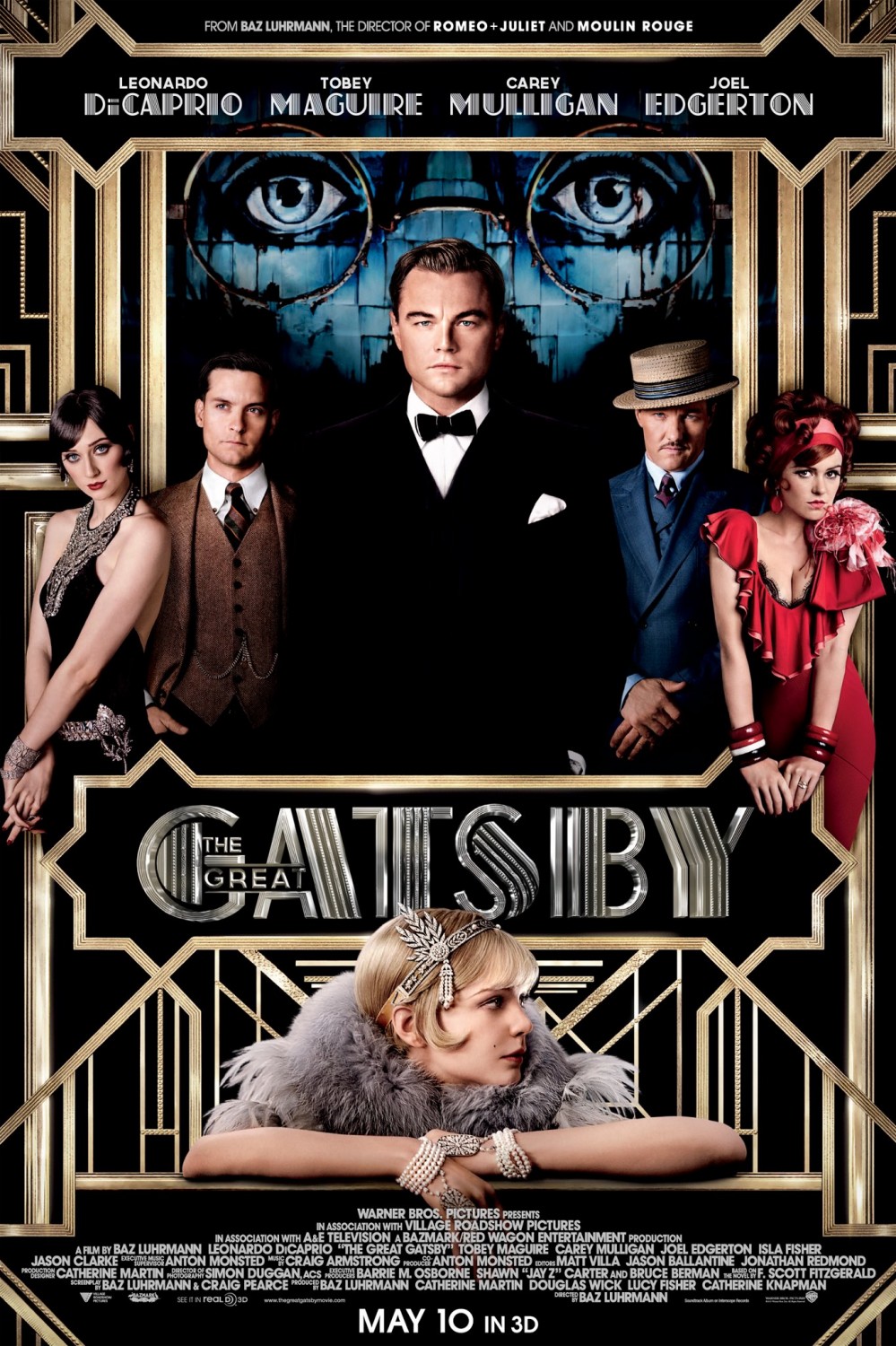
In just 172 pages, F. Scott Fitzgerald has captured the zeitgeist of the Jazz Age, and told the stirring story of love and loss. In this new adaptation of the book, director Baz Luhrmann has used an estimated $127 million, glamorizing with 3D and over the top cinematic effects.

Here is a prime example of ‘the medium is the message.’ Instead of depicting extravagance and excess, the production has become that.

the-great-gatsby-poster1

I went in with an open mind. After all, I had expected a mashed-up, postmodern fusion Luhrmann style. So, even the Jay-Z curated hip hop selections a la Gershwin cacophony was fine with me. After all, it was the unruly Jazz Age, so be it. Gatsby’s creamy yellow roadster speeding towards Manhattan, zigzagging its way through busy streets, Fast and Furious 1920’s version is still acceptable. By the way, the movie was shot in Australia. So, all the Manhattan scenes are visual remixes.

But the main issue for me is the 3D. Not much to be gained there but hindrances. The effects make me feel like I’m looking into a View-Master, artificial and gratuitous. For Gatsby, the extravaganzas in his mansion are only means to an end, to attract his love, Daisy; in Luhrmann’s hands, they are an end in themselves. The flamboyant and ostentatious parties, like their uninvited guests, overstay their welcome in the first part of the almost 2.5 hour production.

If Luhrmann had only used more of his wealth of resources: the rich and talented cast, to explore the story more and go deeper into characterization, and less partying, the movie would have been a wonder.

After all the glitz and glam in the first act, my enjoyment begins when Gatsby meets Daisy in Nick’s humble abode, a set up masterminded by Gatsby. It has taken him five years to this very moment. It is this scene that draws me in from being just an aloof onlooker. From without to within, it is the story and the characters that engage me more than the visual spectaculars.

Leonardo DiCaprio is a fine Gatsby, convincing and comical at times. Carey Mulligan may not be the Daisy I had conjured up from reading the book, but she has mastered her role well on her own terms. She’s a much sweeter, less careless Daisy than I had in mind. Elizabeth Debicki is an apt Jordan Baker. Joel Edgerton as sneaky and snobbish Tom Buchanan needs to smile more, and Tobey Maguire as Nick Carraway less. The veteran actor Amitabh Bachchan is a good choice for Meyer Wolfsheim. Isla Fisher as Myrtle Wilson, what a change from a shopaholic, and Jason Clarke too much a hunk to be wimpy Wilson.

One major alteration that I’ve appreciated is Nick writing out the story as a therapy recommended by his doctor, apparently a psychiatrist. The story of Jay Gatsby is also Nick’s own story as a writer. By articulating his experience in words he pays tribute to an unforgettable character, a dreamer who always sees the green light. Without giving out a spoiler, let me just say, the little twist at the end is a nice touch to this new adaptation of The Great Gatsby.

Does it worth a watch? I’d say yes, even in the 3D version. Curiosity is insatiable. And hopefully, the visual spectaculars can draw the viewer back once again to the literary offering Fitzgerald had first created. That’s one positive effect a movie adaptation can generate.

~ ~ 1/2 Ripples

***

A related Post I wrote 3 years ago at the announcement of this new adaptation. My open letter to Baz Luhrmann:

The Great Gatsby: A New Version

***

A Long Farewell to Winter

It got up to 27C (80F) today, almost a record high. Looks like we’ve skipped spring and bounced right to summer.

In a previous post, I mentioned I missed snow for some reasons. Seeing the remnants of winter fade away gave me a sense of loss. Many of you responded with disbelief. Why would I miss snow? I couldn’t say why either. But just two days ago, I went birding at our local lake (reservoir) and saw these sights. Again, my sentiment was confirmed.

Ice melting in the water. Birds congregated. Open nature welcoming a change in the season, or, was it lingering a bit more in the passing moment? Part of this photo has now become my new Header picture on Ripple Effects:

Melting Ice on Glenmore Reservoir

Seems like these Mallards wanted to hang out a bit longer among the shimmering ice. When the ice all disappear, the water will lose a bit of glitz and glamour:

Shimmering ice

The distant Rocky Mountains are evidence of the glory of snow… a beauty that is appreciated more from afar.

The Snowy Rockies

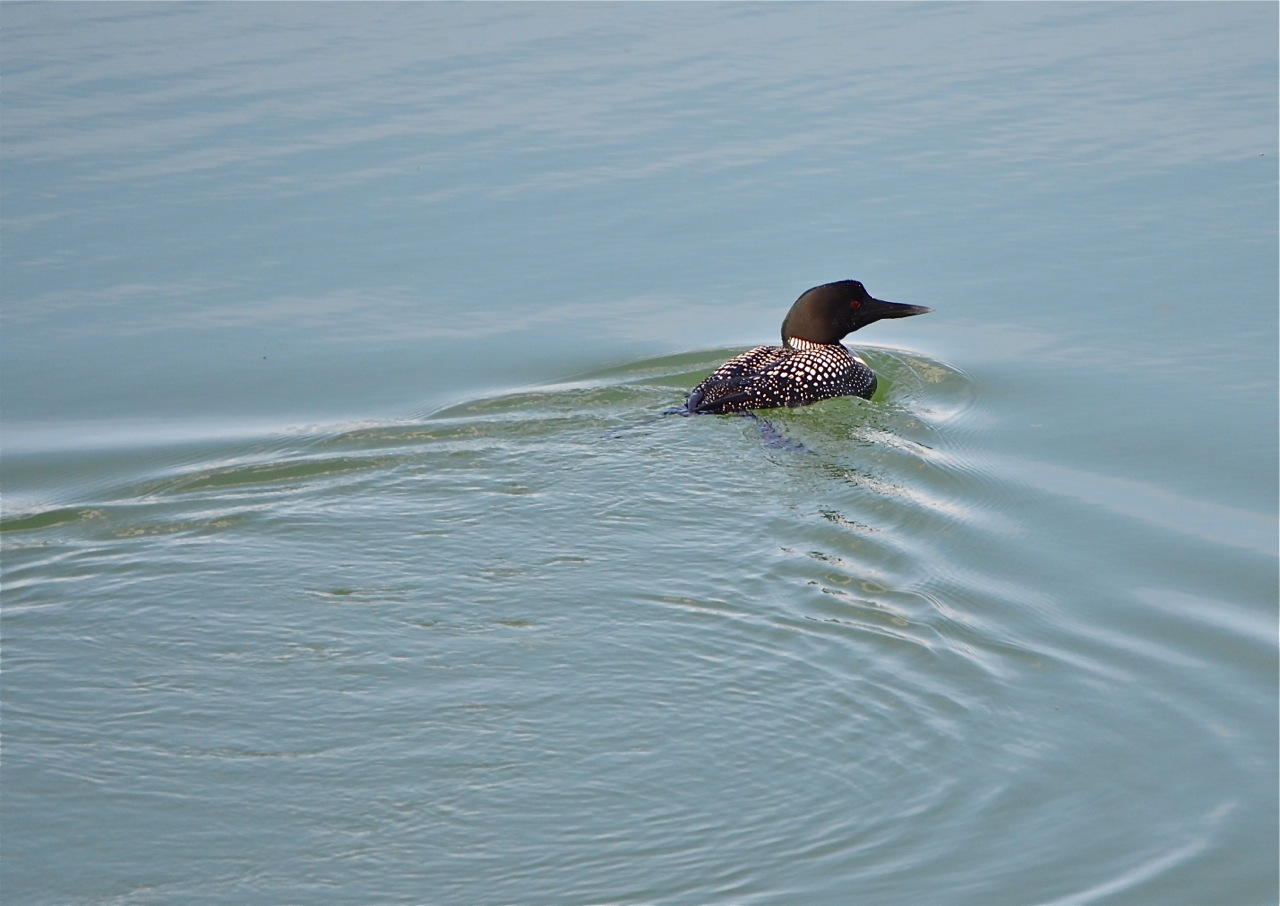
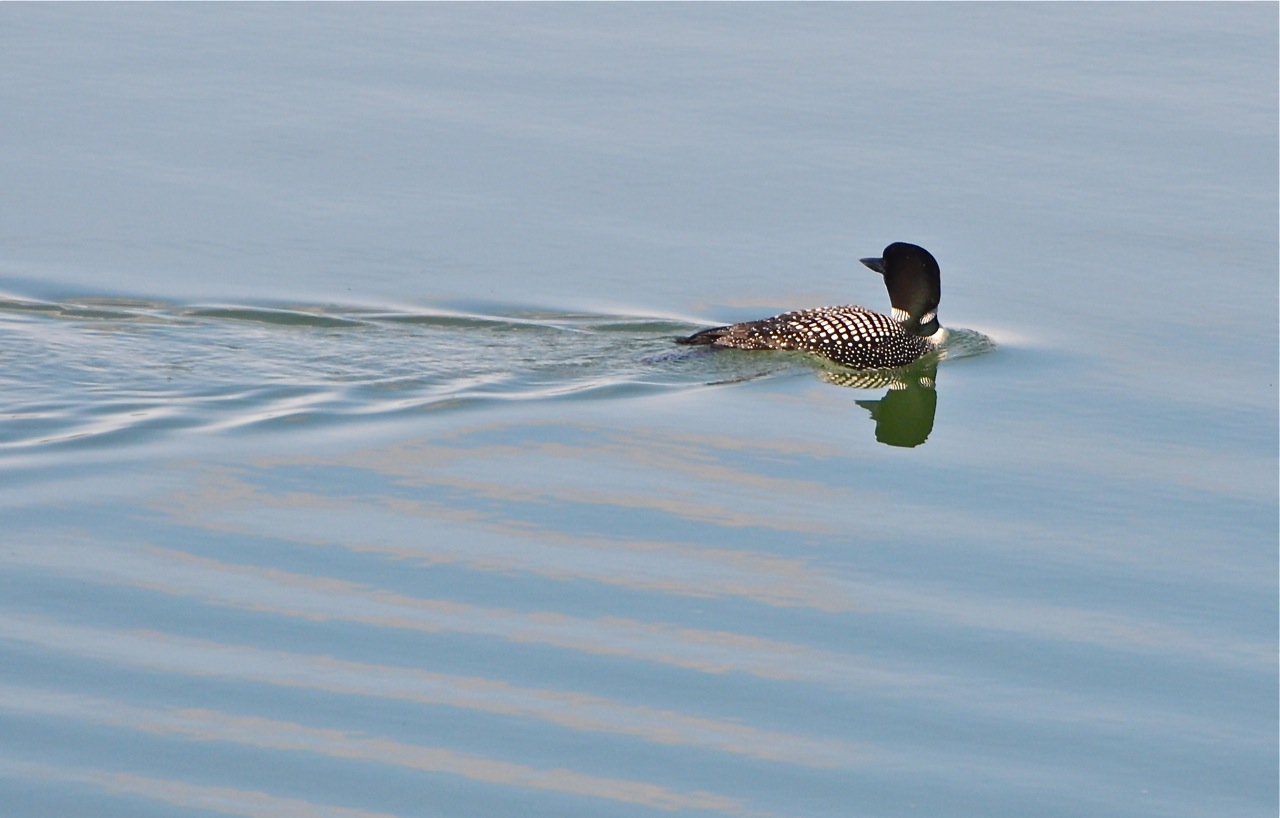
However, what made my day was another first. Since I started birding last September, there had been many ‘firsts’.  Yes, the Pheasant was a pleasant surprise for a life-long city dweller, but it was seeing my first Loon up close that made it personal for me:

Loon

And hearing its call… simply mesmerizing. Couldn’t capture it here in the photo, except the serene, solitary existence:

Loon 1

Loon 3

With the sighting of the first Loon in spring water, I’ll say farewell to snow and ice, willingly. If I want to see snow, I know where to go… my photo files.

***

All photos taken by Arti of Ripple Effects, ALL RIGHTS RESERVED, 2013. Do not copy or reblog without permission.

***

Why Did the Pheasant Cross the Road?

Why did the Pheasant cross the road?

  • To test Arti’s reaction time.

How did the Pheasant cross the road?

  • Ignoring traffic, thought he had the right of way. (Although I must mention there was just one car on that quiet road.)

**

So, I passed the test, parked the car quickly, then started stalking him. Just like in the movies…

From a distance, he knew someone was following him, so he quickened his step. And the stalker, with no lightpost to hide behind, picked up the pace but ever so quietly, camera in hand.

From a distance, these photos were taken, just in time for Saturday Snapshot:

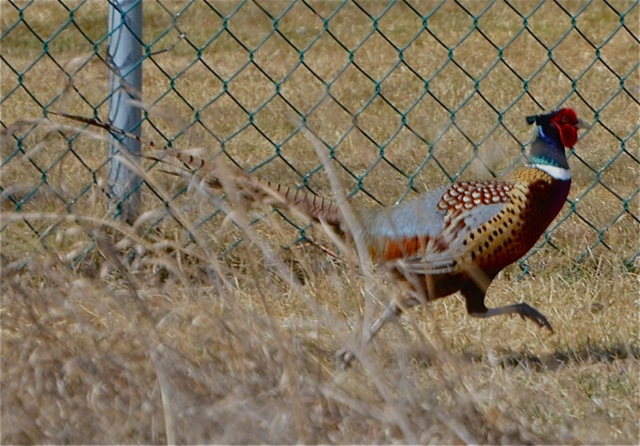
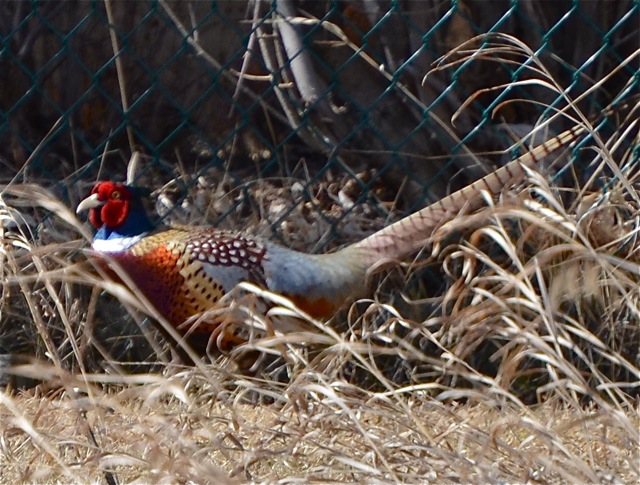
Running Pheasant

Running Pheasant 1Male PhaesantI decided to spare him after a few minutes. He was almost in a panic of being followed, albeit from a distance. I’d never seen a bird so colourful and with so long a tail.

After I got home and did some researching and asking, I learned that I had sighted a male Ring-necked Pheasant, the blue-backed variety, which was supposed to be quite rare, at least, rare in my neck of the woods.

***

Saturday Snapshot is hosted by Alyce of At Home With Books. CLICK HERE to see what others have posted.