Go Set A Watchman: Sequel or Prequel?


Go Set A Watchman Book Cover


Background

Go Set A Watchman is Harper Lee’s first draft of a novel (See links at the end of the post). In 1957, Lee’s agent submitted it to Tay Hohoff, an editor at the now defunct publishing house J. B. Lippincott. Hohoff did not see it adequate to be published; however, she did see promising elements in it, “the spark of the true writer flashed in every line,” she later recounted.

The draft’s protagonist, 26 year-old Jean Louise Finch, Scout, now a New Yorker, goes back to visit her childhood home in fictional Maycomb County, Alabama, and finds discrepancies about her father Atticus now from the man she thought she had known all the years growing up. To her alarm and disillusionment, Atticus, while a good father and a good man to all the rest in Maycomb, holds racist views and is firmly a segregationist.

Hohoff advised Lee to rewrite the draft but this time, instead of writing Jean Louise Finch as an adult, focus on her reminiscence of her childhood growing up in Maycomb with her brother Jem, living under the roof of her father Atticus, and summer days spent with a boy next door called Dill. After more than two years of editing and rewriting, To Kill A Mockingbird was born. And the rest is history.

So here’s the query I have: If your novel, after two years of editing and re-inventing, had developed into a final form and published in 1960, some 50 plus years ago, had gained high acclaims, won the Pulitzer, become a beloved American classic, been adapted into an Oscar winning movie, and achieved international recognition, why would you want your very first draft as a novice be published to the world now?

At 89 years old, Harper Lee now lives in a nursing home, a stroke survivor who has lost most of her hearing and eyesight, and just months after her sister Alice Lee – guardian of her privacy and legal advisor – had passed, and suddenly a ‘newly discovered’ Harper Lee novel appeared.

In a recent New York Times Op Ed article entitled “The Harper Lee ‘Go Set A Watchman’ Fraud”, columnist Joe Nocera vehemently argues that the Rupert Murdoch-owned HarperCollins had “manufactured a phoney literary event.” The publishing house had sold more than 1.1 million copies of the book in a week, the ‘fastest-selling book in company history’ according to the publisher, to which Nocera decries “Go Set A Watchman constitutes one of the epic money grabs in the modern history of American publishing.”

The above is the major challenge surrounding this phenomenal ‘literary event’. So how should one read the book? Controversy aside, what can we reap from reading Go Set A Watchman?

Definitely not as a sequel and not a prequel either, but take it as it is: A first draft of To Kill A Mockingbird.

Only when comparing the two books as a ‘Before and After’ transformation can we see how the writing process had taken place. By reading Watchman as a first draft, we come to appreciate how a seasoned editor had helped a novice and an aspiring writer to achieve her goal to become a respectable, published author. And this we know Hohoff had done most successfully.

To Kill A Mockingbird Book Cover

***

Reading Go Set A Watchman

First off, to all readers, a major reminder: Harper Lee is a real person, and Atticus Finch is a fictional character. In Lee’s first draft, Go Set A Watchman, Atticus is a good father, but a racist. Yes, he had successfully defended Tom Robinson and gained him an acquittal, that was a court appointed case. This is anecdotally mentioned in Watchman. But Atticus is a self-professed Jeffersonian Democrat, one who subscribes to Jefferson’s view that: “A man couldn’t vote simply because he was a man… He had to be a responsible man.”

Lee spends a climatic chapter towards the end describing the arguments between father and daughter on the issue of race. While both are polar extremes, and I don’t want to quote the words from Atticus pouring forth his arguments about how “white is white and black’s black”, I must point out that it is Scout who loses her cool during the debate. She is the one who blows right out, foul-mouthed and accusing her father with hurtful, derogatory terms. Throughout the verbal confrontation, Atticus remains a gentleman. “I’m seventy-two years old, but I’m still open to suggestions.”

And I’m quite impressed by the next episode, and that’s when Scout cools down and goes back to her father, seeking reconciliation. It’s not just a simple case of ‘agree to disagree’, but somewhat laying out a more complex relationship with the ambivalent stance of ‘I can’t beat you, I can’t join you,’ but love can still triumph over all. That is the spark of an inspiring writer I can see in the conclusion of Lee’s Watchman. As Scout apologizes for her foul-mouthed diatribe aimed at her father the day before, this line from Atticus will remain with me: “I can take anything anybody calls me as long as it’s not true.”

Hohoff might just have seen this character trait in Atticus that she advised Lee to expand on in her rewrite. I see this admirable element as I read. Let the fictional character Atticus be created as an ideal type of a man, open to others’ opinions, upholding his ground with firmness but with no malicious hostility. And yes, we can all appreciate this change of heart in Lee’s rewriting in Mockingbird. Let Atticus be the ideal father and friend, a deserving, honourable man.

Further, in Watchman, the racist turn in Atticus has not been well accounted for. Since Jean Louise has come back to Maycomb annually to see her father, why the sudden discovery of his racist stance? And why had she not known about his views considering her close relationship with her father all her growing years and only in recent years in her adult life had she moved to NYC. But most important point of all Lee had not explained in Watchman, why had Atticus changed his view? These could be flaws in the plot line that Hohoff had Lee re-think.

As recounted, Lee based her Atticus character on her own father, the lawyer Amasa Coleman Lee who had actually defended two black men but failed to have them acquitted. According to reports, the elder Lee had been a segregationist but later changed his views to support integration. The real life parallel is obvious. The details we could only speculate, was it the man that had influenced the change in the book, or maybe vice versa?

In the rewriting process, there is the elimination of two significant characters in Watchman, Hank, Jean Louise’s suitor, and Uncle Jack, holder of family secrets. Once a clear storyline is established, with the equally moving minor plot of Boo Radley, a parallel Mockingbird theme with Tom Robinson as both being vulnerable victims, Hank and Uncle Jack would not be needed to uphold the story lines. So, no matter how much a writer had invested in a character, cuts and alterations could be the outcome, quite like the deleted scenes we see on DVDs, the rational choices we have to make in the long creative process. On the other hand, a character that exists only in memory, Jem, who had died in Watchman, is revived to his lively self, and we are all grateful for that revision.

One of the main reasons Hohoff had rejected the first draft was that it was episodic, lacking a unified story arc as a novel. Readers of Watchman will find this so, especially when Jean Louise switches back and forth from the present to the past. As I read, the past holds much more attractions as Scout describes her growing up days in Maycomb. We see the children in a different perspective, something like a ‘behind the scene’, a ‘making-of’ featurette. Thanks to Hohoff, such episodes are restrung into the gem of a book called To Kill A Mockingbird. Indeed, Hohoff had grasped the social psyche well, there was a need for a noble, heroic character in her time then, and maybe even more so in our time now.


***


LA Times (With video)

The Telegraph

New Republic

The New York Times (Jonathan Mahler)

The New York Times (Serge F. Kovaleski and
The Wall Street Journal

The Washington Post

The Washington Free Beacon

Wikipedia


Reading The Season: Lila by Marilynne Robinson

Every year before Christmas, I read something that can draw me closer to the meaning of the Season. Amidst the busyness of the festivities, I try to carve out a piece of quiet. I name these annual posts Reading The Season. You can click on the links at the bottom for previous entries, dating back to 2008. This year, the publication of Marilynne Robinson’s third Gilead book, Lila, is a most timely read.

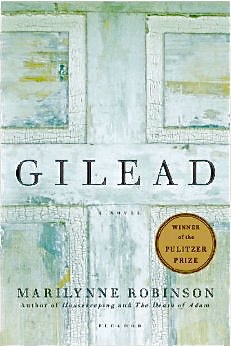
GileadGilead (2004) – Marilynne Robinson’s Pulitzer Prize and National Book Critic Circle Award winning novel introduces us to the fictional town of Gilead, Iowa. We hear the gentle voice of the narrator, the ageing Rev. John Ames, as he writes a letter to his seven-year-old son Robby, leaving a legacy of family heritage, love, forgiveness, and serenity.

HomeHome (2008) – Based on the same Gilead characters, but from a different point of view allowing us privy to the household of the Rev. Robert Boughton, John Ames’s life long-friend. Glory, Boughton’s daughter, comes home to take care of her ailing father. She is there when her brother Jack returns after an absence of twenty years. The black sheep of the family, Jack’s estranged self yearns for reconciliation like a prodigal. The book, in all its complexities and depiction of alienation, escape, return and lost yet again, suggests home may not be a solace as sweet as one hopes.

Lila

Lila (2014) – Robinson’s newest, and 2014 National Book Award finalist. It is the third novel based on the characters in the town of Gilead, offering yet another point of view. But one can just read it on its own, albeit best to have read Gilead first, then the kind face of John Ames can be conjured up more readily. In this book, the perspective is from Ames’s much younger wife Lila, at first lonely and desolate, slowly drifting into place.

**

Lila Dahl

At the outset, we see Lila as an unwanted child, “cold”, ‘all cried out’. She is rescued by Doll, a destitute woman herself yet still has room in her heart for an abandoned little girl. Doll wraps Lila into her shawl and decides to bring her up. “Lila was the loneliest child, and there they were, the two of them together, keeping each other warm in the rain.” Lila later takes up Doll’s name as Dahl.

The two joins a small group of itinerant field workers led by Doane, living in camps out in the open. But the Depression breaks up the cohesive work party. Lila is later left on her own and for a little while, works in a brothel in St. Louis. Knowing she can’t stay there for long, she slips out one night, escaping from a blackhole of hopelessness.

After that she finds herself a cleaning job at a hotel, from which she has to escape again after seeing her nemesis whom she first encounters while in the brothel. She packs her bag and leaves town, taking rides from strangers going to wherever they drop her. Ultimately, Lila drifts to the outskirt of Gilead, finds an abandoned shack and takes shelter there. She cleans up the shack for a place to sleep, having no plans except to find odd jobs in the town yonder, earn enough money, then moves on, maybe to Sioux City.

Lila lives a life of poverty, loneliness and fear, mistrusting everyone. Doll may have been like a mother to her but she too has her own rough life and struggles. Doll knifes and kills a man who might be Lila’s own father, could well be out of protecting Lila. She is later jailed, leaving the knife in Lila’s possession. Lila keeps it with her all the years as a memento, a murder weapon, yes, but also a symbol of Doll’s loving protection and Lila’s own desolate past.

One day walking into Gilead Lila stumbles into a church to escape the rain, that is the turning point of her life. She sees the old man at the pulpit, the Rev. John Ames, and, he sees her.

John Ames

We know a lot about Ames from Robinson’s first book of Gilead, set in the 1950’s. A Congregationalist pastor in the town, Ames is sixty-seven years old when he first meets Lila, “a big, silvery old man”. Coming from a family tradition of ministers, John Ames is a man with a pastor’s heart.

Ames has had his share of personal grief. He had to bear the death of his beloved wife of his youth and his newborn son as she died in childbirth. Such unspeakable pain he had shared with his best friend Robert Boughton, pastor of the Presbyterian church in Gilead.

Ames and Boughton have been life long friends. They share pastoring advice, discuss foreign policies, debate theological problems, and bear the burden of each other’s family woes. Boughton has his in his son Jack, who takes John Ames’s namesake.

After seeing Lila at the church as she comes in from the rain, Ames keeps her in his heart. Residents of Gilead befriend Lila, giving her jobs, welcoming her in their midst, but Lila is aloof and skeptical, an outsider still. Ames personally engages her to talk and to know her more. One day, he goes to seek her out at the shack. She sees him coming as she walks towards Gilead. There on the path he reaches out to her and promises marriage. An inexplicable love story takes shape.

Sunset

Ames and Lila

“… the old man kept on courting her, like a boy, when she was hard and wary…”

After they are married, however incompatible it looks in Ames’s home, Lila still keeps Doll’s knife with her as a memento and as a symbol of her own tumultuous past, a part of herself. Ames is unperturbed. He lets her keep it, and he even uses it, taking it as a normal tool around the house. Total acceptance.

If condescension is present in the relationship, it is Ames who wants to learn from Lila. His utter humility is what moves her. Barely literate, Lila yearns to know about the Bible, study it and grasp its richness and meaning. They talk about the difficult books of Ezekiel and Job. Ames shares his thoughts about this elusive notion called existence, and listens attentively Lila’s perspective and experiences. Total respect.

Lila has questions rooted in her bitter past, the why’s of misfortunes, cruelty, and the hardships in life. She asks Ames with an inquiring heart. Ames, a pastor of many years, can find no easy answers. He ponders Lila’s queries, and readily and honestly admits his own limitations in knowing, while loving her all the more. Total humility.

Even after they are married, Lila sometimes still conjures up thoughts of leaving. Ames  knows this and gives her the freedom:

… if you ever change your mind, I want you to leave by daylight. I want you to have a train ticket in your hand that will take you right where you want to go, and I want you to take your ring and anything else I have given you. You might want to sell it. That would be all right. It’s yours, not mine… ” He cleared this throat. “You’re my wife,” he said. “I want to take care of you, even if that means someday seeing you to the train.” He leaned forward and looked into her face, almost sternly, so she would know he meant want he said.

She chooses to stay, a genuine response to his love.

When I read the book, I see a tender love story between two utterly incompatible beings, like an allegory and a parallel of the Christmas story, how the Creator God reaches out to take our hand, initiating an unfathomable relationship. Love for the reason of pure love. An unlikely and inexplicable union.

The Christmas Story

I first felt a little uncomfortable about the obvious incongruous pairing of Ames and Lila, yet, their love relation comes to fruition, albeit looking tentative at first. The gap between Ames and Lila is just a crack in the pavement when compared to the abyss separating Creator God and His creation. I see Ames and Lila’s story as an allegory, if you will, a parallel, however meagre, illustrating the joining of two utterly disparate sides.

The essence of the Season is in the reaching out to bridge that huge chasm. As Ames and Lila’s newborn son at the end of the book is an evidence of their love, we too receives a child, born in a manger that day in Bethlehem, a sign of ultimate mending. Total reconciliation.

***

Other Reading the Season Posts:

2020: Jack by Marilynne Robinson

2019: A Hidden Life, a film by Terrence Malick

2018: Madeleine L’Engle’s Poem The Irrational Season

2017: A Wrinkle In Time by Madeleine L’Engle

2016:  Silence by Shusaku Endo

2015: The Book of Ruth

2014: Lila by Marilynne Robinson

2013 Poetry by Madeleine L’Engle

2012: Surprised by Joy, C. S. Lewis

2011: Walking on Water, Madeleine L’Engle 

2010: A Widening Light, Poetry by Luci Shaw

2009: The Irrational Season, Madeleine L’Engle 

2008: The Bible and the New York Times, Fleming Rutledge 

2008: A Grief Observed, C. S. Lewis

 ***

The Dinner by Herman Koch: A Timely Read, for Lent?

Why is this book compared to Gone Girl? It’s nothing like it. The Dinner belongs to a totally different calibre. If I have to compare it to something, then I’d say, reading it conjures up Dostoevsky’s Crime and Punishment. Are there really some in our society who think themselves so superior that they ought to be above the law? The law, after all, is a human construct. Can we not bend it to serve our own interest, when the interest is out of love for our son, or wife, or husband?

The Dinner

The Dinner is Dutch writer Herman Koch’s sixth novel. It has sold over a million copies and translated into twenty-one languages. The book deals with subjects that are soul-searching: The dichotomy between nature and nurture; how much of our being and psyche is hereditary? What portions of our actions are a result of our own waywardness as lost souls? As I was reading, the movie “We Need to Talk About Kevin” (2011) came to mind. However, what is not present at least in the Kevin movie is the accessory after the fact component.

The Dinner starts off with quite an original concept. The author parallels the story development with a gourmet dinner two couples are having in an upscale restaurant. The Apéritif and the Appetizer are the foretaste of what we will get for the Main Course. What appears to be petty, disgruntled complaints and personal biases of the narrator’s in the early chapters turn out to be only a light appetizer, for the main course is when a horrific crime is revealed. The ‘horror’, though, isn’t limited to the crime per se, for it is chilling to read how everyone involved deals with the aftermath.

The main course is a gripping thriller based on a real-life crime. After reading the novel, I googled and did find the report on it. Koch tells the story effectively with his straight-forward descriptions written with journalistic detachment, and incisive observation as the notes of a perceptive psychoanalyst. Further, he informs us with the detailed thought process of his narrator. Here is a disturbing look at someone who is capable to love his wife and son deeply but hates everyone else that crosses his path. This is more than a thriller though, for the moral dilemma or rather, its characters’ lack of sensitivity to it, is what makes the book provocative.

I don’t think we are expected to ‘like’ or even ‘identify’ with any of the characters. The book is effective in that we are left as observers. And with that, hopefully, we just might think a little deeper into issues concerning our humanity, and in the next generation of humans we bring up. How much are our children a result of our parenting and examples, how much are they a result of their own choosing and decisions? Can nature or nurture excuse us from our errors? If Freud were around today, The Dinner just might be on his reading list. But, would he be able to offer a remedy to save us from ourselves?

The ending shares a similar thought with the Woody Allen movie Crimes and Misdemeanours (1989). Now, as soon as I said this, some of you familiar with the movie might think I’ve dropped a spoiler in here. So, that’s the farthest I’ll go in describing the plot and details of The Dinner. The aftertaste may be haunting, but it is something that we should face as a human society.

Today is the beginning of Lent. I always feel such is an opportune time not so much about refraining from pleasure like abstaining from going to fancy restaurants for gourmet dinners, but in dwelling on the meaning of Easter. The Dinner may just have, inadvertently, reinforced the notion that we as individuals in a human society do need some form of saving grace after all.

~ ~ ~ ~ Ripples

The Dinner by Herman Koch, translated by Sam Garrett, published by Hogarth, 2012, 320 pages.

Housekeeping by Marilynne Robinson

I just finished reading Marilynne Robinson’s first novel Housekeeping, and I’m stunned.  The title is simple enough, but the subject matter is expansive, haunting, and unresolvable. Yes, from the title, you could assume it’s about family, and true, we have the story about two sisters Ruth and Lucille abandoned by their mother Helen. After leaving her two young daughters with their belongings at her mother’s home in the remote town of Fingerbone, Idaho, Helen goes out and drives her car off the cliff.

The book won the Hemingway Foundation/Pen Award for Best First Novel in 1980, and nominated for a Pulitzer that same year.

It’s about sisterhood, how Ruth and Lucille grow up first under the care of their aloof grandmother, then after her death, their two grand aunts, who can’t wait for a younger person to raise these children. So, finally, their mother’s younger sister Sylvie, the estranged daughter of their grandmother, the aunt they have never known, comes back home to Fingerbone to take care of them.

Housekeeping by Marilyn Robinson

So yes, we can expect some dysfunctional upbringing. But that’s not it. Robinson’s narratives are lyrical, internal, thought-provoking and poignant. Rather than making a social comment on a dysfunctional family, it searches deep into the human condition.

It’s about loneliness, that haunting, inconsolable feeling that can drive one off the cliff of sanity. It’s about survival, how being constrained by such loneliness, one can still go on, striving to find some meaning in blood and kin, facing others during the day and oneself in the deep darkness of the night.

It’s also about personhood, how you might think after such a childhood experience, the two sisters would have clung to each other in an inseparable bond, and yet, one can still escape to another life by squeezing out of the relational cocoon.

And it points to the larger scheme of things, that all are transient, however static we may feel about our situations. No matter how well a housekeeping job we do to keep up an orderly life or fulfill expectations, we cannot ignore our inner chamber. We’re all a diaspora of transient humanity longing for home.

So the transients wandered through Fingerbone like ghosts, terrifying as ghosts are because they were not very different from us… Sylvie was an unredeemed transient, and she was making a transient of me.

I read Gilead years ago. I don’t know why I’ve waited until now to savour Robinson’s other fictional works. Housekeeping is hauntingly true and intellectually satisfying. I know this is a book I need to reread many times in order to grasp all that the author is saying… if I can ever do that, gleaning all that Robinson had meant to say. So many thoughts in just 219 pages.

Many images from other books and movies conjured up in my mind as I was reading: the movies Thelma and LouiseStand By Me, and Jeannette Walls’s memoir The Glass Castle. And Chapter 10, where Robinson puts the story in the context of Biblical allusions, Terrence Malick’s The Tree of Life came to mind. But of course, those are merely images, or interactive memories. What draws my attention page after page is  the voice of Robinson’s narrator Ruth, and her heart-wrenching and yet unsentimental storytelling.

~ ~ ~ ~ Ripples

Housekeeping by Marilynne Robinson, published by Faber and Faber, London. Third Edition, 2005. 219 pages.

***

Related Post:

Lila by Marilynne Robinson

Dances With Words (where there’s a short write-up on Gilead)

The Glass Castle Book Review

The Tree Of Life Movie Review

***

Dubliners by James Joyce

This is my fourth and final instalment for Ireland Reading Challenge 2012 hosted by Carrie of Books and Movies. What first attracted me to this newly published edition (August 2012) by Modern Library was its cover. I’m very fond of Modern Library’s classics in trade paperbacks, mainly because of their elegant covers as well as the size of the type. Interesting how type size has become a factor for my reading enjoyment in recent years… ok, no more elaboration on that.

While Joyce’s later works Ulysses and Finnegans Wake are considered iconic works of 20th C. literature, for some reasons I have no desire to take up the formidable challenge of deciphering them. But Dubliners, a collection of short stories written in his early 20’s, looks to be a much more manageable task.

With this new edition comes a new introduction, written by the Booker Prize winning author John Banville (The Sea, 2005). For me, two points stand out in his introduction. First is that Joyce himself had indicated that Dubliners could well be his best work. An admission that he might not have wanted to be publicized.

Second, Banville has slipped into a sentence an implied definition of ‘greatness’ in a literary work. Here’s it is, as he talks about the story “The Dead”:

It is indicative of the greatness of this story that after nearly a century of critical commentary and scholarship dissection it remains an enigma.

If the inscrutable is used as a qualification of greatness, then there are a few great ones in this collection.

Dubliners compiles fifteen short stories. In order of their arrangement, they cover the point of view of childhood, adolescence, to adulthood, yet they share similar themes based on love and loss, life and death, religion and conscience. It’s interesting as I caught myself while reading that I did not see the characters so much as residents of Dublin. They appear borderless. Their particular location and life situation might be tied to Dublin and Ireland at a certain point in time, but the issues they have to deal with transcend boundaries.

A twist that the stories seem to share is: people are not what they appear. Often, the picture presented in the first part of a story leads to an ironic ending. Further, below the surface of a character, there are unfathomable depths of feelings, conflicts, memories, longings and desires. Joyce’s superb writing takes the reader with him as he peels off layer after layer to show us the human soul… but not devoid of charm and humour.

Most of the stories are swift and short, some maybe like scenes and vignettes, their descriptions and character depictions sharp, precise, and succinct. The last one ‘The Dead’, the one that Banville notes as an ‘enigma’ in the introduction, is the longest with 55 pages, the highlight of the whole book.

Here are my favourites:

An Encounter – sometimes a most unlikely stranger can help us see ourselves a bit more clearly.

Araby – famous story that many of us might have read in school, adolescent infatuation, missed chances and the uncontrollable happenings in our everyday life.

Eveline – One may feel discontent with one’s claustrophobic life, but given the chance to escape, freedom may just be too risky a choice to make.

A Little Cloud – Yes, the grass is always greener on the other side, but some people may just be destined to stay in less green pastures… Our lot, is it by fate, or, by choice?

A Painful Case – Anna Karenina in short story form… well, maybe just a coincidence.

The Dead – A 55 page and by far the most gratifying story for me. Joyce sets the stage with a Christmas party and presents some lively characters, slowly focusing on Gabriel, a loving husband, and maybe drenched in a bit too much self-importance and confidence.

All’s well until the twist comes at the last 10 pages. A song at the party resurrects his wife’s memory of a young lover who died for love of her at 17. As the husband excavates his wife’s long past story, he comes to a humbling self-realization. His initial passionate sentiments for her change to jealousy but finally turn into a greater clarity of what love is.

I must quote this last sentence of the story, don’t worry, no spoiler, I’ve already given you that, but just for the beauty of the prose, and the meaning that runs silent and deep:

His soul swooned slowly as he heard the snow falling faintly through the universe and faintly falling, like the descent of their last end, upon all the living and the dead.

Here is my take on this ‘enigma’ of a story…

as the snow falls upon all
it is love that connects
among the living
and with the dead.

***

Dubliners by James Joyce, with a new introduction by John Banville. Published by Modern Library, NY, Paperback Edition, August 2012, 249 pages.

My other reviews for Ireland Reading Challenge 2012:

Molly Fox’s Birthday by Deirdre Madden

The Importance of Being Earnest by Oscar Wilde

Everything in this Country Must by Colum McCann

Life of Pi by Yann Martel: Take the Literary Journey before the 3D Experience

CLICK HERE to read my review of Ang Lee’s film Life of Pi in 3D

**

“I have a story that will make you believe in God.” — Life of Pi

I usually like to read the book first before seeing the film. I know full well that the two are different forms of artistic medium, but I’m intrigued by the adaptation process of transposing the literary into the visual. So, before Ang Lee’s 3D production comes out in the fall, I’ve recently reread Life of Pi, the 2002 Man Booker Prize winner by Canadian author Yann Martel.

After finishing Midnight’s Children a couple of months ago, also in preparation for the upcoming film version, I feel like I am all toned-up for magic realism.  Life of Pi leads me to retake a magical journey. This time around, I am much fonder of the delightful tale, deceptively simple and yet full of insights. The reader might first find the tidbits of animal facts and behavior amusing, only to resonate with their parallels in the human society.

Martel’s allegory is at times humorous, at times poetic and poignant, and throughout, engaging storytelling with heart and soul.

Pondicherry entered the Union of India on November 1, 1954. The Pondicherry zoo is in the Pondicherry Botanical Gardens. It is founded, owned and operated by Santosh Patel, father of Piscine Molitor Patel, more succinctly, Pi, the protagonist of our story.

Pi grows up in the zoo, animal lover by nature, animal keeper by nurture, and God seeker by creation. So when his father decides to sell the zoo, due to a lack of interest from the public, Pi, though young, understands it is only a sign of the times. The zoo and religion, both are misconstrued as confinement:

I know zoos are no longer in people’s good graces. Religion faces the same problem. Certain illusions about freedom plague them both.

Pi’s father plans to leave India and start a new life in Canada. Other than the lack of prospect in the zoo business, Mrs. Ghandi’s government measures also play a part in his decision. In June, 1977, the Patel family steps on board the Japanese cargo ship Tsimtsum and set sail for Canada, with them are the animals sold to various zoos in North America.

Here begins the adventure of Pi. Unable to sleep one night, Pi walks out of his cabin only to hear an explosion moment later. Thus his life is spared as he is thrown into a lifeboat while his family is still trapped below deck. All alone, 16 year-old Pi looks back from the lifeboat in horror and watches helplessly as the ship carrying his family quickly sinks into the dark, oblivious ocean.

For 227 days, Pi drifts in the vast open sea in a 26-foot lifeboat. Not quite alone, for there with him are a zebra, an orangutan named Orange Juice, a spotted hyena, and a 450-pound Bengal tiger called Richard Parker. Soon, there remain only two of them, Richard Parker by his mere physical might, and Pi, by his intelligence and resourcefulness.

Suddenly his brute strength meant only moral weakness. It was nothing compared to the strength in my mind.

Wise beyond his years, Pi has to use available resources to get food and water, set up routines, defend himself from predators, assert his spacial and social dominance, and above all, conquer loneliness and despair. Ironically, in the minimal existence on the 26- foot lifeboat, Pi finds motivation to live in the company of the hungry Bengal tiger Richard Parker. He has successfully turned a threat into comradeship.

After many days, they drift towards an island of meerkats. There Pi finds an abundance of algae and meerkats as food. Complacency begins to set in until the chilling discovery of human teeth drives him out to sea again.

What sets this book apart from just another survival, castaway story is its spiritual quest lyrically expressed. Pi is a deeply religious soul. While he has embraced various paths in his search, his ultimate goal is to find God. It is in his tumultuous ordeal, a tiny speck in the vast ocean, tossed and thrown by unconquerable elements that Pi experiences the presence of God. The author’s seemingly straight forward adventure embeds a magical, existential allegory.

In bare existence, Pi can still find exhiliaration in the smallest of blessings:

… You get your happiness where you can. You reach a point where you’re at the bottom of hell, yet you have your arms crossed and a smile on your face, and you feel you’re the luckiest person on earth. Why? Because at your feet you have a tiny dead fish.

And in the midst of utter despair, the spiritual faculty can still respond. Amidst turmoils and rough seas, Pi rejoices as he beholds the wonders of creation, the inexhaustible menagerie of life, and nature displayed, raw and uncensored. One time, a magnificent bolt of lightning arouses a thunderous cosmic effect without and within, striking him speechless:

This is miracle. This is an outbreak of divinity. .. this thing so vast and fantastic. I was breathless and wordless. I lay back on the tarpaulin, arms and legs spread wide. The rain chillded me to the bone. But I was smiling… I felt genuine happiness.

That momentary happiness is finally realized in true salvation. Pi and Richard Parker are saved as their boat drifts near the shore of Mexico where they are rescued. Richard Parker quickly disappears into the jungle. But the story doesn’t end there. It’s the last bit that makes Life of Pi even more thought-provoking.

Two Japanese employees of the shipping company come to interview Pi in order to find out the cause of the shipwreck. As they question the lone survivor of the Tsimtsum in a Mexican hospital, they respond to Pi’s retelling of his ordeal with polite skepticism and denial. The magical is not easily accepted by realists.

Author Yann Martel tells us a compelling survival story only to have it negated by two people convinced of its implausibility, rationalists bent on seeking evidence based only on reasoning. Fantasy and imagination are often readily presumed to be falsehood.

With Pi’s tale being dismissed by the interviewers, Martel has ingeniously crafted an allegory showing us the value of stories, teasing us with the definition of truth and reality, while transporting us to a realm beyond the limits of the intellect… maybe on that level, somehow, like Pi, we can get a glimpse of God.

~ ~ ~ ~ Ripples

Life of Pi by Yann Martel, Vintage Canada Edition, 2002, 354 pages.

The three cover images on this post: Vintage Canada edition, U.S. Mariner Books edition, and movie-tie-in edition coming out October, 2012, also from Mariner Books.

This review has been published in the August 31, 2012 print issue of Asian American Press. Online edition here. For those curious about what Arti is like, the mystery is revealed there.

CLICK HERE to watch the TRAILER of the film, opener of the 50th New York Film Festival on Sept. 28th, 2012.

CLICK HERE for a list of highly anticipated film adaptations from literary sources coming out this fall.

***

Coda

I had the pleasure to meet author Yann Martel in a reading two years ago. He was very friendly and affable, took time to chat with me, signed my copy of the book and another one I’d intended for my son. Not a tale, here are the photos:

In the title page of my son’s copy, he wrote:

“To ___,

May you reach the coast of Mexico.”

Don’t we all need to find shore to land?

***

Midnight’s Children by Salman Rushdie, Book Two (Part A)

CLICK HERE to read my Movie Review of Midnight’s Children

***

While Part One of the book is a macro view of historical background and family genealogy dating back a few generations, Part Two is what we’re all waiting for, the emergence of Midnight’s Children, in particular, our young hero Saleem Sinai. This present section of our Read-Along is the first part of Book Two, ending with the chapter ‘Alpha And Omega’.

We see Saleem Sinai growing up from a protected infant doted on by mom Amina and maid Mary to a thinking, mature, yet mildly timid and clumsy ten year-old. He shares his childhood in the family with his sister Brass Monkey, one year younger, ‘untamed, unfeminine’. Faced with the ambivalence of sibling rivalry and camaraderie, he learns in time the axiom that blood is thicker than water.

By all standards, Saleem’s first ten years (so far) have been eventful. Not long after his birth, Ghandi is assassinated. Saleem’s father Ahmed’s assets are frozen but later rescinded by the court. He spies on his mother and follows her secretly as she meets her ex-husband, now the Communist Party leader.

Saleem’s great sense of imagination is nurtured by various cultural traditions, a generous share of fairy tales, super heroes and the cinema.

Hatim Tai and Batman, Superman and Sinbad helped to get me through the nearlynine years… I became Aladdin, voyaging in a fabulous cave… I imagined Ali Baba’s forty thieves hiding in the dusted urns… I turned into the genie of the lamp… I was mild-mannered Clark Kent protecting my secret identity…

Other memorable episodes include a first taste of unrequited love from his crush on Evie Burn. As for school, colonial traditions stay. Saleem goes to a Christian mission school where he gets his multi-cultural exposure. Some learning is hard, that’s expected. But he gets more than his fair share as he tastes the ultimate in corporal punishment and humiliation as a clump of his hair is pulled out by his Peruvian geography teacher. Later in the school dance, in front of his new crush Masha Moviac, he shows her he is a man after all as he knees his insulters. Mayhem ensues that ends with a mutilated finger in the emergency room.  I can see lots of movie moments, hilarious yet endearing.

But above all, growing up in Methwold’s Estate and his part of Bombay is a close encounter with multiplicity. And to a young boy tossed in the net of a myriad of interwoven cultural strands, Saleem is preoccupied with the search for an identity. Further, with his secret, supernatural gift of tuning into other people’s mind, he eagerly looks for a purpose and meaning to his life. And here is how Rushdie so brilliantly parallels Saleem’s birth to that of a nation.

On my tenth birthday, everyone at Methwold’s Estate tried hard to be cheerful, but beneath this thin veneer everyone was possessed by the same thought: “Ten years, my God! Where have they gone? What have we done?

Saleem holds a Midnight’s Children Conference right in his mind, he himself the self-imposed leader of the 581 surviving Midnight’s Children, all born with unusual gifts. His leadership is challenged by none other than his changeling, Shiva, born at the stroke of midnight with him. While Saleem ponders on the purpose and reason for his supernatural power, his counterpart Shiva, coming from the slums, opposes him with the facts of life:

Rich kid,” Shiva yelled, “you don’t know one damn thing! What purpose, man? What thing in the whole sister-sleeping world got reason, yara? For what reason you’re rich and I’m poor? Where’s the reason in starving, man? God knows how many millions of damn fools living in this country, man, and you think there’s a purpose! Man, I’ll tell you–you got to get what you can, do what you can with it, and then you got to die. That’s reason, rich boy. Everything else is only mother-sleeping wind!

Crisp and simple. Existential pondering a luxury to many… ?

How I look forward to the rest of the book, and the movie. BTW, it has been shown to selective previewers, who were told not to write any reviews as yet. They sure know how to build up expectations and curiosity.

***

CLICK HERE to BOOK TWO: Part B
CLICK HERE to BOOK THREE CONCLUSION

Read-Along Participants’ Posts for Book Two (Part A):

Bellezza at Dolce Bellezza 

Gavin of Page247

Janell of An Everyday Life

Jerika at averydisorientedreader

ds at third-storey window

If you’ve written a post on this section, do let us know in a comment. I’ll add your link on the list.

Next section: Book Two, Part B. From ‘The Kolynos Kid’ to the end of Book Two. Share your view May 31st. You still have time to catch up if you like to start the book now.

***

A Jane Austen Education by William Deresiewicz

I’ve been following William Deresiewicz’s articles in The American Scholar for a few years. His idea of solitude has inspired my posts “No Texting for Lent and the End of Solitude” and “Alone Again… Unnaturally.”

I’ve not seen any pictures of him, but know that he has taught English at Yale for ten years. So I’ve always thought him to be one calm, cool, and collected (older) academic. Well, I was totally surprised as I read his book A Jane Austen Education: How Six Novels Taught Me About Love, Friendship, and the Things That Really Matter. Expecting a book on literary criticism, and from the title, maybe a dash of personal anecdote, I found it to be much more than these.

It is all of the following: literary analysis, biography, memoir and even confessional. Introduced to Jane Austen by his professor in graduate school, Deresiewicz had encountered numerous ‘eureka moments’ of self-discovery from reading her six novels. He unabashedly discloses how his own life experiences, and often youthful foibles, parallel those of Austen’s characters from each book. For us who have savored Austen’s works, we already know how wise and perceptive she is. But Deresiewicz has gone much deeper by being so brave as to reveal his self-absorbed psyche of younger days, his romantic mishaps, true friends and those who appear to be, the painful conflicts between his parents, and his search for self apart from a domineering father, all in light of Austen’s colorful literary canvas.

So before the calm, cool and collected guy emerged, there was one rebel, alienated follower of the modernists. Seems like every guy who comes to Austen is being dragged along with much reluctance, “just thinking about her made me sleepy.” But his reading, studying and writing a dissertation chapter on Austen’s works totally reshaped his views, and life.

Here’s an outline of Deresiewicz’s journey of maturity, of finding true love, and most importantly, of becoming one who has the capacity to love, all due to Austen’s novels. Too good to be true, isn’t it? I admit at times I found there were too many coincidences and perfect parallels, a bit contrived. But as I read, I knew I must decide one way or the other. And I was persuaded to see it as audacious honesty. His self-deprecating and revealing account of his journey towards maturity and improvement is entertaining, bold even as he mentally draws the line between friends and ‘foes’, true and fake, albeit keeping them anonymous. I’m sure those he’d described would definitely recognize themselves in the book.

As with Austen’s opening lines in her novels, Deresiewicz’s opening line sets the stage of what’s to come:

I was twenty-six, and about as dumb, in all human things, as any twenty-six-year-old has a right to be, when I met the woman who would change my life.

That woman, of course, is Jane Austen. Here are some of the key lessons:

From Emma, he learns to put aside his academic snobbery, that there’s no one too lowly for him to know, nothing too trivial or common for him to pass by. For these are the very ingredients that make up life.

Not that I hadn’t always taken my plans and grand ambitions seriously–of course I had. What I hadn’t taken seriously were the little events, the little moments of feeling, that my life actually consisted of. I wasn’t Stephen Dedalus or Conrad’s Marlow, I was Emma. I was Jane Fairfax. I was Miss Bates. I wasn’t a rebel, I was a fool. I wasn’t floating in splendid isolation a million miles above the herd. I was part of the herd. I was a regular person, after all. Which means, I was a person.

From Pride and Prejudice, he learns to grow up.

For [Austen], growing up has nothing to do with knowledge or skills, because it has everything to do with character and conduct… Growing up means making mistakes… to learn to doubt ourselves…

By making mistakes, and recognizing her mistakes, and testing her impulses against the claims of logic, the heroine of Pride and Prejudice learned the most important lesson of all. She learned that she wasn’t the center of the universe.

From Northanger Abbey, he learns to learn, and by so doing, to teach.

The habit of learning: if Catherine could learn to love a hyacinth when she was seventeen… I could keep learning to love new things my whole life. Of course, it was my professor himself who had helped me learn to love Jane Austen in the first place, against expectations at least as stubborn as the ones that Catherine brought to Northanger Abbey. But I was starting to get it now: the wonderful thing about life, if you live it right, is that it keeps taking you by surprise.

From Mansfield Park, he learns to see it as a mirror of “the rich Manhattanites” circle he was trying to get in.

… the greed beneath the elegance, the cruelty behind the glow–and what I myself had been doing in it… If my friend was a social climber, then what the hell was I?… my attraction to that golden crowd, my ache to be accepted by them, what did it amount to if not the very same thing? Who was I becoming? Who had I already become?

… we also have an aristocracy in this country, and I was looking at it.

From Persuasion, and from his own experience, he learns to prove Nora Ephron wrong. Unlike her movie “When Harry Met Sally”, man and woman can be friends, without “the sex thing getting in the way.”

A man and a woman, even two young, available ones, could talk to each other, understand each other, sympathize with each other, be drawn to each other, even share their intimate thoughts and feelings with each other–as Anne and Benwick did–without having to be attracted to each other–as Anne and Benwick clearly weren’t. They could, in other words, be friends.

Anne and Harville shared a common footing in the conversation, debating each other with mutual respect and affection and esteem. Men and women can be equals, Austen was telling us, so men and women can be friends.

And finally, from Sense and Sensibility, he learns what it means to fall in love.

To Austen, love at first sight is a contradiction in terms… As dull as it sounded, I now saw, Elinor’s way of going about things is the right one: to see a great deal of a person, to study their sentiments, to hear their opinions. … And it is a person’s character, not their body, with which we fall in love.

Like all Austen’s novels, Deresiewicz’s book ends with a marriage, his own. But without first reading the six Austen novels, he would have been totally unprepared for such a relationship. “Love, for Austen, is not becoming forever young. It’s about becoming an adult.” The book is the best way to show his gratitude to the matchmaker.

~ ~ ~ Ripples

***

A Jane Austen Education: How Six Novels Taught Me About Love, Friendship, And The Things That Really Matter by William Deresiewicz, The Penguin Press, New York, 2011, 255 pages.

This article has been published in the Jane Austen Online Magazine. CLICK HERE to go there for more Regency and Austen reads.

CLICK HERE to William Deresiewicz’s website, and watch interviews of him with the editorial director of Penguin Classics, Elda Rotor.

Why We Read Jane Austen

The first challenge you face when writing about Pride and Prejudice is to get through your first sentences without saying, “it is a truth universally acknowledged…”

—–  Martin Amis

Isn’t it true that these words from the clever and satirical opening line of Jane Austen’s Pride and Prejudice [1] have been so overused that they have sadly become a cliché in our contemporary language, together with ‘zombies’ and ‘vampires’?

So what did I expect from a book entitled A Truth Universally Acknowledged:  33 Great Writers on Why We Read Jane Austen?

I admit, at first I thought it was a literary version of those lifetime achievement award presentations, where the honoree is showered with superfluous speeches by his/her peers, over champagne and frivolous dinner, something which Jane Austen herself would abhor.

I found out soon enough that between the modest and classic looking covers, Susannah Carson, the editor of the volume, had gathered the essays of 33 writers, not toasts or roasts, but detailed biographical notes, thoughtful musings, heartfelt admiration and in-depth analysis of Austen characters and works.  It is a collection of articles stemming from a balanced fusion of sense and sensibility, something that Austen herself would have approved.

Included are literary figures from the late 19th to 20th centuries like E. M. Forster, W. Somerset Maugham, C. S. Lewis, Eudora Welty and Virginia Woolf.  Contemporary contributors include writers, academics, Austen historian, and screenwriters.  There are views from Harold Bloom, Lionel Trilling, Janet Todd, Anna Quindlen, A. S. Byatt, Amy Bloom, to name a few.  All of them point to Austen’s inimitable humor, incisive observations of human nature and unwavering moral stance that make her works still relevant two hundred years later today.

The following are some samples from this smorgasboard of Austen delights.

Harold Bloom, writing the preface, concludes with these lines:

We read Austen because she seems to know us better than we know ourselves, and she seems to know us so intimately for the simple reason that she helped determine who we are both as readers and as human beings.

Anna Quindlen, defending the subject matter in Austen’s works being mainly about the family (it’s a pity that she even needs to do this):

…[Austen was] a writer who believed the clash of personalities was as meaningful as—perhaps more meaningful than—the clash of sabers.  For those of us who suspect that all the mysteries of life are contained in the microcosm of the family, that personal relationships prefigure all else, the work of Jane Austen is the Rosetta stone of literature.

Austen once referred her own writing as “the little bit (two inches wide) of ivory on which I work with so fine a brush, as produces little effect after much labour.”  In response, screenwriter and director Amy Heckerling, who has adapted Emma into the movie ‘Clueless’, compares Austen’s writing to a Vermeer painting:

“Sometimes the finest brushes paint the biggest truths.”

James Collins, a writer and editor, and frequent contributor to The New Yorker, shares a very personal view:

I find that reading Jane Austen helps me clarify ethical choices, helps me figure out a way to live with integrity in the corrupt world, even helps me adopt the proper tone and manner in dealing with others… Reading Austen I sometimes feel as if my morals are a wobbly figurine that her hand reaches out and steadies.

But she is not all didactic and stern… far from it.  Jane Austen has long been celebrated for her animated humour and witty ironies, the essence of her writing.  I love this analogy that Collins uses:

Her ironies swirl and drop like the cast of a fly fisherman. This rhythmic motion seems to me ideal for both accepting and rejecting the ways of the wretched world while maintaining balance.

Demonstrating the relevance of her satires for today, Benjamin Nugent, the author of American Nerd: The Story of My People, discusses the nerds in Pride and Prejudice, Mary Bennett and Mr. Collins, and why they miss out on life.

If you read sci-fi novels, you’ll generally read about worlds in which scientists and the technologies they create drive the plot; if you read Austen, you’ll read about a world in which technology means nothing and the triumphs and failures of conversational agility drive everything.

His advice for modern day nerds:

Young nerds should read Austen because she’ll force them to hear dissonant notes in their own speech they might otherwise miss, and open their eyes to defeats and victories they otherwise wouldn’t even have noticed.  Like almost all worthwhile adolescent experience, it can be depressing, but it can also feel like waking up.

It takes a sharp ear and intelligence to be a good humorist, and Austen shows that she has what it takes to be one at an early age.  About her prodigious talent, Virginia Woolf praises her first work, the novella Love and Friendship, written when Austen was only 15:

an astonishing and unchildish story… Spirited, easy, full of fun, verging with freedom upon sheer nonsense–Love and Friendship is all that…  The girl of fifteen is laughing, in her corner, at the world.

Indeed, as editor Susannah Carson has stated, any hint of ‘romance’ in her novels is merely the irony of it. About the seemingly unconvincing romantic plot in Northanger Abbey, Carson asserts:

What if Austen actually intended the romance plot to be unconvincing?  … It is probable… that Austen intended the failure of the romance plot, not to sabotage her own work, but to make a point about romance plots in general… that [they] are inherently artificial.

That Northanger Abbey is a satire on the gothic novel has long been noted.  Other writers also stress that Austen should not be labelled as a ‘romance writer’ because of the satirical styling behind her writing.  W. Somerset Maugham keenly observes:  “She had too much common sense and too sprightly a humor to be romantic.”

In his essay ‘Beautiful Mind’, writer Jay McInerney bravely admits that: “If my actual romantic life has sometimes been influenced by superficial considerations, as an Austen reader the basis of my affections has been almost entirely cerebral.

Amy Bloom sums it up succinctly about this common confusion about romance and love:

Jane Austen is, for me, the best writer for anyone who believes in love more than in romance, and who cares more for the private than the public. She understands that men and women have to grow up in order to deserve and achieve great love, that some suffering is necessary (that mewling about it in your memoir or on a talk show will not help at all), and that people who mistake the desirable object for the one necessary and essential love will get what they deserve.

To master such a distinction could well be one of the main reasons why we read Jane Austen.

**

A Truth Universally Acknowledged:  33 Great Writers on Why We Read Jane Austen, edited by Susannah Carson, published by Random House, NY, 2009, 295 pages.

**

[1] The first line of Pride and Prejudice goes like this: “It is a truth universally acknowledged, that a single man in possession of a good fortune, must be in want of a wife.”

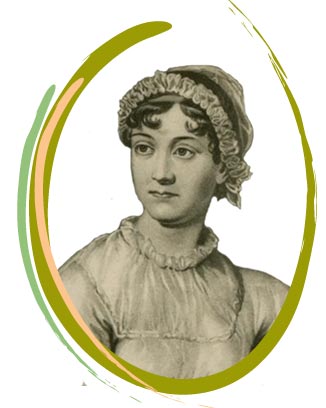
Photos Sources: Book cover randomhouse.com, Jane Austen Portrait tvo.org, Jane Austen Centre, Bath, taken by Arti of Ripple Effects, Dec. 07.

This article has recently been published in the current Jane Austen Centre Online Magazine. Click to go there for other interesting articles on Jane and the Regency world.

**

Related Posts you might enjoy:

In Praise of Austen: Virginia Woolf’s A Room Of One’s Own

A Jane Austen Education by William Deresiewicz

**

What was Jane Austen really like? Reading Tomalin and Shields

As a biographer, Tomalin’s account of Jane Austen’s life is meticulous and exhaustive.  Her analysis is critical and sharp, her writing style bold, precise and cutting.  The following excerpts are prime examples.

When speculating about the possible consequence of Mrs. Austen sending her infants away to be raised, Tomalin makes the following inference:

“The most striking aspect of Jane’s adult letters is their defensiveness.  They lack tenderness towards herself as much as towards others.  You are aware of the inner creature, deeply responsive and alive, but mostly you are faced with the hard shell; and sometimes a claw is put out, and a sharp nip is given to whatever offends.  They are the letters of someone who does not open her heart; and in the adult who avoids intimacy you sense the child who was uncertain where to expect love or to look for security, and armoured herself against rejection.”

Or this to say about mother and daughter:

Mrs. Austen had a sharp tongue for neighbours, appreciated by her daughter and passed on to her.”

Or, with the episode of Jane accepting and later recanting Harris Bigg-Wither’s marriage proposal, Tomalin’s view is clear:

We would naturally rather have Mansfield Park and Emma than the Bigg-Wither baby Jane Austen might have given the world, and who would almost certainly have prevented her from writing any further books.”

If you can appreciate such kind of abrasive commentaries, you would certainly find it entertaining to read Tomalin’s than an otherwise ordinary biographical sketch.  Ironically, I have a feeling that this is the kind of biographies Jane would have written if she could write without censure.

Putting her incisive analysis to good use, Tomalin explores Jane’s creative process, giving credits to her imaginative ingenuity.  The limitation of physical and social mobility render Jane’s world parochial, yet her characters and story lines are diverse and innovative.  Her writing are evidences of pure creative concoctions.

…essentially she is inventing, absorbed by the form and possibilities of the novel… The world of her imagination was separate and distinct from the world she inhabited.”

For Jane, it is imagination and not experience that has given her wings to soar outside of her bleak circumstances.  A vivid example is the writing of the sprightly Pride and Prejudice.  The novel was written during a time of family tragedy with the death of Cassandra’s fiancé Tom Fowle, and amidst Jane’s own disappointment with the evaporation of hope with Tom LeFroy.

All in all, Tomalin’s sharp and cutting writing style works towards Jane’s favour.  Her biography is resourceful and entertaining, her analysis incisive, and her conclusion moving.  Above all, Jane would have found it amusing and satisfying.

Jane Austen: A Life by Claire Tomalin, published by Penguin Books, 2000,  362 pages, including appendices, notes, bibliography, chart, and index.  Additional 16 pages of photos.

*****

Carol Shield’s Jane Austen is a succinct and gentler rendition of Jane’s life.  Shields and her daughter, the writer Anne Giardini, were presenters at the JASNA AGM in Richmond, Virginia in 1996.  This book came out five years after that.  Shields has crafted a highly readable literary gem, adorned by her lucid and flowing writing style.

As a novelist, Shields’ main thrust is to trace Jane’s development as a writer.  Exploring her family circumstances as she was growing up, Shields presents to us a gifted youth of exuberant spirit, one who had known the joy of theatrical performances and experienced the exhilarating power of humor.  Jane’s ingenuity lies in her parodies.  As a young contributor to her older brother James’ weekly magazine The Loiterer , she was already a skillful writer of satires.  Shield notes that:

“…it is the satirical form of her youthful writing that astonishes us today.  What makes a child of twelve or thirteen a satirist?

… Jane Austen had been nurtured, certainly, in a circle appreciative of burlesque… but she was also a small presence in a large and gifted household.  Her desire to claim the attention of her parents and siblings can be assumed.  She gave them what they wanted, that which would make them laugh and marvel aloud at her cleverness”

This yearning to entertain, influence and be acknowledged remained the motivation for Jane’s writing throughout her life. Her youthful gigs and satires transformed into full-fledged novels.   Just take Northanger Abbey for example.  It is a burlesque of the Gothic in a style which she was so familiar with since her girlhood days. And a look at the characters like Mr. Collins in Pride and Prejudice, or Mrs. Elton in Emma, readers could readily appreciate Jane’s “comic brilliance and… consummate artistry”.

Shields offers in-depth analysis of Austen’s works, exploring not just the writing but the psyche of a brilliant mind.  Like Tomalin, she dispels the myth of art imitating life, and credits Jane’s imagination as the key ingredient of her ingenuity:

“Her novels were conceived and composed in isolation.  She invented their characters, their scenes and scenery, and their moral framework.  The novelistic architecture may have been borrowed from the eighteenth-century novelists, but she made it new, clean, and rational, just as though she’d taken a broom to the old fussiness of plot and action.  She did all this alone.”

Considering the physical and social limitations confining Jane, it was her writing that transported her to brave new worlds, and the vehicle was her imagination.

As I finished reading these two biographies, Virginia Woolf’s praise of Jane Austen resonated in my mind:

“Here was a woman about the year 1800 writing without hate, without bitterness, without fear, without protest, without preaching.  That was how Shakespeare wrote.”

While we lament that Jane had left only six complete novels upon her untimely death at forty-one, we treasure these legacies of imagination and the inspiration they evoke for generations to come.

Jane Austen, a Penguin Lives series, by Carol Shields, published by Vikings, 2001,  185 pages.

Update:  This article has been published in the Jane Austen Centre Magazine, where you can read online informative articles on Jane and the Regency Period.

For more on Jane Austen’s creativity, click here to read the post “Life Imitates Art, or Art Imitates Life”.

*****


Literacy and Longing in L.A. Book Review

“Outside of a dog,  a book is Man’s best friend.

And inside of a dog, it’s too dark to read.”

— Groucho Marx (1890-1977)

There’s got to be a name for this genre of work, modern novels written by women authors, savvy, hip, like scripts for romantic comedies, featuring self-deprecating heroines at the crossroads, but alas, with a large dose of literary or scholastic flare.  Simply “Chick Lit” won’t do,  they are not giddy enough; “Intellectual Chick Lit” may sound like an oxymoron.

Well this one is a wild ride, with literary figures and quotes streaming by your window.  Authors Jennifer Kaufman, a staff writer at L.A. Times and Karen Mack, a former attorney and a Golden Globe Award winning TV and Film producer, have performed cleverly the feat of embedding over 200 authors, artists, and works in their story, from Marcel Proust to Andy Warhol, Matthew Arnold to Kurt Vonnegut. To be helpful, a 9-page Book List is included at the back.

This is the story of a bibliomaniac who uses book binges to escape from her problems, and just a little too much wine to de-stress.  As Freud would have put it, it all started with our protagonist as a child.  The fateful incident when Dora (named after Eudora Welty) and her sister Virginia (who else…) were riding in the car with their alcoholic, and literary, mother behind the wheel.  They ended up in the river.  That’s the last straw for their dad, who deserted them a few weeks later.  Ever since that accident, Dora has been using binge reading to cope with life’s disappointments and ennui.  Now as an adult, she “collects new books the way [her] girlfriends buy designer handbags.”

While separated from her second husband, Dora, a former L. A. Times writer, meets Fred in an indie bookstore in L.A.  She is attracted to his intellectual side, and just knowing he’s writing a play is appeal enough for her to fall for him.  As she gets to know more about Fred and some of his family ties, Dora is swirled into problems that her safe, upper middle class life would never come into contact with.  Here the plot thickens.

I’m ambivalent about this one.  First of all, I don’t like the book cover.  The cover directly or subliminally leads to the impression that has given “Chick Lit” its bad rap.  I know, I shouldn’t judge a book by its cover.  I’m attracted by the title, however, and am glad I’ve explored further than the cover.

I often wonder how exactly do two authors write a book together.  Do they each write different chapters?  Well, here in LALILA, it certainly reads like it.  Just as you thought it’s all about a self-deprecating female trying to stay afloat, the story peels off a few layers and reveals the courage and heart underneath the surface.  In contrast to the lighter shade, the darker chapters depict a more complex and thinking individual who is not afraid to care and embrace the pathos in life.

What I enjoy most is the clever inclusion of literary quotes and figures in the story.  Each chapter starts with one that’s pertinent to the content.  Some are funny, some thought provoking, but all smart and relevant.  And for the Janeites among us, I’m afraid the authors have taken side with Mark Twain regarding Jane Austen.  Now those parts you might just want to skim over.

I can also see the debates the book and its many literary quotes could spark in a book discussion group.  LALILA makes one enjoyable title for those looking for light, fun, and contemporary women’s writing.  The ambiguous ending may also spur lively speculations.  And for the bibliomaniacs among us, whether you agree or not with the protagonist’s decisions in life or values in love, you’re bound to empathize with the notion of book binging.  It may not be the solution to life’s problems, but reading is definitely one appealing and enjoyable thing to do in our very stressful modern day living.

The book has a website which includes book discussion questions and a lit quiz, well worth exploring.  Just Click Here to go.

Literacy and Longing in L.A. is written by Jennifer Kaufman and Karen Mack, published by Delacorte Press, 2006, 325 pages.

*******

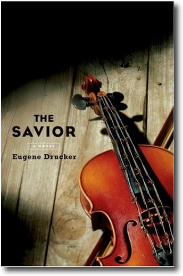
The Savior: Book Review

The Savior is the debut novel written by Eugene Drucker, the founding member of the renowned Emerson String Quartet.   It is a fictional Holocaust story, but what it depicts is not far-fetched.  Based on his father Ernst Drucker’s experience as a violinist in Germany during the 1930’s, and mingled with his own performing episodes in hospital wards and infirmaries, Drucker has created a riveting and believable narrative. Most importantly, he has packed into the short 204 pages some questions that humanity has long found impossible to solve, the problem of human depravity and personal redemption.

In the book, the protagonist Gottfried Keller is a young German violinist during WWII. Due to a weak heart, he cannot serve his country in the front line, but he is drafted into the Nazi war machine by the SS for an experiment in a Holocaust death camp. Under the cultured yet ruthless Kommandant, Keller is to play four solo violin concerts to selective Jewish prisoners. The expressed purpose is to test whether music has the power to revive languishing souls.

As I read the summary on the book cover, the image of the movie Shawshank Redemption (1994) came to mind. When the character Andy Dufresne (Tim Robbins) sneaks into the prison control room and broadcasts Mozart’s Sull Aria from The Marriage of Figaro over loud speakers out to the prison grounds, the inmates are instantly mesmerized by the beauty of the duet, the music transporting them from their confinement to lofty realms.

But what readers are confronted with here in The Savior is a drastic contrast. When Keller plays the Bach sonata in G minor for the inmates, he witnesses the horror of despair. The melodies act like whips on their flesh, cruel reminders of the hopelessness they are in. The intricacies of the fugue evoke searing pain rather than the expected comfort and relief, driving them to eerie moans and groans, exasperated in unrestrained sobs and anguish.

The irony is apparent. The redemptive power of music is but a myth. The violinist, acting as a life-giver or at least a boost to waning souls, is but a pawn in a game of cruelty. As the story unfolds, the violinist, the savior himself, finds desperate need for self redemption. Memories of his past, the choice of security over love, come back as torrents pounding on his conscience.

In the discussion of St. Matthew Passion with the young prison guard Rudi, Keller struck the chord of betrayal and remorse. As pathetic as attempting to pull one’s weight off the ground, both Keller and Rudi find It impossible to redeem themselves. The part a person plays in the overall scheme of atrocity needs to be dealt with. Being a pawn in the game does not excuse one from responsibility, even though the issue is a complex one.

As an expert in musicology and a professional musician, the author is able to effectively weave the music of Paganini, Ysaÿe, Hindemith, and Bach into literary form, an expertise only a violinist like himself can provide. The book excels in these detailed renderings of musical and literary tapestry.

However, the mere 204 pages of succinct narrative could be expanded to better handle the complexity of the issues and characterization the book is dealing with. The unfolding of Keller’s love affair with his Jewish girlfriend Marietta could be told in more details to allow the poignancy to linger.

Overall, a captivating story and a springboard to further pondering.

~ ~ ~ Ripples

The Savior by Eugene Drucker, Simon and Schuster, 2007, 204 Pages.

 CLICK HERE TO VIEW A VIDEO of Eugene Drucker playing Bach’s “Chacone” from Partita No. 2 and his explanation of its role in the book The Savior.


                                                            *****