Diary of a Country Priest: An Easter Meditation

Last year around this time, I wrote about the book The Diary of A Country Priest by French author Georges Bernanos, (Journal d’un curé de campagne, 1936). I’d like to repost my review this week, for every time I read it, I find the essence of Easter.

***

The Diary of a Country Priest Book Cover

A young priest comes to his first parish, the rural town of Ambricourt, filled with humble hopes. All he wants is to serve the people, to give of himself, to bring God’s love. But as soon as he sets foot in the village, he is engulfed by hatred and rejection. There are dark secrets too sinister to be exposed. The young priest is an unwelcome alien. In a town afflicted by hypocrisy, pride, anger and bitterness, he is despised, taunted and ridiculed. His own innocence is no match even for the children in his catechism class, especially the precocious Seraphitas, a girl ‘with a hardness far beyond her years.’

Ambricourt is a world afflicted by the ‘leprosy of boredom’, a microcosm of the human condition. Bernanos uses diseases to illustrate his point well. The young priest himself is being slowly consumed by terminal illness. The pain in his stomach ultimately defeats his body, cancer. His diet consists mainly of bread dipped in wine which he makes for himself, and some potato soup. Poverty of means, but also frailty of body to take in solid food. Many a times we see him in the Garden of Gethsemane, pleading for strength in anguish. But he faithfully presses on, using his diary to confide his deepest thoughts, a means to commune with his God.

On the outskirt of Ambricourt is the Château of the powerful M. le Comte. The Count needs no priest to know about his adulterous affairs, this time, with the governess Mlle Louise. His wife Mme la Comtesse is totally absorbed by her long-held bitterness and grief from the loss of her young son. And his daughter Mlle Chantal is a deeply disturbed girl eaten up by anger and jealousy. Soon, she will be sent away to England, a most convenient plan devised by her father.

It is with this deep mess of a family that the young priest finds himself entangled. The most intense scene of the whole book, the climatic moment, comes when the priest goes to the Château to meet with Mme la Comtesse. She lost her beloved son when he was only eighteen months old, a child hated by his jealous older sister Chantal.

On his last day they went out for a walk together. When they came back my boy was dead.

Mme la Comtesse is fully engulfed by hatred for her daughter, grief for her lost son, and bitterness towards God.

Hearing her speak, a tear flows down the face of the young priest. “Hell is not to love any more, madame.” The young priest responds. And with miraculous strength, he delivers the following words.

… But you know that our God came to be among us. Shake your fist at Him, spit in His face, scourge Him, and finally crucify Him: what does it matter? It’s already been done to Him.

Towards the end of some soul piercing exchanges, Mme la Comtesse kneels down, releases her pain, and receives blessings from the young priest. Afterwards, she writes to him in a letter:

… I have lived in the most horrible solitude, alone with the desperate memory of a child. And it seems to me that another child has brought me to life again…

And this young child, a priest, consumed by illness, wreaked by frailty of spirit, can only marvel at the power through weakness:

Oh miracle — thus to be able to give what we ourselves do not possess, sweet miracle of our empty hands!

Not long after this, he succumbs to his illness. A life too short, a mission seems unaccomplished. But his last words faintly uttered on his deathbed are as powerful as the God who sends him:

Does it matter? Grace is everywhere…

And in the film, these three words leave me with one of the most impressive endings of all the films that I’ve seen:

“All is grace.”

 ***

~ ~ ~ ~ Ripples

CLICK HERE to read my film review of The Diary of a Country Priest.

The Diary of a Country Priest by Georges Bernanos, translated by Pamela Morris, Perseus Books Group, Philadelphia, PA, 1965, 298 pages.

Journal d’un curé de campagne, 1936, was winner of the Grand prix du roman de l’Académie française.

Let’s Spring to Proust

Here we are, almost spring. According to my 2013 Read-Along plan, it’s time for Proust: In Search of Lost Time, Vol. 1, Swann’s Way.

Proust Book

Before we start, check this out. An excellent intro of Proust from The Guardian:

“So, Proust. Have you made it past the first 50 pages?

I’m guessing that a healthy proportion of people who pick up the book don’t even get beyond page 51. Within a similar word count, Raymond Chandler could have got through two murders, six whiskies, half a dozen wisecracks. Raymond Carver could have described at least six suburban households descending into despair. And Hemingway had almost finished The Old Man and The Sea. Yet, in pure plot terms, pretty much all that happens in those first pages of Proust is that the young Marcel struggles to fall asleep.” 

Right. But I do urge you to finish this very helpful Guardian article on Proust.

Those who are familiar with Read-Along’s on Ripple Effects know, we go slow. Ah… go slow on Proust? Well yes, that just means you can read Chandler and Hemingway while you’re watching young Marcel struggle to sleep.

Here’s our very simple plan. You can read whatever version you like, if you’re so inclined, the original French edition will even be better. We can compare notes and thoughts. I’ll stick with the Modern Library version in the photo above, just because of the enticing cover.

Here are the dates for the two posts:

Part One, Combray (264 pages): to post April 15

Part Two, Swann In Love (278 pages) & Part Three, Places Names, The Name (61 pages): to post May 15

Two months to finish In Search of Lost Time Vol 1: Swann’s Way. I’m sure with our mutual support, we can all go past page 51 and even reach the end.

Interested? Do let me know in a comment. I’ll be sure to add and link your blog in the following list. If you’re not a blogger, you’re welcome to join in as well. Just come by on the two posting dates and share your thoughts.

So far, here are the participants who have confirmed with me:

Bellezza of Dolce Bellezza

Janell of An Everyday Life

Gavin of Page247

Tuesday of Tuesday in Silhouette

Jessica of Bluestockings.com

Alison of Chino House

Hope to see you join in.

***

Previous Read-Along on Ripple Effects

Bonhoeffer: Pastor, Martyr, Prophet, Spy by Eric Metaxas 

Anna Karenina by Leo Tolstoy

Midnight’s Children by Salman Rushdie

***

Upcoming Book to Movie Adaptations

2012 has been a great year for movie adaptations based on or loosely tied to books. Argo, Beast of the Southern Wild, Les Misérables, Anna Karenina, Life of Pi, Lincoln, Silver Linings Playbook are all from adapted screenplays.

Now that the Award Season is behind us, time to move forward to see what some of the upcoming movie adaptations are in the works. The following is a list of films in various stages of development, with some scheduled to be released in 2013. Time to read or reread the books before your see the movies.

**

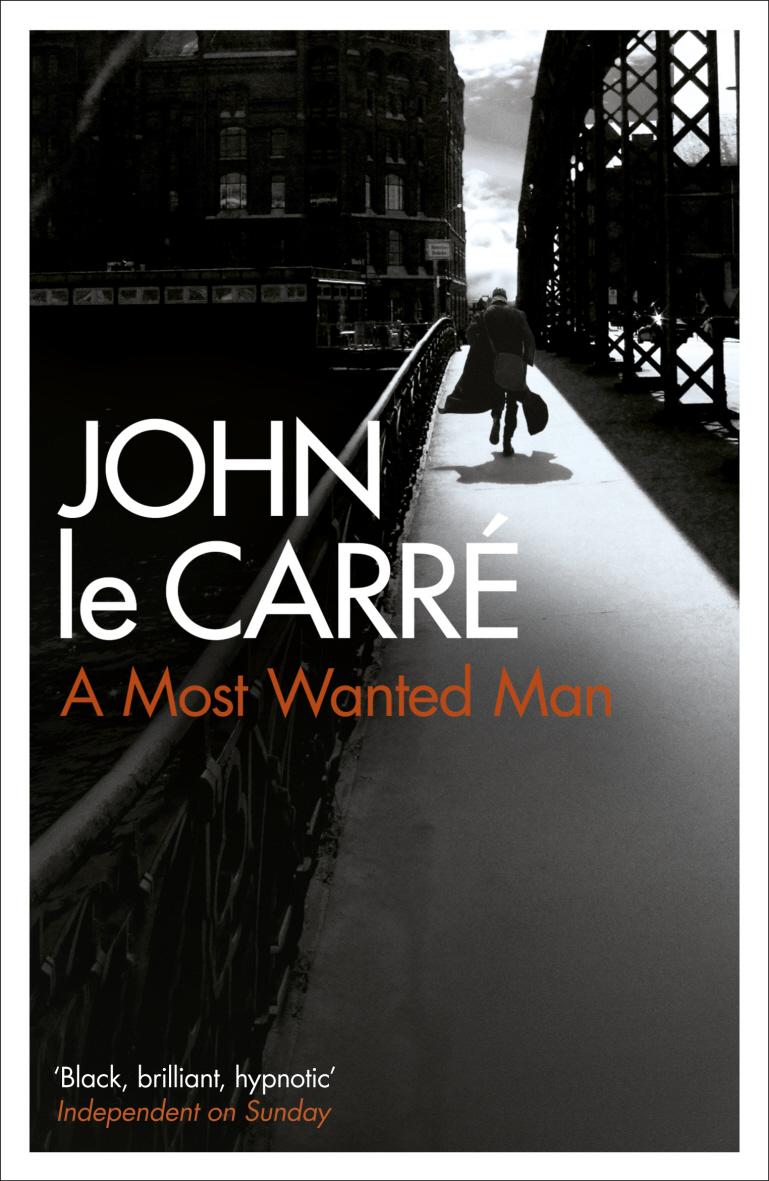
A Most Wanted Man 

A Most Wated Man

Philip Seymour Hoffman stars in John le Carré’s thriller (2008) with a contemporary theme of international war on terror. Hopefully it will reprise the depth of the star-studded Tinker Tailor Soldier Spy. Robert Wright, Rachel McAdams, and Willem Dafoe are in.

A Wrinkle In Time

A Wrinkle in Time

After the success of LOTRNarnia, The Hobbit, some think it’s time to remake Madeleine L’Engle’s YA Sci-Fi classic A Wrinkle In Time. Disney it is, together with Bedrock with Jeff Stockwell (A Bridge to Terabithia, 2007) writing the script. Let’s hope it’s a production worthy of its literary source.

Before I Go To Sleep 

Before I Go to Sleep

Adapted from S. J. Watson’s popular and intriguing novel about a woman having bouts of amnesia every morning she wakes up. If your memory or enthusiasm needs a little prodding, here’s this cast: Nicole Kidman, Colin Firth, and Mark Strong. Nobody can forget Colin Firth as Mr. Darcy (TV 1995), but do you remember Mark Strong as Mr. Knightley in Emma (TV 1996)? Both were in Tinker Tailor Soldier Spy (2011) and Mark Strong in the recent Zero Dark Thirty (2012). I can’t wait for this one. Will have to read the book first.

The Book Thief

The Book Thief

The popular and acclaimed YA book by Markus Zusak with setting in WWII Nazi Germany. YA or not, it’s been on the NYT Bestseller List for over 4 years. Interesting fact is, Downton Abbey director Brian Percival will helm the production, which will star Geoffrey Rush (The King’s Speech, 2010) and Emily Watson (Anna Karenina, 2012). The young Canadian actress Sophie Nélisse who’s brilliant in the Oscar nominated Monsieur Lazhar (Canadian entry for Best Foreign Language Film, 2011) will play young Liesel.

Devil’s Knot

Devil's Knot

Based on Mara Leveritt’s book Devil’s Knot: The True Story of the West Memphis Threethe true case of the wrongful conviction and imprisonment of three teenaged boys for eighteen years for the murder of three children in West Memphis, Arkansas. Colin Firth and Reese Witherspoon star. Acclaimed Canadian director Atom Egoyan helms, with music score by the recent Oscar winning Canadian composer for Life of Pi Mychael Danna. Yes, sounds like an international joint effort. The film has a 2013 release date in the U.S.

The Great Gatsby

The Great Gatsby

Completed in 2012, but delayed its release until May 2013. Just as well, considering all the mighty rivals of last year’s movies. The trailer looks unsettling, and in 3D, I’m afraid the Baz Luhrmann version may focus on the loud and glitzy but ignore the true colours of Jay Gatsby. Of course, innocent until proven guilty. My eyes are peeled. Leo DiCaprio is Jay, Carey Mulligan Daisy, Isla Fisher Myrtle, Tobey Maguire Nick. Quite a cast.

The Invisible Woman

The Invisible Woman

Claire Tomalin’s account of Charles Dickens’ affair with the young writer Nelly Ternan will be brought to screen with script from Abi Morgan (Shame, The Iron Lady) to be directed by Ralph Fiennes, who will play Dickens himself. To add to the rave, Kristin Scott Thomas is also on board. Felicity Jones will be playing Nelly Ternan. Fiennes never ceases to amaze us with his versatility, after directing Shakespeare’s Coriolanus in postmodern style, now comes Dickens.

The Piano Tuner

The Piano Tuner

It has been reported that the iconic German director Werner Herzog (Cave of Forgotten Dreams, 2010) is directing the movie adaptation of this 2002 book by Daniel Mason. Set in 1890’s Burma where the British Empire was having its glorious era, the chords of harmony and dissonance ring. Not a lot of info on it, but as I read a few book reviews, which are all careful not to reveal any spoilers, I can see this can be a colourful and thought-provoking cinematic offering in the hands of an auteur whose career has spanned half a century.

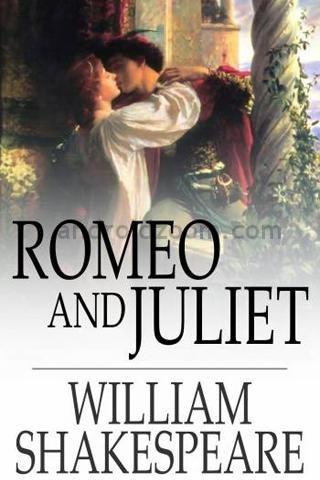
Romeo and Juliet

Romeo and Juliet

Don’t rant about Jane Austen’s novels being turned into just too many movies. Shakespeare probably holds the record. This time, a 21st C. version of Romeo and Juliet will be written by none other than Julian Fellowes, who has brought us the wildly and globally popular Downton Abbey, something Shakespeare just might approve. The new pair of star-crossed lovers? Douglas Booth (Great Expectations, TV 2011) and Hailee Steinfeld (True Grit, 2010), with a cast of prominent US and British actors.

The Sea

The Sea

Irish writer John Banville adapts his own Booker-winning novel (2005) of the same title. Ciaran Hind (Persuasion, 1995) stars. Banville has also written the screenplay of the Oscar nominated movie Albert Kobbs with Glenn Close. I was planning to read The Sea last year for the Ireland Reading Challenge but later made another choice. Now knowing there will be a movie, I should get back to it.

Suite Française

Suite Française

The heart-wrenching novel by Irène Némirovsky with setting in German occupied WWII Paris. Kristin Scott Thomas (I’ve Loved You So Long, 2008) and Michelle Williams star with Rust and Bone actor Matthias Schoenaerts. Glad to know screen adaptation is written by the Oscar winning screenwriter Ronald Harwood, who has given us such memorable films like The Browning Version (1994), The Pianist (Oscar win 2002), Being Julia (2004), The Diving Bell and the Butterfly (Oscar nom, 2007), and the recent Dustin Hoffman directorial debut Quartet (2012). I’m reading this book together with the Bonhoeffer bio. Can’t wait to see the film.

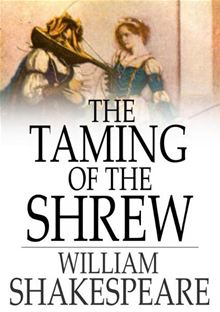
The Taming of the Shrew

Taming of the Shrew

Yes, another Shakespeare’s play in the works. This one will be adapted by the screenwriter who has brought us The Iron Lady (2011), the movie Meryle Streep won an Oscar for playing Magaret Thatcher. Coincident? This time, the iron lady is Katharina, and she’ll be played by recent Oscar winner Anne Hathaway. From Fantine to the Shrew? She’ll need a lot of method acting and we’ll need a lot of forgetting to see her in that new role. As for Petruchio? Let me know who you think should be the one. No, I’m not the casting director, but I’ll put in a good word for you.

***

Do you know of any other literary titles to be adapted into films in the coming year? Let me know in a comment.

Thanks for your input, here are the titles some of you have added to my list:

Serena

Broken

Mr. Morgan’s Last Love

August: Osage County

Much Ado About Nothing

***

Soliloquy of a Book Hoarder

To read, or not to read, that is not the question:
Whether ’tis nobler in the mind to suffer
slings and arrows of outrageous fortune,
or to take arms against a shelf of troubles,
and by reading end them.

Before January is completely gone, I must make a resolution for this year. With all the good fortune, yes, books I’ve hoarded over the years at outrageously low prices, like slings and arrows raining down from shelves, many more shooting out from boxes… I must conquer them.

No excuse, but… loots hauled back from the annual Crossroad Market book sale is the Trojan horse of latent guilt. Why, wouldn’t you have fallen into the trap too, 15 books for $30? All in mint condition, some look like they’ve never been opened.

Upon reading two bloggers, Grad and Terri B, resolving to do similar courageous acts, I must start doing something to end the onslaught. I thereby resolve that in 2013 I’ll read from my TBR piles  only  , ok, mostly. Actually, the Bonheoffer and the Proust read-alongs are within this strategic move.

Here are some of the slings and arrows of my good fortune. Any of these in your TBR piles too? Read-along?

**

Margaret Atwood: The Handmaid’s Tale

Anne Bronte: The Tenant of Wildfell Hall

A. S. Byatt: Possession

Kate Chopin: The Awakening

Kiran Desai: The Inheritance of Loss

Junot Diaz: The Brief Wondrous Life of Oscar Wao

Jonathan Frantzen: The Corrections, Freedom

Shilpi Somaya Gowda: Secret Daughter

Henry James: The Ambassadors

Nicole Krauss: The History of Love

Ian MacEwan: Enduring Love, Saturday, Amsterdam

Herman Melville: Moby Dick (Will be reading in August with TerriB)

Hilary Mantel: Wolf Hall

Claire Messud: The Emperor’s Children

Toni Morrison: Love

Irène Némirovsky: Suite Française

Marilynne Robinson: Home, Housekeeping

Arundhati Roy: The God of Small Things

Salman Rushdie: The Enchantress of Florence

John Steinbeck: East of Eden

Zadie Smith: White Teeth

Jane Urquhart: The Underpainter

Winifred Watson: Miss Pettigrew Lives for a Day

Edith Wharton: The Age of Innocence

 **

Non-fiction:

Julia Briggs: Virginia Woolf, An Inner Life

Joseph Campbell: The Hero With A Thousand Faces

Mary Karr: Lit

Marilynne Robinson: Absence of Mind

**

Travels with My Aunt by Graham Greene

And with this book, I declare all my reading challenges for 2012 completed!

Graham Greene Reading Challenge 2012

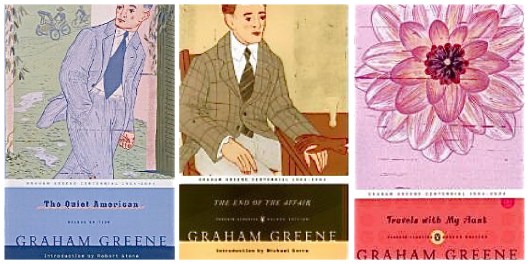
Travels with my Aunt is my third and final installment for the Graham Greene Reading Challenge hosted by Carrie of Books and Movies. My previous two titles are The Quiet American (1955) and The End of the Affair (1951).

Here they are. Look at the book covers, all from the Penguin Classics Graham Greene Centennial Edition (2004), trade paperbacks with French flaps. It’s a delight to just hold them in my hands:

Graham Greene Books

Travels with my Aunt (1969) is my first taste of Greene humor. Compared to the other two I’ve read, which are intense and deeply serious, this one is a light comic relief.

A conservative, retired bank manager Henry Pulling found a new relative at his mother’s funeral, his Aunt Augusta. She is everything he is not, an eccentric and liberal seventy-five-year-old sets to open a whole new world for his nephew. Upon Aunt Augusta’s insistence, Henry accompanies her travelling in Europe. In the process, she widens his contacts with some shady characters, opens his eyes to an underground world he has never imagined, leaves his trails with police investigations, and overturns his carefully guarded self into disarray.

The humor in Travels with my Aunt reminds me of Oscar Wilde’s The Importance of Being Earnest, and makes me think that, if it were written as a play, probably it would have been more effective and enjoyable.

I mean, considering it takes Greene only 180 pages to tell the complex story of The Quiet American, and 160 pages to depict the deeply conflicting The End of the Affair, why would he need 254 pages to jot down some travel notes. That’s right, he narrates in details and often digresses to leave us with some clever one-liners along the way. But, if he had picked up the pace a bit, and tightened up like the two previous books I read, I would have appreciated it much more. Okay, it’s selfish wishful thinking on my part, me being a very slow and easily diverted reader.

***

Ireland Reading Challenge 2012

ireland-reading-challenge-2012

And earlier in November, I’d finished The Ireland Reading Challenge 2012 also hosted by Carrie at Books and Movies. I aimed at the ‘Shamrock Level’ and read four books of at least three different genres. Here are my selections and links to my reviews:

Molly Fox’s Birthday by Deirdre Madden (Novel)

Everything in this Country Must by Colum McCann (Short Stories)

The Importance of Being Earnest by Oscar Wilde (Play)

Dubliners by James Joyce (Short Stories and Novella)

***

No plans for taking up any Reading Challenge for 2013 yet. However, I do have two Read-Along’s planned for the coming year. Hope you can join me then. Will post soon.

***

Liebster Award

I’ve been tagged, and I didn’t know it. A few weeks ago Bellezza of Dolce Bellezza tagged me for a Liebster Award. Didn’t find out until now. As the icon shown above, the Liebster Award is to discover new blogs… well, blogs that one may not have visited before.

So here I go to answer 7 good questions. Thanks, litlove, for first asking them. Here they are:

1. What do you think of literary prizes? Good idea or bad?

I think literary prizes are good pointers, their shortlists are often guide to my longlist of TBR’s. I like to follow the Booker, Giller, and Pulitzer, awards from the UK, Canada, and US.  I even watch book awards if they show on TV, like the Giller here in Canada. Yeah, you can tell I love award shows… but for some reasons, I’m not so thrilled about the Nobel literature prize.

2. If you could write any sort of book, what would you write?

They say the first book is usually autobiographical. So let’s see if that’s any easier. Also, something that I can turn into a screenplay after it’s published… like killing two birds with one stone.

3. Describe your ideal home library/study.

A big comfy couch for reclining. Large coffee table beside for laptop, books, notebooks, junks, enough space to put coffee mugs and snacks. Built in book shelves, with books of course, artworks, a music system, and overall artistic chaos. And oh, a large flat screen TV facing the couch. Books and films always go together for me.

4. Name two new authors whose work you think will last the test of time, and explain your choices.

Kazuo Ishiguro. I like his style. His An Artist of the Floating WorldRemains of the Day and Never Let Me Go cannot be more diverse in their setting and subject matter, which shows how versatile the writer is. I think his works can last the test of time. The other is Yann Martel. If he can write Life of Pi we can cut him some slack for slipping a bit in the next piece. If Pi can reach shore and be rescued after 227 days adrift at sea, I’m sure his story can survive the test of time. Also, really appreciated the writer’s effort to send our PM Stephen Harper a book every two weeks to enrich his reading.

5. Which books do you hope to get for Christmas?

Modern Library’s Top 100, you can pick any titles from it. Here’s the link. Thanks.

6. What’s the last book you did not finish and why?

The Finkler Question by Howard Jacobson, 2010 Booker Prize winner. I stopped at about page 50. I know, I should have gone a bit more before I quit, but, my patience just couldn’t stand the test of time. However, I think I’ll go back, restart and finish it, some day.

7. Would you accept 20 books that were absolutely perfect for you and dependably brilliant reads, if they were also the last 20 books you could ever acquire?

What? Not being able to acquire anymore? The answer is a no-brainer. And also, I’m afraid the perfect books for me now may not remain perfect through the years, considering how changeable I am. Anyway, acquiring books is one of life’s major pleasures and I just don’t want to give it up.

Ok, now, the next 7 targets to answer these 7 questions, how about Janell of An Everyday Life, Catherine Sherman, Gavin of Page247Hedda at Hedda’s Place, Alex of The Sleepless ReaderSigrun at Sub Rosa, Grad The Curious Reader. Just for fun.

According to the idea of the Liebster Award, you’re to tag 7 other bloggers and develop your own 7 questions if you like.

***

Anna Karenina Read-Along Parts 5 – 8… And The Curtain Falls

Funny, writing a post on this last part to wrap up our Read-Along is much harder than I first thought. Where do I begin?

Here are just some thoughts.

Tolstoy the Psychoanalyst… and More

First, this is not just one story but several, and not just appreciating a 19th C. writer in distant Russia, but this is Tolstoy the master storyteller. I’m amazed at his craft. What a sharp observer of human nature, the incisive psychoanalyst decades before Freud, not only piercing into the minds of women and of men, but our canine pals as well. Tolstoy the dog whisperer. Why, the hunting scene in Part Six is a unique exploration into the cognitive dissonance of Levin’s four-legged hunting partner Laska. And Tolstoy has amusingly shown us why dogs are man’s best friend. They know their master’s shortcomings, yet still remain faithful.

Tolstoy the Late-Night Show Host

And then there’s the humor. I was surprised from the start that Tolstoy’s style is so light and sometimes even deadpan. The best quotes comes from the minor characters. Here’s one from Yashvin, Vronsky’s friend from the military, condensing the 800 plus pages in a nutshell:

 ‘A  wife’s a worry, a non-wife’s even worse,’ thought Yashvin… (p. 544)

Tolstoy can make one superb late-night show host. Listen to this:

A man can spend several hours sitting cross-legged in the same position if he knows that nothing prevents him from changing it; but if he knows that he has to sit with his legs crossed like that, he will get cramps… (p. 528)

That was what Vronsky feels with regard to society. And we know Vronsky gets more than just leg cramps.

Tolstoy the humorist? Or realist? Even the most casual remarks could bring me a smile of agreement. Like here, responding to Vronsky’s urge to go out for a walk, Oblonsky has aptly voiced out my sentiment:

 ‘If only it was possible to stay lying down and still go,’ Oblonsky answered, stretching. ‘It’s wonderful to be lying down.’ (p. 589)

All the World’s a Stage

Mariinsky Theatre, preeminent venue for music and ballet in 19th C. Russia

And then there are the spectacles. Society’s a stage where people are actors and spectators all at the same time. Tolstoy throws in many scenes reminding us that. When Anna and Vronsky come back to Petersburg, they appear separately in public at the theatre, something that Vronsky insists and Anna is indignant about. Vronsky seems to favour the spectator role, searching out people through his opera-glasses. In contrast, Anna would rather be the actor, bravely ignoring reverberations, be on centre stage. From his glasses, Vronsky saw Anna’s head, “proud, strikingly beautiful, and smiling in its frame of lace.” But now that he has her the mystery vanishes. Her beauty, though still entices, begins to ‘offend’ (p. 546).

Anna, oh Anna…

If Anna could have detached more and emoted less… Of course, she has never expected how fickle love can be, or that passion is so short-lived or changeable due to varying circumstances, or that too much of it could smother and delude. Ironically, she does look before she leaps. If only she has used her rationale for better judgement rather than calculating when the middle between two train cars will come, all for satisfying her own delusional revenge on Vronksy.

Further, which should have been no surprise to her, that marriage has ties that linger even after intimacy ends. Anna does not choose Vronsky over her husband, but Vronsky over her son, the two loves of her life. She has chosen romance over motherhood. If I’m being a tad bit unsympathetic, maybe that’s Tolstoy’s doing.

What’s surprising to me is that Tolstoy is quite matter-of-fact about Anna’s predicament. His description of Anna’s tragic demise is just one paragraph, and after that, no more mention of her. Following that comes Part 8, wrapping up the whole book with the limelight on Levin. Quite puzzling really since the book is her namesake.

Levin … Tolstoy?

At the end, is Tolstoy offering a contrast to Anna’s tragic end by detailing Levin’s spiritual awakening? The master storyteller certainly doesn’t shy away from issues which would be considered sensitive subjects and even taboos today, like God, religion, spirituality and morality. So in the book entitled Anna Karenina, Levin has the last word. Umm… which leads to a speculation that Tolstoy might have ‘an agenda’ behind his writing. Is he proselytizing?

More and more these days, I’m seeing people getting edgy about others presenting the case for faith, especially taking offence when it comes to Christianity. Nobody would squirm a bit if suddenly one day you declare you’ve become a Zoroastrian. Mind you, Tolstoy’s handling of Levin’s conversion is reasonably and philosophically grounded, albeit that sudden spark of epiphany is too overwhelming and spontaneous to be rationalized.

And all is within context of the story. Levin, having exceedingly gratified by marital bliss, by the pure love of an angelic woman in Kitty, and witnessed the miracle of life in seeing the birth of his son, has opened unreservedly his heart and soul towards God. We can read it as it is, a convincing turn for a character who has consistently been authentic and genuine in his search for meaning.

If we take offence to this ending, suspecting a hidden agenda from Tolstoy, then we could well shed similar sentiments towards other writers whose faith, convictions, or philosophical viewpoints are presented overtly or seeped through silently in their works. Would we be equally alarmed or offended when we read, for example, Thomas Hardy with his naturalism, Camus and Sartre their existentialism, Graham Greene his Catholicism, Isaac Bashevis Singer his Judaism, Somerset Maugham his Buddhism, and for that matter, Salman Rushdie his atheism? There’s no neutral writing, is there? Every writer breathes into his writing that which stems from his or her own personal world view and hopefully authentic self.

Funny too how Tolstoy in his time could so freely describe Levin’s spiritual awakening and explicitly write about the argumentations for the Christian faith in a literary work. Just makes me think that there might be more freedom of expression in days past than in today’s society.

***

So here we are, at the end of another Read-Along. Thanks to those who has participated in reading these 800 plus pages with me. To all who have stopped by the pond and thrown in a pebble or two, I’ve appreciated the ripples. To those who are just curious onlookers, your visits mean no less. It’s been a fun ride. Hopefully we’ll do another one in 2013. Will you join us then?

And now, to the movie…

***

Do go and visit these other Read-Along participants and join in the discussion there:

Janell of An Everyday Life

Bellezza of Dolce Belleza 

Care’s Online Book Club

Stefanie of So Many Books

***

CLICK HERE to read my first post on Anna Karenina Read-Along: Parts 1 – 4

Photo of Mariinsky Theatre from russiantourguide.com

Saturday Snapshot Nov.10: A New Gravatar

After a few years of using the blue ripples as my Gravatar, recently I’ve created a new one. It combines several of my interests… at present. I designed the set and took the photo in a mini makeshift ‘studio’, a little corner on a desk.

This Gravatar depicts pages rippling in fight, the soaring power of words. From the symbolic to the actual, most noticeable in the background is my bird book, guide to a new-found passion.

Underneath the pages in flight is Hemingway’s A Moveable Feast. While Hemingway may not be my favorite writer, the title of this book is significant, albeit you can’t see it here. Less noticeable is the screenplay I’m writing at the base of the pile. Can you see the brad? And oh, the title of the open book? Roger Ebert’s memoir Life Itself.

Books, films, birds and screenplay in progress… a moveable feast.

***

Thanks to Alyce of At Home With Books for hosting Saturday Snapshot.

Posts you may like:

A Moveable Feast by Earnest Hemingway 

Roger Ebert in Toronto: A Close Encounter

Dubliners by James Joyce

This is my fourth and final instalment for Ireland Reading Challenge 2012 hosted by Carrie of Books and Movies. What first attracted me to this newly published edition (August 2012) by Modern Library was its cover. I’m very fond of Modern Library’s classics in trade paperbacks, mainly because of their elegant covers as well as the size of the type. Interesting how type size has become a factor for my reading enjoyment in recent years… ok, no more elaboration on that.

While Joyce’s later works Ulysses and Finnegans Wake are considered iconic works of 20th C. literature, for some reasons I have no desire to take up the formidable challenge of deciphering them. But Dubliners, a collection of short stories written in his early 20’s, looks to be a much more manageable task.

With this new edition comes a new introduction, written by the Booker Prize winning author John Banville (The Sea, 2005). For me, two points stand out in his introduction. First is that Joyce himself had indicated that Dubliners could well be his best work. An admission that he might not have wanted to be publicized.

Second, Banville has slipped into a sentence an implied definition of ‘greatness’ in a literary work. Here’s it is, as he talks about the story “The Dead”:

It is indicative of the greatness of this story that after nearly a century of critical commentary and scholarship dissection it remains an enigma.

If the inscrutable is used as a qualification of greatness, then there are a few great ones in this collection.

Dubliners compiles fifteen short stories. In order of their arrangement, they cover the point of view of childhood, adolescence, to adulthood, yet they share similar themes based on love and loss, life and death, religion and conscience. It’s interesting as I caught myself while reading that I did not see the characters so much as residents of Dublin. They appear borderless. Their particular location and life situation might be tied to Dublin and Ireland at a certain point in time, but the issues they have to deal with transcend boundaries.

A twist that the stories seem to share is: people are not what they appear. Often, the picture presented in the first part of a story leads to an ironic ending. Further, below the surface of a character, there are unfathomable depths of feelings, conflicts, memories, longings and desires. Joyce’s superb writing takes the reader with him as he peels off layer after layer to show us the human soul… but not devoid of charm and humour.

Most of the stories are swift and short, some maybe like scenes and vignettes, their descriptions and character depictions sharp, precise, and succinct. The last one ‘The Dead’, the one that Banville notes as an ‘enigma’ in the introduction, is the longest with 55 pages, the highlight of the whole book.

Here are my favourites:

An Encounter – sometimes a most unlikely stranger can help us see ourselves a bit more clearly.

Araby – famous story that many of us might have read in school, adolescent infatuation, missed chances and the uncontrollable happenings in our everyday life.

Eveline – One may feel discontent with one’s claustrophobic life, but given the chance to escape, freedom may just be too risky a choice to make.

A Little Cloud – Yes, the grass is always greener on the other side, but some people may just be destined to stay in less green pastures… Our lot, is it by fate, or, by choice?

A Painful Case – Anna Karenina in short story form… well, maybe just a coincidence.

The Dead – A 55 page and by far the most gratifying story for me. Joyce sets the stage with a Christmas party and presents some lively characters, slowly focusing on Gabriel, a loving husband, and maybe drenched in a bit too much self-importance and confidence.

All’s well until the twist comes at the last 10 pages. A song at the party resurrects his wife’s memory of a young lover who died for love of her at 17. As the husband excavates his wife’s long past story, he comes to a humbling self-realization. His initial passionate sentiments for her change to jealousy but finally turn into a greater clarity of what love is.

I must quote this last sentence of the story, don’t worry, no spoiler, I’ve already given you that, but just for the beauty of the prose, and the meaning that runs silent and deep:

His soul swooned slowly as he heard the snow falling faintly through the universe and faintly falling, like the descent of their last end, upon all the living and the dead.

Here is my take on this ‘enigma’ of a story…

as the snow falls upon all
it is love that connects
among the living
and with the dead.

***

Dubliners by James Joyce, with a new introduction by John Banville. Published by Modern Library, NY, Paperback Edition, August 2012, 249 pages.

My other reviews for Ireland Reading Challenge 2012:

Molly Fox’s Birthday by Deirdre Madden

The Importance of Being Earnest by Oscar Wilde

Everything in this Country Must by Colum McCann

This Fall: Read the Book Before you See the Film

UPDATE: This list will be updated whenever there’s new info. So, bookmark it if you like. Just added Lincoln (Team of Rivals), The Reluctant Fundamentalist, and The Hobbit: An Unexpected Journey. CLICK ON THE TITLES to read my book and film reviews. For others, the link will lead you to info of the production.

**

Some highly anticipated film adaptations from literary sources will be coming out this fall. Released in this latter part of the year, to be premiered at major film festivals, some of them are poised for the Awards Season next spring.

Here’s an update of these great expectations. The Great Gatsby for some reasons has delayed its release until next summer, so one less book to read if you’re to finish them before the movies come out.  These titles also make good selections for book groups:

Anna Karenina by Leo Tolstoy

To premiere in the UK and at Toronto International Film Festival (TIFF) on the same date, September 7. You still have time to read this masterpiece before the film comes out as a general release in November. You may need to read a bit more than 10 pages a day if you start now. But still doable. Update: The Read-Along has just been completed. The film is now screening in selective cities. Read my book reviews here for first half and here for the last parts.

.

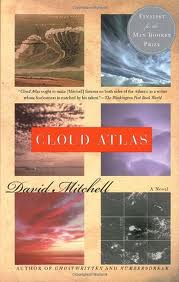
Cloud Atlas by David Mitchell

To premiere at TIFF on Sept. 8. Legendary filmmakers Tom Tykwer (Run Lola Run), Andy and Lana Wachowski (The Matrix) join hands to make this ‘unfilmable’ acclaimed literary work. Tom Hank, Halle Berry, Jim Broadbent…

Update: The film has been released and has received mixed reviews. 

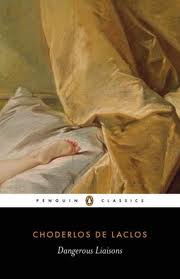
Dangerous Liaisons by Pierre Choderlos de Laclos

How about this… The French notorious literary classic Les Liaisons Dangereuses by Pierre Choderlos de Laclos, published in 1782, adapted into film in the 21st C. with a setting in 1930’s Shanghai, China, helmed by Korean director Hur Jin-Ho, cast with Chinese and Korean actors. I’ve seen two adaptations in the past, Michelle Pheiffer/John Malkovich’s Dangerous Liaisons (1988) and Annette Bening/Colin Firth’s Valmont (1989), but this one strikes me as something totally different.

Great Expectations by Charles Dickens

In time to mark this bicentenary of the birth of Charles Dickens, a showcase of British talents: screenplay by David Nicholls (Tess of the D’Urbervilles, When Did You Last See Your Father) directed by Mike Newell (Four Weddings and A Funeral, Harry Potter), Ralph Fiennes (The English Patient), Helena Bonham Carter (The King’s Speech), Jeremy Irvine (War Horse)…

.

The Hobbit by J. R. R. Tolkien

World premiere Nov. 28, 2012 in New Zealand for Part 1 of the Trilogy, ‘The Hobbit: An Unexpected Journey’, ‘The Hobbit: The Desolation of Smaug’ in Dec. 2013, and ‘The Hobbit: There and Back Again’ in July, 2014. Peter Jackson attempts to reprise his Rings magic with cast from previous Rings Trilogy Elijah Wood, Ian McKellen, Cate Blanchett, Orlando Bloom… Again, we’ll get to see beautiful New Zealand as setting.

.

Les Misérables by VIctor Hugo

A film version of the stage musical to be released in December. Directed by Oscar winner Tom Hooper of The King’s Speech. If you want to hear them sing, here’s the chance… Anne Hathaway, Hugh Jackman, Russell Crowe, Helena Bonham Carter, Amanda Seyfried…  The trailer is mesmerizing. Update: The production has just been shown in industry screenings and received euphoric reception. Major contender for 2013 Oscars.

.

Life of Pi by Yann Martel

To open the 50th NY Film Festival on Sept. 28 with its world premiere. I’m glad this 2003 Booker Prize winning novel by Canadian author Yann Martel finds its film adaptation in the hands of Oscar winning director Ang Lee. From the trailer, I have the feeling that Lee has masterfully grasped the magical realism of the book. Lee’s versatility ranges from Jane Austen (Sense and Sensibility) to martial art (Crouching Tiger, Hidden Dragon). I highly anticipate this one, albeit as someone prone to motion sickness, I’m apprehensive about seeing the rough ocean journey in 3D.

.

Midnight’s Children by Salman Rushdie. Film Review

To premiere at the Gala Presentation at TIFF Sept. 9. Salman Rushdie turns his Best of the Booker, epic novel into screenplay, working closely with Canadian director Deepa Mehta on the film production. I’m interested to see how magic realism transposes from the literary to the visual, albeit I know full well the two are different forms of artistic medium. For the few of us who had spent four months reading along, I think the only regret we have might be that we can’t go to see the film together.

.

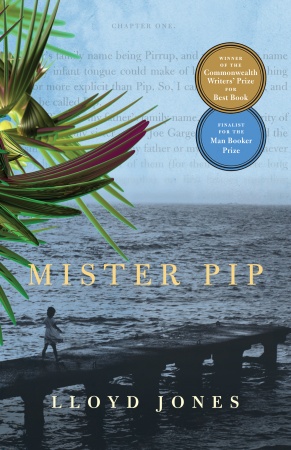
Mr. Pip by Lloyd Jones

Winner of the 2007 Commonwealth Prize, Lloyd Jones’s character Pop Eye Mr. Watts brings to the Papua New Guinea island of Bougainville during the civil war in the 1990s not just Charles Dicken’s Great Expectations, but friendship to a 13 year-old girl Matilda. Film adaptation directed by Chronicles of Narnia‘s Andrew Adamson. And for all you fans of ‘House’, Mr. Pip is none other than Hugh Laurie.

.

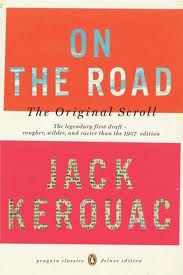
On The Road by Jack Kerouac

First screened at Cannes Film Festival in May and later in Europe, producer Francis Ford Coppola’s adaptation of this beat generation classic finally comes to North American at TIFF this Sept. Directed by Walter Salles (Motorcycle Diaries) and with a cast including Kristen Stewart, Amy Adams, Viggo Mortensen, Kirsten Dunst.

.

The Reluctant Fundamentalist by Mohsin Hamid

Published in 2007, the book was included in Guardian‘s list of 50 books that defined the decade and shortlisted for the Booker Prize. The story of a young Pakistani working in NYC, graduated top of his class from Princeton, finding love in an American girl, and success on Wall Street, has his world turned upside down after 9/11. The film just opened the 69th Venice Film Festival last night. Directed by the acclaimed, India-born Mira Nair (Monsoon Wedding, The Namesake), the film and the book should stimulate lively discussions in your book group. Stars Riz Ahmed, Kate Hudson, Kiefer Sutherland, Liev Schreiber.

Teams of Rivals by Doris Kearns Goodwin. Film Review.

It has been noted that Steven Spielberg ensured the film rights to Goodwin’s book even before she wrote it. His film Lincoln is partly based on it, an epic production that reportedly involves more than 140 speaking parts. Acclaimed as a strong Oscar 2013 contender, the film portrays Lincoln’s tenacious fight for the passage of the 13th Amendment.

.

What Maisie Knew by Henry James

James’s novel published in 1897 has its film adaptation set in modern day New York City. It depicts a family break down from the point of view of a six-year-old girl as she is torn between her parents going through a divorce. Film directed by Bee Season and The Deep End’s Scott McGehee and David Siegel, Julianne Moore and Alexander Skarsgård star.

.

***

Posts you may like:

Lincoln (2012): Some Alternative Views

Anna Karenina Read-Along: Parts 1-4, Parts 5-8

Midnight’s Children Read-Along

Midnight’s Children Film Adaptation: Movie Review

Life of Pi by Yann Martel: Read the book Before the 3D Experience

CLICK on the following links to my previous posts for lists of film adaptations from other literary titles in development or with film rights sold:

Great Film Expectations

Upcoming Books Into Movies — List 3

More Upcoming Books Into Movies

***

Bel Ami by Guy de Maupassant

Reading Maupassant reminds me why I love Jane Austen.

To be fair, I’ve only read one of the numerous short stories and one novel of Maupassant’s, but all of Austen’s six novels. So it just may not be apt for me to generalize the former. But focusing on just this book, Bel Ami, I can say here’s a protagonist whom I can never cheer for nor find amiable, to put it mildly…

Maupassant uses a scoundrel as the main character and have us follow his ascent, unscrupulous at every turn, as his ego and desires are being fed all the way to the end, and then some more. An antihero, the poster boy of realism in his depiction of late 19th C. Parisian high society?

Jane Austen has also written a protagonist she described as “A heroine whom no one but myself would like”. But comparing to Bel Ami‘s Georges Deroy, Emma Woodhouse is angelic. How do I even start to think of a parallel… imagine Wickham of Pride and Prejudice and Willoughby of Sense and Sensibility, combine them and magnify their nasty streak ten folds, then you’ll have Georges Deroy, nicknamed Bel Ami by the women in his life, ‘good friend’, a most pathetic irony.

The time is 1890’s Paris. Georges Duroy is a former soldier living in poverty. But call it luck or call it will, Duroy ends up a prominent figure in Parisian high society. This is how he does it.

Women. At one time, there are four significant females in Deroy’s life. These are upper crust, influential beauties. To Duroy, they are but rungs up the social ladder, each a conquest.

First is Madeleine Forestiers, the wife of his benefactor, editor friend whom he runs into coincidentally, and who saves him from poverty by bringing him in to work for the newspaper La Vie française.

The second one is Clotilde de Marelle, a married woman whom Duroy has made mistress. She aptly analyzes the Mars and Venus chasm of gender differences on that elusive notion called love. To Duroy, she says:
I know perfectly well that for you love is merely a sort of appetite whereas for me it would be more a sort of… communion of souls which doesn’t exist in a male religion. You understand the letter and I understand the spirit.

The third is the big boss of the newspaper Monsieur Walter’s wife Virgine, who has such a crush on Duroy that she loses her senses when he successfully schemes and manipulates her daughter Suzanne to elope with him.

George Wickham has plenty to learn from Georges Duroy because his subsequent wedding after the elopement is not a hush hush patch up, but a glamorous celeb nuptial, fully legit and the envy of all. By now, Duroy has climbed to be editor of La Vie française and made himself a Baron, changing his name to Du Roy for a more aristocratic sound. And we know full well that the conquest doesn’t stop there.

In one earlier incident, Duroy comes out of a gun duel unscathed, albeit a bit numbed. With his life spared, he could well have used such a near-death experience as a springboard to a new beginning and a turnaround of his ways. But his lucky escape has only fuelled his hubris and reaffirmed his self-importance. After the duel, he thinks himself invincible.

Is he immoral or amoral? I feel I have to choose the latter in order to find some amusement in following this unscrupulous character. Is it realism or sarcasm? I have to mix them both in order to seek some reading enjoyment. And with the English translation by the Cambridge scholar Douglas Parmée, there are the occasional descriptions that sounds… curt. But are they the original intent as realism dictates, or the collateral effects of translation? Can’t make up my mind on that one. Just an example:

The elder sister Rose was ugly, as flat as a pancake and insignificant, the sort of girl you never look at, speak to or talk about.

There, I find myself having to choose or debone or mix and stir in order to wash down better when reading Bel Ami. Under Maupassant’s pen of realism, Duroy is relentless all the way to the end. Just goes back to my love for Austen’s works… why, I can take in big gulps, devour and be totally satisfied. There are Wickham and Willoughby, but ultimately my yearning for some sort of poetic justice can be gratified. For my reading pleasure, I’ll take Jane’s idealism anytime.

***

Bel-Ami by Guy De Maupassant, translated by Douglas Parmée, Penguin Classics, movie tie-in edition, 2012, 394 pages.

As you can see from the book cover, Bel Ami has been adapted into film. To literature purists, I suggest you look for another edition. Whenever I read about Georges Duroy, which is on every page, Robert Pattinson’s face keeps haunting me, and images of Uma Thurman as Madeleine Forestier, Kristin Scott Thomas as Virginie keep conjuring up in my mind. Now I haven’t even watched the film… oh the suggestive power of a book cover.

This concludes my Paris in July entries for 2012. Thanks to Karen of BookBath and Tamara of Thyme for Tea for hosting.

To Paris again next year!

***

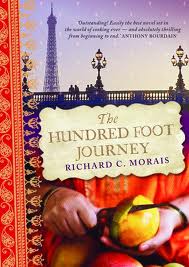
The Hundred-Foot Journey by Richard C. Morais

How do you get to Paris from Bombay? Food, Food, Food.

What better transport is there than a light vehicle that provides a fun and wild ride, taking me out of Midnight’s Children‘s Bombay to my next destination, Paris in July? Thanks to Karen of Book Bath for organizing the trip.

This delightful, breezy read is that speedy transit. It tells the story of Hassan Haji, a Muslim boy who lives above his grandfather’s restaurant in then Bombay and how he ultimately ends up as a three-star chef in Paris.

Growing up immersed in the savoury aroma of Indian food and spices,

I suspect my destiny was written from the very start, for my first sensation of life was the smell of machli ka salan, a spicy fish curry, rising through the floorboards to the cot…

Hassan is endowed with an exceptional gift of culinary talent. After the Partition and the death of his grandfather, religious and political turmoils push his family out of the country. They first land in London, later immigrate to France. The boisterous family finds a home in the resort village Lumière near the Alps and starts its own restaurant Maison Mumbai, serving Indian dishes and bringing a welcome change to the villagers.

Hassan soon is jealously noticed by the veteran, feisty two-star French Chef Madame Mallory across the street. She is the proprietor of the small country hotel, Le Saule Pleureur. Her restaurant is a haute French culinary establishment that plays Satie in contrast to the Indian music from a loudspeaker at the Haji’s. After many animated and almost cartoonish conflicts between Madame Mallory and Hassan’s Papa, Abbas Haji, both concede to the reconciliatory move of allowing Hassan to become Chef Mallory’s apprentice.

Thus, Hassan takes the one hundred-foot journey and crosses the street to stay at Le Saule Pleureur, learn all he can from the great Chef and answer ‘the irrefutable call of destiny’ to be one himself. Towards the end of his apprenticeship, Hassan is left on his own to create recipes for pigeons, gigot, and hare, all to the satisfaction of Chef Mallory. After three years under her wings, Hassan is ready to move on.

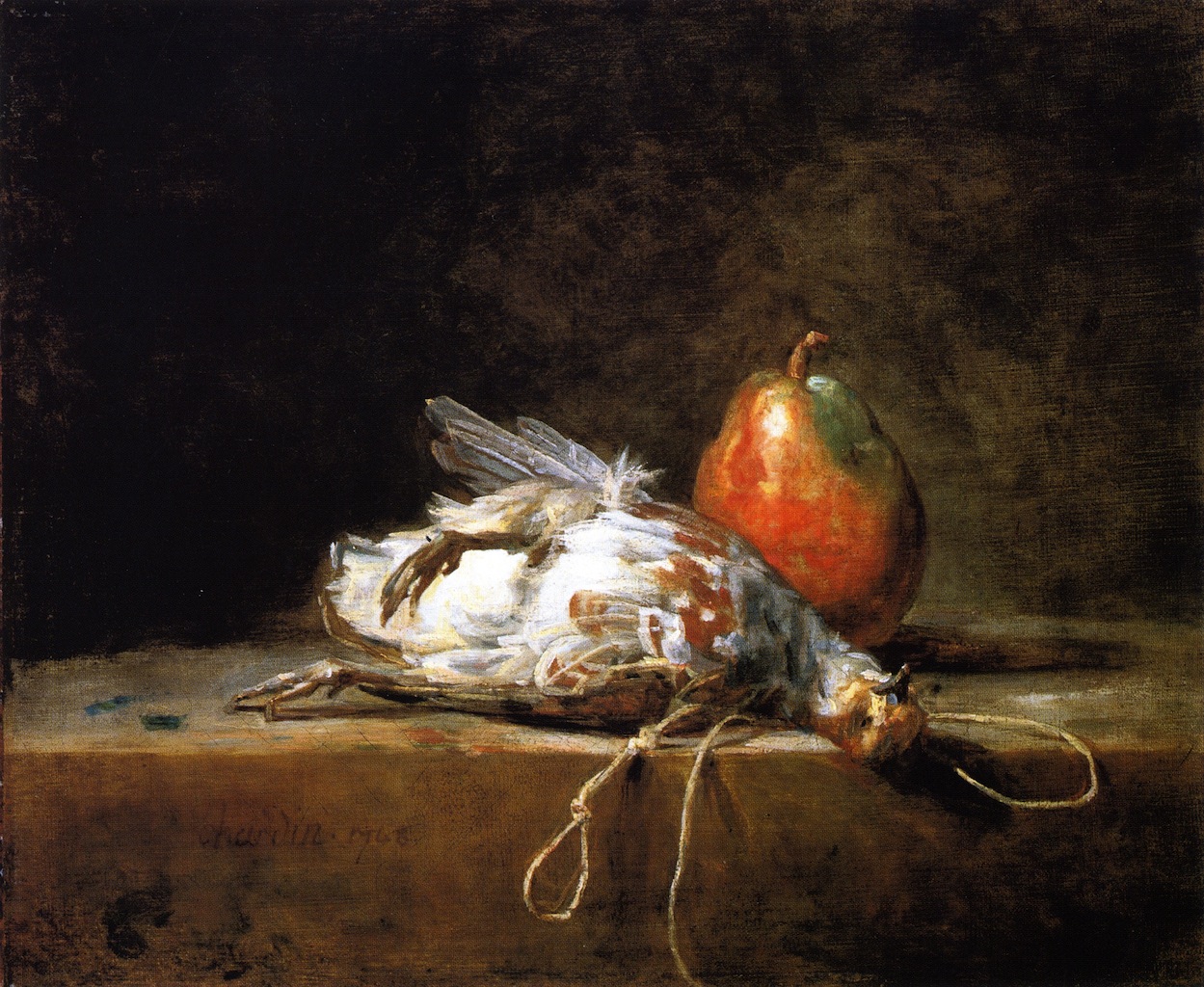
Chardin’s Grey Partridge Pear and Snare on Stone Table, one of Hassan’s favorite paintings.

Next step, Paris. Hassan starts as a sous chef with a couple of smaller restaurants. After a few years, he decides to open his own and is approached by a benefactor who offers him reduced rent in an upscale location near the Panthéon. The one-hundred foot journey has brought him fine training, now he can take flight.

Here is his trademark dish:

the Siberian ptarmigan, roasted with the tundra herbs taken from the bird’s own crop, and served with caramelized pears in an Armagnac sauce.

We as readers are privy to the actual cooking procedure beginning with the feathered live bird.

For me, more a movie buff than a foodie, the book conjures up many cinematic images… the colours and conflicts in The Best Exotic Marigold Hotel, the prejudice in Chocolat, the sumptuous offering in Babette’s Feast, and, the training sessions in the The Karate Kid. Dev Patel (Marigold Hotel, Slumdog Millionaire) will be perfect for the role as young Hassan. I couldn’t help but think, this book is good movie material.

And then I found out from the Acknowledgements after I finished, the book is an homage to the late Ismail Merchant, the film producer behind the Merchant Ivory productions (Room With A View, Howards End, The Remains of the Day) who met an untimely death in 2005. The bond between the author Richard Morais and his friend Ismail Merchant was food. This book was started with a subsequent movie in mind.

In-depth research has gone into writing the book, culinary history, recipes, game, desserts, soups, the French kitchen, the Indian kitchen, restaurant operations, even for me the uninformed and casual eater, there are plenty to savour. The book is a smorgasbord of gastronomic delights. My only criticism is that its literary treatment may taste a bit raw, simplistic, and at times, didactic. However, read it like a comedy, it can satisfy like a dessert.

~~~ Ripples

The Hundred-Foot Journey by Richard C. Morais, Scribner, NY, 2010, 245 pages.

***